Cracking a skill-specific interview, like one for Cargo Loading and Securing, requires understanding the nuances of the role. In this blog, we present the questions you’re most likely to encounter, along with insights into how to answer them effectively. Let’s ensure you’re ready to make a strong impression.
Questions Asked in Cargo Loading and Securing Interview
Q 1. Explain the importance of proper cargo weight distribution.
Proper cargo weight distribution is crucial for safe and efficient transportation. Think of it like balancing a seesaw – if the weight is unevenly distributed, the vehicle becomes unstable, increasing the risk of accidents and damage. It affects the vehicle’s center of gravity, impacting handling, braking, and cornering. An improperly loaded vehicle can sway excessively, increasing the likelihood of rollovers, especially on curves or in windy conditions. Optimal weight distribution ensures even stress across the axles and suspension system, preventing premature wear and tear and maximizing fuel efficiency. For example, heavy items should be placed low and towards the center of gravity, while lighter items can be distributed more evenly around it.
Imagine loading a truck with heavy machinery. If all the weight is concentrated on one side, the truck will tilt dangerously. Distributing the weight evenly, perhaps with lighter materials on the opposite side to balance, is vital for safe transport. This also applies to the longitudinal (front-to-back) distribution; weight should be balanced to avoid overloading the front or rear axles.
Q 2. Describe different methods for securing cargo on a flatbed trailer.
Securing cargo on a flatbed trailer involves several methods, each suited for different cargo types and weights. The most common methods include:
- Chain and binder straps: These are heavy-duty straps used for securing heavier items. They are versatile and can be used with various types of cargo. Ensure chains are properly rated and free of damage. Bindings must be tightened correctly and secured to strong points on the trailer.
- Winch straps: These are similar to chain and binder straps but are often made of a more flexible material (such as webbing). They’re ideal for securing oddly shaped loads or those that might shift during transit.
- Ratchet straps: Ratchet straps offer superior tensioning capabilities compared to other strap types. They allow for a secure and tight fastening with minimal effort. They’re commonly used in securing pallets and other rectangular-shaped cargo.
- Rope and knotting: While less common for heavy cargo, rope and specific knots (such as clove hitches, bowlines, and taut-line hitches) can be used in combination with other securing methods for smaller, lighter items. Proper knotting techniques are vital to prevent slippage.
- Blocking and bracing: This involves using wooden blocks or other materials to prevent cargo movement and provide additional support. It’s particularly useful for securing irregularly shaped or fragile items. They should be firmly wedged in place and tied to secure points on the trailer.
The choice of method depends on factors such as cargo weight, size, shape, and fragility. Always use an appropriate number of securing devices and ensure they are properly tensioned and secured.
Q 3. What are the dangers of improperly secured cargo?
Improperly secured cargo poses significant dangers, including:
- Accidents: Shifting cargo can alter the vehicle’s center of gravity, leading to rollovers, jackknifing (for semi-trailers), or loss of control. This endangers the driver, other road users, and pedestrians.
- Cargo damage: Unsecured cargo can collide with other items during transit, leading to significant damage to the cargo itself. Think of delicate electronics or fragile furniture, for example.
- Vehicle damage: Shifting loads can damage the vehicle’s chassis, bodywork, and suspension system, resulting in costly repairs.
- Traffic violations and fines: Failing to comply with cargo securing regulations leads to legal consequences, including hefty fines and possible license suspension.
- Liability and insurance issues: In case of accidents or damage caused by insecure cargo, the transporter can face substantial legal and financial liability. Insurance companies may refuse to cover the damage.
A real-world example is a load of bricks shifting during transport and causing a rollover. This resulted in injuries, significant property damage, and major fines for the transporter due to non-compliance with securing standards.
Q 4. How do you determine the appropriate type of lashing material for different cargo types?
Selecting the right lashing material depends heavily on the cargo’s characteristics. Key factors include:
- Cargo weight: Heavier cargo requires stronger and more robust materials like steel chains or high-tensile webbing straps.
- Cargo shape and size: Irregularly shaped items might necessitate the use of multiple securing points and a combination of materials, including blocks and bracing to prevent shifting.
- Cargo fragility: Fragile items might require softer materials like padded straps or specialized dunnage (protective materials) to prevent damage.
- Environmental conditions: Exposure to extreme weather may necessitate materials resistant to UV degradation, water damage, or extreme temperatures.
For example, a pallet of heavy machinery needs strong chains or ratchet straps with a high working load limit (WLL). Conversely, a load of delicate glassware needs gentler handling, perhaps using soft, padded straps or specialized protective packaging.
Always check the manufacturer’s specifications for the lashing material to ensure it meets or exceeds the required load capacity and safety standards.
Q 5. What are the regulations and standards (e.g., IMDG Code, CTPAT) you must adhere to when securing cargo?
Several regulations and standards govern cargo securement, depending on the mode of transportation and the nature of the cargo. Key regulations include:
- International Maritime Dangerous Goods Code (IMDG Code): This governs the transport of dangerous goods by sea, outlining strict requirements for packaging, labeling, and securing hazardous materials.
- Customs-Trade Partnership Against Terrorism (CTPAT): This program focuses on enhancing the security of the international supply chain. CTPAT participants are expected to meet specific security standards for cargo handling and securement.
- National and Regional Regulations: Most countries and regions have their own regulations concerning cargo securement on roads, railways, and inland waterways. These often specify requirements for lashing materials, securing methods, and documentation.
- Manufacturer’s specifications: Always refer to the manufacturer’s recommendations for the proper use and capacity of your lashing materials.
Non-compliance with these standards can lead to significant fines, legal action, and potential harm. Staying updated on regulations is critical for responsible cargo transportation. Regular training and adherence to best practices are vital aspects of maintaining compliance.
Q 6. Explain the process of creating a cargo securement plan.
Creating a cargo securement plan is a systematic process that ensures safe and compliant transport. The steps generally include:
- Assess the Cargo: Determine the cargo’s weight, dimensions, center of gravity, fragility, and any hazardous properties.
- Select the Transportation Method: Identify the type of vehicle (truck, railcar, ship, etc.) being used.
- Choose Securement Methods: Select appropriate lashing materials and securement techniques based on the cargo characteristics and vehicle type.
- Determine Securement Points: Identify strong and suitable attachment points on the vehicle.
- Develop a Detailed Plan: Document the chosen securement methods, including the number and placement of securing devices, their ratings, and any special considerations.
- Implement and Inspect: Secure the cargo according to the plan and thoroughly inspect the load to ensure everything is secure before commencing transportation.
- Documentation: Maintain records of the securement plan, including inspection reports and any modifications made during the process.
A well-defined plan reduces the risk of accidents and damage, ensures compliance with regulations, and protects the transporter’s liability.
Q 7. How do you handle damaged or unstable cargo?
Handling damaged or unstable cargo requires careful consideration of safety and regulatory compliance. The first step is assessment: determine the extent of the damage, the risk of further deterioration or collapse, and any potential hazards (e.g., leaking chemicals). Depending on the situation, you might:
- Repair or Stabilize: If the damage is minor and repairable, attempt to stabilize the cargo to prevent further deterioration. This might involve using additional bracing, blocking, or shoring.
- Partial Unloading: If stabilization is not feasible or safe, consider partially unloading the cargo to reduce the risk and allow for a more stable transport. Remove damaged sections or transfer them to a more secure location on the vehicle.
- Complete Unloading: If the cargo is significantly damaged, unstable, or poses a safety risk, it may need to be completely unloaded and properly secured before transport can resume. A qualified expert may need to assess the condition before proceeding.
- Reject the Shipment: In some cases, rejecting the shipment and requesting a new shipment is necessary when the damage is significant or repair is not possible. This should be done in line with contract agreements.
Safety is paramount. Never attempt to handle damaged cargo without proper training, equipment, and safety precautions. Always consult with supervisors or qualified personnel if uncertain about how to proceed.
Q 8. What are the different types of cargo securing devices and their applications?
Cargo securing devices are crucial for preventing shifting and damage during transit. They come in various types, each suited for specific cargo and transport conditions.
- Load binders: These are ratchet-style tensioning devices that use a lever to tighten straps around cargo, securing it to the vehicle. They’re versatile and easy to use for various cargo types, from pallets to pipes.
- Chains: Heavy-duty chains offer exceptional strength and are used for securing extremely heavy or awkward loads. They often require the use of binders or other securing devices to tighten them.
- Straps (Webbing): Woven synthetic straps provide a good balance of strength and flexibility. They come in various widths and breaking strengths, suitable for a wide range of applications. Ratchet straps, similar to load binders, are common variations.
- Dunnage: This includes materials like wood blocks, airbags, and inflatable dunnage bags, used to fill voids and prevent cargo movement within the vehicle. It’s particularly crucial for preventing shifting of irregularly shaped items.
- Edge Protectors: These are placed on sharp edges of the cargo to protect the straps, the cargo itself, and the vehicle.
- Anti-slip mats: Rubber or other non-slip materials placed on the cargo bed or on top of cargo to prevent slipping.
The choice of securing device depends heavily on the cargo’s weight, dimensions, fragility, and the type of vehicle used for transportation. For example, you wouldn’t use webbing straps to secure a massive steel beam, but chains would be appropriate. Similarly, fragile items require extra padding and careful securing with less aggressive methods.
Q 9. Describe your experience with using load binders and chains.
I have extensive experience using load binders and chains, having used them daily throughout my career. Load binders are my go-to for most general cargo securing tasks because they are quick, efficient, and provide excellent tension. I always double-check the ratchet mechanism to ensure it’s properly engaged and locked before moving the cargo. I regularly inspect the straps for any signs of wear and tear before each use.
Chains, on the other hand, are reserved for heavier, more challenging loads. I understand the critical importance of proper chain attachment, ensuring the hooks are correctly secured and free from damage. I always check for the proper rated capacity of the chains and use them with appropriate chain binders to tension the load. One instance involved securing a large piece of machinery; the chain’s strength was crucial to safe transport. I took extra care in securing the chain to avoid slipping and damage to the machinery.
Safety is paramount. I always adhere to manufacturer’s guidelines for proper usage and regularly inspect both chains and binders for any signs of wear, damage, or defects, always replacing them if needed.
Q 10. How do you inspect cargo and identify potential securing issues before loading?
Inspecting cargo before loading is a crucial step to preventing accidents and damage. My inspection process involves a systematic approach, checking for several key issues:
- Cargo Condition: I examine the cargo for any damage, loose parts, or sharp edges that could pose a risk during transit or compromise the securing process.
- Packaging Integrity: I check that all packaging is intact and secured appropriately; damaged packaging can lead to cargo shifting or breakage.
- Weight Distribution: I assess the weight distribution of the cargo. Uneven weight distribution can make the load unstable, increasing the risk of tipping or shifting.
- Center of Gravity: I consider the center of gravity to ensure it’s in a stable position. If it’s too high, there’s increased risk of rollover.
- Compatibility with the Vehicle: I verify that the cargo is suitable for the chosen vehicle and that sufficient securing points are available.
- Securing Point Integrity: I ensure that all securing points on the vehicle are in good condition and capable of handling the load.
For example, I once discovered a pallet with loose components before loading. Had I not checked, it would have created an unsafe and unstable load. Addressing this issue allowed me to correct it, preventing an accident. Thorough inspection, using checklists and photographs when necessary, is essential for preventing cargo-related problems down the line.
Q 11. Explain the concept of center of gravity and its impact on cargo stability.
The center of gravity (CG) is the point where the weight of an object is concentrated. In cargo loading, it’s crucial to keep the CG low and centered. A high or off-center CG increases the risk of instability, potentially causing the vehicle to tip or roll over, especially during turns or uneven terrain. Imagine trying to balance a pencil on its tip – that’s a high CG and very unstable. Now imagine balancing it flat on the table – that’s a lower CG, much more stable.
To minimize the risk, cargo should be loaded strategically, with heavier items at the bottom and distributed evenly. If the CG is too high, it is sometimes possible to redistribute the cargo to lower the CG. Otherwise, the load may be unacceptable and needs to be rejected. This is a key safety consideration for all transport operators, and understanding how CG impacts stability is vital for safe and efficient transport.
Q 12. How do you account for shifting cargo during transit?
Shifting cargo is a significant concern during transit. To account for it, multiple measures must be implemented:
- Proper Securing: The most effective way to prevent shifting is through the correct application of securing devices, ensuring sufficient tension and redundancy.
- Adequate Dunnage: Using appropriate dunnage materials (like airbags or wood blocking) to fill voids and prevent movement is crucial, especially with irregularly shaped or loose cargo.
- Regular Inspections: If possible, conducting periodic inspections during longer journeys (at rest stops, for example) can identify potential shifting problems early.
- Route Planning: Avoiding excessively rough roads or sharp turns can minimize the impact of vibrations and movement on the cargo.
- Load Monitoring Technologies: Some advanced systems use sensors and telematics to monitor cargo movement and alert drivers or dispatchers to potential issues.
For instance, I once encountered a shipment of bottled goods that had started to shift during transport. The initial securing was insufficient. By using additional straps and properly filling voids with dunnage, we prevented further shifting and successfully completed the delivery.
Q 13. What are the emergency procedures for unstable or unsecured cargo?
Emergency procedures for unstable or unsecured cargo vary depending on the situation, but the overarching principles involve safety and hazard mitigation.
- Stop Immediately: The first step is to safely bring the vehicle to a complete stop in a secure location, away from traffic.
- Assess the Situation: Carefully evaluate the extent of the instability and the potential risks. Identify any immediate hazards.
- Alert Authorities: Contact emergency services and the relevant authorities (depending on the type of cargo and level of risk).
- Secure the Area: Establish a safe perimeter to prevent unauthorized access and further incidents.
- Attempt to Stabilize (Safely): If it’s safe to do so and within the limits of my training, I may attempt to stabilize the cargo using available resources, but this is done only if it doesn’t involve risks. This would involve additional securing.
- Wait for Assistance: Await the arrival of specialized personnel or equipment to properly secure or unload the cargo.
Never attempt to handle unstable cargo without the proper training, equipment, or support. Safety is always the top priority.
Q 14. How do you communicate effectively with drivers and other stakeholders regarding cargo securing?
Effective communication is key to safe cargo handling. I employ several strategies:
- Pre-Trip Briefing: Before loading, I conduct a briefing with the driver, explaining the specifics of the cargo, highlighting potential risks, and outlining the securing procedures used. I also explain where the documentation is located and what to do in an emergency.
- Clear Documentation: I provide clear and concise documentation, including detailed securing plans, weight information, and any special handling instructions. Pictures are also useful.
- Visual Aids: Where appropriate, I use visual aids (diagrams, photographs) to illustrate the correct securing techniques and highlight potential hazards.
- Regular Check-ins: During longer journeys, I make regular check-in calls with the driver to ensure the cargo remains stable and secure.
- Open Communication Channels: I ensure that the driver has access to me and other relevant stakeholders (dispatchers, receivers) through readily available communication channels, so that they can raise any concerns promptly.
For example, when dealing with a particularly delicate shipment, I provide the driver with extra information and a clear visual diagram of exactly how the cargo must be secured. This transparent approach contributes significantly to the safety and overall success of the transportation process.
Q 15. Describe your experience using different types of cargo containers.
Throughout my career, I’ve extensively worked with various cargo container types, each suited for specific cargo characteristics and transportation needs. This includes:
- Standard 20ft and 40ft Dry Containers: These are the workhorses of the industry, ideal for general cargo that doesn’t require temperature control or special handling. I’ve loaded everything from consumer goods to manufactured parts in these, always focusing on efficient space utilization and secure lashing.
- High Cube Containers: Offering increased vertical space, these are perfect for bulky, less dense cargo where maximizing volume is key. I remember a shipment of oversized foam insulation panels that fit perfectly in these containers, improving cost-efficiency.
- Refrigerated Containers (Reefer Containers): These containers maintain a precise temperature range, crucial for perishable goods like fruits, vegetables, and pharmaceuticals. My experience involves meticulously monitoring temperature settings and ensuring proper ventilation to maintain product quality. I once had to troubleshoot a malfunctioning reefer unit mid-transit, requiring quick thinking and a knowledge of both the container’s systems and emergency procedures.
- Open-Top Containers: Suitable for oversized or heavy cargo that can’t be loaded through a standard door, these containers allow for top-loading. I’ve handled construction materials, machinery, and even large pieces of artwork using this type, carefully considering the load’s weight distribution and securing mechanisms.
- Flatrack Containers: These are flat platforms ideal for extremely large or heavy equipment that needs to be secured directly to the chassis. They require highly specialized securing techniques to ensure stability during transit and I have a proven track record of safely loading and securing such loads.
My experience spans diverse loading scenarios, emphasizing safe, efficient, and cost-effective practices across all container types.
Career Expert Tips:
- Ace those interviews! Prepare effectively by reviewing the Top 50 Most Common Interview Questions on ResumeGemini.
- Navigate your job search with confidence! Explore a wide range of Career Tips on ResumeGemini. Learn about common challenges and recommendations to overcome them.
- Craft the perfect resume! Master the Art of Resume Writing with ResumeGemini’s guide. Showcase your unique qualifications and achievements effectively.
- Don’t miss out on holiday savings! Build your dream resume with ResumeGemini’s ATS optimized templates.
Q 16. What are the limitations of different cargo securing methods?
Different cargo securing methods have their own inherent limitations. Understanding these is vital for selecting the most appropriate method and mitigating potential risks:
- Strapping: While strong and relatively inexpensive, straps can be weakened by sharp edges or improper tensioning. They’re also susceptible to damage from weather, necessitating regular inspections.
- Dunnage: Using wooden blocks or other materials to fill gaps is crucial for preventing cargo shifting, but improperly placed dunnage can actually exacerbate problems. It’s important to use the correct size and number of dunnage pieces and place them strategically.
- Container Lashing: Twist locks, while widely used, can fail under extreme stress or if improperly engaged. Weather conditions can also affect their grip. Regular inspections and proper tightening are vital.
- Shock Absorbers: These help protect sensitive cargo from impact, but their effectiveness is limited depending on the intensity of impact and type of cargo.
- Securing systems (e.g., cargo bars, rails): While providing structural support, these systems require meticulous installation and can be vulnerable to damage from improper handling and use. For example, damaged cargo bars compromise the safety and integrity of the entire system.
Therefore, effective cargo securing often necessitates a multi-faceted approach, combining different methods to create a robust and reliable system, tailored to the specific characteristics of the cargo and the anticipated journey conditions.
Q 17. How do you document the cargo securing process?
Accurate documentation of the cargo securing process is paramount for liability, safety, and regulatory compliance. My approach involves a multi-stage process:
- Pre-loading Inspection: A thorough inspection of the cargo, container, and securing equipment is documented with photos and notes, noting any existing damage.
- Securing Plan: A detailed plan outlining the chosen securing methods, quantities of materials used (e.g., straps, dunnage), and the placement of all securing components is created and signed off by both the stevedore and myself. This plan might even involve diagrams illustrating lashing positions.
- Loading and Securing Documentation: During loading and securing, I meticulously document each step, including photos of the secured cargo, notes on securing methods and equipment used, and the final weight distribution within the container.
- Post-Securing Inspection: Following completion, a final inspection confirms the security of the cargo, and any further adjustments are documented and signed.
- Load Manifest Comparison: This documentation is compared against the cargo manifest to confirm accuracy.
All documents are securely stored (both hard copies and digital copies), ensuring easy traceability in case of any incidents or audits. This rigorous documentation ensures transparency and allows for efficient investigation and mitigation of potential issues.
Q 18. How do you deal with discrepancies between the cargo manifest and the actual load?
Discrepancies between the cargo manifest and the actual load are a serious matter that requires immediate attention. My approach involves:
- Immediate Halt: Loading and securing immediately stop until the discrepancy is resolved.
- Reconciliation: I meticulously cross-reference the manifest with the actual cargo, noting any differences in quantity, type, or description. This often involves visual inspection and weighing of individual items.
- Documentation: Any discrepancies are documented in a detailed report, including photos and supporting evidence. This report identifies the nature of the discrepancy, the steps taken to reconcile it, and the final resolution.
- Communication: I communicate the findings promptly to the relevant stakeholders, including the shipper, consignee, and transportation company. This ensures everyone is informed and involved in finding the best solution.
- Resolution: Depending on the nature of the discrepancy (missing items, incorrect description, etc.), appropriate measures are taken, which might involve correcting the manifest, re-weighing cargo, and adjusting the securing plan if necessary.
My primary focus is to ensure safety and accuracy. Unresolved discrepancies can lead to significant problems, including delays, damage, or legal repercussions.
Q 19. Explain your experience with different types of cargo (e.g., hazardous materials, oversized loads).
My experience encompasses a wide range of cargo types, each presenting unique challenges:
- Hazardous Materials (HazMat): I’m trained in handling and securing various classes of HazMat, adhering strictly to international regulations (e.g., IMDG Code). This includes understanding the proper use of placards, emergency response plans, and specialized securing techniques for materials like flammable liquids or corrosive substances. Each shipment requires a detailed risk assessment and plan.
- Oversized Loads: Securing oversized loads often requires specialized equipment and techniques. Understanding load centers, weight distribution, and proper bracing is crucial to prevent shifting and damage. I’ve worked with exceptionally long or tall items needing customized securing.
- Live Animals: Transporting live animals requires strict adherence to animal welfare regulations, including appropriate ventilation, climate control, and safe handling procedures. This involves careful consideration of space and arrangement to avoid injury to the animals.
- Heavy Machinery: Securing heavy machinery needs precise calculations to handle the immense weight and potential stress during transit. I’ve used heavy-duty chains, specialized straps, and chocking systems, while meticulously documenting weight distribution to prevent damage or tipping.
My approach emphasizes meticulous planning, risk assessment, and strict adherence to all relevant regulations, ensuring the safety of personnel, the integrity of the cargo, and compliance with legal standards for every cargo type.
Q 20. Describe a time you had to solve a complex cargo securing problem.
During the shipment of a large, oddly shaped piece of industrial equipment, we encountered a challenge. The equipment had an unusual center of gravity, making it prone to instability. Standard securing methods proved insufficient. The initial securing plan called for standard straps and dunnage, but initial testing demonstrated potential for shifting.
My solution involved a three-pronged approach:
- Re-assessment: I conducted a thorough re-assessment of the equipment’s weight distribution and center of gravity using specialized software and on-site measurements. This gave us accurate data.
- Custom Solution: We developed a custom securing solution using a combination of high-strength chains, strategically placed timber supports, and specialized wedges to redistribute the weight and enhance stability.
- Rigorous Testing: Before finalizing the load, we conducted rigorous stress tests to simulate transit conditions. This ensured our solution could withstand anticipated forces.
This adaptive approach not only secured the equipment safely, but also enhanced my understanding of complex load dynamics and problem-solving skills. The success of this shipment helped define a new procedural guideline for handling similar loads in the future.
Q 21. How do you ensure compliance with safety regulations during cargo loading and securing?
Ensuring compliance with safety regulations is fundamental to my work. My approach is multifaceted:
- Thorough Knowledge of Regulations: I maintain up-to-date knowledge of all relevant international and local safety regulations, including those governing cargo securing, hazardous materials, and workplace safety.
- Pre-loading Risk Assessments: Every load undergoes a thorough risk assessment identifying potential hazards and developing mitigation strategies. This helps anticipate and avoid dangerous situations.
- Proper Equipment Use: I only use certified and inspected equipment, ensuring its functionality and safety. This includes regular maintenance checks and calibration of weighing scales.
- Training and Certification: I hold the necessary certifications and undergo regular training to maintain my skills and knowledge, staying abreast of industry best practices.
- Documentation and Audits: Meticulous record-keeping allows easy traceability and demonstrates compliance to regulatory bodies. I actively participate in and support internal and external audits.
- Continuous Improvement: I’m always seeking opportunities for professional development and continuous improvement to enhance safety protocols and adapt to evolving industry standards.
Safety is not merely a checklist; it’s an integral part of my work ethic, ensuring both personal safety and the integrity of every shipment.
Q 22. What are your strategies for preventing cargo theft or damage?
Preventing cargo theft and damage requires a multi-layered approach focusing on proactive measures and robust security protocols. Think of it like building a fortress around your cargo – multiple layers of protection make it far harder to breach.
Physical Security: This includes secure storage facilities with surveillance systems (CCTV), perimeter fencing, and adequate lighting. For example, I once worked with a client who significantly reduced theft by installing motion-sensor lighting and strategically placed security cameras around their loading docks.
Secure Transportation: Choosing reputable carriers with GPS tracking and security escorts for high-value goods is crucial. I’ve seen firsthand how real-time tracking allows for quick response to any suspicious activity.
Proper Securing Techniques: This is fundamental. Using appropriate lashing materials (e.g., straps, chains, nets) and securing methods tailored to the cargo type and transport mode significantly minimizes damage and shifting during transit. We’ll delve deeper into this in another answer.
Documentation and Inventory Control: Detailed inventory lists, photographs of the cargo before and after loading, and comprehensive delivery receipts provide crucial evidence in case of loss or damage. This acts as a strong record-keeping defense.
Personnel Training: Thorough training for loading and unloading personnel on safe handling procedures and security protocols is essential. A well-trained team understands the risks and how to mitigate them.
Q 23. What is your experience with using cargo securing software or technology?
My experience with cargo securing software encompasses several leading systems used for load planning and securing documentation. These systems typically include features for generating load plans, calculating required lashing forces, and creating digital documentation for compliance.
For example, I’ve used software that allows for 3D modeling of cargo space, helping to optimize placement and prevent shifting. This is particularly helpful with irregular shaped goods. The software also generates reports detailing the securing plan, which is essential for audits and insurance purposes. We can also input parameters, like the type of vehicle and weight, and the software will provide suggestions for appropriate securing methods and materials.
While this technology speeds up the process and reduces human error, it’s vital to remember that software is a tool. A skilled professional’s understanding of the physical aspects of load securing remains essential to ensure a safe and secure shipment.
Q 24. How do you adapt your cargo securing techniques to different types of transportation modes?
Adapting cargo securing techniques to different transportation modes requires a deep understanding of the unique challenges each mode presents. Think of it like tailoring a suit – you need different cuts and materials for different body types.
Maritime Shipping: Requires robust securing systems to withstand the forces of the sea. This often involves container lashing, dunnage (protective material between cargo), and specialized securing systems for oversized or heavy loads. We must consider the effects of rolling and pitching movements.
Road Transport: Focuses on preventing shifting during turns and braking. Securing techniques here depend on the type of vehicle (trucks, trailers, etc.) and involve methods like using straps, chains, and blocking and bracing.
Rail Transport: Requires securing that can handle the vibrations and shocks associated with rail travel. This might involve using additional bracing or securing methods to prevent damage to the cargo.
Air Transport: Requires lightweight but highly secure methods that meet aviation regulations and consider the weight limitations of aircraft.
In each case, I prioritize the proper selection of securing materials, following all relevant regulations and industry best practices for the specific transport mode. A fundamental principle is always to ensure that the securing system is rated for the weight and nature of the cargo.
Q 25. How do you prioritize safety during fast-paced loading and unloading operations?
Prioritizing safety during fast-paced loading and unloading operations involves establishing clear procedures and prioritizing communication and teamwork. It’s about creating a culture of safety, not just following a checklist.
Pre-shift briefings: A quick meeting to review the day’s plan, highlight potential hazards, and discuss safe work practices.
Designated zones: Establishing clear areas for loading, unloading, and pedestrian traffic to minimize collisions.
Use of appropriate equipment: Ensuring forklifts, cranes, and other equipment are in good working order and operated by trained personnel.
Clear communication: Using hand signals, radios, or other communication methods to coordinate activities and prevent misunderstandings.
Personal Protective Equipment (PPE): Mandatory use of safety helmets, high-visibility vests, and safety shoes to protect workers from injury.
In one instance, I implemented a system of color-coded signals to indicate the movement of heavy machinery, dramatically reducing near-miss accidents.
Q 26. Describe your experience with load planning software or tools.
My experience with load planning software and tools extends to various applications designed to optimize cargo placement and securing. These tools are invaluable in streamlining the process and minimizing risk.
I’ve worked with software that allows for 3D visualization of the cargo space, enabling precise placement of items to maximize space utilization and stability. This is especially crucial for mixed cargo shipments containing different sizes and weights of goods. The software can perform weight distribution calculations, helping to prevent overloading of specific areas and ensure the overall balance of the load. Many of these tools also integrate with tracking systems, providing real-time updates on cargo location and condition throughout the transport chain.
These tools don’t replace experience and judgment; they enhance it. I still rely on my expertise to evaluate the software’s suggestions and ensure that the generated load plan adheres to all safety and regulatory requirements.
Q 27. What are the environmental considerations involved in cargo securing?
Environmental considerations in cargo securing are increasingly important. We must balance the need for safe and secure transport with minimizing the environmental impact of our practices.
Reducing waste: Using reusable securing materials, like straps and chains, whenever possible, reduces waste sent to landfills. I encourage the use of eco-friendly alternatives to traditional materials whenever feasible and cost-effective.
Choosing sustainable materials: Opting for biodegradable or recycled materials in packaging and securing systems whenever practical.
Fuel efficiency: Proper load planning and securing minimizes air resistance, leading to fuel efficiency in transportation and thereby reducing greenhouse gas emissions. A well-balanced load is a more fuel-efficient load.
Spill prevention: Ensuring proper containment to prevent spills of hazardous materials, which can have devastating environmental consequences.
These considerations are vital for responsible and sustainable cargo handling operations, and they are increasingly incorporated into best practices within the industry.
Key Topics to Learn for Your Cargo Loading and Securing Interview
Ace your interview by mastering these critical areas of Cargo Loading and Securing. Remember, understanding the “why” behind the procedures is as important as the “how”.
- Understanding Cargo Types and Characteristics: Learn to identify different cargo types (hazardous, non-hazardous, liquid, dry, etc.) and their specific handling requirements. This includes understanding weight distribution, stowage factors, and potential hazards.
- Safe Cargo Handling Techniques: Practice applying safe lifting, moving, and securing techniques for various cargo types. Be prepared to discuss practical examples and demonstrate your knowledge of best practices to prevent damage and accidents.
- Securing Methods and Equipment: Familiarize yourself with different securing methods (lashing, blocking, bracing, dunnage) and the equipment used. Understand the principles behind effective load securement and how to select the appropriate methods for different cargo and transportation modes.
- Weight Distribution and Stability: Master the principles of weight distribution to ensure cargo stability during transit. Be ready to explain how to calculate center of gravity and the impact on overall stability. This includes understanding the role of trim and list.
- Regulations and Compliance: Demonstrate a strong understanding of relevant international and national regulations (e.g., SOLAS, IMDG Code) governing cargo loading and securing. Be prepared to discuss how these regulations impact practical procedures.
- Risk Assessment and Mitigation: Show your ability to identify potential risks associated with cargo loading and securing and explain how to mitigate those risks through proper planning and execution.
- Problem-solving and Decision-Making: Prepare examples illustrating your ability to solve problems related to cargo loading and securing, perhaps focusing on scenarios involving unexpected challenges or emergencies.
Next Steps: Secure Your Future
Mastering Cargo Loading and Securing opens doors to a rewarding career with excellent growth potential. To maximize your job prospects, invest time in creating a strong, ATS-friendly resume that highlights your skills and experience. ResumeGemini is a trusted resource that can help you build a professional, impactful resume. They even provide examples of resumes tailored to the Cargo Loading and Securing industry. Take the next step towards your dream job – craft a resume that showcases your expertise and sets you apart from the competition.
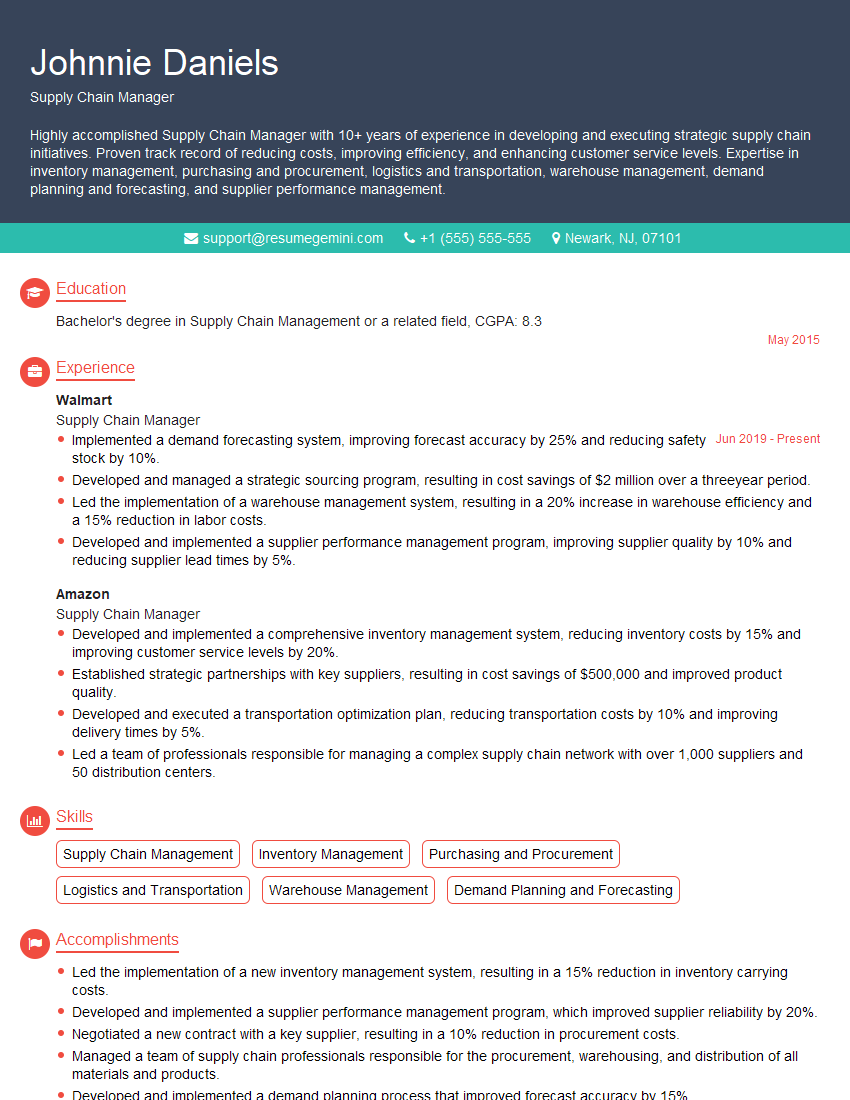
Supply Chain Manager Resume Sample
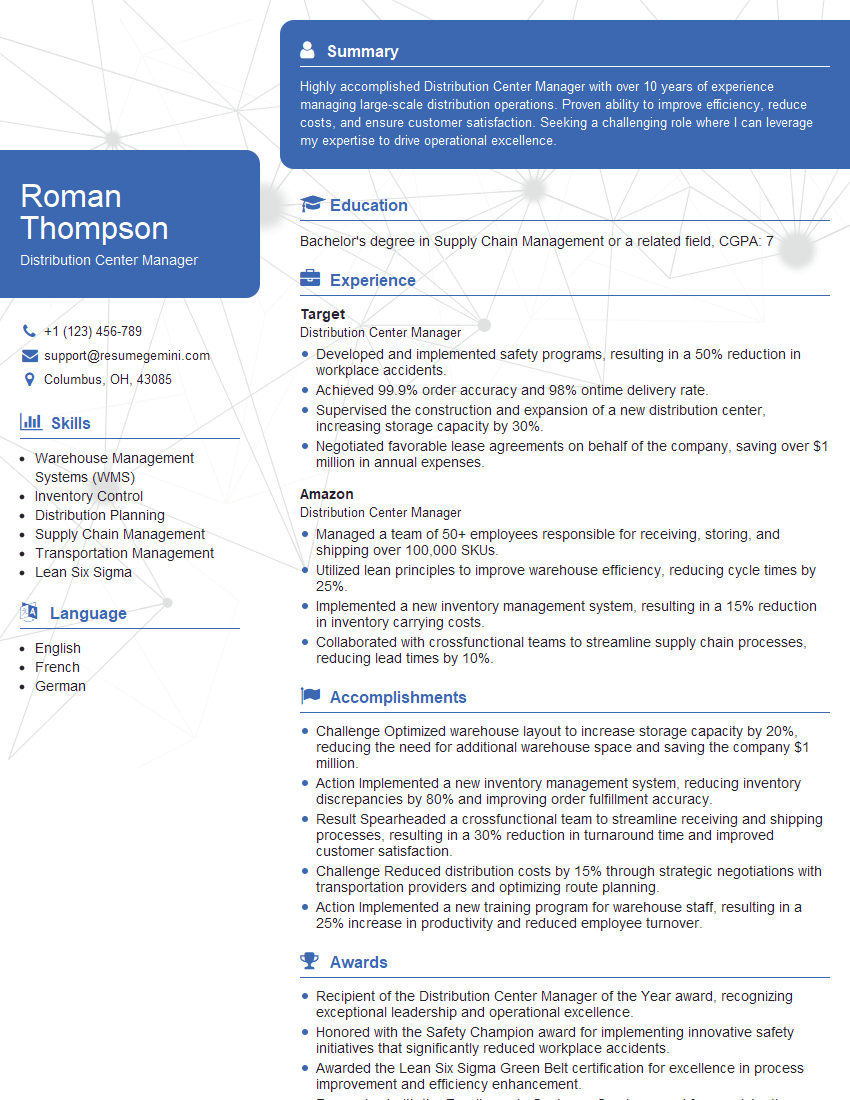
Distribution Center Manager Resume Sample
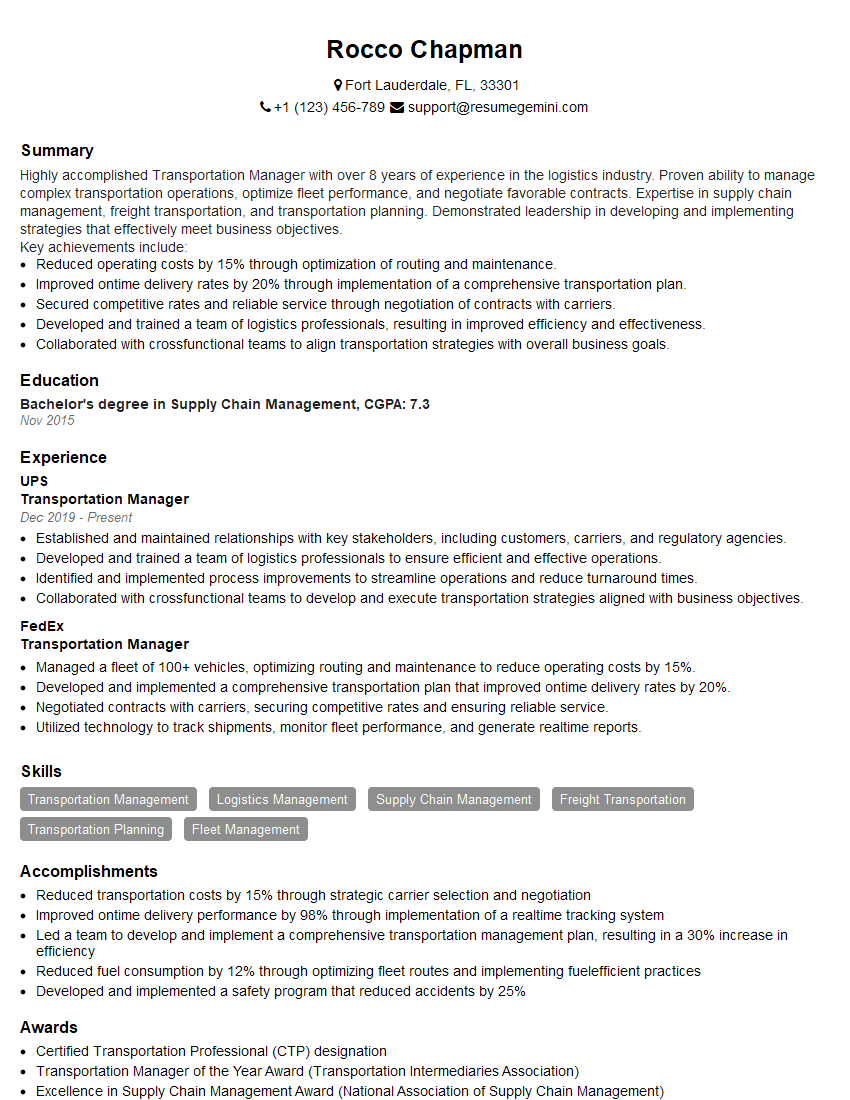
Transportation Manager Resume Sample

Warehouse Manager Resume Sample

Dispatch Manager Resume Sample
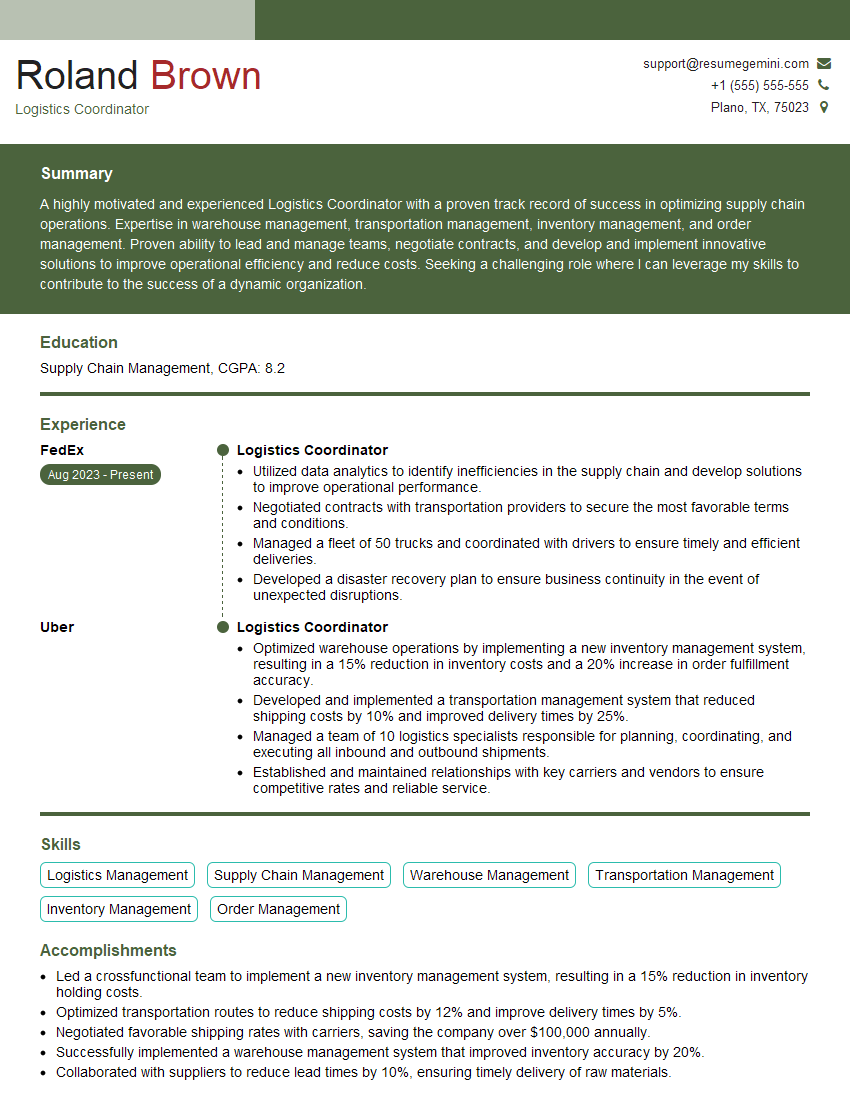
Logistics Coordinator Resume Sample

Logistics Analyst Resume Sample
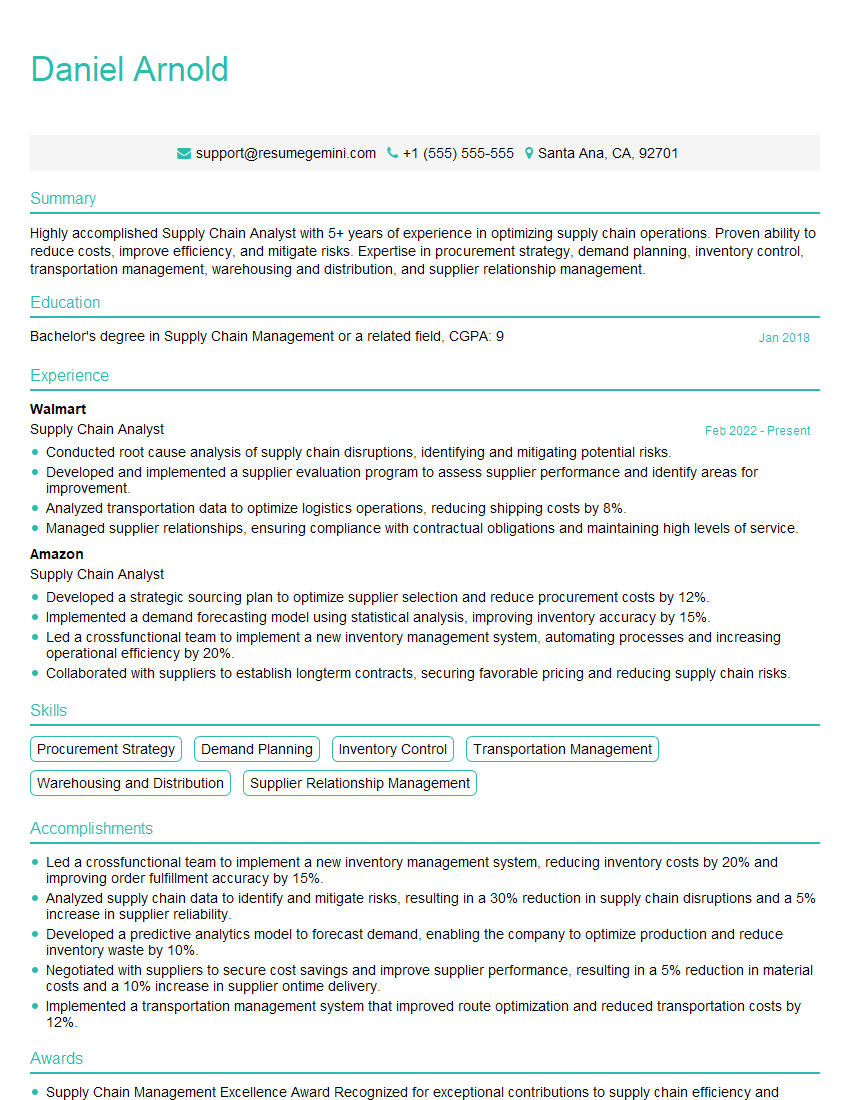
Supply Chain Analyst Resume Sample

Customs Broker Resume Sample

Transportation Planner Resume Sample
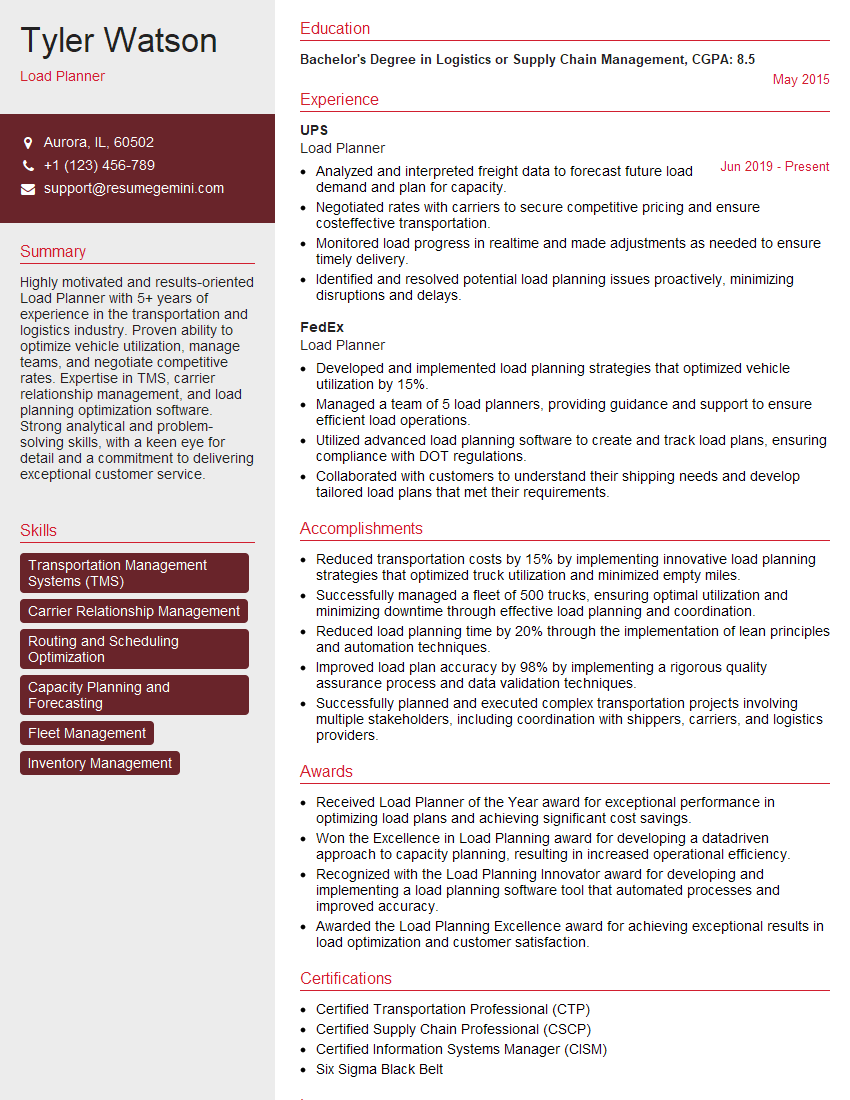
Load Planner Resume Sample
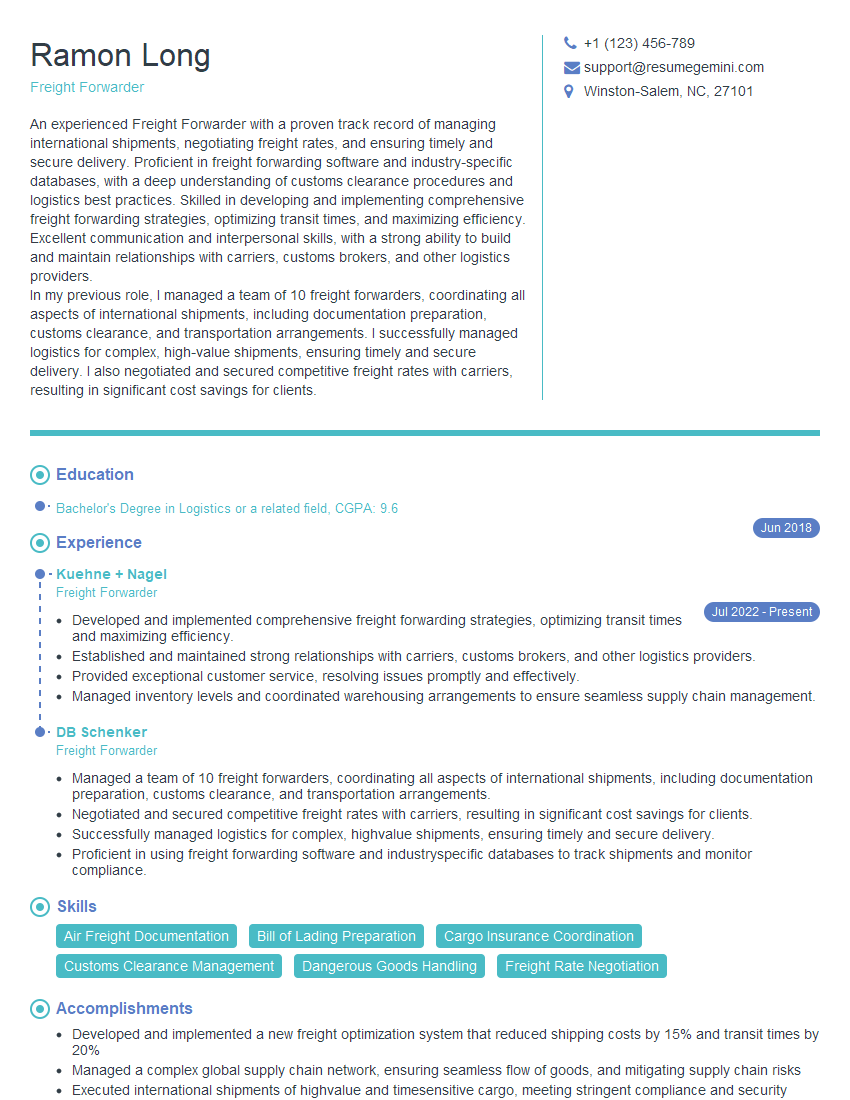
Freight Forwarder Resume Sample

Inventory Control Specialist Resume Sample

Shipping and Receiving Clerk Resume Sample
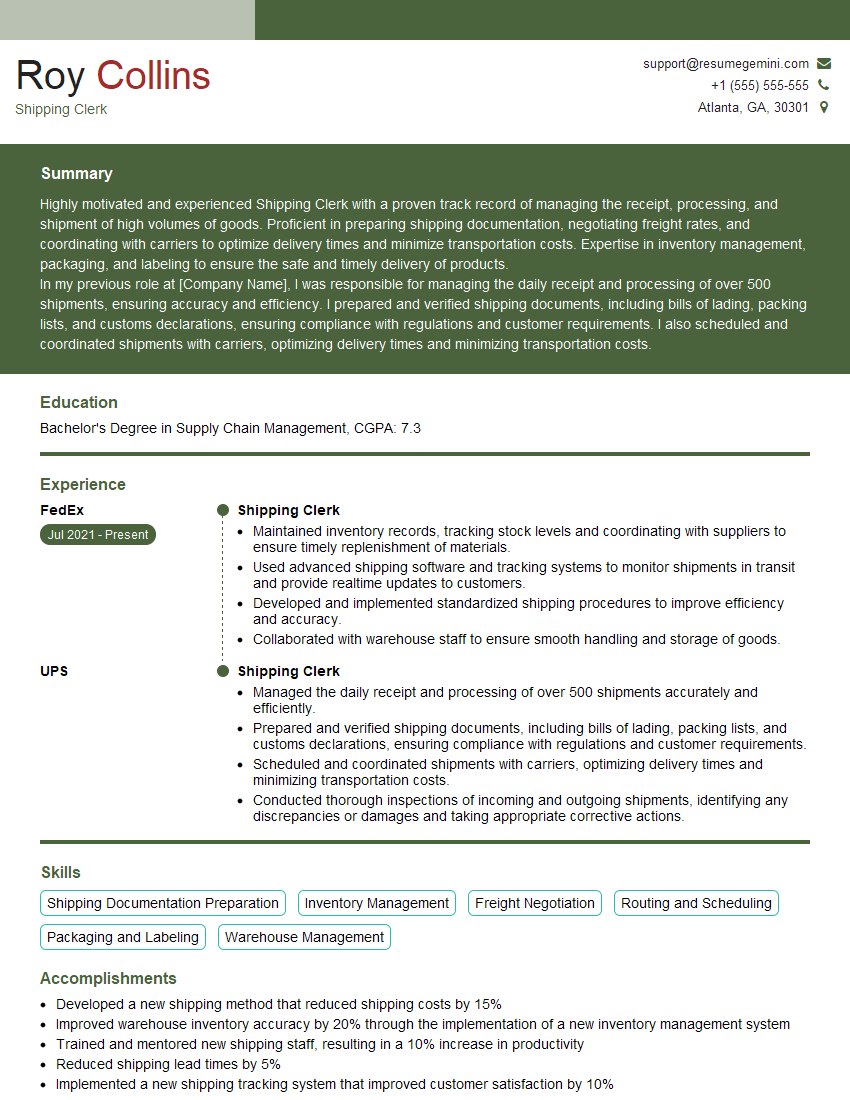
Shipping Clerk Resume Sample
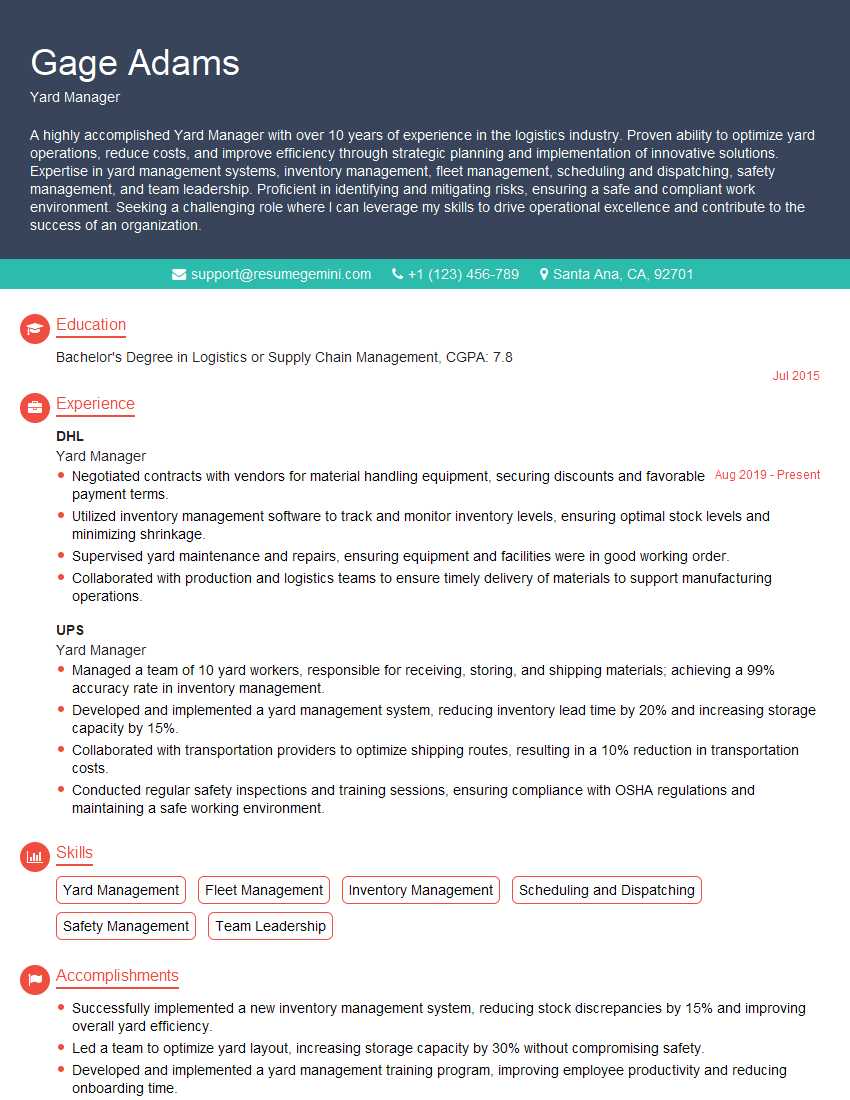
Yard Manager Resume Sample

Cargo Surveyor Resume Sample
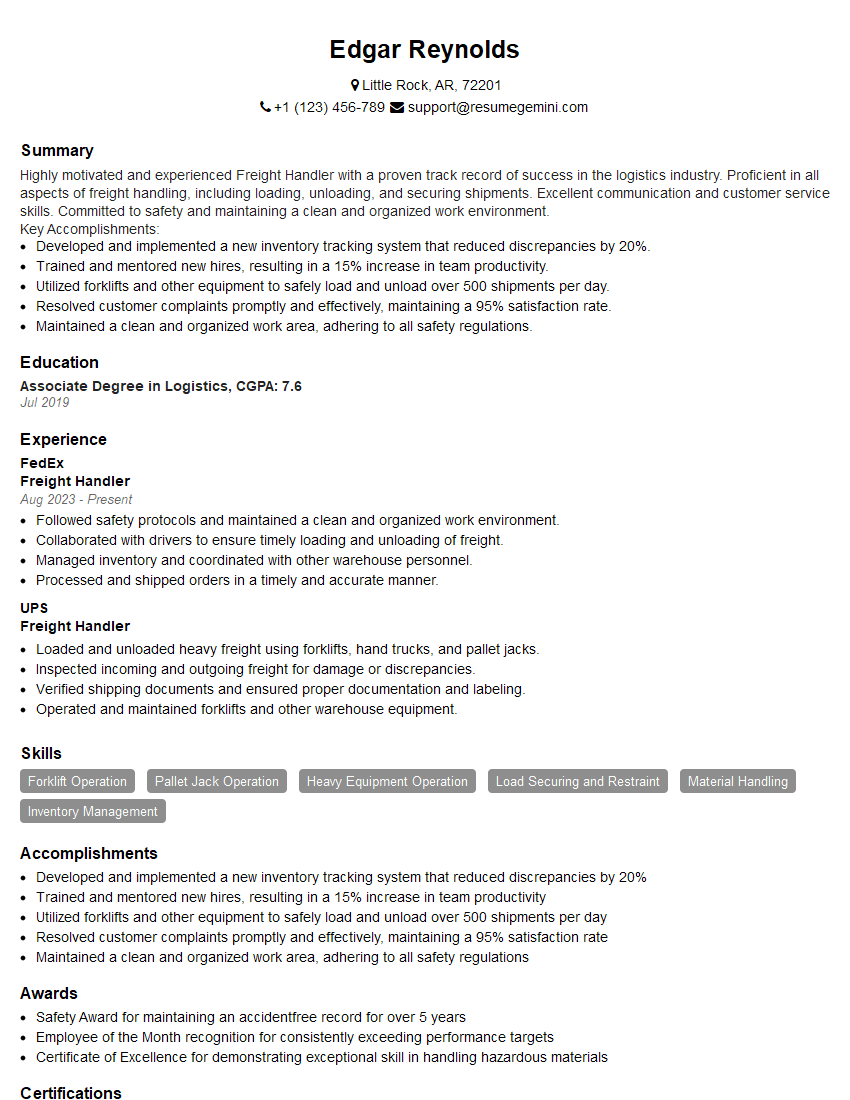
Freight Handler Resume Sample
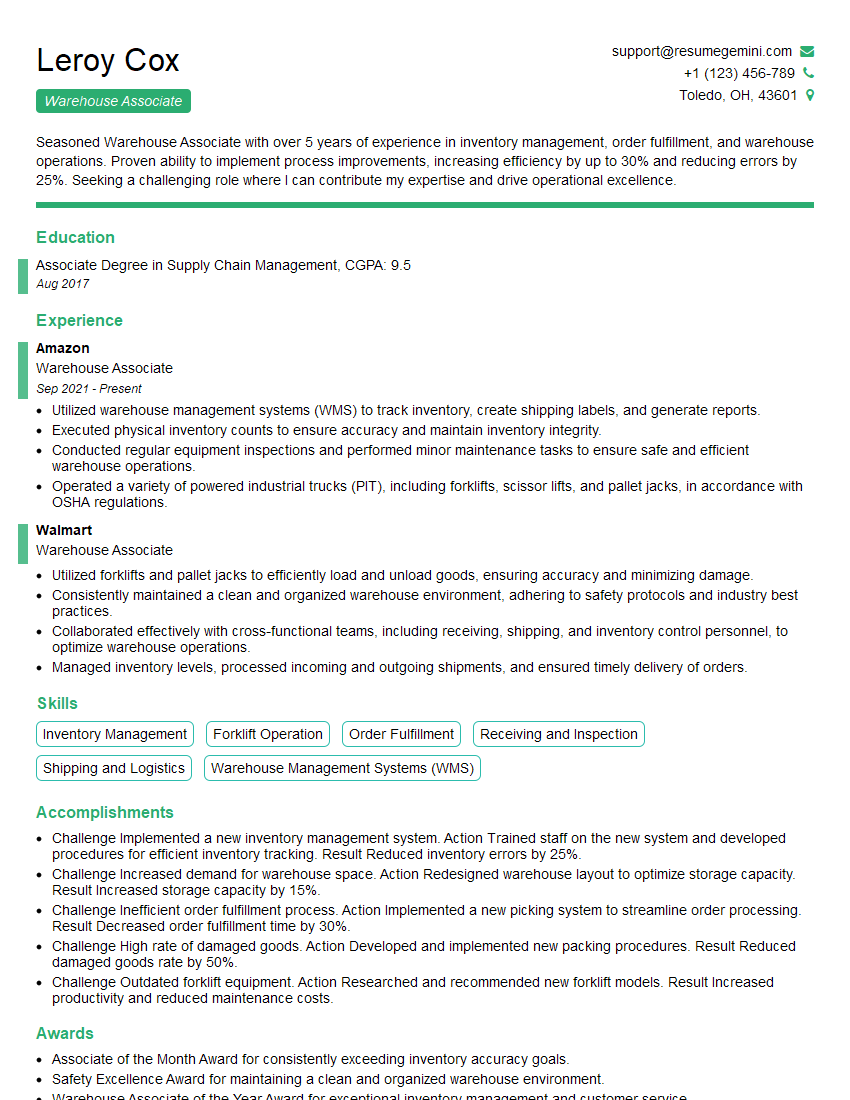
Warehouse Associate Resume Sample
- Supply Chain Manager
- Distribution Center Manager
- Transportation Manager
- Warehouse Manager
- Dispatch Manager
- Logistics Coordinator
- Logistics Analyst
- Supply Chain Analyst
- Customs Broker
- Transportation Planner
- Load Planner
- Freight Forwarder
- Inventory Control Specialist
- Shipping and Receiving Clerk
- Shipping Clerk
- Yard Manager
- Cargo Surveyor
- Freight Handler
- Warehouse Associate
Explore more articles
Users Rating of Our Blogs
Share Your Experience
We value your feedback! Please rate our content and share your thoughts (optional).
What Readers Say About Our Blog
Very informative content, great job.
good