The thought of an interview can be nerve-wracking, but the right preparation can make all the difference. Explore this comprehensive guide to Casing Handling and Rigging interview questions and gain the confidence you need to showcase your abilities and secure the role.
Questions Asked in Casing Handling and Rigging Interview
Q 1. Explain the different types of casing used in oil and gas wells.
Casing in oil and gas wells is essentially a series of steel pipes cemented into place to provide structural support, prevent wellbore collapse, isolate different zones, and protect freshwater aquifers. Different types cater to specific well conditions and operational needs.
- Conductor Pipe: The first casing string, usually large diameter and relatively short. It’s primarily for surface stability, directional control during drilling, and protecting the surface environment.
- Surface Casing: Protects freshwater aquifers and shallow formations from contamination. Its depth depends on geological conditions and regulations.
- Intermediate Casing: Placed between the surface and production casing to isolate zones with potentially unstable formations or high pressure. It helps manage pressure and prevent fluid influx from unwanted formations.
- Production Casing: The final casing string, often the most expensive, designed to withstand the well’s operational pressure and temperature for the life of the well. It isolates the productive zone from other formations.
- Liner: A smaller diameter pipe set inside another casing string, typically used to isolate a specific section of the wellbore within the main casing string without requiring the full string to be run.
The choice of casing type depends on factors like well depth, pressure, temperature, formation characteristics, and well completion strategy. For instance, a deep, high-pressure well would require stronger, thicker-walled casing strings compared to a shallower well.
Q 2. Describe the process of casing running, including key safety procedures.
Casing running is a critical and complex operation requiring precision and safety. It involves lowering the casing string into the wellbore and cementing it in place. The process typically follows these steps:
- Preparation: This includes inspecting the casing string, verifying dimensions and tolerances, checking the cementing equipment, and preparing the well for casing installation.
- Casing Running: The casing is lifted into position using the top drive or crown block, carefully lowered, and guided into the wellbore. A casing running tool is used to help guide and support the casing.
- Centralizing: Centralizers are spaced along the casing to ensure proper cement placement and prevent casing from contacting the wellbore walls, thereby maximizing annular space for cement circulation.
- Cementing: Cement slurry is pumped down the annulus (the space between the casing and wellbore) to isolate the casing from the formations. Proper cement placement is key to well integrity.
- Displacement: After cementing, the well is displaced to remove residual cement slurry and mud from the annulus.
- Post-Cementing Operations: This includes monitoring the cement job, evaluating the cement integrity using logging tools, and performing any necessary remedial work.
Key Safety Procedures: Throughout the process, rigorous safety protocols are maintained, including regular equipment checks, use of personal protective equipment (PPE), adherence to well control procedures, detailed risk assessments, and emergency response plans. Constant communication and coordination between the rig crew is vital. A critical aspect is preventing stuck pipe – a major problem during casing running that can lead to costly non-productive time (NPT) and potentially serious incidents. Using appropriate lubricants, centralizers and careful monitoring of torque and drag are essential to mitigate stuck pipe.
Q 3. What are the common problems encountered during casing handling and how are they addressed?
Several challenges can arise during casing handling. Proper planning and proactive measures are essential to mitigate these:
- Stuck Pipe: This happens when the casing gets stuck in the wellbore due to friction, differential sticking, or unexpected formation conditions. Solutions include using lubricants, applying weight, and potentially employing specialized fishing tools to free the casing.
- Casing Collapse: This occurs when the casing buckles under excessive external pressure. It’s usually due to high differential pressures or inadequate casing design. Preventing this requires accurate pressure calculations and selecting casing with appropriate specifications.
- Cementing Problems: Problems like poor cement placement, channeling, or inadequate bond can compromise well integrity. Careful planning, use of quality cement, and proper displacement techniques are vital.
- Equipment Failure: Failures in the lifting equipment, casing handling tools, or cementing equipment can cause significant delays and safety risks. Regular maintenance and inspections are crucial to prevent this.
- Unexpected Geological Conditions: Encountering unexpectedly unstable formations or pressure changes can disrupt casing operations. Careful geological assessment prior to drilling and well planning is essential.
Addressing these problems often involves a combination of technical expertise, specialized equipment, and sound decision-making. In many instances, experienced personnel and real-time monitoring are essential to effectively troubleshoot and resolve issues.
Q 4. Explain the importance of torque and drag calculations in casing running.
Accurate torque and drag calculations are crucial for safe and efficient casing running. Torque refers to the rotational force applied to turn the casing, while drag is the frictional resistance encountered as the casing is lowered into the wellbore. Understanding these forces is vital to prevent stuck pipe, equipment damage, and accidents.
Torque calculations consider factors like the casing weight, friction in the connections, and the wellbore geometry. Excessive torque can damage the casing threads or cause the connection to fail. Drag calculations account for factors such as the casing weight, the wellbore inclination, the casing-to-wellbore friction, and the presence of obstructions in the wellbore. High drag can lead to stuck pipe.
Software programs and engineering calculations are used to predict these values before the operation. These predictions help determine the required pulling force from the rig equipment and the necessity for extra measures to mitigate friction, such as using specialized lubricants or centralizers. Real-time monitoring of torque and drag during the casing running operation allows adjustments to prevent problems and enhance safety.
Q 5. What are the different types of rigging equipment used in casing handling?
Rigging equipment plays a vital role in casing handling, ensuring the safe and efficient movement of heavy casing strings. Key equipment includes:
- Top Drive: A modern system that rotates and controls the casing during running. It offers precise control and improved safety.
- Crown Block and Traveling Block: These systems provide the lifting capacity to handle the weight of the casing string. They are part of the hoisting system on the drilling rig.
- Casing Handling Tools: These tools aid in guiding, lowering, and positioning the casing, including slips, elevators, and spiders. These ensure safe and secure handling.
- Drawworks: The primary power source for hoisting the casing. It needs to be appropriately sized for the weight of the casing string.
- Swivel: Connects the top drive or crown block to the casing string, allowing rotation and movement while managing pressure and preventing twists.
- Casing Tong: Used to make up (tighten) and break out (loosen) casing connections. Several variations exist for different casing sizes and types.
The selection of rigging equipment depends on the weight and size of the casing string and the specific requirements of the well. Regular inspection and maintenance of this equipment are crucial for ensuring safe operation.
Q 6. Describe the process of making up and breaking out casing connections.
Making up and breaking out casing connections are crucial steps in casing handling and require precision and care to prevent damage. Making up refers to tightening the connections between individual casing joints, while breaking out involves loosening these connections.
Making up: This involves using casing tongs to rotate and tighten the connections until they are properly seated. Torque values are carefully monitored to ensure the connection is adequately made up without over-tightening and damaging the threads.
Breaking out: This is done using casing tongs to carefully loosen the connections. The process must be performed slowly and cautiously to avoid damaging the casing threads or causing the connection to jam. The use of lubricants can ease the process and prevent damage. In some cases, specialized tools might be required to address particularly stubborn connections.
Proper procedures and careful operator skill are essential to ensure the integrity of the connections. Improperly made-up or broken-out connections can lead to leaks, reduced well integrity, and potential for serious accidents.
Q 7. How do you ensure the integrity of the casing string during installation?
Ensuring casing string integrity during installation involves a multi-faceted approach, focusing on meticulous planning, execution, and quality control. Key strategies include:
- Thorough pre-job planning: This includes selecting the right casing grade and dimensions based on the well’s expected conditions, performing detailed torque and drag calculations, and planning for contingency scenarios.
- Rigorous inspections: Inspecting the casing string for defects before running is crucial. This should encompass visual inspection, dimensional checks, and potentially non-destructive testing techniques.
- Proper handling: Careful handling of the casing string during lifting, lowering, and running prevents damage and stress.
- Effective centralizing: Using adequate centralizers ensures proper cement placement, which is critical for wellbore stability and isolation.
- Quality cementing: Ensuring proper cement placement, adequate bond, and correct displacement techniques prevents leakage and compromises to well integrity.
- Post-cementing evaluation: Logging tools (e.g., cement bond logs) are used to assess the quality of the cement job, identifying any potential issues early on.
- Adherence to safety procedures: Rigorous adherence to safety protocols and well control practices minimizes risks and ensures safe operations.
By implementing these steps, operators can significantly increase the likelihood of installing a robust and reliable casing string that will provide structural support and isolate different zones of the well over its operational lifespan. Remember that a well with compromised casing integrity is not only costly but potentially hazardous.
Q 8. What are the safety precautions for working with high-pressure casing?
Working with high-pressure casing demands stringent safety protocols due to the potential for catastrophic equipment failure and serious injury. Think of it like handling a highly pressurized boiler – one mistake can have devastating consequences. The primary focus is preventing unexpected pressure releases.
- Pre-job Planning: Thoroughly review well plans and pressure tests to understand the expected pressures. Check all equipment for leaks and proper functionality before starting.
- Personal Protective Equipment (PPE): This includes safety glasses, hearing protection, steel-toe boots, and appropriate pressure-resistant clothing. In high-pressure situations, specialized protective gear might be necessary.
- Pressure Testing & Monitoring: Always pressure test casing strings before and after running to detect any potential leaks or weaknesses. Continuously monitor pressure readings during all operations.
- Emergency Shutdown Procedures: Everyone involved must understand and be able to execute the emergency shutdown procedures in case of a pressure surge or equipment malfunction. This should include clear communication pathways.
- Controlled Environment: Ensure a clear and unobstructed work area, free from hazards that could cause accidents. Only authorized personnel should be within the immediate vicinity of high-pressure operations.
- Proper Equipment: Use only properly maintained and inspected equipment, ensuring all pressure gauges and valves are calibrated and working correctly.
For example, a failure to properly pressure test a casing string before running could lead to a sudden pressure release during cementing, causing serious injury or damage to the rig.
Q 9. Explain the role of centralizers in casing running.
Centralizers are essential tools in casing running, acting as spacers to maintain the casing’s concentricity (centered position) within the wellbore. Imagine trying to fit a large pipe inside a slightly larger, uneven hole. Without centralizers, the casing would likely touch the wellbore walls unevenly.
This uneven contact can lead to several problems:
- Poor cement bond: Uneven contact prevents proper cement placement, leading to weak zones and potential future well problems.
- Casing collapse or buckling: If the casing isn’t centrally located, it experiences uneven stress distribution, increasing the risk of collapse under pressure.
- Difficulties in running the casing: Getting a crooked casing string down the wellbore is more difficult and prone to sticking.
Centralizers are strategically placed along the casing string to maintain even spacing. They typically utilize various mechanisms like bow springs or mechanical arms to push the casing away from the wellbore walls. The number and placement of centralizers depend on factors like wellbore geometry, casing size, and the type of well being drilled.
Q 10. How do you prevent casing damage during handling and transportation?
Preventing casing damage during handling and transportation requires careful planning and execution. Think of it like moving a fragile piece of art – you need to be precise and protect it from damage. The following measures are crucial:
- Proper Lifting Techniques: Utilize appropriately sized cranes and lifting gear to lift and move casing sections safely. Ensure all connections are secure and properly protected before lifting.
- Protective Coatings: Apply protective coatings or wraps to prevent scratches and corrosion. This is especially important for more expensive premium connections.
- Proper Storage: Store casing horizontally in designated areas, avoiding direct sunlight, extreme temperatures, and moisture. Keep the area clean and free of debris.
- Transportation Methods: Use specialized transport vehicles and equipment suitable for the size and weight of the casing. Secure casing properly to prevent shifting or impact during transit.
- Regular Inspections: Regularly inspect casing for any damage before, during, and after handling and transportation. Document any damage found and report it immediately.
For instance, dropping a casing section could damage the premium connections, necessitating costly repairs or replacement.
Q 11. What are the different types of casing accessories and their functions?
Casing accessories are crucial for various aspects of casing operations, enhancing safety, efficiency, and well integrity. They act like specialized tools for a particular job.
- Centralizers: As explained earlier, these maintain concentricity.
- Float Collars: These prevent cement from entering the casing. Imagine a floating barrier allowing cement to be placed below while keeping it out of a certain casing section.
- Casing Shoes: These protect the bottom of the casing string from wear and tear, and often have perforations for fluid flow.
- Scratchers: These help scrape the wellbore to achieve a better cement bond. They create a better surface for the cement to adhere to.
- Safety Joints: These facilitate easy disconnection in emergency situations.
- Guide Shoes: These help to guide the casing string in the wellbore, ensuring straight runs.
Each accessory plays a vital role. For example, a float collar ensures that the cement job doesn’t contaminate the casing string above a certain depth, preserving its integrity.
Q 12. Describe the process of cementing casing in a well.
Cementing casing is a critical operation ensuring wellbore stability and zonal isolation. It’s like building a strong, sealed wall around different sections of the well. The process involves several stages:
- Mixing the Cement Slurry: Cement powder is mixed with water (and potentially additives) to create the slurry with desired properties.
- Displacing the Drilling Mud: The drilling mud inside the casing is displaced, usually using a special fluid that is less dense than the cement slurry.
- Pumping the Cement Slurry: The cement slurry is pumped down the casing annulus (the space between the casing and the wellbore) to the desired depth.
- Cementing the Casing: The cement is allowed to set and harden, forming a solid seal around the casing. This requires careful control of time, temperature and pressure.
- Post-Cementing Evaluation: Tests like pressure tests are performed to verify the quality and integrity of the cement job.
The success of cementing relies on precise calculations to determine the amount of cement required and the optimal pumping parameters. Problems may occur if the cement doesn’t fully fill the annulus leading to incomplete zonal isolation.
Q 13. How do you troubleshoot problems with stuck pipe during casing running?
Troubleshooting stuck pipe during casing running is a crucial skill that requires a systematic approach. It’s like solving a complex puzzle, where you have to diagnose the problem before you can effectively solve it. Here’s a typical procedure:
- Assessment: Determine the depth and severity of the stuck pipe. This often involves using specialized tools to measure the amount of force needed to move the pipe.
- Possible causes: Identify potential causes such as differential sticking (caused by pressure differences between the casing and the wellbore), key seating, or mechanical issues (like a damaged connection).
- Non-destructive methods: Attempt freeing the pipe using less aggressive methods such as jarring, weight transfer, rotation, and circulating the drilling fluid.
- Destructive methods: If non-destructive methods fail, more aggressive techniques like milling or washing may be necessary. These often damage some parts of the pipe which may have to be sacrificed.
- Monitoring and data collection: Document all procedures, observations, and measurements to assist in future problem solving.
For example, if the casing is stuck due to differential sticking, careful wellbore pressure management can often resolve the issue. But a severely damaged connection may require cutting and fishing out the damaged section.
Q 14. What are the regulatory requirements for casing handling and rigging?
Regulatory requirements for casing handling and rigging vary depending on location and governing bodies (like OSHA in the US or equivalent agencies globally). However, some common aspects include:
- Safety regulations: Adherence to all relevant health and safety regulations concerning lifting equipment, personal protective equipment, and safe working practices.
- Environmental regulations: Compliance with environmental regulations concerning the handling and disposal of drilling fluids and other materials used in the process.
- Well control regulations: Strict adherence to well control procedures to prevent uncontrolled release of pressure or fluids.
- Equipment certification: Using certified and regularly inspected lifting equipment and other specialized tools.
- Record keeping: Maintaining detailed records of all operations and maintenance activities to demonstrate compliance.
These regulations aim to prevent accidents and environmental damage. Ignoring these regulations can lead to serious consequences, including fines, operational shutdowns, and even criminal charges.
Q 15. Explain the importance of proper logging and documentation during casing operations.
Proper logging and documentation during casing operations are paramount for safety, efficiency, and future reference. Think of it as a meticulously kept medical record for the well – crucial for understanding its history and health. Comprehensive records ensure accountability and allow for informed decision-making throughout the well’s lifecycle.
- Safety: Detailed logs help identify potential hazards and near misses, allowing for corrective actions to prevent future incidents. For instance, recording the exact time and circumstances of a stuck pipe incident can help prevent similar occurrences.
- Efficiency: Accurate records streamline operations, enabling quick access to critical information during emergencies or troubleshooting. Knowing the exact depth and type of casing already installed saves valuable time and resources.
- Legal and Regulatory Compliance: Comprehensive records demonstrate adherence to safety regulations and industry best practices, protecting against potential legal liabilities. This is especially crucial when dealing with environmental regulations.
- Future Operations: Detailed logs are invaluable during well maintenance, workovers, or decommissioning. They provide a historical context, essential for planning and executing these operations safely and effectively. Imagine trying to repair a well without knowing its casing history – a recipe for disaster.
Examples of important documentation include casing running logs, torque and drag curves, cementing reports, and inspection reports for all casing components.
Career Expert Tips:
- Ace those interviews! Prepare effectively by reviewing the Top 50 Most Common Interview Questions on ResumeGemini.
- Navigate your job search with confidence! Explore a wide range of Career Tips on ResumeGemini. Learn about common challenges and recommendations to overcome them.
- Craft the perfect resume! Master the Art of Resume Writing with ResumeGemini’s guide. Showcase your unique qualifications and achievements effectively.
- Don’t miss out on holiday savings! Build your dream resume with ResumeGemini’s ATS optimized templates.
Q 16. How do you conduct a pre-job safety briefing for casing handling?
A pre-job safety briefing for casing handling is not just a formality; it’s a critical step that sets the tone for a safe operation. It’s all about ensuring everyone is on the same page regarding the specific risks and the procedures to mitigate them.
- Job Hazard Analysis (JHA): The briefing starts with a review of the JHA, identifying potential hazards specific to that particular job. This might include the weight of the casing string, the height of the derrick, the type of equipment being used, and weather conditions. We discuss potential hazards like dropped objects, slips, trips, and falls, and equipment malfunctions.
- Emergency Procedures: We thoroughly review emergency procedures, including evacuation plans, communication protocols, and first aid response. Everyone needs to know their roles and responsibilities in case of an emergency. We conduct practical drills to ensure familiarity with the procedures.
- Equipment Inspection: A visual inspection of all equipment – casing elevators, tongs, top drives, and other rigging components – is critical. We check for wear and tear, damage, or any defects that could compromise safety. A malfunctioning piece of equipment can lead to serious consequences.
- Personal Protective Equipment (PPE): Each crew member must ensure they’re wearing the correct PPE, including hard hats, safety glasses, gloves, and steel-toed boots. We stress the importance of wearing PPE at all times.
- Communication Protocols: We establish clear communication protocols, ensuring everyone understands the hand signals and verbal commands used during the operation. Miscommunication can have severe consequences, especially during critical lifts.
We emphasize active participation and encourage the crew to voice any concerns or questions. A safety briefing isn’t just a lecture; it’s a collaborative effort to ensure a safe working environment.
Q 17. Describe the different types of casing failures and their causes.
Casing failures can be catastrophic, leading to well control issues, environmental damage, and significant financial losses. Understanding the different types and their causes is crucial for prevention.
- Collapse: This occurs when the casing buckles under external pressure, often due to inadequate casing strength, poor cementation, or excessive external pressure from formation fluids. Imagine a straw collapsing under too much pressure – a similar principle applies to casing.
- Burst: This is a rupture caused by internal pressure exceeding the casing’s strength. This can result from high formation pressure or improper pressure testing. Think of a balloon bursting under excessive inflation.
- Fracture: Cracks or breaks in the casing, often caused by stress corrosion cracking, mechanical damage during installation, or inadequate casing design. A small crack can propagate, leading to a larger failure.
- Corrosion: Chemical reactions between the casing material and the surrounding environment can weaken the casing, leading to thinning and potential failure. This is especially relevant in highly corrosive environments.
- Fatigue: Repeated cyclical loading during installation or operation can cause micro-fractures that eventually lead to failure. This is similar to the fatigue experienced by a metal component that is repeatedly bent.
Careful planning, proper casing selection, rigorous quality control during manufacturing and installation, and regular inspections are crucial in preventing casing failures.
Q 18. How do you identify and report potential hazards during casing operations?
Identifying and reporting potential hazards is an ongoing process, not a one-time event. It requires constant vigilance and proactive thinking. Think of it like a security guard constantly patrolling, looking for potential problems.
- Regular Inspections: Visual inspections of equipment, the well site, and the casing string itself are essential. Check for leaks, cracks, corrosion, or any signs of damage. A small problem ignored today can become a major hazard tomorrow.
- Near Miss Reporting: Encourage a culture where near misses are reported without fear of retribution. Near misses are valuable learning opportunities; they highlight potential hazards before they result in accidents.
- Pre-Job Risk Assessments: Thorough pre-job risk assessments that identify and assess potential hazards are essential. Document those assessments and ensure that mitigation measures are implemented.
- Communication Channels: Establish clear communication channels for reporting hazards. This might include verbal communication to the supervisor, written reports, or the use of a dedicated hazard reporting system.
- Emergency Response Plan: Have a well-defined emergency response plan, including procedures for dealing with a variety of hazardous situations. Ensure all personnel are familiar with the plan.
Immediate action is necessary when a hazard is identified. This could involve stopping operations, implementing corrective actions, or contacting emergency services, as appropriate.
Q 19. What are the environmental considerations related to casing handling?
Environmental considerations are critical in casing handling. Spills, leaks, and improper disposal can have devastating consequences for the environment. It’s our responsibility to minimize our impact.
- Drilling Fluids Management: Careful management of drilling fluids is crucial to prevent contamination of soil and water resources. This includes proper containment, treatment, and disposal of drilling mud.
- Casing Leaks: Leaks in the casing can allow formation fluids to escape, potentially contaminating groundwater or surface water. Regular pressure testing and leak detection are essential.
- Waste Management: Proper handling and disposal of drilling waste, including cuttings, mud, and other materials, are essential to protect the environment. This requires adherence to relevant environmental regulations.
- Spill Prevention and Response: Developing and implementing a comprehensive spill prevention and response plan is essential. This includes having the necessary equipment and trained personnel to respond to spills effectively.
- Air Emissions: Minimize air emissions from equipment such as diesel engines. Regular maintenance and use of low-emission equipment can reduce environmental impact.
Environmental regulations vary by region. It’s essential to adhere to all applicable local, regional, and national environmental regulations.
Q 20. Explain the use of different types of casing elevators.
Casing elevators are essential tools for handling casing strings, allowing for safe and controlled lifting and lowering. Different types are used depending on the size and weight of the casing.
- Slip-Type Elevators: These are the most common type, using slips (gripping devices) to engage the casing. They are relatively simple and versatile, suitable for a wide range of casing sizes.
- Hydraulic Elevators: These use hydraulic power to grip and lift the casing, offering greater control and lifting capacity. They are often preferred for heavier casing strings.
- Mechanical Elevators: These use mechanical means, such as a gripping mechanism, to secure the casing. They can be more robust and reliable in demanding conditions but may be less versatile.
- Bow-Type Elevators: These have a bow-shaped design, providing a more secure grip on the casing, especially useful for handling irregular casing ends.
The choice of elevator depends on factors such as casing size, weight, condition, and the specifics of the operation. Regular inspections and maintenance of the elevators are critical to ensuring safety and reliability.
Q 21. How do you perform a proper weight check on the casing string?
Accurately determining the weight of a casing string is vital for safe and efficient operations. An incorrect weight can lead to equipment overload, derrick failure, or other serious consequences.
- Manufacturer’s Data: Start by referring to the manufacturer’s specifications for each individual casing joint. This provides the weight per unit length, allowing calculation of the total weight.
- Weighing Individual Joints: For increased accuracy, weigh each joint individually, especially if there are any concerns about discrepancies or damage.
- Weight Indicators on the Derrick: Many derricks have weight indicators that measure the weight of the suspended casing string. These provide real-time updates during the lifting operation.
- Calculations and Verification: After calculating the total weight using the manufacturer’s data or by weighing individual joints, cross-verify the calculated weight using a second independent method. This provides a confirmation that the values are reasonable and accurate.
- Safety Factor: Always incorporate a safety factor in weight calculations. This accounts for potential variations in weight and provides a margin of safety. The safety factor is generally chosen based on industry standards and the specific risks of the operation.
Remember, accurate weight determination is crucial for planning the lift, selecting appropriate equipment, and ensuring the safe handling of the casing string. Always use multiple methods to ensure accuracy.
Q 22. Explain the importance of proper communication during casing running operations.
Proper communication is the bedrock of safe and efficient casing running operations. It’s a complex process involving multiple teams – the drilling crew, the casing crew, the mud engineers, and potentially others – all working in a potentially hazardous environment. Miscommunication can lead to costly delays, equipment damage, and even serious injury.
- Clear and concise instructions: Using precise terminology and avoiding ambiguity is crucial. For instance, instead of saying ‘lower the casing slowly,’ specify a rate in feet per minute.
- Confirmation of instructions: A simple ‘Roger that’ isn’t enough. Each instruction should be acknowledged and confirmed by the receiving party. This helps to prevent misunderstandings.
- Real-time updates: Constant communication about the casing’s position, any anomalies detected, and the status of the operation is vital for proactive problem-solving.
- Emergency procedures: Everyone involved should be thoroughly familiar with emergency protocols, including communication channels to be used in case of an accident.
For example, in one operation I oversaw, clear communication prevented a potential incident. The drilling crew reported a slight increase in the torque while running the casing. This was immediately relayed to the engineers and the running crew. We then adjusted the mud weight and running speed to prevent a stuck pipe situation. Through immediate and effective communication, we avoided a significant delay and potential wellbore damage.
Q 23. What are the techniques for preventing casing leaks?
Preventing casing leaks requires a multi-pronged approach, focusing on both the casing itself and the wellbore environment. Leaks can be devastating, leading to lost fluids, environmental damage, and significant operational costs.
- Proper casing design and selection: Choosing the right casing grade and specifications based on well conditions is paramount. Factors like pressure, temperature, and depth need to be considered.
- Thorough casing inspection: Before installation, every casing string undergoes rigorous inspection to identify any manufacturing defects or imperfections.
- Effective cementing: This is one of the most crucial aspects. A properly designed and executed cementing job creates a strong and impermeable seal between the casing and the formation, preventing fluid flow.
- Quality control during installation: Throughout the running process, regular checks are performed to ensure the casing is being run correctly and is properly seated.
- Regular well testing: Post-installation testing helps identify any leaks early on, allowing for timely repairs.
Imagine a scenario where the casing is not properly cemented. The result would likely be a leak, potentially contaminating groundwater or causing pressure instability in the wellbore. Therefore, meticulous attention to each step is critical.
Q 24. Describe your experience with different types of casing installation methods.
My experience encompasses a range of casing installation methods, each suited to different well conditions and operational objectives.
- Free-standing casing: In this method, the casing relies on its own weight and hydrostatic pressure to remain in place. It’s simpler but might not be suitable for high-pressure formations.
- Cased-hole completions: This involves running casing within previously cemented casing. It’s used for isolating specific zones or for repairs.
- Open-hole completions: Casing is run to the target depth, and the wellbore below is left open for production or further operations. This requires careful consideration of formation stability.
- Underbalanced drilling: This advanced technique involves running casing in an underbalanced condition, minimizing formation damage but requiring more precise control.
I’ve personally worked on several projects involving both conventional and advanced techniques. One particularly challenging project involved a high-pressure, high-temperature well where using underbalanced drilling techniques was essential to prevent formation damage and ensure a successful casing installation. Adaptability and a thorough understanding of various methods are crucial for effective casing handling.
Q 25. How do you manage risks associated with lifting heavy loads during casing handling?
Lifting heavy loads in casing handling involves significant risks, primarily to personnel and equipment. Rigorous safety protocols and careful planning are essential to mitigate these hazards.
- Rigorous inspections: All lifting equipment, including the crown block, top drive, and any slings, must undergo thorough inspection before use. Defective equipment is immediately removed from service.
- Load calculations and weight verification: Accurate load calculations are critical. The total weight of the casing string, including any accessories, needs to be carefully estimated to ensure the lifting capacity of the equipment is not exceeded. This should be independently verified.
- Proper rigging techniques: Using appropriate slings, shackles, and other rigging hardware is crucial. The load should be evenly distributed and securely fastened.
- Trained personnel: Only trained and certified personnel are allowed to operate lifting equipment and participate in lifting operations.
- Emergency procedures: A clear emergency plan needs to be in place, including procedures for load drops and personnel safety.
In one instance, we identified a slight discrepancy in the calculated weight of a casing string. This careful attention to detail, along with a thorough double-check, allowed us to adjust our lifting strategy and prevent the possibility of overloading equipment, potentially causing a catastrophic failure.
Q 26. Explain your understanding of wellhead equipment and its role in casing operations.
The wellhead is the critical interface between the wellbore and the surface equipment. It plays a vital role in casing operations, primarily by providing a secure and controlled environment for the casing strings.
- Wellhead components: The wellhead comprises various components, including casing heads, wellhead flanges, and various seals. These components are crucial for pressure containment and preventing leaks.
- Casing hanger installation: The wellhead is where the casing hangers are installed. These hangers secure the casing strings and provide the necessary support.
- Pressure testing: Once the casing is cemented and the wellhead is assembled, pressure testing is performed to validate the integrity of the seal and pressure containment.
- Safety and integrity: The wellhead ensures the safety and integrity of the wellbore, preventing uncontrolled fluid flow and protecting the environment.
The proper installation and maintenance of the wellhead are absolutely vital. Any defect in the wellhead or its components could lead to serious problems, including uncontrolled blowouts or environmental contamination.
Q 27. What are your experience with different types of casing inspection methods?
Various methods are used to inspect casing, both before and after installation. This helps ensure its integrity and identify potential issues early on.
- Visual inspection: A thorough visual inspection is conducted on all casing sections to detect any obvious defects like dents, cracks, or corrosion.
- Non-destructive testing (NDT): Techniques like ultrasonic testing, magnetic particle testing, and radiographic testing are utilized to detect subsurface flaws that might not be visible during visual inspections.
- Caliper logging: This tool measures the internal diameter of the casing and identifies any irregularities or internal corrosion.
- Leak testing: Various pressure testing methods are used to detect any leaks in the casing or cement sheath.
I’ve extensively used ultrasonic testing during several projects. This allows for detailed examination of the casing wall thickness, helping to identify areas of thinning or weakening that could lead to failure over time. Through proactive inspection, we can ensure the long-term performance and safety of the well.
Q 28. How do you address the challenges posed by different well conditions during casing running?
Well conditions can significantly impact casing running operations. Adaptability and a thorough understanding of the challenges posed by different environments are vital.
- High-pressure, high-temperature (HPHT) wells: These wells require specialized casing strings and cementing techniques to withstand extreme conditions.
- Unstable formations: In wells with unstable formations, additional measures might be needed, such as using heavier weight casing or employing specialized cementing additives.
- Deviated wells: Running casing in deviated wells requires careful planning and specialized equipment to navigate the curved wellbore.
- Narrow wellbore diameters: In wells with restricted wellbore diameters, the casing running operations become challenging and require specialized equipment and techniques.
In one project, we encountered an unexpected fault zone while running casing. Through quick adaptation, using specialized cement and deploying a contingency plan we were able to successfully navigate the situation and ensure the casing string was adequately secured. Flexibility and the ability to improvise within safety guidelines are essential when faced with unexpected well conditions.
Key Topics to Learn for Casing Handling and Rigging Interview
- Casing Running Procedures: Understanding the entire process from preparation to final cementing, including different running techniques and troubleshooting common issues.
- Casing Equipment and Tools: Familiarity with various types of casing equipment (e.g., elevators, tongs, slips), their functionalities, maintenance, and safety protocols.
- Rigging Techniques and Safety: Mastering safe rigging practices for lifting and moving heavy casing components, including proper use of slings, shackles, and other lifting gear. Understanding load calculations and limitations.
- Well Control Procedures: Understanding the role of casing handling in well control, particularly in preventing and addressing potential wellbore incidents.
- Troubleshooting and Problem Solving: Developing skills in identifying and resolving common problems during casing operations, including stuck pipe, casing leaks, and other operational challenges. This includes practical application of theoretical knowledge.
- Health, Safety, and Environment (HSE) Regulations: Demonstrating a thorough understanding of relevant HSE regulations and best practices related to casing handling and rigging operations.
- Casing Design and Specifications: Understanding the factors influencing casing design, including well conditions, pressure requirements, and material selection.
- Cementing Operations: Knowledge of cementing procedures, including slurry design, placement, and evaluation. Understanding the critical role of proper cementing in casing integrity.
- Data Interpretation and Reporting: Ability to interpret casing running data, identify potential problems, and prepare comprehensive reports.
Next Steps
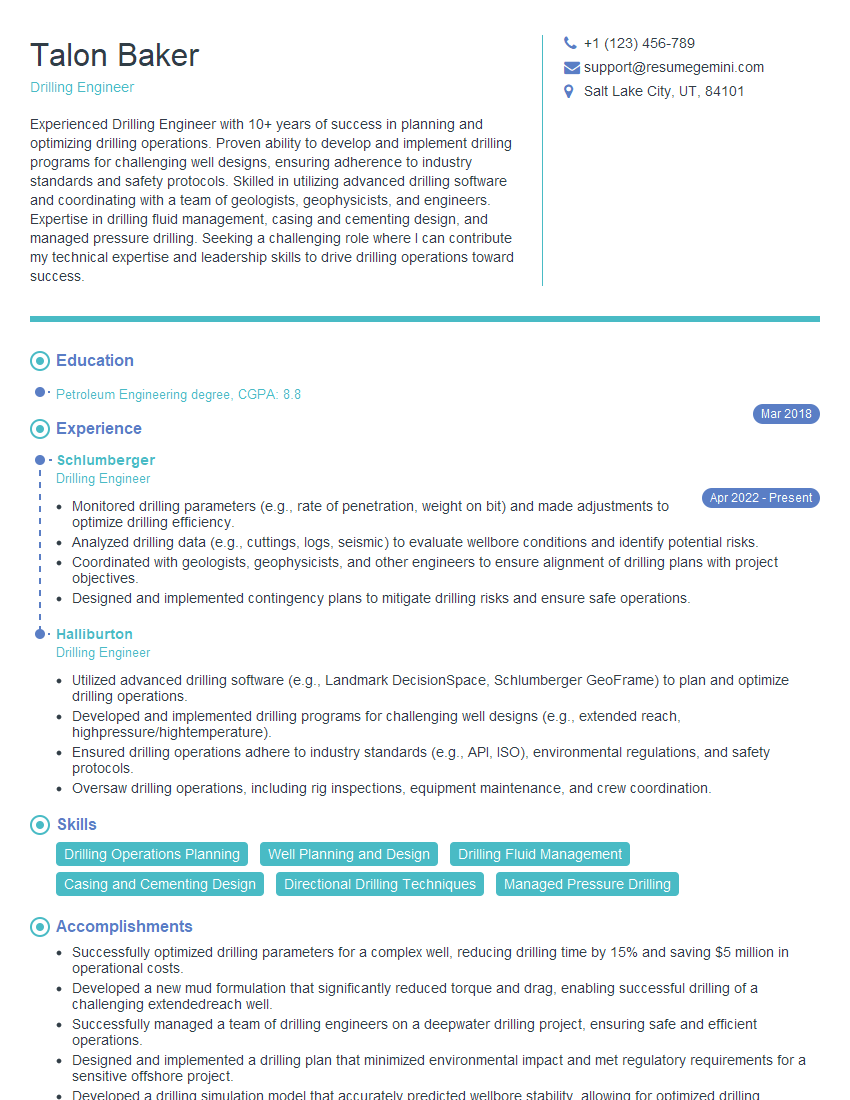
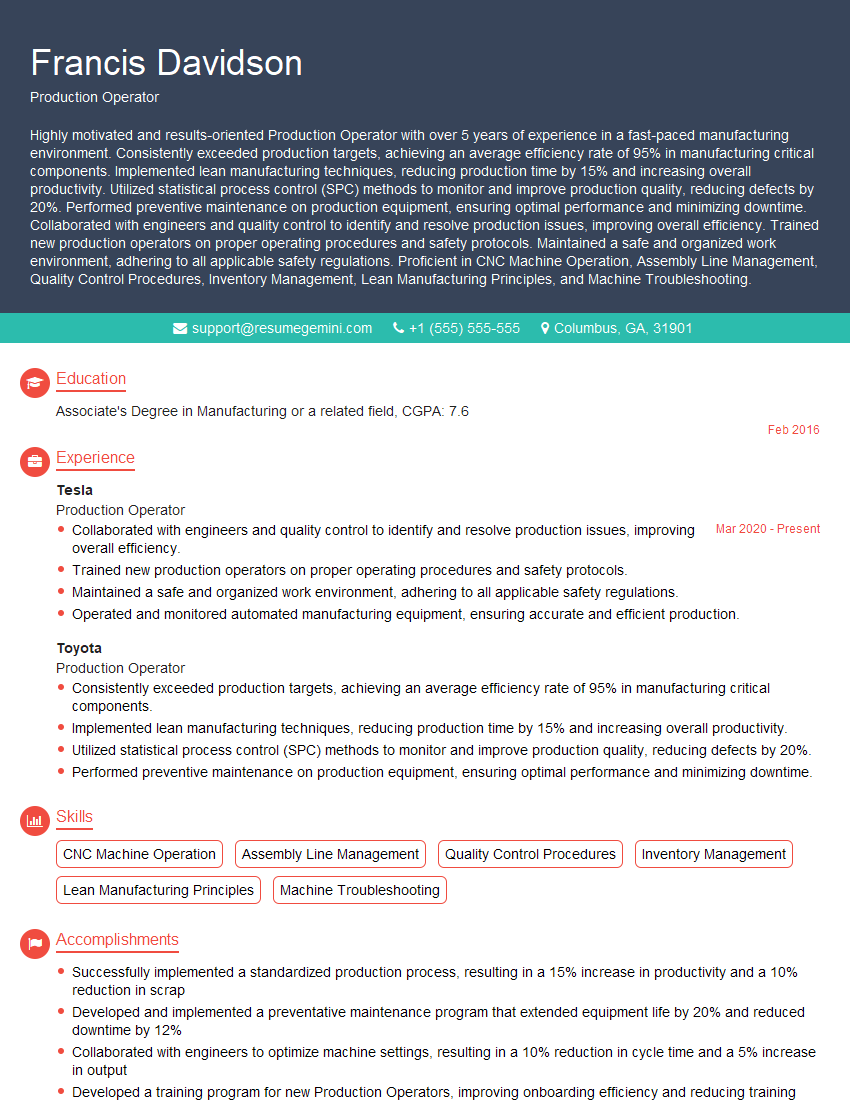
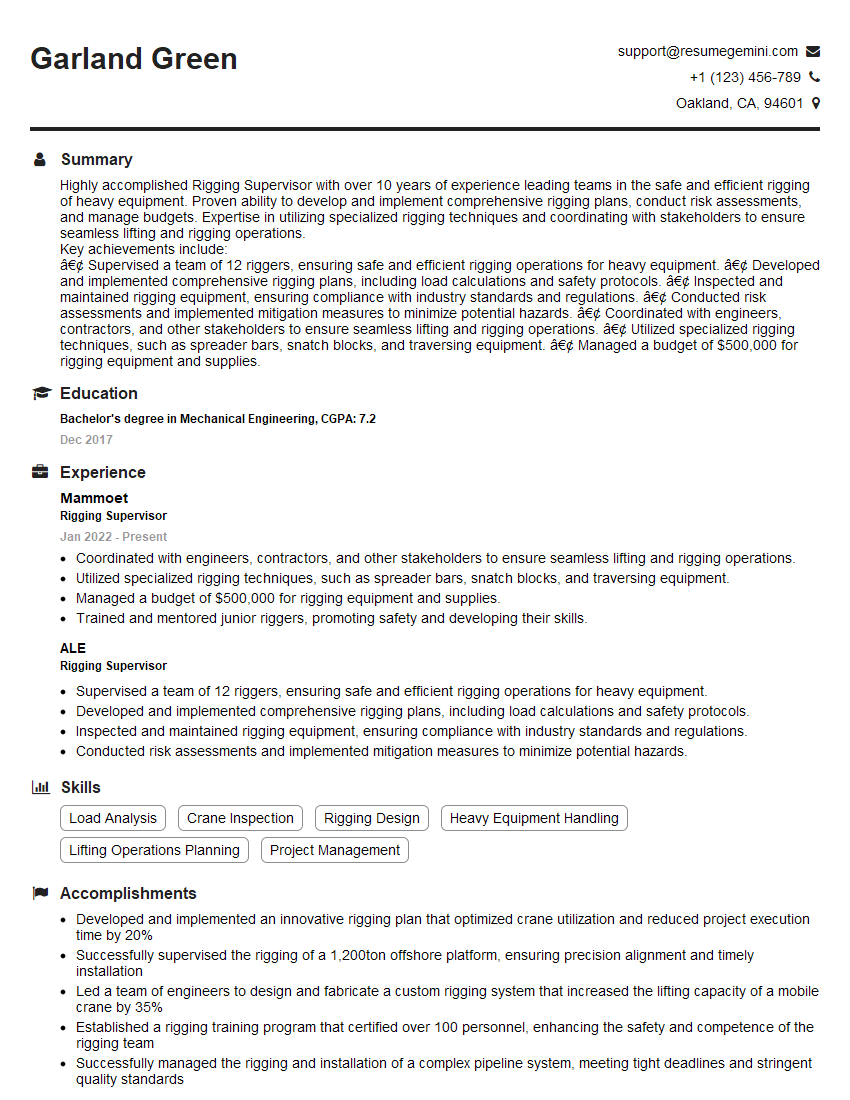
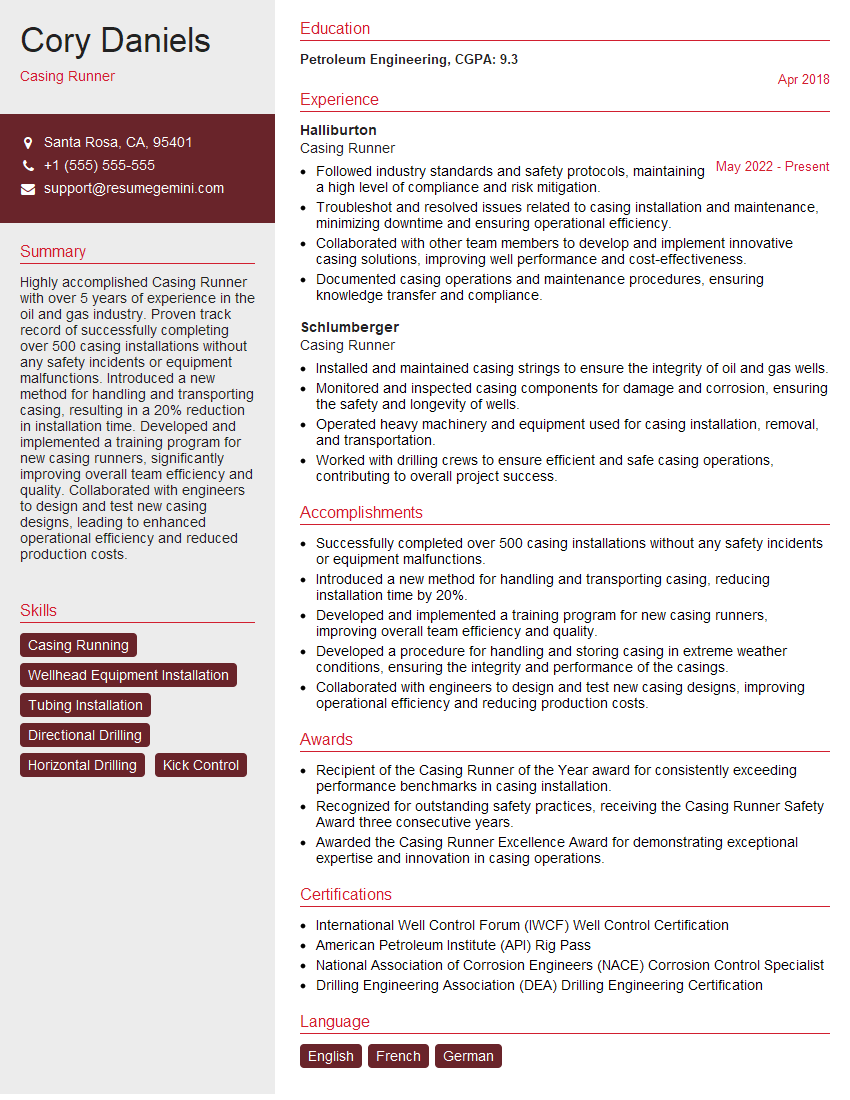
Mastering Casing Handling and Rigging is crucial for career advancement in the oil and gas industry. It opens doors to specialized roles with higher earning potential and increased responsibility. To maximize your job prospects, crafting a strong, ATS-friendly resume is essential. ResumeGemini is a trusted resource that can help you build a professional resume that highlights your skills and experience effectively. Examples of resumes tailored specifically for Casing Handling and Rigging professionals are available through ResumeGemini to help you showcase your expertise.


Explore more articles
Users Rating of Our Blogs
Share Your Experience
We value your feedback! Please rate our content and share your thoughts (optional).
What Readers Say About Our Blog
Very informative content, great job.
good