Interviews are opportunities to demonstrate your expertise, and this guide is here to help you shine. Explore the essential GxP Regulations (21 CFR Part 11) interview questions that employers frequently ask, paired with strategies for crafting responses that set you apart from the competition.
Questions Asked in GxP Regulations (21 CFR Part 11) Interview
Q 1. Define 21 CFR Part 11 and its significance in regulated industries.
21 CFR Part 11, titled ‘Electronic Records; Electronic Signatures,’ is a set of regulations from the U.S. Food and Drug Administration (FDA) that governs the use of electronic records and signatures in regulated industries. It’s essentially a framework ensuring the integrity, reliability, and authenticity of electronic data used in place of paper-based systems. Its significance lies in its impact on industries like pharmaceuticals, medical devices, and food, where accurate and verifiable data are paramount for patient safety and product quality. Without Part 11, the widespread adoption of electronic systems would pose a significant risk to data integrity and regulatory compliance.
Q 2. Explain the key requirements of 21 CFR Part 11 regarding electronic records and signatures.
The key requirements of 21 CFR Part 11 focus on ensuring the trustworthiness of electronic records and signatures. These include:
- Validation: Systems used for electronic records and signatures must be validated to ensure they perform as intended and reliably maintain data integrity. This involves a rigorous process documented in detail.
- Access Control: Strict controls must be in place to restrict access to electronic records and signatures to authorized individuals only. This typically involves user authentication and authorization mechanisms.
- Data Integrity: Electronic records must be complete, accurate, consistent, and readily available. This means preventing unauthorized modification or deletion.
- Audit Trails: A comprehensive audit trail must track all actions performed on electronic records, including creation, modification, deletion, and access attempts. This provides a complete history of all changes.
- Electronic Signatures: Electronic signatures must provide the same level of assurance as handwritten signatures, demonstrating the signer’s identity and intent. This often involves digital signatures and other secure authentication methods.
- System Security: Robust security measures are required to protect electronic records and signatures from unauthorized access, modification, or deletion. This includes measures like network security, antivirus software, and firewalls.
Think of it like a secure digital vault. You need strong locks (security measures), a detailed log of who entered and what they did (audit trail), and a system that ensures no one can tamper with the contents (data integrity).
Q 3. Describe the process of validating a computer system for compliance with 21 CFR Part 11.
Validating a computer system for 21 CFR Part 11 compliance is a comprehensive process involving several stages. It’s not a one-time event but an ongoing effort. A typical validation process involves:
- Requirements Specification: Define the system’s functionality and how it will meet 21 CFR Part 11 requirements.
- Design: Design the system according to the specified requirements, including security, access control, and audit trail functionality.
- Implementation: Build the system according to the design specifications.
- Testing: Conduct a series of tests to verify that the system meets the requirements. This includes unit, integration, system, and user acceptance testing. Each test should be documented.
- Documentation: Thorough documentation is crucial. This includes the validation plan, test protocols, test results, and any deviations or changes made during the process.
- Ongoing Monitoring: After validation, the system must be regularly monitored to ensure it continues to perform as intended. This often involves periodic reviews and updates.
Imagine building a house. You wouldn’t just throw up walls and hope for the best; you’d need blueprints (requirements), inspections (testing), and ongoing maintenance (monitoring) to ensure it’s structurally sound and meets building codes (21 CFR Part 11).
Q 4. What are the essential elements of a successful audit trail for 21 CFR Part 11 compliance?
A successful audit trail for 21 CFR Part 11 compliance must contain essential elements to provide a complete and reliable record of all system activities. These include:
- Unique Identifiers: Each record should have a unique identifier to distinguish it from others.
- Date and Time Stamps: Accurate date and time stamps are essential for chronological order and traceability.
- User Identification: The identity of the user performing each action must be recorded.
- Action Performed: A description of the action performed (e.g., create, modify, delete, view).
- Data Before and After Changes: For modifications, both the previous and current versions of the data should be recorded.
- System Information: Information about the system (e.g., software version, operating system) should be recorded.
- Integrity Checks: Measures to ensure the audit trail itself is tamper-proof and hasn’t been altered.
Think of it like a detailed security camera recording. It needs to clearly show who did what, when, and any changes made to the data. A poorly maintained audit trail compromises the entire system’s integrity.
Q 5. How do you ensure data integrity within a GxP environment?
Ensuring data integrity within a GxP environment is crucial for compliance and requires a multi-faceted approach. Key strategies include:
- Data Governance: Establish clear policies and procedures for data management, including data creation, storage, access, and retention.
- Access Control: Implement robust access control mechanisms to restrict access to authorized personnel only. This uses role-based access control (RBAC).
- Validation: Regularly validate systems and processes to ensure they perform as intended and maintain data integrity.
- Audit Trails: Maintain a comprehensive audit trail of all system activities, as detailed earlier.
- Data Backup and Recovery: Implement a robust backup and recovery strategy to protect against data loss.
- Training and Awareness: Train personnel on data integrity procedures and best practices. Awareness and compliance are paramount.
- Change Control: Implement a change control process to manage any modifications to systems or processes.
Imagine a meticulously organized library. You need a clear cataloging system, restricted access, and regular checks to ensure books are not misplaced, damaged, or lost. Data integrity in GxP is just as essential.
Q 6. What are the common pitfalls organizations encounter when implementing 21 CFR Part 11?
Organizations frequently encounter several pitfalls during 21 CFR Part 11 implementation:
- Inadequate Planning and Risk Assessment: Failing to properly assess risks and plan for a comprehensive implementation.
- Insufficient Training: Inadequate training for personnel on the new systems and procedures.
- Poorly Defined Processes and Procedures: Lack of clear documentation and procedures for handling electronic records and signatures.
- Overlooking Data Integrity Concerns: Neglecting to adequately address data integrity issues throughout the lifecycle of electronic records.
- Ignoring Validation Requirements: Not performing proper validation of the systems and processes.
- Lack of Audit Trail Review: Failure to regularly review and monitor the audit trails.
- Security Vulnerabilities: Overlooking security issues such as weak passwords, lack of encryption, and insufficient access controls.
These issues often lead to non-compliance, regulatory scrutiny, and potentially costly remediation efforts. A proactive, thorough, and well-documented approach from the outset significantly mitigates these risks.
Q 7. Explain the concept of ‘electronic signature’ according to 21 CFR Part 11.
According to 21 CFR Part 11, an electronic signature is a computerized symbol or process attached to or logically associated with an electronic record and executed or adopted by a person with the intent to sign the record. It’s not simply typing a name; it must provide a demonstrable level of assurance that the person signing is who they claim to be and that the signature is authentic. This often requires techniques like digital signatures, which use cryptographic methods to verify the identity of the signer and the integrity of the signed record. A simple ‘John Doe’ typed into a field generally does not meet the requirements. The regulation emphasizes the need for controls to ensure the signature’s authenticity and prevent unauthorized use.
Think of it as a digital equivalent of a notarized signature – providing a much higher degree of assurance than a simple typed name. It needs to be verifiable, unforgeable, and securely linked to the electronic record.
Q 8. What are the requirements for access control and security in a 21 CFR Part 11 compliant system?
Access control and security are paramount in 21 CFR Part 11 compliance. Think of it like securing a high-value vault – you wouldn’t leave it unlocked! The regulation mandates a system where only authorized individuals can access, modify, or delete electronic records. This involves several key elements:
- Unique User Identification: Each user needs a unique identifier, like a username, that’s linked to their specific roles and permissions. No sharing accounts!
- Authentication: A robust system to verify the identity of the user, typically through passwords, multi-factor authentication (MFA), or biometric methods. Strong passwords and regular password changes are essential.
- Authorization: Defining precisely what each user can do within the system. For example, a data entry clerk might only be able to input data, while a supervisor can review and approve it. This is typically handled through roles and permissions.
- Audit Trails: A complete, tamper-proof record of every action taken within the system. This allows for tracking who did what, when, and from where. It’s like having a security camera recording everything.
- Data Integrity: Ensuring the accuracy and completeness of electronic records. This includes measures to prevent unauthorized modifications or deletions.
For instance, imagine a pharmaceutical company’s batch record system. Only authorized personnel – those involved in manufacturing or quality control – should have access to modify batch records. An audit trail would document all changes, helping to identify any discrepancies.
Q 9. How do you handle discrepancies or errors in electronic records?
Handling discrepancies or errors in electronic records requires a meticulous and documented process. Think of it as detective work – you need to carefully investigate the cause and take corrective actions.
- Immediate Investigation: The discrepancy should be investigated immediately to determine the root cause. This might involve reviewing audit trails, comparing data sources, and interviewing personnel.
- Documentation: All findings, actions taken, and conclusions must be thoroughly documented. This includes the date, time, individuals involved, and specific steps to correct the error.
- Corrective Actions: Appropriate corrective actions must be taken to address the root cause of the error and prevent future occurrences. This might involve system improvements, retraining of personnel, or changes to procedures.
- Deviation Report: Often, a formal deviation report needs to be filed, outlining the nature of the discrepancy, investigative steps, and corrective actions implemented. This report often requires approval by designated personnel.
- Record Retention: The original record along with the documentation of the discrepancy, investigation, and corrective action must be retained as part of the complete audit trail.
For example, if a data entry error is found in a clinical trial database, a complete investigation should be launched. The incorrect data would be corrected, a deviation report filed, and appropriate changes to the data entry process might be made to prevent recurrence. The original incorrect entry and all subsequent corrections will be maintained in the audit trail.
Q 10. Describe your experience with different types of validation methodologies (IQ, OQ, PQ).
Validation is the process of proving that a system consistently performs as intended. It’s like ensuring your car runs smoothly before embarking on a long journey. IQ (Installation Qualification), OQ (Operational Qualification), and PQ (Performance Qualification) are three key phases:
- IQ: Verifies that the system has been installed according to specifications. Think about confirming the hardware is correctly set up, software installed properly, and all connections are functional.
- OQ: Checks that the system operates according to its intended design. This might involve confirming that the software functions as designed, alarm systems work, and all controls are performing as expected.
- PQ: Demonstrates that the system consistently produces accurate and reliable results. This could involve running test data and comparing outputs to expected results, or validating the performance of critical algorithms within the system. It proves the system is fit-for-purpose.
My experience includes working on numerous validation projects across various systems, from LIMS (Laboratory Information Management Systems) to chromatography data systems. I’m proficient in creating and executing validation plans, documenting results, and working with regulatory agencies to ensure compliance.
Q 11. What are your strategies for ensuring the ongoing compliance of a system with 21 CFR Part 11 after validation?
Maintaining 21 CFR Part 11 compliance after validation is an ongoing process; it’s not a one-time event. It’s like regular car maintenance – preventative measures are vital to keep it running smoothly.
- Regular System Monitoring: Implementing a system of regular checks, including monitoring system logs, security audits, and performance checks.
- Change Control Process: Establishing a formalized process for managing any changes to the validated system. This ensures all changes are properly documented, tested, and re-validated as needed. Changes – big or small – should be planned, reviewed, and authorized.
- Periodic Re-validation: Conducting periodic re-validation activities, as outlined in the validation plan, to verify continued system compliance. The frequency of re-validation will depend on the criticality of the system and its risk profile.
- User Training: Ensuring users receive appropriate training and understand their roles and responsibilities related to data integrity and system security.
- Documentation Review: Periodically reviewing and updating documentation to maintain accuracy and completeness.
For example, a software upgrade necessitates a change control procedure. This includes impact assessment, testing, and potentially partial re-validation. Post-upgrade, routine checks confirm the system performs as expected.
Q 12. How do you manage changes to validated systems to maintain 21 CFR Part 11 compliance?
Managing changes to validated systems while maintaining 21 CFR Part 11 compliance is critical. It’s like renovating a house – you need a plan to ensure the structural integrity remains. A robust change control process is essential:
- Change Request: All changes must be initiated via a formal change request, documenting the reason for the change, its impact, and proposed solution.
- Impact Assessment: The impact of the change needs to be assessed – will it affect the system’s functionality, security, or data integrity?
- Risk Assessment: A risk assessment should be conducted to identify and mitigate any potential risks associated with the change.
- Testing and Validation: Appropriate testing must be conducted to verify that the change does not negatively impact system performance or compliance.
- Documentation: All aspects of the change, including the request, assessment, testing, and validation results, must be meticulously documented.
- Approval and Authorization: The change requires approval from designated personnel before implementation.
For instance, adding a new feature to a chromatography data system might trigger a change control. This process would involve assessing the impact, creating test cases, testing the modified system, and documenting results, potentially leading to supplemental validation activities.
Q 13. Explain the importance of risk assessment in relation to 21 CFR Part 11.
Risk assessment is fundamental to 21 CFR Part 11 compliance. It’s like identifying potential hazards before building a house – you wouldn’t want a foundation built on weak ground! It involves identifying potential risks to data integrity and system security.
- Identify potential threats: What could go wrong? This could include things like unauthorized access, system failures, data loss, or accidental deletion.
- Assess the likelihood and impact: How likely is each threat to occur, and what would be the consequences if it did? This helps prioritize which risks need to be addressed first.
- Implement controls: Develop and implement controls to mitigate the identified risks. This might involve implementing security measures, enhancing system backups, or creating more robust data validation checks.
- Document findings: All findings, assessments, controls, and remaining risks must be properly documented.
For example, a risk assessment for a clinical trial database might identify the risk of data loss due to a system failure. To mitigate this, the risk assessment may recommend implementing regular backups and a disaster recovery plan.
Q 14. What are the key considerations for ensuring the security of electronic records?
Security of electronic records is paramount under 21 CFR Part 11. It’s like protecting sensitive documents – you wouldn’t leave them lying around! Here are key considerations:
- Access Control: Implementing robust access control mechanisms, including unique user identification, authentication, and authorization (as discussed earlier).
- Data Encryption: Protecting data both in transit and at rest using appropriate encryption techniques.
- Network Security: Securing the network infrastructure through firewalls, intrusion detection systems, and other security measures.
- Physical Security: Protecting the physical servers and equipment that house the electronic records.
- Regular Security Audits: Conducting regular security audits and penetration testing to identify vulnerabilities and ensure the system remains secure.
- Virus Protection: Implementing anti-virus and anti-malware software to protect against malicious code.
- System Backup and Recovery: Regularly backing up electronic records and having a robust disaster recovery plan in place.
For instance, a company handling sensitive patient data must employ strong encryption, robust access controls, and regular security audits to comply with 21 CFR Part 11 and data privacy regulations.
Q 15. How do you handle deviations from established procedures related to 21 CFR Part 11?
Handling deviations from established procedures under 21 CFR Part 11 is crucial for maintaining data integrity and regulatory compliance. It involves a structured approach that prioritizes investigation, documentation, and corrective actions. Think of it like a detective solving a case – you need to find out what went wrong, why it happened, and how to prevent it from happening again.
Immediate Action: Upon discovering a deviation, immediately stop the process to prevent further errors. Secure any affected data.
Investigation: Conduct a thorough investigation to determine the root cause of the deviation. This involves interviewing personnel, reviewing system logs, and examining the affected data. Document everything meticulously.
Documentation: Document the deviation in a deviation report, including the date, time, nature of the deviation, impact, investigation findings, corrective actions, and preventive actions. This report should be reviewed and approved by appropriate personnel.
Corrective and Preventive Actions (CAPA): Implement corrective actions to address the immediate problem and preventive actions to prevent recurrence. This might involve retraining personnel, revising procedures, or upgrading systems.
Review and Approval: The deviation report and CAPA plan must be reviewed and approved by authorized personnel. This ensures accountability and confirms that the necessary steps have been taken.
Follow-up: Monitor the effectiveness of the corrective and preventive actions to ensure the problem is resolved and doesn’t reappear.
For instance, if a user accidentally deletes a critical data file, the deviation report would detail the event, the steps taken to recover the data (if possible), and any changes made to the system or procedures to prevent similar incidents in the future. This detailed record ensures traceability and accountability.
Career Expert Tips:
- Ace those interviews! Prepare effectively by reviewing the Top 50 Most Common Interview Questions on ResumeGemini.
- Navigate your job search with confidence! Explore a wide range of Career Tips on ResumeGemini. Learn about common challenges and recommendations to overcome them.
- Craft the perfect resume! Master the Art of Resume Writing with ResumeGemini’s guide. Showcase your unique qualifications and achievements effectively.
- Don’t miss out on holiday savings! Build your dream resume with ResumeGemini’s ATS optimized templates.
Q 16. Explain your understanding of the concept of audit trails and their importance in data integrity.
Audit trails are essentially detailed logs of all actions performed on a computer system. They’re the security cameras and crime scene investigators of the digital world, providing a comprehensive record of who did what, when, and where. In the context of data integrity under 21 CFR Part 11, they are absolutely vital because they prove the authenticity and reliability of electronic records and signatures.
Imagine a banking system without transaction logs – chaos! Similarly, without audit trails, it’s impossible to verify the accuracy and integrity of electronic data. A robust audit trail includes information such as:
User ID: Identifies the individual who performed the action.
Timestamp: Indicates the date and time of the action.
Event Type: Specifies the action performed (e.g., data entry, modification, deletion).
Data Affected: Identifies the data that was accessed or modified.
IP Address: Shows the location from where the action was performed.
The importance of audit trails in maintaining data integrity cannot be overstated. They provide evidence of data authenticity, prevent unauthorized modifications, and assist in investigations related to data breaches or deviations. They’re the cornerstone of demonstrating compliance with 21 CFR Part 11.
Q 17. Describe your experience with different types of electronic signature technologies.
My experience encompasses various electronic signature technologies, each with its own strengths and weaknesses. The choice of technology depends on the specific application and regulatory requirements.
Digital Signatures: These are the most secure and legally recognized form of electronic signature, based on public-key cryptography. They provide non-repudiation, ensuring that the signer cannot deny their signature. Think of it like a highly secure digital seal, making it nearly impossible to forge.
Electronic Signatures: This is a broader category that encompasses various technologies, including digital signatures. They often involve methods like passwords, PINs, or biometric authentication. While less secure than digital signatures, they can still be compliant with 21 CFR Part 11 if implemented correctly and meet specific requirements regarding control and traceability.
Biometric Signatures: These signatures use unique biological characteristics, such as fingerprints or retinal scans, for authentication. They are particularly useful in enhancing security and reducing the risk of unauthorized access. The challenge often lies in the integration with existing systems.
In practice, I’ve worked with systems using digital signatures for highly critical data and electronic signatures for other records, always ensuring the chosen method meets the required level of security and integrity defined by 21 CFR Part 11. The key is to carefully consider the risk associated with each data type and choose the appropriate technology that aligns with this assessment.
Q 18. How do you determine the appropriate level of validation for a computer system?
Determining the appropriate level of validation for a computer system depends on its criticality and the risk it poses to data integrity. It’s not a one-size-fits-all approach. We use a risk-based approach. Think of it like building a house – you wouldn’t use the same building materials and standards for a small shed as you would for a skyscraper.
A risk assessment identifies the potential impact of system failures and guides the validation strategy. Factors to consider include:
Criticality of the system: Systems involved in direct patient care or data critical to product quality require higher levels of validation.
Complexity of the system: More complex systems demand more rigorous validation activities.
Regulatory requirements: Specific regulatory requirements may mandate particular validation approaches.
Validation levels can range from simple verification to full, formal qualification. Full validation involves comprehensive testing to ensure that the system consistently meets its intended use and is fully compliant with 21 CFR Part 11. Less critical systems might require only verification activities, confirming that the system is operating as expected.
A well-documented risk assessment ensures that the validation effort is proportionate to the risk. Over-validation is wasteful, while under-validation can compromise data integrity and regulatory compliance.
Q 19. What are your experience in documenting and maintaining validation documentation?
My experience in documenting and maintaining validation documentation is extensive, recognizing it’s a critical aspect of demonstrating regulatory compliance. Comprehensive, accurate, and easily retrievable documentation is essential for successful audits and for maintaining a state of compliance.
I follow a structured approach that includes:
Creating a Validation Plan: This plan outlines the scope, objectives, methodology, and timeline of the validation activities. It acts as the roadmap for the entire validation process.
Executing Validation Activities: This involves conducting tests, reviews, and inspections to verify and validate the system’s functionalities and compliance with requirements. Everything is carefully documented.
Maintaining Validation Documentation: All documentation, including test plans, test results, protocols, and reports, are organized and stored in a secure and accessible manner. This often involves using a validated electronic document management system.
Version Control: We maintain version control for all documentation, ensuring that we always have a record of past versions and changes. This allows us to track changes and understand the evolution of the system over time.
Periodic Review: We perform periodic reviews of validation documentation to ensure its continued accuracy and relevance, particularly after system changes or updates.
Using a well-defined system for maintaining validation documentation ensures that all records are readily available when needed, making audits smoother and easier. It also simplifies the demonstration of ongoing compliance with 21 CFR Part 11.
Q 20. How do you address data backups and recovery in a 21 CFR Part 11 context?
Data backup and recovery are crucial aspects of maintaining data integrity in a 21 CFR Part 11 environment. Loss of data can be disastrous, leading to regulatory non-compliance, financial losses, and reputational damage. Think of it like having a safety net – you hope you never need it, but it’s critical to have it in place.
Our approach involves a multi-layered strategy:
Regular Backups: We perform regular backups of all critical data, including both electronic records and audit trails. The frequency of backups is determined based on a risk assessment and typically includes daily or even more frequent backups of active data.
Offsite Storage: Backups are stored offsite in a secure location to protect against physical damage or disasters. This ensures data availability even in the event of an office fire or other unforeseen incident.
Backup Validation: We regularly test the backup and recovery process to ensure its effectiveness. This confirms that we can restore data successfully if needed.
Security: Backups are protected using appropriate security measures to prevent unauthorized access or modification. This includes encryption and access control.
Documentation: All backup and recovery procedures are documented, including the frequency, method, and location of backups. This documentation ensures traceability and accountability.
This comprehensive approach helps ensure data availability and business continuity, meeting the requirements for data integrity outlined in 21 CFR Part 11.
Q 21. What is your experience with managing and investigating data integrity breaches?
Managing and investigating data integrity breaches requires a systematic and thorough approach. It’s about being proactive, and having a plan in place to respond to any situation. Like a well-trained fire department, you need to be prepared to act quickly and effectively.
My experience involves:
Incident Reporting: Establish a clear reporting procedure for data integrity breaches. This ensures that incidents are identified and investigated promptly.
Investigation: Conduct a thorough investigation to determine the root cause of the breach, the extent of the damage, and the individuals involved. This often includes reviewing audit trails, system logs, and interviewing personnel.
Containment: Implement measures to contain the breach and prevent further damage. This might involve isolating affected systems or restricting access to data.
Remediation: Take steps to remediate the breach, which might include data recovery, system repairs, and updates. Corrective and preventive actions should be implemented to prevent future breaches.
Documentation: Meticulously document the entire process, including the incident report, investigation findings, remediation steps, and CAPA plan.
Regulatory Reporting: If required, report the breach to regulatory authorities. This is a critical step to maintain transparency and ensure compliance.
A proactive approach, including regular audits, training, and system maintenance, significantly reduces the risk of data integrity breaches. However, a robust incident response plan is essential for effectively handling any situation that does arise. The key is to learn from past breaches to strengthen systems and prevent future incidents.
Q 22. How do you ensure the accuracy and reliability of electronic data?
Ensuring the accuracy and reliability of electronic data under 21 CFR Part 11 is paramount. It’s like building a sturdy house – you need a solid foundation and consistent construction methods. We achieve this through a multi-pronged approach focusing on system validation, data integrity, and audit trails.
- System Validation: This involves rigorous testing to prove the system consistently performs as intended. We verify the system’s accuracy, reliability, and security. This includes installation qualification (IQ), operational qualification (OQ), and performance qualification (PQ).
- Data Integrity: This is about ensuring data is complete, consistent, accurate, and trustworthy throughout its lifecycle. We achieve this through data backup and recovery procedures, access controls (restricting access to authorized personnel only), and regular data checks and comparisons.
- Audit Trails: Comprehensive audit trails are essential. These are like a detailed history of every action taken within the system, showing who, what, when, and where changes were made. They are crucial for tracing data origins and identifying any discrepancies.
- Data Backup and Recovery: Regular backups are critical to ensure data can be recovered in the event of a system failure or disaster.
For instance, in my previous role, we implemented a system that automatically compared calculated results with those obtained manually, flagging discrepancies for investigation. This ensured data accuracy before it was officially recorded.
Q 23. What are the specific regulatory expectations for electronic signatures in your industry?
21 CFR Part 11 sets strict expectations for electronic signatures, demanding they be equivalent to handwritten signatures in terms of legal weight and trustworthiness. Think of it like a digital handshake that needs to be secure and verifiable.
- Uniqueness: Each signature must be unique to a specific individual, preventing impersonation. This usually involves multi-factor authentication or strong password protection.
- Authenticity: The system must verify the signer’s identity. This often involves using unique usernames and passwords coupled with access control lists and authorization processes.
- Attribution: The system must clearly link the signature to the specific electronic record.
- Integrity: The system must prevent unauthorized changes to the signed record after signature application. This usually involves using hash functions or digital signatures.
- Time-stamping: The system must record the exact time of signing to provide a clear audit trail.
Failure to meet these requirements can result in serious regulatory penalties. Systems often use digital signature technologies incorporating encryption and hashing to satisfy these regulatory expectations.
Q 24. Describe a time you identified a 21 CFR Part 11 non-compliance issue and how you resolved it.
In a previous role, we discovered a 21 CFR Part 11 non-compliance issue related to audit trail management. Our system’s audit trail didn’t record all necessary data points, such as IP addresses for login attempts, making it impossible to track user actions completely. This left a security gap and rendered a portion of the audit trail questionable.
Our resolution involved a multi-step process:
- Assessment: We thoroughly reviewed the system’s functionalities and identified the gaps in audit trail generation.
- System Update: We worked with our IT and vendor teams to upgrade the system to capture the missing data points, ensuring complete audit trail logging.
- Validation: We then validated the updated system to verify that it accurately and reliably captures the required audit trail information.
- Employee Training: We provided comprehensive training to all relevant personnel on the updated system and the importance of data integrity.
- Documentation Update: We updated all relevant SOPs and documentation to reflect the changes.
This case highlighted the critical need for proactive system monitoring and regular audit trail reviews to prevent and promptly resolve any compliance issues.
Q 25. Explain the role of SOPs (Standard Operating Procedures) in maintaining 21 CFR Part 11 compliance.
Standard Operating Procedures (SOPs) are the backbone of 21 CFR Part 11 compliance. They provide step-by-step instructions for all processes involving electronic records and signatures, ensuring consistency and traceability. They are the instruction manual that guides users on how to use and interact with the systems to ensure they are compliant with the regulations.
- Detailed Procedures: SOPs should precisely outline the processes related to creating, modifying, archiving, retrieving, and deleting electronic records and signatures.
- Access Control: SOPs should detail access control procedures, ensuring only authorized personnel can access and manipulate records.
- Signature Processes: SOPs should provide clear guidelines on electronic signature processes, confirming that the signing process meets all 21 CFR Part 11 requirements.
- Audit Trail Management: SOPs should describe procedures for reviewing and archiving audit trails, ensuring their integrity and availability.
- System Validation: SOPs should document the processes for validating electronic systems used for generating, storing, and managing electronic records.
Well-defined SOPs minimize deviations, preventing non-compliance and greatly simplifying audits.
Q 26. What are the challenges of implementing and maintaining 21 CFR Part 11 compliance in a cloud-based system?
Implementing and maintaining 21 CFR Part 11 compliance in a cloud-based system presents unique challenges. It’s like managing a shared house – everyone needs access, but you need to make sure everything is secure and organized.
- Data Security: Protecting data stored in the cloud from unauthorized access, loss, or corruption requires robust security measures, including encryption, access control lists, and regular security audits. The cloud provider’s security posture and compliance are critical to consider.
- Vendor Oversight: You must thoroughly vet and audit your cloud provider to ensure their systems and processes meet 21 CFR Part 11 requirements. You are reliant on their infrastructure and security controls. This can involve detailed due diligence and auditing of their facilities and infrastructure.
- System Validation: Validating a cloud-based system requires careful consideration of the shared infrastructure, including validating the provider’s processes and environments.
- Audit Trails: Ensuring the integrity and accessibility of audit trails in a cloud environment requires comprehensive logging and monitoring procedures.
- Data Backup and Recovery: Developing a robust data backup and recovery strategy is essential to ensure business continuity in case of system failures or data loss. This needs to be carefully coordinated between your organization and the cloud provider.
Careful planning, stringent vendor selection, and rigorous validation are critical to successfully navigate these challenges.
Q 27. Discuss your experience with regulatory inspections related to 21 CFR Part 11.
I have extensive experience with regulatory inspections related to 21 CFR Part 11. Inspections are essentially rigorous examinations that are like a pop quiz on your compliance efforts. They require thorough preparation and precise documentation. My experiences have primarily revolved around preparation for the inspections, including documentation reviews and system audits.
- Pre-Inspection Readiness: This includes a comprehensive review of all relevant documentation, including SOPs, validation plans, audit trails, and training records. We simulate audits and perform internal reviews to identify and correct any deficiencies.
- Inspection Support: During the inspection, I have been actively involved in responding to inspector queries, providing documentation, and demonstrating compliance. We provide clear and concise answers to all queries.
- Post-Inspection Activities: This includes addressing any observations or findings raised by the inspectors and implementing corrective and preventative actions (CAPAs).
These experiences have honed my ability to proactively manage compliance and address any regulatory concerns effectively. Clear and thorough documentation plays a vital role in navigating the inspection process successfully.
Q 28. Explain your understanding of the ALCOA+ principles and their application to data integrity.
ALCOA+ principles are fundamental to data integrity. They’re like the building blocks of a strong and reliable data foundation. ALCOA stands for Attributable, Legible, Contemporaneous, Original, and Accurate. The ‘+’ represents additional principles such as Complete, Consistent, Enduring, and Available.
- Attributable: Each data element must be linked to its originator.
- Legible: Data should be easily read and understood.
- Contemporaneous: Data should be recorded at the time of an event.
- Original: Data should be the first-recorded version.
- Accurate: Data should be correct and truthful.
- Complete: No data should be missing.
- Consistent: Data should be consistent across different systems and sources.
- Enduring: Data must be preserved for the required period.
- Available: Data must be readily retrievable.
Applying ALCOA+ principles ensures data can be trusted and used reliably for regulatory compliance and decision-making. For example, in a laboratory setting, careful sample labeling, detailed documentation of test methods, and maintaining a complete audit trail across all systems ensures ALCOA+ compliance.
Key Topics to Learn for GxP Regulations (21 CFR Part 11) Interview
Ace your GxP (21 CFR Part 11) interview by focusing on these key areas. Remember, understanding the “why” behind the regulations is as important as knowing the “what”.
- Electronic Records and Signatures: Understand the core principles of 21 CFR Part 11, including the definition of electronic records and signatures, and the criteria for their validity.
- Data Integrity: Explore the practical applications of data integrity principles within a GxP environment. Consider scenarios involving data entry, review, and archiving, and how to ensure compliance.
- Validation and Verification: Learn the differences between validation and verification of systems and processes. Understand how to document and demonstrate compliance.
- Audit Trails: Delve into the importance of comprehensive and secure audit trails. Practice analyzing audit trails to identify potential issues and deviations.
- Access Control and Security: Discuss the mechanisms for controlling access to electronic records and systems, and how to maintain security and prevent unauthorized access or modification.
- System Lifecycle Management: Understand the different phases of a system’s lifecycle (design, development, testing, deployment, maintenance) and how 21 CFR Part 11 applies to each stage.
- Risk Management: Learn how to identify, assess, and mitigate risks related to electronic records and signatures to ensure compliance.
- Deviation and CAPA Management: Understand how to handle deviations from established procedures and implement corrective and preventive actions (CAPA) within a GxP framework.
Next Steps
Mastering GxP Regulations (21 CFR Part 11) significantly enhances your career prospects in regulated industries. It demonstrates a commitment to quality, compliance, and data integrity – highly sought-after skills. To maximize your job search success, crafting an ATS-friendly resume is crucial. ResumeGemini is a trusted resource to help you build a professional and impactful resume that highlights your expertise. We offer examples of resumes tailored to GxP Regulations (21 CFR Part 11) to guide you. Take the next step towards your dream career today!
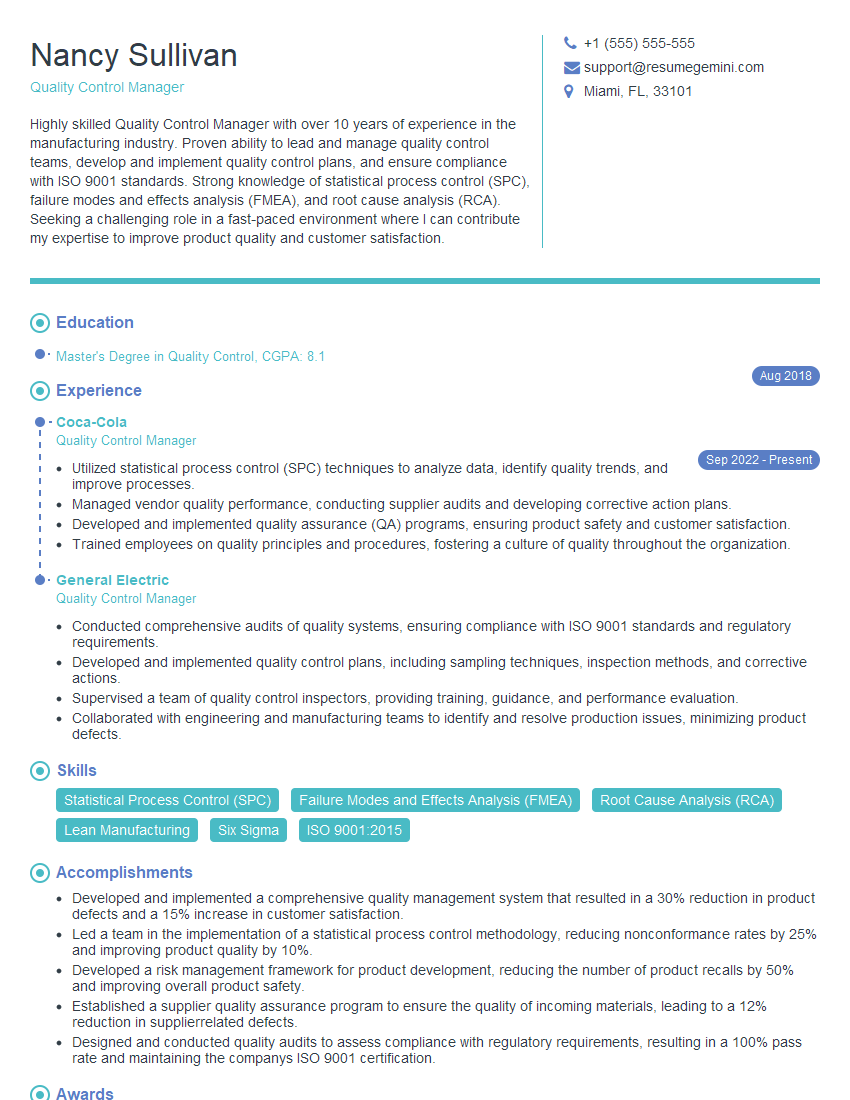
Quality Control Manager Resume Sample
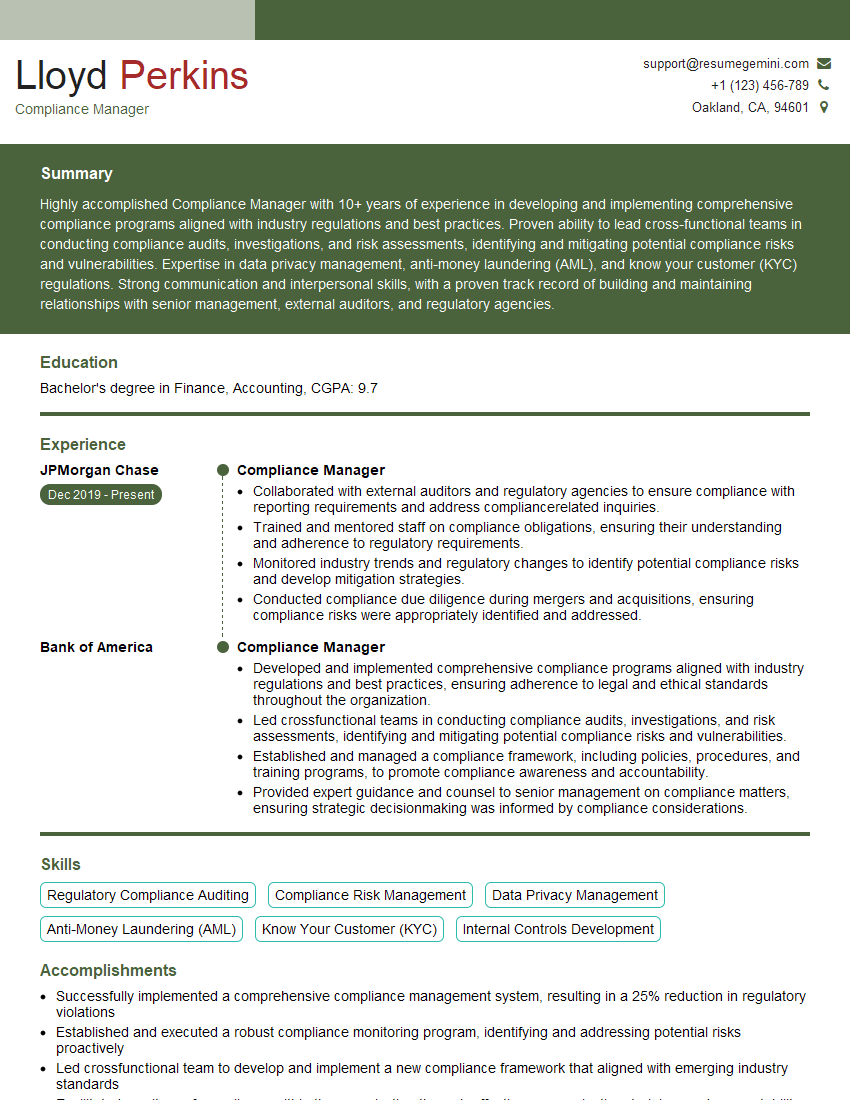
Compliance Manager Resume Sample

Compliance Officer Resume Sample
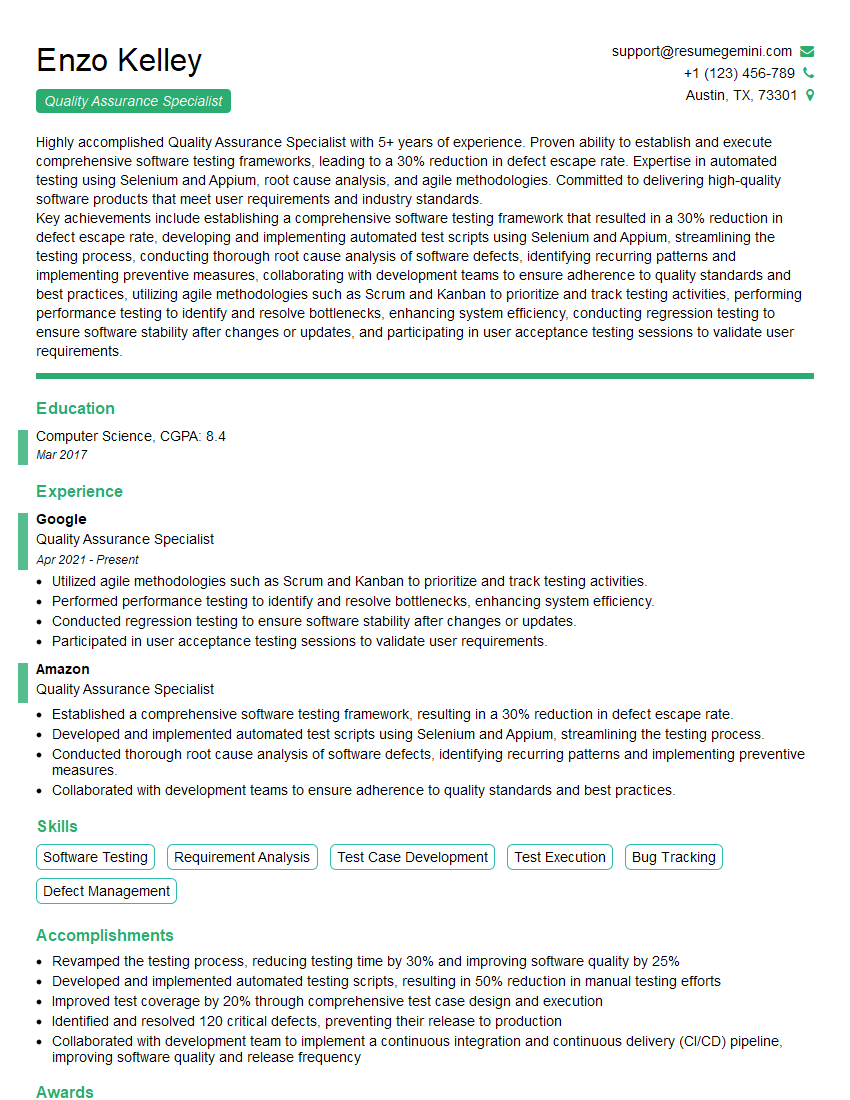
Quality Assurance Specialist Resume Sample
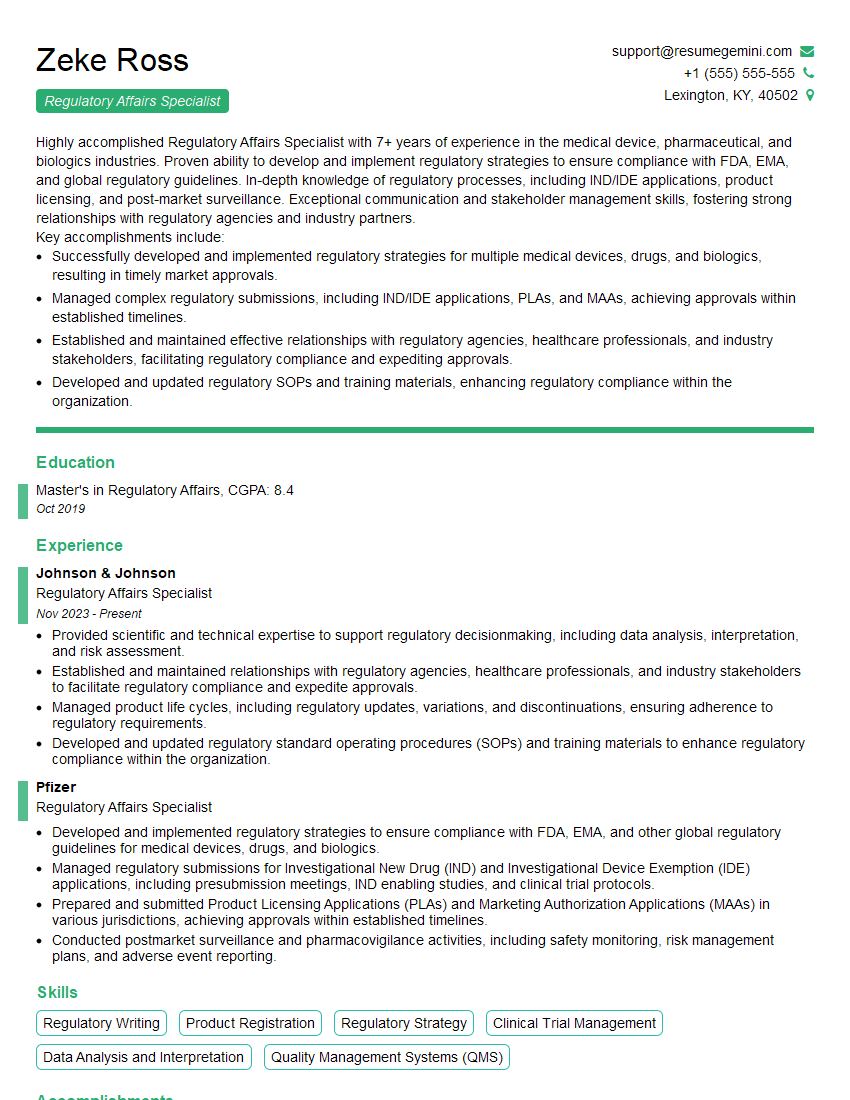
Regulatory Affairs Specialist Resume Sample
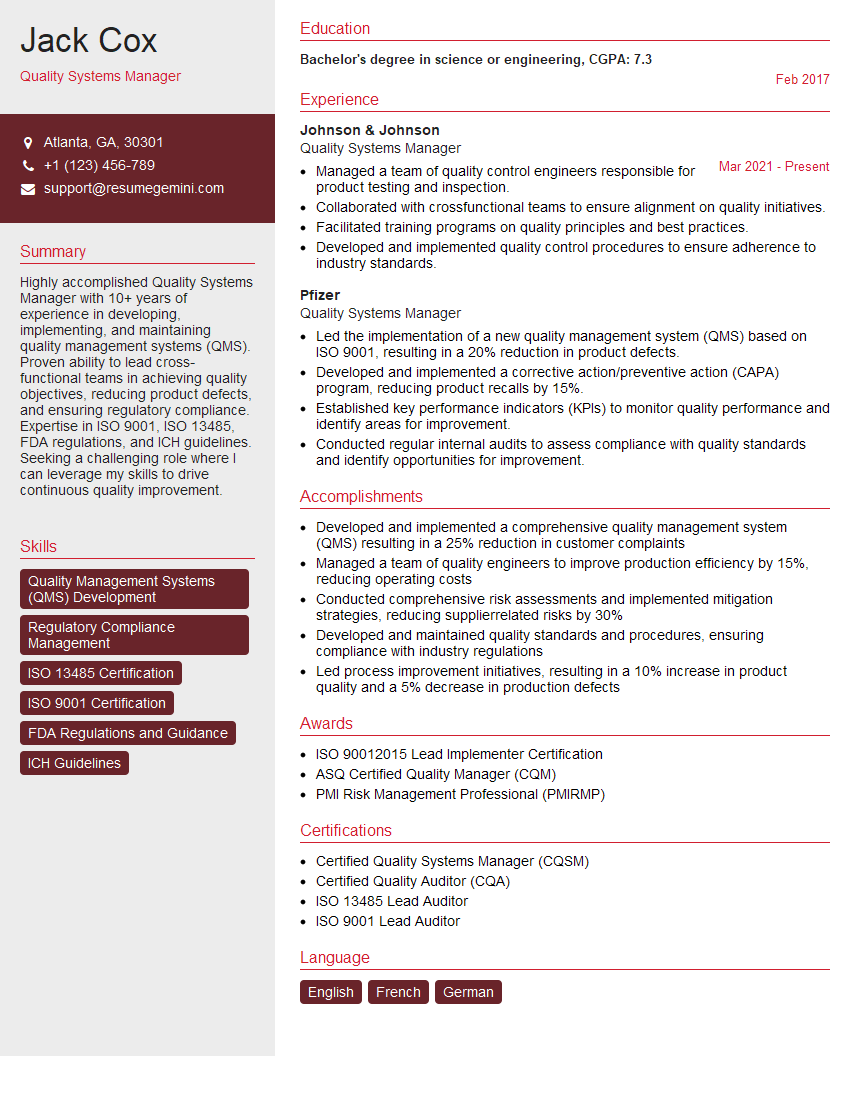
Quality Systems Manager Resume Sample
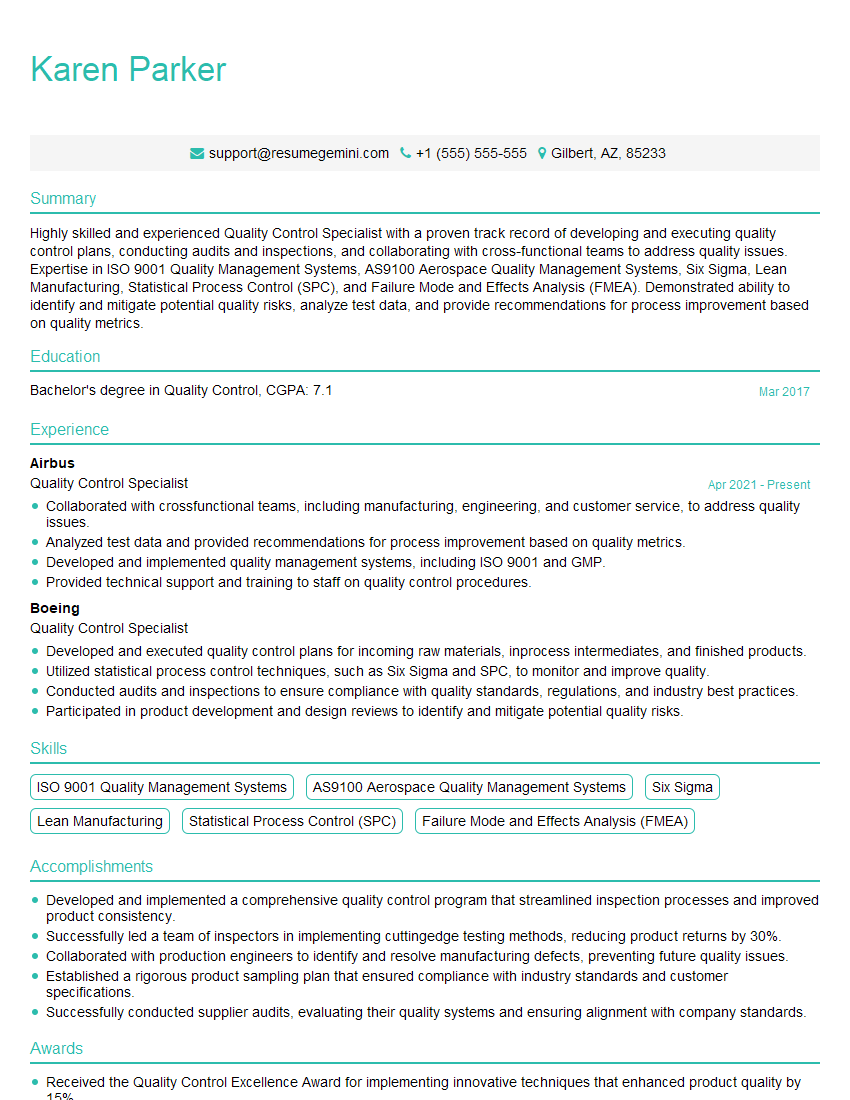
Quality Control Specialist Resume Sample
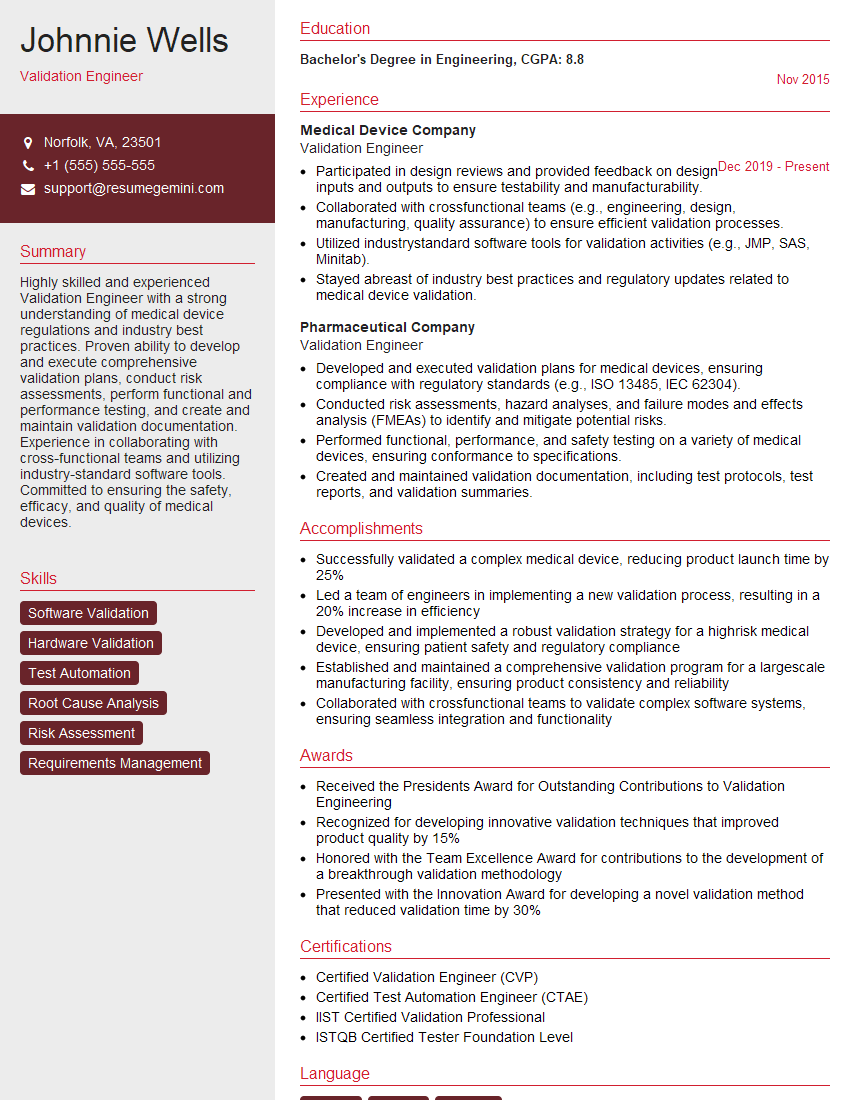
Validation Engineer Resume Sample
Explore more articles
Users Rating of Our Blogs
Share Your Experience
We value your feedback! Please rate our content and share your thoughts (optional).
What Readers Say About Our Blog
Very informative content, great job.
good