Cracking a skill-specific interview, like one for Cemented Construction, requires understanding the nuances of the role. In this blog, we present the questions you’re most likely to encounter, along with insights into how to answer them effectively. Let’s ensure you’re ready to make a strong impression.
Questions Asked in Cemented Construction Interview
Q 1. Explain the different types of cement and their applications.
Cement is the binding agent in concrete, and several types exist, each suited for specific applications. The most common is Ordinary Portland Cement (OPC), a versatile type used in most general construction projects, from foundations to pavements. Its strength and durability make it a reliable choice. Think of it as the workhorse of the cement world.
Rapid-Hardening Cement sets and gains strength much faster than OPC, ideal for projects where quick turnaround is crucial, such as emergency repairs or situations where early formwork removal is necessary. Imagine a situation where you need a section of road repaired quickly – rapid-hardening cement is perfect.
Low-Heat Cement generates less heat during hydration, reducing the risk of cracking in massive structures like dams or large retaining walls. The slower heat release prevents excessive temperature build-up which can cause stress and cracking.
Sulphate-Resisting Cement is designed to withstand the aggressive effects of sulphates in the soil, making it suitable for environments where sulphate attack is a concern, such as marine structures or areas with high sulphate content in groundwater.
White Cement, as the name suggests, produces a white concrete, primarily used for decorative purposes or when aesthetics are important, such as architectural features or precast elements.
- OPC: General construction, foundations, pavements
- Rapid-Hardening Cement: Emergency repairs, quick turnaround projects
- Low-Heat Cement: Dams, large retaining walls, massive structures
- Sulphate-Resisting Cement: Marine structures, sulphate-rich environments
- White Cement: Decorative elements, architectural features
Q 2. Describe the process of concrete mix design.
Concrete mix design is a crucial process involving determining the optimal proportions of cement, aggregates (sand and gravel), water, and sometimes admixtures to achieve the desired properties for a specific application. It’s like baking a cake – you need the right balance of ingredients for the perfect result. A poorly designed mix can lead to weak, brittle, or even unworkable concrete.
The process typically starts with defining the required concrete strength, workability, and durability. Then, laboratory testing, often involving trial mixes, is performed to determine the best combination of materials. Factors such as the type of cement, aggregate characteristics (size, shape, grading), water-cement ratio, and the use of any admixtures (chemicals that modify concrete properties) are considered. The mix design ensures the concrete meets the specified requirements and provides the desired performance characteristics.
The process often involves using established mix design methods, such as the ACI (American Concrete Institute) method, which provides a framework for calculating the required proportions of materials based on the desired properties and the characteristics of the available materials.
Q 3. What are the key factors influencing concrete strength?
Several key factors significantly influence the strength of concrete. The most important is the water-cement ratio. A lower water-cement ratio means less water is used relative to the amount of cement. This leads to a denser concrete mix with fewer voids, resulting in higher strength. Think of it like packing sand – the less water you use, the tighter the sand packs.
The type and quality of cement used also plays a role. Different cements have varying strengths and setting times. The quality and grading of aggregates are also critical. Well-graded aggregates (a mix of different sizes) pack together more efficiently, reducing voids and increasing strength. The curing process is essential. Proper curing allows the hydration process to complete efficiently, leading to higher strength development. Finally, the mixing and placing techniques, as well as the environmental conditions during placing and curing, can influence the final strength.
Q 4. How do you ensure proper curing of concrete?
Proper curing of concrete is critical to achieve its designed strength and durability. Curing involves maintaining adequate moisture and temperature conditions for a sufficient period to allow the hydration process to complete. Think of it as allowing the concrete to ‘mature’ properly. Inadequate curing can lead to weak, brittle concrete that is prone to cracking and deterioration.
Methods for curing include: water curing (keeping the concrete surface wet), membrane curing (applying a curing compound to retain moisture), steam curing (for precast elements), and ponded curing (creating a pool of water over the concrete surface). The duration of curing depends on factors such as the type of cement, ambient temperature, and the required strength. A typical curing duration ranges from 7 to 28 days. Ensuring proper curing is a vital step in guaranteeing a durable and long-lasting concrete structure.
Q 5. What are the common defects found in concrete structures and their causes?
Several common defects can occur in concrete structures, often with serious consequences. Cracking is a prevalent issue, caused by various factors such as shrinkage (drying out), temperature changes, overloading, or inadequate curing. Honeycombing, which is a porous and weak concrete surface, is often due to insufficient compaction during placement.
Segregation (separation of aggregates from cement paste) is another concern, caused by poor mixing, improper handling, or excessive vibration during placement. Bleeding (water rising to the surface) can weaken the concrete and cause surface defects. Surface scaling, characterized by the disintegration of the concrete surface, often results from exposure to de-icing salts or other aggressive chemicals.
The causes of these defects are often interlinked and require careful attention to detail throughout the entire concrete construction process, from material selection and mix design to placing, compaction, and curing. Understanding these defects is crucial for effective quality control and preventing failures.
Q 6. Explain the different types of formwork systems.
Formwork systems are temporary structures used to support freshly placed concrete until it gains sufficient strength. Many types exist, each chosen based on factors such as the shape and size of the structure, project budget, and construction speed.
Timber formwork, utilizing wood planks and lumber, is a common and relatively inexpensive option, suitable for simple shapes and smaller projects. Steel formwork, using prefabricated steel panels, is more durable, reusable, and often preferred for larger, complex projects, especially those requiring precise dimensions and repeated use.
Aluminum formwork offers advantages in terms of weight and ease of handling, making it suitable for projects requiring frequent formwork adjustments. Plywood formwork is often used for its smooth surface finish and ease of handling.
The choice of formwork depends heavily on the specific requirements of the project and the experience of the construction crew. Understanding the different types of formwork available is critical for selecting the most efficient and cost-effective option for a particular project.
Q 7. Describe the process of placing and consolidating concrete.
Placing and consolidating concrete involve getting the concrete into the formwork and ensuring it is free of voids and uniformly compacted. This is crucial for achieving the desired strength and durability. The process begins with transporting the concrete from the mixer to the placement location, often using concrete pumps or chutes.
The concrete is then carefully placed into the formwork, avoiding segregation (separation of components) and ensuring proper coverage. Consolidation is achieved through various methods, including vibration using internal vibrators, which helps remove trapped air and ensure a dense, homogeneous mix. External vibration (vibrating the formwork) is sometimes used, especially for larger elements.
Proper placing and consolidation are essential to avoid defects such as honeycombing, segregation, and voids. The skills and experience of the construction crew are crucial to ensure the concrete is placed and consolidated correctly, resulting in a high-quality structure.
Q 8. What are the safety precautions involved in concrete construction?
Safety on a concrete construction site is paramount. It’s not just about following regulations; it’s about creating a culture of safety where everyone goes home unharmed. This involves a multi-pronged approach.
Personal Protective Equipment (PPE): Hard hats, safety glasses, high-visibility vests, steel-toe boots, and gloves are mandatory. Think of them as your armor against potential hazards.
Fall Protection: Working at heights requires strict adherence to fall protection protocols, including harnesses, lifelines, and safety nets. Falls are a leading cause of injury, so this is non-negotiable.
Heavy Machinery Safety: Operating and being around heavy machinery like cranes, excavators, and concrete pumps requires specialized training and adherence to designated safety zones. Communication is key; designated hand signals and radio communication prevent accidents.
Concrete Pouring Safety: During concrete pours, workers must be aware of the potential for slips, trips, and falls due to wet surfaces. Proper footing and careful maneuvering are critical. Furthermore, there’s the risk of being struck by falling objects or equipment.
Hazardous Materials Handling: Concrete admixtures and other materials can pose health risks. Proper handling, storage, and disposal, according to safety data sheets (SDS), are essential. This includes proper ventilation to minimize exposure to dust and fumes.
Regular Safety Training: Continuous safety training and toolbox talks keep everyone informed about potential hazards and best practices. It’s not a one-time event but an ongoing process.
For example, I once worked on a high-rise project where a detailed safety plan, including daily toolbox talks and regular inspections, prevented a single lost-time accident throughout the entire construction phase. This demonstrated the effectiveness of proactive safety measures.
Q 9. How do you control concrete shrinkage and cracking?
Concrete shrinkage and cracking are common occurrences, but careful planning and execution can significantly minimize them. The key is understanding the causes and implementing appropriate control measures.
Proper Curing: Curing is crucial for hydration and strength gain. Insufficient curing leads to rapid drying and increased shrinkage. Methods include water curing, membrane curing, and using curing compounds. Think of it like carefully nurturing a plant; it needs the right conditions to grow strong.
Low Heat of Hydration Cement: Using cements with lower heat of hydration minimizes temperature variations within the concrete, reducing thermal stresses that can cause cracking. This is particularly important for large pours.
Control of Water-Cement Ratio: A lower water-cement ratio results in less shrinkage and higher strength. However, it requires careful mixing and placement to maintain workability. It’s a delicate balance between strength and workability.
Use of Shrinkage-Reducing Admixtures: These admixtures help compensate for the natural shrinkage of concrete. They are chemical compounds specifically designed to mitigate this effect.
Construction Joints: Properly placed and detailed construction joints allow for controlled cracking in predetermined locations, preventing unpredictable cracking patterns. They act as a relief valve for stress.
Reinforcement: Adequate reinforcement helps control cracking by distributing tensile stresses. This involves strategically placing rebar within the concrete structure.
For instance, I worked on a dam project where using low heat of hydration cement and careful curing procedures, combined with strategic placement of construction joints, resulted in minimal cracking, exceeding the project’s quality standards.
Q 10. What are the different methods of concrete testing?
Concrete testing is essential to ensure quality and meet design specifications. There are various methods employed throughout the construction process.
Slump Test: This measures the consistency or workability of fresh concrete. A slump cone is filled with concrete, and the slump is the difference in height before and after the cone is removed. It’s a simple but crucial test for workability.
Compressive Strength Test: This is the most common test, measuring the concrete’s resistance to crushing. Cylindrical samples are cast and cured for a specified period before being tested in a compression machine. It’s a direct measure of strength and durability.
Air Content Test: This determines the amount of air entrained in the concrete, affecting its workability, durability, and resistance to freeze-thaw cycles. This test is important for specific climate conditions.
Flexural Strength Test: This measures the concrete’s resistance to bending. Beam samples are tested under a load until failure. It’s particularly relevant for pavement and other structures subjected to bending stresses.
Unit Weight Test: Determines the mass of a given volume of concrete, which is important for controlling the mix design and overall structural behavior. This test helps ensure the proper density of the concrete.
Durability Tests: These tests assess the concrete’s resistance to various factors like freeze-thaw cycles, chemical attack, and abrasion. These are essential for structures exposed to harsh environmental conditions.
Imagine building a bridge; compressive strength tests ensure that it can withstand the weight of traffic, while freeze-thaw tests are vital if it’s located in a region with harsh winters. These tests provide data-driven assurance of structural integrity.
Q 11. Explain the importance of quality control in concrete construction.
Quality control in concrete construction isn’t just about meeting minimum requirements; it’s about building structures that are durable, safe, and perform as intended for their lifespan. It’s a proactive approach involving meticulous attention to detail at every stage.
Material Quality Control: Ensuring the quality of cement, aggregates, and admixtures is critical. This involves proper sampling and testing of materials delivered to the site. It’s like using the best ingredients in a recipe.
Mix Design Control: The precise proportions of cement, aggregates, water, and admixtures are crucial for achieving the desired strength, workability, and durability. Accurate measurements and consistent mixing are essential.
Placement and Consolidation: Proper placement and consolidation techniques prevent segregation and voids, improving concrete quality and strength. Think of it as carefully arranging the ingredients to ensure a uniform texture.
Curing and Protection: Appropriate curing procedures are vital for strength development and durability. Protecting the concrete from premature drying and temperature extremes is critical.
In-situ Testing: Regular testing and inspection during construction verify that the concrete meets specifications. This is akin to quality assurance checks in manufacturing.
Documentation: Maintaining thorough records of all materials, tests, and procedures ensures traceability and facilitates problem-solving if issues arise.
For example, a poorly controlled mix design can lead to a weaker structure, jeopardizing safety and longevity. Rigorous quality control procedures, on the other hand, ensure that the final product meets the highest standards.
Q 12. What are the environmental considerations in concrete construction?
Environmental considerations are becoming increasingly important in concrete construction. It’s not just about building structures; it’s about minimizing the environmental impact throughout the lifecycle of the project.
Reduced Carbon Footprint: The production of cement is a significant source of CO2 emissions. Using supplementary cementitious materials (SCMs) like fly ash and slag reduces this impact. These materials offer a sustainable alternative.
Sustainable Sourcing of Materials: Using locally sourced materials reduces transportation costs and emissions, contributing to a smaller carbon footprint. Choosing materials with low embodied energy is crucial.
Waste Management: Minimizing waste and recycling construction materials are essential for environmental stewardship. Careful planning and efficient use of materials help reduce landfill waste.
Water Management: Concrete production requires substantial amounts of water. Implementing measures to reduce water consumption and reuse water wherever possible is crucial. This also helps conserve precious resources.
Noise Pollution: Construction activities can generate significant noise pollution. Implementing noise mitigation strategies helps protect the environment and local communities.
Protecting Ecosystems: Construction projects must take into consideration the potential impacts on local ecosystems and biodiversity. Steps should be taken to minimize disruptions and restore habitats if necessary.
A recent project I worked on incorporated recycled aggregates and SCMs, significantly lowering the carbon footprint compared to traditional methods. It’s a testament to how environmentally conscious practices are increasingly being integrated into concrete construction.
Q 13. How do you handle concrete placement in adverse weather conditions?
Adverse weather conditions can significantly affect the quality and workability of concrete. Special measures are needed to mitigate these challenges.
Extreme Temperatures: High temperatures can accelerate setting, leading to rapid strength gain but also increased risk of cracking due to rapid moisture loss. Conversely, low temperatures can slow down setting, potentially impacting strength development. It’s like baking a cake; the temperature has a significant impact on the final product.
Rain and Moisture: Rain can wash away cement particles, weakening the concrete and altering its properties. Protecting the freshly placed concrete with tarpaulins or other coverings is crucial to prevent this. It’s about shielding the delicate concrete from harmful elements.
Wind: Strong winds can accelerate evaporation, increasing the risk of shrinkage and cracking. Windbreaks can be used to minimize this effect.
Freezing Temperatures: Freezing temperatures can cause damage to the concrete, especially before it has fully set. Appropriate admixtures to lower the freezing point and protecting the concrete with insulating blankets or enclosures can mitigate this.
Heat Management: In hot weather, using chilled water and ice can help lower the concrete’s temperature, extending its workability time. Conversely, in cold weather, heating the materials and using accelerators can help maintain the setting process.
During a winter project, we used insulated forms and covered the freshly poured concrete with thermal blankets to prevent freezing. This enabled us to maintain the schedule and deliver a high-quality finished product despite the harsh conditions.
Q 14. Explain the principles of reinforced concrete design.
Reinforced concrete design is about creating a composite material that effectively combines the compressive strength of concrete with the tensile strength of steel reinforcement. The fundamental principles are:
Understanding Material Properties: Knowing the compressive strength of concrete and the tensile strength of steel is paramount. This enables engineers to determine the appropriate amount of reinforcement needed for a given load.
Stress Distribution: Steel reinforcement is strategically placed to resist tensile stresses, while concrete resists compressive stresses. This efficient distribution of forces is key to structural integrity.
Bond Between Steel and Concrete: A strong bond between the steel and concrete is essential for transferring loads effectively. Proper detailing and concrete quality are critical factors here.
Crack Control: Reinforcement helps control cracking by distributing tensile stresses throughout the member. Adequate reinforcement minimizes the width and spacing of cracks.
Load Considerations: The design must account for all types of loads, including dead loads (weight of the structure itself), live loads (occupancy loads), and environmental loads (wind, snow, seismic).
Code Compliance: Reinforced concrete design must comply with relevant building codes and standards, ensuring safety and structural integrity.
Imagine a beam carrying a heavy load; the concrete on top is compressed, while the concrete on the bottom is under tension. The steel reinforcement in the bottom part prevents cracking and ensures the beam can withstand the load. This is a fundamental principle of reinforced concrete design.
Q 15. Describe different methods of concrete repair and rehabilitation.
Concrete repair and rehabilitation encompasses a range of techniques aimed at restoring the structural integrity and functionality of damaged concrete structures. The choice of method depends on the type and extent of damage, the structural significance of the element, and cost considerations.
- Surface repairs: These address minor damage like cracks, spalling, or surface erosion. Methods include patching with epoxy mortars, cementitious grouts, or polymer-modified concrete. Think of it like patching a small hole in a wall. A simple, cost-effective solution for superficial damage.
- Crack injection: For larger cracks that compromise structural integrity, crack injection is used. Low-viscosity epoxy resins or polyurethane foams are injected under pressure to fill the crack, restoring structural continuity. Imagine this like sealing a leak in a pipe, preventing further damage.
- Section repair: This involves removing significantly damaged sections of concrete and replacing them with new concrete. Careful preparation of the surfaces for bonding is critical. Think of this as replacing a rotted section of wood in a building. Requires precise removal and replacement.
- Strengthening: This is employed when the concrete’s load-bearing capacity is insufficient. Methods include adding external reinforcement (like steel plates or fiber-reinforced polymers) or internally through techniques like shotcreting (spraying concrete onto the surface).
- Carbon Fiber Reinforced Polymers (CFRP): CFRP is becoming increasingly popular for strengthening concrete members, particularly beams and columns, significantly improving their tensile strength and ductility. Its application is often preferred due to its ease of installation, minimal disruption, and high strength-to-weight ratio.
The selection of the appropriate repair method requires a thorough assessment of the damage, which may involve visual inspection, non-destructive testing (NDT), and core sampling.
Career Expert Tips:
- Ace those interviews! Prepare effectively by reviewing the Top 50 Most Common Interview Questions on ResumeGemini.
- Navigate your job search with confidence! Explore a wide range of Career Tips on ResumeGemini. Learn about common challenges and recommendations to overcome them.
- Craft the perfect resume! Master the Art of Resume Writing with ResumeGemini’s guide. Showcase your unique qualifications and achievements effectively.
- Don’t miss out on holiday savings! Build your dream resume with ResumeGemini’s ATS optimized templates.
Q 16. What is the significance of slump test in concrete?
The slump test is a crucial quality control test in concrete construction. It measures the consistency or workability of the fresh concrete mix. The slump test helps determine if the mix is workable enough to be placed and consolidated effectively. It’s a simple, yet vital indicator of the concrete’s water-cement ratio, which greatly affects its strength and durability.
The test involves filling a standard slump cone with fresh concrete, then carefully removing the cone. The amount the concrete slumps or settles is measured in inches or millimeters. A higher slump value indicates a more workable, but potentially weaker, mix. A low slump indicates a stiffer, less workable mix. This test allows adjustments to the water content to achieve the desired consistency for efficient placement and compaction.
Q 17. Explain the concept of workability in concrete.
Workability in concrete refers to its ease of handling, placing, consolidating, and finishing. It’s a crucial property that influences the efficiency of the construction process and the final quality of the concrete structure. Highly workable concrete is easy to place and compact, resulting in a dense, strong, and durable structure. Poor workability leads to segregation (separation of cement and aggregates), air voids, and honeycombing (porous areas), ultimately weakening the concrete.
Factors affecting workability include water-cement ratio, aggregate grading, aggregate shape, and the use of admixtures. Imagine trying to spread a very stiff dough versus a soft, pliable one – the latter is far more workable. Similarly, workable concrete is easy to place, while unworkable concrete is difficult to handle and results in poor quality.
Q 18. How do you determine the required amount of cement for a given project?
Determining the required cement quantity involves a few steps, starting with calculating the total volume of concrete needed for the project. This is often done from architectural and structural drawings.
- Calculate the concrete volume: This depends on the dimensions of the elements (e.g., footings, columns, slabs). It’s usually expressed in cubic yards or cubic meters.
- Determine the concrete mix design: This involves specifying the proportions of cement, aggregates (sand and gravel), and water. The mix design is typically determined based on strength requirements, durability needs, and local material availability. It is often expressed as a ratio (e.g., 1:2:4 mix, implying 1 part cement, 2 parts sand, and 4 parts gravel).
- Convert the mix ratio to weight or volume: The mix ratio needs to be converted into actual weights (e.g., kilograms or pounds) or volumes (e.g., cubic meters or cubic yards) of each ingredient per unit volume of concrete. This usually involves using unit weights of the materials.
- Calculate the cement quantity: Once the weight or volume of each constituent in the mix is known per unit volume of concrete, multiply this by the total concrete volume. This calculation will give the overall amount of cement required.
It’s important to add a small percentage to account for waste and potential variations in material properties. Consulting with a concrete supplier or structural engineer is recommended to ensure an accurate cement quantity.
Q 19. What are the different types of admixtures used in concrete?
Admixtures are chemical substances added to concrete mixes to modify its properties. They are used to enhance workability, improve strength, accelerate or retard setting time, reduce water content, improve durability, and control air entrainment. Choosing the right admixture can significantly affect the quality and performance of the concrete.
- Water reducers (superplasticizers): Increase workability without increasing water content, improving strength and reducing shrinkage.
- Accelerators: Speed up the setting and hardening process of concrete, useful in cold weather or when rapid construction is needed.
- Retarders: Slow down the setting time, useful in hot weather or for large pours where maintaining workability over a longer period is essential.
- Air-entraining admixtures: Introduce small air bubbles into the concrete mix, increasing its resistance to freeze-thaw cycles and improving its workability.
- Corrosion inhibitors: Enhance the durability of concrete by protecting reinforcing steel from corrosion.
- Pozzolans: Supplementary cementitious materials that improve the concrete’s long-term strength and durability.
The type and amount of admixture used are critical and should be determined based on the project’s specific requirements and conditions, following the manufacturer’s recommendations.
Q 20. What are the effects of using excessive water in concrete mix?
Using excessive water in a concrete mix has several detrimental effects on the final product and the structure’s integrity.
- Reduced strength: Excess water weakens the concrete’s strength as it increases the water-cement ratio. The excess water creates more pores in the hardened concrete, reducing its compressive strength.
- Increased shrinkage: More water leads to greater shrinkage during drying, causing cracking and potential structural damage.
- Increased permeability: A higher water-cement ratio results in more permeable concrete, making it susceptible to damage from freezing and thawing cycles, chemical attack, and water penetration.
- Segregation: Excess water can lead to segregation, the separation of the cement paste from the coarse aggregates. This results in an uneven distribution of materials, leading to weakness and variability in the finished concrete.
- Reduced durability: The combination of lower strength, increased shrinkage, and permeability makes the concrete less durable and vulnerable to early deterioration.
Imagine building a sandcastle with too much water – it will be weak, prone to collapse, and quickly disintegrate. Similarly, excess water significantly compromises the quality and lifespan of concrete structures.
Q 21. Describe the process of designing a concrete footing.
Designing a concrete footing involves several crucial steps to ensure it can adequately support the loads from the structure above.
- Determine the loads: This involves calculating the dead load (weight of the structure itself) and live load (variable loads like people, furniture, and equipment) the footing will support. Structural engineers use detailed calculations to determine these loads.
- Select the soil type: The type of soil beneath the footing dictates its design. Different soil types have varying bearing capacities (the maximum pressure they can withstand without failure).
- Determine the allowable bearing pressure: Based on the soil type, geotechnical investigations are conducted to determine the allowable bearing pressure. This is a critical factor in the footing design.
- Calculate the required footing area: Divide the total load by the allowable bearing pressure. The resulting area is the minimum size of the footing required to safely support the structure.
- Select the footing dimensions: Based on the required area, dimensions are selected. The footing should be sufficiently wide to distribute the load over a larger area of soil.
- Determine the footing depth: The depth ensures sufficient embedment in the soil, preventing uplift or settlement. It also provides adequate resistance to the soil’s shear stresses.
- Design for reinforcement: Reinforcement bars (rebar) are incorporated to resist tensile stresses within the footing. The amount and arrangement of rebar are calculated based on the expected stresses.
Finally, detailed drawings and specifications are created to guide construction. A proper design prevents settling and failure, ensuring the longevity and safety of the structure.
Q 22. Explain the difference between pre-stressed and post-stressed concrete.
The key difference between pre-stressed and post-stressed concrete lies in when the compressive force is applied to counteract tensile stresses.
Pre-stressed concrete involves tensioning the steel tendons before the concrete is poured. Imagine stretching a rubber band before attaching it to a structure – that pre-tension provides immediate strength. The concrete then encases the tendons, and as it cures and shrinks, the tendons transfer their compressive force to the concrete, preventing cracking under load. This is commonly used in bridge beams and prefabricated elements for its high strength and slenderness.
Post-stressed concrete, on the other hand, involves tensioning the tendons after the concrete has cured. Think of it like tightening a screw after the structure is built. This allows for greater flexibility in design and construction, as the tendons can be placed strategically to address specific stress points. This method is frequently employed in large structures like high-rise buildings and long-span bridges where heavy loads need to be managed.
In essence, pre-stressing is proactive, introducing compressive strength beforehand, while post-stressing is reactive, addressing stress after the fact.
Q 23. How do you interpret concrete test reports?
Interpreting concrete test reports requires a thorough understanding of the various parameters tested and their implications for the concrete’s properties. Key aspects to look for include:
- Compressive Strength: This is the most crucial parameter, indicating the concrete’s ability to withstand crushing loads. Low strength indicates potential structural weaknesses. Reports usually specify the strength at different curing ages (e.g., 7 days, 28 days).
- Slump Test: This measures the workability of the concrete – how easily it can be poured and placed. An excessively high slump can lead to segregation, while a low slump might make placement difficult.
- Air Content: Proper air content is vital for durability, especially in freeze-thaw cycles. Too much air reduces strength; too little leaves the concrete vulnerable to cracking.
- Unit Weight: Provides information about the density of the concrete. Variations might suggest inconsistencies in the mix design or improper compaction.
- Water-Cement Ratio: A crucial indicator of the concrete’s durability. Lower ratios generally lead to higher strength and better durability.
Any deviation from the specified parameters should be investigated thoroughly. The report should also include details about the testing methods and any relevant certifications to ensure the results are reliable. For example, a compressive strength significantly below the specified design value might necessitate corrective actions, such as investigating the mix design, material quality, or construction practices.
Q 24. What is the role of aggregate in concrete?
Aggregates, typically sand and gravel, form the bulk of concrete volume (around 60-75%). They play a crucial role in determining the concrete’s overall properties.
- Strength and Durability: Aggregates provide compressive strength and contribute significantly to the concrete’s overall durability. The strength and characteristics of the aggregate directly influence the final strength of the concrete.
- Workability: The size, shape, and grading of aggregates affect the workability of the fresh concrete mix. Well-graded aggregates improve workability, making it easier to place and compact.
- Cost-Effectiveness: Aggregates are usually locally sourced, making them a cost-effective component of concrete. Using locally available aggregates can reduce transportation costs and environmental impact.
- Volume: Aggregates take up a large portion of the concrete mix, reducing the overall volume of cement needed while maintaining the desired properties.
Imagine a brick wall – the bricks (aggregates) provide the bulk of the structure, while the mortar (cement paste) binds them together. Similarly, aggregates are essential for the structural integrity of concrete.
Q 25. Describe the different types of concrete finishes.
Concrete finishes depend on the intended use and aesthetic requirements. Some common types include:
- Exposed Aggregate: The surface is treated to expose the aggregate particles, creating a textured and visually appealing finish. This is often used for decorative purposes or in applications requiring high skid resistance.
- Smooth Finish: Achieved by troweling or power floating, resulting in a smooth, even surface. This is suitable for flooring or applications requiring a clean, uniform appearance.
- Broomed Finish: A textured finish created by brushing the surface with a broom, providing slip resistance, often used for pavements and walkways.
- Stamped Concrete: Imprinting patterns onto the surface to mimic other materials like stone or brick. This creates decorative effects while maintaining the durability of concrete.
- Shotcrete/Gunite: Applied pneumatically for vertical surfaces or repairs, offering excellent bonding properties. It’s useful in areas requiring high strength and rapid construction.
The choice of finish depends heavily on the project specifications and design requirements. For example, a smooth finish might be chosen for a polished concrete floor in a commercial building, while a broomed finish would be preferred for a driveway.
Q 26. How do you ensure the durability of concrete structures?
Ensuring the durability of concrete structures requires attention to detail at every stage of the process.
- Proper Mix Design: Using a mix design optimized for the specific environmental conditions and anticipated loads is crucial. A low water-cement ratio and high-quality materials contribute to durability.
- Careful Placement and Compaction: Proper placement and thorough compaction eliminate voids and ensure a dense, homogeneous structure. This prevents segregation and enhances durability.
- Curing: Adequate curing is essential to allow the concrete to gain its designed strength and prevent cracking due to shrinkage. Methods include water curing, membrane curing, and steam curing.
- Protection from Environmental Factors: Protecting the concrete from freeze-thaw cycles, chemical attack, and abrasion is vital. This can involve using protective coatings, sealants, or incorporating admixtures that enhance resistance to specific environmental stresses.
- Regular Inspection and Maintenance: Regular inspections help identify potential problems early on. Maintenance activities such as crack repair, cleaning, and protective coatings extend the service life of the structure.
For example, using appropriate admixtures can increase resistance to sulfate attack in coastal environments, while protective coatings can shield the concrete from the damaging effects of UV radiation.
Q 27. What are the latest advancements in concrete technology?
The field of concrete technology is constantly evolving. Recent advancements include:
- High-Performance Concrete (HPC): HPC achieves significantly higher strength and durability through optimized mix designs and the use of advanced admixtures and fibers.
- Self-Consolidating Concrete (SCC): SCC flows readily into complex forms without needing vibration, reducing labor costs and improving placement efficiency.
- Fiber-Reinforced Concrete (FRC): Adding fibers, such as steel or synthetic fibers, enhances the tensile strength and toughness of concrete, making it more resistant to cracking.
- Sustainable Concrete: Growing focus on utilizing recycled materials, reducing carbon emissions, and developing more environmentally friendly concrete mixes.
- 3D-Printed Concrete: This innovative technology allows for the creation of complex, customized concrete structures with enhanced precision and efficiency.
These advancements are transforming the construction industry, enabling the creation of more sustainable, durable, and efficient concrete structures.
Q 28. How do you manage a concrete construction project effectively?
Effective management of a concrete construction project involves meticulous planning, skilled execution, and rigorous monitoring.
- Detailed Planning: This includes thorough site surveys, detailed design drawings, realistic scheduling, and precise material estimations. Clear communication among stakeholders is also essential.
- Quality Control: Implementing a robust quality control system throughout the project is paramount, including material testing, in-process inspections, and adherence to specifications.
- Risk Management: Identifying and mitigating potential risks, such as weather delays, material shortages, and labor issues, is crucial to maintain project timelines and budgets.
- Resource Management: Efficiently managing resources, including labor, equipment, and materials, is essential for timely completion and cost optimization.
- Safety Management: Maintaining a safe work environment for all personnel is paramount, requiring strict adherence to safety regulations and procedures.
For example, using project management software can significantly streamline communication, scheduling, and resource allocation, reducing potential conflicts and delays. Proactive risk management might involve securing multiple suppliers to mitigate material shortages, while a well-defined safety plan can prevent accidents and improve overall productivity.
Key Topics to Learn for Cemented Construction Interview
- Concrete Mix Design and Properties: Understanding the different types of cement, aggregates, and admixtures, and their impact on the final concrete strength, workability, and durability. This includes theoretical knowledge of mix ratios and practical experience in on-site adjustments.
- Formwork and Scaffolding: Knowledge of various formwork systems, their design, erection, and dismantling procedures. This includes understanding safety regulations and best practices related to scaffolding and shoring.
- Concrete Placement and Finishing: Understanding the methods and techniques for placing, consolidating, and finishing concrete to achieve the desired surface quality and structural integrity. This includes practical application of vibration, screeding, and finishing tools.
- Concrete Testing and Quality Control: Familiarity with various concrete testing methods, including slump test, compressive strength test, and air content test. Understanding quality control procedures to ensure the concrete meets the specified requirements.
- Reinforced Concrete Design Principles: Understanding the fundamental principles of reinforced concrete design, including stress-strain relationships, load transfer mechanisms, and detailing requirements. This will cover both theoretical concepts and their practical applications in construction.
- Health and Safety Regulations in Construction: Demonstrating a thorough understanding of relevant health and safety regulations and best practices pertaining to cemented construction, including working at heights, handling hazardous materials, and personal protective equipment (PPE).
- Project Management and Coordination: Understanding the principles of effective project management within a cemented construction context, including scheduling, resource allocation, and risk management. This also involves effective communication and collaboration with other teams.
Next Steps
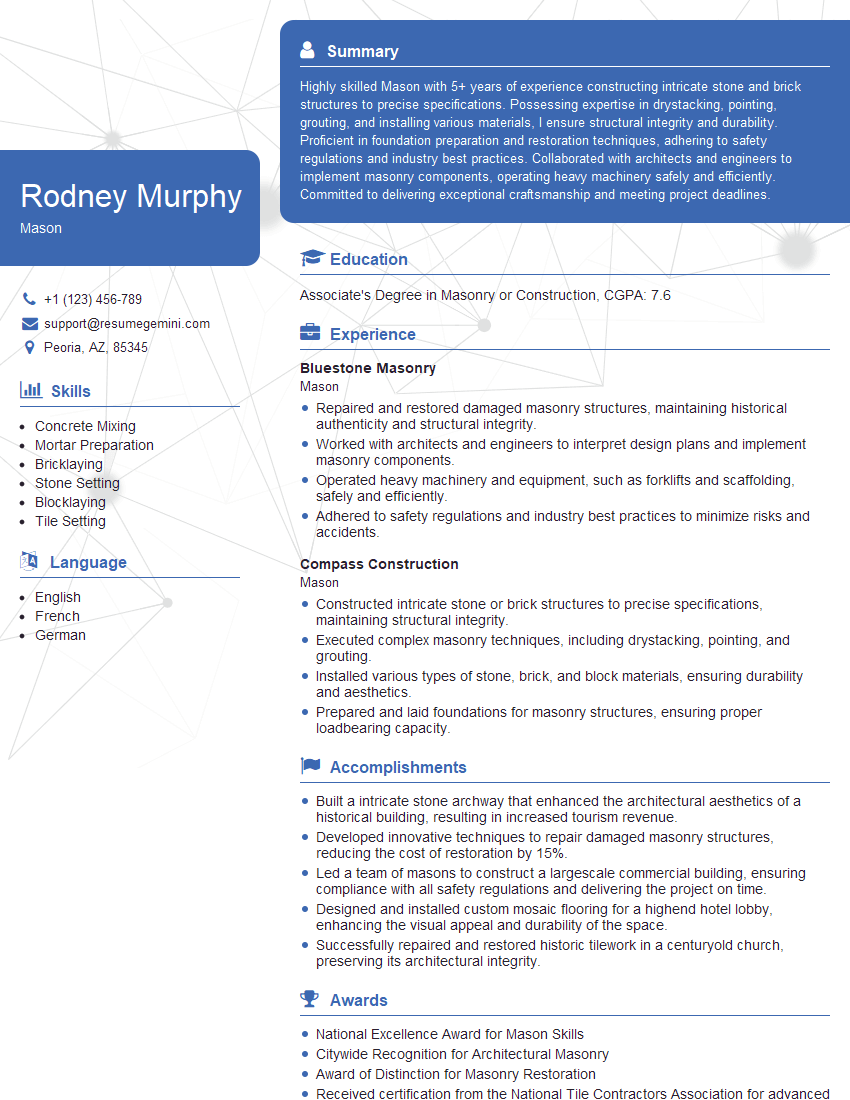
Mastering the intricacies of cemented construction is crucial for a successful and rewarding career in this field. A strong understanding of these principles will significantly enhance your job prospects and allow you to contribute effectively to challenging and rewarding projects. To maximize your chances, crafting an ATS-friendly resume is essential. ResumeGemini is a trusted resource that can help you build a professional resume tailored to highlight your skills and experience in a way that Applicant Tracking Systems (ATS) can easily recognize. Examples of resumes tailored to the Cemented Construction industry are available to provide you with a strong template for your application.



Explore more articles
Users Rating of Our Blogs
Share Your Experience
We value your feedback! Please rate our content and share your thoughts (optional).
What Readers Say About Our Blog
Very informative content, great job.
good