The thought of an interview can be nerve-wracking, but the right preparation can make all the difference. Explore this comprehensive guide to Lighting Operation interview questions and gain the confidence you need to showcase your abilities and secure the role.
Questions Asked in Lighting Operation Interview
Q 1. Explain the difference between incandescent, fluorescent, and LED lighting.
Incandescent, fluorescent, and LED lighting represent three distinct generations of illumination technology, each with its own strengths and weaknesses. Think of them as progressing from a simple candle (incandescent) to a more efficient gas lamp (fluorescent) to a highly refined, modern LED light.
- Incandescent: These lights generate light by heating a filament until it glows. They are simple, inexpensive, and produce a warm, inviting light (often described as ‘warm white’), but they are incredibly inefficient, converting only a small percentage of energy into light and the rest into heat. They also have a short lifespan.
- Fluorescent: These lights use electricity to excite mercury vapor, producing ultraviolet (UV) light which then strikes a phosphor coating on the inside of the tube, converting the UV into visible light. They’re far more energy-efficient than incandescent bulbs, offering a longer lifespan and a cooler light output (often described as ‘cool white’ or ‘daylight’). However, they contain mercury, posing environmental concerns, and can take time to reach full brightness.
- LED (Light Emitting Diode): LEDs are semiconductor devices that produce light when an electric current passes through them. They’re the most energy-efficient option, boast exceptionally long lifespans, and are available in a wide range of color temperatures and intensities. While the initial cost can be higher, the long-term savings in energy and replacement costs make them a compelling choice. They also generate very little heat.
In a nutshell: Incandescent is simple but inefficient; fluorescent is more efficient but contains mercury and has a slightly longer lifespan; LED is the most efficient and long-lasting, offering superior color rendering.
Q 2. Describe your experience with different types of lighting fixtures.
My experience spans a wide variety of lighting fixtures, from basic PAR cans and Fresnels to more specialized instruments like cyc lights and LED panels. I’ve worked extensively with tungsten fixtures, which require careful monitoring of power consumption and cooling, and with various types of HMI (Hydrargyrum medium-arc iodide) lights, which are incredibly bright but require specialized ballasts and safety precautions. I’m also proficient with modern LED fixtures, including those with tunable white capabilities, which give great control over color temperature.
For example, on a recent theatre production, I extensively used a combination of Fresnels for focused spotlights and PAR cans for wash lighting, strategically placing them to achieve specific lighting moods. Another project involved working with a large array of LED panels for even, color-consistent lighting of a film set.
My experience also includes working with different mounting systems for fixtures; from simple clamps and stands to complex rigging setups involving trusses and motorized lifts. Understanding the different mounting systems is as important as understanding the fixtures themselves to ensure safe and effective operation.
Q 3. How familiar are you with DMX control systems?
I’m highly familiar with DMX (Digital Multiplex) control systems. DMX is the industry standard for controlling stage lighting and other theatrical effects. It allows for precise and simultaneous control of multiple lighting fixtures from a single console. I understand the DMX512 protocol, including addressing, channel assignment, and troubleshooting common DMX issues.
My experience includes programming lighting cues using DMX consoles, patching fixtures, and resolving problems like signal drops or incorrect fixture responses. I’m comfortable working with both analog and digital DMX systems and understand the differences in setup and control. For example, I’ve utilized DMX to create dynamic lighting sequences for live performances, changing colors and intensities smoothly and precisely throughout the show. A clear understanding of DMX is crucial for creating complex and captivating lighting designs.
Q 4. What safety procedures do you follow when working with high-voltage lighting equipment?
Safety is paramount when working with high-voltage lighting equipment. My safety procedures are meticulous and adhere to all relevant industry standards. Before even touching any equipment, I always ensure the power is completely switched off and locked out/tagged out. I use appropriate personal protective equipment (PPE), including insulated gloves and safety glasses. I never work alone with high voltage lighting; a second person is always present.
I regularly inspect cables and connectors for any signs of damage or wear. I’m trained to recognize and mitigate potential hazards, such as exposed wires or faulty connections. I also understand the importance of grounding to prevent electrical shock. I am familiar with emergency procedures, including how to respond to electrical shocks or fires.
Furthermore, I always follow site-specific safety protocols and undergo necessary safety training before working on any location. Think of it like this: High voltage is like handling a wild animal – respect, caution, and proper procedures are essential for everyone’s safety.
Q 5. Explain your understanding of color temperature and its impact on lighting design.
Color temperature is a crucial aspect of lighting design, measured in Kelvin (K). It refers to the apparent color of a light source, ranging from warm to cool. Lower Kelvin values (e.g., 2700K) represent warmer, more yellowish light, similar to incandescent bulbs, while higher Kelvin values (e.g., 6500K) represent cooler, bluer light, similar to daylight.
The impact on lighting design is significant. Warm light creates a cozy and intimate atmosphere, often suitable for residential settings or restaurants. Cool light feels more energetic and sterile and might be appropriate for offices or hospitals. The choice of color temperature affects the mood, ambiance, and even the perceived size of a space. For example, a warm light can make a room feel smaller and cozier, while a cool light can make a room feel larger and more open. Incorrect color temperature can clash with other elements in the design, resulting in an unpleasant or visually jarring effect.
I meticulously consider the desired atmosphere when choosing color temperature. My designs often utilize a blend of color temperatures to create depth and visual interest, rather than relying on a single temperature throughout.
Q 6. How do you troubleshoot common lighting problems on set/location?
Troubleshooting lighting problems requires a systematic approach. I typically start by visually inspecting the circuit, checking for blown fuses, loose connections, or damaged cables. If the problem persists, I’ll use a multimeter to check voltage and current. I then work through potential issues, considering whether the problem is with the fixture, the power supply, or the control system.
For example, a flickering light could indicate a loose connection, a faulty ballast (in fluorescent lighting), or a problem with the dimmer. A non-functioning fixture could indicate a blown bulb, a problem with its internal wiring, or a lack of power reaching the fixture. A systematic approach involves isolating the problem step by step.
In cases involving DMX control, I’ll check the DMX signal path for drops or errors using a DMX analyzer. I’m adept at tracing problems within the control system and correcting faulty addresses or channel assignments. Accurate documentation and clear communication during troubleshooting are key to resolving issues quickly and efficiently.
Q 7. Describe your experience with lighting plots and design software.
Lighting plots are essential for visualizing and documenting a lighting design. They serve as blueprints, detailing fixture positions, types, and aiming. I’m proficient in creating detailed lighting plots, either manually or using design software. My experience encompasses a range of design software, including Vectorworks, AutoCAD, and WYSIWYG (What You See Is What You Get).
These programs allow for creating 3D models of the space, placing virtual lights, and simulating the final look of the lighting. This is vital for complex designs, allowing for visualization and adjustments before implementation, thereby saving time and resources. For example, using WYSIWYG, I can simulate the lighting effect of different fixtures and positions in real-time, helping to fine-tune the design and address potential issues before implementation. This process is essential in ensuring the design not only looks good but also functions as intended.
My experience also includes interpreting existing lighting plots and adapting them to specific needs, taking into account factors like changes in the venue or production requirements.
Q 8. What are the different types of lighting gels and their applications?
Lighting gels, also known as color filters, are thin sheets of colored plastic or resin placed in front of lighting instruments to modify the color of the light. They are essential for shaping mood, highlighting specific areas, and achieving a consistent color palette in a scene. Different types cater to various needs and effects.
- CTB (Color Temperature Blue): Reduces the color temperature of a light source, making it cooler. Often used to balance the color temperature of different lights or to create a more bluish ambiance. For instance, you might use CTB on tungsten lights to match the cooler color temperature of daylight.
- CTO (Color Temperature Orange): Increases the color temperature of a light source, making it warmer. Useful for balancing daylight with tungsten lights, or to create a warmer, more inviting feeling. Imagine using CTO gels on daylight balanced LED lights to achieve a sunset effect.
- Roscolux and LEE filters: These are widely used brands offering a vast range of colors, including primary colors (red, green, blue), secondary colors (yellow, cyan, magenta), and many specialty colors like pastel shades or deep ambers. The choice often depends on the desired mood or color scheme. For a vibrant red, you might select Roscolux #29.
- Diffusion gels: These don’t add color, but soften the light, reducing harsh shadows. They are often used to create a more natural or cinematic look, preventing the ‘spotlight’ effect.
- Specialty gels: These include effects like frost (softens the light even more than diffusion), straw (creates a textured, slightly diffused look), or color correction gels which are designed to alter color casts.
The application depends entirely on the creative vision. Think of them as the makeup artist’s palette for lighting. A skilled lighting operator will choose gels meticulously to convey a desired emotion, highlight a specific actor, or simply harmonize the lighting across an entire scene.
Q 9. How do you ensure the safety of lighting equipment and personnel on a project?
Safety is paramount on any lighting project. It’s a multi-faceted approach encompassing both equipment and personnel safety. We begin with a thorough risk assessment, identifying potential hazards specific to the location and equipment used.
- Equipment Safety: This includes regularly inspecting all cables for damage, ensuring proper grounding and earth leakage circuit breakers (ELCBs) are functioning, and using appropriate safety chains and rigging equipment rated for the load. Regular maintenance schedules are essential to prevent equipment failure. Never overload circuits, and always shut off power before handling any equipment.
- Personnel Safety: Training is fundamental. Everyone on the team receives instruction on safe practices, including proper lifting techniques, using safety harnesses when working at heights, and emergency procedures. Clear communication is key. Designating a safety officer and establishing clear communication protocols during setup and operation significantly reduces risks. We always ensure adequate lighting in working areas, even during nighttime operations.
- Specific safety measures: I always utilize proper lockout/tagout procedures when working with electrical systems, making sure the power is completely isolated before any work commences. I also emphasize the importance of wearing appropriate Personal Protective Equipment (PPE) such as safety glasses, gloves, and closed-toe shoes. We conduct regular toolbox talks to review safety procedures and address any concerns.
My experience includes working on large-scale productions where robust safety protocols were critical. For instance, on one outdoor event, we implemented a detailed lighting plan that accounted for wind conditions and potential rain, ensuring the stability of all lighting structures and the safety of our crew.
Q 10. Explain your experience with lighting maintenance and repair.
My experience in lighting maintenance and repair spans several years and encompasses a wide range of equipment. Proactive maintenance is key, and I’m proficient in preventative maintenance schedules including cleaning lenses, checking connections, and replacing bulbs/LEDs before failure.
- Troubleshooting: I’m adept at diagnosing and resolving problems, from simple bulb replacements to more complex issues involving faulty ballasts, dimmer packs, or wiring problems. I utilize multimeters and other diagnostic tools to pinpoint the source of the malfunction.
- Repair Procedures: I’m capable of undertaking repairs, from minor adjustments to more involved repairs, always adhering to safety regulations and manufacturer guidelines. This includes replacing components, soldering connections, and ensuring the equipment is functioning as intended before putting it back into service.
- Record Keeping: Maintaining accurate records of maintenance activities and repairs is vital. This documentation ensures efficiency, aids in budgeting for future maintenance, and helps in identifying recurring issues.
For example, I once successfully repaired a malfunctioning dimmer board on a critical lighting fixture during a live performance. Quick diagnosis and efficient repair minimized disruption and ensured the show continued without interruption. My experience includes managing inventory of spare parts, ensuring a rapid response to equipment failures.
Q 11. Describe your experience with various lighting instruments (e.g., Fresnels, PARs, LEDs).
I’m highly experienced with a variety of lighting instruments. My expertise extends from traditional lighting technologies to modern LED systems.
- Fresnels: I understand how to adjust focus, beam spread, and intensity for precise control over the light beam. They’re excellent for creating sharp, focused beams or soft washes, depending on the lens and distance.
- PARs (Parabolic Aluminized Reflectors): These are powerful and versatile fixtures, useful for wash lighting or creating intense beams. My experience includes using different PAR lamp sizes (e.g., PAR64, PAR38) to achieve various effects.
- LED Lighting: I’m proficient in using LED fixtures, understanding their color temperature adjustment, DMX control, and the benefits of their energy efficiency and long lifespan. I can integrate LED fixtures into lighting designs seamlessly, using their capabilities for dynamic effects and color mixing.
- Other Instruments: My experience extends to other fixtures such as ellipsoidal spotlights (for sharp beams with gobo capabilities), cyclorama lighting, and various types of moving lights.
The choice of lighting instrument is context-dependent. For instance, I’d use Fresnels for precise spotlighting on actors in a theatre setting, while PAR cans might be preferred for a large-scale wash of a concert stage. LEDs are now versatile enough to take on many applications traditionally suited to incandescent sources.
Q 12. What is your experience with rigging lighting equipment?
Rigging lighting equipment requires a high level of expertise and adherence to safety regulations. My experience includes safe rigging practices for a variety of settings, from small-scale productions to large-scale events.
- Safety Procedures: I am fully aware of and strictly adhere to all relevant safety guidelines, including using properly rated chains, clamps, and safety lines. Before commencing any rigging operation, I conduct thorough inspections of the equipment and the rigging points.
- Rigging Techniques: I am proficient in different rigging methods, such as using counterweights, chain motors, and truss systems. Understanding weight distribution and center of gravity is crucial to preventing accidents.
- Planning and Preparation: Before any rigging, I develop detailed plans outlining the rigging process, weight calculations, and safety protocols. This planning stage is essential to mitigate risks and ensure a smooth operation.
For example, I was involved in rigging complex lighting systems for a concert which required careful coordination and multiple lift points to safely suspend heavy fixtures. Safe rigging involves not just the mechanics but also thorough planning, communication, and adherence to safety standards.
Q 13. How familiar are you with lighting power distribution?
Understanding lighting power distribution is fundamental for safe and efficient lighting operation. It involves managing the flow of electricity from the power source to the lighting fixtures.
- Circuit Calculations: I am capable of calculating the power requirements of a lighting setup and designing appropriate power distribution systems. This ensures circuits are not overloaded and that the system operates safely.
- Distribution Methods: I am familiar with various distribution methods, including the use of power distributors, splitters, and multi-cable runs. The choice depends on the scale of the project and the power demands of the lighting fixtures.
- Safety Precautions: I always prioritize safety when working with power distribution systems. This includes using properly rated cables, connectors, and circuit breakers, as well as adhering to all relevant electrical codes.
In one instance, I worked on a complex stage setup that required careful power distribution to multiple zones. Accurate calculations and the use of appropriate distribution equipment prevented circuit overload and ensured the system operated reliably.
Q 14. Describe your process for setting up and testing lighting equipment.
My process for setting up and testing lighting equipment is methodical and safety-conscious, ensuring optimal performance and minimizing risks.
- Planning: I start with a thorough review of the lighting plot, considering power requirements, cable routing, and placement of fixtures. This includes considering any potential hazards or obstacles on the set.
- Setup: I then proceed with the setup, carefully connecting cables, ensuring proper grounding, and checking all connections before powering up any equipment. This also includes setting up dimmers and any DMX control systems.
- Testing: Once the equipment is set up, I conduct rigorous testing, verifying that all fixtures are functioning correctly, and adjusting intensity and color as needed. This also involves checking the safety of the entire setup.
- Documentation: I maintain comprehensive documentation of the lighting setup, including cable routing diagrams, fixture specifications, and any special considerations. This makes troubleshooting easier if any issues arise during the event.
I’ve developed a standardized checklist to ensure all steps are completed systematically, reducing the chance of errors and improving overall efficiency. In a recent project, this methodical approach helped in rapidly identifying and fixing a minor wiring fault before the event started.
Q 15. How do you manage lighting inventory and equipment?
Managing lighting inventory and equipment requires a meticulous and organized approach. Think of it like running a well-stocked toolbox – you need the right tools for the job, readily accessible and in good working order. My method involves a three-pronged strategy: a detailed digital inventory, regular equipment maintenance, and strategic purchasing.
Digital Inventory: I utilize a database system (often spreadsheet-based but could be a dedicated software) to meticulously track every piece of equipment: from the number of LED PAR cans to the type and quantity of gels, cables, and even spare bulbs. This includes details like manufacturer, model number, purchase date, last service date, and current status (in use, stored, needs repair).
Regular Maintenance: Proactive maintenance is crucial. This involves routine checks for damaged cables, faulty bulbs, and ensuring all equipment is cleaned and stored properly. I establish a schedule for preventative maintenance, including professional servicing of key equipment like dimmers and consoles.
Strategic Purchasing: Purchasing decisions are based on long-term needs and budget constraints. I analyze past usage patterns to predict future requirements. Prioritizing durable, reliable equipment that’s compatible with existing systems leads to cost savings in the long run. For example, investing in high-quality LED fixtures, though initially more expensive, offers significant energy savings and a longer lifespan.
Career Expert Tips:
- Ace those interviews! Prepare effectively by reviewing the Top 50 Most Common Interview Questions on ResumeGemini.
- Navigate your job search with confidence! Explore a wide range of Career Tips on ResumeGemini. Learn about common challenges and recommendations to overcome them.
- Craft the perfect resume! Master the Art of Resume Writing with ResumeGemini’s guide. Showcase your unique qualifications and achievements effectively.
- Don’t miss out on holiday savings! Build your dream resume with ResumeGemini’s ATS optimized templates.
Q 16. What is your experience with lighting control consoles?
My experience with lighting control consoles spans various models, from smaller, self-contained units to large-scale networked systems. I’m proficient in operating consoles from ETC (Eos family), MA Lighting (grandMA series), and ChamSys, among others. This includes programming, cueing, patching, and troubleshooting.
More than just button-pushing, my expertise lies in understanding the underlying logic and effectively translating the lighting designer’s vision into a dynamic and functional show. For instance, I’ve used the grandMA2 console to program complex sequences for a large-scale outdoor concert, coordinating numerous moving lights and effects to achieve a seamless and visually stunning performance. My experience also extends to troubleshooting issues, such as resolving unexpected fixture malfunctions during a live show, relying on my knowledge of console functionality and networking to quickly restore functionality.
Q 17. Explain your understanding of lighting design principles.
Lighting design principles are the foundation of creating effective and impactful lighting schemes. They are about more than just making things bright; they’re about manipulating light to achieve specific moods, highlight key elements, and guide the viewer’s attention. Key principles include:
Mood and Atmosphere: Using color temperature (warm vs. cool), intensity, and shadows to create the desired emotional response. For a romantic scene, warm colors and soft shadows would be used, while a suspenseful scene might utilize cool colors and stark contrasts.
Focus and Emphasis: Strategic use of light to draw attention to specific areas or objects. This could involve key lighting, backlighting, or side lighting to highlight features and create depth.
Balance and Harmony: Ensuring a consistent and aesthetically pleasing distribution of light across the scene, avoiding harsh contrasts or uneven illumination.
Color Theory: Understanding how colors interact and affect the overall visual impact. Complementary colors can create vibrant contrasts, while analogous colors produce a more harmonious feel.
Safety and Functionality: Ensuring the lighting design is safe, complies with regulations, and functions correctly.
Q 18. How do you communicate effectively with other crew members regarding lighting setups?
Clear and concise communication is vital in a lighting crew. Miscommunication can lead to delays, safety hazards, and artistic misinterpretations. My approach involves a combination of pre-production planning, precise verbal communication during setup, and the use of standardized documentation.
Pre-Production Meetings: I actively participate in pre-production meetings, clarifying lighting design specifications with the lighting designer and other crew members. This includes reviewing the lighting plot, discussing fixture placement, and addressing potential challenges.
Clear and Concise Language: During setup, I use precise terminology and avoid ambiguity. For example, instead of saying ‘move that light a bit,’ I would specify ‘move the 250-watt Fresnel on the left, three feet upstage and one foot to the right.’
Visual Aids and Documentation: I utilize visual aids like lighting plots and cable diagrams. Maintaining detailed notes and sketches also ensures everyone is on the same page, documenting changes and adjustments made during setup and rehearsals.
Q 19. Describe a time you had to solve a challenging lighting problem.
During a theatrical production, a crucial moment required a specific spotlight effect that suddenly failed. The spotlight’s lamp had burned out during a critical scene. Instead of panicking, I quickly assessed the situation. I had anticipated potential issues and kept backup lamps readily available. I swiftly replaced the lamp, using my knowledge of the fixture’s setup and the stage’s technical specifications. Simultaneously, I communicated the issue and the resolution to the stage manager and director, ensuring minimal disruption to the show. The quick replacement and proactive communication prevented a major setback and demonstrated my ability to react efficiently under pressure.
Q 20. What is your experience with different lighting styles (e.g., theatrical, film, architectural)?
My experience encompasses various lighting styles, each demanding unique approaches and techniques.
Theatrical Lighting: This focuses on enhancing storytelling and mood through precise control of light intensity, color, and shadow. I’m skilled in using conventional and moving lights, gels, and gobos to create atmosphere and highlight key actions on stage.
Film Lighting: This emphasizes creating natural-looking illumination that supports the narrative. I understand the use of soft and hard light sources, diffusers, reflectors, and the importance of achieving consistent color temperature across shots.
Architectural Lighting: This is about enhancing the architectural features and functionality of a space. I’m familiar with different lighting fixtures suitable for architectural spaces, understanding their energy efficiency, and long-term maintenance implications.
Each style demands a distinct approach, but the core principles of light manipulation and creative problem-solving remain consistent.
Q 21. How do you stay updated on the latest advancements in lighting technology?
Staying current in the rapidly evolving world of lighting technology requires continuous learning. I employ several methods to stay informed:
Industry Publications and Websites: I regularly read industry publications and websites specializing in lighting technology, such as Lighting Dimensions and various manufacturer websites. This keeps me abreast of new products and advancements.
Trade Shows and Conferences: Attending industry trade shows and conferences offers invaluable opportunities to witness new products, network with colleagues, and learn from experts through workshops and seminars.
Online Courses and Workshops: Numerous online platforms offer courses and workshops covering advanced lighting techniques and software. I actively participate in these to deepen my skills.
Networking: Maintaining a strong network within the industry allows for the exchange of knowledge and information, keeping me informed of latest trends and best practices.
Q 22. Explain your understanding of lighting calculations and energy efficiency.
Lighting calculations are crucial for ensuring a space is adequately illuminated while minimizing energy consumption. It involves determining the number, type, and placement of light fixtures needed to achieve the desired illuminance levels (measured in lux), taking into account factors like room size, ceiling height, reflectivity of surfaces (walls, floors, ceiling), and the luminaire’s light output (lumens) and efficiency (lumens per watt). Energy efficiency is paramount, striving to achieve the necessary illumination with the lowest possible energy usage. This often involves utilizing energy-efficient light sources (LEDs), optimizing fixture placement to reduce the number of fixtures needed, and implementing smart lighting controls.
For example, consider designing lighting for an office space. We’d use lighting design software to input the room dimensions, surface reflectances, and desired illuminance levels (e.g., 500 lux for general office work). The software then calculates the required lumens, considering the light loss due to factors like fixture efficiency and lamp depreciation. This calculation helps determine the number and type of LED fixtures needed, ensuring both sufficient illumination and energy efficiency. We’d further consider daylight harvesting—using natural light to supplement artificial lighting—to reduce energy consumption even further.
Q 23. What software programs are you proficient in for lighting design and control?
I’m proficient in several lighting design and control software programs, including DIALux evo, Relux, and AGi32. DIALux evo is excellent for detailed lighting simulations and calculations, allowing for accurate illuminance level predictions and energy consumption estimates. Relux offers similar capabilities with a strong focus on daylighting analysis. AGi32 is a powerful tool for designing complex lighting systems and integrating them with building management systems (BMS). I also have experience with programming lighting control systems using languages like Python to create custom lighting scenes and automation routines.
For instance, in a recent project, I used DIALux evo to model the lighting for a large retail space. The software helped me optimize the placement and type of fixtures to achieve uniform illuminance levels across the entire area while minimizing energy waste. The 3D visualization capabilities allowed me to effectively communicate the design to the client, ensuring their satisfaction.
Q 24. Describe your experience with creating and implementing lighting schedules.
Creating and implementing lighting schedules involves developing customized lighting scenarios based on occupancy patterns, time of day, and other factors. This often entails programming lighting control systems to automatically adjust lighting levels throughout the day. For example, a typical schedule might dim lights during unoccupied periods or reduce lighting levels during daylight hours to leverage natural light.
In a past project involving a large office building, I collaborated with the building management team to develop a sophisticated lighting schedule. This schedule incorporated occupancy sensors, daylight sensors, and timers to automatically adjust lighting levels throughout the day and night. The resulting energy savings were substantial, exceeding initial projections by 15%, primarily due to the effective integration of the occupancy sensors which greatly reduced the time lights were on unnecessarily.
Q 25. How do you handle pressure and tight deadlines in a fast-paced lighting environment?
Working in a fast-paced lighting environment often demands quick thinking and efficient problem-solving. My approach involves prioritizing tasks based on urgency and impact, leveraging effective time management techniques such as breaking down complex projects into smaller, manageable tasks. I maintain open communication with my team and stakeholders, proactively addressing potential roadblocks and keeping everyone informed of progress. I’m also adept at adapting to changing priorities and remaining calm under pressure.
For example, I once faced a critical deadline for a large-scale lighting installation, encountering unexpected delays in material delivery. By swiftly re-prioritizing tasks and coordinating with the suppliers, we were able to resolve the issue and successfully complete the project on time.
Q 26. Describe your understanding of different lighting dimming techniques.
There are various lighting dimming techniques, each with its own advantages and disadvantages. Leading-edge dimming reduces the voltage supplied to the lamp, while trailing-edge dimming cuts off the voltage at the end of each half-cycle. 0-10V dimming uses an analog signal to control the light output; DALI (Digital Addressable Lighting Interface) employs a digital communication protocol for precise control over individual fixtures. Triac dimming is a common and cost-effective method suitable for incandescent and some LED lamps, while other methods like DMX512 are widely used in theatrical and entertainment lighting.
The choice of dimming technique depends on the specific application, the type of light source, and the desired level of control. For example, DALI is ideal for complex lighting systems requiring individual fixture control and monitoring, while 0-10V dimming might suffice for simpler applications.
Q 27. What is your experience with integrating lighting with other building systems?
Integrating lighting with other building systems, such as HVAC (Heating, Ventilation, and Air Conditioning) and security systems, is crucial for optimizing building performance and energy efficiency. This integration often involves using building management systems (BMS) to centrally control and monitor various building functions. For example, lighting levels can be automatically adjusted based on occupancy detected by security systems, or lighting can be coordinated with HVAC systems to reduce energy consumption when a zone is unoccupied.
In a previous project, we integrated the lighting system with the HVAC and security systems of a large office complex. This allowed for automated lighting control based on occupancy and daylight levels, leading to significant energy savings and improved occupant comfort. The BMS provided a centralized platform for monitoring and managing the entire system, allowing for efficient troubleshooting and maintenance.
Q 28. How familiar are you with the latest lighting regulations and safety standards?
I’m very familiar with the latest lighting regulations and safety standards, including those from organizations like the Illuminating Engineering Society (IES), the International Electrotechnical Commission (IEC), and relevant national and regional codes. This knowledge is essential for ensuring compliance, designing safe and efficient lighting systems, and protecting occupants from hazards. I stay up-to-date on changes through industry publications, professional development courses, and active participation in relevant professional organizations.
For example, I’m aware of the increasing emphasis on reducing light pollution, incorporating energy-efficient lighting technologies, and ensuring accessibility for visually impaired individuals. This knowledge guides my design choices and ensures that all my projects meet the highest safety and performance standards.
Key Topics to Learn for Lighting Operation Interview
- Lighting Technologies: Understanding various lighting technologies (LED, fluorescent, incandescent, high-intensity discharge) including their advantages, disadvantages, and applications in different settings.
- Electrical Systems: Familiarity with basic electrical principles, circuit diagrams, and safety procedures relevant to lighting systems. This includes troubleshooting simple electrical faults within lighting fixtures.
- Lighting Design & Control Systems: Knowledge of lighting design principles, including illumination levels, color rendering, and energy efficiency. Understanding various control systems (dimmer switches, occupancy sensors, daylight harvesting) and their practical applications.
- Energy Efficiency & Sustainability: Awareness of energy-efficient lighting practices, including the use of smart lighting technologies and strategies for reducing energy consumption.
- Maintenance & Troubleshooting: Practical experience with the installation, maintenance, and troubleshooting of lighting systems. This includes identifying and resolving common lighting problems.
- Safety Regulations & Codes: Understanding relevant safety regulations and codes related to lighting installation and operation, ensuring compliance and safe working practices.
- Project Management (if applicable): Depending on the role, familiarity with project management principles, including planning, scheduling, budgeting, and coordination of lighting projects.
- Data Analysis & Reporting (if applicable): For roles involving energy management, understanding how to collect, analyze, and report on energy consumption data related to lighting systems.
Next Steps
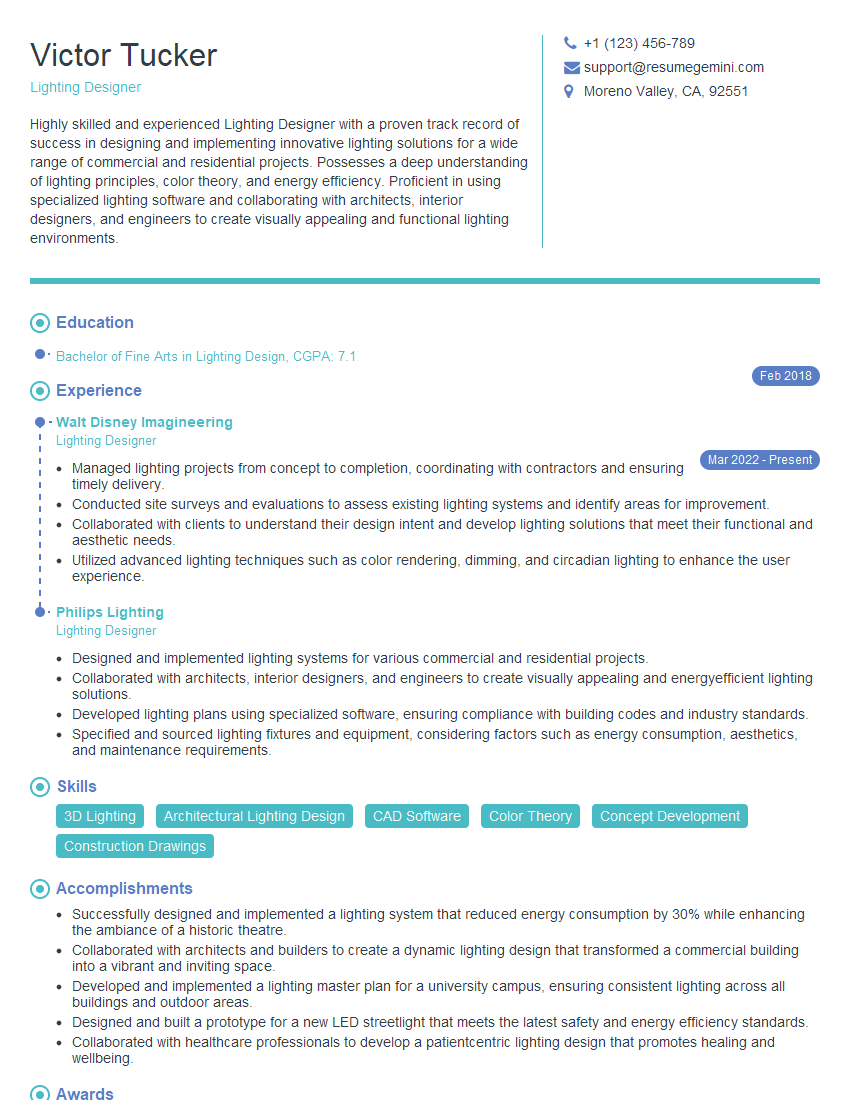
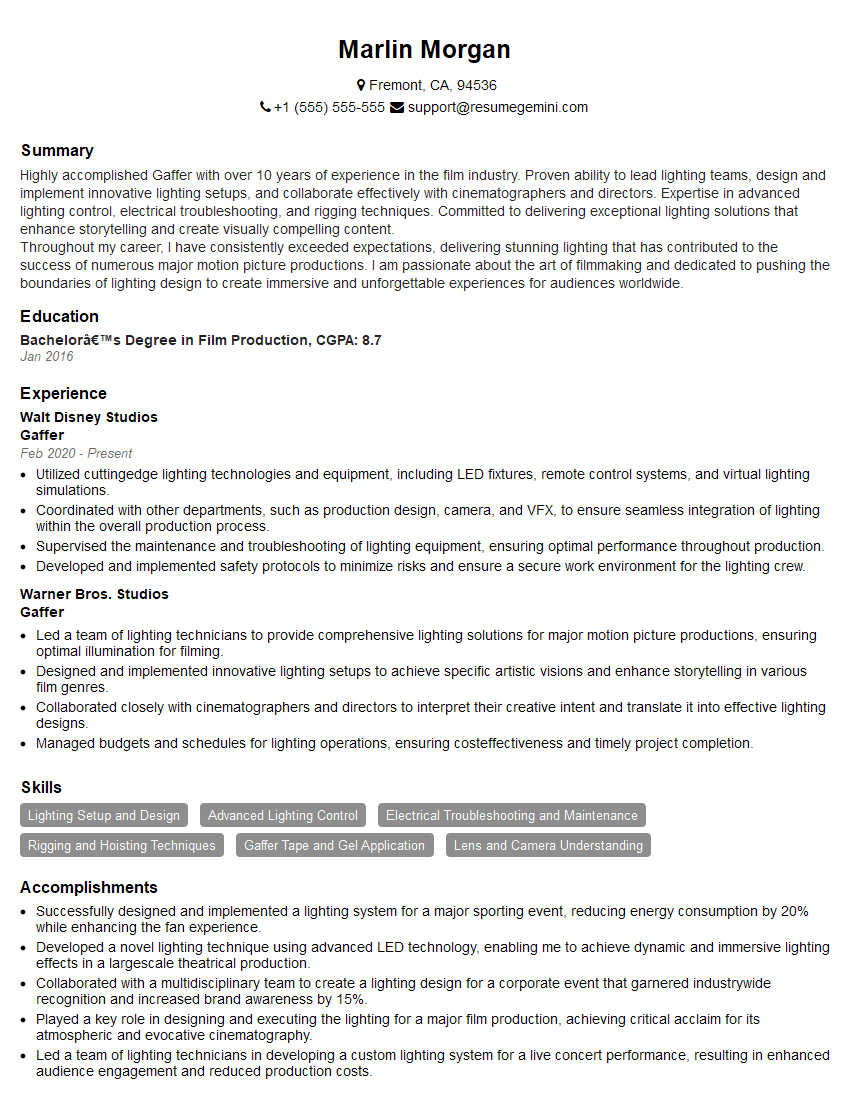
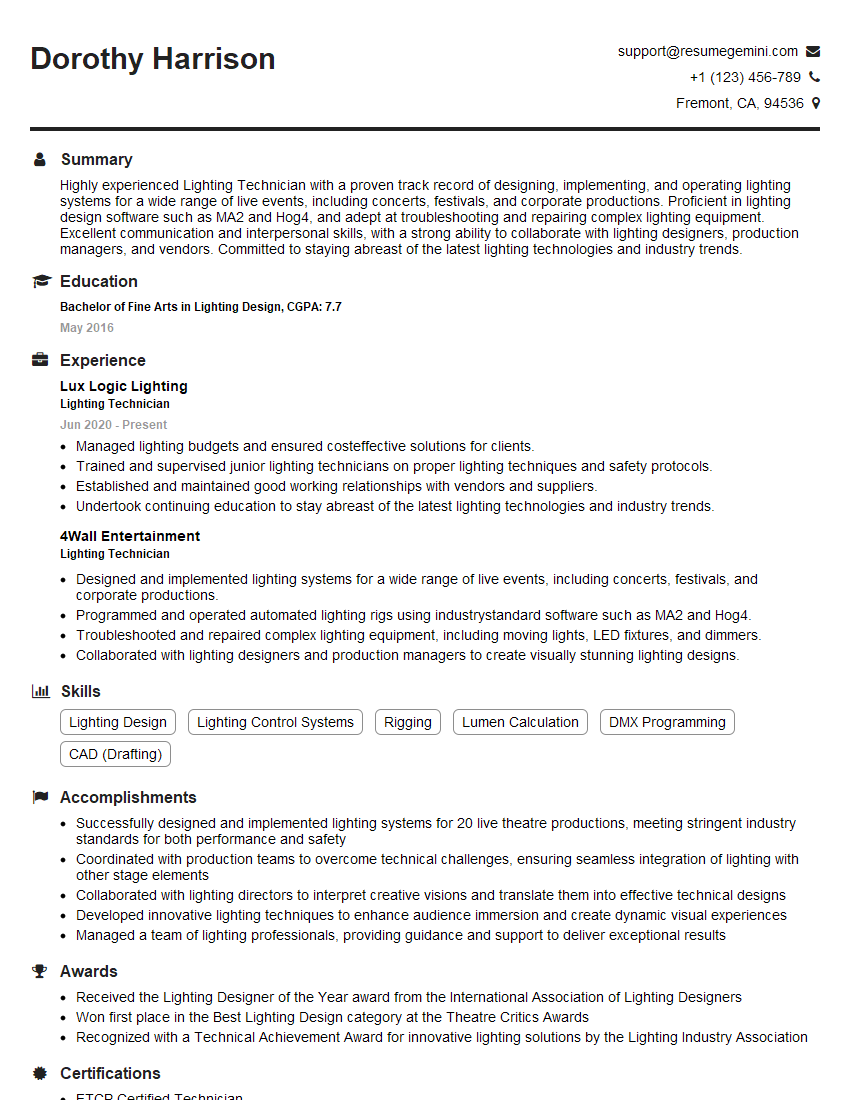
Mastering Lighting Operation opens doors to exciting career opportunities in a growing field, offering chances for advancement and specialization. A strong resume is crucial for showcasing your skills and experience to potential employers. To maximize your job prospects, create an ATS-friendly resume that highlights your accomplishments and keywords relevant to the lighting industry. ResumeGemini is a trusted resource that can help you build a professional and effective resume tailored to your specific experience. Examples of resumes tailored to Lighting Operation are available to guide you through the process.
Explore more articles
Users Rating of Our Blogs
Share Your Experience
We value your feedback! Please rate our content and share your thoughts (optional).
What Readers Say About Our Blog
Very informative content, great job.
good