Are you ready to stand out in your next interview? Understanding and preparing for Character Interpretation interview questions is a game-changer. In this blog, we’ve compiled key questions and expert advice to help you showcase your skills with confidence and precision. Let’s get started on your journey to acing the interview.
Questions Asked in Character Interpretation Interview
Q 1. Explain the difference between direct and indirect characterization.
Direct characterization explicitly tells the reader about a character’s traits, personality, or background. Think of it as the author directly stating, ‘He was a kind man.’ Indirect characterization, conversely, shows the reader the character’s traits through their actions, words, thoughts, appearance, and how others react to them. It’s like watching a character act kindly and inferring their kindness from their behavior.
- Direct: ‘Elizabeth Bennet was intelligent and witty.’ The author tells us directly.
- Indirect: Elizabeth’s sharp replies to Mr. Darcy, her insightful observations about society, and her quick thinking in various situations all show her intelligence and wit.
Understanding this difference is crucial for effective character analysis. Direct characterization provides a starting point, but indirect characterization offers depth and complexity, allowing for a more nuanced and believable portrayal.
Q 2. How do you identify a character’s primary motivation in a text?
Identifying a character’s primary motivation often involves examining their overarching goal or desire. What is the character striving for throughout the narrative? Consider the character’s internal conflicts, their responses to external pressures, and the decisions they make. Look for recurring themes and patterns in their behavior.
For example, in Hamlet, Hamlet’s primary motivation is revenge for his father’s murder. This drives his actions, fuels his internal conflicts, and ultimately shapes the tragic trajectory of the play. Sometimes, a character’s motivation might be more subtle, like the need for belonging or a desire for self-discovery, but careful analysis of their choices and reactions will reveal their central driving force.
A helpful strategy is to ask: ‘What does this character want more than anything else? What are they willing to do to get it?’ The answer to these questions usually points directly to their primary motivation.
Q 3. Describe three methods for analyzing character arc.
Analyzing character arcs involves tracking a character’s development and transformation throughout a narrative. Here are three methods:
- The ‘Before and After’ Method: Compare and contrast the character’s initial state with their final state. Note changes in personality, values, beliefs, or relationships. For instance, a timid character might become courageous, or a selfish character might learn altruism.
- The ‘Inciting Incident’ Method: Identify the key event or situation that triggers a significant shift in the character’s life and then trace how that event shapes their subsequent actions and choices. Think of it as the catalyst for their transformation.
- The ‘Obstacles and Challenges’ Method: Examine the obstacles and challenges the character faces and how they respond to them. Their reactions and adaptations reveal important aspects of their character arc. A character overcoming significant adversity may display resilience and growth.
These methods, often used in combination, allow for a comprehensive understanding of a character’s journey, highlighting both internal and external changes.
Q 4. How do you interpret a character’s subtext?
Interpreting a character’s subtext involves understanding the unspoken or implied meaning behind their words and actions. It’s what lies beneath the surface. It’s the difference between what a character says and what they truly mean or feel. This requires paying close attention to details like tone of voice, body language, facial expressions, and the context of the situation.
For example, a character might say, ‘I’m fine,’ while their slumped posture and tear-filled eyes suggest otherwise. The subtext reveals their true emotional state, which contrasts with their verbal statement. Analyzing subtext often involves considering the character’s motivations, past experiences, and relationships to decode the underlying meaning.
To interpret subtext effectively, consider the character’s overall arc, their relationship with other characters, and the setting of the scene. The subtext provides valuable insight into the character’s inner world and adds layers of complexity to their portrayal.
Q 5. What are some common indicators of character deception or unreliability?
Identifying character deception or unreliability requires careful observation and analysis. Several indicators may point to a character’s dishonesty or lack of trustworthiness:
- Contradictory Statements: A character’s statements may contradict each other or conflict with observable facts.
- Evasive Answers: The character avoids directly answering questions or changes the subject frequently.
- Inconsistencies in Behavior: The character’s actions don’t align with their words or stated beliefs.
- Suspicious Body Language: Nervousness, fidgeting, avoiding eye contact, or other nonverbal cues might suggest deception.
- Unreliable Narration: If the story is told from the character’s perspective, consider their biases and motivations. Are they withholding information? Are they presenting a skewed view of reality?
Recognizing these indicators can help readers assess the credibility of characters and understand the complexities of their motivations.
Q 6. How do you analyze the relationship between a character and their setting?
Analyzing the relationship between a character and their setting involves examining how the environment influences the character’s behavior, thoughts, and overall development. The setting can act as a reflection of the character’s inner world or a force that shapes their destiny.
Consider, for example, a character living in a desolate, isolated environment. This setting might contribute to their feelings of loneliness, despair, or resilience. Conversely, a character surrounded by vibrant city life might express their extroverted personality or be challenged by the fast-paced environment. The setting can also symbolize aspects of the character’s personality, internal conflict, or journey.
Analyzing this relationship involves observing the details of the setting, its symbolism, and how the character interacts with it, both physically and emotionally. This analysis adds depth and meaning to both the character and the narrative.
Q 7. Explain how a character’s dialogue reveals their personality.
A character’s dialogue reveals a great deal about their personality, values, and background. It’s a window into their inner world and how they perceive the world around them.
- Vocabulary and Diction: Formal language may suggest education or formality, while slang might indicate informality or a specific social group.
- Sentence Structure: Short, simple sentences can convey impulsivity or directness. Long, complex sentences might reflect thoughtfulness or complexity.
- Tone and Style: A sarcastic tone reveals a cynical or playful personality, while a formal tone suggests politeness or distance. The use of humor, anger, or sadness adds depth to the portrayal.
- Themes and topics of conversation: Recurring themes in the character’s dialogue, what they emphasize or avoid, offer insight into their values and priorities.
By carefully examining the nuances of a character’s dialogue, we can build a comprehensive understanding of their personality and motivations. It’s like listening to someone speak in real life – their words often betray more than they intend.
Q 8. How do you interpret a character’s physical description in relation to their personality?
A character’s physical description is rarely arbitrary; it often serves as a powerful tool for conveying personality traits and hinting at their inner world. We can interpret physical attributes as symbolic representations of their internal state or as a reflection of their experiences. For example, a character described as perpetually hunched and wearing dull clothes might suggest a personality burdened by insecurity or sadness. Conversely, someone with a vibrant wardrobe and upright posture might be depicted as confident and outgoing.
Consider the classic example of Sherlock Holmes: his sharp eyes, keen observation skills, and even his unkempt appearance all contribute to the image of a brilliant but eccentric detective. His physicality is directly tied to his intellectual prowess and unconventional lifestyle. Analyzing a character’s physicality involves looking for recurring motifs, such as repeated use of specific colors, to see if these consistently link to certain personality traits. Think of how a character’s scars might reflect past traumas or how their clothing choices reveal their social standing and values.
Q 9. What are some common techniques used to create believable characters?
Creating believable characters requires a multi-faceted approach. Key techniques include:
- Backstory Development: Giving your character a rich past, including their upbringing, significant relationships, and defining experiences, provides depth and authenticity. A character’s past significantly shapes their present actions and motivations.
- Consistent Personality: Ensure that your character’s actions and reactions align consistently with their established personality traits. Inconsistent behavior can make a character seem unconvincing.
- Internal Motivation: Every action should stem from a clearly defined internal motivation. Understanding *why* a character does what they do is crucial to making them relatable and believable.
- Flaws and Strengths: Characters are most compelling when they are not perfect. Including realistic flaws, alongside strengths, makes them human and relatable. These flaws should also be integral to the plot’s development.
- Dialogue and Voice: Each character should have a distinct way of speaking, reflecting their personality, background, and education. Dialogue should reveal as much about a character as their actions do.
- Growth and Change (Optional but Powerful): Characters may undergo significant transformation throughout the narrative. This evolution should be gradual and believable, stemming from the character’s experiences and internal conflicts.
For instance, if a character is meant to be fiercely independent but consistently relies on others, that inconsistency needs to be addressed and explained within the narrative to maintain believability.
Q 10. How do you differentiate between a character’s internal and external conflicts?
Internal conflict refers to the psychological struggle within a character, often a battle between opposing desires, values, or beliefs. This conflict is internal and unseen by other characters, but it often drives their actions and decisions. External conflict, on the other hand, involves a character’s struggle against an outside force, such as another person, nature, or society. The external conflict is often visible and directly impacts the plot progression.
Example: Consider a character wrestling with their ambition to become a successful writer but simultaneously battling crippling self-doubt (internal conflict). This internal conflict might manifest externally when they repeatedly procrastinate on their writing or refuse opportunities that could propel their career (external conflict). Often, both types of conflict intertwine, with internal struggles manifesting in outward actions.
Q 11. How do you identify character flaws and their impact on the narrative?
Character flaws are imperfections or weaknesses that make a character realistic and relatable. These flaws often drive the plot and create conflict. Identifying character flaws involves carefully observing their actions, motivations, and relationships. A character might be selfish, impulsive, insecure, arrogant, or have other significant flaws.
The impact of these flaws on the narrative can be substantial. They can create obstacles for the character, lead to mistakes and consequences, and propel the plot forward. For example, a character’s arrogance could lead them to make a critical error that jeopardizes their goals, creating conflict and pushing the story further. Understanding a character’s flaws is essential for interpreting their actions and the overall narrative arc.
Q 12. How does symbolism contribute to character development?
Symbolism in character development uses objects, settings, or even recurring motifs to represent abstract ideas or deeper meaning associated with a character. These symbols can be subtle or overt, adding layers of complexity to the character’s personality and motivations.
Example: A character who always carries a specific type of flower might symbolize their lost innocence or a cherished memory. Repeated use of a particular color in their clothing could represent a dominant aspect of their personality (e.g., black for mourning, red for passion). By understanding the symbolic elements associated with a character, we gain a richer understanding of their inner world and the themes explored in the narrative.
Q 13. Explain the concept of character foil and its significance.
A character foil is a character whose traits contrast sharply with those of another character, usually the protagonist, highlighting specific qualities of both characters. Foils are used to emphasize the protagonist’s strengths and weaknesses by providing a clear point of comparison. They can be friends, rivals, or even family members.
Example: In many stories, the protagonist’s best friend might serve as a foil, highlighting the protagonist’s less desirable traits. The friend might be more responsible, practical, or cautious, while the protagonist is impulsive, reckless, or idealistic. This contrast allows the reader to better understand the complexities of the protagonist’s personality and their journey.
Q 14. How does foreshadowing impact character interpretation?
Foreshadowing, the hinting of future events, can significantly impact character interpretation. Early clues about a character’s future actions or fate can influence how we perceive their present behavior. This retrospective understanding can add layers of meaning to seemingly insignificant moments.
Example: If a character repeatedly expresses a fear of heights early in the story, and later in the narrative they are forced to confront their fear in a crucial situation, the early foreshadowing adds depth to their final actions. It makes their later behavior more meaningful because the reader can connect it back to the established foreshadowing. Therefore, foreshadowing should be meticulously considered when analyzing character development and motivations.
Q 15. How does setting influence character behavior and development?
Setting acts as a crucial character-shaping element, profoundly influencing behavior and development. Think of it as the environment nurturing the character’s personality and choices. A character raised in a harsh, unforgiving desert will likely develop resilience and resourcefulness, unlike one raised in a nurturing, affluent city environment.
- Physical Setting: A character living in a war-torn country will exhibit different traits – perhaps heightened anxiety and suspicion – compared to one raised in a peaceful countryside. The physical landscape impacts their worldview and daily struggles.
- Social Setting: The socio-economic structure, cultural norms, and social circles directly influence a character’s behavior. A character from a privileged background may display entitlement, while one from a disadvantaged background may demonstrate perseverance and resourcefulness.
- Temporal Setting: The historical period or time frame significantly shapes the character’s values and possibilities. A character living in the Victorian era would face different constraints and opportunities than a character in modern times.
For example, consider the stark contrast between Katniss Everdeen in The Hunger Games, shaped by the dystopian environment of Panem, and Harry Potter, whose magical world impacts his sense of self and his choices.
Career Expert Tips:
- Ace those interviews! Prepare effectively by reviewing the Top 50 Most Common Interview Questions on ResumeGemini.
- Navigate your job search with confidence! Explore a wide range of Career Tips on ResumeGemini. Learn about common challenges and recommendations to overcome them.
- Craft the perfect resume! Master the Art of Resume Writing with ResumeGemini’s guide. Showcase your unique qualifications and achievements effectively.
- Don’t miss out on holiday savings! Build your dream resume with ResumeGemini’s ATS optimized templates.
Q 16. Describe how you would analyze a character’s change over time.
Analyzing character change involves tracking their evolution across the narrative. We look for shifts in their beliefs, values, relationships, and behavior. This isn’t simply about superficial changes, but about the underlying motivations driving the transformation.
- Identify the Starting Point: Begin by pinpointing the character’s initial traits, motivations, and worldview at the story’s outset.
- Track Significant Events: Note key incidents, conflicts, or relationships that trigger noticeable alterations in the character.
- Analyze Motivations: Why does the character change? What internal or external factors push them toward transformation? Understanding their motivations is vital to comprehending the authenticity of the change.
- Evaluate Consistency: Ensure the changes are believable and consistent with the character’s established personality. Sudden, drastic shifts without proper explanation might undermine credibility.
- Examine Internal Conflict: Internal struggles often play a significant role in character development. Observing how the character grapples with internal conflicts provides valuable insights into their evolution.
For instance, in Charles Dickens’ A Christmas Carol, Ebenezer Scrooge’s transformation from a miserly old man to a generous philanthropist is meticulously charted through his encounters with the Ghosts of Christmas Past, Present, and Yet to Come. His change is believable because it stems from his emotional confrontation with his own past and the consequences of his actions.
Q 17. How do you reconcile conflicting interpretations of a character?
Reconciling conflicting interpretations requires a rigorous, evidence-based approach. It’s about understanding that different perspectives can be valid, depending on the interpretive lens employed.
- Identify the Points of Divergence: Clearly define the specific aspects of the character that are generating conflicting interpretations.
- Review Textual Evidence: Carefully examine all relevant passages, dialogue, actions, and descriptions of the character. Support interpretations with specific textual evidence.
- Consider Context: Assess the historical, social, and cultural context of the work. Different perspectives might arise from varying interpretations of the context.
- Explore Multiple Lenses: Approach the character from various critical perspectives—feminist, psychoanalytic, Marxist—to understand the different interpretations that might arise.
- Acknowledge Ambiguity: Some characters are intentionally ambiguous; there might not be one definitive interpretation. Accept that multiple valid perspectives can coexist.
For example, Hamlet’s indecisiveness can be interpreted as a sign of weakness or as a thoughtful response to a complex situation. Both interpretations can be supported by textual evidence, highlighting the richness and ambiguity inherent in some characters.
Q 18. What are some common mistakes in character interpretation?
Common pitfalls in character interpretation include:
- Oversimplification: Reducing complex characters to simple stereotypes or archetypes. Characters are rarely one-dimensional.
- Ignoring Context: Failing to consider the setting, plot, and other characters’ influence on the subject character’s behavior.
- Projection: Imposing one’s own beliefs, values, or experiences onto the character, rather than interpreting them based on textual evidence.
- Ignoring Ambiguity: Attempting to force a definitive interpretation where none exists. Accepting ambiguity is often crucial to understanding a character’s complexity.
- Focusing solely on Actions: Neglecting the character’s internal thoughts and motivations, which are often more revealing than their outward actions.
For example, labeling a character as simply ‘evil’ without exploring the reasons behind their actions oversimplifies their nature and ignores potential underlying complexities.
Q 19. How do you use context clues to interpret a character’s actions and thoughts?
Context clues are crucial for interpreting character actions and thoughts. These clues are scattered throughout the text – in dialogue, narration, setting description, and the actions of other characters – and provide insights beyond the character’s explicit statements.
- Dialogue Analysis: Pay close attention to a character’s word choice, tone, and how they interact with others. Are they sarcastic? Do they use formal or informal language? This reveals much about their personality and social standing.
- Narrative Voice: Consider whether the story is told from the character’s perspective (first person), an omniscient narrator’s perspective (third-person omniscient), or a limited perspective (third-person limited). This influences the information we receive and shapes our understanding.
- Actions and Reactions: Observe how the character responds to different situations and other people. Their actions often reveal more than their words.
- Setting and Symbolism: Consider how the setting and symbolic elements within the text might influence the character’s thoughts and feelings.
For instance, if a character constantly avoids eye contact and speaks in hushed tones, these context clues suggest nervousness or deception, even if they overtly claim to be confident and honest.
Q 20. Describe your process for analyzing the relationships between characters.
Analyzing character relationships requires examining the dynamics of power, influence, and emotional connection between characters. It’s about understanding how these relationships shape individual characters and drive the plot forward.
- Power Dynamics: Identify who holds power in each relationship and how that power is used or challenged.
- Emotional Bonds: Explore the types of emotional connections—love, hate, rivalry, friendship—that exist between characters. What are the strengths and weaknesses of these bonds?
- Conflict and Cooperation: Analyze how characters cooperate and clash with each other. Do they support each other, compete against each other, or both?
- Influence and Change: How do relationships influence the characters’ behavior and development throughout the narrative?
- Mapping Relationships: A visual representation of relationships—a character map—can be helpful in tracking the connections and dynamics between characters.
In Pride and Prejudice, the complex relationships between Elizabeth Bennet and Mr. Darcy, and the supporting cast, shape the plot’s trajectory and illustrate the characters’ growth and transformation.
Q 21. How do you identify a character’s point of view and its impact on interpretation?
Identifying a character’s point of view is crucial because it dictates the information we receive and how we perceive the character and the events of the story.
- First-person Narration: The story is told from the character’s perspective, giving us direct access to their thoughts and feelings, but potentially a biased account.
- Third-person Omniscient Narration: The narrator knows the thoughts and feelings of multiple characters, offering a broader perspective but potentially less intimate connection to any one character.
- Third-person Limited Narration: The narrator focuses on the thoughts and feelings of a single character, offering a more intimate perspective but restricting the reader’s overall knowledge.
- Impact on Interpretation: The choice of point of view dramatically shapes our understanding of the character’s motivations, reliability, and relationship with other characters.
For example, in The Great Gatsby, the narration is from Nick Carraway’s perspective, limiting our knowledge to what he observes and interprets. This creates ambiguity and encourages the reader to question the reliability of the narrative.
Q 22. Explain the concept of unreliable narration and its implications for character analysis.
Unreliable narration occurs when the narrator’s account of events cannot be fully trusted due to limitations like bias, mental instability, or intentional deception. This significantly impacts character analysis because it forces us to question the validity of everything presented. We must analyze the narrator’s perspective, comparing their statements against other evidence within the text to form a complete picture of both the narrator and the other characters involved.
For instance, in The Great Gatsby, Nick Carraway acts as the narrator, but his inherent biases and romantic idealization of Gatsby affect the reliability of his story. We, as readers, must sift through his account, considering his own limitations, to understand the true nature of Gatsby and the events surrounding him. Analyzing the contrasting perspectives of other characters helps us to validate or refute Nick’s claims, leading to a richer understanding of the narrative.
Q 23. How do you determine the thematic significance of a particular character?
Determining a character’s thematic significance involves identifying how they contribute to the overarching message or ideas of the work. This isn’t simply about summarizing their actions; it’s about understanding their role in exploring the themes. We can look at several aspects:
- Character Arcs: How does the character change or develop throughout the story? Does this change reflect a central theme?
- Relationships: What are the character’s key relationships? How do these relationships illuminate the work’s thematic concerns?
- Symbolic Significance: Does the character embody a particular idea, concept, or social issue relevant to the text’s theme?
- Conflicts: What conflicts does the character face? How do these conflicts contribute to exploring the main themes?
For example, in To Kill a Mockingbird, Boo Radley’s character represents the theme of prejudice and misunderstanding. His isolation and the community’s misconceptions about him reflect a broader societal issue explored throughout the novel.
Q 24. How do you apply your knowledge of character interpretation in a professional setting?
My expertise in character interpretation is applied professionally in several ways. In scriptwriting, I use this knowledge to craft compelling and believable characters that drive the narrative and resonate with the audience. In editing, I look for inconsistencies in character portrayal or underdeveloped character arcs. In literary criticism, I analyze characters to provide insightful interpretations of texts. In teaching, I guide students to engage deeply with literature through detailed character analysis.
For instance, in script development, a thorough understanding of a character’s motivations and flaws allows me to write realistic dialogue and actions. It helps predict how a character might react in a given scenario, making the story more engaging and plausible.
Q 25. Describe a time you successfully interpreted a complex character.
Recently, I was working on a critical analysis of Hamlet. Interpreting Hamlet himself presented a complex challenge. His indecisiveness and melancholy are often seen as flaws. However, I argued that his hesitation stemmed not from weakness but from an acute awareness of the moral complexities of revenge. His procrastination is a reflection of his introspective nature and his grapple with existential questions. By exploring the interplay of his internal conflict and external pressures, I was able to present a nuanced understanding of his character and its contribution to Shakespeare’s exploration of justice, morality, and the human condition.
Q 26. What are some resources you use to enhance your understanding of character interpretation?
To enhance my understanding of character interpretation, I utilize various resources. These include:
- Literary Criticism: I regularly read scholarly articles and books that offer diverse interpretations of characters from various literary works.
- Character Archetypes: Studying classic character archetypes (e.g., hero, villain, trickster) provides a framework for analyzing recurring patterns in character development across different genres and cultures.
- Psychological Theories: Applying psychological frameworks like Jungian archetypes or Freudian psychoanalysis can shed light on character motivations and behaviors.
- Comparative Literature: Analyzing similar characters from diverse literary traditions helps reveal universal aspects of human nature and explore cultural nuances.
Q 27. How do you adapt your interpretation skills to different genres and styles?
Adapting my interpretation skills to different genres and styles requires flexibility and awareness of the conventions of each genre. For example, interpreting a character in a realistic novel requires a different approach compared to a character in a fantasy epic. In realistic fiction, I’d focus on psychological realism and social context. In fantasy, I’d consider the character’s role within the established mythology and magical systems of the world. The key is understanding the expectations and limitations inherent to the specific genre and adjusting my analytical methods accordingly.
Q 28. How do you ensure cultural sensitivity in your character interpretations?
Cultural sensitivity is crucial in character interpretation. It necessitates careful consideration of the cultural background and context of both the character and the author. This includes avoiding stereotypical representations, acknowledging potential biases embedded in the text, and interpreting the character within their historical and societal setting. It also involves actively seeking out and engaging with diverse perspectives on the character, acknowledging that there may be multiple valid interpretations.
For example, when analyzing a character from a different culture, I would consult resources such as anthropological studies, historical accounts, and works by authors from that culture to avoid imposing my own cultural biases on the interpretation.
Key Topics to Learn for Character Interpretation Interview
- Understanding Narrative Context: Analyze how character actions, dialogue, and motivations are shaped by the larger narrative.
- Character Arc and Development: Examine how characters evolve throughout a story, identifying key turning points and changes in personality or perspective. Practical application: Analyze a character’s journey in a specific text and explain their transformation.
- Subtext and Implied Meaning: Interpret unspoken intentions, emotions, and relationships within the text. Practical application: Identify instances of subtext in a literary work and explain their significance.
- Character Relationships and Dynamics: Explore the interplay between characters, including power dynamics, alliances, and conflicts. Practical application: Diagram the key relationships in a chosen text and analyze their impact on the narrative.
- Symbolism and Allegory: Identify and interpret symbolic characters and their roles in representing broader themes or ideas. Practical application: Analyze a character who functions as an allegory for a specific concept.
- Critical Lenses and Theoretical Frameworks: Apply various critical approaches (e.g., feminist, psychoanalytic, Marxist) to deepen understanding of character portrayal. Practical application: Analyze a character using a specific critical lens and justify your chosen approach.
- Analyzing Authorial Intent and Bias: Consider the author’s perspective and how it might influence the portrayal of characters. Practical application: Discuss how an author’s background or beliefs might impact their characterization choices.
Next Steps
Mastering character interpretation is crucial for success in fields requiring strong analytical and communication skills, opening doors to exciting careers in academia, publishing, film analysis, and more. To significantly boost your job prospects, crafting an ATS-friendly resume is essential. ResumeGemini is a trusted resource that can help you build a professional and impactful resume tailored to highlight your character interpretation expertise. Examples of resumes tailored to Character Interpretation are available within ResumeGemini to guide your creation. Take the next step towards your dream career today!

Literary Agent Resume Sample

Communications Specialist Resume Sample

Marketing Specialist Resume Sample

Social Media Manager Resume Sample

Speech-Language Pathologist Resume Sample
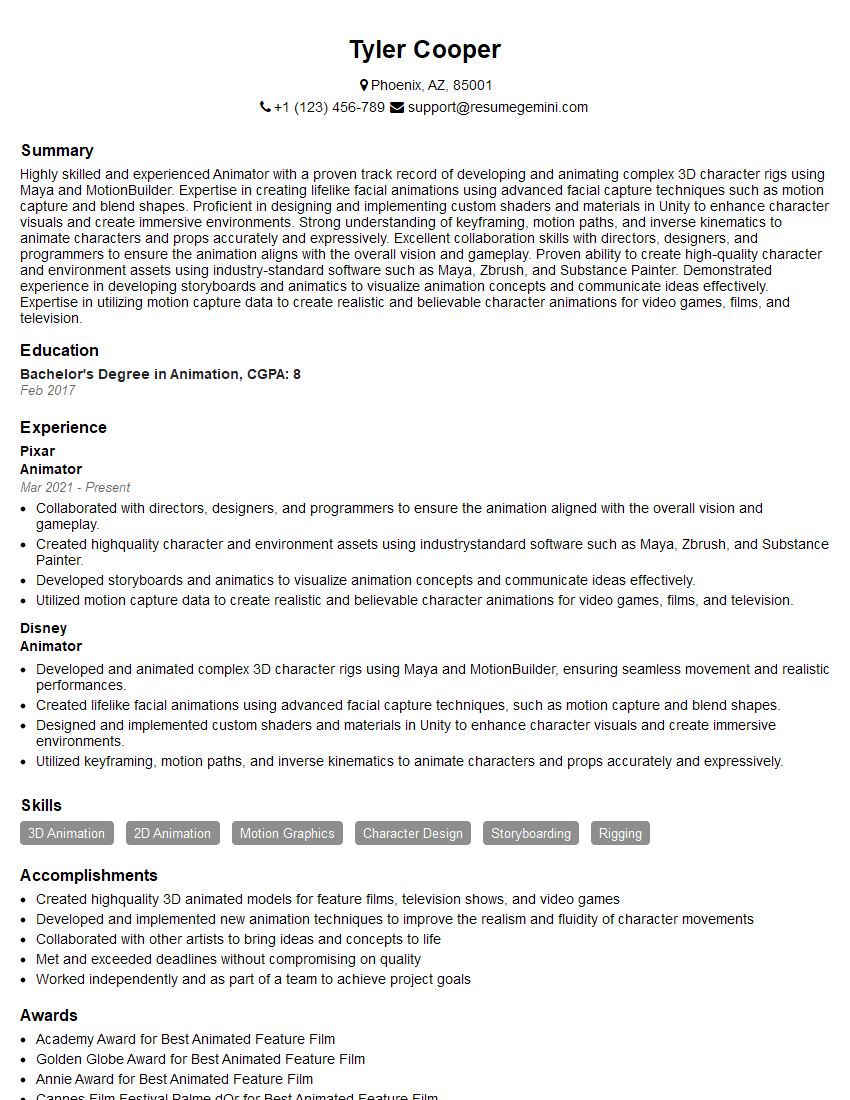
Animator Resume Sample
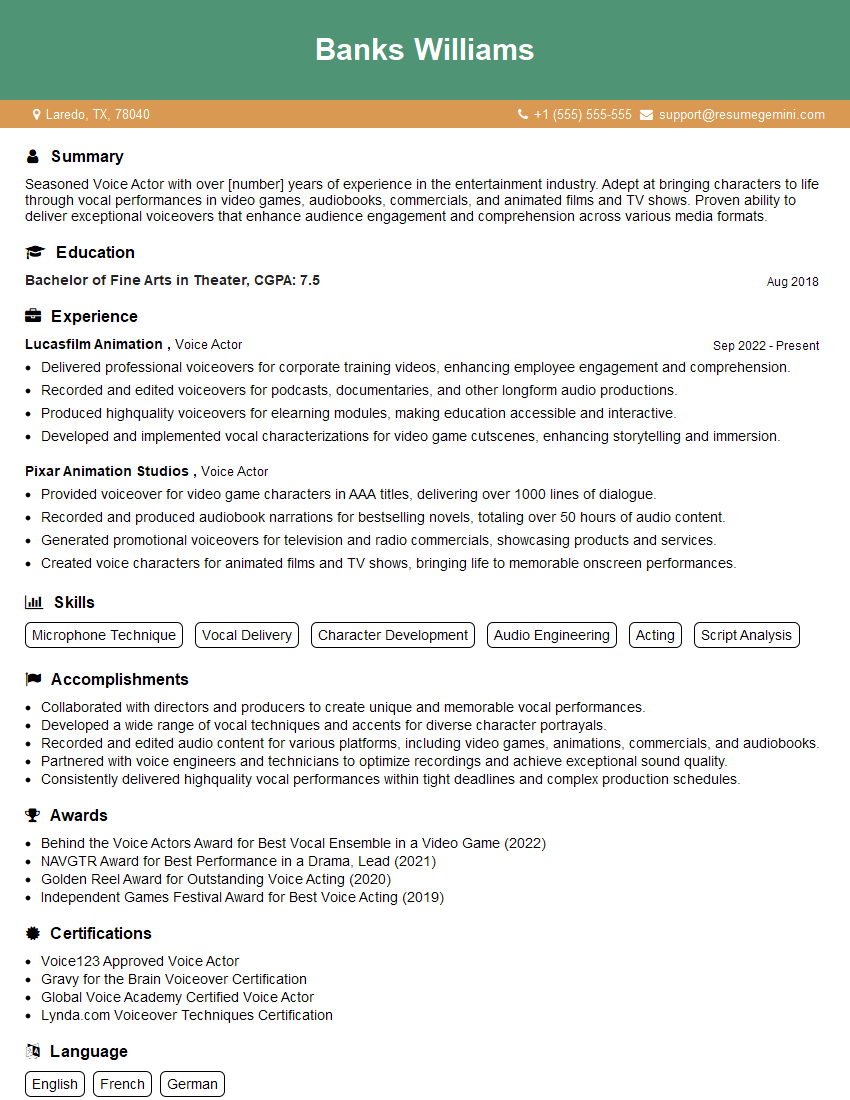
Voice Actor Resume Sample
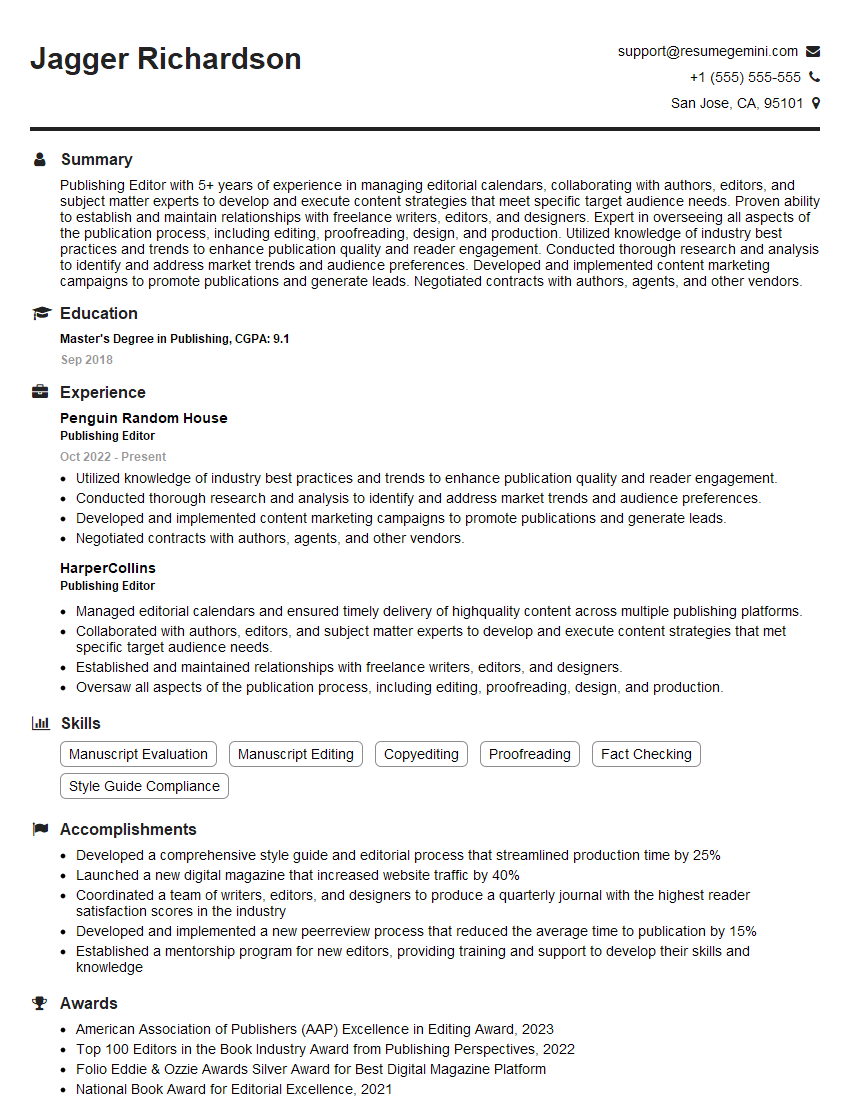
Publishing Editor Resume Sample

Technical Writer Resume Sample

Playwright Resume Sample

Drama Therapist Resume Sample
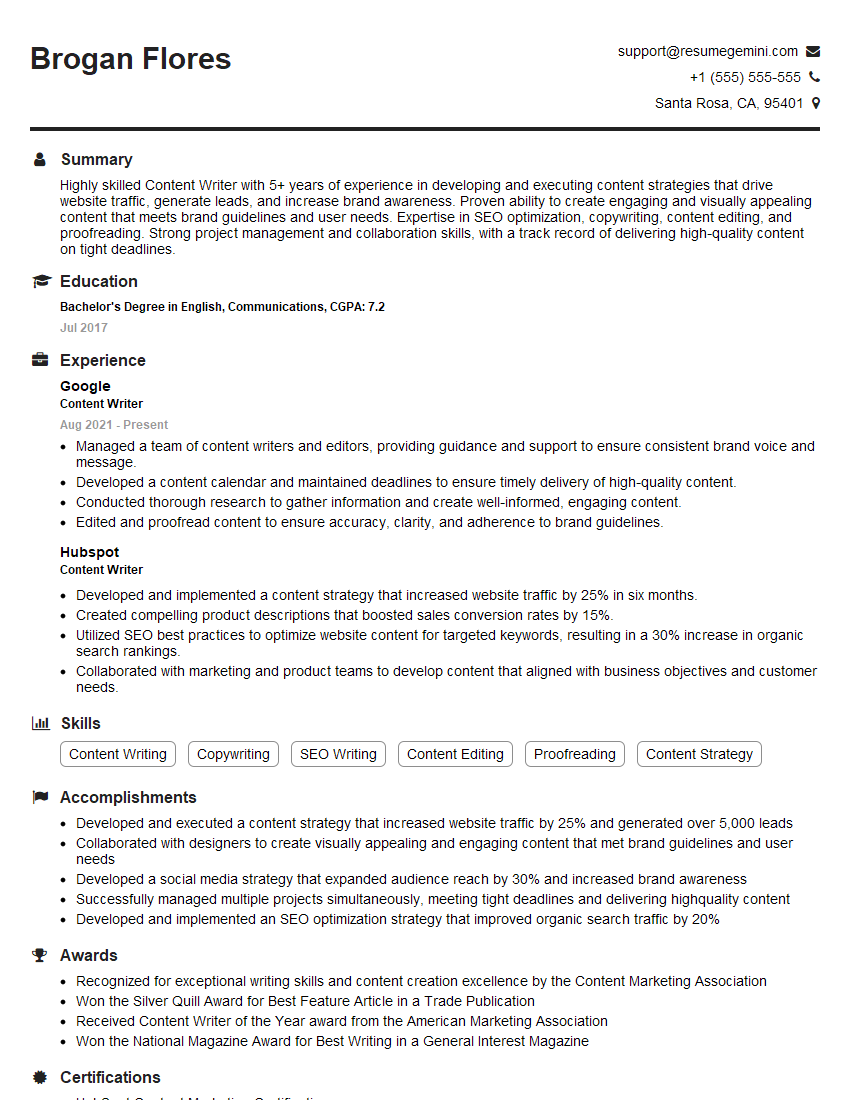
Content Writer Resume Sample

Public Relations Specialist Resume Sample
Explore more articles
Users Rating of Our Blogs
Share Your Experience
We value your feedback! Please rate our content and share your thoughts (optional).
What Readers Say About Our Blog
Very informative content, great job.
good