Cracking a skill-specific interview, like one for Check Fraud Prevention, requires understanding the nuances of the role. In this blog, we present the questions you’re most likely to encounter, along with insights into how to answer them effectively. Let’s ensure you’re ready to make a strong impression.
Questions Asked in Check Fraud Prevention Interview
Q 1. Explain the different types of check fraud schemes.
Check fraud encompasses a variety of schemes aiming to illegally obtain funds from a bank account using forged or altered checks. These schemes can be broadly categorized into several types:
- Forged Checks: This involves creating completely counterfeit checks, often using sophisticated printing techniques to mimic legitimate checks. The perpetrator might forge the payee’s signature, or even the entire check itself.
- Counterfeit Checks: Similar to forged checks, but these utilize copied check designs from existing accounts, often involving alterations to the account number or amount.
- Altered Checks: Legitimate checks are altered, usually by changing the payee name, amount, or date. This often involves using correction fluid or other methods to obscure the original information.
- Check Kiting: This scheme involves writing checks from multiple accounts, relying on insufficient funds to cover the checks, and exploiting the float time (the time it takes for a check to clear). The perpetrator tries to maximize the available funds before the checks bounce.
- Stolen Checks: This involves stealing blank checks or checks made out to others, usually through theft or burglary, and then altering or forging the signatures to cash them.
- Account Takeover: Criminals gain unauthorized access to a victim’s bank account, then create and cash checks without the account holder’s knowledge. This often involves phishing or malware attacks.
Understanding these different types is crucial for implementing effective prevention measures. For example, recognizing the subtle differences between a forged signature and a legitimate one requires training and expertise, while detecting check kiting often involves analyzing account transactions over time.
Q 2. Describe your experience with check verification systems.
Throughout my career, I’ve worked extensively with various check verification systems, ranging from simple manual verification processes to sophisticated software solutions. My experience includes using systems that leverage:
- Magnetic Ink Character Recognition (MICR): This technology reads the MICR line on a check (the numbers at the bottom) to verify the account number and other crucial information. It’s a cornerstone of automated check processing.
- Image-based comparison systems: These systems compare the check image with databases of known fraudulent checks or stolen check reports. This helps flag potential matches quickly.
- Transaction monitoring systems: These systems analyze check clearing patterns and flag unusual activity, such as sudden large deposits or multiple checks from the same account.
- Third-party verification services: These services provide real-time verification of check legitimacy, often leveraging databases of reported fraudulent checks and suspicious activity.
In one particular instance, I helped implement a new check verification system for a large financial institution. By integrating an image-comparison system with their existing MICR reader, we significantly reduced fraudulent check processing, leading to substantial cost savings and improved customer trust.
Q 3. How do you identify suspicious check activity?
Identifying suspicious check activity requires a multi-faceted approach, combining both automated systems and human expertise. The process often involves:
- Analyzing Transaction Data: Examining check amounts, frequencies, and payee names for anomalies. For example, a sudden surge in large-amount checks deposited into an account could be suspicious.
- Verifying Payee Information: Checking the legitimacy of the payee name and address. This often involves cross-referencing information against known databases or contacting the payee directly.
- Reviewing Check Images: Carefully scrutinizing check images for signs of alteration, forgery, or counterfeiting. This can involve looking for inconsistencies in ink, writing style, or the overall appearance of the check.
- Monitoring Account Activity: Tracking account activity for patterns consistent with check fraud, such as frequent deposits and withdrawals from multiple locations.
- Using Fraud Detection Software: Leveraging advanced software solutions to identify patterns and anomalies that may indicate fraudulent activity. These systems often use machine learning to identify complex fraud schemes.
For instance, if I notice numerous checks drawn on the same account within a short timeframe with varying payee names but similar deposit locations, it would raise a significant red flag for further investigation.
Q 4. What are some common red flags indicating potential check fraud?
Several red flags can indicate potential check fraud. These include, but aren’t limited to:
- Unusual Payee Names: Payee names that seem fabricated or unrelated to the account holder’s typical transactions.
- Altered Check Amounts: Check amounts that appear to have been altered or overwritten.
- Inconsistent Writing Styles: Differences in handwriting on the check compared to the account holder’s signature.
- Missing or Illegible Information: Missing or unclear information on the check, such as the date, amount, or payee name.
- Check from an Unknown Account: A check drawn on an unfamiliar account or bank.
- Multiple Checks from the Same Payee: A cluster of checks paid to the same payee, possibly suggesting a kiting scheme.
- High-Value Checks: A sudden increase in high-value check deposits.
- Checks from Out-of-State Locations: Checks deposited from locations far from the account holder’s usual residence.
Seeing a combination of these red flags significantly increases the likelihood of fraudulent activity. For example, a high-value check with an altered amount and an unfamiliar payee name, deposited at a remote location, would warrant immediate attention.
Q 5. What software or tools are you familiar with for check fraud detection?
My experience encompasses a variety of software and tools for check fraud detection, including:
- FISERV’s fraud detection system: A comprehensive platform offering real-time fraud detection capabilities, including check fraud analysis.
- ACI Worldwide’s fraud management solutions: Provides advanced analytics and machine learning for detecting various types of financial fraud, including check fraud.
- NICE Actimize: A platform offering a suite of tools for financial crime detection, including check fraud analysis and investigation.
- Proprietary systems: Many financial institutions also develop their internal fraud detection systems tailored to their specific needs and data.
Furthermore, I’m proficient in using various data analysis tools like SAS and SQL to extract and analyze relevant transaction data for detecting and investigating check fraud.
Q 6. Describe your experience with conducting check fraud investigations.
I’ve been involved in numerous check fraud investigations throughout my career. My approach is systematic and data-driven, generally following these steps:
- Gather Evidence: Collect all available data, including check images, transaction records, and any relevant communication with the account holder or involved parties.
- Analyze Transaction Data: Scrutinize account activity to identify patterns and anomalies consistent with check fraud. This often involves analyzing check deposits, withdrawals, and the timing of transactions.
- Verify Payee Information: Confirm the legitimacy of the payee, potentially involving contacting the payee directly or conducting background checks.
- Identify the Perpetrator: Using the evidence gathered, attempt to identify the individual(s) responsible for the fraudulent activity.
- Document Findings: Thoroughly document all findings and evidence gathered during the investigation.
- Report Findings: Report the findings to the appropriate authorities, such as law enforcement or regulatory agencies.
One case I recall involved a sophisticated check kiting scheme. By meticulously analyzing account transactions across multiple banks and meticulously tracing the flow of funds, we were able to uncover the perpetrator’s complex network and ultimately recover a significant amount of stolen funds. This highlights the importance of detailed analysis and collaboration across different institutions.
Q 7. What is your understanding of regulatory compliance related to check fraud?
My understanding of regulatory compliance related to check fraud is extensive. Financial institutions are subject to numerous regulations designed to prevent and detect check fraud. Key regulations include:
- The Bank Secrecy Act (BSA): Requires financial institutions to implement anti-money laundering (AML) programs, which include measures to detect and prevent check fraud used in money laundering schemes.
- USA PATRIOT Act: Enhances anti-money laundering and counter-terrorism financing measures, placing additional responsibilities on financial institutions to detect and report suspicious activity, including check fraud.
- Regulation CC (Check 21 Act): Governs the processing of checks in the United States, including the use of electronic images of checks and the establishment of truncation rules (allowing banks to destroy paper checks after imaging them).
- State-Specific Regulations: Many states also have specific laws and regulations related to check fraud, potentially including penalties for individuals and financial institutions failing to prevent fraud.
Compliance requires a robust system of internal controls, employee training, and regular audits. Failure to comply can result in significant fines and reputational damage. It is crucial to stay updated on all applicable regulations and ensure that all check fraud prevention measures align with these regulatory requirements. This includes staying abreast of changes in the landscape of check fraud schemes – as techniques evolve, so too must compliance strategies.
Q 8. Explain your approach to analyzing check fraud data.
Analyzing check fraud data involves a multi-faceted approach combining data mining, statistical analysis, and investigative techniques. I begin by gathering all relevant data, including check images, transaction details, payee information, and any related communications. This data is then cleaned and standardized to ensure accuracy and consistency.
Next, I employ various analytical methods. This includes identifying patterns and anomalies using techniques like anomaly detection algorithms which flag unusual spending patterns or check amounts outside typical norms. For instance, a sudden surge in checks issued to a single recipient or an unusually high amount for a regular payment would trigger an investigation. I also use data visualization to identify trends and relationships between different data points; this helps paint a clearer picture of the fraud scheme.
Finally, I conduct in-depth investigations on identified anomalies, correlating data from multiple sources to confirm fraud and understand the methodology. This often involves cross-referencing information with external databases and potentially interviewing involved parties. The goal is not only to identify the fraudulent activity but also to understand how it occurred and prevent its recurrence. Think of it like a detective story – each data point is a clue leading to uncovering the bigger picture.
Q 9. How do you mitigate the risk of check fraud within an organization?
Mitigating check fraud risk requires a layered approach encompassing preventative measures, detective controls, and a robust response plan. Preventative measures include implementing strong internal controls over check issuance and processing. This starts with clear authorization protocols. For instance, multiple signatures might be required for checks exceeding a certain value. Regular reconciliation of bank statements against internal records is crucial to detect discrepancies early on.
Detective controls involve actively monitoring transactions for suspicious activity. This can be automated using fraud detection software that analyzes transactional data in real-time, flagging potential fraudulent activity based on pre-defined rules or machine learning models. Regular audits of check processing procedures help identify weaknesses and improve control effectiveness.
A strong response plan is crucial for minimizing financial losses and legal repercussions when fraud occurs. This plan should outline procedures for promptly reporting suspected fraud internally and to law enforcement, securing evidence, and conducting thorough investigations. Regular employee training on fraud awareness and prevention is paramount to fostering a culture of vigilance.
Q 10. What are some best practices for preventing check fraud?
Best practices for preventing check fraud center around strong internal controls, employee training, and technological solutions. These include:
- Implementing a robust check authorization process: Multiple signatures for large checks, clear authorization limits, and segregation of duties are crucial.
- Using check fraud detection software: Real-time monitoring of check transactions can identify suspicious patterns instantly.
- Regularly reconciling bank statements: Comparing bank records to internal records helps detect discrepancies quickly.
- Employee training: Educating employees on recognizing and reporting suspicious activity is vital.
- Secure check storage and handling: Physical security measures prevent unauthorized access to checks.
- Using advanced security features on checks: Features like microprinting, security threads, and watermarks deter counterfeiting.
- Regular audits: Internal and external audits of check processing procedures identify control gaps.
- Consider alternative payment methods: Transitioning to electronic payments reduces reliance on checks and mitigates risk.
Think of it like building a fortress: each of these measures adds another layer of protection against fraud.
Q 11. How do you determine the financial impact of check fraud incidents?
Determining the financial impact of check fraud involves a comprehensive assessment of direct and indirect costs. Direct costs include the value of the fraudulent checks, bank fees associated with the fraud, and the cost of investigation and recovery efforts. Indirect costs are more subtle but equally significant and include lost productivity due to time spent investigating the fraud, potential damage to reputation, and the cost of implementing new security measures.
For example, if a company loses $10,000 due to fraudulent checks, the total cost could be substantially higher once you factor in investigation costs, legal fees, potential loss of customer trust leading to lost revenue, and the cost of upgrading security systems. A detailed accounting of all these factors provides a holistic picture of the financial impact, crucial for informing future preventative strategies and risk management decisions.
Q 12. Describe your experience with reporting check fraud to law enforcement.
My experience with reporting check fraud to law enforcement involves promptly gathering all necessary documentation including copies of fraudulent checks, transaction records, and any other relevant evidence. I work closely with law enforcement to provide them with the information they need to conduct a thorough investigation. This includes providing detailed statements and assisting in identifying potential suspects. Maintaining meticulous records throughout the process is essential for successful prosecution. I also ensure compliance with all reporting regulations and deadlines.
In one case, my detailed documentation and prompt reporting were instrumental in recovering a significant portion of the stolen funds and led to the successful prosecution of the perpetrator. Effective communication and collaboration with law enforcement are critical for a successful outcome.
Q 13. How do you collaborate with other departments to prevent check fraud?
Collaborating with other departments is crucial for effective check fraud prevention. I work closely with accounting, IT, and legal departments. With accounting, we coordinate on internal controls, reconciliation processes, and the review of financial statements. IT helps implement and maintain fraud detection software and secure systems. The legal department provides guidance on compliance regulations, reporting procedures, and legal actions.
For instance, when implementing a new fraud detection system, I work with IT to ensure its compatibility with existing systems and to train employees on its usage. Regular meetings with all relevant departments ensure everyone is informed of emerging threats and best practices, fostering a unified approach to fraud prevention. Open communication is key to a collaborative and effective strategy.
Q 14. Explain your understanding of internal controls related to check processing.
My understanding of internal controls related to check processing encompasses a range of procedures designed to prevent and detect fraud. These controls can be categorized into preventative and detective controls. Preventative controls aim to stop fraud from occurring in the first place and include segregation of duties (different people authorizing, issuing, and recording checks), authorization limits (requiring approval for checks exceeding a certain value), and secure check storage.
Detective controls are designed to identify fraud after it has occurred and include regular bank reconciliations (comparing bank statements to internal records to identify discrepancies), surprise audits (unexpected checks of procedures to identify weaknesses), and the use of fraud detection software. Effective internal controls require a combination of both preventative and detective measures, regular review and updating, and employee training to ensure compliance.
Failing to implement robust internal controls creates vulnerabilities that fraudsters can exploit. Imagine a scenario where a single person handles all aspects of check processing – this opens the door to fraud. Conversely, robust controls create a layered defense system, making it far more difficult for fraud to succeed.
Q 15. What is your experience with forensic accounting techniques related to check fraud?
My experience with forensic accounting techniques in check fraud investigations is extensive. It involves meticulously examining financial records to identify discrepancies and irregularities indicative of fraudulent activity. This includes analyzing bank statements, check registers, and accounting software data to pinpoint unusual transactions, forged signatures, or altered amounts. I’m proficient in techniques like:
- Data Analysis: Using software to identify patterns and anomalies in large datasets of financial transactions. For example, I might use statistical analysis to detect unusual spending patterns or sudden increases in check payments to a specific vendor.
- Document Examination: Closely examining checks for alterations, erasures, or signs of counterfeiting. This involves using specialized tools and techniques to detect subtle changes in ink, paper, or printing.
- Reconciliation: Comparing bank statements with internal accounting records to identify discrepancies. This often reveals unauthorized payments or missing funds.
- Interviewing: Gathering information from employees, clients, and other stakeholders to corroborate findings and establish the timeline of events.
I’ve successfully used these techniques to uncover sophisticated check fraud schemes, including schemes involving altered checks, counterfeit checks, and check kiting.
Career Expert Tips:
- Ace those interviews! Prepare effectively by reviewing the Top 50 Most Common Interview Questions on ResumeGemini.
- Navigate your job search with confidence! Explore a wide range of Career Tips on ResumeGemini. Learn about common challenges and recommendations to overcome them.
- Craft the perfect resume! Master the Art of Resume Writing with ResumeGemini’s guide. Showcase your unique qualifications and achievements effectively.
- Don’t miss out on holiday savings! Build your dream resume with ResumeGemini’s ATS optimized templates.
Q 16. How do you stay updated on the latest check fraud trends and prevention methods?
Staying current in the ever-evolving landscape of check fraud requires a multi-pronged approach. I regularly:
- Attend industry conferences and webinars: This allows me to network with other professionals and learn about the latest fraud trends and prevention methods directly from experts in the field.
- Read industry publications and journals: Publications like those from the Association of Certified Fraud Examiners (ACFE) provide in-depth analyses of current fraud schemes and best practices.
- Follow relevant online resources and news: Staying informed through reputable online sources helps me to monitor emerging fraud trends and adapt my strategies accordingly.
- Engage in continuous professional development: I actively seek out training opportunities to enhance my skills and knowledge in areas such as digital forensics and data analytics.
This proactive approach ensures I can effectively identify and mitigate new and emerging check fraud threats.
Q 17. Describe a time you successfully prevented or detected a check fraud attempt.
During an audit of a small business, I noticed a significant increase in the number of checks written to a specific vendor. The amounts were unusually high and clustered around specific dates. My initial investigation revealed inconsistencies in the vendor’s address and contact information. Further analysis of the checks themselves showed subtle alterations in the payee information.
I then interviewed employees and discovered one had been forging the owner’s signature on checks and redirecting funds to a personal account. By analyzing bank statements, identifying discrepancies, and comparing signatures, I was able to present irrefutable evidence of the fraud. This led to the recovery of misappropriated funds and the prosecution of the perpetrator.
Q 18. What is your experience with different types of check payment systems (e.g., ACH, wire transfers)?
I have extensive experience working with various check payment systems, including ACH (Automated Clearing House) and wire transfers. Understanding the nuances of each system is crucial for effective fraud prevention.
- ACH: ACH payments are electronic transactions processed through a batch system. Fraud risks include unauthorized ACH debits or credits from compromised accounts. Prevention measures include robust authentication protocols and transaction monitoring.
- Wire Transfers: These are high-value, often immediate, electronic fund transfers. The risk of fraud is high because of their speed and finality. Strong security measures, such as multi-factor authentication and rigorous authorization processes, are essential.
- Traditional Checks: While seemingly simpler, traditional checks still present significant vulnerabilities. Counterfeiting, alterations, and forged signatures continue to be common methods of fraud. Effective prevention relies on robust internal controls, verification procedures, and employee training.
My expertise spans across all these systems, allowing me to identify vulnerabilities and implement appropriate security controls based on the specific system being used.
Q 19. How do you assess the effectiveness of fraud prevention measures?
Assessing the effectiveness of fraud prevention measures is an ongoing process. I use a combination of quantitative and qualitative methods:
- Key Performance Indicators (KPIs): Tracking metrics such as the number of fraud attempts, successful fraud events, and the financial impact of fraud. A decline in these KPIs indicates that preventative measures are working.
- Regular Audits and Reviews: Conducting periodic reviews of existing controls to ensure their effectiveness and identify any gaps. This often involves simulating potential fraud scenarios to test the robustness of security measures.
- Employee Training and Awareness: Assessing the effectiveness of employee training programs by conducting assessments and monitoring employee behavior. Improved reporting of suspicious activities demonstrates successful training.
- External Benchmarking: Comparing performance against industry benchmarks to identify areas for improvement. This helps determine whether our fraud prevention strategies are aligned with best practices.
By utilizing these methods, I can make data-driven decisions to continuously improve our fraud prevention strategy and minimize the organization’s exposure to risk.
Q 20. Explain your understanding of risk assessment methodologies related to check fraud.
Risk assessment methodologies for check fraud are critical for proactive prevention. I typically employ a risk-based approach that involves:
- Identifying vulnerabilities: This involves reviewing internal processes and controls to pinpoint areas susceptible to fraud, such as weaknesses in authorization procedures or insufficient segregation of duties.
- Assessing the likelihood and impact of potential threats: Determining the probability of various check fraud schemes occurring and assessing the potential financial losses. Factors such as the volume of check payments and the sophistication of fraud techniques are considered.
- Prioritizing risks: Focusing on the most significant risks based on their likelihood and potential impact. This prioritization allows for the most effective allocation of resources.
- Developing mitigation strategies: Creating and implementing preventative measures, such as improved authentication procedures, stricter authorization processes, and enhanced employee training.
This systematic approach allows us to focus resources where they will have the greatest effect, preventing substantial losses.
Q 21. How do you handle sensitive information during a check fraud investigation?
Handling sensitive information during a check fraud investigation requires strict adherence to confidentiality and security protocols. This includes:
- Restricting access to sensitive data: Only authorized personnel with a need-to-know basis should have access to sensitive information. Access is granted on a strictly need-to-know basis.
- Secure storage of data: All sensitive information, including checks, financial records, and investigation notes, should be stored securely using encryption and access control measures. Physical security is also important.
- Data anonymization and redaction: When sharing data with external parties, such as law enforcement, I ensure all identifying information is removed or redacted to protect the privacy of individuals involved.
- Compliance with relevant regulations: All investigation activities are conducted in strict accordance with relevant laws and regulations, such as data privacy laws and financial reporting standards.
- Documenting all actions: A comprehensive audit trail of all actions undertaken during the investigation, including access to data, analysis conducted and decisions made, is meticulously maintained.
Maintaining the confidentiality and security of sensitive information is paramount throughout the investigation process. Strict adherence to these protocols is essential to protecting the integrity of the investigation and safeguarding the privacy of those involved.
Q 22. What is your experience with working with various stakeholders (e.g., clients, vendors, law enforcement)?
Throughout my career, collaborating with diverse stakeholders has been crucial. I’ve worked extensively with clients, understanding their specific risk profiles and tailoring fraud prevention strategies to their individual needs. This involved regular communication, presentations, and collaborative workshops to ensure alignment on goals and implementation. With vendors, my focus has been on selecting and managing providers of fraud detection technologies, negotiating contracts, and ensuring their solutions integrate seamlessly with our systems. Finally, I’ve partnered with law enforcement agencies on numerous occasions, providing crucial evidence and collaborating on investigations, ensuring compliance with legal requirements and contributing to the prosecution of fraudulent activities. One memorable case involved working closely with the FBI to track down a sophisticated check-kiting scheme, ultimately leading to several arrests and the recovery of substantial funds.
Q 23. Describe your experience with developing and implementing fraud prevention policies and procedures.
Developing and implementing effective fraud prevention policies and procedures requires a multi-faceted approach. I begin by conducting a thorough risk assessment, identifying vulnerabilities within the organization’s processes and systems. This includes analyzing historical fraud data, understanding emerging fraud trends, and conducting gap analysis against industry best practices. Based on this assessment, I develop comprehensive policies and procedures addressing various check fraud types, such as forgery, alteration, counterfeiting, and check kiting. This includes establishing clear roles and responsibilities, defining escalation protocols, and implementing robust controls, such as authentication measures, authorization limits, and exception reporting. Implementation involves training employees on these new procedures, establishing monitoring mechanisms to track compliance, and regularly reviewing and updating policies based on performance and emerging threats. For example, we implemented a two-factor authentication system for check processing, which significantly reduced instances of unauthorized access and subsequent fraud.
Q 24. How do you prioritize different check fraud investigations based on risk and impact?
Prioritizing check fraud investigations requires a structured approach based on a risk-based methodology. I utilize a matrix that considers both the potential financial impact of the fraud and the associated risk factors. For example, a large-value check with suspicious characteristics (e.g., forged signature, altered details) will be prioritized higher than a low-value check with minor irregularities. The assessment considers factors like the perpetrator’s sophistication, the likelihood of recurrence, and the potential for systemic vulnerabilities. This matrix helps me allocate resources effectively, ensuring that high-impact investigations are addressed promptly while lower-impact cases are managed efficiently. This is akin to triage in a hospital emergency room; the most critical cases are addressed first, while others are dealt with according to their urgency and severity.
Q 25. What is your experience with data analysis and visualization tools for check fraud detection?
My experience with data analysis and visualization tools for check fraud detection is extensive. I’m proficient in using various tools, including SQL, Python with libraries like Pandas and Scikit-learn, and data visualization platforms like Tableau and Power BI. I leverage these tools to analyze large datasets of transaction data, identifying patterns and anomalies indicative of fraudulent activity. This includes using statistical analysis to identify outliers, applying machine learning algorithms to build predictive models, and creating dashboards to visualize key metrics and trends. For instance, I used Python to build a model that identified forged checks based on subtle variations in ink density and signature patterns, significantly improving our detection rate. These visualizations then help communicate complex data effectively to both technical and non-technical audiences.
Q 26. How do you communicate findings and recommendations to management regarding check fraud incidents?
Communicating findings and recommendations to management requires clear, concise, and persuasive communication. I typically prepare comprehensive reports summarizing the investigation’s findings, including the nature and extent of the fraud, the identified vulnerabilities, and the estimated financial impact. These reports are supported by data visualizations, making the key findings easily understandable. I then present these findings to management, using plain language to explain technical details and focusing on actionable recommendations. This often includes outlining mitigation strategies, emphasizing the cost-effectiveness of preventative measures, and highlighting the potential legal and reputational risks. For example, after uncovering a significant internal fraud scheme, I presented a detailed report to the board of directors, outlining the weaknesses in our internal controls and recommending an overhaul of our authorization processes, which was subsequently implemented.
Q 27. What is your understanding of the legal aspects of check fraud?
I possess a strong understanding of the legal aspects of check fraud. This includes familiarity with various federal and state laws related to forgery, uttering, counterfeiting, and check kiting. I understand the elements that need to be proven in court to establish criminal liability, and I am adept at gathering and preserving evidence that is legally admissible. This includes maintaining proper chain of custody for physical evidence and ensuring that electronic data is collected and analyzed in accordance with legal and regulatory requirements. Furthermore, I am familiar with civil remedies available to victims of check fraud, including pursuing recovery through legal action. Understanding these legal nuances is critical in collaborating with law enforcement and ensuring successful investigations and prosecutions.
Q 28. Describe your experience with using predictive modeling techniques for check fraud prevention.
I have extensive experience using predictive modeling techniques for check fraud prevention. I employ various machine learning algorithms, such as logistic regression, random forests, and support vector machines, to build predictive models that identify high-risk transactions. These models are trained on historical data, incorporating features like transaction amounts, locations, times of day, merchant categories, and customer demographics. The models output a risk score for each transaction, allowing us to prioritize investigations and implement preventative measures, such as flagging suspicious transactions for manual review or automatically blocking high-risk transactions. This proactive approach significantly reduces financial losses and prevents future fraudulent activities. Regularly retraining these models with updated data ensures their continued effectiveness in adapting to evolving fraud schemes.
Key Topics to Learn for Check Fraud Prevention Interview
- Understanding Check Fraud Schemes: Explore various types of check fraud (e.g., counterfeit checks, forged signatures, account takeover) and their underlying mechanisms.
- Fraud Detection Techniques: Learn about rule-based systems, anomaly detection, machine learning algorithms, and their application in identifying suspicious check transactions.
- Risk Assessment and Mitigation: Understand how to assess the risk of check fraud within an organization and implement preventative measures, including procedural changes and technological solutions.
- Regulatory Compliance: Familiarize yourself with relevant laws and regulations concerning check fraud and financial crimes (e.g., BSA/AML compliance).
- Investigative Procedures: Understand the steps involved in investigating suspected check fraud, including evidence gathering and documentation.
- Data Analysis and Reporting: Learn how to analyze transaction data to identify fraud trends, generate reports for management, and communicate findings effectively.
- Technology and Tools: Gain familiarity with common software and technologies used in check fraud prevention (e.g., fraud detection systems, payment processing platforms).
- Best Practices and Prevention Strategies: Understand and be prepared to discuss best practices for preventing check fraud, including employee training and internal controls.
Next Steps
Mastering Check Fraud Prevention opens doors to exciting and impactful careers in the financial services industry, offering opportunities for growth and specialization. A strong resume is crucial for showcasing your skills and experience to potential employers. Creating an ATS-friendly resume significantly increases your chances of getting your application noticed. To help you build a compelling and effective resume, we recommend using ResumeGemini, a trusted resource for crafting professional resumes. Examples of resumes tailored specifically to Check Fraud Prevention roles are available to guide you.
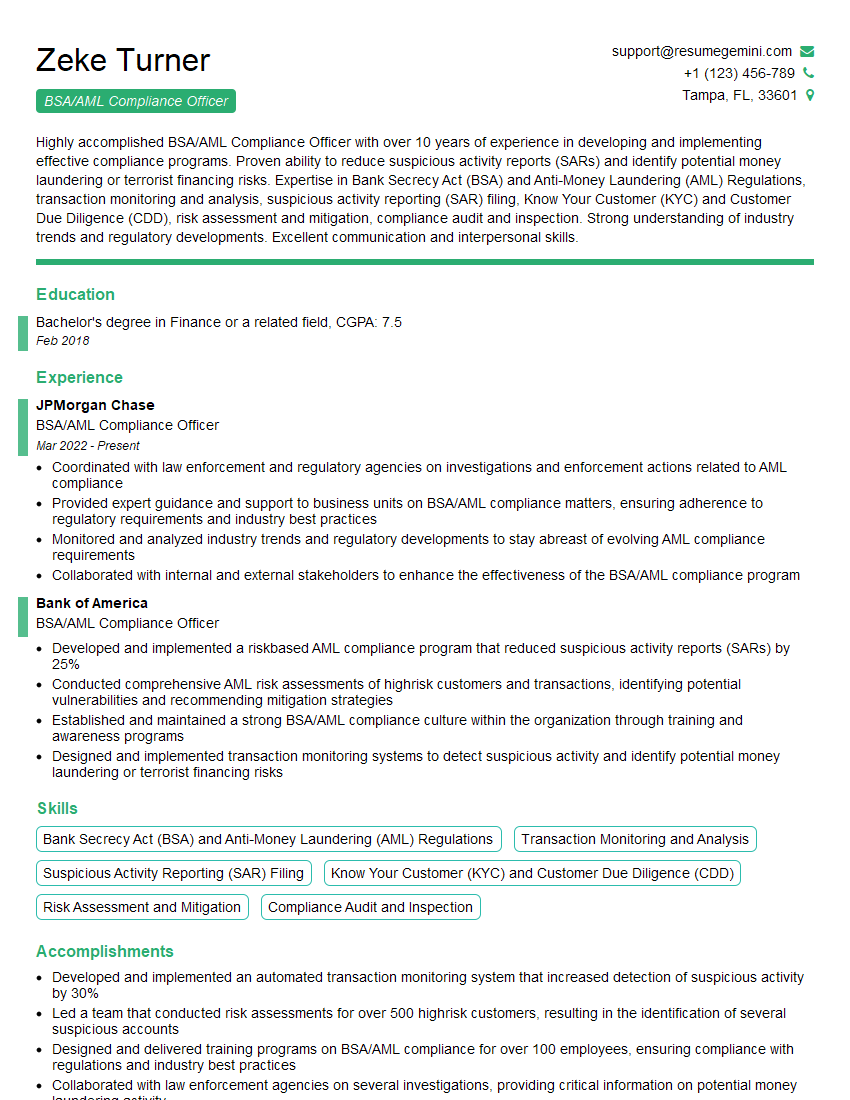
BSA/AML Compliance Officer Resume Sample
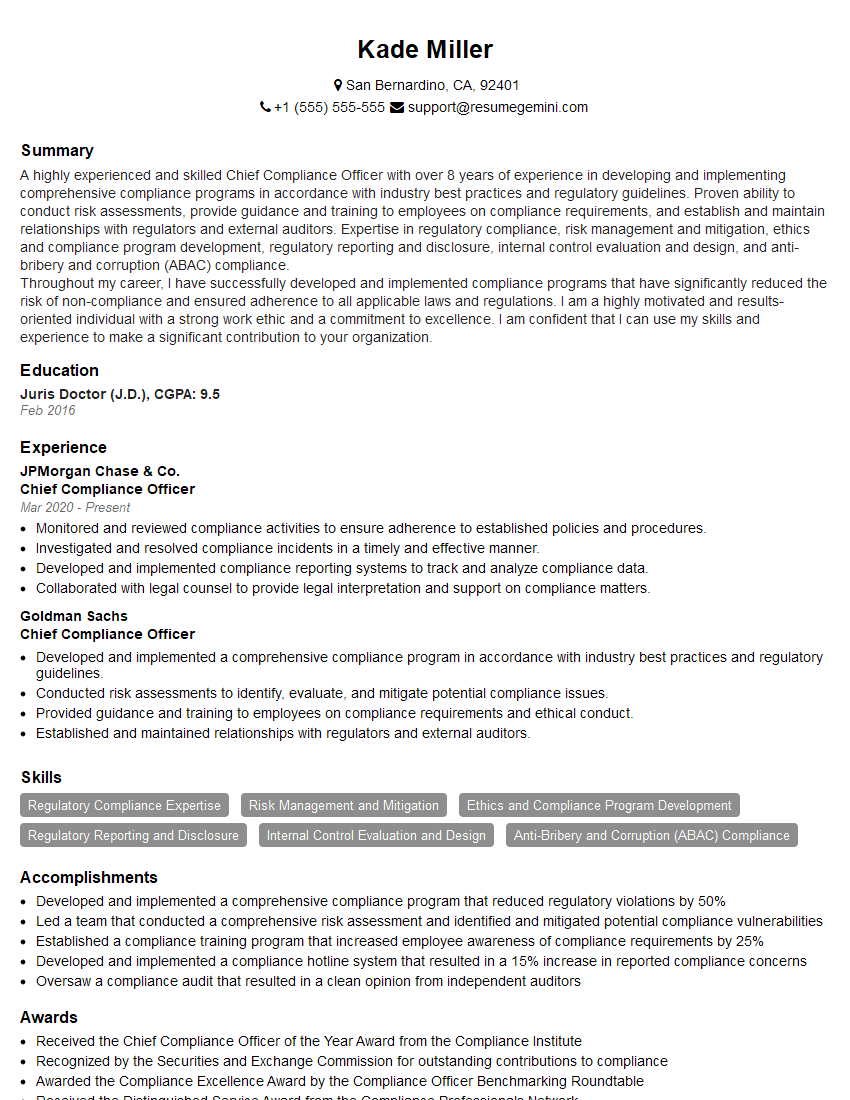
Chief Compliance Officer Resume Sample
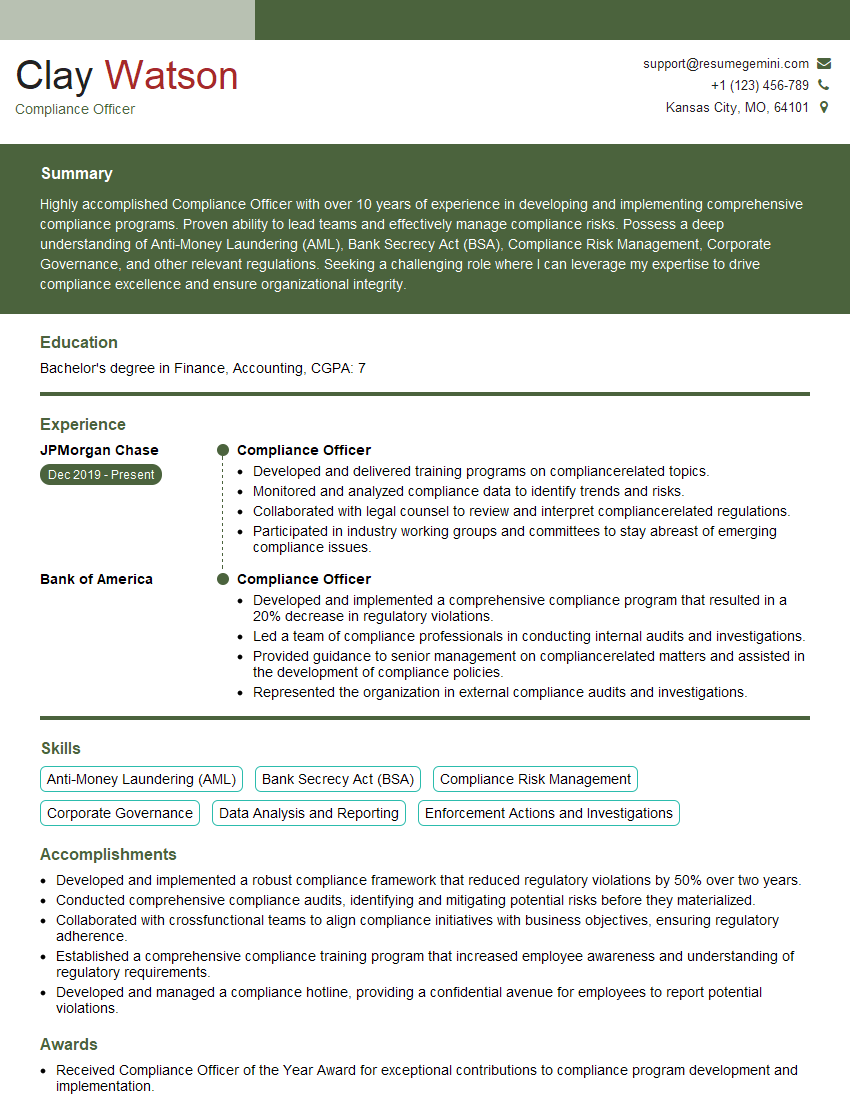
Compliance Officer Resume Sample
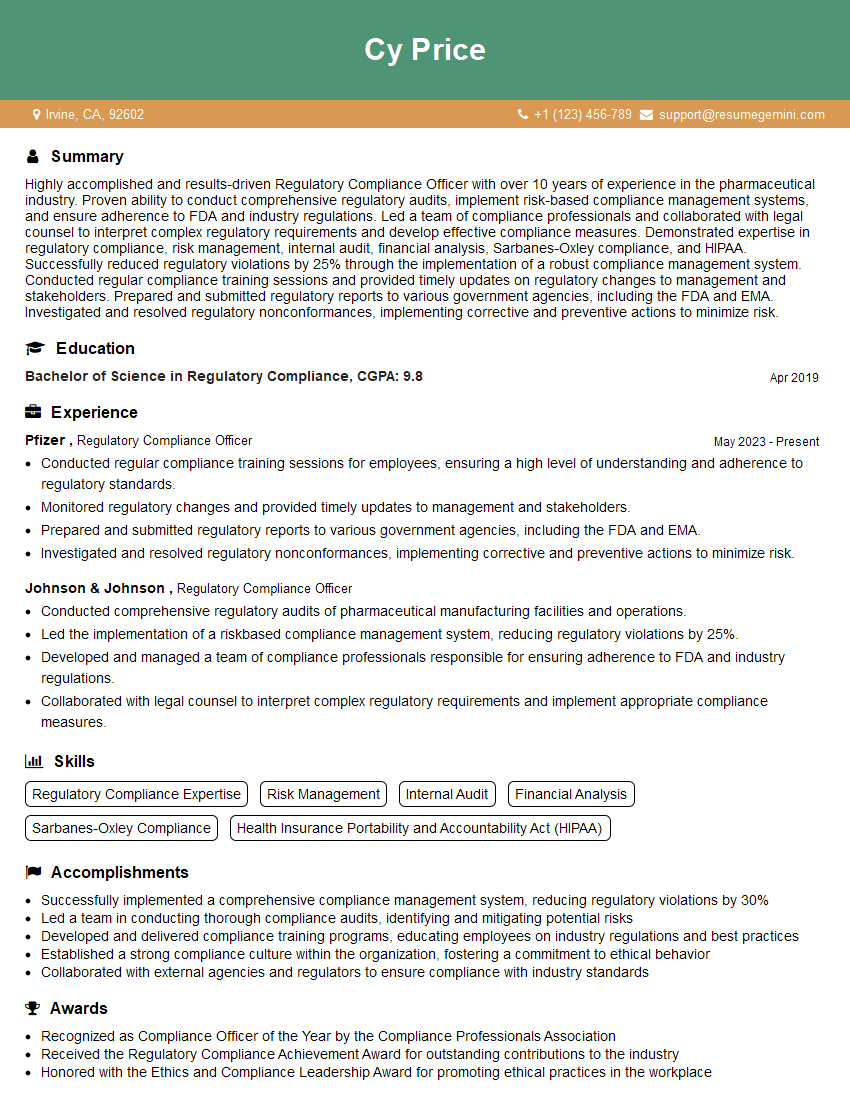
Regulatory Compliance Officer Resume Sample
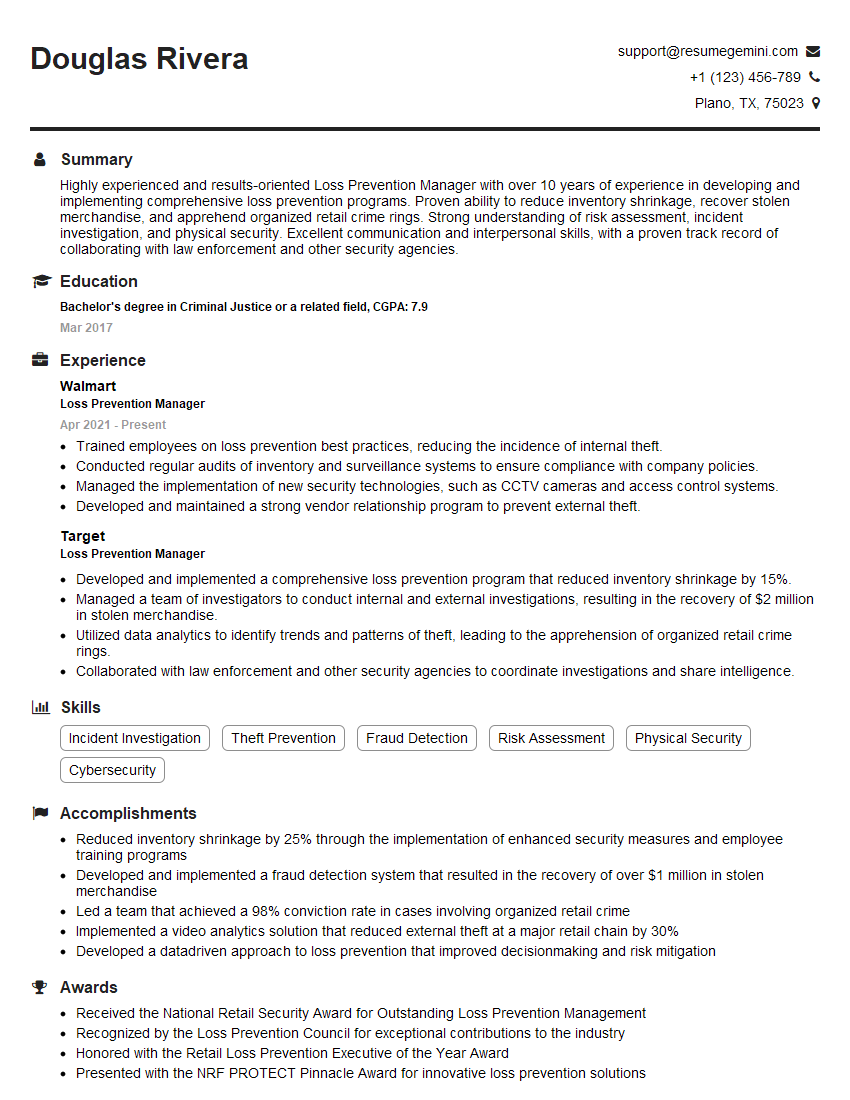
Loss Prevention Manager Resume Sample
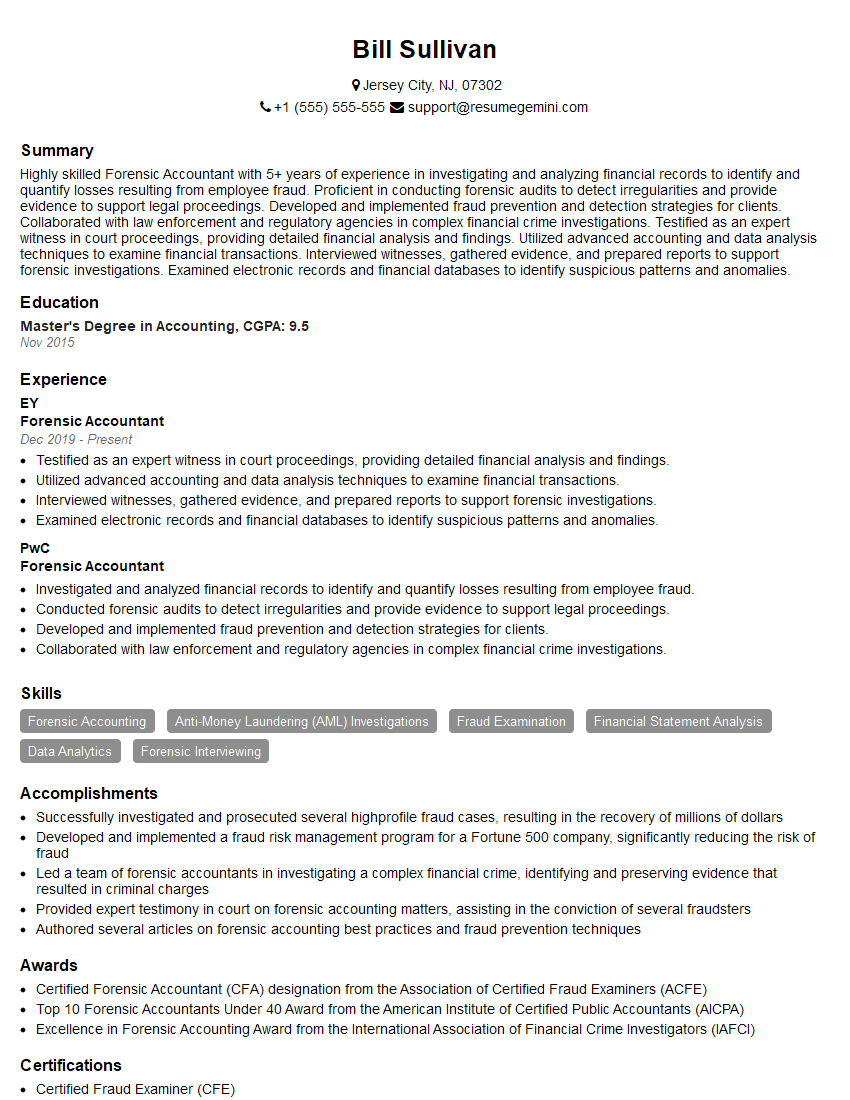
Forensic Accountant Resume Sample

Risk Management Specialist Resume Sample
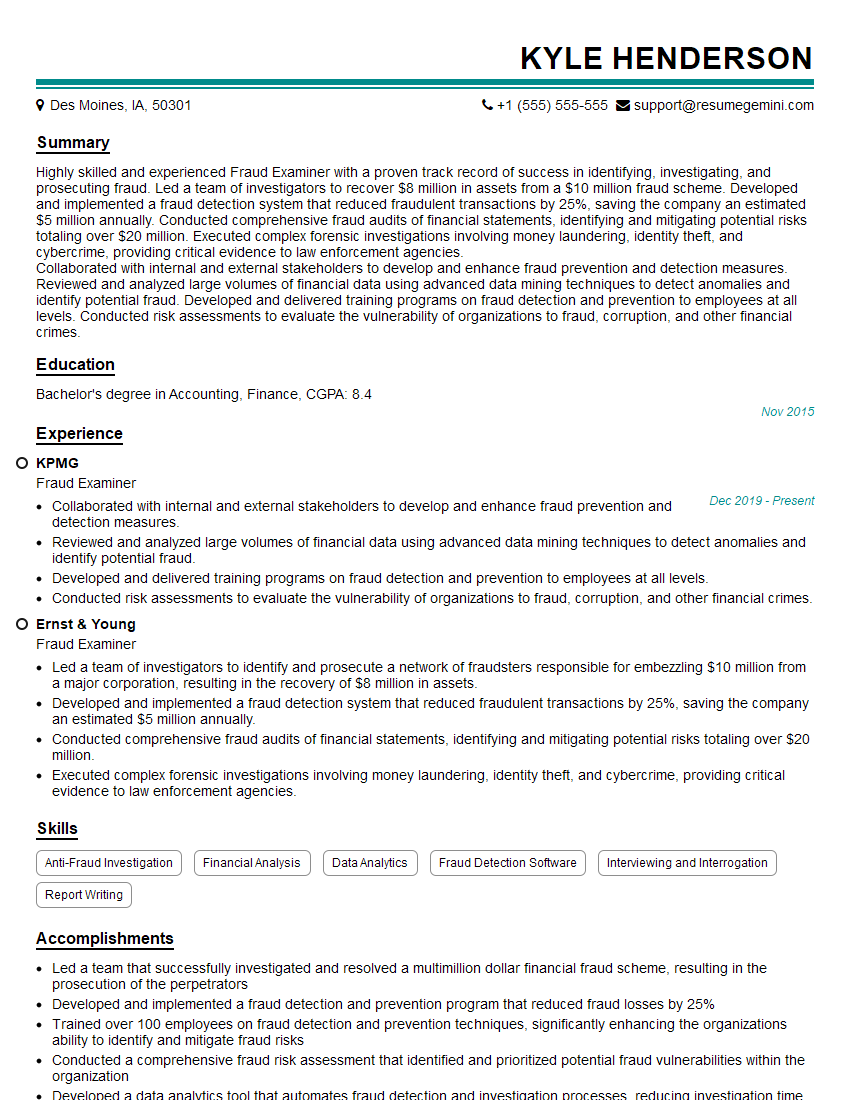
Fraud Examiner Resume Sample
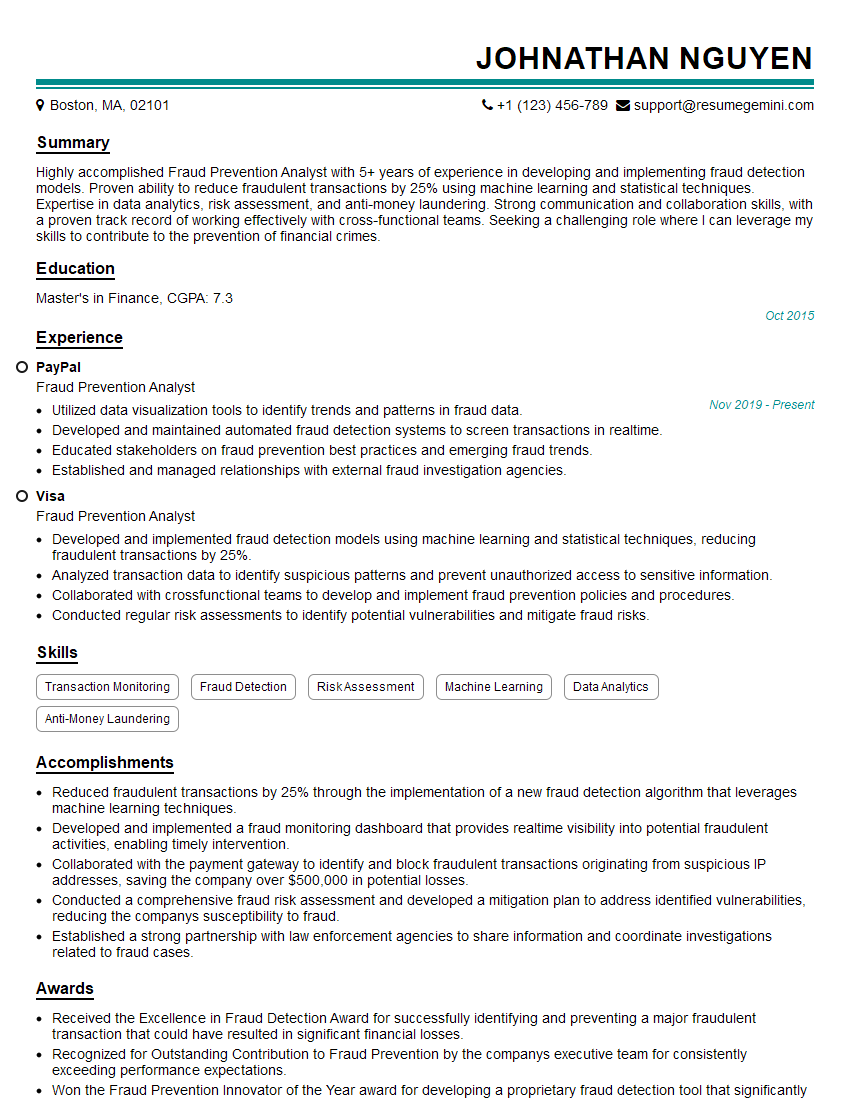
Fraud Prevention Analyst Resume Sample
Explore more articles
Users Rating of Our Blogs
Share Your Experience
We value your feedback! Please rate our content and share your thoughts (optional).
What Readers Say About Our Blog
Very informative content, great job.
good