Every successful interview starts with knowing what to expect. In this blog, we’ll take you through the top City Planning Skills interview questions, breaking them down with expert tips to help you deliver impactful answers. Step into your next interview fully prepared and ready to succeed.
Questions Asked in City Planning Skills Interview
Q 1. Explain the difference between zoning and subdivision regulations.
Zoning and subdivision regulations are both crucial tools in city planning, but they address different aspects of land use. Think of zoning as the what and subdivision regulations as the how.
Zoning dictates what can be built on a particular piece of land. It designates areas for residential, commercial, industrial, or mixed-use development, specifying allowable building heights, density, setbacks, and parking requirements. For instance, a residential zone might restrict building heights to three stories and mandate a minimum lot size. This ensures a consistent character within a neighborhood.
Subdivision regulations, on the other hand, govern how land is physically divided and developed. They address issues like lot size, street design, utility infrastructure (water, sewer, electricity), open space requirements, and environmental protection. These regulations ensure that new developments are properly planned and integrated into the existing infrastructure, preventing haphazard sprawl. A subdivision plan must adhere to zoning regulations, but also addresses the practical aspects of dividing a larger parcel into smaller, buildable lots.
In essence, zoning sets the overall framework for land use, while subdivision regulations provide the detailed rules for implementing that framework on the ground. They work together to ensure orderly and sustainable development.
Q 2. Describe your experience with Geographic Information Systems (GIS) in urban planning.
Geographic Information Systems (GIS) are indispensable in my urban planning work. I’ve extensively used GIS software (like ArcGIS and QGIS) for a variety of tasks, from analyzing spatial data to creating compelling visualizations for public presentations and reports.
- Spatial Analysis: I’ve utilized GIS to analyze factors like population density, proximity to public transportation, crime rates, and environmental hazards. This helps identify areas needing improvement or areas suitable for specific developments, such as affordable housing or parks.
- Scenario Planning: GIS allows for creating ‘what-if’ scenarios. For example, I’ve modeled the impact of different transportation routes or land-use changes on traffic flow, accessibility, and environmental quality. This enables data-driven decision-making.
- Data Visualization: GIS tools are invaluable for producing maps, charts, and 3D models that effectively communicate complex spatial information to stakeholders. Clear visualization improves understanding and engagement in the planning process.
- Public Engagement: Interactive GIS maps can be incorporated into public forums and online platforms, facilitating community participation in planning decisions. Citizens can easily see and understand proposed changes on a map.
For instance, in one project, I used GIS to analyze the impact of a proposed light rail line on surrounding neighborhoods. By overlaying population density data with proximity to the planned stations, we identified areas likely to experience increased accessibility and economic activity, and also areas potentially impacted by increased traffic or noise.
Q 3. How do you assess the environmental impact of a proposed development project?
Assessing the environmental impact of a development project requires a comprehensive and multi-faceted approach. It’s not just about ticking boxes; it’s about proactively minimizing negative effects and maximizing positive contributions to the environment.
My process typically involves these steps:
- Baseline Environmental Assessment: This involves a thorough study of the existing environment, including flora and fauna, water quality, air quality, soil conditions, and noise levels. This provides a benchmark against which to measure the project’s impact.
- Impact Prediction: Using environmental modeling tools and established methodologies (e.g., life cycle assessment), we predict potential impacts such as habitat loss, pollution, increased stormwater runoff, and changes to local ecosystems. This may involve simulations and expert consultations.
- Mitigation and Compensation Measures: Based on the predicted impacts, we design and implement mitigation strategies to reduce or eliminate negative effects. This might include creating wildlife corridors, using sustainable building materials, installing green roofs, or implementing water management systems. Compensation measures might involve restoring or enhancing degraded habitats elsewhere.
- Regulatory Compliance: The assessment must comply with all relevant environmental regulations and permits (NEPA, Clean Water Act, etc.). We ensure the project adheres to these regulations throughout the development process.
- Monitoring and Reporting: Post-construction, we monitor the project’s actual environmental performance and compare it to the predictions to identify any unexpected effects and make necessary adjustments.
This holistic approach guarantees that environmental considerations are integrated into the planning process from its inception, leading to responsible and sustainable development.
Q 4. What are the key principles of sustainable urban planning?
Sustainable urban planning prioritizes the creation of thriving cities that meet the needs of the present without compromising the ability of future generations to meet their own needs. It rests on several key principles:
- Environmental Protection: Minimizing the environmental footprint of urban development, protecting natural resources, and promoting biodiversity.
- Social Equity: Creating inclusive and equitable communities that provide opportunities for all residents, regardless of income, race, or background.
- Economic Vitality: Fostering a diverse and resilient economy that provides good jobs and promotes economic opportunity for all.
- Resilience: Building cities that can withstand and adapt to climate change, natural disasters, and other challenges.
- Walkability and Transit-Oriented Development: Designing neighborhoods where people can easily walk, bike, or use public transportation, reducing reliance on cars and promoting healthy lifestyles.
- Resource Efficiency: Minimizing resource consumption (water, energy, materials) through efficient design and the use of renewable resources.
For example, a sustainable urban development might incorporate green infrastructure (rain gardens, green roofs) to manage stormwater, use renewable energy sources, and provide affordable housing options within walking distance of jobs and amenities.
Q 5. Explain your understanding of smart growth principles.
Smart growth is an urban planning and transportation strategy that aims to create more livable, healthy, and economically vibrant communities by focusing growth in existing urban areas rather than sprawling outwards. It’s about making the most of our existing infrastructure and resources.
Key principles of smart growth include:
- Mixed-Use Development: Combining residential, commercial, and recreational uses in the same area, fostering walkability and reducing reliance on cars.
- Transit-Oriented Development (TOD): Concentrating development around public transportation hubs to improve access and reduce traffic congestion.
- Preservation of Open Space: Protecting green areas, parks, and natural habitats within and around urban areas to enhance environmental quality and recreational opportunities.
- Density and Walkability: Creating walkable neighborhoods with a range of housing types and densities to promote a sense of community and reduce reliance on cars.
- Community Engagement: Involving residents and stakeholders in the planning process to ensure the development reflects their needs and priorities.
- Regional Coordination: Collaborating with surrounding jurisdictions to address regional transportation, environmental, and economic issues.
Imagine a neighborhood with shops, restaurants, apartments, and a light rail station all within easy walking distance—that’s a prime example of smart growth in action. It reduces traffic, promotes community interaction, and protects green spaces.
Q 6. How do you incorporate community input into the planning process?
Community input is vital for creating successful and equitable urban plans. I employ a range of strategies to actively involve communities in the planning process:
- Public Forums and Meetings: Organizing public meetings, workshops, and presentations to discuss project proposals and gather feedback.
- Surveys and Online Questionnaires: Using online tools and paper surveys to gather broader input from a wider range of residents.
- Focus Groups: Conducting focus groups with targeted groups (e.g., seniors, young families) to gain deeper insights into specific needs and concerns.
- Charrettes: Holding collaborative design workshops where community members work directly with planners and designers to shape the project.
- Interactive Maps and Online Platforms: Utilizing GIS-based platforms to allow residents to provide feedback directly on maps and proposed designs.
- Community Advisory Boards: Establishing advisory boards comprising residents and stakeholders to provide ongoing input and guidance.
It’s crucial to actively solicit feedback, respond to concerns, and actively incorporate community input into the final plans. Transparency and communication are key to building trust and ensuring a sense of ownership among residents.
For example, in one project, we used an online platform to allow residents to comment on and suggest alterations to a proposed park design. This resulted in the inclusion of features residents specifically requested, significantly increasing community buy-in.
Q 7. Describe your experience with transportation planning and traffic management.
Transportation planning and traffic management are critical components of successful urban planning. My experience encompasses various aspects, from large-scale transportation network planning to micro-level traffic calming measures.
Transportation Network Planning: I’ve worked on projects involving the design and implementation of new transportation systems, including bus rapid transit (BRT) systems, light rail lines, and improvements to existing road networks. This involves analyzing travel patterns, evaluating different transportation modes, and assessing their impacts on traffic flow, air quality, and land use. I often utilize traffic modeling software to project future traffic conditions and optimize network design.
Traffic Management: At a more micro-level, I’ve been involved in designing traffic calming measures to improve pedestrian and cyclist safety, reduce vehicle speeds, and enhance the livability of neighborhoods. This can include roundabouts, speed bumps, pedestrian crossings, and bike lanes.
Parking Management: I’ve also contributed to developing strategies for effective parking management, considering both on-street and off-street parking. This involves analyzing parking demand, evaluating parking pricing strategies, and designing efficient parking facilities to minimize congestion and enhance mobility.
In a recent project, I helped develop a transportation demand management (TDM) plan for a rapidly growing city. This involved analyzing transportation trends, identifying congestion hotspots, and developing strategies to encourage the use of public transport, cycling, and walking through incentives and improved infrastructure.
Q 8. How do you evaluate the economic feasibility of a development project?
Evaluating the economic feasibility of a development project requires a multi-faceted approach, going beyond simply looking at projected profits. It involves a rigorous assessment of costs, potential revenue streams, and the overall financial viability of the project over its lifespan. This often includes a detailed financial model.
- Cost Analysis: This includes land acquisition costs, construction expenses, permitting fees, professional fees (architects, engineers, consultants), and ongoing operational costs (maintenance, utilities, property taxes). A thorough breakdown of each cost component is crucial for accuracy.
- Revenue Projections: Depending on the project type (residential, commercial, mixed-use), revenue sources vary. For residential, this involves estimating rental income or sale prices. Commercial projects might involve lease agreements and potential business revenue generation. Realistic market analysis and occupancy rates are key.
- Financial Modeling: This involves creating a detailed financial model that projects cash flows, net present value (NPV), internal rate of return (IRR), and other key financial metrics over the project’s lifetime. Sensitivity analysis is crucial to understand how changes in key assumptions (e.g., interest rates, occupancy rates) impact the project’s profitability.
- Risk Assessment: Unforeseen costs, market fluctuations, and regulatory changes can significantly impact the project’s feasibility. A thorough risk assessment helps identify and mitigate potential risks.
For example, when evaluating a mixed-use development, we would analyze the potential rental income from residential units, the lease revenue from commercial spaces, and the potential for increased property values over time. We would then factor in construction costs, operating expenses, and financing costs to determine the overall profitability and return on investment.
Q 9. What are the challenges of planning for affordable housing?
Planning for affordable housing presents numerous challenges, often stemming from the inherent tension between affordability and market forces. Land costs, construction expenses, and regulatory hurdles often make it difficult to create housing that is genuinely affordable for low- and moderate-income households.
- High Land Costs: In desirable urban areas, land prices are often prohibitively high, making it difficult to build affordable housing without substantial public subsidies.
- Construction Costs: Building costs, including materials, labor, and permitting fees, continue to rise. This impacts the ability to deliver units at a price point that lower-income residents can afford.
- Regulatory Hurdles: Zoning regulations, building codes, and environmental review processes can significantly increase the cost and time required to develop affordable housing projects.
- Funding Limitations: Securing sufficient funding can be challenging, as affordable housing projects often require a combination of public and private funding sources.
- NIMBYism (Not In My Backyard): Community resistance to affordable housing projects is a significant obstacle. Residents may express concerns about property values, increased traffic, or changes to the neighborhood character.
Addressing these challenges requires innovative approaches, including density bonuses, inclusionary zoning, creative financing mechanisms, and community engagement strategies that build support for affordable housing development.
Q 10. How do you address issues of social equity in urban planning?
Addressing social equity in urban planning means ensuring that all residents have equal access to opportunities, resources, and quality of life, regardless of their income, race, ethnicity, or other social characteristics. This requires a proactive approach that goes beyond simply avoiding discrimination.
- Equitable Distribution of Resources: Planning decisions should prioritize equitable distribution of essential services like parks, schools, libraries, healthcare facilities, and public transportation. This might involve focusing development in underserved areas or implementing policies to ensure accessibility for all residents.
- Community Engagement: Meaningful community engagement processes are vital to ensure that the voices and perspectives of all residents, particularly marginalized communities, are heard and considered in planning decisions.
- Addressing Systemic Inequalities: Urban planners need to be aware of and actively address historical and ongoing systemic inequalities that have disproportionately impacted certain communities. This might involve addressing historical redlining, investing in infrastructure in historically disadvantaged neighborhoods, and promoting economic development opportunities in those areas.
- Data-Driven Decision-Making: Utilizing data to understand disparities in access to resources and opportunities can help identify areas needing attention and tailor solutions to specific community needs.
For example, a city might implement policies to increase the number of affordable housing units in areas with good schools and access to public transportation, thereby providing equitable access to quality education and job opportunities.
Q 11. Explain your understanding of urban design principles.
Urban design principles guide the creation of functional, aesthetically pleasing, and socially vibrant urban environments. They focus on the physical form and organization of cities and towns, shaping how people interact with their surroundings. Key principles include:
- Human Scale: Designing spaces that are comfortable and easy for people to navigate and understand, avoiding overly large or impersonal spaces.
- Connectivity: Creating well-connected streets and paths that encourage walking and cycling, fostering a sense of place and community.
- Mixed-Use Development: Combining residential, commercial, and recreational uses in a single area to promote vibrancy, reduce reliance on cars, and create diverse social interactions.
- Green Space and Sustainability: Incorporating parks, green roofs, and other green infrastructure to improve air quality, reduce the urban heat island effect, and enhance the quality of life.
- Safety and Security: Designing spaces that feel safe and secure, using good lighting, clear sightlines, and appropriate landscaping.
- Accessibility: Ensuring that urban spaces are accessible to people of all abilities, including those with mobility impairments.
Think of a well-designed plaza – it incorporates elements like seating, shade trees, water features, and open space, creating an inviting and functional public gathering place. This is a physical manifestation of successful urban design principles.
Q 12. Describe your experience with land use planning and zoning regulations.
Land use planning and zoning regulations are crucial tools for managing the growth and development of urban areas. My experience encompasses both the technical aspects of applying these regulations and the strategic implications of land use decisions.
I’ve worked extensively with comprehensive plans, zoning ordinances, subdivision regulations, and environmental impact assessments. This includes reviewing development proposals, preparing land use analyses, and participating in public hearings. I am familiar with various zoning classifications (residential, commercial, industrial) and the procedures for obtaining variances and special permits. I understand the importance of balancing competing land uses and ensuring compatibility between different development types. For example, I’ve helped negotiate density bonuses for developers willing to incorporate affordable housing units into their projects, aligning the private sector’s goals with public policy objectives. I have also worked on projects involving the rezoning of brownfield sites to facilitate redevelopment, ensuring environmental remediation standards are met.
Q 13. How do you manage conflicting interests among stakeholders in a planning project?
Managing conflicting interests among stakeholders is inherent in urban planning. It requires a collaborative and transparent approach that prioritizes communication and negotiation.
- Stakeholder Identification and Analysis: Begin by identifying all relevant stakeholders (residents, businesses, government agencies, environmental groups, etc.) and analyzing their interests and potential conflicts.
- Facilitation and Mediation: Employ facilitation and mediation techniques to create a space for open dialogue, allowing stakeholders to express their concerns and perspectives.
- Compromise and Negotiation: Facilitate compromise and negotiation to find solutions that address the concerns of all stakeholders, even if it involves making trade-offs.
- Transparency and Communication: Maintain transparency throughout the process by providing clear and regular communication to all stakeholders. This builds trust and ensures everyone is informed about the progress and decisions.
- Decision-Making Framework: Establish a clear decision-making framework that outlines the process for resolving conflicts and making final decisions. This may involve using a weighted scoring system or public voting.
A real-world example would be managing the competing interests of developers wanting to maximize density and local residents concerned about increased traffic. Through community engagement meetings, we might negotiate a compromise – a slightly lower density with improvements to local infrastructure and transportation networks.
Q 14. What are your preferred methods for conducting community engagement?
My preferred methods for conducting community engagement prioritize inclusivity and meaningful participation. I avoid simply ticking boxes and strive for genuine interaction.
- Public Forums and Meetings: Holding well-publicized public forums and meetings to provide information, gather input, and allow for open discussion.
- Surveys and Online Questionnaires: Using online surveys and questionnaires to gather broader input from a larger segment of the community.
- Focus Groups: Conducting focus groups with diverse representatives from the community to explore specific topics in more depth.
- Charrettes and Workshops: Organizing participatory charrettes and workshops to engage residents in the design and planning process.
- One-on-One Meetings: Conducting one-on-one meetings with key stakeholders to build relationships and understand their individual perspectives.
- Social Media and Online Platforms: Utilizing social media and online platforms to reach a wider audience and facilitate dialogue.
It’s vital to ensure accessibility for all community members, including those with limited English proficiency or physical limitations. Translation services, accessible venues, and flexible meeting times are essential considerations.
Q 15. How do you use data analysis to inform your planning decisions?
Data analysis is crucial in modern city planning. It allows us to move beyond intuition and rely on evidence-based decision-making. I utilize various data sources, including demographic data (population density, age brackets, income levels), geographic information system (GIS) data (land use, transportation networks, infrastructure), and socioeconomic data (employment rates, poverty levels, crime statistics) to identify trends, predict future needs, and evaluate the impact of proposed projects.
For example, in a recent project focused on improving public transportation, we analyzed ridership data from existing bus routes, combined it with demographic data to pinpoint areas with high demand and limited access to public transit. This analysis directly informed the design of new bus routes and the placement of new bus stops, optimizing resource allocation and improving service equity.
I use various analytical tools, including statistical software (like R or SPSS) and GIS software (like ArcGIS) to analyze the data. This allows me to create visualizations – maps, charts, graphs – that clearly communicate complex data to stakeholders and support my recommendations.
Career Expert Tips:
- Ace those interviews! Prepare effectively by reviewing the Top 50 Most Common Interview Questions on ResumeGemini.
- Navigate your job search with confidence! Explore a wide range of Career Tips on ResumeGemini. Learn about common challenges and recommendations to overcome them.
- Craft the perfect resume! Master the Art of Resume Writing with ResumeGemini’s guide. Showcase your unique qualifications and achievements effectively.
- Don’t miss out on holiday savings! Build your dream resume with ResumeGemini’s ATS optimized templates.
Q 16. Describe your experience with the preparation and review of environmental impact statements.
I have extensive experience in preparing and reviewing environmental impact statements (EIS). This involves a thorough assessment of a project’s potential environmental impacts – both positive and negative – across various areas including air and water quality, noise pollution, habitat disruption, and greenhouse gas emissions. This process requires a strong understanding of environmental regulations and best practices, as well as the ability to communicate complex scientific information to a broad audience.
In one project, we prepared an EIS for a proposed large-scale residential development. We conducted detailed ecological surveys, modeled air quality impacts from increased traffic, and evaluated the potential effects on local water resources. The EIS was crucial in securing the necessary permits and demonstrating to the public and regulatory agencies our commitment to environmental stewardship. The review process involved collaboration with regulatory agencies, environmental consultants, and the public to address concerns and incorporate mitigation measures into the project design.
Q 17. What are the key elements of a comprehensive plan?
A comprehensive plan is a long-term vision for a city or region, guiding growth and development over a period of usually 10-20 years. It’s a blueprint for the future, integrating various elements to create a cohesive and sustainable environment.
- Land Use Plan: Designates areas for residential, commercial, industrial, and recreational uses.
- Transportation Plan: Outlines strategies for efficient and sustainable transportation systems (roads, public transit, cycling infrastructure).
- Housing Plan: Addresses affordable housing needs and strategies for diverse housing options.
- Economic Development Plan: Identifies strategies to attract businesses and create jobs.
- Environmental Plan: Sets goals for environmental protection and sustainability.
- Community Facilities Plan: Addresses the provision of essential services like schools, parks, libraries, and healthcare facilities.
These elements are interconnected and must be carefully considered in relation to each other to ensure a balanced and integrated plan. The plan should be regularly reviewed and updated to adapt to changing needs and conditions.
Q 18. How do you prioritize competing planning goals?
Prioritizing competing planning goals requires a systematic approach. Often, projects involve trade-offs. For example, promoting economic development may conflict with preserving open space or protecting historical areas.
I typically use a multi-criteria decision analysis (MCDA) framework. This involves:
- Identifying all relevant goals: This includes stakeholder input.
- Assigning weights to each goal: Reflecting their relative importance based on community values and priorities.
- Evaluating each project against each goal: This could involve scoring on a scale or using quantitative data.
- Calculating a weighted score for each project: This allows for a direct comparison.
- Making a decision based on the weighted scores: This transparent approach allows for justification and communication of the decision-making process.
This ensures a transparent and justifiable process, and helps navigate complex trade-offs effectively. The process is often iterative, involving adjustments based on feedback and new information.
Q 19. Describe your experience with regulatory compliance in urban planning.
Regulatory compliance is paramount in urban planning. I have a deep understanding of federal, state, and local regulations relevant to land use, zoning, environmental protection, building codes, and historical preservation. I ensure all projects adhere to these regulations by integrating compliance considerations into every phase of the planning process.
For instance, I have experience working with the Americans with Disabilities Act (ADA) requirements for accessibility in public spaces and buildings, the Clean Water Act regulations regarding stormwater management, and the National Environmental Policy Act (NEPA) requirements for environmental impact assessments. Proactive compliance avoids delays and costly legal challenges, ensuring projects are completed smoothly and legally.
Q 20. How do you handle unexpected challenges during a planning project?
Unexpected challenges are inevitable in any planning project. My approach emphasizes proactive risk management and adaptive planning. This includes developing contingency plans and alternative solutions. When unforeseen issues arise, my strategy involves:
- Rapid Assessment: Quickly identify the nature and scope of the challenge.
- Stakeholder Communication: Inform all relevant parties, including the public, regulatory agencies, and project partners.
- Problem-Solving: Employ a collaborative approach to brainstorm potential solutions. This includes utilizing my network of experts when needed.
- Decision-Making: Select the best solution based on feasibility, cost-effectiveness, and alignment with the overall project goals. This may involve adjusting the project timeline or budget.
- Documentation: Clearly document the challenge, the chosen solution, and its implementation to improve future project planning.
For example, encountering unexpected subsurface conditions during a construction project requires swift action to revise designs, mitigate risks, and ensure public safety.
Q 21. Explain your understanding of urban renewal and redevelopment strategies.
Urban renewal and redevelopment strategies aim to revitalize blighted or underutilized areas. These involve a complex interplay of social, economic, and environmental considerations. Successful strategies consider the existing community fabric, engage stakeholders, and integrate sustainable development principles.
Urban renewal can involve various approaches, including:
- Infill Development: Building on vacant or underutilized lots within existing neighborhoods.
- Brownfield Redevelopment: Reusing contaminated sites for new development, after proper remediation.
- Mixed-Use Development: Combining residential, commercial, and recreational uses in a single development to create vibrant, walkable communities.
- Transit-Oriented Development: Focusing development around public transportation hubs to reduce car dependency.
Successful urban renewal projects prioritize community engagement to ensure that redevelopment aligns with the needs and aspirations of residents. This includes public forums, surveys, and other participatory processes.
Q 22. What are some common pitfalls to avoid in urban planning projects?
Common pitfalls in urban planning often stem from a lack of comprehensive consideration or insufficient stakeholder engagement. Ignoring crucial factors like environmental impact assessments, inadequate community consultation, unrealistic budgets, and failing to account for future growth are major issues.
- Insufficient Environmental Impact Assessment: Failing to thoroughly assess the environmental consequences, such as increased traffic congestion, air pollution, or habitat disruption, can lead to unsustainable projects and community backlash. For example, a poorly planned road expansion might destroy a vital green space without providing sufficient compensatory measures.
- Lack of Community Engagement: Disregarding the needs and opinions of residents can result in projects that don’t serve the community’s best interests and ultimately fail to achieve their objectives. A new housing development might be built without considering local preferences for housing types or amenities, leading to low occupancy rates.
- Unrealistic Budgetary Constraints: Underestimating project costs or failing to secure adequate funding can result in delays, compromises in quality, or even project abandonment. For example, a beautiful park design might be scaled back significantly due to insufficient funding, leaving the community with a disappointing outcome.
- Failing to Plan for Future Growth: Not accounting for population increases, economic shifts, or changing social needs can render a development obsolete in the long term. For instance, insufficient parking provision in a rapidly growing area will lead to significant traffic issues.
Q 23. How do you ensure the long-term viability of a planned development?
Ensuring long-term viability requires a multifaceted approach that considers economic, social, and environmental factors. It’s like building a house—you wouldn’t use weak materials or ignore fundamental structural principles! Similarly, a development needs a strong foundation.
- Mixed-Use Development: Incorporating diverse functions, such as residential, commercial, and recreational spaces, creates resilience. A development solely reliant on a single industry is more vulnerable to economic downturns than a mixed-use area.
- Sustainable Infrastructure: Investing in sustainable infrastructure, like renewable energy sources, water management systems, and green spaces, minimizes long-term operational costs and environmental impact. A development with efficient water recycling might save substantial costs over time compared to one relying on traditional, water-intensive methods.
- Community Engagement and Ownership: Involving the community in the planning process fosters a sense of ownership and responsibility, contributing to its long-term success. A community garden, managed collaboratively by residents, is far more likely to thrive than one imposed by developers.
- Adaptive Design: Designing spaces that can be easily adapted to changing needs is crucial. For instance, adaptable commercial spaces can accommodate different businesses over time, preventing vacancies and preserving economic activity.
Q 24. Describe your experience working with different levels of government in a planning project.
My experience working with different levels of government is extensive. I’ve collaborated with local municipalities, regional planning agencies, and state departments on various projects. This involves navigating complex bureaucratic processes, understanding diverse regulatory frameworks, and building strong working relationships across multiple jurisdictions.
For example, in a recent affordable housing project, I worked with the city council to secure zoning approvals, the regional transportation authority to ensure adequate public transport access, and the state housing agency to obtain funding. Each level of government brought a unique perspective and set of regulations, which required careful coordination and negotiation to ensure a successful outcome. The key was clear communication, proactive engagement, and a deep understanding of each agency’s priorities and mandates. Successful inter-governmental collaboration requires strong communication and a collaborative spirit.
Q 25. What is your experience with using specific planning software or tools (e.g., AutoCAD, ArcGIS)?
I’m proficient in several planning software and tools, including AutoCAD for drafting and design, ArcGIS for geographic information system (GIS) analysis and mapping, and various other specialized software for urban modeling and simulation. AutoCAD is my primary tool for creating detailed site plans, while ArcGIS allows me to analyze spatial data, assess environmental impacts, and optimize development layouts. My experience using these tools enables me to create comprehensive and data-driven planning solutions.
For instance, in a recent project, I used ArcGIS to analyze the impact of a proposed transportation network on traffic flow and commute times. The results informed the design and location of key infrastructure elements, minimizing disruption and improving accessibility.
Q 26. How familiar are you with current planning legislation and regulations?
I maintain a thorough understanding of current planning legislation and regulations at both the local and national levels. This includes zoning ordinances, environmental regulations, building codes, and accessibility standards. Staying current on these regulations is vital for ensuring compliance and avoiding legal issues. I use professional journals, legal databases, and ongoing professional development to stay abreast of changes. Knowledge of these laws is not just about compliance; it’s about proactively finding ways to maximize the positive impact of planning projects within the existing framework.
For example, knowledge of the Americans with Disabilities Act (ADA) is paramount in designing accessible public spaces. Similarly, knowledge of environmental regulations like the Clean Water Act ensures environmentally responsible development.
Q 27. Explain your approach to developing a transportation plan for a growing community.
Developing a transportation plan for a growing community requires a holistic, multi-modal approach. It’s not just about adding more roads; it’s about creating a system that supports diverse travel needs.
- Demand Forecasting: Begin by forecasting future travel demand based on population projections, employment patterns, and land-use plans. This informs the capacity and type of infrastructure needed.
- Multi-Modal Network: Design a network that integrates various modes of transport, including public transit (buses, light rail, etc.), cycling infrastructure, and pedestrian walkways, alongside road networks. This encourages sustainable transportation choices.
- Accessibility and Equity: Ensure the system is accessible to all community members, regardless of age, income, or ability. This might involve accessible bus stops, dedicated bike lanes, and pedestrian-friendly streets.
- Infrastructure Investment: Prioritize investments in infrastructure improvements based on their impact on reducing congestion, improving safety, and enhancing accessibility. This could involve constructing new roads, improving public transit service, and building new bike lanes.
- Technology Integration: Incorporate technology such as intelligent transportation systems (ITS) to optimize traffic flow and improve transit efficiency.
- Community Engagement: Involve the community in the planning process to incorporate their input and concerns.
Q 28. How would you address concerns about gentrification in a redevelopment project?
Addressing concerns about gentrification in redevelopment projects requires a proactive and multifaceted strategy. It’s about creating inclusive growth, not displacement.
- Inclusionary Zoning: Implementing inclusionary zoning policies that mandate a certain percentage of affordable housing units in new developments can help prevent displacement of low-income residents.
- Community Land Trusts: Partnering with community land trusts can preserve affordability by ensuring long-term affordability for housing units.
- Tenant Protection Policies: Enacting policies to protect existing tenants from eviction and rent increases during redevelopment can safeguard current residents.
- Job Creation Initiatives: Prioritizing job creation opportunities for existing residents through training programs or partnerships with local businesses ensures economic participation in the benefits of redevelopment.
- Community Benefits Agreements: Negotiating community benefits agreements with developers can incorporate various protections and benefits for existing residents.
- Transparency and Engagement: Maintain open communication and transparency with the community throughout the entire redevelopment process to build trust and address concerns proactively.
Key Topics to Learn for City Planning Skills Interview
- Urban Design Principles: Understanding principles of urban design, including form, function, and aesthetics, and their application in creating vibrant and livable communities. Consider exploring different urban design movements and their impact.
- Land Use Planning and Zoning: Knowledge of zoning regulations, land use classifications, and their impact on development patterns. Be prepared to discuss practical applications like analyzing zoning maps and understanding their implications for project feasibility.
- Transportation Planning: Familiarity with transportation systems, including their planning and design. This includes understanding traffic flow, public transit, and sustainable transportation options. Be ready to discuss case studies illustrating successful transportation solutions.
- Environmental Planning and Sustainability: Understanding environmental impact assessments, sustainable development principles, and strategies for mitigating environmental risks in urban planning. Explore concepts like LEED certification and green building practices.
- Community Engagement and Participation: Knowledge of community engagement techniques and strategies for incorporating public input into the planning process. Discuss effective communication strategies and conflict resolution approaches.
- Data Analysis and GIS: Proficiency in using Geographic Information Systems (GIS) and data analysis techniques to inform planning decisions. Be prepared to discuss how you’ve used data to support planning recommendations.
- Policy and Legislation: Understanding relevant city planning policies, regulations, and legislation at local, regional, and national levels. Focus on how policy shapes development and urban form.
- Problem-Solving and Critical Thinking: Demonstrating your ability to analyze complex urban challenges, develop innovative solutions, and effectively communicate your recommendations. Prepare examples showcasing your problem-solving skills in a planning context.
Next Steps
Mastering City Planning Skills is crucial for advancing your career in this dynamic field. A strong understanding of these concepts will set you apart from other candidates and open doors to exciting opportunities. To significantly boost your job prospects, creating an ATS-friendly resume is essential. This ensures your application is effectively screened by Applicant Tracking Systems and reaches the hiring manager. We recommend leveraging ResumeGemini, a trusted resource for building professional and effective resumes. ResumeGemini provides examples of resumes tailored to City Planning Skills, offering invaluable guidance in crafting a compelling application that showcases your expertise. Take the next step towards your dream career – build a winning resume with ResumeGemini today!
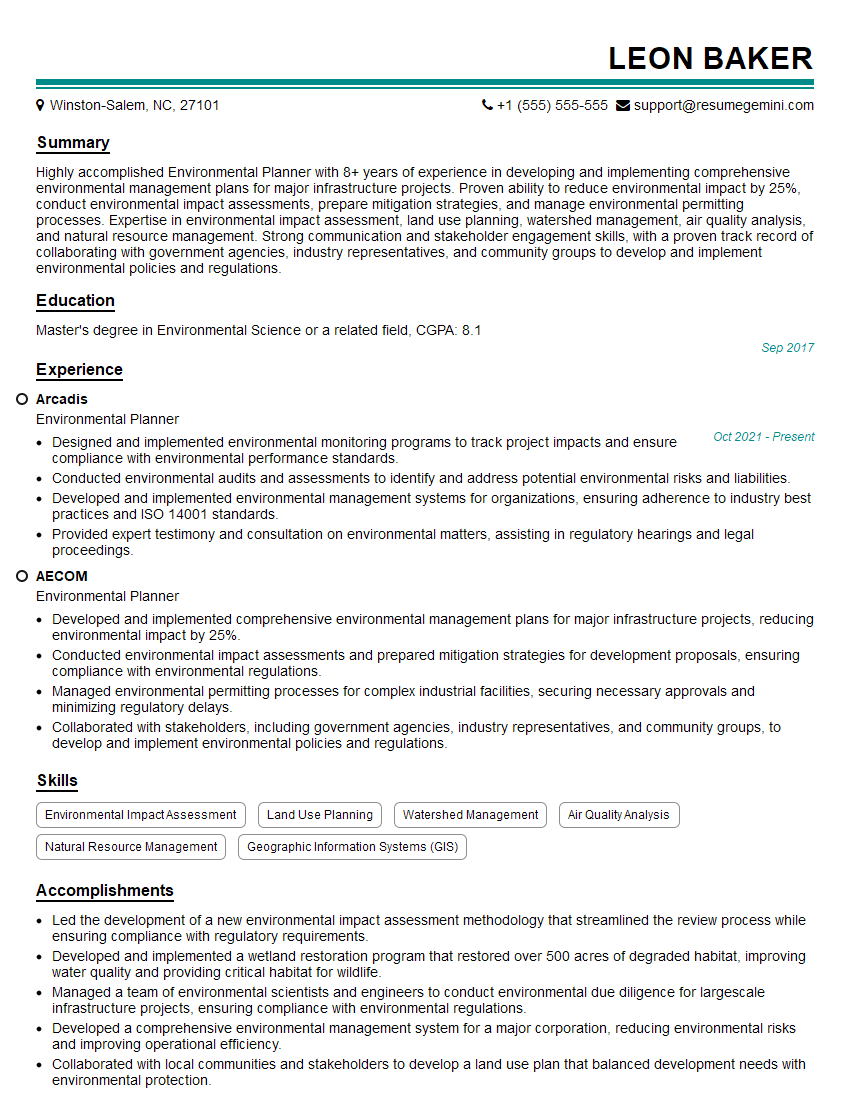
Environmental Planner Resume Sample
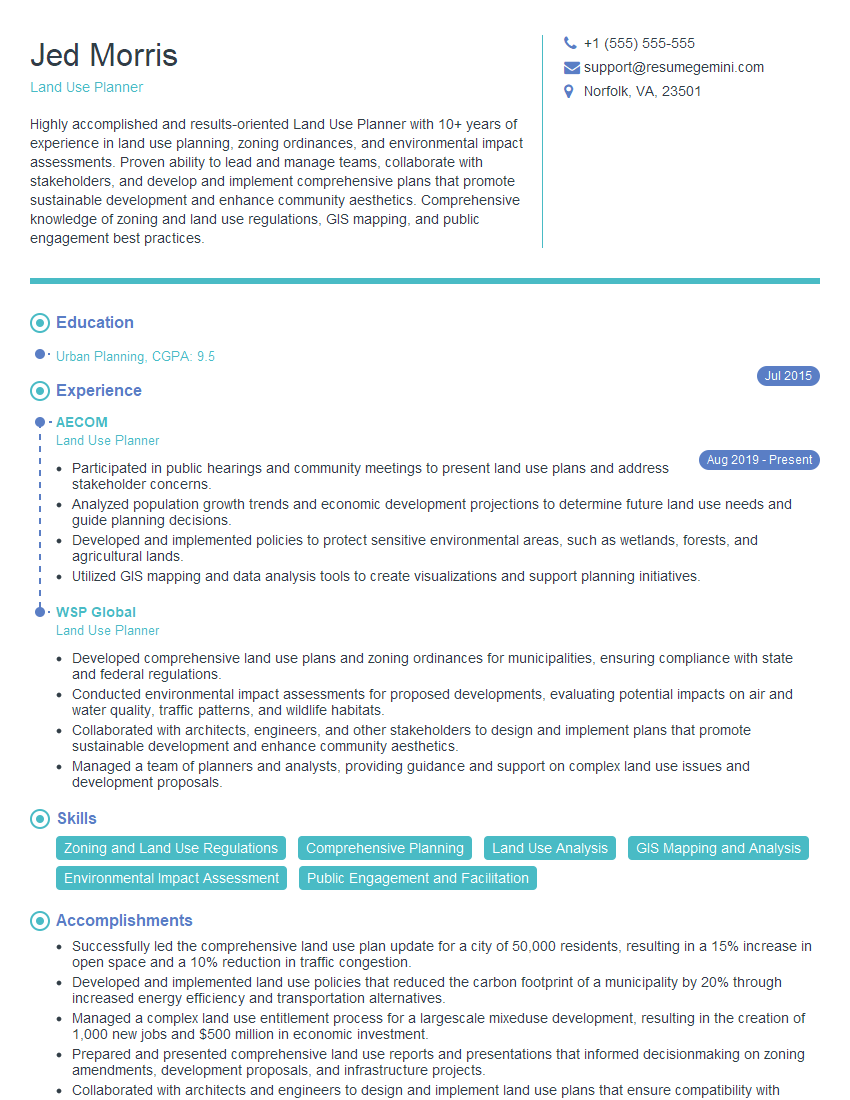
Land Use Planner Resume Sample

Planning Manager Resume Sample
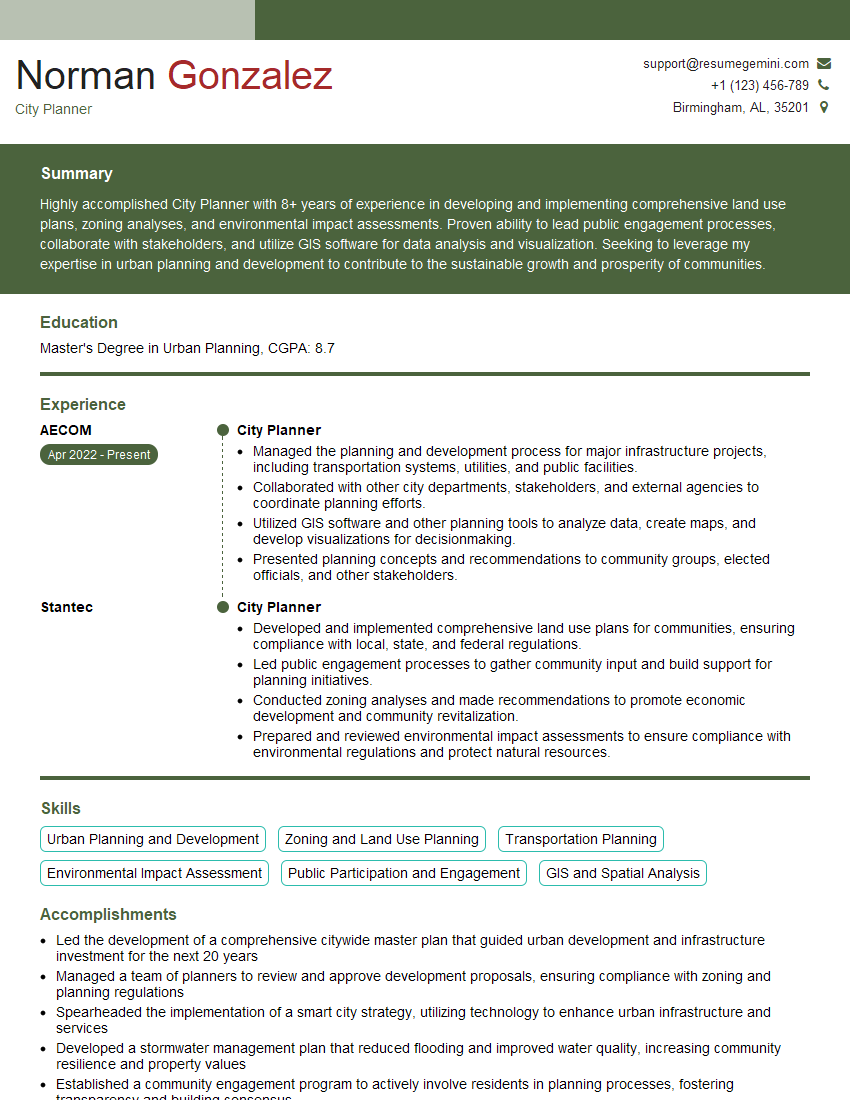
City Planner Resume Sample
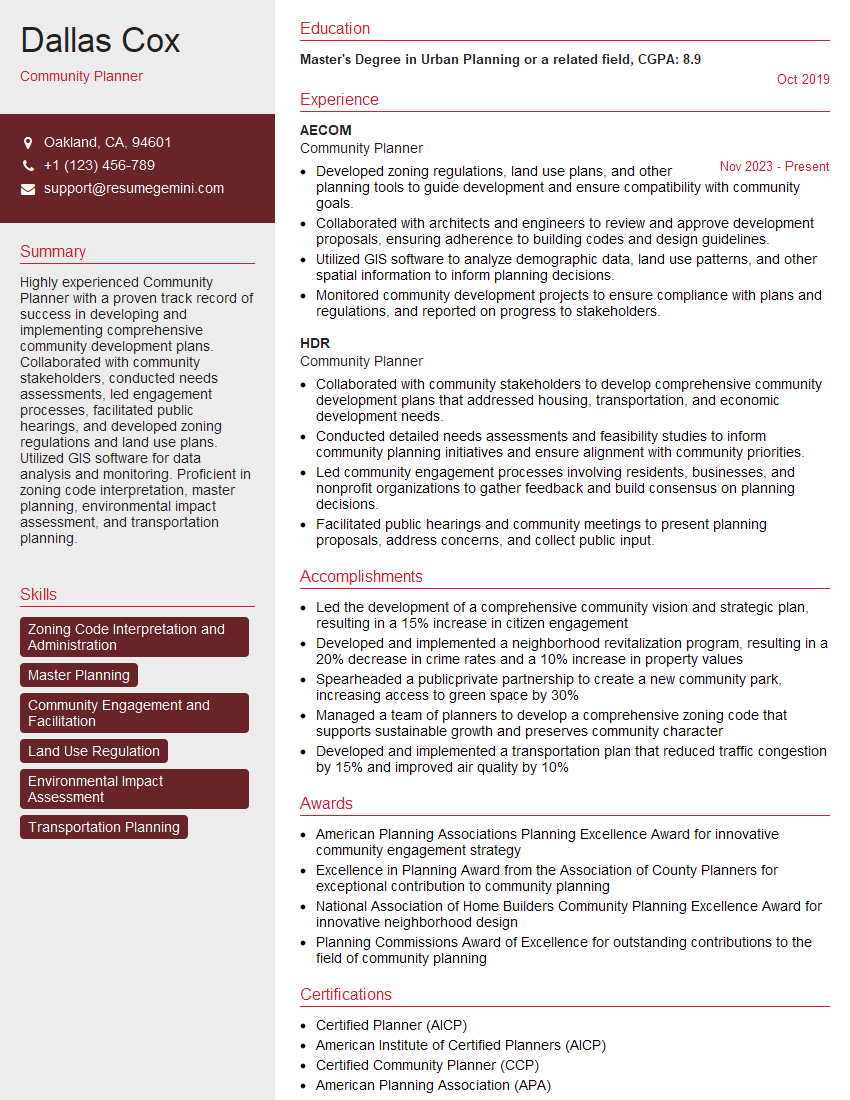
Community Planner Resume Sample
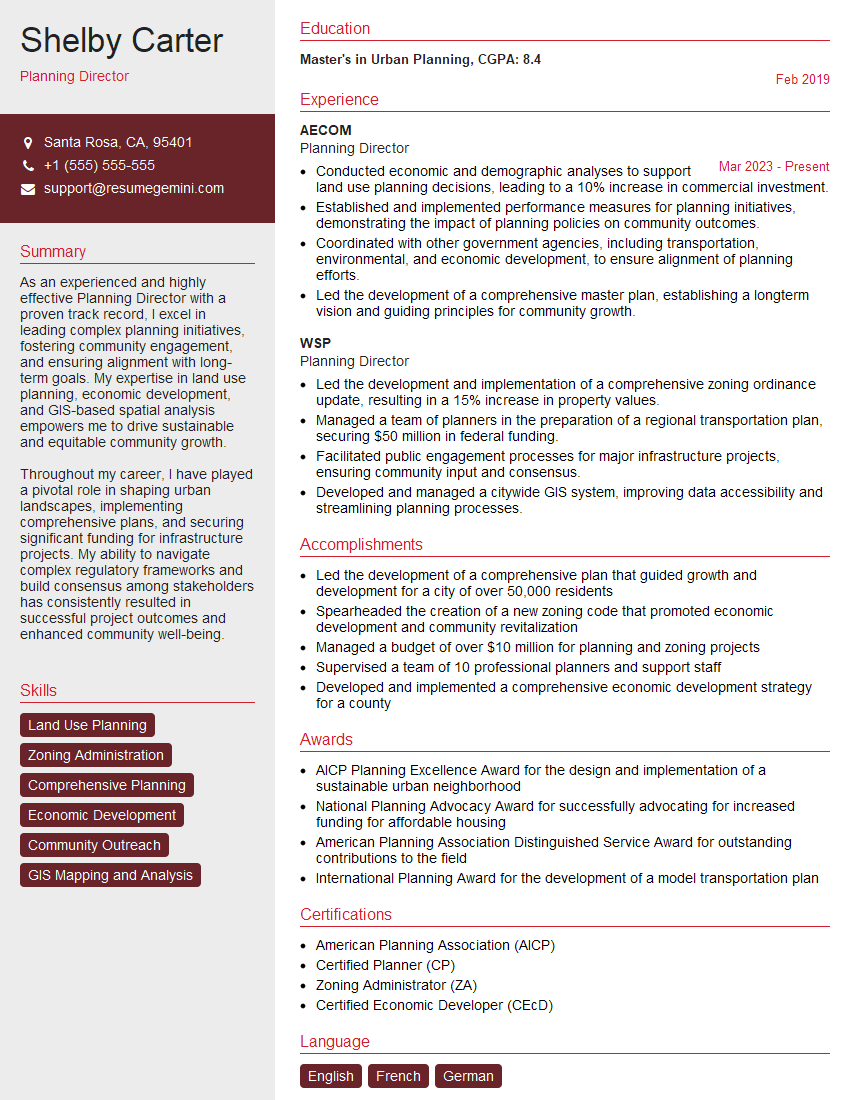
Planning Director Resume Sample
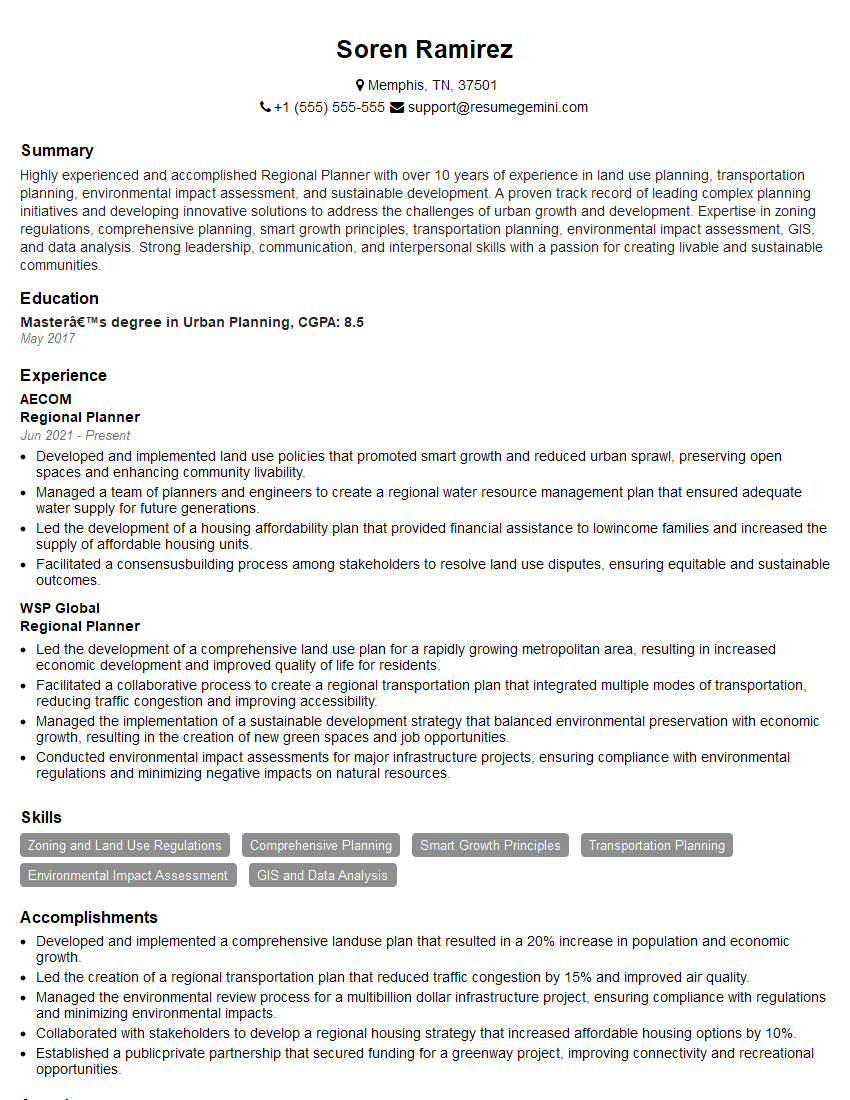
Regional Planner Resume Sample
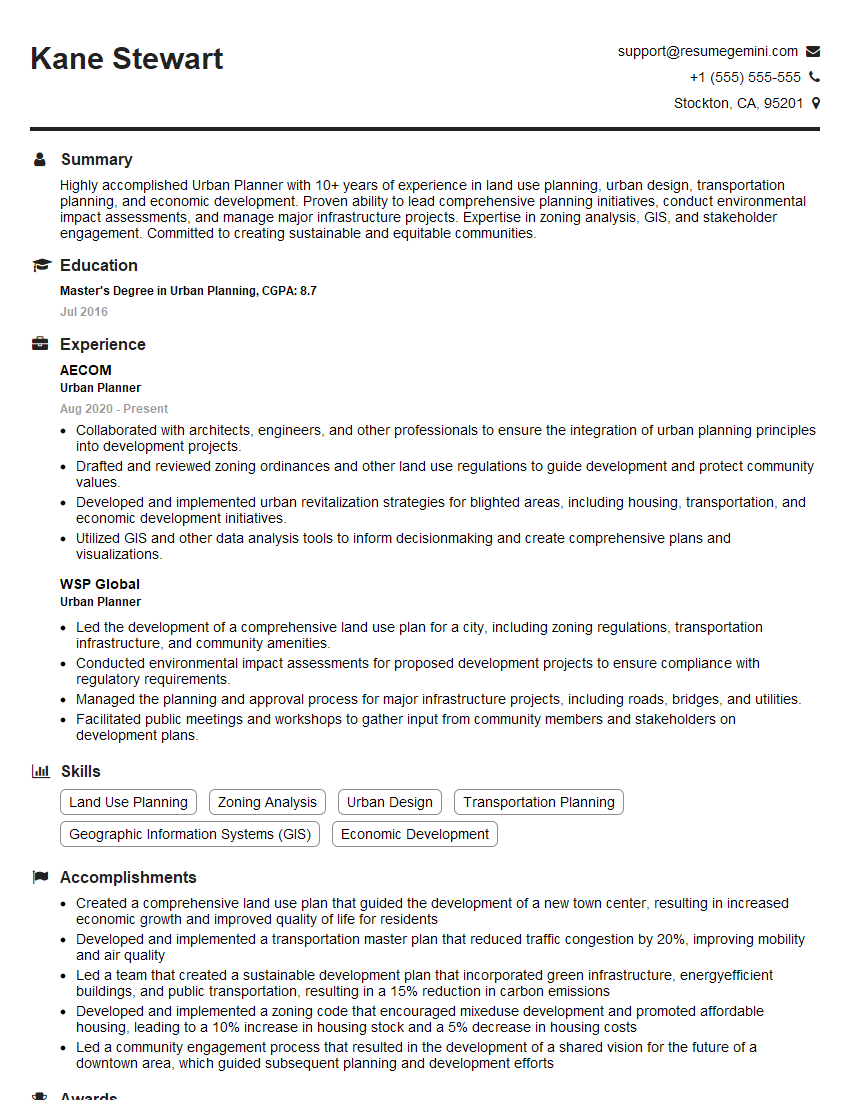
Urban Planner Resume Sample
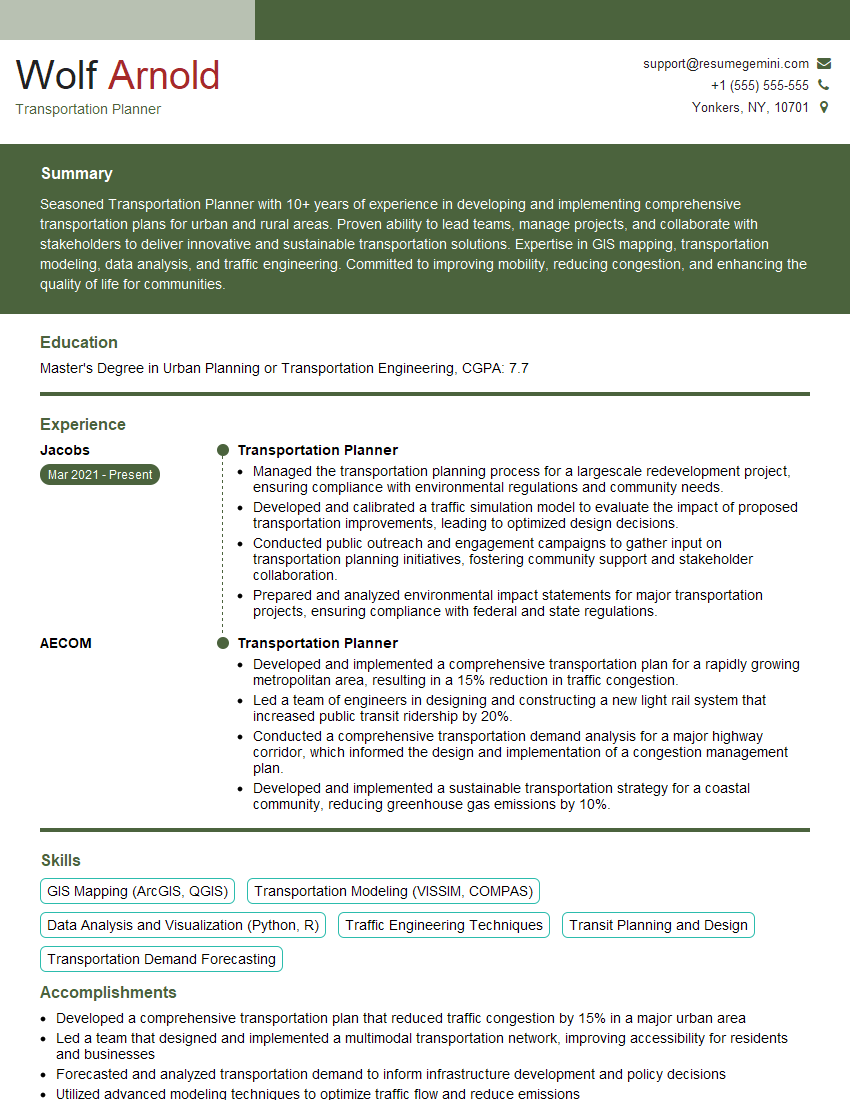
Transportation Planner Resume Sample
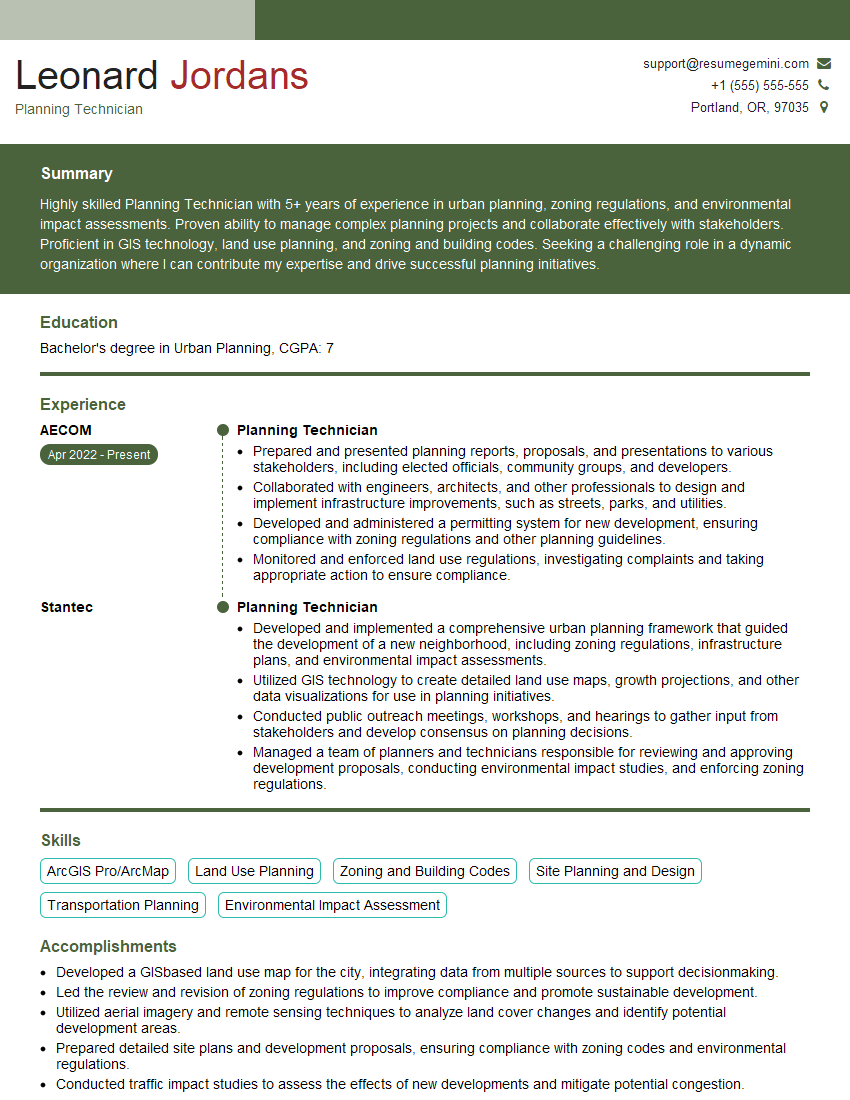
Planning Technician Resume Sample
Explore more articles
Users Rating of Our Blogs
Share Your Experience
We value your feedback! Please rate our content and share your thoughts (optional).
What Readers Say About Our Blog
Very informative content, great job.
good