Unlock your full potential by mastering the most common Code of Conduct and Ethical Standards interview questions. This blog offers a deep dive into the critical topics, ensuring you’re not only prepared to answer but to excel. With these insights, you’ll approach your interview with clarity and confidence.
Questions Asked in Code of Conduct and Ethical Standards Interview
Q 1. Define ‘conflict of interest’ and provide a practical example.
A conflict of interest occurs when an individual’s personal interests or obligations clash with their professional responsibilities, potentially compromising their objectivity and impartiality. It arises when a person’s judgment or actions could be improperly influenced by their personal gain or the interests of others.
Example: Imagine a procurement manager whose spouse owns a company bidding on a contract for their organization. The manager’s personal interest in their spouse’s business success directly conflicts with their professional duty to select the best vendor based solely on merit and value for the company. Even if the spouse’s company offers the best bid, the appearance of impropriety and potential bias necessitates the manager’s recusal from the decision-making process. This situation necessitates transparency and adherence to established procedures to avoid any accusations of favoritism.
Q 2. Explain the importance of whistleblowing mechanisms within an organization.
Whistleblowing mechanisms are crucial for ethical organizational cultures. They provide a safe and confidential channel for employees to report suspected wrongdoing, such as fraud, unethical conduct, or violations of laws and regulations, without fear of retaliation. These mechanisms are essential for:
- Protecting the organization: Early detection of unethical practices minimizes potential damage to reputation and finances.
- Promoting ethical behavior: The existence of a reporting system encourages ethical conduct by signaling that such behavior is taken seriously.
- Ensuring compliance: It helps organizations meet legal and regulatory requirements related to reporting and transparency.
- Protecting employees: Employees who witness or suspect misconduct need a safe way to report it without risking their jobs or careers.
A robust whistleblowing system includes clear reporting procedures, confidentiality guarantees, and mechanisms for investigating reported concerns objectively and fairly. A culture of open communication and support for those who come forward is equally critical.
Q 3. Describe your understanding of corporate social responsibility.
Corporate Social Responsibility (CSR) is a self-regulating business model that helps a company be socially accountable—to itself, its stakeholders, and the public. By practicing corporate social responsibility, companies can be conscious of the kind of impact they are having on all aspects of society, including economic, social, and environmental. It’s a concept that goes beyond mere legal compliance, encompassing a company’s commitment to operate ethically and sustainably, contributing positively to society and the environment.
This involves integrating social and environmental considerations into business operations and interactions with stakeholders. Key areas include:
- Environmental sustainability: Reducing carbon footprint, conserving resources, minimizing waste.
- Social equity: Fair labor practices, diversity and inclusion, community engagement.
- Ethical business practices: Transparency, accountability, anti-corruption measures.
- Philanthropy and volunteering: Supporting community initiatives and charitable causes.
Effective CSR enhances a company’s reputation, attracts and retains talent, builds trust with stakeholders, and contributes to a more sustainable and equitable future.
Q 4. How would you handle a situation where a colleague violates the company’s Code of Conduct?
If a colleague violates the company’s Code of Conduct, I would first gather all relevant facts to ensure a complete understanding of the situation. This might involve documenting observed behavior or obtaining witness statements. Then, I would:
- Consider the severity of the violation: Minor infractions might warrant a direct, informal conversation with the colleague, while serious violations require reporting through official channels.
- Review the company’s Code of Conduct and internal policies: Familiarize myself with the appropriate procedures for handling misconduct.
- Report the violation: If the violation is serious or if informal discussions are unsuccessful, I would report the matter to the appropriate supervisor or ethics officer, following the prescribed procedures.
- Maintain objectivity and confidentiality: Avoid gossip or speculation, and respect the confidentiality of the process.
- Support the investigation: Cooperate fully with any investigation conducted by the company.
It’s crucial to act ethically and responsibly throughout the process, balancing the need to address misconduct with the importance of fairness and due process.
Q 5. What are the key components of a robust ethics and compliance program?
A robust ethics and compliance program comprises several key components:
- A clearly defined Code of Conduct: A comprehensive document outlining ethical standards, expectations, and prohibited behaviors.
- Ethics training: Regular training programs to educate employees on the Code of Conduct, relevant laws, and ethical decision-making frameworks.
- Whistleblowing mechanisms: Confidential channels for reporting suspected misconduct, with guarantees against retaliation.
- Internal auditing and monitoring: Regular audits to assess compliance with the Code of Conduct and identify areas for improvement.
- Disciplinary procedures: Clear and fair processes for addressing violations of the Code of Conduct.
- Leadership commitment: Visible support from senior management, demonstrating a strong commitment to ethical conduct.
- Open communication and culture of ethics: A workplace culture that encourages ethical behavior and reporting of concerns.
This integrated approach helps create an organizational culture of ethics and compliance, minimizing the risk of misconduct and enhancing the company’s reputation.
Q 6. Explain the difference between legal compliance and ethical conduct.
While both legal compliance and ethical conduct aim to ensure responsible behavior, they are distinct.
Legal compliance refers to adhering to all applicable laws and regulations. It’s about meeting the minimum requirements of the law. Violation can lead to legal penalties.
Ethical conduct encompasses a broader set of principles and values that guide behavior beyond legal mandates. It’s about doing what is right, even if it’s not legally required. Ethical violations may not always be illegal but can damage a company’s reputation and relationships with stakeholders.
Example: A company might legally comply with minimum wage laws, but ethically, it should strive to provide fair and competitive wages that reflect the cost of living and employee contributions. Legal compliance sets the floor; ethical conduct sets a higher standard.
Q 7. How do you ensure fairness and impartiality in decision-making?
Ensuring fairness and impartiality in decision-making requires a conscious and deliberate effort. Key strategies include:
- Establishing clear criteria: Define objective and measurable criteria for decision-making, minimizing subjective biases.
- Seeking diverse perspectives: Include individuals from diverse backgrounds and with different viewpoints in the decision-making process.
- Transparency and documentation: Clearly document the decision-making process, including the criteria used and the rationale behind the decision.
- Conflict of interest management: Implementing procedures to identify and address potential conflicts of interest.
- Impartial evaluation of evidence: Objectively assessing all relevant evidence and avoiding emotional or personal biases.
- Seeking external review: In complex or sensitive situations, seeking input from independent experts or ethics committees.
By consistently applying these principles, we can foster a culture of fairness and impartiality, building trust and confidence among stakeholders.
Q 8. Describe a time you had to navigate an ethical dilemma. What was your approach?
Early in my career, I faced a dilemma involving a potentially flawed data analysis. My team was under pressure to deliver a report with positive projections for a new product launch. While I believed the underlying data was not entirely accurate, my supervisor subtly suggested adjusting the figures to align with the desired outcome. This created a clear conflict between my professional integrity and the pressure to meet organizational goals.
My approach involved several steps:
- Identifying the ethical conflict: I clearly recognized that manipulating data to present a false narrative violated my ethical principles and potentially misled stakeholders.
- Gathering information: I meticulously reviewed the data, documenting my concerns and identifying alternative solutions that wouldn’t compromise accuracy.
- Seeking advice: I privately consulted with a trusted mentor within the company to discuss the situation and seek their guidance. This allowed me to explore various perspectives and potential consequences.
- Presenting options: I presented my findings and the potential risks of reporting inaccurate data to my supervisor, alongside alternative approaches for presenting the information responsibly, emphasizing transparency and the long-term reputation of the company.
- Documenting everything: I ensured all my communications and decisions were properly documented.
Ultimately, we revised the report with transparent explanations about the data limitations. While the revised projections were less optimistic, they were accurate and built trust with the stakeholders. This experience taught me the value of proactive ethical decision-making and the importance of aligning personal values with professional conduct.
Q 9. How familiar are you with relevant legislation like SOX or GDPR?
I’m very familiar with relevant legislation like the Sarbanes-Oxley Act (SOX) and the General Data Protection Regulation (GDPR). SOX, primarily focused on corporate governance and financial reporting, aims to protect investors by improving the accuracy and reliability of corporate disclosures. This involves establishing internal controls and maintaining accurate financial records. Failure to comply can lead to significant fines and legal repercussions.
GDPR, on the other hand, focuses on the protection of personal data within the European Union and the European Economic Area. It emphasizes data privacy and individual rights concerning their personal information. Companies handling EU citizens’ data must comply with stringent rules on data collection, storage, processing, and sharing. Non-compliance can result in substantial fines.
My understanding extends to the practical application of these regulations, including data mapping, risk assessments, and the development of compliance programs.
Q 10. What are the potential consequences of non-compliance?
The consequences of non-compliance with ethical standards and regulations can be severe and far-reaching, impacting various aspects of an organization.
- Financial penalties: SOX and GDPR violations can lead to significant fines, impacting profitability and potentially jeopardizing the company’s financial stability.
- Legal repercussions: Non-compliance can result in lawsuits, reputational damage, and even criminal charges, depending on the severity and nature of the breach.
- Reputational damage: Loss of public trust, negative media coverage, and damage to brand image can severely impact customer loyalty and future business opportunities. Think about the impact on a company’s stock price after a major data breach.
- Operational disruptions: Investigations, audits, and remediation efforts required after a non-compliance incident can disrupt daily operations and consume significant resources.
- Loss of talent: Employees may be hesitant to work for an organization with a poor ethical record, leading to difficulty in attracting and retaining skilled professionals.
Ultimately, non-compliance creates a climate of distrust and uncertainty, undermining the long-term sustainability and success of any organization.
Q 11. Explain the role of ethics in risk management.
Ethics plays a crucial role in risk management by providing a framework for identifying, assessing, and mitigating risks. Ethical considerations inform decision-making processes, ensuring that risk management strategies are aligned with the organization’s values and principles. A strong ethical culture reduces the likelihood of unethical behavior that could lead to significant risks.
For example, an ethical risk assessment would consider the potential reputational damage from a data breach, going beyond just the technical aspects of security. It would also examine the potential impact on customer trust and the organization’s long-term sustainability. By incorporating ethical considerations into risk management, organizations can build a more resilient and sustainable business.
Q 12. How do you stay updated on changes in ethical standards and regulations?
Staying updated on changes in ethical standards and regulations requires a multi-faceted approach:
- Professional memberships and certifications: Engaging with professional bodies related to ethics and compliance provides access to updates, publications, and networking opportunities.
- Industry publications and conferences: Regularly reading relevant journals, attending conferences, and participating in webinars keeps me informed about emerging trends and best practices.
- Online resources and legal databases: Utilizing online resources and legal databases allows me to access the latest regulations and case studies.
- Networking with peers: Discussions with colleagues and professionals in my field provide valuable insights and different perspectives on ethical dilemmas.
- Continuous learning: I actively seek opportunities for professional development to enhance my knowledge and understanding.
This proactive approach ensures I’m always equipped to navigate the evolving ethical landscape and effectively implement best practices.
Q 13. How would you conduct an ethics training session for employees?
Conducting an effective ethics training session involves a blend of interactive learning and practical application. I would start by establishing a safe and inclusive environment where employees feel comfortable asking questions and sharing their experiences.
The session would include:
- Defining ethical principles: This would cover core values like honesty, integrity, fairness, and respect, establishing a common understanding of what ethical conduct entails.
- Relevant legislation and regulations: This segment would cover SOX, GDPR, or any other relevant legislation applicable to the organization. Using real-world examples helps make the information relatable.
- Case studies and scenarios: Interactive exercises and case studies would allow participants to apply ethical principles to real-world scenarios and discuss various solutions.
- Reporting mechanisms: Explaining the organization’s whistleblower protection policy and procedures is crucial to foster a culture of ethical accountability.
- Q&A and open discussion: A dedicated time for questions and open dialogue allows participants to address specific concerns and gain further clarification.
Following the training, I’d recommend implementing a feedback mechanism to assess understanding and identify areas for improvement. Continuous reinforcement of ethical principles is key to building a strong ethical culture.
Q 14. Describe your understanding of data privacy regulations.
My understanding of data privacy regulations is comprehensive, encompassing both international and regional frameworks. I am particularly familiar with GDPR, CCPA (California Consumer Privacy Act), and other similar legislation around the globe. These regulations center on the rights of individuals concerning their personal data.
Key aspects include:
- Data minimization: Collecting only the data necessary for specified, explicit, and legitimate purposes.
- Purpose limitation: Processing data only for the purposes it was collected for.
- Data security: Implementing appropriate technical and organizational measures to protect personal data from unauthorized access, use, disclosure, alteration, or destruction.
- Individual rights: Recognizing individuals’ rights to access, correct, erase, restrict processing, and data portability of their personal data.
- Accountability: Implementing processes for demonstrating compliance and addressing data breaches promptly and transparently.
I understand the importance of data mapping, conducting regular risk assessments, and implementing appropriate controls to ensure ongoing compliance with these regulations. Non-compliance can result in significant financial penalties and reputational damage.
Q 15. How do you measure the effectiveness of an ethics and compliance program?
Measuring the effectiveness of an ethics and compliance program isn’t a simple task; it requires a multi-faceted approach. We can’t simply rely on the absence of violations. Instead, we need to assess the program’s impact on the overall ethical culture and risk profile of the organization. This involves a combination of quantitative and qualitative measures.
- Quantitative Measures: These include tracking the number of reported violations, the time it takes to investigate and resolve issues, the effectiveness of training programs (measured through testing and employee surveys), and the cost of compliance (including legal fees, fines, and remediation efforts). A decrease in reported violations doesn’t automatically mean success; it could also indicate underreporting. Therefore, we must also analyze trends and patterns.
- Qualitative Measures: These are crucial and often overlooked. We need to assess employee perceptions of the program through surveys and focus groups. Are employees comfortable reporting concerns? Do they believe the program is fair and effective? We should also review internal audits and independent assessments to evaluate program effectiveness and identify areas for improvement. Regular reviews of the code of conduct and compliance policies are essential.
For example, a successful program might show a decrease in reported misconduct and an increase in employee confidence in the reporting process, indicating a genuine shift towards a more ethical culture. Conversely, a low number of reported incidents coupled with low employee confidence could indicate a problem with the reporting system or a culture of fear.
Career Expert Tips:
- Ace those interviews! Prepare effectively by reviewing the Top 50 Most Common Interview Questions on ResumeGemini.
- Navigate your job search with confidence! Explore a wide range of Career Tips on ResumeGemini. Learn about common challenges and recommendations to overcome them.
- Craft the perfect resume! Master the Art of Resume Writing with ResumeGemini’s guide. Showcase your unique qualifications and achievements effectively.
- Don’t miss out on holiday savings! Build your dream resume with ResumeGemini’s ATS optimized templates.
Q 16. What are the key elements of a strong organizational culture of ethics?
A strong organizational culture of ethics isn’t simply a set of rules; it’s a living, breathing system that permeates every aspect of the organization. Key elements include:
- Leadership Commitment: Ethical behavior must be championed from the top down. Leaders need to visibly demonstrate their commitment to ethical conduct through their actions and decisions. This includes establishing clear expectations, holding themselves and others accountable, and leading by example.
- Open Communication and Transparency: Employees need to feel comfortable raising concerns and asking questions without fear of retaliation. This requires establishing clear and accessible reporting channels and fostering a culture of open dialogue.
- Ethical Decision-Making Framework: A structured approach to ethical dilemmas is essential. This might involve providing employees with a code of conduct, ethics training, and a decision-making model (e.g., a values-based framework) to help navigate complex situations.
- Accountability and Enforcement: Consequences for unethical behavior must be clear and consistently applied. This fosters a culture where ethical conduct is valued and enforced.
- Continuous Improvement: Ethics programs are not static. Regular reviews, audits, and employee feedback are vital for identifying areas for improvement and ensuring the program remains effective.
Imagine a company where the CEO publicly acknowledges a past mistake and outlines steps to prevent it from happening again. This demonstrates leadership commitment and transparency, building trust and fostering an ethical environment.
Q 17. How would you address concerns about retaliation against whistleblowers?
Addressing concerns about retaliation against whistleblowers is paramount. A robust system of protection is crucial for maintaining employee trust and encouraging the reporting of unethical behavior. Here’s a multi-pronged approach:
- Strong Anti-Retaliation Policy: The policy must clearly outline what constitutes retaliation, the process for reporting retaliation, and the consequences for those who engage in it. It should be widely disseminated and easily accessible.
- Confidential Reporting Channels: Employees need multiple avenues for reporting concerns, including anonymous reporting systems, hotlines, and independent third-party reporting mechanisms.
- Thorough Investigations: All allegations of retaliation must be investigated promptly and thoroughly, with a focus on fairness and impartiality. This often requires an independent investigator.
- Protection and Support for Whistleblowers: Whistleblowers need protection from any form of reprisal, including job loss, demotion, or harassment. This may include offering legal support, counseling, and relocation assistance.
- Transparency and Communication: Employees need to be kept informed about the progress of investigations and any actions taken to address retaliation. This builds trust and demonstrates the organization’s commitment to protecting whistleblowers.
For example, a company might establish an independent ethics hotline managed by a third-party firm, ensuring confidentiality and impartiality in investigating retaliation claims.
Q 18. Explain the role of leadership in promoting ethical behavior.
Leadership plays a pivotal role in setting the ethical tone of an organization. Leaders are role models, and their actions speak louder than words. Their responsibility extends beyond simply establishing rules; it’s about fostering a culture where ethical behavior is not just expected but deeply ingrained.
- Leading by Example: Leaders must consistently demonstrate ethical conduct in their own behavior, decisions, and interactions. This sets a clear standard for others to follow.
- Communicating Ethical Values: Leaders need to articulate the organization’s ethical values clearly and consistently. This ensures everyone understands what is expected of them.
- Setting Clear Expectations: Leaders should establish clear expectations for ethical behavior, including specific guidelines and procedures. This reduces ambiguity and promotes consistency.
- Promoting Ethical Decision-Making: Leaders should provide employees with the resources and support they need to make ethical decisions, including ethics training, clear policies, and access to advice.
- Holding People Accountable: Leaders must hold themselves and others accountable for ethical breaches. This demonstrates that ethical behavior is not optional.
Imagine a CEO who consistently prioritizes ethical considerations in business decisions, even when it means sacrificing short-term gains. This sends a powerful message to the entire organization about the importance of integrity.
Q 19. How do you handle sensitive information ethically and legally?
Handling sensitive information ethically and legally requires a multi-layered approach that balances legal compliance with ethical principles.
- Data Protection Laws: Adherence to relevant data protection laws (like GDPR, CCPA) is paramount. This involves understanding the types of data being handled, the legal basis for processing it, and ensuring appropriate security measures are in place.
- Confidentiality Agreements: Confidentiality agreements (NDAs) should be used when necessary to protect sensitive information. These agreements should clearly define the scope of confidentiality and the obligations of the parties involved.
- Access Control: Access to sensitive information should be limited to authorized personnel on a need-to-know basis. Strong password policies, multi-factor authentication, and encryption are vital.
- Data Security: Robust security measures are essential to prevent unauthorized access, use, disclosure, disruption, modification, or destruction of sensitive information. This includes physical security, network security, and data backup and recovery.
- Ethical Considerations: Even if legal, sharing information might be ethically questionable. Always consider the potential impact on individuals and the organization’s reputation. Transparency and informed consent are crucial.
For example, a healthcare provider must comply with HIPAA regulations when handling patient data, ensuring confidentiality and security. Beyond legal compliance, the provider also has an ethical obligation to protect patient privacy.
Q 20. What is your understanding of the concept of ‘due diligence’ in ethical decision making?
Due diligence in ethical decision-making refers to the process of thoroughly investigating and considering all relevant factors before making a decision that has ethical implications. It’s about being proactive, not reactive, and ensuring that decisions align with ethical principles and legal requirements.
- Identify Potential Ethical Issues: The first step is to identify any potential ethical issues associated with a decision. This might involve reviewing relevant policies, consulting with experts, and seeking input from others.
- Gather Information: Collect all relevant information, including facts, perspectives, and potential consequences. This ensures a well-informed decision.
- Assess Risks and Benefits: Evaluate the potential risks and benefits of different courses of action, considering both the short-term and long-term implications.
- Consider Stakeholders: Identify all stakeholders who might be affected by the decision and consider their perspectives and interests.
- Apply Ethical Frameworks: Utilize relevant ethical frameworks or principles (e.g., utilitarianism, deontology) to guide the decision-making process.
- Document the Process: Maintain thorough documentation of the decision-making process, including the rationale behind the decision and the steps taken to mitigate potential risks.
For instance, before launching a new product, a company might conduct due diligence to ensure it doesn’t violate any environmental regulations or have negative social impacts. This involves researching potential risks, consulting with experts, and considering the views of various stakeholders.
Q 21. How would you manage an ethical conflict between two departments?
Managing an ethical conflict between two departments requires a fair, impartial, and transparent process. The goal is to find a solution that respects the ethical principles of both departments while upholding the overall integrity of the organization.
- Identify the Conflict: Clearly define the nature of the conflict and the ethical principles involved. What are the conflicting interests and values?
- Gather Information: Obtain information from all involved parties, ensuring a balanced perspective. Listen to all sides without judgment.
- Facilitate Dialogue: Create a safe space for open and honest communication between the departments. Encourage collaboration and finding common ground.
- Apply Ethical Frameworks: Use ethical frameworks to analyze the situation and identify potential solutions. Consider the impact on all stakeholders.
- Develop a Solution: Work collaboratively to develop a solution that addresses the concerns of both departments while upholding ethical principles. This may involve compromise or a mutually agreed-upon decision.
- Document and Communicate: Document the process and the resulting decision, ensuring transparency and accountability. Communicate the solution to all stakeholders.
- Implement and Monitor: Implement the chosen solution and monitor its effectiveness. Address any ongoing issues or unforeseen challenges.
For example, if the marketing department wants to launch a campaign that the legal department deems potentially misleading, a facilitated discussion could lead to modifications in the campaign that satisfy both ethical and legal requirements.
Q 22. What resources would you use to address ethical concerns within your team?
Addressing ethical concerns within a team requires a multi-pronged approach. My first step would be to utilize the organization’s existing resources, such as the company’s Code of Conduct, ethics hotline, or internal compliance department. These resources provide established guidelines and procedures for reporting and investigating ethical violations.
Beyond formal channels, I’d leverage informal resources like mentoring and peer support. Open communication and a culture of trust are vital. If a team member raises an ethical concern, I’d create a safe space for them to share their worries without fear of retribution. This might involve one-on-one conversations, facilitated workshops, or even anonymous feedback mechanisms. I’d also consult with HR or legal counsel if needed, particularly if the issue involves potential legal ramifications or requires a formal investigation.
For example, if I suspected a data breach, I would immediately report it through the established channels, following the organization’s protocol for data security incidents. This might involve documenting the event, notifying the appropriate authorities, and working with IT to contain the breach.
Q 23. How do you prioritize ethical considerations when making business decisions?
Ethical considerations are paramount in all business decisions. I prioritize them by using a structured approach, often applying a framework like the ‘Triple Bottom Line’ (people, planet, profit). This means considering the social, environmental, and financial impacts of a decision. I would ask myself: Does this decision align with our company values and Code of Conduct? Does it treat all stakeholders fairly? Does it promote long-term sustainability? What are the potential risks and consequences if we proceed?
A simple example: when deciding on a new supplier, I wouldn’t solely focus on price. I would also evaluate their labor practices, environmental impact, and commitment to ethical sourcing. A cheaper option might seem attractive initially, but it might come at the cost of compromising our ethical values, leading to reputational damage or legal issues down the line.
Q 24. How familiar are you with different ethical frameworks, such as utilitarianism or deontology?
I am familiar with several ethical frameworks, including utilitarianism and deontology. Utilitarianism focuses on maximizing overall happiness and well-being. A utilitarian approach would prioritize the decision that produces the greatest good for the greatest number of people. Deontology, on the other hand, emphasizes moral duties and rules, regardless of the consequences. A deontological approach would focus on adhering to established principles and moral obligations, even if it means sacrificing some potential good.
For example, imagine a scenario where a company has to choose between laying off a small number of employees to avoid bankruptcy or continuing operations but facing financial ruin. A utilitarian approach might favor layoffs to save the majority of jobs, while a deontological approach might prioritize the right to employment and seek alternative solutions.
I believe a nuanced approach that considers both frameworks and other ethical theories, such as virtue ethics, is often most effective in complex situations.
Q 25. Describe your experience with developing or implementing a Code of Conduct.
In a previous role, I was involved in revising our company’s Code of Conduct. The process started with a thorough review of existing policies, focusing on areas that were outdated or unclear. We then conducted stakeholder interviews across all departments to gather input and identify areas for improvement. This included discussions with employees at all levels, from entry-level staff to senior management.
The updated Code of Conduct incorporated feedback from these sessions and reflected the company’s evolving values and ethical priorities. We ensured the document was written in clear, concise language, avoiding jargon, and made it easily accessible to all employees. Following its adoption, we launched an extensive training program to familiarize everyone with the new Code and its implications. We also established a clear reporting mechanism for ethical violations, emphasizing confidentiality and protection for whistleblowers.
Q 26. How do you build trust and credibility as an ethics and compliance professional?
Building trust and credibility as an ethics and compliance professional requires consistent actions and transparent communication. It’s about demonstrating competence, integrity, and impartiality. This involves being knowledgeable about ethical standards and compliance regulations, effectively communicating complex information in a clear and accessible way, and consistently acting in accordance with the highest ethical principles.
I strive to be approachable, empathetic, and responsive to concerns. I actively seek feedback from others and use it to improve my approach. Demonstrating a commitment to confidentiality and ensuring fair and impartial investigations are crucial. Consistent adherence to the Code of Conduct, both personally and in my interactions with others, further solidifies my position as a trusted resource. I believe actions speak louder than words, and building credibility takes time and consistent effort.
Q 27. How would you address an ethical violation that poses a significant risk to the organization?
Addressing a significant ethical violation requires a swift and decisive response. My first step would be to assess the situation and determine the extent of the risk. This involves gathering all relevant information and documenting the violation with utmost care. I would then immediately report the issue to the appropriate authorities within the organization, such as legal counsel and senior management.
A thorough investigation would follow, possibly involving external experts depending on the nature and severity of the violation. Throughout this process, I would maintain confidentiality while ensuring all individuals involved are treated fairly. Based on the investigation’s findings, appropriate disciplinary actions would be taken, up to and including termination of employment. In addition, remedial measures will be implemented to prevent future occurrences. This might involve revising policies, updating training programs, or strengthening internal controls.
Transparency is key. Depending on the situation and applicable regulations, I would determine the appropriate communication to stakeholders, ensuring that transparency is balanced with the need to protect sensitive information.
Key Topics to Learn for Code of Conduct and Ethical Standards Interview
- Defining Ethical Frameworks: Understanding different ethical theories (e.g., utilitarianism, deontology) and their application in professional contexts.
- Confidentiality and Data Privacy: Analyzing scenarios involving sensitive information and applying relevant policies and regulations to ensure responsible handling.
- Conflict of Interest: Identifying and managing potential conflicts between personal interests and professional obligations; understanding disclosure protocols.
- Professional Boundaries: Establishing and maintaining appropriate professional relationships with colleagues, clients, and stakeholders; recognizing and addressing boundary violations.
- Whistleblowing and Reporting Mechanisms: Understanding the ethical implications of reporting misconduct, and navigating organizational procedures for reporting concerns.
- Intellectual Property and Copyright: Recognizing and respecting intellectual property rights; understanding the ethical use of information and resources.
- Bias and Discrimination: Identifying and mitigating biases in decision-making processes; promoting fairness and inclusivity in the workplace.
- Responsible Use of Technology: Understanding ethical considerations related to the use of technology in the workplace, including social media and online communication.
- Practical Application: Developing strategies for navigating ethical dilemmas and making sound ethical judgments in challenging situations.
- Case Studies Analysis: Preparing to analyze hypothetical scenarios requiring application of ethical principles and codes of conduct.
Next Steps
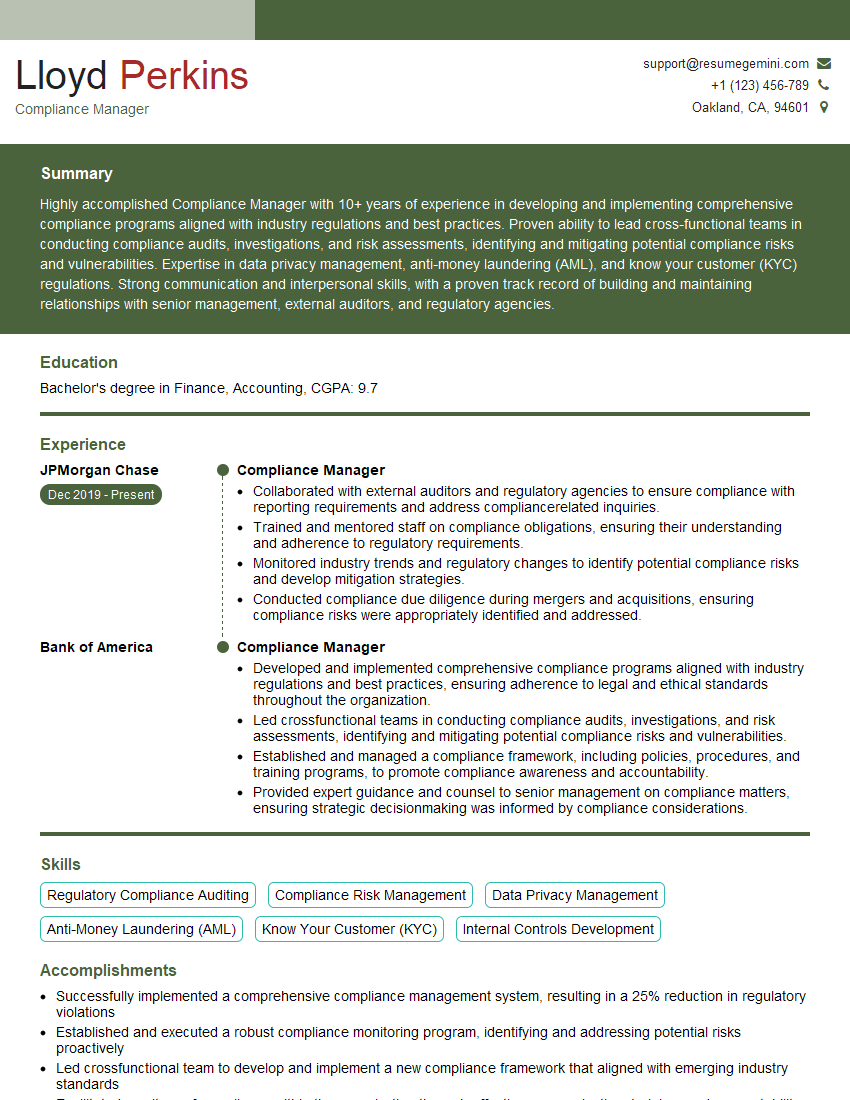
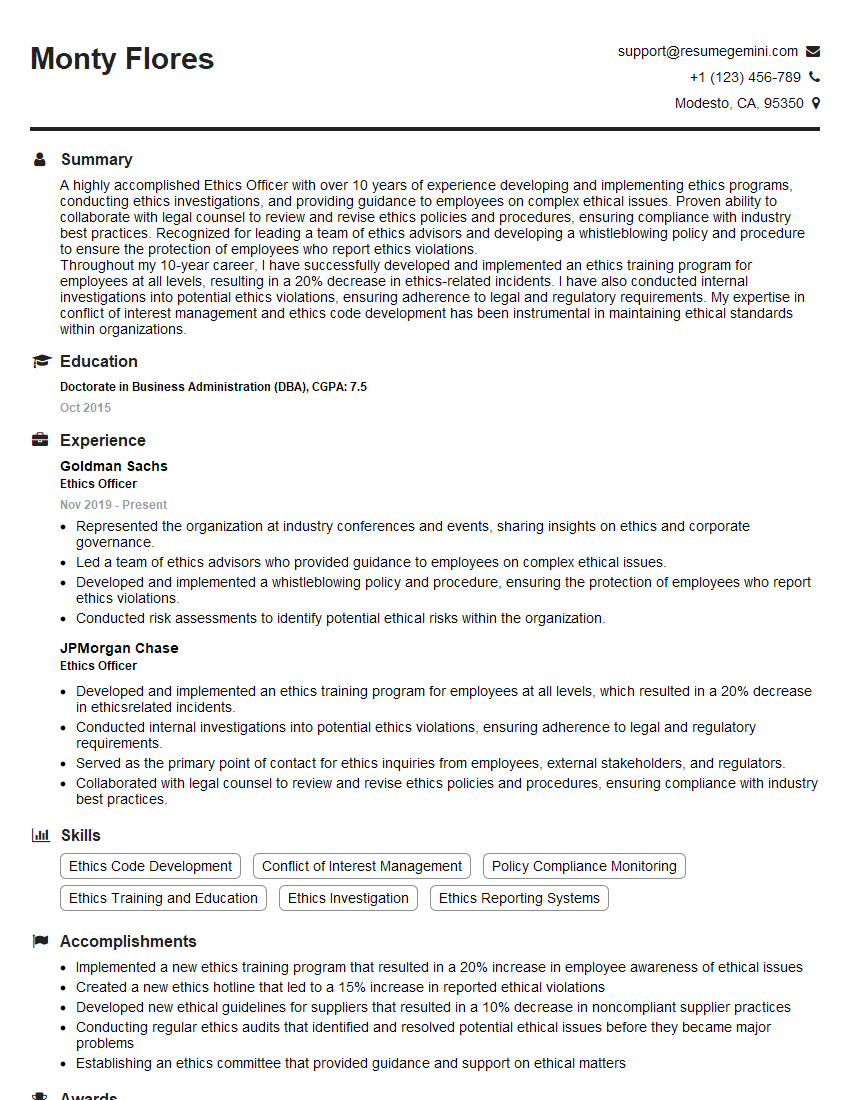
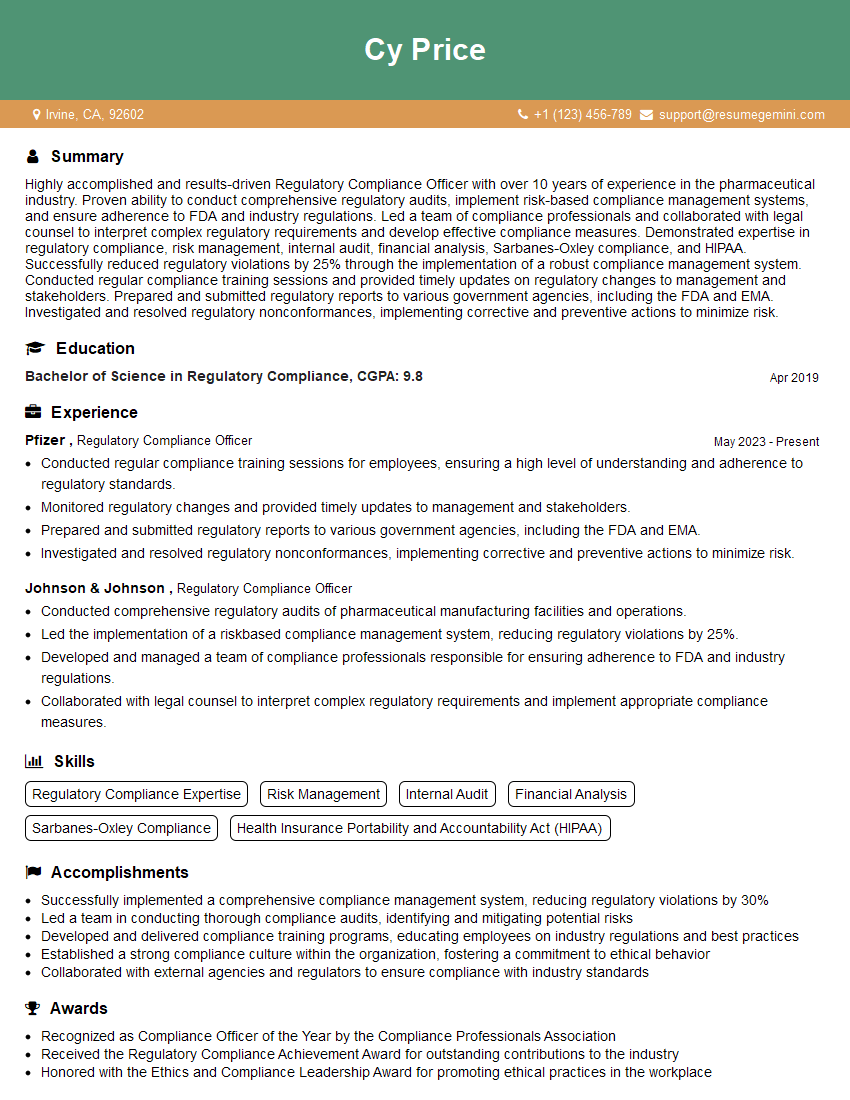
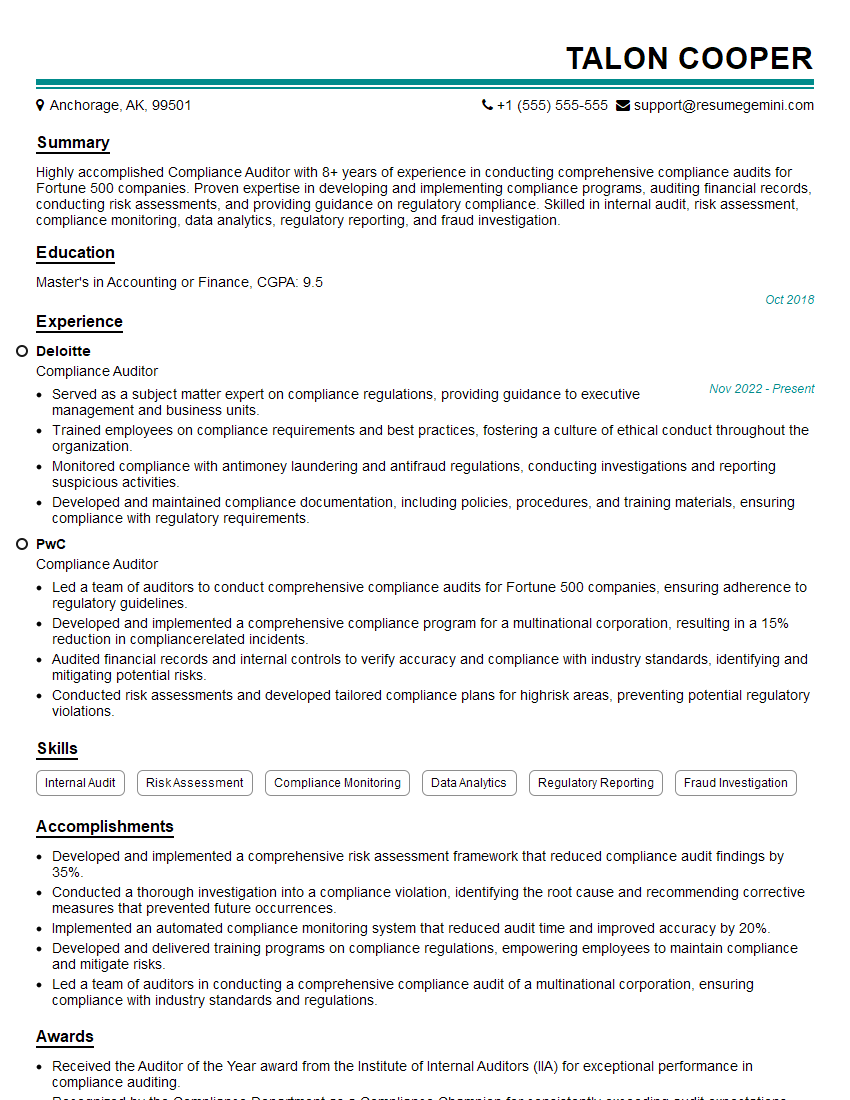
Mastering Code of Conduct and Ethical Standards demonstrates your commitment to professional integrity and responsible behavior—essential qualities valued by employers across all industries. A strong understanding of these principles significantly enhances your career prospects and showcases your maturity and judgment. To further boost your job search, crafting an ATS-friendly resume is crucial. This ensures your qualifications are effectively highlighted to hiring managers. We recommend using ResumeGemini, a trusted resource for building professional and impactful resumes. ResumeGemini provides examples of resumes tailored to Code of Conduct and Ethical Standards positions, helping you present your skills and experience in the best possible light.
Explore more articles
Users Rating of Our Blogs
Share Your Experience
We value your feedback! Please rate our content and share your thoughts (optional).
What Readers Say About Our Blog
Very informative content, great job.
good