The right preparation can turn an interview into an opportunity to showcase your expertise. This guide to Firefighting Systems interview questions is your ultimate resource, providing key insights and tips to help you ace your responses and stand out as a top candidate.
Questions Asked in Firefighting Systems Interview
Q 1. Explain the different types of fire suppression systems.
Fire suppression systems are designed to extinguish or control fires. They vary significantly depending on the type of fire hazard and the protected area. Broadly, they can be categorized as:
- Water-based systems: These are the most common, using water in various forms (e.g., sprinklers, hose reels, hydrants) to cool the fire and reduce its intensity. They’re effective against Class A fires (ordinary combustibles).
- Foam systems: These use foam to create a blanket that smothers the fire, preventing oxygen from reaching the fuel. They’re particularly effective against Class B fires (flammable liquids) and some Class A fires.
- Gas suppression systems: These systems discharge inert gases (e.g., carbon dioxide, Argonite, FM-200) to displace oxygen and extinguish the fire. They are suitable for protecting sensitive electronic equipment or areas where water damage is unacceptable, often used for Class B and C fires (electrical equipment).
- Dry chemical systems: These systems use dry chemical agents (e.g., sodium bicarbonate, potassium bicarbonate) to interrupt the chemical chain reaction of the fire. They are effective against Class B and C fires, often used in vehicles or kitchens.
- Wet chemical systems: These systems are specifically designed for grease and oil fires (Class K fires) commonly found in commercial kitchens. They use a special potassium acetate based solution.
The choice of system depends on a thorough fire risk assessment, considering factors such as the type of occupancy, the potential fire hazards present, and the value of the assets being protected. For example, a data center would likely utilize a gas suppression system to avoid water damage, while a warehouse storing wood pallets would benefit from a sprinkler system.
Q 2. Describe the components of a typical fire alarm system.
A typical fire alarm system comprises several key components working in concert:
- Smoke detectors: These detect the presence of smoke, a common byproduct of fire. Types include ionization, photoelectric, and dual-sensor detectors, each with varying sensitivities and strengths.
- Heat detectors: These detect excessive heat, triggering an alarm once a predefined temperature is reached. They are useful in areas where smoke detectors might be less effective, like kitchens.
- Flame detectors: These detect the infrared or ultraviolet radiation emitted by flames, providing early warning of fire. They’re often used in areas with high ambient dust or steam.
- Control panel: The central hub of the system, receiving signals from detectors and initiating alarms and notifications.
- Notification appliances: These alert occupants of a fire, such as horns, bells, strobes (visual alarms), and voice evacuation systems.
- Manual call points: These are strategically placed buttons that allow occupants to manually trigger the alarm system.
- Power supply: Typically includes a main power supply and a backup battery to ensure continuous operation during power outages.
These components communicate through a network of wiring or wireless technology. A well-designed system ensures rapid detection and notification, maximizing the chances of safe evacuation and minimizing property damage.
Q 3. What are the key differences between wet pipe and dry pipe sprinkler systems?
Both wet pipe and dry pipe sprinkler systems use water to suppress fires, but differ significantly in their piping configuration:
- Wet Pipe Sprinkler System: The pipes are always filled with water, pressurized to ensure immediate water discharge when a sprinkler head activates. This provides the fastest response time but requires the system to be protected from freezing temperatures. It is suitable for areas where freezing is not a concern.
- Dry Pipe Sprinkler System: The pipes are filled with compressed air or nitrogen instead of water. When a sprinkler activates, the air pressure drops, triggering the water supply to flow into the pipes. This makes it suitable for areas prone to freezing as there’s no water in the pipes which could freeze and burst.
The key difference is the immediate water discharge in a wet pipe system vs. a slight delay in a dry pipe system to allow water to flow into the pipes after the sprinkler head activates. The choice between the two depends entirely on the climate and environmental conditions of the protected area.
Q 4. How do you test and maintain a fire sprinkler system?
Testing and maintaining a fire sprinkler system is crucial for ensuring its effectiveness in case of a fire. Regular maintenance involves:
- Annual Inspections: Visual inspection of all sprinkler heads, pipes, valves, and other components to check for corrosion, damage, or obstructions. This often involves checking for paint covering heads, obstructions in piping and ensuring valves are in the correct position.
- Flow Tests: Periodic testing of the system’s water flow to ensure sufficient water pressure and discharge at each sprinkler head. This might involve isolating sections of the system and activating specific sprinklers.
- Pressure Tests: A more thorough pressure test of the entire system to detect leaks or weak points in the piping. This will involve pressurizing the whole system above its normal operating pressure.
- Valve Inspections: Regular check of all control valves to ensure they are functional and not blocked or tampered with.
- Backflow Preventer Testing: Annual testing is required to ensure backflow preventers are functioning correctly, preventing contamination of the potable water supply.
Maintenance schedules and specific tests will vary based on local codes and the type of sprinkler system. Regular maintenance is not just a safety measure, but is often a requirement for insurance compliance and legal obligations.
Q 5. Explain the importance of regular fire system inspections.
Regular inspections of fire systems are paramount for several reasons:
- Early Detection of Malfunctions: Regular checks identify minor issues before they escalate into major problems, preventing system failure during an actual fire.
- Ensuring System Readiness: Inspections verify that the system is functioning as designed and ready to protect lives and property. A system failure could have catastrophic consequences.
- Compliance with Codes and Regulations: Most jurisdictions have strict regulations requiring regular inspections and maintenance of fire protection systems. Non-compliance can result in significant penalties.
- Minimizing Downtime: Addressing minor issues proactively prevents extensive repairs and costly downtime, reducing the overall cost of ownership. A major repair may require the shutdown of parts of a building.
- Protecting Lives and Property: The primary goal is to ensure that the fire protection systems will work effectively when needed, saving lives and minimizing property damage.
Imagine a scenario where a sprinkler head is blocked by debris and the system fails during a fire – regular inspections are the crucial element preventing such situations.
Q 6. Describe the process of designing a fire suppression system for a high-rise building.
Designing a fire suppression system for a high-rise building is a complex undertaking requiring a multi-disciplinary approach. It involves:
- Comprehensive Fire Risk Assessment: This identifies potential fire hazards, occupancy characteristics, and escape routes within the building. This guides the selection of suitable fire protection measures.
- System Selection: Choosing the most appropriate fire suppression systems for different areas of the building, considering factors like occupancy type, potential fire hazards, and the presence of sensitive equipment.
- Water Supply Analysis: Determining the required water supply and pressure for the sprinkler system, including the need for dedicated water storage tanks or connections to the municipal water supply. This needs to consider water pressure at different levels within the building.
- Sprinkler System Layout: Designing the layout of the sprinkler system, considering factors like pipe sizing, sprinkler spacing, and the location of control valves.
- Fire Alarm System Integration: Integrating the fire alarm system with the sprinkler system to ensure that alarms are triggered promptly and that the sprinkler system activates automatically when necessary. Alarm systems are essential to help people evacuate and direct emergency services.
- Standpipe and Hose System Design: Designing standpipes and hose systems to provide firefighters with access to water for fighting fires from inside the building.
- Compliance with Codes and Standards: Ensuring that the design complies with all relevant building codes and fire safety standards.
The design process requires the expertise of fire protection engineers, architects, and building contractors working collaboratively to ensure a safe and effective system. Modeling and simulation software are often used to predict the system’s performance during various fire scenarios.
Q 7. What are the common causes of fire alarm system malfunctions?
Fire alarm system malfunctions can stem from various sources:
- Faulty Detectors: Dust, insects, or physical damage can compromise the performance of smoke, heat, or flame detectors. Regular cleaning and testing are crucial.
- Wiring Problems: Loose connections, damaged wiring, or short circuits can disrupt signal transmission between detectors and the control panel. This often requires a skilled electrician.
- Power Supply Issues: Failure of the main power supply or the backup battery can render the entire system inoperative. Regular battery testing is essential.
- Control Panel Malfunctions: Problems with the control panel itself, such as software glitches or hardware failures, can lead to system failures. Regular software updates and hardware maintenance are needed.
- Accidental Activation: System activation due to cooking fumes, steam, or other non-fire related events can lead to false alarms, desensitizing occupants. Appropriate detector placement is important.
- Tampering or Vandalism: Deliberate tampering with detectors or manual call points can compromise the system’s integrity. Appropriate security measures help deter tampering.
Regular testing, preventive maintenance, and prompt investigation of any reported issues are key to minimizing malfunctions and maintaining the system’s reliability.
Q 8. How do you troubleshoot a malfunctioning fire sprinkler system?
Troubleshooting a malfunctioning fire sprinkler system requires a systematic approach. It begins with identifying the nature of the malfunction – is it a single sprinkler head, a section of the system, or a complete failure? We use a combination of visual inspection, pressure testing, and flow testing.
- Visual Inspection: This involves carefully examining all visible components for damage, corrosion, obstructions, or signs of tampering. Look for leaks, damaged pipes, sprinkler heads that have activated inappropriately, or anything out of the ordinary.
- Pressure Testing: This involves checking the system’s water pressure to ensure it meets the design specifications. Low pressure could indicate a leak somewhere in the system. Specialized pressure gauges are used for accurate readings. A pressure test is usually done with the system isolated.
- Flow Testing: This verifies the flow rate and volume of water delivered by the sprinkler heads. We’ll use flow test gauges at various points in the system, particularly at the main riser. A malfunctioning backflow preventer could be one reason for flow issues.
- Alarm System Check: If the system is equipped with a fire alarm, ensure it’s functioning correctly. A faulty alarm system won’t alert people in case of a fire.
Remember, safety is paramount. Always shut off the water supply to the affected area before starting any repairs. If you’re not qualified, call a licensed fire protection technician immediately. Think of it like this: you wouldn’t perform heart surgery on yourself; likewise, leave complex sprinkler system repairs to the professionals. A seemingly minor repair attempt by an unqualified individual can cause significant damage and safety issues.
Q 9. What are the NFPA standards related to fire protection systems?
The National Fire Protection Association (NFPA) sets the standard for fire protection in the US and globally. Several NFPA standards directly relate to fire protection systems. Key examples include:
- NFPA 13: Standard for the Installation of Sprinkler Systems: This is the cornerstone document governing the design, installation, inspection, and testing of sprinkler systems in various occupancies.
- NFPA 10: Standard for Portable Fire Extinguishers: This standard covers the selection, distribution, installation, maintenance, and testing of portable fire extinguishers.
- NFPA 72: National Fire Alarm and Signaling Code: This standard deals with the design, installation, testing, and maintenance of fire alarm systems.
- NFPA 25: Standard for the Inspection, Testing, and Maintenance of Water-Based Fire Protection Systems: This outlines the regular inspection, testing, and maintenance procedures for various water-based fire protection systems.
Compliance with these NFPA standards is crucial for ensuring the effectiveness and reliability of fire protection systems. These standards aren’t just guidelines; they’re often legally mandated, ensuring a baseline level of safety. Regular inspections and maintenance as per NFPA standards are critical for preventing catastrophic failures.
Q 10. Explain the concept of fire triangles and fire tetrahedrons.
The fire triangle and fire tetrahedron are models explaining the conditions necessary for combustion. The fire triangle is a simpler representation, while the tetrahedron adds another element.
- Fire Triangle: This model explains combustion requires three elements: Heat, Fuel, and Oxygen. Remove any one of these, and the fire will extinguish. Think of it like a three-legged stool; if one leg is removed, the stool collapses.
- Fire Tetrahedron: This model expands on the fire triangle by adding a fourth element: A Chemical Chain Reaction. This represents the self-sustaining chemical process that sustains the burning. The chain reaction is crucial because it explains how combustion can continue even after the initial source of ignition is removed.
Understanding these models is essential for selecting the appropriate fire suppression methods. For example, removing the fuel source (like removing flammable materials from the vicinity of the fire) will extinguish a fire, as will suppressing oxygen (like using a carbon dioxide extinguisher that displaces oxygen).
Q 11. What are the different classes of fire and the appropriate extinguishing agents?
Fires are classified into different classes based on the type of fuel involved, each requiring a specific extinguishing agent for effective suppression.
- Class A: Ordinary combustibles (wood, paper, cloth). Water is the most common extinguishing agent because it cools the fuel and prevents reignition.
- Class B: Flammable liquids (gasoline, oil, grease). Extinguishing agents like carbon dioxide (CO2), dry chemical, or foam are used to interrupt the chain reaction or smother the fire.
- Class C: Energized electrical equipment. Non-conductive extinguishing agents such as CO2 or dry chemical are used to avoid electrical shock. The electrical power should be cut off before using water.
- Class D: Combustible metals (magnesium, titanium). These fires require specialized extinguishing agents, often dry powders, that are designed to react with the burning metal and interrupt the combustion process. Water can worsen this type of fire.
- Class K: Cooking oils and fats. Wet chemical agents are specially designed to extinguish these fires by saponification (a chemical reaction that converts the burning oil or fat into soap).
Selecting the incorrect extinguishing agent can be dangerous and even counterproductive. Always ensure the extinguisher’s class rating matches the type of fire. For instance, using water on a class B fire may spread the flames.
Q 12. Describe different types of fire detectors and their applications.
Fire detectors are crucial for early fire detection and warning, giving occupants time to evacuate and firefighters time to respond. Various types of detectors are employed, each designed for specific applications:
- Smoke Detectors: These detect the presence of smoke particles in the air. There are two main types: ionization (responding to smaller smoke particles) and photoelectric (responding to larger smoke particles). Ionization detectors are generally more sensitive to flaming fires, while photoelectric are better at detecting smoldering fires.
- Heat Detectors: These respond to increased temperature. They come in different types: fixed temperature detectors (activate at a specific temperature) and rate-of-rise detectors (activate when the temperature rises rapidly). Heat detectors are frequently used in areas with a lot of dust or steam which might trigger false alarms in smoke detectors.
- Flame Detectors: These detect the infrared or ultraviolet radiation emitted by flames. They’re often used in areas with high ceilings or where early detection of fast-developing fires is essential.
- Carbon Monoxide (CO) Detectors: While not strictly fire detectors, these are critical for life safety as CO is a byproduct of incomplete combustion. They detect the presence of CO gas in the air.
The choice of detector depends on the specific risk assessment of the location. For instance, kitchens might benefit from heat detectors due to the potential for cooking-related steam, while sensitive electronics areas might benefit from specialized smoke detectors to avoid false alarms.
Q 13. How do you calculate water flow requirements for a fire sprinkler system?
Calculating water flow requirements for a fire sprinkler system is a complex process that involves several factors and typically requires specialized software. However, the fundamental principle revolves around ensuring sufficient water pressure and flow rate to control a fire within a designated time frame. Key factors include:
- Occupancy Type: Different occupancies (e.g., residential, industrial, commercial) have different fire hazard levels and, therefore, require varying water flow rates.
- Building Size and Layout: Larger buildings or complex layouts require more extensive systems and higher flow rates.
- Sprinkler Density: The number of sprinkler heads per square foot impacts the required water flow. Higher densities necessitate greater water supply.
- Sprinkler Type: Different sprinkler types have different discharge rates.
- Water Pressure: Adequate water pressure is crucial to ensure effective sprinkler operation. Pressure variations throughout the system need to be considered.
Hydraulic calculations, often performed using computer software, are used to determine the appropriate pipe sizes, pump capacity, and overall water supply requirements. These calculations take into account factors such as friction loss in pipes, elevation changes, and the anticipated demand during a fire. Using simplified formulas is not ideal for real world calculations and can be dangerous, professional software should be used instead.
Q 14. Explain the importance of fire system drawings and schematics.
Fire system drawings and schematics are crucial for understanding the layout, components, and operation of a fire protection system. They serve as essential tools for design, installation, inspection, and maintenance. Imagine trying to fix a complex machine without a blueprint – it would be nearly impossible! Fire system drawings are equally vital.
- Design and Installation: Drawings provide a roadmap for the installation of the system, ensuring components are correctly placed and connected. They outline pipe routes, sprinkler head locations, alarm system components, and water supply connections.
- Inspection and Testing: During regular inspections, drawings help technicians locate specific components for testing and maintenance. They’re used to check for compliance with standards and identify potential problems.
- Emergency Response: Firefighters use drawings to quickly understand the system’s layout during an emergency, allowing them to efficiently deploy resources and tackle the fire effectively. They help in locating valves and determining water supply capabilities.
- Maintenance and Repairs: Repairing or replacing a component is far easier with accurate drawings. They aid in identifying the type and location of parts needed.
Properly maintained and updated fire system drawings are not merely blueprints; they’re critical safety documents ensuring that the system performs as designed and that first responders have the information needed to act effectively in case of a fire.
Q 15. What is the role of a fire pump in a fire protection system?
A fire pump is the heart of many fire suppression systems, particularly in larger buildings or areas with high fire risk. Its primary role is to provide the necessary water pressure and flow rate to extinguish a fire. Think of it as the engine of your fire-fighting system. It boosts the water pressure from the municipal water supply or a dedicated water tank, ensuring that enough water reaches the fire sprinklers, standpipes, or hose reels to effectively combat the blaze. Without sufficient pressure, the water simply wouldn’t reach the fire, rendering the system ineffective. The pump can be electrically driven, diesel-powered (for backup in power outages), or even driven by a combination of power sources for redundancy and reliability. The size and capacity of the pump are meticulously calculated based on the building’s specific fire protection needs and the anticipated water demand during a fire.
For example, a high-rise building would require a much more powerful fire pump than a small office building, due to the greater height and water pressure needed to reach higher floors. The pump’s performance is regularly tested and maintained to ensure it’s ready to respond when needed.
Career Expert Tips:
- Ace those interviews! Prepare effectively by reviewing the Top 50 Most Common Interview Questions on ResumeGemini.
- Navigate your job search with confidence! Explore a wide range of Career Tips on ResumeGemini. Learn about common challenges and recommendations to overcome them.
- Craft the perfect resume! Master the Art of Resume Writing with ResumeGemini’s guide. Showcase your unique qualifications and achievements effectively.
- Don’t miss out on holiday savings! Build your dream resume with ResumeGemini’s ATS optimized templates.
Q 16. How do you ensure the integrity of fire rated walls and doors?
Maintaining the integrity of fire-rated walls and doors is crucial for compartmentalizing a fire, preventing its spread, and protecting occupants. This is achieved through careful installation, regular inspection, and timely repairs. Fire-rated assemblies – walls and doors – are designed to resist the passage of fire and smoke for a specific time period, usually expressed in hours (e.g., a 1-hour rated wall). The integrity is compromised if these assemblies are damaged or improperly installed.
- Installation: Strict adherence to manufacturer’s instructions is paramount. Any deviations can significantly reduce the fire rating. Proper sealing of penetrations (pipes, conduits) through the wall or door is also critical. Think of it like building a dam – every gap weakens the structure.
- Inspection: Regular visual inspections should identify any damage, such as cracks, holes, or missing sealant. These can indicate a potential loss of fire resistance. Regularly scheduled inspections should be a part of any facility’s maintenance plan.
- Repairs: Any damage should be promptly repaired using materials and methods approved for the specific fire-rated assembly. Improper repairs can not only compromise fire protection but also void any associated warranties.
- Testing: For critical applications, periodic third-party testing (e.g., fire resistance testing) may be required to verify that the assembly maintains its fire rating.
For instance, a carelessly drilled hole in a fire-rated wall to run electrical wiring without proper sealing could drastically reduce its fire resistance, creating a pathway for the fire to spread.
Q 17. Describe the process of commissioning a new fire protection system.
Commissioning a new fire protection system is a comprehensive process that ensures the system is properly designed, installed, tested, and functions as intended. It’s a crucial step that guarantees the system’s readiness to perform its life-saving function. It is not simply about turning the system on.
- Design Review: Verification that the design meets all applicable codes and standards.
- Installation Inspection: Careful review of installation practices against the approved drawings and specifications to ensure correct components, placement and workmanship.
- Testing: This involves a series of tests to verify that individual components, such as pumps, sprinklers, detectors, and control panels, function properly. This can include flow tests, pressure tests, and operational tests of the entire system.
- Acceptance Testing: Demonstrates that the entire system performs according to design specifications, including alarms and response times. This often involves simulating a fire scenario to verify system response.
- Documentation: Maintaining meticulous records of all tests, inspections, and any corrective actions taken. These documents act as proof of compliance and system readiness.
- Training: Providing thorough training to building personnel on the system’s operation, including how to initiate the system and handle emergency situations.
Think of commissioning like a pre-flight checklist for an airplane. Every system must be meticulously checked to ensure safe operation. Failure to properly commission a fire protection system could lead to catastrophic consequences in the event of a fire.
Q 18. What are the safety procedures for working on fire protection systems?
Safety procedures for working on fire protection systems are paramount. Working on these systems involves handling potentially hazardous equipment and materials, so safety is never compromised. This is not a job for the DIY homeowner.
- Lockout/Tagout (LOTO): Always implement LOTO procedures to prevent accidental activation of the system during maintenance or repair. This ensures the safety of workers and prevents unintended consequences.
- Personal Protective Equipment (PPE): Use appropriate PPE, including safety glasses, gloves, and hearing protection, as required by the job and any specific hazard assessment.
- Confined Space Entry: If working in confined spaces (e.g., pump rooms), follow all confined space entry protocols, which include atmospheric testing, proper ventilation, and having a standby person present.
- Permit-to-Work System: Many facilities use a formal permit-to-work system, which outlines all necessary safety precautions and approvals before any work can begin.
- Competency and Training: Only qualified and trained personnel should work on fire protection systems. Improper work can seriously compromise system effectiveness and even create new hazards.
- Emergency Procedures: Workers should be aware of the emergency procedures and evacuation routes in case of an accident or unexpected activation of the system.
Failure to follow these safety procedures can lead to serious injuries, equipment damage, and system failure. Safety should be the top priority when dealing with fire protection systems.
Q 19. How do you manage a fire protection system during a renovation project?
Managing a fire protection system during a renovation project requires careful planning and coordination to ensure that the system remains operational and its integrity is not compromised. Construction activity presents many risks to these critical systems.
- Risk Assessment: A thorough risk assessment should identify potential hazards to the fire protection system during the renovation. This assessment considers the nature of the work, the location of the fire protection equipment, and the potential for damage or disruption.
- Temporary Protection: Where necessary, temporary fire protection measures may need to be implemented to maintain adequate fire safety during the renovation process. This might involve temporary sprinklers, fire watch personnel, or other temporary solutions.
- Coordination: Close coordination between the contractors, the fire protection system engineers, and the building owner is vital to ensure that all work is planned and executed to minimize the risk of damage or disruption to the fire protection system.
- Inspection and Testing: Following the renovation, a comprehensive inspection and testing program should be implemented to verify that the fire protection system is fully operational and functioning as intended. This is especially critical for systems that have been worked on or near.
- Documentation: Maintaining thorough documentation throughout the process is essential to track any changes, repairs, or modifications to the fire protection system.
For example, if a sprinkler pipe needs to be relocated, this work must be carefully planned and executed to ensure that the system’s integrity isn’t compromised, and the new installation is properly tested.
Q 20. Explain the difference between active and passive fire protection.
Active and passive fire protection are two complementary approaches to fire safety, working together to protect lives and property. Think of them as two sides of the same coin.
- Passive Fire Protection: These are structural measures designed to prevent or slow the spread of fire. They are essentially built-in fire barriers. Examples include fire-rated walls, doors, floors, and ceilings; fire-resistant insulation; and fire-stopping materials used to seal openings in fire-rated assemblies. They’re passive because they don’t actively suppress the fire – they merely restrict its spread.
- Active Fire Protection: These are systems that actively suppress or control a fire once it starts. They’re like firefighters ready to battle the flames. Examples include fire sprinklers, fire alarms, smoke detectors, fire extinguishers, and fire suppression systems (e.g., clean agent systems, CO2 systems). They take an active role in combating the fire.
They work best in conjunction. Passive systems contain the fire, giving active systems more time to put it out. Imagine a building with fire-rated walls (passive) and sprinklers (active). The walls contain the fire, allowing the sprinklers to extinguish it before it spreads, maximizing chances of containment and reducing overall damage. Both are critical components for a comprehensive fire protection strategy.
Q 21. What are the legal requirements for fire protection systems in your area?
Legal requirements for fire protection systems vary significantly depending on location (national, regional, and local regulations), the type of building (residential, commercial, industrial), its occupancy, and its size. It’s impossible to give specific legal requirements without knowing the precise location. However, general principles apply nearly everywhere:
- Building Codes: All buildings must meet the minimum requirements of the local building code, which typically incorporates national standards such as NFPA (National Fire Protection Association) codes in the US or equivalent standards in other countries.
- Fire Safety Inspections: Regular inspections by fire marshals or other authorities are common to ensure ongoing compliance with safety regulations. Failures to meet code can result in fines or even closure orders.
- Sprinkler Systems: Many jurisdictions mandate sprinkler systems in high-rise buildings, large commercial structures, and other high-risk occupancies.
- Fire Alarms: Fire alarms, including smoke detectors and heat detectors, are nearly universally required in buildings of all types.
- Emergency Exits: Adequate and clearly marked emergency exits are a crucial aspect of fire safety, always governed by legislation.
- Fire Extinguishers: Provision of appropriate fire extinguishers for specific types of fire is mandated in most places.
It’s crucial to consult with local authorities and fire safety experts to determine the exact legal requirements for any specific location and building. Ignoring these regulations could have serious legal and safety ramifications.
Q 22. Describe your experience with different types of fire suppression agents.
My experience encompasses a wide range of fire suppression agents, each with unique properties and applications. I’ve worked extensively with water-based systems, which are the most common and rely on cooling the fire below its ignition temperature. These systems can range from simple sprinkler systems to more complex deluge systems used in high-risk areas. I’m also proficient with gaseous agents like CO2 and inert gases like Argon or Nitrogen. These agents displace oxygen, suffocating the fire. These are ideal for sensitive electronic equipment where water damage is unacceptable. Furthermore, I have experience with foam systems, particularly effective for Class B fires (flammable liquids) due to their ability to create a barrier and prevent reignition. Finally, I’ve worked with dry chemical agents, which interrupt the chemical chain reaction of the fire. Each agent has specific advantages and disadvantages depending on the type of fire and the environment. Selecting the right agent requires a thorough understanding of fire dynamics and hazard assessment.
- Water-based systems: Cost-effective, widely available, effective for Class A fires (ordinary combustibles).
- Gaseous agents: Clean, leave minimal residue, suitable for sensitive equipment but more expensive.
- Foam systems: Excellent for flammable liquids, creates a vapor barrier.
- Dry chemical agents: Versatile, can be used on various classes of fire but can leave residue.
Q 23. How do you handle emergencies related to fire protection systems?
Handling fire protection system emergencies requires a calm, systematic approach. My first step is always to ensure the safety of everyone in the vicinity. This involves evacuation procedures, if necessary, and coordinating with emergency services. Then, I assess the situation – what type of emergency, which system is affected, and what’s the extent of the damage. I would then isolate the affected area and prevent further spread of the problem. Depending on the nature of the issue, I may need to manually activate backup systems, or if it involves a sprinkler system, ensure water supply isn’t compromised. Accurate documentation of the event is crucial, from initial response to post-incident analysis, which helps improve future response times and system upgrades.
For example, I once responded to an alarm triggered by a faulty heat detector in a server room. After verifying the false alarm, I investigated the cause (dust accumulation) and promptly cleaned the detector, preventing future unnecessary disruptions. Proper maintenance plays a key role in minimizing these incidents.
Q 24. Explain your experience with fire system maintenance software.
I have extensive experience with various fire system maintenance software packages. These systems are crucial for managing inspection schedules, storing test records, and tracking repairs. I’m familiar with software that integrates with building management systems (BMS), allowing for seamless monitoring and alerts. I can use these tools to generate reports that demonstrate compliance with fire codes and identify potential issues proactively. One software I frequently use includes features for scheduling preventative maintenance, generating work orders, and tracking the lifespan of equipment. The ability to generate custom reports showing compliance with local regulations is a critical feature, enabling us to provide accurate documentation for audits and inspections.
Think of it like a digital toolbox for managing all aspects of a fire protection system’s lifecycle. It streamlines the process, minimizes human error, and allows for efficient management of multiple systems across various buildings.
Q 25. What are some common challenges encountered when working with fire protection systems?
Common challenges in fire protection systems include outdated equipment, improper installation, inadequate maintenance, and lack of regular inspections. Outdated systems might not meet current fire codes and may malfunction during an emergency. Improper installation can render the entire system ineffective. Lack of maintenance leads to component failure and reduced system efficiency. Insufficient inspections can cause issues to go unnoticed until an emergency, increasing the risk of damage and injury. Another significant challenge is the integration of new technology with existing legacy systems, which can be complex and expensive. Additionally, budget constraints often impact the frequency and quality of maintenance, posing a direct threat to system efficacy.
Q 26. How do you stay updated on the latest fire protection codes and standards?
Staying updated on fire protection codes and standards is essential for maintaining competency in this field. I regularly attend industry conferences and workshops, participate in continuing education courses offered by organizations like NFPA (National Fire Protection Association), and subscribe to relevant industry publications. I actively monitor changes to local fire codes and ensure that my knowledge and practices align with the latest regulations. Online resources and professional networks also play a significant role in keeping me informed about new technologies and best practices. This ongoing learning ensures that the systems I design, install, and maintain are compliant and effective.
Q 27. Describe a time you had to troubleshoot a complex fire system issue.
I once encountered a complex issue with a sprinkler system in a high-rise building. The system was intermittently activating, causing significant water damage and disruption. Initial investigations ruled out common causes like faulty sensors. After systematically checking each component – pumps, valves, control panels, and piping – we discovered a small, almost imperceptible crack in a section of the main piping that was only visible under high pressure. This crack caused pressure fluctuations, leading to false activations. The solution involved replacing the affected section of piping. This experience highlighted the importance of thorough diagnostics and the necessity of non-destructive testing methods for identifying such hidden problems.
Q 28. How do you prioritize fire system maintenance tasks?
Prioritizing fire system maintenance tasks involves a risk-based approach. I utilize a combination of factors to determine the order of tasks, such as the criticality of the system, the age and condition of equipment, and the potential consequences of failure. Systems in high-risk areas (e.g., server rooms, kitchens) receive higher priority than those in less hazardous locations. Equipment nearing the end of its lifespan is prioritized for replacement or refurbishment. Tasks with a higher potential for system failure are addressed before those with less serious consequences. I use maintenance software to track this prioritization and schedule tasks accordingly, ensuring a proactive and effective maintenance program.
Think of it like a triage system – attending to the most critical issues first to minimize potential damage. This method allows for optimal resource allocation and helps to prevent significant disruptions.
Key Topics to Learn for Firefighting Systems Interview
- Fire Detection and Alarm Systems: Understanding various detection technologies (smoke, heat, flame), alarm system components, and their integration for effective early warning.
- Fire Suppression Systems: Knowledge of different suppression methods (water-based, foam, gaseous agents), system design principles, and practical application in various building types.
- Water Supply Systems: Understanding fire hydrant systems, water storage tanks, pumps, and their role in ensuring adequate water pressure and flow for firefighting operations.
- Sprinkler Systems: Detailed knowledge of different sprinkler types, activation mechanisms, design standards (e.g., NFPA), and maintenance procedures.
- Fire Suppression System Maintenance and Inspection: Understanding regular inspection protocols, testing procedures, and the importance of preventative maintenance for optimal system performance and compliance.
- Emergency Response and Procedures: Knowledge of evacuation plans, emergency communication systems, and coordinated responses during fire incidents.
- Building Codes and Regulations: Familiarity with relevant building codes and regulations pertaining to fire safety systems design, installation, and maintenance.
- Fire Dynamics and Behavior: A fundamental understanding of how fires start, spread, and develop, impacting suppression strategies.
- Troubleshooting and Problem Solving: Ability to diagnose system malfunctions, identify potential hazards, and propose effective solutions.
- Safety Procedures and Personal Protective Equipment (PPE): Understanding and applying appropriate safety procedures and the proper use of PPE during inspections and maintenance.
Next Steps
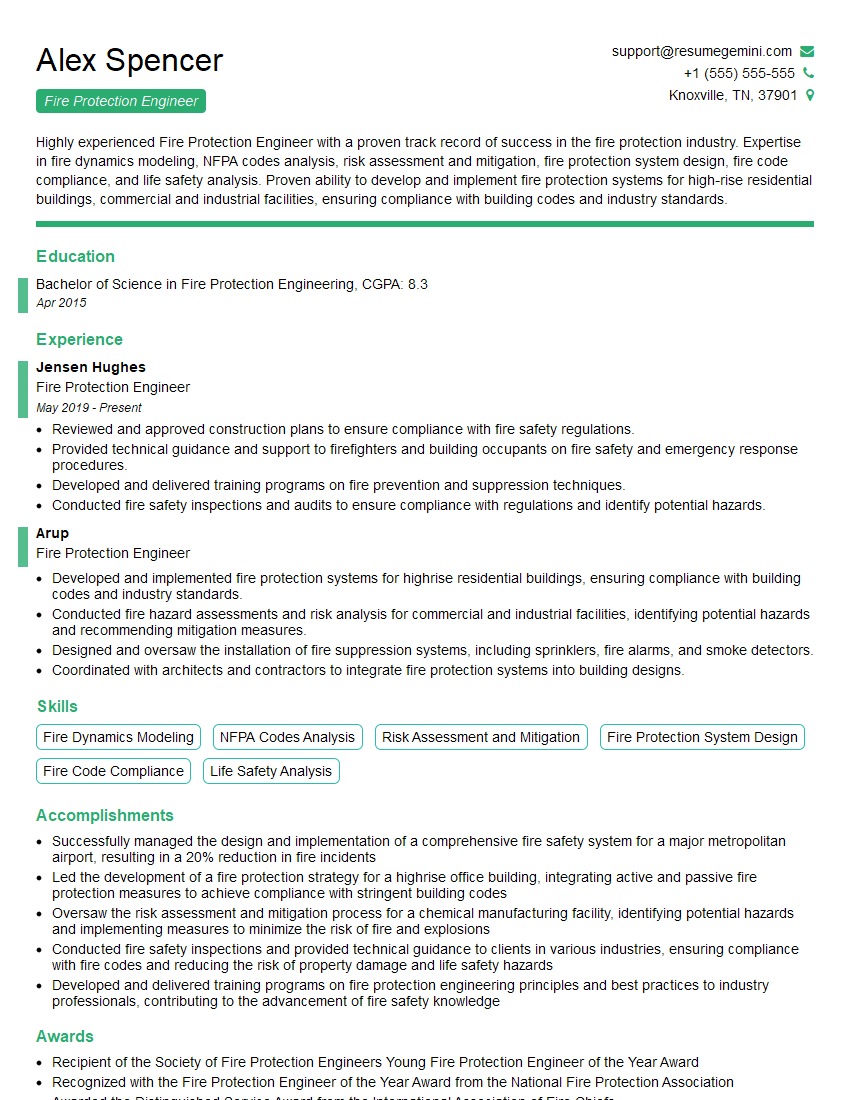
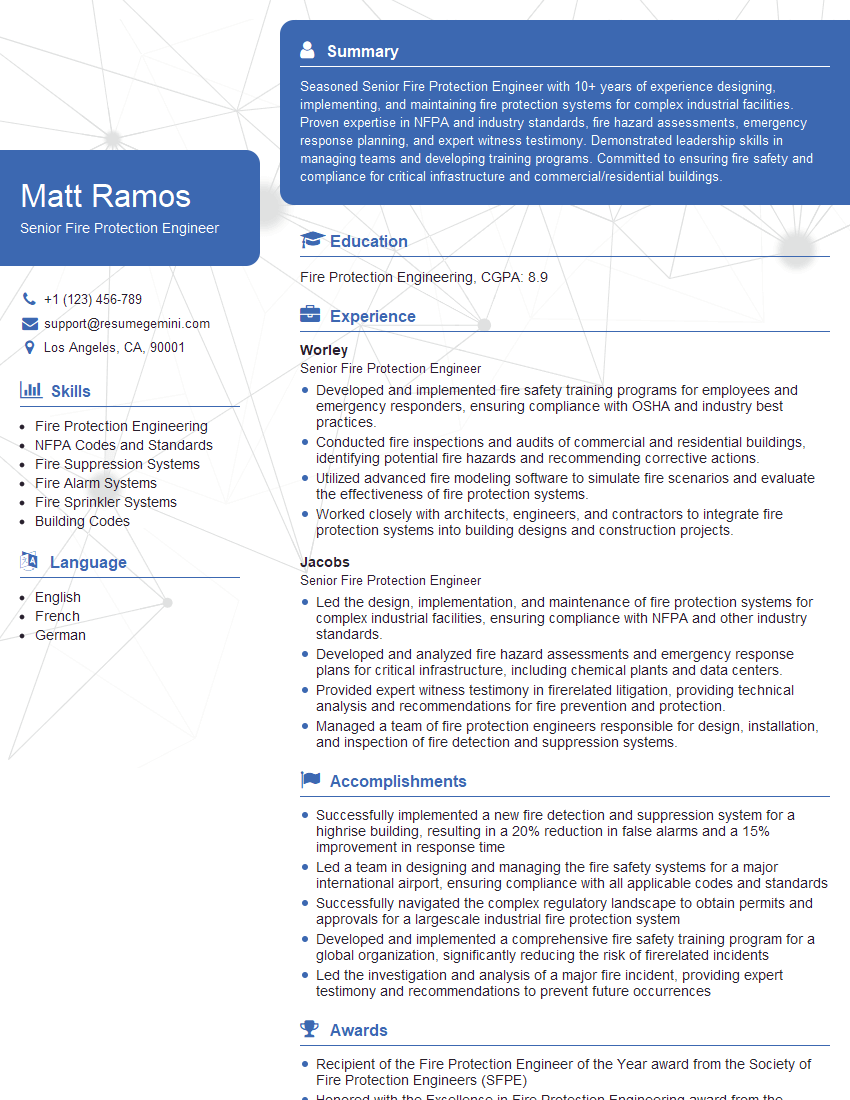
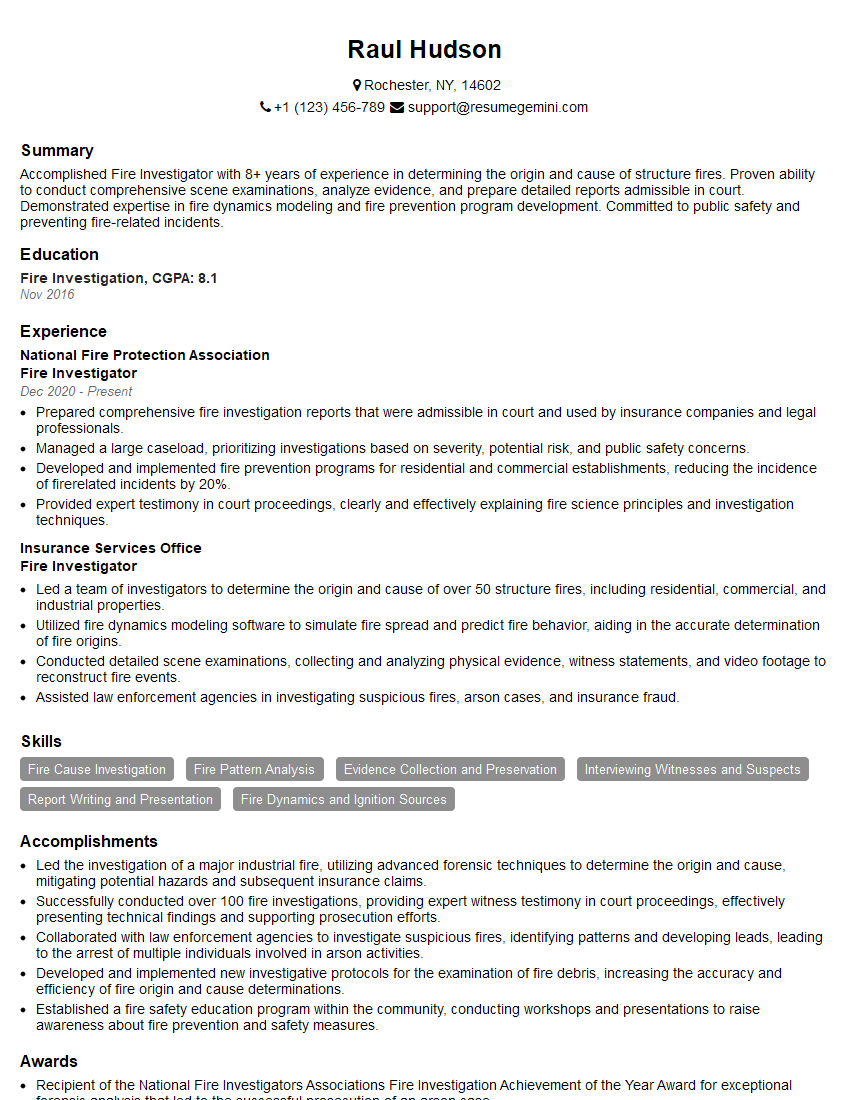
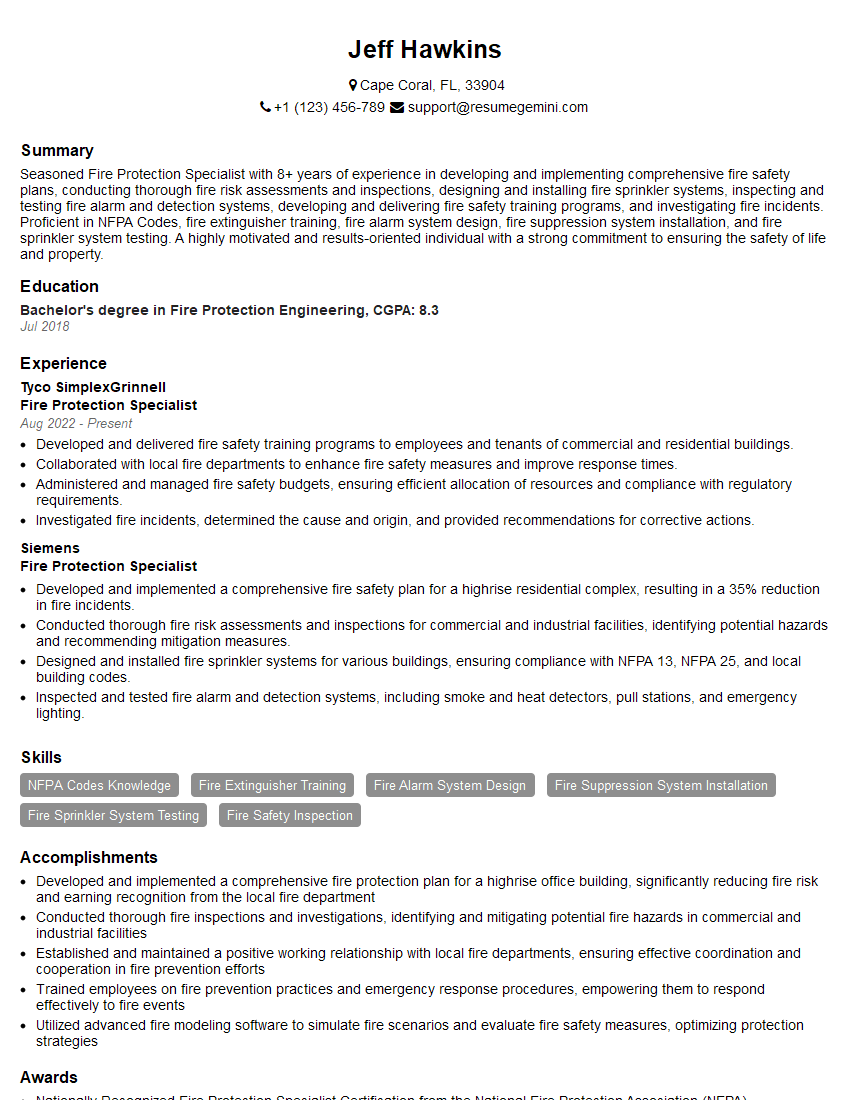
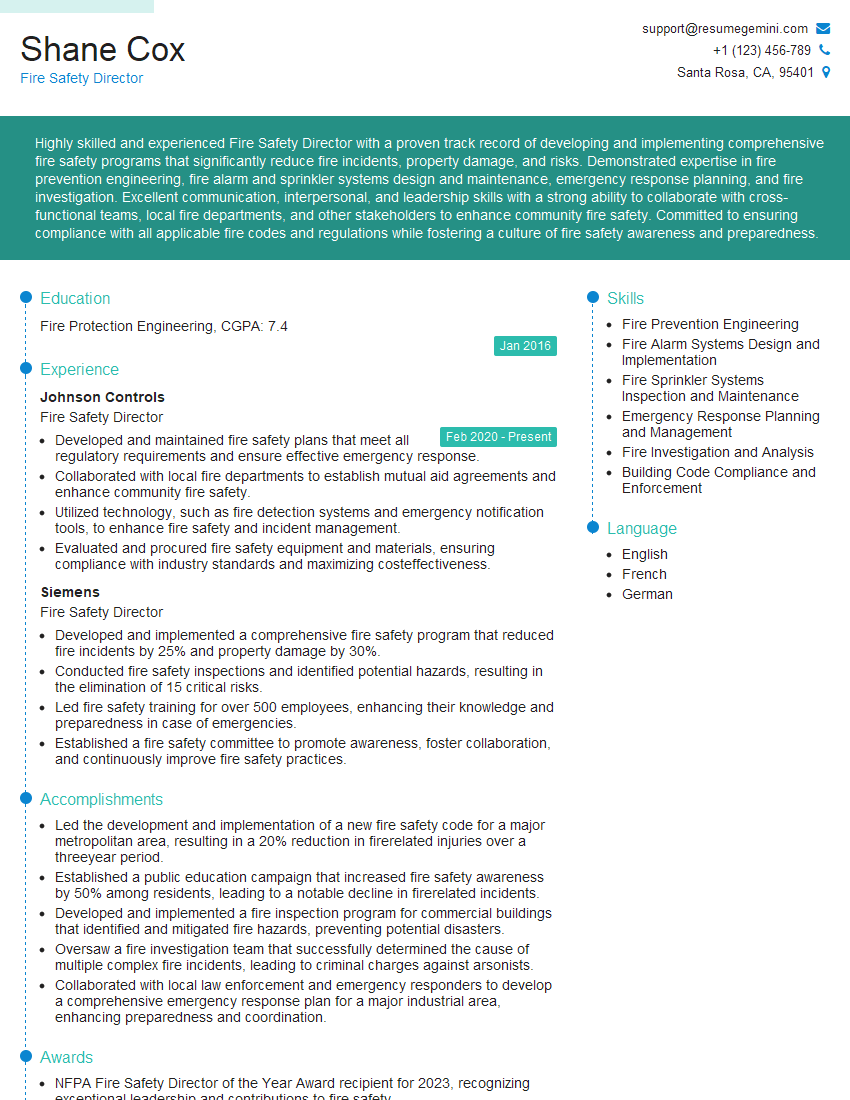
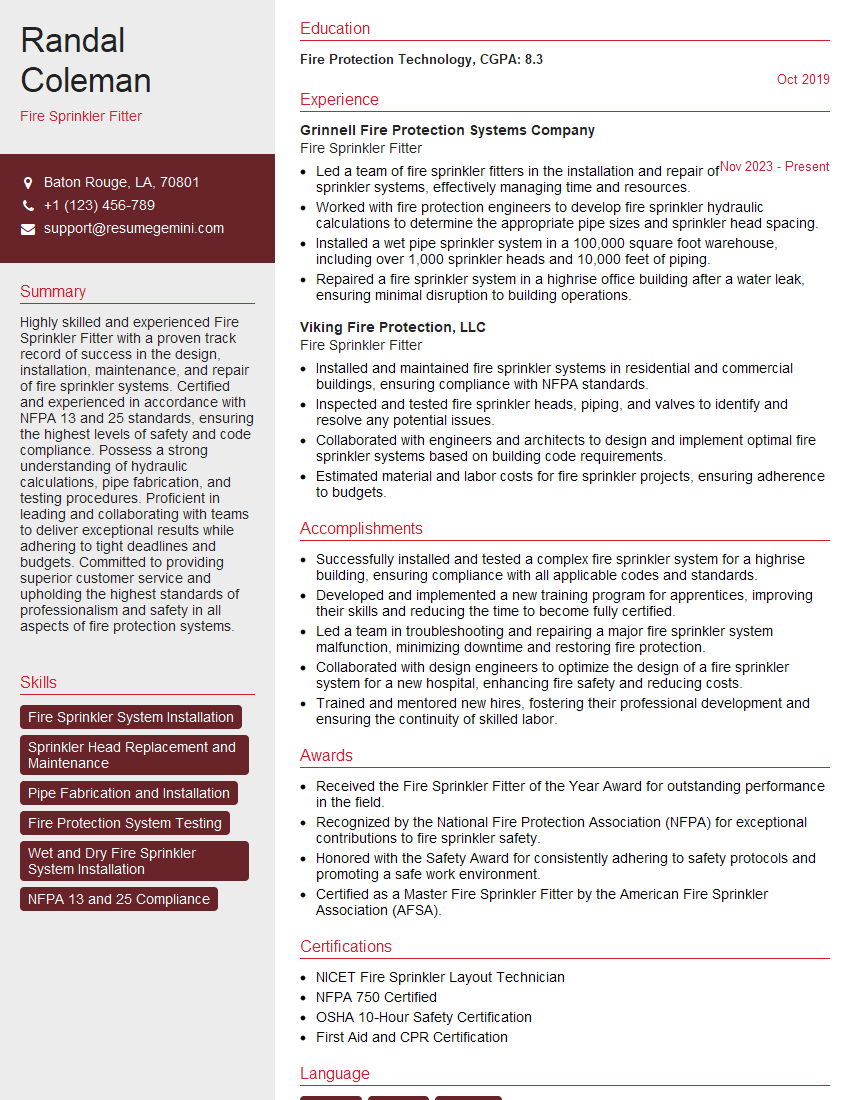
Mastering Firefighting Systems is crucial for career advancement in this critical field. A strong understanding of these systems demonstrates your expertise and commitment to safety. To enhance your job prospects, crafting an ATS-friendly resume is vital. This ensures your application is effectively screened by applicant tracking systems and reaches the hiring manager. We strongly recommend using ResumeGemini to build a professional and impactful resume. ResumeGemini offers tools and resources to help you create a winning resume, and provides examples tailored to the Firefighting Systems field to guide you.
Explore more articles
Users Rating of Our Blogs
Share Your Experience
We value your feedback! Please rate our content and share your thoughts (optional).
What Readers Say About Our Blog
Very informative content, great job.
good