Interviews are opportunities to demonstrate your expertise, and this guide is here to help you shine. Explore the essential Collar Stitching and Finishing interview questions that employers frequently ask, paired with strategies for crafting responses that set you apart from the competition.
Questions Asked in Collar Stitching and Finishing Interview
Q 1. What types of stitches are commonly used in collar stitching?
Several stitch types are commonly used in collar stitching, each chosen based on the fabric’s weight and the desired aesthetic. A strong, durable stitch is key for longevity.
- Straight Stitch: This is the most basic and widely used stitch, offering a clean finish ideal for lighter fabrics. It’s simple to execute, consistent, and provides good strength for everyday wear.
- Zigzag Stitch: Used for more robust fabrics or to prevent fraying, especially on raw edges. It adds flexibility and strength, making it perfect for heavier materials.
- Overlock Stitch (Serger Stitch): Creates a professional, neat finish with a simultaneous cutting and stitching action, preventing unraveling. It’s excellent for collar edges and is more efficient than zigzag for large projects.
- Blind Stitch: While less common for main collar seams, a blind stitch is sometimes used for attaching the collar to the garment, resulting in a nearly invisible seam.
The choice of stitch depends on factors including the fabric, the desired look, and the machine capabilities. For example, a delicate silk shirt collar would likely be stitched with a straight stitch or a very narrow zigzag, while a heavy wool coat collar might benefit from an overlock stitch for durability and neatness.
Q 2. Explain the difference between a flat fell seam and a French seam in collar construction.
Both flat fell seams and French seams are strong and provide a clean finish, but they differ significantly in construction and appearance. Think of it like comparing a sturdy brick wall to an elegant, internal framework.
Flat Fell Seam: This seam is constructed by stitching two fabric edges together, then trimming one seam allowance and folding the other over the trimmed edge. A second stitching encloses the raw edge completely, resulting in a flat, durable, and professional-looking seam, often used in outerwear for its robust nature. It’s great for heavier fabrics and when strength is prioritized over minimal bulk.
French Seam: This seam is made by enclosing all raw edges inside the seam. It involves initially stitching the fabric wrong-sides together with a narrow seam allowance, trimming the seam allowance, then turning the fabric right-side out and stitching again. This creates a refined, finished edge inside the garment—perfect for delicate fabrics or when a completely clean look is desired. It’s less bulky than a flat fell seam and is excellent for fine garments.
In collar construction, the choice depends on the fabric and the desired finish. A French seam is often chosen for finer shirts, while a flat fell seam may be better suited for more durable garments.
Q 3. Describe your experience with various collar types (e.g., shirt collar, mandarin collar, shawl collar).
My experience encompasses a wide range of collar types, each presenting unique construction challenges and requiring specialized techniques.
- Shirt Collar: I’ve extensively worked with various shirt collar styles—pointed, spread, button-down— mastering the precise stitching and shaping needed for a crisp, professional look. This includes understanding the intricacies of collar stands and roll lines.
- Mandarin Collar: This style demands precise stitching and careful handling of the stand, which typically sits close to the neck. The key here is accurate seam placement to ensure a smooth, comfortable fit.
- Shawl Collar: Constructing a shawl collar involves meticulous grading and shaping of the collar pieces to achieve the desired drape and elegance. Understanding the curve and creating a smooth, even finish is critical.
Each collar type demands attention to detail and a keen understanding of fabric properties and appropriate techniques. For example, the interfacing used for collar support varies dramatically depending on the collar style and fabric weight; a light interfacing might work well for a silk mandarin collar, whereas a heavier one would be crucial for a wool shawl collar.
Q 4. How do you ensure consistent stitch length and tension during collar stitching?
Maintaining consistent stitch length and tension is paramount for quality collar construction. Inconsistent stitching leads to puckering, uneven seams, and a less-than-professional appearance. I achieve consistency through a multi-pronged approach:
- Proper Machine Setup: Before starting, I carefully adjust the stitch length and tension settings on my sewing machine according to the fabric’s weight and type. This often involves test stitching on a scrap of the same fabric.
- Consistent Needle Speed: I maintain a steady speed during stitching, avoiding rushing or jerking the fabric. Consistent speed prevents tension inconsistencies.
- Even Fabric Feeding: I ensure the fabric feeds smoothly and evenly through the machine, preventing bunching or stretching. This requires a firm but gentle hand guiding the fabric.
- Regular Maintenance: Clean and lubricated sewing machine components are essential for smooth operation and consistent stitch quality. Regularly cleaning the bobbin case and lubricating moving parts prevents issues causing tension problems.
By focusing on these aspects, I ensure a professional, consistent finish on every collar.
Q 5. What are the common problems encountered during collar attachment, and how do you troubleshoot them?
Several issues can arise during collar attachment, but careful preparation and attention to detail minimize problems. Common problems and their solutions are:
- Uneven Collar Roll: This is often due to improper grading or interfacing. Solution: Ensure the collar is correctly interfaced and graded to allow for a proper roll.
- Puckering: Caused by inconsistent stitch length, tension, or uneven fabric feeding. Solution: Adjust machine settings, test on scrap fabric, ensure consistent fabric feed.
- Collar Gaping: This often happens with an incorrectly sized collar or improper fitting. Solution: Ensure the collar is accurately sized to the neckline, and consider adjusting the neckline itself.
- Distorted Collar Shape: This may be due to stretching during stitching or improper handling. Solution: Handle the fabric gently, avoid pulling or stretching, use appropriate needle and stitch type for the fabric.
Troubleshooting involves careful observation of the problem area. By systematically checking stitching, fabric handling, and fit, the source of the problem can be identified and rectified, resulting in a smoothly attached, well-fitting collar.
Q 6. What machine types are you proficient with for collar stitching?
My proficiency extends to various machine types, each offering distinct advantages for collar stitching depending on the project’s demands.
- Industrial Sewing Machines: I’m highly skilled in operating industrial sewing machines, providing the speed and durability needed for high-volume production. They allow for precise stitch control and efficient processing.
- Domestic Sewing Machines: I also have extensive experience with high-quality domestic sewing machines, allowing for versatility and adaptability to smaller projects or more specialized needs.
- Overlock (Serger) Machines: My proficiency with serger machines enables me to create clean, professional finishes on collar edges and reduce fraying, especially important for lightweight or delicate fabrics.
The choice of machine depends on the project’s scale, fabric type, and required finish. For example, industrial machines are essential for mass production, whereas a domestic machine might be sufficient for a single garment. My understanding of each machine’s strengths and weaknesses enables me to select the most appropriate tool for the job.
Q 7. How do you maintain and clean your sewing machines to ensure optimal performance?
Regular maintenance of sewing machines is crucial for optimal performance, consistent stitch quality, and longevity. My cleaning and maintenance routine includes:
- Regular Cleaning: I routinely clean the bobbin case, hook area, and feed dogs, removing lint, dust, and thread debris. This prevents clogs and ensures smooth machine operation.
- Lubrication: I regularly lubricate moving parts with a high-quality sewing machine oil, ensuring smooth operation and preventing wear and tear. Over-lubrication can be harmful, so I use a measured approach.
- Needle Changes: I replace needles frequently, especially when working with heavier fabrics or noticing inconsistencies in stitching. A bent or dull needle can cause significant issues.
- Tension Adjustment Checks: I periodically check and adjust the machine’s tension settings, ensuring consistent stitch formation and preventing skipped stitches or broken threads.
This proactive maintenance ensures the sewing machine’s functionality, maximizing its lifespan and preventing costly repairs or downtime. It’s an investment in consistent, high-quality work.
Q 8. Explain your understanding of different collar interfacings and their applications.
Collar interfacing is crucial for providing structure and support to a collar, influencing its shape, drape, and overall appearance. Different interfacings offer varying degrees of stiffness, weight, and stretch. The choice depends heavily on the garment’s style and the desired collar look.
- Fusible Interfacing: This is the most common type, applied with heat and pressure. It offers a wide range of weights and stiffness, from lightweight for softer collars to heavyweight for structured, crisp collars. I often use fusible interfacing for shirts, blouses, and jackets, choosing the weight based on the fabric and collar style. For example, a lightweight cotton shirt might use a lightweight fusible, while a structured blazer would require a heavier-weight option.
- Sew-in Interfacing: This type is stitched to the collar fabric, offering greater control over placement and preventing any potential issues with fusing to delicate fabrics. Sew-in interfacing provides excellent support and is my go-to choice for collars on delicate fabrics or when precise placement is critical. It’s especially useful for curved or complex collar designs.
- Woven Interfacing: This interfacing provides a firm structure and is commonly used for collars that need significant support, such as those on coats or jackets. Its stability prevents collar roll and ensures a crisp finish.
Choosing the right interfacing is akin to choosing the right foundation for a house—a flimsy foundation leads to instability, while a strong one ensures a sturdy structure. The selection impacts the overall quality and longevity of the garment.
Q 9. How do you handle fabric variations (e.g., stretch, weight) when stitching collars?
Fabric variations significantly impact collar stitching. Understanding these variations is essential for achieving a professional finish.
- Stretch Fabrics: When working with knit fabrics, I use a stretch stitch, such as a twin needle or a serger, to allow for ease of movement. I also adjust the machine tension to accommodate the fabric’s give. Using a stabilizer can further prevent distortion during stitching.
- Lightweight Fabrics: Delicate fabrics require careful handling. I reduce the stitch length, use a finer needle, and may use a tissue paper under the fabric to prevent puckering. Gentle handling and careful control of the machine are crucial.
- Heavyweight Fabrics: Heavier fabrics require a stronger needle, increased stitch length, and sometimes a walking foot to ensure even feeding through the machine. This prevents skipped stitches and ensures a strong, even seam.
I often pre-test my stitching settings on a scrap of the same fabric to ensure the perfect combination of stitch length, tension, and needle size for a flawless finish.
Q 10. What quality control checks do you perform on finished collars?
Quality control is paramount. My checks include:
- Seam Integrity: Inspecting seams for skipped stitches, broken threads, and consistent stitch length. An uneven stitch creates a look of unprofessionalism.
- Collar Shape & Symmetry: Checking for proper symmetry and shape, ensuring the collar lies flat and sits correctly on the garment. Asymmetry is easily spotted by the eye.
- Interfacing Adherence: Making sure the interfacing is securely attached and doesn’t show through or cause puckering. This is critical for the structural integrity of the collar.
- Edge Finish: Examining the edges for clean, neat finishing with no fraying or inconsistencies. Fraying is a simple but obvious sign of poor quality.
- Overall Appearance: A final visual inspection for any imperfections or inconsistencies in stitching or fabric.
This systematic approach helps maintain high standards and catch any flaws before the garment proceeds to the next stage.
Q 11. Describe your experience with different collar finishing techniques (e.g., edge stitching, understitching).
My experience encompasses a variety of collar finishing techniques:
- Edge Stitching: This provides a clean and professional finish, securing the seam allowance and preventing fraying. I often use a blind stitch for a nearly invisible finish, or a decorative stitch for a more noticeable effect, depending on the garment’s style.
- Understitching: This technique secures the seam allowance to the facing, preventing it from rolling to the outside and creating a smooth, professional look on the inside of the garment. It is particularly important for collars on tailored garments.
- Hong Kong Finish: This involves wrapping bias binding around the raw edges of the collar, providing a beautiful and durable finish often seen in high-end garments.
- Pinking Shears: For less formal garments, sometimes I’ll use pinking shears to finish the edges to prevent fraying. This is a quicker option than other techniques, but not suitable for all collar types.
The chosen technique depends on the fabric, collar style, and desired level of finish. For instance, a Hong Kong finish would be ideal for a luxurious silk shirt, whereas pinking might suffice for a casual cotton t-shirt.
Q 12. How do you identify and correct common stitching defects in collars?
Identifying and correcting stitching defects requires a keen eye and systematic approach.
- Skipped Stitches: Often caused by improper tension or needle problems. I check the needle and bobbin case for damage and readjust the machine tension before re-stitching the affected area. If the fabric is delicate, I might hand stitch the repair to prevent further damage.
- Puckering: Caused by uneven feeding of fabric or incorrect tension. I carefully re-adjust the tension, check for any obstructions under the presser foot, and may use a tissue paper under the fabric to ensure even feeding.
- Uneven Stitches: Usually the result of improper machine maintenance or inconsistent speed. I thoroughly inspect the machine and check the stitch length setting, ensuring it’s consistent throughout the stitching process.
- Broken Threads: Can be caused by a blunt needle or low-quality thread. I replace the needle and thread with fresh, high-quality materials.
Careful examination and understanding the cause are crucial for effective correction. Sometimes, ripping out and re-stitching the defective section is necessary to avoid compromising the integrity of the collar.
Q 13. What safety precautions do you take while operating sewing machines?
Safety is non-negotiable. My standard precautions include:
- Machine Maintenance: Regularly cleaning and lubricating the machine to prevent malfunctions. A well-maintained machine reduces the risk of accidents.
- Needle Handling: Always using the correct needle size for the fabric and handling needles with care to prevent injury. Needles are sharp—careful handling is critical.
- Proper Posture: Maintaining good posture to avoid strain and fatigue. Proper posture is critical for long-term health.
- Loose Clothing and Jewelry: Keeping loose clothing and jewelry away from moving parts to prevent entanglement and injury. Loose clothing can be caught in moving parts.
- Emergency Stop: Knowing the location and operation of the emergency stop button. A quick reaction is needed in an emergency.
Safety is not just a set of rules; it’s a mindset. Proactive measures prevent accidents, keeping both me and my workspace safe.
Q 14. How do you manage time effectively to meet production deadlines?
Time management is crucial in meeting deadlines. My strategies include:
- Prioritization: Organizing tasks based on urgency and importance, focusing on the most critical elements first.
- Efficient Workflow: Optimizing my sewing process to minimize wasted time and maximize efficiency. This can involve creating pre-cut fabric bundles or optimizing workstation setup.
- Realistic Planning: Estimating the time needed for each task, accounting for potential delays, and creating a realistic schedule.
- Break Down Tasks: Breaking down large tasks into smaller, more manageable steps to prevent feeling overwhelmed.
- Regular Monitoring: Regularly tracking my progress against the schedule to identify potential roadblocks early and adjust accordingly.
I aim for a balance between speed and quality, understanding that rushing can compromise the end result. Efficient planning and execution are key to meeting deadlines while upholding high standards.
Q 15. Describe your experience working with different sewing machine needles.
My experience with sewing machine needles spans a wide range, from fine-gauge needles for delicate fabrics like silk used in shirt collars to heavier-duty needles for thicker materials like denim or canvas found in outerwear. The needle selection is crucial for the quality of the stitch and the overall durability of the finished garment. For example, using a size 80/12 needle on a lightweight fabric would likely cause skipped stitches or damage the material, while using a size 16/100 needle on silk would create unnecessarily large holes. I’ve worked extensively with needles from various brands, carefully selecting them based on the fabric type, thread weight, and stitch type to achieve optimal results. I also understand the importance of recognizing when a needle needs replacing; a bent or dull needle can lead to poor stitching and potential machine damage.
- Systemic Needle Selection: I always follow a systematic approach to selecting the right needle, considering factors like fabric weight, thread type, and stitch length.
- Needle Point Types: I have practical experience with different needle point types, such as sharp points for woven fabrics and ball points for knits, ensuring smooth feeding through different materials.
- Brand Familiarity: My familiarity with various needle brands allows me to choose needles with appropriate strength and durability based on project requirements.
Career Expert Tips:
- Ace those interviews! Prepare effectively by reviewing the Top 50 Most Common Interview Questions on ResumeGemini.
- Navigate your job search with confidence! Explore a wide range of Career Tips on ResumeGemini. Learn about common challenges and recommendations to overcome them.
- Craft the perfect resume! Master the Art of Resume Writing with ResumeGemini’s guide. Showcase your unique qualifications and achievements effectively.
- Don’t miss out on holiday savings! Build your dream resume with ResumeGemini’s ATS optimized templates.
Q 16. What is your experience with industrial sewing machine maintenance?
Industrial sewing machine maintenance is paramount for consistent production and quality. My experience includes regular cleaning, lubrication, and tension adjustments. I can identify and resolve common issues such as skipped stitches, broken needles, and timing belt problems. For instance, I remember one instance where a machine was producing uneven stitches due to a faulty bobbin tension. By systematically checking each component – the bobbin case, bobbin tension, needle, and thread – I was able to pinpoint the bobbin tension as the culprit, resolving the issue quickly. I am also proficient in handling minor repairs, such as changing needles, replacing belts, and adjusting presser foot pressure, and I know when to call in a professional for more complex repairs. Preventive maintenance is key; I meticulously follow the manufacturer’s recommendations for lubrication and cleaning to extend the machine’s lifespan and ensure consistent stitching quality.
Q 17. How do you handle pressure and meet tight deadlines in a fast-paced production environment?
High-pressure environments are part of the apparel industry. To handle deadlines effectively, I employ a structured approach. This involves prioritizing tasks, breaking down larger jobs into smaller, manageable steps, and proactively communicating with my team and supervisors. I’m adept at multitasking and utilizing time-management techniques like the Pomodoro method to maintain focus. For example, during a recent rush order for 500 collars, I collaborated with my team to divide the workload efficiently, overseeing each step. We leveraged a Kanban system to track progress and identify potential bottlenecks, which ensured we met the deadline without compromising quality.
Q 18. Explain your understanding of the importance of maintaining consistent quality in garment finishing.
Maintaining consistent quality in garment finishing is critical to a brand’s reputation and customer satisfaction. Inconsistencies, such as uneven stitching, loose threads, or improperly attached collars, can significantly impact the final product’s appeal and durability. My approach focuses on attention to detail, following precise procedures, and performing regular quality checks throughout the process. This includes verifying stitch length, tension, and evenness, and ensuring the collar is correctly aligned and securely attached. I consistently strive for perfection, understanding that even minor flaws can impact the overall impression of the garment. I use quality control checklists and work closely with my team to identify and correct any inconsistencies, leading to a higher quality product and reduced waste.
Q 19. How do you work effectively as part of a team?
Effective teamwork is essential in a production environment. I thrive in collaborative settings, readily sharing my knowledge and expertise with colleagues. I communicate openly, offering constructive feedback and actively listening to others’ ideas. I believe in a supportive team dynamic where everyone contributes their unique skills to achieve a common goal. For instance, during a particularly challenging collar construction project, I worked closely with the pattern maker and other sewers, sharing insights and identifying potential solutions for a complex collar design. The open communication and collaborative spirit allowed us to efficiently overcome obstacles and deliver a high-quality product.
Q 20. What is your experience with different types of collar stays?
My experience encompasses various collar stay types, including plastic, metal, and fabric stays. Each type offers different properties affecting the collar’s shape and drape. Plastic stays provide rigidity and are cost-effective, while metal stays offer superior stiffness and longevity, often used in more formal shirts. Fabric stays, such as those made from fusible interfacing, offer a softer, more flexible support. The choice of collar stay depends heavily on the garment type and desired aesthetic. For example, a dress shirt might use rigid plastic or metal stays for a crisp appearance, while a casual shirt may use fabric stays for a more relaxed look. I understand how different collar stay materials and construction methods affect the overall finish and how to select the appropriate type based on the design specifications.
Q 21. How do you address discrepancies between the pattern and the actual collar construction?
Discrepancies between the pattern and the actual collar construction are addressed through a methodical approach. First, I carefully compare the pattern markings with the finished collar, identifying the exact source of the discrepancy. This may involve examining the stitching, seam allowances, and collar points for any deviations. Then, I analyze the potential causes, such as incorrect cutting, inaccurate stitching, or a problem with the pattern itself. I meticulously review the pattern instructions and measurements, comparing them to the actual garment. I often use tools such as rulers, measuring tapes, and seam gauges to verify dimensions. Depending on the severity of the discrepancy, I might make minor adjustments to the collar construction, such as repositioning the collar points or adjusting seam allowances. In severe cases, I consult with the pattern maker to identify and rectify the pattern design flaw.
Q 22. Describe your experience with different fabrics and their suitability for various collar styles.
Fabric choice significantly impacts collar construction and final appearance. Lighter fabrics like silk or linen require a delicate approach and often benefit from hand-stitching or specialized sewing machine needles to prevent damage. Heavier fabrics like denim or wool, conversely, need stronger needles and potentially a more robust stitch for durability. The collar style itself also dictates fabric suitability. A crisp, structured collar like a point collar is best suited to fabrics with body and hold, such as cotton poplin or broadcloth. Softer, more draping collars, such as shawl collars, are better suited to materials with a natural drape, like silk charmeuse or crepe.
- Silk: Delicate, requires fine needles and careful handling. Suitable for softer collar styles.
- Linen: Can be slightly stiff; best for collars needing structure but with a relaxed feel.
- Cotton Poplin: Crisp and holds its shape well; ideal for structured collars.
- Denim: Strong and durable, requires heavy-duty needles and thread; suitable for rugged collar styles.
- Wool: Can be heavy and requires careful pressing; suitable for structured, warm-weather collars.
Q 23. What are the common causes of puckering in collar stitching, and how do you prevent it?
Puckering in collar stitching is a common frustration, often stemming from several factors. Uneven fabric tension during stitching is a major culprit; if one side pulls tighter than the other, puckering results. Improperly matched needle and thread size can also contribute – too fine a needle for a heavy fabric will struggle, leading to puckering. The type of fabric itself plays a role; some fabrics, like knits, are prone to stretching and require careful handling. Lastly, improper pressing can exacerbate existing puckering or even introduce it.
Prevention focuses on addressing these causes: use the correct needle and thread weight for the fabric; maintain even tension on both sides of the fabric during stitching; use a walking foot or other tension-enhancing tools if necessary; and press carefully and strategically to set the stitches and shape the collar correctly. Pre-shrinking the fabric before cutting and sewing is also essential to prevent puckering due to later shrinkage.
Q 24. How do you ensure the proper alignment of collar points during stitching?
Precise collar point alignment is paramount for a professional finish. I begin by carefully matching the collar pieces before stitching, paying close attention to the precise point alignment. I use pattern matching techniques to ensure accurate placement. Clipping curves strategically after stitching, but being careful not to cut the seam, allows the collar to lie flat and helps prevent distortion. During stitching, I regularly check the alignment, using pins or clips to hold the points in place as needed. For particularly challenging collars, I may use a specialized collar attachment on my sewing machine that aids in keeping a straight, even stitch and precise point alignment.
Q 25. What experience do you have with different pressing techniques for collar finishing?
Pressing is a critical element in collar finishing; it sets the seams, shapes the collar, and enhances the overall appearance. I employ a variety of techniques, tailored to the fabric and collar style. For delicate fabrics, I use a press cloth to protect the fabric surface, using a low temperature setting. For heavier fabrics, I may use a higher temperature and more pressure. I always press from the wrong side initially to prevent impressing the seam lines onto the right side. Shaping the collar requires specific techniques, such as carefully pressing the interfacing to create crispness, and then gently pressing the collar points to achieve the desired shape. I often use a tailor’s ham and point presser to ensure consistent curves and angles.
- Tailor’s Ham: Provides a curved surface for pressing collars and sleeves.
- Point Presser: Used to sharpen collar points precisely.
- Press Cloth: Protects fabric from direct heat and shine.
Q 26. How do you identify and correct inconsistencies in collar shape and size?
Identifying and correcting inconsistencies requires a keen eye and methodical approach. First, I carefully examine the finished collar, noting any deviations from the pattern or design specifications. Common issues include asymmetrical points, uneven curves, or inconsistent collar height. Once identified, I carefully retrace my steps, checking the pattern accuracy, stitching, and pressing techniques. Minor inconsistencies might be addressed by careful re-pressing. More significant issues may require unpicking and re-stitching the affected area, ensuring accurate pattern matching and consistent seam allowance throughout.
Q 27. What is your understanding of ergonomic principles in relation to sewing machine operation?
Ergonomic principles are crucial in preventing repetitive strain injuries in sewing machine operation. Maintaining good posture, with back straight and feet flat on the floor, is vital. Adjusting the sewing machine height to suit my body reduces strain. I take regular breaks, doing stretches to relieve tension in my neck, shoulders, and wrists. Using properly designed sewing tools and accessories helps, as does organizing my work area to minimize unnecessary reaching and movement. Proper lighting also plays a significant role in preventing eye strain.
Q 28. Describe a situation where you had to problem-solve a complex collar stitching issue.
I once encountered a complex issue with a silk charmeuse collar for a high-end evening gown. The collar was puckering severely despite using a fine needle and delicate pressing techniques. After careful examination, I realised that the interfacing used was too stiff for the delicate silk, causing the fabric to pull and pucker during stitching. The solution involved removing the existing interfacing and applying a much softer, lighter-weight interfacing. Additionally, I carefully hand-baste the interfacing to the silk before machine stitching, ensuring a much smoother and more controlled result. This experience reinforced the importance of thorough fabric analysis and choosing the right interfacing for each project.
Key Topics to Learn for Your Collar Stitching and Finishing Interview
- Collar Types & Construction: Understanding different collar styles (e.g., shirt collars, jacket collars), their construction methods, and appropriate stitching techniques.
- Stitching Techniques: Mastering various stitching methods like hand-stitching, machine stitching (including different stitch types and their applications), and understanding stitch density and tension control for quality and durability.
- Fabric Selection & Handling: Recognizing different fabric types and their suitability for collar construction. Knowing how to handle delicate fabrics and prevent damage during the stitching process.
- Seam Finishing Techniques: Applying appropriate seam finishing methods (e.g., serging, pinking, overlocking) to prevent fraying and enhance the overall finish of the collar.
- Pressing & Shaping: The importance of proper pressing techniques to achieve a crisp, professional finish and maintain the collar’s shape and structure.
- Troubleshooting & Quality Control: Identifying and resolving common issues encountered during collar stitching and finishing, ensuring high-quality workmanship and adherence to industry standards.
- Efficiency and Productivity: Demonstrating an understanding of optimizing workflow for efficient collar production while maintaining quality.
- Safety Procedures and Equipment Maintenance: Familiarity with safe operating procedures for sewing machines and other equipment, including preventative maintenance.
Next Steps: Elevate Your Career in Collar Stitching and Finishing
Mastering collar stitching and finishing opens doors to exciting opportunities within the apparel industry. Your expertise in this crucial area will make you a highly valuable asset to any team. To showcase your skills effectively, a well-crafted resume is essential. An ATS-friendly resume ensures your application gets noticed by recruiters and hiring managers.
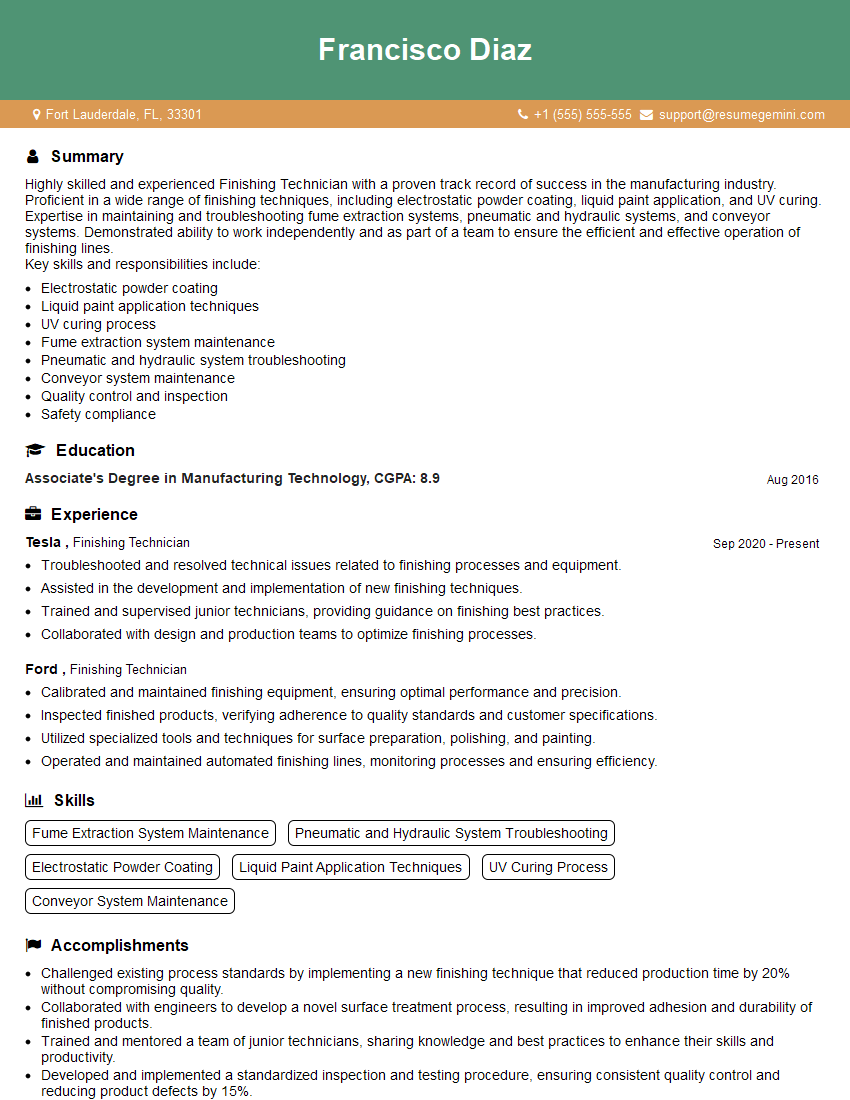
We recommend using ResumeGemini to build a professional and impactful resume that highlights your skills and experience. ResumeGemini offers tools and resources to craft a resume that stands out, and we even provide examples of resumes tailored to Collar Stitching and Finishing to help you get started. Take the next step in your career journey – build your winning resume today!

Explore more articles
Users Rating of Our Blogs
Share Your Experience
We value your feedback! Please rate our content and share your thoughts (optional).
What Readers Say About Our Blog
Very informative content, great job.
good