Preparation is the key to success in any interview. In this post, we’ll explore crucial Communication Systems Analysis interview questions and equip you with strategies to craft impactful answers. Whether you’re a beginner or a pro, these tips will elevate your preparation.
Questions Asked in Communication Systems Analysis Interview
Q 1. Explain the difference between frequency modulation (FM) and amplitude modulation (AM).
Both Amplitude Modulation (AM) and Frequency Modulation (FM) are analog modulation techniques used to transmit information over a carrier wave. The key difference lies in what aspect of the carrier wave is altered to represent the information signal.
In AM, the amplitude of the carrier wave is varied proportionally to the instantaneous amplitude of the message signal. Imagine a water wave – in AM, the height of the wave changes to reflect the message. This results in a signal where the peak-to-peak voltage changes, while the frequency remains constant.
In FM, the frequency of the carrier wave is varied proportionally to the instantaneous amplitude of the message signal. Using the water wave analogy, in FM, it’s the frequency (how often the wave crests appear) that changes. The amplitude remains relatively constant.
Example: AM radio is susceptible to noise and interference because noise directly affects the amplitude. FM radio is more robust against noise because noise affects the amplitude less significantly than the frequency shifts. However, FM requires a wider bandwidth than AM.
Q 2. Describe various multiplexing techniques used in communication systems.
Multiplexing allows multiple signals to share a single communication channel. Several techniques exist:
- Frequency-Division Multiplexing (FDM): Different signals are transmitted on different frequency bands within the channel’s bandwidth. Think of a multi-lane highway – each lane carries a different signal. This is used in cable television and early telephone systems.
- Time-Division Multiplexing (TDM): Signals are allocated different time slots within the channel. Like a single lane highway with different cars taking turns. Used in digital telephone networks (e.g., T1 lines).
- Wavelength-Division Multiplexing (WDM): Used in fiber optic communication. Multiple signals are transmitted simultaneously using different wavelengths of light on a single fiber. Each wavelength is analogous to a different lane on a highway. Used extensively in long-haul telecommunications.
- Code-Division Multiplexing (CDM): Different signals are encoded with unique codes that allow them to occupy the same frequency band at the same time. This is like different cars using different radio channels to communicate. Used in some wireless technologies like CDMA cellular networks.
The choice of multiplexing technique depends on factors like bandwidth availability, signal characteristics, and cost.
Q 3. What are the advantages and disadvantages of different modulation schemes?
Different modulation schemes have various advantages and disadvantages:
- AM: Simple to implement, but susceptible to noise and requires a large bandwidth. Less power efficient.
- FM: More robust to noise than AM, better audio quality, but requires a larger bandwidth. More power efficient compared to AM.
- PSK (Phase-Shift Keying): Relatively simple and power-efficient, less bandwidth-efficient than other digital modulation schemes.
- QAM (Quadrature Amplitude Modulation): Higher spectral efficiency than PSK, more complex implementation.
- OFDM (Orthogonal Frequency-Division Multiplexing): Robust to multipath fading (signal reflections), high spectral efficiency, suitable for wireless communication.
The best modulation scheme depends on the specific application. For example, FM is preferred for broadcast radio, while OFDM is popular in Wi-Fi and 4G/5G cellular systems.
Q 4. Explain the concept of channel capacity and its limitations.
Channel capacity represents the maximum rate at which information can be reliably transmitted over a communication channel. It’s limited by several factors:
- Bandwidth: The range of frequencies available on the channel. A wider bandwidth allows for higher capacity.
- Signal-to-Noise Ratio (SNR): The ratio of signal power to noise power. A higher SNR indicates better signal quality and allows for higher capacity.
- Noise: Random unwanted signals that interfere with the transmitted signal. Noise reduces capacity.
- Interference: Signals from other sources that corrupt the transmitted signal. Interference reduces capacity.
The limitations of channel capacity lead to trade-offs in communication system design. For instance, increasing bandwidth may involve higher cost, while improving SNR requires more power. In practice, achieving the theoretical Shannon limit (maximum capacity) is very challenging.
Q 5. How does error correction work in digital communication systems?
Error correction in digital communication systems aims to detect and correct errors introduced during transmission. This is achieved using error-correcting codes. These codes add redundant bits to the message. The receiver can use these redundant bits to detect and correct errors.
Techniques:
- Forward Error Correction (FEC): The receiver corrects errors without requesting retransmission. It’s more efficient when error rates are high, but requires more bandwidth.
- Automatic Repeat Request (ARQ): The receiver detects errors and requests retransmission of the erroneous data. Efficient for lower error rates but adds latency and requires a feedback channel.
Example: A simple error correction code might use parity bits. A parity bit is added such that the total number of 1s in the data plus the parity bit is always even or odd (depending on even or odd parity). If an error occurs, the parity check will fail, indicating the presence of an error. More sophisticated codes, like Hamming codes or Reed-Solomon codes, can detect and correct multiple errors.
Q 6. Describe different types of error detection codes.
Several error detection codes exist:
- Parity Check: A simple code that adds a parity bit to detect single-bit errors. It’s easy to implement but only detects errors, it doesn’t correct them.
- Checksum: A sum of data blocks used to detect errors. It’s more robust than parity checks but still doesn’t correct errors.
- Cyclic Redundancy Check (CRC): A powerful technique using polynomial division to generate a checksum. It can detect burst errors (multiple consecutive bits being corrupted). Commonly used in data storage and networking.
- Hamming Code: A more sophisticated code capable of detecting and correcting single-bit errors.
The choice of error detection code depends on the required reliability and computational resources.
Q 7. What is the Shannon-Hartley theorem and its significance?
The Shannon-Hartley theorem defines the theoretical upper limit on the rate at which information can be reliably transmitted over a channel of a given bandwidth in the presence of noise. It’s a cornerstone of information theory.
The formula is:
C = B log₂(1 + SNR)Where:
Cis the channel capacity in bits per second (bps).Bis the bandwidth in Hertz (Hz).SNRis the signal-to-noise ratio (a dimensionless quantity).
Significance: The theorem shows the relationship between bandwidth, SNR, and channel capacity. It highlights that increasing either bandwidth or SNR increases capacity. However, achieving the theoretical limit is practically challenging due to implementation constraints and the presence of various types of noise and interference in real-world channels.
Q 8. Explain the concept of signal-to-noise ratio (SNR) and its impact on communication system performance.
Signal-to-Noise Ratio (SNR) is a measure of the strength of a desired signal relative to the background noise. It’s expressed as a ratio, often in decibels (dB), and indicates how easily a receiver can distinguish the signal from interference. A higher SNR means a stronger signal compared to noise, resulting in better communication quality.
Think of it like trying to hear someone speak in a crowded room. A high SNR is like being close to the speaker in a quiet room – you hear them clearly. A low SNR is like being far away in a noisy room – understanding becomes difficult.
In communication systems, SNR directly impacts the bit error rate (BER). A low SNR leads to a high BER, meaning more errors in the received data. Conversely, a high SNR ensures accurate data transmission with fewer errors. Various techniques, such as error correction codes and modulation schemes, are employed to mitigate the impact of low SNR and improve system performance even under challenging conditions. For instance, in satellite communication, where the signal weakens significantly due to distance, high-gain antennas and powerful transmitters are used to increase the SNR and ensure reliable data transmission.
Q 9. Describe different types of antennas and their applications.
Antennas are crucial components in communication systems, responsible for radiating and receiving electromagnetic waves. Different types are designed for various applications based on their characteristics like directivity, gain, and frequency range.
- Isotropic Antenna: A theoretical antenna radiating equally in all directions. Useful as a reference point for comparing other antennas, but not practically achievable.
- Dipole Antenna: A simple, commonly used antenna consisting of two conductors of equal length. It’s relatively inexpensive and provides moderate gain. Used in various applications, including radio and television broadcasting.
- Yagi-Uda Antenna (Yagi Antenna): A directional antenna with high gain, achieved using a driven element and multiple parasitic elements (directors and reflectors). Excellent for point-to-point communication, commonly used in satellite TV reception.
- Parabolic Antenna (Dish Antenna): A highly directional antenna using a parabolic reflector to focus the signal, achieving very high gain. Essential for applications requiring long-distance communication, like satellite communication and radar systems.
- Horn Antenna: A waveguide antenna that provides a well-defined beam with relatively high gain. Often used in microwave applications such as satellite communication ground stations and radar.
The choice of antenna depends heavily on the specific application. For instance, a broadcast radio station might use a high-power dipole array for wide coverage, while a satellite communication system will rely on high-gain parabolic antennas for efficient signal transmission and reception over vast distances.
Q 10. Explain the concept of propagation delay in communication systems.
Propagation delay refers to the time it takes for a signal to travel from the transmitter to the receiver in a communication system. It’s determined by the distance the signal needs to cover and the speed of signal propagation (which is approximately the speed of light in free space).
Imagine shouting to a friend across a field. The delay you experience before hearing their reply is analogous to propagation delay. The larger the field (distance), the longer the delay. This delay is critical in real-time applications like VoIP calls or online gaming. A significant propagation delay can cause noticeable latency, leading to echoing, choppy audio, or lag in games.
In digital communication, this delay impacts the performance of protocols and algorithms. It needs to be factored into timing calculations to avoid synchronization issues and ensure reliable data transmission. For instance, in network protocols, the delay is often used in calculating the Round Trip Time (RTT), a crucial metric for network performance and congestion control.
Q 11. How does signal fading affect wireless communication systems?
Signal fading in wireless communication refers to the variation in signal strength at the receiver due to changes in the propagation environment. These changes can be caused by various factors, leading to unpredictable signal attenuation and distortion.
- Multipath Fading: The signal reaches the receiver via multiple paths with different delays and phases, causing constructive and destructive interference. This results in rapid fluctuations in signal strength.
- Shadowing: Obstacles like buildings, trees, or hills block the signal, causing significant signal attenuation and potentially deep fades.
- Atmospheric Attenuation: The atmosphere absorbs and scatters the signal, causing signal loss depending on the frequency and weather conditions.
Signal fading poses a significant challenge to wireless communication systems. It can cause data loss, errors in the received signal, and reduced throughput. Various techniques, like diversity reception (using multiple antennas), error correction codes, and adaptive modulation, are used to mitigate the effects of fading and ensure reliable communication.
For example, in cellular networks, the use of multiple antennas at the base station (MIMO) and mobile device enables the system to combat multipath fading and improve data rates significantly.
Q 12. What are the different types of network topologies?
Network topologies define the physical or logical layout of nodes (computers, devices) and connections in a network. Different topologies offer varying advantages and disadvantages in terms of scalability, reliability, and cost.
- Bus Topology: All nodes are connected to a single cable (the bus). Simple and inexpensive, but a single point of failure. If the bus fails, the entire network goes down.
- Star Topology: All nodes are connected to a central hub or switch. Easy to manage and troubleshoot; failure of one node doesn’t affect the rest. Widely used in LANs and home networks.
- Ring Topology: Nodes are connected in a closed loop. Data travels in one direction. Suitable for high-speed networks but a single point of failure in the ring can disrupt the whole network.
- Mesh Topology: Nodes are interconnected with multiple paths. Highly reliable as multiple paths exist for data transmission. Often used in WANs and critical infrastructure networks.
- Tree Topology: A hierarchical structure combining aspects of bus and star topologies. Scalable and commonly used in larger networks.
The choice of topology depends on factors like network size, cost, reliability requirements, and performance needs. For example, a small home network might use a star topology, while a large corporate network may opt for a mesh or tree topology for greater resilience and scalability.
Q 13. Explain the concept of routing protocols in computer networks.
Routing protocols are algorithms and procedures used in computer networks to determine the best path for data packets to travel from a source to a destination. They work by exchanging routing information between network devices (routers) to build and maintain routing tables.
Imagine a road map for data packets. Routing protocols are like the algorithms that determine the fastest or most efficient route from your location (source) to your destination.
There are two main categories of routing protocols:
- Distance-Vector Routing Protocols: These protocols exchange routing information with their immediate neighbors. Each router calculates the distance to all other routers based on the information received from its neighbors. Examples include RIP (Routing Information Protocol) and IGRP (Interior Gateway Routing Protocol).
- Link-State Routing Protocols: These protocols build a map of the entire network topology. Each router shares its link costs (bandwidth, latency) with all other routers, allowing for more accurate path calculations. Examples include OSPF (Open Shortest Path First) and IS-IS (Intermediate System to Intermediate System).
The choice of routing protocol depends on network size, complexity, and performance requirements. OSPF and IS-IS are preferred in large and complex networks due to their efficiency and scalability, while RIP is simpler and suitable for smaller networks.
Q 14. What are the key differences between TCP and UDP protocols?
TCP (Transmission Control Protocol) and UDP (User Datagram Protocol) are both network protocols used to transmit data over the internet, but they differ significantly in their approach to reliability and efficiency.
- TCP: A connection-oriented protocol that establishes a reliable connection between sender and receiver before data transmission. It ensures reliable delivery of data by using acknowledgments, sequence numbers, and error correction. It’s slower but more reliable, suitable for applications where data integrity is critical, like web browsing and file transfer (e.g., HTTP, FTP).
- UDP: A connectionless protocol that doesn’t establish a connection before sending data. It’s faster but less reliable as it doesn’t guarantee data delivery or order. It’s suitable for applications where speed is prioritized over reliability, like online gaming and video streaming (e.g., DNS, streaming protocols).
The key differences are summarized in the table below:
| Feature | TCP | UDP |
|---|---|---|
| Connection | Connection-oriented | Connectionless |
| Reliability | Reliable | Unreliable |
| Order | Ordered delivery | Unordered delivery |
| Speed | Slower | Faster |
| Overhead | Higher | Lower |
Choosing between TCP and UDP depends on the application’s requirements. If reliability is paramount, TCP is the better choice; if speed is critical and some data loss is acceptable, UDP is preferred. Many applications use a combination of both protocols to achieve a balance between speed and reliability.
Q 15. Describe the OSI model and its layers.
The OSI (Open Systems Interconnection) model is a conceptual framework that standardizes the functions of a telecommunication or computing system without regard to its underlying internal structure and technology. Think of it as a layered cake, where each layer has a specific responsibility, allowing different systems to communicate effectively despite their differences.
- Layer 7: Application Layer: This is where applications interact with the network. Examples include HTTP (web browsing), SMTP (email), and FTP (file transfer). Think of this as the waiter taking your order at a restaurant – it’s the interface between you and the kitchen (the lower layers).
- Layer 6: Presentation Layer: Handles data formatting and encryption/decryption. It ensures data is presented in a format the application layer understands. This is like the chef preparing your food – making it presentable and palatable.
- Layer 5: Session Layer: Manages connections between applications. It establishes, manages, and terminates sessions. This layer is responsible for coordinating the ‘conversation’ between applications.
- Layer 4: Transport Layer: Provides reliable and ordered data delivery. Protocols like TCP (Transmission Control Protocol) and UDP (User Datagram Protocol) operate here. Imagine this as the kitchen staff making sure all parts of your order arrive correctly and in a timely fashion.
- Layer 3: Network Layer: Handles logical addressing (IP addresses) and routing. It determines the path data takes across the network. This is like the delivery driver who uses the address to deliver your food.
- Layer 2: Data Link Layer: Handles physical addressing (MAC addresses) and error detection. Protocols like Ethernet operate here. Think of this as the network infrastructure – the roads and infrastructure allowing the delivery to take place.
- Layer 1: Physical Layer: Deals with the physical transmission of data – cables, signals, and physical components. This is the actual physical delivery truck itself.
Understanding the OSI model is crucial for troubleshooting network issues, as it allows you to isolate problems to specific layers.
Career Expert Tips:
- Ace those interviews! Prepare effectively by reviewing the Top 50 Most Common Interview Questions on ResumeGemini.
- Navigate your job search with confidence! Explore a wide range of Career Tips on ResumeGemini. Learn about common challenges and recommendations to overcome them.
- Craft the perfect resume! Master the Art of Resume Writing with ResumeGemini’s guide. Showcase your unique qualifications and achievements effectively.
- Don’t miss out on holiday savings! Build your dream resume with ResumeGemini’s ATS optimized templates.
Q 16. Explain the concept of Quality of Service (QoS) in networking.
Quality of Service (QoS) refers to the capability of a network to provide better service to selected network traffic over others. Think of it as prioritizing certain types of traffic to ensure certain applications receive the resources they need, even under heavy network load. For example, a video conferencing call needs a consistent, low-latency connection, while a file transfer might tolerate some delay. QoS mechanisms allow network administrators to differentiate and manage these traffic demands.
QoS is achieved using various techniques, including:
- Bandwidth allocation: Guaranteeing a minimum amount of bandwidth for prioritized traffic.
- Traffic shaping: Controlling the rate at which traffic is sent.
- Packet prioritization: Marking packets with different priorities, allowing routers to handle them accordingly.
Consider a hospital using VoIP for urgent communications. QoS ensures that voice traffic is prioritized over other data, minimizing call drops and delays during emergencies.
Q 17. What are the challenges of designing and implementing a secure communication system?
Designing and implementing a secure communication system presents numerous challenges. It’s a multifaceted problem requiring a holistic approach. Some key challenges include:
- Evolving Threats: New attack vectors and vulnerabilities constantly emerge, requiring continuous updates and adaptations to security measures. The cyber landscape is constantly changing.
- Complexity: Modern systems are incredibly complex, making it difficult to identify and secure all potential weaknesses. The more complex a system, the more potential points of failure.
- Human Factor: Phishing attacks, social engineering, and insider threats exploit human vulnerabilities, bypassing even the most robust technical security measures. People are often the weakest link.
- Balancing Security and Usability: Robust security measures can sometimes impact the usability of a system, requiring careful consideration to find the right balance. You don’t want security to be so cumbersome that it prevents users from working efficiently.
- Cost: Implementing and maintaining a high level of security can be expensive, requiring investments in hardware, software, personnel, and ongoing training.
Overcoming these challenges requires a layered security approach, combining various techniques and technologies to protect against multiple threat vectors.
Q 18. Explain the concept of network security protocols (e.g., TLS, SSL).
TLS (Transport Layer Security) and its predecessor SSL (Secure Sockets Layer) are cryptographic protocols designed to provide secure communication over a computer network. They work by establishing an encrypted connection between two communicating parties, ensuring that any data exchanged between them remains confidential and protected from eavesdropping.
The process typically involves:
- Handshake: A process where both parties authenticate each other and agree on encryption algorithms.
- Key Exchange: A secure method for exchanging cryptographic keys used for encryption and decryption.
- Data Encryption: The actual encryption and decryption of data during the communication session.
Think of it like sending a secret message in a locked box. TLS/SSL provides the lock and key, ensuring only the intended recipient can unlock and read the message. This is critical for secure web browsing (HTTPS), email (using secure SMTP), and many other applications.
Q 19. How do firewalls work in protecting a network?
Firewalls act as a barrier between a trusted internal network and an untrusted external network (like the internet). They examine network traffic and block or allow it based on pre-defined rules. Think of it as a bouncer at a nightclub – checking IDs and determining who gets entry.
Firewalls work by inspecting various aspects of network traffic, including:
- IP Addresses: Blocking traffic from known malicious IP addresses.
- Ports: Restricting access to specific network ports commonly used for malicious activities.
- Protocols: Filtering traffic based on protocols (e.g., blocking certain types of traffic based on its protocol type).
- Applications: Blocking or allowing specific applications based on their characteristics.
By implementing these rules, firewalls prevent unauthorized access to internal networks and protect against various network attacks.
Q 20. What are the various types of network attacks and how to mitigate them?
Network attacks come in various forms, each requiring different mitigation strategies. Here are a few examples:
- Denial-of-Service (DoS) Attacks: Overwhelming a network or server with traffic, making it unavailable to legitimate users. Mitigation: Employing DDoS mitigation services, implementing rate limiting, and using firewalls with intrusion detection/prevention systems.
- Man-in-the-Middle (MitM) Attacks: Intercepting communication between two parties to eavesdrop or modify data. Mitigation: Using strong encryption (TLS/SSL), verifying digital certificates, and using VPNs.
- SQL Injection Attacks: Injecting malicious SQL code into database queries to gain unauthorized access to data. Mitigation: Using parameterized queries, input validation, and regularly updating database software.
- Phishing Attacks: Tricking users into revealing sensitive information (credentials, credit card details). Mitigation: Security awareness training, implementing strong password policies, and using multi-factor authentication.
- Malware Attacks: Installing malicious software on a system to steal data, damage the system, or disrupt operations. Mitigation: Using antivirus software, regularly patching operating systems and applications, and employing network segmentation.
A comprehensive security strategy involves a multi-layered approach, incorporating various techniques to protect against a wide range of threats.
Q 21. Describe different types of network monitoring tools.
Network monitoring tools play a vital role in ensuring network performance, security, and availability. These tools collect and analyze network data to identify issues, bottlenecks, and security threats. They are like the dashboard of a car, providing real-time insights into network health.
Different types of network monitoring tools include:
- Network Performance Monitors (NPMs): These tools track key performance indicators (KPIs) like bandwidth utilization, latency, and packet loss. They help identify performance bottlenecks and optimize network efficiency.
- Intrusion Detection/Prevention Systems (IDS/IPS): These tools monitor network traffic for malicious activity, alerting administrators to potential threats and automatically blocking malicious traffic.
- Network Configuration Managers (NCMs): These tools manage and monitor network devices, ensuring consistent configurations and providing alerts when deviations occur. They help maintain the proper network configuration.
- Security Information and Event Management (SIEM) Systems: These tools collect and analyze security logs from various network devices, identifying potential security breaches and providing a central view of security events.
The choice of network monitoring tools depends on the specific needs of the organization and the size and complexity of the network.
Q 22. Explain your understanding of network performance analysis and optimization.
Network performance analysis and optimization is the systematic process of evaluating a network’s efficiency, identifying bottlenecks, and implementing strategies to improve its speed, reliability, and overall effectiveness. It’s like a network’s annual physical – we check vital signs (latency, throughput, packet loss) and address any issues to keep it healthy.
This process involves several key steps:
- Monitoring: Using tools to collect data on various metrics such as latency, jitter, packet loss, throughput, and CPU/memory utilization of network devices.
- Analysis: Interpreting the collected data to identify performance bottlenecks. For instance, high latency might indicate congestion on a specific link, while high packet loss might point to a faulty network interface card.
- Troubleshooting: Investigating the root cause of identified problems. This could involve anything from checking cable connections to reconfiguring network devices.
- Optimization: Implementing solutions to address the bottlenecks. This might involve upgrading hardware, optimizing network configurations (e.g., QoS settings), or implementing new technologies (e.g., load balancing).
For example, imagine a video conferencing system experiencing frequent interruptions. Performance analysis might reveal high jitter (variations in latency), indicating packet loss. Optimization strategies could include upgrading the network bandwidth, implementing Quality of Service (QoS) to prioritize voice and video traffic, or optimizing the network’s routing protocols.
Q 23. How would you troubleshoot a network connectivity issue?
Troubleshooting network connectivity issues is a systematic process that requires a methodical approach. Think of it like a detective investigating a crime scene; we need to gather clues and follow the evidence.
My approach typically follows these steps:
- Gather Information: Start by talking to the user. What are they experiencing? When did the problem start? Has anything changed recently (new software, hardware, network changes)?
- Check the Obvious: Make sure the device is powered on, cables are securely connected, and the network interface is enabled. It’s surprising how often these simple things are overlooked!
- Ping the Device: Use the
pingcommand (e.g.,ping google.com) to check basic connectivity. A successful ping indicates basic network connectivity, while failure suggests a problem between the device and the destination. - Traceroute/Tracert: Use
traceroute(Linux/macOS) ortracert(Windows) to trace the path packets take to a destination. This helps identify potential points of failure along the route. - Check Network Configuration: Verify IP address, subnet mask, default gateway, and DNS server settings. Incorrect configurations are common culprits.
- Examine Network Devices: Check routers, switches, and firewalls for errors or logs that might indicate problems. This might involve checking device management interfaces (like the web interface of a router).
- Check for Firewall Issues: Ensure that firewalls (both on the device and on the network) are not blocking necessary traffic.
- Use Network Monitoring Tools: Tools like Wireshark can capture and analyze network traffic, providing detailed information about packet transmission.
For example, if a user can’t access a website, a traceroute might reveal that packets are failing at a specific router, indicating a problem with that router or the connection to it.
Q 24. Describe your experience with network simulation tools.
I have extensive experience using network simulation tools like NS-3, OMNeT++, and MATLAB. These tools are invaluable for designing, testing, and optimizing communication systems before deploying them in real-world environments. It’s like having a virtual testbed where you can experiment without risking disruption to a live system.
For instance, I’ve used NS-3 to model and simulate the performance of a wireless sensor network, examining various routing protocols and their impact on energy consumption and network reliability. OMNeT++ has been employed for designing and testing complex network architectures, simulating the behavior of various network protocols under different load conditions. MATLAB is helpful for analyzing collected simulation data, creating graphs, and generating performance reports.
Using simulation, I can explore ‘what-if’ scenarios, such as investigating the impact of increased traffic load or the addition of new network components. This helps in making informed decisions during network design and optimization.
Q 25. Explain your experience with specific communication protocols (e.g., SIP, RTP).
I’m proficient in several communication protocols, notably SIP (Session Initiation Protocol) and RTP (Real-time Transport Protocol), both crucial in Voice over IP (VoIP) systems.
SIP is the signaling protocol that handles the setup, management, and termination of VoIP calls. Think of it as the ‘phone system’ – it handles call initiation, call routing, and call features like call waiting and transfer. I have experience in configuring SIP servers, troubleshooting SIP signaling issues, and developing SIP-based applications.
RTP is the transport protocol responsible for delivering the actual voice and video data during a call. It’s like the ‘delivery service’ – it ensures the timely delivery of the media packets. My experience includes analyzing RTP streams, identifying packet loss, jitter, and latency issues, and implementing techniques for improving real-time media quality.
In a recent project, I used my understanding of SIP and RTP to diagnose a VoIP system experiencing frequent call drops. Analyzing the RTP streams revealed significant packet loss, which was traced to a faulty network interface card on a server. This knowledge allowed for quick identification and resolution of the problem.
Q 26. Describe your experience with different network hardware components.
My experience encompasses a wide range of network hardware components, including routers, switches, firewalls, wireless access points, and network interface cards. I’m comfortable working with both enterprise-grade and consumer-level equipment from various vendors such as Cisco, Juniper, and Ubiquiti.
I understand the role of each component in a network’s architecture. For example, I know how routers perform routing decisions based on routing protocols (like OSPF and BGP), how switches manage the forwarding of traffic based on MAC addresses, and how firewalls enforce security policies by filtering network traffic. I’m also experienced in configuring and managing these devices using command-line interfaces and web-based management tools.
In one project, we needed to upgrade our network infrastructure to accommodate a significant increase in data traffic. I played a critical role in selecting the appropriate routers, switches, and wireless access points, ensuring they met our capacity needs and supported the required features. I was also responsible for configuring and testing the new equipment to guarantee seamless integration with our existing network.
Q 27. How do you stay updated with the latest trends and technologies in communication systems?
Staying updated in the dynamic field of communication systems requires a multi-faceted approach. I regularly engage in the following activities:
- Reading industry publications and journals: Publications such as IEEE Transactions on Communications and ACM SIGCOMM Computer Communication Review provide insights into the latest research and advancements.
- Attending conferences and workshops: Events such as IEEE INFOCOM and ACM MobiCom offer opportunities to learn from leading experts and network with peers.
- Participating in online communities and forums: Platforms like Stack Overflow and various LinkedIn groups provide spaces for discussion and knowledge sharing.
- Taking online courses and pursuing certifications: Platforms like Coursera and edX provide access to high-quality courses on communication systems and related topics, while certifications like those from Cisco or Juniper validate expertise.
- Following industry influencers and thought leaders: Keeping track of influential researchers and professionals on social media helps to be informed about current trends.
This continuous learning process is essential to remain competitive and effectively address the evolving challenges of communication systems.
Q 28. Describe a challenging communication system project you worked on and how you overcame the challenges.
One particularly challenging project involved optimizing the network performance of a large-scale video streaming platform. The platform experienced significant latency and buffering issues during peak usage times, affecting user experience.
The challenge was multifaceted: We had to identify the bottlenecks while maintaining the platform’s availability. Initial analysis showed high CPU utilization on the streaming servers and network congestion in the backbone network. This required a combination of approaches:
- Load Balancing: Implementing a robust load balancing system to distribute traffic across multiple servers, reducing the burden on individual machines.
- Content Delivery Network (CDN): Integrating a CDN to cache video content closer to users, reducing latency and improving delivery speeds.
- Network Upgrades: Upgrading the network infrastructure to increase bandwidth and improve network capacity.
- QoS Implementation: Implementing QoS policies to prioritize video streaming traffic over other types of network traffic.
- Performance Monitoring: Setting up comprehensive monitoring systems to track key performance indicators and allow for proactive identification of potential issues.
Overcoming these challenges involved careful planning, collaboration with various teams (software engineers, network engineers, system administrators), and constant monitoring and adjustment. The success of this project significantly improved user experience and increased platform stability, showcasing the importance of a holistic approach to network optimization.
Key Topics to Learn for Communication Systems Analysis Interview
- Signal Processing Fundamentals: Understanding concepts like Fourier Transforms, sampling theorem, and different modulation techniques (AM, FM, etc.) is crucial. This forms the bedrock of many communication systems.
- Channel Characterization and Modeling: Learn how to model different communication channels (e.g., AWGN, fading channels) and their impact on signal quality. Practical application includes designing robust communication systems that mitigate channel impairments.
- Digital Communication Techniques: Mastering concepts like digital modulation schemes (PSK, QAM), error correction codes, and source coding is essential for modern communication systems. This will allow you to discuss real-world implementations and optimizations.
- Network Protocols and Architectures: A strong understanding of network layers (OSI model, TCP/IP), routing protocols, and network topologies will demonstrate your holistic view of communication systems.
- Performance Analysis and Optimization: Be prepared to discuss techniques for analyzing system performance (e.g., BER, throughput) and optimizing system parameters to improve efficiency and reliability. Consider examples from your projects or studies.
- System Design and Implementation: Showcase your ability to design and implement communication systems, addressing aspects like hardware and software considerations. Focus on problem-solving approaches and your ability to integrate different components.
Next Steps
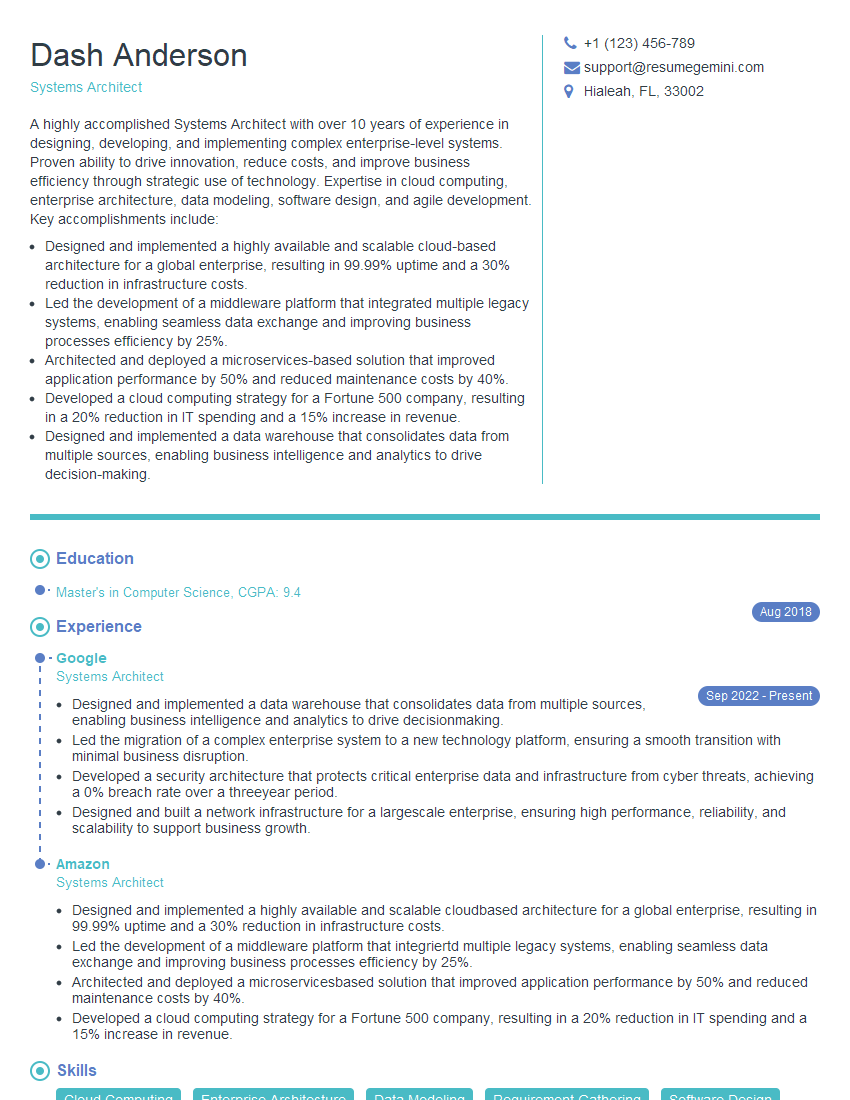
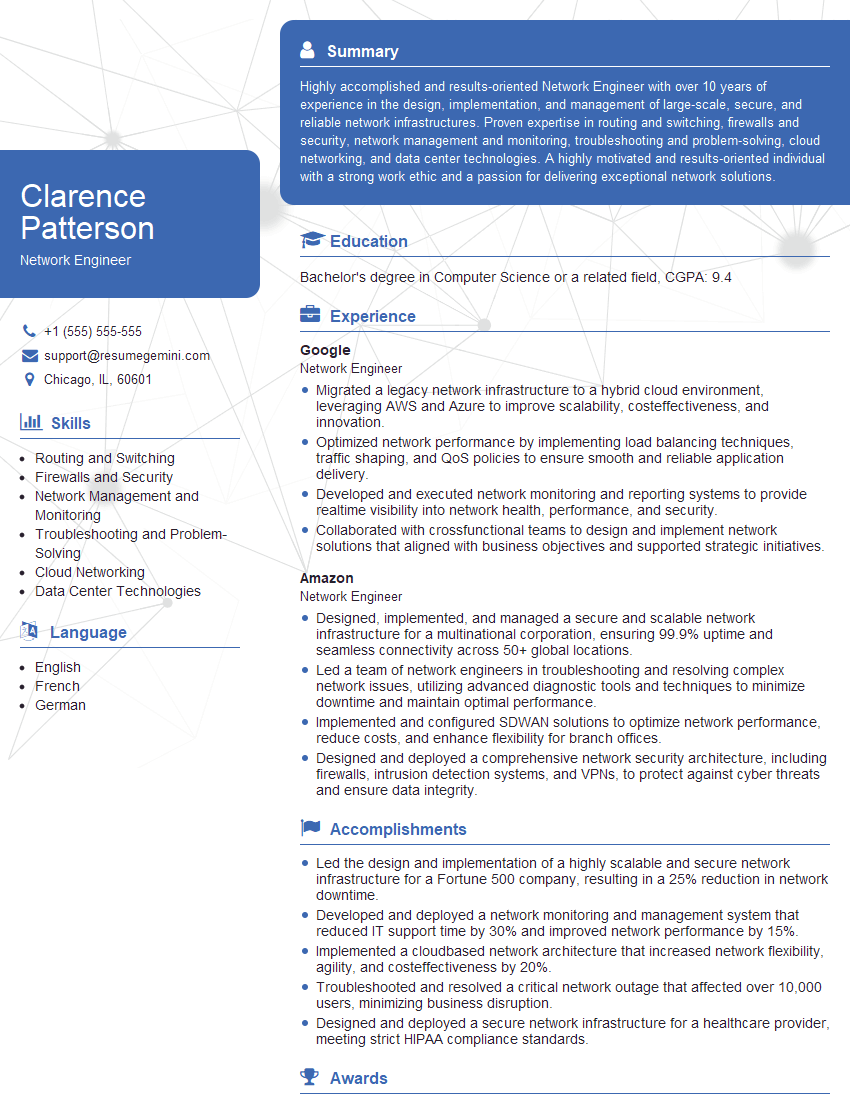
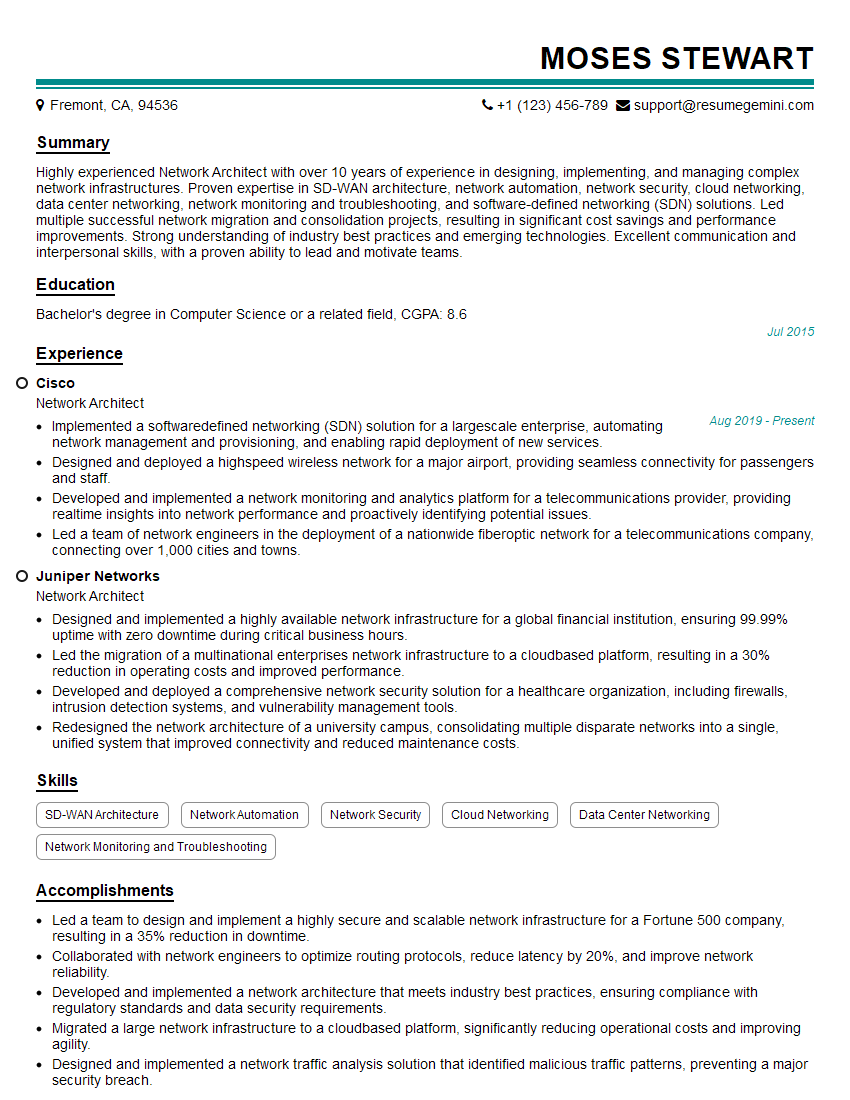
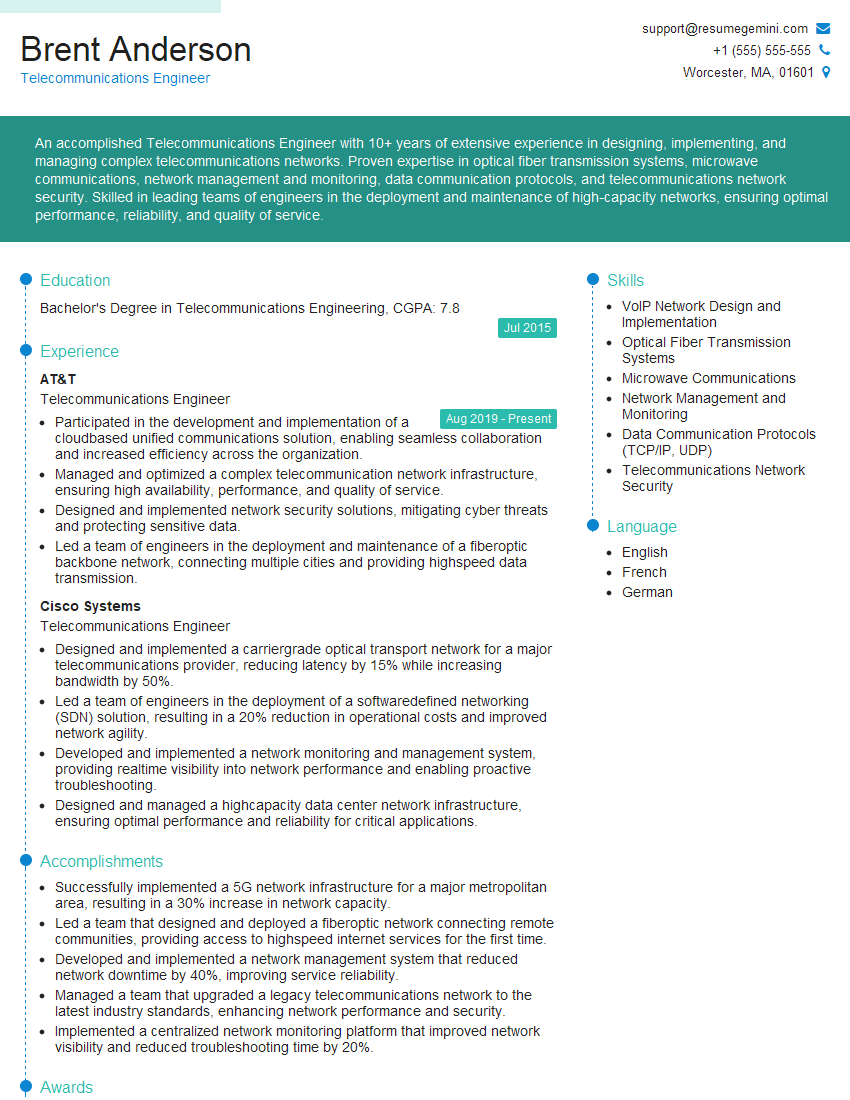
Mastering Communication Systems Analysis opens doors to exciting and challenging careers in various sectors, from telecommunications and aerospace to networking and data science. A strong foundation in this area significantly enhances your employability and paves the way for career advancement. To maximize your job prospects, focus on creating an ATS-friendly resume that highlights your skills and experience effectively. ResumeGemini is a trusted resource that can help you build a professional and impactful resume, tailored to the specific requirements of Communication Systems Analysis roles. Examples of resumes tailored to this field are available for your review within ResumeGemini.

Explore more articles
Users Rating of Our Blogs
Share Your Experience
We value your feedback! Please rate our content and share your thoughts (optional).
What Readers Say About Our Blog
Very informative content, great job.
good