Are you ready to stand out in your next interview? Understanding and preparing for Compliance Awareness interview questions is a game-changer. In this blog, we’ve compiled key questions and expert advice to help you showcase your skills with confidence and precision. Let’s get started on your journey to acing the interview.
Questions Asked in Compliance Awareness Interview
Q 1. Explain the importance of a robust compliance program.
A robust compliance program is crucial for any organization, acting as a shield against legal, financial, and reputational risks. It ensures adherence to relevant laws, regulations, and internal policies. Think of it as the organization’s ethical and legal compass, guiding its actions and decisions. Without it, an organization faces potential fines, lawsuits, damage to its brand, and even criminal charges.
- Minimizes Legal and Financial Risks: Proactive compliance reduces the likelihood of penalties and legal battles associated with non-compliance. This saves significant financial resources that might otherwise be spent on settlements, fines, and legal fees.
- Enhances Reputation and Trust: Demonstrating a commitment to compliance builds trust with stakeholders – customers, investors, and the public. This leads to improved brand loyalty and a stronger competitive advantage.
- Improves Operational Efficiency: A well-structured compliance program streamlines processes, improves internal controls, and reduces operational inefficiencies caused by non-compliance.
- Strengthens Corporate Culture: A strong compliance program fosters a culture of ethics and accountability, where employees understand and uphold the organization’s values and legal obligations.
Q 2. Describe your experience with conducting compliance risk assessments.
My experience with compliance risk assessments involves a structured methodology that combines qualitative and quantitative analysis. I typically begin by identifying the organization’s key areas of risk, focusing on the regulatory landscape specific to its industry and operations. This often involves reviewing existing policies, procedures, and controls. For example, a financial institution would require a more stringent assessment focusing on areas like anti-money laundering (AML) and Know Your Customer (KYC) regulations compared to a retail company.
Next, I assess the effectiveness of existing controls, which includes interviewing staff, reviewing documentation, and potentially conducting walkthroughs. This helps pinpoint potential vulnerabilities and gaps. Once identified, I prioritize risks based on likelihood and potential impact. A risk matrix, with a clear scoring system, is essential here. Finally, I develop recommendations for mitigating identified risks, proposing solutions ranging from policy revisions and staff training to the implementation of new technologies and controls. I’ve successfully implemented this process across various industries, regularly reporting findings to senior management and collaborating with teams to implement remediation strategies.
Q 3. How do you stay up-to-date on changes in relevant regulations and laws?
Staying current on regulatory changes requires a multi-faceted approach. It’s not a one-time task; it’s an ongoing commitment. I regularly utilize several key methods:
- Subscription to Regulatory Updates: I subscribe to reputable legal and compliance news sources and newsletters that provide updates on relevant laws and regulations. This allows me to receive timely notifications of any changes.
- Professional Development: I actively participate in industry conferences, webinars, and workshops to stay informed about emerging trends and best practices in compliance. This provides invaluable networking opportunities and allows me to learn from experts in the field.
- Engagement with Regulatory Bodies: I regularly check the websites of relevant regulatory bodies (e.g., SEC, FTC, etc.) for updates, guidance, and interpretations of regulations.
- Internal Knowledge Sharing: Within my teams, I promote a culture of continuous learning and knowledge sharing. We regularly discuss regulatory updates and their implications for our work.
Essentially, staying informed is a proactive, continuous process. It’s not enough to simply react to changes; understanding the implications and adapting proactively is essential.
Q 4. What is your experience with implementing compliance training programs?
I have extensive experience in designing, developing, and implementing compliance training programs. My approach begins with a thorough needs assessment to identify knowledge gaps and tailor the training to the specific needs of the target audience. I believe in using engaging and interactive methods rather than relying solely on lengthy lectures. This includes using various formats such as:
- E-learning modules: These offer flexibility and allow for self-paced learning, track completion, and offer immediate feedback.
- Interactive workshops: These allow for discussion, case studies, and hands-on exercises to reinforce learning.
- Scenario-based training: This simulates real-world situations, helping employees practice applying their compliance knowledge.
- Gamification: Incorporating game mechanics like points, badges, and leaderboards can increase engagement and knowledge retention.
Following the training, I usually incorporate regular assessments to measure the effectiveness of the program and identify areas for improvement. Post-training reinforcement, such as regular reminders and updates, are also critical for long-term success. Documentation of training completion is also meticulously maintained to ensure audit readiness.
Q 5. Describe a situation where you identified a compliance gap. How did you address it?
In a previous role, we identified a compliance gap regarding data privacy within our customer relationship management (CRM) system. During a routine audit, we discovered that certain customer data fields were not properly anonymized before being shared with third-party vendors for analysis. This presented a risk of violating privacy regulations like GDPR.
To address this, I followed a structured approach:
- Assessment: We performed a thorough review to identify the extent of the data exposure and the vendors involved.
- Risk analysis: We assessed the potential impact of the non-compliance, considering the likelihood of a data breach and the associated fines.
- Solution development: We worked with the IT department to implement data masking and anonymization protocols within the CRM system, ensuring all sensitive data was properly protected before external sharing. Additionally, we updated the data sharing agreements with third-party vendors to include stronger data privacy clauses.
- Remediation: We immediately implemented the new protocols and informed all affected vendors. We also performed data cleansing to ensure all historical data was handled appropriately.
- Training: We provided updated training to all employees on the revised data privacy procedures.
This proactive response not only mitigated the compliance risk but also strengthened our data security posture and reinforced our commitment to data privacy.
Q 6. How do you handle conflicts between competing compliance requirements?
Conflicts between competing compliance requirements are not uncommon, especially in organizations operating across multiple jurisdictions or industries. When such conflicts arise, a systematic approach is crucial. My strategy involves:
- Identify and Document: Clearly identify the conflicting requirements and document all relevant regulations, policies, and internal guidelines.
- Analyze and Prioritize: Analyze the potential consequences of non-compliance with each requirement. Prioritize based on the severity of potential penalties and risks. Consider factors like the likelihood of an audit or enforcement action.
- Seek Legal Counsel: Consult with legal counsel to obtain expert advice on interpreting the conflicting requirements and determining the most appropriate course of action. Their interpretation will be crucial in determining how to proceed.
- Develop a Mitigation Strategy: Based on the legal advice, develop a mitigation strategy that addresses the conflict. This might involve implementing additional controls, seeking waivers or exemptions, or modifying existing processes to achieve compliance with the more stringent requirements.
- Document and Communicate: Document the conflict, the analysis performed, the legal advice received, and the mitigation strategy implemented. Communicate the decision and its rationale to all relevant stakeholders.
This approach ensures that the organization takes informed decisions, minimizes risks, and maintains a consistent approach to compliance management.
Q 7. Explain your understanding of the Sarbanes-Oxley Act (SOX).
The Sarbanes-Oxley Act of 2002 (SOX) is a US federal law enacted to protect investors by improving the accuracy and reliability of corporate disclosures made pursuant to the securities laws, and to increase corporate responsibility. It’s a comprehensive piece of legislation that addresses several key areas:
- Corporate Responsibility: SOX enhances corporate responsibility by establishing stricter rules for corporate governance, financial reporting, and internal controls.
- Financial Reporting: It mandates more rigorous financial reporting standards, aiming to prevent fraudulent accounting practices and ensure transparency.
- Internal Controls: It requires companies to establish and maintain effective internal controls over financial reporting (ICFR), to prevent material misstatements in financial statements.
- Auditor Independence: SOX aims to ensure auditor independence by restricting certain non-audit services that auditors can provide to their audit clients.
- Penalties for Non-Compliance: SOX establishes significant penalties for non-compliance, ranging from hefty fines to imprisonment.
Understanding SOX is critical, especially for publicly traded companies and their auditors. Non-compliance can have severe legal and financial ramifications. My experience includes working with companies to implement SOX-compliant internal controls, assisting with audits, and providing training on SOX requirements.
Q 8. Explain your understanding of the Health Insurance Portability and Accountability Act (HIPAA).
The Health Insurance Portability and Accountability Act (HIPAA) is a US law designed to protect sensitive patient health information. It sets national standards for the protection of individually identifiable health information, known as Protected Health Information (PHI).
Think of HIPAA as a strong lock on a medical file cabinet. It dictates who can access that cabinet, how they access it, and what they can do with the information inside. This includes everything from medical records and billing information to psychotherapy notes and genetic data.
Key aspects of HIPAA include:
- Privacy Rule: Governs the use and disclosure of PHI.
- Security Rule: Sets standards for securing electronic PHI (ePHI).
- Breach Notification Rule: Requires covered entities to notify individuals and authorities in case of a data breach.
- Enforcement Rule: Establishes penalties for non-compliance.
In my experience, ensuring HIPAA compliance involves thorough employee training, implementing robust security measures (like encryption and access controls), and establishing clear procedures for handling PHI requests and breaches. For instance, I’ve worked with healthcare providers to develop and implement tailored compliance programs that addressed their specific needs and risks, including conducting risk assessments and developing comprehensive remediation plans.
Q 9. Explain your understanding of the General Data Protection Regulation (GDPR).
The General Data Protection Regulation (GDPR) is a comprehensive data privacy regulation in the European Union (EU) and the European Economic Area (EEA). It aims to give individuals more control over their personal data and harmonizes data protection laws across the EU.
Imagine GDPR as a global data protection umbrella. It covers any organization processing the personal data of EU residents, regardless of the organization’s location. It prioritizes user consent, data minimization, and accountability.
Key principles of GDPR include:
- Lawfulness, fairness, and transparency: Data processing must have a legal basis.
- Purpose limitation: Data should only be collected for specified, explicit, and legitimate purposes.
- Data minimization: Only necessary data should be collected.
- Accuracy: Data should be accurate and up-to-date.
- Storage limitation: Data should not be kept longer than necessary.
- Integrity and confidentiality: Data should be protected against unauthorized access.
- Accountability: Organizations are responsible for demonstrating compliance.
My experience involves creating data processing registers, conducting data protection impact assessments (DPIAs), and implementing technical and organizational measures to ensure compliance, such as data anonymization and pseudonymisation techniques. I’ve also helped organizations navigate the complexities of cross-border data transfers, ensuring they comply with the relevant regulations.
Q 10. How do you ensure compliance with anti-bribery and corruption laws?
Ensuring compliance with anti-bribery and corruption laws requires a multi-faceted approach encompassing robust policies, comprehensive training, effective monitoring, and a strong ethical culture. Laws like the Foreign Corrupt Practices Act (FCPA) in the US and the UK Bribery Act prohibit offering, promising, or giving bribes to foreign officials or other individuals to obtain or retain business.
This is like building a strong fortress around your company to prevent bribery and corruption. Key elements include:
- Developing a comprehensive anti-bribery and corruption policy: This policy should clearly define prohibited conduct, set out reporting procedures, and outline disciplinary actions.
- Implementing a robust due diligence process: Thoroughly investigating business partners and third-party vendors to identify and mitigate potential risks.
- Providing regular and mandatory training: Educating employees on anti-bribery and corruption laws, risks, and best practices.
- Establishing a confidential reporting mechanism: Creating a safe space for employees to report potential violations without fear of retaliation.
- Conducting regular internal audits and monitoring: Assessing the effectiveness of the anti-bribery and corruption program and identifying areas for improvement.
In my professional experience, I have assisted organizations in creating and implementing such programs, tailored to their size, industry, and risk profile. This includes developing customized training materials, conducting internal investigations, and supporting organizations in responding to regulatory inquiries.
Q 11. How do you handle whistleblowing reports?
Handling whistleblowing reports requires a confidential, secure, and impartial process. It’s crucial to protect the whistleblower’s identity and ensure that their concerns are investigated thoroughly and objectively.
Imagine a secure mailbox for confidential information. The process typically involves:
- Establishing a clear and accessible whistleblowing mechanism: This could be a hotline, an online portal, or a designated individual.
- Ensuring confidentiality: Protecting the whistleblower’s identity from potential retaliation.
- Prompt investigation: Conducting a thorough and impartial investigation into the allegations.
- Objective assessment: Evaluating the evidence and determining whether a violation has occurred.
- Remediation: Taking appropriate corrective actions if a violation is confirmed.
- Feedback to the whistleblower: Providing updates on the progress of the investigation and the outcome.
In my experience, I’ve implemented and managed whistleblowing systems for various organizations, ensuring compliance with relevant legal and ethical requirements. This involves careful management of sensitive information, adherence to strict confidentiality protocols, and effective communication with all parties involved.
Q 12. Describe your experience with internal audits related to compliance.
My experience with internal audits related to compliance involves designing, executing, and reporting on audits assessing the effectiveness of compliance programs across diverse regulatory areas. These audits typically involve a risk-based approach, focusing on high-risk areas and critical controls.
Think of an internal audit as a health check-up for a compliance program. The process usually includes:
- Planning and scoping: Defining the audit objectives, scope, and methodology.
- Data collection: Gathering evidence through document review, interviews, and observations.
- Testing controls: Evaluating the design and operating effectiveness of key controls.
- Identifying deficiencies: Pinpointing areas of non-compliance or weaknesses in the compliance program.
- Reporting: Communicating audit findings and recommendations to management.
- Follow-up: Monitoring the implementation of corrective actions.
I’ve led numerous internal audits, resulting in improvements to policies, procedures, and training programs. For example, in one audit, I identified a gap in the cybersecurity controls, which led to the implementation of multi-factor authentication and improved employee training on data security best practices. This resulted in a significant reduction in cybersecurity risks.
Q 13. What are the key components of an effective compliance monitoring program?
An effective compliance monitoring program is the backbone of a strong compliance culture. It’s a continuous process designed to identify and mitigate compliance risks.
Think of it as a vigilant security system, constantly monitoring for potential threats. Key components include:
- Risk assessment: Identifying and evaluating potential compliance risks.
- Policy and procedure development: Creating clear and comprehensive policies and procedures that align with relevant regulations.
- Training and awareness programs: Educating employees about compliance requirements and expectations.
- Monitoring and surveillance: Regularly reviewing compliance activities and identifying potential issues.
- Reporting and escalation: Establishing a clear process for reporting and escalating compliance issues.
- Corrective action: Implementing effective remedies to address identified non-compliances.
- Auditing: Conducting regular internal audits to assess the effectiveness of the compliance program.
For instance, a robust monitoring program might involve using data analytics to identify trends and patterns in compliance data, allowing for proactive risk mitigation. This could flag potential areas of non-compliance before they escalate into serious issues.
Q 14. How do you measure the effectiveness of a compliance program?
Measuring the effectiveness of a compliance program requires a multifaceted approach, focusing on both qualitative and quantitative metrics.
This is like assessing the health of a patient; you need a variety of indicators. Key metrics include:
- Number and type of compliance violations: Tracking the frequency and severity of violations can identify areas needing improvement.
- Employee compliance training completion rates: High completion rates suggest a strong commitment to compliance.
- Time taken to remediate compliance issues: Short remediation times indicate an efficient process.
- Employee satisfaction with compliance programs: Positive feedback suggests buy-in and program effectiveness.
- Cost of compliance: Assessing the financial resources dedicated to compliance can highlight areas of efficiency.
- Number of successful audits: Consistent successful audits indicate a strong program.
- Number of whistleblowing reports: A high number could indicate weaknesses in the program or strong ethical reporting.
By tracking these metrics over time, organizations can gain valuable insights into the strengths and weaknesses of their compliance programs and make data-driven improvements. For example, if the number of data breaches is increasing, it suggests a need to strengthen cybersecurity controls and employee training in data protection.
Q 15. How do you communicate compliance requirements to employees?
Communicating compliance requirements effectively involves a multi-pronged approach, going beyond simply distributing a policy document. It’s about fostering a culture of compliance.
- Targeted Training: I tailor training to different roles and responsibilities. For example, sales staff receive training focused on anti-bribery and customer data protection, while IT staff receive training on data security protocols. This ensures relevance and avoids information overload.
- Interactive Methods: I utilize interactive methods like online modules, gamified quizzes, and scenario-based exercises to improve engagement and knowledge retention. A recent success involved using a simulated phishing campaign to teach employees how to identify and report suspicious emails.
- Regular Communication: Compliance isn’t a one-time event. I use regular newsletters, internal memos, and team meetings to reinforce key messages, share updates on relevant regulations, and address common questions or concerns. I’ve also implemented a compliance helpdesk to provide immediate assistance and guidance.
- Clear and Concise Language: I avoid legal jargon and use clear, simple language to ensure that everyone understands the requirements. I translate key policies into multiple languages where necessary to ensure accessibility for all employees.
- Feedback Mechanisms: Establishing channels for feedback allows employees to raise concerns or seek clarification without fear of reprisal. This could include anonymous surveys, suggestion boxes, or regular compliance forums.
The goal is not just compliance, but also to empower employees to be active participants in maintaining a compliant and ethical workplace.
Career Expert Tips:
- Ace those interviews! Prepare effectively by reviewing the Top 50 Most Common Interview Questions on ResumeGemini.
- Navigate your job search with confidence! Explore a wide range of Career Tips on ResumeGemini. Learn about common challenges and recommendations to overcome them.
- Craft the perfect resume! Master the Art of Resume Writing with ResumeGemini’s guide. Showcase your unique qualifications and achievements effectively.
- Don’t miss out on holiday savings! Build your dream resume with ResumeGemini’s ATS optimized templates.
Q 16. What is your experience with developing and implementing compliance policies?
My experience in developing and implementing compliance policies encompasses a structured approach focused on risk assessment, policy drafting, and ongoing monitoring.
- Risk Assessment: I begin by identifying potential compliance risks based on industry regulations (like GDPR, HIPAA, SOX), company activities, and the size and structure of the organization. This often involves a combination of surveys, interviews, and data analysis.
- Policy Drafting: Once risks are identified, I draft clear, concise, and legally sound policies that address those risks. This includes defining responsibilities, setting expectations, and outlining procedures for handling violations. I ensure policies align with best practices and relevant laws.
- Implementation and Training: After policy approval, I implement them through a comprehensive training program (as described in the previous answer). I also establish communication channels for any needed updates or clarification.
- Monitoring and Evaluation: Regular audits and monitoring are key to ensure continued compliance. I leverage data analytics to identify trends, weaknesses, and areas for improvement, revising policies as needed. A key part is measuring the effectiveness of the training and communicating these results to stakeholders.
For example, in my previous role, I developed a comprehensive data privacy policy that addressed GDPR requirements, resulting in a significant reduction in data breaches and improved employee awareness.
Q 17. Describe your experience with conducting compliance investigations.
Conducting compliance investigations requires a methodical and unbiased approach. My experience involves several key steps:
- Initial Assessment: Upon receiving a report of a potential violation, I conduct a preliminary assessment to determine the scope of the investigation and relevant regulations. This often includes gathering preliminary evidence.
- Evidence Gathering: This phase involves interviewing relevant individuals, reviewing documents, and collecting digital evidence. I maintain meticulous records of all collected information, following established chain-of-custody procedures.
- Analysis and Findings: Once the evidence is gathered, I analyze the information to determine whether a violation occurred, the extent of the violation, and contributing factors. I remain objective, focusing on facts and avoiding assumptions.
- Reporting and Remediation: I prepare a detailed report summarizing the investigation’s findings and recommendations for corrective action. This includes outlining disciplinary actions if appropriate, and preventative measures to avoid future occurrences. I also communicate findings to relevant stakeholders.
- Follow-up: I ensure that the recommended corrective actions are implemented and monitor for effectiveness. I may conduct periodic follow-up investigations to ensure issues have been properly addressed.
For instance, I once investigated a potential data breach, successfully identifying the source of the breach, implementing security enhancements, and preventing further damage.
Q 18. How do you ensure compliance with data privacy regulations?
Ensuring compliance with data privacy regulations is paramount. My approach involves a multi-layered strategy:
- Data Mapping and Inventory: I begin by creating a comprehensive inventory of all data processed by the organization, identifying the type of data, its source, its purpose, and its storage location. This provides a clear understanding of what data needs protection.
- Policy Implementation: I develop and implement robust data privacy policies that comply with relevant regulations such as GDPR, CCPA, and HIPAA. These policies cover data collection, processing, storage, and deletion.
- Security Measures: Implementing strong security controls is crucial. This includes access controls, encryption, data loss prevention (DLP) tools, and regular security audits to identify and mitigate vulnerabilities.
- Employee Training: Employees need regular training on data privacy best practices, including handling sensitive data, recognizing phishing attempts, and complying with data security protocols. This training is regularly updated to reflect changes in regulations and threats.
- Vendor Management: I ensure that all third-party vendors processing personal data comply with our data privacy requirements through contractual agreements and regular monitoring.
- Incident Response Plan: Having a well-defined incident response plan is crucial for handling data breaches or privacy incidents effectively. This plan outlines steps to take in case of a data breach, minimizing damage and ensuring compliance with notification requirements.
By consistently implementing these measures, organizations can significantly reduce the risk of data breaches and non-compliance penalties.
Q 19. How do you handle compliance violations?
Handling compliance violations requires a fair, consistent, and transparent process. My approach focuses on:
- Investigation: A thorough investigation is conducted to determine the facts, as outlined in the previous answer about conducting compliance investigations.
- Disciplinary Action: Depending on the severity of the violation and the company’s policies, appropriate disciplinary action is taken, ranging from verbal warnings to termination. This action should always align with established procedures and be documented thoroughly.
- Remediation: Corrective actions are implemented to address the root cause of the violation and prevent future occurrences. This might involve retraining, policy updates, system improvements, or other measures.
- Reporting: Violations and corrective actions are documented and reported to relevant stakeholders, including management and regulatory bodies, where required.
- Prevention: Emphasis is placed on preventative measures to reduce the likelihood of future violations. This could include updated training programs, improved policies, and enhanced controls.
Fairness and consistency are vital to maintain employee trust and ensure a culture of compliance.
Q 20. What are the potential consequences of non-compliance?
The consequences of non-compliance can be severe and far-reaching, impacting an organization’s reputation, finances, and operations.
- Financial Penalties: Regulatory bodies can impose significant fines for violations. The amounts can vary widely depending on the severity and nature of the violation, as well as the jurisdiction.
- Legal Action: Non-compliance can lead to lawsuits from customers, employees, or other stakeholders, resulting in costly legal fees and potential settlements.
- Reputational Damage: Non-compliance can severely damage an organization’s reputation, eroding trust with customers, investors, and employees. This can lead to lost business and reduced market value.
- Operational Disruptions: Investigations, legal proceedings, and corrective actions can disrupt normal business operations, leading to decreased productivity and efficiency.
- Criminal Charges: In severe cases of non-compliance, particularly involving fraud or intentional violations, criminal charges may be filed against individuals or the organization.
Preventing non-compliance through proactive measures is significantly more cost-effective than reacting to violations.
Q 21. Describe your understanding of corporate governance and its relationship to compliance.
Corporate governance and compliance are inextricably linked. Corporate governance provides the framework within which compliance operates.
Corporate governance refers to the system of rules, practices, and processes by which a company is directed and controlled. It involves the board of directors, senior management, and other stakeholders in defining the company’s objectives, strategies, and risk management processes.
Compliance, on the other hand, is the adherence to laws, regulations, and internal policies. A strong corporate governance structure ensures that compliance programs are effectively implemented and monitored.
The relationship works in this way:
- Clear Roles and Responsibilities: Corporate governance defines the roles and responsibilities for compliance, including assigning ownership and accountability for compliance functions.
- Risk Management: The corporate governance framework identifies and assesses compliance risks, providing a basis for developing and implementing effective compliance programs. Regular risk assessments and updates are critical.
- Ethics and Culture: Strong corporate governance fosters a culture of ethics and integrity, creating an environment where compliance is valued and expected.
- Transparency and Accountability: Corporate governance promotes transparency and accountability for compliance efforts, enabling effective oversight and monitoring.
- Board Oversight: The board of directors plays a crucial role in overseeing compliance activities and ensuring that the organization adheres to all applicable laws and regulations.
In short, effective corporate governance lays the foundation for a strong compliance program, minimizing risks and ensuring long-term sustainability.
Q 22. How do you foster a culture of compliance within an organization?
Fostering a culture of compliance isn’t about simply ticking boxes; it’s about embedding ethical conduct and regulatory adherence into the very fabric of an organization. It’s a journey, not a destination, requiring consistent effort and leadership commitment.
- Leadership Buy-in: Compliance starts at the top. Leaders must actively champion compliance, demonstrate ethical behavior, and hold themselves and others accountable. This sets the tone for the entire organization.
- Clear Communication: Compliance policies and procedures must be clearly communicated, easily accessible, and understandable to all employees, regardless of their role or technical expertise. Avoid jargon and use plain language.
- Training and Education: Regular, engaging training programs are crucial. These shouldn’t be dry lectures; instead, use interactive sessions, scenario-based learning, and gamification to keep employees engaged and ensure knowledge retention. Tailor training to specific roles and responsibilities.
- Reporting Mechanisms: Establish clear and accessible channels for reporting compliance concerns. This could include anonymous hotlines, online portals, or designated individuals. Ensure employees feel safe and empowered to report potential violations without fear of reprisal.
- Recognition and Rewards: Recognize and reward employees who demonstrate strong compliance behavior. This positive reinforcement reinforces the importance of compliance and encourages others to follow suit.
- Continuous Monitoring and Improvement: Regularly assess the effectiveness of your compliance program. Conduct internal audits, review incident reports, and solicit feedback from employees to identify areas for improvement. Compliance is an ongoing process of adaptation and refinement.
For example, in my previous role, we implemented a points-based reward system for employees who completed compliance training modules and reported potential compliance violations. This significantly increased engagement and improved overall compliance.
Q 23. Describe your experience with using compliance management software.
I have extensive experience using various compliance management software solutions, including both cloud-based and on-premise systems. My experience spans selecting, implementing, and managing these systems to streamline compliance processes and improve efficiency.
These systems typically offer features such as:
- Policy and Procedure Management: Centralized repository for all compliance-related documents, enabling easy access and version control.
- Risk Assessment and Monitoring: Tools to identify, assess, and monitor compliance risks, providing alerts and reporting capabilities.
- Training Management: Automated tracking of employee training completion, ensuring regulatory compliance and maintaining records.
- Auditing and Reporting: Automated generation of compliance reports, facilitating internal audits and regulatory examinations.
- Incident Management: Streamlined processes for reporting and investigating compliance incidents.
In one instance, I implemented a cloud-based compliance management system for a financial institution. This significantly reduced the time spent on manual tasks, improved data accuracy, and enhanced overall compliance posture. The transition involved careful planning, user training, and data migration to ensure a smooth implementation.
Q 24. Explain your understanding of the role of the compliance officer.
The Compliance Officer is a critical role, acting as the organization’s guardian of ethical conduct and regulatory adherence. Their responsibilities are multifaceted and demand a broad understanding of relevant laws, regulations, and industry best practices.
- Developing and Implementing Compliance Programs: Designing, implementing, and maintaining comprehensive compliance programs tailored to the organization’s specific risks and industry regulations.
- Risk Assessment and Mitigation: Identifying, assessing, and mitigating compliance risks across all aspects of the organization’s operations.
- Policy and Procedure Development: Creating and maintaining clear, concise, and easily understandable policies and procedures that align with relevant laws and regulations.
- Training and Education: Developing and delivering compliance training programs to employees at all levels.
- Monitoring and Reporting: Continuously monitoring compliance activities, conducting internal audits, and reporting findings to senior management and relevant regulatory bodies.
- Incident Management: Investigating and resolving compliance incidents promptly and effectively.
- Regulatory Liaison: Interacting with regulatory agencies, responding to inquiries, and ensuring the organization maintains compliance with all applicable laws and regulations.
The Compliance Officer is not just a rule enforcer; they are a strategic advisor who helps the organization navigate the complexities of compliance, minimizing risks and protecting its reputation.
Q 25. What is your experience with regulatory examinations and inspections?
I have extensive experience with regulatory examinations and inspections across various sectors. This involves proactive preparation, collaboration with examiners, and comprehensive documentation.
Preparation is key. This involves:
- Document Review and Organization: Ensuring all relevant documentation is up-to-date, organized, and readily accessible. This includes policies, procedures, training records, and audit reports.
- Self-Assessments: Conducting thorough self-assessments to identify potential vulnerabilities and areas of weakness before an examination begins.
- Creating a Response Plan: Establishing a clear communication plan and assigning roles and responsibilities within the organization to manage the examination process efficiently.
During the examination itself, cooperation is critical. This involves providing examiners with prompt access to information and answering questions transparently and accurately.
Post-examination, thorough follow-up is essential. This involves analyzing findings, developing corrective action plans, and documenting all actions taken to address identified deficiencies.
For example, during a recent examination by a financial regulatory body, our proactive preparations and thorough documentation enabled us to successfully navigate the process and receive a positive assessment. The experience underscored the importance of continuous monitoring and improvement.
Q 26. Describe your experience working with external auditors on compliance matters.
My experience with external auditors on compliance matters involves a collaborative approach focused on transparency and effective communication.
This collaboration typically includes:
- Pre-Audit Planning: Meeting with the auditors to discuss the scope of the audit, timelines, and required documentation.
- Data Provision: Providing the auditors with timely and accurate access to all relevant information and documentation requested.
- Open Communication: Maintaining open and transparent communication throughout the audit process, addressing any questions or concerns promptly.
- Addressing Findings: Working with the auditors to address any identified deficiencies and develop corrective action plans.
- Post-Audit Follow-up: Following up with the auditors to ensure all agreed-upon actions have been completed and any outstanding issues have been resolved.
In a recent audit, our proactive approach and open communication enabled us to work effectively with the auditors, leading to a smooth and efficient audit process and a positive outcome. This collaborative approach built trust and fostered a productive working relationship.
Q 27. How do you manage conflicting priorities related to compliance and business objectives?
Balancing compliance priorities with business objectives requires a strategic approach that prioritizes and integrates both. Compliance shouldn’t be seen as a constraint; instead, it should be viewed as an enabler of sustainable business growth.
Effective strategies include:
- Risk-Based Prioritization: Prioritize compliance initiatives based on their potential impact and associated risks. Focus resources on the most critical areas first.
- Integrated Planning: Integrate compliance considerations into the organization’s overall business planning process. This ensures that compliance is not an afterthought but is built into strategic decision-making.
- Communication and Collaboration: Maintain open communication between compliance and business units to ensure alignment of goals and objectives. Collaborative problem-solving is key.
- Stakeholder Management: Engage with key stakeholders, including senior management, business leaders, and employees, to obtain buy-in and support for compliance initiatives.
- Flexibility and Adaptability: Be prepared to adapt compliance strategies in response to changing business needs and regulatory requirements. Flexibility is crucial in dynamic environments.
For instance, in a previous role, we faced a situation where a new regulatory requirement conflicted with an existing business process. Through collaboration between compliance and business units, we developed a modified process that met both regulatory requirements and maintained operational efficiency.
Q 28. Describe a time you had to explain complex compliance issues to non-compliance personnel.
Explaining complex compliance issues to non-compliance personnel requires clear, concise communication that avoids jargon and uses relatable analogies. The key is to focus on the ‘why’ – the importance of compliance for the organization and the individual.
My approach involves:
- Simplifying the Language: Avoiding technical jargon and using plain language that is easy for everyone to understand.
- Using Real-World Examples: Illustrating complex concepts using relatable examples and scenarios.
- Focusing on the ‘Why’: Explaining the importance of compliance in protecting the organization from risks, penalties, and reputational damage. Emphasize the benefits of compliance, not just the rules.
- Interactive Sessions: Employing interactive methods such as Q&A sessions, discussions, and group exercises to ensure understanding and knowledge retention.
- Tailoring the Message: Adapting the communication style and content to suit the audience’s level of understanding and interest.
For example, when explaining the intricacies of anti-bribery and corruption regulations to sales personnel, I used real-world case studies of companies that had faced significant penalties due to non-compliance. This resonated with them and helped them understand the importance of ethical conduct in their daily work.
Key Topics to Learn for Compliance Awareness Interview
- Regulatory Frameworks: Understanding key compliance regulations (e.g., SOX, GDPR, HIPAA) and their practical implications within different industries.
- Risk Management: Identifying, assessing, and mitigating compliance risks through effective internal controls and procedures. Practical application: Developing a risk assessment matrix for a hypothetical scenario.
- Internal Controls: Designing and implementing robust internal controls to ensure adherence to regulations and best practices. Practical application: Evaluating the effectiveness of existing internal controls and proposing improvements.
- Ethical Conduct and Corporate Governance: Understanding ethical decision-making processes and the role of compliance in fostering a culture of integrity. Practical application: Analyzing ethical dilemmas related to compliance violations.
- Compliance Monitoring and Auditing: Implementing effective monitoring programs and conducting internal audits to detect and address compliance issues. Practical application: Designing a compliance monitoring plan for a specific area.
- Investigations and Reporting: Conducting thorough investigations into compliance violations and reporting findings accurately and effectively. Practical application: Developing a reporting procedure for suspected non-compliance.
- Data Privacy and Security: Understanding data privacy regulations and implementing measures to protect sensitive information. Practical application: Assessing the security risks associated with data storage and transfer.
- Communication and Training: Developing and delivering effective compliance training programs to employees at all levels. Practical application: Designing a training program to address a specific compliance area.
Next Steps
Mastering Compliance Awareness is crucial for career advancement in today’s regulated business environment. It demonstrates your commitment to ethical conduct and risk mitigation, opening doors to leadership roles and increased responsibility. To maximize your job prospects, create a compelling, ATS-friendly resume that highlights your skills and experience. ResumeGemini is a trusted resource to help you build a professional resume that showcases your qualifications effectively. Examples of resumes tailored to Compliance Awareness are available to help you get started.
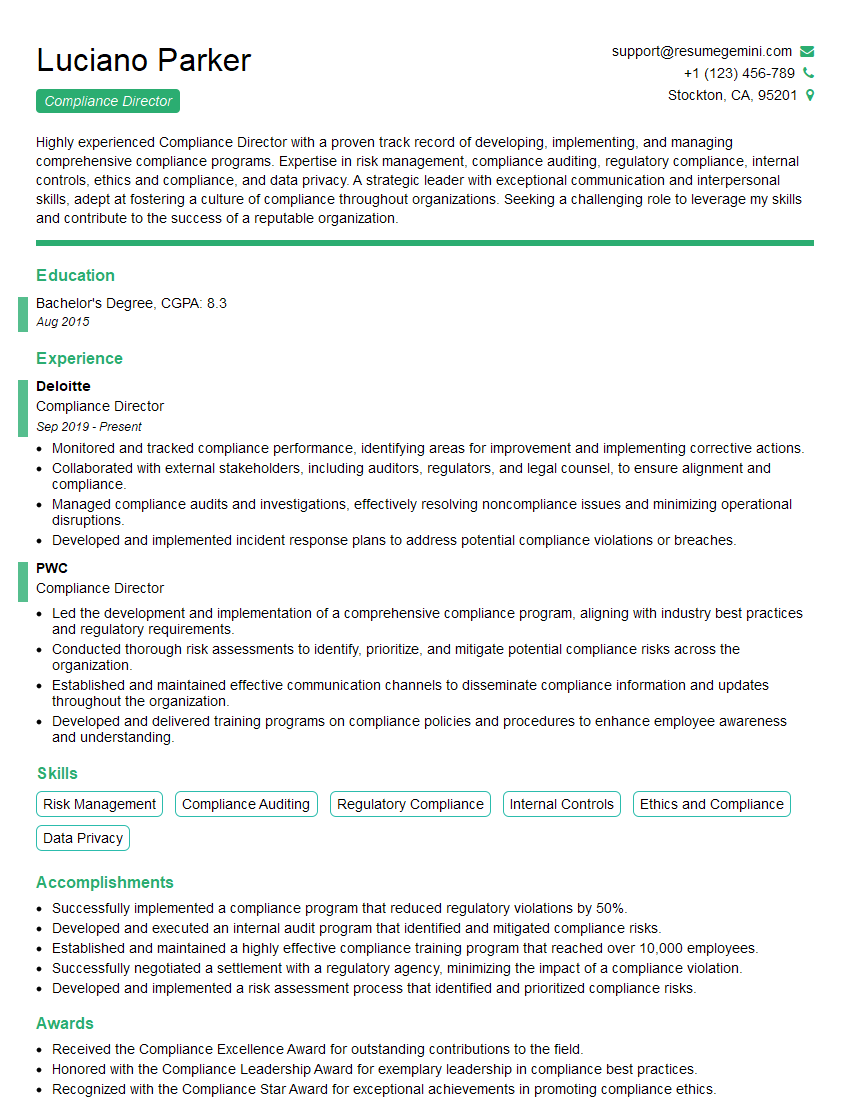
Compliance Director Resume Sample
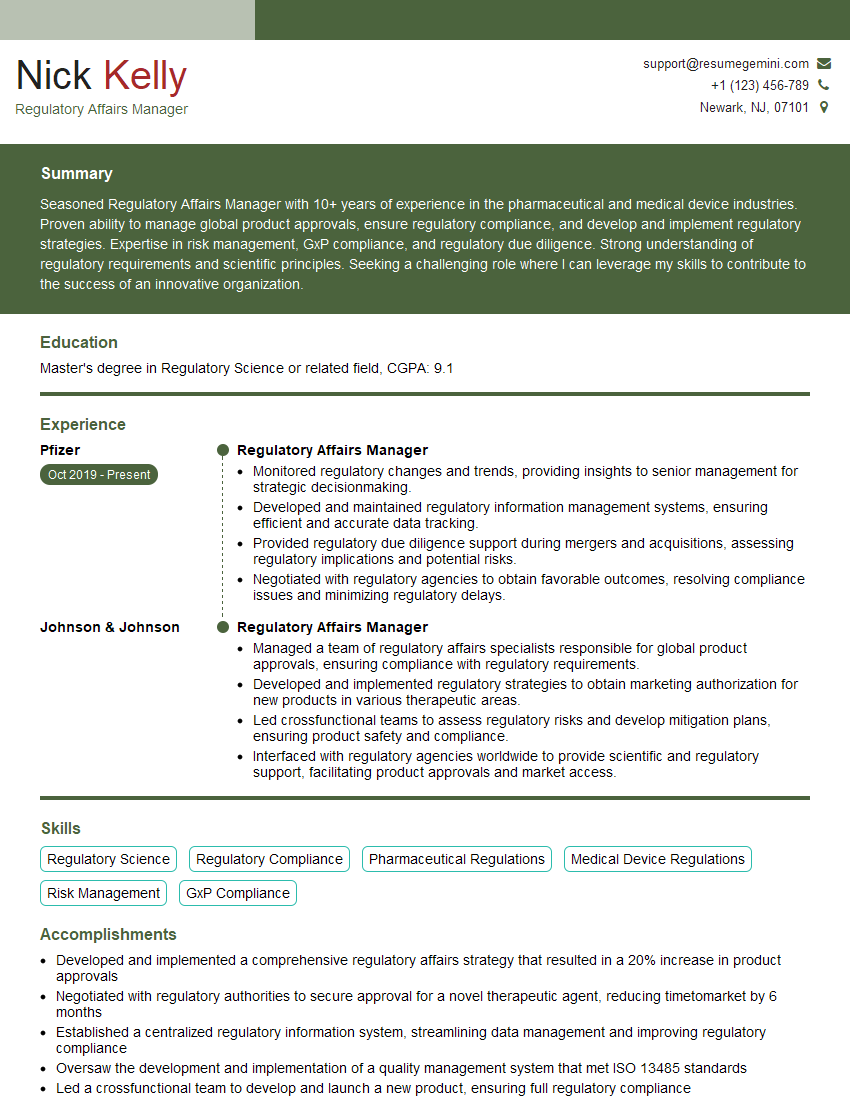
Regulatory Affairs Manager Resume Sample
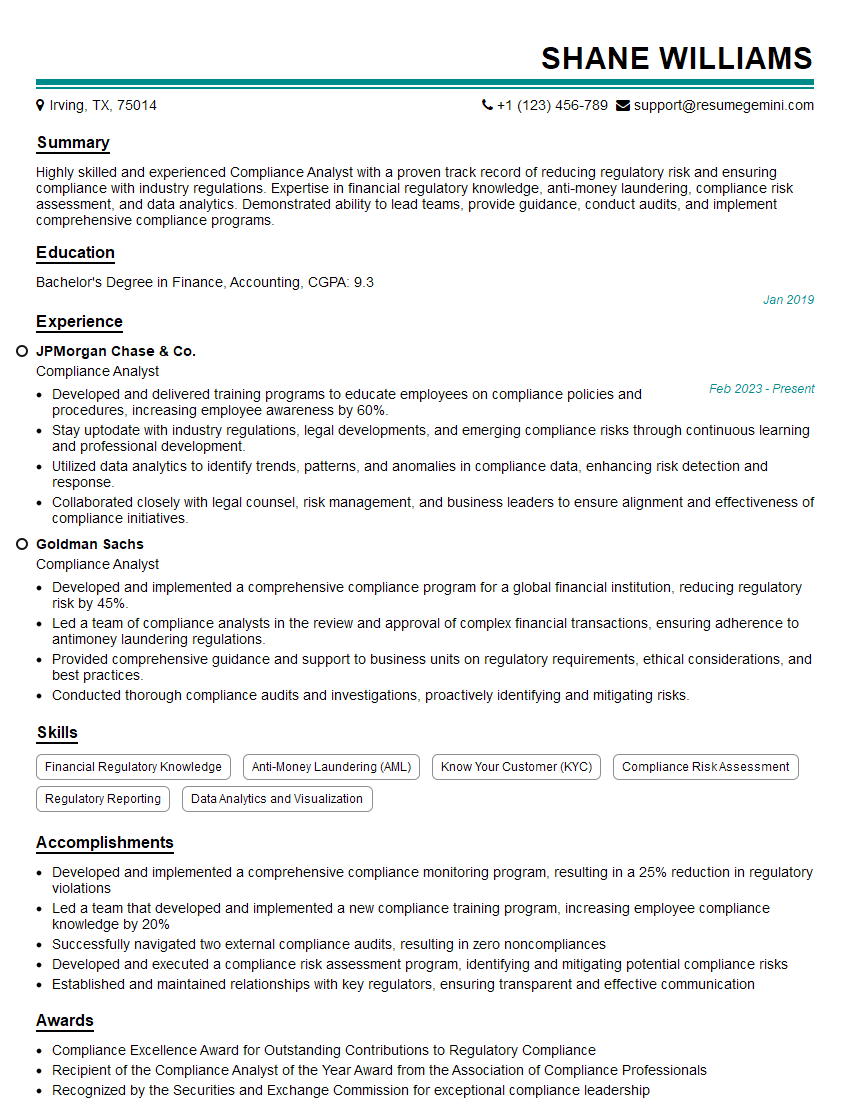
Compliance Analyst Resume Sample
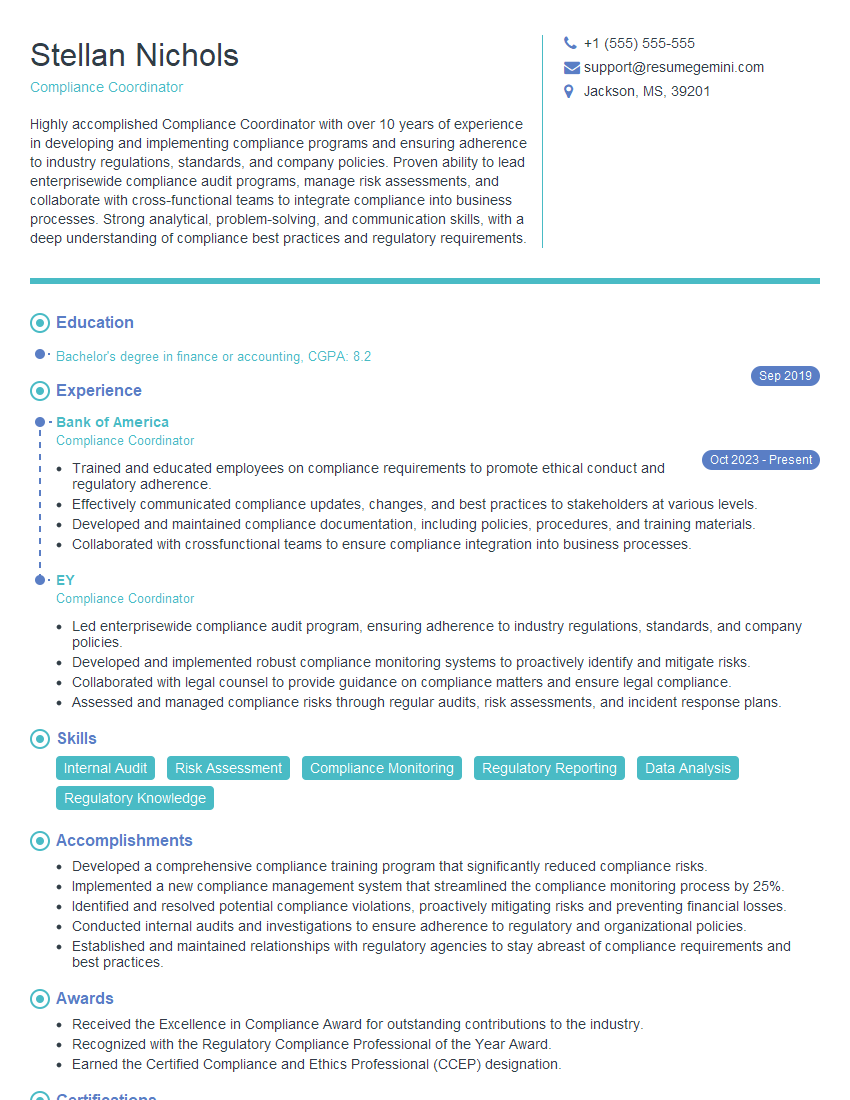
Compliance Coordinator Resume Sample
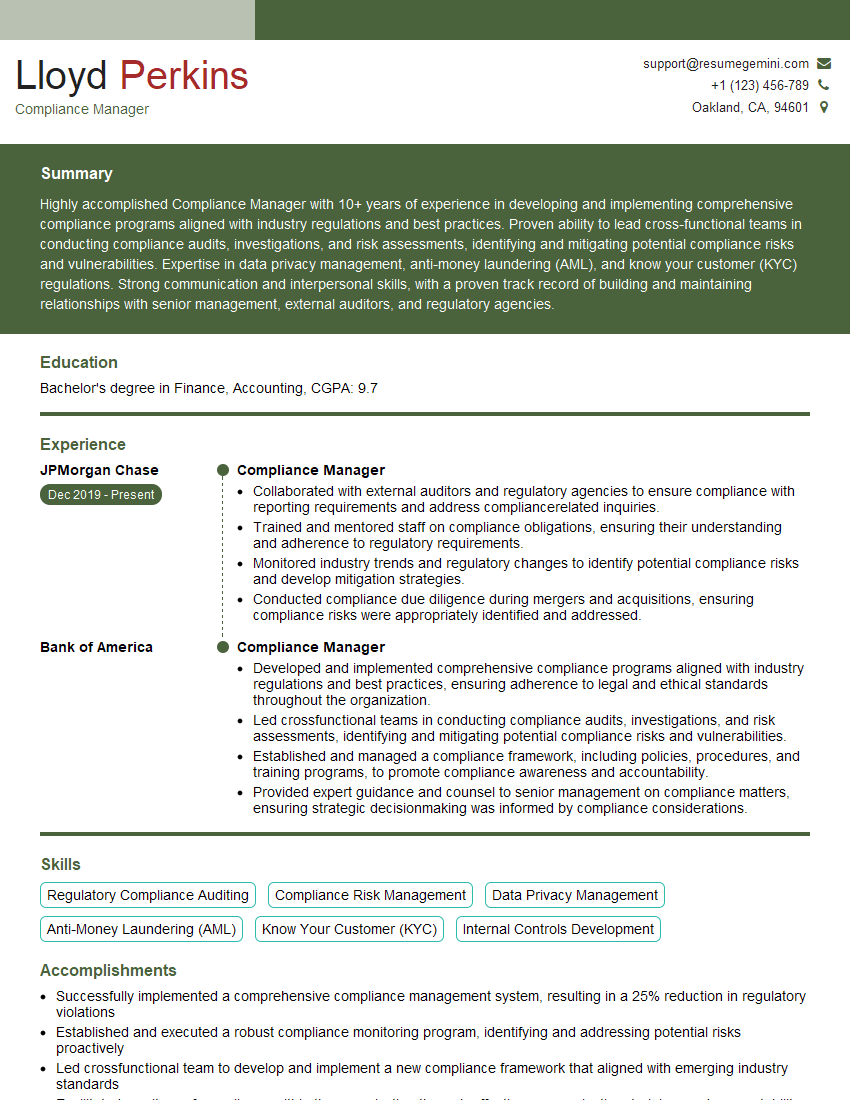
Compliance Manager Resume Sample

Compliance Officer Resume Sample
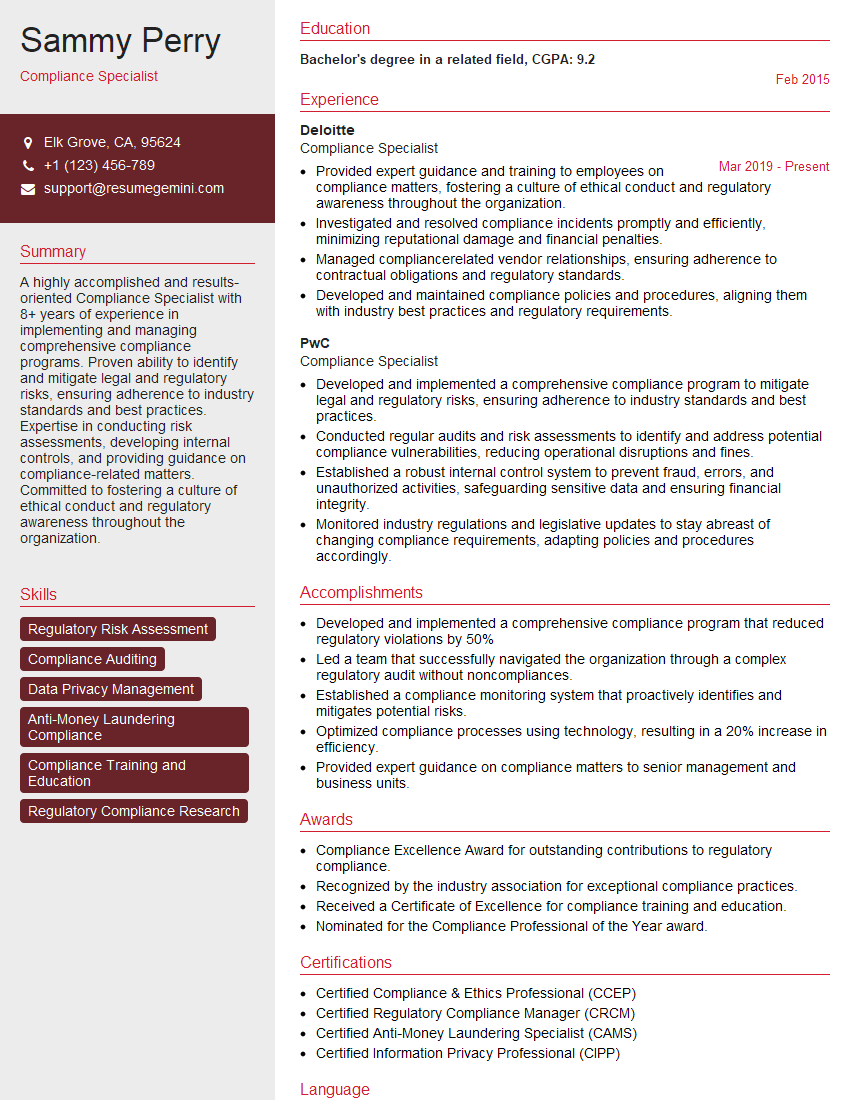
Compliance Specialist Resume Sample
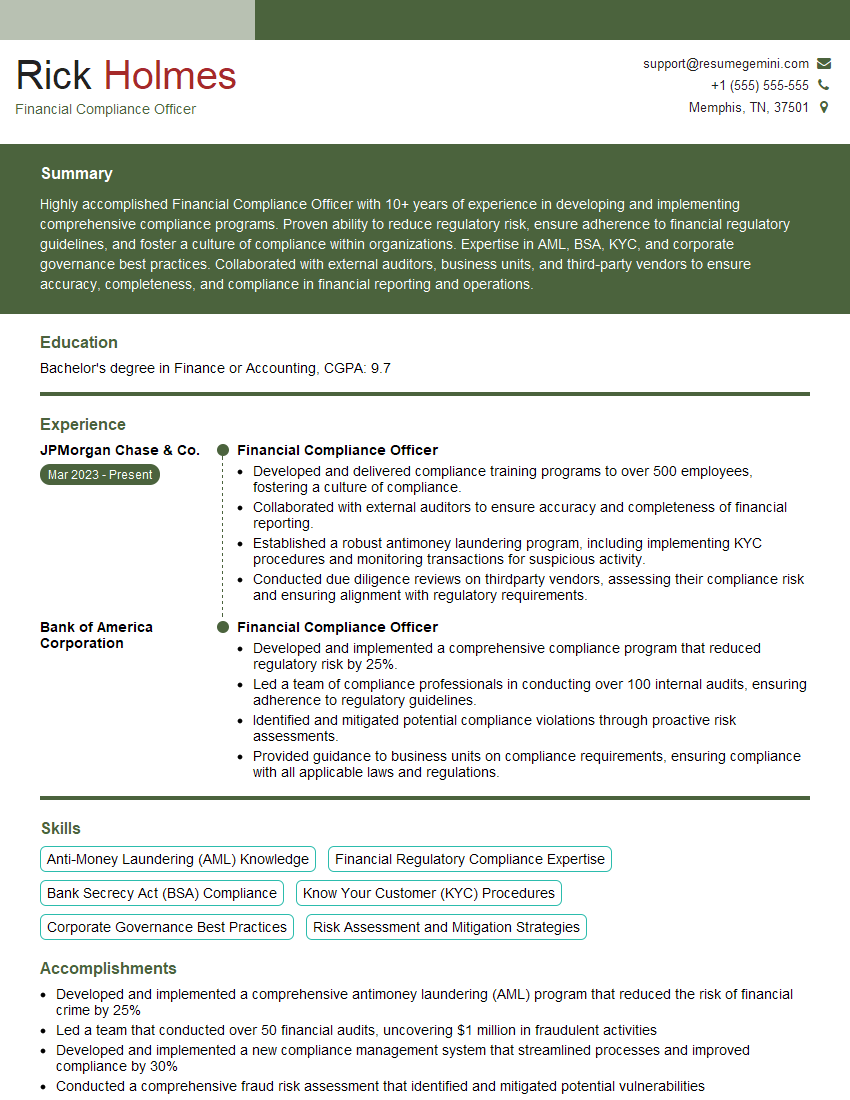
Financial Compliance Officer Resume Sample
Explore more articles
Users Rating of Our Blogs
Share Your Experience
We value your feedback! Please rate our content and share your thoughts (optional).
What Readers Say About Our Blog
Very informative content, great job.
good