Preparation is the key to success in any interview. In this post, we’ll explore crucial Computer-Aided Design (CAD) for Optics interview questions and equip you with strategies to craft impactful answers. Whether you’re a beginner or a pro, these tips will elevate your preparation.
Questions Asked in Computer-Aided Design (CAD) for Optics Interview
Q 1. Explain the difference between sequential and non-sequential ray tracing.
Sequential ray tracing and non-sequential ray tracing are two fundamental approaches in optical design software used to simulate the propagation of light through an optical system. The key difference lies in how they handle ray interactions.
Sequential ray tracing assumes that all rays pass through each optical element in a predetermined order, like beads on a string. It’s computationally efficient and well-suited for systems with simple geometries where rays don’t significantly intersect or scatter. Think of a basic telescope – light passes through the lens, then the mirror, and finally to the detector. This is a perfect candidate for sequential ray tracing.
Non-sequential ray tracing, on the other hand, allows for more complex interactions. Rays can intersect, scatter, and reflect multiple times before reaching the detector. This approach is crucial for modeling complex systems like scattering screens, free-space propagation, or systems with significant diffraction effects. Imagine a complex lighting system in a car – light bounces around the interior, reflecting off different surfaces before reaching the driver’s eye. Non-sequential ray tracing accurately simulates this behaviour.
In essence, sequential ray tracing is like tracing a single, straight path, while non-sequential ray tracing simulates the light’s journey through a chaotic, yet realistic, environment.
Q 2. Describe your experience with Zemax or Code V software.
I have extensive experience using both Zemax and Code V, two leading optical design software packages. My proficiency encompasses the full design process, from initial concept and component selection to tolerance analysis and optimization. In Zemax, I’m particularly adept at utilizing its optimization tools, such as damped least squares and merit function editing, to refine designs and minimize aberrations. I’ve also leveraged its macro language to automate repetitive tasks and create custom tools to improve efficiency. For instance, I developed a macro to automatically generate reports summarizing the performance of various design iterations. In Code V, I’m experienced in utilizing its powerful analysis tools for performing detailed tolerance analysis and studying the impact of manufacturing variations. I’ve also used its advanced features to model diffraction effects, making it an invaluable tool in my work.
I’ve successfully applied both programs to design a wide variety of optical systems, including imaging lenses for microscopes, illumination systems for projectors, and free-space optical communication systems.
Q 3. How do you optimize an optical system for minimum aberrations?
Optimizing an optical system for minimum aberrations is a multi-step iterative process involving careful selection of optical elements, their arrangement, and precise adjustment of their parameters. The primary strategy involves defining a merit function, a mathematical expression that quantifies the overall quality of the system, based on various aberration metrics.
The process generally involves:
- Defining the merit function: This involves selecting appropriate aberration metrics (e.g., RMS spot radius, wavefront error, Strehl ratio) and assigning weights to each metric based on their relative importance to the application.
- Choosing an optimization algorithm: Damped least squares (DLS) is a common choice due to its robustness and efficiency. Other methods include, conjugate gradients, and simulated annealing.
- Iterative optimization: The software iteratively adjusts the design parameters (e.g., lens curvatures, thicknesses, glass types, separations) to minimize the merit function. This step often requires careful monitoring of the optimization process to avoid converging to a local minimum instead of the global minimum. Careful selection of starting values and constraint settings are essential here.
- Analyzing results: After optimization, thorough analysis using tools such as spot diagrams, modulation transfer functions (MTFs), and ray fan plots is crucial to evaluate the performance and identify any residual aberrations.
- Refining the design: Based on the analysis, adjustments are made to the merit function or design parameters and the optimization process is repeated until a satisfactory level of performance is achieved. This often requires multiple iterations.
For example, in designing a high-resolution imaging lens, I might prioritize minimizing spot size and wavefront error to ensure sharp images, while in designing an illumination system, minimizing intensity variations across the illuminated area would be paramount.
Q 4. What are the common types of optical aberrations and how are they corrected?
Optical aberrations are imperfections in an optical system that degrade image quality. They are broadly classified into monochromatic (affecting all wavelengths equally) and chromatic (wavelength dependent).
- Monochromatic Aberrations:
- Spherical aberration: Rays from the outer zones of a lens focus at a different point than rays from the center, leading to blurred images. Corrected by using aspheric surfaces or combinations of lenses with different refractive indices.
- Coma: Off-axis points appear as comet-shaped blurs. Corrected using lens combinations that balance the contributions of different lens zones.
- Astigmatism: The image is blurred due to different focal points for tangential and sagittal rays. Corrected through lens shapes and element spacing.
- Distortion: Straight lines are bent, either barrel distortion (lines curve inwards) or pincushion distortion (lines curve outwards). Corrected through lens shapes and element placement.
- Field curvature: The image plane is curved, making the image appear blurry in regions away from the best focus plane. Corrected through careful lens selection and arrangement.
- Chromatic Aberrations:
- Axial (longitudinal) chromatic aberration: Different wavelengths focus at different distances, resulting in colored fringes. Corrected by using achromatic doublets (combination of lenses with different refractive indices).
- Lateral (transverse) chromatic aberration: Different wavelengths have different magnifications, creating colored fringes at off-axis points. Corrected using strategies that address axial chromatic aberration.
Correction methods often involve balancing opposing aberrations through careful selection of lens shapes, materials, and spacing. A successful design minimizes the overall impact of these aberrations to meet the system’s requirements.
Q 5. Explain the concept of optical tolerancing and its importance.
Optical tolerancing is the process of determining acceptable manufacturing variations in the parameters of an optical system’s components while maintaining satisfactory performance. It’s crucial for ensuring that a manufactured system meets design specifications, even considering real-world manufacturing limitations.
The importance of optical tolerancing cannot be overstated. Without it, a perfectly designed optical system could fail to meet its performance goals if the manufactured components deviate slightly from the ideal design. It affects cost and manufacturability. Tight tolerances mean more expensive manufacturing processes. Thus, the goal is to achieve the best balance between performance and cost.
The process typically involves:
- Identifying critical parameters: These are the design parameters most sensitive to manufacturing variations.
- Assigning tolerances: Each critical parameter is assigned a tolerance range, representing the acceptable variation from the ideal value.
- Tolerance analysis: Simulations are performed to evaluate the impact of variations within the assigned tolerances on the system’s performance. Monte Carlo analysis is often employed to statistically assess the effect of random variations. Software like Zemax and Code V offer such tools.
- Iterative refinement: Based on the analysis, tolerances are adjusted to balance performance requirements with manufacturing feasibility. This might involve relaxing tolerances on less critical parameters and tightening them on more critical ones.
A well-executed tolerance analysis allows for the creation of manufacturing specifications that ensure a high yield of acceptable systems.
Q 6. How do you perform a sensitivity analysis in optical design?
Sensitivity analysis in optical design evaluates the impact of small changes in design parameters on the overall system performance. This is critical for understanding which parameters are most critical to control during manufacturing and for optimizing the design’s robustness against potential variations.
The process commonly involves:
- Parameter selection: Identifying the design parameters of interest (e.g., lens curvatures, thicknesses, separations, refractive indices).
- Perturbation: Systematically varying each parameter individually within a specified range while keeping other parameters constant. The range should be consistent with expected manufacturing tolerances.
- Performance evaluation: For each perturbation, the system performance is assessed using relevant metrics (e.g., RMS spot size, wavefront error, MTF).
- Sensitivity assessment: The results are analyzed to determine how sensitive the system performance is to each parameter. Often expressed as the change in performance divided by the change in parameter. A high sensitivity indicates that parameter needs to be controlled tightly in manufacturing.
- Visualization: The results are often visualized using graphs to clearly show the impact of each parameter on performance. A simple graph showing the RMS spot size as a function of lens curvature would provide valuable information.
Sensitivity analysis not only helps during tolerancing but also guides the design process, highlighting areas requiring further refinement or where optimization efforts should be focused.
Q 7. Describe your experience with different types of optical elements (lenses, mirrors, prisms).
My experience encompasses a wide range of optical elements, including lenses, mirrors, and prisms, each with unique characteristics and applications. I understand their individual properties and how their combinations influence overall optical performance.
Lenses: I’m experienced in designing systems using various lens types, such as singlet lenses, achromatic doublets, and aspheric lenses. I understand how to select appropriate lens materials (e.g., BK7, fused silica, special high-index glasses) to achieve desired refractive properties and minimize aberrations. I’ve worked extensively with both refractive and diffractive lenses.
Mirrors: My expertise extends to designing reflective systems utilizing plane, spherical, and aspheric mirrors. I understand the importance of surface quality and coatings in achieving high reflectivity and minimizing scattering losses. I have experience with both metallic and dielectric coatings.
Prisms: I’m familiar with a variety of prisms, including right-angle prisms, penta prisms, and dispersion prisms. I understand how to utilize their dispersive and reflective properties for beam steering, polarization manipulation, and spectral separation in various applications, such as spectrometers or optical sensors.
The choice of optical element depends heavily on the specific application. For instance, a high-resolution imaging system might favor high-quality lenses with aspheric surfaces to minimize aberrations, while a laser scanning system might utilize mirrors for beam steering. My experience allows me to effectively choose and combine these elements for optimal system performance.
Q 8. How do you model diffraction effects in optical design software?
Modeling diffraction in optical design software is crucial for accurately predicting the performance of optical systems, especially at higher numerical apertures or with smaller features. Diffraction, the bending of light around obstacles, causes blurring and limits the resolution of an image. Most professional optical design software packages handle this using various methods, primarily based on either scalar or vector diffraction theories.
Scalar Diffraction: This method, suitable for many applications, approximates the diffracted wavefront using simpler mathematical models. It’s computationally efficient, making it ideal for rapid design iterations. A common approach is using the Fresnel or Fraunhofer diffraction integrals, depending on the distance from the diffracting element to the observation plane. These integrals can be numerically evaluated to calculate the intensity distribution of the diffracted light.
Vector Diffraction: For more accurate results, especially with high-NA systems or metallic components, vector diffraction theories are employed. These models consider the polarization of light and provide a more rigorous treatment of the diffraction phenomenon. Rigorous Coupled-Wave Analysis (RCWA) and Finite-Difference Time-Domain (FDTD) methods are commonly used in this context, but they require significantly more computational resources.
Practical Example: Imagine designing a high-resolution microscope objective. Accurate modeling of diffraction is paramount for predicting the system’s resolution and point spread function. By incorporating diffraction calculations into the design process, you can optimize the lens design to achieve the desired resolution and minimize aberrations.
Q 9. Explain the concept of Modulation Transfer Function (MTF) and its significance.
The Modulation Transfer Function (MTF) is a critical metric in optical design that quantifies the ability of an optical system to transfer spatial frequencies from the object to the image. Think of it like this: a high spatial frequency represents fine detail, while a low spatial frequency represents larger, smoother variations in brightness. The MTF tells us how well the system reproduces these different frequencies.
Significance: The MTF curve plots the contrast (modulation) of the image as a function of spatial frequency. A high MTF value at a given frequency indicates excellent reproduction of that frequency, while a low value implies poor reproduction (blurring). This metric allows designers to directly assess the image quality of their system and compare different designs. For instance, a system with a higher MTF across a broader range of spatial frequencies will produce sharper, higher-resolution images.
Practical Application: In camera lens design, MTF curves are routinely analyzed to ensure the lens meets the required resolution specifications. For example, a high-quality camera lens may have a high MTF extending to high spatial frequencies, ensuring sharp detail even in fine textures. Conversely, a low MTF might indicate the presence of significant aberrations or manufacturing defects.
Q 10. How do you design an optical system for a specific wavelength range?
Designing an optical system for a specific wavelength range involves careful consideration of several factors. The key is to select materials and design parameters that optimize performance within the desired spectral region.
Material Selection: The refractive index of optical materials varies with wavelength. This phenomenon, called dispersion, affects the system’s performance. The choice of glass types for lenses must be optimized for minimal chromatic aberration within the target wavelength range. For example, using achromatic doublets or specialized glasses with low dispersion is crucial for broadband applications.
Design Parameters: Parameters like lens curvatures, thicknesses, and separations must be tailored to the specific wavelength range. This optimization is often done using specialized software with optimization routines that search for design solutions that minimize aberrations across the spectrum. These routines usually rely on merit functions that weight different aberrations according to the requirements of the optical system.
Coatings: Anti-reflection coatings are critical to minimize unwanted reflections at the surfaces of the optical components. These coatings are designed to work effectively across the desired wavelength range, increasing transmission and reducing ghost images.
Example: Designing a system for the near-infrared (NIR) region (e.g., for telecommunications or remote sensing) would require different material choices compared to designing a system for the visible region. Materials like germanium or chalcogenide glasses, which are highly transparent in the NIR, would be preferred.
Q 11. Describe your experience with creating and managing optical design files.
Throughout my career, I have extensively used various optical design software packages like Zemax, Code V, and OpticStudio. I am proficient in creating, managing, and archiving optical design files. This involves creating and organizing project folders with well-documented design files, lens data, and analysis results. I adhere to strict version control practices to ensure data integrity and traceability, often employing methods such as using revision numbers and maintaining a history of modifications. I’m also experienced with using different file formats, including native formats of the software packages and common interchange formats like .dat, .len, or .ZMX.
Collaboration and Data Sharing: I have worked on numerous collaborative projects, proficiently sharing design files with colleagues and clients using cloud-based storage and version control systems like Git. This ensures seamless collaboration and efficient workflows.
Data Management: My experience involves establishing robust data management systems to streamline file organization and retrieval. I regularly back up important data to prevent data loss. This ensures that I can always quickly access the necessary files for a particular project, making the design and manufacturing processes much more efficient.
Q 12. How do you evaluate the performance of an optical system?
Evaluating the performance of an optical system involves a multifaceted approach, using various metrics and analyses to assess different aspects of the system’s behavior. These evaluations can be broadly categorized as:
- Image Quality Assessment: This involves analyzing metrics like MTF, spot diagrams, and point spread functions (PSF) to assess the sharpness and resolution of the image. Aberration analysis helps identify and quantify optical aberrations like spherical aberration, coma, astigmatism, and distortion.
- Tolerancing Analysis: This determines the sensitivity of the system’s performance to manufacturing tolerances and environmental factors (temperature, pressure). Monte Carlo simulations are often employed to determine the impact of manufacturing variations on the overall system performance.
- Performance Across Wavelengths: If the system operates across a range of wavelengths, chromatic aberrations must be evaluated to ensure satisfactory performance.
- System Optimization: Optimization algorithms within the CAD software are employed to improve the optical performance. Merit functions weigh various aspects of image quality and system performance based on project requirements.
Example: When evaluating a camera lens, we might assess the MTF across various field points and spatial frequencies, analyze distortion levels, and perform tolerancing analysis to verify manufacturability. The results of these analyses inform design iterations and ensure the final product meets its specified performance requirements.
Q 13. What are the key considerations for designing a robust and manufacturable optical system?
Designing a robust and manufacturable optical system requires considering several crucial factors from the outset. It’s not just about achieving good optical performance on paper; the design must also be practical and cost-effective to manufacture.
- Tolerancing: Manufacturing tolerances must be incorporated into the design. The design should be insensitive to small variations in component dimensions, surface quality, and alignment. Tolerancing analysis ensures that minor manufacturing imperfections don’t significantly degrade performance.
- Material Selection: Choosing readily available and cost-effective materials is crucial. The selection should consider not only optical properties but also mechanical properties like strength, durability, and environmental stability.
- Assembly: The design should be straightforward to assemble. The use of standard components or readily available mounting hardware simplifies the manufacturing and assembly process. Minimizing the number of components reduces costs and complexity.
- Testability: The design should incorporate features that enable easy testing and quality control. Access ports for alignment and measurement should be considered.
- Cost: The overall cost of materials, manufacturing, and assembly needs to be factored into the design process. Optimizing the design for cost-effectiveness often involves trade-offs between performance and manufacturing costs.
Example: In the design of a mass-produced telescope objective, careful tolerancing, the use of standard lens blanks, and straightforward assembly procedures are crucial for cost-effective mass production. The design needs to be robust enough to withstand shipping and handling without degrading its performance.
Q 14. How do you use CAD software to create 3D models of optical components?
Creating 3D models of optical components in CAD software is essential for visualizing the design, performing interference checks, and generating manufacturing data. Most professional optical design software packages offer powerful CAD capabilities, or they can be integrated with dedicated CAD programs.
Process: The process usually involves importing lens data from the optical design software. This data defines the surface shapes (e.g., spherical, aspheric, freeform) and dimensions of each component. The CAD software uses this information to create a 3D solid model of the optical component. Features like chamfers, bevels, and mounting features can be added to the model as needed. Furthermore, the model can be used to create detailed drawings for manufacturing and assembly purposes. Different rendering styles can be used to visualize the optical elements including materials and surface finishes
Example: Using SolidWorks or similar CAD software, you could import lens data from Zemax to create a 3D model of a complex lens assembly, including individual lenses, spacers, and mounting hardware. This model can then be used to generate detailed manufacturing drawings and perform interference checks to ensure that all components fit together correctly.
Beyond Basic Modeling: Advanced CAD techniques may be used to simulate manufacturing processes, evaluate the effects of tolerances, and predict assembly challenges. This allows for improvements to the design for better manufacturability and overall quality.
Q 15. How do you perform stress analysis on optical components?
Stress analysis on optical components is crucial to ensure their structural integrity and performance under various operating conditions. This is typically done using Finite Element Analysis (FEA) software integrated with CAD packages. The process involves creating a detailed 3D model of the optical component within the CAD software, defining material properties (like Young’s modulus and Poisson’s ratio), and applying boundary conditions representing the forces and constraints the component will experience (e.g., mounting forces, thermal gradients, gravitational loads). The FEA solver then calculates the resulting stress and strain distributions within the component. We look for areas of high stress concentration, which could lead to fracture or deformation.
For example, when designing a large telescope mirror, FEA helps predict the mirror’s deformation under its own weight and how to mitigate this using support structures. We might simulate various mounting configurations and choose the one that minimizes stress and deformation, ensuring the mirror maintains its optical shape. The results are typically visualized using color-coded contour plots showing stress levels. If the stress exceeds the material’s yield strength, the design needs revision – perhaps using a stronger material or adjusting the component’s geometry.
Career Expert Tips:
- Ace those interviews! Prepare effectively by reviewing the Top 50 Most Common Interview Questions on ResumeGemini.
- Navigate your job search with confidence! Explore a wide range of Career Tips on ResumeGemini. Learn about common challenges and recommendations to overcome them.
- Craft the perfect resume! Master the Art of Resume Writing with ResumeGemini’s guide. Showcase your unique qualifications and achievements effectively.
- Don’t miss out on holiday savings! Build your dream resume with ResumeGemini’s ATS optimized templates.
Q 16. Describe your experience with different types of optical coatings.
My experience encompasses a wide range of optical coatings, from simple anti-reflection (AR) coatings to highly specialized multilayer dielectric coatings and metallic coatings. AR coatings, crucial for minimizing reflections at optical interfaces, are often designed using a combination of thin film materials like silicon dioxide (SiO2) and titanium dioxide (TiO2) to achieve a specific refractive index profile. These coatings are optimized for a specific wavelength range, impacting the overall performance of the optical system.
I’ve worked extensively with dielectric mirror coatings used in lasers and interferometers. These coatings typically involve many layers of different materials to create high reflectivity within a desired bandwidth and minimal reflectivity outside it. The precise control over layer thicknesses is paramount. Finally, I’ve encountered projects requiring metallic coatings, like gold or silver, which offer high reflectivity across a broader spectrum, often used in infrared applications but are less durable compared to dielectric coatings. The selection of coating type significantly affects the system’s performance, durability, and cost, and the choice depends on the specific application requirements.
Q 17. Explain the concept of paraxial optics.
Paraxial optics simplifies optical calculations by considering only rays that are close to the optical axis. It assumes that the angles of incidence and refraction are small (typically less than 10 degrees), allowing us to use small-angle approximations (sin θ ≈ θ, tan θ ≈ θ). This simplifies the lens equations and ray tracing significantly. In paraxial approximation, we can treat rays as lines and lenses as thin lenses, neglecting higher-order aberrations like spherical aberration and coma.
This simplification is invaluable for initial design stages, allowing for quick estimations of system performance. However, it’s important to note that paraxial optics provides only an approximate solution. For precise analysis and design, especially in systems with large apertures or large field angles, non-paraxial ray tracing methods are necessary to accurately account for aberrations. Think of it like this: Paraxial optics gives you a rough sketch of the optical system, whereas non-paraxial ray tracing gives you the detailed, accurate blueprint.
Q 18. How do you use optimization algorithms in optical design?
Optimization algorithms are essential in optical design to find the best possible solution given a set of design parameters and constraints. Popular algorithms include Damped Least Squares (DLS), which iteratively adjusts design parameters (like lens curvatures, thicknesses, and separations) to minimize merit functions that quantify optical performance (like spot size, wavefront error, or modulation transfer function).
Genetic algorithms (GAs) are also used, particularly for complex problems with many parameters or non-continuous surfaces. GAs mimic natural selection to evolve a population of design solutions towards an optimum. I’ve utilized both DLS and GAs in various projects, choosing the algorithm based on the complexity of the system and the required accuracy. The optimization process requires careful selection of merit functions, constraints, and algorithm parameters to ensure the algorithm converges to a useful and physically realizable solution.
Q 19. How do you incorporate manufacturing constraints into your optical designs?
Incorporating manufacturing constraints is critical for creating manufacturable optical designs. These constraints can include limitations on lens diameters, thicknesses, surface tolerances, material availability, and manufacturing processes. During the design process, I utilize the CAD software’s capabilities to explicitly define these constraints.
For example, I might set minimum and maximum thickness limits for lenses to avoid excessively thin or thick elements that are difficult to manufacture or mount. Similarly, I would define surface tolerances based on the capabilities of the chosen manufacturing technique (e.g., polishing or molding). By including these constraints early in the design, I avoid generating designs that are theoretically perfect but practically impossible to produce. The design optimization algorithm will then be guided to find solutions within these practical bounds, creating a robust and manufacturable design.
Q 20. What are the limitations of ray tracing software?
Ray tracing software, while incredibly powerful, has limitations. One major limitation is the assumption of geometrical optics; it treats light as rays rather than waves. This approximation breaks down when dealing with phenomena like diffraction, interference, and polarization, which are important at smaller scales or in situations involving high-precision applications.
Another limitation is computational time and resources for complex systems with a large number of surfaces or elements. Accurate ray tracing of such systems can take significant time, even on powerful computers. Also, ray tracing software often struggles to accurately model scattering and other complex light interactions within materials. While these are limitations, advancements in software and computational power continuously address and refine these issues, extending the applicability of ray tracing software.
Q 21. Explain the concept of geometrical optics vs. physical optics.
Geometrical optics simplifies light propagation by treating light as rays that travel in straight lines and obey the laws of reflection and refraction. It is a good approximation when the wavelength of light is much smaller than the size of optical elements. This approximation is computationally efficient and works well for many optical designs. Examples include designing simple lenses, mirrors, and prisms.
Physical optics, on the other hand, considers the wave nature of light, incorporating phenomena like diffraction, interference, and polarization. It is essential when dealing with phenomena where the wave nature of light is significant, such as in microscopes, high-resolution imaging systems, and optical interferometry. Physical optics provides a more complete description of light propagation but requires more complex mathematical models and computational resources. Essentially, geometrical optics is a simplified model of the more complete physical optics model, applicable when the simplification doesn’t compromise accuracy.
Q 22. How do you handle thermal effects in optical design?
Thermal effects significantly impact optical system performance, causing shifts in refractive indices, changes in component dimensions, and potentially degrading image quality. Addressing these effects is crucial for robust designs.
In CAD, we handle thermal effects through several methods. First, we use material properties databases within the software to accurately model how temperature changes affect the refractive index and coefficient of thermal expansion (CTE) of each optical element. This allows the software to simulate the system’s behavior across a temperature range.
Second, we incorporate finite element analysis (FEA) or similar techniques to predict how the temperature distribution across the system will change. FEA models help us understand how heat sources (like lasers or ambient conditions) impact different components. This data is then fed back into the optical design software.
Third, we employ design strategies to mitigate thermal effects. These include choosing materials with low CTEs, employing thermally stable mounting techniques, and incorporating thermal compensation elements into the design. For example, we might use a bimetallic strip to counter expansion or contraction.
Finally, tolerancing is critical. We set realistic tolerances on component dimensions and material properties to account for thermal variations and ensure the system performs adequately within the specified temperature range. This often involves running Monte Carlo simulations to assess performance under various thermal conditions.
Q 23. Describe your experience with different types of optical materials.
My experience encompasses a wide range of optical materials, each with its unique properties and applications. I’m proficient in selecting materials based on specific design requirements such as transmission range, refractive index, dispersion, thermal stability, and cost.
- Glass: I’ve extensively used various types of optical glass, including crown glass (low dispersion), flint glass (high dispersion), and specialized glasses like Schott or Ohara glasses, with specific properties for applications like achromats or high-power laser systems.
- Crystals: I have experience with crystals like calcium fluoride (CaF2) and zinc selenide (ZnSe) for applications requiring transmission in the infrared (IR) spectrum. These materials are essential for IR imaging and laser systems.
- Polymers: I’m familiar with various polymers, such as PMMA (acrylic) and polycarbonate, for applications requiring lightweight, cost-effective optics, often in visible wavelength applications, but understanding their limitations in terms of scratch resistance and temperature sensitivity is crucial.
- Metals: While less common as refractive elements, metals like aluminum or gold are frequently used for reflective coatings or in structural components of the optical system. Their surface finish and reflectivity need careful consideration.
Material selection is a critical step in optical design, and I always prioritize selecting the best material for the job considering all the design constraints and environmental factors.
Q 24. How do you verify the accuracy of your optical designs?
Verifying the accuracy of optical designs is paramount, and we employ a multi-pronged approach combining simulation and physical verification.
- Software Verification: We meticulously check the design in our CAD software using built-in tools for ray tracing, tolerancing analysis, and performance evaluation. This includes spot diagrams, modulation transfer function (MTF) analysis, and stray light analysis to ensure the design meets specifications.
- Prototype Testing: We build and test prototypes to validate the simulated performance. This involves precise measurements of parameters like focal length, spot size, wavefront error, and transmission using interferometry, profilometry, and other optical testing techniques. Discrepancies between simulations and measurements allow for iterative refinement.
- Comparison with Existing Designs: When feasible, we compare new designs to well-established, reliable designs to benchmark performance and identify potential issues.
- Third-party Verification: For critical applications, we may enlist independent testing laboratories to provide a neutral evaluation of the system’s performance, particularly if the design is complex or has stringent requirements.
A systematic verification process ensures the final design is reliable, meets performance requirements, and is manufacturable.
Q 25. How do you communicate technical information effectively to non-technical audiences?
Effective communication is key, particularly when explaining complex technical information to non-technical audiences. I use several strategies to achieve this:
- Analogies and Visual Aids: Instead of using jargon, I relate complex concepts to everyday experiences. For example, explaining wavefront error using an analogy to the ripples in a pond helps illustrate the concept. I use diagrams, charts, and even physical models to illustrate key aspects of the design.
- Simplified Language: I avoid technical terms unless absolutely necessary, and I define any terms used. I focus on conveying the overall function and performance of the optical system in a clear and concise manner.
- Focus on Results: I emphasize the benefits and outcomes of the design rather than getting bogged down in the technical details. This helps the audience understand the value and significance of the work.
- Active Listening and Feedback: I actively listen to the audience’s questions and concerns, adapting my explanation to address their specific needs and level of understanding. I encourage feedback to ensure the message is clearly conveyed.
I strive to tailor my communication approach to the specific audience, ensuring they grasp the essence of the design and its implications.
Q 26. What are some common challenges in optical design, and how have you overcome them?
Optical design presents several challenges. One common issue is balancing conflicting requirements like image quality, size, cost, and manufacturability. For instance, achieving high resolution often necessitates large, expensive optics, potentially conflicting with size and cost limitations.
Another challenge is managing tolerances. Optical systems are sensitive to manufacturing variations, and even small deviations can significantly impact performance. Careful tolerancing analysis and design for manufacturability are crucial in mitigating this.
I’ve overcome these challenges through several methods. For conflicting requirements, I employ optimization algorithms in my CAD software to find the best compromise. This involves setting weighting factors for different parameters. For tolerance management, I use Monte Carlo simulations to assess the impact of manufacturing tolerances and then adjust the design or tolerances to meet performance specifications. Furthermore, collaborating closely with manufacturing engineers early in the design process helps identify and address potential manufacturability issues from the outset.
Q 27. Describe a complex optical design project you worked on and your role in its success.
I recently worked on a project designing a high-resolution, large-field-of-view imaging system for a satellite application. The complexity stemmed from the stringent requirements for image quality, size, weight, and power consumption in a harsh space environment. My role involved leading the optical design process from initial concept to final design verification.
The design utilized a complex freeform surface lens to correct aberrations and achieve the required image quality. I used advanced optimization techniques and non-sequential ray tracing to handle the complex geometry and stray light effects. I also performed extensive thermal analysis to account for variations in temperature during launch and operation.
To address manufacturability concerns, I closely collaborated with the manufacturing team throughout the process, ensuring the design was feasible to produce with acceptable tolerances. The project was successful, resulting in a design that met all specifications and is currently undergoing final testing before launch. My contributions were key to achieving the tight performance targets and ensuring a manufacturable design.
Q 28. Explain your familiarity with different optical testing techniques.
My familiarity with optical testing techniques is comprehensive, ranging from basic to advanced methods. Understanding these techniques is essential for validating simulations and ensuring the final system meets performance requirements.
- Interferometry: I’m proficient in using interferometers (e.g., Fizeau, Twyman-Green) to measure wavefront errors and assess the quality of optical surfaces and systems. This is vital for evaluating the accuracy of manufactured components.
- MTF Measurement: I’m experienced in measuring the modulation transfer function (MTF) to quantify the spatial resolution and image quality of the system. MTF helps determine how well the system can reproduce fine details.
- Spot Diagram Analysis: I understand and interpret spot diagrams to assess the size and distribution of light spots in the image plane. This helps identify aberrations and assess the system’s overall performance.
- Scatterometry: For surface roughness characterization, I’m familiar with using scatterometry to determine the surface finish and potential scattering loss. This is critical for high-precision optical systems.
- Transmission and Reflection Measurements: I have practical experience using spectrophotometers to measure the transmission and reflection characteristics of optical components and coatings across the relevant wavelength range.
The choice of testing technique depends heavily on the system’s complexity, performance requirements, and available resources. I select and apply the most appropriate method to achieve a thorough and accurate evaluation of the optical system.
Key Topics to Learn for Computer-Aided Design (CAD) for Optics Interview
- Optical System Design Principles: Understanding ray tracing, Gaussian optics, and aberration theory is fundamental. Be prepared to discuss how these theoretical concepts translate into practical design choices within CAD software.
- CAD Software Proficiency: Demonstrate a strong grasp of at least one major CAD software package commonly used in optics (e.g., Zemax, Code V, FRED). Practice modeling various optical components and systems, including lenses, mirrors, and prisms. Be ready to discuss your experience with different modeling techniques and optimization algorithms.
- Tolerancing and Optimization: Understanding how to analyze and minimize the impact of manufacturing tolerances on system performance is crucial. Be prepared to discuss different optimization strategies and their applications in a CAD environment.
- Non-sequential Ray Tracing: For more complex systems, familiarity with non-sequential ray tracing is valuable. Understand its applications and limitations compared to sequential ray tracing.
- Diffraction and Interference Effects: Be ready to discuss how these phenomena are modeled and accounted for during the design process. Understanding their impact on system performance is key.
- Material Properties and Selection: Demonstrate your knowledge of relevant optical materials, their properties (refractive index, dispersion, etc.), and how these properties influence design choices within the CAD software.
- Practical Application: Prepare examples from your past projects showcasing your problem-solving skills within the context of optical CAD. Focus on the challenges faced, the solutions implemented, and the results achieved.
- Data Analysis and Interpretation: Be prepared to discuss how you interpret results generated by the CAD software, identify potential issues, and iterate on designs based on data analysis.
Next Steps
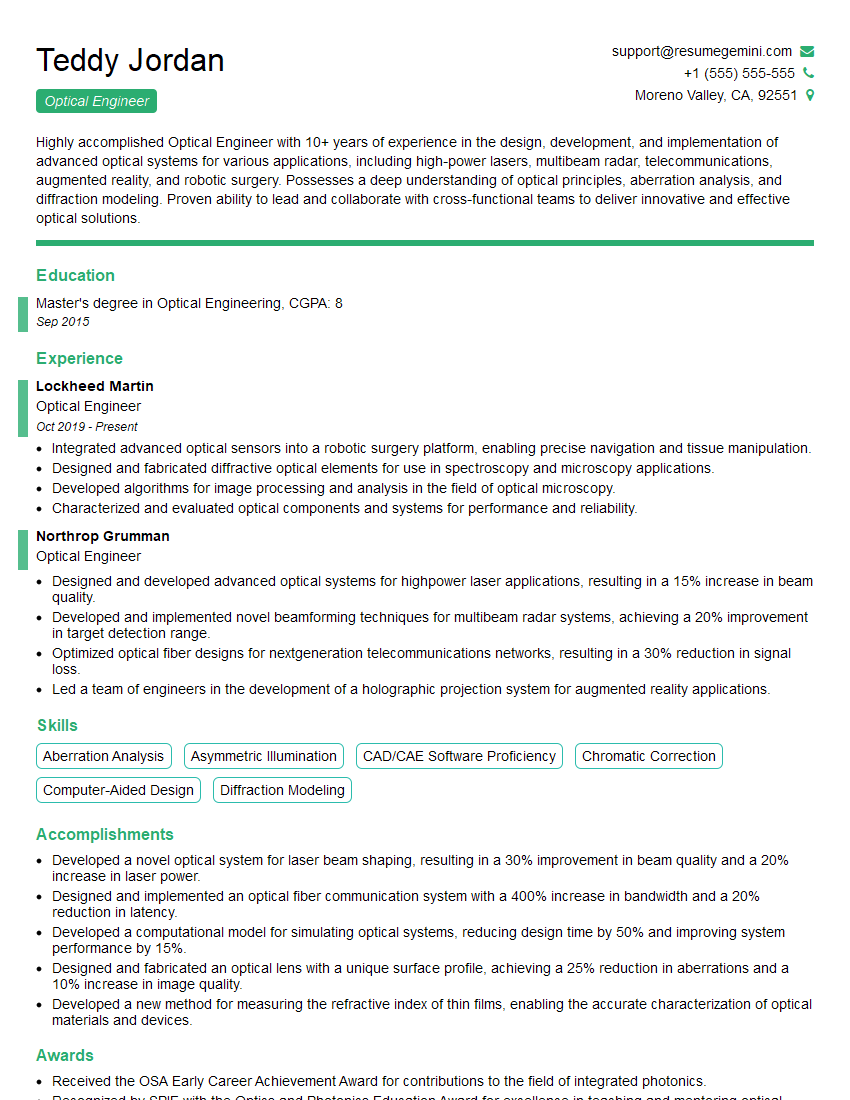
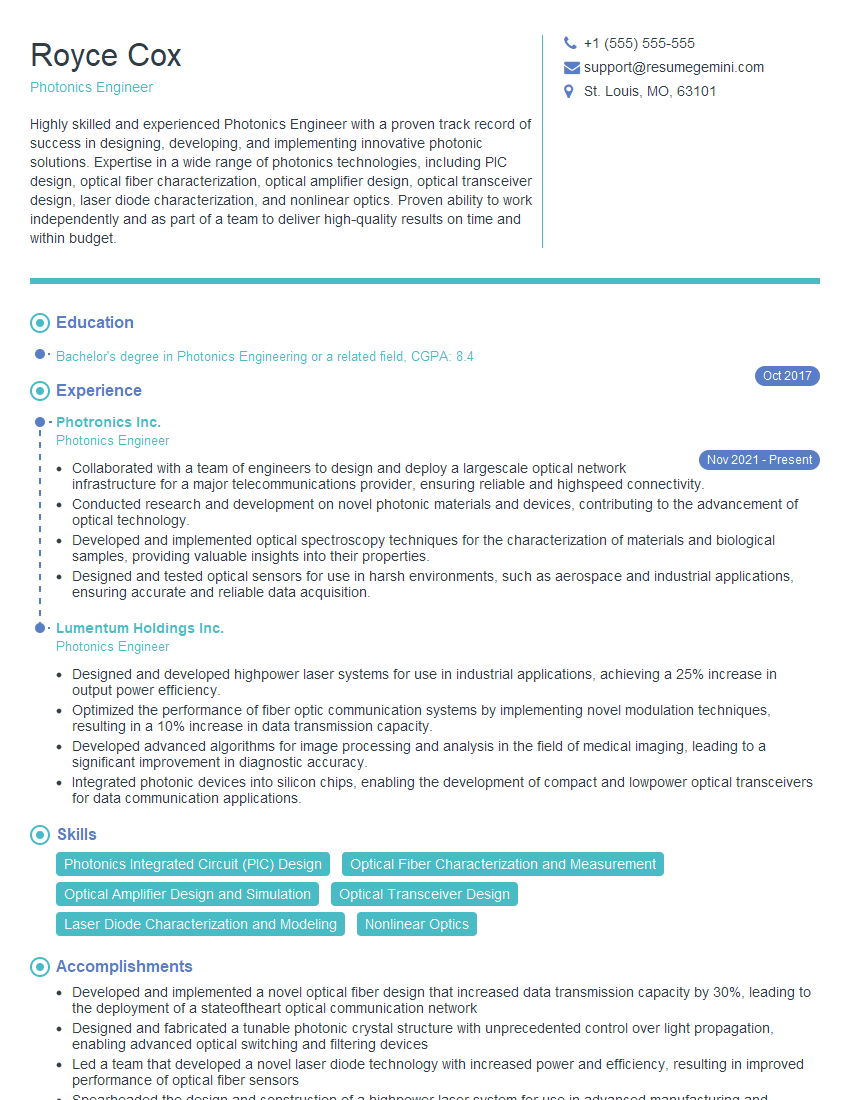
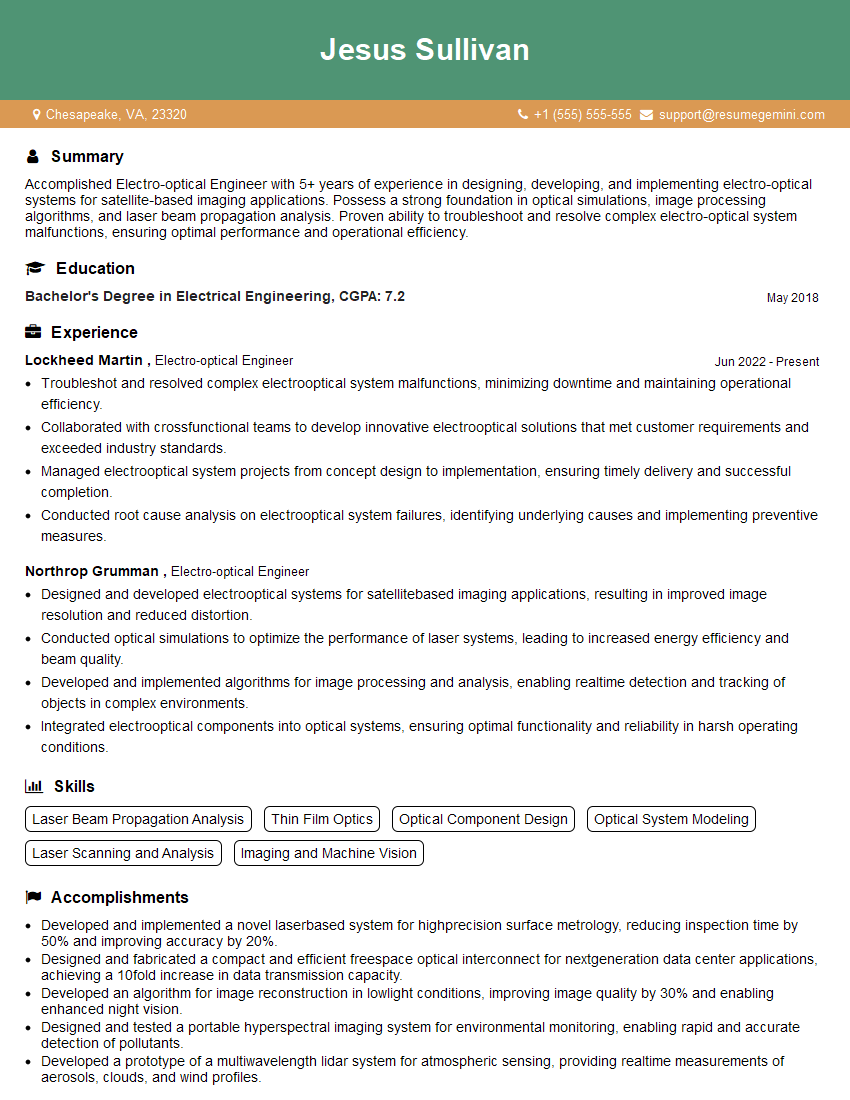
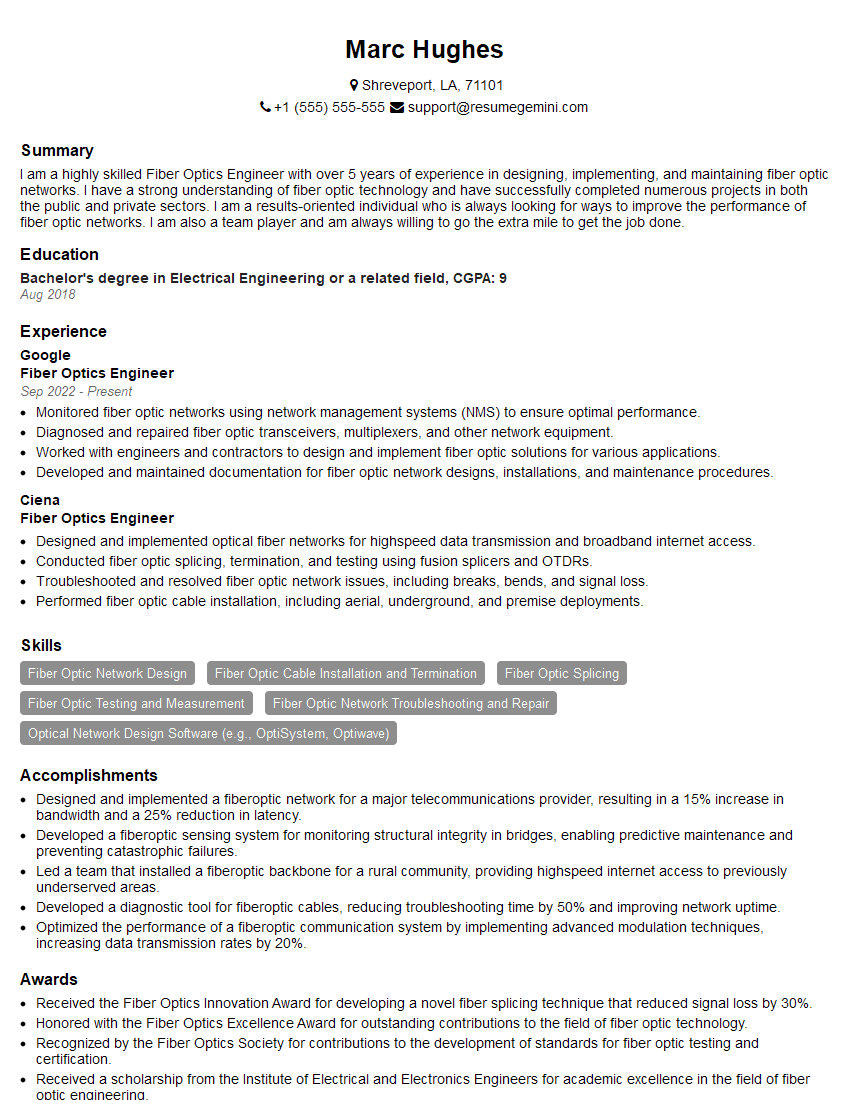
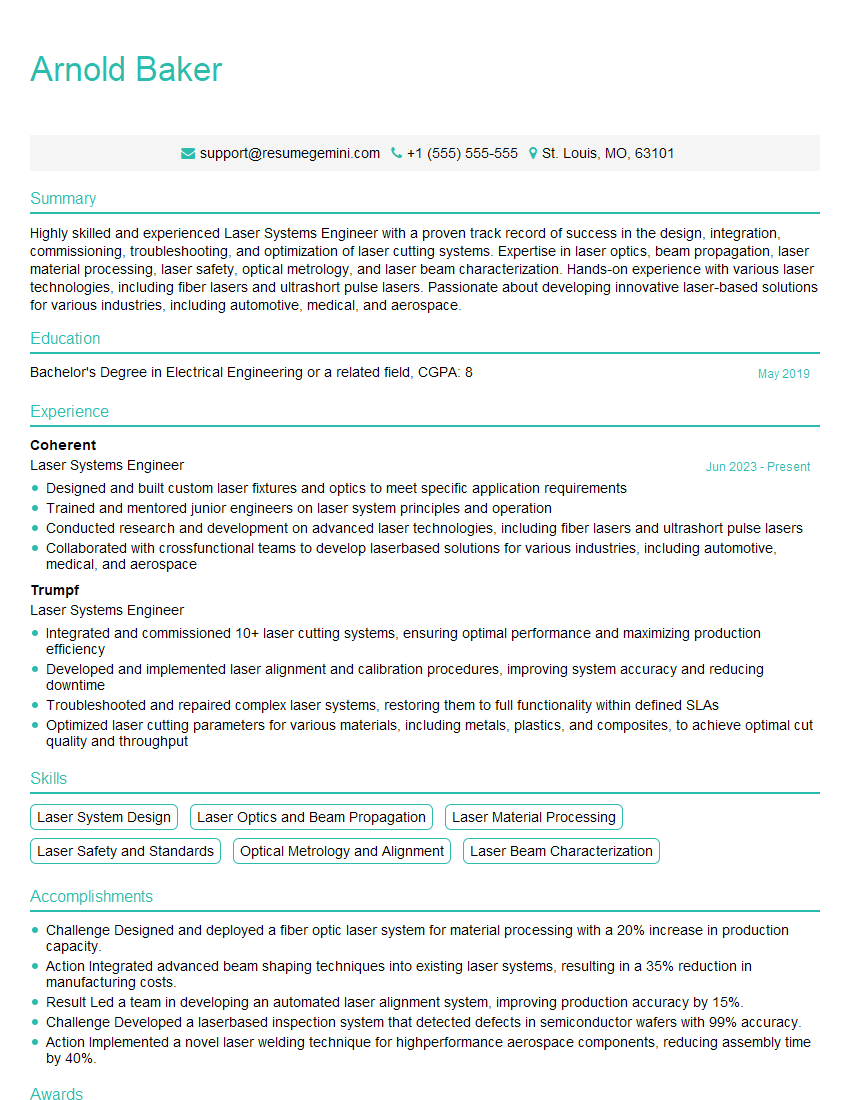
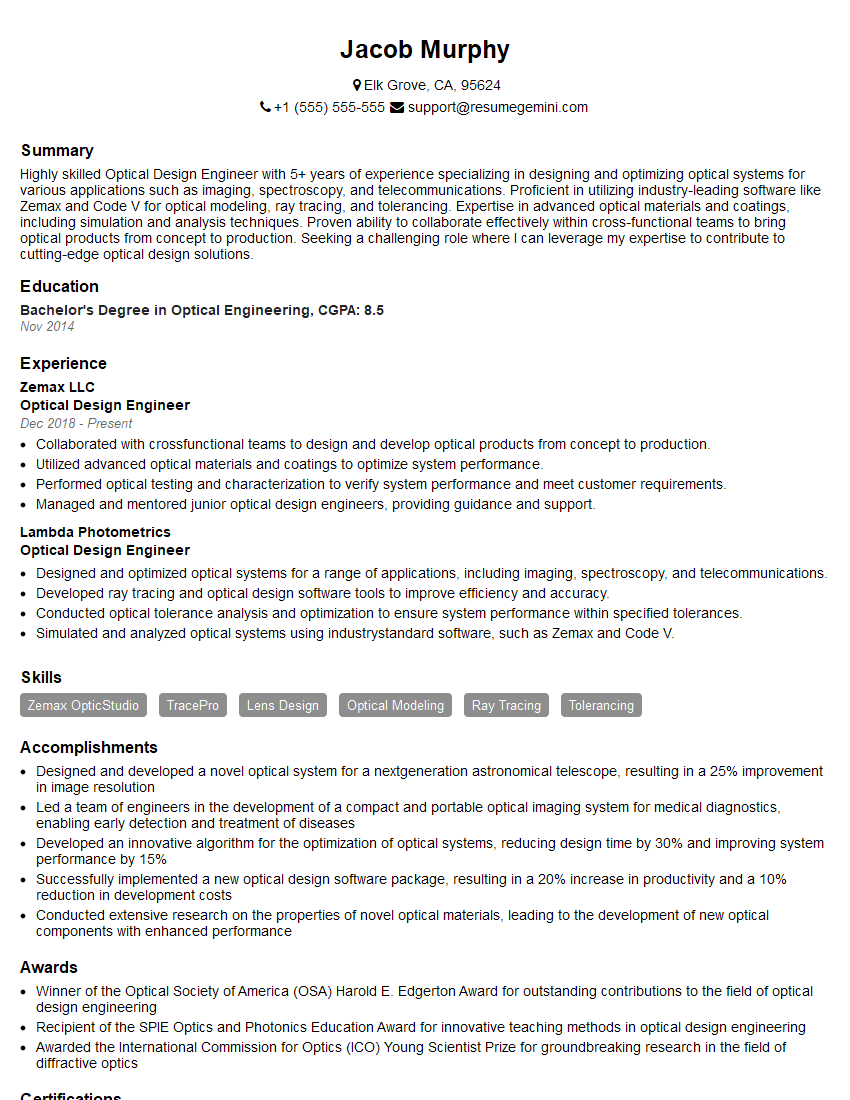
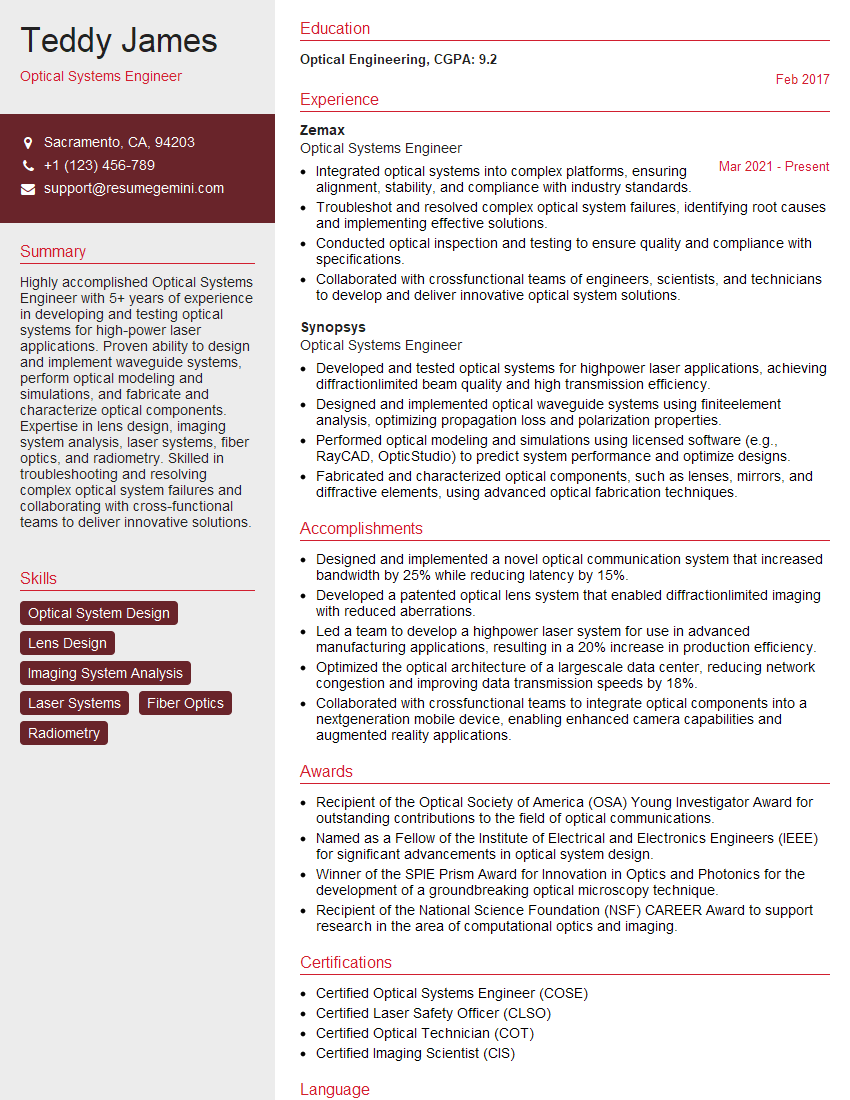
Mastering Computer-Aided Design (CAD) for Optics is vital for a successful and rewarding career in this exciting field. It opens doors to innovative projects and significant career advancement. To maximize your job prospects, focus on creating a compelling and ATS-friendly resume that effectively showcases your skills and experience. ResumeGemini is a trusted resource to help you build a professional and impactful resume, tailored to the specific requirements of the optical engineering industry. Examples of resumes specifically tailored to Computer-Aided Design (CAD) for Optics are available to guide you.
Explore more articles
Users Rating of Our Blogs
Share Your Experience
We value your feedback! Please rate our content and share your thoughts (optional).
What Readers Say About Our Blog
Very informative content, great job.
good