Preparation is the key to success in any interview. In this post, we’ll explore crucial Measuring and fitting customers interview questions and equip you with strategies to craft impactful answers. Whether you’re a beginner or a pro, these tips will elevate your preparation.
Questions Asked in Measuring and fitting customers Interview
Q 1. Explain the different body measurement techniques you are proficient in.
My proficiency in body measurement techniques encompasses a range of methods tailored to different garment types and customer needs. I’m expert in both standard and more nuanced techniques. For example, for tailored clothing, I meticulously measure bust, waist, hip circumference, shoulder width, sleeve length, and back length using a flexible tape measure. For less structured garments, I might focus on key points like overall length and width, while also considering the garment’s intended drape and fit. I also utilize techniques like measuring across the back to accommodate posture variations and ensure proper sleeve placement. In addition to standard circumference measurements, I incorporate measurements for specific garment features like inseam, rise, and neckline depth. Finally, I always take into account posture and any unique body features to ensure an accurate and comfortable fit.
- Standard Circumference Measurements: Bust, waist, hips, neck, wrist, bicep
- Linear Measurements: Shoulder width, back length, sleeve length, inseam, outseam, skirt length
- Specialized Measurements: High hip, across back, natural waist, neckline depth, across chest
Q 2. How do you handle discrepancies between standard sizing and actual customer measurements?
Discrepancies between standard sizing and actual customer measurements are common. My approach involves careful consideration of several factors. First, I thoroughly analyze the discrepancy to understand its nature—is it a slight variation, or a significant difference? This helps in determining the best course of action. For minor variations, I might suggest slight adjustments to the garment’s construction during the manufacturing process. For larger discrepancies, I often recommend custom tailoring or adjustments to the standard size. For example, if a customer’s waist measurement is significantly smaller than the standard size for their bust measurement, I would advise alterations to create a more proportional and comfortable fit. It’s crucial to explain these options to the customer, clearly outlining the pros and cons and ensuring they are comfortable with the proposed solution.
Open communication is key. I always discuss the options with the customer, emphasizing that the goal is a perfect fit and not necessarily adhering strictly to the standard size chart. Ultimately, the customer’s comfort and satisfaction are my top priorities.
Q 3. Describe your experience with various types of measuring tools (tape measures, rulers, etc.).
I have extensive experience with various measuring tools, understanding their strengths and limitations. The flexible tape measure is my primary tool for body measurements, allowing for accurate circumference measurements. Its flexibility ensures accurate readings around curves. I also utilize a rigid ruler for more precise linear measurements such as sleeve length or shoulder width. I regularly check my measuring tools for accuracy—a worn or stretched tape measure can lead to significant errors, impacting the final garment fit. Regular calibration is essential. Additionally, I use specialized tools in certain situations, like measuring tools for specific garment features. For example, for shoes, I might use a Brannock device for precise length and width measurements. Understanding the nuances of each tool ensures the most accurate and reliable measurements.
Q 4. How do you ensure accuracy and precision during the measurement process?
Accuracy and precision are paramount. I follow a strict protocol to minimize errors. This starts with ensuring the customer is in a comfortable, relaxed posture. I explain the process clearly to put the customer at ease, as tension can affect measurements. I take multiple measurements for each point, averaging the readings to eliminate any anomalies. I ensure the tape measure is always snug but not overly tight. For linear measurements, I use the ruler perpendicular to the body. I clearly record the measurements on a standardized form, noting any special considerations such as posture or asymmetrical body features. I regularly review my measurement technique to ensure I am consistent and accurate and I often double-check critical measurements before proceeding with any alterations.
Q 5. What are the common challenges you face when measuring and fitting customers?
Common challenges include dealing with customers who are uncomfortable with the measuring process, or those who might be hesitant to reveal body measurements. Building rapport and creating a relaxed atmosphere is crucial. Another common challenge is dealing with inconsistent posture and body asymmetries. These can significantly affect measurements, necessitating careful observation and adjustments to the measurement process. Additionally, ensuring the accuracy of measurements on individuals with unusual body shapes or sizes requires greater attention to detail. I address these by using clear communication, emphasizing the importance of accurate measurements for a perfect fit, and demonstrating a professional and respectful demeanor. Finally, dealing with customers whose body shape or size falls outside of standard sizing charts requires creative solutions and flexibility.
Q 6. How do you adapt your measuring techniques for different body types and sizes?
Adapting my techniques for diverse body types and sizes is crucial. I don’t use a ‘one-size-fits-all’ approach. For example, for plus-size individuals, I use extra care to ensure the tape measure is positioned accurately to avoid unnecessary compression. For petite individuals, I ensure precise measurements, paying special attention to proportions. I always prioritize the customer’s comfort and never rush the process. For individuals with unique body characteristics, I might employ additional measurement points to capture the specifics of their shape and ensure a proper fit. Flexibility and a keen eye for detail are essential in accommodating the unique needs of each customer.
Q 7. Describe your experience with fitting garments for alterations.
My experience with fitting garments for alterations is extensive. I assess the garment’s current fit against the customer’s body measurements, identify areas requiring adjustments, and create a plan for alteration. I clearly communicate my findings and recommendations to the client and, if needed, draft a diagram outlining the planned modifications. Pinning is a critical step, allowing for precise adjustments. I then make the alterations, ensuring they maintain the garment’s integrity and aesthetic appeal. I always do a final fitting to guarantee a perfect fit. This process involves careful attention to detail, ensuring the garment hangs correctly, falls gracefully, and fits comfortably. Every alteration is approached as an opportunity to refine the garment and enhance the customer’s satisfaction. I often use visual aids to help clients understand the alteration process before proceeding.
Q 8. How do you communicate fitting issues effectively to customers and colleagues?
Communicating fitting issues requires clear, concise language and empathy. I avoid technical jargon and instead use descriptive terms customers understand. For example, instead of saying ‘the garment exhibits excessive ease,’ I might say ‘the shirt feels a bit too loose.’
With colleagues, I use precise technical language, detailing specific measurements and discrepancies. I might say, ‘The shoulder seam is 1cm too high, and the sleeve length needs a 2cm reduction.’ I always provide visual aids such as photos or diagrams to clarify the issue, making communication more efficient and less prone to misinterpretations. A collaborative approach is crucial – discussing solutions with both the customer and the tailoring team ensures everyone is on the same page.
For example, I recently helped a customer who felt their trousers were too tight around the thighs. Instead of simply stating that, I showed them where the tightness occurred, explained potential adjustments (e.g., adding width at the thighs), and discussed alternative solutions such as trying a different size or style.
Q 9. How do you maintain detailed and accurate records of customer measurements?
Maintaining accurate records is paramount. I utilize a standardized measurement sheet, digitally or physically, that includes all relevant measurements such as height, weight, bust, waist, hip, inseam etc. For each garment type, specific measurements are recorded. For instance, for a jacket, I’d note shoulder width, sleeve length, chest circumference, and back length.
Beyond standard measurements, I add detailed notes: customer’s desired fit (slim, relaxed, etc.), any fitting issues observed (e.g., posture affecting measurements), and the adjustments made. I use a clear labeling system (e.g., date, customer name, garment type, measurement version) to make searching and retrieval easy. Using digital tools enhances record keeping through easy search and version control.
For instance, I recently found a measurement discrepancy by reviewing old records; a client had ordered a jacket several months ago with a specific sleeve length. Revisiting the earlier notes, we were able to replicate the ideal fit accurately.
Q 10. What software or systems are you familiar with for recording and managing customer data?
I’m proficient in several systems for managing customer data. I have extensive experience with spreadsheet software like Microsoft Excel and Google Sheets, which I use to create customized databases. These allow for efficient organization and retrieval of information, including measurement charts and fitting notes.
I am also familiar with dedicated retail management systems (RMS) like Shopify and Lightspeed, which often include built-in customer profile management, streamlining the recording process and ensuring data consistency across different aspects of the business. Some specialized tailoring software packages also provide tools for measurement recording and garment pattern generation, further optimizing the workflow. Choosing a system depends on the size and needs of the business; simple businesses might only need spreadsheets, whereas larger businesses would benefit from a more sophisticated RMS.
Q 11. How do you handle difficult or demanding customers during the fitting process?
Handling difficult customers requires patience, active listening, and a focus on solutions. I start by actively listening to their concerns, validating their feelings, and reflecting back what I’ve heard to ensure understanding. I maintain a professional and calm demeanor, even if the customer is upset.
If the issue is a measurement discrepancy, I carefully re-check my work and explain my methodology transparently. If the issue is about the garment’s fit, I use visual aids and clear explanations to help them understand the adjustments necessary. I offer alternative solutions if their ideal fit is not achievable. Ultimately, my goal is to find a mutually acceptable solution. If a customer remains dissatisfied, I escalate the matter to my supervisor, following established protocols.
I once encountered a customer who was frustrated with the fit of a custom-made suit. Through patient listening and explanation, I discovered they were comparing the custom suit to ready-to-wear garments, which have inherently different fits. By clarifying the differences and making minor adjustments, I was able to resolve the issue to their satisfaction.
Q 12. Explain your understanding of different fabric types and their impact on fit.
Different fabric types significantly impact garment fit. Understanding fabric properties is crucial. For instance, stretchy fabrics like Lycra or spandex will have more give than rigid fabrics like linen or cotton. This affects the final garment size and how the garment drapes on the body.
Heavy fabrics like wool or velvet tend to hang differently than lighter fabrics like silk or chiffon. Heavy fabrics can add weight and volume, potentially making the garment feel bulkier or less flattering. The drape of the fabric also influences how adjustments need to be made. For example, a tightly woven fabric might require less ease than a loosely woven one. The type of weave (plain, twill, satin) also impacts drape and drape characteristics.
Considering fabric properties allows for appropriate adjustments. For instance, when working with a highly stretchy fabric, I might take a smaller measurement initially, knowing that the fabric will stretch during wear. Conversely, I may add ease to a pattern for a less forgiving material to ensure comfort and a good fit.
Q 13. How do you determine the appropriate garment adjustments based on customer feedback?
Determining appropriate adjustments involves carefully analyzing customer feedback and translating it into technical adjustments to the garment. I begin by asking clarifying questions: ‘Can you show me exactly where it feels too tight/loose?’ or ‘Does it feel uncomfortable around the shoulders or somewhere else?’.
Based on their feedback and my observation of the garment’s fit on the customer, I use a combination of methods. I may take new measurements to pinpoint the areas needing alterations. I then calculate the necessary adjustments based on standard tailoring techniques, considering the specific garment type and fabric. For instance, if a customer finds a dress’s bodice too tight, I might let out the seams or add a panel. Detailed notes are added to ensure accuracy and consistency.
For example, if a client mentions a shirt’s sleeves are too long, I note the amount of excess length and create a precise alteration plan. I always discuss the adjustments with the customer before making them, ensuring we agree on the final outcome.
Q 14. Describe your process for taking measurements for different garment types (e.g., shirts, pants, dresses).
My measurement process is systematic and precise, varying depending on the garment type. Always, I start with a polite and professional demeanor. For shirts, key measurements include neck circumference, shoulder width, sleeve length (inseam and outseam), chest circumference, and shirt length. For pants, I measure waist circumference, hip circumference, inseam, outseam, thigh circumference, and rise (front and back). For dresses, the measurements are more extensive, covering bust, waist, hip, shoulder width, sleeve length (if applicable), dress length, and possibly additional measurements depending on the dress style.
I always use a flexible measuring tape and maintain a consistent posture to avoid errors. I take multiple measurements to ensure accuracy. I communicate each step to the customer, explaining the purpose of each measurement. I record all measurements neatly, indicating any fitting issues observed. Accurate measurements are pivotal for a perfect fit. If custom alterations are needed, I’ll document them alongside the initial measurements to keep the complete fitting history.
For example, when taking measurements for a tailored suit, I meticulously record the measurements for each component: jacket (chest, waist, sleeve length, shoulder width), trousers (waist, inseam, rise, hip), and vest (chest, waist, length) using standard tailoring terminology.
Q 15. How do you identify and address fitting problems related to garment construction?
Identifying and addressing fitting problems related to garment construction requires a keen eye for detail and a thorough understanding of garment construction techniques. It’s not just about the measurements; it’s about how the garment is designed and sewn.
For instance, if a sleeve cap is too tight, it’s not simply a matter of taking in the seam. I would first assess if the problem stems from the sleeve cap’s pattern being too small, the seam allowance being too wide, or perhaps the fabric’s lack of drape.
- Pattern Issues: I’d check the pattern’s measurements against the customer’s measurements to see if adjustments are needed in the original pattern.
- Construction Issues: I’d examine the stitching, looking for uneven seams or areas where fabric has been pulled or stretched during construction.
- Fabric Issues: The fabric’s weight, drape, and stretch all play a role. A stiffer fabric might require more ease (extra room) than a drapey one. A fabric that stretches significantly might necessitate pattern adjustments to accommodate its give.
Addressing the issue involves systematically troubleshooting. I would start with the simplest solution, perhaps letting out a seam, then progress to more complex solutions like re-cutting the pattern piece or even reconstructing part of the garment if necessary. I would carefully explain each step to the customer to ensure transparency.
Career Expert Tips:
- Ace those interviews! Prepare effectively by reviewing the Top 50 Most Common Interview Questions on ResumeGemini.
- Navigate your job search with confidence! Explore a wide range of Career Tips on ResumeGemini. Learn about common challenges and recommendations to overcome them.
- Craft the perfect resume! Master the Art of Resume Writing with ResumeGemini’s guide. Showcase your unique qualifications and achievements effectively.
- Don’t miss out on holiday savings! Build your dream resume with ResumeGemini’s ATS optimized templates.
Q 16. Explain your experience with using fitting tools and equipment (e.g., fitting stands, dress forms).
I’m proficient in using a range of fitting tools, including adjustable dress forms, both standard and custom-made, fitting stands, and measuring tapes of varying types. I regularly use dress forms to create a preliminary fit, making adjustments before the customer even tries the garment on. This saves time and minimizes alterations later. Adjustable dress forms are particularly helpful because they allow for customization, mimicking individual body shapes more accurately.
Fitting stands are useful for viewing the garment’s overall drape and proportions. They help identify areas where the garment might be pulling or gaping. I also use measuring tapes—both soft and rigid—depending on the body part being measured. A soft tape is ideal for measuring curves, while a rigid tape is more accurate for straight lines. I’m meticulous in my measurement-taking; accuracy is paramount.
Q 17. Describe your experience working with diverse customer demographics and body types.
My experience encompasses a wide range of customer demographics and body types. I’ve worked with clients of varying ages, sizes, and body shapes, including those with significant differences in proportions. Understanding that each body is unique is fundamental. I’ve encountered clients with petite builds, plus-size figures, athletic builds, and unique anatomical characteristics.
Adaptability is key. I tailor my approach to each individual, ensuring a comfortable and respectful experience. I’m comfortable explaining technical details in easily understood terms and always consider the customer’s personal preferences. For example, I might discuss different ways to achieve a flattering fit for a specific body type, respecting their individual sense of style and comfort.
Experience has taught me that communication is essential. Openly discussing preferences and potential challenges during the fitting process builds trust and ensures a positive outcome. It’s important to approach every client with empathy and understanding, ensuring inclusivity and respect for diversity in all body types.
Q 18. How do you ensure customer privacy and confidentiality when taking measurements?
Customer privacy and confidentiality are paramount in my practice. All measurements are taken privately and discreetly, in a designated area ensuring the client’s comfort and privacy. I never share any client data with third parties.
Measurements are typically recorded on a client record sheet that’s kept secure and only accessible to me. This is vital for both professional ethics and legal compliance. Any digital records are securely stored and password-protected, following all relevant data protection regulations.
I always obtain verbal consent before taking measurements and explain clearly how the information will be used. Open and honest communication about data handling ensures the client feels safe and comfortable throughout the process.
Q 19. What are the common signs of poorly fitting garments?
Common signs of poorly fitting garments are quite noticeable. They often point to issues in the pattern, construction, or fit itself.
- Pulling or Bagginess: Tightness across the bust, waist, or shoulders indicates the garment is too small. Conversely, excessive looseness or sagging suggests it’s too large.
- Gaping Seams: Gaping at the neckline, shoulders, or waist signifies a poor fit or improper construction.
- Uneven Hems or Seams: Twisted or crooked seams indicate mistakes in construction or pattern adjustments.
- Wrinkles and Bunching: Excessive wrinkles or fabric bunching in certain areas means the garment doesn’t follow the natural lines of the body.
- Discomfort or Restriction: If the garment feels uncomfortable or restricts movement, the fit is probably wrong.
Identifying these issues quickly is critical, as it informs the next steps to correct the fit, whether it’s minor adjustments or more extensive alterations.
Q 20. How do you troubleshoot fitting issues that arise during a fitting session?
Troubleshooting fitting issues during a session requires a methodical approach. I begin by observing the garment on the customer, carefully noting any areas of concern.
Step 1: Identify the Problem I determine the specific area where the garment is ill-fitting (e.g., tight sleeves, gaping neckline).
Step 2: Determine the Cause Is the issue due to the pattern, the fabric, the construction, or a combination of these factors?
Step 3: Implement Solutions Based on the cause, I suggest solutions. This could involve letting out a seam, taking in a seam, adjusting darts, or even altering the pattern itself for a better fit. I explain the reasoning behind the suggested solutions clearly.
Step 4: Re-assess After making adjustments, I have the customer try the garment on again. This iterative process allows for refinements until an acceptable fit is achieved.
For example, if a dress gapes at the waist, I might add darts or adjust the side seams to provide a more tailored fit. If sleeves are too tight, I’ll adjust the seams while carefully considering the amount of ease needed. It’s a collaborative process, involving the customer every step of the way.
Q 21. How do you handle situations where a garment cannot be adequately fitted?
There are occasions when a garment cannot be adequately fitted, despite best efforts. This might be due to significant pattern flaws, the inherent limitations of the fabric, or the client’s unique body shape requiring alterations beyond what’s feasible.
In such situations, my priority is transparent communication. I’ll explain to the customer why the garment cannot be appropriately fitted, highlighting the specific challenges. This might involve discussing the limitations of the pattern, fabric limitations (e.g., insufficient fabric to make alterations), or the significant alterations that would be required and their associated cost.
I explore alternative solutions, which might include offering a refund, proposing a redesign of the garment (if feasible), or suggesting alternative styles or sizes that would be a better fit. The goal is always to find a solution that’s fair and satisfactory for the customer.
My aim is to leave the customer feeling valued and understood. A negative outcome should never overshadow a professional and ethical approach to problem-solving.
Q 22. Describe your understanding of different fitting styles and preferences.
Understanding fitting styles and preferences is crucial for providing excellent customer service. It goes beyond simply knowing measurements; it’s about recognizing individual body types, comfort levels, and desired silhouettes. For example, some customers prefer a slim, tailored fit, while others prefer a looser, more relaxed style. Understanding these preferences allows me to guide them towards garments that flatter their figure and align with their personal style.
- Slim Fit: Characterized by close-fitting garments that hug the body, often emphasizing the wearer’s physique. This style requires precise measurements and might necessitate alterations for a perfect fit.
- Relaxed Fit: Provides more room and comfort, typically looser and less structured than a slim fit. Measurements are still important, but there’s more room for variation.
- Classic Fit: Falls between slim and relaxed, offering a balanced fit that’s neither too tight nor too loose. A versatile option suitable for many body types.
- Plus Size Fit: Requires specialized techniques to ensure comfort and proper support, often focusing on accommodating curves and proportions.
I also consider factors like the occasion for which the garment is intended (formal event vs. casual wear), the customer’s age and lifestyle, and the fabric’s drape and stretch. All these elements influence the final choice and the necessary adjustments for an optimal fit.
Q 23. How do you maintain a professional and courteous demeanor during the fitting process?
Maintaining a professional and courteous demeanor during fittings is paramount. It builds trust and ensures a positive customer experience. I achieve this through several key strategies:
- Active Listening: I pay close attention to the customer’s needs and concerns, asking clarifying questions to understand their preferences and expectations.
- Respectful Communication: I use polite language, avoiding jargon or technical terms that might confuse them. I explain the process clearly and answer their questions patiently.
- Positive Body Language: Maintaining eye contact, smiling genuinely, and offering helpful suggestions create a welcoming environment. I am mindful of my posture and overall demeanor to project confidence and competence.
- Privacy and Confidentiality: I respect the customer’s privacy by maintaining discretion and ensuring their comfort during the fitting process.
- Professional Appearance: I always maintain a clean and tidy appearance, reflecting professionalism and respect for my role and the customer.
For example, if a customer expresses concern about a particular measurement, I calmly explain the rationale behind it and offer alternative solutions rather than dismissing their concerns.
Q 24. How do you manage your time effectively when multiple customers need fittings?
Managing my time effectively with multiple customers requires a structured approach. This includes:
- Prioritization and Scheduling: I try to schedule appointments to minimize wait times and optimize my workflow. This can include prioritizing urgent fittings or those requiring more complex alterations.
- Efficient Measurement Techniques: I use quick and accurate measurement techniques to minimize the time spent on each fitting. I’ve developed streamlined procedures to measure multiple areas simultaneously whenever possible.
- Multitasking and Delegation: When feasible, I delegate tasks, such as preparing garments or assisting with minor adjustments, to other team members if available.
- Clear Communication: I keep customers informed about potential wait times and manage their expectations effectively. Open communication prevents frustration and ensures a smooth experience.
- Time Blocking: Allocating specific time slots for different types of fittings (e.g., simple alterations vs. complex adjustments) enables me to better manage my schedule.
For example, if a customer arrives without an appointment, I politely assess the situation and either fit them in quickly if time allows or suggest a convenient alternative time slot.
Q 25. What steps do you take to ensure the accuracy and consistency of your measurements?
Ensuring accuracy and consistency in measurements is crucial. My approach involves:
- Proper Tools and Techniques: I use a flexible tape measure and follow standardized measurement techniques to ensure consistent results. This involves measuring in specific areas and documenting each measurement clearly. For example, measuring across the fullest part of the bust or waist.
- Double-Checking: I always double-check my measurements to minimize errors. This can include asking a colleague to verify the measurement, especially when dealing with complex body shapes.
- Consistent Positioning: I ensure that the customer maintains a consistent posture during measurements to avoid discrepancies. I might also use visual cues to ensure the tape measure is positioned correctly.
- Documentation: I maintain detailed records of each measurement, including date, customer information, and garment specifications. This aids in tracking progress, comparing past measurements, and addressing potential issues quickly.
- Regular Calibration: I periodically check the accuracy of my measuring tape to ensure that the measurements are consistently accurate.
Consistent practices reduce the need for alterations later and save both time and resources.
Q 26. How do you handle situations where a customer is unhappy with the fit of a garment?
Handling customer dissatisfaction requires empathy, active listening, and problem-solving skills. My approach is as follows:
- Listen and Empathize: I actively listen to the customer’s concerns, acknowledging their feelings and avoiding interruption. I show empathy to understand their perspective.
- Assess the Situation: I carefully examine the garment to identify the cause of the fit issue. This might involve re-measuring the garment or the customer to pinpoint the problem areas.
- Offer Solutions: I propose feasible solutions, such as alterations, exchanges, or returns, depending on the situation and store policies. I explain the options clearly, outlining the associated costs and timelines.
- Follow Up: I follow up with the customer to ensure their satisfaction with the resolution. This might include a thank-you note or a phone call to confirm they’re happy with the outcome.
- Documentation: I record the issue, the proposed resolution, and the final outcome in the customer’s file for future reference.
For example, if the garment is slightly too tight, I might offer free alterations to adjust the fit. If the issue is more significant, I might suggest an exchange for a different size or style.
Q 27. Explain your knowledge of different alteration techniques.
My knowledge of alteration techniques is extensive, encompassing a variety of methods for adjusting garments to achieve a perfect fit. This includes:
- Taking In/Letting Out Seams: Adjusting side seams, shoulder seams, or waistbands to alter the garment’s width or length. This requires precision to maintain the garment’s structural integrity.
- Altering Sleeves: Adjusting sleeve length, width, or the armhole for a better fit. This might involve shortening, lengthening, or reshaping the sleeve.
- Hemming: Adjusting the hemline of pants, skirts, or dresses to create a desired length. This technique requires attention to detail to ensure an even and clean finish.
- Adding Darts or Pleats: Creating or adjusting darts or pleats to shape the garment and improve its fit around the waist, hips, or bust. This requires an understanding of garment construction and fabric properties.
- Re-Constructing Garments: In some cases, more extensive alterations might be required, including re-constructing parts of the garment or using techniques such as pattern adjustments to create a bespoke fit.
The choice of technique depends on the garment’s style, fabric, and the specific adjustments needed. I prioritize maintaining the garment’s aesthetic appeal while achieving the desired fit.
Q 28. Describe a time you had to resolve a challenging fitting issue. What was the outcome?
I once had a customer who needed a custom-fitted gown for a wedding. The gown was a delicate silk fabric with intricate beading, making alterations challenging. The initial fitting revealed the bodice was too tight across the bust and the waistline was too high. Simple adjustments weren’t feasible due to the beading.
My approach involved carefully removing the beading in the critical areas, widening the bodice seams, and resetting the waistline. This required precise hand-sewing to ensure the beading was reattached flawlessly. I also had to make minor adjustments to the lining to prevent puckering. The whole process took several days of meticulous work, requiring patience and attention to detail.
The outcome was a perfect fit. The customer was overjoyed with the final result, and the gown looked stunning on her. The experience reinforced the importance of thorough communication, careful planning, and meticulous craftsmanship in handling challenging fitting issues. It also highlighted the rewarding nature of exceeding customer expectations through skillful problem-solving.
Key Topics to Learn for Measuring and Fitting Customers Interview
- Understanding Body Types and Proportions: Learn to identify different body shapes and understand how to accurately assess individual proportions for optimal garment fit.
- Measurement Techniques: Master accurate and consistent measurement techniques using standard tools (tape measure, etc.). Practice taking various measurements (e.g., bust, waist, hip, inseam) and understanding their significance in garment construction.
- Fitting Process and Adjustments: Understand the stages of a fitting process, from initial measurement to final adjustments. Know how to identify common fitting problems (e.g., tightness, looseness, pulling) and implement effective solutions.
- Fabric Knowledge and its Impact on Fit: Learn how different fabric types (drape, stretch, weight) influence the fit of a garment and how to account for these variations during the measuring and fitting process.
- Client Communication and Consultation: Develop strong communication skills to effectively interact with clients, understand their needs, and provide professional advice on garment fit and style.
- Problem-Solving and Adaptability: Be prepared to discuss scenarios requiring problem-solving skills, such as handling unexpected fitting issues or adapting to diverse client needs and preferences.
- Health and Safety Procedures: Understand and be able to discuss relevant health and safety procedures related to measuring and fitting customers, including hygiene and ergonomics.
- Technology and Tools: Familiarize yourself with any relevant technology or software used for measuring and fitting (e.g., digital measuring tools, body scanners).
Next Steps
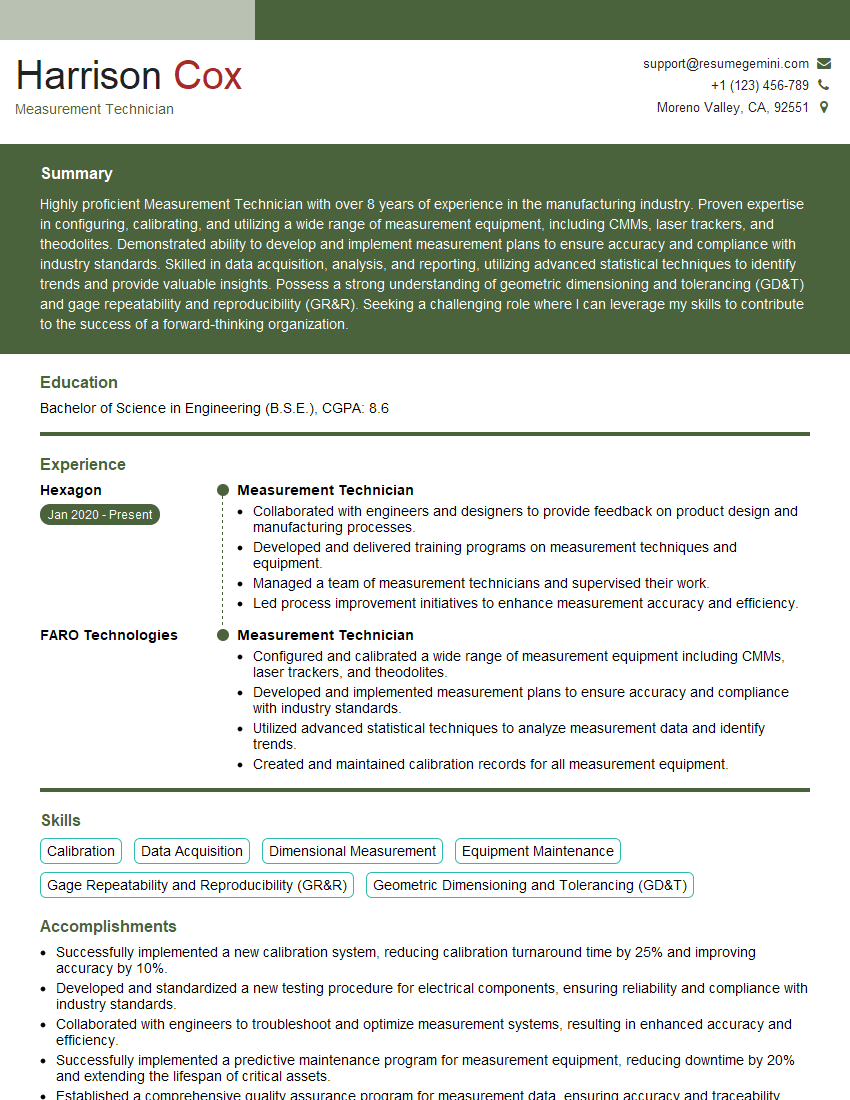
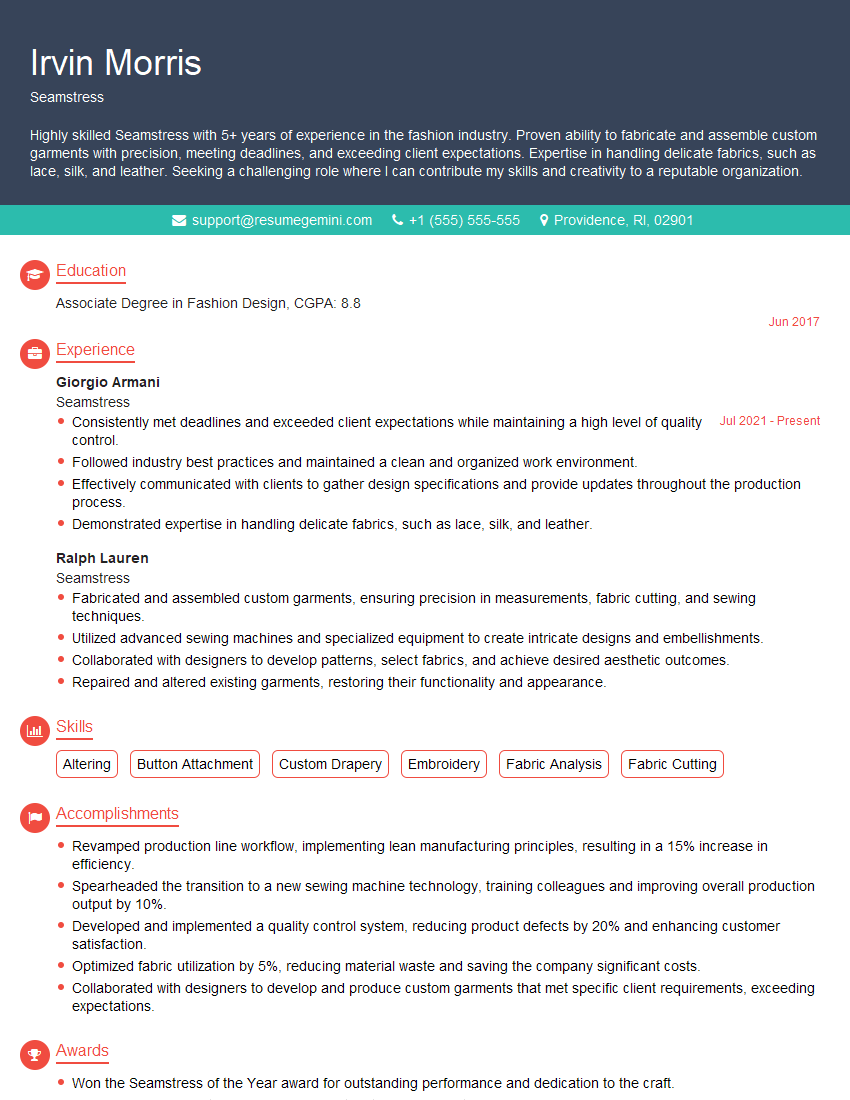
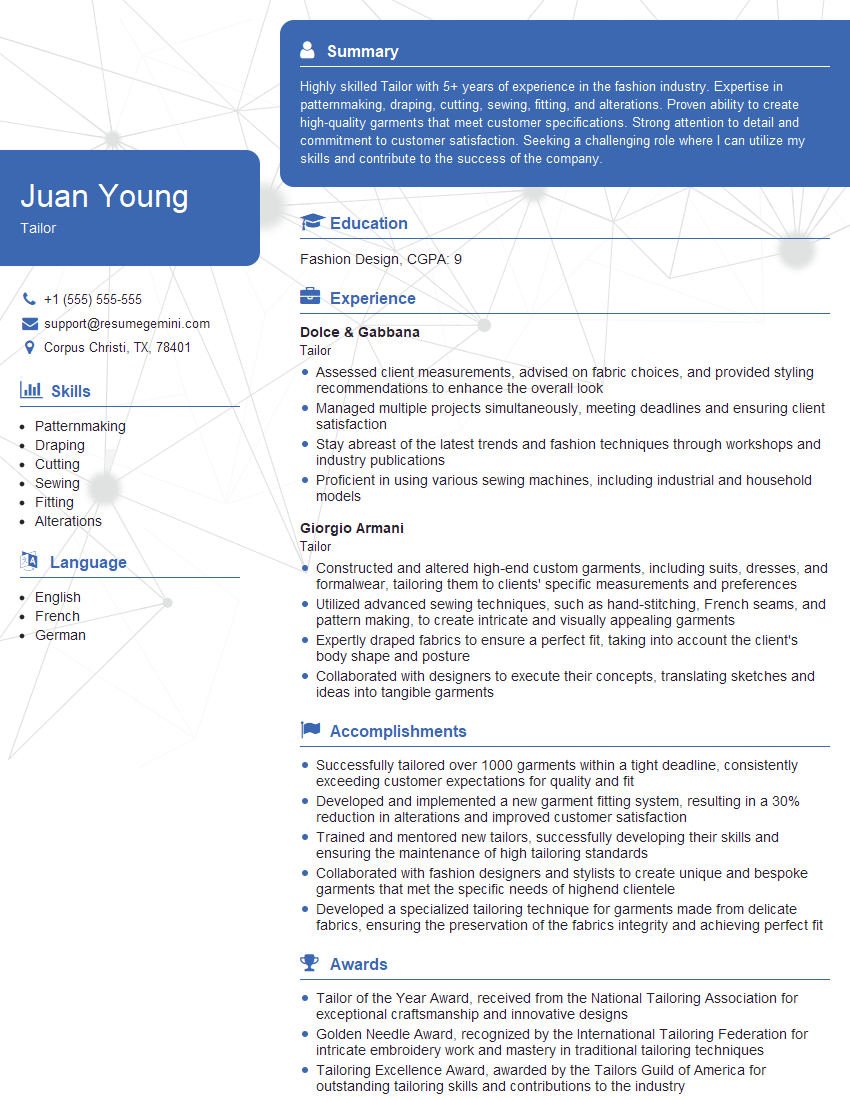
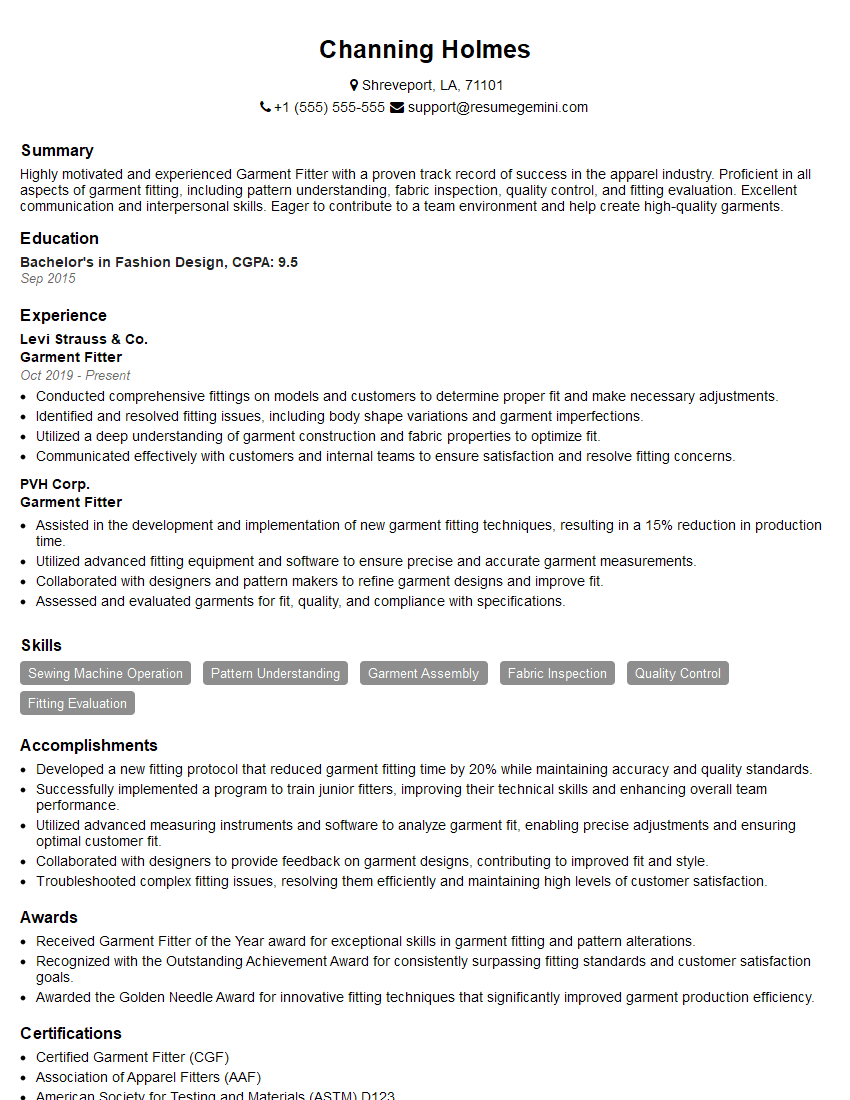
Mastering the art of measuring and fitting customers is crucial for career advancement in various industries, from fashion design and tailoring to retail and personal styling. A strong understanding of these skills showcases your attention to detail, problem-solving abilities, and client-centric approach. To significantly boost your job prospects, create an ATS-friendly resume that highlights your expertise. ResumeGemini is a trusted resource that can help you build a professional and impactful resume. Examples of resumes tailored to Measuring and Fitting Customers are provided to further assist you in this process.
Explore more articles
Users Rating of Our Blogs
Share Your Experience
We value your feedback! Please rate our content and share your thoughts (optional).
What Readers Say About Our Blog
Very informative content, great job.
good