Interviews are more than just a Q&A session—they’re a chance to prove your worth. This blog dives into essential Concrete Overlay interview questions and expert tips to help you align your answers with what hiring managers are looking for. Start preparing to shine!
Questions Asked in Concrete Overlay Interview
Q 1. What are the different types of concrete overlays?
Concrete overlays come in several types, each suited for different applications and substrates. The choice depends on factors like the existing concrete’s condition, the desired finish, and the budget.
- Polymer-Modified Concrete Overlays: These are very common and incorporate polymers (like latex or acrylic) into the concrete mix. This enhances strength, durability, and bonding to the existing concrete. They are often used for decorative overlays as well as for structural improvements.
- Thin Overlays: Typically less than ½ inch thick, these are ideal for leveling minor imperfections and providing a new surface texture. They’re cost-effective for smaller projects.
- Thick Overlays: These are thicker (½ inch or more) and are used to correct significant elevation differences, cover extensive damage, or increase the structural capacity of the existing slab. They often require a specialized design process.
- Colored Concrete Overlays: These can be created using integral color, which is mixed into the concrete, or by applying a surface stain or dye after the overlay is placed. They offer aesthetic versatility.
- Stamped Concrete Overlays: These overlays mimic the look of natural materials like brick, stone, or wood. Once the overlay is placed, stamps are used to create the texture and pattern.
For instance, a worn parking lot might benefit from a polymer-modified concrete overlay for increased durability, whereas a residential patio might use a thin, colored overlay for aesthetics.
Q 2. Describe the process of surface preparation for concrete overlay.
Surface preparation is critical for a successful concrete overlay. Poor prep leads to early failure. Think of it like preparing a canvas before painting; if the canvas isn’t clean and properly primed, the paint won’t adhere well.
- Cleaning: The existing concrete surface must be thoroughly cleaned to remove dirt, dust, oil, grease, and any loose or unsound material. Pressure washing is often used, followed by sweeping and vacuuming.
- Repairing: Cracks, spalling, and other significant defects should be repaired using appropriate patching materials. These repairs need to be allowed to cure properly before proceeding.
- Profiling: This involves roughening the surface to create mechanical bonding between the existing concrete and the overlay. Methods include scarification, grinding, or sandblasting. The goal is not to remove too much material but to achieve sufficient texture for proper adhesion. The level of profiling depends on the overlay type.
- Priming: Applying a bonding agent or primer helps to improve adhesion, especially on very smooth or dense surfaces. This ensures a strong bond and prevents debonding later.
Imagine trying to glue two smooth pieces of glass together—it’s difficult! Profiling provides a rough surface, creating more area for the glue (overlay) to bond. Using a primer acts like a super-glue, enhancing this bond even further.
Q 3. What are the key factors to consider when selecting a concrete overlay material?
Material selection for concrete overlays involves many factors. It’s not just about cost; it’s about performance, aesthetics, and longevity.
- Strength and Durability Requirements: High-traffic areas like parking lots need stronger overlays than residential patios. Consider the anticipated loads and environmental conditions (freezing/thawing cycles, exposure to chemicals).
- Thickness: This is determined by the condition of the existing concrete and the desired surface level. Thinner overlays are cheaper but might not be suitable for significant repairs.
- Color and Texture: Aesthetics play a role, particularly in visible areas. Consider how the overlay will complement the surrounding environment.
- Cost-Effectiveness: Balance the initial cost of the materials with the long-term cost savings associated with increased durability. A more expensive, high-performance overlay might be cheaper in the long run.
- Workability: The material should be easy to mix, place, and finish. This ensures efficient installation and a high-quality finish.
For example, a high-performance polymer-modified overlay might be chosen for a busy industrial floor, while a simple, colored overlay might suffice for a homeowner’s walkway.
Q 4. Explain the importance of proper mixing and placement of overlay materials.
Proper mixing and placement are crucial for ensuring the overlay’s strength, durability, and appearance. Inconsistent mixing or improper placement can lead to significant problems later on.
Mixing: Follow the manufacturer’s instructions precisely regarding water-cement ratio, mixing time, and the addition of admixtures. Using the wrong amount of water can severely weaken the concrete. A consistent mix is vital for uniform strength and color.
Placement: The overlay should be placed evenly and compacted to eliminate air voids. Avoid segregation (separation of components) which compromises strength. The thickness should be consistent throughout the area. Use appropriate tools like bull floats and trowels to achieve a smooth, level finish.
Imagine baking a cake. If you don’t follow the recipe precisely (mixing), or don’t spread the batter evenly in the pan (placement), you’ll end up with a flawed cake. The same principle applies to concrete overlays.
Q 5. How do you ensure proper curing of a concrete overlay?
Proper curing is essential for developing the strength and durability of the concrete overlay. It involves maintaining the right moisture and temperature conditions for a specified period.
- Moisture Retention: The overlay needs to be kept moist to prevent premature drying and cracking. Methods include using curing compounds, plastic sheeting, or continuous water spraying. The curing period varies depending on the overlay type and climate.
- Temperature Control: Extreme temperatures can affect curing negatively. Protect the overlay from direct sunlight and freezing temperatures during the initial curing period.
- Duration: Adhere strictly to the manufacturer’s recommendations for curing duration. Premature exposure to traffic or drying can weaken the concrete significantly.
Think of curing as allowing the concrete to ‘set’ properly. Just like you wouldn’t rush a cake out of the oven, you need to give the concrete enough time to gain strength and reach its full potential. Otherwise, it’s prone to cracking and weakness.
Q 6. What are the common problems encountered during concrete overlay application?
Several common problems can occur during concrete overlay applications:
- Cracking: This can result from poor surface preparation, insufficient curing, shrinkage, or thermal stresses. Proper prep, moisture control, and appropriate jointing are key to preventing cracks.
- Debonding: This occurs when the overlay separates from the existing concrete, often due to inadequate surface profiling or priming. Thorough preparation is critical to avoid this.
- Surface imperfections: These can be caused by poor finishing techniques, resulting in uneven surfaces, air pockets, or discoloration. Proper techniques and skilled labor are necessary for a smooth, even finish.
- Color variation: Inconsistent mixing or improper curing can lead to variations in color. Careful mixing and consistent curing practices minimize these inconsistencies.
- Spalling: This involves the chipping or breaking away of the overlay surface and is often due to improper curing or exposure to chemicals.
Regular inspection during each stage of the process helps to identify and address problems early, preventing larger issues down the line.
Q 7. How do you address surface imperfections before applying a concrete overlay?
Addressing surface imperfections before applying a concrete overlay is paramount for a successful and long-lasting result. Ignoring these imperfections can lead to significant problems later on.
- Identification: Thoroughly inspect the surface for cracks, spalling, holes, and other imperfections.
- Repairing Cracks: Small cracks can be filled with epoxy-based crack fillers, while larger cracks might require more extensive repair techniques involving saw cutting and filling.
- Repairing Spalling: Remove any loose or deteriorated concrete and repair the areas using suitable patching materials, ensuring proper bonding to the substrate.
- Filling Holes and Depressions: Use appropriate patching compounds to fill holes and depressions, ensuring a smooth, level surface after curing.
- Grinding and Leveling: Grinding or planarization can remove high spots and improve the overall surface profile, resulting in a more uniform and level base for the overlay.
Think of it like prepping a wall before painting: you wouldn’t paint over loose plaster or cracks! Addressing surface imperfections first ensures a professional finish and a durable overlay.
Q 8. What are the different methods for applying concrete overlays?
Concrete overlays can be applied using several methods, each suited to different project requirements and existing substrate conditions. The primary methods include:
- Screeding/Floating: This is the most common method for thinner overlays, involving pouring the concrete mix and using a screed or float to level and consolidate it. This is ideal for achieving a smooth, even surface. Imagine it like spreading frosting on a cake – you want an even layer.
- Pumping: For larger projects, concrete is pumped directly onto the surface, often utilizing specialized equipment like boom pumps. This is particularly efficient for large areas or difficult-to-access locations, akin to using a piping system for efficient material transfer.
- Troweling: After initial placement, power trowels are used to further compact and smooth the surface, achieving a high-quality finish. This step is analogous to polishing a countertop to achieve a flawless sheen.
- Spraying: Specialized spray equipment can apply thin overlays efficiently, particularly useful for repairing minor imperfections or applying specialized coatings. Think of it like airbrushing – precise and thin application.
The choice of method depends on factors like the overlay thickness, project size, surface preparation, and desired finish.
Q 9. What are the advantages and disadvantages of using different overlay materials (e.g., polymer modified, cementitious)?
The selection of overlay material significantly impacts the project’s performance, durability, and cost. Let’s compare polymer-modified and cementitious overlays:
Polymer-Modified Concrete Overlays:
- Advantages: Higher strength and durability, improved crack resistance, faster setting times, better bonding to existing substrates, increased flexibility allowing for movement accomodation.
- Disadvantages: Higher initial cost compared to cementitious overlays, can be more sensitive to application temperature and humidity, requires specialized expertise for optimal application.
Cementitious Concrete Overlays:
- Advantages: Lower initial cost, readily available, familiar to many contractors.
- Disadvantages: Lower strength and durability compared to polymer-modified overlays, prone to cracking, slower setting times.
For instance, in a high-traffic industrial setting, a polymer-modified overlay would be preferred for its superior durability. Conversely, a cementitious overlay might suffice for a less demanding residential application where cost is a primary concern. The choice is always context-dependent.
Q 10. Explain the importance of quality control in concrete overlay projects.
Quality control is paramount in concrete overlay projects to ensure the longevity and performance of the finished product. It encompasses various stages:
- Substrate Preparation: Thorough cleaning, profiling, and repair of the existing concrete are crucial. Insufficient preparation will lead to bond failures and premature deterioration of the overlay.
- Material Quality: Using high-quality concrete mix and additives as specified is essential. Variations in mix design can compromise the final strength and durability.
- Application Process: Adherence to the specified placement, finishing, and curing procedures is critical. Inconsistent application leads to uneven surfaces and reduced lifespan.
- Testing and Inspection: Regular testing and inspection during and after the application process are necessary to ensure compliance with project specifications. This may include strength testing, moisture content checks, and visual inspections.
Neglecting quality control can lead to costly repairs, project delays, and safety hazards. Think of it as baking a cake – if you skip crucial steps, the final product will be flawed.
Q 11. How do you determine the thickness of the concrete overlay required for a specific project?
Determining the required overlay thickness depends on several factors:
- Existing Substrate Condition: Severely damaged or deteriorated concrete requires a thicker overlay to compensate for the irregularities and provide adequate structural support. Think of it as adding more filler to a cracked pot to make it whole again.
- Desired Finish: Achieving a perfectly smooth surface might necessitate a slightly thicker overlay to accommodate the leveling process.
- Load Requirements: Areas subjected to heavy traffic or loads necessitate a thicker overlay to withstand the imposed stresses. Similar to how a bridge requires strong supports.
- Design Specifications: The project’s design specifications, including structural requirements and performance expectations, will dictate the minimum overlay thickness.
In practice, this often involves an on-site assessment, engineering calculations, and potentially non-destructive testing of the existing substrate to accurately determine the needed thickness.
Q 12. What are the different types of bonding agents used in concrete overlays?
Various bonding agents are employed to ensure optimal adhesion between the overlay and the existing concrete substrate. The common types include:
- Epoxy-based primers: Excellent bonding strength, particularly effective on smooth or dense surfaces, but can be more expensive.
- Acrylic-based primers: Provide good adhesion, are easier to apply and typically less expensive than epoxy-based primers.
- Cementitious bonding agents: Ideal for porous substrates, improve the bond between the overlay and the existing concrete, often acting as a bridge between the materials.
The choice of bonding agent depends on the substrate type, its condition, and the overlay material used. A proper bonding agent is critical to prevent delamination and ensure the longevity of the overlay.
Q 13. How do you handle cracks or other structural damage before overlay application?
Handling cracks and other structural damage before overlay application is crucial for preventing their propagation into the new overlay and ensuring its structural integrity. The approach involves:
- Crack Repair: Cracks need to be cleaned, widened (if necessary), and filled with appropriate repair materials like epoxy resins or cementitious crack fillers. The repair material should be compatible with the overlay material.
- Spalling Repair: Damaged or deteriorated concrete sections must be removed and replaced with fresh concrete to ensure a sound base.
- Surface Preparation: After repairs, the entire surface must be cleaned, profiled, and primed to ensure proper adhesion of the overlay. This often involves grinding and shot blasting to achieve optimal surface profile for bonding.
Inadequate repair of cracks or structural damage will inevitably lead to failure of the overlay, ultimately resulting in premature deterioration and costly remediation.
Q 14. Describe your experience with different types of grinding equipment used in surface preparation.
My experience encompasses a range of grinding equipment used in surface preparation for concrete overlays, including:
- Hand-held grinders: Suitable for smaller areas and detailed work, allowing for precise control and removal of localized imperfections. These are invaluable for fine-tuning the surface profile.
- Walk-behind grinders: Efficient for larger areas, providing consistent surface preparation and achieving a uniform profile. These are a workhorse in many surface prep projects.
- Ride-on grinders: Ideal for very large projects, significantly increasing efficiency and reducing labor costs. These are typically used for large-scale projects where speed and efficiency are paramount.
The choice of equipment depends on the project size, surface area, budget constraints, and the desired level of surface preparation. I always ensure the selected equipment is appropriate for the task at hand and operated by trained personnel to guarantee safety and consistent results. Regular maintenance and calibration of these tools are equally critical for optimal performance.
Q 15. What safety precautions are essential during concrete overlay application?
Safety is paramount in concrete overlay applications. Think of it like this: we’re working with heavy machinery, potentially hazardous materials, and significant heights (depending on the project). My approach emphasizes a multi-layered safety plan.
- Personal Protective Equipment (PPE): This includes hard hats, safety glasses, respirators (especially when working with dust or curing compounds), high-visibility vests, and steel-toed boots. We enforce strict PPE usage at all times.
- Fall Protection: For elevated work, we use harnesses, lifelines, and appropriate scaffolding, always adhering to OSHA regulations. Regular inspections of fall protection equipment are mandatory.
- Traffic Control: Work areas are clearly marked and secured with barricades and signage, especially in public areas or near active traffic. We establish clear communication protocols between workers and traffic controllers.
- Material Handling: Proper lifting techniques are taught and enforced to prevent injuries from heavy bags of cement or other materials. We utilize machinery like forklifts when appropriate, and all operators are certified.
- Respiratory Protection: Concrete dust is a serious respiratory hazard. We always use respirators that meet or exceed OSHA standards and monitor air quality regularly. We also emphasize dust suppression techniques during application.
- Emergency Preparedness: First-aid kits are readily accessible, and all workers are trained in basic first aid and CPR. Emergency contact information is readily available. We have clear evacuation procedures in case of accidents.
By consistently implementing these safety protocols, we ensure a safe work environment and prevent accidents.
Career Expert Tips:
- Ace those interviews! Prepare effectively by reviewing the Top 50 Most Common Interview Questions on ResumeGemini.
- Navigate your job search with confidence! Explore a wide range of Career Tips on ResumeGemini. Learn about common challenges and recommendations to overcome them.
- Craft the perfect resume! Master the Art of Resume Writing with ResumeGemini’s guide. Showcase your unique qualifications and achievements effectively.
- Don’t miss out on holiday savings! Build your dream resume with ResumeGemini’s ATS optimized templates.
Q 16. How do you estimate the cost of a concrete overlay project?
Estimating the cost of a concrete overlay project is a multi-step process that requires careful consideration of several factors. It’s not just about the square footage; it’s about a comprehensive assessment.
- Site Assessment & Preparation: This includes the size of the area, the condition of the existing concrete (which might require costly repairs before overlay), and the level of surface preparation needed (e.g., grinding, cleaning, patching).
- Material Costs: The type of overlay material (e.g., polymer modified concrete, decorative concrete) significantly impacts cost. Quantities needed are carefully calculated based on the project scope.
- Labor Costs: This involves accounting for the number of workers, their expertise, the project duration, and associated labor rates. Specialized skills like diamond grinding will increase labor costs.
- Equipment Costs: The necessary equipment – grinding machines, mixers, pumps, etc. – will vary depending on the scale and complexity of the project. Rental or ownership costs are factored in.
- Permits and Inspections: Local regulations may require permits and inspections, adding to the overall cost.
- Contingency: A contingency buffer (typically 10-15%) is included to cover unforeseen circumstances or changes in scope during the project.
We typically utilize specialized estimating software that combines these factors to create a detailed and accurate cost breakdown. We also provide clients with a transparent breakdown of each cost component to ensure complete understanding and trust.
Q 17. Explain your experience with different types of concrete testing methods.
Concrete testing is crucial for ensuring the quality and durability of an overlay. My experience spans various methods:
- In-situ testing: This includes methods like rebound hammer testing (to assess the concrete’s compressive strength), and core sampling (to analyze the concrete’s internal composition and strength). Core sampling is particularly useful to check the quality of the existing substrate before the overlay.
- Laboratory testing: Samples are taken and tested in a lab for compressive strength, flexural strength, and other properties to confirm the concrete meets project specifications. We utilize accredited labs for this.
- Non-destructive testing (NDT): Methods like ground-penetrating radar (GPR) can be used to detect subsurface voids or weaknesses in the existing slab before overlay. This is particularly important in projects where the existing slab’s condition is unknown.
- Moisture testing: Various methods (e.g., calcium chloride test, in-situ probe) measure the moisture content of the substrate. This is vital since excessive moisture can compromise the bond between the overlay and the substrate, leading to delamination or cracking.
The choice of testing method depends on the project requirements, budget, and the information needed. For example, a quick assessment might only require rebound hammer testing, while a critical infrastructure project would necessitate a more comprehensive testing program.
Q 18. What is the role of proper substrate preparation in preventing overlay failure?
Proper substrate preparation is the cornerstone of a successful and long-lasting concrete overlay. Think of it as the foundation of a house – if the foundation is weak, the entire structure is at risk. Neglecting proper preparation is a recipe for overlay failure.
- Cleaning: The substrate must be thoroughly cleaned to remove all loose debris, dust, oil, grease, and other contaminants. This ensures good bonding between the overlay and the existing concrete.
- Repairing: Any cracks, spalling, or other defects in the existing concrete must be repaired and properly patched using suitable materials. Patching should be done in advance to allow the material to fully cure and achieve adequate strength.
- Profiling: The existing surface might need to be profiled using diamond grinding to achieve the desired levelness and to create a mechanical bond for the overlay. This improves adhesion.
- Moisture Control: Excess moisture can severely weaken the bond between the overlay and the substrate. Moisture testing and appropriate moisture mitigation techniques (e.g., using a vapor retarder) are crucial. We meticulously manage substrate moisture content to prevent failure.
Failure to address these aspects leads to problems such as debonding, cracking, and premature failure of the overlay. A properly prepared substrate guarantees a successful and lasting outcome.
Q 19. How do you manage project timelines and budgets for concrete overlay projects?
Managing timelines and budgets requires a proactive and organized approach. We utilize a combination of techniques to ensure project success.
- Detailed Project Scheduling: We create a detailed schedule using project management software, breaking down the project into manageable tasks with assigned deadlines and responsibilities. This allows us to track progress effectively.
- Regular Progress Monitoring: We conduct regular site visits and progress meetings to monitor progress against the schedule and budget. Any deviations are identified and addressed promptly.
- Cost Control: We carefully track all expenses against the approved budget. We use cost control software and methods to maintain accurate records of material purchases, labor costs, and equipment rentals. Any significant cost variations are immediately flagged and discussed with the client.
- Communication: Open and transparent communication with the client throughout the project is critical. Regular updates on progress, potential issues, and cost implications are provided to keep the client informed.
- Risk Management: We identify potential risks (e.g., weather delays, material shortages) and develop mitigation plans to minimize their impact on the timeline and budget.
A well-defined plan, combined with meticulous tracking and proactive communication, ensures projects are completed on time and within budget. We consistently deliver projects to client satisfaction.
Q 20. What software or tools do you use for project management and documentation?
For project management and documentation, I utilize a combination of software and tools tailored to the specific needs of each project. My go-to tools include:
- Microsoft Project or Primavera P6: For detailed project scheduling and resource allocation.
- Procore or similar Construction Management Software: For document control, communication, and progress tracking. This allows seamless collaboration among team members and with clients.
- AutoCAD or Revit: For creating detailed drawings and plans.
- Spreadsheet Software (Excel or Google Sheets): For managing budgets, tracking expenses, and creating reports.
- Cloud-based storage (Dropbox, Google Drive): For secure storage and sharing of project documents.
The choice of software depends on the project’s size and complexity. But the core principle is to maintain a well-organized and easily accessible database for all project-related information.
Q 21. Describe your experience in working with different types of concrete substrates (e.g., old concrete, steel decks).
My experience working with various concrete substrates is extensive. I’ve worked on projects involving both old concrete and steel decks, each presenting unique challenges and requiring specialized techniques.
- Old Concrete: Working with old concrete often involves addressing issues such as cracking, spalling, and delamination. Thorough assessment, repair, and surface preparation are critical to ensuring a strong bond with the overlay. The age and condition of the concrete directly impacts the preparation methods used, as well as the choice of overlay material.
- Steel Decks: Steel decks require a different approach, focusing on surface preparation and corrosion protection. Proper cleaning, priming, and the use of specialized bonding agents are crucial to ensuring adhesion. We select overlays that are compatible with the steel substrate to avoid corrosion issues.
In both cases, careful substrate assessment is key to choosing the right overlay material and preparation methods. I always tailor my approach to the specific characteristics of the substrate to ensure long-term durability and performance of the overlay.
Q 22. How do you troubleshoot common problems such as cracking, delamination, or discoloration in concrete overlays?
Troubleshooting cracking, delamination, or discoloration in concrete overlays requires a systematic approach. Cracking often stems from improper substrate preparation (inadequate cleaning, insufficient bonding), insufficient control joints, or shrinkage stresses during curing. Delamination points to poor adhesion between the overlay and the existing concrete, potentially due to moisture content issues, incompatible materials, or insufficient surface preparation. Discoloration can result from using contaminated materials, improper mixing, or staining from external sources.
- Cracking: We’d inspect for the cause – are the cracks hairline or extensive? Are they randomly distributed or following a pattern? We might use diamond coring to assess the depth and extent of the problem. Solutions range from simple crack repair with epoxy injections for hairline cracks to more extensive repairs, possibly involving removing and replacing sections of the overlay in severe cases.
- Delamination: This often requires more invasive solutions. We would evaluate the adhesion using various tests. If delamination is extensive, the overlay may need to be removed and the substrate prepared again. Sometimes, we can use a bonding agent to re-attach the overlay in smaller areas.
- Discoloration: This depends greatly on the type of staining. For surface staining, we may try cleaning agents. If the discoloration goes deeper, we might need to grind or remove and replace the affected area.
Each situation requires a thorough assessment before determining the best course of action. I always prioritize documenting the problem and proposing solutions that are cost-effective and durable. For example, on a recent project, discoloration turned out to be due to a poorly-mixed batch of overlay material, leading us to replace a small, localized area rather than the entire surface.
Q 23. What are the environmental considerations associated with concrete overlay applications?
Environmental considerations are paramount in concrete overlay applications. We must minimize the impact on air and water quality, consider the potential for runoff and its effect on surrounding ecosystems, and factor in the climate of the project location.
- Air Quality: We use low-VOC (volatile organic compound) materials whenever possible to reduce emissions during application and curing. Dust control is vital, especially during grinding or demolition.
- Water Quality: Proper containment and disposal of wastewater are critical. We use techniques like closed-system pumping and filtration to prevent contamination of local waterways. We also select environmentally friendly cleaning agents.
- Climate: Temperature and humidity strongly affect the curing process and overall performance. Extreme heat can lead to rapid drying and cracking, while cold temperatures can delay curing and reduce bond strength. We adjust our techniques accordingly, including using accelerators or retarders in the mix design as needed.
- Waste Management: Proper disposal of construction waste, including concrete debris, is handled according to local regulations and sustainable practices.
For instance, on a recent project near a sensitive wetland area, we implemented a comprehensive plan for stormwater management and waste disposal to ensure minimal environmental impact. This involved detailed documentation, regular monitoring, and close collaboration with local environmental agencies.
Q 24. How do you ensure the durability and longevity of a concrete overlay?
Ensuring the durability and longevity of a concrete overlay relies heavily on proper planning and execution. It’s not just about the materials used but the entire process, from substrate preparation to finishing and curing.
- Substrate Preparation: Thorough cleaning, profiling, and repair of the existing concrete are crucial. This ensures a strong bond and prevents issues like delamination.
- Material Selection: Choosing high-quality, durable overlay materials is vital. We consider factors such as compressive strength, abrasion resistance, and chemical resistance. The choice depends heavily on the intended use of the surface.
- Proper Application Techniques: Following the manufacturer’s recommendations for mixing, placement, and finishing ensures optimal results. Consistent thickness and proper consolidation are essential.
- Curing: Proper curing is key to hydration and strength development. Methods include covering the overlay with curing compounds or using wet-cure methods to maintain moisture and prevent cracking.
- Joint Design and Sealing: Control joints are essential to manage thermal expansion and contraction. Properly sealing these joints prevents water ingress and protects the overlay.
For example, we often recommend using a polymer-modified overlay for high-traffic areas to enhance its durability and abrasion resistance. We also use specialized curing techniques such as membrane curing for larger projects to ensure uniform hydration.
Q 25. What are the industry standards and best practices for concrete overlays?
Industry standards and best practices for concrete overlays are guided by organizations like the American Concrete Institute (ACI) and relevant local building codes. These standards cover many aspects, including material specifications, application techniques, and quality control.
- ACI 302.1R-16: This standard provides guidance on the design and construction of concrete pavements and overlays. It offers detailed recommendations on everything from material selection and mix design to construction procedures and quality control testing.
- Local Building Codes: Specific requirements vary by region and jurisdiction. We carefully review and adhere to all relevant local codes and regulations.
- Quality Control: Regular inspection and testing throughout the process are essential. This includes in-situ testing of concrete strength and adhesion, as well as visual inspection for defects. Documentation of all steps is crucial.
- Safety Practices: Adhering to OSHA guidelines and implementing appropriate safety measures for the workers on the project is also critical.
Compliance with these standards ensures the quality, longevity, and safety of the concrete overlay project. It also provides a framework for addressing any potential issues or disputes.
Q 26. Describe your experience with different types of joint sealing and repair in concrete overlays.
My experience encompasses a wide range of joint sealing and repair techniques for concrete overlays. The choice of method depends on several factors including the type and size of the joint, the condition of the surrounding concrete, and the intended use of the area.
- Polyurethane Sealants: These are very effective for sealing control joints. They’re flexible, durable, and can accommodate movement. We often utilize high-performance polyurethane sealants for exterior applications or areas subject to heavy traffic.
- Epoxy Sealants: These provide excellent adhesion and are suitable for repairing cracks in overlays. They are especially useful for smaller cracks where injection is not necessary.
- Caulk: Suitable for smaller joints or gaps, caulk provides a quick and easy sealing solution but usually has a shorter lifespan.
- Joint Repair with Epoxy Injections: For larger cracks or significant damage, we utilize epoxy injections to fill the cracks and restore structural integrity. The injection method allows for deeper penetration and stronger bonding.
For example, in a recent project involving a large parking lot overlay, we used high-performance polyurethane sealants for the control joints. In another project involving repairing hairline cracks in a warehouse floor, we employed epoxy injections for a long-term solution. Selecting the right material and technique is crucial to ensuring effective and lasting joint integrity.
Q 27. How do you handle customer expectations and address potential concerns regarding concrete overlay projects?
Managing customer expectations is crucial for successful concrete overlay projects. Open communication is key, starting with a clear explanation of the process, including potential challenges and timelines.
- Realistic Expectations: We discuss the limitations of the overlay and set realistic expectations about the final appearance and performance. We highlight potential issues and how we will address them.
- Detailed Proposals: Our proposals include detailed specifications, timelines, and pricing, with clear descriptions of the materials and processes used.
- Regular Updates: We provide regular updates to the client, keeping them informed about the progress of the project and any potential changes.
- Addressing Concerns: We proactively address any concerns or questions the client may have. We encourage feedback and maintain open communication throughout the project.
- Post-Project Follow-up: We perform a final inspection and follow up with the client to ensure they are satisfied with the results.
For example, when dealing with clients concerned about potential cracking, we explain the importance of proper substrate preparation and joint design. We show them examples of previous projects and highlight our quality control measures to build their confidence.
Q 28. How do you stay up-to-date with the latest advancements and technologies in concrete overlay applications?
Staying current in the field of concrete overlays involves continuous learning and engagement with the industry.
- Industry Publications: I regularly read industry publications like Concrete International and other relevant journals to stay abreast of new materials, techniques, and research findings.
- Professional Organizations: Active membership in professional organizations like the ACI provides access to resources, conferences, and networking opportunities.
- Continuing Education Courses: I participate in continuing education courses and workshops to expand my knowledge and skills. This ensures I am familiar with the latest advancements in materials, equipment, and application techniques.
- Manufacturer Training: Many manufacturers of concrete overlay materials offer training programs on their products and application methods. Participating in these programs provides valuable insights and updates.
- Online Resources: I actively use online resources, including industry websites and technical manuals, to access the latest information and best practices.
For instance, recently I completed a course on the use of self-consolidating concrete overlays, allowing me to offer clients this advanced technique for enhanced quality and reduced labor. I believe continuous professional development is vital for delivering high-quality work and staying competitive.
Key Topics to Learn for Concrete Overlay Interview
- Surface Preparation: Understanding the crucial steps involved in preparing existing concrete surfaces for overlay application, including cleaning, profiling, and crack repair. This includes knowledge of different cleaning methods and their suitability for various substrates.
- Material Selection: Knowing the properties of different overlay materials (e.g., polymer modified concrete, epoxy overlays) and selecting the appropriate material based on project requirements (e.g., traffic load, aesthetic considerations, budget). This includes understanding material specifications and testing procedures.
- Application Techniques: Mastering the practical aspects of overlay application, including mixing, placement, finishing, and curing. This encompasses different application methods (e.g., hand troweling, pump placement) and their respective advantages and disadvantages.
- Thickness and Design Considerations: Understanding the relationship between overlay thickness, structural requirements, and overall project cost. This includes familiarity with design standards and specifications.
- Troubleshooting and Problem Solving: Identifying and addressing common issues encountered during the overlay process, such as cracking, delamination, and surface imperfections. This requires a practical understanding of potential causes and effective solutions.
- Health and Safety: Demonstrating awareness of relevant health and safety regulations and procedures related to concrete overlay work, including proper use of personal protective equipment (PPE).
- Sustainability and Environmental Considerations: Understanding the environmental impact of concrete overlays and exploring sustainable practices, such as using recycled materials or low-VOC products.
Next Steps
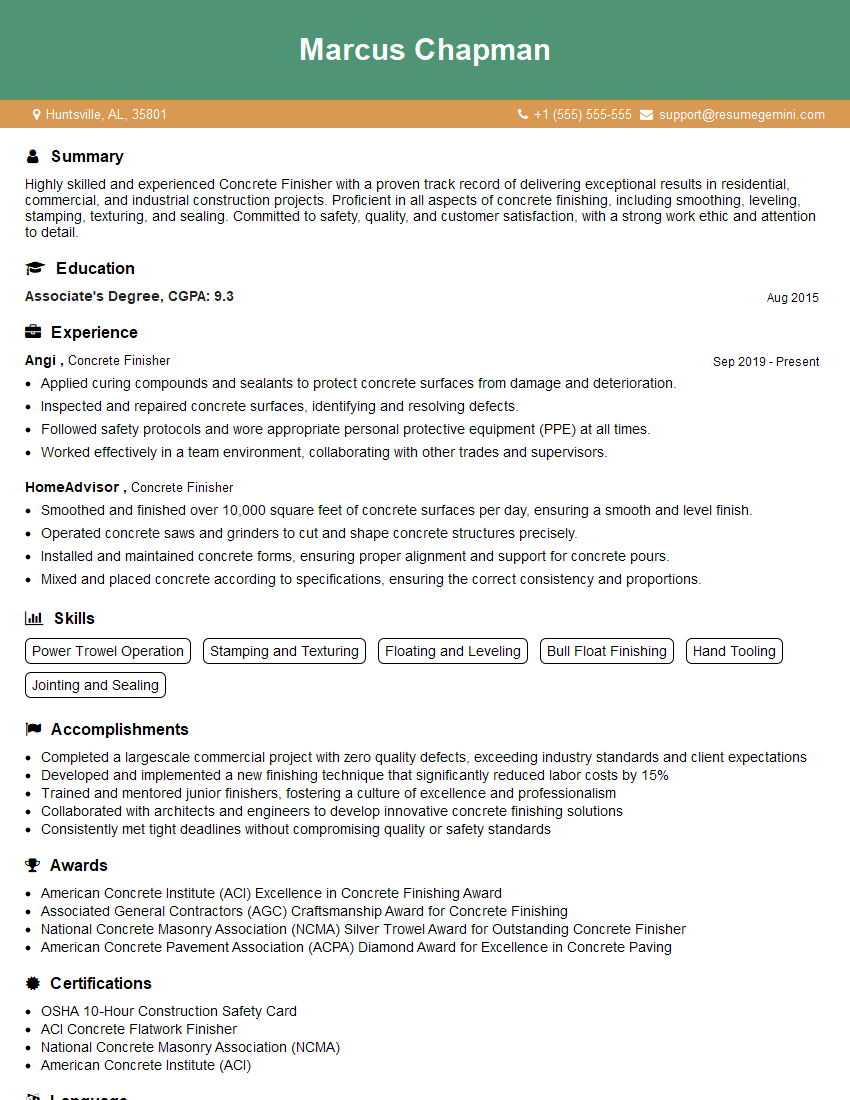
Mastering concrete overlay techniques opens doors to exciting career opportunities in construction and infrastructure development, offering excellent potential for growth and specialization. To maximize your job prospects, it’s crucial to have a strong, ATS-friendly resume that highlights your skills and experience effectively. ResumeGemini is a trusted resource to help you create a professional and impactful resume that grabs the attention of recruiters. Examples of resumes tailored specifically to the Concrete Overlay field are available to guide you through the process.
Explore more articles
Users Rating of Our Blogs
Share Your Experience
We value your feedback! Please rate our content and share your thoughts (optional).
What Readers Say About Our Blog
Very informative content, great job.
good