Preparation is the key to success in any interview. In this post, we’ll explore crucial Embryo Transfer and Cloning interview questions and equip you with strategies to craft impactful answers. Whether you’re a beginner or a pro, these tips will elevate your preparation.
Questions Asked in Embryo Transfer and Cloning Interview
Q 1. Describe the process of in-vitro fertilization (IVF) from oocyte retrieval to embryo transfer.
In-vitro fertilization (IVF) is a complex process that involves fertilizing an egg outside the body and then transferring the resulting embryo into the uterus. It begins with oocyte retrieval, where mature eggs are collected from the ovaries using a needle guided by ultrasound. These eggs are then retrieved and prepared for fertilization in the laboratory.
Next comes fertilization. The retrieved eggs are incubated with sperm in a specialized culture medium, allowing fertilization to occur. Successful fertilization results in the formation of zygotes.
Over the next few days, the zygotes undergo a series of cell divisions, developing into embryos. This is called embryo culture. The embryos are carefully monitored for their growth and development.
Finally, embryo transfer takes place. Using a thin catheter, one or more embryos are carefully placed into the woman’s uterus, where they hopefully implant and continue to develop into a pregnancy. The timing of the transfer is crucial; it’s typically performed around day 3 or day 5 of embryonic development, depending on the IVF protocol and the embryo’s quality.
Q 2. Explain the different methods of embryo transfer and their respective advantages and disadvantages.
Embryo transfer methods primarily differ in the stage of embryonic development at the time of transfer. The most common are:
- Day 3 transfer: Embryos are transferred at the cleavage stage (typically 6-8 cells). This method is less demanding in terms of laboratory resources.
- Day 5 transfer: Embryos are transferred at the blastocyst stage. This allows for better assessment of embryo quality and potential for implantation, as only the most robust embryos successfully reach this stage.
Advantages of Day 5 transfer: Higher implantation rates and potentially lower multiple pregnancy rates due to better selection criteria. Disadvantages: Requires more sophisticated laboratory techniques and culture media, and it’s associated with a higher cost.
Advantages of Day 3 transfer: Simpler and less expensive; may be preferable in some situations where blastocyst development is less predictable. Disadvantages: Lower implantation rates and higher risk of multiple pregnancies compared to Day 5 transfer.
The choice of transfer method is determined by various factors, including the patient’s age, ovarian reserve, embryo quality, and clinic protocols. A comprehensive assessment is always needed to make the most appropriate selection.
Q 3. What are the key factors influencing embryo selection for transfer?
Embryo selection is a crucial step in IVF, aiming to identify the embryo(s) with the highest likelihood of successful implantation and resulting in a healthy pregnancy. Several factors influence this decision:
- Morphology: Assessment of the embryo’s physical characteristics (size, shape, cell number, fragmentation). High-quality embryos typically exhibit uniform cells, minimal fragmentation, and appropriate developmental stage.
- Developmental kinetics: The timing and pace of the embryo’s division. Consistent and timely division is a positive indicator.
- Genetic screening (PGT): Preimplantation genetic testing screens for chromosomal abnormalities (aneuploidy) or specific genetic diseases. This is particularly helpful for patients with recurrent miscarriages or a family history of genetic disorders.
- Morphokinetic parameters: Advanced time-lapse imaging systems track embryo development in real-time, providing detailed information on cell division timing and other developmental events that can aid in selection. This can help select embryos with a higher chance of successful implantation.
The weighting given to each factor varies depending on the patient’s circumstances and the available technology. For example, genetic screening is especially important for older women or those with a history of failed IVF attempts.
Q 4. Detail the criteria for assessing embryo morphology and quality.
Embryo morphology assessment is based on visual examination of the embryo under a microscope, scoring several features. Key criteria include:
- Number of cells: The number of cells should be appropriate for the day of development.
- Symmetry: Cells should be evenly sized and distributed.
- Fragmentation: The amount of cellular debris (apoptotic bodies) present. Higher fragmentation is generally indicative of poorer quality.
- Cell appearance: Cells should be clear and well-defined, not dark or irregular.
- Blastocyst quality (for Day 5 embryos): Assessment of the inner cell mass (ICM) and trophectoderm (TE), which are critical for embryo development and implantation. A high-quality blastocyst will have a well-defined ICM and TE.
These features are scored using standardized grading systems, allowing for a consistent and objective assessment of embryo quality. It’s important to note that morphology is not a perfect predictor of implantation potential but is still a very important factor in embryo selection.
Q 5. How do you manage potential complications during embryo transfer?
While generally a safe procedure, embryo transfer can have potential complications. These are usually minor and easily managed but should always be considered and prepared for. Potential complications include:
- Infection: Although rare, there’s a small risk of infection at the transfer site. This is usually prevented with good aseptic technique.
- Ovarian hyperstimulation syndrome (OHSS): OHSS is a potential complication of ovarian stimulation used in IVF. It’s characterized by swollen ovaries and fluid accumulation. Severe cases require hospitalization.
- Multiple gestation: Transferring multiple embryos increases the chance of a multiple pregnancy (twins, triplets, etc.), which presents significant risks to both mother and babies. This risk can be managed by selective single embryo transfer (eSET) when appropriate.
- Uterine perforation: A rare complication involving accidental puncture of the uterine wall during the procedure. Skillful clinicians minimize this risk.
Managing these complications involves preventative measures (such as careful monitoring of patients and appropriate stimulation protocols to minimize OHSS) and prompt treatment if they occur. Close post-transfer monitoring is important to catch and address any issues early on.
Q 6. What are the ethical considerations surrounding embryo transfer and selection?
Embryo transfer and selection raise several ethical considerations:
- Embryo disposal: What happens to unused or non-transferred embryos? This raises concerns about the moral status of embryos and the potential for disrespect of human life.
- Selective reduction: In cases of multiple pregnancies, selective reduction (termination of some fetuses) may be necessary to protect the health of the mother and the remaining fetuses. This raises ethical dilemmas.
- PGD/PGS implications: Preimplantation genetic diagnosis and screening raise concerns about the selection of embryos based on genetic traits and the potential for eugenics.
- Access and equity: The high cost of IVF limits access for many couples, raising issues of equity and fairness.
- Embryo research: The use of embryos for research purposes raises ethical questions about the balance between scientific progress and respect for human life.
These ethical considerations necessitate open discussions and careful consideration of the societal, religious, and personal beliefs involved. Regulations and guidelines are continually evolving to address these concerns, emphasizing the importance of informed consent and responsible practice in the field.
Q 7. Describe the process of somatic cell nuclear transfer (SCNT).
Somatic cell nuclear transfer (SCNT), also known as therapeutic cloning, is a technique used to create embryonic stem cells genetically identical to a somatic cell donor. It involves removing the nucleus from an unfertilized egg and replacing it with the nucleus from a somatic cell (a non-reproductive cell from the body, such as a skin cell).
The process then involves:
- Enucleation: Removing the nucleus from the donor egg using microneedles. This is a delicate procedure.
- Nuclear transfer: Injecting the nucleus from the somatic cell into the enucleated egg.
- Activation: Stimulating the egg to begin cell division. This is usually done through chemical or electrical methods.
- Embryo culture: Growing the resulting embryo in a laboratory for several days until it reaches the blastocyst stage.
- Stem cell derivation: Extracting embryonic stem cells from the inner cell mass of the blastocyst.
SCNT’s primary purpose is not to create a cloned individual (reproductive cloning), but rather to derive embryonic stem cells for research and therapeutic purposes. These stem cells have the potential to differentiate into various cell types, offering possibilities for treating diseases and injuries. Ethical considerations surrounding SCNT are significant, focusing primarily on the creation and destruction of human embryos.
Q 8. Explain the challenges associated with cloning and potential solutions.
Cloning, the process of creating a genetically identical copy of an organism, faces significant challenges. One major hurdle is low success rates. The process of nuclear transfer, where the nucleus of a somatic cell is transferred into an enucleated egg, often fails to result in a viable embryo. This is partly due to incomplete reprogramming of the donor cell’s DNA, leading to developmental abnormalities and embryonic lethality. Another challenge is the high incidence of large offspring syndrome (LOS) in cloned animals, characterized by excessive size and various organ malformations. This is thought to be linked to epigenetic modifications that are not fully reset during cloning.
Potential solutions involve refining techniques like somatic cell nuclear transfer to improve the efficiency of reprogramming. This includes utilizing advanced epigenetic modifying techniques, improved culture media and selecting optimal donor cells. Scientists are also exploring alternative cloning methods, such as using induced pluripotent stem cells (iPSCs) which can be reprogrammed more efficiently. Furthermore, rigorous screening of cloned embryos before transfer can help identify and discard those with developmental defects, thereby improving success rates. Finally, genetic engineering technologies may allow for the correction of epigenetic errors before or during the cloning process.
Q 9. What are the differences between therapeutic cloning and reproductive cloning?
Therapeutic cloning and reproductive cloning are both forms of cloning, but they differ significantly in their goals and applications. Reproductive cloning aims to create a genetically identical copy of an entire organism. Think of Dolly the sheep – a classic example of reproductive cloning. The ultimate goal is to produce a live birth of a clone. Therapeutic cloning, on the other hand, focuses on creating embryonic stem cells (ESCs) that are genetically identical to the patient. These ESCs can then be used to generate various cell types for therapeutic purposes, such as treating diseases like Parkinson’s or diabetes. The embryo is not intended to develop into a whole organism, but rather serves as a source of valuable cells.
The key difference lies in the intended outcome: a live birth versus a source of stem cells. Reproductive cloning raises significant ethical concerns, while therapeutic cloning holds immense potential for regenerative medicine, albeit with its own set of ethical considerations.
Q 10. Discuss the techniques used for embryo cryopreservation and vitrification.
Embryo cryopreservation and vitrification are techniques used to preserve embryos for later use. Both involve freezing embryos, but they differ in their freezing methods. Cryopreservation uses a slow cooling process with a cryoprotectant solution to protect the embryo from ice crystal formation which could damage its cellular structure. This method typically involves several steps, gradually lowering the temperature to prevent ice crystal formation.
Vitrification, on the other hand, uses a much faster freezing method. The embryo is plunged directly into liquid nitrogen, bypassing the slow cooling stage. This rapid freezing minimizes ice crystal formation. It’s often considered superior to slow freezing methods because it results in higher embryo survival rates post-thaw.
In both techniques, cryoprotectants, substances that reduce ice crystal formation, are crucial for protecting the embryos during freezing and thawing. The choice between cryopreservation and vitrification depends on several factors, including laboratory resources and the desired outcome.
Q 11. How do you ensure the quality and sterility of the laboratory environment for embryo manipulation?
Maintaining a sterile and high-quality laboratory environment is paramount in embryo manipulation. This involves a multi-layered approach to prevent contamination and ensure the health and viability of the embryos.
- Cleanroom Technology: The lab uses cleanroom technology, including HEPA filters to remove airborne particles and maintain a controlled environment. Regular monitoring of air quality is essential.
- Strict Hygiene Protocols: Personnel must adhere to rigorous hygiene protocols, including the use of sterile gowns, gloves, and masks. Regular handwashing and disinfection are mandatory.
- Equipment Sterilization: All equipment used for embryo manipulation, including incubators, microscopes, and culture dishes, must be meticulously sterilized using appropriate techniques, such as autoclaving or UV irradiation.
- Regular Cleaning and Disinfection: The entire laboratory undergoes regular cleaning and disinfection using approved disinfectants. Work surfaces must be cleaned between procedures.
- Environmental Monitoring: Regular environmental monitoring, including air and surface sampling, is conducted to detect any potential contamination. This helps to quickly identify and address any issues.
By implementing these stringent measures, we ensure a controlled environment to protect the embryos and prevent contamination, leading to higher success rates in assisted reproductive technologies.
Q 12. Describe the role of assisted hatching techniques in improving IVF success rates.
Assisted hatching techniques aim to improve IVF success rates by facilitating the embryo’s escape from the zona pellucida, the outer shell of the embryo. A thick or abnormally hardened zona pellucida can hinder implantation. Assisted hatching techniques create a small opening in the zona pellucida, allowing the embryo to hatch more easily.
Several methods exist, including laser-assisted hatching (using a laser to create a small hole) and acid Tyrode’s solution (a chemical that weakens the zona pellucida). The choice of method depends on several factors. The aim is to help the embryo implant more effectively. Studies have shown that assisted hatching can improve implantation rates and pregnancy rates in certain patient groups, such as women with advanced maternal age or those with a history of IVF failure. However, it’s important to note that assisted hatching isn’t suitable for all patients, and its effectiveness is still a subject of ongoing research.
Q 13. What are the common causes of embryo failure and how can they be mitigated?
Embryo failure can stem from various factors, both genetic and environmental. Genetic factors include chromosomal abnormalities, which are a major cause of embryo failure. These abnormalities can lead to developmental arrest or miscarriage. Environmental factors play a significant role too. Poor culture conditions, such as suboptimal temperature or pH levels in the incubator, can compromise embryo development. Exposure to toxins or infections can also impact embryo health.
Mitigating these factors involves a multi-pronged approach. Preimplantation genetic testing (PGT) can help identify embryos with chromosomal abnormalities before transfer, improving selection and increasing the likelihood of successful implantation. Optimizing culture conditions by strictly controlling temperature, pH, and gas levels is crucial. Implementing stringent hygiene protocols to prevent contamination and infection is also vital. Careful selection of oocytes and sperm can reduce the chances of inheriting genetic defects. Improvements in laboratory technologies and practices will continue to help in reducing causes of embryo failure.
Q 14. How do you monitor embryo development in vitro?
Monitoring embryo development in vitro is a critical aspect of IVF. We use time-lapse imaging systems to provide a detailed picture of embryo development. These systems capture images of the embryos at regular intervals, creating a comprehensive video record of their growth. This allows us to observe key developmental events, such as fertilization, cleavage, and blastocyst formation.
We analyze several parameters, including cleavage rate, fragmentation, and the timing of specific developmental events. This information helps assess embryo quality and predict implantation potential. The images are analyzed using sophisticated algorithms and software that helps us score embryos objectively. In addition to time-lapse imaging, other techniques may be used to assess embryo morphology and functionality before transfer, like assessing the expansion and hatching of the blastocyst.
Time-lapse imaging has revolutionized embryo assessment, allowing for more objective and precise evaluation, resulting in improved embryo selection and increased IVF success rates.
Q 15. Explain your understanding of preimplantation genetic testing (PGT).
Preimplantation Genetic Testing (PGT) is a group of techniques used to detect genetic abnormalities in embryos before they are implanted in the uterus during in-vitro fertilization (IVF). It allows prospective parents to select embryos that are free from serious genetic diseases or chromosomal abnormalities. This significantly reduces the risk of having a child with a genetic condition.
There are several types of PGT, each targeting different genetic issues:
- PGT-A (PGT-Aneuploidy): Screens for an abnormal number of chromosomes (aneuploidy) in embryos. This is crucial because aneuploidy is a major cause of implantation failure and miscarriage.
- PGT-M (PGT-Monogenic): Tests for specific gene mutations that cause single-gene disorders like cystic fibrosis or Huntington’s disease. This is used when parents carry a known gene mutation.
- PGT-SR (PGT-Structural Rearrangements): Detects large-scale chromosomal abnormalities such as translocations or inversions. These rearrangements can lead to unbalanced chromosome numbers in the offspring.
The process involves taking a small number of cells (biopsy) from the developing embryo, typically at the blastocyst stage (day 5 or 6 after fertilization). These cells are then analyzed using advanced molecular techniques, such as next-generation sequencing (NGS), to identify any genetic abnormalities. Only genetically healthy embryos are then selected for transfer.
For example, a couple with a family history of cystic fibrosis might opt for PGT-M to screen their embryos and select only those free from the CFTR gene mutation. This ensures a higher chance of a healthy pregnancy and reduces the emotional and financial burden of repeated IVF cycles or a pregnancy resulting in a child with a serious genetic condition.
Career Expert Tips:
- Ace those interviews! Prepare effectively by reviewing the Top 50 Most Common Interview Questions on ResumeGemini.
- Navigate your job search with confidence! Explore a wide range of Career Tips on ResumeGemini. Learn about common challenges and recommendations to overcome them.
- Craft the perfect resume! Master the Art of Resume Writing with ResumeGemini’s guide. Showcase your unique qualifications and achievements effectively.
- Don’t miss out on holiday savings! Build your dream resume with ResumeGemini’s ATS optimized templates.
Q 16. How would you troubleshoot issues related to low fertilization rates?
Low fertilization rates in IVF are a significant concern, and troubleshooting requires a systematic approach. The first step is a thorough investigation of potential causes, which can be categorized into:
- Oocyte-related factors: Poor oocyte quality (age, ovarian reserve), inadequate oocyte maturation, compromised cytoplasmic maturity, or genetic abnormalities can all impact fertilization. Assessment of the woman’s ovarian reserve through AMH levels and antral follicle count is important.
- Sperm-related factors: Low sperm concentration, poor motility, abnormal morphology, DNA fragmentation, or genetic defects in the sperm can hinder fertilization. A detailed semen analysis is crucial.
- Culture media issues: Contamination, suboptimal pH or osmolarity, or inappropriate culture conditions can adversely affect both sperm and egg quality.
- Technical errors: Improper handling of gametes during retrieval or insemination, inadequate micromanipulation during ICSI, or timing issues can also contribute to low fertilization rates.
Troubleshooting steps involve:
- Comprehensive evaluation: Conduct thorough investigations of both male and female partners to identify underlying issues. This includes hormonal profiles, ultrasound scans, genetic testing, and detailed semen analysis.
- Optimize stimulation protocols: Adjust the IVF stimulation protocols based on individual patient characteristics and prior response to tailor the quantity and quality of retrieved oocytes.
- Improve sperm preparation techniques: Employ advanced sperm selection techniques like density gradient centrifugation or magnetic activated cell sorting (MACS) to enhance sperm quality before insemination.
- Assess and modify culture conditions: Ensure the culture media is fresh, free from contamination, and optimally formulated for each developmental stage.
- Consider ICSI: Intracytoplasmic sperm injection (ICSI) is often used to bypass sperm-related fertilization issues. In this technique, a single sperm is injected directly into the oocyte.
- Review all procedural steps: meticulously review the steps taken during the entire IVF process for potential technical improvements.
For example, if a semen analysis reveals significant DNA fragmentation in the sperm, we might consider using MACS to select sperm with less DNA damage for ICSI. If the female partner shows diminished ovarian reserve, strategies to improve oocyte yield or quality through ovarian stimulation protocol adjustments will be critical.
Q 17. Describe the different types of culture media used for embryo development.
Embryo culture media is a complex mixture of nutrients and factors essential for successful embryo development in vitro. The composition of the media is critical for supporting optimal growth, preventing damage, and promoting healthy development. Different media are used depending on the stage of embryo development.
Several types of culture media are commonly employed:
- Sequential media: These mimic the changing environment of the fallopian tube and uterus, changing composition as the embryo develops from zygote to blastocyst. The media composition is designed to support various stages. Common components include amino acids, vitamins, minerals, glucose, and growth factors.
- Synthetic media: Composed of precisely defined components, synthetic media offer more consistency and reproducibility compared to protein-supplemented media. This reduces batch-to-batch variation and promotes standardization.
- Protein-supplemented media: These media include serum or other protein sources to provide growth factors and other supportive elements for embryo development. However, the variability of protein sources and potential for contamination can be a drawback.
- Co-culture systems: These involve co-culturing the embryos with other cells such as feeder cells (e.g., endometrial cells) to provide a more supportive environment.
Choosing the appropriate culture medium is crucial for optimal embryo development. The choice involves careful consideration of factors like the age of the patient, previous IVF outcomes, and the specifics of the clinical setting. For example, sequential media are preferred because they provide a more physiological environment mimicking the natural in-vivo development. Meanwhile, synthetic media offer more control and reduced batch-to-batch variability, which contributes to better reproducibility and standardization.
Q 18. What are the legal and regulatory aspects of human cloning?
The legal and regulatory landscape surrounding human cloning is highly complex and varies significantly across jurisdictions. Generally, most countries have strict regulations or outright bans on reproductive cloning—the creation of a cloned human being. The primary ethical concern is the potential for exploitation and the creation of human beings without their consent. However, the regulations around therapeutic cloning – using cloned cells for research and treatment purposes, for example, to obtain embryonic stem cells – are less strict but still heavily regulated and scrutinized by ethical review boards.
Key legal and regulatory aspects include:
- Bans on reproductive cloning: Many countries have enacted laws explicitly prohibiting reproductive cloning. These laws often carry severe penalties for violations.
- Regulation of therapeutic cloning: Therapeutic cloning is often subject to strict regulations concerning research ethics, informed consent, and the use of embryonic stem cells.
- Ethical review boards: Most countries require research involving human embryos or cloning technology to be reviewed and approved by ethical review boards. These boards ensure the research is conducted ethically and in compliance with national guidelines.
- International agreements: While there is no global consensus, various international organizations and conventions have expressed concerns about human cloning and have promoted discussions on ethical guidelines.
The legal complexities stem from the intersection of scientific advancement, ethical considerations, and societal values. Striking a balance between fostering scientific progress and protecting human dignity is a major challenge. This is a rapidly evolving field, with legal and regulatory frameworks continuously adapting to the advancements in cloning technology.
Q 19. How do you maintain accurate and detailed records of all procedures and outcomes?
Maintaining accurate and detailed records in an IVF lab is paramount for ensuring patient safety, regulatory compliance, and successful outcomes. This involves documenting every step of the process, from initial patient consultation to embryo transfer and subsequent pregnancy follow-up.
Our record-keeping system utilizes a combination of electronic and paper-based documentation. Key elements include:
- Patient information: Comprehensive medical history, hormonal profiles, diagnostic test results, and consent forms are meticulously recorded and securely stored, adhering to HIPAA regulations.
- Procedure logs: Detailed records of each procedure are documented, including date, time, personnel involved, specifics of the procedure (e.g., type of stimulation protocol, number of oocytes retrieved, fertilization rate, embryo grading), and any complications encountered.
- Embryo tracking: Each embryo is assigned a unique identifier and tracked throughout its development, including its morphology at various stages, genetic testing results (if any), and the date and time of transfer.
- Cryopreservation records: Detailed records of cryopreservation procedures, including the method used, the number of embryos or gametes cryopreserved, and their storage location. This is crucial for traceability and long-term tracking.
- Quality control measures: Records are maintained for equipment calibration, media preparation, and quality control tests. Any deviations from standards are documented and investigated.
We utilize a dedicated electronic health record (EHR) system for enhanced security, data accessibility, and ease of analysis. Regular audits and data backups are implemented to maintain data integrity and ensure compliance with all relevant regulations. We also maintain stringent data privacy protocols to protect patient confidentiality.
Q 20. What are the safety measures taken to prevent cross-contamination in the IVF lab?
Preventing cross-contamination in an IVF lab is critical to ensure the safety and viability of both gametes and embryos. Strict adherence to aseptic techniques and quality control procedures is paramount. Our safety measures include:
- Laminar flow hoods: All manipulations of gametes and embryos are performed within certified laminar flow hoods, which provide a sterile work environment by removing airborne particles and microorganisms.
- Strict sterilization protocols: All instruments, equipment, and consumables are meticulously sterilized using validated methods such as autoclaving, UV sterilization, or disposable materials. Equipment is regularly calibrated and maintained.
- Dedicated work areas: Separate designated work areas are maintained for different procedures to minimize the risk of cross-contamination between samples.
- Personal protective equipment (PPE): Laboratory personnel consistently wear appropriate PPE, including sterile gloves, lab coats, and face masks, to prevent contamination.
- Environmental monitoring: Regular environmental monitoring is conducted to detect any microbial contamination. This includes air quality testing, surface sampling, and testing of the culture media.
- Personnel training: Thorough training programs are implemented for all laboratory personnel, emphasizing aseptic techniques and adherence to strict protocols. Regular competency assessments ensure knowledge and skill maintenance.
- Quality control checks: Regular quality control checks are performed on all reagents, media, and equipment to ensure sterility and functionality. This is documented as part of the quality assurance program.
For example, before beginning any procedure, we thoroughly disinfect the laminar flow hood’s work surface with an approved disinfectant and verify its functionality. We also employ color-coded systems for identifying different materials to prevent accidental mixing or contamination.
Q 21. Explain the principles of gamete handling and manipulation.
Gamete handling and manipulation are crucial steps in IVF and other assisted reproductive technologies (ART). It involves meticulous techniques to preserve the integrity and viability of eggs and sperm, maximizing the chances of successful fertilization and embryo development.
Key principles of gamete handling include:
- Aseptic techniques: Maintaining a sterile environment throughout all procedures to prevent contamination. This involves the use of laminar flow hoods, sterile equipment, and strict adherence to aseptic techniques.
- Minimizing mechanical stress: Handling gametes gently to avoid damage to their delicate structures. This requires proper training and careful execution of techniques.
- Temperature control: Maintaining optimal temperature throughout the process to prevent damage to the gametes. Eggs and sperm are usually kept at 37°C.
- Osmolarity control: Utilizing solutions with appropriate osmolarity to avoid osmotic stress that can cause gamete damage.
- pH control: Maintaining the correct pH for optimal gamete viability and fertilization.
- Media selection: Using appropriate culture media that support gamete and embryo development and prevent damage.
Techniques involved in gamete manipulation include:
- Oocyte retrieval: Using transvaginal ultrasound to aspirate oocytes from the follicles.
- Sperm preparation: Employing techniques like density gradient centrifugation or swim-up methods to select motile and morphologically normal sperm.
- Intracytoplasmic sperm injection (ICSI): Injecting a single sperm directly into the oocyte cytoplasm to overcome male factor infertility.
For instance, during oocyte retrieval, the aspiration needle is carefully maneuvered to minimize trauma to the follicles and surrounding tissue. During ICSI, precise micromanipulation techniques are essential to inject the sperm without damaging the oocyte. Each step requires specialized training and experience to maintain the gamete’s integrity and improve the chances of a successful outcome.
Q 22. What are the potential risks and benefits of using donor gametes or embryos?
Using donor gametes (sperm or eggs) or embryos offers couples facing infertility challenges a chance to build their families. However, it’s crucial to understand both the benefits and risks involved.
Benefits:
- Overcoming infertility: Donor gametes can help couples with infertility issues like low sperm count, blocked fallopian tubes, or genetic disorders achieve pregnancy.
- Expanding family building options for LGBTQ+ individuals and single parents: Donor gametes provide a pathway to parenthood for individuals and couples who cannot conceive naturally or through other methods.
- Genetic screening: Donors often undergo genetic screening to reduce the risk of passing on inherited diseases.
Risks:
- Emotional challenges: Using donor gametes can raise complex emotional issues for both parents and the child, particularly regarding identity and family origins.
- Ethical concerns: Issues related to donor anonymity, compensation, and potential exploitation need careful consideration.
- Legal implications: Legal issues concerning parental rights and responsibilities, particularly with anonymous donors, may arise.
- Health risks associated with the procedure: As with any assisted reproductive technology, there’s a risk of complications such as multiple pregnancies, ectopic pregnancies, or ovarian hyperstimulation syndrome (OHSS).
In my practice, we spend considerable time counseling prospective parents about these issues, ensuring they are well-informed and prepared for the emotional and logistical complexities involved.
Q 23. Describe your experience with micromanipulation techniques, such as ICSI.
Intracytoplasmic sperm injection (ICSI) is a micromanipulation technique I’ve extensively used throughout my career. It involves injecting a single sperm directly into a mature egg, bypassing the natural fertilization process. My experience encompasses various aspects of ICSI, from selecting the most suitable sperm under high magnification to ensuring precise injection using microneedles.
The procedure demands meticulous attention to detail and steady hands. I’ve performed hundreds of ICSI procedures, and I’ve seen firsthand its effectiveness in overcoming male factor infertility, particularly in cases of severe oligozoospermia (low sperm count) or severe teratozoospermia (abnormally shaped sperm). It’s vital to master the delicate balance between speed and precision to minimize damage to the egg and maximize the chances of successful fertilization. We use sophisticated equipment including inverted microscopes with micromanipulators and specialized needles to ensure optimal results. Furthermore, I stay current with the latest advancements in ICSI techniques and training to maintain excellence in this critical aspect of assisted reproductive technology.
Q 24. How do you ensure patient confidentiality and data privacy in the context of reproductive medicine?
Patient confidentiality and data privacy are paramount in reproductive medicine. We adhere to strict guidelines and regulations, including HIPAA in the US, to protect sensitive patient information. This involves several key strategies:
- Secure Data Management: All patient records, including medical history, test results, and treatment plans, are stored in encrypted electronic health records (EHR) systems that have robust security measures and access control policies.
- Limited Access: Only authorized personnel with a legitimate need to access patient information are granted access. We maintain detailed audit trails to track all data access.
- Informed Consent: Before any procedure, patients receive thorough explanations of the process, including the risks and benefits, and provide written informed consent.
- Data Anonymization: When data is used for research or other purposes, it is anonymized to protect individual identity.
- Employee Training: All our staff receives regular training on data privacy and confidentiality protocols.
We regularly review and update our security measures to stay ahead of emerging threats and maintain the highest level of data protection. Patient trust is essential, and we understand the critical role data privacy plays in maintaining that trust.
Q 25. Discuss your experience working with different types of reproductive technologies.
My experience spans a wide range of reproductive technologies, including:
- In-Vitro Fertilization (IVF): A cornerstone of my practice, involving egg retrieval, fertilization, and embryo culture before transfer.
- ICSI (Intracytoplasmic Sperm Injection): As discussed earlier, this is a crucial technique for male factor infertility.
- Preimplantation Genetic Testing (PGT): This involves genetic screening of embryos before transfer to identify genetic abnormalities, helping to reduce the risk of inherited disorders.
- Cryopreservation (freezing): I have extensive experience with freezing embryos, eggs, and sperm for future use.
- Assisted Hatching: This technique assists in embryo implantation by creating a small opening in the zona pellucida (the outer layer of the embryo).
Working with these diverse technologies requires adaptability and a deep understanding of their respective strengths and limitations. The choice of technology depends on the individual patient’s needs and circumstances, and I’m adept at tailoring treatment plans based on a thorough assessment of each case.
Q 26. What are your strategies for maintaining a high standard of accuracy and precision in your work?
Maintaining accuracy and precision is critical in reproductive medicine. My strategies include:
- Strict adherence to protocols: We follow meticulously detailed protocols for each procedure, ensuring consistency and minimizing errors.
- Regular quality control: We perform regular quality control checks on equipment and reagents to ensure they are functioning optimally.
- Microscopic evaluation and confirmation: All procedures involving manipulation of gametes or embryos are carefully monitored and confirmed under the microscope.
- Detailed documentation: Meticulous documentation of every step of the process is vital for tracking progress and ensuring transparency.
- Continuous professional development: I stay up-to-date with the latest techniques and best practices through attending conferences, workshops, and reviewing the latest research.
- Teamwork and cross-checking: Procedures often involve collaboration with colleagues, providing an additional layer of checks and balances to ensure accuracy.
These strategies, combined with a commitment to precision and attention to detail, are fundamental to delivering high-quality care and achieving optimal outcomes for our patients.
Q 27. Describe a challenging situation you faced and how you resolved it in your previous role.
One challenging situation involved a patient with recurrent implantation failure despite several IVF cycles. She had undergone extensive testing, and everything appeared normal. We explored every possible factor, including optimizing the culture media, changing the timing of embryo transfer, and adjusting the stimulation protocol. We also conducted additional genetic testing for both the patient and her partner, which revealed a previously undetected genetic incompatibility that was hindering implantation.
The solution involved using Preimplantation Genetic Testing for Aneuploidy (PGT-A) to screen the embryos before transfer. This allowed us to select only genetically normal embryos for transfer, significantly increasing her chances of successful implantation. In the subsequent IVF cycle, utilizing PGT-A, she successfully conceived and delivered a healthy baby. This case highlighted the importance of comprehensive investigation, staying updated on the latest advancements in reproductive technology, and adapting treatment plans based on individual patient needs. It reinforced the value of perseverance and a collaborative approach in overcoming challenging cases.
Q 28. What are your future career aspirations in the field of reproductive biology?
My future aspirations involve a continued commitment to advancing the field of reproductive biology, particularly in the area of improving embryo selection and implantation rates. I’m interested in exploring the potential of advanced technologies like artificial intelligence and machine learning to enhance embryo assessment and predict implantation potential more accurately. I’m also interested in contributing to research aimed at reducing the risks and improving the success rates of assisted reproductive technologies. Ultimately, my goal is to provide even better care to patients, enabling more couples and individuals to realize their dreams of parenthood.
Key Topics to Learn for Embryo Transfer and Cloning Interview
- Embryo Culture Techniques: Understanding various media formulations, incubation conditions, and assessment of embryo morphology and developmental potential.
- Assisted Hatching Techniques: Mastering different methods and their applications, including the selection criteria for appropriate techniques.
- Embryo Transfer Procedures: Detailed knowledge of the procedural steps, equipment, and potential complications. This includes understanding various transfer catheter types and techniques.
- Cryopreservation of Embryos: Understanding the principles, methods (slow-freeze vs. vitrification), and challenges associated with embryo cryopreservation and thawing.
- Cloning Techniques (Somatic Cell Nuclear Transfer): Grasping the underlying principles, step-by-step procedures, and ethical considerations involved in cloning techniques.
- Genetic Screening & Preimplantation Genetic Testing (PGT): Familiarize yourself with various PGT methods and their applications in selecting healthy embryos for transfer.
- Quality Control and Assurance: Understanding the importance of quality control measures at each stage of the process, including documentation and record-keeping.
- Troubleshooting and Problem Solving: Develop the ability to identify and address potential complications during embryo culture, cryopreservation, and transfer procedures.
- Legal and Ethical Considerations: Be prepared to discuss the ethical implications and regulatory frameworks surrounding embryo transfer and cloning technologies.
- Data Analysis and Interpretation: Ability to analyze and interpret data related to embryo development, success rates, and other relevant metrics.
Next Steps
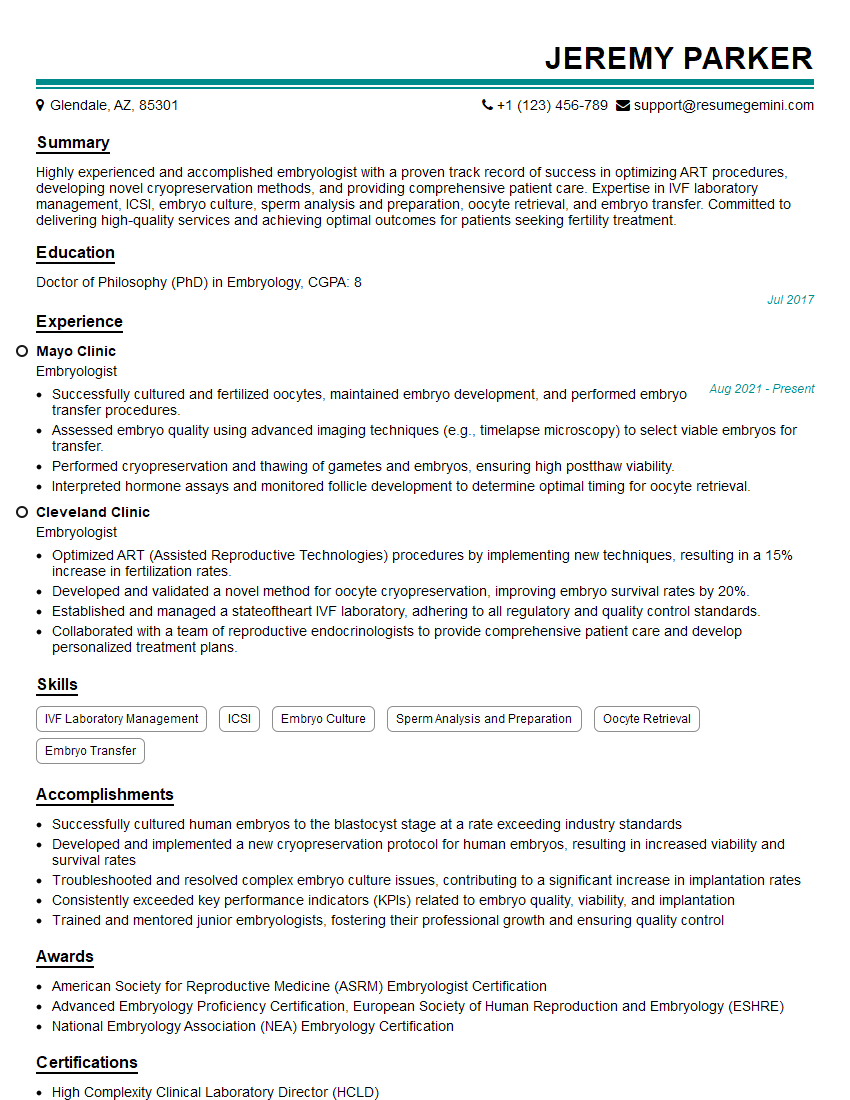
Mastering Embryo Transfer and Cloning techniques opens doors to exciting career advancements in reproductive medicine and research. To maximize your job prospects, creating a strong, ATS-friendly resume is crucial. ResumeGemini is a trusted resource that can help you build a professional resume that highlights your skills and experience effectively. ResumeGemini offers examples of resumes tailored to the Embryo Transfer and Cloning field, providing you with a template to showcase your unique qualifications. Invest time in crafting a compelling resume – it’s your first impression and a key to unlocking your career goals.
Explore more articles
Users Rating of Our Blogs
Share Your Experience
We value your feedback! Please rate our content and share your thoughts (optional).
What Readers Say About Our Blog
Very informative content, great job.
good