The thought of an interview can be nerve-wracking, but the right preparation can make all the difference. Explore this comprehensive guide to Crane Boom Inspection and Maintenance interview questions and gain the confidence you need to showcase your abilities and secure the role.
Questions Asked in Crane Boom Inspection and Maintenance Interview
Q 1. Describe the different types of crane boom failures you’ve encountered.
Crane boom failures are unfortunately common, and their nature depends heavily on the type of crane, its age, and the operating conditions. I’ve encountered several types, including:
- Buckling: This often occurs due to overloading, where compressive forces exceed the boom’s capacity, causing a sudden collapse or bending. I recall one instance where a boom buckled during the lifting of an unexpectedly heavy piece of machinery. The damage was extensive, necessitating complete boom replacement.
- Yielding/Plastic Deformation: This is a more gradual failure where the boom material permanently deforms under sustained stress. It might not be immediately catastrophic but leads to weakening and eventually failure. I’ve seen this in booms exposed to years of cyclic loading without proper maintenance.
- Fracture: Complete breakage of the boom, usually a sudden and dangerous event. Fractures can stem from fatigue cracks (repeated stress cycles weakening the material), overloading, or impact damage. One instance involved a crane struck by a falling object, resulting in a catastrophic fracture of the boom.
- Corrosion-related failures: Rust and pitting weaken the boom’s structural integrity, particularly in harsh environments. The corrosion can initiate cracks or significantly reduce the cross-sectional area, eventually leading to failure. I’ve seen several instances where coastal cranes suffered premature failure due to severe corrosion.
Understanding the specific failure mechanism is critical for determining the root cause and preventing future incidents. Proper inspection and maintenance protocols are essential to mitigate these risks.
Q 2. Explain the process of a visual inspection of a crane boom.
A visual inspection of a crane boom is the first and most crucial step in assessing its condition. It’s a systematic process involving a detailed examination of the entire boom, from tip to base. Here’s how I approach it:
- Preparation: Ensure the crane is properly secured, de-energized, and in a stable position. Appropriate personal protective equipment (PPE) is essential, including safety glasses, gloves, and possibly a hard hat.
- Overall Assessment: Start with a general survey, checking for obvious signs of damage like dents, cracks, bends, or significant corrosion. Look for any signs of previous repairs.
- Detailed Examination: Systematically inspect the entire boom length, paying close attention to welds, joints, and attachments. Check for wear and tear, cracks (especially fatigue cracks which often appear as small, hairline fractures), and any distortion.
- Component Inspection: Examine the boom’s components like sheaves, pins, and locking mechanisms. Look for signs of wear, damage, or corrosion that could compromise their functionality.
- Paint and Coating Inspection: Assess the condition of the paint or protective coating. Blistering, peeling, or significant rust indicates potential corrosion underneath that needs further investigation.
- Documentation: Take photographs and detailed notes of any identified damage or defects, including their location and severity.
Remember, a thorough visual inspection is not just about identifying problems, but also about understanding the operating history of the crane and its environment to predict potential future issues.
Q 3. What are the common causes of crane boom damage?
Crane boom damage is often a consequence of several factors, some preventable, others less so:
- Overloading: Exceeding the crane’s rated capacity is the most common cause of boom damage. This can lead to buckling, yielding, or even fracture.
- Impact Loads: Collisions with other objects, such as falling debris or accidental contact with structures, can cause significant damage.
- Fatigue: Repeated stress cycles, especially during frequent lifting operations, can initiate fatigue cracks that propagate over time, eventually leading to failure.
- Corrosion: Exposure to moisture, saltwater, or other corrosive agents can severely weaken the boom’s structure, making it susceptible to failure.
- Improper Maintenance: Lack of regular inspections and maintenance allows minor problems to develop into major issues, leading to premature failure. This includes neglecting lubrication, allowing corrosion to progress, or ignoring cracks.
- Manufacturing Defects: Occasionally, boom failures can be traced back to flaws in the manufacturing process itself.
Understanding these common causes is essential for developing effective preventive maintenance strategies. Regular inspections, operator training on safe lifting practices, and a well-maintained crane are crucial for preventing damage.
Q 4. How do you identify and assess corrosion on a crane boom?
Identifying and assessing corrosion on a crane boom involves a combination of visual inspection and potentially more advanced techniques.
- Visual Inspection: Look for signs of rust, pitting, blistering, or peeling paint. The extent and depth of corrosion should be noted. Use a wire brush or scraper to carefully clean a small area to assess the extent of the corrosion underneath the paint or surface rust.
- Thickness Measurement: Using a calibrated ultrasonic thickness gauge, measure the remaining metal thickness in areas exhibiting corrosion. Comparing this to the original specification reveals the extent of material loss. This is especially crucial in areas with significant corrosion.
- Photography and Documentation: Take detailed photographs of the corrosion, including measurements and locations. This is critical for tracking corrosion progression over time and for creating a detailed inspection report.
The severity of corrosion is assessed based on its depth and extent. Minor surface rust might only require cleaning and repainting. However, significant pitting or corrosion affecting the boom’s structural integrity necessitates more drastic measures, potentially including repairs or replacement.
Q 5. What are the safety regulations and standards relevant to crane boom inspections?
Crane boom inspections are governed by several safety regulations and standards, varying by jurisdiction. However, some common principles apply globally. These include:
- OSHA (USA): The Occupational Safety and Health Administration sets strict standards for crane operation and maintenance, including regular inspections.
- ASME (USA): The American Society of Mechanical Engineers provides codes and standards for the design, fabrication, and inspection of cranes.
- EN Standards (Europe): European Norms provide similar guidelines for crane safety and inspection.
- Manufacturer’s Recommendations: Crane manufacturers provide detailed inspection and maintenance manuals that should be strictly adhered to.
These standards typically dictate the frequency of inspections (e.g., daily, monthly, annual), the scope of the inspection (visual, non-destructive testing), and the documentation requirements. Non-compliance can lead to significant fines and, more importantly, serious accidents.
Q 6. Describe your experience with non-destructive testing (NDT) methods used in crane boom inspections.
Non-destructive testing (NDT) plays a critical role in detecting hidden flaws in crane booms that visual inspection might miss. I’ve extensive experience with several methods:
- Ultrasonic Testing (UT): UT uses high-frequency sound waves to detect internal flaws like cracks or voids. It’s particularly effective for detecting subsurface defects. I use UT frequently to assess the integrity of welds and areas suspected of having corrosion.
- Magnetic Particle Testing (MT): MT is used to detect surface and near-surface cracks in ferromagnetic materials. It’s an effective method for identifying cracks in welds or other areas subject to high stress. I’ve used MT to inspect booms for cracks after impacts.
- Radiographic Testing (RT): RT (X-ray or gamma-ray) provides images of the internal structure of the boom, allowing for the detection of internal flaws and corrosion. It is more expensive and requires specialized training and safety precautions. We utilize this method only when absolutely necessary due to potential risks and costs.
The choice of NDT method depends on the specific needs of the inspection and the type of potential defects being investigated. Interpreting the results of NDT requires specialized training and experience.
Q 7. How do you document your findings from a crane boom inspection?
Thorough documentation is vital for ensuring the safety and longevity of the crane. My documentation process typically includes:
- Inspection Report: A comprehensive report detailing the date, time, location, and crane identification. It includes a detailed description of the inspection process, the findings (including any defects identified), and recommendations for repairs or further actions.
- Photographs and Videos: High-quality visual records of any defects, including close-ups and annotations indicating location and severity. I often use a digital camera and sometimes a drone for hard to reach areas.
- NDT Records: If NDT methods were used, the records must include the method used, the parameters employed, the test results, and interpretation of the results.
- Repair Records: Any repairs made to the boom should be documented, including details of the repair work and any subsequent inspections.
- Digital Database: All inspection and maintenance data is stored in a secure digital database for easy access and tracking of the crane’s history.
Careful and complete documentation ensures compliance with regulatory requirements, allows for effective tracking of the crane’s condition over time, and supports efficient maintenance planning. This is crucial for preventing accidents and ensuring the crane’s safe operation.
Q 8. What is your experience with different types of crane boom materials (steel, aluminum, etc.)?
My experience encompasses a wide range of crane boom materials, primarily steel and aluminum. Steel booms are the most common due to their high strength-to-weight ratio and ability to withstand significant stress. However, aluminum booms are increasingly used in applications where weight reduction is critical, such as in smaller cranes or those operating in confined spaces. I’ve worked extensively with both materials, understanding their respective strengths and weaknesses. Steel booms require more rigorous inspection for signs of corrosion and fatigue, whereas aluminum booms need careful examination for signs of pitting or cracking. I’ve handled projects involving both the inspection and maintenance of both steel and aluminum booms on various crane types, from tower cranes to mobile cranes. For instance, I was once involved in a project where we replaced a corroded steel boom section on a large construction crane, requiring precise measurements and welding expertise. In another project, we inspected an aluminum boom on a smaller crane used for film production, focusing on detecting any signs of fatigue due to frequent movements.
Q 9. Explain the importance of regular preventative maintenance for crane booms.
Regular preventative maintenance is paramount for crane boom safety and longevity. Think of it like regular servicing for your car – neglecting it leads to breakdowns and potentially catastrophic failures. Preventative maintenance significantly reduces the risk of unexpected failures, minimizing downtime and avoiding potentially costly repairs or even accidents. Regular inspections uncover minor issues before they escalate into major problems. This includes checking for signs of wear, corrosion, damage, and ensuring all bolts and connections are secure. A well-maintained boom will also operate more efficiently and accurately, increasing productivity and extending its lifespan. For example, I was once involved in a project where a neglected boom developed a crack, leading to several days of costly downtime while the boom was repaired. This could have been easily prevented with a regular inspection program.
Q 10. How do you determine the load capacity of a crane boom?
Determining the load capacity of a crane boom involves several factors. It’s not a simple calculation, and relies heavily on the crane’s manufacturer’s specifications, which are usually found in the crane’s load charts or data plates. These charts show the safe working load limits (SWL) for various boom lengths and angles. The SWL depends on the boom’s material, dimensions, and the crane’s design. Factors such as wind speed, temperature, and the boom’s condition also affect the load capacity. It’s critical to always consult the manufacturer’s specifications and never exceed the stated limits. I frequently use these charts during inspections, verifying that the crane is operating within its designed limits. Ignoring these limitations can lead to catastrophic structural failure and accidents.
Q 11. What are the signs of fatigue or stress in a crane boom?
Signs of fatigue or stress in a crane boom can be subtle but crucial to identify. Visual inspections are key, looking for things like:
- Cracks or fractures: These can appear anywhere on the boom, often at weld points or areas of high stress.
- Dents or deformation: Significant dents can weaken the boom’s structure.
- Corrosion: Rust and pitting weaken the metal, reducing its load-bearing capacity. This is especially important in steel booms.
- Excessive wear on pins and bushings: This suggests potential movement and wear within the boom structure.
- Warping or bending: A slightly bent boom indicates excessive stress.
Q 12. Describe your experience with repairing or replacing damaged crane boom sections.
My experience with repairing and replacing damaged crane boom sections involves a thorough understanding of structural integrity and welding techniques (when applicable). Repairing a boom often requires precise cutting, welding, and testing to ensure the repaired section meets or exceeds the original strength. Sometimes, however, the damage is too extensive, necessitating the complete replacement of a section. This requires careful measurements and precise fabrication of the new section. I’ve been involved in projects involving both in-situ repairs (on-site) and shop repairs (off-site), depending on the extent and nature of the damage. Safety is paramount during any repair or replacement, ensuring the crane is properly secured and appropriate safety precautions are in place. One memorable experience involved repairing a dented section of an aluminum boom; the repair involved careful straightening using specialized equipment, followed by rigorous inspection and testing.
Q 13. How do you handle discrepancies found during a crane boom inspection?
Discrepancies found during a crane boom inspection are handled systematically. First, the discrepancy is meticulously documented, including photos and detailed descriptions of its location, size, and type. The severity of the discrepancy is then assessed, determining whether it poses an immediate safety risk. If the discrepancy is minor and does not affect the crane’s safe operation, it might be addressed during the next scheduled maintenance. However, if the discrepancy presents a safety concern, the crane is immediately taken out of service. A detailed report is then compiled, which outlines the findings and recommended corrective actions. This report is communicated to the relevant stakeholders, and the repairs are undertaken only by qualified personnel adhering to all safety regulations. This systematic approach ensures safety and minimizes the risk of accidents.
Q 14. What is your familiarity with relevant industry codes and standards (e.g., ASME, ANSI)?
I’m very familiar with relevant industry codes and standards, including ASME (American Society of Mechanical Engineers) and ANSI (American National Standards Institute) standards for cranes and lifting equipment. My experience involves applying these standards during inspections, ensuring that the crane complies with all safety regulations and best practices. I’m also familiar with OSHA (Occupational Safety and Health Administration) regulations concerning crane safety. These standards provide guidance on design, manufacturing, operation, inspection, and maintenance of cranes, helping to ensure workplace safety. Understanding these codes is essential for performing thorough and accurate inspections, reporting discrepancies, and ensuring that repairs are carried out correctly, minimizing risks and promoting safe working practices. I use these standards to verify the crane’s structural integrity, ensuring it meets the required safety standards and can operate within its defined limits.
Q 15. How do you prioritize maintenance tasks for crane booms based on risk assessment?
Prioritizing crane boom maintenance hinges on a robust risk assessment. We use a system that considers several factors: the boom’s age, material (steel, aluminum, etc.), operational history (frequency of use, load types), environmental exposure (salt spray, extreme temperatures), and any visible damage detected during routine inspections. This data feeds into a risk matrix that assigns a severity level (low, medium, high) to potential failure modes like cracks, corrosion, or deformation.
For example, a small surface crack on a frequently used boom carrying heavy loads in a corrosive environment would receive a higher priority than minor surface rust on a rarely used boom in a sheltered location. Tasks are then prioritized based on risk level, with high-risk items addressed immediately, medium-risk items scheduled for timely intervention, and low-risk items integrated into routine maintenance schedules. This ensures that critical safety issues are dealt with proactively, preventing costly downtime and potential accidents. We use documented procedures and software to manage this process and ensure traceability.
Career Expert Tips:
- Ace those interviews! Prepare effectively by reviewing the Top 50 Most Common Interview Questions on ResumeGemini.
- Navigate your job search with confidence! Explore a wide range of Career Tips on ResumeGemini. Learn about common challenges and recommendations to overcome them.
- Craft the perfect resume! Master the Art of Resume Writing with ResumeGemini’s guide. Showcase your unique qualifications and achievements effectively.
- Don’t miss out on holiday savings! Build your dream resume with ResumeGemini’s ATS optimized templates.
Q 16. Explain your understanding of load charts and their application to crane boom operations.
Load charts are indispensable for safe crane boom operation. They graphically represent the maximum safe load a crane can lift at various boom lengths and angles. Understanding and adhering to the load chart is paramount to preventing overloads which can lead to catastrophic failures. The chart specifies the safe working load limit (SWL) for every configuration, considering factors like boom extension, radius, and angle of elevation.
For example, lifting a heavier object when the boom is fully extended will have a lower SWL compared to lifting the same object when the boom is shorter. Before every lift, the operator should consult the load chart to ensure the planned lift is within the specified parameters. Incorrect use or disregard for load charts frequently leads to accidents. Non-compliance can result in significant fines and legal implications.
Q 17. Describe your experience with using inspection tools and equipment (e.g., ultrasonic testing, magnetic particle inspection).
My experience with inspection tools is extensive. I’m proficient in using both non-destructive testing (NDT) methods like ultrasonic testing (UT) and magnetic particle inspection (MPI). UT utilizes high-frequency sound waves to detect internal flaws like cracks or voids in the boom material. It’s particularly effective for identifying subsurface defects that might not be visible to the naked eye. I’ve used UT extensively on steel booms to detect fatigue cracks.
MPI, on the other hand, is used to detect surface and near-surface flaws in ferromagnetic materials like steel. It involves magnetizing the boom and applying ferromagnetic particles, which accumulate at any discontinuity in the material, revealing cracks or other imperfections. I’ve used MPI to successfully detect cracks in welds and areas of surface corrosion. In addition to NDT, we use visual inspection techniques and calibrated measuring instruments to assess geometry, alignment, and overall condition.
Q 18. What are the environmental factors that can affect the condition of a crane boom?
Environmental factors significantly influence the condition of a crane boom. Exposure to harsh weather conditions like rain, snow, ice, and extreme temperatures accelerates corrosion and fatigue. Coastal environments with high salinity accelerate corrosion rates dramatically. Other factors include UV radiation from sunlight, which can degrade paint and protective coatings, leading to accelerated deterioration.
Industrial environments can expose the boom to corrosive chemicals or abrasive materials, causing further damage. For example, a boom constantly exposed to saltwater will experience significantly faster corrosion than one used in a dry, sheltered environment. Therefore, regular inspections and maintenance schedules need to be adapted to the specific environmental challenges faced by the crane.
Q 19. How do you ensure the accuracy and reliability of your crane boom inspections?
Accuracy and reliability are paramount in crane boom inspections. We maintain a rigorous quality control system to ensure this. All our inspectors are certified and regularly undergo refresher training. We utilize calibrated measuring instruments and adhere to recognized standards such as ASME Section VIII, Division 1 for pressure vessels (when applicable) and relevant crane industry codes.
Inspection reports are meticulously documented, including photographs and detailed descriptions of any identified defects. We conduct periodic audits of our inspection procedures to identify areas for improvement. A second inspector may review critical findings, enhancing accuracy. We also use a robust digital asset management system to maintain comprehensive records, ensuring traceability and transparency.
Q 20. What is your experience with different types of crane boom designs and configurations?
My experience encompasses various crane boom designs, including lattice booms, box-section booms, and telescopic booms. Lattice booms, composed of interconnected structural members, are often found in larger capacity cranes due to their high strength-to-weight ratio. Box-section booms offer a more compact design, often used in smaller or mobile cranes. Telescopic booms, consisting of nested sections, provide variable reach and versatility. Each design presents unique inspection challenges due to differences in material, construction, and potential failure modes.
I’m familiar with the specific inspection requirements for each type, such as examining pin connections in lattice booms, checking welds and plate thickness in box-section booms, and inspecting the hydraulic cylinders and telescoping mechanisms in telescopic booms. I understand the structural mechanics involved in each configuration and can effectively assess their overall condition and integrity.
Q 21. How do you communicate your inspection findings to management and other stakeholders?
Communicating inspection findings clearly and effectively is crucial. We prepare comprehensive reports that include: detailed descriptions of the inspection, photographs of any damage, identification of deficiencies, and recommendations for repair or replacement. These reports are tailored to the audience. For management, we focus on the overall risk and cost implications of identified issues, prioritizing urgent repairs and providing cost estimates for remediation.
For maintenance personnel, the reports provide detailed specifications for repair work, including drawings and recommended procedures. We utilize digital reporting tools for easy distribution and record keeping. If critical safety concerns are discovered, immediate notification is given to management and operation is halted until necessary repairs are completed. We prioritize clear, concise communication and maintain open channels to answer any questions stakeholders might have, fostering a collaborative approach to safety.
Q 22. Describe a time you had to make a critical decision regarding a crane boom’s condition.
During a routine inspection of a lattice boom crane at a construction site, I discovered a significant crack near a weld joint on one of the main boom sections. This wasn’t immediately obvious; it was a fatigue crack, hidden by rust. My initial assessment was to immediately halt operations. A less experienced inspector might have overlooked it, especially with pressure to keep the project moving. However, the potential consequences of a boom failure – catastrophic collapse, serious injury, or even fatalities – were too great to risk. My critical decision was to immediately ground the crane and report the defect to the site safety manager and the crane’s owner, recommending a thorough structural analysis and potential repair or replacement of the boom section. This resulted in a temporary delay, but ultimately prevented a potentially disastrous accident. The subsequent investigation confirmed the severity of the crack, validating my decision.
Q 23. What is your understanding of the legal and regulatory implications of failing to properly inspect a crane boom?
Failing to properly inspect a crane boom carries significant legal and regulatory implications. Depending on the jurisdiction, these can range from substantial fines and operational shutdowns to criminal charges in cases of negligence resulting in injury or death. Regulations like OSHA (in the US) and similar bodies internationally mandate regular inspections and maintenance based on usage and manufacturers’ recommendations. Failure to adhere to these standards can lead to serious legal repercussions for both the crane owner/operator and the individuals responsible for the inspection. Insurance companies will also scrutinize inspection records in the event of an accident, and failure to demonstrate due diligence can invalidate coverage. Essentially, proper inspection isn’t just a best practice; it’s a legal requirement designed to protect workers and the public.
Q 24. How do you stay updated with the latest advancements in crane boom inspection techniques?
Staying current with advancements in crane boom inspection is crucial. I achieve this through several avenues: I actively participate in professional organizations like the Association of Crane and Rigging Professionals (ACRP), attending conferences and workshops that showcase the latest technologies and techniques. I also regularly review industry publications and journals, focusing on articles related to non-destructive testing (NDT) methods, such as ultrasonic testing (UT) and magnetic particle inspection (MPI). Furthermore, I actively engage in online learning platforms and manufacturer training programs to enhance my expertise on new inspection tools and software. Staying informed ensures I use the most effective and efficient methods for identifying potential defects and ensuring crane safety.
Q 25. How do you manage your time effectively during a crane boom inspection?
Effective time management during a crane boom inspection involves a structured approach. I begin with a thorough pre-inspection planning phase, reviewing the crane’s operational history, maintenance records, and any previous inspection reports. On-site, I utilize checklists and standardized inspection forms to systematically examine all critical components. Prioritization is key; I focus on high-risk areas like weld joints, wear points, and areas subjected to high stress. I use visual inspection techniques first, followed by NDT methods where necessary. I document all findings meticulously, using photos and detailed descriptions to support my observations. Consistent time tracking throughout the inspection helps me stay on schedule and ensure thoroughness without sacrificing accuracy. Post-inspection, efficient reporting is crucial, ensuring timely communication of findings to relevant stakeholders.
Q 26. What are your salary expectations?
My salary expectations are commensurate with my experience and expertise in crane boom inspection and maintenance, aligned with industry standards for professionals with my qualifications and years of service. I am open to discussing a competitive compensation package that reflects the value I bring to your organization.
Q 27. What are your long-term career goals?
My long-term career goals involve becoming a recognized expert in crane safety and contributing to the development of best practices within the industry. I aim to continue my professional development through advanced certifications and potentially pursue a leadership role in crane inspection and maintenance, overseeing teams and driving improvements in safety protocols. I also aspire to mentor and train the next generation of crane inspectors, ensuring the highest safety standards are maintained across the industry.
Q 28. Why are you interested in this position?
I am highly interested in this position because of your company’s reputation for safety and commitment to industry best practices. The opportunity to work with a team of experienced professionals in a challenging and rewarding environment is particularly appealing. I believe my skills and experience in crane boom inspection, coupled with my proactive approach to safety, align perfectly with your company’s values and needs, and I am confident I can make a significant contribution to your organization.
Key Topics to Learn for Crane Boom Inspection and Maintenance Interview
- Understanding Crane Boom Components: Familiarize yourself with the various parts of a crane boom, including the boom itself, the hoisting mechanism, and associated safety features. Understanding their individual functions is crucial.
- Inspection Techniques and Procedures: Learn about different inspection methods, from visual inspections to non-destructive testing (NDT) techniques. Practice identifying potential problems like cracks, corrosion, and wear and tear.
- Safety Regulations and Standards: Master relevant safety regulations and industry standards related to crane boom inspection and maintenance. Understanding these is paramount for safe operation and legal compliance.
- Maintenance Schedules and Procedures: Become familiar with establishing and executing regular maintenance schedules, including lubrication, tightening, and component replacement. Knowing preventative maintenance strategies is key.
- Troubleshooting and Problem-Solving: Develop your ability to diagnose and solve common problems encountered during inspections and maintenance. Be prepared to discuss your approach to identifying and resolving issues efficiently and safely.
- Documentation and Reporting: Understand the importance of accurate and thorough documentation, including inspection reports and maintenance logs. This is vital for traceability and accountability.
- Types of Crane Booms and their Specific Needs: Learn about different types of crane booms (e.g., lattice, telescopic, articulated) and their unique maintenance requirements. This demonstrates a broad understanding of the field.
Next Steps
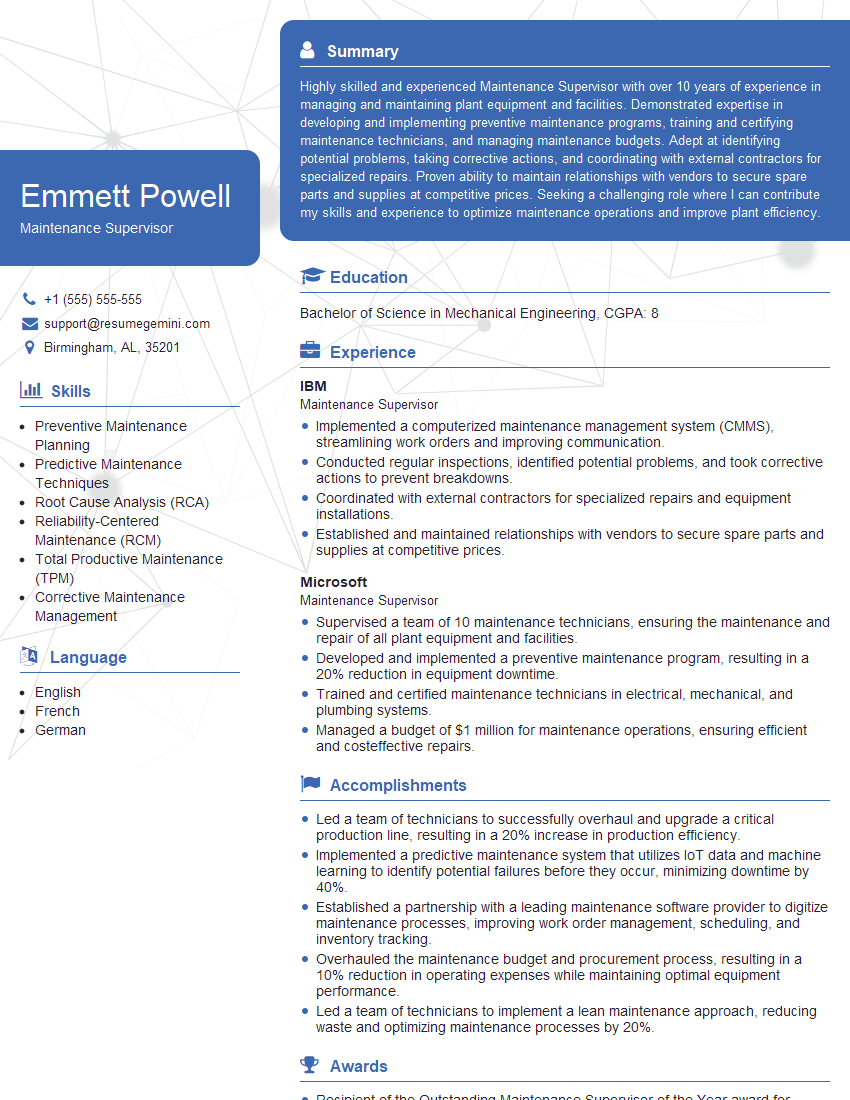
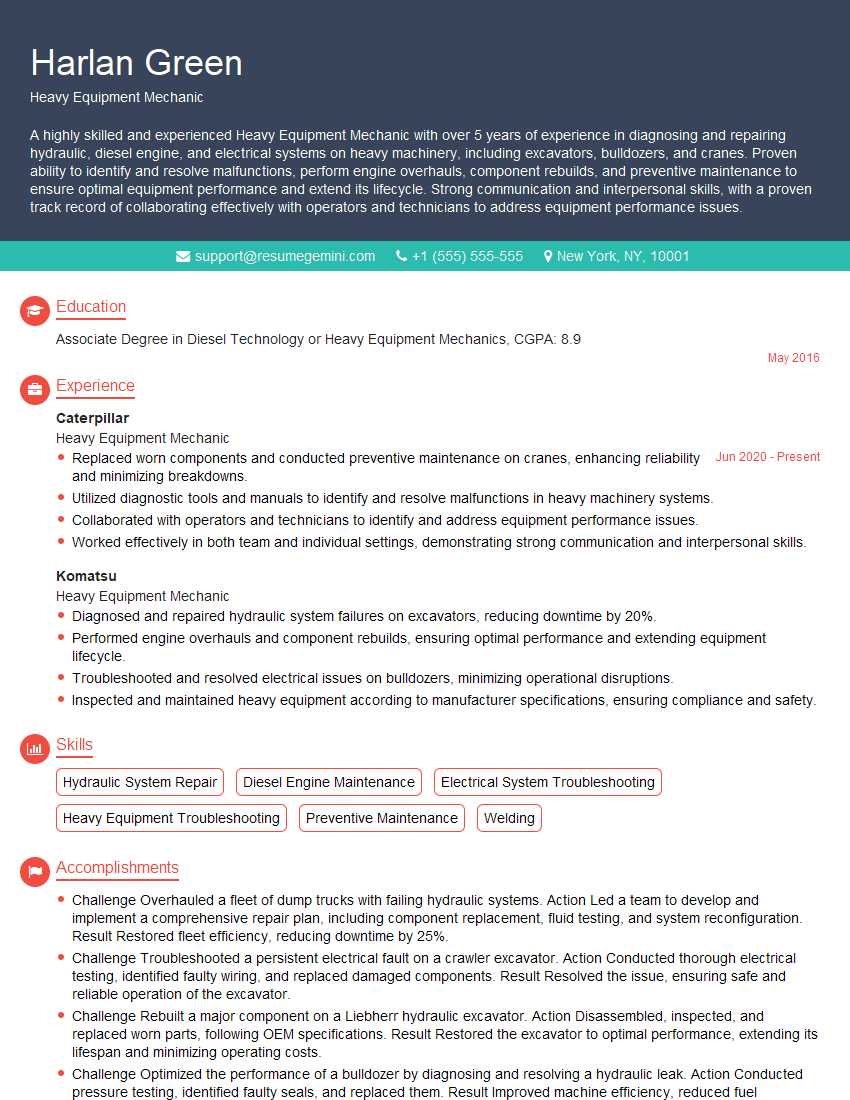
Mastering Crane Boom Inspection and Maintenance opens doors to rewarding careers offering excellent growth potential within the construction, manufacturing, and logistics industries. A strong understanding of these skills demonstrates professionalism, competence, and a commitment to safety—all highly valued attributes. To increase your chances of landing your dream job, crafting an ATS-friendly resume is crucial. ResumeGemini is a trusted resource to help you build a professional and impactful resume that highlights your skills and experience effectively. We provide examples of resumes tailored specifically to Crane Boom Inspection and Maintenance to help you get started.


Explore more articles
Users Rating of Our Blogs
Share Your Experience
We value your feedback! Please rate our content and share your thoughts (optional).
What Readers Say About Our Blog
Very informative content, great job.
good