Feeling uncertain about what to expect in your upcoming interview? We’ve got you covered! This blog highlights the most important Crane Hooking Techniques interview questions and provides actionable advice to help you stand out as the ideal candidate. Let’s pave the way for your success.
Questions Asked in Crane Hooking Techniques Interview
Q 1. Explain the different types of crane hooks and their applications.
Crane hooks come in various types, each designed for specific applications. The choice depends heavily on the load’s shape, weight, and material.
- Standard Hook: This is the most common type, featuring a simple, open design suitable for lifting loads with a single sling or chain. Think of lifting a steel beam – a standard hook works perfectly.
- Clevis Hook: This hook has a clevis (a U-shaped fitting) at its end, allowing for easier attachment of slings or shackles. This is advantageous when dealing with multiple slings or when quick connects are needed.
- Grab Hooks: Designed to grip and lift irregular-shaped objects. These are incredibly useful in scrap yards or demolition sites where grabbing bundles of metal is necessary.
- Self-Closing Hooks: These hooks automatically close on the load, providing a secure connection, often used with specialized lifting devices.
- Alloy Steel Hooks: Made from high-strength alloys, these hooks are crucial for high-capacity lifting and harsh environments. They’re often found in heavy industry like shipbuilding.
Selecting the incorrect hook type can lead to accidents. Always match the hook’s capacity and design to the specific load being lifted.
Q 2. Describe the proper procedure for attaching a load to a crane hook.
Attaching a load to a crane hook requires a systematic approach. Safety is paramount; rushing this step is a major cause of accidents.
- Inspect the Hook and Sling: Before anything else, thoroughly check the hook and sling for any damage, wear, or defects. Replace damaged equipment immediately.
- Position the Sling: Position the sling correctly around the load, ensuring it’s evenly distributed to prevent swinging or tilting. Think about a balanced seesaw—you want equal weight on each side.
- Attach to the Hook: Securely attach the sling to the crane hook, ensuring a positive connection. Use shackles or other appropriate hardware where necessary. Never force a connection.
- Check the Connection: After attaching, double-check the entire setup. Make sure everything is secure and there’s no risk of slippage or dislodgement.
- Signal the Crane Operator: Only after a comprehensive inspection and a confirmation with the operator should the lifting commence.
Imagine you’re lifting a fragile antique vase. The same meticulous care applies to every load, regardless of size or apparent fragility.
Q 3. How do you inspect a crane hook for damage before use?
Regular and thorough inspection is crucial for preventing crane hook failures. A visual inspection before each use is mandatory.
- Check for Cracks: Carefully examine the hook for any cracks, especially at the throat (the inner curve) and the hook point. Even small cracks can significantly weaken the hook.
- Gauge Wear and Deformation: Look for any signs of wear, deformation, or bending. Significant wear or deformation indicates potential failure. A severely bent hook should be immediately retired.
- Inspect the Latch: The latch mechanism must be fully functional and securely closed. A malfunctioning latch can result in the load detaching.
- Examine the Shank: The shank (the straight part of the hook) should be free from nicks, gouges, or other damage. These imperfections reduce strength.
- Check for Corrosion: Corrosion can weaken the hook’s structure, making it more prone to failure. Significant corrosion requires replacement.
Think of it as a pre-flight check for an airplane. A thorough inspection is non-negotiable.
Q 4. What are the weight limits and safety factors to consider when hooking a load?
Weight limits and safety factors are critical for safe crane operations. Never exceed the hook’s or crane’s rated capacity.
Every hook has a clearly marked weight limit. This is the maximum weight it can safely lift under ideal conditions. Always consult the manufacturer’s specifications.
The safety factor accounts for unforeseen circumstances like uneven loads or sudden gusts of wind. A typical safety factor is 5:1; a hook rated for 10 tons should only be loaded with 2 tons to account for various stress factors. The actual safety factor varies depending on regulations and the type of load.
Exceeding weight limits is a recipe for disaster. Always err on the side of caution and never compromise safety.
Q 5. Explain the concept of load center and its importance in safe lifting.
The load center is the point where the weight of the load is concentrated. It’s vital for safe lifting because it affects the stability of the lift and prevents the load from swinging.
Understanding load center is like understanding the center of gravity. If the load center is not properly aligned with the crane hook, the load may become unbalanced during lifting, causing dangerous swaying or even tipping over.
To ensure safe lifting, the load center must be as close as possible to the hook’s point of suspension. Proper rigging techniques are essential to achieve this. Consider using multiple slings or spreader bars to distribute the load’s weight evenly and control its center.
Q 6. Describe the proper techniques for slinging different types of loads.
Slinging techniques vary based on load type. Improper slinging is a leading cause of lifting accidents.
- Uniform Loads (e.g., steel beams): Use multiple slings symmetrically positioned to distribute the load evenly. Ensure the slings are not twisted or kinked.
- Irregular Loads (e.g., large containers): Specialized slings or spreader bars are often necessary to handle these safely. Carefully consider the load’s shape and weight distribution.
- Fragile Loads (e.g., delicate machinery): Use soft slings (e.g., webbing) and employ extra care to prevent damage. Consider using padding to protect the load.
- Long Loads (e.g., pipes): Employ multiple slings and spreader bars to prevent bending or sagging. Careful load center calculation is crucial here.
Always remember to use the appropriate type and size of sling for the load’s weight and characteristics.
Q 7. How do you handle unbalanced loads during crane operations?
Unbalanced loads pose a significant risk during crane operations. They can lead to swings, instability, and potential accidents.
The key to handling unbalanced loads is prevention. Proper load planning and rigging techniques are crucial.
- Use Spreader Beams: Spreader beams are excellent for distributing weight evenly, reducing the risk of unbalanced loads, particularly with large or oddly shaped objects.
- Multiple Slings: Using multiple slings arranged strategically helps stabilize the load and keeps its center of gravity well aligned.
- Careful Positioning: The load must be positioned correctly before the lift begins to ensure a balanced distribution of weight.
- Slow and Steady Lifting: Lifting an unbalanced load should be done slowly and methodically, with the crane operator and rigger coordinating carefully.
- Avoid Sudden Movements: Sudden stops or changes in direction can exacerbate instability.
If an unbalanced load is encountered during a lift, immediately stop the operation and re-evaluate the situation. It’s better to take the time to correct the problem than to risk an accident.
Q 8. What are the safety precautions to take when working near power lines with a crane?
Working near power lines with a crane is incredibly dangerous due to the risk of electrocution. The most crucial safety precaution is maintaining a safe distance. This distance varies depending on the voltage of the power lines and is usually specified in the job site’s safety plan or by a qualified electrical engineer. Never attempt to lift a load closer than the mandated minimum distance. Before commencing any lifting operation near power lines:
- Consult the power company: Notify them of the planned crane operation and request confirmation of the safe working distance.
- Use spotters: Dedicated spotters should continuously monitor the crane’s proximity to power lines, especially during lifting and lowering operations. Their role is critical in preventing accidents.
- Implement non-conductive materials: Consider using non-conductive materials like fiberglass or wooden booms whenever possible to minimize the risk of electrical conductivity.
- Utilize specialized equipment: If working very close to power lines is unavoidable, consider using specialized equipment designed for work in high-voltage environments.
- Crane inspections: Conduct thorough pre-operational inspections to ensure the crane itself doesn’t have any exposed wiring or damaged insulation that could increase the risk of electrocution.
Failing to adhere to these precautions can lead to serious injury or fatality. Remember, safety is paramount. A small mistake can have catastrophic consequences.
Q 9. Explain the importance of proper communication between the crane operator and the signal person.
Effective communication between the crane operator and the signal person is absolutely vital for safe and efficient crane operations. It’s the cornerstone of preventing accidents. The signal person acts as the operator’s eyes on the ground, relaying critical information about the load, its surroundings, and the intended movement. Clear and unambiguous communication ensures the load is handled correctly, preventing swings, collisions, and other mishaps. Imagine trying to park a car without a visual – it’s risky! Similarly, operating a crane without accurate signaling is dangerous.
This communication relies on:
- Pre-determined signals: Both parties must be thoroughly familiar with the standard hand signals used in the industry or those specified for the particular job. Misinterpretations can have disastrous results.
- Clear and concise signals: The signal person must give clear, concise, and unambiguous signals, avoiding any ambiguity. The operator should also acknowledge receipt of each signal.
- Regular communication checks: Before initiating the lift, the operator and signal person should confirm their understanding of the planned lift procedure and any potential obstacles.
- Two-way communication: The ability for the operator and signaler to communicate verbally when necessary is extremely important. This allows for flexibility in complex situations and for the operator to confirm they understand any instructions.
Without this precise communication, even the most skilled crane operator can’t work safely.
Q 10. What are the different types of crane signals and how are they used?
Crane signals are standardized hand signals used to communicate instructions from the signal person to the crane operator. There are various signals, each with a specific meaning. These signals typically cover movements such as hoisting (lifting and lowering), swinging (rotating the boom), traversing (moving the crane horizontally), and emergency stops. The specific hand signals might vary slightly depending on regional standards or company practices, but the fundamental concepts remain consistent. They include:
- Hoisting: Arm raised vertically above the head indicates hoist (lift). Arm lowered to the side indicates lower.
- Lowering: Arm moving downwards indicates lower. A slow, controlled lowering is crucial.
- Swinging: A hand rotating in a circular motion indicates a swing, indicating the direction of the swing.
- Traversing: A hand motion indicating movement to the left or right instructs the crane to traverse in that direction.
- Emergency Stop: An open hand, palm facing downward with a quick chop motion, is the universally recognized signal to immediately stop all operations.
It’s essential to receive formal training on crane signaling to ensure proper understanding and application. Using incorrect signals is just as dangerous as having no signals.
Q 11. How do you determine the appropriate lifting capacity of a crane for a given load?
Determining the appropriate lifting capacity is paramount. It’s not just about the weight of the load itself; many factors affect the crane’s safe working load limit (SWL). This SWL is the maximum weight a crane can lift safely under specific conditions. These conditions are detailed in the crane’s load chart.
To determine the appropriate lifting capacity:
- Identify the load weight: Accurately weigh the load to be lifted. This weight is just a starting point.
- Consult the load chart: Find the appropriate chart for the specific crane model and configuration (e.g., boom length, radius, and configuration). The chart will show the maximum weight that can be lifted safely at different boom lengths and radii.
- Account for additional factors: Consider additional factors such as:
- Wind speed and direction: High wind speeds significantly reduce the safe working load limit.
- Load geometry and center of gravity: An unevenly distributed load affects the crane’s stability.
- Ground conditions: Soft or uneven ground can reduce the stability of the crane.
- Lifting angle: Lifting at extreme angles decreases the safe lifting capacity.
- Apply a safety factor: Always use a safety factor (percentage) to account for uncertainties and unforeseen events. This factor is often provided by regulations or the crane manufacturer’s instructions.
Ignoring these factors can lead to catastrophic crane failure. Always err on the side of caution; if you have any doubt, consult a qualified crane operator or engineer.
Q 12. What are the emergency procedures to follow in case of a crane malfunction?
In case of a crane malfunction, immediate and calm action is essential. The specific emergency procedures will depend on the nature of the malfunction, but several general steps should always be followed:
- Sound the alarm: Immediately alert everyone in the vicinity by sounding the audible alarm on the crane and/or using other warning systems.
- Stop all operations: Immediately cease all lifting operations and secure the load. If the load is suspended, try to carefully lower it using emergency controls, if available. If this is not possible, leave it alone.
- Evacuate the area: Clear the area surrounding the crane to prevent anyone from being injured if the malfunction escalates.
- Report the malfunction: Notify the supervisor or designated emergency contact immediately. Give a detailed report of what happened and the current status of the crane and load.
- Do not attempt repairs: Do not attempt to diagnose or repair the malfunction yourself. Only qualified personnel should carry out repairs.
- Follow company procedures: Adhere strictly to the company’s emergency response plan for crane malfunctions.
Remember: The priority is the safety of personnel. Proper training and regular drills are crucial to effectively handle such situations.
Q 13. Explain the role of load charts and how to interpret them.
Load charts are essential documents that specify the safe working load limits (SWL) for a crane under various conditions. They are created by the crane manufacturer and provide vital information for safe crane operation. They typically present the SWL as a function of boom length, radius (the horizontal distance from the crane’s center to the load), and other factors like boom configuration and additional rigging equipment.
Interpreting a load chart involves:
- Identifying the correct chart: Use the chart that matches your specific crane model and configuration (e.g., boom length, jib, etc.).
- Determining the boom length and radius: Measure the boom length and radius of your crane for the planned lift.
- Locating the intersection: Locate the intersection of the boom length and radius on the chart. This intersection will give the maximum safe working load limit for those specific parameters.
- Considering other factors: Note that the load chart usually only provides the maximum SWL under ideal conditions. You must consider additional factors like wind speed, load geometry, and ground conditions to ensure the safe operation of the crane.
- Never exceed the limit: Always ensure the actual load weight, accounting for additional factors, remains below the SWL indicated on the chart.
Ignoring load charts is extremely risky and can result in serious accidents. They are your guide to safe lifting practices.
Q 14. How do you assess the stability of a crane before lifting a load?
Assessing crane stability before lifting is crucial to prevent tipping accidents. This assessment involves several steps and considerations:
- Ground conditions: Ensure the ground is level, firm, and capable of supporting the crane’s weight plus the load. Avoid lifting on soft, uneven, or sloping ground.
- Outriggers (if applicable): If the crane has outriggers, make sure they are fully extended and properly seated on stable ground. Proper outrigger placement is critical for stability.
- Crane level: Confirm that the crane itself is level. An unevenly leveled crane reduces stability.
- Load calculations: Carefully calculate the load weight, accounting for any additional factors such as rigging weight and attachments. Ensure the total weight is well below the crane’s rated capacity for the chosen boom length and radius.
- Wind conditions: Check the wind speed and direction. High winds can significantly reduce the crane’s stability and safe working load limit. Lifting operations may need to be postponed in high winds.
- Load swing: Consider the potential for the load to swing during the lift. This movement can put extra stress on the crane and should be mitigated through careful planning and execution.
- Surrounding obstacles: Assess the surroundings for any obstacles that could obstruct the lift or compromise stability. This includes power lines, buildings, other equipment, and personnel.
If any doubts exist about the crane’s stability, postpone the lift. It’s far better to delay than risk a catastrophic accident.
Q 15. What are the different types of slings used in crane operations?
Crane slings are the critical link between the load and the crane hook, and choosing the right one is paramount for safety and efficiency. Several types exist, each suited for different loads and situations. Here are some key examples:
- Wire Rope Slings: These are incredibly strong and durable, typically made of multiple strands of wire twisted together. They’re excellent for heavy lifting but require careful inspection for wear and damage. Think of them as the workhorses of the sling world, capable of handling the most demanding jobs. Different constructions (e.g., 6×19, 8×19) offer varying flexibility and strength characteristics.
- Synthetic Web Slings: Made from high-tensile synthetic materials like polyester or nylon, these slings are lightweight, easy to handle, and less likely to damage delicate loads. However, they are susceptible to UV degradation and abrasion. Imagine them as the gentler giants – suitable for loads that might be scratched or damaged by wire rope.
- Chain Slings: These offer excellent strength and resistance to abrasion and cutting, making them ideal for sharp or rough loads. However, they can be heavier and more difficult to handle than other sling types. Consider them the robust protectors – perfect for lifting materials that could damage other types of slings.
- Round Slings: These are typically made from synthetic materials and offer a relatively high strength-to-weight ratio. Their smooth, round shape reduces the risk of load damage, making them useful for various applications. These are versatile and easy to handle.
The selection of the appropriate sling depends heavily on the load’s weight, shape, and material, as well as the environment and the type of crane being used. A proper sling selection chart or engineering calculation should always be consulted.
Career Expert Tips:
- Ace those interviews! Prepare effectively by reviewing the Top 50 Most Common Interview Questions on ResumeGemini.
- Navigate your job search with confidence! Explore a wide range of Career Tips on ResumeGemini. Learn about common challenges and recommendations to overcome them.
- Craft the perfect resume! Master the Art of Resume Writing with ResumeGemini’s guide. Showcase your unique qualifications and achievements effectively.
- Don’t miss out on holiday savings! Build your dream resume with ResumeGemini’s ATS optimized templates.
Q 16. Explain the importance of using proper rigging hardware.
Using proper rigging hardware is not just good practice; it’s absolutely crucial for preventing accidents and ensuring the safe and efficient completion of any crane lift. Improper hardware can lead to catastrophic failures, causing injury or death and significant property damage.
Proper rigging hardware includes shackles, hooks, eyebolts, wire rope clips, and other components designed to withstand the stresses involved in lifting. Each piece of hardware is rated for a specific working load limit (WLL), which should never be exceeded. Using hardware with a lower WLL than the load’s weight is extremely dangerous and unacceptable.
Regular inspections of all rigging hardware are critical. Look for signs of wear, damage, or deformation. Damaged hardware must be immediately removed from service and replaced. Think of it like this: every component is a link in a chain, and a weak link can break the entire system.
Furthermore, proper usage of rigging hardware is essential. For instance, using shackles correctly, ensuring proper alignment, and avoiding over-stressing are critical safety measures. Investing in high-quality, properly maintained rigging hardware is the best investment a crane operation can make.
Q 17. How do you identify and address potential hazards during crane operations?
Hazard identification is a proactive, multi-step process that’s fundamental to safe crane operations. It requires a combination of thorough planning, on-site observation, and a keen awareness of potential risks.
- Pre-lift Planning: This includes reviewing the lift plan, assessing the load’s weight, dimensions, and center of gravity, verifying the crane’s capacity, and checking the condition of all rigging equipment. This stage helps identify potential issues *before* the lift begins.
- Site Inspection: A thorough inspection of the worksite is necessary to identify potential hazards like overhead obstructions, unstable ground conditions, nearby personnel or equipment, and environmental factors (e.g., high winds, rain). Marking out safe zones and establishing clear communication protocols are vital steps.
- Operational Monitoring: Throughout the lift, constant vigilance is required to monitor the load’s movement, the crane’s operation, and the surrounding environment. Any deviations from the plan or unexpected events should be addressed immediately.
- Addressing Hazards: Identified hazards should be mitigated or eliminated before the lift proceeds. This might involve adjusting the lift plan, using additional safety measures (e.g., spotters, barriers), or postponing the lift altogether.
A good example of hazard identification in action is noticing a power line that’s too close to the crane’s working radius. The solution would be to re-plan the lift to avoid the power line, or possibly contact the power company to temporarily de-energize the line (only as a last resort and with proper safety protocols).
Q 18. What are the legal and regulatory requirements for crane operations in your area?
Legal and regulatory requirements for crane operations vary by location, but generally, they center around safety and ensuring competency. They commonly include:
- Licensing and Certification: Crane operators must possess valid licenses or certifications demonstrating their competency to operate specific types of cranes. These requirements often involve passing rigorous written and practical examinations.
- Regular Inspections: Cranes and their associated equipment (rigging, slings, etc.) must undergo regular inspections and maintenance to ensure they are in safe working order. Documentation of these inspections is usually required.
- Safe Operating Procedures: Written safe operating procedures must be followed, and all personnel must be adequately trained on these procedures. These procedures address all aspects of crane operation, from pre-lift checks to emergency procedures.
- Risk Assessments: Before every lift, a risk assessment must be conducted to identify and mitigate potential hazards. This assessment forms part of the overall lift plan.
- Record Keeping: Detailed records of all crane operations, maintenance, and inspections are usually required for auditing purposes.
Failure to comply with these regulations can result in significant penalties, including fines, suspension of operations, and even criminal charges. Therefore, understanding and adhering to the specific local and national regulations is of paramount importance.
Q 19. Describe your experience with different types of cranes (e.g., tower cranes, mobile cranes).
My experience encompasses a wide range of crane types, including tower cranes, mobile cranes (both all-terrain and rough-terrain), and overhead cranes.
With tower cranes, I’ve worked on various construction projects, focusing on their precise movements and high-reach capabilities. This experience has highlighted the importance of understanding wind speed limitations and the critical role of proper counterweight balancing.
Regarding mobile cranes, my work has included both all-terrain and rough-terrain units. All-terrain cranes offer greater maneuverability on various terrains. In contrast, rough-terrain cranes are better suited for uneven or difficult-to-access sites, where their enhanced stability is crucial. I’ve overseen lifts in challenging environments, paying close attention to ground conditions and ensuring safe load-bearing capacity.
My experience also includes the careful planning and execution of lifts using overhead cranes in industrial settings. Here, understanding load-handling procedures and the limitations of the crane’s structure is particularly significant.
In each instance, the focus has always been on safety. Careful planning, regular inspections, and adherence to strict operational procedures have formed the cornerstone of my work across all crane types.
Q 20. How do you ensure the safety of personnel and equipment during lifting operations?
Ensuring the safety of personnel and equipment is the absolute top priority in any crane operation. This requires a multifaceted approach:
- Clear Communication: Establishing clear communication channels between the crane operator, riggers, spotters, and other personnel is critical. Hand signals, two-way radios, or a combination of both are often used.
- Designated Safe Zones: Clear, well-marked safe zones should be established around the crane’s operating area to keep personnel out of harm’s way. These zones should be maintained throughout the lifting operation.
- Pre-lift Checks: Thorough pre-lift checks are essential to ensure that the crane is in good working order, the load is properly secured, and the lifting plan is sound.
- Load Securing: The load must be properly secured to the sling or lifting device, ensuring that it’s stable and unlikely to shift during the lift.
- Emergency Procedures: Emergency procedures, including procedures for load failure or crane malfunction, must be clearly defined and well-rehearsed.
- Regular Training: All personnel involved in crane operations must receive regular training on safe operating procedures and emergency responses.
For example, before any lift, I always perform a detailed pre-lift inspection, checking the crane’s capacity, the load’s weight, and the condition of all rigging hardware. I also ensure that all personnel involved are aware of their roles and responsibilities and that clear communication channels are established.
Q 21. Explain your understanding of the different types of crane hook failures.
Crane hook failures are serious events that can have devastating consequences. Several types of failures can occur:
- Fracture: This is the most catastrophic type of failure, usually resulting from overloading, material defects, or fatigue. A sudden, complete break of the hook’s body occurs.
- Yielding: This involves the hook’s material deforming plastically under excessive load, causing a permanent change in shape. Although the hook might not break immediately, its structural integrity is compromised, making it unsafe for further use.
- Fatigue Failure: Repeated loading and unloading can lead to microscopic cracks that eventually propagate, resulting in a fracture. This is often a slow, progressive failure that might not be immediately apparent.
- Corrosion: Corrosion weakens the hook’s material, reducing its strength and increasing the risk of fracture. This is particularly concerning in harsh environments.
- Improper Maintenance: Lack of proper maintenance or improper repairs can lead to various failures. Regular inspections and maintenance are critical for preventing this type of failure.
Identifying potential hook failures requires careful visual inspections, looking for signs of cracks, deformation, corrosion, or excessive wear. Regular non-destructive testing (NDT) of hooks, such as magnetic particle inspection or ultrasonic testing, is also recommended to detect internal defects.
Remember that a failed hook can lead to a dropped load, causing severe injury or damage. Always prioritize regular inspections and immediately replace any hook showing signs of wear or damage.
Q 22. What are the signs of a damaged crane hook?
Identifying a damaged crane hook is crucial for preventing accidents. A damaged hook can lead to catastrophic failure, resulting in injury or death. Look for these key signs:
- Cracks or fractures: These are the most serious defects and are often found at the hook’s throat (the inner curve), the shank (the body), or the point. Even small cracks can significantly weaken the hook and should never be ignored.
- Deformation: Any bending, twisting, or distortion of the hook’s shape is a major red flag. This could be from overloading, impact, or improper handling. Even a slight bend can drastically reduce the hook’s SWL.
- Excessive wear: Check the hook’s surface for significant wear or gouging. This is often seen at the throat due to repeated loading and unloading. Excessive wear reduces the hook’s cross-sectional area, decreasing its strength.
- Corrosion: Rust and corrosion weaken the hook’s metal structure, compromising its integrity. Pay close attention to areas where moisture tends to collect. Regular inspections and preventative maintenance are vital to prevent corrosion damage.
- Gauge markings: Regularly check for clear and legible gauge markings (indicating the hook’s size and SWL). Faded or illegible markings can indicate wear or tampering and the hook should be removed from service.
Example: I once inspected a hook that had a small crack near the throat. Although seemingly insignificant, it was a clear indication of potential failure. The hook was immediately taken out of service, preventing a possible accident.
Q 23. How do you calculate the safe working load (SWL) for a crane hook and sling assembly?
Calculating the Safe Working Load (SWL) for a crane hook and sling assembly is paramount for safe lifting operations. It’s not simply the hook’s SWL; it involves the weakest link in the entire lifting system. Here’s a breakdown:
1. **Determine the SWL of the hook:** This information is typically stamped on the hook itself.
2. **Determine the SWL of each sling leg:** The SWL of a sling depends on its material, type (e.g., chain, wire rope, polyester), and length. Consult the manufacturer’s specifications or relevant standards.
3. **Consider the sling angle:** If the slings are not vertical, the SWL is reduced. The effective SWL is calculated using trigonometry, considering the angle of the sling legs. For instance, if the angle is 60 degrees from the vertical, the effective load on each sling is higher than if they were vertical.
4. **Factor in any safety factors:** Regulatory bodies usually mandate specific safety factors. These factors are multiplicative and account for unforeseen circumstances or variations in material properties.
5. **The overall SWL of the assembly is the lowest SWL among all components:** This is the critical point. If the hook has a SWL of 10 tonnes, but the sling has a SWL of 8 tonnes, the maximum safe load for the entire assembly is only 8 tonnes.
Example: If a hook has a SWL of 5 tonnes, and two wire rope slings are used at a 30-degree angle to the vertical, with each having a SWL of 4 tonnes, the effective SWL per leg is reduced by a factor determined by the angle, potentially bringing the maximum safe load down to something less than 4 tonnes.
Q 24. Describe your experience with pre-lift planning and risk assessments.
Pre-lift planning and risk assessments are non-negotiable aspects of my work. They’re the foundation of every safe lift. My experience includes:
- Detailed site surveys: Thoroughly assessing the area for obstructions, ground conditions, access routes, and potential hazards. This includes identifying any overhead power lines or underground utilities.
- Load identification and analysis: Accurately determining the weight, dimensions, and center of gravity of the load. Using appropriate weighing methods and load-bearing calculations.
- Crane selection and capacity verification: Choosing the right crane for the job based on load capacity, reach, and stability. Verifying the crane’s capacity, maintenance records, and operator certification.
- Rigging plan development: Detailed plans specifying the type and configuration of slings, shackles, and other rigging equipment. This includes the calculation of angles, forces and appropriate safety factors.
- Risk assessment and mitigation: Identifying potential hazards (e.g., wind, ground instability, proximity to personnel), and developing control measures to mitigate these risks. Documentation of all findings and mitigation measures are crucial.
- Communication protocols: Establishing clear communication channels between crane operators, riggers, spotters, and other personnel. Using pre-determined hand signals or radio communication to ensure everyone is informed of the lifting procedure.
Example: During a recent project involving lifting a heavy transformer, a detailed risk assessment identified the possibility of high winds affecting stability. As mitigation, we adjusted the lift timeline to avoid peak wind periods and used additional personnel as spotters.
Q 25. What is your experience with different types of load securing methods?
I’m experienced with a variety of load securing methods, adapting the choice to the specific load and situation. These methods include:
- Wire rope slings: Versatile and strong, but require careful inspection for kinks, damage, and proper usage. Different types of wire rope slings are utilized depending on load requirements and shape.
- Chain slings: Durable and resistant to abrasion, but can be susceptible to wear and damage at links, especially if used improperly.
- Polyester/Synthetic Webbing slings: Lighter than wire rope or chains, suitable for specific loads, and less prone to damage from abrasion or corrosion. They must be protected from sharp edges.
- Clamp attachments: Securely gripping loads with minimal risk of slippage. Correct clamp application is critical for safety. The correct size and type of clamp must be matched to the load and shape.
- Other securing methods: Specialized attachments such as spreader beams, shackles, and hooks, carefully selected and utilized based on the load shape and weight.
Example: When lifting a long, cylindrical object, I would use a spreader beam with wire rope slings to evenly distribute the load and prevent damage or bending.
Q 26. How do you handle unexpected situations or emergencies during lifting operations?
Handling unexpected situations during lifting operations requires calm, decisive action and adherence to safety protocols. My approach includes:
- Immediate Stoppage: If anything unexpected occurs (e.g., equipment malfunction, load shift, adverse weather), immediately halt the operation.
- Assessment and Communication: Quickly assess the situation, identifying the nature of the problem and its potential impact. Communicate clearly and concisely with all involved parties.
- Problem Solving: Implement appropriate corrective actions or emergency procedures as needed. This might involve securing the load, repositioning equipment, or calling for expert assistance.
- Emergency Procedures: Familiarity with emergency shutdown procedures for the crane and the specific site is essential. Knowing the location and accessibility of emergency equipment and contacting emergency services when required.
- Documentation: Thoroughly documenting the incident, including the cause, actions taken, and any damage or injury. This documentation is crucial for future prevention.
Example: During a lift, I noticed a sling starting to fray. I immediately stopped the operation, replaced the sling, and conducted a thorough inspection of the remaining equipment before resuming. The situation was documented accordingly.
Q 27. Describe your experience working with different types of rigging hardware and their applications.
My experience encompasses a wide range of rigging hardware, including:
- Shackles: Used to connect slings to hooks or other rigging components. Different types (bow, screw pin, etc.) are selected based on load requirements and working environment. Always use the correct size and type for the load.
- Slings (as discussed previously): Critical for supporting the load, chosen based on material, capacity, and load characteristics.
- Spreader beams: Used to distribute the load evenly across multiple slings, essential for handling long or oddly shaped loads and preventing damage.
- Connecting Links: Various types of links and pins are used to connect multiple components in the rigging system. Always ensure that all components are correctly and securely connected before starting the lift.
- Load binders and clamps: Used to secure loads to prevent movement or slippage. The correct type and application is crucial for safety.
Example: When lifting a large, heavy steel plate, I’d use a spreader beam with multiple slings to distribute the load and prevent bending the plate. The spreader beam would be secured using shackles, correctly sized for the load and in good condition.
Q 28. What are your preferred methods for ensuring the safe and efficient execution of crane hooking operations?
Ensuring safe and efficient crane hooking operations relies on a multi-faceted approach:
- Rigorous Inspection: Regular and thorough inspections of all equipment are critical. This includes checking for damage, wear, and correct function. This should be undertaken before each use and regularly scheduled inspections.
- Proper Training and Certification: All personnel involved in crane operations must have the necessary training and certification. This ensures that everyone understands their roles, responsibilities, and safety procedures.
- Adherence to Standards and Regulations: Strict compliance with all relevant safety standards and regulations is paramount. This minimizes risks and ensures consistent practices across the board.
- Effective Communication: Clear, concise communication between all members of the lifting team, using pre-determined hand signals or radio communication.
- Detailed Planning: Thorough pre-lift planning, including site surveys, risk assessments, and detailed rigging plans. This minimizes unexpected issues and promotes efficiency.
- Continuous Improvement: Regularly reviewing procedures and identifying opportunities for improvement. This ensures best practices are followed and potential risks are minimized.
Example: I always conduct a thorough pre-lift inspection, documenting the condition of each piece of equipment. If any issues are found, I report them immediately, ensuring they’re addressed before the lift begins.
Key Topics to Learn for Crane Hooking Techniques Interview
- Understanding Load Capacity and Weight Distribution: Learn to accurately assess the weight of loads and distribute them evenly for safe and efficient lifting. This includes understanding center of gravity and its impact on stability.
- Proper Hooking Techniques: Master different hooking methods for various load types and configurations. This includes understanding the use of slings, shackles, and other rigging equipment, and recognizing potential hazards.
- Signal Communication and Hand Signals: Become proficient in standardized hand signals for crane operation and understand the importance of clear and unambiguous communication between crane operators and riggers.
- Safety Regulations and Compliance: Familiarize yourself with relevant safety regulations and industry best practices related to crane operation and load handling. This includes understanding risk assessments and mitigation strategies.
- Troubleshooting and Problem-Solving: Develop the ability to identify potential problems during lifting operations and implement appropriate solutions to ensure safety and efficiency. This includes recognizing signs of equipment malfunction and load instability.
- Pre-Lift Inspections and Planning: Understand the importance of thorough pre-lift inspections of both the crane and the load, including the development of a detailed lifting plan.
- Types of Cranes and Their Applications: Gain knowledge of various crane types (e.g., tower cranes, mobile cranes) and their appropriate applications based on load capacity, reach, and site conditions.
Next Steps
Mastering Crane Hooking Techniques is crucial for career advancement in the construction, manufacturing, and logistics sectors. It demonstrates a commitment to safety and efficiency, opening doors to higher-paying positions and greater responsibility. To significantly improve your job prospects, invest time in crafting an ATS-friendly resume that highlights your skills and experience effectively. ResumeGemini is a trusted resource that can help you build a professional and impactful resume. Examples of resumes tailored to Crane Hooking Techniques are available to further assist you in showcasing your qualifications.

Crane Operator Resume Sample

Heavy Equipment Operator Resume Sample

Rigger Resume Sample

Crane Mechanic Resume Sample
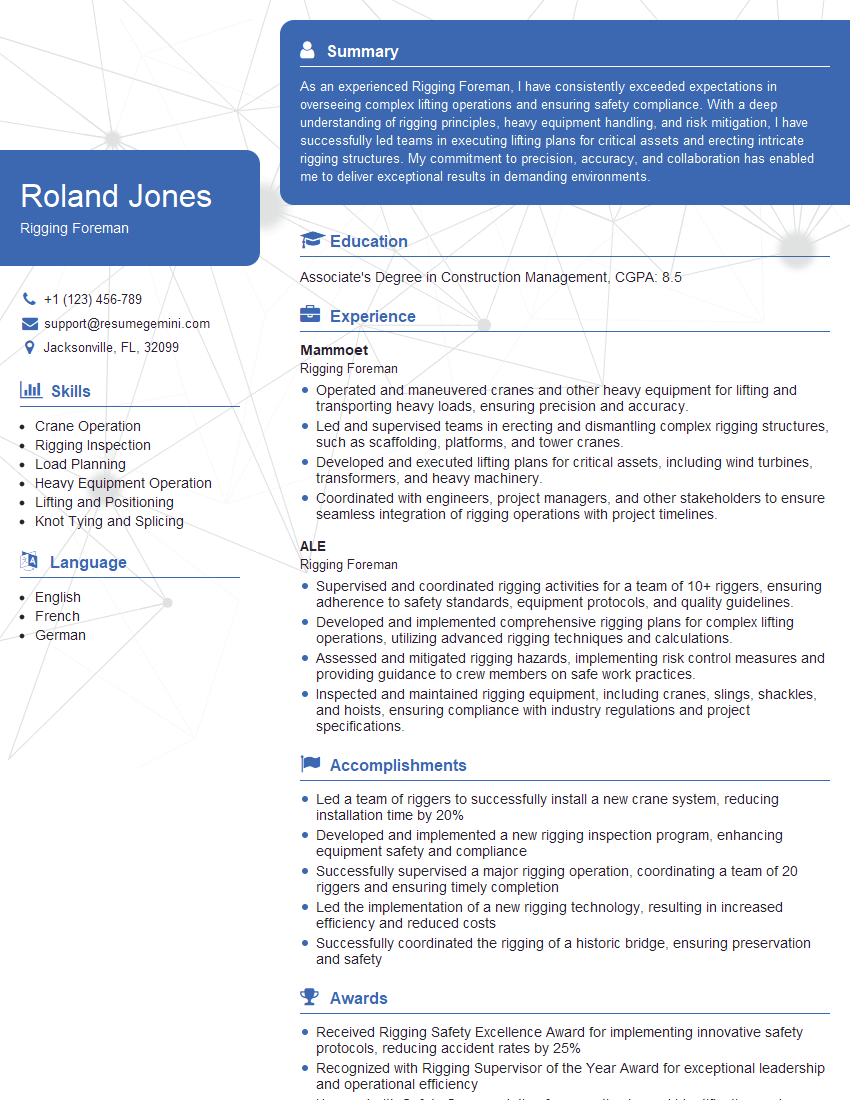
Rigging Foreman Resume Sample

Signal Person Resume Sample

Derrickman Resume Sample

Mobile Crane Operator Resume Sample

Overhead Crane Operator Resume Sample

Tower Crane Operator Resume Sample
Explore more articles
Users Rating of Our Blogs
Share Your Experience
We value your feedback! Please rate our content and share your thoughts (optional).
What Readers Say About Our Blog
Very informative content, great job.
good