Are you ready to stand out in your next interview? Understanding and preparing for Cue Sheet Preparation and Administration interview questions is a game-changer. In this blog, we’ve compiled key questions and expert advice to help you showcase your skills with confidence and precision. Let’s get started on your journey to acing the interview.
Questions Asked in Cue Sheet Preparation and Administration Interview
Q 1. Explain the purpose of a cue sheet in post-production.
A cue sheet is a crucial document in post-production, acting as a roadmap for audio and video synchronization. It’s essentially a meticulously detailed list of all audio elements used in a film, television program, or any other audiovisual project. Think of it as a precise instruction manual for editors, sound mixers, and other post-production personnel. It ensures that every sound effect, piece of music, and line of dialogue is placed correctly in the timeline, maintaining the integrity of the director’s vision.
For example, a cue sheet for a TV commercial might include entries for specific jingles, sound effects of a product being used, and voiceover narration, each with its precise start and end times.
Q 2. Describe the different types of cue sheets you’ve worked with.
Over the years, I’ve worked with various cue sheet formats, each tailored to specific needs. The most common are:
- Standard Cue Sheets: These provide basic information such as cue number, description (e.g., ‘Music Bed 1’), start time, end time, and source (e.g., ‘Track 3, Album X’). This is a widely used format suitable for simpler projects.
- Detailed Cue Sheets: These go beyond the basics, including additional details like composer, performer, publisher, and licensing information, which is essential for managing copyright and royalties, particularly for film and television productions.
- Multi-track Cue Sheets: These are used in projects with multiple audio tracks or layers, such as those involving complex sound mixing. They meticulously map the specifics of each track and their interplay.
- Electronic Cue Sheets: These are created and managed using software, allowing for easier editing, searching, and exporting. They offer great flexibility and automation capabilities.
The choice of cue sheet type depends on the complexity of the project, legal requirements (copyright, etc.), and client needs.
Q 3. What software or tools are you proficient in for cue sheet creation and management?
My proficiency extends across several software and tools commonly used in cue sheet creation and management. I am highly experienced with:
- Spreadsheet Software (Excel, Google Sheets): For basic cue sheets and simple projects, spreadsheets offer a readily available and efficient method.
- Dedicated Audio Post-Production Software (e.g., Pro Tools, Avid Media Composer): These programs often incorporate tools for generating and managing cue sheets directly within the workflow.
- Database Management Systems (e.g., Filemaker Pro, Access): For larger projects with complex data requirements, these provide robust solutions to manage, organize, and query cue sheet information.
- Custom Scripts (Python, etc.): For particularly large or complex projects, writing custom scripts for cue sheet generation and maintenance allows for automation of tedious tasks.
The choice of tool often depends on the project scale and existing workflow within the production company.
Q 4. How do you ensure accuracy in cue sheet data?
Accuracy is paramount in cue sheet preparation. My approach involves several strategies:
- Cross-referencing: I consistently compare the cue sheet data with the project’s timeline and source audio files to ensure everything matches up precisely. This double-checking minimizes errors.
- Timecode precision: I meticulously verify that all timecode entries are accurate to the frame. Inconsistent or inaccurate timecode can significantly impact synchronization.
- Version control: Using version-controlled systems (like Git) allows for tracking changes and easily reverting to previous versions if necessary. This is critical when multiple individuals contribute to the cue sheet.
- Regular Audits: Scheduled audits, particularly before distribution to stakeholders, are essential to catch any potential inaccuracies.
Think of it like building a house – even a small mistake in the foundation can have significant consequences later on.
Q 5. How do you handle discrepancies or errors in cue sheets?
Discrepancies and errors are inevitable in any large project. My approach is methodical:
- Identify the discrepancy: Pinpoint the exact nature and location of the error (e.g., incorrect timecode, missing information).
- Investigate the cause: Determine the root cause of the error (e.g., data entry mistake, mismatch between sources).
- Document the change: Maintain a clear record of the changes made, including a description of the error and the correction applied. This documentation is crucial for transparency and future reference.
- Update all relevant parties: Inform relevant parties (editors, sound mixers, etc.) about the changes and their impact.
- Version control: Employ version control to track the correction, ensuring that all updates are properly recorded and accessible.
Transparency and meticulous record-keeping are crucial here – a well-documented error correction process can help prevent similar issues from arising in the future.
Q 6. Describe your process for creating a cue sheet from scratch.
Creating a cue sheet from scratch involves a structured approach:
- Gather source materials: Collect all audio files, scripts, and other relevant documentation.
- Review the project’s timeline: Analyze the final cut of the project to identify all audio elements, noting their precise in and out points using timecode.
- Create a template: Design a spreadsheet or document template tailored to the project’s requirements, including necessary columns (cue number, description, start time, end time, source, etc.).
- Populate the sheet: Input the information meticulously, ensuring accuracy and consistency.
- Verify accuracy: Cross-reference the data against source materials and the project timeline.
- Finalize and distribute: Review the finished cue sheet for any errors and distribute it to the relevant parties.
Imagine baking a cake – each step requires precision and attention to detail, otherwise the final product will be compromised.
Q 7. How do you manage revisions and updates to a cue sheet?
Managing revisions and updates is critical for maintaining cue sheet accuracy throughout the post-production process. I usually employ these methods:
- Version control: Using version control (e.g., Git) allows for tracking revisions, comparing different versions, and reverting to previous versions if needed.
- Clearly labeled revisions: Each revision should be clearly labeled (e.g., ‘Revision 1.1’, ‘Final Version’) and dated, allowing for easy identification and management.
- Detailed change logs: Maintaining a comprehensive change log documents all modifications, indicating the date, nature of the change, and the person responsible.
- Notification system: Implement a system to notify relevant parties of any updates, ensuring everyone works with the most current version.
A well-managed revision system is essential for collaboration and minimizes confusion and potential errors throughout the post-production lifecycle.
Q 8. Explain your experience with metadata tagging in relation to cue sheets.
Metadata tagging in cue sheets is crucial for efficient organization and retrieval of audio assets. It’s like adding labels to a meticulously organized library, allowing you to easily find specific tracks based on various attributes. I’ve extensive experience applying metadata tags such as artist, album title, track title, ISRC (International Standard Recording Code), composer, and songwriter. This involves using industry-standard software and adhering to metadata schemas like ID3 or MP3 tags, ensuring seamless integration with various Digital Asset Management (DAM) systems. For example, in a recent project involving a multi-artist compilation album, accurate metadata tagging allowed our team to quickly generate reports and playlists for radio promotions based on specific artist requirements.
Imagine trying to locate a specific song on a CD without any track titles – incredibly difficult, right? Metadata tagging provides that necessary structure and clarity.
In addition, I understand the significance of consistent and accurate metadata. Inconsistencies can lead to playback issues, difficulties in automated processes, and prevent effective search functionality. Therefore I always implement a rigorous validation process to prevent any potential problems.
Q 9. How do you collaborate with other team members during cue sheet creation?
Collaboration is key in cue sheet creation. I typically use project management tools like Asana or Trello to track progress, assign tasks, and share updated cue sheets. For instance, we often utilize shared Google Docs for collaborative editing, allowing sound editors, producers, and myself to contribute simultaneously and maintain version control. Regular meetings—whether virtual or in-person—are critical for discussing any challenges, clarifying ambiguities, and ensuring everyone is on the same page.
Open communication is paramount. I ensure that everyone understands their responsibilities, deadlines, and the overall goals of the project. Active listening and proactive problem-solving help prevent conflicts and maintain the project’s momentum. I believe in fostering a collaborative environment where everyone feels comfortable contributing their expertise.
Q 10. How do you ensure the timely completion of cue sheet tasks?
Timely completion requires meticulous planning and efficient execution. I begin by breaking down large tasks into smaller, manageable components with clear deadlines for each stage. I use Gantt charts or similar tools to visualize the workflow and identify potential bottlenecks. Proactive communication with team members helps anticipate and address any delays promptly. Regular check-ins help to monitor progress and keep the project on track. For urgent projects, I prioritize tasks strategically and communicate effectively with stakeholders to manage expectations.
For example, if a certain element is delayed, we might adjust the workflow to minimize the impact on the overall deadline. This involves close coordination with the team and clear communication with stakeholders about any potential revisions in the timeline. Prioritization and resource allocation are essential for effective time management.
Q 11. Describe your experience with different file formats used in cue sheets.
My experience encompasses various file formats used in cue sheet creation. The most common are text-based formats like .txt and .cue, which are easy to edit and share. I’m also proficient in working with XML-based formats, offering advantages in data structuring and integration with other systems. Understanding the nuances of each format is crucial. For instance, a .cue file may require specific formatting for proper playback in certain media players. I’m adept at converting between formats as needed to maintain compatibility with different software and platforms.
Beyond text-based formats, I have experience working with spreadsheet formats (like .csv or .xlsx) for managing large cue sheet datasets and using specialized software for generating and manipulating cue sheets in various formats. This versatility ensures smooth workflow regardless of the project’s specific requirements.
Q 12. How do you handle multiple projects with overlapping deadlines involving cue sheets?
Handling multiple projects with overlapping deadlines necessitates a robust prioritization strategy and exceptional time management skills. I utilize project management software to create a centralized overview of all projects, visually highlighting critical deadlines and dependencies. I’ll prioritize tasks based on urgency and importance using methods like the Eisenhower Matrix (urgent/important). Communication with clients and team members is crucial for managing expectations and ensuring everyone understands the schedule. Delegation, when appropriate, allows me to focus on the most demanding aspects of each project.
Imagine juggling multiple balls in the air – each ball represents a project with its own deadline. Effective prioritization and planning are key to preventing any of them from dropping.
Q 13. What is your experience with digital asset management systems and their integration with cue sheets?
I possess considerable experience integrating cue sheets with digital asset management (DAM) systems. These systems, such as Adobe Experience Manager or Canto, allow for centralized storage, organization, and management of media assets. This integration streamlines workflows and ensures consistency. The metadata tagging from the cue sheet often forms a crucial element of the DAM system’s cataloging process. For example, metadata tags in the cue sheet can automatically populate fields within the DAM system, enhancing searchability and organization. This ensures that when a sound editor needs to access a specific track, they can quickly locate it using the information within the DAM system linked to the cue sheet.
DAM systems, in effect, become the central repository for all audio and related metadata, improving the overall efficiency and accuracy of the post-production process.
Q 14. Describe your process for quality control of cue sheets.
Quality control is an integral part of my cue sheet preparation process. My QC process involves multiple steps: First, I conduct a thorough review of the cue sheet for accuracy, including verifying track timings, metadata, and overall consistency. Next, I perform a cross-reference check against the actual audio files, ensuring the metadata aligns with the content. Finally, I conduct a test playback to confirm seamless integration with different media players and devices. This ensures that the cue sheet functions correctly across various platforms.
Think of it like proofreading a manuscript multiple times – careful attention to detail is crucial to avoid errors that could affect the final product. In addition to the direct technical check, the process always includes a review based on the project-specific requirements and standards set by the client. By following this rigorous approach I ensure the delivery of accurate, error-free cue sheets that meet the highest quality standards.
Q 15. How do you prioritize tasks when managing multiple cue sheets?
Prioritizing tasks when managing multiple cue sheets requires a structured approach. I typically use a combination of methods, starting with understanding the deadlines and importance of each project. Think of it like a conductor managing an orchestra – each instrument (cue sheet) needs attention, but some sections (deadlines) require more immediate focus.
- Deadlines: I prioritize cue sheets with the closest deadlines first. This ensures timely delivery and avoids last-minute rushes.
- Project Importance: High-profile projects or those with significant financial implications get priority. For example, a cue sheet for a major film release would take precedence over a smaller independent project.
- Dependency: If one cue sheet’s completion is dependent on another, I’ll prioritize the prerequisite sheet to avoid bottlenecks. This is similar to building a house – the foundation needs to be laid before the walls can go up.
- Resource Allocation: I consider the complexity and resource requirements of each cue sheet. A complex sheet requiring extensive research or collaboration might require more time and will be scheduled accordingly.
I often use project management software to track progress, deadlines, and dependencies, allowing for a clear visual representation of my workload and priorities.
Career Expert Tips:
- Ace those interviews! Prepare effectively by reviewing the Top 50 Most Common Interview Questions on ResumeGemini.
- Navigate your job search with confidence! Explore a wide range of Career Tips on ResumeGemini. Learn about common challenges and recommendations to overcome them.
- Craft the perfect resume! Master the Art of Resume Writing with ResumeGemini’s guide. Showcase your unique qualifications and achievements effectively.
- Don’t miss out on holiday savings! Build your dream resume with ResumeGemini’s ATS optimized templates.
Q 16. How do you handle urgent requests for cue sheet changes?
Handling urgent requests for cue sheet changes requires a calm and systematic approach. The key is clear communication and efficient workflow adjustments.
- Assessment: I first assess the urgency and the nature of the change request. Is it a minor correction or a significant alteration? A simple typo can be fixed quickly, while a major structural change will need more time.
- Communication: I immediately communicate with the requester to confirm the details of the change and the desired turnaround time. Setting realistic expectations is crucial.
- Prioritization: I re-prioritize my tasks, inserting the urgent request into my schedule based on its impact and the deadline. This might involve temporarily postponing less urgent tasks.
- Execution: I make the changes efficiently, ensuring accuracy and consistency with the rest of the cue sheet. I may need to collaborate with other team members depending on the scope of the changes.
- Verification: Before delivering the updated cue sheet, I carefully verify the changes to avoid errors. A second pair of eyes can be helpful in this step.
By staying organized and communicating effectively, I can manage urgent requests without compromising the quality or timely delivery of other projects.
Q 17. What are the common challenges you face when preparing cue sheets?
Preparing cue sheets presents several common challenges. These challenges often stem from information discrepancies, technical issues, and the ever-changing nature of the media landscape.
- Incomplete or Inconsistent Information: This is a frequent problem. Missing track details, incorrect timings, or conflicting information from various sources can delay the process and lead to errors.
- Copyright and Licensing Issues: Ensuring all musical works are properly licensed can be complex and time-consuming. Navigating the legal aspects requires careful attention to detail.
- Software Compatibility: Different software programs may have varying levels of compatibility, which can create formatting issues or data loss.
- Time Constraints: Tight deadlines often require working under pressure, increasing the risk of mistakes and impacting overall accuracy.
- Communication Barriers: Inefficient communication between different stakeholders, such as producers, composers, and editors, can lead to misunderstandings and delays.
Addressing these challenges requires proactive communication, meticulous attention to detail, and a robust process for handling information flow.
Q 18. How do you solve problems related to missing or incomplete information in cue sheets?
Missing or incomplete information is a major hurdle in cue sheet preparation. My approach involves a multi-step process to resolve these issues efficiently.
- Identify the Gaps: First, I carefully review the cue sheet to pinpoint all missing or incomplete data points. This includes track information, timings, performer details, and copyright information.
- Source Verification: I then trace back to the original sources of information, such as contracts, project briefs, or communication logs, to fill in the gaps. This may involve contacting relevant stakeholders (e.g., composers, producers, or rights holders).
- Data Reconciliation: If information is conflicting from different sources, I reconcile the discrepancies by prioritizing credible sources and using my best judgment to ensure accuracy. This often involves communication to clarify the discrepancies.
- Documentation: I meticulously document all actions taken to address missing information. This audit trail is essential for accountability and transparency.
- Placeholder Usage: In situations where information is truly unavailable despite diligent efforts, I use placeholders with clear notations indicating the missing information. This is better than submitting an incomplete cue sheet.
Using a systematic approach ensures that even with incomplete information, the cue sheet is as accurate and complete as possible. My aim is to flag the remaining unknowns transparently and not let them jeopardize accuracy.
Q 19. Explain your understanding of copyright and licensing related to cue sheets.
Understanding copyright and licensing is paramount in cue sheet preparation. A cue sheet is essentially a legal document outlining the use of copyrighted music and sound recordings. It plays a vital role in ensuring proper payment and attribution to rights holders.
My understanding covers the following:
- Copyright Ownership: I recognize that copyrights protect musical compositions and sound recordings. These are different rights and are often owned by different entities (composer vs. record label).
- Mechanical Licenses: I understand the necessity of obtaining mechanical licenses for the reproduction and distribution of musical compositions. These licenses permit the use of a song in a film or broadcast.
- Synchronization Licenses: I’m familiar with synchronization licenses, which are required for the use of musical compositions with visual media (e.g., films, commercials). These licenses cover the synchronizing of the music with the visual content.
- Performance Licenses: I understand that for public performances of music, performance licenses may be required, depending on the venue and audience.
- Master Use Licenses: I am aware that the use of the actual master recording also often requires specific licenses.
I always ensure that the cue sheet accurately reflects the licensing status of each musical work, protecting my clients from copyright infringement and ensuring fair compensation to rights holders. Ignoring these aspects can lead to expensive legal battles.
Q 20. How do you ensure the security and confidentiality of cue sheet data?
Security and confidentiality of cue sheet data are crucial. My approach involves several measures to protect sensitive information.
- Access Control: I restrict access to cue sheet data to authorized personnel only. This is managed through password protection and access control systems.
- Data Encryption: I utilize encryption techniques to protect data both in transit and at rest. This safeguards against unauthorized access and data breaches.
- Secure Storage: I store cue sheet data on secure servers, ensuring that backups are regularly created and stored in a separate, secure location.
- Confidentiality Agreements: Where appropriate, I utilize non-disclosure agreements with all parties involved in handling sensitive data to protect sensitive information.
- Regular Audits: Periodic audits are conducted to verify the security of the data and identify any potential vulnerabilities.
Treating cue sheet data with the utmost confidentiality is non-negotiable. Breaches can have significant financial and reputational consequences.
Q 21. Describe your experience with automation tools for cue sheet generation or processing.
My experience with automation tools for cue sheet generation and processing has significantly enhanced efficiency and accuracy. I’ve worked with various software solutions, from specialized cue sheet programs to integrated platforms within larger media management systems.
Specific examples of automation I utilize include:
- Automated Data Import: Several programs allow for automated import of data from other sources such as music libraries or production databases, reducing manual data entry and improving accuracy.
- Template-Based Generation: I use templates to create standardized cue sheets, speeding up the process and ensuring consistency.
- Automated Reporting and Export: Software often offers automated report generation features for royalty calculations or accounting purposes, ensuring efficient dissemination of the data in a standardized format.
- API Integration: In more sophisticated systems, API integrations allow for automated data exchange with other software, streamlining the entire workflow and improving collaboration.
The benefits of automation are substantial: increased efficiency, improved accuracy, reduced manual errors, and greater scalability. This allows me to focus more on the complex tasks, problem-solving, and quality control, rather than repetitive data entry.
Q 22. How do you maintain organized records of cue sheets?
Maintaining organized cue sheet records is crucial for efficient post-production and royalty payments. My approach involves a multi-layered system. Firstly, I utilize a robust digital filing system, often cloud-based for accessibility and collaboration. Each project gets its own dedicated folder, meticulously organized by date, version number, and media type. Within each project folder, I maintain separate folders for source files (audio, video), final cue sheets (in various formats, as needed), and any relevant communication or notes. Secondly, I utilize a database (like Airtable or a spreadsheet program like Excel or Google Sheets) to track all cue sheets, including project details, dates, versions, and client information. This database acts as a centralized index, allowing for quick searching and retrieval. Finally, I maintain a detailed physical archive of important cue sheets, primarily for backup purposes and for projects requiring hard copies. This three-pronged approach – digital, database, and physical – ensures that all cue sheet records are accessible, organized, and secure.
Q 23. What is your experience with different types of media (audio, video, etc.) and their impact on cue sheet creation?
My experience spans a wide range of media, including audio (music, podcasts, audiobooks), video (films, television shows, commercials), and even interactive media. The type of media significantly influences cue sheet creation. For example, a feature film cue sheet might require detailed breakdowns of music cues with specific timings and composer/publisher information for royalty payments. An audio podcast might need simpler cues indicating the start and end times of individual musical pieces. Similarly, a video game might need a highly structured system for cue sheets to manage dynamic audio across various game states. My approach involves adapting the level of detail and formatting to match the requirements of the specific media format, always prioritizing accuracy and completeness to avoid costly mistakes in royalty payments or licensing issues. I’m adept at using specialized software that helps automate this process for different media types.
Q 24. How familiar are you with industry-standard cue sheet formats?
I’m very familiar with industry-standard cue sheet formats, including the Harry Fox Agency (HFA) format, the Broadcast Music, Inc. (BMI) format, and the American Society of Composers, Authors, and Publishers (ASCAP) format. I understand the nuances of each format, recognizing that the specific requirements can sometimes vary slightly. For example, some formats require more detailed information regarding the usage of the music, while others might focus more on the specific timings and cue points. I also have experience working with custom formats tailored to specific clients or projects. My expertise allows me to seamlessly adapt to various formatting requirements, ensuring accuracy and compliance with industry standards.
Q 25. Describe your problem-solving skills in a situation where a cue sheet caused production delays.
In one instance, a mislabeled cue sheet caused significant delays in a television post-production. The wrong version of the cue sheet was uploaded to the system causing the wrong music to be used in the final cut. My immediate response was to identify the issue, which involved comparing the original cue sheet against the final mix, noting the discrepancies. Then, I worked with the sound editor and music supervisor to pinpoint the exact problem. We collaboratively created a corrected cue sheet and ensured all subsequent processes were aligned with the updated information. This involved clear communication with all stakeholders. We even instituted a double-checking procedure to prevent future mistakes. The key was quick identification, clear communication, and implementing preventative measures to avoid similar occurrences.
Q 26. How do you adapt your cue sheet workflow to different production styles or formats?
Adaptability is key in cue sheet workflow. For instance, the workflow for a high-budget feature film with complex music scoring will differ significantly from a low-budget independent film. In a large-scale project, I might use a project management software to coordinate with multiple departments (music supervisors, composers, editors). A smaller project might require a simpler spreadsheet-based approach. The core principles remain the same – accuracy, consistency, and clear communication – but the tools and processes used adapt to the project’s scope and complexity. I always strive to streamline the process as much as possible, balancing efficiency with maintaining the highest standards of accuracy.
Q 27. What are some best practices you follow for efficient cue sheet creation and management?
My best practices for efficient cue sheet creation and management center around accuracy, standardization, and clear communication. I always start with detailed source information, confirming all details (artist, title, publisher, ISRC/ISWC codes) before entering them into the cue sheet. I utilize templates for standardization and ensure all team members understand the required format. Furthermore, I maintain meticulous version control, clearly labeling all versions to avoid confusion. Finally, I emphasize clear and consistent communication with all stakeholders, providing regular updates and promptly addressing any issues that arise. Regular backups and archiving are also critical components of my best practices.
Q 28. Describe a situation where you had to improve or streamline a cue sheet workflow.
In a previous role, the cue sheet creation process was manual and time-consuming. I recognized that this was slowing down the post-production pipeline, so I proposed the implementation of a custom database-driven system. This involved working with the IT department to create a tailored solution to input and manage cue sheet information. The result was a significant reduction in processing time, reduced errors, and improved accessibility for all team members. This project highlighted the importance of proactive problem-solving and leveraging technology to improve workflow efficiency. The new system also provided better reporting capabilities, which made royalty tracking much more streamlined.
Key Topics to Learn for Cue Sheet Preparation and Administration Interview
- Understanding Cue Sheet Formats and Structures: Familiarize yourself with various cue sheet formats (e.g., XML, CSV, proprietary software formats) and their respective structures. Understand the key elements within a cue sheet and their relationships.
- Data Entry and Verification: Practice accurate and efficient data entry techniques. Develop strategies for verifying data integrity and identifying potential errors in cue sheets.
- Workflow and Collaboration: Learn about the typical workflow involved in cue sheet preparation and administration. Understand how cue sheets interact with other departments or systems (e.g., post-production, scheduling).
- Software Proficiency: Demonstrate familiarity with relevant software applications used for cue sheet creation, management, and distribution. Be prepared to discuss your experience with specific programs (mention specific software if applicable in your experience).
- Problem-Solving and Troubleshooting: Prepare examples showcasing your ability to solve problems related to data inconsistencies, software malfunctions, or workflow bottlenecks in cue sheet management.
- Metadata Management: Understand the importance of accurate metadata in cue sheets and how it contributes to efficient search and retrieval of information.
- Quality Control and Assurance: Discuss your approach to ensuring the accuracy and completeness of cue sheets before distribution. Highlight your attention to detail and commitment to quality.
- Time Management and Prioritization: Be prepared to discuss strategies for managing time effectively, prioritizing tasks, and meeting deadlines in a fast-paced environment.
Next Steps
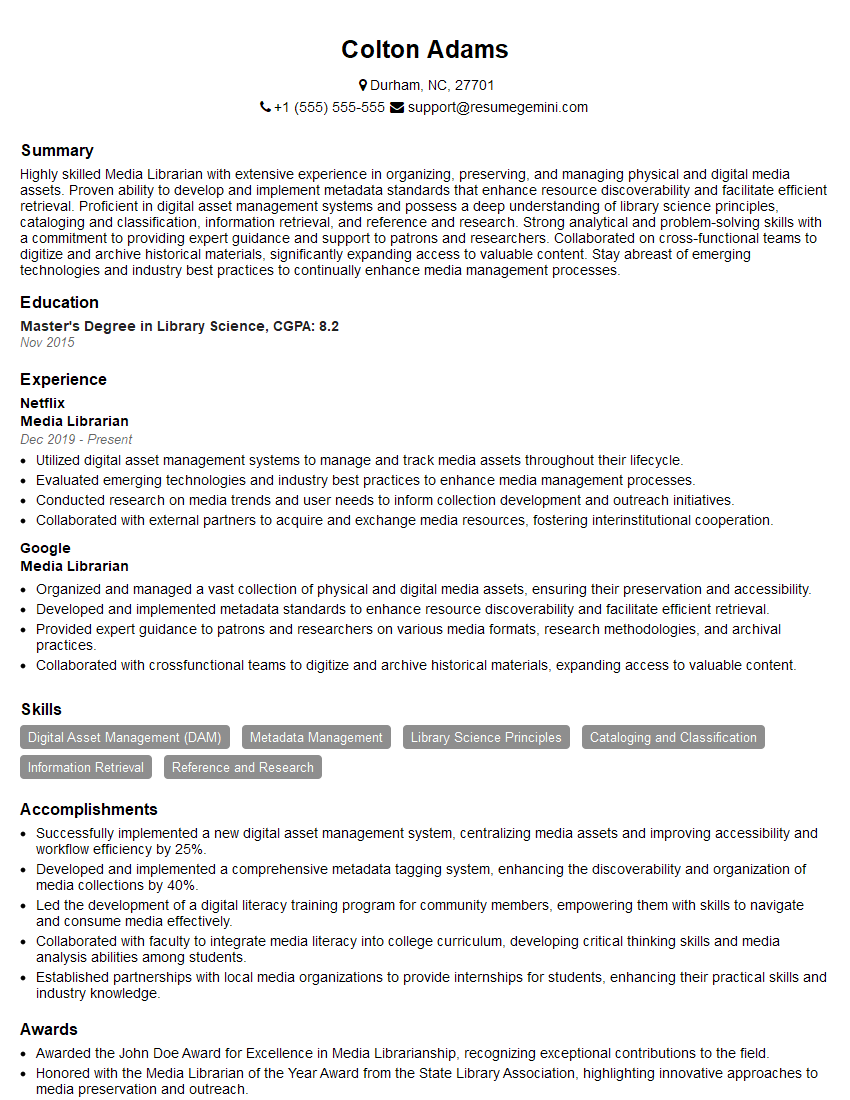
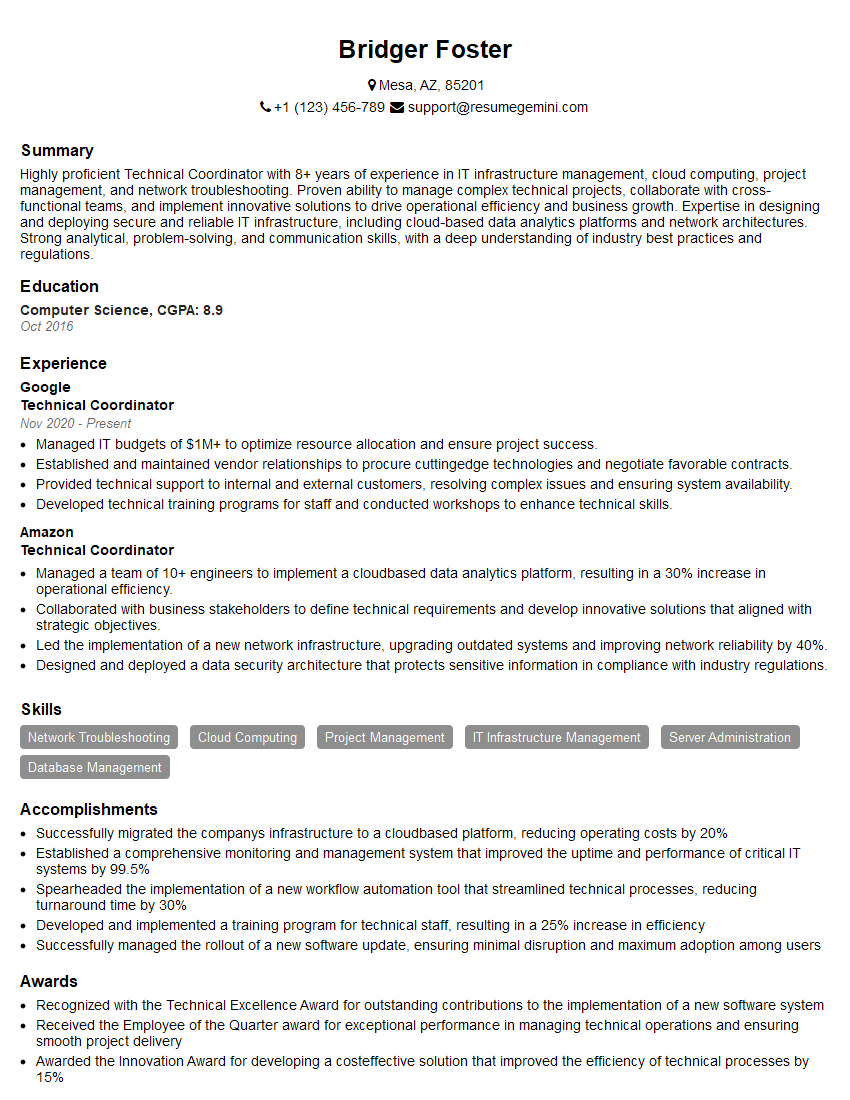
Mastering Cue Sheet Preparation and Administration opens doors to exciting opportunities in media production and related fields. A strong grasp of these skills is highly valued by employers, showcasing your organizational abilities, attention to detail, and technical proficiency. To significantly boost your job prospects, focus on crafting an ATS-friendly resume that highlights your relevant skills and experience. ResumeGemini is a trusted resource to help you build a professional and impactful resume that catches the eye of recruiters. Examples of resumes tailored to Cue Sheet Preparation and Administration are available to guide you – use them as inspiration to create your own compelling application.

Explore more articles
Users Rating of Our Blogs
Share Your Experience
We value your feedback! Please rate our content and share your thoughts (optional).
What Readers Say About Our Blog
Very informative content, great job.
good