The right preparation can turn an interview into an opportunity to showcase your expertise. This guide to Cyber Intelligence and Operations interview questions is your ultimate resource, providing key insights and tips to help you ace your responses and stand out as a top candidate.
Questions Asked in Cyber Intelligence and Operations Interview
Q 1. Explain the difference between strategic and tactical intelligence in cybersecurity.
Strategic and tactical intelligence in cybersecurity differ primarily in their scope and timeframe. Think of it like planning a military campaign versus executing a single battle.
Strategic intelligence focuses on long-term threats and opportunities. It involves analyzing broad trends, geopolitical factors, and emerging technologies to anticipate future cyber threats and develop overarching security strategies. For example, analyzing the global rise of ransomware-as-a-service (RaaS) and its potential impact on critical infrastructure would be a strategic intelligence activity. This informs decisions about resource allocation, technology investments, and overall security posture.
Tactical intelligence, on the other hand, is focused on immediate threats and actions. It involves analyzing specific indicators of compromise (IOCs), identifying vulnerabilities in systems, and responding to ongoing cyberattacks. Imagine responding to a live ransomware attack – identifying the malware variant, containing its spread, and initiating recovery procedures are all tactical intelligence tasks. It’s about real-time threat hunting and incident response.
In essence, strategic intelligence guides the overall direction of cybersecurity, while tactical intelligence enables effective response to immediate threats. They are interconnected; effective tactical response informs strategic decision-making, leading to a continuous cycle of improvement.
Q 2. Describe the Cyber Kill Chain and its application in threat analysis.
The Cyber Kill Chain is a model that outlines the stages of a typical cyberattack, from initial reconnaissance to achieving the attacker’s objective. Understanding this model is crucial for threat analysis because it allows security professionals to identify weak points in their defenses and develop targeted countermeasures.
The stages are generally:
- Reconnaissance: The attacker gathers information about the target.
- Weaponization: The attacker develops a malicious payload (e.g., malware).
- Delivery: The payload is delivered to the target (e.g., phishing email, exploit kit).
- Exploitation: The attacker exploits a vulnerability to gain access to the target system.
- Installation: The attacker installs malware or other tools on the target system.
- Command and Control (C2): The attacker establishes communication with the compromised system.
- Actions on Objectives: The attacker achieves their goal (e.g., data exfiltration, system disruption).
In threat analysis, the Cyber Kill Chain helps us understand how attacks unfold. By mapping observed activities to the stages, we can identify the attack’s techniques, pinpoint the compromised systems, and determine the attacker’s goals. This allows for better incident response, proactive security measures, and the development of more effective security controls. For example, if we see a large number of reconnaissance activities targeting a specific server, we can strengthen its security before an attack occurs.
Q 3. What are the key components of a Security Information and Event Management (SIEM) system?
A Security Information and Event Management (SIEM) system is a crucial tool for cybersecurity monitoring and incident response. It collects, analyzes, and correlates security logs and events from various sources across the organization to provide a holistic view of security posture. Key components include:
- Log Collection: The ability to gather security logs from diverse sources like firewalls, intrusion detection systems (IDS), servers, and applications.
- Normalization and Correlation: Transforming logs into a consistent format and identifying relationships between seemingly unrelated events. This is crucial for detecting complex attacks that span multiple systems.
- Alerting and Reporting: Generating alerts based on predefined rules and providing reports on security events and trends.
- Security Analytics: Employing advanced analytics (e.g., machine learning) to detect anomalies and potential threats that traditional rule-based systems might miss.
- User Interface and Dashboarding: Providing a user-friendly interface for viewing alerts, reports, and security dashboards.
- Data Storage: A robust system for storing and managing large volumes of security data.
Think of a SIEM as a central nervous system for your organization’s security. It provides a single pane of glass to view and understand security events, allowing for quicker and more effective incident response.
Q 4. How do you identify and prioritize threats based on their potential impact?
Identifying and prioritizing threats is a critical aspect of risk management. It’s not enough to simply know what threats exist; you must understand their potential impact and allocate resources accordingly. I typically use a risk assessment framework that incorporates these steps:
- Identify Threats: Through vulnerability scans, threat intelligence feeds, and security monitoring, identify all potential threats.
- Assess Vulnerabilities: Evaluate the weaknesses in your systems and infrastructure that could be exploited by these threats.
- Determine Likelihood: Assess the probability of each threat exploiting a specific vulnerability. Consider factors like attacker sophistication and the prevalence of exploit techniques.
- Estimate Impact: Determine the potential consequences of a successful attack, considering factors like financial loss, reputational damage, and legal liabilities. This often uses a qualitative scoring system (e.g., low, medium, high).
- Calculate Risk: Combine the likelihood and impact to determine the overall risk associated with each threat. A common approach is using a risk matrix, assigning a risk score based on the likelihood and impact.
- Prioritize Threats: Focus on addressing the highest-risk threats first, allocating resources appropriately.
For instance, a high-likelihood, high-impact threat like a ransomware attack targeting critical systems would be prioritized over a low-likelihood, low-impact threat like a denial-of-service (DoS) attack against a non-critical web server. This prioritization ensures that resources are focused on mitigating the most significant risks to the organization.
Q 5. Explain your experience with various threat intelligence platforms (e.g., MISP, ThreatConnect).
I have extensive experience using various threat intelligence platforms, including MISP (Malware Information Sharing Platform) and ThreatConnect. These platforms are invaluable for collecting, analyzing, and sharing threat intelligence.
MISP excels at collaborative threat intelligence sharing. I’ve used it to contribute and consume IOCs, malware samples, and threat reports from various sources, both internal and external. Its open-source nature and ability to integrate with other tools are significant advantages. For example, I’ve used MISP to share information about a newly discovered phishing campaign with other organizations within our industry consortium, enabling faster collective response.
ThreatConnect, on the other hand, provides a more comprehensive platform for managing the entire threat intelligence lifecycle. I’ve utilized it for automating threat intelligence gathering, creating custom threat reports, and mapping attacks to the Cyber Kill Chain. Its features for vulnerability and risk management are particularly beneficial in prioritizing security efforts. I used ThreatConnect to visualize the relationships between various threats and vulnerabilities affecting our organization, improving our overall risk assessment.
My experience with these platforms extends beyond simple data ingestion. I understand how to effectively use their functionalities for enrichment, analysis, and ultimately improved security posture.
Q 6. Describe your experience with malware analysis techniques.
Malware analysis is a crucial skill in cybersecurity. My experience encompasses both static and dynamic analysis techniques.
Static analysis involves examining the malware without actually running it. This involves inspecting the file’s metadata, headers, strings, and code using tools like disassemblers (e.g., IDA Pro) and debuggers. This helps identify potential malicious behaviors and characteristics without risking infection. For example, I might analyze a suspicious executable to identify embedded commands or network communication indicators.
Dynamic analysis involves running the malware in a controlled environment (e.g., sandbox) to observe its behavior. This allows me to see how the malware interacts with the system, networks, and other applications. Tools like Wireshark and process monitors are used to capture and analyze network traffic and system activity during execution. For example, I can use a sandbox to observe a malware sample exfiltrating stolen data, thus confirming its malicious intent.
I use a combination of these techniques, supplemented by automated tools and online resources like VirusTotal, to thoroughly analyze malware samples and understand their capabilities, aiming for rapid identification and containment of threats. Effective malware analysis is essential for creating signatures for antivirus software and developing mitigation strategies.
Q 7. How do you perform vulnerability assessments and penetration testing?
Vulnerability assessments and penetration testing are complementary activities aimed at identifying and exploiting security weaknesses. I use a structured methodology for both:
Vulnerability assessments involve automated and manual scans to identify potential vulnerabilities in systems and applications. Tools like Nessus and OpenVAS are employed for automated scans, while manual checks are conducted to verify findings and identify vulnerabilities missed by automated tools. The results provide a detailed inventory of security weaknesses, enabling prioritization for remediation.
Penetration testing goes a step further, simulating real-world attacks to evaluate the effectiveness of security controls. This often involves multiple phases:
- Planning: Defining the scope, objectives, and methodology of the test.
- Reconnaissance: Gathering information about the target system using passive and active techniques.
- Scanning: Using automated tools and manual techniques to identify potential vulnerabilities.
- Exploitation: Attempting to exploit identified vulnerabilities to gain unauthorized access.
- Post-exploitation: Performing actions that an attacker might perform, such as data exfiltration or privilege escalation.
- Reporting: Documenting the findings, including exploited vulnerabilities, recommendations for remediation, and an overall assessment of the security posture.
The key distinction is that vulnerability assessments identify potential problems, while penetration testing verifies exploitability and assesses the impact of successful attacks. I always adhere to ethical guidelines and obtain explicit permission before conducting penetration testing.
Q 8. What are the different types of malware and how do they operate?
Malware is malicious software designed to disrupt, damage, or gain unauthorized access to a computer system. There’s a vast landscape of malware types, each with its own modus operandi. Here are some key categories:
- Viruses: These require a host program to replicate and spread, often attaching themselves to executable files. Think of them as biological viruses, needing a host to survive and multiply. An example is a virus that infects a Word document and spreads when the document is opened.
- Worms: Unlike viruses, worms are self-replicating and can spread independently across networks without needing a host program. They’re like a wildfire, rapidly consuming resources and spreading uncontrollably. The infamous Conficker worm is a prime example.
- Trojans: These disguise themselves as legitimate software to trick users into installing them. Once installed, they can perform various malicious activities, from stealing data to controlling the system. Imagine a Trojan horse, appearing harmless but concealing a destructive payload.
- Ransomware: This encrypts user files and demands a ransom for their release. It’s like a digital kidnapping, holding your data hostage until you pay up. Examples include WannaCry and Ryuk.
- Spyware: This secretly monitors user activity, stealing sensitive information like passwords, credit card details, and keystrokes. It’s the invisible stalker, silently tracking your every move.
- Adware: This displays unwanted advertisements, often slowing down system performance. Think of it as persistent, annoying spam that takes over your screen.
- Rootkits: These provide attackers with persistent, hidden access to a system, making it extremely difficult to detect and remove. They’re the invisible intruders that gain administrator-level privileges without detection.
Understanding how these different malware types operate is crucial for effective prevention and response. Each requires a different approach in terms of detection and mitigation.
Q 9. Explain the concept of the attack surface and how to reduce it.
The attack surface represents all the possible entry points a threat actor could exploit to compromise a system or network. It encompasses everything from exposed ports and vulnerable software to user accounts and physical access points. Think of it as the perimeter of a castle – the larger the perimeter, the more vulnerable it is to attack.
Reducing the attack surface is a critical security objective. This involves a multi-pronged approach:
- Minimize exposed services: Only expose necessary ports and services to the outside world. Disable or restrict access to unused ports and services.
- Regular software patching: Timely patching of vulnerabilities in operating systems and applications is crucial to prevent exploits. Think of patching as reinforcing the walls of your castle.
- Principle of least privilege: Grant users only the necessary permissions to perform their jobs, limiting potential damage if an account is compromised.
- Secure configurations: Ensure systems and network devices are configured securely, adhering to best practices and security standards.
- Network segmentation: Divide the network into smaller, isolated segments to limit the impact of a breach. This is like creating internal walls within the castle.
- Vulnerability scanning and penetration testing: Regularly scan systems for vulnerabilities and conduct penetration testing to identify potential weaknesses. This is like having a regular inspection of your castle walls.
- Strong authentication and authorization: Implement strong password policies and multi-factor authentication (MFA) to prevent unauthorized access.
- Endpoint detection and response (EDR): Deploy EDR solutions to monitor endpoints for malicious activity and respond swiftly to incidents.
By proactively reducing the attack surface, organizations significantly improve their overall security posture and minimize the risk of successful cyberattacks.
Q 10. How do you handle a security incident?
Handling a security incident requires a structured and methodical approach. My response follows a well-established incident response lifecycle:
- Preparation: Develop and maintain an incident response plan, including communication protocols and roles and responsibilities. This is the foundation – planning for the unexpected.
- Identification: Detect and confirm the security incident. This involves monitoring security tools, analyzing logs, and responding to alerts. This is spotting the fire.
- Containment: Isolate the affected systems or networks to prevent further spread of the incident. This is about containing the fire’s spread.
- Eradication: Remove the threat and restore affected systems to a secure state. This means extinguishing the fire.
- Recovery: Restore systems and data to their pre-incident state and verify functionality. This is rebuilding after the fire.
- Post-incident activity: Conduct a thorough post-incident review to identify lessons learned, improve security controls, and update the incident response plan. This is preventing future fires.
Throughout the entire process, maintaining detailed documentation is crucial for legal, regulatory, and investigative purposes. Communication is also key; keeping stakeholders informed about the incident and its impact is essential.
Q 11. Describe your experience with incident response methodologies (e.g., NIST).
My experience with incident response methodologies extensively leverages the NIST Cybersecurity Framework (CSF) and its aligned processes. I’ve utilized the framework’s five functions – Identify, Protect, Detect, Respond, and Recover – in numerous real-world incident response scenarios. For example, in a recent ransomware incident, we followed the NIST CSF to contain the attack by isolating affected systems, using the ‘Respond’ function, and then eradicated the malware using established procedures under the ‘Eradication’ aspect of the ‘Respond’ function. Post-incident, the ‘Recover’ function guided our data restoration and system rebuild, ensuring business continuity. The ‘Identify’ function had helped us to prepare, and the ‘Protect’ function provided a baseline of security controls that limited the impact of the ransomware.
Beyond NIST, I’m familiar with other frameworks like ISO 27001 and ITIL, and I can adapt my approach based on the specific needs of the organization and the nature of the incident.
Q 12. What are some common indicators of compromise (IOCs)?
Indicators of Compromise (IOCs) are clues or evidence suggesting a compromise has occurred. These can be anything from suspicious network activity to unusual file modifications. Here are some common IOCs:
- Suspicious IP addresses: Connections to known malicious IP addresses.
- Malicious URLs: Links to websites hosting malware or phishing content.
- Unusual process activity: Unexpected or unauthorized processes running on a system.
- File hashes: Unique identifiers for malicious files.
- Registry keys: Modifications to the Windows registry indicative of malware infection.
- Network traffic anomalies: Unusual network communication patterns, such as high volume or encrypted traffic to unexpected destinations.
- Suspicious email addresses: Emails originating from compromised or spoofed accounts.
- Login failures: Repeated failed login attempts from unusual locations.
IOCs are valuable for threat detection and incident response. Threat intelligence platforms and security information and event management (SIEM) systems use IOCs to identify potential threats and alert security personnel.
Q 13. How do you correlate security events to identify potential threats?
Correlating security events involves analyzing multiple security logs and data sources to identify patterns and relationships that may indicate a threat. This requires sophisticated tools and a deep understanding of security concepts. I typically use SIEM systems, which aggregate and analyze logs from various sources, enabling correlation based on time, source, destination, and other relevant attributes. For example, a correlation rule might trigger an alert if a large number of failed login attempts are followed by a successful login from an unusual geographic location. This suggests a potential credential stuffing attack.
Effective correlation requires well-defined correlation rules based on known attack patterns and threat intelligence. Machine learning techniques are increasingly used to enhance the accuracy and efficiency of event correlation.
Q 14. Explain your experience with log analysis and threat hunting.
Log analysis and threat hunting are integral parts of my cybersecurity toolkit. Log analysis involves reviewing security logs to identify suspicious activities. I utilize various tools and techniques, from grep and awk for basic log parsing to specialized security information and event management (SIEM) systems for advanced analysis. I’ve worked extensively with SIEM systems like Splunk and QRadar to create dashboards and reports that visualize security events and identify potential threats.
Threat hunting is a more proactive approach, involving actively searching for threats within the environment, even in the absence of alerts. This often involves using hypothesis-driven approaches, looking for evidence of specific attack techniques or adversary tactics. For example, I might hunt for evidence of lateral movement within a network by analyzing network traffic patterns and process execution logs. Advanced threat hunting often involves using scripting languages like Python and utilizing open-source threat intelligence resources to develop effective hunting strategies.
Q 15. What are your preferred methods for gathering threat intelligence?
Gathering threat intelligence is like being a detective, piecing together clues to understand and anticipate attacks. My preferred methods combine open-source intelligence (OSINT) with more active techniques. OSINT involves leveraging publicly available information, such as security forums (like Exploit-DB), vulnerability databases (like the National Vulnerability Database – NVD), threat intelligence feeds from reputable vendors, and social media analysis to identify potential threats and emerging trends. For example, monitoring Twitter for mentions of specific vulnerabilities or leaked credentials can provide early warnings. Beyond OSINT, I actively utilize techniques like honeypots (decoy systems designed to attract and trap attackers), network traffic analysis (looking for suspicious patterns and anomalies), and penetration testing (simulated attacks to identify weaknesses) to proactively assess our security posture and gain actionable intelligence.
- OSINT: Regularly reviewing security advisories and threat reports from reputable sources.
- Honeypots: Deploying and monitoring honeypots to collect attacker tactics, techniques, and procedures (TTPs).
- Network Traffic Analysis: Utilizing network monitoring tools like Wireshark to identify suspicious network activity.
- Penetration Testing: Conducting regular ethical hacking exercises to find vulnerabilities before malicious actors do.
Career Expert Tips:
- Ace those interviews! Prepare effectively by reviewing the Top 50 Most Common Interview Questions on ResumeGemini.
- Navigate your job search with confidence! Explore a wide range of Career Tips on ResumeGemini. Learn about common challenges and recommendations to overcome them.
- Craft the perfect resume! Master the Art of Resume Writing with ResumeGemini’s guide. Showcase your unique qualifications and achievements effectively.
- Don’t miss out on holiday savings! Build your dream resume with ResumeGemini’s ATS optimized templates.
Q 16. How do you stay updated on the latest cybersecurity threats and vulnerabilities?
Staying current in cybersecurity is a continuous process, akin to staying abreast of the latest medical breakthroughs. I employ a multi-faceted approach:
- Subscription to threat intelligence feeds: I subscribe to several reputable threat intelligence feeds from vendors like CrowdStrike, FireEye, and others, receiving daily updates on emerging threats and vulnerabilities.
- Following security researchers and experts: I actively follow security researchers on platforms like Twitter and LinkedIn, engaging in discussions and learning from their insights. Conferences like Black Hat and DEF CON are also invaluable resources.
- Regularly reviewing security blogs and publications: Websites such as KrebsOnSecurity and Threatpost provide critical analysis and reporting on current threats.
- Participating in online communities: Forums and communities dedicated to cybersecurity offer opportunities to learn from peers and experts, and share information on emerging threats.
- Formal training and certifications: I regularly pursue continuing education and certifications to maintain my skills and knowledge in the ever-evolving cybersecurity landscape.
Q 17. Explain your experience with various security tools (e.g., firewalls, intrusion detection systems).
My experience encompasses a broad range of security tools. Firewalls, for instance, are the first line of defense, acting like a bouncer at a nightclub, allowing only authorized traffic to pass. I’m proficient in configuring and managing both Next-Generation Firewalls (NGFWs) and traditional packet-filtering firewalls. Intrusion Detection Systems (IDS) and Intrusion Prevention Systems (IPS) are like security cameras and guards, monitoring network traffic for malicious activity and either alerting security personnel (IDS) or actively blocking threats (IPS). I’ve worked extensively with various IDS/IPS technologies, including Snort and Suricata, analyzing their logs and configuring their rulesets to detect and prevent attacks. I also possess experience with Security Information and Event Management (SIEM) systems, which aggregate and analyze security logs from multiple sources, providing a centralized view of security events. This holistic approach allows for efficient threat detection and response.
Q 18. Describe your experience with network security protocols (e.g., TCP/IP, HTTPS).
Understanding network security protocols is fundamental. TCP/IP, the foundation of the internet, is like the postal service, ensuring reliable data delivery. I’m deeply familiar with its intricacies, including TCP’s three-way handshake and IP addressing schemes. HTTPS, the secure version of HTTP, is crucial for protecting sensitive data in transit. It utilizes SSL/TLS encryption, like a sealed envelope, ensuring confidentiality and integrity of data exchanged between a client and server. I have hands-on experience analyzing network traffic using tools like Wireshark to identify vulnerabilities and misconfigurations related to these protocols. For example, I can detect and mitigate man-in-the-middle attacks targeting HTTPS by ensuring proper certificate validation and deployment of strong cryptographic algorithms.
Q 19. What is your experience with cloud security?
Cloud security is a critical area of expertise. Migrating to the cloud brings both benefits and challenges. I’m experienced in securing cloud environments using various services offered by major providers like AWS, Azure, and GCP. This includes configuring virtual networks, implementing access control lists (ACLs), using cloud-based security tools like CloudTrail (AWS) and Azure Security Center, and managing identities and access management (IAM). My work includes securing databases in the cloud, implementing data loss prevention (DLP) measures, and configuring intrusion detection and prevention systems. For example, I have experience securing sensitive data at rest and in transit using encryption technologies like AES and TLS. I also understand the shared responsibility model of cloud security, where security responsibilities are shared between the cloud provider and the customer. This model necessitates a thorough understanding of the specific security controls required for each service and the integration of various cloud-native and third-party tools for comprehensive protection.
Q 20. How do you handle sensitive data and comply with relevant regulations (e.g., GDPR, CCPA)?
Handling sensitive data responsibly is paramount. Compliance with regulations like GDPR and CCPA requires a multifaceted approach. This includes implementing strong access controls, using data encryption both at rest and in transit, implementing data loss prevention (DLP) measures, and maintaining detailed audit logs. I’m deeply familiar with the requirements of these regulations, including data subject rights, data breach notification procedures, and the principles of data minimization and purpose limitation. For example, I’ve implemented and managed data masking techniques to protect sensitive data in non-production environments, while also ensuring compliance with data residency requirements. A robust data governance framework, including clear policies, procedures, and training, is essential to ensure ongoing compliance.
Q 21. Describe your experience with various data loss prevention (DLP) tools and techniques.
Data Loss Prevention (DLP) is crucial for safeguarding sensitive information. My experience spans various DLP tools and techniques, including network-based DLP solutions (monitoring network traffic for sensitive data exfiltration attempts), endpoint DLP solutions (monitoring data on individual computers and devices), and cloud-based DLP solutions (monitoring data in cloud storage and applications). I have experience with tools like McAfee DLP, Symantec DLP, and cloud-native DLP services. Beyond tools, I understand the importance of implementing strong access controls, data encryption, and regular security awareness training to prevent data loss. Techniques include data classification, identifying and labeling sensitive data according to its sensitivity level. This involves defining clear policies on data handling, access control, and storage. I also have experience with techniques like data masking and tokenization, to protect sensitive data while still allowing its use in non-production environments. Effective DLP requires a comprehensive approach, encompassing technology, processes, and user education.
Q 22. Explain your experience with security automation and orchestration.
Security automation and orchestration (SAO) is crucial for efficient and effective cybersecurity. It involves automating repetitive security tasks and integrating various security tools to streamline processes and improve response times. My experience spans several years, encompassing the design, implementation, and management of SAO solutions using platforms like Splunk, Palo Alto Networks Cortex XSOAR, and TheHive.
For instance, I led a project to automate incident response. We integrated our SIEM (Splunk) with our SOAR (Cortex XSOAR) to create automated playbooks for common threats like phishing attacks. When a phishing email is detected, the playbook automatically quarantines the email, investigates the sender’s IP address, and alerts the appropriate teams. This reduced our mean time to respond (MTTR) from hours to minutes.
Another example involved automating vulnerability scanning and remediation. We used Ansible to automate the process of scanning our systems for vulnerabilities, generating reports, and even deploying patches where applicable. This significantly reduced the window of vulnerability exposure and improved our overall security posture. My expertise extends to developing custom scripts and integrations to tailor SAO solutions to specific organizational needs, ensuring maximum effectiveness.
Q 23. How do you communicate complex technical information to non-technical audiences?
Communicating complex technical information to non-technical audiences requires a strong understanding of the audience’s knowledge base and a clear, concise communication style. I avoid jargon and technical terms whenever possible, instead opting for analogies and relatable examples. I focus on explaining the ‘why’ behind the technical details, emphasizing the impact on the business and the organization.
For example, when explaining a sophisticated DDoS attack, I wouldn’t delve into the specifics of TCP/IP packets or SYN floods. Instead, I’d use an analogy like a massive crowd trying to overwhelm a small shop, making it impossible for legitimate customers to access services. Visual aids like charts, diagrams, and presentations are also invaluable tools. The key is to translate the complex information into a language everyone can understand, ensuring they grasp the essential concepts and implications.
Q 24. Describe a time you had to make a critical decision under pressure in a security situation.
During a large-scale ransomware attack, we detected unusual network activity and encrypted files on several critical servers. The initial assessment indicated a fast-spreading malware strain. Under immense pressure, I had to make a quick decision – whether to attempt a recovery from backups or to immediately isolate the affected systems to prevent further spread.
After a rapid risk assessment, prioritizing data integrity and business continuity, I chose to isolate the affected systems immediately. This decision, while disruptive in the short term, prevented the ransomware from spreading to other critical infrastructure. While some data loss was unavoidable, we were able to recover successfully from backups and minimize the overall impact. The experience taught me the importance of a swift, decisive approach, balancing the urgency of the situation with calculated risk management.
Q 25. How do you measure the effectiveness of your security operations?
Measuring the effectiveness of security operations is paramount. We use a multi-faceted approach, combining quantitative and qualitative metrics. Quantitative metrics include metrics like MTTR (Mean Time To Respond), MTTR (Mean Time To Resolution), number of successful phishing attempts, and the number of vulnerabilities identified and remediated. These provide tangible evidence of our team’s performance.
Qualitative metrics are equally important, and they include regular security audits, penetration testing results, and employee feedback from security awareness training. These offer insights into the effectiveness of our security awareness programs and the overall security culture within the organization. We also regularly review our security incident response plan, making improvements based on lessons learned from past incidents. By utilizing a combination of these metrics, we obtain a comprehensive understanding of our security posture and areas needing improvement. Regular reporting on these metrics allows for continuous improvement and ensures that our security program remains robust and effective.
Q 26. What are your strengths and weaknesses in cybersecurity?
My strengths lie in my analytical skills, my ability to quickly assess complex situations, and my experience in leading and mentoring teams. I’m adept at staying current with the ever-evolving threat landscape and translating complex technical information into actionable intelligence. My experience with SAO and incident response provides a solid foundation for efficient and effective security operations.
One area I’m actively working to improve is my public speaking skills, specifically in presenting complex technical information to very large and diverse audiences. While I can effectively communicate with smaller groups and technical peers, I am committed to enhancing my ability to engage larger, less technical audiences. I’m actively seeking opportunities to improve this skill through training and practice.
Q 27. What are your salary expectations?
My salary expectations are commensurate with my experience and skills, and I am open to discussing a competitive compensation package based on the specific requirements and benefits of the role. I would be happy to review market data and salary ranges for similar positions to ensure a fair and mutually beneficial agreement.
Q 28. Do you have any questions for me?
Yes, I have a few questions. First, could you elaborate on the team structure and the technologies used within the security operations center (SOC)? Second, what are the company’s priorities in terms of security investments for the coming year? Finally, what opportunities exist for professional development and growth within this role?
Key Topics to Learn for Cyber Intelligence and Operations Interview
- Threat Intelligence: Understanding threat actors, their motivations, tactics, techniques, and procedures (TTPs), and leveraging open-source and commercial intelligence platforms. Practical application: Analyzing threat reports to identify potential vulnerabilities within an organization.
- Security Monitoring and Incident Response: Proficiently using SIEM tools, understanding incident response methodologies (e.g., NIST Cybersecurity Framework), and performing forensic analysis. Practical application: Developing and implementing an incident response plan, including containment, eradication, recovery, and post-incident activity.
- Vulnerability Management: Identifying and assessing vulnerabilities in systems and networks, prioritizing remediation efforts, and utilizing vulnerability scanners and penetration testing tools. Practical application: Creating a vulnerability management program and reporting on the organization’s risk posture.
- Digital Forensics: Collecting, preserving, analyzing, and presenting digital evidence in a legally sound manner. Practical application: Investigating security incidents to identify root cause and responsible parties.
- Data Analytics and Visualization: Analyzing large datasets to identify patterns and anomalies indicative of malicious activity. Practical application: Developing dashboards and reports to visualize security trends and inform decision-making.
- Cybersecurity Laws and Regulations: Understanding relevant legislation (e.g., GDPR, CCPA) and compliance requirements. Practical application: Ensuring organizational compliance with relevant cybersecurity regulations.
- Network Security: Deep understanding of network protocols, architectures, and security technologies (firewalls, IDS/IPS, VPNs). Practical application: Designing and implementing secure network configurations.
- Cloud Security: Understanding security considerations in cloud environments (AWS, Azure, GCP). Practical application: Implementing secure cloud configurations and managing cloud security risks.
Next Steps
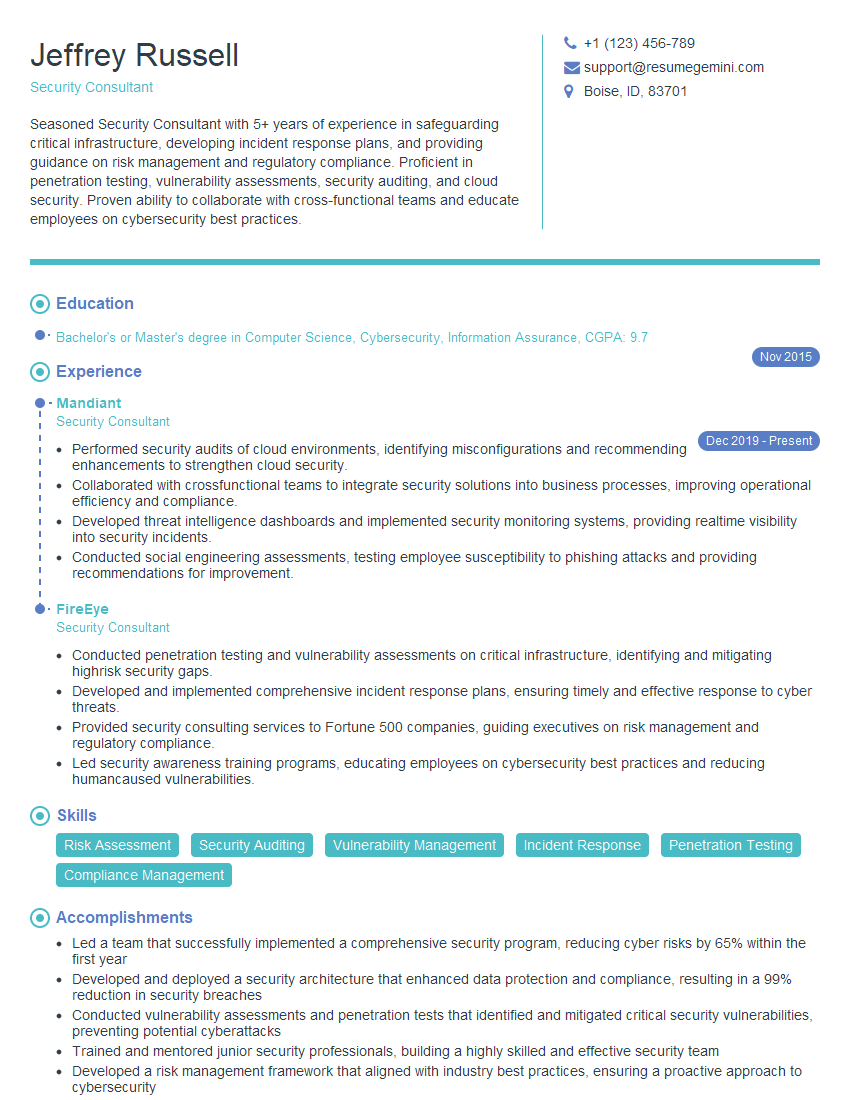
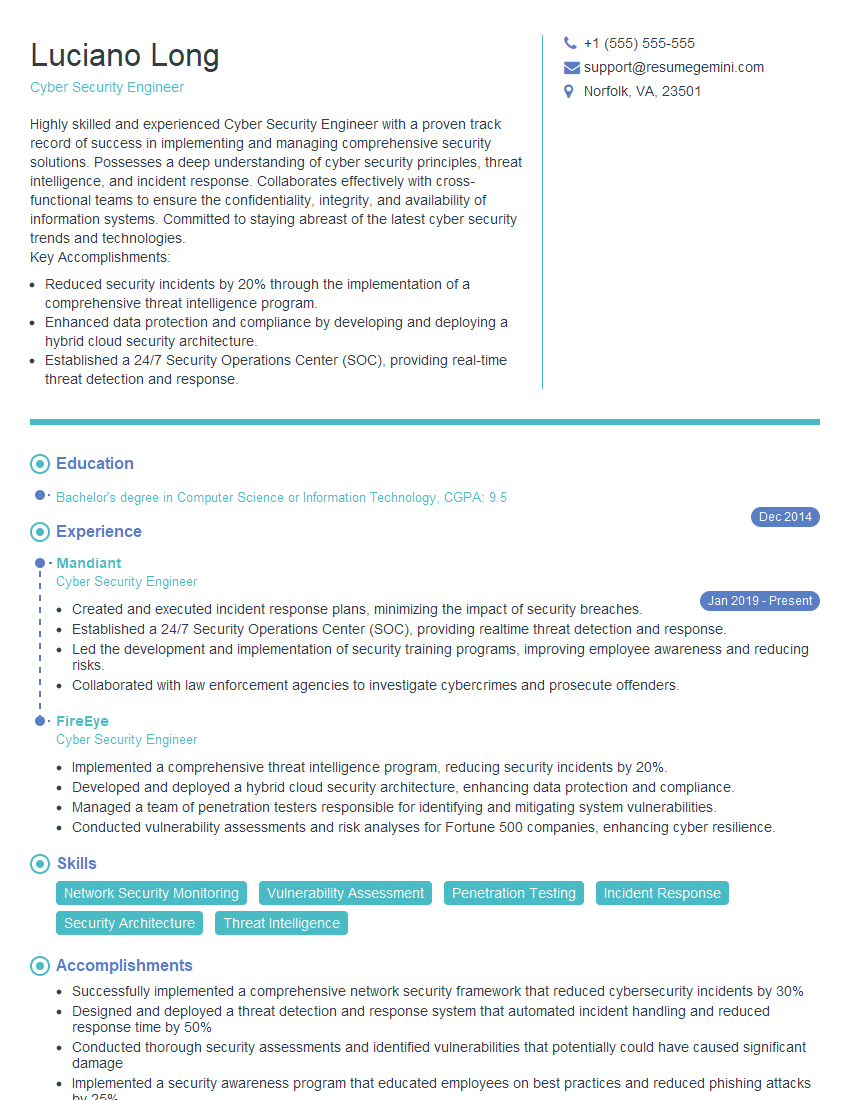
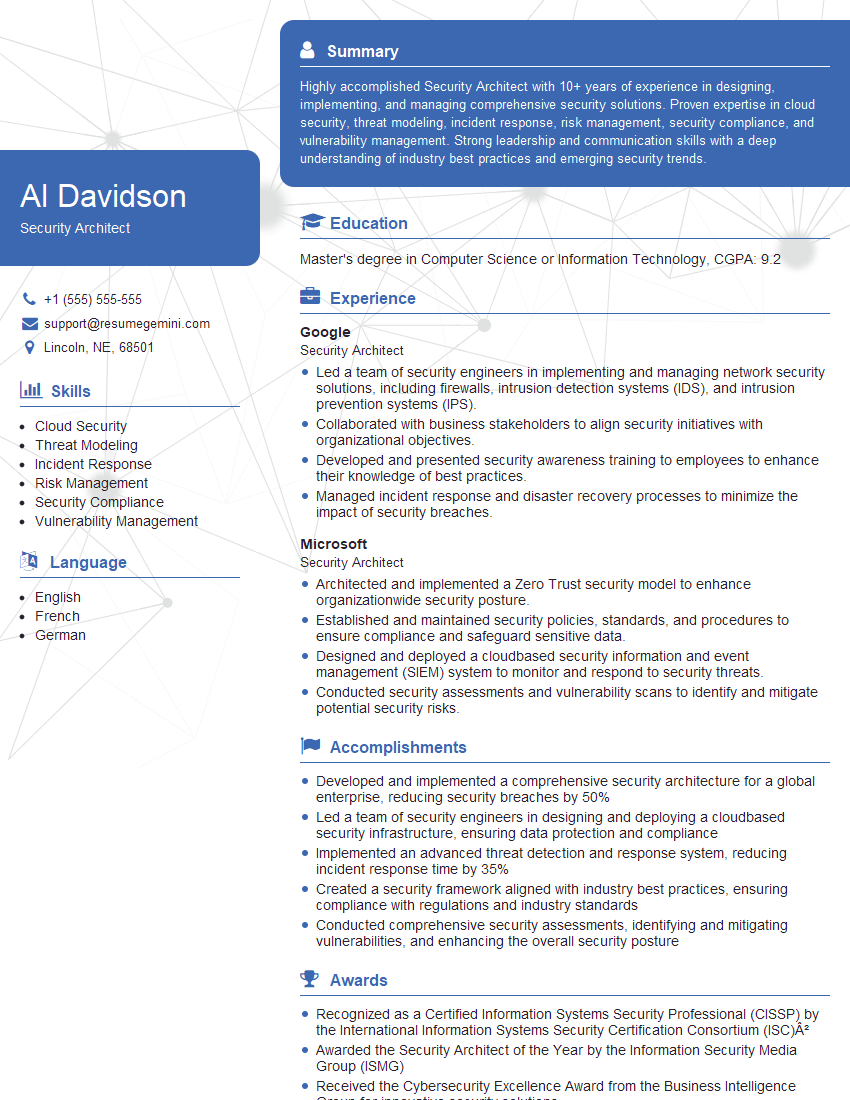
Mastering Cyber Intelligence and Operations opens doors to exciting and impactful careers, offering significant growth potential and high demand in today’s digital landscape. A strong resume is crucial for showcasing your skills and experience to potential employers. Creating an ATS-friendly resume is essential for maximizing your chances of getting your application noticed. To help you build a compelling and effective resume, we highly recommend using ResumeGemini. ResumeGemini provides tools and resources to craft a professional resume, and we offer examples of resumes tailored to Cyber Intelligence and Operations roles to help guide you.
Explore more articles
Users Rating of Our Blogs
Share Your Experience
We value your feedback! Please rate our content and share your thoughts (optional).
What Readers Say About Our Blog
Very informative content, great job.
good