Every successful interview starts with knowing what to expect. In this blog, we’ll take you through the top Dam and Reservoir Operation interview questions, breaking them down with expert tips to help you deliver impactful answers. Step into your next interview fully prepared and ready to succeed.
Questions Asked in Dam and Reservoir Operation Interview
Q 1. Explain the different types of dams and their respective advantages and disadvantages.
Dams are classified based on their structural design and the materials used. Each type offers unique advantages and disadvantages depending on the site’s geological conditions, the available resources, and the intended purpose.
- Embankment Dams: These dams are constructed from compacted earth materials like soil, rock, and gravel. They are relatively inexpensive to build and adapt well to various site conditions. However, they are susceptible to erosion and seepage, requiring careful design and maintenance.
Example: The Oroville Dam in California is a large embankment dam. - Concrete Gravity Dams: These massive structures rely on their own weight to resist the water pressure. They are exceptionally strong and durable, often used in high-head applications (large height differences between the reservoir and downstream). However, they are expensive to build and require significant amounts of concrete and skilled labor.
Example: The Hoover Dam is a classic example of a concrete gravity dam. - Concrete Arch Dams: These dams are curved structures that transfer water pressure to the abutments (the surrounding rock formations). They are aesthetically pleasing and efficient in terms of material usage, but require strong and stable abutments for safe operation. The suitability is site-specific.
Example: The Diablo Dam is a notable concrete arch dam. - Buttress Dams: These dams consist of a series of vertical buttresses supporting a sloping upstream face, often made of concrete. They are more economical than gravity dams for moderate-height applications and offer good resistance to seismic activity. However, they may be more susceptible to damage during extreme flood events.
Example: Many smaller dams utilize buttress designs.
Choosing the right dam type involves a thorough site investigation, detailed engineering analysis considering factors like seismicity, geological stability, and environmental impact.
Q 2. Describe the process of reservoir sedimentation and its impact on dam operations.
Reservoir sedimentation is the gradual accumulation of sediment (sand, silt, clay) carried by the river into the reservoir. This process reduces the reservoir’s storage capacity over time, impacting its ability to manage flood waters, generate hydropower, and provide water for irrigation and other uses.
The impact on dam operations is significant:
- Reduced storage capacity: Sedimentation lowers the reservoir’s water holding capacity, potentially affecting water supply reliability.
- Increased risk of dam failure: Sediment build-up can alter the hydraulic characteristics of the dam and reservoir, increasing the risk of instability during high flow events.
- Impact on hydropower generation: Reduced reservoir volume and changes in flow patterns affect the efficiency of hydropower plants.
- Water quality issues: Sediment can alter the water quality, increasing turbidity and affecting downstream ecosystems.
Mitigation strategies include sediment flushing, desilting, and careful watershed management to minimize sediment erosion upstream.
Q 3. How do you manage water releases during flood events?
Managing water releases during flood events is crucial for protecting downstream communities and infrastructure. The goal is to balance the need to reduce reservoir levels to prevent overtopping while minimizing the impact of downstream flooding.
This is achieved through a combination of:
- Real-time monitoring: Continuous monitoring of upstream rainfall, reservoir levels, and downstream river flows is essential for accurate flood forecasting.
- Flood forecasting: Advanced hydrological models predict the likely magnitude and timing of flood events, informing release decisions.
- Controlled releases: Water is released gradually from the reservoir through spillways and outlet gates, managing downstream river flows within acceptable limits.
- Coordination with downstream authorities: Close collaboration with downstream stakeholders is crucial to provide timely flood warnings and minimize disruption.
- Emergency action plans: Detailed emergency action plans outline procedures for handling different flood scenarios, including emergency spillway operations.
The decision-making process involves careful consideration of many factors and often requires collaboration among multiple agencies and expertise.
Q 4. What are the key safety considerations in dam operation and maintenance?
Dam safety is paramount, and a multi-faceted approach is critical. Key considerations include:
- Structural integrity: Regular inspections and monitoring of the dam’s structural elements (concrete, foundations, spillways) to detect any signs of deterioration or damage. This includes visual inspections, geophysical surveys, and laboratory testing of materials.
- Hydraulic safety: Ensuring the adequate capacity of spillways and other outlet structures to handle flood flows. This involves regular cleaning of debris and maintenance of gates and valves.
- Seismic safety: Designing and constructing dams to withstand seismic activity based on the region’s seismic hazard assessment. This may include structural enhancements and seismic instrumentation.
- Emergency preparedness: Development and regular testing of emergency action plans to handle various scenarios, including dam failure, flooding, and other emergencies.
- Instrumentation and monitoring: A comprehensive instrumentation system provides real-time data on dam behavior, allowing for early detection of potential problems.
- Erosion control: Protecting the dam’s foundations and embankments from erosion through proper drainage design, vegetation management, and other measures.
A robust safety program includes detailed risk assessments, regular inspections, and proactive maintenance to ensure the long-term safety and reliability of the dam.
Q 5. Explain the role of instrumentation in monitoring dam safety.
Instrumentation plays a vital role in monitoring dam safety by providing real-time data on the dam’s behavior and the surrounding environment. This allows for early detection of potential problems and informed decision-making.
Common types of instrumentation include:
- Strain gauges: Measure deformation in concrete structures and identify potential cracks or stress concentrations.
- Piezometers: Measure pore water pressure within the dam and foundations, providing insights into seepage and potential instability.
- Inclinometers: Measure the inclination of the dam’s embankment, indicating potential slope movements.
- Settlement gauges: Measure vertical movements of the dam and foundations.
- Water level sensors: Monitor reservoir levels and flow rates in real-time.
- Seismic sensors: Detect seismic activity and provide data on the dam’s response to earthquakes.
The data collected by these instruments are continuously monitored, analyzed, and used to assess the dam’s safety and inform operational decisions.
Q 6. Describe your experience with spillway operation and design.
My experience with spillway operation and design encompasses both theoretical understanding and practical application in various projects. I have been involved in the design, construction, and operation of several spillway types, including overflow spillways, chute spillways, and tunnel spillways.
In my work, I have focused on:
- Hydraulic design: Ensuring the spillway’s capacity to handle design flood flows, minimizing erosion, and preventing cavitation damage.
- Structural design: Designing spillway structures to withstand the high hydraulic loads and other forces, maintaining structural integrity under extreme conditions.
- Safety features: Incorporating safety features such as energy dissipators, stilling basins, and emergency gates to control the flow and prevent downstream damage.
- Operation and maintenance: Developing operational procedures for spillway management, including regular inspections, maintenance, and emergency response plans.
- Instrumentation and monitoring: Implementing a comprehensive instrumentation system to monitor spillway performance and detect any potential problems.
I have experience with both the design of new spillways and the rehabilitation of existing spillways to enhance safety and improve efficiency. My work has also involved the development of sophisticated hydraulic and structural models for spillway performance assessment.
Q 7. How do you ensure the structural integrity of a dam over time?
Ensuring the structural integrity of a dam over its lifespan requires a comprehensive and proactive approach. This involves:
- Regular inspections and monitoring: Regular inspections, including visual inspections, geophysical surveys, and laboratory testing of materials, detect early signs of deterioration.
- Instrumentation and monitoring: A network of instruments provides real-time data on the dam’s behavior, allowing for early detection of potential problems.
- Preventive maintenance: Regular maintenance activities, such as crack repairs, grouting, and surface protection, extend the dam’s lifespan.
- Adaptive maintenance: Regular assessment of the dam’s condition and adaptation of maintenance strategies as needed based on monitoring data and inspection findings.
- Rehabilitation and upgrades: When necessary, structural repairs and upgrades are implemented to address deterioration or enhance the dam’s safety and performance.
- Risk assessment and management: Regular risk assessments identify potential hazards and inform mitigation strategies, ensuring proactive management of risks.
A long-term perspective is critical. Proactive measures prevent costly and potentially dangerous repairs later. The focus should always be on safety and the longevity of the structure.
Q 8. What are the environmental considerations in reservoir management?
Environmental considerations in reservoir management are paramount, impacting both the aquatic ecosystem and the surrounding terrestrial environment. These considerations go beyond simply filling a reservoir; they encompass the entire lifecycle, from initial planning to decommissioning.
- Water Quality: Changes in water flow regimes can affect downstream water quality. Reduced flow can lead to increased concentrations of pollutants, while increased sedimentation from erosion within the reservoir can negatively impact downstream aquatic life. We need to monitor water parameters like dissolved oxygen, nutrient levels, and temperature regularly.
- Habitat Alteration: The creation of a reservoir dramatically alters the existing habitat, inundating terrestrial ecosystems and creating a new aquatic environment. This can lead to the loss of biodiversity, particularly for species not adapted to aquatic life. Mitigation strategies include creating fish passage structures and protecting riparian habitats.
- Greenhouse Gas Emissions: Reservoirs can become significant sources of greenhouse gas emissions, particularly methane, due to the decomposition of organic matter in the flooded area. Proper reservoir management practices can help minimize these emissions.
- Sedimentation: The trapping of sediment behind a dam can reduce the reservoir’s storage capacity over time and negatively affect downstream river morphology and ecosystems that depend on sediment supply. Regular monitoring and sediment management plans are crucial.
- Fisheries: Reservoirs can impact fish populations both positively and negatively. Changes in water temperature, flow, and habitat can affect fish reproduction and survival. Careful planning and management are needed to maintain or enhance fisheries resources.
For instance, in a project I worked on in the Amazon basin, we implemented a fish ladder system to help migratory fish navigate the dam and maintain the biodiversity of the river ecosystem downstream. Proper environmental impact assessments (EIAs) and ongoing monitoring are absolutely critical to address these concerns.
Q 9. Explain the concept of reservoir water quality management.
Reservoir water quality management focuses on maintaining the water quality within the reservoir itself, as well as its outflow, to ensure its suitability for various purposes like drinking water supply, irrigation, and maintaining downstream ecosystem health. It’s a multifaceted process involving monitoring, modelling, and control strategies.
- Monitoring: Regular monitoring of key water quality parameters, including temperature, dissolved oxygen, pH, turbidity, nutrients (nitrogen and phosphorus), and the presence of pollutants, is essential. This helps to identify trends and potential problems.
- Modeling: Water quality models are used to predict the impact of various management strategies and to optimize operations for maintaining desired water quality. These models can simulate the transport and fate of pollutants within the reservoir.
- Control Strategies: Strategies to improve water quality include controlling the inflow of pollutants, managing reservoir releases to maintain desirable water quality downstream, and using water treatment technologies if necessary. Examples include implementing best management practices in the upstream watershed to reduce sediment and nutrient runoff.
- Stratification Management: Many reservoirs experience thermal stratification, where warmer water sits on top of cooler water. This can lead to low dissolved oxygen levels in the hypolimnion (bottom layer), harming aquatic life. Strategies such as controlled releases of water from different depths can help manage stratification.
In one project, we used a hydrodynamic model to simulate the effects of different release strategies on downstream dissolved oxygen levels. This helped us to optimize reservoir operations to meet water quality standards and protect the downstream ecosystem.
Q 10. How do you calculate reservoir storage capacity?
Calculating reservoir storage capacity isn’t a single formula; it depends on the reservoir’s shape and the data available. It’s essentially determining the volume of water a reservoir can hold.
- Survey Data: The most accurate method involves using bathymetric surveys. These surveys use sonar or other technologies to map the reservoir’s bottom topography. This data creates a digital elevation model (DEM) of the reservoir.
- Volume Calculation: Once the DEM is created, software can calculate the volume of water at different water levels. This often involves dividing the reservoir into smaller segments and using numerical integration techniques (like the trapezoidal rule or Simpson’s rule) to estimate the volume of each segment.
- Empirical Formulas: Simpler approximations can be made using empirical formulas, if detailed bathymetric data is unavailable. These formulas often rely on the reservoir’s surface area at different water levels. However, these are less accurate than methods based on detailed bathymetric surveys.
Example using the trapezoidal rule (simplified):
Let’s say we have the surface area at three elevations: A1, A2, and A3. The elevation difference between each is h. The approximate volume would be: Volume ≈ h/2 * (A1 + 2A2 + A3)
The accuracy depends entirely on the precision of the survey and the complexity of the reservoir’s shape. Modern GIS software greatly simplifies this process by automating the calculations based on the digital elevation model.
Q 11. Describe your experience with dam rehabilitation projects.
I have extensive experience with dam rehabilitation projects, focusing on extending the lifespan of aging infrastructure while improving safety and operational efficiency. These projects require a multifaceted approach incorporating structural, geotechnical, and hydraulic assessments.
- Structural Assessments: We evaluate the dam’s structural integrity, checking for cracks, erosion, and signs of distress. This might involve non-destructive testing (NDT) methods like ground-penetrating radar or ultrasonic testing.
- Geotechnical Investigations: The foundation of the dam and surrounding soil conditions are thoroughly investigated. This includes subsurface exploration to assess the stability of the foundation and ensure adequate seepage control.
- Hydraulic Assessments: We assess the dam’s spillway capacity to ensure it can safely handle design flood events. This may involve upgrading spillway gates, improving the energy dissipation structures at the dam’s outlet, or increasing the spillway capacity.
- Remediation Strategies: Based on the assessments, we develop remediation strategies, which can include grouting to seal cracks, installing drainage systems to improve seepage control, constructing new spillways, or replacing aging components.
In one recent project, we rehabilitated an aging embankment dam by installing a new drainage system to mitigate the risk of internal erosion and seepage. This significantly improved the dam’s safety and extended its lifespan by several decades. Every project is unique and requires a tailored approach based on the specific conditions and age of the dam.
Q 12. What are the challenges in managing water allocation in a drought?
Managing water allocation during a drought presents significant challenges, requiring careful planning, communication, and sometimes difficult decisions. The core challenge is balancing competing demands with limited resources.
- Prioritization of Water Uses: Different water users have varying priorities. Determining which users receive water during drought conditions often involves legal frameworks and agreements, but requires careful consideration of human needs (drinking water, sanitation), economic activities (agriculture, industry), and environmental needs (ecosystem health).
- Demand Management: Implementing strategies to reduce overall water demand is critical. This may involve educating the public about water conservation, implementing water restrictions (e.g., limiting lawn watering), and offering incentives for water-efficient technologies.
- Conflict Resolution: Drought often exacerbates existing conflicts among water users. Effective communication and negotiation are crucial to manage these conflicts and build consensus.
- Water Transfer: Moving water from areas with surplus to areas experiencing shortages can be a valuable strategy, but involves careful consideration of environmental impacts and potential legal and regulatory hurdles.
- Monitoring and Forecasting: Closely monitoring water levels, rainfall, and other hydrological indicators is crucial for effective drought management. Advanced forecasting techniques can help predict the severity and duration of droughts and inform management decisions.
In a recent drought, I was involved in developing a water allocation plan that prioritized municipal water supplies while implementing strict agricultural restrictions. This required extensive communication with farmers and other stakeholders to ensure a fair and equitable allocation of limited water resources.
Q 13. How do you ensure the efficient operation of hydropower plants?
Efficient operation of hydropower plants requires a holistic approach integrating hydraulic, mechanical, and electrical systems. The goal is to maximize energy generation while maintaining the safety and reliability of the plant.
- Turbine Optimization: Regular maintenance and optimization of turbines are crucial to maintain their efficiency. This involves inspections, cleaning, and adjustments to ensure optimal performance.
- Water Management: Careful management of water flow through the turbines is essential for maximizing energy generation. This often involves using sophisticated control systems to adjust the gate openings based on real-time conditions.
- Predictive Maintenance: Utilizing data analytics and sensor technologies to predict potential equipment failures allows for proactive maintenance, reducing downtime and ensuring continuous operation.
- Grid Integration: Seamless integration with the electrical grid is critical. Hydropower plants need to respond quickly to changes in demand, and efficient grid management strategies are crucial.
- Environmental Monitoring: Continuously monitoring water quality and downstream environmental impacts is part of responsible hydropower management. This helps maintain ecosystem health.
I’ve worked on projects that implemented advanced control systems to optimize turbine operations, resulting in a significant increase in energy generation and efficiency. Regular training of plant operators is also a key component of efficient and safe operation.
Q 14. Explain your experience with dam breach analysis and emergency response plans.
Dam breach analysis and emergency response planning are critical aspects of dam safety. These processes aim to predict the consequences of a dam failure and to establish procedures to mitigate the potential impacts.
- Breach Analysis: This involves using specialized software and engineering models to simulate the potential failure modes of a dam and to predict the downstream consequences of a breach. These models account for various factors, including the dam’s geometry, material properties, and the surrounding topography.
- Flood Inundation Mapping: Based on the breach analysis, flood inundation maps are created to show the extent of potential flooding downstream. These maps are essential for developing effective evacuation plans and identifying areas at risk.
- Emergency Action Plan (EAP): A comprehensive EAP is developed outlining the procedures to be followed in the event of a dam failure. This includes protocols for communication, evacuation, rescue, and post-disaster response. Regular drills and training exercises are conducted to ensure the plan’s effectiveness.
- Early Warning Systems: Installing early warning systems, such as sensors to detect dam distress or changes in water levels, is crucial for providing timely alerts and allowing for proactive response measures.
I’ve been involved in several dam safety projects, developing breach analysis models and emergency action plans. One project involved creating a detailed inundation map for a large dam located near a densely populated area, which was crucial in developing an evacuation plan that minimized the risk to human lives and property. The process requires meticulous attention to detail and close coordination with various stakeholders including emergency management agencies.
Q 15. How do you assess the risk associated with dam failure?
Assessing dam failure risk involves a multifaceted approach combining engineering analysis, hydrological modeling, and risk assessment methodologies. We begin by thoroughly evaluating the dam’s structural integrity, considering factors like material properties, age, and historical performance. This includes detailed inspections for cracks, erosion, and other signs of deterioration. Next, we perform hydrological analyses to estimate the probability and magnitude of extreme flood events. This involves using hydrological models (like HEC-HMS or MIKE FLOOD) which incorporate historical rainfall data, catchment characteristics, and potential climate change impacts to simulate potential flood scenarios. Finally, we combine the structural and hydrological assessments using probabilistic methods, such as fault tree analysis or Monte Carlo simulations, to estimate the likelihood of failure and its potential consequences, including downstream impacts on life and property. For example, in assessing a dam’s risk, a high probability of a large flood combined with a weakened dam structure would indicate an extremely high-risk scenario requiring immediate remediation.
This entire process ultimately results in a risk matrix that informs decisions regarding dam maintenance, upgrades, and emergency response planning.
Career Expert Tips:
- Ace those interviews! Prepare effectively by reviewing the Top 50 Most Common Interview Questions on ResumeGemini.
- Navigate your job search with confidence! Explore a wide range of Career Tips on ResumeGemini. Learn about common challenges and recommendations to overcome them.
- Craft the perfect resume! Master the Art of Resume Writing with ResumeGemini’s guide. Showcase your unique qualifications and achievements effectively.
- Don’t miss out on holiday savings! Build your dream resume with ResumeGemini’s ATS optimized templates.
Q 16. What are the different methods for controlling reservoir water levels?
Controlling reservoir water levels is crucial for balancing various competing demands, including flood control, water supply, hydropower generation, and environmental considerations. We use a combination of methods for this:
- Gate operation: This is the primary method, using spillways, outlet gates, and sluice gates to regulate outflow. The precise operation depends on real-time inflow forecasts, reservoir level, and downstream conditions. For example, during heavy rainfall, we’d open spillways to increase outflow and prevent reservoir overtopping.
- Water releases: Controlled releases downstream serve various purposes, including maintaining minimum flows for downstream ecosystems, supplying irrigation water, and generating hydropower. These releases are carefully planned and coordinated to meet multiple objectives.
- Sediment management: Accumulated sediment reduces reservoir capacity. Techniques like sediment flushing or dredging help maintain effective storage capacity, allowing for better water level control.
- Real-time monitoring and forecasting: This involves utilizing sophisticated hydrological models and sensors to predict inflow and outflow. This data helps us anticipate and proactively adjust water levels to mitigate risk.
The specific approach to water level control depends on the reservoir’s design, the intended uses, and the overall hydrological context. It’s a dynamic process requiring constant monitoring and adjustment.
Q 17. Describe your experience with using hydrological modeling software.
I have extensive experience using various hydrological modeling software packages, including HEC-HMS, MIKE FLOOD, and MIKE SHE. I’ve used HEC-HMS extensively for rainfall-runoff modeling and flood forecasting, calibrating models using historical data and applying them to predict potential flood events. For example, I used HEC-HMS to model the impact of a potential extreme rainfall event on a large reservoir, providing critical information for developing effective flood control strategies. In addition, I am proficient in using MIKE FLOOD for simulating river flow and flooding in complex river systems. MIKE SHE has been invaluable for integrated watershed modeling, incorporating groundwater flow, surface runoff, and soil moisture dynamics to provide a more comprehensive understanding of the hydrological system. My skills encompass model calibration, validation, and sensitivity analysis, ensuring the accuracy and reliability of the results. Data management and visualization within these platforms are also strengths. I am comfortable integrating data from various sources, such as weather stations, flow gauges, and topographic maps, to develop robust and informative models.
Q 18. How do you monitor and manage seepage in dams?
Monitoring and managing seepage in dams is critical for ensuring their long-term stability and safety. We employ various techniques, including:
- Instrumentation: Piezometers and inclinometers are installed within the dam structure to monitor pore water pressure and any movement. These provide early warning signs of potential seepage problems.
- Regular inspections: Visual inspections of the dam and surrounding areas help identify signs of seepage, such as saturated soil, cracks, or unusual vegetation growth. Drone inspections are increasingly used for a broader perspective.
- Seepage investigations: If seepage is detected, we conduct more in-depth investigations to determine the magnitude, location, and causes. This might involve geophysical surveys or drilling programs.
- Remediation techniques: Depending on the severity of seepage, various remedial measures can be implemented. These could include grouting (injecting grout to seal cracks), installing drainage systems, or constructing cutoff walls.
Effective seepage management requires a proactive approach, combining preventative measures with a robust monitoring and response strategy. Ignoring even minor seepage can lead to serious consequences, as seen in some dam failures.
Q 19. What is your experience with different types of dam gates and their operation?
My experience encompasses a wide range of dam gates, including radial gates, roller gates, slide gates, and butterfly valves. Each type has specific applications and operational characteristics. Radial gates, for example, are commonly used in spillways and offer flexibility in controlling outflow. Roller gates are advantageous for their smooth operation and ability to handle large flows. Slide gates are suited for situations where precise control is needed. Butterfly valves are typically used for smaller outlets or regulating water flow within the dam. Operating these gates often involves sophisticated control systems, including SCADA (Supervisory Control and Data Acquisition) systems that allow for remote monitoring and automation. Safety protocols are paramount, including regular inspections and maintenance of the gates and their control mechanisms. Understanding the specific characteristics of each gate type, their limitations, and proper operational procedures is critical for ensuring safe and efficient dam operation. For instance, I once managed the operation of a dam with a mix of radial and slide gates, requiring a coordinated approach to ensure downstream flow requirements were met while maintaining reservoir levels.
Q 20. Explain the importance of regular dam inspections and maintenance.
Regular dam inspections and maintenance are paramount for ensuring the long-term safety and operational efficiency of dams. Inspections, which can range from visual assessments to more detailed structural investigations, identify potential problems early on, preventing them from escalating into major failures. This proactive approach is far more cost-effective and safer than reactive repairs. Regular maintenance includes tasks such as cleaning spillways, repairing cracks, lubricating gate mechanisms, and inspecting instrumentation. A comprehensive inspection and maintenance program should be guided by established guidelines and standards, taking into account the dam’s age, type, and operating conditions. The schedule for inspections and maintenance will also vary based on the risk profile of the dam and the findings of previous inspections. Neglecting regular inspections and maintenance can dramatically increase the risk of dam failure and endanger lives and property. A well-maintained dam is significantly less likely to experience issues and will require less extensive and costly repairs down the line.
Q 21. How do you handle emergencies related to dam safety?
Handling dam safety emergencies requires a well-defined emergency action plan (EAP). This plan should outline procedures for various scenarios, including floods, seismic events, and gate malfunctions. The EAP should include clearly defined roles and responsibilities for all personnel, communication protocols, and evacuation procedures. Real-time monitoring of the dam and surrounding area is crucial. In the event of an emergency, we would immediately implement the EAP, communicating with relevant authorities, such as emergency services and downstream communities. I have experience developing and implementing EAPs, including conducting emergency drills to ensure everyone understands their roles and responsibilities. For example, I once managed a situation where a significant rainstorm threatened to overtop a dam. We promptly activated the EAP, opening spillways and coordinating with downstream communities to initiate evacuation protocols, avoiding any damage and preserving public safety. Quick and coordinated action is always the key to ensuring the best outcome in an emergency.
Q 22. How do you ensure compliance with relevant regulations and standards?
Ensuring compliance with regulations and standards in dam and reservoir operations is paramount for safety and environmental responsibility. This involves a multi-faceted approach encompassing thorough understanding of applicable laws, consistent monitoring, meticulous record-keeping, and proactive risk management.
- Regulatory Knowledge: We begin by thoroughly understanding all relevant federal, state, and local regulations pertaining to dam safety, water quality, and environmental impact. This includes familiarity with guidelines issued by organizations like the Federal Energy Regulatory Commission (FERC) in the US, or equivalent bodies in other countries.
- Inspections and Monitoring: Regular inspections of the dam structure, instrumentation, and surrounding areas are crucial. This involves visual checks, structural assessments, and monitoring of key parameters like reservoir levels, seepage, and spillway capacity. We utilize sophisticated instrumentation and data logging systems to track these parameters continuously.
- Record-Keeping: Meticulous record-keeping is essential. All inspections, maintenance activities, incident reports, and operational data are meticulously documented and archived for future reference and audits. This allows for effective trend analysis and proactive identification of potential problems.
- Emergency Preparedness: Comprehensive emergency action plans (EAPs) are developed and regularly tested. These plans detail procedures for various scenarios, including dam failure, extreme weather events, and other emergencies. Regular training exercises ensure personnel are prepared to respond effectively.
- Compliance Audits: We conduct regular internal audits to assess compliance with all applicable regulations. External audits by independent regulatory bodies are also welcomed to ensure objectivity and transparency.
For example, during my time managing the [Name of Dam] project, we implemented a sophisticated early warning system for potential dam breaches, exceeding regulatory minimums to ensure community safety, which resulted in zero safety incidents during my tenure.
Q 23. Describe your experience with communication and coordination during dam operations.
Effective communication and coordination are the cornerstones of successful dam operations. It’s a complex interplay of various stakeholders, including engineers, operators, regulatory agencies, downstream communities, and potentially hydropower customers.
- Stakeholder Engagement: Building strong relationships with all stakeholders is critical. This involves regular meetings, transparent communication of operational decisions and potential risks, and responsiveness to their concerns. This fosters trust and facilitates cooperation.
- Internal Communication: Clear and efficient internal communication is vital among the dam operations team. This includes daily operational briefings, shift handovers, and a robust system for reporting incidents and anomalies. We often utilize digital communication tools to ensure information is disseminated promptly and accurately.
- Emergency Response Communication: During emergencies, effective communication becomes even more crucial. Pre-established communication channels and protocols ensure rapid response and information sharing with relevant authorities and the public. We may utilize multiple channels, including sirens, automated alerts, and public address systems.
- Data Sharing: We use sophisticated systems for data sharing between operators, engineers, and regulatory bodies. This may include real-time monitoring systems, remote access to operational data, and secure data transfer platforms.
In one instance, during a sudden flood event, our established communication protocol enabled us to coordinate with downstream communities to issue timely flood warnings, minimizing property damage and preventing loss of life. Clear and concise messaging was key during this high-pressure situation.
Q 24. How do you balance the competing demands of water supply, hydropower generation, and environmental protection?
Balancing the competing demands of water supply, hydropower generation, and environmental protection requires a holistic and often iterative approach. It’s not about maximizing one objective at the expense of others; instead, it’s about finding the optimal balance that meets the needs of all stakeholders and the environment.
- Multi-Objective Optimization: We use sophisticated modeling techniques to optimize reservoir operations considering all competing demands. This might involve software that simulates water flow, hydropower generation, and environmental impacts under various operational scenarios. The models consider ecological flow requirements, water quality standards, and power demand forecasts.
- Environmental Flow Management: Maintaining adequate environmental flows downstream is essential to protect aquatic ecosystems. This requires careful consideration of water release patterns and timing to mimic natural flow regimes as closely as possible. We work with environmental scientists to establish and monitor these ecological flow requirements.
- Adaptive Management: Dam operations need to be adaptive to changing conditions. This means continually monitoring the system’s response to our operations and adjusting our strategies accordingly. This often involves integrating real-time data from various sources into our decision-making process.
- Stakeholder Consultation: Regular consultations with water users, environmental groups, and regulatory agencies help to incorporate diverse perspectives into decision-making. This collaborative approach is critical for building consensus and achieving a sustainable balance among competing interests.
For example, in one project, we developed a collaborative management plan involving water users, environmental agencies, and hydropower producers. This resulted in a compromise that ensured sufficient water supplies for agricultural needs, met energy demands, and protected critical habitat in the river ecosystem.
Q 25. What are the key performance indicators (KPIs) for effective dam and reservoir operations?
Key Performance Indicators (KPIs) for effective dam and reservoir operations are designed to measure the efficiency, safety, and sustainability of operations. These indicators are carefully selected to reflect the diverse objectives of dam management, covering structural integrity, operational efficiency, environmental performance, and stakeholder satisfaction.
- Safety KPIs: These focus on ensuring the structural integrity of the dam and safety of personnel and downstream communities. Examples include:
Dam safety inspection scores,Number of safety incidents,Time to respond to emergencies. - Operational Efficiency KPIs: These metrics assess the effectiveness of reservoir operations in meeting water supply, hydropower generation, and flood control objectives. Examples include:
Reservoir storage capacity utilization,Hydropower generation efficiency,Water delivery reliability. - Environmental KPIs: These assess the impact of dam operations on the environment. Examples include:
Downstream flow rates,Water quality parameters,Aquatic habitat assessment scores. - Financial KPIs: These measure the economic performance of dam operations. Examples include:
Operating costs,Hydropower revenue,Return on investment. - Stakeholder Satisfaction KPIs: These assess the satisfaction of various stakeholders with dam operations. This may involve surveys and feedback mechanisms to assess community satisfaction and perceptions.
Regular monitoring and analysis of these KPIs provide valuable insights into the effectiveness of dam operations and identify areas for improvement.
Q 26. Describe your experience with using Geographic Information Systems (GIS) in dam and reservoir management.
Geographic Information Systems (GIS) are invaluable tools for dam and reservoir management, providing a powerful platform for visualizing, analyzing, and managing spatial data related to the dam and its surrounding environment.
- Spatial Data Management: GIS allows us to effectively manage vast amounts of spatial data, including topographic maps, bathymetric surveys, geological data, land use information, and infrastructure locations. This integrated approach provides a comprehensive understanding of the dam’s context.
- Risk Assessment: GIS helps identify potential risks associated with dam operations. For example, we can use GIS to analyze flood inundation zones, identify areas prone to landslides, and assess the vulnerability of infrastructure to various hazards.
- Environmental Monitoring: GIS facilitates environmental monitoring by enabling the visualization of water quality data, vegetation patterns, and wildlife habitats. This allows for a better understanding of the environmental impacts of dam operations and supports adaptive management strategies.
- Planning and Design: GIS supports the planning and design of new dams and upgrades to existing infrastructure. It allows us to analyze various design options, evaluate their environmental impacts, and optimize their location based on spatial constraints.
- Public Communication: GIS can create visually appealing maps and reports to communicate information about dam operations and associated risks to the public and stakeholders.
In one instance, GIS helped us quickly identify a potential breach in a section of the dam’s embankment, allowing for timely intervention and prevention of a serious incident. The visualization of topographic data allowed for accurate assessment of the risk and informed emergency response.
Q 27. How do you stay updated on the latest advancements in dam engineering and technology?
Staying updated on the latest advancements in dam engineering and technology is essential for maintaining best practices and ensuring the safety and efficiency of dam operations. This involves a continuous learning approach that combines multiple avenues for knowledge acquisition.
- Professional Organizations: Active membership in professional organizations like the American Society of Civil Engineers (ASCE) or the International Commission on Large Dams (ICOLD) provides access to conferences, publications, and networking opportunities with leading experts in the field.
- Conferences and Workshops: Attending conferences and workshops allows for direct engagement with cutting-edge research and technologies. This often provides opportunities to learn from leading professionals and exchange experiences.
- Publications and Journals: Regularly reviewing technical journals and publications keeps me abreast of the latest research findings and best practices in dam engineering and reservoir management.
- Online Courses and Webinars: Online learning platforms provide access to a wide range of educational resources, allowing for continuous professional development in specialized areas such as instrumentation, monitoring systems, or risk management.
- Industry Collaboration: Networking and collaboration with other dam operators and engineers allows for the sharing of best practices and lessons learned. This peer-to-peer learning is invaluable for problem-solving and staying informed about industry trends.
For example, recently I completed a specialized course on advanced reservoir simulation techniques, which directly enhanced our ability to optimize water allocation and hydropower generation at our facility. This reflects my commitment to continuous professional growth and maintaining a high level of expertise in this dynamic field.
Key Topics to Learn for Dam and Reservoir Operation Interview
- Hydrology and Hydraulics: Understanding water flow, reservoir inflow forecasting, and the impact of rainfall and snowmelt on reservoir levels. Practical application: Analyzing hydrological data to predict future reservoir levels and optimize water release strategies.
- Dam Safety and Engineering: Knowledge of dam structures, materials, and potential failure modes. Practical application: Assessing dam stability, identifying potential risks, and implementing preventative maintenance schedules.
- Reservoir Management and Operations: Strategies for managing water levels, releases, and inflow variations to meet multiple demands (e.g., hydropower generation, irrigation, flood control, water supply). Practical application: Developing operational plans to balance competing demands and ensure safe and efficient reservoir operation.
- Water Quality Management: Understanding the impact of reservoir operations on water quality and implementing strategies to maintain acceptable levels. Practical application: Monitoring water quality parameters and adjusting reservoir operations to mitigate negative impacts.
- Instrumentation and Monitoring: Knowledge of the various instruments and systems used to monitor dam conditions and reservoir levels. Practical application: Interpreting data from monitoring systems to identify potential problems and take corrective actions.
- Emergency Response Planning: Developing and implementing emergency action plans for various scenarios, such as dam failure or extreme weather events. Practical application: Participating in drills and exercises to ensure preparedness for emergencies.
- Regulations and Compliance: Familiarity with relevant regulations and permits related to dam safety and reservoir operations. Practical application: Ensuring compliance with all applicable laws and regulations.
- Data Analysis and Modeling: Using software and tools to analyze hydrological data, model reservoir behavior, and optimize operations. Practical application: Utilizing simulation models to assess the impact of different operational strategies.
Next Steps
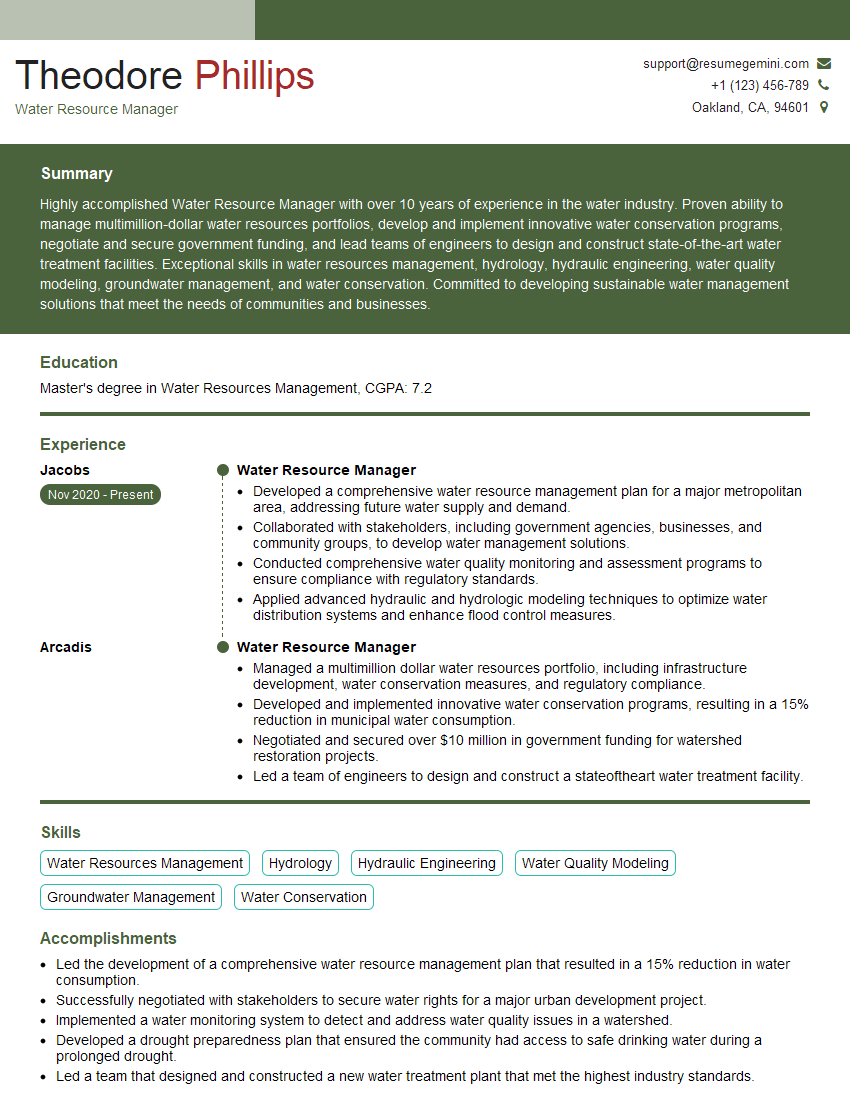
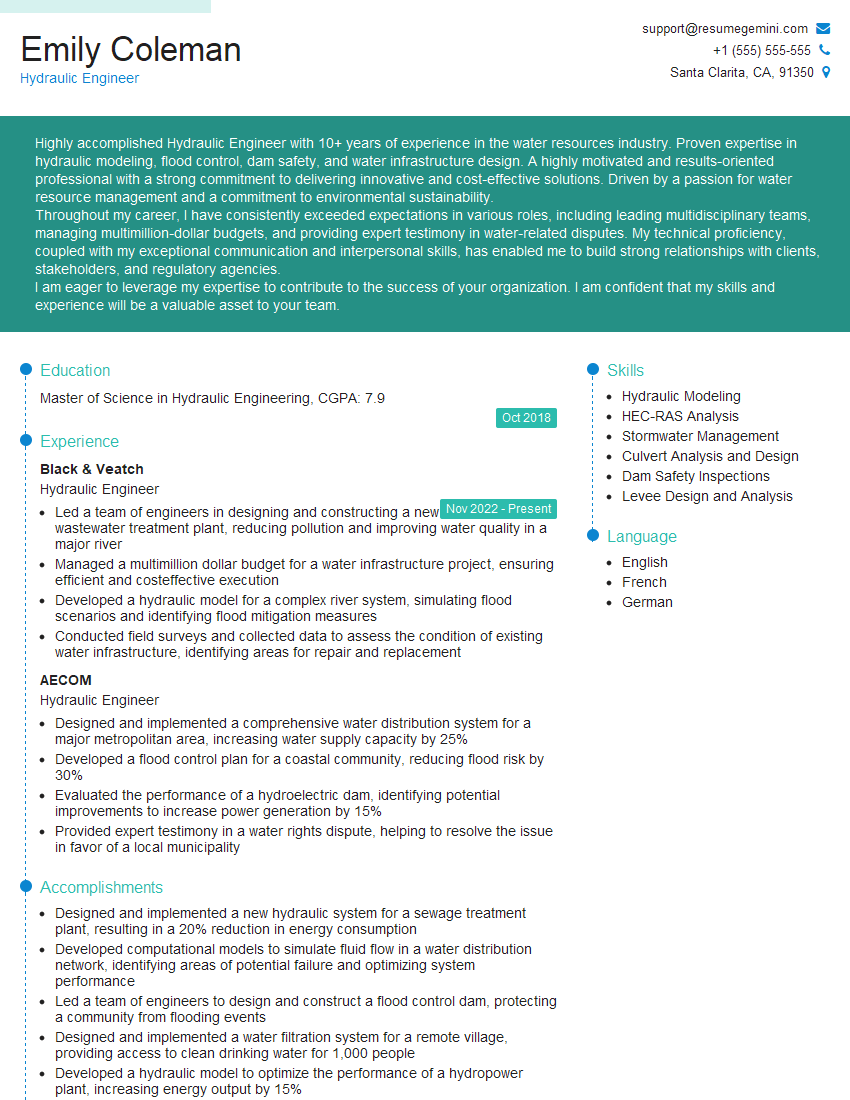
Mastering Dam and Reservoir Operation opens doors to a rewarding career with significant impact on communities and the environment. To stand out, a strong, ATS-friendly resume is crucial. This highlights your skills and experience effectively to potential employers. We strongly recommend leveraging ResumeGemini to create a professional and impactful resume that showcases your expertise in this field. ResumeGemini provides resources and examples of resumes tailored to Dam and Reservoir Operation, helping you present your qualifications in the best possible light.

Explore more articles
Users Rating of Our Blogs
Share Your Experience
We value your feedback! Please rate our content and share your thoughts (optional).
What Readers Say About Our Blog
Very informative content, great job.
good