Are you ready to stand out in your next interview? Understanding and preparing for Fertilization Practices interview questions is a game-changer. In this blog, we’ve compiled key questions and expert advice to help you showcase your skills with confidence and precision. Let’s get started on your journey to acing the interview.
Questions Asked in Fertilization Practices Interview
Q 1. Explain the principles of balanced fertilization.
Balanced fertilization is the practice of supplying essential plant nutrients in the correct proportions to optimize crop growth and yield. It’s about avoiding nutrient deficiencies and excesses, ensuring a harmonious nutrient balance for the plant’s entire lifecycle. Think of it like baking a cake – you need the right amount of each ingredient (nutrients) for a perfect result. Too much of one ingredient can ruin the whole thing!
The three primary macronutrients – nitrogen (N), phosphorus (P), and potassium (K) – form the foundation of balanced fertilization. These are needed in larger quantities than secondary macronutrients (sulfur, calcium, magnesium) and micronutrients (iron, zinc, manganese, boron, copper, molybdenum, chlorine). The ideal N:P:K ratio varies depending on the crop, soil type, and growth stage. For example, a leafy vegetable might need a higher nitrogen ratio for vigorous leaf growth, while a fruiting crop may require more phosphorus for flower and fruit development. Ignoring the balance can lead to stunted growth, reduced yields, and even nutrient toxicities.
Q 2. Describe different types of fertilizers and their applications.
Fertilizers come in various forms, each with specific applications:
- Inorganic Fertilizers: These are manufactured, containing specific nutrient ratios. Examples include:
- NPK fertilizers: These contain nitrogen, phosphorus, and potassium in varying ratios (e.g., 10-10-10, 20-20-0). They’re readily available and easy to apply.
- Urea: A high-nitrogen source (46% N), often used for nitrogen supplementation.
- Diammonium phosphate (DAP): A high-phosphorus source (18% N, 46% P2O5).
- Monoammonium phosphate (MAP): Another phosphorus source (11% N, 52% P2O5).
- Organic Fertilizers: Derived from natural sources, they release nutrients more slowly. Examples include:
- Compost: Improves soil structure and provides a slow release of several nutrients.
- Manure: Animal waste rich in organic matter and nutrients; provides a slow and sustainable nutrient supply.
- Biosolids: Treated sewage sludge that can be a good source of several nutrients but needs careful handling to avoid potential contamination.
The choice depends on factors like nutrient needs, soil type, cost, and environmental concerns. Inorganic fertilizers offer immediate nutrient availability, while organic fertilizers contribute to long-term soil health.
Q 3. What are the factors influencing fertilizer selection?
Several factors influence fertilizer selection. It’s not a one-size-fits-all approach:
- Soil Test Results: This is crucial. It identifies nutrient deficiencies and indicates the amounts needed.
- Crop Needs: Different crops require different nutrient ratios at various growth stages. A soil test alone is insufficient.
- Soil Type: Sandy soils, for example, drain quickly and require more frequent fertilization but may need less fertilizer. Clay soils, on the other hand, might have nutrients locked up and need careful application methods.
- Climate: Rainfall affects nutrient leaching, which influences fertilizer choices and application timing.
- Cost: Different fertilizer types have varying costs. Economic considerations play a role in the selection.
- Environmental Concerns: Minimizing nutrient runoff and leaching is crucial. Organic fertilizers generally have a lower environmental impact.
A farmer might choose a readily available NPK fertilizer based on soil test results and crop needs for a fast-growing crop during a critical growth stage. For the same crop in subsequent years, the farmer might amend the soil with compost to enhance the soil’s long-term health and reduce their dependence on inorganic sources.
Q 4. How do you determine the appropriate fertilizer rate for a specific crop?
Determining the appropriate fertilizer rate is a multifaceted process that combines soil test results, crop nutrient requirements, and yield goals. It isn’t arbitrary; rather, it’s calculated using several approaches:
- Soil Test-Based Recommendations: This is the most reliable method. Soil test labs provide recommendations tailored to the specific soil and crop, usually indicating the amount of nutrients needed per unit area (e.g., kg/ha or lb/acre).
- Crop Response Curves: These curves demonstrate the relationship between nutrient application and yield. They help determine the optimal fertilizer rate at which additional nutrient application would not significantly increase yield, optimizing nutrient utilization.
- Nutrient Removal Calculations: This method estimates the nutrient removed by the expected yield. By analyzing the nutrient concentration of harvested plants, the required fertilizer input can be predicted to replace the nutrients taken up by the crop during the growth cycle.
- Calibration of Equipment: Accurate application is vital. Properly calibrated equipment ensures the right amount of fertilizer is applied uniformly.
Often, a combination of these methods is used for a more precise determination. For example, a farmer may use soil test results as a base but adjust the rate based on observed crop growth and historical yield data.
Q 5. Explain the concept of soil testing and its importance in fertilization.
Soil testing is the analysis of a soil sample to determine its nutrient content, pH, and other properties. It’s the cornerstone of effective fertilization, guiding informed decisions to optimize nutrient application. Imagine it as a health check-up for your soil – it reveals deficiencies and excesses, preventing problems before they arise.
Its importance is paramount because:
- Avoids Nutrient Imbalances: Soil tests identify existing nutrient levels, preventing over-fertilization, which can harm the environment and plants.
- Optimizes Fertilizer Use: It allows for precise nutrient application, avoiding unnecessary expenses associated with using excessive fertilizers.
- Improves Crop Yields: By addressing specific nutrient needs, higher yields and improved crop quality are achieved.
- Protects the Environment: Prevents nutrient runoff and leaching, minimizing environmental damage.
- Increases Soil Health: Proper fertilization, guided by soil testing, improves soil structure and fertility over the long term.
A farmer who routinely conducts soil tests can tailor their fertilizer applications, increasing efficiency and reducing environmental impact. Neglecting soil tests leads to guesswork, potentially resulting in poor crop performance and wasted resources.
Q 6. Describe various soil sampling techniques.
Several soil sampling techniques ensure representative soil samples are collected for accurate analysis:
- Composite Sampling: Multiple samples are collected from different locations within a field and combined into one composite sample. This is a cost-effective method that provides an overall representation of the field’s nutrient status.
- Grid Sampling: The field is divided into a grid, and samples are taken from each grid section. This technique is more precise, providing a detailed map of nutrient variability within the field.
- Zone Sampling: Samples are collected from areas with similar characteristics (e.g., slope, soil type, drainage). This method is useful in fields with noticeable variations.
- Management Zone Sampling: Similar to zone sampling but considers factors such as past management practices. Areas with the same yield history are grouped and sampled.
The choice of sampling technique depends on the field’s size, variability, and the level of detail required. Following proper protocols is crucial to ensure the accuracy of the results and their relevance to fertilizer management decisions.
Q 7. How do you interpret soil test results to recommend fertilizer application?
Interpreting soil test results requires understanding the reported values and their implications. The report usually includes:
- pH: Indicates soil acidity or alkalinity. The optimal pH range varies depending on the crop.
- Nutrient Levels: Shows the concentrations of essential nutrients (N, P, K, etc.). These are compared against critical levels, which represent the minimum amounts needed for optimal crop growth. Values below critical levels indicate deficiencies.
- Cation Exchange Capacity (CEC): Represents the soil’s ability to hold onto nutrients. A high CEC means better nutrient retention.
- Organic Matter Content: High organic matter contributes to improved soil health and nutrient availability.
Based on these values, a fertilizer recommendation is provided, detailing the type and amount of fertilizer to apply to correct deficiencies or maintain optimal nutrient levels. For instance, if a soil test reveals low phosphorus levels, a phosphorus-rich fertilizer would be recommended. The quantity of fertilizer is determined based on the difference between the existing nutrient levels and the required levels, considering the crop’s requirements and soil’s nutrient-holding capacity.
Remember that soil testing is just one part of the equation. Experienced professionals integrate these results with other factors like crop needs, climate conditions, and economic aspects to formulate a comprehensive fertilization plan.
Q 8. What are the common methods of fertilizer application?
Fertilizer application methods vary widely depending on factors like crop type, soil conditions, and available resources. Common methods include:
- Broadcast application: Spreading fertilizer evenly over the entire field. This is suitable for crops with extensive root systems, like grains. Think of it like sprinkling salt evenly on a large pizza.
- Band application: Placing fertilizer in bands, usually near the seed row. This method is efficient as it places nutrients directly where roots can readily access them. Imagine strategically placing small piles of fertilizer next to each pizza topping.
- Topdressing: Applying fertilizer to the soil surface after the crop has already emerged. It’s useful for supplying nutrients during the growing season. This is like adding extra cheese to a partly baked pizza.
- In-furrow application: Incorporating fertilizer directly into the seed furrow during planting. This provides an immediate nutrient source for germinating seedlings, like giving the pizza dough a nutrient boost before adding toppings.
- Foliar application: Spraying fertilizer directly onto the leaves. This is particularly effective for micronutrients and quick nutrient uptake. Imagine spraying a flavour enhancer directly onto the pizza.
- Fertigation: Applying fertilizer through irrigation water. This delivers nutrients directly to the roots and ensures even distribution, much like evenly watering each part of your pizza while it’s baking.
Q 9. Explain the advantages and disadvantages of different fertilizer application methods.
Each fertilizer application method has its own advantages and disadvantages:
- Broadcast: Advantages – simple and inexpensive; Disadvantages – potential for nutrient loss through runoff and leaching, uneven distribution.
- Band: Advantages – efficient nutrient use, reduced losses; Disadvantages – requires specialized equipment, potential for fertilizer burn if placed too close to seeds.
- Topdressing: Advantages – easy application, flexibility; Disadvantages – potential for nutrient loss, less efficient than band application.
- In-furrow: Advantages – immediate nutrient availability; Disadvantages – potential for fertilizer burn, uneven distribution.
- Foliar: Advantages – rapid nutrient uptake, bypasses soil limitations; Disadvantages – high cost, potential for leaf burn, less efficient for macronutrients.
- Fertigation: Advantages – even distribution, efficient water use; Disadvantages – requires specialized equipment, potential for clogging irrigation lines.
The best method depends on the specific situation. For instance, broadcast is best for large fields with uniform soil, while band application is preferable for sensitive crops or when minimizing nutrient loss is crucial.
Q 10. Describe the role of micronutrients in plant growth.
Micronutrients, also known as trace elements, are essential for plant growth and development, even though they are needed in smaller quantities than macronutrients (nitrogen, phosphorus, potassium). They play vital roles in various metabolic processes:
- Iron (Fe): Crucial for chlorophyll synthesis, critical for photosynthesis.
- Zinc (Zn): Involved in enzyme activity and plant hormone production.
- Manganese (Mn): Essential for photosynthesis and enzyme activation.
- Boron (B): Important for cell wall formation and sugar transport.
- Copper (Cu): Involved in enzyme activity and respiration.
- Molybdenum (Mo): Essential for nitrogen fixation.
- Chlorine (Cl): Plays a role in photosynthesis and stomatal regulation.
- Nickel (Ni): Needed for enzyme activity in nitrogen metabolism.
Deficiencies in micronutrients can result in stunted growth, chlorosis (yellowing of leaves), and reduced yields. Think of them as essential vitamins for the plant.
Q 11. How do you manage nutrient deficiencies in crops?
Nutrient deficiencies are managed through a combination of approaches:
- Soil testing: Analyzing soil samples to determine nutrient levels and identify deficiencies. This provides a baseline for corrective action.
- Visual diagnosis: Observing plant symptoms like chlorosis, necrosis (tissue death), or stunted growth, to detect possible nutrient deficiencies.
- Targeted fertilizer application: Applying fertilizers containing the specific nutrients that are deficient. This could involve foliar sprays or soil amendments.
- Crop rotation: Rotating different crops to improve soil health and nutrient cycling.
- Cover cropping: Planting cover crops to improve soil structure, add organic matter, and enhance nutrient availability.
- Organic amendments: Incorporating compost, manure, or other organic materials to improve soil fertility and nutrient availability.
For example, if a soil test reveals low levels of phosphorus, a phosphorus-rich fertilizer could be applied to rectify the deficiency. Addressing these deficiencies early improves crop health and maximizes yield.
Q 12. Explain the concept of slow-release fertilizers.
Slow-release fertilizers gradually release nutrients over an extended period, reducing the frequency of application and minimizing nutrient loss. This is achieved through different mechanisms:
- Coated fertilizers: Nutrients are encapsulated in a coating that slowly degrades, releasing nutrients over time. This is like a time-release capsule for nutrients.
- Organic fertilizers: Nutrients are slowly released as organic matter decomposes. This is a natural and sustainable approach.
- Polymer-coated fertilizers: Nutrients are encased in a polymer matrix that dissolves slowly, releasing nutrients as needed.
Advantages of slow-release fertilizers include reduced environmental impact, improved nutrient use efficiency, and reduced labor costs. However, they are generally more expensive than conventional fertilizers.
Q 13. What are the environmental impacts of fertilizer use?
Excessive fertilizer use can have significant negative environmental impacts:
- Water pollution: Nutrient runoff and leaching contaminate surface and groundwater, leading to eutrophication (excessive algal growth) in lakes and rivers. This depletes oxygen levels and harms aquatic life. Imagine a lake turning green and suffocating the fish.
- Greenhouse gas emissions: Production and use of some fertilizers generate greenhouse gases, contributing to climate change.
- Soil acidification: Frequent use of certain fertilizers can acidify the soil, harming soil organisms and reducing soil fertility.
- Air pollution: Ammonia volatilization from fertilizer application contributes to air pollution.
- Biodiversity loss: Eutrophication and habitat destruction can lead to biodiversity loss in aquatic and terrestrial ecosystems.
Sustainable fertilizer management practices are crucial to mitigate these impacts.
Q 14. How can you minimize nutrient runoff and leaching?
Minimizing nutrient runoff and leaching requires a multi-faceted approach:
- Precision fertilization: Applying the right amount of fertilizer at the right time and in the right place, based on soil testing and crop needs.
- Improved fertilizer management techniques: Using slow-release fertilizers, incorporating fertilizer into the soil, and avoiding application during periods of heavy rainfall.
- Cover cropping: Planting cover crops to absorb excess nutrients and prevent runoff.
- Buffer strips: Establishing vegetated buffer strips around fields to intercept runoff and filter nutrients.
- Nutrient management plans: Developing detailed plans that integrate best practices for fertilizer use and other nutrient management strategies.
- Integrated pest management (IPM): Implementing IPM reduces the need for pesticides, which can impact nutrient cycling.
By adopting these practices, farmers can significantly reduce the environmental impacts of fertilizer use and promote sustainable agriculture.
Q 15. Discuss best management practices for fertilizer application.
Best management practices for fertilizer application revolve around optimizing nutrient use efficiency while minimizing environmental impact. This involves a multifaceted approach.
- Soil Testing: Before any fertilization, a thorough soil test is crucial. This identifies nutrient deficiencies and existing levels, guiding the type and amount of fertilizer needed. Imagine it like getting a blood test before prescribing medication – you need the baseline data.
- Nutrient Management Plan: Based on soil test results, crop needs, and environmental factors, a detailed plan should be developed. This specifies the fertilizer type, rate, timing, and method of application. Think of it as a recipe for optimal plant growth.
- Appropriate Fertilizer Selection: Choosing the right fertilizer is key. Different fertilizers offer varying nutrient ratios (e.g., NPK – Nitrogen, Phosphorus, Potassium) and release rates. Slow-release fertilizers, for example, reduce nutrient loss and improve efficiency.
- Precise Application Methods: The method of application significantly affects efficiency. Methods like banding (placing fertilizer near the plant roots) or broadcast (spreading evenly over the field) have different implications for nutrient uptake and environmental impact. Banding is generally more efficient, reducing nutrient runoff.
- Timing and Placement: Applying fertilizer at the right time, often coinciding with peak nutrient uptake periods, maximizes its effectiveness. Correct placement ensures roots can access the nutrients easily.
- Integrated Pest Management (IPM): Healthy plants are more efficient at nutrient uptake. IPM strategies reduce pest damage, which can indirectly improve fertilizer utilization. A healthy plant is a productive plant.
- Cover Crops: Integrating cover crops can improve soil health, nutrient cycling, and reduce fertilizer needs. They act like natural fertilizers, adding organic matter and improving soil structure.
- Monitoring and Evaluation: Regular monitoring of plant growth, tissue nutrient levels, and yield helps assess the effectiveness of the fertilization program and make necessary adjustments for future applications. Think of this as quality control for your fertilizer strategy.
Career Expert Tips:
- Ace those interviews! Prepare effectively by reviewing the Top 50 Most Common Interview Questions on ResumeGemini.
- Navigate your job search with confidence! Explore a wide range of Career Tips on ResumeGemini. Learn about common challenges and recommendations to overcome them.
- Craft the perfect resume! Master the Art of Resume Writing with ResumeGemini’s guide. Showcase your unique qualifications and achievements effectively.
- Don’t miss out on holiday savings! Build your dream resume with ResumeGemini’s ATS optimized templates.
Q 16. How do you address fertilizer burn in plants?
Fertilizer burn, or salt injury, occurs when excessive fertilizer salts damage plant roots and foliage. The symptoms include wilting, leaf scorch, and stunted growth. Addressing it requires immediate action.
- Immediate Irrigation: Flush the affected area with copious amounts of water to dilute the fertilizer salts and wash them away from the roots. Think of it like rinsing away spilled salt from a wound.
- Reduce Future Applications: Adjust fertilizer application rates in future applications based on soil tests and plant response. It’s better to under-fertilize than over-fertilize.
- Amend the Soil: Incorporating organic matter like compost can improve soil drainage and buffer against salt accumulation. Organic matter acts like a sponge, helping retain water and nutrients.
- Use Slow-Release Fertilizers: Switching to fertilizers that release nutrients gradually minimizes the risk of salt buildup and burn. This is like providing a slow, steady drip of nutrients rather than a sudden flood.
- Avoid Fertilizing During Stress Periods: Don’t fertilize during drought conditions or extreme temperatures, as plants are already stressed and less able to absorb nutrients efficiently, increasing the risk of burn.
- Observe Carefully: Continuously monitor plants for signs of improvement after implementing remedial measures.
Q 17. Explain the importance of organic fertilizers.
Organic fertilizers, derived from natural sources like animal manure, compost, and crop residues, play a vital role in sustainable agriculture. Their importance stems from several factors:
- Improved Soil Health: They enhance soil structure, aeration, and water retention. Think of them as food for the soil itself.
- Nutrient Availability: They provide a gradual release of nutrients, minimizing losses and improving nutrient uptake efficiency. It’s like a slow-cooker approach to nutrient delivery.
- Reduced Environmental Impact: They typically have a lower environmental footprint compared to synthetic fertilizers, reducing water and air pollution. They are inherently gentler on the environment.
- Enhanced Microbial Activity: They support beneficial microbial communities in the soil, which contribute to nutrient cycling and plant health. A diverse and happy soil microbiome is a key element of productivity.
- Increased Soil Organic Matter: This contributes to long-term soil fertility, enhancing its resilience to environmental changes. It’s like building a long-lasting foundation for healthy plant growth.
For example, using composted manure adds valuable nutrients and improves soil structure, resulting in healthier plants and better yields over time.
Q 18. What are the challenges of sustainable fertilization?
Sustainable fertilization faces many challenges:
- Balancing Nutrient Needs and Environmental Protection: Optimizing nutrient use while minimizing runoff, leaching, and greenhouse gas emissions is a complex task requiring careful management.
- Economic Constraints: Organic and sustainable fertilizers are sometimes more expensive than synthetic options, posing an economic barrier for some farmers.
- Lack of Awareness and Training: Farmers might lack sufficient knowledge about sustainable fertilization practices, hindering their adoption.
- Technological Limitations: Precision fertilization technologies are not always readily accessible or affordable for all farmers, particularly in developing regions.
- Climate Change Impacts: Changing rainfall patterns and increased temperatures can affect nutrient availability and increase nutrient loss, complicating sustainable fertilization strategies.
- Soil Degradation and Nutrient Depletion: Years of intensive farming without proper soil management can lead to nutrient-depleted soils, requiring significant investments in soil amendment and restoration before sustainable practices are truly effective.
Q 19. Describe the role of technology in precision fertilization.
Technology is revolutionizing fertilization through precision agriculture techniques. These allow for site-specific fertilizer application, maximizing efficiency and minimizing waste.
- GPS and GIS: These technologies create maps of fields, identifying areas with varying nutrient needs, soil types, and yield potential. This helps in the zone creation needed for variable rate fertilization.
- Sensors and Remote Sensing: Sensors embedded in machinery or drones can monitor soil nutrient levels, plant health, and other factors in real time, providing data for optimized fertilizer application.
- Variable Rate Technology (VRT): This allows for adjusting fertilizer application rates based on the specific needs of each area within a field, reducing fertilizer overuse and environmental impact.
- Data Analytics and Modeling: Sophisticated software analyzes the data collected by sensors and other technologies to generate detailed maps showing nutrient requirements and optimize fertilizer recommendations.
- Precision Application Equipment: Modern machinery equipped with GPS and VRT systems can deliver fertilizer precisely to targeted areas, minimizing waste and maximizing efficiency.
For instance, a farmer might use GPS mapping and soil sensors to identify areas of nitrogen deficiency in a field. VRT technology then allows them to apply higher rates of nitrogen fertilizer to those specific areas, while applying less to areas that already have sufficient nitrogen. This reduces fertilizer costs and minimizes environmental harm.
Q 20. What is the significance of variable rate fertilization?
Variable rate fertilization (VRF) is a precision agriculture technique that involves applying different rates of fertilizer to different areas within a field based on their specific nutrient needs. This is a highly efficient and environmentally friendly approach.
- Improved Nutrient Use Efficiency: By matching fertilizer application to actual plant needs, VRF reduces nutrient losses and maximizes nutrient uptake, resulting in higher yields and better returns on investment.
- Reduced Environmental Impact: The minimized use of fertilizers reduces runoff, leaching, and greenhouse gas emissions, promoting environmental sustainability.
- Optimized Resource Management: By using only the necessary amount of fertilizer, VRF contributes to better resource utilization and cost savings.
- Improved Crop Quality: Balanced nutrient supply via VRF leads to healthier plants and improved crop quality, translating into better market prices.
- Data-Driven Decision Making: VRF relies on data-driven decision making, offering insights into the spatial variability of nutrient needs within a field.
Imagine a field with variations in soil type and topography. VRF allows the farmer to apply more fertilizer to areas with nutrient-poor soil and less to areas with naturally rich soil. This targeted application is much more effective and sustainable than applying the same amount of fertilizer to the entire field.
Q 21. How do you monitor the effectiveness of fertilization programs?
Monitoring the effectiveness of fertilization programs requires a multi-faceted approach combining different methods.
- Pre-plant Soil Testing: Provides a baseline assessment of nutrient levels before fertilization, establishing a benchmark against which post-fertilization levels can be compared.
- Plant Tissue Analysis: Testing plant tissues at different growth stages provides information about nutrient uptake and potential deficiencies. This helps fine-tune future fertilization strategies.
- Yield Monitoring: Tracking crop yields over time helps assess the impact of fertilization on overall productivity. Higher yields often indicate successful fertilization.
- Visual Observation: Regular visual inspection of plants for signs of nutrient deficiency (chlorosis, stunted growth) provides early warning signs. This serves as a quick check for obvious problems.
- Water Quality Monitoring: Testing water samples from drainage systems can assess nutrient runoff levels, helping identify potential environmental risks associated with fertilization practices.
- Soil Sampling Post-Harvest: Analyzing soil samples after harvest reveals residual nutrient levels and helps inform future fertilization decisions.
- Data Analysis and Modeling: Using software and statistical tools to analyze data from various monitoring activities provides a more comprehensive understanding of fertilization effectiveness and potential areas for improvement.
For example, if plant tissue analysis reveals a significant deficiency in potassium despite applying fertilizer, it may suggest issues with fertilizer placement or soil conditions. These insights guide necessary adjustments for improved nutrient utilization in the following season.
Q 22. What is the role of cover crops in improving soil fertility?
Cover crops play a vital role in enhancing soil fertility by acting as natural soil conditioners. They improve soil structure, increase organic matter content, and enhance nutrient cycling.
- Improved Soil Structure: Cover crops’ root systems penetrate the soil, creating channels that improve aeration and water infiltration. This reduces compaction and improves drainage, making it easier for roots of main crops to access water and nutrients.
- Increased Organic Matter: When cover crops decompose, they add significant amounts of organic matter to the soil. This organic matter acts like a sponge, improving water retention, increasing nutrient availability, and providing food for beneficial soil microbes.
- Enhanced Nutrient Cycling: Some cover crops, like legumes, fix atmospheric nitrogen into the soil through a symbiotic relationship with bacteria in their root nodules. This reduces the need for synthetic nitrogen fertilizers, saving costs and minimizing environmental impact. Other cover crops efficiently scavenge nutrients from deeper soil layers, making them available to subsequent crops.
For example, planting a mix of rye and clover as a cover crop can significantly improve soil health in preparation for a corn or soybean crop. The rye improves soil structure, while the clover adds nitrogen, reducing the need for synthetic nitrogen fertilizers.
Q 23. How do you incorporate soil health principles into fertilization strategies?
Incorporating soil health principles into fertilization strategies is crucial for sustainable agriculture. This involves moving away from a solely nutrient-centric approach towards a holistic management system that considers the entire soil ecosystem.
- Soil Testing: Regular soil testing is paramount to understand the existing nutrient levels and pH. This data-driven approach guides fertilizer application, preventing over-fertilization and nutrient runoff.
- Nutrient Management Plans: Develop a plan that considers crop needs, soil nutrient levels, and the potential for nutrient loss through leaching or runoff. This plan should encompass the use of organic and inorganic fertilizers, considering their strengths and limitations.
- Cover Cropping: As mentioned earlier, cover crops are crucial. They improve soil health and reduce the need for synthetic fertilizers.
- Crop Rotation: Rotating crops helps to break pest and disease cycles and improve nutrient balance in the soil. Different crops have varying nutrient demands, minimizing depletion of specific nutrients.
- Reduced Tillage: Minimizing soil disturbance helps preserve soil structure, organic matter, and beneficial soil microbes, enhancing nutrient cycling.
For instance, instead of applying a large dose of nitrogen fertilizer before planting, we might use a cover crop to provide nitrogen and then supplement with a smaller, more targeted application of fertilizer based on soil tests. This approach reduces environmental pollution and improves cost-effectiveness.
Q 24. Explain the differences between inorganic and organic fertilizers.
Inorganic and organic fertilizers differ significantly in their origin, composition, and environmental impact.
- Inorganic Fertilizers: These are synthetically manufactured and contain specific concentrations of macronutrients (nitrogen, phosphorus, potassium) and micronutrients. They are readily available, easy to apply, and provide a quick nutrient release. However, they can lead to nutrient runoff, soil acidification, and contribute to greenhouse gas emissions.
- Organic Fertilizers: These are derived from natural sources like animal manure, compost, and seaweed. They are slower-releasing, improving soil structure and microbial activity. They provide a broader range of nutrients than inorganic fertilizers and enhance soil health, but nutrient content can be variable and their effects less immediate.
Think of it like this: inorganic fertilizers are like giving a plant a quick energy drink – immediate results but potentially unsustainable. Organic fertilizers are like providing a balanced diet – long-term benefits for the plant and the soil.
Q 25. What are the regulatory aspects of fertilizer use in your region?
(This answer will vary depending on the region. The following is a general example for illustrative purposes. Replace with specifics for your region.)
In many regions, fertilizer use is regulated to protect water quality, human health, and the environment. Regulations might cover:
- Registration and Licensing: Fertilizer producers and applicators may require licenses and need to register their products.
- Labeling Requirements: Fertilizer labels must provide accurate information on nutrient content, handling instructions, and environmental precautions.
- Nutrient Management Plans: Large-scale operations may require nutrient management plans detailing fertilizer application strategies to minimize environmental risks.
- Water Quality Protection: Regulations may limit the amount of fertilizer applied near water bodies to prevent nutrient runoff and eutrophication.
- Waste Management: Proper disposal of fertilizer waste or spills is often mandated.
Non-compliance can result in fines or legal actions. It’s crucial to stay up-to-date on the specific regulations in your area to ensure legal and environmentally responsible fertilizer practices.
Q 26. Describe your experience with GPS-guided fertilizer application.
GPS-guided fertilizer application significantly improves efficiency and precision. My experience involves utilizing variable-rate technology to apply fertilizers according to soil test results and the specific needs of different zones within a field.
Example data input for a variable rate application: Zone 1 (high nutrient need): 200 lbs/acre, Zone 2 (medium nutrient need): 150 lbs/acre, Zone 3 (low nutrient need): 100 lbs/acre.
This technology allows for optimal fertilizer utilization, minimizing waste and reducing environmental impact. The data-driven approach enables me to tailor application rates to field variability, maximizing crop yields while mitigating nutrient runoff.
The precision offered by GPS also allows for record-keeping, enabling precise tracking of fertilizer usage and assessment of its effectiveness for future planning.
Q 27. How do you handle unexpected challenges during fertilization?
Unexpected challenges during fertilization, such as equipment malfunction, weather changes, or soil conditions, require quick thinking and adaptability. My approach involves:
- Problem Identification: Quickly assess the nature of the challenge and its potential impact on the fertilization process.
- Contingency Planning: Having backup plans is essential, such as alternate equipment or revised application strategies.
- Communication: Informing relevant stakeholders, including landowners, and supervisors about the problem and the planned course of action.
- Data Analysis: Using available data to make informed decisions about adapting the fertilization plan to the changing circumstances. This might include adjusting application rates or altering the application timing.
- Documentation: Thoroughly documenting the problem, the solutions implemented, and their effectiveness for future reference.
For example, if unexpected rain delays fertilizer application, I’d assess the impact on soil conditions and adjust the application schedule accordingly, perhaps using a different method or delaying application until soil conditions are suitable.
Q 28. Explain your understanding of plant nutrient uptake mechanisms.
Plant nutrient uptake is a complex process involving several mechanisms that enable plants to absorb essential nutrients from the soil. This process begins with the availability of nutrients in a form that is readily accessible to the roots.
- Mass Flow: Nutrients are transported to the root surface through the movement of water in the soil. This passive process is influenced by factors such as soil moisture and nutrient concentration.
- Diffusion: Nutrients move from regions of high concentration (in the soil solution) to regions of low concentration (in the root)
- Root Interception: Roots actively grow and explore the soil, directly contacting and absorbing nutrients.
- Mycorrhizal Fungi: Symbiotic relationships with mycorrhizal fungi greatly enhance nutrient uptake, particularly phosphorus, by extending the root’s reach into the soil.
The uptake mechanisms are influenced by factors such as soil pH, temperature, oxygen levels, and the plant’s physiological status. Understanding these mechanisms helps optimize fertilization strategies to ensure that plants have access to essential nutrients when they need them.
Key Topics to Learn for Fertilization Practices Interview
- Nutrient Management: Understanding soil testing, nutrient deficiencies, and the principles of balanced fertilization. Practical application: Designing a fertilization plan based on soil analysis and crop needs.
- Fertilizer Types and Application Methods: Knowledge of different fertilizer types (organic, inorganic, slow-release), their properties, and appropriate application techniques (broadcast, banding, fertigation). Practical application: Choosing the optimal fertilizer and application method for a specific crop and soil type, considering environmental impact.
- Precision Fertilization Techniques: Exploring advanced methods like variable rate application (VRA) and GPS-guided fertilization. Practical application: Analyzing data to optimize fertilizer use and minimize environmental impact.
- Environmental Considerations: Understanding the environmental impact of fertilizers (e.g., nutrient runoff, greenhouse gas emissions) and best management practices for minimizing negative effects. Practical application: Implementing strategies for reducing fertilizer loss and protecting water quality.
- Economic Analysis of Fertilization: Evaluating the economic viability of different fertilization strategies, considering input costs, yield response, and profit margins. Practical application: Developing a cost-effective fertilization plan that maximizes returns.
- Crop-Specific Fertilization: Understanding the unique nutrient requirements of different crops and tailoring fertilization practices accordingly. Practical application: Designing fertilization programs for various crops, taking into account their growth stages and yield goals.
- Troubleshooting Fertilization Issues: Identifying and addressing problems related to nutrient deficiencies, fertilizer burn, or other fertilization-related challenges. Practical application: Diagnosing nutrient deficiencies based on visual symptoms and soil tests, and recommending corrective actions.
Next Steps
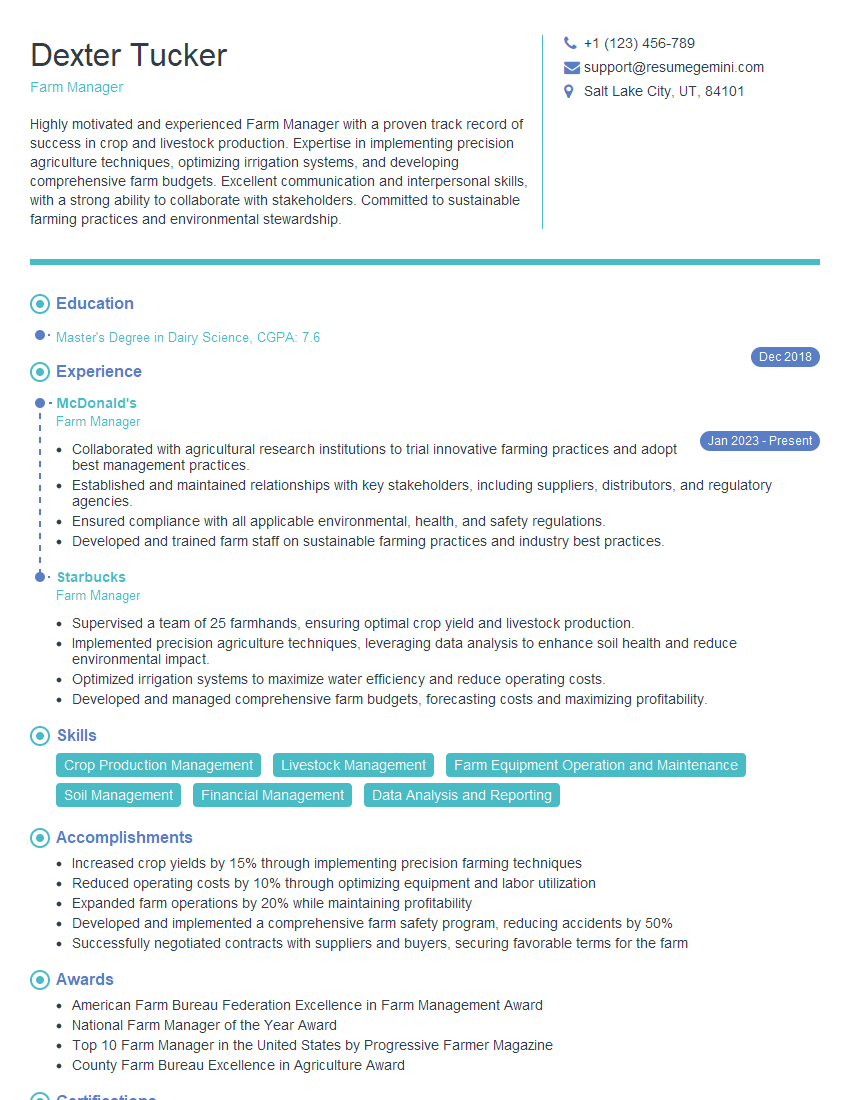
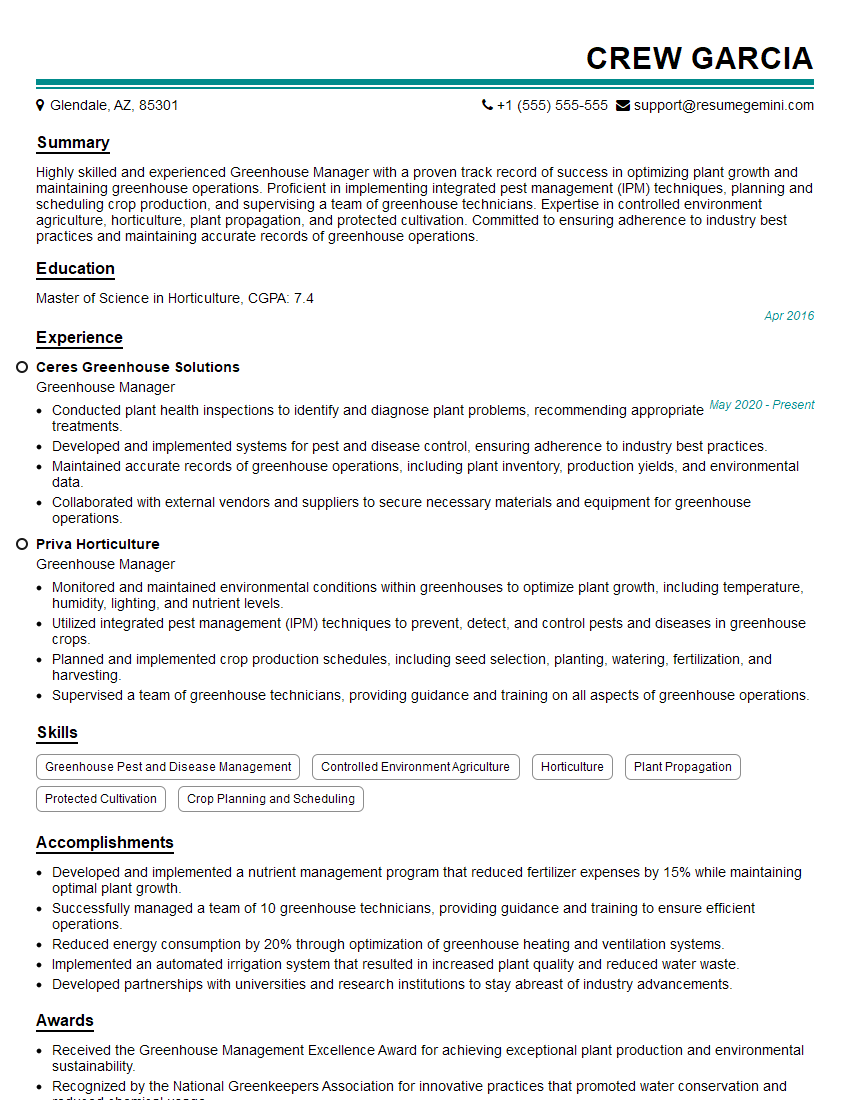
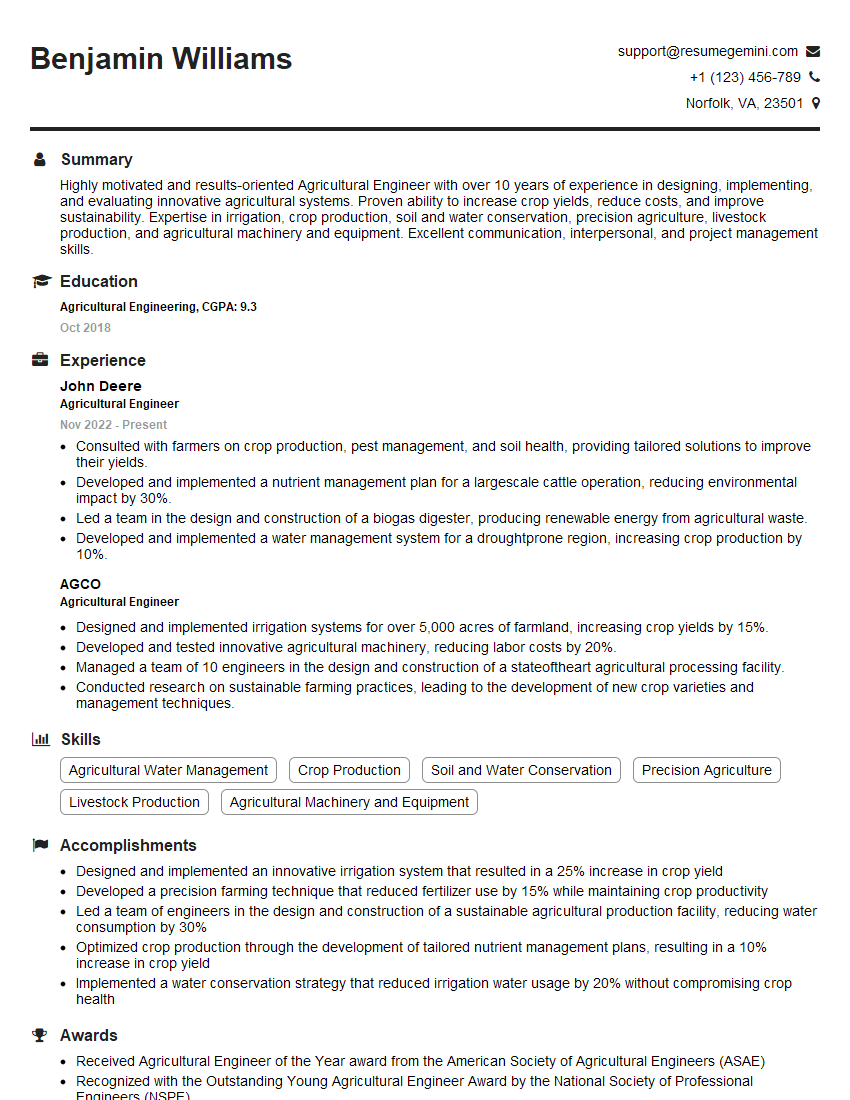
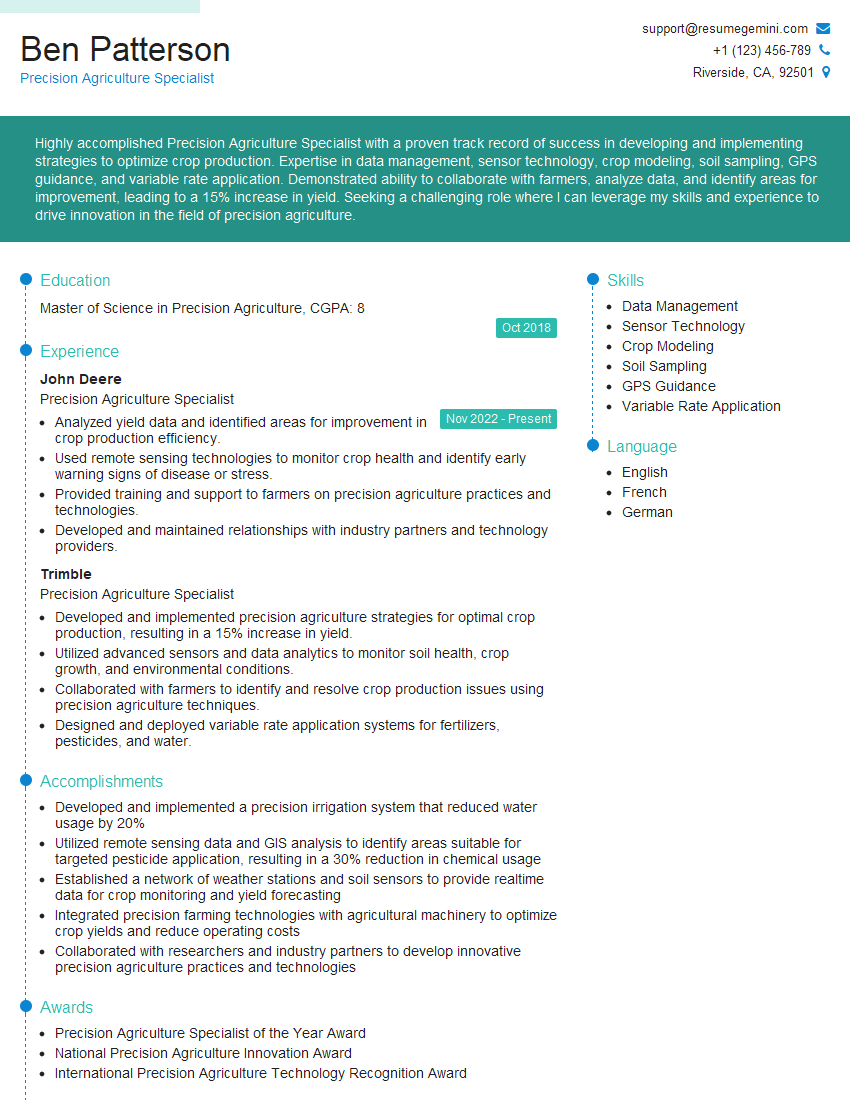
Mastering Fertilization Practices is crucial for career advancement in agriculture and related fields. A strong understanding of these principles demonstrates your expertise and commitment to sustainable and efficient agricultural practices. To maximize your job prospects, create a compelling and ATS-friendly resume that showcases your skills and experience. ResumeGemini is a trusted resource to help you build a professional resume that stands out. Examples of resumes tailored to Fertilization Practices are available to guide you in crafting your perfect application.



Explore more articles
Users Rating of Our Blogs
Share Your Experience
We value your feedback! Please rate our content and share your thoughts (optional).
What Readers Say About Our Blog
Very informative content, great job.
good