Preparation is the key to success in any interview. In this post, we’ll explore crucial Data Acquisition and Measurement interview questions and equip you with strategies to craft impactful answers. Whether you’re a beginner or a pro, these tips will elevate your preparation.
Questions Asked in Data Acquisition and Measurement Interview
Q 1. Explain the Nyquist-Shannon sampling theorem and its implications for data acquisition.
The Nyquist-Shannon sampling theorem is a fundamental principle in data acquisition that dictates the minimum sampling rate required to accurately reconstruct a continuous signal from its discrete samples. It states that to perfectly capture a signal, you must sample it at a rate at least twice the highest frequency component present in that signal. This highest frequency is known as the Nyquist frequency.
Implications for Data Acquisition: If you sample below the Nyquist rate (undersampling), a phenomenon called aliasing occurs. Aliasing manifests as lower-frequency components in your sampled data that don’t reflect the true signal, leading to inaccurate measurements and misleading conclusions. Imagine trying to capture a high-pitched whistle with a camera taking slow-motion pictures—you wouldn’t see the true high-frequency vibration, but instead a slower, seemingly different movement. In data acquisition, this translates to erroneous data analysis.
Example: Let’s say you’re measuring vibrations from a machine with a maximum frequency of 100 Hz. To avoid aliasing, you must sample at a rate of at least 200 Hz (twice the Nyquist frequency). Sampling at 150 Hz, for example, will result in aliased data that misrepresents the true vibrations.
In practice, we often sample at a significantly higher rate than the Nyquist rate to account for imperfections in the system and to provide more data for better signal processing and noise reduction.
Q 2. Describe different types of sensors and their applications in data acquisition.
Sensors are the crucial components in data acquisition, converting physical phenomena into measurable electrical signals. There’s a vast array of sensor types, each suited for specific applications:
- Temperature Sensors (Thermocouples, RTDs, Thermistors): Measure temperature in various applications, from industrial processes to weather monitoring. Thermocouples utilize the Seebeck effect, RTDs rely on the resistance change with temperature, and thermistors use the change in resistance of a semiconductor material.
- Pressure Sensors (Piezoresistive, Capacitive, Strain Gauge): Measure pressure in applications such as weather forecasting, industrial automation (monitoring pressure in pipelines), and medical devices (blood pressure). They operate on principles of resistance change due to strain (piezoresistive), capacitance change (capacitive), or resistance change in a wire under strain (strain gauge).
- Accelerometers: Detect acceleration and tilt, used in automotive safety systems, smartphones (motion detection), and earthquake monitoring. They typically rely on capacitive or piezoelectric effects.
- Optical Sensors (Photodiodes, Phototransistors): Detect light intensity, used in imaging systems, robotics (obstacle detection), and environmental monitoring (light level). These sensors convert light energy into electrical current.
- Flow Sensors (Ultrasonic, Magnetic, Turbine): Measure the flow rate of liquids or gases, used in industrial processes, environmental monitoring (water flow), and medical applications (blood flow). Different types use various principles like ultrasonic wave propagation, magnetic field interaction, or turbine rotation speed.
The choice of sensor depends heavily on the specific application requirements, accuracy needs, environmental conditions, and cost constraints.
Q 3. What are the common sources of noise in data acquisition systems, and how can they be mitigated?
Noise in data acquisition systems is any unwanted signal that interferes with the measurement of the desired signal. Common sources include:
- Thermal Noise (Johnson-Nyquist Noise): Generated by the random motion of electrons in conductors and is inherent to all electronic components. It increases with temperature.
- Shot Noise: Arises from the discrete nature of charge carriers (electrons or holes) in electronic components and is particularly significant in devices like diodes and transistors.
- Flicker Noise (1/f Noise): A low-frequency noise with a power spectral density inversely proportional to frequency. Its origin is complex and often attributed to defects in materials.
- Environmental Noise: Electromagnetic interference (EMI) from external sources such as power lines, motors, and radio frequency signals. This is a major source of noise and can be picked up by unshielded cables and circuits.
- Quantization Noise: Results from the finite resolution of analog-to-digital converters (ADCs). It’s essentially the error introduced by approximating continuous analog signals with discrete digital values.
Mitigation Techniques:
- Shielding: Protecting circuits and cables from EMI with conductive materials.
- Filtering: Using electronic filters to attenuate noise in specific frequency ranges.
- Grounding: Establishing a common ground point to minimize ground loops and reduce noise from power lines.
- Averaging: Repeating measurements and averaging the results to reduce random noise.
- Signal Conditioning: Amplifying or attenuating the signal to improve the signal-to-noise ratio.
- Using high-quality components: Selecting components with low noise characteristics.
Q 4. Explain the concept of signal conditioning and its importance in data acquisition.
Signal conditioning is the process of modifying or enhancing a sensor’s output signal before it’s sent to an ADC for digitization. Its importance lies in improving the accuracy, precision, and reliability of measurements.
Key aspects of signal conditioning include:
- Amplification: Increasing the signal’s amplitude to overcome noise and improve resolution.
- Attenuation: Decreasing the signal’s amplitude to prevent overloading the ADC.
- Filtering: Removing unwanted noise components from the signal.
- Linearization: Converting a non-linear sensor output into a linear signal for easier processing.
- Isolation: Protecting the data acquisition system from high voltages or currents from the sensor.
Example: A thermocouple might produce a very small voltage change in response to a temperature variation. Signal conditioning would involve amplifying this weak signal to a level suitable for the ADC while filtering out high-frequency noise that might be present.
Proper signal conditioning is crucial for achieving accurate and reliable measurements, ensuring the data acquired accurately reflects the measured phenomenon.
Q 5. Discuss various data acquisition architectures (e.g., centralized, distributed).
Data acquisition architectures describe how sensors, signal conditioning circuits, and the data processing unit are interconnected. Two common architectures are:
- Centralized Architecture: All sensors and signal conditioning circuits are connected to a single central processing unit. This simplifies data management and processing but can be vulnerable to single points of failure. It’s suitable for smaller-scale systems where all sensors are in close proximity.
- Distributed Architecture: Sensors and signal conditioning are distributed across multiple locations, with local processing units handling data before transmitting it to a central unit. This architecture is more robust and scalable, suitable for large-scale systems covering a wide geographical area. It’s often used in industrial automation, environmental monitoring, and smart grids.
The choice of architecture depends on factors like the number of sensors, geographical spread, required data processing speed, and the need for redundancy and fault tolerance.
Q 6. How do you select appropriate data acquisition hardware for a specific application?
Selecting appropriate data acquisition hardware requires careful consideration of several factors:
- Number of channels: How many sensors need to be connected simultaneously?
- Sampling rate: What’s the required sampling frequency to capture the signal accurately (considering the Nyquist theorem)?
- Resolution: What’s the required precision of the measurement (determined by the ADC bit depth)?
- Input range: What are the expected minimum and maximum values of the sensor signals?
- Input impedance: Must the hardware have high input impedance to avoid loading the sensor?
- Signal conditioning capabilities: Does the hardware offer the necessary amplification, filtering, and linearization?
- Interface: How will the data be transferred to the computer or processing unit (e.g., USB, Ethernet, GPIB)?
- Environmental conditions: Will the hardware operate in harsh environments (temperature, humidity, vibration)?
- Cost: Balancing performance requirements with budget constraints.
A structured approach is crucial, starting with defining the application requirements, identifying suitable sensors, and then selecting data acquisition hardware that meets the specified parameters. Many manufacturers offer tools and selection guides to help with this process.
Q 7. What are the advantages and disadvantages of different data acquisition methods (e.g., polling, interrupts)?
Two common data acquisition methods are polling and interrupts:
- Polling: The central processing unit periodically checks the status of each sensor. It’s simple to implement but inefficient, especially with many sensors, as it wastes processing time checking inactive sensors.
- Interrupts: Sensors trigger an interrupt signal to the CPU only when a significant event occurs (e.g., exceeding a threshold). This method is more efficient and responsive, reducing CPU overhead and improving real-time performance. It’s better for applications requiring immediate reaction to changes in sensor values.
Advantages of Polling: Simple to implement, requires less hardware overhead.
Disadvantages of Polling: Inefficient, high CPU load with many sensors, can miss short-duration events.
Advantages of Interrupts: Efficient, responsive, low CPU overhead, suitable for real-time applications.
Disadvantages of Interrupts: Requires more complex hardware and software, potential for interrupt latency.
The best choice depends on the application’s timing requirements and the number of sensors involved. Real-time applications often benefit from interrupts, while simpler systems with a few sensors might find polling adequate.
Q 8. Describe your experience with different data acquisition software and programming languages.
My experience with data acquisition software spans a wide range of platforms and programming languages. I’m proficient in using industry-standard software like LabVIEW, DASYLab, and NI VeriStand, each offering unique strengths for different applications. For example, LabVIEW excels in graphical programming and real-time data handling, making it ideal for complex systems. DASYLab provides a user-friendly interface suited for quicker setup and analysis. NI VeriStand is powerful for hardware-in-the-loop simulation and testing.
In terms of programming languages, I’m highly skilled in Python, MATLAB, and C++. Python’s extensive libraries like NumPy and SciPy are invaluable for data manipulation and analysis. MATLAB is powerful for signal processing and visualization, while C++ offers the speed and control necessary for real-time applications where efficiency is paramount. I’ve used these tools in projects ranging from environmental monitoring systems to industrial process control, adapting my approach based on the specific needs of the project.
For instance, in a recent project involving high-speed data acquisition from a wind turbine, I used C++ for the low-level data acquisition to minimize latency, and then processed and visualized the data in Python for advanced analysis and reporting.
Q 9. How do you ensure data integrity and accuracy in data acquisition?
Ensuring data integrity and accuracy in data acquisition is critical. It’s a multi-faceted process starting even before data collection begins. First, we must carefully select appropriate sensors and instruments, ensuring their specifications meet the requirements of the project. This includes considering factors like accuracy, precision, resolution, and noise levels.
Secondly, proper calibration is vital. I meticulously calibrate all sensors and instruments using traceable standards, documenting the procedures and results. Regular calibration checks throughout the acquisition process are also crucial to account for drift over time. Regular preventative maintenance also contributes greatly to minimizing errors and sensor drift.
Data validation techniques play a major role. This involves implementing checks during the acquisition process to identify and flag outliers or inconsistencies. For example, range checks can identify values that fall outside the expected range of the sensor, while plausibility checks can compare data from multiple sensors to ensure logical consistency. Data logging should be time-stamped, offering a trail of all acquired data. Redundancy, where multiple sensors measure the same quantity, helps to detect and potentially correct errors.
Finally, robust data storage and backup procedures are necessary. Data should be stored in a secure and accessible location with regular backups to prevent data loss. Proper metadata management—recording details like sensor location, calibration dates, and data acquisition parameters—is crucial for the integrity and future interpretation of the data.
Q 10. Explain the process of calibrating sensors and instruments.
Sensor and instrument calibration is a systematic process aimed at determining the relationship between the sensor’s output and the actual measured quantity. A proper calibration establishes a correction curve to reduce systematic errors and enhance accuracy.
The process typically begins with selecting appropriate standards traceable to national or international standards organizations. These standards provide a known reference point for comparison. The calibration process involves applying known inputs to the sensor over its operating range and measuring the corresponding outputs. These input-output pairs are used to generate a calibration curve – often a linear equation or a more complex curve depending on the sensor’s behavior. This curve is then used to correct the sensor’s readings, improving the accuracy of future measurements.
Different calibration techniques exist: two-point calibration uses two known points to define a linear relationship; multi-point calibration uses multiple known points to create a more comprehensive calibration curve; and, in-situ calibration involves calibrating the sensor within its operational environment.
For example, calibrating a thermocouple involves placing it in known temperature baths (like ice water for 0°C and boiling water for 100°C), recording the voltage output, and using these points to create a calibration curve. Thorough documentation of the calibration procedure, including the equipment used, date, and results is essential for maintaining traceability and ensuring data quality.
Q 11. How do you handle missing or corrupted data in a data acquisition system?
Handling missing or corrupted data is a crucial aspect of data acquisition. The approach depends on the nature and extent of the data loss. Identifying the cause of data corruption or loss is the first step. It could range from sensor malfunction, communication errors, or software glitches.
For missing data, several strategies can be applied: linear interpolation can estimate missing values based on neighboring data points. More sophisticated methods like spline interpolation or Kalman filtering can be used for smoother results, especially with noisy data. However, these methods should be applied cautiously and only when the missing data is relatively small and randomly distributed, and the underlying process is expected to be continuous.
For corrupted data, simple techniques include discarding obviously erroneous data points that fall outside expected ranges. However, sophisticated algorithms can detect and correct corrupted data. For instance, outlier detection algorithms can identify anomalous data points based on statistical analysis. If the corruption is severe and the cause cannot be identified and corrected, the affected data segment might need to be excluded from the analysis. However, clear documentation of data exclusion is paramount for transparency and accurate interpretation of results.
In any case, careful documentation of the handling of missing or corrupted data, the methods used, and the potential impact on the overall analysis is critical. This documentation ensures the reliability and trustworthiness of the final results.
Q 12. What are the different types of data formats used in data acquisition?
Data acquisition systems employ various data formats, each with its own advantages and disadvantages. The choice often depends on factors such as data volume, data type, and the software used for analysis.
Common formats include:
- Comma-Separated Values (CSV): A simple, widely used text-based format, easily readable by most spreadsheet and data analysis software. It’s suitable for relatively small datasets.
- Tab-Separated Values (TSV): Similar to CSV, but uses tabs as delimiters. It can be better suited for data with commas within the data fields.
- Binary formats: These formats store data in a compact, efficient manner, saving storage space and improving data transfer speed. Examples include HDF5 (Hierarchical Data Format 5), which is well suited for large, complex datasets, and proprietary formats specific to certain data acquisition hardware.
- Database formats: Relational databases (like SQL) or NoSQL databases are beneficial for managing large and complex datasets, allowing for efficient querying and retrieval of specific data points. They are particularly useful for long-term data storage and management.
The selection of a data format should consider factors like ease of processing, storage space, compatibility with existing software, and long-term data accessibility.
Q 13. Explain the concept of data synchronization in multi-channel data acquisition.
Data synchronization in multi-channel data acquisition is crucial when acquiring data from multiple sensors simultaneously. Without synchronization, the data from different channels may not represent the same moment in time, leading to inaccurate analysis and misleading conclusions.
Several methods ensure data synchronization:
- Hardware synchronization: This involves using a central clock or trigger signal that coordinates data acquisition across all channels. This offers the highest level of accuracy, minimizing timing errors.
- Software synchronization: This utilizes timestamps generated by each channel, and software algorithms later align the data based on these timestamps. This method is less precise than hardware synchronization but can be more flexible. It relies on highly accurate clocks across all channels.
- GPS synchronization: Using GPS receivers as a common time reference for each channel offers high accuracy and is particularly useful for geographically distributed sensors.
Regardless of the chosen method, meticulous timestamping of acquired data is vital for successful synchronization. The synchronization method should be carefully selected based on the required accuracy and the specific characteristics of the data acquisition system.
For example, in a study measuring vibrations on a bridge, synchronized data from multiple accelerometers at different locations are crucial for understanding the dynamic response of the bridge to various loads.
Q 14. How do you perform data analysis and visualization of acquired data?
Data analysis and visualization are the final, but equally critical, steps in the data acquisition process. They transform raw data into meaningful insights and facilitate effective communication of results.
My typical workflow begins with data cleaning and preprocessing, addressing issues like missing values, outliers, and noise. I use appropriate statistical methods, such as filtering and smoothing techniques, to enhance data quality.
Next, I employ a variety of analytical techniques. This depends on the nature of the data and the research questions. These can include:
- Statistical analysis: Calculating descriptive statistics, performing hypothesis testing, and identifying correlations between variables.
- Signal processing techniques: Analyzing time-series data, such as Fast Fourier Transforms (FFTs) to identify frequencies, and wavelets for time-frequency analysis.
- Machine learning algorithms: Employing machine learning to identify patterns, make predictions, or classify data, especially in applications with large and complex datasets.
Visualization is crucial for communicating findings effectively. I use tools like MATLAB, Python libraries (Matplotlib, Seaborn), and specialized data visualization software to create informative and compelling visualizations, such as line graphs, scatter plots, histograms, and heatmaps.
For instance, in a recent project analyzing sensor data from a manufacturing process, I used time-series plots to identify recurring faults, histograms to visualize the distribution of key parameters, and control charts to monitor process stability.
Q 15. What are your experiences with real-time data acquisition systems?
My experience with real-time data acquisition (DAQ) systems spans various applications, from high-speed sensor data logging in automotive testing to slow-rate environmental monitoring. I’ve worked extensively with systems employing both hardware and software components. For instance, in one project, we used NI cDAQ hardware coupled with LabVIEW software to acquire strain gauge data from a bridge structure under load. The system needed to sample at high frequency (kHz range) and trigger data logging based on specific events. This required careful configuration of hardware timing and software triggers. In another project, we employed a custom DAQ system built around microcontrollers, where we had to design the entire hardware and software pipeline, including analog-to-digital conversion, data formatting, and communication with a remote server. These experiences have equipped me with a deep understanding of the challenges of real-time data acquisition, including synchronization, data throughput, and the need for robust error handling.
The key to successful real-time DAQ lies in understanding the limitations of your hardware and software, and optimizing for throughput and latency while ensuring data integrity. A key consideration is the tradeoff between sampling rate and the number of channels being monitored. Higher sampling rates on more channels lead to a larger data volume, requiring higher bandwidth communication and processing capabilities. The selection of appropriate hardware and software to meet these demands is critical.
Career Expert Tips:
- Ace those interviews! Prepare effectively by reviewing the Top 50 Most Common Interview Questions on ResumeGemini.
- Navigate your job search with confidence! Explore a wide range of Career Tips on ResumeGemini. Learn about common challenges and recommendations to overcome them.
- Craft the perfect resume! Master the Art of Resume Writing with ResumeGemini’s guide. Showcase your unique qualifications and achievements effectively.
- Don’t miss out on holiday savings! Build your dream resume with ResumeGemini’s ATS optimized templates.
Q 16. Describe your experience with different data communication protocols (e.g., serial, Ethernet, fieldbus).
I have extensive experience with a variety of data communication protocols. Serial communication (RS-232, RS-485) is often used for simpler, point-to-point connections with lower bandwidth requirements, such as communicating with single sensors. For example, I used RS-485 to connect several temperature sensors in a distributed environment over a long distance, taking advantage of its noise immunity. Ethernet offers higher bandwidth and network capabilities, ideal for transferring large datasets from multiple sensors to a central computer. I’ve worked on Ethernet-based DAQ systems using TCP/IP for reliable data transmission, employing standard network protocols for seamless integration with existing infrastructure. Fieldbuses, like CAN bus or Modbus, are commonly used in industrial automation environments where real-time determinism and robustness are crucial. For example, I integrated a CAN bus-based data acquisition system into an industrial robotic arm control system where timing accuracy was paramount.
Choosing the right protocol depends heavily on the specific application requirements. Factors to consider include bandwidth, distance, noise immunity, cost, and the level of real-time determinism needed. The protocol’s ability to handle errors and provide reliable data transmission is also extremely important.
Q 17. How do you troubleshoot problems in a data acquisition system?
Troubleshooting a DAQ system requires a systematic approach. I typically start with a careful review of the system design and specifications, checking for inconsistencies between the hardware and software configurations. Then, I move on to a series of checks, starting from the most basic:
- Verify Sensor Functionality: Ensure the sensors themselves are functioning correctly and providing accurate readings. This often involves calibrating or replacing faulty sensors.
- Check Wiring and Connections: Inspect all wiring for loose connections, shorts, or breaks. This is a common source of problems and often overlooked.
- Examine Data Acquisition Hardware: Check for any error messages or indications of malfunction from the DAQ hardware. This might involve checking power supply, communication interfaces, and the DAQ device itself.
- Analyze Software Configuration: Verify that the sampling rate, trigger conditions, and data storage settings in the software are correctly configured and match the hardware settings.
- Investigate Data Integrity: Inspect the acquired data for anomalies, like spikes, drops, or consistent offsets. This could indicate noise issues, sensor drift or malfunctioning hardware.
- Use Diagnostic Tools: Employ tools like oscilloscopes, logic analyzers, and multimeters to examine signals at various points in the system.
A key part of troubleshooting is systematically isolating the problem. For instance, if the problem is a data corruption issue, I would start by checking the data storage to confirm whether the issue is with the storage media or the data transfer. If it’s a signal issue, I would move back step by step to isolate the source of noise or error, using appropriate testing instruments.
Q 18. Explain the importance of grounding and shielding in data acquisition.
Grounding and shielding are crucial in DAQ for minimizing noise and ensuring accurate measurements. Grounding provides a common reference point for all signals, preventing ground loops and common-mode noise. Shielding protects signals from electromagnetic interference (EMI) and radio frequency interference (RFI) from external sources. Think of it like this: imagine a microphone trying to pick up a quiet conversation; nearby loud noises will overwhelm the recording. Similarly, noise in a DAQ system can completely obscure or corrupt the actual signal. Proper grounding and shielding help to minimize that interference.
In practice, this involves using a properly grounded chassis for the DAQ hardware, star grounding techniques to avoid ground loops, and using shielded cables to protect signals from external noise. The effectiveness of shielding depends on the frequency of the interference; high-frequency noise requires more robust shielding. Sometimes, specialized filtering techniques are also employed to remove specific frequency components of noise. The choice of grounding and shielding strategies depends heavily on the environment – a noisy industrial setting requires significantly more robust grounding and shielding than a controlled laboratory setting.
Q 19. What are the safety considerations when working with data acquisition systems?
Safety considerations in DAQ systems are paramount, particularly when working with high voltages, high currents, or hazardous environments. Safety protocols must be established and strictly followed. These include:
- Electrical Safety: Using appropriate safety equipment like insulated tools, safety glasses, and personal protective equipment (PPE). Never work with high voltages without proper training and safety precautions.
- Environmental Hazards: If working in hazardous environments, such as high-temperature areas or chemically aggressive settings, appropriate PPE and safety measures must be implemented. This might include specialized suits, respirators, or safety harnesses.
- Mechanical Hazards: Moving parts or heavy equipment in a DAQ system pose mechanical risks. Use caution to avoid injury. Machines should be properly guarded.
- Data Security: Depending on the data being acquired, data security and access control are critical. Appropriate measures must be put in place to prevent unauthorized access and data breaches.
- Emergency Procedures: Establish clear emergency procedures and ensure that all personnel are aware of these procedures and how to respond to emergencies.
Regular safety inspections and maintenance are essential to prevent accidents and ensure the safe operation of DAQ systems. Prior to working with any DAQ system, risk assessments must be conducted to identify and mitigate potential hazards.
Q 20. How do you design an experiment to acquire reliable data?
Designing an experiment to acquire reliable data involves careful planning and consideration of several factors. The process starts with clearly defining the research objectives and identifying the parameters to be measured. Then, a detailed experimental design should be developed. This includes:
- Sensor Selection: Choosing appropriate sensors with the required accuracy, resolution, and range for the measurement parameters.
- Sampling Rate Determination: Determining the appropriate sampling rate to capture the dynamics of the system being studied. An insufficient sampling rate (Nyquist-Shannon theorem) can lead to aliasing.
- Calibration and Validation: Calibrating sensors and validating the data acquisition system to ensure accuracy. This could involve using known standards or comparing results with another known accurate method.
- Noise Reduction Strategies: Implementing strategies to minimize noise, such as proper grounding and shielding, filtering techniques, and averaging multiple readings.
- Data Storage and Management: Establishing a robust data storage and management system to ensure data integrity and ease of access for analysis.
- Data Preprocessing and Analysis: Developing methods for data preprocessing and analysis, such as outlier detection, filtering, and statistical analysis to extract meaningful insights.
A crucial aspect is conducting rigorous error analysis to quantify uncertainties associated with the measurements. This includes evaluating sensor error, resolution limits, and any systematic biases. Finally, documenting the entire experimental setup, procedures, and data processing steps is paramount for reproducibility and transparency.
Q 21. Describe your experience with various data storage solutions (e.g., databases, cloud storage).
I have experience with various data storage solutions, tailored to the specific needs of different projects. For smaller datasets or projects requiring rapid analysis, local databases such as SQLite or MySQL have been sufficient. In these cases, I’ve used Python libraries like SQLAlchemy for efficient data management. For larger datasets or projects requiring data sharing and collaboration, cloud storage solutions like AWS S3 or Google Cloud Storage offer scalability and accessibility. I’ve designed systems that streamed data directly to the cloud for real-time processing and analysis using cloud-based services like AWS IoT Core or Google Cloud IoT Core. For instance, in one project involving large-scale environmental monitoring, we used cloud storage to manage terabytes of data generated over many months from a network of sensors. This allowed us to easily share the data with collaborators and conduct comprehensive analyses.
The choice of data storage solution depends on factors such as data volume, access requirements, security needs, cost, and the need for real-time processing. For instance, a high-frequency, high-volume data stream from an industrial process might require a specialized real-time database to handle the immense throughput, whereas lower-frequency data from a weather station might be suitably stored in a cloud storage bucket.
Q 22. How do you ensure data security and privacy in data acquisition?
Data security and privacy in data acquisition are paramount, especially when dealing with sensitive information. My approach is multi-layered and considers the entire data lifecycle, from acquisition to storage and disposal. It begins with secure hardware and software configurations. This includes using encrypted communication channels (like HTTPS or TLS) for transferring data, implementing strong authentication protocols to prevent unauthorized access, and regularly updating firmware and software to patch security vulnerabilities. Further, access control is crucial; only authorized personnel should have access to the data, with different levels of access granted based on their roles and responsibilities.
Data anonymization and pseudonymization are also essential techniques to protect individual privacy while retaining data utility. This involves replacing identifying information with unique, non-identifying codes, making it extremely difficult to link data back to specific individuals. Finally, data encryption, both in transit and at rest, is a fundamental safeguard against unauthorized access. Strong encryption algorithms, like AES-256, are essential. Regular security audits and penetration testing are performed to identify and address potential weaknesses in the system.
For example, in a project involving patient health data, we implemented end-to-end encryption from the medical devices to the secure cloud storage, ensuring patient confidentiality. We also adhered strictly to HIPAA regulations, documenting all processes and maintaining a detailed audit trail.
Q 23. Explain your understanding of different signal processing techniques used in data acquisition.
Signal processing in data acquisition is crucial for extracting meaningful information from raw sensor data, which is often noisy and contains unwanted artifacts. Common techniques include:
- Filtering: This removes unwanted frequencies or noise from the signal. For instance, a low-pass filter removes high-frequency noise, while a high-pass filter removes low-frequency drift.
Example: Applying a Butterworth filter to remove 50Hz power line noise from an ECG signal. - Amplification and attenuation: Adjusting the signal’s amplitude to optimize it for the analog-to-digital converter (ADC). Weak signals are amplified, while strong signals might be attenuated to prevent saturation.
- Sampling and quantization: Converting the continuous analog signal into a discrete digital representation. The sampling rate must be chosen carefully to avoid aliasing (misrepresentation of frequencies).
- Signal averaging: Reducing random noise by averaging multiple measurements of the same signal. This improves the signal-to-noise ratio.
- Fourier Transform: Analyzing the frequency components of the signal to identify periodic patterns or anomalies. This is particularly useful for vibration analysis or spectral analysis of sound.
- Wavelet Transform: Similar to Fourier Transform but excels at analyzing signals with non-stationary characteristics (signals whose frequency content changes over time).
Choosing the right techniques depends on the specific application and the characteristics of the signal. For instance, in acoustic emission monitoring, wavelet transforms are often preferred to identify transient events.
Q 24. What are your experiences with different types of transducers?
My experience with transducers spans a broad range, encompassing various physical phenomena. I’ve worked extensively with:
- Temperature transducers: Thermocouples, RTDs (Resistance Temperature Detectors), and thermistors for precise temperature measurement in diverse applications like industrial process control and environmental monitoring.
- Pressure transducers: Piezoresistive, capacitive, and strain gauge-based transducers for measuring pressure in applications ranging from automotive engine testing to aerospace systems.
- Strain gauges: Used for measuring deformation and stress in structural components, often employed in bridge monitoring and material testing.
- Accelerometers: Used for measuring acceleration and vibration, critical for applications like structural health monitoring and inertial navigation.
- Flow meters: Various types like ultrasonic, vortex shedding, and turbine flow meters for measuring fluid flow rates in industrial processes and environmental studies.
- Optical sensors: Fiber optic sensors for measuring strain, temperature, and pressure in remote or harsh environments.
Each transducer type has its own strengths and weaknesses in terms of accuracy, sensitivity, range, and environmental robustness. Selecting the appropriate transducer is critical for the success of any data acquisition project.
Q 25. How do you validate the accuracy of data acquired from a sensor?
Validating sensor data accuracy involves a multi-pronged approach. It starts with calibration, comparing the sensor’s output to a known standard. This establishes a relationship between the sensor’s readings and the actual physical quantity. Traceability to national or international standards is important to ensure the calibration’s reliability. I also utilize cross-validation, comparing the sensor’s readings with measurements obtained from other independent sensors measuring the same quantity. Discrepancies need investigation; they could be due to sensor drift, calibration errors, or environmental influences.
Statistical analysis of the acquired data helps identify potential systematic errors or outliers. Analyzing the data’s distribution, calculating the mean, standard deviation, and other relevant statistics, can highlight inconsistencies. Finally, environmental considerations are crucial. Temperature, humidity, and other environmental factors can influence sensor performance; therefore, environmental compensation might be necessary, or data must be corrected based on environmental measurements. For example, in a high-precision temperature measurement project, I employed a triple-redundancy approach, using three calibrated thermocouples and comparing their readings. Any significant deviation triggered an alert and further investigation.
Q 26. Describe your experience with data logging and reporting.
My experience with data logging and reporting is extensive. I’ve utilized various data acquisition systems and software packages to collect, store, and present data effectively. This includes designing custom data logging systems using microcontrollers and programming languages such as C++ and Python. Efficient data management involves using appropriate file formats (like CSV, HDF5, or specialized database systems) and employing compression techniques to optimize storage space and transfer speeds. I’m proficient in using various visualization tools (like MATLAB, Python’s matplotlib, and specialized data analysis software) to create clear, informative reports and dashboards that effectively communicate the acquired data’s significance.
For instance, in a structural health monitoring project, I developed a system that logged strain gauge data at high sampling rates, and then used MATLAB to process the data, generate spectral plots, and identify potential structural weaknesses. The reports were tailored to the client’s needs and provided clear insights into the structure’s condition. Automated reporting features were implemented to generate regular updates automatically, minimizing manual intervention and ensuring timely delivery of critical information.
Q 27. Explain your understanding of the different types of error in measurement systems (e.g., systematic, random).
Measurement systems are susceptible to various errors that can affect the accuracy and reliability of the acquired data. These errors can be broadly categorized as:
- Systematic errors: These are consistent and repeatable errors caused by flaws in the measurement system or its environment. They are often predictable and can be corrected through calibration or other compensation methods. Examples include instrument bias (a constant offset in the readings), zero-drift (a gradual change in the zero point), or temperature-dependent errors.
- Random errors: These are unpredictable and vary randomly from one measurement to another. They are typically caused by factors such as noise in the signal, minor fluctuations in the measured quantity, or human error. Random errors can be reduced by averaging multiple measurements or using more precise instruments.
Other error types include:
- Gross errors: Large errors often caused by human mistakes such as misreading instruments or incorrect data entry.
- Environmental errors: Errors caused by changes in temperature, humidity, pressure, or other environmental factors that affect the measurement system’s performance.
Understanding the sources of error is essential for designing robust measurement systems and accurately interpreting the acquired data. A thorough error analysis is a critical component of any data acquisition project, ensuring data quality and reliability.
Key Topics to Learn for Data Acquisition and Measurement Interview
- Sensor Technologies: Understanding various sensor types (e.g., temperature, pressure, optical), their operating principles, limitations, and selection criteria for specific applications. Consider exploring calibration techniques and error analysis.
- Signal Conditioning: Mastering techniques like amplification, filtering, and analog-to-digital conversion (ADC). Understand the impact of noise and how to mitigate it. Practical application: Designing a data acquisition system for a specific industrial process.
- Data Acquisition Systems (DAQ): Familiarize yourself with the architecture of DAQ systems, including hardware components (e.g., microcontrollers, ADCs, memory) and software aspects (e.g., data logging, control algorithms). Be prepared to discuss different DAQ system topologies and their trade-offs.
- Data Processing and Analysis: Develop skills in data cleaning, filtering, and analysis using appropriate software tools (e.g., MATLAB, Python). Understand statistical methods for data interpretation and identifying trends. Practical application: Analyzing sensor data to detect anomalies or predict equipment failures.
- Real-time Systems and Embedded Systems: Gain a working knowledge of real-time operating systems (RTOS) and their role in data acquisition. Understand the challenges of designing embedded systems for data acquisition applications.
- Communication Protocols: Familiarity with various communication protocols used in data acquisition, such as serial communication (UART, SPI, I2C), Ethernet, and fieldbuses (e.g., CAN, Modbus). Be prepared to discuss their advantages and disadvantages.
- Error Analysis and Uncertainty Quantification: Understand sources of error in data acquisition systems and methods for quantifying uncertainty in measurements. This includes both systematic and random errors.
Next Steps
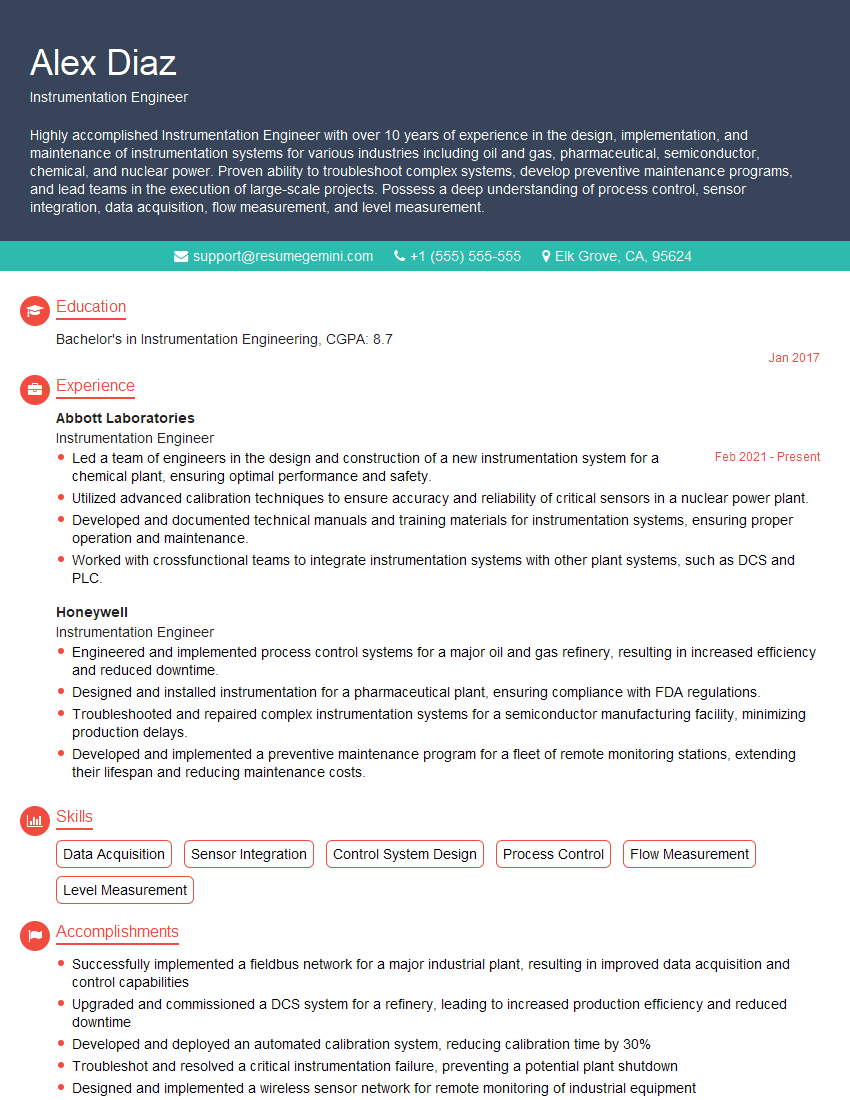
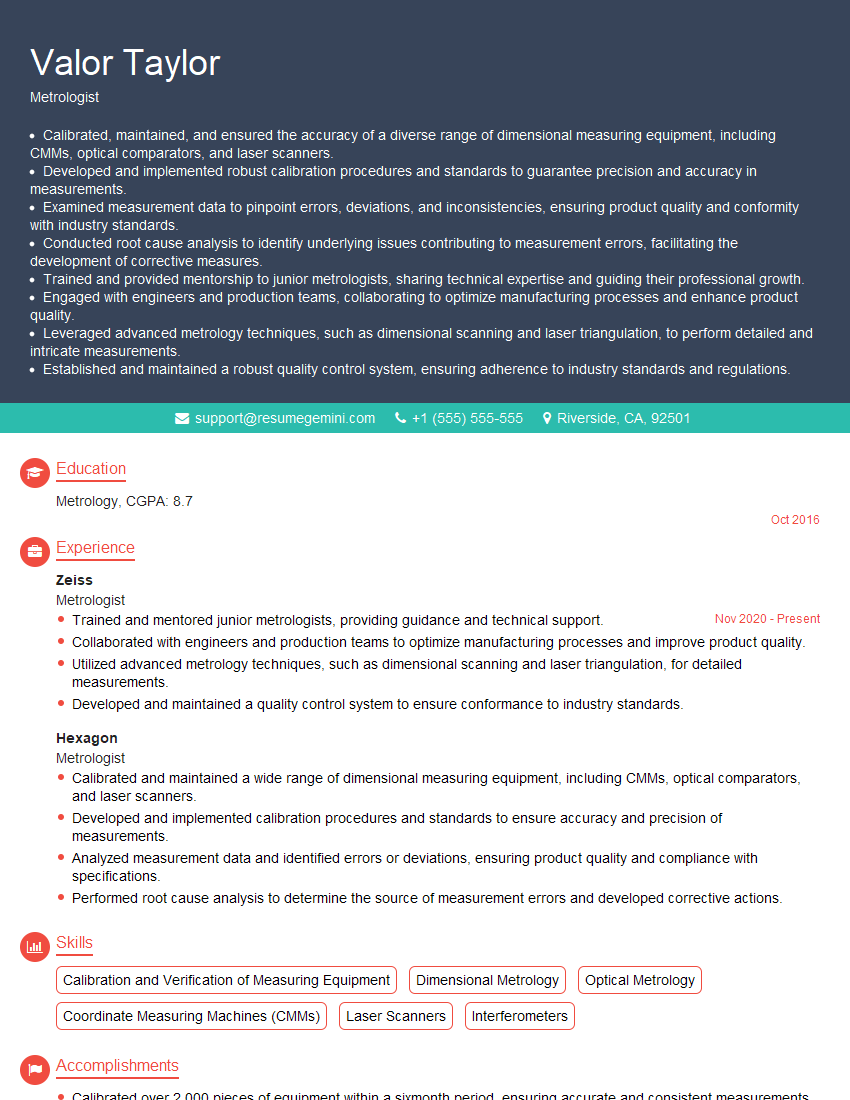
Mastering Data Acquisition and Measurement opens doors to exciting career opportunities in diverse fields, from industrial automation to scientific research. A strong understanding of these concepts significantly boosts your employability and paves the way for career advancement. To maximize your job prospects, create a compelling and ATS-friendly resume that highlights your skills and experience effectively. ResumeGemini is a trusted resource to help you build a professional resume that stands out. We provide examples of resumes tailored to Data Acquisition and Measurement to guide you through the process. Let ResumeGemini help you present your qualifications in the best possible light.
Explore more articles
Users Rating of Our Blogs
Share Your Experience
We value your feedback! Please rate our content and share your thoughts (optional).
What Readers Say About Our Blog
Very informative content, great job.
good