Cracking a skill-specific interview, like one for Dealing with Undeliverable Mail, requires understanding the nuances of the role. In this blog, we present the questions you’re most likely to encounter, along with insights into how to answer them effectively. Let’s ensure you’re ready to make a strong impression.
Questions Asked in Dealing with Undeliverable Mail Interview
Q 1. Explain the process for handling undeliverable mail.
Handling undeliverable mail involves a systematic process designed to return the mail to the sender or dispose of it appropriately, depending on the reason for non-delivery. This process typically begins with the postal service identifying the reason for non-delivery – be it an incorrect address, insufficient postage, or the recipient’s refusal. The mail is then marked with a return-to-sender notation, including the reason for non-delivery. This information is crucial for the sender to understand why their mail wasn’t delivered and take corrective action. The mail is then processed and sent back to the sender through the postal system, usually taking a few days to several weeks depending on distance and postal efficiency. In cases where the return address is incomplete or missing, the mail piece follows a different procedure, which usually ends up being destroyed. Many organizations use this information to improve their mailing lists and processes, resulting in higher deliverability rates.
Q 2. What are the common reasons for mail being undeliverable?
Mail becomes undeliverable for a variety of reasons. Some of the most common include:
- Incorrect Address: This is arguably the most frequent reason, ranging from simple typos to outdated information. A missing apartment number, incorrect street name, or even a moved recipient can all cause a delivery failure.
- Insufficient Postage: If the postage paid isn’t enough for the weight and destination of the mail piece, the postal service will return it to sender.
- Return to Sender Requested: The recipient might have specifically requested that a piece of mail be returned.
- Address Unknown: The recipient may have moved without leaving a forwarding address.
- Forwarding Order Expired: If a forwarding order is in place but has expired, mail will be returned.
- Recipient Deceased: If the recipient has passed away, the mail may be returned unless the sender specifies otherwise.
- Refusal by Recipient: The recipient may simply refuse to accept the mail.
Understanding these common causes enables proactive measures to prevent undeliverable mail in the future.
Q 3. How do you identify and categorize different types of undeliverable mail?
Categorizing undeliverable mail is essential for efficient processing and analysis. We use a system that considers several factors:
- Reason for Non-Delivery: Each piece is marked with the reason (e.g., ‘Insufficient Postage,’ ‘Address Unknown,’ ‘Refused’). This allows us to track trends and identify areas for improvement.
- Mail Class: First-class mail, periodicals, and packages all have different handling protocols for returns.
- Sender Information: Accurately identifying the sender is critical for proper return.
- Content: While not always accessible without opening mail (which is generally avoided without a warrant), understanding the type of content can sometimes assist in determining appropriate disposal or return.
This categorization allows us to create reports on reasons for non-delivery, helping improve data quality and mail accuracy.
Q 4. Describe your experience with address correction and forwarding.
Address correction and forwarding are vital aspects of dealing with undeliverable mail. Address correction involves verifying and updating the address on a piece of mail, often using a database of addresses to find corrections for commonly misspelled or outdated information. Forwarding requires updating the postal service’s system to automatically redirect mail to a new address provided by the recipient. My experience involves a thorough understanding of the systems and databases used for this process, ensuring accurate correction and efficient forwarding. I’ve personally managed situations where thousands of addresses needed updating and have successfully implemented strategies to minimize future errors. For instance, we instituted a process where a verification step was added before mass mailings to compare the mailing list against the latest address validation databases. This dramatically reduced the instances of undeliverable mail due to address errors.
Q 5. How do you handle returned mail with insufficient postage?
Mail with insufficient postage is returned to the sender. The process usually involves adding a notation to the mail piece indicating the shortage, often alongside an appropriate fee that the sender may be required to pay to retrieve the item. This varies depending on national postal regulations. If the sender is unable or unwilling to pay the additional fee, the mail piece is usually disposed of according to established procedures. For example, for items with significant value or unique attributes, we attempt to contact the sender via registered letter before discarding. For bulk items, we generally have a set protocol for destroying returned mail adhering to data privacy rules.
Q 6. What is your process for dealing with damaged or destroyed mail?
Damaged or destroyed mail requires careful handling and documentation. We meticulously log the damage, including a description, photographs where possible, and the reason for the damage (e.g., postal mishandling, accidental damage during processing). Depending on the content and the sender’s insurance coverage (if any), we decide the next steps. We often contact the sender, providing them with documentation of the damage and exploring possibilities of compensation or replacement, following up with our internal reporting systems to identify any systemic issues that could lead to such damage. For example, if damage is frequently observed in a specific area in our mail processing center, we’d immediately investigate for equipment malfunctions or process improvements. For extremely sensitive damaged materials, we might initiate a full internal inquiry.
Q 7. How do you manage a high volume of undeliverable mail?
Managing a high volume of undeliverable mail necessitates a robust and efficient system. This involves:
- Automation: Using automated sorting and processing systems to quickly identify and categorize returned mail.
- Data Analysis: Tracking reasons for return and identifying patterns to proactively address underlying causes. This allows us to make improvements in address verification processes or other relevant systems.
- Teamwork: Dedicated teams working collaboratively to process returned mail efficiently and accurately.
- Improved Tracking: Utilizing barcode scanning or other tracking technologies to ensure accurate record-keeping.
- Regular Reporting: Providing regular reports on undeliverable mail volumes and reasons to stakeholders.
By using a combination of technological solutions and well-trained personnel, we aim to streamline the process and minimize disruptions.
Q 8. Explain your experience with using mail tracking systems.
Mail tracking systems are indispensable for managing undeliverable mail. My experience spans various platforms, from basic tracking numbers provided by carriers like USPS, FedEx, and UPS, to sophisticated integrated systems that provide real-time updates on mail piece location and delivery status. I’m proficient in interpreting these tracking details to identify the reason for non-delivery, be it an incorrect address, recipient refusal, or other issues.
For example, I’ve used systems that automatically flag undeliverable mail based on return-to-sender codes or lack of delivery scans. This allows for proactive intervention, preventing mail from languishing in the system. I’m also adept at using reporting features within these systems to generate data on undeliverable mail trends, helping identify and address recurring problems, such as consistently incorrect addresses from a specific data source.
Beyond individual tracking numbers, I have experience with more comprehensive mail tracking systems used by large organizations. These systems often integrate directly with our mailing software, providing a centralized view of the entire mailing process, from the initial printing and addressing to the final delivery (or non-delivery) status.
Q 9. How familiar are you with USPS, FedEx, and UPS return procedures?
I’m highly familiar with the return procedures of USPS, FedEx, and UPS. Each carrier has its own specific processes and documentation for handling undeliverable mail, including different return codes that indicate the reason for non-delivery. Understanding these codes is crucial for efficient processing. For instance, a USPS return code of ‘Undeliverable as Addressed’ requires a different course of action than a FedEx return code indicating ‘Recipient Refused’.
My experience includes working directly with carrier representatives to resolve issues, such as tracing missing packages or requesting adjustments to delivery attempts. I also understand the importance of adhering to each carrier’s specific guidelines regarding return labels, packaging, and documentation to ensure smooth and timely processing of returned mail. I’ve been involved in streamlining our return processes by establishing clear procedures that align with each carrier’s specifications to minimize delays and improve efficiency.
Q 10. How do you ensure the security and confidentiality of undeliverable mail?
Security and confidentiality of undeliverable mail are paramount. Our procedures strictly adhere to data protection regulations. We treat all undeliverable mail with the same level of care as delivered mail, ensuring sensitive information is handled securely.
This involves physically securing all returned mail in locked containers and restricted-access areas. We have established protocols for securely destroying sensitive documents according to regulatory requirements, including shredding and/or incineration. Access to undeliverable mail is restricted to authorized personnel only, and we regularly audit our procedures to ensure compliance. For example, if we receive undeliverable mail containing personal health information (PHI), we immediately follow HIPAA regulations for handling and disposal.
Furthermore, electronic tracking data is protected by strong passwords, access controls, and encryption protocols, ensuring the privacy of associated metadata.
Q 11. What software or systems are you proficient in for managing mail?
My proficiency in mail management software includes experience with various systems, from simple database applications used to track return-to-sender addresses to enterprise-level postal management systems. I’m proficient in using software for data entry, reporting, and analysis related to undeliverable mail. I can also utilize various software platforms to generate custom reports based on various criteria such as return reasons, postal codes, and delivery dates.
For example, I’ve used systems that integrate with our company’s CRM (Customer Relationship Management) software, automatically updating customer records with information on undeliverable mail. I am also familiar with several mailing list management tools which helps in cleaning up the database and preventing future undeliverable mail.
Q 12. Describe your experience with data entry related to undeliverable mail.
Data entry related to undeliverable mail is a crucial part of my role. It’s not just about entering return addresses and carrier codes; it’s about accurately and consistently capturing all relevant information to understand the reasons for non-delivery. This data is essential for identifying patterns and improving our mailing processes. For instance, a high number of returns due to incorrect addresses may indicate a problem with our address validation system.
I’m proficient in using various data entry techniques to ensure accuracy and efficiency. This includes double-checking data against original mailing records, applying standardized coding systems to categorize return reasons and employing data validation methods to catch errors before they become a problem. I’m adept at using different data entry software, including both standalone programs and integrated systems.
Q 13. How do you prioritize different types of undeliverable mail for processing?
Prioritizing undeliverable mail involves considering several factors, including the urgency of the content, the sensitivity of the information, and the cost of re-mailing. Mail containing time-sensitive information, such as legal documents or financial statements, takes precedence. Similarly, mail with sensitive information like medical records or personal financial details also requires immediate and careful attention.
We typically use a system that flags high-priority mail based on predefined criteria, such as specific return codes or sender-specified instructions. Mail with less urgent content is processed according to established workflows, ensuring efficient and organized handling without compromising the integrity of time-sensitive mail.
Q 14. How do you handle undeliverable mail that contains sensitive information?
Handling undeliverable mail containing sensitive information requires strict adherence to established security protocols. This includes immediately restricting access to the mail, ensuring it’s stored in a secure location, and following a secure destruction process. Before any action is taken, we verify the sender’s instructions for handling returned mail containing sensitive data. Depending on the sensitivity level and sender instructions, we may securely return the mail to the sender, securely shred the mail, or follow other established protocols as required by law and our internal policies.
Our procedures ensure compliance with relevant regulations, such as HIPAA for medical information, and we maintain detailed records of all actions taken regarding sensitive undeliverable mail to maintain full auditability and compliance. We also conduct regular training for staff to ensure that everyone understands and complies with these procedures.
Q 15. What is your strategy for reducing the amount of undeliverable mail?
My strategy for reducing undeliverable mail is multifaceted and focuses on proactive measures and robust data management. It begins with data quality. We implement rigorous data validation processes at the point of entry, ensuring addresses are correctly formatted and verified against USPS or international postal service databases whenever possible. This includes using address standardization software and employing double-checking mechanisms. Think of it like proofreading a crucial document – multiple sets of eyes catch more errors.
Secondly, we encourage our clients to utilize address verification tools and maintain updated contact information. Regular database cleansing, removing duplicates and inactive addresses, is crucial. We schedule this as a routine task, much like routine vehicle maintenance prevents major breakdowns. Finally, we use return mail analysis to identify patterns and address systemic issues. For example, if we consistently receive undeliverable mail to a specific zip code, we may investigate underlying reasons such as inaccurate address information within that area.
Career Expert Tips:
- Ace those interviews! Prepare effectively by reviewing the Top 50 Most Common Interview Questions on ResumeGemini.
- Navigate your job search with confidence! Explore a wide range of Career Tips on ResumeGemini. Learn about common challenges and recommendations to overcome them.
- Craft the perfect resume! Master the Art of Resume Writing with ResumeGemini’s guide. Showcase your unique qualifications and achievements effectively.
- Don’t miss out on holiday savings! Build your dream resume with ResumeGemini’s ATS optimized templates.
Q 16. How do you communicate effectively with customers regarding undeliverable mail?
Communicating about undeliverable mail is crucial for maintaining positive customer relationships. We employ a multi-channel approach, prioritizing clarity and efficiency. For example, if a package is returned due to an incorrect address, we first attempt to reach the customer via email. The email clearly states the reason for the return, including the tracking number and the returned address. We then follow up with a phone call if we don’t receive a response within 24 hours. The goal is to quickly resolve the issue, offering solutions such as address correction and reshipment options. For bulk mailings, we provide aggregate return statistics to our clients, highlighting problematic areas and suggesting adjustments to their mailing lists.
Q 17. What is your process for identifying and resolving address discrepancies?
Identifying and resolving address discrepancies is a systematic process. We begin by analyzing the return reason provided by the postal service. This often includes information like ‘incorrect address,’ ‘no such address,’ or ‘undeliverable as addressed.’ We then cross-reference this information with our internal database. If a mismatch is found, we compare the address against available data sources such as online mapping services and address verification databases. We may also contact the customer directly to verify the address or request an update. For frequently recurring errors in certain areas, this points to needing more robust data validation measures on our end or further investigation of the delivery location.
- Step 1: Analyze return reason code.
- Step 2: Compare with internal database.
- Step 3: Cross-reference with external databases and mapping services.
- Step 4: Contact customer for address verification/update.
Q 18. How do you handle situations where the recipient is deceased or has moved?
Handling situations involving deceased recipients or those who have moved requires sensitivity and adherence to postal regulations. When we receive notification of a deceased recipient, we follow procedures to ensure the mail is handled appropriately, often involving returning the mail to the sender. We rely on information from the postal service’s return indicators. For recipients who have moved, we attempt to update their address using the National Change of Address (NCOA) database. If we can’t find a valid forwarding address, we return the mail to the sender with a notification of the recipient’s move.
In both cases, maintaining accurate records of these situations is critical. We document the reason for undeliverability, any attempts to rectify the situation, and the ultimate disposition of the mail. This documentation helps in identifying trends and improving our overall process.
Q 19. Explain your experience working with different mail classes and types.
My experience spans various mail classes and types, including First-Class Mail, Priority Mail, Parcel Post, and bulk mailings. Each class has unique handling procedures and regulations regarding undeliverable mail. For instance, First-Class Mail typically involves more direct communication with the sender and recipient compared to bulk mailings, where aggregate return data analysis is more common. The different mail types – letters, packages, flats – all have distinct return processes dictated by size and weight. Understanding these variations allows for efficient handling of undeliverable items and for customizing communication strategies tailored to the specific mail class. For example, the return process for a large parcel is significantly different from that of a single letter, often requiring additional steps like return shipping labels and notification procedures.
Q 20. How do you maintain accurate records of undeliverable mail?
Maintaining accurate records of undeliverable mail is paramount. We utilize a dedicated database system that tracks each piece of returned mail, recording details such as the tracking number, reason for return, recipient information, date of return, and any actions taken. This database enables reporting, trend analysis, and identification of recurring issues. We also utilize barcode scanning and automated data entry to reduce manual errors and ensure data integrity. The system allows for easy retrieval of information should a client need to review their returned mail data. This data-driven approach is key for identifying systemic issues and improving the overall accuracy of our mailing operations.
Q 21. What is your understanding of postal regulations related to undeliverable mail?
My understanding of postal regulations is comprehensive, encompassing both domestic and international mail. I am familiar with the Postal Service’s guidelines on handling undeliverable mail, including return procedures, addressing requirements, and the use of return service requested (RRS) options. I also stay updated on any changes or updates to postal regulations. Non-compliance can result in delays, additional costs, or even legal ramifications. Knowledge of regulations is therefore crucial for effective mail management and minimizing undeliverable mail volumes. This includes familiarity with various return codes provided by postal services, as well as best practices for properly labeling mail and ensuring clear recipient information. Furthermore, I understand the implications of international mail and the specific regulations that may vary depending on the destination country.
Q 22. How do you stay up-to-date on changes in postal regulations and procedures?
Staying current with postal regulations is crucial for efficient undeliverable mail handling. I employ a multi-pronged approach:
- Subscription to Official Publications: I subscribe to newsletters and updates from the postal service (e.g., USPS, Canada Post, etc.), ensuring I receive timely information on rule changes, new procedures, and best practices.
- Professional Organizations: I actively participate in professional organizations related to mail processing and logistics. These organizations often host webinars, conferences, and publish journals that provide valuable insights into industry trends and regulatory shifts.
- Online Resources: I regularly monitor official government websites and reputable industry news sources for updates on postal regulations. This includes checking for changes in address standardization, barcode requirements, and international mail regulations.
- Internal Training: I actively participate in any internal training programs offered by my organization to stay abreast of company-specific policies and procedures related to handling undeliverable mail.
This combination ensures I’m not only compliant but also proactive in adapting to evolving postal landscapes.
Q 23. Describe a time you had to deal with a challenging undeliverable mail situation.
One particularly challenging case involved a large volume of undeliverable international mail. The issue stemmed from an incorrect address format on the return labels, causing significant delays and returns. Initially, the sheer volume felt overwhelming. However, I systematically addressed the problem:
- Data Analysis: I analyzed the returned mail to pinpoint the common error – a missing postal code in the return address. This helped understand the root cause of the undeliverability.
- Process Improvement: I collaborated with the mailroom staff and our international shipping partners to implement a new verification step for return address formatting, introducing a standardized template to minimize errors.
- Communication: I promptly communicated the issue and proposed solutions to our clients, managing expectations and minimizing potential business disruptions. Transparency was key.
- Resubmission: With the corrected return addresses, I resubmitted the mail batches resulting in a significant reduction in future undeliverable items.
This experience highlighted the importance of proactive error detection, strong collaboration, and clear communication in handling complex undeliverable mail situations.
Q 24. What are some common mistakes to avoid when handling undeliverable mail?
Several common mistakes can significantly hamper efficient undeliverable mail processing. These include:
- Insufficient Address Information: Incomplete addresses, missing apartment numbers, or incorrect zip codes are major contributors to undeliverable mail. Always double-check addresses for accuracy.
- Ignoring Return-to-Sender Instructions: Failing to follow the return address or instructions provided on the mail piece can lead to delays and increased costs. It’s crucial to follow instructions precisely.
- Incorrect Sorting Procedures: Improper sorting of undeliverable mail can lead to delays in processing and the mishandling of sensitive information. Adherence to standardized procedures is paramount.
- Lack of Documentation: Insufficient record-keeping of undeliverable mail can hinder investigations into recurring problems. Meticulous documentation is crucial for tracking patterns and trends.
- Ignoring Technology-Based Solutions: Not utilizing address verification software or mail tracking systems can increase the volume of undeliverable mail. Technology can greatly improve accuracy.
Avoiding these mistakes ensures smoother processing and reduces operational costs.
Q 25. How do you measure your efficiency and effectiveness in processing undeliverable mail?
Measuring efficiency and effectiveness in handling undeliverable mail involves a multi-faceted approach:
- Turnaround Time: I track the time taken to process undeliverable mail from receipt to resolution. A shorter turnaround time indicates better efficiency.
- Return Rate Reduction: I monitor the rate of returned mail over time. A decrease in this rate reflects improved accuracy and process efficiency.
- Cost Analysis: I track the cost associated with processing undeliverable mail, aiming to minimize expenses through process optimization.
- Customer Feedback: When applicable, I collect feedback from clients regarding their experience with returned mail. This helps identify areas for improvement.
- Error Rate Tracking: I maintain records of errors made during processing, analyzing patterns to identify training needs or procedural adjustments.
By using key performance indicators (KPIs) like these, I can continually improve the speed and accuracy of my work.
Q 26. What are your strategies for improving the accuracy of mail delivery?
Improving mail delivery accuracy is a continuous effort, requiring a holistic approach:
- Address Verification: Using address verification software to ensure addresses are valid and up-to-date before mailing.
- Data Quality Control: Implementing robust data quality checks to identify and correct address errors early in the mailing process.
- Employee Training: Providing ongoing training to mailroom staff on proper address handling and sorting procedures.
- Clear Labeling and Packaging: Ensuring clear and consistent labeling and packaging to prevent misdirection of mail.
- Regular Audits: Conducting regular audits of mailing procedures to identify and address potential areas of improvement.
- Collaboration with Postal Services: Working closely with postal service providers to leverage their expertise and resources.
These strategies, implemented consistently, significantly increase the likelihood of successful mail delivery.
Q 27. How do you work collaboratively with other departments to resolve issues related to undeliverable mail?
Effective collaboration is crucial. In resolving undeliverable mail issues, I work closely with several departments:
- Mailroom Staff: Regular communication ensures consistent processes and immediate feedback on any challenges encountered in handling mail.
- IT Department: Collaboration with IT is essential for maintaining and improving address verification systems and mail tracking software.
- Customer Service: Working with customer service to address customer inquiries and complaints related to undeliverable mail, ensuring a positive experience.
- Shipping/Logistics: Partnerships with shipping and logistics departments improve the overall mailing process and address potential issues with packaging or shipping procedures.
Open communication and a collaborative spirit ensures efficient problem-solving and a seamless process for everyone involved.
Q 28. What are your salary expectations for this position?
My salary expectations are in line with the market rate for a domain expert with my experience and skillset in managing undeliverable mail. I am open to discussing a competitive compensation package based on the specific requirements and responsibilities of this role. I would be happy to provide you with further details once I understand the full scope of the position.
Key Topics to Learn for Dealing with Undeliverable Mail Interview
- Understanding Undeliverable Mail Reasons: Learn to identify and categorize different reasons for mail delivery failure (incorrect address, insufficient address, addressee unknown, etc.). This includes understanding the nuances of various postal services and their specific return codes.
- Return-to-Sender Process: Master the practical steps involved in processing returned mail, including verifying the address, updating databases, contacting senders or recipients, and implementing corrective actions to prevent future failures.
- Data Management and Record Keeping: Explore the importance of accurate and efficient record-keeping for undeliverable mail. This includes understanding data entry, database management techniques, and the creation of reports for tracking and analysis.
- Problem-Solving and Decision-Making: Develop your ability to analyze undeliverable mail patterns, identify systemic issues, and propose solutions to improve mail delivery accuracy and efficiency. This includes understanding root cause analysis and implementing preventative measures.
- Compliance and Regulations: Familiarize yourself with relevant postal regulations and industry best practices concerning the handling of undeliverable mail, ensuring compliance and data privacy.
- Customer Service and Communication: Practice communicating effectively with senders and recipients regarding undeliverable mail, providing clear explanations and offering helpful solutions. This includes handling potential complaints with professionalism and empathy.
- Technology and Automation: Explore the role of technology in managing undeliverable mail, including mail tracking systems, automated address verification tools, and other relevant software applications.
Next Steps
Mastering the complexities of dealing with undeliverable mail demonstrates valuable skills in problem-solving, attention to detail, and efficient data management—highly sought-after qualities in many roles. A strong understanding of this area significantly enhances your career prospects. To make your application stand out, focus on creating an ATS-friendly resume that highlights these key skills. ResumeGemini is a trusted resource that can help you build a professional resume tailored to your experience. We offer examples of resumes specifically designed for candidates with experience in Dealing with Undeliverable Mail to help guide you in creating a compelling application.
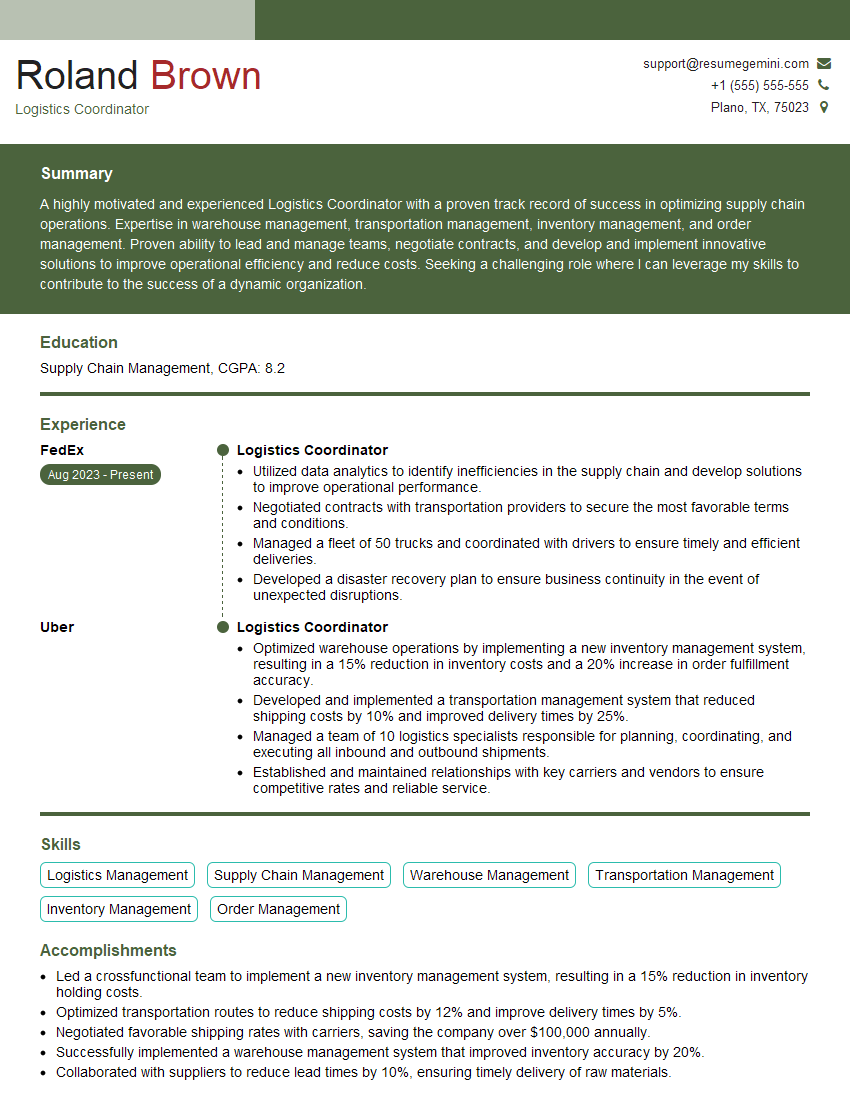
Logistics Coordinator Resume Sample
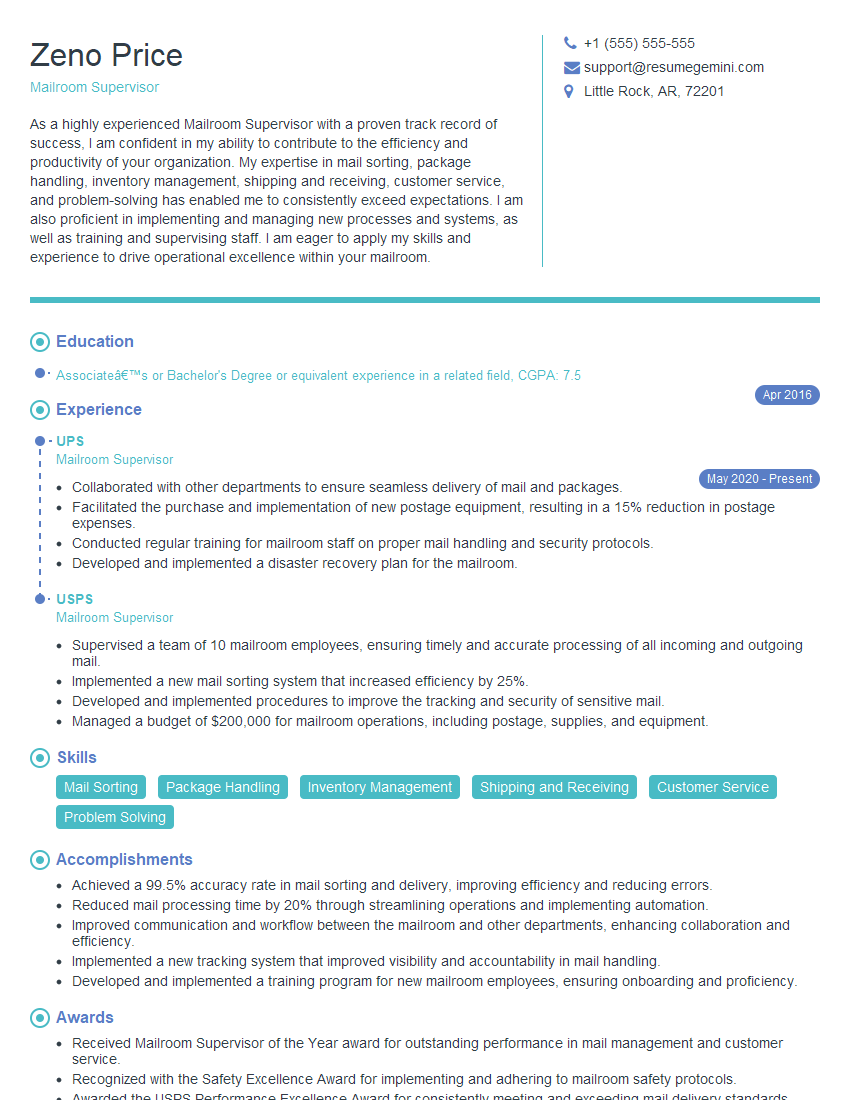
Mailroom Supervisor Resume Sample
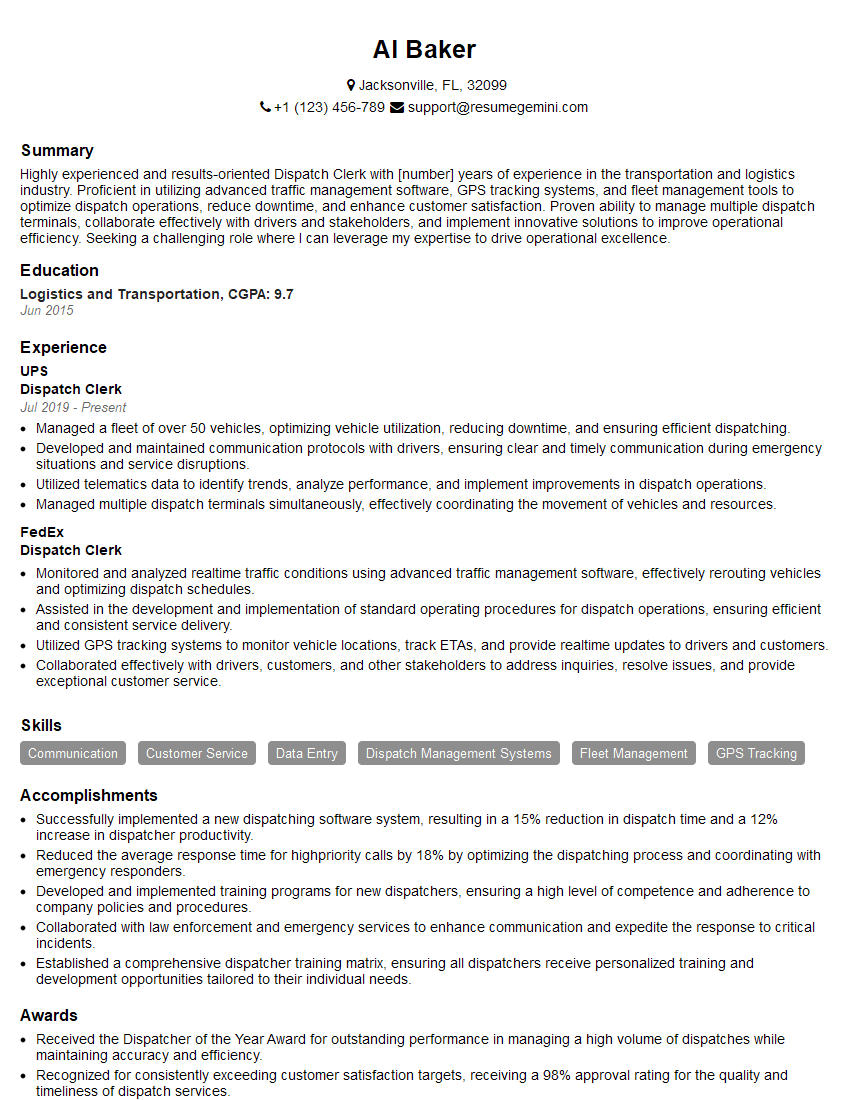
Dispatch Clerk Resume Sample
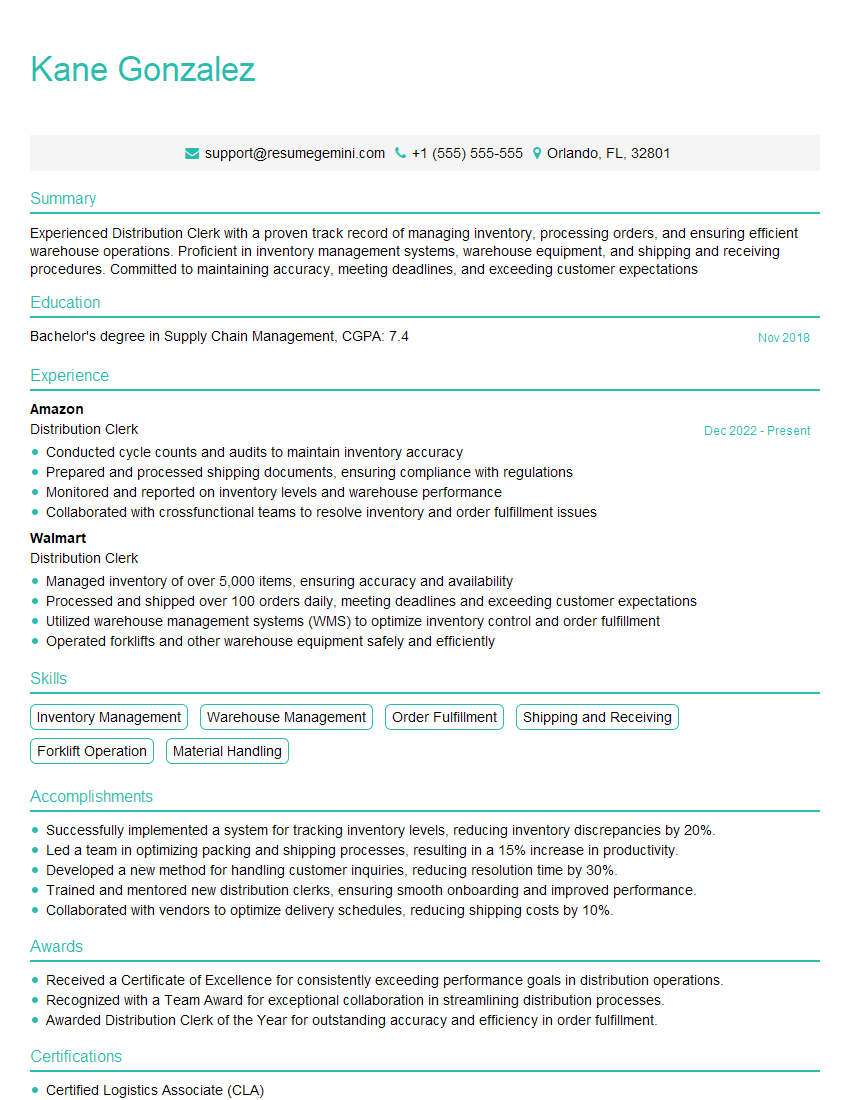
Distribution Clerk Resume Sample
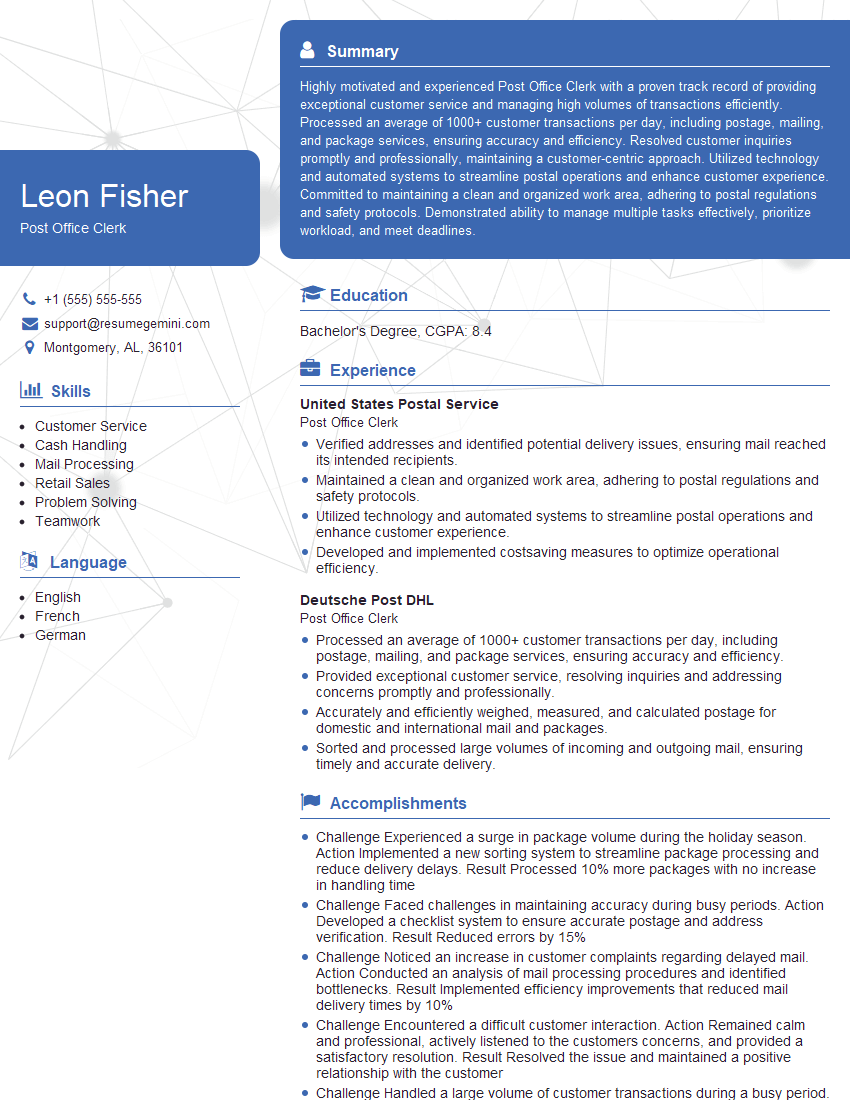
Post Office Clerk Resume Sample

Postal Clerk Resume Sample
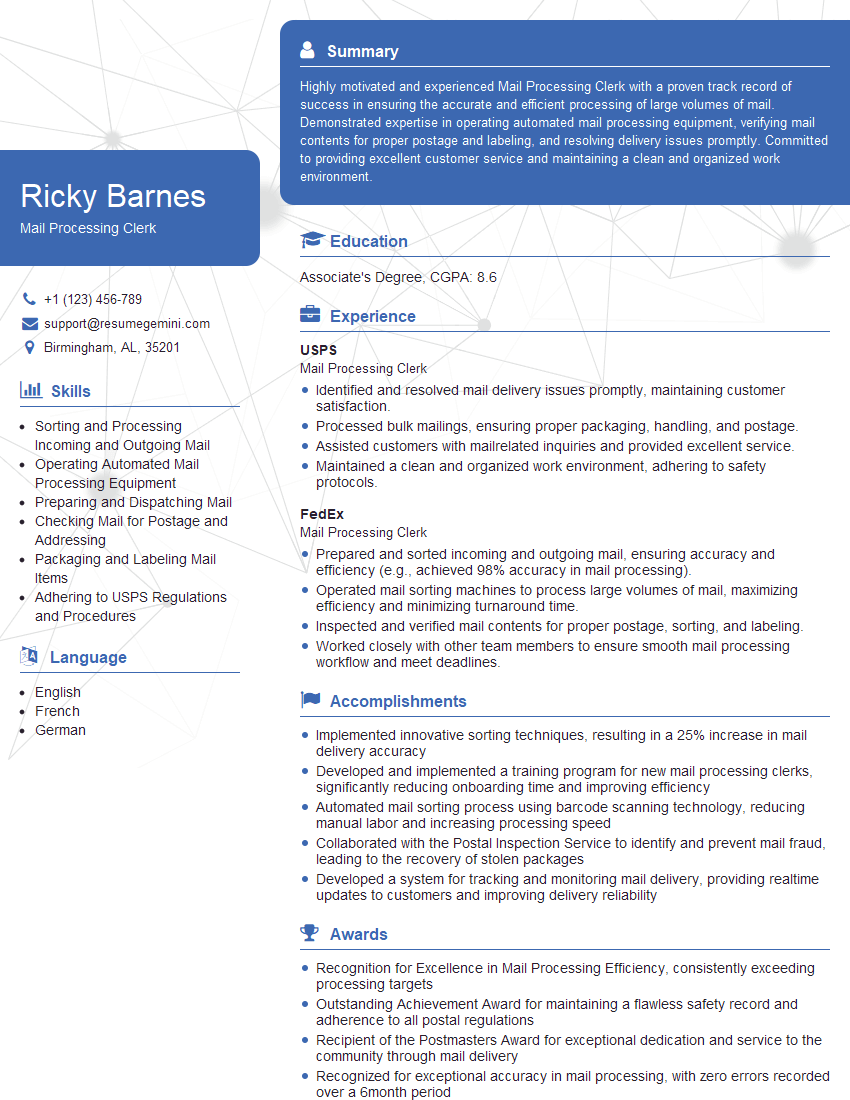
Mail Processing Clerk Resume Sample

Shipping and Receiving Clerk Resume Sample
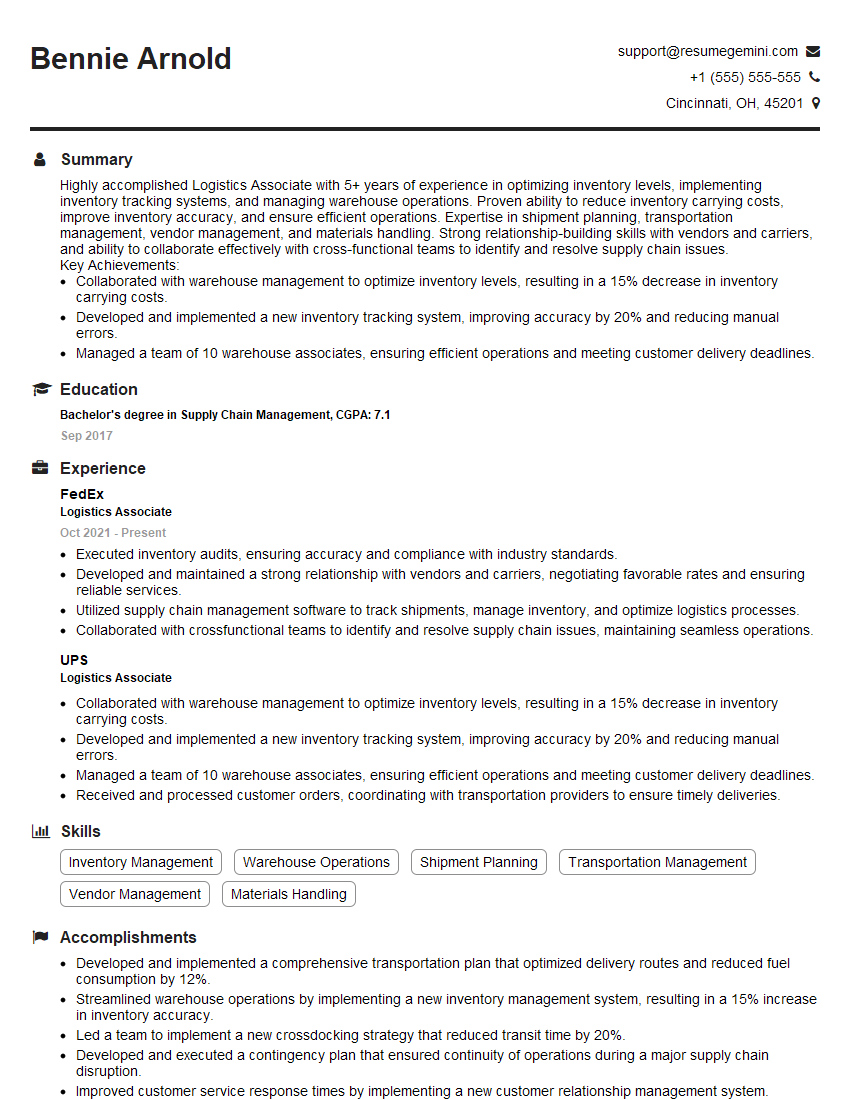
Logistics Associate Resume Sample
Explore more articles
Users Rating of Our Blogs
Share Your Experience
We value your feedback! Please rate our content and share your thoughts (optional).
What Readers Say About Our Blog
Very informative content, great job.
good