Cracking a skill-specific interview, like one for IMINT, requires understanding the nuances of the role. In this blog, we present the questions you’re most likely to encounter, along with insights into how to answer them effectively. Let’s ensure you’re ready to make a strong impression.
Questions Asked in IMINT Interview
Q 1. Explain the difference between IMINT and other intelligence disciplines (HUMINT, SIGINT, etc.).
IMINT, or Imagery Intelligence, is one of the five core intelligence disciplines, alongside HUMINT (Human Intelligence), SIGINT (Signals Intelligence), MASINT (Measurement and Signature Intelligence), and OSINT (Open-Source Intelligence). While they all contribute to a complete intelligence picture, they differ significantly in their sources and methods.
IMINT focuses solely on imagery – photographs, videos, and other visual data – collected from various platforms. Think of it as the ‘seeing’ aspect of intelligence gathering. HUMINT relies on human sources, like informants or spies; SIGINT intercepts communications, like phone calls or radio transmissions; MASINT utilizes scientific data from non-visual sources; and OSINT pulls information from publicly available sources like news reports or social media.
For example, satellite imagery could reveal the construction of a new military facility (IMINT), while a human agent could provide information about the facility’s purpose (HUMINT). SIGINT might intercept communications discussing the facility’s operations, adding another layer of understanding. Each discipline complements the others, providing a multifaceted understanding of a situation.
Q 2. Describe your experience with various IMINT platforms and sensors.
My experience spans a wide range of IMINT platforms and sensors. I’ve worked extensively with data from various satellite systems, including high-resolution commercial satellites like those from Planet Labs and Maxar, as well as government-operated platforms. I’m also proficient with aerial imagery collected from manned and unmanned aircraft, utilizing sensors ranging from simple digital cameras to sophisticated multispectral and hyperspectral imagers.
For instance, I’ve used high-resolution satellite imagery to monitor deforestation in the Amazon rainforest, identifying illegal logging activity with centimeter-level accuracy. In another project, I analyzed aerial imagery from drones equipped with thermal cameras to detect heat signatures associated with illicit drug manufacturing operations. The experience also includes using LiDAR data from airborne platforms for detailed 3D terrain modelling.
My experience also extends to data processing and fusion from diverse sources. Combining data from different sensors and platforms, such as merging satellite imagery with aerial photography, allows for more comprehensive and robust analysis.
Q 3. How familiar are you with different image formats and their characteristics (e.g., GeoTIFF, JPEG2000)?
I’m very familiar with a variety of image formats and their specific characteristics. GeoTIFF, for example, is a widely used format because it embeds geospatial metadata directly into the image file, making it easy to locate and integrate with geographic information systems (GIS) software. The inherent georeferencing saves significant processing time.
JPEG2000, on the other hand, is known for its superior compression capabilities, particularly useful for handling large datasets common in IMINT. It provides a good balance between image quality and file size. I also have experience working with formats like NITF (National Imagery Transmission Format), a very robust format used extensively within the defense industry that can accommodate multiple bands and metadata. Understanding these differences is crucial for efficient data storage, processing, and analysis.
Choosing the right image format depends heavily on the specific application. For example, GeoTIFF is ideal for quick mapping and GIS integration, while JPEG2000 is better for archiving large datasets where storage space is a concern. NITF, with its extensive metadata capabilities, is crucial when strict data management and traceability are required.
Q 4. Explain your understanding of photogrammetry and its application in IMINT.
Photogrammetry is the science of making measurements from photographs. In the context of IMINT, it’s a powerful technique for extracting 3D information from 2D imagery. By processing a series of overlapping images, often from different perspectives, we can create accurate 3D models of terrain, buildings, or any object of interest.
This is particularly valuable for tasks like creating elevation models for terrain analysis, generating detailed 3D models of infrastructure for damage assessment (e.g., after a natural disaster), or even for creating virtual reality simulations for training purposes. The process typically involves several steps: image orientation, feature extraction and matching, 3D model generation and refinement, and texturing.
For example, in a disaster response scenario, photogrammetry applied to drone imagery could allow for rapid assessment of building damage and the creation of precise 3D models to assist in rescue efforts. The accuracy is often much higher than what traditional surveying methods could provide within the same timeframe.
Q 5. Describe your experience with image processing software (e.g., ENVI, ERDAS IMAGINE).
I have extensive experience with leading image processing software packages, including ENVI and ERDAS IMAGINE. These platforms offer a wide range of functionalities for processing and analyzing various types of imagery. My expertise includes image preprocessing (e.g., geometric correction, atmospheric correction), image enhancement (e.g., sharpening, noise reduction), and feature extraction (e.g., object detection, classification).
For instance, I have used ENVI’s spectral analysis tools to identify different types of vegetation based on their unique spectral signatures, using satellite imagery. In ERDAS IMAGINE, I’ve performed orthorectification to create geospatially accurate maps from aerial photography. Proficiency in these tools allows me to efficiently handle large datasets and perform complex analyses, greatly improving the speed and accuracy of my work.
Beyond these commercial packages, I have experience with open-source tools like GDAL and QGIS, offering flexibility and cost-effectiveness when working on specific tasks.
Q 6. How do you assess the quality and reliability of IMINT sources?
Assessing the quality and reliability of IMINT sources is crucial for ensuring the validity of any conclusions drawn from the analysis. This involves considering several factors.
- Sensor characteristics: The resolution, spectral range, and acquisition date of the sensor significantly affect the image quality and the information it can provide. Higher resolution often means more detail but may not always be necessary.
- Image quality: Factors such as cloud cover, atmospheric conditions, and sensor artifacts can degrade image quality. I evaluate the image for clarity, sharpness, and any distortions.
- Source credibility: The reputation and track record of the organization or agency providing the imagery are essential. Understanding the validation and verification processes used is important.
- Metadata: Comprehensive metadata, including acquisition parameters, sensor specifications, and processing history, provides crucial context for the image.
A multi-source approach is often adopted, comparing and cross-referencing data from multiple sources to validate findings and increase confidence in the analysis.
Q 7. How would you handle incomplete or ambiguous IMINT data?
Dealing with incomplete or ambiguous IMINT data is a common challenge. My approach involves a systematic process:
- Data assessment: I start by thoroughly examining the available data to understand the extent of the incompleteness or ambiguity and identify the specific areas lacking information.
- Data fusion: If possible, I try to integrate the incomplete data with other intelligence sources (HUMINT, SIGINT, etc.) to fill in the gaps and resolve ambiguities.
- Image enhancement and processing: Techniques like image sharpening, noise reduction, and contrast enhancement can sometimes improve the clarity of ambiguous features.
When dealing with missing data, I might use interpolation or extrapolation techniques, but I always acknowledge the limitations and uncertainties associated with these methods. Transparency is key in presenting findings based on incomplete data. I carefully document my assumptions and the limitations of the analysis to avoid drawing unwarranted conclusions. Sometimes, accepting the limitations and stating “inconclusive” is the most honest and accurate conclusion.
Q 8. Explain your approach to geolocation and georeferencing images.
Geolocation and georeferencing are crucial steps in IMINT analysis, allowing us to pinpoint the location of features within an image on the Earth’s surface. My approach involves a multi-step process. First, I identify control points – easily identifiable features present in both the image and a reference map (e.g., road intersections, building corners). These points act as anchors. Second, I use specialized software, such as ERDAS IMAGINE or ArcGIS, to perform a transformation, mapping the image coordinates to real-world coordinates. This transformation uses algorithms like polynomial transformations (e.g., first-order or second-order) to mathematically correct for distortions. The accuracy of geolocation heavily relies on the number and quality of control points; more points and more precisely identified points generally lead to better accuracy. Finally, I validate the georeferencing by checking for residual errors and refining the transformation as needed. For example, in a recent project analyzing satellite imagery of a port facility, I used at least 10 well-distributed control points to achieve sub-meter accuracy, ensuring precise measurements of ship berths and infrastructure.
Q 9. Describe your experience with various map projections and coordinate systems.
I’m proficient in various map projections and coordinate systems, understanding their strengths and limitations. My experience includes working with geographic coordinate systems (GCS) like WGS 84 (used widely in GPS), projected coordinate systems (PCS) like UTM (Universal Transverse Mercator) and State Plane, and other specialized systems relevant to specific areas or applications. For instance, UTM is excellent for large-scale mapping, but it introduces distortions at higher latitudes. Conversely, State Plane Coordinate Systems are designed to minimize distortion within smaller, state-sized regions. I choose the appropriate projection based on the project’s geographical extent, desired accuracy, and the type of analysis. In one project involving analyzing imagery across a large area spanning multiple states, I utilized a combination of UTM zones and a seamless mosaic to avoid projection distortions near zone boundaries. Understanding these systems is critical because incorrect usage can lead to significant errors in measurements and analysis.
Q 10. How do you identify and mitigate geometric distortions in IMINT imagery?
Geometric distortions in IMINT imagery stem from factors like sensor characteristics, terrain variations, and atmospheric effects. To identify and mitigate these, I use several techniques. First, I visually inspect the imagery for obvious distortions, like lens distortion or skewing. Then, I employ geometric correction methods using ground control points (GCPs), as mentioned earlier. For more complex distortions, I might employ orthorectification, a process that corrects for terrain relief. Software packages allow for sophisticated modeling of these distortions. For instance, a polynomial transformation can compensate for lens distortion, whereas a rigorous geometric model accounts for the Earth’s curvature and terrain variations. One project involved analyzing aerial photography of a mountainous region, where orthorectification was vital to obtaining accurate measurements of building heights and land areas. Without this correction, the measurements would have been severely inaccurate due to the terrain’s slope.
Q 11. What are your experience with feature extraction and object recognition techniques in IMINT?
My experience with feature extraction and object recognition encompasses a range of techniques. I utilize automated methods like image segmentation (splitting an image into meaningful regions) and edge detection to identify features of interest. This might involve using algorithms such as Canny edge detection or watershed segmentation. For object recognition, I employ both traditional techniques like template matching and more advanced machine learning approaches, including convolutional neural networks (CNNs). CNNs, trained on large datasets of IMINT, are particularly effective at identifying objects like vehicles, buildings, or even specific types of weapons. For example, in a project involving monitoring illegal logging, I used a CNN trained on images of logging trucks to automatically detect and count them in high-resolution satellite imagery, streamlining the analysis considerably. The choice of method depends on the data, the complexity of the objects, and the desired level of automation.
Q 12. How familiar are you with different types of image enhancement techniques?
I’m very familiar with various image enhancement techniques, using them to improve image quality and facilitate analysis. This involves methods for contrast enhancement (e.g., histogram equalization), noise reduction (e.g., median filtering), sharpening (e.g., unsharp masking), and pan-sharpening (combining high-resolution panchromatic imagery with lower-resolution multispectral imagery). Specific techniques are selected based on the image characteristics and the goals of the analysis. For example, in a project dealing with low-light imagery, I used noise reduction and contrast enhancement to improve visibility of features. Similarly, pan-sharpening was crucial in a project requiring high-resolution details from multispectral imagery for land cover classification.
Q 13. Describe your experience with change detection analysis using IMINT.
Change detection using IMINT involves comparing images acquired at different times to identify changes in the scene. I’ve used various approaches, including image differencing, image ratioing, and post-classification comparison. Image differencing is a simple method where pixel-by-pixel subtraction highlights differences. Image ratioing can be more sensitive to subtle changes. Post-classification comparison, where each image is classified (e.g., into land cover types) before comparison, allows for more robust change detection, minimizing the impact of noise. For example, in a project monitoring urban sprawl, I used post-classification comparison to accurately identify the change in urbanized area between two time points, considering both the expansion of built-up areas and changes in land use within the city boundaries. The selection of the best method depends on the type of change, the characteristics of the imagery, and the desired accuracy.
Q 14. Explain your understanding of image fusion techniques.
Image fusion combines data from multiple sources (e.g., multispectral and panchromatic imagery) to produce a single image with enhanced information. I’m experienced with various fusion techniques, including pixel-level fusion (e.g., principal component analysis, wavelet transforms) and decision-level fusion (e.g., combining classified images from different sensors). The choice of method depends on the characteristics of the source images and the application. For instance, in a project involving environmental monitoring, I fused multispectral data with LiDAR data to create a high-resolution image with both spectral and topographic information, allowing for more accurate land cover classification and habitat analysis. Successful image fusion significantly improves the interpretability and accuracy of the analysis.
Q 15. How do you assess the operational relevance of IMINT data?
Assessing the operational relevance of IMINT (Imagery Intelligence) data hinges on understanding its value in achieving specific intelligence objectives. We evaluate relevance through a multi-faceted approach.
- Timeliness: Is the data recent enough to be useful for the current operation? Stale data can be misleading or irrelevant.
- Completeness: Does the imagery fully capture the area or target of interest? Partial or fragmented data may limit analysis.
- Accuracy and Resolution: Is the imagery clear and detailed enough to support the required level of analysis? High-resolution imagery is vital for identifying specific features.
- Relevance to the Intelligence Requirement (IR): Does the IMINT directly address the specific questions or concerns outlined in the IR? This is crucial for focusing resources effectively.
- Source Reliability: Understanding the sensor type, platform, and processing techniques used to acquire the imagery helps assess its inherent limitations and potential biases.
For example, during a counter-terrorism operation, high-resolution satellite imagery might be crucial for identifying a specific building or vehicle, while low-resolution aerial photography may suffice for establishing broader contextual information. The relevance is directly tied to the operational needs.
Career Expert Tips:
- Ace those interviews! Prepare effectively by reviewing the Top 50 Most Common Interview Questions on ResumeGemini.
- Navigate your job search with confidence! Explore a wide range of Career Tips on ResumeGemini. Learn about common challenges and recommendations to overcome them.
- Craft the perfect resume! Master the Art of Resume Writing with ResumeGemini’s guide. Showcase your unique qualifications and achievements effectively.
- Don’t miss out on holiday savings! Build your dream resume with ResumeGemini’s ATS optimized templates.
Q 16. Describe your experience with presenting IMINT analysis to different audiences.
Presenting IMINT analysis to diverse audiences requires tailoring the communication to their level of understanding and their specific needs. I have experience presenting to technical analysts, military commanders, policymakers, and even the public, each requiring a different approach.
- Technical Audiences: I focus on detailed analysis, methodology, and technical limitations of the data. This might involve presenting geospatial data, sensor specifications, and specific analytic techniques.
- Military Commanders: I emphasize actionable intelligence, concise summaries, and the implications for operational planning. Visual aids such as maps and annotated imagery are key.
- Policymakers: I highlight strategic implications, policy-relevant conclusions, and the implications of the intelligence for national security and decision-making.
- Public: When appropriate, I provide de-classified, context-rich summaries that focus on the broader impact and relevance without compromising sensitive information.
A key element is clear and concise communication, regardless of the audience. I use visual aids effectively and ensure that complex information is presented in a way that is easy to understand.
Q 17. How do you ensure the security and integrity of IMINT data?
Ensuring the security and integrity of IMINT data is paramount. This involves a layered approach combining technical, procedural, and human safeguards.
- Data Encryption: All IMINT data is encrypted both in transit and at rest using robust encryption algorithms.
- Access Control: A strict need-to-know policy is enforced. Access to sensitive data is granted only to authorized personnel with appropriate security clearances and roles.
- Data Integrity Checks: Regular checks and audits are conducted to verify the authenticity and completeness of the data. Hashing algorithms help detect any unauthorized alterations.
- Physical Security: Physical storage facilities are secured with appropriate measures to prevent unauthorized access.
- Personnel Security: Thorough background checks and security training are essential for all personnel handling IMINT data.
- Data Handling Procedures: Strict protocols are followed for data handling, storage, transfer, and disposal, minimizing risks of breaches or loss.
For instance, any potential vulnerability is immediately addressed. We conduct regular penetration testing to proactively identify and remediate security weaknesses. A robust incident response plan is in place to manage any potential security breaches effectively.
Q 18. How familiar are you with relevant intelligence regulations and policies?
I am thoroughly familiar with relevant intelligence regulations and policies, including those governing the collection, processing, analysis, and dissemination of IMINT data. This includes an understanding of laws concerning privacy, national security, and international agreements. I am well-versed in regulations such as [Mention specific relevant regulations, adapting to location/agency, e.g., the US Intelligence Community Directives or equivalent legislation for other countries/organizations], and am trained to ensure full compliance in my work.
My understanding extends to the ethical considerations involved in the use of IMINT, ensuring responsible and legal use of this sensitive data.
Q 19. What is your experience with using IMINT in targeting or planning operations?
I have extensive experience using IMINT in targeting and operational planning. My work has involved:
- Target Identification and Location: Utilizing high-resolution imagery to pinpoint specific targets, such as buildings, vehicles, or individuals, for potential operations.
- Route Planning: Analyzing terrain and infrastructure to identify suitable routes for operations, minimizing risks and maximizing efficiency.
- Force Protection: Assessing potential threats and vulnerabilities in an operational area, informing security measures.
- Damage Assessment: Evaluating the effects of military actions or natural disasters using before-and-after imagery analysis.
- Situational Awareness: Providing real-time or near real-time updates on the operational environment.
For example, in a hypothetical scenario, IMINT would be used to create a detailed 3D model of a target building, allowing planners to visualize potential entry points and assess the risk to friendly forces. The detailed information provided by IMINT is critical to operational success.
Q 20. Describe your experience with data analysis and reporting in the context of IMINT.
My experience in IMINT data analysis and reporting encompasses the entire process, from data acquisition and processing to the generation of finished intelligence products.
- Data Acquisition and Processing: I am proficient in using various software tools for handling and processing geospatial data, including image rectification, orthorectification, and mosaic creation.
- Feature Extraction and Analysis: I utilize both manual and automated techniques to extract relevant features from imagery, such as object detection, change detection, and measurement of distances and areas.
- Report Writing: I can create clear, concise, and well-supported intelligence reports tailored to the specific needs of the audience.
- Data Visualization: I leverage various visualization techniques to present complex information in an easily digestible format, including maps, charts, and annotated imagery.
- Data Fusion: I can integrate IMINT with other intelligence sources, such as SIGINT (Signals Intelligence) or HUMINT (Human Intelligence), to create a more comprehensive understanding of the operational environment.
My reports always maintain a high standard of quality and accuracy, adhering to strict guidelines for data handling and analysis. I strive to deliver actionable intelligence that directly contributes to operational success.
Q 21. What is your familiarity with open-source IMINT resources?
I have a good working familiarity with various open-source IMINT resources. These resources are valuable for supplementing classified data and gaining contextual information. However, it’s critical to understand their limitations.
- Commercial Satellite Imagery: Services like Planet Labs, Maxar, and DigitalGlobe provide access to high-resolution imagery, though often at a cost.
- Government-Released Imagery: Many governments release imagery publicly through websites or data portals, often with limitations on resolution or area coverage.
- Social Media: Platforms like Twitter, Instagram, and Facebook are sometimes used to gather visual information related to events or locations of interest.
- Other Online Resources: A variety of websites and online databases provide maps, aerial photographs, and other geospatial data.
When using open-source IMINT, verification and validation are crucial. The quality and reliability of this data can vary significantly, and it’s essential to assess the source’s credibility and potential biases. I utilize various methods to verify the authenticity and accuracy of open-source data before incorporating it into my analysis.
Q 22. Explain your understanding of the limitations of IMINT.
IMINT, while powerful, has inherent limitations. Its effectiveness hinges on factors often outside our control. Think of it like taking a photograph – the quality depends on lighting, distance, and the camera’s capabilities. Similarly, IMINT’s limitations stem from several key areas:
- Resolution and Clarity: The resolution of the imagery directly impacts the level of detail we can extract. Low-resolution images might only show general shapes and movements, hindering precise identification. For example, identifying a specific vehicle type from a high-altitude satellite image might be impossible if the resolution is too low.
- Weather Conditions: Cloud cover, fog, or rain severely obstruct image acquisition, rendering entire areas unusable. This is particularly problematic for time-sensitive intelligence needs.
- Obscuration and Camouflage: Targets can be deliberately concealed or hidden from view, reducing the effectiveness of IMINT. Think of a military base hidden within a heavily forested area; only high-resolution imagery with advanced processing might penetrate the camouflage.
- Interpretation Bias: Human interpretation of imagery is prone to error. Analysts’ preconceived notions or biases can influence how they interpret the data, leading to inaccurate conclusions. This is why rigorous validation and cross-referencing with other intelligence sources are crucial.
- Cost and Time: Acquiring, processing, and analyzing large volumes of IMINT data can be resource-intensive and time-consuming. This factor impacts the speed at which we can respond to rapidly evolving situations.
Addressing these limitations requires employing advanced techniques such as image enhancement, multi-spectral analysis, and employing multiple sensor platforms to provide redundancy and different perspectives.
Q 23. How do you incorporate IMINT with other intelligence sources for a comprehensive analysis?
IMINT doesn’t exist in a vacuum; it’s most effective when integrated with other intelligence sources. Think of it as a puzzle where IMINT provides one crucial piece, but other pieces are needed to complete the picture. For example, a satellite image might show military vehicles assembling near a border (IMINT), but HUMINT (human intelligence) might reveal the intended destination and SIGINT (signals intelligence) might intercept communications confirming troop movements. This fusion of intelligence disciplines creates a more complete and accurate understanding of the situation.
The process usually involves:
- Data Fusion: Combining data from various sources to create a comprehensive picture. This often uses sophisticated software to overlay different data types – satellite imagery with geospatial data, for example.
- Correlation: Identifying patterns and connections across disparate data sources to build a cohesive narrative. For instance, correlating movement observed in IMINT with communication intercepts from SIGINT can confirm the nature and purpose of troop movements.
- Validation: Verifying the accuracy and reliability of intelligence through multiple sources. This helps reduce biases and errors inherent in individual data sets. If multiple sources confirm the same intelligence, the likelihood of it being accurate increases significantly.
The result is a higher degree of confidence in the intelligence and reduces reliance on a single data source’s potential vulnerabilities.
Q 24. How would you manage a large volume of IMINT data?
Managing large volumes of IMINT data requires a structured approach leveraging advanced technologies. Think of it like organizing a massive library; you need efficient systems to store, retrieve, and analyze the information effectively. Here’s how we address it:
- Data Storage and Archiving: Utilizing cloud-based storage solutions with robust data management systems. This allows for scalable storage and easy access to the data.
- Database Management: Implementing relational or NoSQL databases to efficiently organize and index the vast amount of IMINT data. This enables rapid searching and retrieval based on various criteria (location, time, object type, etc.).
- Automated Processing: Employing AI and machine learning algorithms to automate tasks like image classification, object detection, and change detection. This significantly reduces the manual workload and speeds up analysis.
- Data Compression and De-duplication: Employing data compression techniques to reduce storage needs and de-duplication methods to eliminate redundant data. This optimizes storage space and improves processing efficiency.
- Geospatial Analysis Software: Using specialized GIS software to analyze and visualize the geospatial aspects of the data. This enables better understanding of the spatial relationships between different elements within the imagery.
Efficient data management is not merely a technical exercise; it’s crucial for timely and effective intelligence analysis.
Q 25. Describe your experience with collaborating with other analysts (e.g., SIGINT, HUMINT).
Collaboration is paramount in intelligence analysis. My experience working with SIGINT, HUMINT, and other analysts involved seamless information sharing and a joint effort towards a common goal. One example involved a suspected weapons cache. IMINT provided the initial location, SIGINT intercepted communications discussing logistics, and HUMINT provided local context and corroborated the information. Each discipline provided critical pieces to the puzzle.
Effective collaboration relies on:
- Clear Communication: Using standardized terminology and data formats to ensure everyone is on the same page.
- Data Sharing Platforms: Leveraging secure platforms to facilitate the sharing of sensitive intelligence data.
- Joint Analysis Sessions: Conducting regular meetings to discuss findings, identify gaps, and coordinate analysis efforts.
- Respectful Dialogue: Fostering an environment of mutual respect and open dialogue, valuing each discipline’s unique contributions.
By working together and sharing perspectives, we can paint a more accurate and complete intelligence picture than any single discipline could achieve alone.
Q 26. What is your understanding of the ethical considerations related to IMINT?
Ethical considerations in IMINT are paramount. We are dealing with sensitive information that impacts individuals and nations. Think of it like wielding a powerful tool – responsibility comes with the power. Key ethical considerations include:
- Privacy Protection: Protecting the privacy of individuals captured in imagery. We must ensure that our collection and analysis practices comply with relevant laws and regulations. Strict anonymization techniques and data minimization strategies are crucial.
- Targeting and Intent: Ensuring that IMINT is used for legitimate purposes and does not violate international law or human rights. The intent and target of the IMINT collection need to be clearly defined and justifiable.
- Data Security: Protecting IMINT data from unauthorized access, theft, or misuse. Robust cybersecurity measures are essential to prevent the compromise of sensitive information.
- Transparency and Accountability: Establishing clear procedures and oversight mechanisms to ensure that IMINT collection and analysis are conducted ethically and accountably. This involves documenting processes and decisions thoroughly.
Failing to address these ethical concerns can lead to legal repercussions and damage the credibility of the intelligence community.
Q 27. How do you stay current with the latest advancements in IMINT technology?
Staying current with advancements in IMINT is an ongoing process. Think of it as a marathon, not a sprint. It requires consistent engagement with the field. Here’s my approach:
- Professional Development: Attending conferences, workshops, and training courses on the latest technologies and techniques. This keeps my skills sharp and exposes me to cutting-edge innovations.
- Publication Monitoring: Regularly reviewing peer-reviewed journals and industry publications to keep up with the latest research findings and technological developments.
- Industry Networking: Connecting with other IMINT professionals through conferences, online forums, and professional organizations. This facilitates the exchange of ideas and best practices.
- Vendor Engagement: Maintaining contact with technology providers to stay informed about new products and capabilities. This provides firsthand insight into technological advancements.
- Self-Learning: Utilizing online resources and self-study materials to broaden my knowledge base and develop specific skills in areas of interest. Online courses and tutorials are invaluable tools.
Continuous learning is crucial in a field as dynamic as IMINT.
Q 28. Describe a situation where you had to overcome a challenge related to IMINT analysis.
During an operation involving a suspected terrorist cell, we faced a significant challenge. The initial IMINT – a low-resolution satellite image – only showed a vague gathering of individuals in a remote area. It was insufficient for precise targeting or positive identification. This is like trying to identify a specific person in a crowded stadium from a distance – challenging but not impossible.
To overcome this, we employed a multi-pronged approach:
- Improved Imagery Acquisition: We requested higher-resolution imagery from a different satellite platform, improving the detail significantly.
- Image Enhancement Techniques: We used advanced image processing techniques to enhance contrast, sharpness, and reduce noise, revealing previously obscured details.
- Open-Source Intelligence (OSINT) Integration: We combined the improved IMINT with OSINT, such as social media posts and news reports from the region. This helped contextualize the initial imagery and identify potential suspects.
- HUMINT Collaboration: We collaborated with HUMINT sources on the ground to verify our analysis and gather further information. This ground-truthing was essential in confirming our suspicions.
Through a combination of improved data acquisition, advanced processing, and collaboration with other intelligence disciplines, we successfully identified the individuals and confirmed the terrorist activity, demonstrating the importance of a flexible and integrated approach.
Key Topics to Learn for IMINT Interview
- Image Formation and Sensors: Understand the principles behind various imaging sensors (e.g., cameras, satellites), their limitations, and how image quality is affected by factors like resolution, spectral range, and atmospheric conditions.
- Image Processing and Enhancement: Familiarize yourself with techniques for improving image quality, such as noise reduction, sharpening, and contrast enhancement. Consider algorithms and their practical applications in real-world scenarios.
- Feature Extraction and Object Recognition: Learn about methods for identifying and extracting relevant features from images, and how these features are used for object recognition and classification. Explore different approaches like edge detection, SIFT, and deep learning techniques.
- Geospatial Analysis and Interpretation: Understand how to analyze images within a geographic context, using tools and techniques to extract meaningful information about location, scale, and relationships between objects.
- Data Fusion and Integration: Explore how to combine data from multiple sources (e.g., IMINT, HUMINT, SIGINT) to create a more complete and accurate picture of a situation. This involves understanding the strengths and weaknesses of different data types.
- Change Detection and Monitoring: Learn about techniques for identifying changes over time in imagery, such as deforestation, urban sprawl, or military movements. This often involves comparing images acquired at different times.
- IMINT Exploitation and Analysis: Grasp the entire workflow, from image acquisition to intelligence reporting. This includes understanding the various stages of processing, analysis, and the creation of actionable intelligence.
- Ethical Considerations and Legal Frameworks: Be prepared to discuss the ethical implications of using IMINT, including privacy concerns and responsible data handling. Understanding relevant legal frameworks is crucial.
Next Steps
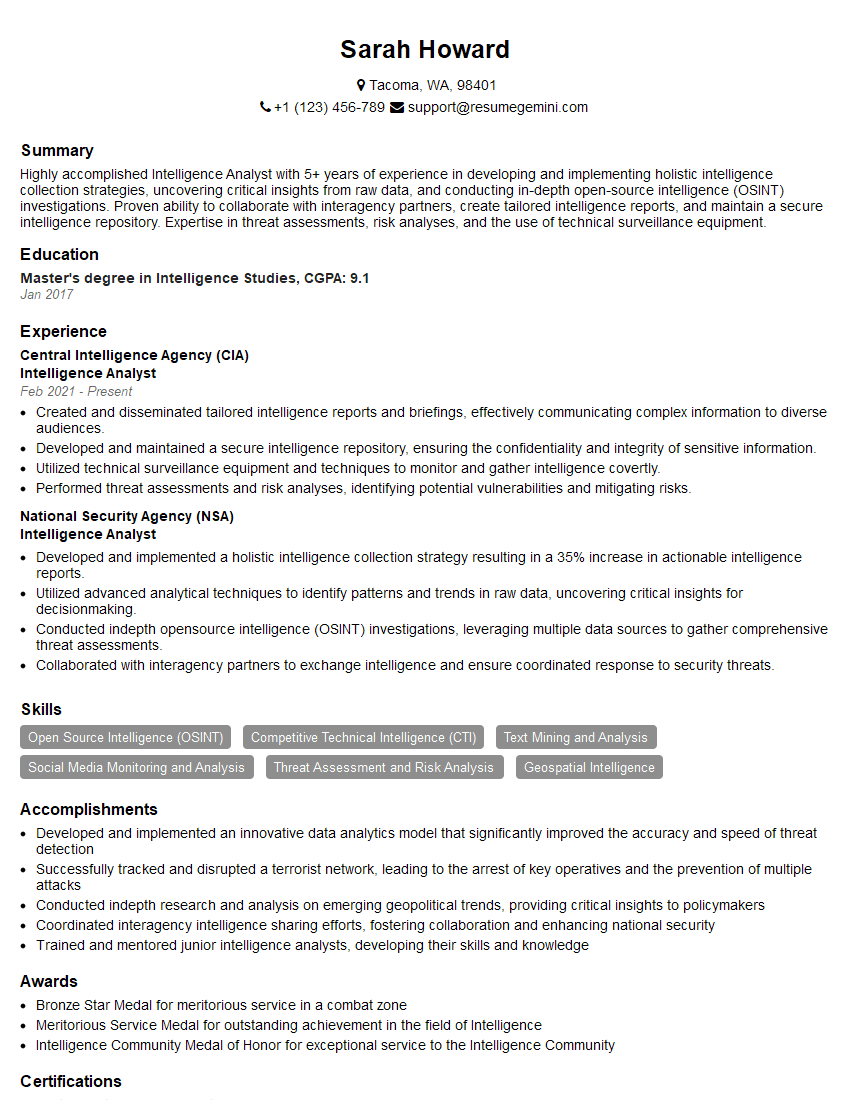
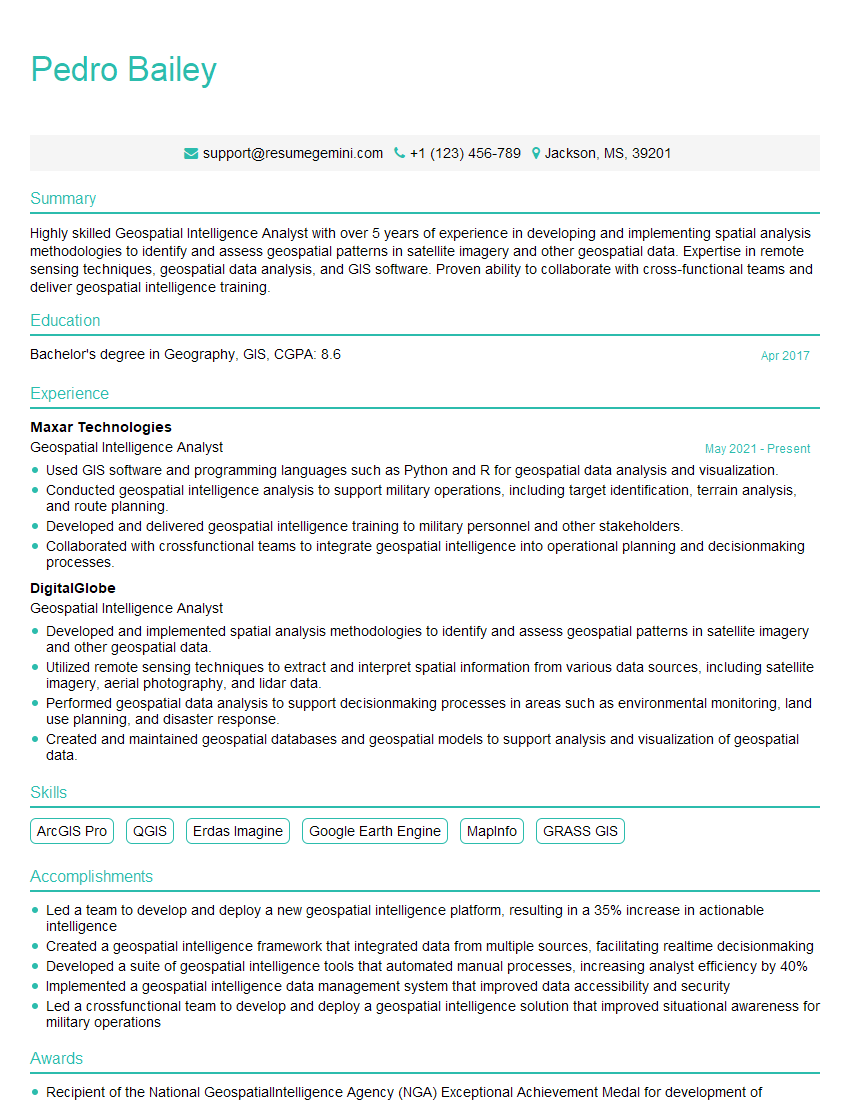
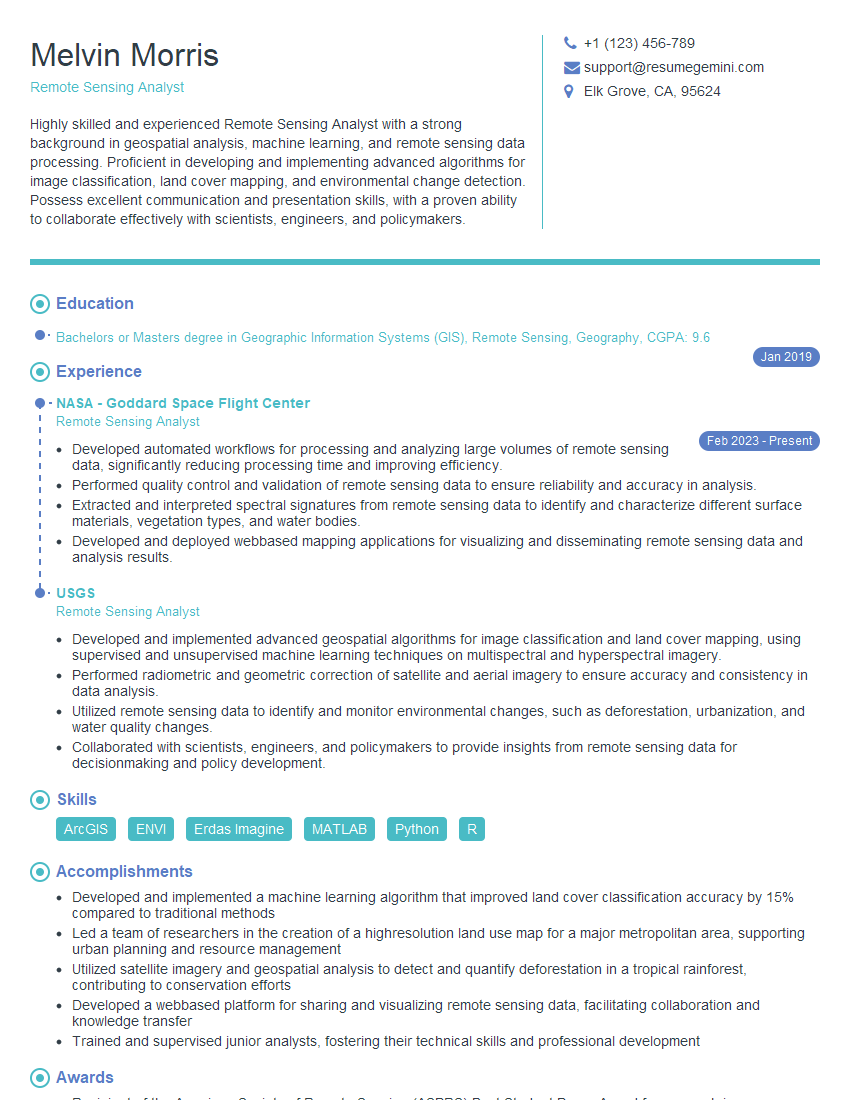
Mastering IMINT opens doors to exciting and impactful careers in national security, defense, and various commercial sectors. To maximize your job prospects, it’s vital to present your skills and experience effectively. Building an ATS-friendly resume is crucial for getting your application noticed by recruiters. ResumeGemini can significantly enhance your resume-building experience, helping you craft a compelling document that showcases your qualifications effectively. Examples of resumes tailored to IMINT roles are available to further assist you in your job search.
Explore more articles
Users Rating of Our Blogs
Share Your Experience
We value your feedback! Please rate our content and share your thoughts (optional).
What Readers Say About Our Blog
Very informative content, great job.
good