The thought of an interview can be nerve-wracking, but the right preparation can make all the difference. Explore this comprehensive guide to Die Performance Monitoring interview questions and gain the confidence you need to showcase your abilities and secure the role.
Questions Asked in Die Performance Monitoring Interview
Q 1. Explain the key performance indicators (KPIs) used to monitor die performance.
Monitoring die performance relies on several key performance indicators (KPIs). These metrics provide a comprehensive picture of the die’s functionality and reliability. Think of it like a health check for your tiny silicon chip!
- Yield: This is the percentage of good dies produced compared to the total number of dies processed. A higher yield indicates a more efficient and effective manufacturing process. For example, a 90% yield means 9 out of 10 dies are functional.
- Defect Density: This represents the number of defects per unit area of the wafer. A lower defect density translates to higher quality and fewer faulty dies. We often measure this in defects per million (DPM).
- Throughput: This measures the number of dies produced per unit of time (e.g., dies per hour). Improving throughput increases production efficiency.
- Electrical Parameters: These include critical measurements like voltage, current, and power consumption, ensuring the die functions within specified limits. We would monitor parameters like leakage current, which can indicate degradation.
- Reliability Metrics: These KPIs assess the die’s longevity and resistance to failure under various operating conditions. This might include mean time to failure (MTTF) or failure rate.
Tracking these KPIs allows us to identify trends, pinpoint areas for improvement, and ultimately optimize the manufacturing process to deliver high-quality, reliable dies.
Q 2. Describe your experience with statistical process control (SPC) in die monitoring.
Statistical Process Control (SPC) is crucial for monitoring and controlling die performance variations. It’s like having a vigilant watchdog that constantly monitors the manufacturing process. I’ve extensively used control charts, specifically X-bar and R charts, to track critical die parameters over time. This allows us to detect shifts in the mean or increases in variability of key characteristics. For example, I used an X-bar chart to monitor the threshold voltage of transistors during manufacturing. Any points falling outside control limits indicated a potential problem, allowing us to investigate the root cause and take corrective actions before it impacted the overall yield. Control charts help prevent small variations from accumulating into large, costly problems.
Furthermore, my experience includes implementing capability analysis (Cp, Cpk) to assess the process capability to meet specifications. A low Cp or Cpk value would indicate that the process is not capable of consistently producing dies within the required tolerances, prompting investigations into process improvements.
Q 3. How do you identify and troubleshoot common die performance issues?
Identifying and troubleshooting die performance issues requires a systematic approach. It’s akin to being a detective, piecing together clues to solve a mystery. My approach typically involves these steps:
- Data Analysis: I start by reviewing relevant KPIs, such as yield, defect density, and electrical parameter data, to pinpoint areas of concern.
- Failure Mode and Effects Analysis (FMEA): FMEA helps anticipate potential failure modes and their effects on die performance. This is a proactive approach to identify potential problems before they occur.
- Visual Inspection: Using optical microscopy and other imaging techniques, I visually inspect dies for physical defects, such as cracks, contamination, or opens/shorts.
- Electrical Testing: I perform various electrical tests to further characterize the die’s functionality and identify specific areas of failure. This might involve parametric testing or functional tests.
- Root Cause Analysis: Once the problem area is identified, a root cause analysis is performed (e.g., using 5 Whys) to determine the underlying cause of the issue.
- Corrective Actions: Based on the root cause analysis, appropriate corrective actions are implemented to address the problem and prevent recurrence.
For example, during one project, we noticed a significant drop in yield. Data analysis revealed higher-than-normal defect density in a particular area of the die. Visual inspection revealed contamination. Further investigation identified a faulty cleaning process as the root cause. By implementing corrective actions, the yield was restored.
Q 4. What are the different types of die failures and their root causes?
Die failures can stem from various causes, broadly categorized as:
- Manufacturing Defects: These include physical defects introduced during the fabrication process, such as scratches, contamination, missing or extra layers, and bridging. Root causes might include equipment malfunction, improper handling, or material contamination.
- Design Flaws: These arise from errors in the chip design, such as incorrect layout, timing issues, or inadequate process margin. Root causes could be design errors, inadequate simulation, or unforeseen operating conditions.
- Process Variations: These result from uncontrolled variations in the fabrication process that affect die parameters outside the acceptable range. This might arise from fluctuations in temperature, pressure, or chemical concentrations.
- Electrostatic Discharge (ESD): ESD events can cause damage to sensitive components within the die, leading to failure. Proper handling and protection measures are critical.
- Thermal Stress: Excessive heat or temperature cycling can stress components, leading to material degradation and eventual failure. Efficient thermal management is essential.
Identifying the type of failure is crucial for determining the appropriate corrective actions. For instance, if manufacturing defects are the main cause of failure, improvements in the fabrication process are needed. If design flaws are the culprit, redesign is required.
Q 5. Explain your experience with failure analysis techniques for semiconductor dies.
Failure analysis techniques are essential for understanding the root cause of die failures. I’ve extensive experience employing various techniques:
- Optical Microscopy: Visual inspection using optical microscopes to identify physical defects.
- Scanning Electron Microscopy (SEM): High-resolution imaging to visualize minute defects and analyze material composition.
- Energy-Dispersive X-ray Spectroscopy (EDX): Elemental analysis to identify contaminants or material composition irregularities.
- Focused Ion Beam (FIB): Precise milling and cross-sectioning to examine internal structures and isolate failure points.
- Electrical Testing (parametric & functional): Characterizing the electrical behavior of the die to pinpoint faulty components or circuits.
In a recent project, a die failed prematurely. SEM revealed minute cracks within the metal interconnects. EDX confirmed the presence of unexpected elements near the crack, indicating contamination that likely weakened the metal and caused it to crack under stress.
Q 6. How do you interpret and analyze data from automated die sorting systems?
Automated die sorting systems provide valuable data on die performance. The data from these systems typically includes information on each die’s electrical parameters and functional test results. I interpret this data to identify trends and patterns. This data helps classify each die as either ‘good’ or ‘bad’ based on pre-defined acceptance criteria.
My analysis focuses on:
- Pass/Fail Rates: Analyzing the overall pass/fail rates to assess the overall performance of the manufacturing process. A significant deviation from expected rates would trigger a deeper investigation.
- Distribution of Parameters: Examining the distribution of key electrical parameters to identify any outliers or shifts in the mean. Histograms and statistical analysis help visualize this.
- Correlation Analysis: Identifying correlations between different parameters. For example, we might find a strong correlation between leakage current and operating temperature, indicating a thermal sensitivity issue.
- Defect Classification: Using the data to classify different types of failures. This is vital for determining the root cause of the problems.
By systematically analyzing the data from the automated sorting systems, we can identify areas for process improvement, leading to higher yields and improved die performance. For example, if a high failure rate is correlated with a specific test parameter, then we can pinpoint areas for adjustments in the manufacturing process to reduce the number of failures.
Q 7. Describe your experience with yield improvement methodologies.
Yield improvement is a continuous process. I’ve implemented several methodologies to enhance yield, which can be seen as a multifaceted approach:
- Process Optimization: Analyzing process parameters and identifying those that significantly affect yield. This often involves statistical methods (DOE) to optimize process steps.
- Defect Reduction: Implementing strategies to reduce defects during manufacturing, including cleaning processes, material improvements, and equipment maintenance.
- Design for Manufacturability (DFM): Collaborating with design engineers to improve the die design to enhance its manufacturability and reduce susceptibility to failure. This would involve design rule checks and simulations.
- Root Cause Analysis (RCA): Performing thorough RCA on failed dies to identify and eliminate the underlying causes of failure.
- Continuous Improvement: Utilizing tools such as Lean Manufacturing or Six Sigma to systematically identify and eliminate waste in the manufacturing process and improve overall yield.
In one project, by systematically analyzing the data and applying Design of Experiments (DOE) to optimize the photolithography process, we managed to increase the yield by 15% within three months. This involved carefully controlling key parameters like exposure time and focus to minimize defects.
Q 8. How do you use data to predict and prevent die performance issues?
Predicting and preventing die performance issues relies heavily on data-driven insights. We leverage various data sources, including in-line process monitoring data (temperature, pressure, etch depth etc.), electrical testing results (yield, leakage current, breakdown voltage), and reliability testing data (lifetime, failure modes). This data is analyzed using statistical process control (SPC) methods, machine learning algorithms, and predictive modeling techniques.
For example, if we notice a trend of increasing defect density in a specific area of the die based on optical inspection data, we can use regression analysis to identify potential root causes such as variations in process parameters. This might reveal a correlation between higher substrate temperature and increased defect density, allowing us to adjust the process parameters proactively. Similarly, machine learning models can be trained on historical data to predict potential yield losses based on real-time process conditions, triggering alerts and preventing major issues before they impact production.
Another powerful approach involves implementing digital twins. These virtual representations of the die and manufacturing process allow us to simulate various scenarios and predict the impact of process changes on die performance, minimizing the risks associated with real-world experiments.
Q 9. Explain your understanding of process capability analysis in die manufacturing.
Process capability analysis (PCA) is crucial for assessing whether a manufacturing process can consistently produce dies within specified performance limits. We use metrics like Cp and Cpk to quantify the process capability. Cp measures the process spread relative to the tolerance range, while Cpk accounts for both spread and process centering. A Cpk value greater than 1.33 generally indicates a capable process, while values below 1 signify an incapable process requiring immediate improvement.
For instance, let’s say we’re manufacturing a die with a required voltage tolerance of ±5%. If our process consistently produces dies with a standard deviation of 1% and the mean voltage is centered within the tolerance, we’ll have a high Cpk value, indicating a robust and capable process. However, if the mean voltage drifts significantly, even with a small standard deviation, the Cpk will be low, signaling the need for corrective actions such as recalibrating equipment or adjusting process parameters.
PCA helps us identify areas for improvement and provides a quantitative measure to track the effectiveness of implemented changes. This continuous monitoring allows us to maintain consistent high quality and avoid costly production issues.
Q 10. Describe your experience with designing and implementing experiments to improve die performance.
Designing and implementing experiments to improve die performance often involves the use of Design of Experiments (DOE) methodologies such as Taguchi methods or factorial designs. These structured approaches enable us to systematically investigate the impact of multiple process parameters on key performance indicators (KPIs) like yield, power consumption, and speed. This reduces the number of experiments needed compared to a ‘one-factor-at-a-time’ approach, saving time and resources.
In one project, we used a full factorial DOE to optimize the etching process for a high-speed memory die. We identified three key parameters: etch time, etch power, and solution concentration. By running a carefully planned set of experiments, we determined the optimal combination of these parameters that maximized yield and minimized defect density. We then validated our findings using additional runs and implemented the optimized process, resulting in a significant improvement in die performance and production efficiency.
Analyzing the experimental results requires statistical software such as Minitab or JMP, which helps to identify significant factors, interactions between factors, and optimal parameter settings. We always document our findings thoroughly, creating a comprehensive record for future reference and continuous improvement efforts.
Q 11. How do you collaborate with other engineers to resolve die performance problems?
Effective collaboration is essential for resolving die performance problems. I typically work closely with process engineers, equipment engineers, test engineers, and design engineers to analyze data, identify root causes, and implement solutions. This involves regular meetings, data sharing platforms, and clear communication channels. We often utilize collaborative problem-solving techniques like brainstorming sessions and root cause analysis (RCA) methods (e.g., 5 Whys) to pinpoint the underlying issues.
For example, if we encounter a yield degradation issue, I would work with the process engineers to analyze process data to identify potential variations, collaborate with the test engineers to understand the failure modes, and engage with the design engineers to assess if any design flaws contribute to the problem. This cross-functional approach ensures a comprehensive understanding of the issue and facilitates the development of robust and effective solutions.
We maintain detailed records of all investigations, including identified root causes, implemented solutions, and their effectiveness. This knowledge base contributes to continuous improvement and avoids repeating past mistakes.
Q 12. What software and tools are you proficient in for die performance monitoring?
I’m proficient in several software and tools for die performance monitoring. These include statistical software packages like Minitab and JMP for data analysis and DOE, as well as specialized EDA (Electronic Design Automation) tools for analyzing circuit performance and identifying potential design weaknesses. I am also experienced with data visualization tools such as Tableau and Power BI for creating clear and informative reports. Furthermore, I have experience using various process control software provided by equipment vendors, enabling real-time monitoring and analysis of various process parameters during die fabrication.
We also leverage database management systems like SQL Server and Oracle to store and manage large volumes of die performance data. These data management capabilities are crucial for efficient data retrieval, analysis, and reporting.
Q 13. Describe your experience with different die packaging technologies.
My experience encompasses various die packaging technologies, including wire bonding, flip-chip, system-in-package (SiP), and advanced packaging techniques like 2.5D and 3D integration. I understand the trade-offs associated with each technology concerning cost, performance, reliability, and form factor. Wire bonding, while a mature and cost-effective solution, has limitations in terms of I/O density and performance at high frequencies. Flip-chip technology offers higher I/O density and improved performance but introduces challenges in terms of thermal management and warpage.
Advanced packaging technologies such as 2.5D and 3D integration allow for higher integration densities and improved performance compared to traditional packaging methods. However, these techniques demand more intricate assembly and testing processes and usually come with a higher cost. My understanding extends to the impact of each packaging technology on die performance parameters, including signal integrity, power consumption, and thermal management. Selecting the appropriate packaging technology involves careful consideration of the specific application requirements and cost constraints.
Q 14. Explain your understanding of the relationship between die performance and overall product reliability.
Die performance is intrinsically linked to overall product reliability. A die with inherent defects or operating outside its specified parameters is more prone to failure, impacting the reliability of the final product. For example, a die experiencing excessive power consumption might lead to overheating and premature failure. Similarly, a die with high leakage current may experience increased degradation over time, leading to reduced lifespan and reliability.
Therefore, rigorous die performance monitoring and quality control are critical for ensuring long-term product reliability. We use various reliability testing methods, such as accelerated life testing (ALT) and highly accelerated stress testing (HAST), to assess the die’s ability to withstand various stress conditions. The data obtained from these tests informs the design and manufacturing processes, enabling us to build more robust and reliable products. Close attention to die performance characteristics such as voltage margins, thermal performance, and signal integrity is vital for achieving high product reliability.
Q 15. How do you balance cost and performance considerations when optimizing die manufacturing processes?
Balancing cost and performance in die manufacturing is a constant tightrope walk. It’s about finding the optimal point where increasing manufacturing costs yields a justifiable improvement in die performance. This often involves a trade-off between material selection, process parameters, and defect rates.
- Material Selection: Choosing higher-quality, more expensive materials can lead to improved yield and reliability, but increases initial costs. A thorough cost-benefit analysis comparing the cost of premium materials with the cost of rejects and potential warranty claims is crucial.
- Process Optimization: Refining processes like etching, deposition, and lithography can improve die performance. This involves optimizing parameters like temperature, pressure, and chemical concentrations. This requires meticulous experimentation and data analysis to identify the sweet spot between performance gain and process cost.
- Defect Reduction: Minimizing defects through improved process control and advanced inspection techniques reduces scrap and rework costs. This is where advanced statistical process control (SPC) and data analytics are invaluable. Even a small improvement in yield can significantly impact the bottom line.
Example: In a memory chip manufacturing process, using a more expensive, higher-purity silicon wafer might reduce the defect rate by 2%, but this must be weighed against the increased wafer cost. Detailed modeling and simulation can predict the impact of such changes on overall cost and profitability.
Career Expert Tips:
- Ace those interviews! Prepare effectively by reviewing the Top 50 Most Common Interview Questions on ResumeGemini.
- Navigate your job search with confidence! Explore a wide range of Career Tips on ResumeGemini. Learn about common challenges and recommendations to overcome them.
- Craft the perfect resume! Master the Art of Resume Writing with ResumeGemini’s guide. Showcase your unique qualifications and achievements effectively.
- Don’t miss out on holiday savings! Build your dream resume with ResumeGemini’s ATS optimized templates.
Q 16. Describe your experience with root cause analysis methodologies.
My experience with root cause analysis relies heavily on structured methodologies like the 5 Whys, Fishbone diagrams (Ishikawa diagrams), and fault tree analysis. I also integrate statistical techniques like Design of Experiments (DOE) to identify the most significant factors influencing the problem.
- 5 Whys: This iterative questioning technique helps drill down to the root cause by repeatedly asking ‘why’ until the fundamental issue is revealed. It’s simple, effective, and encourages collaborative brainstorming.
- Fishbone Diagrams: These visually represent potential causes categorized by factors like materials, methods, manpower, machinery, measurement, and environment. They help organize information and identify potential contributing factors.
- Fault Tree Analysis: This deductive technique maps out potential failure paths leading to a specific undesirable event. It’s particularly useful for complex systems or processes where multiple factors could lead to the same problem.
- Design of Experiments (DOE): This statistical method helps determine the impact of different factors on the outcome by systematically varying them and analyzing the results. This is crucial when dealing with complex interactions between multiple variables.
Example: If a batch of dies exhibits unusually high failure rates after packaging, I’d use the 5 Whys to investigate. ‘Why are the dies failing? Because of poor bonding. Why is the bonding poor? Because of inconsistent pressure during the packaging process. Why is the pressure inconsistent? Because the equipment wasn’t properly calibrated.’ This leads to corrective action focused on equipment calibration.
Q 17. What is your approach to managing a high-volume, high-throughput die manufacturing line?
Managing a high-volume, high-throughput die manufacturing line requires a holistic approach encompassing preventive maintenance, real-time monitoring, and efficient data analysis. It’s about optimizing every step of the process to minimize downtime and maximize output while maintaining quality.
- Preventive Maintenance: Implementing a robust PM schedule for all equipment prevents unexpected failures and reduces downtime. This includes regular inspections, lubrication, and part replacements based on predictive maintenance models.
- Real-time Monitoring: Implementing a comprehensive monitoring system that provides real-time visibility into key process parameters is essential. This allows for quick identification and resolution of anomalies before they impact yield.
- Data Analysis: Leveraging Statistical Process Control (SPC) charts and other analytical tools helps identify trends and patterns, enabling proactive adjustments to the process. Process capability analysis helps ensure that the process meets the desired specifications.
- Automation: Integrating automation where feasible improves efficiency and consistency. Automation reduces human error and increases throughput.
- Lean Manufacturing Principles: Adopting lean principles, such as identifying and eliminating waste, ensures efficient material flow and streamlined operations.
Example: In a wafer fabrication facility, real-time monitoring of etching chamber pressure and temperature allows for prompt intervention if parameters deviate from the setpoints, preventing potentially costly defects.
Q 18. How do you handle conflicting priorities and deadlines in die performance monitoring?
Handling conflicting priorities and deadlines requires a structured approach to prioritization and communication. It’s about clearly defining the impact of each task and allocating resources effectively.
- Prioritization Matrix: Using a matrix that considers urgency and importance helps rank tasks and allocate resources strategically. High-impact, urgent tasks get prioritized over lower-impact, less urgent ones.
- Risk Assessment: Evaluating the potential impact of delaying each task helps make informed decisions about prioritization. This involves considering both the cost and potential delays of missing deadlines.
- Communication: Open and transparent communication with stakeholders is critical. Keeping everyone informed about progress, challenges, and any necessary adjustments ensures alignment and buy-in.
- Escalation: Having a clear escalation path for issues that cannot be resolved within the team ensures that timely decisions are made by management.
Example: If a critical client needs urgent data while simultaneously addressing a production line issue, I would prioritize the client data due to immediate impact. However, I’d quickly communicate the situation to the client and the production team, finding a compromise that minimizes both disruptions.
Q 19. How do you ensure accuracy and precision in die performance data collection and analysis?
Ensuring accuracy and precision in die performance data requires meticulous attention to detail at every stage, from data acquisition to analysis. It’s about minimizing errors and bias in both hardware and software.
- Calibration and Verification: Regular calibration and verification of all testing equipment is essential to eliminate systematic errors. Calibration certificates and traceable standards are crucial.
- Data Validation: Implementing rigorous data validation checks to ensure the integrity and accuracy of data. This includes range checks, plausibility checks, and comparison with historical data.
- Statistical Analysis: Using appropriate statistical methods to account for measurement uncertainties and to quantify the variability in the data. This allows us to make informed conclusions about the reliability of our findings.
- Automated Data Collection: Automating data collection whenever possible minimizes human error and improves consistency.
- Traceability: Maintaining a complete audit trail of all data, including its source, processing steps, and any modifications. This ensures data provenance and accountability.
Example: Using a calibrated probe station with regularly checked probes is paramount to prevent errors in electrical measurements. Regular statistical analysis of the data helps identify outliers and systematic drifts.
Q 20. Describe your experience with different types of die testing equipment.
My experience encompasses a wide range of die testing equipment, including:
- Probe Stations: Used for electrical testing of individual dies, providing detailed information about performance parameters such as current, voltage, and frequency response. These can range from manual to fully automated systems.
- Automated Test Equipment (ATE): High-throughput systems used for functional testing of large quantities of dies, enabling quick identification of faulty units. These systems are typically programmed to execute specific test routines.
- Microscopes (Optical and Scanning Electron): Used for visual inspection of die surfaces, allowing detection of defects and abnormalities not discernible through electrical testing. These provide crucial insights into the physical state of the die.
- Environmental Chambers: Used to assess die performance under different temperature and humidity conditions, crucial for determining reliability and durability.
- Burn-in Systems: Used to accelerate aging and identify early failures, improving prediction of long-term reliability. Dies are subjected to stressed conditions for a prolonged period.
Example: When investigating yield issues in a specific batch of dies, I might use a combination of automated test equipment for initial screening, followed by probe station measurements for detailed analysis of failed units, and finally, microscopy for visual inspection of defects.
Q 21. How do you ensure that die performance data is properly documented and communicated?
Proper documentation and communication of die performance data are crucial for informed decision-making, collaboration, and accountability. This necessitates a well-defined system and consistent processes.
- Centralized Database: Using a centralized database to store all die performance data ensures consistency and easy accessibility for all stakeholders. This could be a relational database or a specialized data management system.
- Data Reporting: Generating regular reports summarizing key performance indicators (KPIs), including yield, defect rates, and other relevant metrics. These reports should be clear, concise, and visually appealing.
- Data Visualization: Using appropriate visualization tools to represent the data effectively, enabling rapid identification of trends and patterns. Graphs, charts, and dashboards are invaluable.
- Standard Operating Procedures (SOPs): Defining SOPs for data collection, analysis, and reporting ensures consistency and reproducibility of results.
- Version Control: Implementing a version control system for all documents and reports prevents confusion and allows for tracking of changes.
Example: A weekly report summarizing yield, defect types, and contributing factors would be shared with the production team, engineering team, and management, facilitating proactive problem-solving and process improvement.
Q 22. Explain your experience with implementing and maintaining quality control procedures for die monitoring.
Implementing and maintaining quality control in die monitoring involves a multi-faceted approach focusing on preventing defects and ensuring consistent performance. It starts with establishing clear, measurable metrics for success. For instance, we might track die yield (the percentage of good dies produced), defect rates per million units (DPM), and critical dimension (CD) uniformity. Then, rigorous control procedures are implemented.
- Statistical Process Control (SPC): We use control charts like X-bar and R charts to monitor key process parameters (KPIs) in real-time. Any deviation from established control limits triggers an investigation and corrective actions.
- Regular Audits: Periodic audits of the entire process, including equipment calibration, material handling, and operator training, are crucial. These audits identify weaknesses and prevent potential problems before they impact die yield.
- Root Cause Analysis (RCA): When defects occur, a thorough RCA is essential using methods like the 5 Whys or Fishbone diagrams. This helps identify the root cause and prevent recurrence. For example, if we experience a sudden increase in broken dies, we might trace it back to a faulty handling system or incorrect material specifications.
- Documentation and Reporting: Meticulous record-keeping, including process parameters, inspection results, and corrective actions, is non-negotiable. Regular reports to management summarize performance, highlighting areas needing improvement.
In my previous role, implementing a new automated optical inspection (AOI) system resulted in a 15% reduction in DPM within six months, demonstrating the effectiveness of proactive quality control procedures.
Q 23. What strategies do you employ to improve the accuracy of die yield predictions?
Improving the accuracy of die yield predictions requires a data-driven approach. Simply relying on historical data isn’t sufficient; we need to account for process variations and potential future changes. Here’s how I approach it:
- Advanced Statistical Modeling: We go beyond simple averages and incorporate advanced statistical models, such as regression analysis and machine learning algorithms. This allows us to identify complex relationships between process parameters and die yield, resulting in more precise forecasts.
- Real-Time Data Integration: Integrating data from various sources – equipment sensors, process monitors, and yield data – provides a more holistic view of the manufacturing process. This real-time feedback allows us to refine predictions continuously.
- Failure Analysis and Predictive Maintenance: Analyzing historical failures and implementing predictive maintenance strategies helps identify potential yield-limiting factors before they occur. For example, predicting equipment failures based on vibration or temperature data allows for preventive maintenance, thus minimizing unexpected downtime and yield losses.
- Monte Carlo Simulations: These simulations introduce randomness and variations into the model to assess the uncertainty inherent in the prediction. This provides a range of possible outcomes instead of a single point estimate, giving a clearer picture of potential risks.
For example, in a previous project, by implementing a machine learning model to predict die yield based on real-time process data, we reduced the prediction error by 20%, leading to improved inventory management and reduced waste.
Q 24. How do you stay up-to-date with the latest advancements in die performance monitoring techniques?
Staying current in this rapidly evolving field requires continuous learning. I employ several strategies:
- Professional Conferences and Seminars: Attending industry conferences like SEMICON and IEEE conferences allows me to network with experts and learn about the latest innovations.
- Industry Publications and Journals: I regularly read journals like the IEEE Transactions on Semiconductor Manufacturing and other relevant publications to stay abreast of new research and best practices.
- Online Courses and Webinars: Platforms like Coursera and edX offer valuable courses on advanced manufacturing techniques and data analytics. Webinars hosted by equipment vendors provide insights into the latest technologies.
- Collaboration with Peers: Networking with colleagues through professional organizations and online forums facilitates the exchange of knowledge and best practices.
I also actively seek opportunities to explore new technologies and techniques through pilot projects and internal training initiatives. This ensures that I’m not just passively consuming information but actively applying it to solve real-world problems.
Q 25. Describe your experience working with cross-functional teams to resolve die performance challenges.
Collaborating effectively across functions is vital for resolving die performance issues. This requires strong communication, active listening, and a collaborative mindset. My approach typically involves:
- Clearly Defined Roles and Responsibilities: Establishing clear roles and responsibilities ensures that everyone understands their contributions to the problem-solving process. This avoids duplication of efforts and ensures accountability.
- Regular Communication and Meetings: Frequent updates and meetings, either in-person or virtual, keep everyone informed about progress and allow for real-time problem-solving. I believe in creating a transparent communication channel.
- Data Sharing and Analysis: Sharing relevant data, such as process parameters, defect analysis reports, and equipment logs, provides a common ground for analysis and discussion.
- Conflict Resolution: Sometimes disagreements arise; I strive to create a safe space where diverse perspectives can be expressed, and solutions are found through collaborative discussion and compromise.
For example, during a recent project involving low die yield, I facilitated collaboration between process engineers, equipment technicians, and materials scientists. By working together, we identified a root cause linked to a subtle change in a critical material, leading to a significant yield improvement.
Q 26. What are your strengths and weaknesses in the context of die performance monitoring?
Strengths: My strengths lie in my analytical skills, problem-solving abilities, and experience with statistical modeling and data analysis. I am adept at identifying trends, predicting potential issues, and implementing corrective actions based on data-driven insights. I also have excellent communication skills, enabling me to effectively collaborate with cross-functional teams.
Weaknesses: While I’m proficient in many areas of die performance monitoring, I am always looking to enhance my knowledge of cutting-edge machine learning algorithms applied to predictive maintenance. I also recognize that staying abreast of the rapid technological advancements in this field requires dedicated time and effort; this is an area I constantly work on improving.
Q 27. How do you prioritize tasks and allocate resources effectively in a dynamic manufacturing environment?
Prioritizing tasks and allocating resources in a dynamic environment requires a structured approach. I employ a combination of methods:
- Prioritization Matrix: Using a matrix based on urgency and impact allows me to effectively prioritize tasks. High-impact, high-urgency tasks receive immediate attention, while lower-impact tasks can be scheduled accordingly.
- Project Management Tools: Using project management software helps to track progress, allocate resources, and identify potential roadblocks. This provides a clear overview of ongoing projects and allows for effective resource allocation.
- Regular Review and Adjustment: Given the dynamic nature of manufacturing, regularly reviewing the plan and making necessary adjustments based on new information is crucial. This adaptability ensures that resources are allocated effectively to address evolving needs.
- Collaboration and Communication: Open communication with team members and stakeholders ensures that everyone is aware of priorities and can contribute effectively to achieving common goals.
For instance, if a critical piece of equipment malfunctions, I would immediately re-prioritize tasks to allocate resources for repair, minimizing production downtime. This requires a flexible approach and a willingness to adapt to unexpected events.
Key Topics to Learn for Die Performance Monitoring Interview
- Die Protection Strategies: Understanding and applying various methods to protect dies from damage during manufacturing and operation, including preventative maintenance schedules and anomaly detection.
- Data Acquisition and Analysis: Mastering techniques for collecting and interpreting data from sensors and monitoring systems to identify performance trends and potential issues. This includes familiarity with relevant software and statistical analysis methods.
- Process Optimization: Applying data analysis to optimize die manufacturing processes, reducing defects and improving overall yield. This involves understanding process capability and control charts.
- Defect Detection and Classification: Familiarizing yourself with various defect types and their root causes, and the methods used to identify and classify them using image analysis and other techniques.
- Predictive Maintenance: Learning to utilize data to predict potential failures and schedule maintenance proactively, minimizing downtime and maximizing production efficiency. This requires an understanding of machine learning concepts applied to manufacturing.
- Real-time Monitoring and Alerting Systems: Understanding the design and implementation of systems that provide real-time feedback on die performance and trigger alerts in case of anomalies or deviations from expected behavior.
- Root Cause Analysis (RCA): Developing proficiency in using various RCA methodologies (e.g., 5 Whys, Fishbone diagrams) to determine the underlying causes of performance issues and implement effective solutions.
- Reporting and Communication: Effectively communicating performance data and insights to stakeholders through clear and concise reports and presentations.
Next Steps
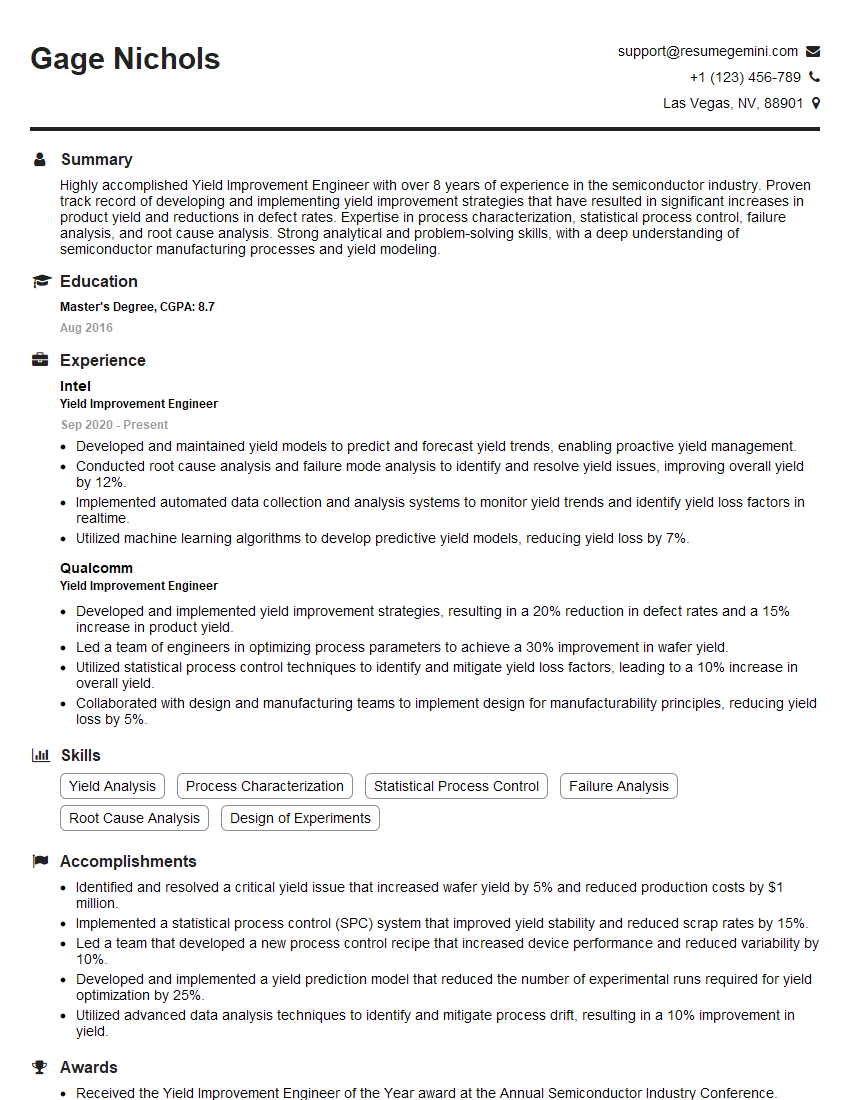
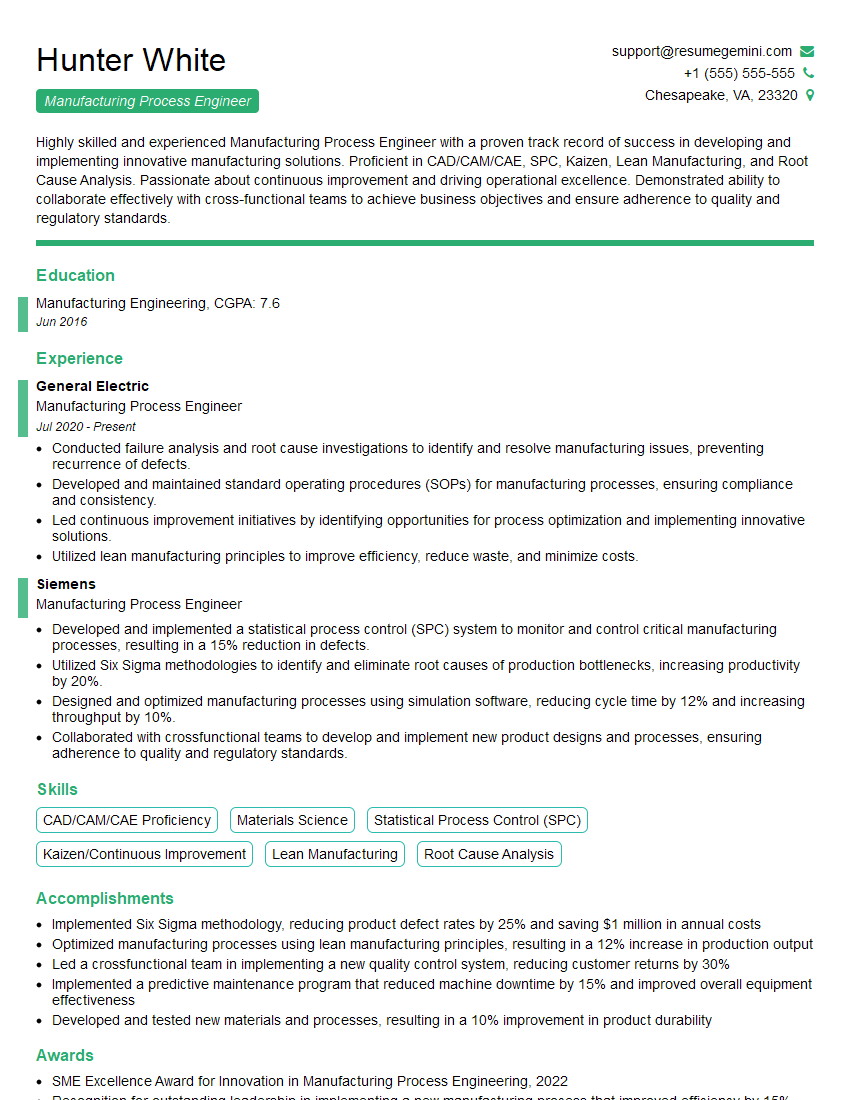
Mastering Die Performance Monitoring opens doors to exciting career opportunities in advanced manufacturing and process engineering. A strong understanding of these concepts is highly valued by employers and showcases your ability to contribute to efficient and reliable production processes. To maximize your job prospects, create an ATS-friendly resume that highlights your relevant skills and experience. We recommend using ResumeGemini, a trusted resource for building professional resumes, to ensure your application stands out. Examples of resumes tailored to Die Performance Monitoring are available to help guide you.
Explore more articles
Users Rating of Our Blogs
Share Your Experience
We value your feedback! Please rate our content and share your thoughts (optional).
What Readers Say About Our Blog
Very informative content, great job.
good