Feeling uncertain about what to expect in your upcoming interview? We’ve got you covered! This blog highlights the most important Elevator Inspection Procedures interview questions and provides actionable advice to help you stand out as the ideal candidate. Let’s pave the way for your success.
Questions Asked in Elevator Inspection Procedures Interview
Q 1. What are the key components of a comprehensive elevator inspection?
A comprehensive elevator inspection goes far beyond a simple visual check. It’s a systematic process that ensures the safe and reliable operation of the lift. Key components include:
- Mechanical Inspection: This involves a thorough examination of all moving parts, including the hoisting machinery (motor, sheaves, cables), counterweights, brakes, and safety devices. We look for wear and tear, misalignment, and any signs of damage.
- Electrical Inspection: This covers the power supply, control systems, lighting, and safety circuits. We test the functionality of safety interlocks, limit switches, and emergency stop buttons. We also check for proper grounding and insulation.
- Safety Device Inspection: This is critical and focuses on the elevator’s safety mechanisms, including overspeed governors, safety gears, buffers, and emergency brakes. We ensure they are functioning correctly and meet safety standards.
- Door and Gate Inspection: We check the proper operation of elevator doors and gates, ensuring they open and close smoothly and safely, with all interlocks functioning correctly, preventing accidental opening when the car is in motion.
- Cab Inspection: This includes inspecting the interior of the elevator car for damage, proper lighting, emergency communication systems, and the condition of interior components.
- Pit and Machine Room Inspection: The inspection extends to the pit (the bottom of the elevator shaft) and the machine room (housing the elevator’s machinery), checking for any obstructions, leaks, proper ventilation, and overall cleanliness.
Think of it like a complete health check for the elevator – identifying potential problems before they become serious safety hazards.
Q 2. Describe the different types of elevator systems and their inspection requirements.
Elevator systems vary significantly depending on their type and application. Here are some common types and their inspection needs:
- Hydraulic Elevators: These use a hydraulic cylinder and piston to lift the elevator car. Inspections focus on the hydraulic fluid level, cylinder condition, and the integrity of the hydraulic system. Leaks and corrosion are particularly important areas to investigate.
- Traction Elevators: These use steel ropes and a motor to move the car. Inspections are geared towards the ropes (looking for wear, fraying, and proper tensioning), sheaves (checking for grooves and wear), and the motor and brake systems. Regular lubrication and maintenance are crucial for traction elevators.
- Machine-Room-Less (MRL) Elevators: These are designed to minimize space requirements, with the machinery often located on top of the hoistway. The inspection is similar to traction elevators, but with a focus on the compact design and the accessibility for maintenance and repairs.
- Gearless Traction Elevators: These use a gearless motor, resulting in quieter and smoother operation. Inspection focuses on the motor, control system, and the absence of gear wear.
The specific inspection requirements for each type are dictated by safety codes and regulations, but the overarching goal remains the same: to identify any potential failure points before they result in an accident. For example, a frayed cable in a traction elevator would be a critical finding, requiring immediate action.
Q 3. Explain the process for documenting elevator inspection findings.
Accurate documentation is paramount in elevator inspections. The process generally involves:
- Inspection Checklist: Using a standardized checklist ensures all critical components are inspected. This checklist should be specific to the elevator type and include all relevant safety checks.
- Detailed Reporting: Any findings, both positive and negative, should be documented in detail. This includes the location of the defect, a description of the problem, photographs or sketches, and the severity rating (e.g., minor, major, critical).
- Digital Reporting: Modern inspection practices increasingly use digital reporting systems, allowing for efficient data storage, sharing, and tracking. This often includes software that generates reports automatically based on the checklist and findings.
- Signatures and Dates: The report must be signed and dated by both the inspector and a representative of the building owner or manager. This provides legal verification of the inspection process.
- Recommendations: The report must include specific recommendations for repairs or maintenance based on the findings. These should be prioritized according to their severity and potential safety implications.
Imagine a doctor’s visit; a thorough medical report includes all observations, diagnoses, and treatment plans. Similarly, a detailed elevator inspection report provides a clear record of the lift’s condition and required actions.
Q 4. How do you identify and report safety hazards during an elevator inspection?
Identifying and reporting safety hazards is the core purpose of an elevator inspection. The process involves:
- Visual Inspection: Begin with a visual inspection, looking for obvious signs of damage, wear, or misalignment.
- Functional Testing: Test all safety devices and emergency features (e.g., emergency stop buttons, alarms, emergency lighting) to confirm their functionality.
- Measurement and Data Collection: Use measuring instruments where necessary (e.g., to check rope tension, cable diameter, or hydraulic fluid level).
- Severity Assessment: Classify each identified hazard based on its potential impact (e.g., minor, major, critical). A critical hazard might be a malfunctioning brake system, while a minor one might be minor cosmetic damage.
- Immediate Action for Critical Hazards: Critical hazards require immediate action. The elevator must be taken out of service until the problem is rectified.
- Clear and Concise Reporting: All identified hazards must be clearly and concisely reported with recommendations for corrective action.
For example, if we find significant corrosion on a hydraulic cylinder, we would immediately label it as a critical hazard, shut down the elevator, and detail the finding in our report with a recommendation for immediate repair or replacement. Safety is paramount, and critical issues must be addressed promptly.
Q 5. What are the common causes of elevator malfunctions and how can they be prevented?
Elevator malfunctions stem from various causes, many of which are preventable through regular maintenance:
- Wear and Tear: Mechanical parts wear out over time, leading to malfunctions. Regular lubrication, replacement of worn components, and adherence to scheduled maintenance can mitigate this.
- Electrical Faults: Electrical problems such as short circuits, faulty wiring, or failing control components can cause malfunctions. Regular electrical inspections and testing can prevent this.
- Hydraulic System Issues: In hydraulic elevators, leaks, low fluid levels, or contamination can cause malfunctions. Regular fluid level checks, leak detection, and filtration are crucial.
- Improper Maintenance: Inadequate or delayed maintenance is a major contributor to malfunctions. A proactive maintenance schedule helps catch problems early before they become major failures.
- Overloading: Exceeding the elevator’s weight capacity can lead to mechanical stress and failure. Proper signage and enforcement are essential to prevent overloading.
Preventive maintenance is key. Think of it like regular car servicing: preventative measures save you from costly, potentially dangerous breakdowns.
Q 6. What safety regulations and codes must be followed during elevator inspections?
Elevator inspections must strictly adhere to relevant safety regulations and codes. These vary by jurisdiction but generally include:
- ASME A17.1/CSA B44: These are widely recognized safety standards for elevators and escalators, outlining detailed requirements for design, construction, installation, inspection, testing, and maintenance.
- Local Building Codes: Local building codes often incorporate aspects of ASME A17.1/CSA B44 and may include additional requirements specific to the region.
- OSHA Regulations (in the US): Occupational Safety and Health Administration regulations address workplace safety, including the safe operation and maintenance of elevators.
- Insurance Requirements: Building owners may have specific insurance requirements regarding elevator maintenance and inspections.
Compliance with these codes is not merely a matter of avoiding fines; it is a critical responsibility to ensure the safety of building occupants. Non-compliance can lead to serious accidents and legal repercussions.
Q 7. Describe your experience with different types of elevator testing procedures.
My experience encompasses a wide range of elevator testing procedures, including:
- Proof Testing: This involves subjecting the elevator to a load significantly exceeding its rated capacity to verify the strength of the hoisting system and safety devices. This is a critical test conducted after installation and major repairs.
- Functional Testing: This involves testing the elevator’s operational functions, including door operation, safety interlocks, emergency stops, and the control system. We systematically verify that every aspect of the elevator is working as intended.
- Non-Destructive Testing (NDT): This may include techniques such as ultrasonic testing or magnetic particle inspection to detect internal flaws in elevator components without causing damage. NDT techniques are particularly useful in evaluating the condition of hoisting ropes and other critical mechanical parts.
- Periodic Inspections and Load Testing: These involve regular testing to check the overall performance and safety of the elevator over time and verifying weight capacity. This ensures continued adherence to safety standards and early detection of problems.
Each testing procedure is meticulously documented to provide a detailed record of the elevator’s performance and safety compliance. My expertise ensures these tests are carried out safely and in accordance with all relevant standards, protecting building occupants and personnel.
Q 8. How do you handle emergency situations during an elevator inspection?
Emergency situations during an elevator inspection are handled with a combination of immediate action and thorough documentation. My priority is always the safety of myself and anyone else in the vicinity.
First, I would immediately secure the elevator to prevent further movement or malfunctions, if possible. This might involve engaging emergency brakes or isolating the power supply, always following manufacturer-specific safety procedures. Then, I’d assess the situation to identify the nature of the emergency: is it a trapped occupant, a fire hazard, or a mechanical failure?
Following this assessment, I’d take appropriate action such as contacting emergency services (fire department, building management), notifying the building’s occupants, and attempting to communicate with any trapped individuals to reassure them. After the emergency is resolved, a detailed report outlining the incident, actions taken, and any potential contributing factors will be filed. This report serves as a critical component in improving future safety protocols and preventing similar occurrences.
For example, during an inspection of an older hydraulic elevator, I noticed a significant leak in the hydraulic fluid. I immediately secured the elevator, contacted building management, and the fire department as a precaution due to the potential fire hazard. The leak was eventually traced to a failing seal and repaired by a qualified technician.
Q 9. What is your experience with elevator maintenance and repair procedures?
My experience in elevator maintenance and repair procedures spans over ten years, encompassing a wide range of elevator types and manufacturers. This includes extensive hands-on experience with both traction and hydraulic elevator systems, covering tasks such as routine lubrication, component replacement, troubleshooting electrical and mechanical issues, and conducting functional tests.
I’m proficient in diagnosing various malfunctions, from minor issues like door misalignments to complex problems involving control systems and safety mechanisms. I’m also experienced in interpreting electrical schematics, using diagnostic tools, and understanding the safety interlocks critical to elevator operation. I’ve worked on projects involving major overhauls, modernization upgrades, and emergency repairs. My experience allows me to not only identify problems but to also effectively develop and implement solutions adhering to all safety regulations and best practices.
For instance, I once troubleshooted a malfunctioning elevator where the car would only move erratically. Through a systematic approach involving checking the motor, control system, and safety mechanisms, I isolated the problem to a faulty encoder. Replacing the encoder immediately restored the elevator’s smooth operation.
Q 10. How familiar are you with the use of inspection checklists and reporting software?
I am highly proficient in using inspection checklists and reporting software. My experience includes utilizing both digital and paper-based checklists, ensuring thorough and consistent inspections. I am familiar with various industry-standard software for generating and managing inspection reports, including features for tracking maintenance schedules, documenting deficiencies, and generating comprehensive reports for clients.
Using standardized checklists ensures that all critical components are inspected consistently, reducing the risk of overlooking potential problems. These checklists often include specific criteria for each component, allowing for objective assessment and easy comparison between inspections. The reporting software I utilize simplifies the documentation process, and enables efficient data analysis to identify trends, patterns, and areas requiring attention. This helps with predictive maintenance and proactive problem-solving.
For example, I regularly use a software that integrates with our inspection checklists. This allows me to input findings directly into the system, generate detailed reports with photos and videos, and automatically schedule follow-up inspections. The system’s reporting functionality also provides valuable data analysis to better predict when components might require attention, optimizing maintenance efforts.
Q 11. Describe your experience with different elevator manufacturers’ equipment.
My experience encompasses a wide variety of elevator manufacturers’ equipment, including Otis, Schindler, ThyssenKrupp, and Kone, among others. This diverse exposure has provided me with a comprehensive understanding of the various technologies, safety mechanisms, and maintenance procedures employed by different manufacturers. I’m adept at recognizing manufacturer-specific components and troubleshooting issues related to their unique systems.
Understanding the nuances of each manufacturer’s design and safety protocols is vital for effective inspection and maintenance. For example, the control systems and safety interlocks vary considerably across manufacturers, requiring specialized knowledge to diagnose and address specific problems. My familiarity with various manufacturer’s documentation, including technical manuals and schematics, is instrumental in ensuring inspections are thorough and meet their specific requirements.
During a recent inspection, I encountered an unusual malfunction in a Schindler elevator. My familiarity with Schindler’s control system allowed me to quickly identify the issue as a faulty circuit board, a problem often encountered in that specific model. This knowledge saved valuable time and resources in resolving the problem.
Q 12. What is your approach to identifying and resolving discrepancies in elevator documentation?
Discrepancies in elevator documentation are addressed with a systematic approach combining careful examination, cross-referencing, and effective communication. This involves meticulously comparing the existing documentation (manuals, maintenance logs, inspection reports) with the physical condition of the elevator. Any inconsistencies are meticulously noted and investigated.
The investigation process might involve contacting the building management for clarification or reviewing past maintenance records for explanations. For example, discrepancies in maintenance logs could indicate an incomplete or inconsistent maintenance program. If discrepancies involve safety-critical components, immediate attention is required, potentially requiring a temporary suspension of elevator operation until the issues are resolved.
If a discrepancy cannot be easily resolved, I document the findings with photos and detailed descriptions. A written report is created detailing the discrepancy and any recommended corrective actions. This ensures complete transparency and facilitates informed decision-making by stakeholders. For example, a missing entry in the maintenance log for a safety component would be documented, highlighting the risk and outlining necessary steps to establish accurate records.
Q 13. How do you prioritize inspection tasks based on risk assessment?
Prioritizing inspection tasks is crucial for efficient and effective maintenance. I employ a risk-based approach, prioritizing tasks that pose the greatest potential risk to safety and operational reliability. This assessment considers factors such as the age of the elevator, its frequency of use, the condition of critical safety components, and the manufacturer’s recommendations.
Safety-critical components, such as emergency brakes, safety gears, and door locking mechanisms, always take precedence. Components with a history of problems or those exhibiting signs of wear and tear are also prioritized. I use a risk matrix to categorize tasks based on the likelihood and severity of potential failure, enabling me to focus resources on the most critical areas.
For example, an elevator in a high-rise building carrying a large number of people daily would be subject to more frequent and thorough inspections of safety-critical components than an elevator in a low-rise building used infrequently. Similarly, if an elevator shows signs of frequent door malfunctions, that specific area would be a priority during subsequent inspections.
Q 14. Describe your experience with non-destructive testing methods for elevators.
My experience with non-destructive testing (NDT) methods for elevators is focused on utilizing techniques that allow for the assessment of component integrity without causing damage. This is particularly important for critical components like cables, ropes, and structural elements. Common methods used include visual inspection, magnetic particle testing, dye penetrant testing, and ultrasonic testing.
Visual inspection forms the basis of many NDT assessments, allowing me to identify visible signs of wear, corrosion, or damage. More advanced techniques like ultrasonic testing utilize sound waves to detect internal flaws in metal components, such as cracks or voids, while magnetic particle testing and dye penetrant testing are useful for detecting surface-breaking flaws in ferrous and non-ferrous materials, respectively.
For instance, ultrasonic testing is crucial for evaluating the condition of elevator cables and ropes. Regular use of this technique can help detect internal cable damage before it becomes a significant safety hazard. Similarly, dye penetrant testing can be helpful in identifying cracks in elevator doors or other critical components. These NDT methods ensure that safety-critical components are thoroughly evaluated and that potential problems are identified and addressed before they lead to serious incidents.
Q 15. What safety precautions do you take when inspecting high-rise elevators?
Safety is paramount when inspecting high-rise elevators. Before even entering the hoistway, I always ensure I have the proper personal protective equipment (PPE), including a hard hat, safety glasses, and sturdy work boots. I also verify the elevator is shut down and locked out/tagged out (LOTO) to prevent accidental operation. This prevents any unexpected movement during the inspection.
High-rise inspections often involve working at heights. I utilize fall protection harnesses and safety lanyards when working in the hoistway or on the roof, adhering strictly to all building safety protocols. I carefully inspect all access points, ensuring they are secure and properly guarded. Regular communication with the building’s staff is essential, informing them of my presence and location, particularly in case of any emergencies.
For instance, during a recent inspection of a 40-story building, I employed a fall arrest system attached to a secure anchor point on the roof, while carefully inspecting the overhead sheaves and ropes. This meticulous approach ensures both my safety and the integrity of the inspection.
Career Expert Tips:
- Ace those interviews! Prepare effectively by reviewing the Top 50 Most Common Interview Questions on ResumeGemini.
- Navigate your job search with confidence! Explore a wide range of Career Tips on ResumeGemini. Learn about common challenges and recommendations to overcome them.
- Craft the perfect resume! Master the Art of Resume Writing with ResumeGemini’s guide. Showcase your unique qualifications and achievements effectively.
- Don’t miss out on holiday savings! Build your dream resume with ResumeGemini’s ATS optimized templates.
Q 16. How do you ensure compliance with local and national elevator safety codes?
Compliance with safety codes is non-negotiable. I meticulously review all applicable local and national codes, like ASME A17.1/CSA B44, before and during each inspection. These codes provide the standards for elevator design, installation, maintenance, and testing. I cross-reference my findings against the relevant sections of the code, ensuring all components meet the required specifications.
My inspection checklist directly mirrors the requirements of these codes, covering aspects like emergency brakes, safety devices, electrical systems, and door mechanisms. Any deviations from code are clearly documented in my report, along with recommendations for corrective actions. I also utilize standardized forms and reporting systems that are compliant with industry best practices and regulatory requirements. For example, a missing or damaged safety component would be immediately flagged as a non-compliance issue, demanding immediate attention.
Regularly staying updated on changes in these codes via industry publications and professional development courses is also a key aspect of my job. This ensures that my inspections remain consistently accurate and compliant.
Q 17. Explain your experience with hydraulic and traction elevator systems.
I have extensive experience with both hydraulic and traction elevator systems. Hydraulic elevators use a piston and fluid to move the cab, while traction elevators use a counterweight and ropes. They each have unique characteristics and require different inspection techniques.
With hydraulic systems, I focus on checking the hydraulic fluid level, the condition of the piston and cylinder seals, the functioning of the hydraulic pump, and the pressure relief valves. Potential leaks are a critical concern.
In traction elevators, my inspection includes checking the ropes and cables for wear and tear, examining the counterweight system, verifying the proper functioning of the governor and safety brakes, and assessing the condition of the machine room equipment including the motor and gear system. I also inspect the electrical components like contactors, relays and motor starters to ensure their proper functioning.
The approach might vary, but the thoroughness remains consistent across all systems. I am well versed in the intricacies of both, allowing for effective and comprehensive evaluations. For example, I have resolved several issues stemming from worn hydraulic seals in a high-rise building by noting a pressure fluctuation during the inspection, ultimately preventing costly downtime and possible safety hazards.
Q 18. How do you communicate inspection findings to building owners and managers?
Clear and concise communication is crucial. My inspection reports are comprehensive and easy to understand, avoiding technical jargon wherever possible. They include detailed descriptions of any issues identified, supported by photographic or video evidence. The reports provide clear recommendations for corrective actions, prioritizing urgency based on the severity of the findings.
I typically present the findings directly to the building owners or managers, providing a verbal summary before delivering the formal written report. This allows for immediate clarification of any points of concern and facilitates a collaborative approach to remediation.
For instance, a recent report highlighted a worn brake system in a low-rise building. I met with the building manager, explained the issue’s severity, its potential safety implications, and proposed a plan for immediate repair. This open dialogue enabled prompt action and prevented future risks. My focus is on fostering a relationship based on trust and shared responsibility for ensuring elevator safety.
Q 19. What is your process for verifying elevator certification and licensing?
Verifying elevator certification and licensing is a vital step to ensure legal compliance and safe operation. I meticulously review the elevator’s original certification documents, checking for validity and compliance with the relevant regulations. This often involves examining the manufacturer’s data plate, inspection reports, and any subsequent modifications or upgrades. I also verify the current licensing status with the local authorities.
I cross-reference the information provided in the documents with my own inspection findings, identifying any discrepancies or outdated information. Any inconsistencies or missing documentation are flagged as a non-compliance issue requiring further investigation and remediation. I might need to contact the licensing agency for clarification or confirmation of details. This ensures the elevator is operating legally and safely according to applicable regulations.
For example, I have encountered situations where outdated certifications have been revealed leading to required updates before the elevator could be deemed safe for continued operation. Such instances highlight the critical role of this verification process in maintaining elevator safety.
Q 20. How do you manage your time effectively during multiple elevator inspections?
Effective time management during multiple inspections hinges on meticulous planning and efficient execution. Before embarking on a series of inspections, I prioritize my schedule based on location, the complexity of each elevator system, and any time-sensitive issues. I allocate a realistic timeframe for each inspection, factoring in potential delays or unforeseen circumstances.
I utilize digital tools and checklists to streamline the process, minimizing unnecessary paperwork and maximizing efficiency. This allows me to systematically cover all essential inspection points without compromising on thoroughness.
On-site, I focus on systematic and targeted inspections, addressing potential problems efficiently. For instance, I might group geographically close buildings together to minimize travel time. This approach streamlines my workflow, allowing me to manage multiple inspections while ensuring a high standard of quality in each one. Prioritizing and focusing on the critical aspects and using the latest technology aids in efficient time management.
Q 21. Describe your experience with troubleshooting elevator electrical systems.
Troubleshooting elevator electrical systems requires a blend of theoretical knowledge and practical skills. My experience encompasses diagnosing and resolving various electrical issues, from simple wiring faults to complex control system malfunctions.
I use a systematic approach, starting with a visual inspection of all electrical components, checking for any visible damage, loose connections, or signs of overheating. I then use specialized testing equipment like multimeters and circuit testers to identify malfunctions within the electrical circuits.
My understanding of electrical schematics and control logic is crucial in tracing the source of faults. I am proficient in interpreting fault codes generated by the elevator’s control system and using this information to pinpoint the problem area. For instance, I once successfully resolved a recurrent power failure in a high-rise elevator by identifying a faulty contactor using a multimeter and replacing it. This prevented service disruptions and ensured the safe operation of the elevator. Experience in reading schematics, coupled with the ability to interpret fault codes effectively is essential in these scenarios.
Q 22. How do you ensure the accuracy and completeness of your inspection reports?
Ensuring accuracy and completeness in my inspection reports is paramount. I follow a rigorous, multi-step process. First, I utilize a detailed checklist, customized for each elevator type and manufacturer, ensuring I cover all critical components. This checklist is based on industry best practices and relevant codes, like ASME A17.1. Second, I meticulously document every finding, using clear, concise language and supporting photographs or videos when necessary. I avoid ambiguity, employing precise terminology to describe any deficiencies or needed repairs. Third, I perform a thorough review of the completed report before submission, cross-referencing my observations with my checklists and manufacturer’s documentation. Think of it like a pilot performing a pre-flight check – every detail must be accounted for. Finally, I encourage client feedback to ensure clarity and address any concerns they might have. This multi-layered approach minimizes errors and maximizes the report’s utility for preventative maintenance and safety.
Q 23. What are the latest advancements in elevator safety technology?
The elevator industry is constantly evolving, and safety technology is at the forefront. Some of the most significant advancements include:
- Advanced Monitoring Systems: Real-time monitoring systems utilizing IoT sensors provide continuous data on elevator performance and identify potential issues before they escalate into safety hazards. This proactive approach allows for timely maintenance and reduces downtime.
- Predictive Maintenance: Machine learning algorithms analyze data from these monitoring systems to predict potential failures and schedule maintenance proactively, rather than reactively. This is analogous to predicting car engine problems before they actually occur.
- Improved Emergency Communications: Enhanced emergency communication systems provide clearer, faster two-way communication between trapped passengers and emergency responders, significantly improving response time and passenger safety.
- Destination Dispatch Systems: These systems optimize elevator traffic flow, reducing wait times and improving overall efficiency, indirectly contributing to safety by decreasing passenger frustration.
These technological leaps have significantly improved elevator safety and efficiency, reducing risks and enhancing the passenger experience.
Q 24. Explain your knowledge of elevator control systems and their inspection requirements.
Elevator control systems are the brain of the elevator, managing all aspects of its operation. My inspections meticulously examine various aspects of these systems. I check the safety circuits, ensuring they function correctly and comply with safety codes. I test the emergency stop buttons, limit switches, and door interlocks – all critical for passenger safety. The programmable logic controllers (PLCs) are tested for proper functionality. Inspecting the wiring is also crucial; damaged or improperly installed wiring can lead to dangerous malfunctions. During an inspection, I would thoroughly examine the control panel for any signs of damage or tampering, and I’d validate the functionality of safety devices. I would verify the proper operation of the door safety mechanisms to prevent entrapment. A thorough understanding of electrical schematics is essential to properly conduct these inspections.
Q 25. How do you stay up-to-date with changes in elevator codes and regulations?
Staying current with elevator codes and regulations is a continuous process. I actively participate in industry conferences and workshops to learn about the latest updates. I subscribe to relevant industry publications and online resources that provide timely updates on code changes. My professional organization memberships also provide me with access to the latest information and training. Furthermore, I regularly review and update my inspection checklists to reflect these changes, ensuring my work consistently meets or exceeds current legal and safety standards. Think of it as continually updating a software application – regular updates are crucial for optimal functionality.
Q 26. Describe your experience with elevator modernization projects and their inspection needs.
I have extensive experience with elevator modernization projects. These projects often involve significant upgrades to the control system, safety features, and overall efficiency. My role in these projects usually begins with a pre-modernization inspection to assess the existing system’s condition and identify areas for improvement. Then, throughout the modernization, I provide ongoing inspections to ensure the work meets safety and code requirements. Post-modernization, a final inspection verifies that everything is functioning correctly. For example, a recent project involved replacing an outdated hydraulic system with a more efficient and reliable traction system, and my inspections guaranteed the safe and compliant installation of the new system. Modernization projects require a deep understanding of both the old and new technologies, and a focus on a seamless transition without compromising safety.
Q 27. How do you maintain a professional and courteous demeanor during client interactions?
Maintaining a professional and courteous demeanor is crucial in my interactions with clients. I believe in clear, respectful communication. Before inspections, I clearly outline the process and what to expect. During the inspection, I explain my findings in a straightforward manner, avoiding technical jargon unless the client is familiar with it. After the inspection, I provide a timely and detailed report, and I’m always available to answer their questions and address their concerns. I treat every client interaction as an opportunity to build a positive professional relationship. Building trust and understanding is just as important as technical proficiency in this field.
Q 28. What is your experience with working at heights and using safety harnesses?
Working at heights is an inherent part of elevator inspections, and safety is my top priority. I am experienced in using safety harnesses, fall arrest systems, and other personal protective equipment (PPE) according to OSHA and industry best practices. I always inspect my equipment before each use to ensure it’s in good working order. I carefully assess the work environment to identify potential hazards before starting work at heights. I always follow the established safety procedures and never compromise on safety for the sake of expediency. Safety training is something I consistently update to reflect the latest industry standards and I always make sure my employer’s safety policies and procedures are strictly followed.
Key Topics to Learn for Elevator Inspection Procedures Interview
- Safety Regulations and Compliance: Understanding and applying relevant safety codes and regulations (e.g., ASME A17.1) during inspections. This includes recognizing violations and documenting findings accurately.
- Mechanical Components Inspection: Thorough examination of elevator machinery, including hoisting machines, brakes, governors, and safety devices. Practical application involves identifying wear and tear, potential malfunctions, and necessary repairs.
- Electrical Systems Inspection: Evaluating the electrical components, wiring, and control systems of the elevator. Practical application involves using appropriate testing equipment and interpreting readings to identify potential hazards.
- Operational Testing and Procedures: Conducting various operational tests to assess the elevator’s performance and identify malfunctions. This includes understanding and executing different testing protocols and interpreting the results.
- Documentation and Reporting: Accurate and detailed recording of inspection findings, including photographic evidence, using standardized reporting formats. This involves clear communication of potential risks and recommendations for repairs or maintenance.
- Troubleshooting and Problem-Solving: Identifying the root cause of malfunctions based on inspection findings and applying knowledge of elevator systems to suggest effective solutions. This involves critical thinking and the ability to analyze complex systems.
- Modernization and Upgrades: Familiarity with modern elevator technology and upgrades, including accessibility features and energy-efficient systems. This includes understanding the implications of upgrades on inspection procedures.
Next Steps
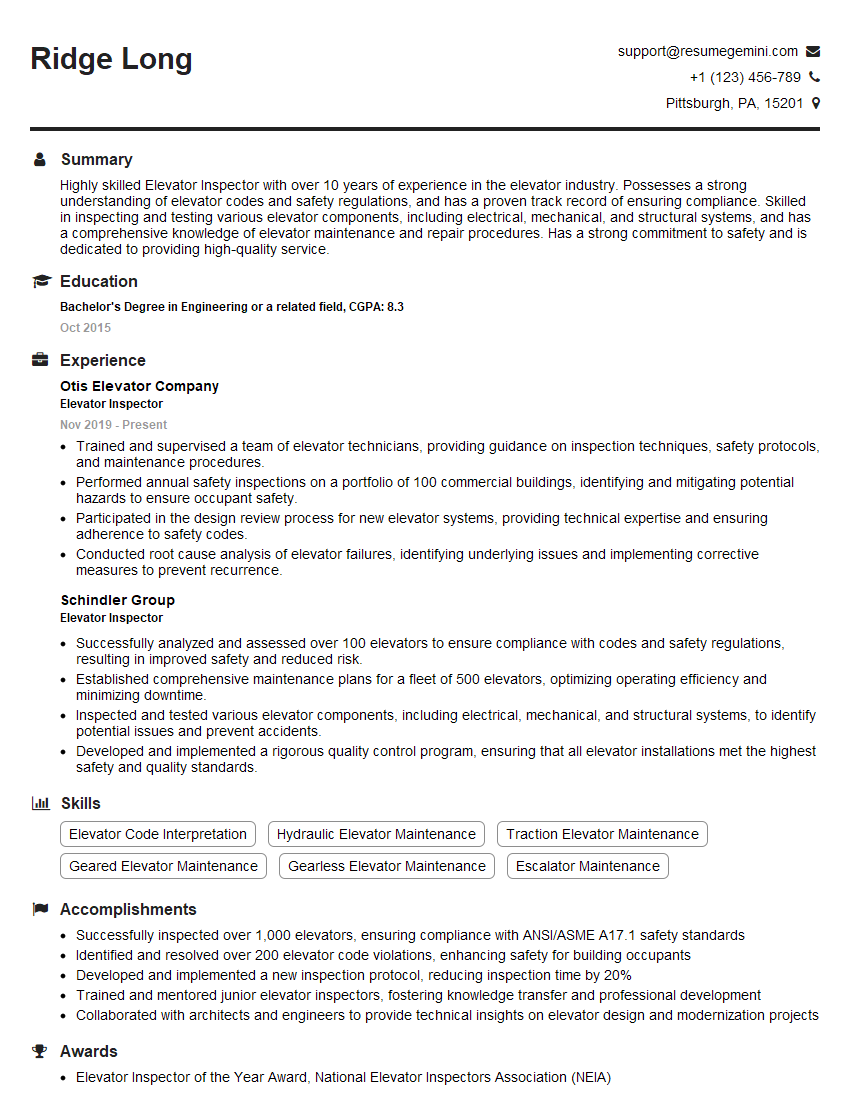
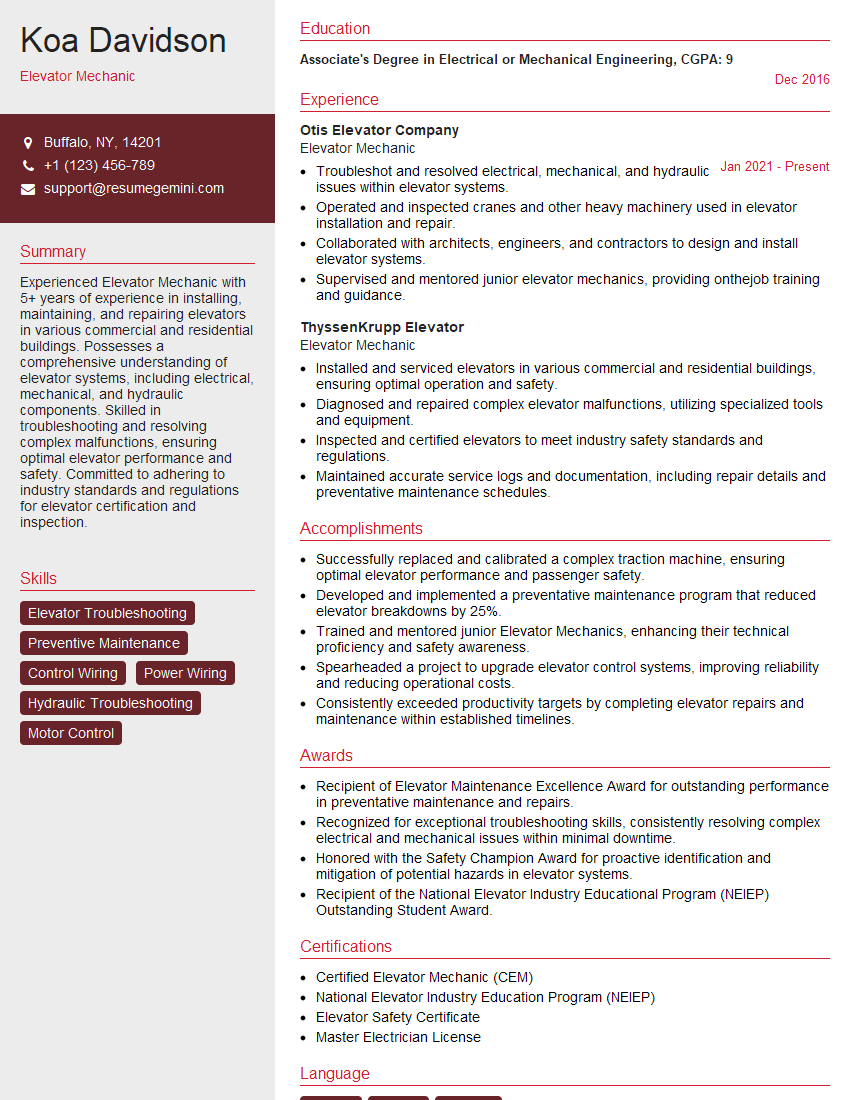
Mastering Elevator Inspection Procedures opens doors to rewarding careers with excellent growth potential within the building maintenance and safety sectors. A strong resume is crucial for showcasing your expertise and securing interviews. Creating an ATS-friendly resume is key to getting your application noticed by recruiters. ResumeGemini can help you craft a compelling and effective resume that highlights your skills and experience. We provide examples of resumes tailored to Elevator Inspection Procedures to guide you in this process.

Explore more articles
Users Rating of Our Blogs
Share Your Experience
We value your feedback! Please rate our content and share your thoughts (optional).
What Readers Say About Our Blog
Very informative content, great job.
good