The right preparation can turn an interview into an opportunity to showcase your expertise. This guide to Emotion & Storytelling interview questions is your ultimate resource, providing key insights and tips to help you ace your responses and stand out as a top candidate.
Questions Asked in Emotion & Storytelling Interview
Q 1. Explain the difference between pathos, ethos, and logos in storytelling.
Pathos, ethos, and logos are three persuasive appeals identified by Aristotle. They represent different ways to connect with an audience and influence their beliefs or actions. Think of them as three pillars supporting a strong narrative.
- Pathos appeals to the audience’s emotions. It uses imagery, storytelling, and evocative language to create an emotional response that resonates with the audience’s values, fears, hopes, and desires. For example, a charity advertisement showing a starving child would appeal to pathos to motivate viewers to donate.
- Ethos establishes credibility and trustworthiness. It involves demonstrating expertise, authority, and good moral character. A doctor recommending a particular medication would be leveraging ethos because of their professional expertise.
- Logos uses logic and reason to persuade the audience. It relies on facts, data, statistics, and logical arguments to support a claim. A scientific study showing the benefits of a new drug would use logos to convince people of its efficacy.
In effective storytelling, these three appeals work together. A compelling narrative will use emotional resonance (pathos) to connect with the audience, establish the credibility of the narrator or characters (ethos), and support its claims with evidence and logic (logos). For instance, a story about climate change might use impactful imagery of natural disasters (pathos), cite scientific reports (logos), and feature a credible climate scientist (ethos) to build a powerful and persuasive argument.
Q 2. How do you identify the target audience’s emotional needs in a specific project?
Identifying a target audience’s emotional needs requires a multi-faceted approach. It’s not simply about guessing; it requires research and understanding.
- Market Research: Surveys, focus groups, and interviews can provide direct insights into what motivates and concerns the target audience. Analyzing existing data on demographics, psychographics, and online behavior provides valuable information.
- Audience Persona Development: Creating detailed profiles of your ideal audience members helps to personalize the understanding of their emotional landscape. Consider their age, background, values, aspirations, and fears. What are their daily struggles? What kind of stories resonate with them?
- Competitive Analysis: Examining successful campaigns targeting a similar audience reveals what kinds of emotional appeals have worked in the past. What emotional themes are already resonating within their community?
- Empathy Mapping: This technique involves visually representing the target audience’s thoughts, feelings, actions, and pain points. It facilitates a deeper understanding of their emotional needs and desires.
For example, in a project focused on selling sustainable clothing, we might find through research that the primary emotional need is a sense of responsibility and a desire to make a positive impact. We would then craft our story to highlight the ethical sourcing and environmental benefits of the clothing line, appealing to these underlying values.
Q 3. Describe a time you used storytelling to influence a decision.
During a project to secure funding for a new community center, I used storytelling to sway the decision of a skeptical investor. Instead of presenting a dry financial proposal, I shared the story of a young girl who benefitted immensely from similar programs in the past. I described her journey, highlighting the transformative impact of the center on her life and her community. This personal story, infused with emotion (pathos), allowed the investor to connect with the project’s human impact beyond the numbers (logos). By showing how the center improved her chances and her family’s well-being, I successfully appealed to the investor’s sense of social responsibility and made the funding decision an easy one for them.
Q 4. How would you measure the emotional impact of a narrative?
Measuring the emotional impact of a narrative can be challenging, but various techniques exist. It’s not about a single number, but rather a multi-pronged approach.
- Qualitative Feedback: Gathering feedback through interviews, focus groups, or open-ended surveys allows for rich insights into how the audience felt while experiencing the narrative. What resonated with them? What did they think about the characters, plot and ending?
- Quantitative Data: Metrics such as engagement rates (views, shares, likes, comments), sentiment analysis of social media posts, and surveys with scaled questions (e.g., Likert scales measuring emotions on a scale of 1 to 5) can provide numerical data on emotional responses.
- Physiological Measures: Advanced techniques like eye-tracking, galvanic skin response (GSR), and heart rate variability can measure physiological responses to emotional stimuli within the narrative. While these methods require specialized equipment, they offer a deeper look into subconscious emotional reactions.
- A/B Testing: Comparing different versions of the narrative allows for the analysis of which version elicits a stronger emotional response based on quantitative metrics and qualitative feedback.
The combination of these approaches provides a more complete picture of the emotional impact. It’s crucial to carefully select the methods appropriate to your project and resources.
Q 5. How do you create empathy in your storytelling?
Creating empathy in storytelling hinges on making the audience feel what the characters feel. It’s about building a bridge of understanding between the audience and the narrative’s subjects.
- Show, Don’t Tell: Instead of simply stating a character’s emotions, use vivid descriptions and actions to show them. Instead of writing ‘John was sad,’ describe John’s slumped posture, his tear-filled eyes, and the tremor in his voice.
- Vulnerable Characters: Presenting characters with flaws and imperfections makes them relatable. Audiences connect more easily with characters who struggle and overcome challenges, just as they do in their own lives.
- Internal Monologue: Sharing a character’s thoughts and feelings allows the audience to inhabit their perspective and understand their motivations.
- Sensory Details: Engaging multiple senses through descriptive language immerses the audience in the character’s experience, making them feel more deeply involved.
- Relatable Situations: Grounding the narrative in situations that the audience can understand and relate to strengthens the emotional connection.
For example, a story about a struggling single mother could use vivid descriptions of her daily challenges to elicit empathy from the audience. By showing her efforts to provide for her children despite her struggles, the audience can connect with her feelings and understand her situation better. This creates a powerful emotional connection, promoting empathy.
Q 6. What are the key components of a compelling narrative arc?
A compelling narrative arc follows a structured path that keeps the audience engaged. While variations exist, a typical arc includes:
- Exposition: Introduces the setting, characters, and initial situation. This sets the stage for the story to unfold.
- Inciting Incident: An event that disrupts the initial equilibrium and sets the story in motion. This is the catalyst for the main conflict.
- Rising Action: A series of events that build suspense and escalate the conflict. Obstacles and challenges arise, raising the stakes for the protagonist.
- Climax: The highest point of tension in the story, where the conflict reaches its peak. It’s the moment of truth or the turning point.
- Falling Action: The events that follow the climax, showing the consequences of the protagonist’s actions and the resolution of the conflict.
- Resolution/Denouement: The conclusion of the story, where loose ends are tied up, and a new equilibrium is established. The story’s impact is revealed.
Think of it like a rollercoaster ride: the exposition is the slow climb, the inciting incident is the drop, the rising action is the twists and turns, the climax is the peak, the falling action is the descent, and the resolution is the gentle stop at the end. Each part contributes to the overall experience and emotional impact.
Q 7. How do you adapt your storytelling style for different mediums (e.g., video, written content)?
Adapting storytelling style for different mediums requires understanding the unique characteristics of each platform. The core message might remain consistent, but the delivery method will change significantly.
- Video: Leverages visuals, audio, and editing techniques to create a dynamic and engaging experience. Show, don’t tell is paramount. Conciseness is key; shorter attention spans demand a fast pace and impactful visuals.
- Written Content: Relies on descriptive language, carefully crafted sentences, and a clear narrative structure. Allows for more detail and nuance than video but needs to hold the reader’s attention through strong writing and compelling characters.
- Audio: Sound design, voice acting, and music play a critical role in setting the mood and engaging the listener. The narrative structure must be particularly clear as there are no visuals to support it.
For instance, a story about overcoming adversity might be told in a video using powerful imagery and a moving soundtrack, while a written version might focus on detailed character development and internal monologues. An audio version might rely on sound effects and a compelling narrator to create the same emotional effect. The core emotional impact remains the same, but the methods used to achieve it adapt to the medium.
Q 8. Describe your process for developing a story from concept to completion.
My storytelling process is iterative and deeply rooted in understanding the emotional arc I want to create. It begins with a strong concept – a core emotional message or theme I want to convey. This might be joy, sadness, hope, fear, or a complex blend. Then, I develop the narrative structure, considering the protagonist’s journey and the key emotional turning points. I flesh out the characters, ensuring their motivations and actions are emotionally believable and resonate with the audience. Next, comes the detailed plotting, crafting scenes that evoke the desired emotions. Throughout this process, I regularly review and refine the story, seeking feedback to ensure emotional impact. Finally, I polish the narrative, paying close attention to pacing, language, and imagery to maximize emotional resonance.
- Concept & Theme: Defining the central emotion.
- Structure & Arc: Plotting the emotional highs and lows.
- Character Development: Creating emotionally compelling characters.
- Scene Crafting: Writing scenes that evoke specific emotions.
- Revision & Feedback: Iterative refinement for maximum emotional impact.
- Polishing: Refining language and pacing for optimal delivery.
Q 9. How do you ensure your storytelling aligns with brand values?
Aligning storytelling with brand values is crucial for building trust and authenticity. I achieve this by deeply understanding the brand’s mission, vision, and values. I then identify the emotional connection points between the brand’s core message and the audience’s needs and aspirations. For example, a brand focused on sustainability might use a story about environmental stewardship, evoking emotions of responsibility and hope. The narrative must reflect the brand’s tone and personality, whether it’s playful, serious, sophisticated, or down-to-earth. I carefully choose imagery, language, and character archetypes that align with the brand’s identity, ensuring a consistent and compelling message that resonates with the target audience.
For instance, if a brand values innovation, the story might highlight the overcoming of challenges and the thrill of discovery. This ensures that the emotional impact reinforces the brand’s core values.
Q 10. How do you handle feedback that challenges the emotional tone of your work?
Feedback challenging the emotional tone is valuable. I approach it constructively, listening carefully to the concerns and exploring the reasons behind the critique. I assess whether the feedback is based on a genuine misunderstanding of the intended emotion, or whether there’s a valid point about the story’s effectiveness. Sometimes, adjustments are necessary. I might re-evaluate the scene’s pacing, dialogue, or imagery to better convey the intended emotion. Other times, the feedback might reveal a need to clarify the target audience’s emotional landscape, leading to a deeper understanding of their needs and motivations. However, not all feedback is valid. If the feedback contradicts the overall narrative direction or core emotional intent, I clearly explain my reasoning and the artistic choices behind the storytelling. It’s a collaborative process of refining the story to optimize its emotional impact.
Q 11. Give an example of a time you failed to effectively convey emotion in your storytelling, and what you learned from it.
In a previous project, I attempted to convey the protagonist’s profound grief through a detached, almost clinical description of events. My mistake was focusing on the factual recounting rather than the emotional experience. The result was a story that lacked the emotional depth I intended. The audience found it flat and unengaging. I learned a crucial lesson: showing, not telling, is paramount when conveying emotion. Instead of simply stating the character was sad, I needed to show their sadness through their actions, dialogue, internal monologue, and reactions to the environment. Subsequent projects benefitted greatly from this lesson. I now prioritize immersing the reader in the character’s emotional world, using sensory details and evocative language to create a deeply felt experience.
Q 12. Explain how you incorporate emotional triggers in your storytelling.
Emotional triggers are the elements within a story that evoke specific emotions in the audience. I incorporate them strategically throughout the narrative. These triggers can be: Sensory details (vivid descriptions appealing to sight, sound, smell, taste, and touch), Character relationships (conflict, betrayal, love, loss), Plot twists (surprise, suspense, revelation), Symbolism (objects, events, or characters representing deeper meanings), and Music or sound effects (in visual media). For example, describing the smell of freshly baked bread can evoke feelings of warmth and comfort, while a sudden, unexpected act of violence can trigger fear and shock. The key is to use triggers thoughtfully and purposefully, ensuring they amplify the story’s emotional impact and align with the overall tone.
Q 13. How do you ensure emotional consistency throughout a narrative?
Maintaining emotional consistency is vital for a cohesive and believable narrative. I achieve this through careful planning and consistent execution. First, I define the overall emotional arc, outlining the key emotional shifts and their timing. Then, I ensure every scene and character interaction contributes to this overarching arc. Inconsistencies are addressed through revisions, ensuring that emotional beats are smoothly connected and logically flow from one scene to the next. Character development plays a significant role; characters’ emotional responses must be consistent with their established personalities and backstories. A character’s sudden shift in personality without sufficient explanation can break emotional consistency. Regular self-review and feedback from others are crucial steps in identifying and resolving inconsistencies that might disrupt the reader’s emotional engagement.
Q 14. How do you create a sense of urgency or anticipation in your storytelling?
Creating urgency and anticipation involves manipulating the reader’s emotional state through suspense and escalating stakes. I achieve this through several techniques. Rising action: gradually increasing the tension and conflict. Ticking clocks: introducing time constraints that heighten pressure. Cliffhangers: ending scenes or chapters on dramatic moments, leaving the reader wanting more. Foreshadowing: hinting at future events to build suspense. Mysterious elements: introducing unresolved questions or ambiguous situations. Character vulnerability: placing characters in precarious situations that make their fate uncertain. The skillful use of these techniques keeps the audience emotionally invested and eager to see how the story unfolds.
Q 15. Discuss the importance of conflict in narrative design.
Conflict is the engine of narrative. Without it, a story is flat and uninteresting. It’s the friction that creates tension, raises the stakes, and compels the audience to keep watching or reading. Think of it as the protagonist’s struggle against an opposing force – be it another character, societal norms, internal demons, or even fate itself.
- External Conflict: This involves a struggle between the protagonist and an outside force, such as a villain, a natural disaster, or a societal challenge. For example, in Star Wars, Luke Skywalker faces the external conflict of the Galactic Empire.
- Internal Conflict: This involves a struggle within the protagonist’s own mind, such as a moral dilemma or a personal struggle. Consider Hamlet’s internal conflict between revenge and morality.
Effectively designed conflict keeps the audience engaged by creating anticipation and uncertainty. The resolution of the conflict provides catharsis and a sense of closure.
Career Expert Tips:
- Ace those interviews! Prepare effectively by reviewing the Top 50 Most Common Interview Questions on ResumeGemini.
- Navigate your job search with confidence! Explore a wide range of Career Tips on ResumeGemini. Learn about common challenges and recommendations to overcome them.
- Craft the perfect resume! Master the Art of Resume Writing with ResumeGemini’s guide. Showcase your unique qualifications and achievements effectively.
- Don’t miss out on holiday savings! Build your dream resume with ResumeGemini’s ATS optimized templates.
Q 16. How do you craft a memorable character using emotional depth?
Creating a memorable character with emotional depth involves going beyond surface-level traits. We need to understand their motivations, fears, vulnerabilities, and desires. These internal struggles create relatable and believable characters.
- Backstory: A well-developed backstory provides context for the character’s present actions and motivations. For example, a character’s childhood trauma might explain their current cynicism.
- Internal Conflicts: Give your character internal contradictions. A seemingly strong character might secretly grapple with self-doubt. This creates complexity and realism.
- Emotional Arc: Characters should undergo transformation throughout the narrative. They learn, grow, and change as a result of their experiences. This emotional journey connects with the audience.
- Consistent Behavior: Ensure the character’s actions and decisions align with their established personality and emotional landscape. Inconsistency breaks the illusion of reality.
For example, consider the character of Walter White in Breaking Bad. His transformation from a meek chemistry teacher to a ruthless drug kingpin is driven by his internal conflict, fear, and desire to provide for his family. This emotional depth is what makes him such a compelling, if morally ambiguous, character.
Q 17. How do you use visual elements to enhance the emotional impact of a story?
Visual elements are crucial for enhancing the emotional impact of a story. They can instantly communicate mood, atmosphere, and character states without relying solely on dialogue or narration.
- Color Palette: Warm colors evoke feelings of happiness and comfort, while cool colors can suggest sadness or loneliness. Consider the use of vibrant colors in a joyful scene versus muted tones in a melancholic one.
- Lighting: High-key lighting can create a bright, optimistic atmosphere, while low-key lighting can heighten suspense or mystery. Think of the use of dramatic shadows in horror films.
- Composition and Framing: The way elements are arranged within a frame can significantly influence the emotional response. For instance, a close-up shot emphasizes intimacy, while a wide shot conveys vastness or isolation.
- Visual Metaphors and Symbolism: Images can be used to represent abstract concepts or emotions. A wilting flower, for example, can symbolize loss or decay.
Filmmakers effectively use visual elements to evoke a wide range of emotions. The use of slow-motion shots during poignant moments, or quick cuts during action sequences, expertly manipulates the viewers’ emotional response.
Q 18. How do you use sound and music to evoke emotion in storytelling?
Sound and music are incredibly powerful tools for manipulating emotions in storytelling. They can amplify the impact of visuals and create a deeper emotional connection with the audience.
- Sound Effects: Sound effects create realism and enhance the emotional impact of specific moments. The sound of shattering glass during a fight scene, for instance, adds a visceral layer of impact.
- Music: Music sets the mood and guides the emotional arc of the story. A soaring orchestral score can create a sense of triumph, while a dissonant melody can evoke feelings of unease or fear. The score of a film like Schindler’s List is a prime example of how music can profoundly enhance the emotional impact.
- Silence: Strategic use of silence can be incredibly powerful. It can emphasize tension, create anticipation, or amplify the emotional weight of a moment.
- Diegetic vs. Non-Diegetic Sound: Understanding the difference is crucial. Diegetic sound is sound that originates from within the story world (e.g., a character’s voice), while non-diegetic sound is added to enhance the emotional atmosphere (e.g., a film score).
By carefully selecting and layering these auditory elements, storytellers can create a rich emotional experience that resonates deeply with the audience.
Q 19. What are some common pitfalls to avoid when using emotion in storytelling?
Overusing or misusing emotion in storytelling can lead to several pitfalls:
- Sentimentality: Overly sentimental storytelling can feel manipulative and cheapen the emotional impact. Avoid excessive melodrama or overly simplistic emotional displays.
- Emotional Manipulation: Using emotion solely for shock value or to elicit a specific response from the audience without a genuine narrative purpose is unethical and ineffective. The emotional impact should be a natural outgrowth of the story.
- Inconsistent Tone: Shifting abruptly between comedic and tragic moments without a smooth transition can disorient and frustrate the audience. Maintain a consistent tone or provide clear justifications for tonal shifts.
- Unearned Emotion: The audience needs to understand and connect with the characters and their emotional states. Suddenly throwing a major emotional event without sufficient setup can feel hollow.
- Ignoring Logic: Emotions should complement the story’s logic, not replace it. A character’s emotional reaction should be consistent with their established personality and the narrative circumstances.
Effective storytelling balances emotional depth with narrative integrity. Emotions should enhance the story, not overshadow it.
Q 20. How do you incorporate user feedback to improve the emotional resonance of your work?
User feedback is invaluable for refining the emotional resonance of a story. Analyzing this feedback can reveal areas where the emotional impact falls short or where unintended emotional responses occur.
- Surveys and Questionnaires: Gather quantitative and qualitative data regarding the emotional responses to specific scenes or characters. Ask targeted questions about how users felt at different points in the narrative.
- Focus Groups: Conduct moderated discussions with a representative sample of your target audience to gain deeper insights into their emotional experiences.
- Playtesting (for games): Observe players’ reactions to different events and challenges in the game. Their emotional responses can help you identify areas for improvement.
- Online Reviews and Comments: Monitor online forums and social media for audience feedback and comments on the emotional impact of your work.
By analyzing this feedback, you can identify areas where the emotional impact can be strengthened. It might involve adjusting pacing, revising dialogue, enhancing visual elements, or refining the narrative structure to better convey the intended emotions.
Q 21. How do you balance emotional appeal with logical reasoning in your storytelling?
Balancing emotional appeal with logical reasoning is crucial for creating a believable and engaging story. A purely emotional story can feel manipulative, while a purely logical one can lack depth and resonance.
The key lies in creating a narrative where the emotional content is grounded in logical plausibility. The characters’ motivations and actions should make sense within the context of the story, even if their emotional responses are complex or unexpected. For example, a character might logically choose to forgive a wrongdoer, but the emotional process of reaching that decision might still be fraught with conflict and doubt.
A well-balanced story doesn’t shy away from exploring the complexities of human emotion, but it ensures that these emotions are rooted in a coherent and believable narrative framework. The emotional journey enhances the story’s logical progression, adding depth and resonance to the narrative.
Q 22. Explain how you would determine the appropriate emotional tone for a particular project.
Determining the appropriate emotional tone for a project is crucial for its success. It’s about aligning the feelings evoked by the story with the desired audience response and project goals. I approach this systematically:
- Understanding the Project Goals: What is the ultimate aim? Is it to inform, persuade, entertain, or inspire? This dictates the overall emotional arc.
- Defining the Target Audience: Who are we trying to reach? Their demographics, psychographics, and existing emotional associations with the subject matter are critical. For example, a campaign for children’s toys needs a much lighter, happier tone than a documentary about climate change.
- Analyzing the Content: What’s the inherent emotional weight of the narrative? A story about overcoming adversity will naturally lean towards themes of hope and resilience, while a story about loss might necessitate sadness and acceptance.
- Considering the Platform and Medium: The medium significantly impacts emotional conveyance. A short video demands a more immediate and impactful emotional tone than a lengthy novel, which allows for greater nuance.
- Testing and Iteration: Testing the tone on a focus group or through early releases can provide valuable feedback. Adjustments can then be made based on the actual emotional response.
Example: If I’m creating a marketing campaign for a new sustainable energy company, I would aim for a hopeful, optimistic tone, emphasizing the positive impact on the environment and the future. I would avoid overly sentimental or overly aggressive approaches, choosing instead a tone of responsible optimism.
Q 23. How do you handle unexpected emotional responses to your storytelling?
Unexpected emotional responses are valuable feedback, highlighting areas where the story’s impact deviates from the intended effect. My approach is threefold:
- Analyze the Response: What specifically caused the unexpected reaction? Was it a specific scene, character, or dialogue? This helps pinpoint the source of the disconnect.
- Gather More Data: Conduct further audience research through surveys, interviews, or focus groups to better understand the scope of the unexpected response and its root causes. Is this reaction isolated or widespread?
- Iterate and Refine: Based on the analysis and feedback, I would refine the storytelling elements. This might involve adjusting the pacing, changing specific scenes, or altering the narrative arc to better align with the audience’s emotional response. Sometimes, leaving the unexpected reaction in can be powerful, fostering meaningful discussion.
Example: If a scene intended to be heartwarming elicits anger or frustration, I’d examine the scene closely. Did a character’s action feel out of character? Was the pacing too slow, disrupting the flow of emotion? Addressing these issues helps achieve the desired impact.
Q 24. Describe your process for researching and understanding the emotional landscape of a specific audience.
Understanding the emotional landscape of a specific audience involves a multi-faceted research process. It’s about moving beyond demographics to understand their values, beliefs, and lived experiences:
- Demographic Analysis: Age, gender, location, socioeconomic status – these factors offer a starting point for understanding potential emotional sensitivities.
- Psychographic Research: This explores values, interests, attitudes, and lifestyles. Surveys, interviews, and focus groups are invaluable here. For example, understanding their attitudes toward sustainability would be crucial when working on an environmental campaign.
- Cultural Understanding: Cultural context shapes emotional responses significantly. What might be humorous in one culture could be offensive in another. Deep cultural immersion through ethnographic research or collaboration with cultural experts is often necessary.
- Existing Emotional Associations: What are the audience’s pre-existing feelings towards the subject matter? This can be gleaned from previous campaigns, news coverage, and social media sentiment analysis.
- Analyzing Existing Content: Examining how similar audiences have responded to similar stories or campaigns in the past offers crucial insights.
Example: If I’m crafting a story for a Gen Z audience, I would focus on research that explores their values regarding social justice, environmental concerns, and technology. Understanding their online communication styles would also be key.
Q 25. How do you use data to inform your storytelling decisions?
Data plays a vital role in informing storytelling decisions. It helps move beyond assumptions and ground the narrative in quantifiable evidence:
- Audience Analytics: Website traffic data, social media engagement, and survey results offer insights into audience preferences and emotional responses. Understanding which content resonates and which falls flat is crucial.
- Sentiment Analysis: Analyzing the emotional tone of online discussions related to the subject matter helps gauge public sentiment and identify potential pitfalls.
- A/B Testing: Comparing different versions of a story or campaign element (e.g., different headlines or visuals) allows us to determine which is most effective in evoking the desired emotional response.
- Heatmaps and Eye-Tracking Data: These techniques offer insights into where audience attention is focused, helping optimize the placement of emotionally charged elements.
Example: If we’re creating a video campaign, A/B testing different video edits with varying music and visuals allows us to determine which version elicits the highest engagement and positive emotional response, measured by metrics like watch time and social shares.
Q 26. What are some ethical considerations when using emotion in storytelling?
Ethical considerations are paramount when using emotion in storytelling. Manipulating emotions for purely exploitative purposes is unethical and can damage trust. Key ethical considerations include:
- Transparency and Authenticity: Avoid deceptive emotional manipulation. Be upfront about the intentions of the story.
- Respect for Audience: Avoid exploiting vulnerabilities or preying on existing anxieties or fears.
- Avoiding Stereotyping and Bias: Ensure diverse and nuanced portrayals of characters and situations, avoiding harmful stereotypes.
- Responsibility for Impact: Acknowledge the potential emotional impact of the story, particularly on vulnerable audiences. Provide resources or support when appropriate.
- Avoiding Emotional Overload: Balance emotional intensity with moments of reflection and resolution, preventing viewer fatigue or distress.
Example: A campaign raising awareness about a social issue must be sensitive and avoid sensationalizing the suffering of victims. The storytelling needs to empower and inspire, not exploit or sensationalize.
Q 27. Explain how you would use storytelling to achieve a specific business objective.
Storytelling is a powerful tool for achieving business objectives. By aligning the emotional impact of the story with the desired outcome, we can drive engagement and action:
- Identify the Objective: What specific business goal are we aiming for? Increased sales? Brand awareness? Improved customer loyalty?
- Craft a Compelling Narrative: Develop a story that resonates with the target audience, connecting emotionally with their values and aspirations.
- Define the Desired Emotional Response: What emotional state do we want the audience to experience? Inspiration? Empathy? Urgency?
- Structure the Narrative for Impact: Develop a clear narrative arc with a beginning, middle, and end that guides the audience through the desired emotional journey.
- Include a Clear Call to Action: Make it clear what you want the audience to do after experiencing the story. This could be visiting a website, making a purchase, or signing a petition.
Example: To increase donations for a charity, I would craft a story focusing on the individual impact of donations, highlighting the positive changes they bring to the lives of beneficiaries. This would evoke empathy and inspire viewers to donate.
Q 28. How do you adapt your storytelling approach to different cultural contexts?
Adapting storytelling to different cultural contexts is crucial for effective communication and avoiding misinterpretations. My approach involves:
- Cultural Research: Thorough research into the specific cultural values, norms, and communication styles is essential. This involves consulting cultural experts, reviewing relevant literature, and conducting primary research with members of the target culture.
- Localized Content: Adapt the language, imagery, and narrative elements to resonate with the cultural nuances of the target audience. Humor, metaphors, and symbols must be adapted to be culturally relevant and avoid causing offense.
- Collaboration with Local Experts: Partnering with local storytellers, translators, and cultural advisors ensures authenticity and helps avoid unintended cultural faux pas.
- Testing and Feedback: Testing the story with members of the target culture before release is critical for identifying potential misunderstandings or negative reactions.
Example: A campaign targeting a Japanese audience might emphasize harmony and respect, using subtle imagery and indirect communication styles. In contrast, a campaign for a US audience might adopt a more direct and action-oriented approach.
Key Topics to Learn for Your Emotion & Storytelling Interview
- Understanding Emotional Responses: Explore different emotional theories and models (e.g., basic emotions, emotional intelligence) and how they influence audience perception.
- Narrative Structure & Arc: Master the elements of compelling storytelling, including plot, character development, conflict, and resolution. Practice analyzing successful narratives across various media.
- Emotional Resonance in Content Creation: Learn techniques for crafting content that evokes specific emotions in the target audience. Consider practical applications in marketing, advertising, or creative writing.
- Analyzing Emotional Impact: Develop skills in evaluating the effectiveness of storytelling through data analysis (e.g., user feedback, engagement metrics) and qualitative methods.
- Cross-Cultural Communication & Emotion: Understand how cultural differences impact emotional expression and interpretation in storytelling. Consider strategies for adapting your approach to diverse audiences.
- Ethical Considerations in Emotional Storytelling: Explore the responsible use of emotion in communication and the potential ethical implications of manipulating audience emotions.
- Storytelling for Problem Solving: Learn how to utilize narrative frameworks to effectively communicate complex ideas, persuade stakeholders, and drive solutions in professional settings.
Next Steps
Mastering the art of Emotion & Storytelling is crucial for success in today’s competitive job market. It allows you to connect with audiences on a deeper level, communicate complex ideas effectively, and build stronger relationships. A well-crafted resume is your first step towards showcasing these valuable skills to potential employers. To maximize your job prospects, ensure your resume is ATS-friendly (Applicant Tracking System-friendly) – this means it’s optimized for easy scanning and parsing by recruitment software.
We recommend using ResumeGemini to create a compelling and ATS-friendly resume that highlights your abilities in Emotion & Storytelling. ResumeGemini provides an intuitive platform to build a professional document that truly captures your unique skills and experience. Examples of resumes tailored to Emotion & Storytelling are available within the ResumeGemini platform to guide you.

Creative Director Resume Sample
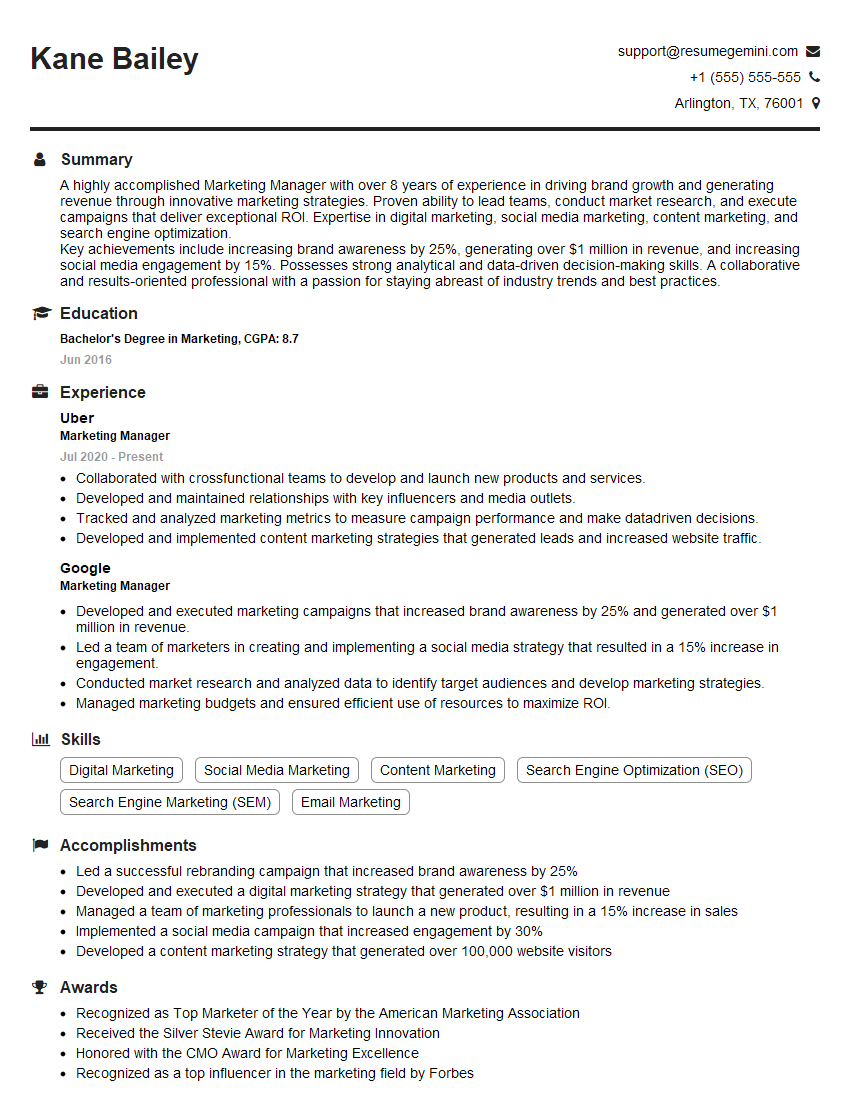
Marketing Manager Resume Sample

Communications Manager Resume Sample

Social Media Manager Resume Sample

Content Strategist Resume Sample
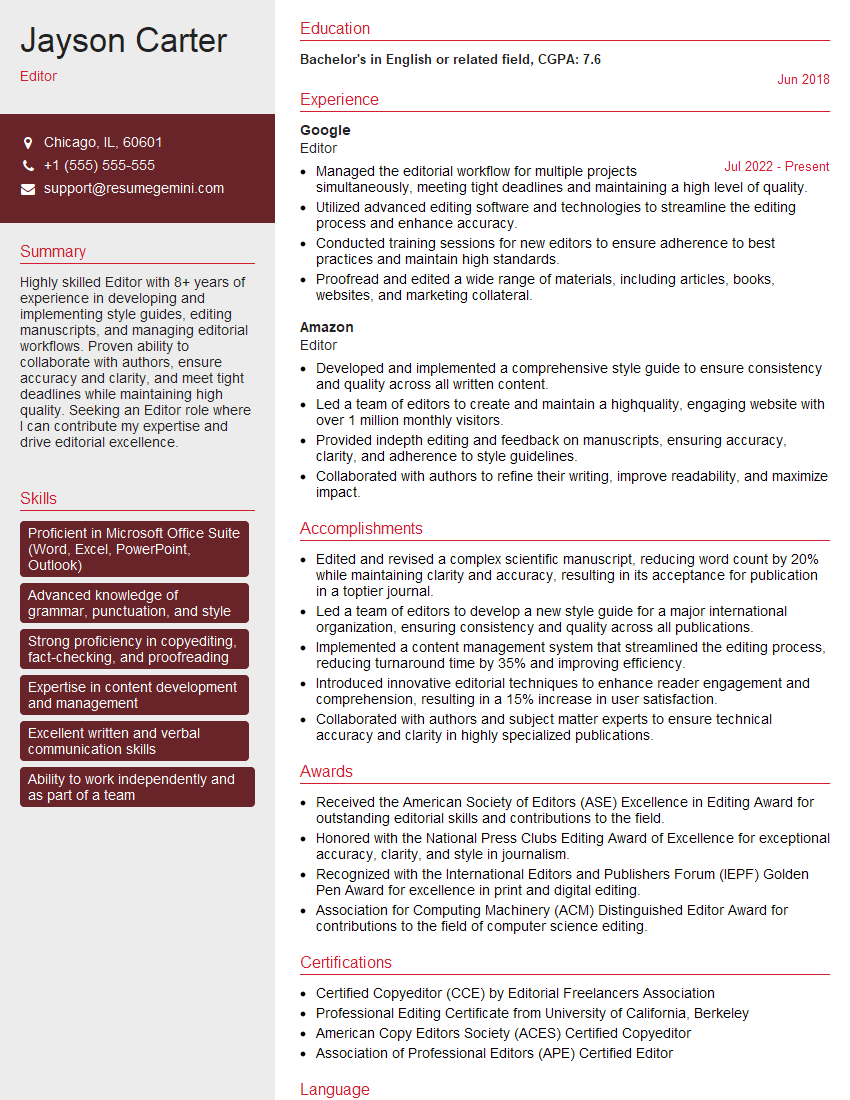
Editor Resume Sample
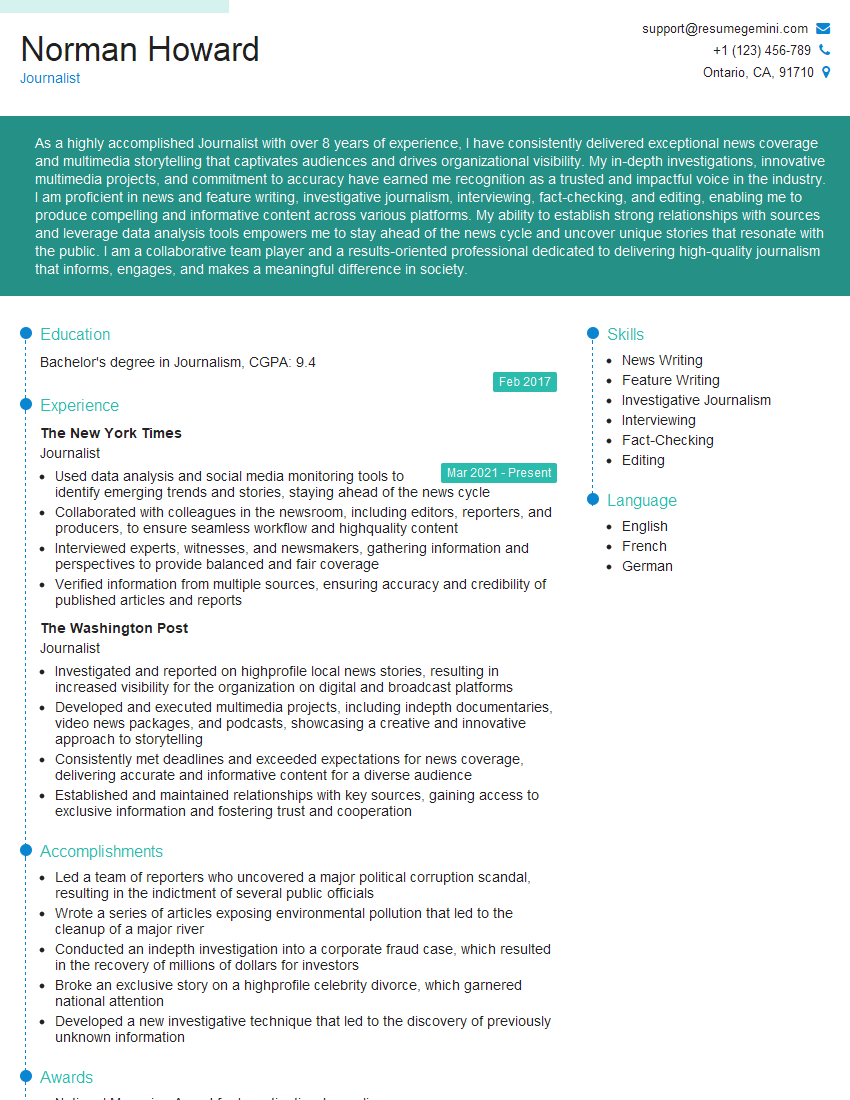
Journalist Resume Sample
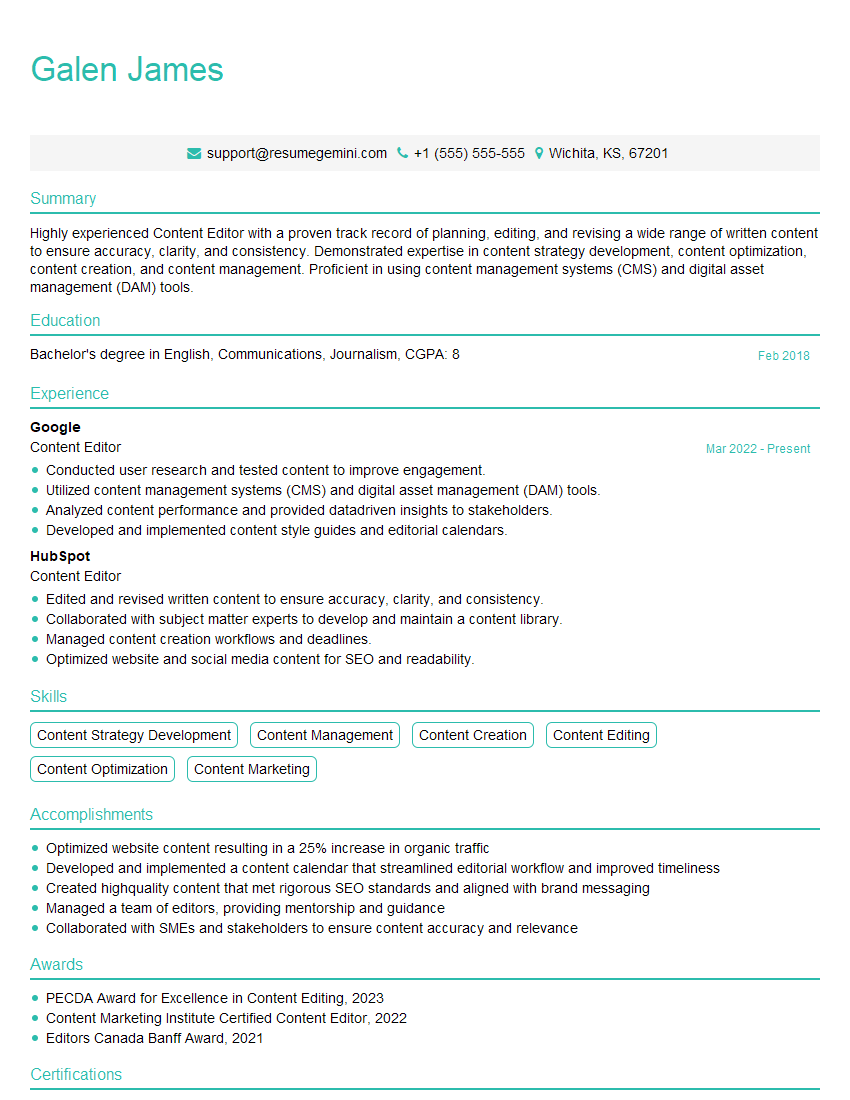
Content Editor Resume Sample

Technical Writer Resume Sample
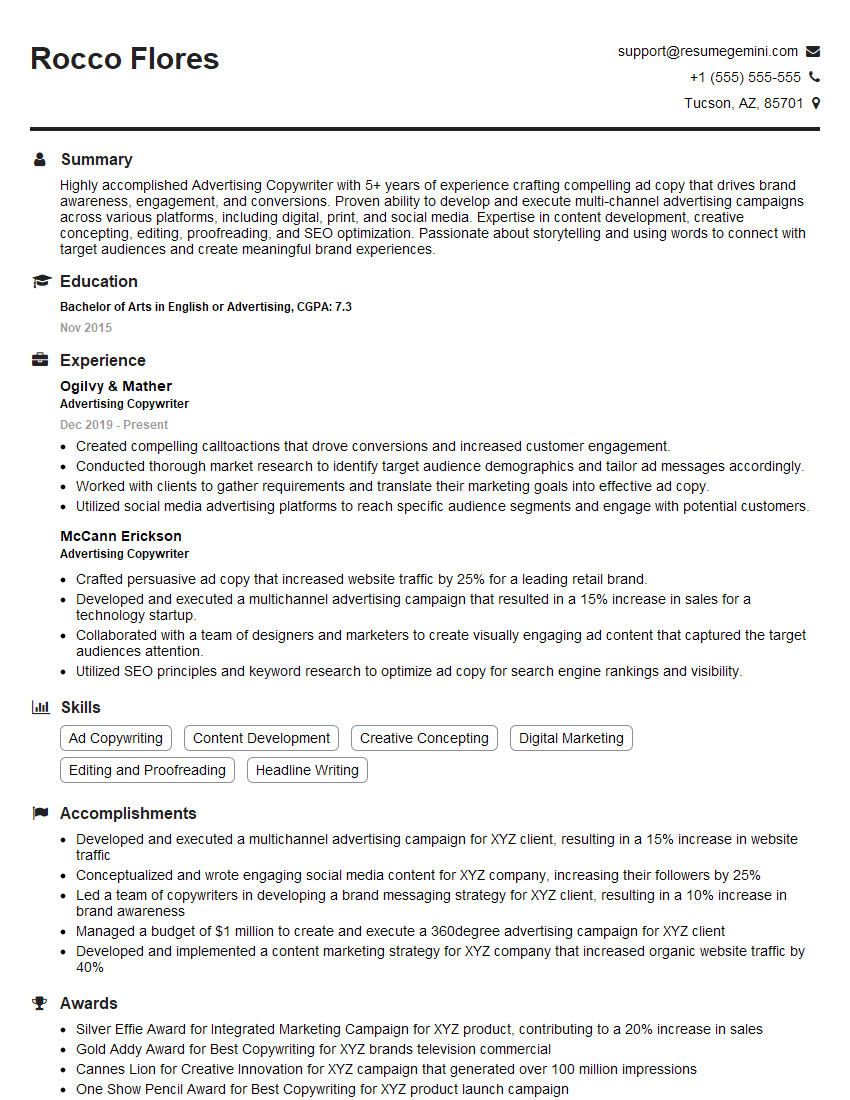
Advertising Copywriter Resume Sample

Copywriter Resume Sample
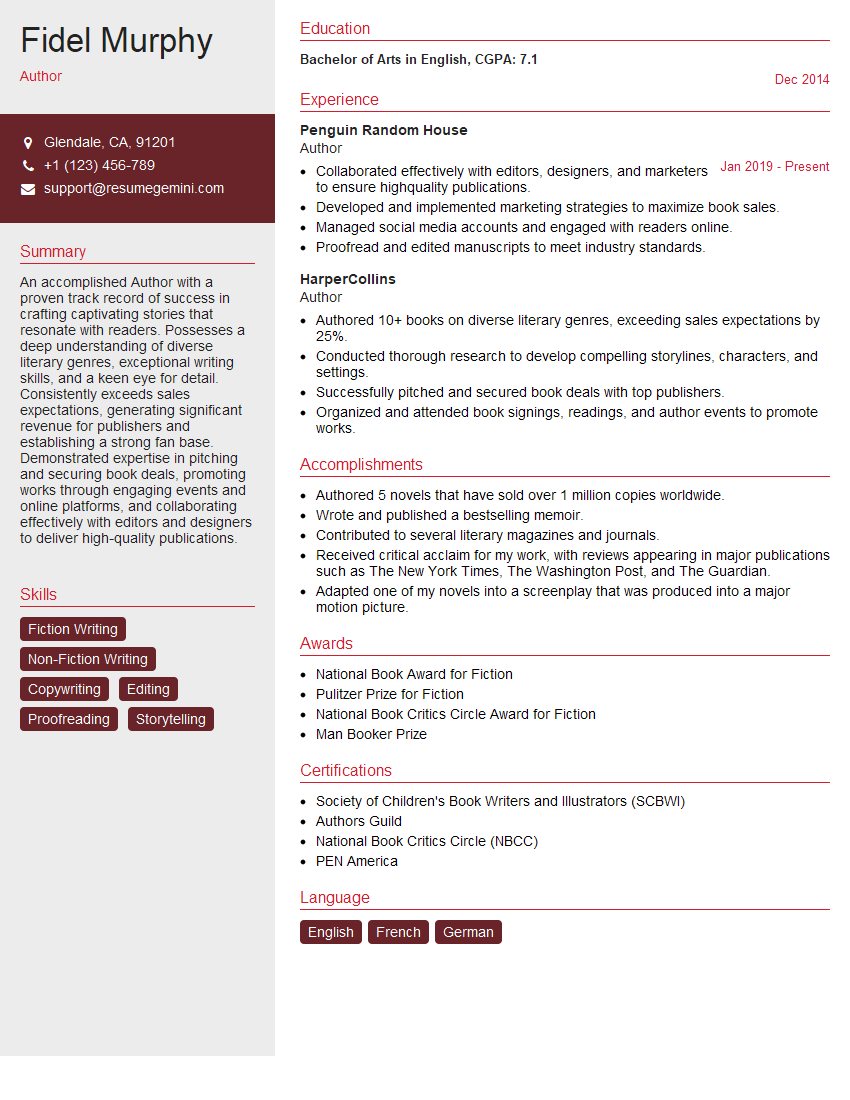
Author Resume Sample
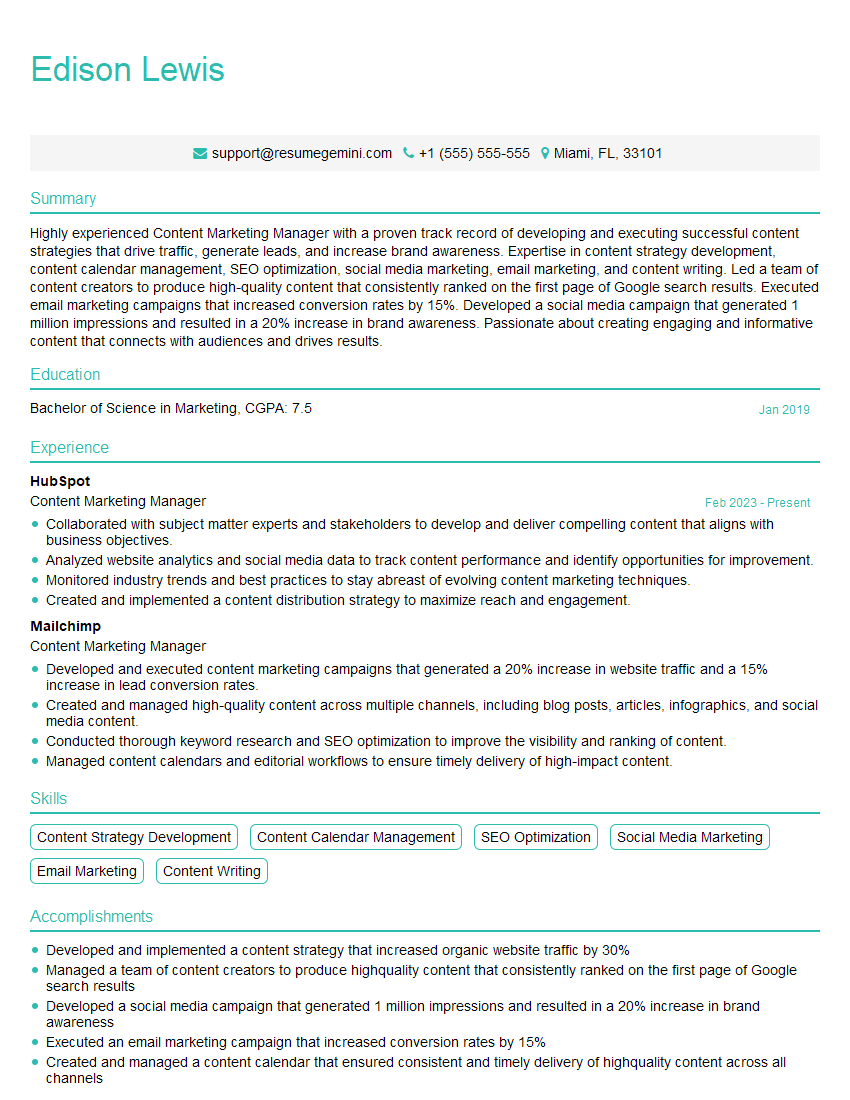
Content Marketing Manager Resume Sample
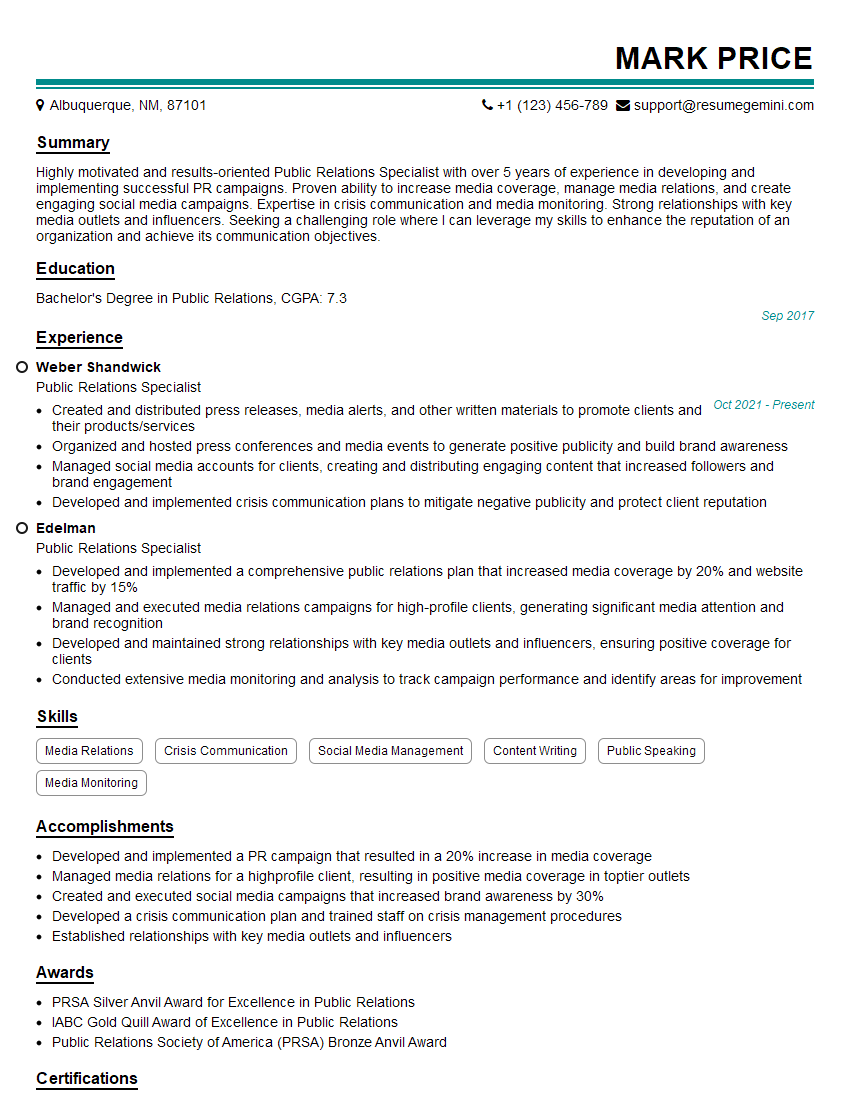
Public Relations Specialist Resume Sample
Explore more articles
Users Rating of Our Blogs
Share Your Experience
We value your feedback! Please rate our content and share your thoughts (optional).
What Readers Say About Our Blog
Very informative content, great job.
good