The right preparation can turn an interview into an opportunity to showcase your expertise. This guide to Experience in working with a variety of fabrics interview questions is your ultimate resource, providing key insights and tips to help you ace your responses and stand out as a top candidate.
Questions Asked in Experience in working with a variety of fabrics Interview
Q 1. Describe your experience working with different types of natural fibers (cotton, silk, wool, linen).
My experience with natural fibers spans over a decade, encompassing a wide range of applications from haute couture to everyday apparel. Cotton, with its versatility and breathability, is a staple. I’ve worked extensively with various cotton types, from fine Egyptian cotton for luxurious sheets to durable denim blends for sturdy workwear. Silk, with its luxurious drape and delicate nature, requires a gentle touch. I’ve handled everything from lightweight charmeuse to heavier silk brocades, mastering techniques to prevent snagging and maintain its sheen. Wool, a fiber known for its warmth and resilience, offers a vast spectrum of properties depending on the breed of sheep and processing. I’ve worked with everything from fine merino wool for soft sweaters to robust Shetland wool for durable outerwear. Finally, linen, a strong and naturally textured fiber, requires specific knowledge of its unique characteristics to prevent wrinkling and enhance its beautiful drape. I’ve extensively used linen in high-end dresses and home furnishing projects, learning to exploit its natural beauty.
- Cotton: Used in everything from T-shirts to high-end shirting.
- Silk: Expertise in handling delicate charmeuse and heavier brocades.
- Wool: Experience working with merino, cashmere, and Shetland wool for diverse applications.
- Linen: Focus on utilizing the fiber’s natural texture and drape in apparel and home furnishings.
Q 2. Explain the differences between woven and knitted fabrics.
Woven and knitted fabrics are fundamentally different in their construction, leading to distinct properties. Woven fabrics are created by interlacing two sets of yarns—the warp (lengthwise) and weft (crosswise)—at right angles. This creates a strong, stable structure with a relatively firm hand. Knitted fabrics, on the other hand, are produced by interlocking loops of yarn in a variety of stitches. This results in a more flexible, drapey fabric with varying degrees of stretch.
- Woven Fabrics: Think of denim, twill, or gabardine. These tend to be more durable and wrinkle-resistant but less stretchy.
- Knitted Fabrics: Jersey, rib knit, and double knit are examples. These fabrics are softer, more flexible, and often stretch easily.
Imagine building a wall: woven fabric is like brickwork—strong and structured—while knitted fabric is like chainmail—flexible and adaptable. The choice depends entirely on the desired final garment and its functionality.
Q 3. How familiar are you with various fabric finishes (e.g., mercerized, brushed, water-resistant)?
I’m very familiar with a wide array of fabric finishes. Mercerization, for instance, treats cotton fibers with an alkali solution to enhance their luster, strength, and dye affinity, resulting in a smoother, more luxurious feel—think of high-quality cotton shirting. Brushing, a mechanical process, raises the surface fibers to create a soft, fuzzy texture, commonly seen in flannels or brushed cotton. Water-resistant finishes can be achieved through various methods, including applying chemical coatings or using tightly woven fabrics with a hydrophobic treatment. These finishes significantly alter the properties of the base fabric, enhancing its performance and aesthetics. I have extensive experience specifying and sourcing fabrics with these and other finishes to meet project requirements.
- Mercerized: Increases luster, strength, and dye uptake in cotton.
- Brushed: Creates a soft, fuzzy texture.
- Water-resistant: Imparts water-repelling properties through various techniques.
Q 4. What are the common fabric defects and how would you identify them?
Identifying fabric defects is crucial for quality control. Common defects include:
- Holes and Tears: Obvious breaks in the fabric structure.
- Stains and Discoloration: Uneven dyeing or accidental marks.
- Weave Irregularities: Loose or missed weaves, creating weak points.
- Fabric Shrinkage: Dimensional instability after washing or dry cleaning.
- Pilling: Formation of small balls of fiber on the fabric surface.
- Broken or Missing Yarns: Visible breaks in the warp or weft.
Identifying these requires careful visual inspection, sometimes aided by magnification. Understanding the fabric’s construction and intended use allows for a more accurate assessment of the defect’s severity and potential impact on the final product. For example, a small hole in a sturdy canvas might be insignificant, while the same hole in a delicate silk would be unacceptable. I utilize a systematic approach, checking for defects at various stages of production—from initial inspection of raw materials to final quality control checks before shipping.
Q 5. Explain the concept of fabric drape and its importance in garment design.
Fabric drape refers to the way a fabric hangs or falls. It’s the result of a fabric’s weight, flexibility, and structure. Drape is critical in garment design because it significantly influences the garment’s silhouette, shape, and overall aesthetic appeal. A heavy fabric like velvet will have a more structured drape, creating a formal look, while a lightweight fabric like chiffon will drape softly, creating a flowing, elegant silhouette. Understanding drape allows designers to choose the right fabric for a specific design. A stiff fabric might be unsuitable for a flowing dress, while a lightweight fabric might lack the structure needed for a tailored jacket. I always consider drape when selecting fabrics and during the pattern-making and construction stages of garment design.
Q 6. How do different fabric weights influence garment construction?
Fabric weight significantly influences garment construction. Heavy fabrics like wool coating require strong seams and construction techniques to support their weight. This might involve using heavier-duty needles, reinforcing seams, and adding interfacing for structure. Lightweight fabrics, like silk chiffon, need more delicate handling; fine needles and minimal seam allowances are used to prevent bulkiness and maintain the fabric’s drape. Furthermore, the choice of pattern and construction details is also impacted by weight. Heavy fabrics often lend themselves to simpler silhouettes to avoid excessive weight and bulk, while lighter fabrics allow for more complex designs and details. My experience includes working across the entire spectrum of fabric weights, adapting construction techniques accordingly.
Q 7. Describe your experience with fabric testing methods (e.g., tensile strength, abrasion resistance).
Throughout my career, I’ve been involved in numerous fabric testing procedures. Tensile strength testing measures a fabric’s resistance to being pulled apart, determining its durability and strength. Abrasion resistance testing assesses its ability to withstand rubbing and wear, crucial for determining its longevity, particularly in high-wear areas like jeans. We also conduct tests for colorfastness (resistance to fading), shrinkage, and tear strength. These tests ensure the chosen fabric meets the required quality standards for the intended application, preventing premature wear and tear or unexpected shrinkage. I interpret the test results to inform design decisions, ensuring the final garment meets the required quality standards and performance expectations. These standardized tests are critical for ensuring product quality and consistency across different production runs.
Q 8. How do you determine the appropriate fabric for a specific garment?
Selecting the right fabric for a garment is a crucial step, impacting everything from drape and comfort to durability and cost. My approach involves a multi-faceted assessment considering several key factors:
- Garment Function and Style: A flowing evening gown demands a different fabric than a sturdy work jumpsuit. For example, silk charmeuse is ideal for the former due to its luxurious drape and sheen, while canvas or twill would be more suitable for the latter’s durability and structure.
- Target Climate and Season: Lightweight fabrics like cotton voile or linen are perfect for summer wear, offering breathability, while heavier wools or cashmere provide warmth in winter. Considering the end-user’s climate is vital.
- Fabric Properties: I analyze the fabric’s drape (how it hangs), hand (how it feels), weight, and strength. A heavier fabric might be needed for structured garments, while a lighter one suits flowing styles. Fiber content significantly influences these properties; for instance, silk is naturally luxurious, while cotton is breathable.
- Budget and Production Scale: Some fabrics are inherently more expensive than others. The budget and production volume influence the fabric choices. A high-end boutique might use luxurious silk, while a mass-market brand might opt for a more cost-effective polyester blend.
- Care Instructions: The ease of care influences fabric selection, particularly for mass-market garments. Easy-care fabrics are favored for their practicality.
Essentially, I treat fabric selection as a careful balancing act between aesthetics, functionality, practicality, and cost. I always keep the final garment’s intended use and wearer in mind.
Q 9. What are some common fabric care instructions and their implications?
Fabric care instructions are crucial for maintaining garment quality and longevity. Common instructions and their implications are:
- Machine Wash: Generally suitable for durable, easy-care fabrics like cotton blends or some polyesters. However, this can lead to shrinkage, fading, or damage depending on the fabric and wash settings. Always check the care label for temperature recommendations.
- Hand Wash: Recommended for delicate fabrics such as silk, lace, or wool, minimizing the risk of damage from agitation. This process is more time-consuming.
- Dry Clean: Necessary for certain fabrics that cannot withstand water, like some silks or delicate embellishments. This is the most expensive care method.
- Tumble Dry: Convenient but can cause shrinkage and damage to some fabrics. Low heat settings or air drying is often preferred.
- Line Dry: A gentle drying method, preventing shrinkage and damage. Best for delicate or natural fibers.
- Ironing: Used to remove wrinkles but can damage fabrics if the wrong temperature is used. Always check the care label for recommended iron settings.
Ignoring care instructions can lead to premature wear, shrinkage, and even ruin the garment. Understanding these implications helps me choose appropriate fabrics for each project and advise customers correctly.
Q 10. What software programs are you proficient in for fabric design or analysis?
My proficiency extends to several software programs vital for fabric design and analysis. I am highly experienced with:
- Adobe Illustrator: For creating intricate designs and patterns for prints.
- Adobe Photoshop: For manipulating images and creating realistic fabric textures and color variations.
- Textile Design Software (e.g., OptiTex, CLO3D): These specialized programs allow for 3D modeling and simulation of fabric drape and behavior on garments, helping predict how the final product will look and behave.
- CAD Software (e.g., AutoCAD): Useful for precise pattern making and grading, essential for efficient and accurate garment production.
These programs allow me to efficiently design, analyze, and refine fabrics and patterns, contributing to the overall quality of the finished garments. For example, using CLO3D, I can virtually drape fabric over a 3D model, identifying potential issues with fit or drape before even cutting the fabric, significantly reducing waste and improving design accuracy.
Q 11. How do you manage fabric shrinkage during garment production?
Managing fabric shrinkage is essential for producing garments that maintain their shape and size. My strategies involve:
- Pre-shrinking: Before cutting and sewing, I always pre-shrink fabrics, particularly natural fibers like cotton and wool, by washing and drying them according to the care instructions. This removes any potential shrinkage before the garment is constructed.
- Choosing Shrink-resistant Fabrics: Many fabrics are treated to minimize shrinkage. I often select these fabrics, especially for critical garments where shrinkage would be problematic.
- Pattern Adjustments: Even with pre-shrinking, some minimal shrinkage can occur. I account for this by adjusting the patterns based on the fabric’s known shrinkage percentage, provided by the fabric supplier or my own testing.
- Careful Seam Construction: Appropriate seam finishes and techniques are used to reduce the chances of stretching or distortion that can occur during washing and wearing.
Through these methods, I minimize issues related to fabric shrinkage and create garments that maintain their shape and fit, satisfying clients and reducing costly rework.
Q 12. Explain your experience with different dyeing processes.
My experience with dyeing encompasses several processes:
- Reactive Dyeing: This process involves using reactive dyes that chemically bond with cellulose fibers (like cotton and linen), producing vibrant and colorfast results. It’s one of my preferred methods for cotton fabrics.
- Vat Dyeing: This method uses insoluble dyes that are converted into a soluble form for dyeing and then re-converted to their insoluble form, creating exceptionally durable and wash-fast colors, particularly on cotton and other cellulosic fabrics.
- Disperse Dyeing: Used for dyeing synthetic fibers like polyester, it produces bright and colorfast results, though environmental concerns are increasingly being addressed concerning the chemical processes involved.
- Acid Dyeing: Suitable for dyeing protein fibers such as silk and wool, resulting in vibrant colors. The precise control over pH is crucial for successful dyeing.
The choice of dyeing process depends heavily on the fiber content, desired color fastness, and environmental considerations. I carefully select the appropriate method to achieve the best results and minimize negative environmental impact. For instance, I now prioritize dyeing techniques with minimal water usage and eco-friendly dyes.
Q 13. Describe your experience with different printing techniques for fabrics.
I have extensive experience with various fabric printing techniques:
- Screen Printing: A classic method ideal for bold, high-opacity designs. It’s cost-effective for large-scale production, but the setup cost for each color is significant.
- Digital Printing: Offers incredible versatility and precision, allowing for intricate details and photorealistic prints. The cost per print is higher than screen printing, particularly for small runs, but it minimizes setup time.
- Rotary Screen Printing: A high-speed, industrial method suitable for large-scale production of consistent, high-quality prints. This method is especially efficient for repeating patterns.
- Heat Transfer Printing: A cost-effective method for smaller runs or personalized designs. It involves transferring an image onto fabric using heat and pressure. It’s not as durable as some other methods.
The selection of printing method depends on factors like design complexity, production volume, desired quality, and budget. I choose the most appropriate technique to meet the specific needs of each project. For example, for small batches of unique designs, digital printing offers great flexibility and precision.
Q 14. How do you source fabrics sustainably and ethically?
Sustainable and ethical sourcing is paramount. My approach involves:
- Certified Fabrics: I prioritize fabrics certified by organizations like GOTS (Global Organic Textile Standard) or OEKO-TEX, guaranteeing environmentally friendly and socially responsible production practices. These certifications ensure that the production processes adhere to strict standards regarding water usage, waste reduction and labor practices.
- Local Sourcing: Whenever possible, I source fabrics from local suppliers, reducing transportation emissions and supporting local economies. This also helps in better monitoring of the supply chain.
- Recycled and Upcycled Materials: I actively seek out fabrics made from recycled fibers or upcycled materials, diverting waste from landfills and minimizing environmental impact.
- Transparency and Traceability: I engage with suppliers who can provide clear information about their production processes, ensuring transparency and traceability throughout the supply chain. I want to know the origin of the raw materials, the working conditions of the laborers, and the environmental impact at each stage.
- Collaboration with Ethical Organizations: I partner with non-profits and organizations dedicated to fair trade and ethical labor practices to ensure that the fabric supply chain aligns with my values.
By incorporating these practices, I contribute to a more sustainable and ethical textile industry. It’s not just about choosing ‘green’ materials; it’s about building a complete system of responsible sourcing and production.
Q 15. How familiar are you with global textile standards and certifications?
My familiarity with global textile standards and certifications is extensive. I’ve worked directly with certifications like OEKO-TEX Standard 100 (for harmful substance testing), GOTS (Global Organic Textile Standard), and bluesign® (for sustainable textile production). Understanding these standards isn’t just about compliance; it’s about ensuring the quality, safety, and ethical sourcing of materials. For instance, in a recent project, we needed a fabric certified to OEKO-TEX Standard 100 Class I, suitable for baby clothing. Knowing the specific requirements allowed me to source the right fabric and avoid potential delays or quality issues. I also understand the nuances of different regional standards and their implications for supply chain management.
Beyond specific certifications, I’m knowledgeable about various international standards related to fabric testing, such as those developed by ISO (International Organization for Standardization) for colorfastness, tensile strength, and other crucial properties. This broad understanding allows me to navigate the complexities of global textile trade and ensure consistent quality across different production locations.
Career Expert Tips:
- Ace those interviews! Prepare effectively by reviewing the Top 50 Most Common Interview Questions on ResumeGemini.
- Navigate your job search with confidence! Explore a wide range of Career Tips on ResumeGemini. Learn about common challenges and recommendations to overcome them.
- Craft the perfect resume! Master the Art of Resume Writing with ResumeGemini’s guide. Showcase your unique qualifications and achievements effectively.
- Don’t miss out on holiday savings! Build your dream resume with ResumeGemini’s ATS optimized templates.
Q 16. What are the common challenges in working with different fabric types?
Working with diverse fabric types presents unique challenges. One common issue is the variation in drapability and handle. A lightweight silk crepe will behave very differently from a heavy-weight wool twill during garment construction. This necessitates adjustments in pattern making, cutting techniques, and sewing processes. For example, delicate fabrics require specialized needles and slower sewing speeds to prevent damage.
Another challenge lies in the different dyeing and finishing processes required for various fabrics. Natural fibers like cotton and linen often need pre-treatment to achieve even dye absorption, whereas synthetics may react differently to various dyes and finishes. A lack of understanding in this area can lead to inconsistent color, uneven finishes, and quality defects.
Furthermore, the shrinkage properties of fabrics vary widely. Pre-washing or pre-shrinking is crucial for some fabrics to prevent unexpected shrinkage after garment production. Failing to account for this can lead to significant problems, especially in high-precision manufacturing.
Q 17. Describe your problem-solving skills related to fabric-related issues in production.
My problem-solving approach to fabric-related production issues is systematic and data-driven. I start by thoroughly analyzing the problem, identifying the root cause through a combination of visual inspection, lab testing, and consultation with relevant stakeholders (e.g., production team, suppliers). For example, if we experienced inconsistent color in a batch of dyed fabric, I would investigate the dyeing process parameters, analyze dye lot consistency, and check for potential contamination or equipment malfunctions.
Once the root cause is identified, I develop and implement a solution. This might involve adjusting production parameters, sourcing alternative materials, modifying manufacturing processes, or collaborating with suppliers to address quality control issues. I meticulously document each step of the problem-solving process and use this data to implement preventive measures, reducing the likelihood of similar problems in the future. My approach emphasizes continuous improvement and the development of best practices.
Q 18. How do you stay updated on the latest fabric trends and innovations?
Staying abreast of fabric trends and innovations requires a multi-faceted approach. I regularly attend industry trade shows (like Première Vision and Texworld) and conferences to network with industry professionals and learn about new technologies and design concepts. I also subscribe to industry publications, both print and online, and follow key influencers and thought leaders on social media. This allows me to identify emerging trends, innovative materials, and sustainable manufacturing practices early on.
Furthermore, I actively participate in online communities and forums focused on textile innovation, which helps me learn about cutting-edge research and development efforts. Continuous learning and networking are vital in this rapidly evolving field. I also regularly analyze market research reports to understand evolving consumer preferences and predict future trends.
Q 19. Describe your experience working with technical specifications and fabric data sheets.
My experience with technical specifications and fabric data sheets is extensive. I can easily interpret information on fiber content, yarn count, fabric weight, width, shrinkage rate, tensile strength, abrasion resistance, colorfastness, and other relevant properties. I use this data to select appropriate fabrics for various applications, ensuring they meet the project’s requirements. For example, a technical data sheet might specify a minimum tensile strength for a fabric used in workwear – I’d use this information to verify the suitability of the fabric before mass production.
I’m proficient in using this data to assess the quality of incoming fabric and monitor it throughout the production process. Any discrepancies between the specifications and the actual properties are thoroughly investigated and addressed promptly, minimizing potential problems down the line. The ability to interpret data sheets effectively is crucial for preventing defects and ensuring high-quality products.
Q 20. How do you handle discrepancies between fabric samples and bulk deliveries?
Discrepancies between fabric samples and bulk deliveries are a common challenge in the textile industry. My approach to handling such discrepancies involves a systematic investigation to determine the root cause. This includes comparing the physical properties of the sample and the bulk fabric, checking the dye lot numbers, and reviewing the production records.
Depending on the nature and extent of the discrepancy, I may work with the supplier to rectify the issue. This could involve negotiating a replacement of the faulty batch, adjusting the production process to match the approved sample, or even rejecting the delivery altogether if the discrepancy is significant and cannot be resolved. I always maintain detailed records of these discrepancies and the actions taken to address them, using this information to improve quality control processes in future projects. Transparency and clear communication with all parties involved are essential in resolving these issues.
Q 21. What is your experience with different fabric constructions (e.g., twill, satin, jersey)?
I have extensive experience with various fabric constructions, including twill, satin, and jersey. I understand their unique properties and how these impact their drape, strength, and suitability for different applications.
For example, twill weaves (like those used in denim) are known for their durability and diagonal rib texture, making them suitable for workwear and durable garments. Satin weaves, characterized by their smooth, lustrous surface, are often used in garments where sheen and elegance are desired. Jersey fabrics, known for their elasticity and softness, are commonly used in sportswear and knitwear.
My understanding extends beyond these common constructions. I’m familiar with other types like plain weave, rib weave, dobby weave, and various knit structures. I understand how the yarn type, weave structure, and finishing processes affect the final properties of the fabric. This knowledge enables me to select appropriate fabrics based on the desired performance and aesthetic properties of the final product.
Q 22. How do you determine the appropriate needle size and stitch type for various fabrics?
Selecting the right needle and stitch type is crucial for achieving a professional finish and preventing fabric damage. It’s all about matching the needle’s thickness and point to the fabric’s weight and structure, and choosing a stitch that complements both.
For delicate fabrics like silk or chiffon, you’d use a very fine needle (size 60/8 or smaller) and a short, straight stitch or a delicate zig-zag stitch to avoid creating holes or puckering. Think of it like using a tiny, sharp pencil on delicate watercolor paper – precision is key. A heavier fabric like denim, however, would require a much sturdier needle (size 14/90 or larger) and a stronger stitch, such as a medium-length straight stitch or a durable zig-zag stitch to withstand stress. Imagine using a bold marker on thick canvas – it needs to be strong enough to penetrate the material.
- Fabric Weight: Lighter fabrics need finer needles; heavier fabrics need thicker needles.
- Fabric Type: Knits require ballpoint needles to avoid snagging; woven fabrics can use sharp needles.
- Stitch Length: Shorter stitches are more durable for areas under stress; longer stitches are suitable for less-stressed areas.
- Stitch Type: Straight stitch for seams; zig-zag stitch for edges to prevent fraying.
For example, working with a fine wool crepe, I would select a size 70/10 needle and a very short, straight stitch (around 1.5 mm). For a heavy canvas tote bag, I would use a size 16/110 needle with a longer straight stitch (around 2.5 mm) for the seams and a zig-zag stitch for the raw edges.
Q 23. Describe your experience in creating and interpreting technical drawings for garments.
Technical drawings are the blueprint for garment construction. My experience encompasses creating detailed flat sketches illustrating garment components, noting seam allowances, darts, and pattern details, as well as interpreting existing technical drawings to understand the design and accurately reproduce it. I’m proficient in using industry-standard software like Adobe Illustrator to create vector-based illustrations, ensuring precision and scalability.
Creating a technical drawing begins with a precise understanding of the garment’s design. I then translate this vision into a detailed flat sketch, carefully measuring and annotating each element. For instance, when designing a tailored blazer, I’d meticulously illustrate the lapel shape, pocket placement, and sleeve details, including specific measurements and seam allowances. Interpreting a technical drawing involves analyzing the annotations, understanding the grading system, and identifying potential challenges in construction before starting the actual garment production. I’ve often used technical drawings to communicate effectively with pattern makers and production teams, ensuring consistent garment quality.
My experience has also included using technical drawings to make adjustments and modifications to existing patterns. This requires a strong understanding of fabric drape and how design changes affect the final look and fit of the garment. For instance, I recently adjusted a sleeve pattern based on a technical drawing to accommodate a change in shoulder construction, improving overall garment fit and minimizing fabric waste.
Q 24. Explain your experience with different types of synthetic fibers (e.g., polyester, nylon, acrylic).
Synthetic fibers like polyester, nylon, and acrylic offer a wide range of properties, and understanding their characteristics is crucial for selecting the right fabric for a specific application. Polyester, known for its durability and wrinkle resistance, is commonly used in sportswear and outdoor apparel. Nylon, prized for its strength and elasticity, is often found in hosiery and swimwear. Acrylic, a versatile fiber that mimics the look and feel of wool, is often used in sweaters and blankets.
My experience includes working extensively with these fibers in various blends and constructions. I understand that polyester’s wrinkle resistance can sometimes lead to a less breathable fabric, requiring careful consideration of the end-use. For example, when designing a running shirt, I might select a polyester blend with added elastane for stretch and breathability, balancing performance with comfort. Nylon’s strength is ideal for applications requiring high tensile strength, but it can be less comfortable against the skin, so careful consideration of the fabric’s construction is crucial. For instance, when working with nylon for swimwear, I’d opt for a lightweight knit to maintain flexibility and enhance comfort.
I’ve also learned that the properties of synthetic fibers can be significantly influenced by their processing and finishing treatments. For example, a polyester fabric treated with a water-repellent finish would be ideal for outerwear, while an untreated polyester might be suitable for indoor applications. Therefore, understanding the entire supply chain, from fiber selection to finishing, is vital.
Q 25. How do you evaluate the quality and performance of different fabrics?
Evaluating fabric quality and performance involves a multifaceted approach encompassing both objective and subjective assessments. Objective assessments typically involve laboratory testing to determine properties like tensile strength, abrasion resistance, colorfastness, and drape. Subjective assessments focus on tactile qualities such as hand feel, drape, and overall aesthetic appeal.
I typically start by inspecting the fabric visually for any imperfections like snags, slubs, or inconsistencies in the weave. Then, I conduct a series of tactile tests, assessing the hand feel – is it soft, crisp, smooth, or rough? – and observing its drape – does it hang smoothly, or is it stiff or limp? Next, I perform simple tests, like checking for pilling, colorfastness by rubbing a wet white cloth on the fabric, and evaluating the fabric’s stretch and recovery. I’ll also assess the fabric’s weight and density, important factors in determining its durability and suitability for a specific end-use.
More comprehensive evaluations involve laboratory testing. For instance, when evaluating a fabric for outdoor apparel, I would commission tests for water resistance, wind resistance, and UV protection. The results of these tests help to determine the fabric’s overall performance and suitability for its intended purpose, providing crucial data for making informed decisions about sourcing and design.
Q 26. Explain your experience in managing fabric inventory and stock control.
Effective fabric inventory and stock control are vital for smooth production and cost management. My experience involves implementing and managing inventory systems, ensuring accurate tracking of fabric quantities, types, and quality. This includes using both physical inventory methods – regular stock checks and physical counts – and digital systems – database management and ERP software – to maintain a comprehensive overview.
I’ve implemented and managed a first-in-first-out (FIFO) system to minimize fabric waste due to obsolescence or spoilage. This involves carefully tracking fabric arrival dates and prioritizing the use of older stock. I have also implemented a robust system of quality control, regularly checking fabrics for defects and ensuring consistent quality. This includes thorough inspection upon arrival and periodic checks throughout storage to prevent damage or deterioration. This meticulous approach contributes to reducing waste and maintaining production efficiency.
Furthermore, I’ve successfully utilized inventory management software to predict fabric needs based on production schedules, optimizing ordering quantities to minimize storage costs and prevent stockouts. Accurate forecasting is crucial in reducing lead times and ensuring a steady supply of materials.
Q 27. What are the key considerations for selecting a fabric for outdoor apparel?
Selecting fabrics for outdoor apparel requires careful consideration of several key factors, prioritizing performance and durability. The fabric must offer protection from the elements – wind, rain, snow, and sun – while providing breathability and comfort to the wearer.
- Water Resistance/Waterproofness: The fabric should repel water to keep the wearer dry. This can be achieved through water-resistant coatings or inherently waterproof membranes like Gore-Tex.
- Wind Resistance: A tightly woven fabric or a windproof membrane is essential to reduce wind chill and maintain body temperature.
- Breathability: The fabric should allow moisture vapor (sweat) to escape, preventing overheating and discomfort. This often involves the use of specialized breathable membranes or highly porous fabric constructions.
- Durability: The fabric must withstand abrasion and tearing from exposure to rough terrain and weather conditions. This requires strong fibers and robust construction techniques.
- UV Protection: The fabric should offer protection against harmful ultraviolet (UV) radiation from the sun.
- Weight and Packability: The fabric should be lightweight and easily packable for portability.
For example, when selecting a fabric for a waterproof hiking jacket, I would consider a ripstop nylon with a waterproof and breathable membrane. For a lightweight running jacket, I might choose a wind-resistant polyester with a DWR (durable water repellent) finish. The choice depends on the specific activity and the environmental conditions the garment will face.
Q 28. Describe your experience with blended fabrics and their properties.
Blended fabrics combine different fibers to leverage the advantages of each component, resulting in materials with unique and improved properties. For example, a cotton-polyester blend combines cotton’s softness and breathability with polyester’s durability and wrinkle resistance. A wool-nylon blend marries wool’s warmth and natural fiber feel with nylon’s strength and elasticity.
My experience has included working with a wide variety of blended fabrics, each with its own distinct characteristics. A common example is a cotton-lycra blend for t-shirts, combining cotton’s softness with lycra’s elasticity for a comfortable and form-fitting garment. I’ve also worked with linen-rayon blends, balancing linen’s crispness with rayon’s drape and softness, resulting in a fabric suitable for flowing dresses. Understanding the fiber ratios is crucial, as it dictates the final properties of the blend. A higher percentage of cotton will result in a softer, more breathable fabric, whereas a higher percentage of polyester will yield a more durable and wrinkle-resistant fabric.
Furthermore, the spinning and weaving techniques also influence the outcome. For example, a tightly woven cotton-polyester blend will be more durable than a loosely woven one, even if the fiber ratios are the same. My knowledge encompasses assessing the impact of these processing methods on the ultimate properties of the blended fabric, ensuring the selection is appropriate for the intended application. For instance, a tightly woven cotton-polyester blend is suitable for shirting, while a loosely woven one might be appropriate for a more casual garment.
Key Topics to Learn for Experience in working with a variety of fabrics Interview
- Fabric Properties: Understanding fiber content (natural vs. synthetic), yarn construction, weave structures (plain, twill, satin, etc.), and their impact on drape, durability, and texture. Consider discussing how these properties influence garment construction and design choices.
- Fabric Handling & Manipulation: Practical experience with different sewing techniques (e.g., hand-sewing, machine sewing), pattern cutting and adjustment for various fabrics, understanding fabric grain and bias, and managing fabric during the production process (e.g., preventing stretching or damage).
- Fabric Selection & Application: Knowing the appropriate fabric choices for different garment types and end-uses (e.g., choosing a durable fabric for outerwear versus a delicate fabric for lingerie). Discuss how fabric choice impacts cost, comfort, and overall garment performance.
- Fabric Care & Maintenance: Understanding the appropriate cleaning methods for different fabrics (dry cleaning, hand washing, machine washing), ironing techniques, and storage methods to maintain fabric quality and prevent damage. Consider discussing environmentally conscious care practices.
- Troubleshooting & Problem Solving: Discuss your experience identifying and resolving common fabric-related issues during production, such as fabric shrinkage, pilling, or colorfastness problems. Highlight your problem-solving skills and ability to find solutions efficiently.
- Sustainability & Ethical Sourcing: Demonstrate awareness of sustainable fabric choices, ethical sourcing practices, and their impact on the environment and the industry. This increasingly important aspect showcases your forward-thinking approach.
Next Steps
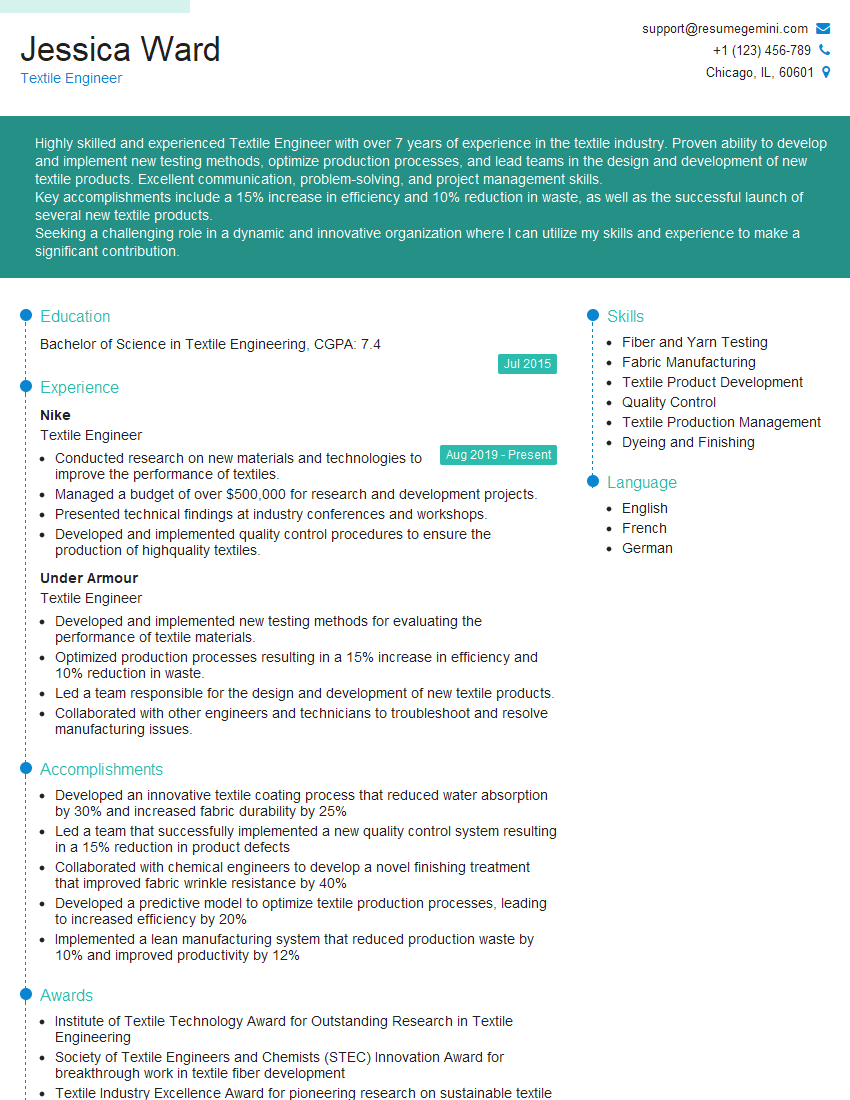
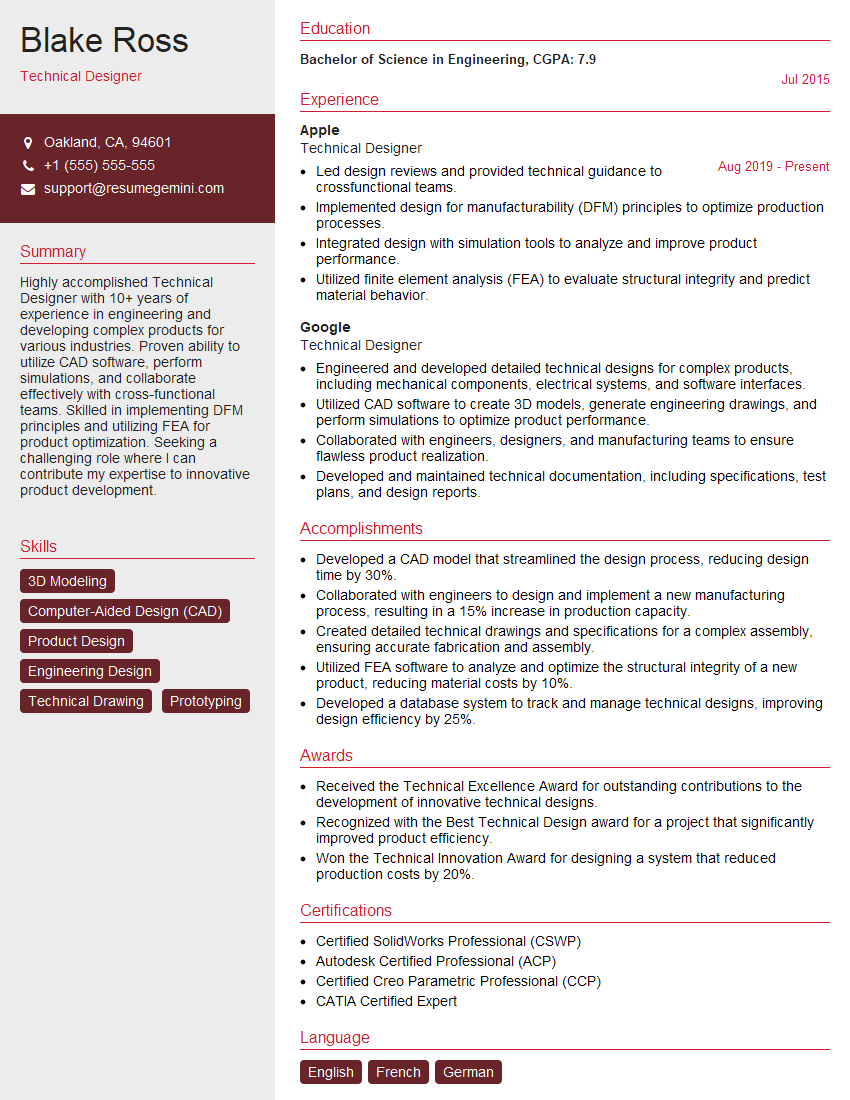
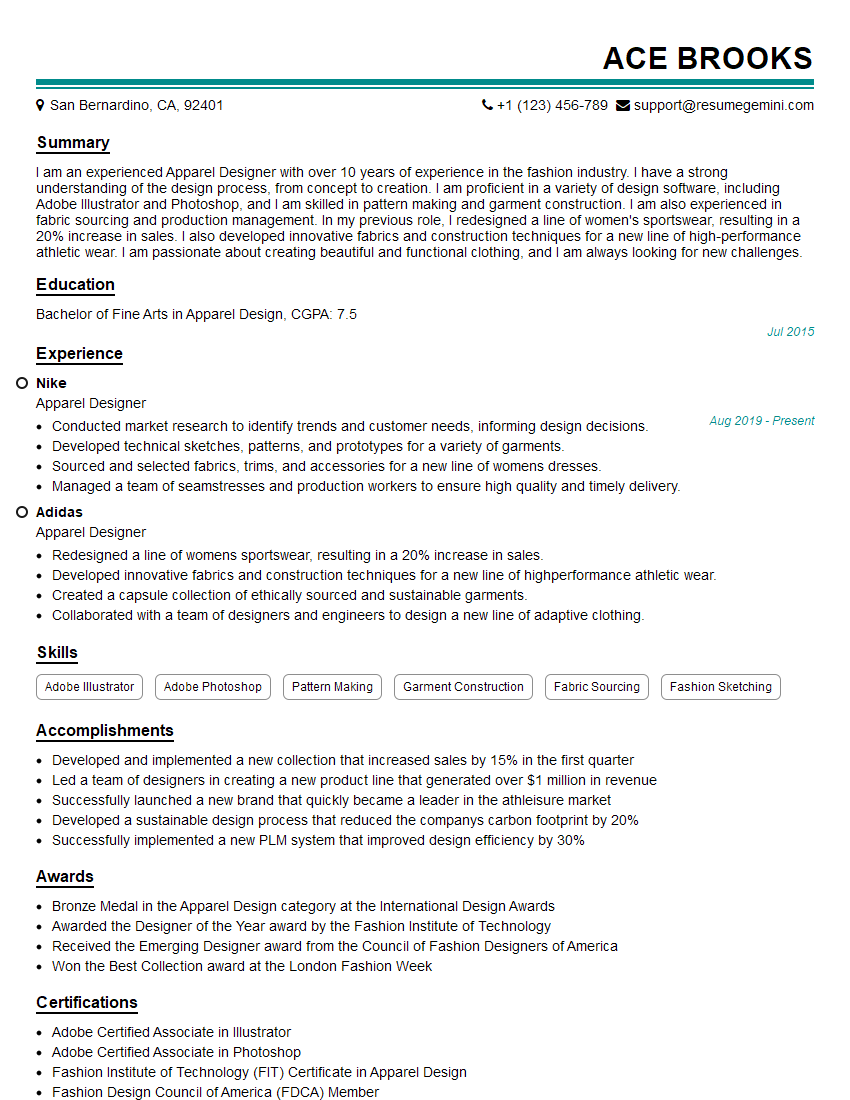
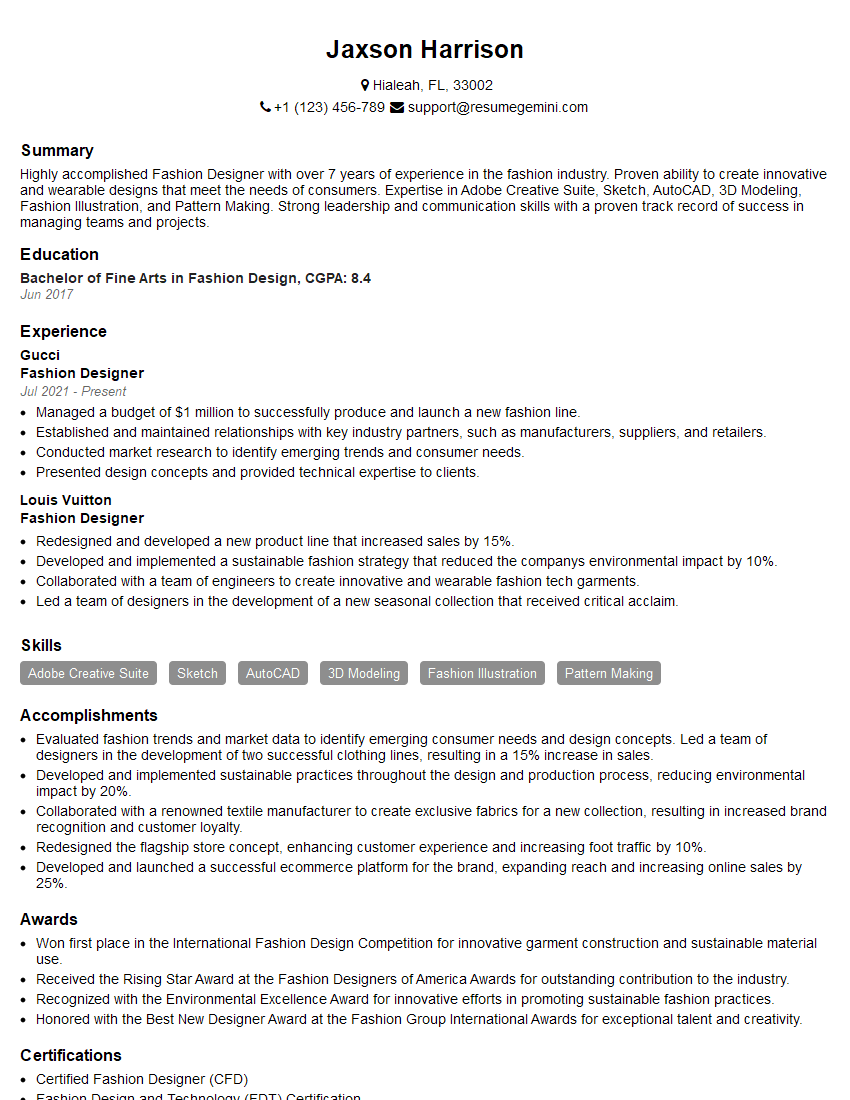
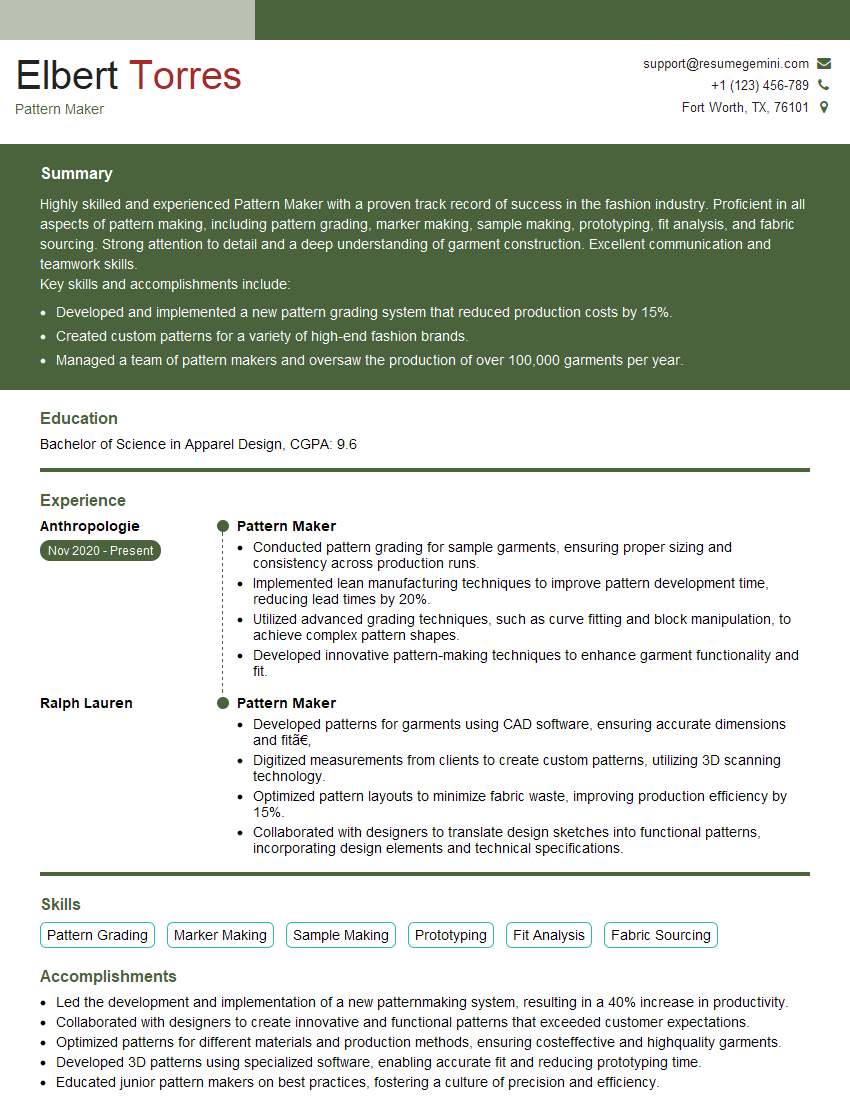
Mastering your experience with a variety of fabrics significantly enhances your career prospects in the fashion and textile industries. A strong understanding of these concepts demonstrates your technical skills and problem-solving abilities, making you a valuable asset to any team. To maximize your job search success, creating an ATS-friendly resume is crucial. ResumeGemini is a trusted resource to help you build a professional and impactful resume that highlights your skills and experience effectively. Examples of resumes tailored to showcasing experience in working with a variety of fabrics are available through ResumeGemini to guide you in creating your own.




Explore more articles
Users Rating of Our Blogs
Share Your Experience
We value your feedback! Please rate our content and share your thoughts (optional).
What Readers Say About Our Blog
Very informative content, great job.
good