Cracking a skill-specific interview, like one for Energy Management and Conservation, requires understanding the nuances of the role. In this blog, we present the questions you’re most likely to encounter, along with insights into how to answer them effectively. Let’s ensure you’re ready to make a strong impression.
Questions Asked in Energy Management and Conservation Interview
Q 1. Explain the difference between energy efficiency and energy conservation.
Energy efficiency and energy conservation, while both aiming to reduce energy use, differ significantly in their approach. Energy efficiency focuses on doing more with less energy. It involves using technologies and practices to optimize energy use for a given task, maximizing output while minimizing input. Think of a more fuel-efficient car – it gets you the same distance but consumes less gasoline. Energy conservation, on the other hand, emphasizes reducing overall energy consumption, regardless of efficiency improvements. It involves changes in behavior and lifestyle choices to lower energy demand. A simple example is turning off lights when leaving a room.
In essence, efficiency is about improving the process, while conservation is about using less of the process. Ideally, both strategies should be implemented in tandem for maximum impact.
Q 2. Describe your experience with energy audits and their key components.
I have extensive experience conducting energy audits for various building types, from commercial offices to industrial facilities and residential complexes. A typical energy audit involves several key components:
- Walkthrough and Data Collection: This initial phase involves a thorough inspection of the building to identify energy-consuming systems like HVAC, lighting, and equipment. We collect data on energy bills, system specifications, and operational practices.
- Energy Modeling: We use specialized software (I’m proficient in EnergyPlus and eQUEST, as we will discuss later) to create a virtual representation of the building’s energy performance. This allows us to simulate various scenarios and identify areas with the highest energy consumption.
- Non-Invasive Testing: This includes using tools like infrared cameras to detect thermal leaks in building envelopes, blower door tests to measure air leakage, and power meters to monitor the energy consumption of individual equipment.
- Reporting and Recommendations: The final step involves compiling the findings into a comprehensive report outlining energy waste areas, quantifying potential savings, and recommending cost-effective energy efficiency measures. This report serves as a roadmap for implementing improvement projects.
For instance, during an audit of a manufacturing plant, we identified significant energy losses through poorly insulated pipes and inefficient air compressors. The energy model helped us quantify the savings potential of upgrading the insulation and installing more efficient compressors. This resulted in a detailed report that led to a successful energy efficiency project.
Q 3. What are the main methods for reducing energy consumption in buildings?
Reducing energy consumption in buildings requires a multifaceted approach. Here are some prominent methods:
- Building Envelope Improvements: Enhancing insulation in walls, roofs, and foundations, along with improved window glazing, significantly reduces heating and cooling loads. This is often the most cost-effective measure.
- HVAC System Optimization: Upgrading to high-efficiency HVAC equipment, implementing proper maintenance schedules, and optimizing control systems (like smart thermostats) can dramatically reduce energy use. Consider variable refrigerant flow (VRF) systems for improved zone control.
- Lighting Upgrades: Switching to energy-efficient LED lighting with occupancy sensors and daylight harvesting significantly reduces lighting energy demand. This is usually a quick payback project.
- Improved Water Heating: Installing high-efficiency water heaters (heat pumps or tankless) and implementing water conservation measures reduce energy use related to hot water production.
- Building Automation Systems (BAS): A centralized system monitoring and controlling various building systems enables optimization for maximum energy efficiency. This allows for real-time adjustment based on occupancy and weather conditions.
- Renewable Energy Integration: Incorporating solar photovoltaic (PV) systems, wind turbines, or geothermal energy can significantly reduce reliance on fossil fuels and decrease carbon emissions. Feasibility studies are crucial before implementation.
The most effective strategy involves a combination of these methods, tailored to the specific building characteristics and operational needs. For example, a retrofit project in an older office building might prioritize envelope improvements and lighting upgrades, while a new construction project would integrate energy-efficient designs from the outset.
Q 4. How would you calculate the Return on Investment (ROI) of an energy efficiency project?
Calculating the ROI of an energy efficiency project involves comparing the total cost of the project to the total savings it generates over its lifespan. Here’s a simplified approach:
- Determine the Total Project Cost: This includes all expenses associated with the project, such as equipment costs, installation, labor, permits, and design fees.
- Estimate Annual Energy Savings: This involves projecting the reduction in energy consumption resulting from the project. This can be determined from energy modeling or based on manufacturer data for equipment.
- Calculate the Net Present Value (NPV): This considers the time value of money, discounting future savings back to their present-day value using a discount rate reflecting the cost of capital. This accounts for the fact that money today is worth more than money in the future.
- Calculate the ROI: The ROI is typically expressed as a percentage, calculated as:
ROI = (Total Savings - Total Cost) / Total Cost * 100
For example, if a project costs $100,000 and generates annual savings of $20,000 over a 10-year period, the total savings would be $200,000. After considering the time value of money via NPV calculation (assuming a certain discount rate), you get a net present value and then use that in the ROI formula. A higher ROI indicates a more financially attractive project.
Q 5. What are some common energy-saving technologies and their applications?
Many energy-saving technologies are available, each with specific applications:
- LED Lighting: Significantly more efficient than incandescent or fluorescent lighting, suitable for various applications from homes to large commercial spaces.
- Variable Speed Drives (VSDs): Control the speed of motors, reducing energy consumption by matching motor output to actual demand. Widely used in HVAC systems, pumps, and fans.
- Smart Thermostats: Learn user preferences and optimize heating and cooling schedules, reducing energy waste from unnecessary heating or cooling.
- Building Management Systems (BMS): Centralized control systems that monitor and optimize energy usage across multiple building systems. Crucial for large buildings and facilities.
- Heat Pumps: Highly efficient heating and cooling systems, utilizing renewable energy sources and operating at a higher coefficient of performance (COP) compared to traditional systems.
- Solar Photovoltaic (PV) Systems: Convert sunlight into electricity, reducing reliance on grid power. Suitable for rooftops, parking lots, and other suitable locations.
The selection of appropriate technologies depends on the specific needs and characteristics of each project. For instance, installing VSDs on large industrial pumps would offer significant energy savings compared to simply replacing with a high-efficiency motor.
Q 6. Explain the concept of lifecycle cost analysis in energy projects.
Lifecycle cost analysis (LCCA) is a crucial tool for evaluating the long-term economic viability of energy projects. It considers all costs associated with a project over its entire lifespan, from initial investment to operation, maintenance, and eventual replacement or disposal. This contrasts with simple ROI calculations, which usually only focus on the initial investment and immediate savings.
LCCA takes into account factors like:
- Initial Investment Costs: Equipment purchase, installation, and design fees.
- Operational Costs: Energy consumption, maintenance, and repairs.
- Replacement Costs: The cost of replacing equipment at the end of its useful life.
- Disposal Costs: Costs associated with the proper disposal or recycling of equipment.
By incorporating all these costs, LCCA provides a comprehensive picture of the project’s true economic value. It helps decision-makers make informed choices by comparing different options with varying upfront costs and long-term operational characteristics. For example, a more expensive but longer-lasting piece of equipment might have a lower LCCA than a cheaper, shorter-lived alternative.
Q 7. Describe your experience with energy modeling software (e.g., EnergyPlus, eQUEST).
I possess extensive experience using energy modeling software, primarily EnergyPlus and eQUEST. These tools allow for detailed simulations of building energy performance, enabling accurate predictions of energy consumption and the evaluation of different energy efficiency strategies. My expertise includes:
- Model Creation: I can develop detailed building models using accurate geometric representations, material properties, and system specifications. This includes incorporating various HVAC systems, lighting schemes, and building envelope characteristics.
- Simulation and Analysis: I can run simulations using weather data representative of the building’s location, analyzing energy consumption patterns, and identifying energy-saving opportunities. I’m comfortable interpreting the results and identifying areas for improvement.
- Scenario Analysis: I can use these programs to evaluate the impact of different energy efficiency upgrades, such as improved insulation, high-efficiency HVAC systems, and alternative energy sources.
- Reporting: I can generate comprehensive reports summarizing simulation results and providing clear and concise recommendations for energy efficiency improvements.
For instance, in a recent project involving the design of a new office building, I used EnergyPlus to simulate various HVAC system configurations and building envelope designs. This allowed us to optimize the building design for maximum energy efficiency, resulting in significant reductions in both operating costs and environmental impact. My proficiency extends to utilizing the software’s capabilities for detailed analysis and optimization.
Q 8. How familiar are you with building codes and energy standards (e.g., LEED, ASHRAE)?
My familiarity with building codes and energy standards is extensive. I possess a deep understanding of codes like ASHRAE 90.1 and IECC, which dictate energy efficiency requirements for building design and construction. I’m also proficient in interpreting and applying LEED (Leadership in Energy and Environmental Design) rating systems, understanding the various certification levels and their implications for building performance. For example, I’ve personally worked on projects targeting LEED Gold certification, requiring detailed analysis of energy modeling, renewable energy integration, and water conservation strategies. My expertise extends to understanding the nuances of different regional building codes and how they interact with national standards, ensuring compliance while optimizing energy efficiency.
Beyond the technical specifications, I understand the economic and environmental drivers behind these standards and how they influence design choices and operational strategies. I’m familiar with the various compliance pathways and the documentation required to demonstrate adherence to these standards.
Q 9. Explain different types of renewable energy sources and their pros and cons.
Renewable energy sources offer sustainable alternatives to fossil fuels. Let’s explore a few key types:
- Solar Power: Uses photovoltaic (PV) cells to convert sunlight into electricity. Pros include abundant resource, decreasing costs, and minimal environmental impact during operation. Cons involve intermittency (sunlight dependence), land use requirements for large-scale projects, and manufacturing processes that can have environmental impacts.
- Wind Power: Converts wind energy into electricity using wind turbines. Pros include high energy output in windy regions and relatively low environmental impact. Cons include visual impact on landscapes, noise pollution, and potential harm to wildlife (birds, bats).
- Hydropower: Utilizes the energy of moving water to generate electricity. Pros include high energy density and reliability. Cons include significant environmental impacts on ecosystems (e.g., dam construction disrupting river flows), potential for methane emissions from reservoirs, and geographic limitations.
- Geothermal Energy: Harnesses heat from the Earth’s interior. Pros include consistent energy production and minimal environmental impact compared to fossil fuels. Cons include high initial investment costs, geographical limitations (suitable sites are not universally available), and potential for induced seismicity in some cases.
- Biomass Energy: Burns organic matter (wood, crops, waste) to produce energy. Pros include utilization of waste materials and potential for carbon neutrality (if sustainably managed). Cons include air pollution from combustion, potential for deforestation if not sustainably sourced, and lower energy density compared to other renewables.
The optimal choice of renewable energy source depends on factors like location, climate, available resources, and project scale. A comprehensive feasibility study is crucial to determine the most suitable and economically viable option.
Q 10. Describe your experience with implementing energy management systems (EMS).
I have extensive experience implementing and managing Energy Management Systems (EMS). My experience includes projects ranging from small commercial buildings to large industrial facilities. This involves specifying, procuring, installing, configuring, and maintaining EMS hardware and software. I’m proficient in utilizing various EMS platforms, including those using Building Automation Systems (BAS) technology. For example, in a recent project for a manufacturing plant, I led the implementation of an EMS that integrated real-time energy monitoring, predictive maintenance scheduling based on equipment performance data, and automated control strategies to optimize energy use across various processes.
My role encompassed not only the technical aspects but also the crucial aspects of user training and ongoing support. Effective EMS implementation relies on user buy-in and clear communication of benefits; I have a proven track record in achieving this. I also focus on data analysis and reporting, ensuring that the collected data translates into actionable insights for continuous improvement of energy performance.
Q 11. How would you approach identifying and resolving energy waste in an industrial facility?
Identifying and resolving energy waste in an industrial facility requires a systematic approach. I would use a multi-faceted strategy:
- Energy Audit: Conduct a comprehensive energy audit, including a detailed review of energy consumption patterns, equipment performance, and operational practices. This often involves using specialized metering equipment to pinpoint areas of high energy use.
- Data Analysis: Analyze the collected data to identify energy-intensive processes and equipment. This involves identifying patterns, anomalies, and opportunities for improvement. Specialized software and data visualization techniques are frequently employed.
- Process Optimization: Identify opportunities to improve efficiency in production processes, including optimizing equipment operation, improving material handling, and reducing waste heat. This often involves collaboration with production engineers.
- Equipment Upgrades: Assess the feasibility of upgrading or replacing inefficient equipment with more energy-efficient alternatives. This might involve replacing old motors with high-efficiency motors or installing variable frequency drives (VFDs) to regulate motor speed.
- Behavioral Changes: Implement measures to encourage energy-conscious behavior among employees through training and awareness programs. This includes simple practices like turning off lights and equipment when not in use.
- Implementation and Monitoring: Implement the identified energy-saving measures and closely monitor their effectiveness using the EMS. Regular review and adjustments are essential to maximize the impact of these measures.
A successful approach involves close collaboration with facility managers, production staff, and maintenance personnel to ensure buy-in and effective implementation.
Q 12. What are the key metrics used to track energy performance?
Key metrics for tracking energy performance vary depending on the context (building, industrial facility, etc.), but some common and crucial metrics include:
- Energy Consumption (kWh): Total energy consumed over a specified period. This is a fundamental metric, often broken down by end-use (e.g., lighting, HVAC, process equipment).
- Energy Intensity (kWh/m² or kWh/unit of production): Energy consumption per unit area or per unit of output. This metric helps normalize energy use across different facilities or periods and identify areas for improvement.
- Carbon Footprint (kg CO₂e): The total greenhouse gas emissions associated with energy consumption. This is increasingly important as organizations strive to reduce their environmental impact.
- Specific Energy Consumption (SEC): For industrial facilities, SEC is the energy consumed per unit of product produced. This helps track efficiency improvements in manufacturing processes.
- Power Factor (PF): Measures the efficiency of electrical equipment usage. A lower power factor indicates inefficiencies and higher energy costs.
- Return on Investment (ROI): A crucial metric for evaluating the financial benefits of energy-saving projects. It compares the cost of implementation to the savings achieved.
Regular monitoring and analysis of these metrics provide valuable insights into energy performance trends and the effectiveness of implemented energy-saving measures. Data visualization tools are often used to effectively present these results and track progress towards goals.
Q 13. Explain your understanding of carbon footprint and its reduction strategies.
The carbon footprint represents the total amount of greenhouse gases (GHGs) – primarily carbon dioxide (CO2) – generated by our actions. It encompasses direct and indirect emissions throughout a product’s lifecycle, from manufacturing to disposal. Reducing a carbon footprint is vital to mitigating climate change.
Strategies for carbon footprint reduction include:
- Energy Efficiency Improvements: Reducing energy consumption through measures like upgrading equipment, optimizing processes, and adopting energy-efficient technologies.
- Renewable Energy Adoption: Shifting to renewable energy sources (solar, wind, etc.) to power operations and reduce reliance on fossil fuels.
- Carbon Offset Programs: Investing in projects that remove or reduce greenhouse gas emissions elsewhere to compensate for unavoidable emissions.
- Sustainable Material Selection: Choosing materials with lower embodied carbon (the carbon emissions associated with the material’s production and transportation).
- Waste Reduction and Recycling: Minimizing waste generation and improving recycling rates to reduce emissions from waste management.
- Supply Chain Optimization: Working with suppliers to reduce emissions throughout the supply chain.
- Carbon Accounting and Reporting: Regularly measuring and reporting on carbon footprint to track progress and identify areas for improvement. This often involves using established standards and frameworks like the Greenhouse Gas Protocol.
A successful carbon footprint reduction strategy requires a holistic approach, integrating various measures across all aspects of an organization’s operations.
Q 14. Describe your experience with energy procurement and contract negotiation.
My experience in energy procurement and contract negotiation spans various energy sources and contract types. This includes negotiating contracts for electricity, natural gas, and renewable energy certificates (RECs). I am adept at analyzing energy market trends, identifying optimal pricing strategies, and negotiating favorable terms with energy suppliers. For instance, I recently secured a long-term power purchase agreement (PPA) for a large industrial client, leveraging my knowledge of market dynamics to achieve a price significantly below market average while ensuring a stable supply of renewable energy. This involved a meticulous analysis of various energy supply options, including a detailed risk assessment.
My approach involves a thorough understanding of the legal and regulatory frameworks governing energy contracts, and I ensure that all agreements are comprehensive and protect the client’s interests. This includes meticulous attention to contract clauses relating to pricing, performance guarantees, penalties, and dispute resolution. I also have experience managing energy contracts throughout their lifecycle, ensuring compliance and optimizing performance.
Q 15. How would you develop and implement an energy conservation plan for a specific building type?
Developing an energy conservation plan for a building starts with a thorough energy audit. This audit identifies areas of energy waste through a combination of on-site inspections and data analysis of utility bills. For example, in an office building, we might find that outdated HVAC systems, inefficient lighting, and excessive plug loads (energy used by devices even when turned off) are major contributors to high energy consumption.
Following the audit, we’d prioritize energy-saving measures based on cost-effectiveness and potential return on investment (ROI). This involves creating a detailed plan that might include:
- Retrofitting HVAC Systems: Upgrading to high-efficiency HVAC systems with smart controls can significantly reduce energy use. For example, replacing a conventional chiller with a variable-refrigerant-flow (VRF) system can offer considerable savings.
- Lighting Upgrades: Switching to LED lighting, implementing occupancy sensors, and employing daylight harvesting strategies can dramatically cut lighting energy use.
- Building Envelope Improvements: Addressing issues like air leakage through windows and walls using insulation and weather stripping improves energy efficiency. This could involve caulking, replacing old windows, or adding external insulation.
- Plug Load Management: Implementing power management strategies, such as using smart power strips to turn off devices when not in use, significantly reduces phantom loads.
- Behavioral Changes: Educating occupants about energy conservation practices, such as turning off lights and equipment when leaving, can make a noticeable difference.
Implementation involves coordinating contractors, procuring materials, managing the installation process, and monitoring the results to ensure the plan’s effectiveness. Regular post-implementation audits allow for adjustments and optimizations. For instance, if energy consumption doesn’t meet the projected savings, we might need to refine the plan or address unforeseen issues.
Career Expert Tips:
- Ace those interviews! Prepare effectively by reviewing the Top 50 Most Common Interview Questions on ResumeGemini.
- Navigate your job search with confidence! Explore a wide range of Career Tips on ResumeGemini. Learn about common challenges and recommendations to overcome them.
- Craft the perfect resume! Master the Art of Resume Writing with ResumeGemini’s guide. Showcase your unique qualifications and achievements effectively.
- Don’t miss out on holiday savings! Build your dream resume with ResumeGemini’s ATS optimized templates.
Q 16. What are some common barriers to energy efficiency implementation and how can they be overcome?
Several barriers hinder energy efficiency implementation. Financial constraints are a major one; upfront costs for upgrades can be substantial, even if long-term savings are significant. Lack of awareness about available technologies and incentives can also be a significant obstacle. Resistance to change within an organization, particularly from occupants who are used to certain practices, can slow down the process. Technical complexity of certain energy-efficient technologies can deter adoption unless expert support is available.
Overcoming these barriers requires a multi-pronged approach:
- Financial Incentives: Securing funding through grants, loans, or tax credits can make energy-efficient upgrades more attractive.
- Education and Awareness: Workshops, training programs, and clear communication can help stakeholders understand the benefits of energy efficiency.
- Stakeholder Engagement: Involving occupants and building managers in the planning and implementation process fosters buy-in and reduces resistance to change.
- Technical Expertise: Engaging qualified professionals can simplify the implementation process and ensure that the chosen technologies are appropriate and effectively implemented.
- Data-driven Decision Making: Using data from energy audits to demonstrate the potential ROI of energy efficiency measures can strengthen the business case for investment.
Q 17. How do you stay updated on the latest advancements in energy management and conservation?
Staying current in the dynamic field of energy management and conservation requires a multifaceted approach. I actively participate in professional organizations like ASHRAE (American Society of Heating, Refrigerating and Air-Conditioning Engineers) and attend their conferences and workshops. This allows me to network with peers and learn about cutting-edge technologies and best practices. I also subscribe to industry publications such as Energy Manager and Building Operating Management, and regularly review technical journals and research papers.
Further, I utilize online resources such as the Department of Energy’s website and other government agencies to stay informed on new regulations, policies, and incentives. Finally, I actively participate in online forums and attend webinars to keep abreast of the newest advancements in the industry.
Q 18. Explain your understanding of smart grid technologies and their impact on energy efficiency.
Smart grid technologies are revolutionizing energy management by enabling two-way communication between electricity suppliers and consumers. This allows for real-time monitoring and control of energy usage, facilitating greater energy efficiency. For instance, smart meters accurately measure energy consumption and transmit the data to utility companies, providing consumers with detailed usage information and enabling time-of-use pricing.
Smart grid technologies such as demand response programs (where consumers reduce energy usage during peak demand periods) and advanced grid management systems optimize power distribution and reduce transmission losses. Integration of renewable energy sources like solar and wind power is also facilitated by smart grids. The overall impact is a more efficient, reliable, and environmentally friendly electricity system that promotes energy conservation.
Q 19. Describe your experience with data analysis techniques used in energy management.
My experience with data analysis in energy management involves extensive use of statistical software and data visualization tools. I regularly employ techniques like regression analysis to identify correlations between energy consumption and various factors like weather conditions, occupancy levels, and equipment operation. Time series analysis helps me to forecast future energy use and identify trends. Data mining techniques are useful for identifying anomalies and patterns that may indicate equipment malfunctions or inefficient practices.
I use software packages such as Excel, statistical packages like R or Python, and dedicated energy management software to analyze large datasets of energy consumption data, and frequently create dashboards that visualize key metrics to track progress and identify areas for improvement. For example, I’ve used regression analysis to model the relationship between a building’s heating load and outside temperature, allowing for accurate predictions of future energy consumption and optimized control strategies.
Q 20. How would you communicate complex energy data and recommendations to non-technical stakeholders?
Communicating complex energy data to non-technical stakeholders requires clear, concise, and visually appealing presentations. I avoid jargon and focus on using simple language, analogies, and compelling visuals to convey key findings. Instead of presenting raw data, I focus on translating that data into easily understood metrics like cost savings, reduced carbon emissions, and improved operational efficiency. I would use charts, graphs, and infographics to illustrate key trends and highlight the most impactful recommendations.
For example, instead of discussing ‘peak demand reduction,’ I might say something like, ‘By implementing these changes, we can reduce our electricity bills by 15% each year.’ I would also use storytelling techniques to make the data more relatable and engaging. A narrative emphasizing the environmental benefits of energy conservation, alongside the economic advantages, would resonate powerfully with a wide audience.
Q 21. What is your experience with energy performance contracting (EPC)?
Energy Performance Contracting (EPC) is a financing mechanism where energy efficiency improvements are financed through the guaranteed savings they generate. My experience with EPC involves several key aspects, from project development and financial modeling to implementation and monitoring. In several projects, I’ve helped clients develop comprehensive EPC proposals, identifying and quantifying energy-saving opportunities, and developing detailed financial models that demonstrated the long-term financial viability of the proposed improvements.
This includes a thorough analysis of energy consumption patterns, a detailed scope of work for the upgrades, and a performance guarantee to ensure that the agreed-upon savings are achieved. I’ve worked closely with contractors and financial institutions to structure financing arrangements and ensure smooth project implementation. Post-implementation monitoring is crucial to verify that the guaranteed savings are being realized and to address any issues that may arise.
Q 22. Explain your understanding of different energy storage technologies and their applications.
Energy storage technologies are crucial for managing the intermittent nature of renewable energy sources and improving grid stability. They essentially store energy generated at one time for use later. Different technologies offer varying characteristics in terms of cost, lifespan, efficiency, power density, and energy density.
- Pumped Hydroelectric Storage (PHS): This is a mature and large-scale technology that pumps water uphill to a reservoir during off-peak hours and releases it to generate electricity during peak demand. Think of it like a giant water battery. It’s cost-effective for large-scale applications but geographically limited.
- Batteries (Lithium-ion, Flow, etc.): Batteries are becoming increasingly prevalent. Lithium-ion batteries dominate the consumer market and are finding wider applications in grid-scale storage and electric vehicles. Flow batteries, on the other hand, offer longer lifespans and are more suitable for long-duration storage, although they are currently more expensive.
- Compressed Air Energy Storage (CAES): This technology compresses air during off-peak periods and releases it to drive turbines during peak demand. It’s a viable option for large-scale storage, but requires substantial infrastructure.
- Thermal Energy Storage (TES): TES systems store energy as heat or cold, often using materials like molten salts or ice. They are well-suited for applications like solar thermal power plants and district heating systems.
- Flywheels: These store energy as rotational kinetic energy. They offer fast response times and high power density, making them ideal for grid stabilization applications, but their energy density is relatively low.
The application of each technology depends heavily on factors like the scale of the project, cost considerations, the duration of storage required, and the specific energy source being managed. For example, PHS is ideal for large-scale grid integration of renewable energy, while lithium-ion batteries might be more suitable for backup power in a data center.
Q 23. How familiar are you with ISO 50001 energy management systems?
I am very familiar with ISO 50001, the internationally recognized standard for energy management systems. It provides a framework for organizations to systematically manage and improve their energy performance. My understanding encompasses all aspects, from initial assessment and planning to implementation, monitoring, and continuous improvement.
I understand the requirements for establishing an energy policy, conducting energy audits, setting energy baselines, establishing energy performance indicators (KPIs), and implementing energy-saving measures. Furthermore, I’m experienced with documenting the entire process, ensuring compliance through internal audits, and pursuing continual improvement through management review meetings. I have personally implemented and maintained ISO 50001 in several organizations, leading to significant energy cost reductions and improved operational efficiency.
Q 24. Describe your approach to managing an energy efficiency project budget.
Managing an energy efficiency project budget requires a structured and disciplined approach. My strategy involves these key steps:
- Detailed Cost Estimation: This includes identifying all potential costs, from initial assessments and feasibility studies to the procurement, installation, and commissioning of technologies. Contingency planning for unforeseen expenses is crucial.
- Prioritization of Projects: Using a combination of cost-benefit analysis (CBA), Return on Investment (ROI), and payback period calculations, I’d prioritize projects offering the highest returns and the fastest payback.
- Budget Allocation: Allocate resources based on project priority and risk assessment. This may involve securing funding from various sources, like internal budgets, government grants, or energy performance contracts (EPCs).
- Regular Monitoring and Reporting: Closely track actual expenditures against the budget. Regular reporting allows for timely identification and correction of any deviations. This might involve creating dashboards to visualize progress.
- Value Engineering: Continuously explore opportunities to optimize costs without compromising project effectiveness. This could involve negotiating better prices with vendors or identifying alternative, cost-effective solutions.
For example, in a recent project, we identified significant savings by using a more efficient LED lighting system than originally specified, while maintaining the desired illumination levels. This allowed us to stay within budget and still achieve our energy efficiency goals.
Q 25. How would you handle disagreements with colleagues or stakeholders regarding energy efficiency strategies?
Disagreements are inevitable in any collaborative environment. My approach focuses on constructive dialogue and finding common ground.
- Active Listening: I ensure I fully understand the perspectives of all stakeholders before expressing my own views. This includes seeking clarification and avoiding interruptions.
- Data-Driven Decision Making: I use data and objective analysis, such as energy audits, life-cycle cost analyses, and energy modeling, to support my arguments and address concerns raised by colleagues or stakeholders.
- Collaborative Problem Solving: I encourage open discussion and brainstorming to explore alternative solutions that address everyone’s concerns. This often involves compromising and finding win-win situations.
- Escalation Process: If consensus cannot be reached, I have a clear escalation process to refer the matter to a higher authority for resolution. However, I always strive to resolve conflicts at the lowest possible level.
For instance, when facing resistance to implementing a specific energy-saving measure, I would present the ROI calculations, compare the cost-effectiveness with alternative solutions, and address potential concerns about implementation challenges. A collaborative approach often leads to a mutually agreed-upon strategy.
Q 26. What are the key considerations for selecting appropriate energy efficiency technologies?
Selecting appropriate energy efficiency technologies requires a multi-faceted approach. Key considerations include:
- Energy Audit Results: A comprehensive energy audit identifies areas with the highest energy consumption and pinpoints opportunities for improvement. The audit results form the basis for technology selection.
- Life-Cycle Cost Analysis (LCCA): LCCA evaluates the total cost of ownership, including initial investment, operation, maintenance, and replacement costs over the technology’s lifespan. It helps make informed decisions by comparing different options.
- Payback Period: The payback period measures the time it takes for the energy savings to offset the initial investment. It is a key metric for project prioritization.
- Technology Reliability and Maintainability: Choosing reliable and easily maintainable technologies minimizes downtime and operational costs. Consider the long-term maintenance implications and the availability of spare parts.
- Environmental Impact: Assess the environmental impact of different technologies, including manufacturing processes, disposal, and potential greenhouse gas emissions.
- Integration with Existing Systems: Ensure that the chosen technology seamlessly integrates with the existing infrastructure and operational processes.
For example, when choosing between different types of lighting, I would consider not only the initial purchase price and energy efficiency but also the lifespan of the bulbs, the maintenance requirements, and the environmental impact of their disposal.
Q 27. Describe your experience with developing and delivering energy management training programs.
I have extensive experience in developing and delivering energy management training programs. My approach is tailored to the specific needs and knowledge levels of the participants.
I typically start by conducting a needs assessment to identify knowledge gaps and learning objectives. Then, I design interactive training modules that combine theoretical knowledge with practical exercises and case studies. The content is presented using a variety of methods, including lectures, group discussions, workshops, and simulations, to keep participants engaged.
For example, I developed a comprehensive training program for a manufacturing facility that covered topics such as energy audits, ISO 50001 implementation, data analysis, and the application of energy-saving technologies. The program resulted in improved energy management practices and significant energy savings within the facility.
Post-training evaluation mechanisms, including quizzes, feedback forms and on-the-job performance reviews are essential for ensuring effectiveness and continued improvement. I believe that successful training leads to lasting behavioral change and sustainable energy management practices.
Q 28. How would you ensure the long-term sustainability of energy efficiency improvements?
Ensuring the long-term sustainability of energy efficiency improvements requires a holistic approach that goes beyond the initial implementation phase.
- Establishing a Culture of Energy Management: Integrating energy efficiency into the organizational culture is paramount. This involves setting clear energy targets, providing ongoing training, and recognizing and rewarding employees for their contributions.
- Regular Monitoring and Verification: Continuously monitoring energy consumption and performance indicators is crucial for identifying deviations from targets and taking corrective actions. Regular energy audits ensure ongoing optimization.
- Maintenance and Upkeep: Establishing a robust maintenance program for energy-efficient technologies is essential for maximizing their lifespan and efficiency. This also prevents premature failures and reduces the risk of performance degradation.
- Data Management and Analysis: Developing robust data management systems to track energy consumption, costs, and performance indicators is crucial for identifying trends, assessing the impact of implemented measures, and guiding future investments.
- Continuous Improvement: Establishing a mechanism for continuous improvement through regular reviews, feedback collection, and exploration of new technologies and strategies ensures that energy management remains a priority and further improvements are identified and implemented.
For instance, implementing a computerized maintenance management system (CMMS) helps schedule and track equipment maintenance to prevent failures and energy waste. Combining this with regular energy data analysis ensures that efficiency improvements remain sustainable over the long term.
Key Topics to Learn for Your Energy Management and Conservation Interview
Ace your interview by mastering these crucial areas within Energy Management and Conservation. We’ve broken down the key concepts to help you shine.
- Energy Audits and Assessments: Understand methodologies for conducting energy audits, analyzing energy consumption data, and identifying areas for improvement. Practical application includes using energy modeling software and interpreting results to propose cost-effective solutions.
- Renewable Energy Technologies: Familiarize yourself with various renewable energy sources (solar, wind, hydro, geothermal, biomass), their applications, and their environmental impact. Be prepared to discuss the technical aspects, economic feasibility, and integration challenges of these technologies.
- Energy Efficiency Measures: Explore strategies for improving energy efficiency in buildings, industrial processes, and transportation systems. This includes understanding building envelope design, HVAC systems, lighting technologies, and process optimization techniques.
- Energy Management Systems (EMS): Learn about the role of EMS in monitoring, controlling, and optimizing energy consumption. Explore different types of EMS, their functionalities, and their integration with building automation systems (BAS).
- Legislation and Policy: Understand relevant energy policies, regulations, and incentives that drive energy conservation efforts. This includes carbon emission reduction targets, renewable portfolio standards, and energy efficiency standards.
- Life Cycle Assessment (LCA): Gain a basic understanding of LCA and its application in evaluating the environmental impact of energy systems and technologies throughout their entire life cycle.
- Data Analysis and Reporting: Develop your skills in analyzing energy data, identifying trends, and presenting your findings effectively through reports and presentations. This is crucial for demonstrating the impact of energy management initiatives.
Next Steps: Unlock Your Energy Career Potential
Mastering Energy Management and Conservation opens doors to exciting and impactful careers. To maximize your job prospects, a strong, ATS-friendly resume is essential. ResumeGemini can help you craft a compelling resume that showcases your skills and experience effectively. We offer examples of resumes specifically tailored to Energy Management and Conservation roles, helping you stand out from the competition. Take the next step in your career journey – build a winning resume with ResumeGemini.
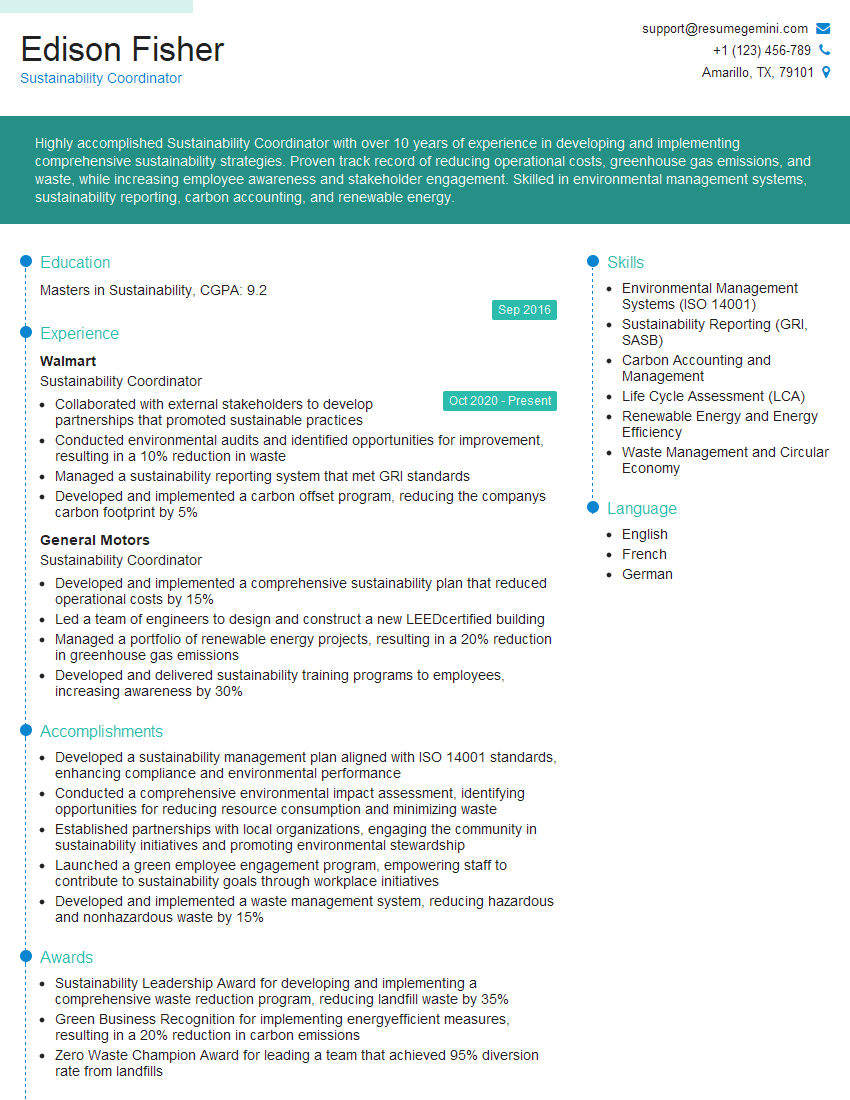
Sustainability Coordinator Resume Sample
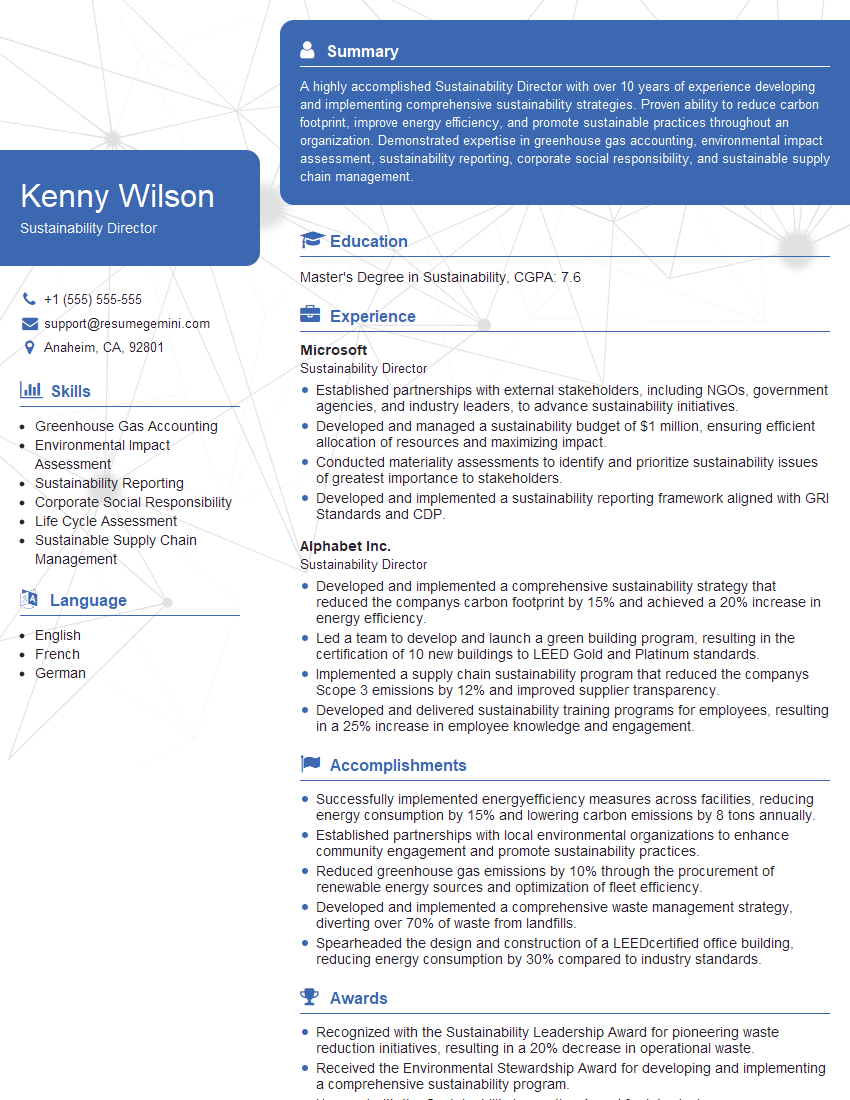
Sustainability Director Resume Sample
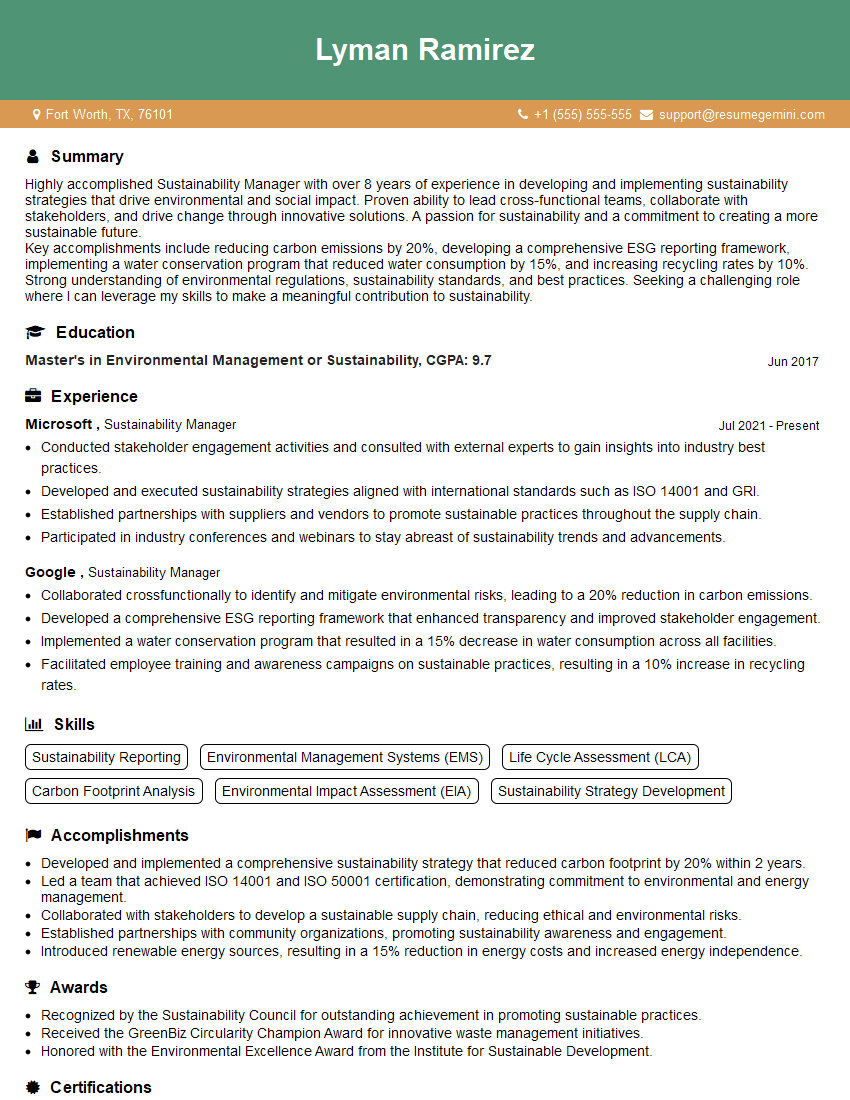
Sustainability Manager Resume Sample
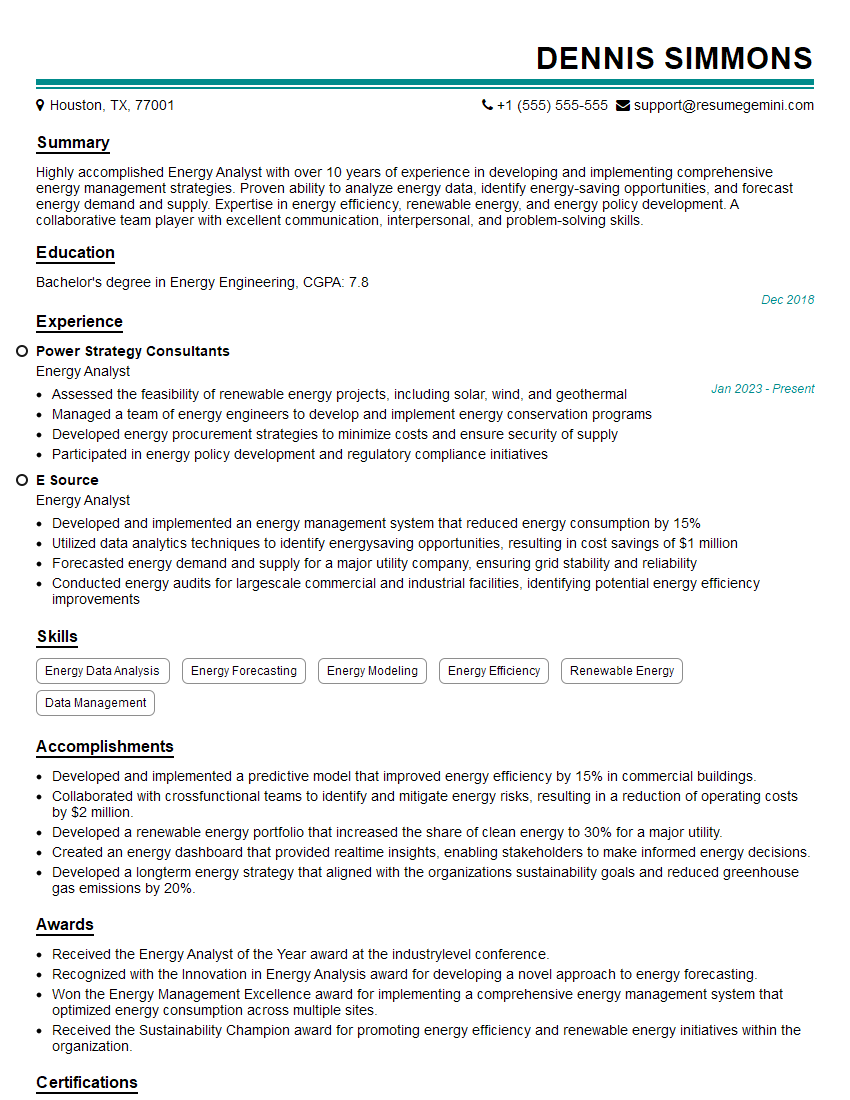
Energy Analyst Resume Sample
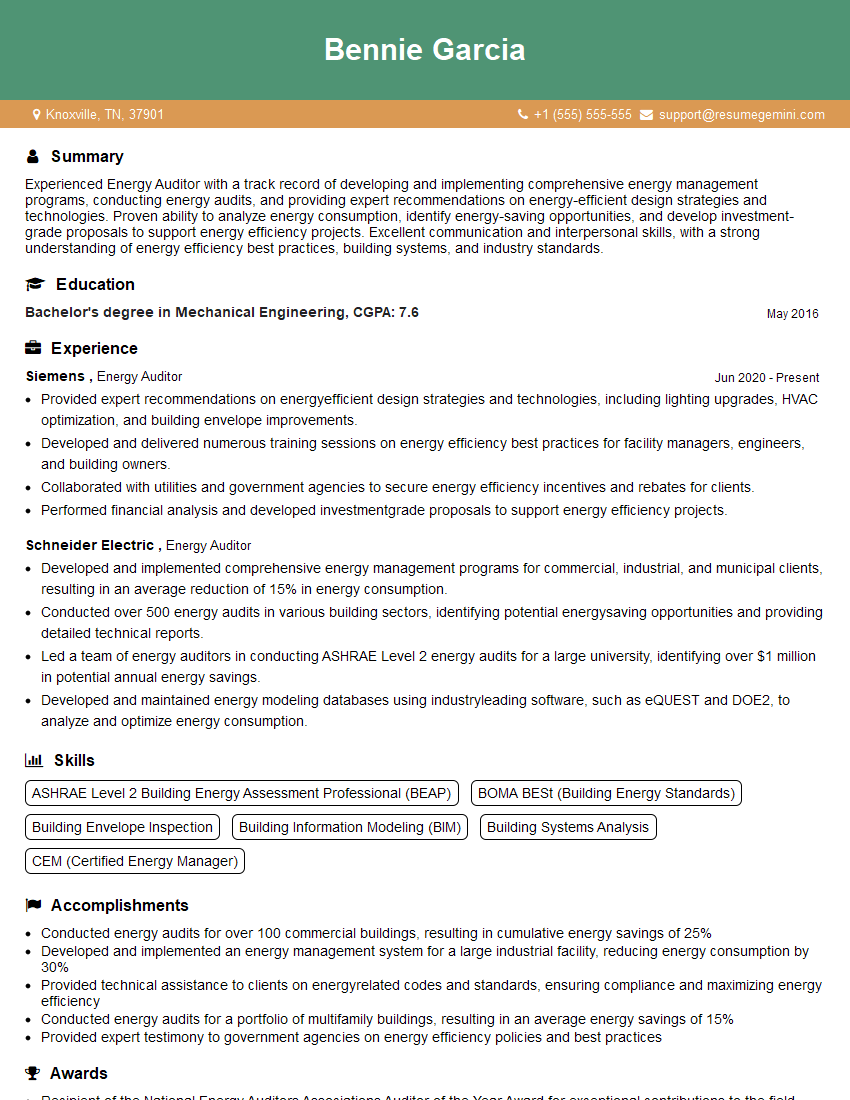
Energy Auditor Resume Sample
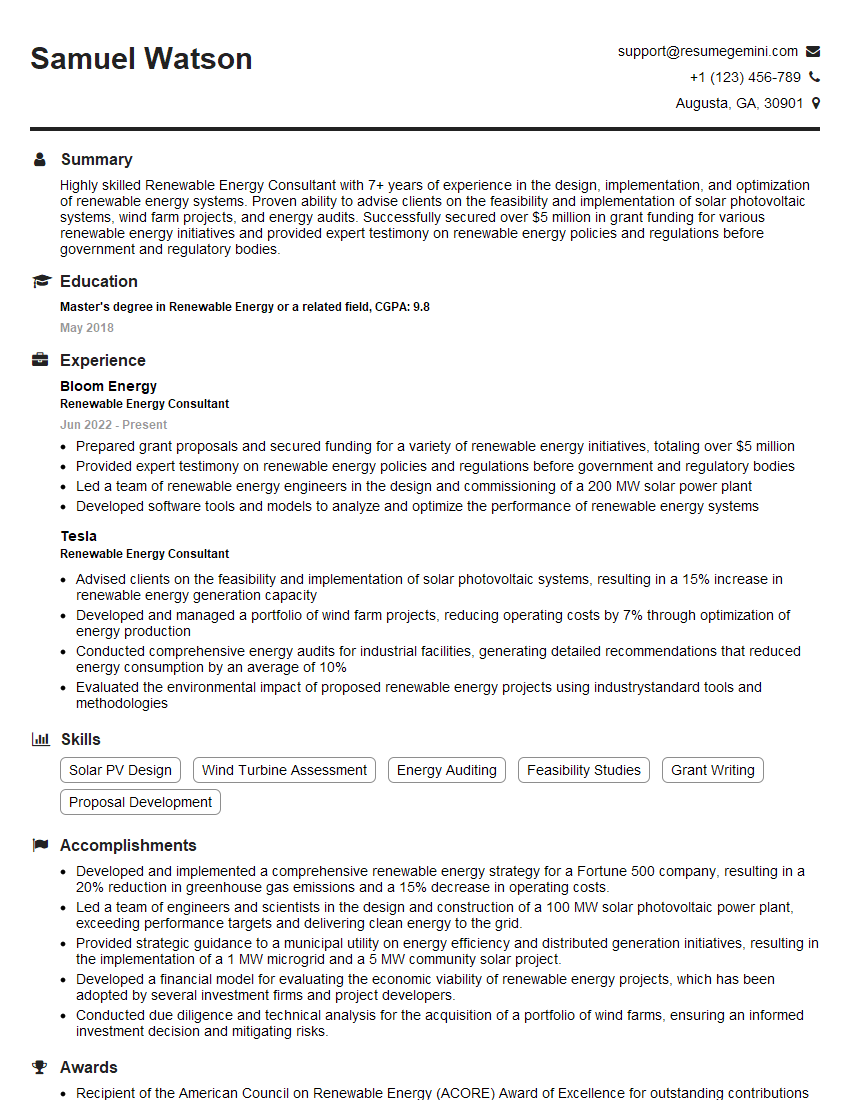
Renewable Energy Consultant Resume Sample

Sustainability Consultant Resume Sample
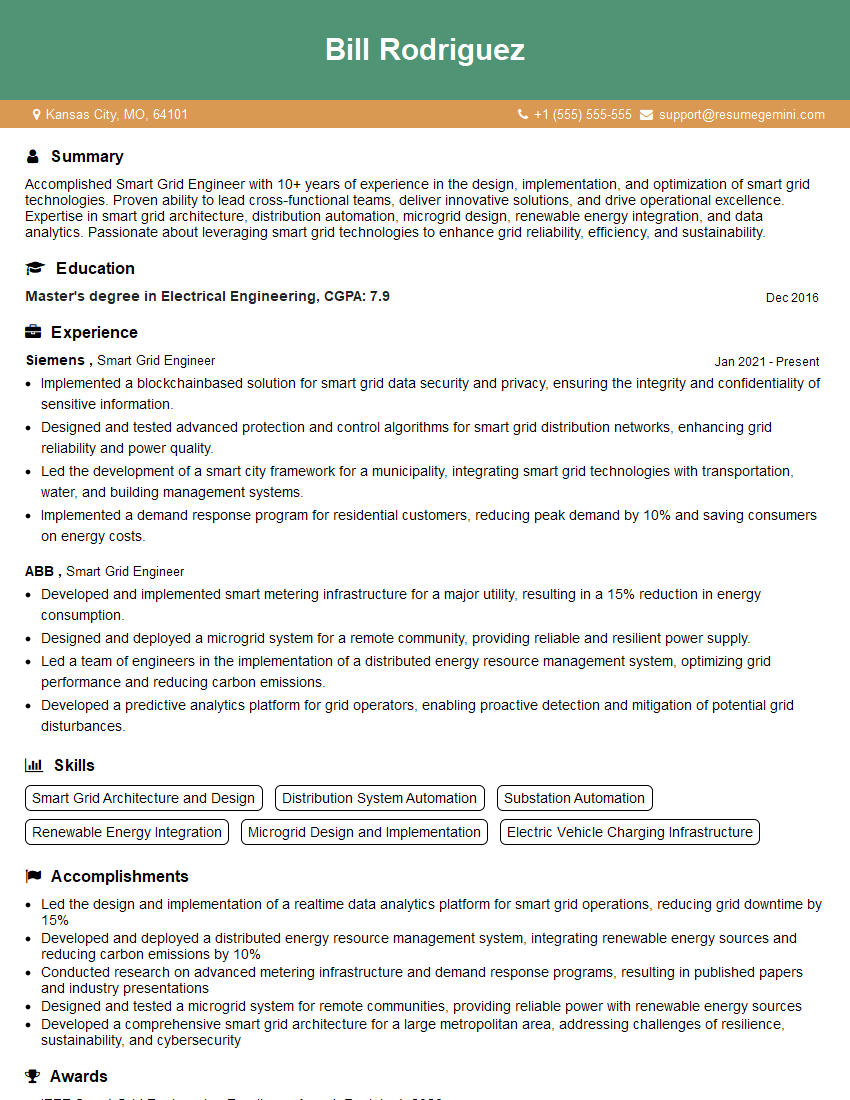
Smart Grid Engineer Resume Sample
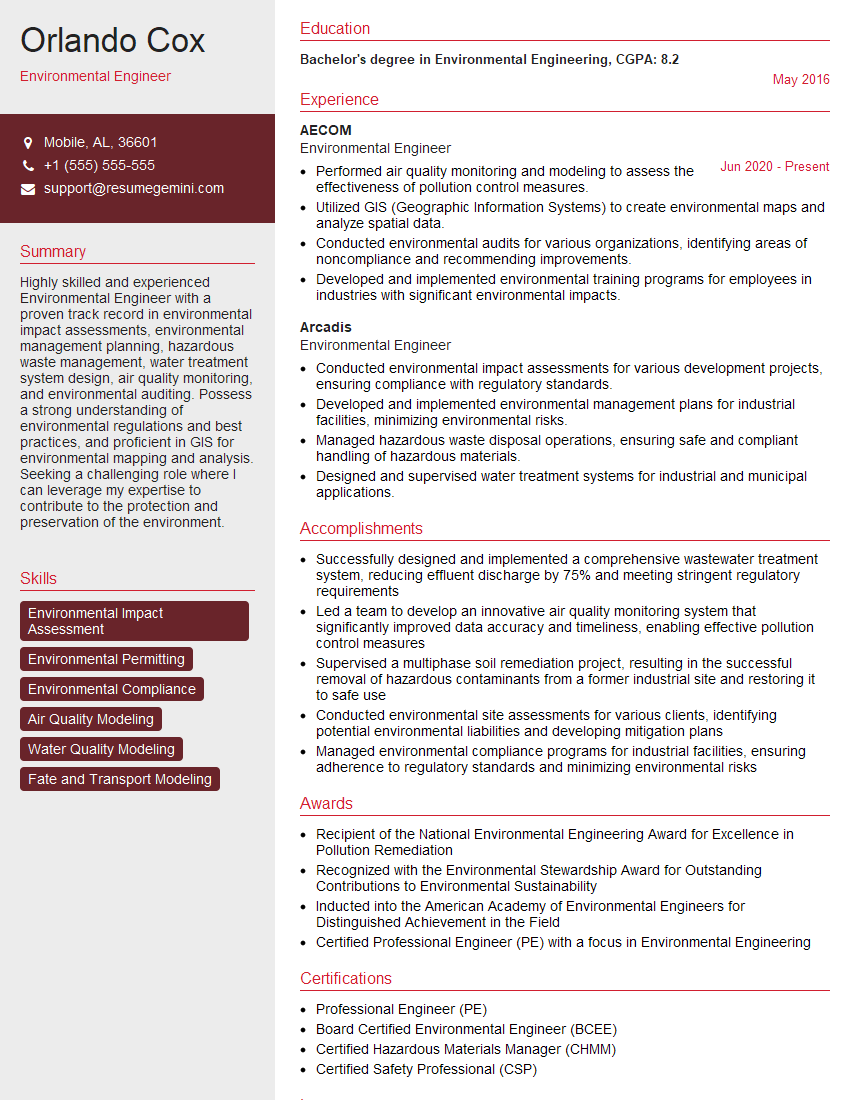
Environmental Engineer Resume Sample
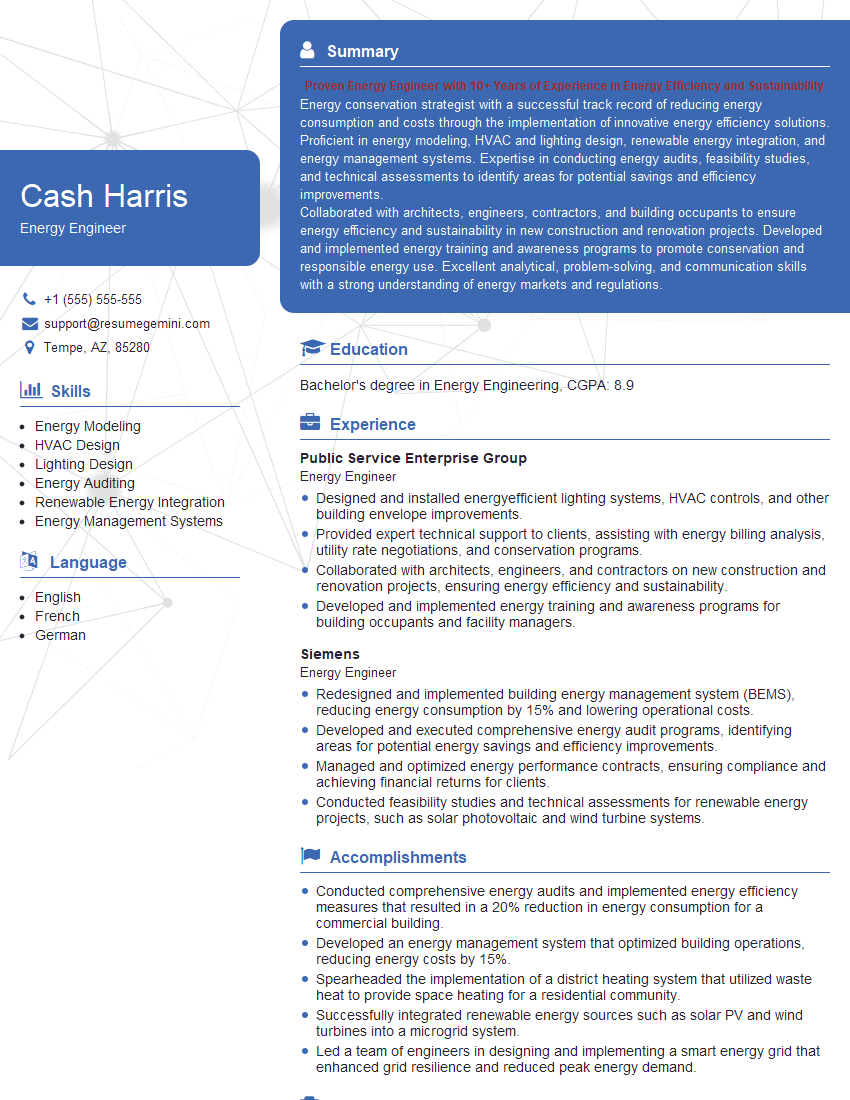
Energy Engineer Resume Sample
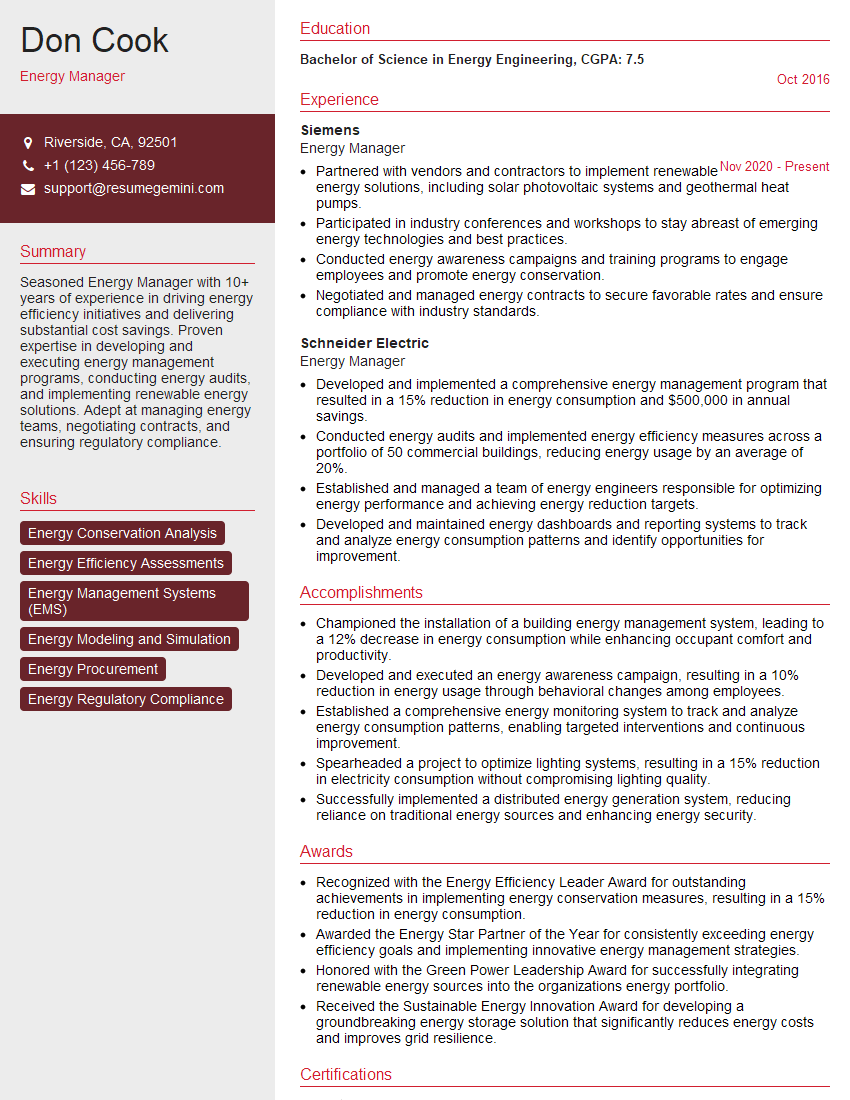
Energy Manager Resume Sample
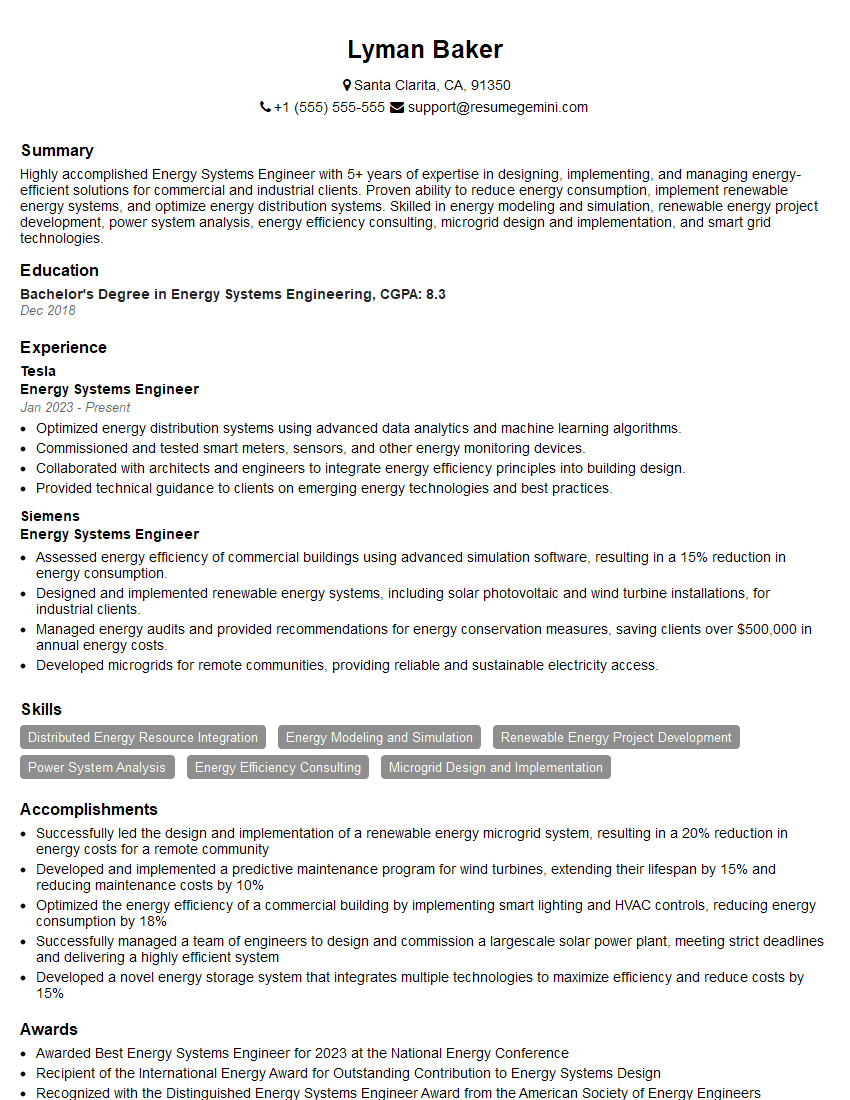
Energy Systems Engineer Resume Sample
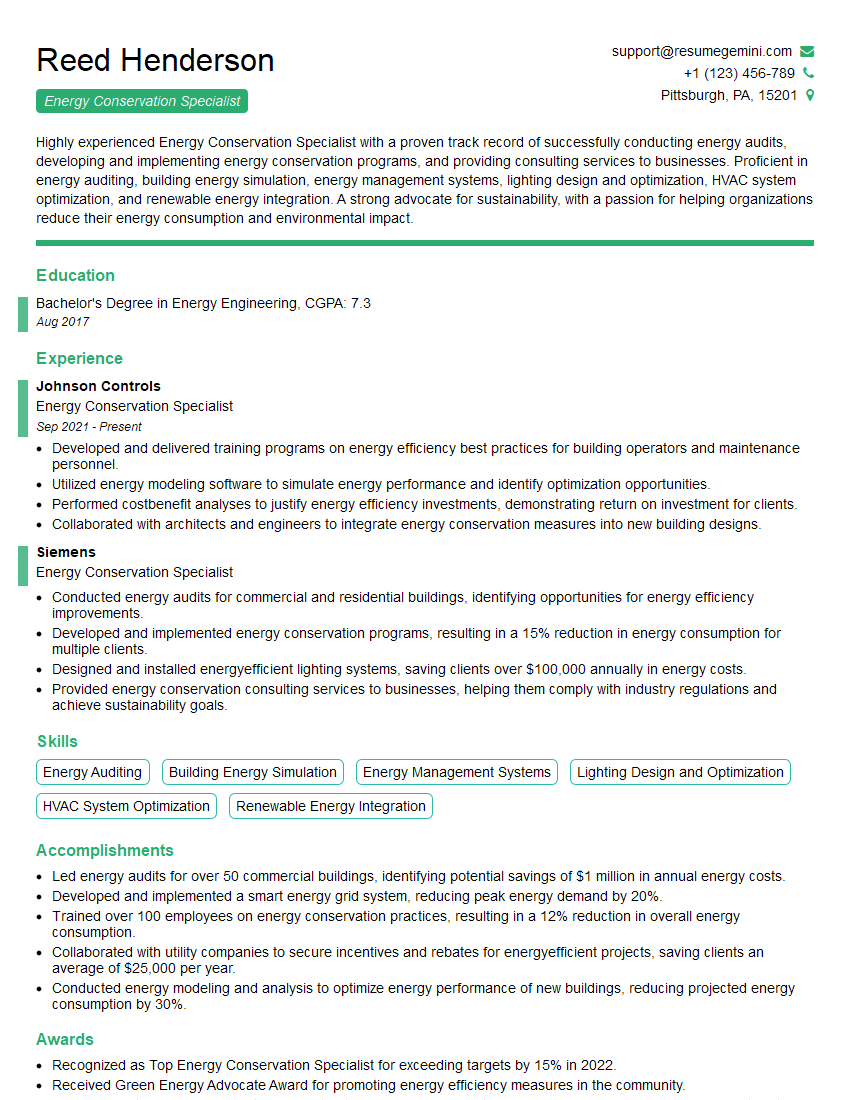
Energy Conservation Specialist Resume Sample
Explore more articles
Users Rating of Our Blogs
Share Your Experience
We value your feedback! Please rate our content and share your thoughts (optional).
What Readers Say About Our Blog
Very informative content, great job.
good