Are you ready to stand out in your next interview? Understanding and preparing for Motivational Coaching interview questions is a game-changer. In this blog, we’ve compiled key questions and expert advice to help you showcase your skills with confidence and precision. Let’s get started on your journey to acing the interview.
Questions Asked in Motivational Coaching Interview
Q 1. Explain the core principles of motivational interviewing.
Motivational Interviewing (MI) is a collaborative, person-centered form of guiding to elicit and strengthen motivation for change. It’s not about telling someone what to do, but empowering them to discover their own solutions. Its core principles revolve around four key elements: Partnership – working alongside the client as an equal; Acceptance – demonstrating empathy and unconditional positive regard; Compassion – showing genuine care and concern for the client’s well-being; and Evocation – drawing out the client’s own ideas, resources, and motivations for change, rather than imposing external solutions.
In practice, this means actively listening, asking open-ended questions, and reflecting the client’s feelings to build a strong therapeutic alliance. For instance, instead of saying ‘You should exercise more,’ an MI practitioner might ask, ‘What are some things that make it challenging for you to incorporate exercise into your routine?’ This allows the client to identify their own barriers and potential solutions, fostering a sense of ownership and commitment.
Q 2. Describe your approach to setting SMART goals with clients.
Setting SMART goals is crucial for achieving sustainable change. My approach involves a collaborative process with the client. We work together to ensure the goals are:
- Specific: Clearly defined and measurable, avoiding vague terms. Instead of ‘eat healthier,’ we might define ‘consume five servings of fruits and vegetables daily.’
- Measurable: Quantifiable progress can be tracked. For example, ‘lose 1 pound per week’ or ‘increase daily steps by 5000.’
- Achievable: Challenging but realistic, considering the client’s current capabilities and resources. We break down larger goals into smaller, manageable steps.
- Relevant: Aligned with the client’s values and long-term aspirations, ensuring intrinsic motivation.
- Time-bound: With specific deadlines to maintain focus and accountability. For instance, ‘achieve goal weight by six months from today.’
Throughout this process, I emphasize client autonomy, making sure the goals resonate with their personal vision and are not imposed upon them.
Q 3. How do you tailor your coaching style to different personality types?
I adapt my coaching style to different personality types by recognizing individual preferences and communication styles. For example, with introverted clients, I might favor quieter, reflective discussions, allowing them ample time to process information. Conversely, with extroverted clients, I might engage in more active, interactive sessions, encouraging them to share openly and brainstorm ideas. I also consider their preferred learning styles (visual, auditory, kinesthetic) to tailor my approach accordingly. A visual learner might benefit from charts and diagrams to illustrate progress, while a kinesthetic learner might find role-playing or physical activities more engaging.
Understanding personality traits like openness, conscientiousness, extraversion, agreeableness, and neuroticism (the ‘Big Five’) provides further insights into how to best support individual client needs. For example, a highly conscientious client might require less motivational support but more structure and guidance, while a more agreeable client might prioritize collaboration and teamwork.
Q 4. What techniques do you use to build rapport and trust with clients?
Building rapport and trust is foundational to successful coaching. I prioritize active listening, demonstrating genuine interest in the client’s experiences and perspectives. I use reflective listening to ensure I understand their concerns and feelings accurately. I also utilize empathy, validating their emotions and experiences, even if I don’t necessarily agree with their choices. Creating a safe and non-judgmental space is paramount; clients need to feel comfortable expressing themselves without fear of criticism.
I also employ mirroring techniques – subtly matching the client’s body language and tone – to create a sense of connection and understanding. Transparency is also key; I clearly communicate my role, my approach, and the process, setting realistic expectations from the start.
Q 5. How do you address client resistance or setbacks?
Resistance is a natural part of the change process; it’s not necessarily a sign of failure, but rather an opportunity for deeper exploration. When a client displays resistance, I use empathetic listening to understand the underlying concerns. I might ask open-ended questions to explore the reasons for their hesitation. For example, if a client resists a suggested goal, I might ask, ‘What concerns do you have about this approach?’ or ‘What would need to happen to make this feel more manageable for you?’
I avoid confrontation and instead focus on collaboration, exploring alternative strategies that better align with the client’s needs and preferences. I also utilize motivational interviewing techniques such as rolling with resistance and reframing obstacles as opportunities for growth.
Q 6. Describe your process for measuring client progress and success.
Measuring progress involves a multi-faceted approach. We establish baseline measures at the beginning of the coaching process, identifying key performance indicators (KPIs) related to the client’s goals. These might include weight, fitness levels, work performance metrics, or emotional well-being scores. Regular check-ins allow us to track progress against these KPIs using various tools such as journaling, questionnaires, or progress charts.
Client self-reporting is also crucial; I encourage clients to honestly assess their experiences and reflect on their achievements and challenges. Qualitative data, such as client feedback and observations, are equally important to gauge emotional well-being and overall satisfaction. Regular review sessions allow for adjustments and refinements to the strategy, ensuring the coaching plan remains relevant and effective.
Q 7. What ethical considerations guide your practice as a motivational coach?
Ethical considerations form the bedrock of my practice. Confidentiality is paramount; client information is strictly protected unless legally required to be disclosed. I maintain professional boundaries, ensuring a clear distinction between my role as a coach and any personal relationships. Informed consent is obtained before commencing any coaching engagement, outlining the process, expectations, and potential risks involved. Competence is maintained through continuous professional development, ensuring I possess the necessary skills and knowledge to effectively serve my clients. I also act with integrity, maintaining honesty and transparency in my interactions.
Moreover, I am aware of my own limitations and will refer clients to other professionals when appropriate, for instance, to therapists or medical experts, ensuring they receive the most comprehensive and appropriate support possible.
Q 8. How do you maintain confidentiality and client privacy?
Confidentiality and client privacy are paramount in my practice. I adhere to strict ethical guidelines and professional standards, ensuring all information shared during our sessions remains protected. This includes never discussing client matters with anyone outside of the coaching relationship, unless legally required to do so. I obtain informed consent before starting any coaching engagement, clearly outlining what information will be collected, how it will be used, and how it will be protected. My practice utilizes secure platforms for communication and storage of client data, further reinforcing their privacy. For example, I might use encrypted email or a secure client portal. Finally, I regularly review and update my privacy policies to reflect current best practices and legal requirements.
Q 9. How do you handle situations where a client is struggling with self-sabotaging behaviors?
Self-sabotaging behaviors are often rooted in deeply ingrained beliefs and patterns. My approach begins with empathetic exploration. I work collaboratively with the client to identify the root causes of these behaviors, understanding the underlying emotions and motivations. This might involve exploring past experiences, uncovering limiting beliefs, or identifying unmet needs. For instance, a client consistently missing deadlines might reveal a fear of failure or a lack of confidence in their abilities. We then co-create strategies to address these issues, perhaps implementing techniques like setting realistic goals, breaking down tasks into smaller manageable steps, developing positive self-talk, or exploring mindfulness practices. Progress is tracked and celebrated, building confidence and self-efficacy along the way. The entire process emphasizes self-compassion and understanding, fostering a supportive environment for change.
Q 10. Explain your experience with different coaching models (e.g., GROW, solution-focused).
I’ve extensively utilized several coaching models, adapting my approach to suit each client’s unique needs and preferences. The GROW model (Goal, Reality, Options, Will) provides a structured framework for setting goals and developing action plans. I use it frequently to help clients define their desired outcomes, assess their current situation, brainstorm potential solutions, and commit to actionable steps. Solution-focused brief therapy emphasizes identifying and building on existing strengths and resources. This approach focuses on future possibilities rather than dwelling on past problems. For example, if a client is struggling with public speaking, instead of analyzing past negative experiences, we focus on what aspects of the next presentation they already feel confident about and build from there. I also draw from cognitive behavioral therapy (CBT) principles, helping clients identify and challenge negative thought patterns and replace them with more positive and realistic ones. My approach is eclectic; I select the most effective tools and techniques from various models to maximize client outcomes.
Q 11. How do you identify and address limiting beliefs in your clients?
Identifying limiting beliefs is a crucial aspect of effective coaching. I use a combination of techniques, including active listening, open-ended questions, and reflective statements to help clients uncover these subconscious beliefs that hold them back. For example, if a client consistently says they ‘can’t’ achieve a certain goal, we delve deeper to understand the origins of that belief. Is it based on past experiences, societal pressures, or self-doubt? Once a limiting belief is identified, we collaboratively challenge its validity through evidence-based reasoning and exploring alternative perspectives. We might use techniques such as reframing negative thoughts, replacing them with empowering affirmations, and visualizing success. This helps clients shift their perspective and replace self-limiting beliefs with empowering ones, enabling them to move forward with confidence.
Q 12. What strategies do you use to help clients overcome procrastination?
Procrastination often stems from underlying fear, perfectionism, or feeling overwhelmed. I address it by helping clients understand the root cause and then implement practical strategies. This includes breaking down large tasks into smaller, manageable steps, setting realistic deadlines, using time management techniques like the Pomodoro Technique (working in focused bursts with short breaks), utilizing accountability partners, and rewarding themselves for completing tasks. We also explore strategies to manage perfectionism, such as setting a “good enough” standard instead of striving for unattainable perfection. Ultimately, the goal is to help the client develop a more effective and sustainable approach to task management, improving their productivity and reducing stress.
Q 13. How do you help clients develop effective coping mechanisms for stress and anxiety?
Developing effective coping mechanisms for stress and anxiety is a process that involves education, practice, and self-compassion. I teach clients various techniques such as mindfulness meditation, deep breathing exercises, progressive muscle relaxation, and journaling to manage stress and anxiety. We also explore cognitive restructuring techniques, helping clients identify and challenge negative thought patterns that contribute to their anxiety. Additionally, I may recommend activities that promote relaxation and well-being, such as exercise, spending time in nature, or engaging in hobbies. Importantly, I emphasize the importance of self-care and building a strong support system to buffer against stress and adversity. I might also recommend professional support if the client’s anxiety significantly impacts their daily functioning.
Q 14. How do you support clients in achieving work-life balance?
Achieving work-life balance is a continuous process, not a destination. I help clients define their priorities and values, identifying what truly matters to them in both their professional and personal lives. We then work together to create a realistic and sustainable plan that aligns with these priorities, setting clear boundaries between work and personal time. This may involve strategies like time blocking, prioritizing tasks, delegating responsibilities, learning to say “no” to additional commitments, and scheduling regular time for relaxation and self-care. Ultimately, the goal is to create a life where work is fulfilling and personal life is enriching, enabling clients to experience greater overall well-being.
Q 15. Describe your approach to helping clients manage difficult emotions.
Helping clients manage difficult emotions is a cornerstone of motivational coaching. My approach is multifaceted, focusing on validation, understanding the root cause, and developing healthy coping mechanisms. I begin by creating a safe and non-judgmental space where clients feel comfortable expressing their feelings without fear of criticism.
We then work together to identify the triggers and underlying beliefs contributing to these emotions. For instance, if a client experiences frequent anxiety before presentations, we might explore their past experiences with public speaking, their self-perception, and their underlying fears of failure. This process often involves active listening, empathy, and using techniques like cognitive reframing to challenge negative thought patterns.
Once we understand the root cause, we collaboratively develop coping strategies tailored to the client’s needs. This might include mindfulness exercises, deep breathing techniques, journaling, or seeking support from a therapist or support group. Regular check-ins and adjustments to the strategy ensure its effectiveness and adaptability to evolving emotional landscapes. The goal is not to eliminate emotions entirely, but to equip clients with the tools to manage them effectively and constructively.
Career Expert Tips:
- Ace those interviews! Prepare effectively by reviewing the Top 50 Most Common Interview Questions on ResumeGemini.
- Navigate your job search with confidence! Explore a wide range of Career Tips on ResumeGemini. Learn about common challenges and recommendations to overcome them.
- Craft the perfect resume! Master the Art of Resume Writing with ResumeGemini’s guide. Showcase your unique qualifications and achievements effectively.
- Don’t miss out on holiday savings! Build your dream resume with ResumeGemini’s ATS optimized templates.
Q 16. How do you utilize feedback to improve your coaching practice?
Client feedback is invaluable for refining my coaching practice. I actively solicit feedback through various channels, including formal post-session evaluations, informal check-ins, and anonymous surveys. I also pay close attention to nonverbal cues and client engagement during our sessions. Constructive criticism is particularly important.
For example, if a client suggests that a particular exercise wasn’t helpful, I analyze why that might be the case. Was the exercise poorly explained? Was it not aligned with the client’s learning style or current emotional state? Did the timing feel off? This reflection process allows me to modify my techniques, adapt my communication style, or even incorporate new strategies to better meet client needs. I maintain a detailed record of feedback, tracking trends and identifying areas for improvement. This continuous feedback loop ensures I’m providing the most effective and personalized coaching experience possible.
Q 17. What are some common challenges you encounter as a motivational coach?
Motivational coaching presents unique challenges. One common challenge is helping clients overcome resistance to change. People are often comfortable in their routines, even if those routines are hindering their progress. Overcoming this inertia requires building trust, demonstrating empathy, and skillfully guiding them towards self-discovery and commitment.
Another challenge is managing client expectations. While I strive to empower clients, I also need to manage unrealistic expectations about the speed and ease of personal growth. Change takes time and effort. Setting realistic goals and celebrating small victories along the way is crucial. Finally, there’s the challenge of maintaining boundaries as a coach. It’s essential to remain objective and supportive without becoming overly involved in a client’s personal life.
Q 18. How do you stay current with the latest trends and research in motivational coaching?
Staying current in motivational coaching involves continuous learning. I actively engage with professional organizations like the International Coaching Federation (ICF), attending their conferences and webinars to learn about the latest research and best practices. I also subscribe to relevant journals and publications, keeping up with emerging trends in positive psychology, neuroscience, and behavioral science.
Furthermore, I regularly participate in professional development workshops and training sessions. These opportunities help me enhance my coaching skills, learn new techniques, and expand my knowledge base. Networking with fellow coaches through online forums and in-person events also facilitates the exchange of ideas and best practices, ensuring my approach remains relevant and effective.
Q 19. Describe a time you had to adapt your coaching approach to a specific client’s needs.
I once worked with a client who was highly analytical and detail-oriented. My usual approach, which involved intuitive exercises and open-ended discussions, wasn’t resonating with them. They felt overwhelmed and struggled to connect with the abstract concepts. Recognizing this, I adapted my approach by focusing on data-driven methods.
I incorporated goal-setting frameworks that involved measurable metrics and regular progress tracking. We used spreadsheets to visualize their progress and I provided them with detailed reports analyzing their strengths and areas for improvement. This data-driven approach, which resonated with their analytical style, significantly boosted their engagement and helped them stay accountable to their goals. This experience highlighted the importance of flexibility and adapting my coaching methods to align with each client’s unique learning preferences and personality.
Q 20. How do you ensure client accountability and commitment to their goals?
Ensuring client accountability and commitment involves a collaborative approach. Firstly, goal setting is crucial, but it must be a joint effort, ensuring goals are SMART (Specific, Measurable, Achievable, Relevant, Time-bound). We co-create action plans with clear steps and deadlines. This shared ownership fosters commitment.
Regular check-ins are essential to monitor progress, address challenges, and provide support. I encourage clients to self-monitor their progress using journaling, habit trackers, or other tools. Accountability partners or group coaching can also be beneficial, creating peer support and shared accountability. Finally, celebrating successes, no matter how small, reinforces positive behaviors and motivates continued effort. It’s about fostering intrinsic motivation rather than relying solely on external pressure.
Q 21. What are your strengths and weaknesses as a motivational coach?
My strengths lie in my ability to build strong rapport with clients, creating a safe and trusting environment. I’m a good listener, skilled at asking insightful questions, and adept at facilitating self-discovery. I’m also adaptable, modifying my approach to suit individual needs. I am highly organized and detail-oriented, ensuring thorough follow-up and comprehensive tracking of client progress.
One area I am constantly working on is enhancing my skills in conflict resolution. While I’m comfortable addressing challenges, refining my techniques in mediating internal conflicts or external conflicts related to achieving goals is an ongoing focus of my professional development. I am also continually striving to refine my ability to help clients who struggle to articulate their needs or emotions effectively.
Q 22. How do you handle conflicts or disagreements with clients?
Conflict is inevitable in any coaching relationship. My approach prioritizes open communication and collaboration. I view disagreements not as failures, but as opportunities for deeper understanding and growth. I start by actively listening to my client’s perspective, validating their feelings, and seeking clarification on the root cause of the conflict. Then, I facilitate a collaborative problem-solving process, focusing on finding mutually agreeable solutions. This might involve reframing the issue, exploring alternative viewpoints, or brainstorming creative options together. For instance, if a client feels their goals are unrealistic, we’d collaboratively refine them, breaking them into smaller, manageable steps. If a disagreement arises regarding the coaching approach, we’d openly discuss the client’s preferences and adjust accordingly, while ensuring alignment with ethical coaching principles. Ultimately, the goal is to strengthen the client-coach relationship and ensure the coaching process remains productive and supportive.
Q 23. What are your fees and payment structures?
My fees are structured to be transparent and tailored to the client’s needs and budget. I offer different packages, ranging from single sessions to comprehensive programs spanning several months. My base rate for a single session is [Insert your rate], but this can be adjusted depending on the intensity and duration of the coaching engagement. For example, a longer-term package may offer a discounted per-session rate. Payment options are flexible and include secure online payment processing through [mention platforms], as well as the possibility of installment plans for longer programs. I am always open to discussing payment arrangements that work for the client, ensuring access to quality coaching is not limited by financial constraints. I believe that everyone deserves the opportunity for personal and professional growth, and I will always make an effort to accommodate the client’s needs in this area.
Q 24. What is your client acquisition strategy?
My client acquisition strategy focuses on building a strong professional network and leveraging digital marketing. I actively participate in industry events, networking groups, and online communities to connect with potential clients. I also maintain an active presence on social media platforms like LinkedIn, where I share valuable content related to motivational coaching, building my credibility and showcasing my expertise. Moreover, I utilize content marketing, creating blog posts and articles on relevant topics to attract organic traffic and position myself as a thought leader in the field. Finally, I rely on referrals from satisfied clients, demonstrating the strength of positive word-of-mouth marketing. All these strategies work together to build trust, credibility, and ultimately attract ideal clients who align with my coaching style and expertise.
Q 25. How do you handle challenging client situations?
Challenging client situations require a nuanced approach emphasizing empathy, ethical boundaries, and professional competence. For instance, if a client experiences a setback, I would actively listen to their feelings without judgment and help them reframe their perspective, focusing on lessons learned and identifying new strategies. If a client exhibits resistance to change, I utilize motivational interviewing techniques, gently guiding them towards self-discovery and commitment to their goals. If a client discloses sensitive personal information, I prioritize maintaining confidentiality and ethical boundaries, referring them to additional support if necessary. I always refer back to our established coaching agreement to ensure clarity of expectations and boundaries. Documenting these interactions is essential for accountability and for ensuring the coaching process remains constructive and supportive, even amidst challenging circumstances.
Q 26. How do you measure the effectiveness of your coaching interventions?
Measuring the effectiveness of my coaching interventions involves a multi-faceted approach combining qualitative and quantitative data. Quantitatively, I might track progress towards established goals, using metrics specific to each client’s objectives. For example, if a client aims to improve their public speaking skills, we would measure progress via video recordings and audience feedback. Qualitatively, I rely on regular check-ins, feedback sessions, and client self-assessments to gain a holistic understanding of their progress and overall well-being. I also use standardized assessments like questionnaires before and after the coaching engagement to identify any meaningful changes in self-efficacy, motivation, and overall emotional well-being. This combination of quantitative and qualitative data allows for a comprehensive and nuanced evaluation of the coaching’s impact.
Q 27. What is your approach to continuing professional development?
Continuing professional development (CPD) is crucial for maintaining my competency and staying at the forefront of motivational coaching best practices. I dedicate a significant amount of time each year to CPD activities. This includes attending conferences and workshops, participating in peer supervision groups, engaging in ongoing professional training, and constantly researching the latest research in psychology and coaching methodologies. Moreover, I regularly review and update my coaching tools and techniques to ensure they remain relevant and effective. This commitment to ongoing learning enables me to provide clients with the most up-to-date and effective support, guaranteeing the best possible outcome of the coaching engagement.
Q 28. Describe your ideal client profile.
My ideal client is someone who is self-aware, committed to personal growth, and actively seeking positive change in their life. They are proactive, open to feedback, and willing to invest time and effort into the coaching process. They possess a clear desire for self-improvement and are ready to take ownership of their actions and choices. They are not necessarily looking for a quick fix, but are prepared for a journey of self-discovery and personal transformation. They value collaboration and trust, forming a strong and collaborative relationship with their coach. While a client’s background or specific challenges can be diverse, the shared characteristic is a desire for meaningful, lasting change.
Key Topics to Learn for Your Motivational Coaching Interview
- Understanding Motivational Interviewing (MI): Explore the core principles of MI, including collaboration, evocation, autonomy, and empathy. Consider how these principles translate into practical coaching sessions.
- Goal Setting & Action Planning: Learn frameworks for effective goal setting, including SMART goals and the importance of breaking down large goals into manageable steps. Practice guiding clients through action planning exercises.
- Building Rapport & Trust: Understand the importance of active listening, reflective listening, and creating a safe and supportive environment for clients. Consider how to build rapport with diverse individuals.
- Overcoming Resistance & Addressing Ambivalence: Learn techniques for addressing client resistance and ambivalence towards change. Explore how to guide clients through difficult emotions and self-limiting beliefs.
- Ethical Considerations in Coaching: Familiarize yourself with ethical guidelines and best practices in motivational coaching. Understand issues of confidentiality, boundaries, and professional responsibility.
- Measuring Progress & Outcomes: Learn methods for tracking client progress and measuring the effectiveness of your coaching interventions. Understand the importance of data-driven decision-making.
- Self-Care and Burnout Prevention: Explore strategies for maintaining your own well-being as a motivational coach. Discuss the importance of setting healthy boundaries and managing stress effectively.
- Different Coaching Models and Approaches: Research various coaching models (e.g., strengths-based coaching, solution-focused brief therapy) and understand their applications in different contexts.
Next Steps
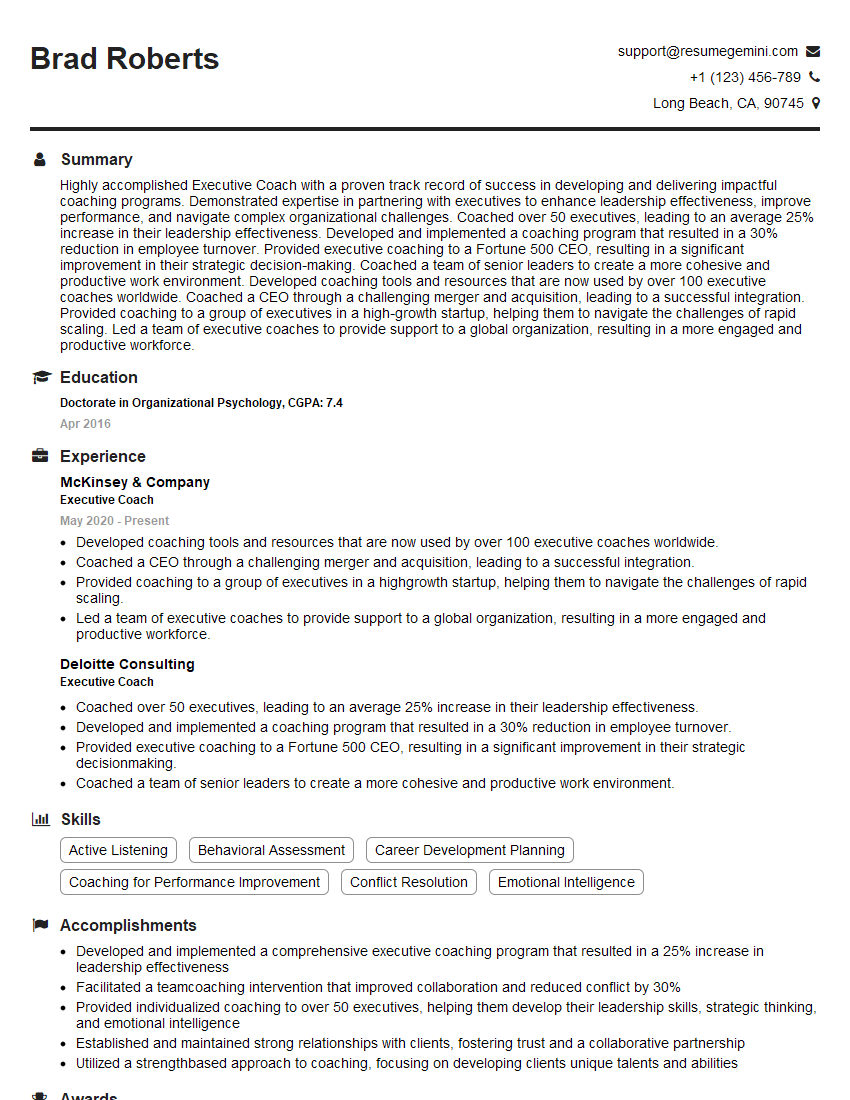
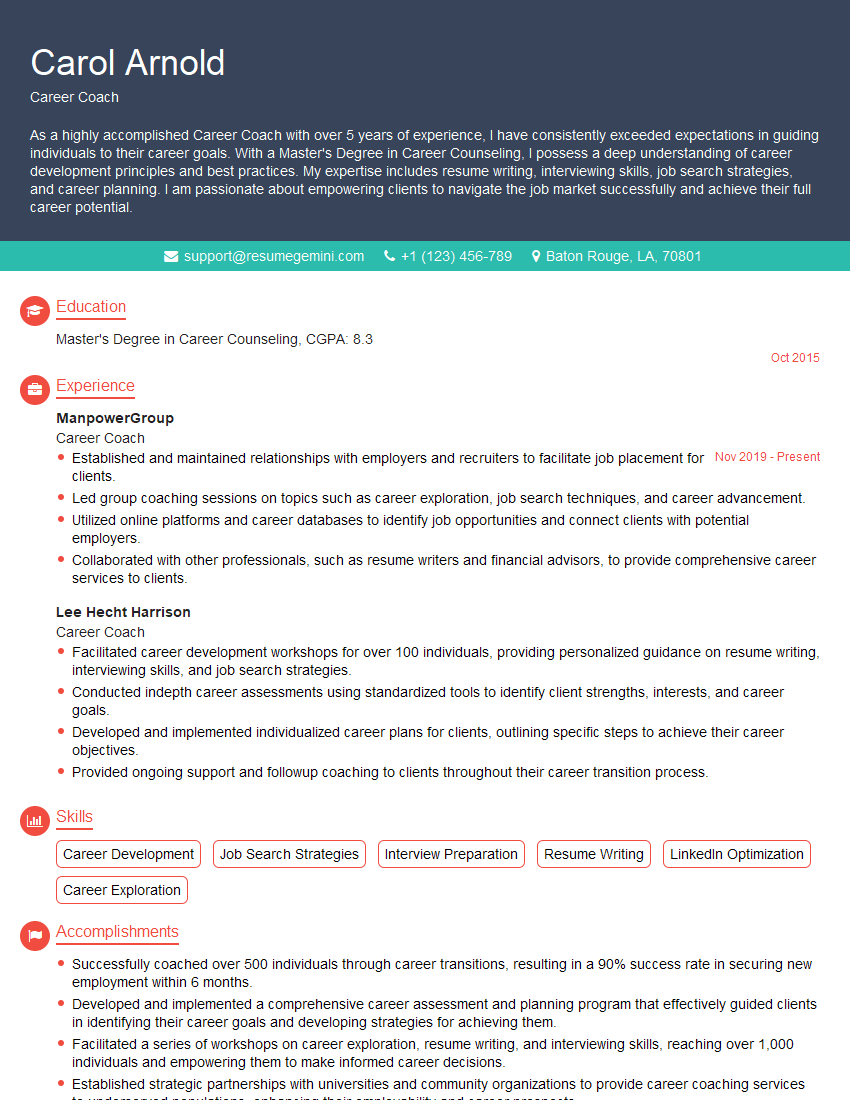
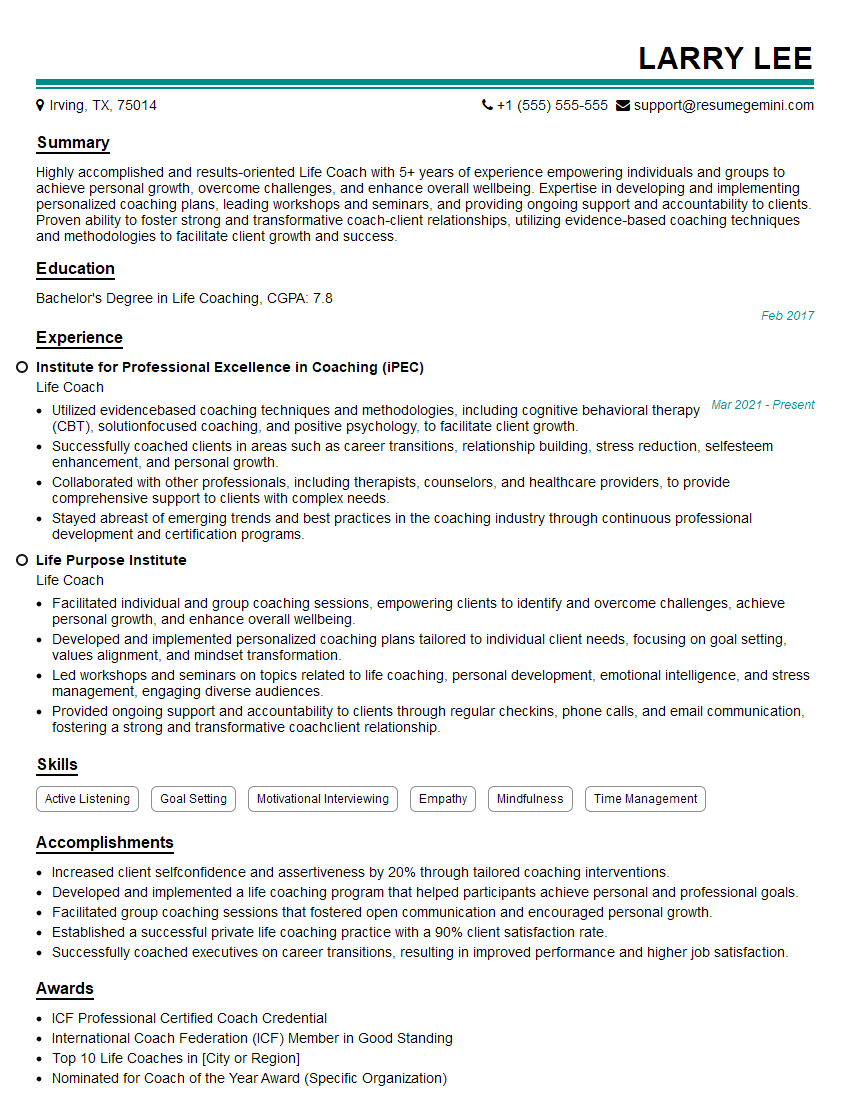
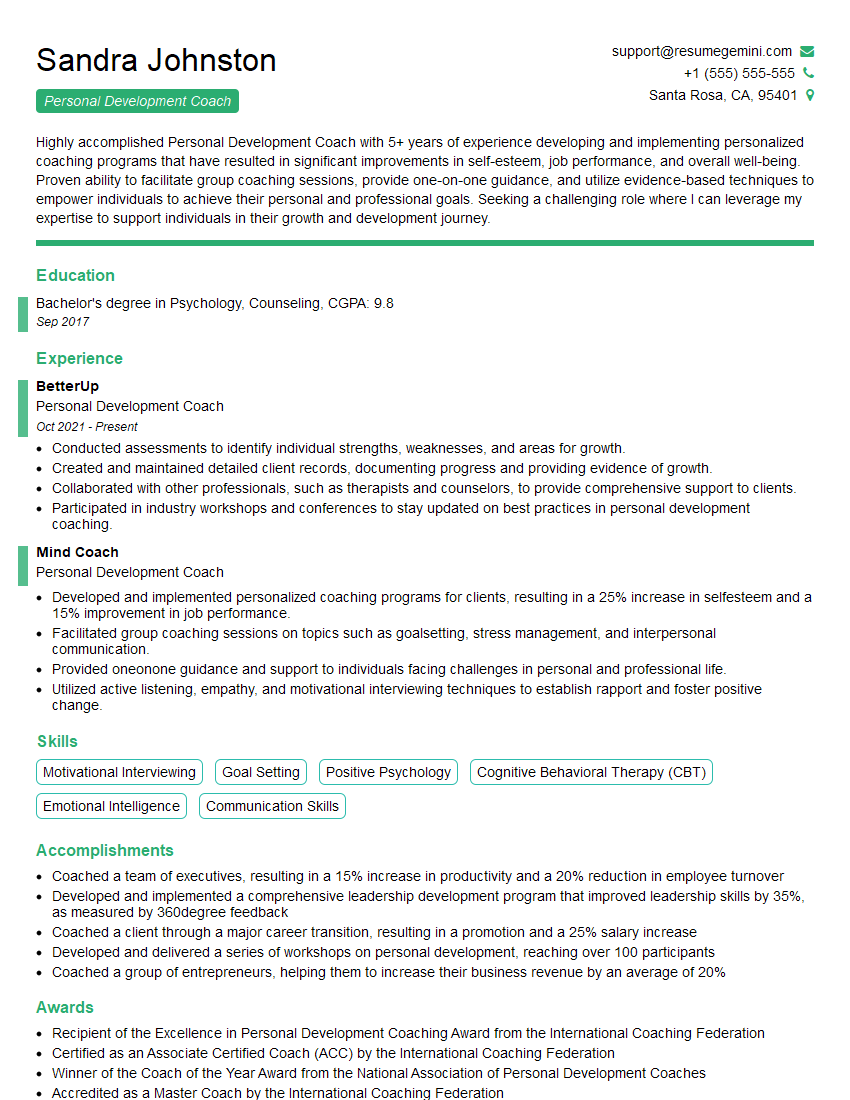
Mastering motivational coaching opens doors to a rewarding career helping others achieve their full potential. To maximize your job prospects, a strong, ATS-friendly resume is crucial. ResumeGemini is a trusted resource to help you craft a compelling resume that showcases your skills and experience effectively. ResumeGemini provides examples of resumes tailored to motivational coaching, guiding you to create a document that highlights your unique qualifications and catches the eye of potential employers. Invest the time to build a resume that reflects your expertise and passion – it’s a key step towards landing your dream job.

Explore more articles
Users Rating of Our Blogs
Share Your Experience
We value your feedback! Please rate our content and share your thoughts (optional).
What Readers Say About Our Blog
Very informative content, great job.
good