The thought of an interview can be nerve-wracking, but the right preparation can make all the difference. Explore this comprehensive guide to Energy systems analysis interview questions and gain the confidence you need to showcase your abilities and secure the role.
Questions Asked in Energy systems analysis Interview
Q 1. Explain the difference between AC and DC power systems.
The fundamental difference between AC (Alternating Current) and DC (Direct Current) power systems lies in the direction of electron flow. In a DC system, electrons flow consistently in one direction, like a river flowing downstream. This is simple to understand and produces a constant voltage. Think of a battery; it provides a steady DC voltage. In an AC system, however, the electron flow periodically reverses direction, oscillating back and forth. Imagine a seesaw; it moves up and down, changing its direction repeatedly. This creates a voltage that varies sinusoidally over time. Our household electricity is AC.
The choice between AC and DC depends on the application. DC is preferable for applications requiring constant voltage, such as charging batteries or powering electronic devices. AC, on the other hand, is more efficient for long-distance transmission due to the ease with which AC voltage can be stepped up and down using transformers, minimizing transmission losses. This is why AC is the dominant system for power grids globally.
Q 2. Describe different types of renewable energy sources and their advantages/disadvantages.
Renewable energy sources harness naturally replenishing resources to generate electricity. Several key types exist:
- Solar Power: Uses photovoltaic (PV) cells to convert sunlight directly into electricity or concentrated solar power (CSP) systems using mirrors to focus sunlight to heat a fluid and drive a turbine. Advantages: Abundant, widely available, low greenhouse gas emissions. Disadvantages: Intermittent (dependent on sunlight), land-use requirements, manufacturing impacts.
- Wind Power: Uses wind turbines to convert wind energy into electricity. Advantages: Abundant in many areas, relatively low environmental impact. Disadvantages: Intermittent (dependent on wind speed), visual impact, potential noise pollution.
- Hydropower: Uses the potential energy of water stored in dams to generate electricity. Advantages: Reliable, high capacity factor. Disadvantages: Significant environmental impact on ecosystems, potential for methane emissions from reservoirs.
- Geothermal Power: Harnesses heat from the Earth’s interior to generate electricity. Advantages: Reliable, baseload power, low greenhouse gas emissions. Disadvantages: Location-specific, potential for induced seismicity.
- Biomass Energy: Uses organic matter (wood, crops, waste) to generate electricity through combustion or gasification. Advantages: Can be sustainable if managed properly, can reduce waste. Disadvantages: Potential for air pollution, can compete with food production if not managed sustainably.
Q 3. How do you model energy demand in different scenarios?
Modeling energy demand involves forecasting future electricity consumption under various conditions. Several methods are employed, often in combination:
- Econometric Modeling: Uses statistical techniques to relate energy demand to economic variables like GDP growth, population, and energy prices. This helps understand long-term trends.
- End-Use Modeling: Analyzes energy consumption by sector (residential, industrial, transportation) and appliance type, considering factors like efficiency improvements and technological changes.
- Agent-Based Modeling: Simulates the behavior of individual consumers or producers, considering their choices and interactions, to predict aggregate demand.
- Scenario Planning: Develops different possible futures (e.g., high economic growth, climate change mitigation policies) and models demand under each scenario, enabling risk assessment and informed decision-making.
For example, a scenario planning approach might model peak demand during heat waves under a climate change scenario, highlighting the need for increased grid capacity or flexible demand-side management strategies.
Q 4. What are the key challenges in integrating renewable energy into the grid?
Integrating renewable energy sources into the existing grid presents significant challenges:
- Intermittency: The variable nature of solar and wind power requires sophisticated forecasting and grid management to ensure reliability. This often involves deploying energy storage or other balancing resources.
- Grid Stability: The fluctuating power output of renewables can destabilize the grid, requiring advanced control systems and grid modernization to accommodate these fluctuations.
- Transmission and Distribution Infrastructure: Existing infrastructure may not be adequate to handle the distributed nature of renewable energy sources, necessitating grid upgrades and expansions.
- Cost: The initial investment costs associated with renewable energy technologies and grid modernization can be substantial.
- Geographic Limitations: Not all regions are equally suited for all renewable energy sources. Optimal resource placement requires careful site analysis.
These challenges necessitate a multifaceted approach involving advanced grid technologies, smart grids, energy storage, and effective policy mechanisms to ensure a smooth transition to a decarbonized electricity system.
Q 5. Explain the concept of energy storage and its role in grid stability.
Energy storage is crucial for improving the reliability and stability of grids incorporating intermittent renewable energy sources. It allows for the storage of excess energy generated during periods of high renewable output and its release when generation is low or demand is high.
Various energy storage technologies exist, including:
- Pumped Hydro Storage: Pumps water uphill during periods of low demand, then releases it to generate electricity during peak demand.
- Batteries (Lithium-ion, etc.): Store electricity chemically and release it on demand.
- Compressed Air Energy Storage (CAES): Compresses air during low demand periods and uses it to drive turbines during peak demand.
- Thermal Storage: Stores energy as heat (e.g., molten salt) and releases it later to generate electricity or provide heat.
By providing grid balancing services and ensuring consistent power supply, energy storage technologies are vital for enhancing grid reliability and facilitating the integration of renewable energy.
Q 6. What are the different methods for energy efficiency analysis?
Energy efficiency analysis aims to identify and quantify opportunities to reduce energy consumption while maintaining or improving the functionality of systems. Several methods exist:
- Energy Audits: Comprehensive assessments of energy use in buildings or industrial processes, identifying areas for improvement.
- Life-Cycle Assessment (LCA): Evaluates the environmental impacts of a product or process throughout its entire life cycle, including energy consumption at each stage.
- Building Energy Modeling: Uses software to simulate energy performance of buildings, allowing for optimization of design and operation.
- Process Energy Analysis: Investigates energy consumption in industrial processes, identifying opportunities for efficiency improvements.
These methods may involve data collection, analysis, and modeling, often requiring specialized software and expertise. The results inform decisions on energy-saving investments, policy development, and operational improvements.
Q 7. How do you perform a load flow analysis?
Load flow analysis is a fundamental power system study that determines the steady-state operating conditions of a power system under a given load. It calculates the voltage magnitude and phase angle at each bus (node) in the system and the power flow in each line. This analysis is crucial for planning and operation, ensuring system stability and efficiency.
Methods for performing load flow analysis include:
- Gauss-Seidel Method: An iterative method that solves the power flow equations repeatedly until convergence is achieved. This is a classic approach known for its simplicity but can be slow for large systems.
- Newton-Raphson Method: A more sophisticated iterative method that uses the Jacobian matrix to improve convergence speed, suitable for large power systems. It’s known for its speed and accuracy but requires more computational resources.
- Fast Decoupled Method: A simplified version of the Newton-Raphson method that decouples the real and reactive power equations, leading to faster computation with some loss of accuracy.
Software packages like PowerWorld Simulator and ETAP are commonly used for load flow analysis, automating the process and providing valuable insights into system behavior under different operating conditions. The results guide decisions regarding generator dispatch, transmission line upgrades, and system reinforcement.
Q 8. What are the key factors affecting electricity prices?
Electricity prices are a complex interplay of several factors. Think of it like a delicate ecosystem where changes in one area ripple through the rest. The most significant factors include:
- Fuel Costs: The primary fuel source for electricity generation (coal, natural gas, nuclear, etc.) directly impacts production costs. A spike in natural gas prices, for instance, will likely lead to higher electricity prices.
- Generation Capacity and Demand: High demand during peak hours, coupled with insufficient generation capacity, drives prices up. This is often seen during summer heat waves or winter cold snaps when everyone is using more energy for air conditioning or heating.
- Transmission and Distribution Costs: Maintaining and upgrading the grid infrastructure involves significant investment. These costs are passed on to consumers through electricity bills.
- Government Regulations and Policies: Taxes, subsidies, carbon pricing mechanisms, and renewable energy mandates all influence electricity prices. For example, a carbon tax aims to make fossil fuel-based electricity more expensive, encouraging a shift towards cleaner energy sources.
- Market Structure and Competition: The structure of the electricity market—whether it’s a competitive market or a regulated monopoly—has a major impact on pricing. Competitive markets tend to have more fluctuating prices, while regulated markets offer greater price stability.
- Wholesale Electricity Prices: These are the prices at which electricity is traded between power generators and suppliers. Fluctuations in wholesale prices directly affect the retail price consumers pay.
For example, a sudden increase in the price of natural gas might trigger a price increase in electricity generated from natural gas power plants, pushing up the overall average cost. Similarly, a policy that incentivizes renewable energy could lead to lower electricity prices over the long term by reducing reliance on expensive fossil fuels.
Q 9. Explain the concept of smart grids and their benefits.
Smart grids are the next generation of electricity grids, utilizing advanced technologies to improve efficiency, reliability, and sustainability. Imagine a traditional power grid as a one-way street—electricity flows from the power plant to the consumer. Smart grids are more like a sophisticated highway system with multiple lanes and smart traffic management.
Key features include:
- Two-way communication: Smart grids allow for two-way communication between the utility and consumers, enabling real-time monitoring of energy consumption and allowing for dynamic pricing and demand-side management.
- Advanced sensors and meters: Smart meters provide real-time data on energy usage, helping consumers track their consumption and identify areas for improvement. This data also helps utilities better manage the grid and prevent outages.
- Automation and control systems: Automated systems help optimize power flow, improve grid stability, and integrate renewable energy sources more effectively.
- Integration of renewable energy sources: Smart grids are essential for integrating large-scale renewable energy sources like solar and wind, which are inherently intermittent.
Benefits:
- Improved reliability: Faster detection and response to outages, reducing downtime.
- Enhanced efficiency: Optimized power flow and reduced energy losses.
- Increased sustainability: Better integration of renewable energy sources, reducing reliance on fossil fuels.
- Lower costs: Improved efficiency and demand-side management can lead to lower electricity bills for consumers.
A practical example would be a utility using smart grid technology to predict peak demand and proactively manage the grid to prevent outages during a heatwave. This proactive management minimizes disruptions and costs for both the utility and consumers.
Q 10. Describe different types of energy markets and their functions.
Energy markets facilitate the buying and selling of electricity and other forms of energy. They are crucial for balancing supply and demand and promoting competition within the energy sector. Different types exist, each with unique functions:
- Wholesale Electricity Markets: These markets involve transactions between power generators and electricity suppliers. They determine the price at which electricity is traded in bulk. Examples include the PJM Interconnection market in the US and the European Energy Exchange (EEX).
- Retail Electricity Markets: These markets are where consumers purchase electricity from retail suppliers. These suppliers purchase electricity from the wholesale market and add their own markups, distribution charges, and other fees.
- Capacity Markets: These markets incentivize the development of new generation capacity to ensure the reliable supply of electricity, especially during peak demand periods. Participants bid to provide capacity during periods of high demand, which helps to prevent blackouts.
- Ancillary Services Markets: These markets provide essential services that support the reliable operation of the power grid. These include frequency regulation, voltage support, and reserve capacity to quickly respond to unforeseen events.
- Carbon Markets: These markets facilitate the trading of carbon emission allowances, aiming to reduce greenhouse gas emissions. Businesses can buy and sell allowances, creating a financial incentive to reduce their carbon footprint.
Each market plays a vital role in ensuring a reliable, efficient, and sustainable energy system. For instance, capacity markets provide a safety net, preventing widespread blackouts by incentivizing the development of new power plants. Retail markets then offer consumers choices in electricity suppliers and plans.
Q 11. What are the key performance indicators (KPIs) for energy systems?
Key Performance Indicators (KPIs) for energy systems provide crucial insights into their efficiency, reliability, and environmental impact. They allow for monitoring progress, identifying areas for improvement, and guiding decision-making. Some crucial KPIs include:
- Reliability: Measured by metrics like System Average Interruption Duration Index (SAIDI) and System Average Interruption Frequency Index (SAIFI), these indicators reflect the frequency and duration of power outages.
- Efficiency: Key indicators here involve the efficiency of power generation plants (heat rate), transmission and distribution losses, and overall energy conversion efficiency.
- Sustainability: This is often assessed through carbon emissions intensity (CO2 emissions per unit of energy generated), renewable energy penetration (percentage of electricity from renewable sources), and water consumption.
- Cost-effectiveness: Levelized cost of electricity (LCOE), which considers the total cost of generating electricity over the lifetime of a power plant, is a valuable indicator.
- Security: Cybersecurity incidents can significantly impact grid operations. KPIs here might track the number of successful attacks, the time to recover from attacks, and system vulnerabilities.
- Energy Intensity: This KPI measures the amount of energy consumed per unit of economic output, reflecting the efficiency of energy use in an economy.
For example, a utility might track its SAIDI to assess the reliability of its grid and identify areas needing improvement. Similarly, governments might use carbon emissions intensity to monitor progress towards climate goals.
Q 12. How do you analyze energy consumption data?
Analyzing energy consumption data is a multifaceted process that typically involves several steps. It’s like piecing together a puzzle to understand energy usage patterns. The process generally includes:
- Data Collection: Gathering data from various sources—smart meters, building management systems, industrial sensors—is the first step. Data often needs to be cleaned and preprocessed to handle missing values or inconsistencies.
- Data Cleaning and Preprocessing: This crucial step involves handling missing data, smoothing noisy data, and converting data into a suitable format for analysis. Techniques include outlier detection, data imputation, and normalization.
- Exploratory Data Analysis (EDA): Visualizing the data using charts and graphs—like histograms, scatter plots, and time series plots—helps identify trends, seasonality, and outliers. This provides a general overview of the consumption patterns.
- Statistical Analysis: Applying statistical techniques—like regression analysis, correlation analysis, and time series forecasting—helps quantify relationships between variables, predict future consumption, and identify factors influencing energy use.
- Decomposition and Modeling: Decomposing time series data into its components (trend, seasonality, residuals) allows for better understanding of patterns and building accurate predictive models. Techniques such as ARIMA, Prophet, and machine learning algorithms can be applied here.
- Interpretation and Reporting: The final step involves interpreting the results and communicating findings in a clear and concise manner. This may include creating reports, dashboards, or presentations to highlight key insights.
For instance, a company might use this process to analyze its energy consumption data, identify inefficient equipment, optimize its operations, and ultimately reduce its energy costs.
Q 13. Describe various energy forecasting techniques.
Energy forecasting is crucial for effective grid management, resource planning, and market decision-making. It’s like predicting the weather—you can’t control it, but accurate predictions can help you prepare. Various techniques exist:
- Time Series Analysis: This statistical method uses historical energy consumption data to predict future consumption. Techniques like ARIMA (Autoregressive Integrated Moving Average) and Exponential Smoothing are commonly used. These methods are effective for capturing trends and seasonality.
- Regression Analysis: This statistical method examines the relationship between energy consumption and other variables, such as temperature, economic activity, and population growth. It helps identify factors influencing energy demand and predict future consumption based on projected values of these variables.
- Machine Learning: Algorithms like Support Vector Machines (SVM), Random Forests, and Neural Networks can be used to build complex models that incorporate multiple variables and patterns. These methods often outperform traditional statistical models when dealing with large and complex datasets.
- Econometric Modeling: This approach uses economic theory to model energy demand and supply, incorporating factors like price elasticity of demand, income elasticity of demand, and technological change.
- Agent-Based Modeling: This simulation technique models the behavior of individual energy consumers and producers, simulating how their interactions lead to overall energy consumption patterns.
The choice of technique depends on the data availability, desired accuracy, and the specific application. For example, a utility company might use time series analysis for short-term load forecasting, while a government agency might use econometric modeling for long-term energy planning.
Q 14. Explain the concept of microgrids and their applications.
Microgrids are small-scale, localized power grids that can operate independently or be connected to the main grid. Think of them as mini power grids within a larger system. They typically include distributed generation resources (like solar panels, wind turbines, and generators), energy storage systems, and intelligent control systems.
Applications:
- Remote areas: Microgrids can provide electricity to remote communities not connected to the main grid, offering energy independence and resilience.
- Hospitals and critical facilities: Microgrids ensure a reliable power supply for critical facilities during grid outages, preventing disruptions to essential services.
- Military bases: Microgrids enhance energy security and resilience for military installations, especially in areas prone to power disruptions or attacks.
- Campuses and commercial buildings: Microgrids can provide backup power, reduce reliance on the main grid, and potentially lower energy costs through efficient energy management.
- Smart cities: Integrating microgrids into smart cities can improve energy efficiency, resilience, and sustainability.
The benefits of microgrids include enhanced reliability, improved energy security, reduced reliance on the main grid, and the ability to integrate renewable energy sources more effectively. For example, a hospital using a microgrid can maintain operations during a major grid outage, ensuring the continued provision of critical healthcare services. This resilience is vital in situations where prolonged grid outages could have severe consequences.
Q 15. What are the different types of energy audits and their methodologies?
Energy audits are systematic assessments of energy use within a building, industrial process, or entire community, aiming to identify areas for improvement and efficiency gains. There are several types, each with its own methodology:
- Walk-through Audits: These are the simplest, involving a visual inspection of the site to identify obvious energy-wasting practices. Think of it like a quick ‘health check’. They’re inexpensive and suitable for preliminary assessments. Methodology involves checklists and observation, and generates recommendations for further investigation.
- Level I Audits: These audits gather more detailed information about energy consumption using readily available data (utility bills, equipment specifications). They involve calculations and comparisons with similar facilities to benchmark performance. Methodology involves data analysis and simple calculations to identify significant energy users.
- Level II Audits: These are more comprehensive, involving on-site instrumentation and data logging to precisely measure energy flows. This provides a much deeper understanding of energy usage patterns. Methodology incorporates detailed data acquisition, advanced calculations, and potentially building simulations.
- Level III Audits: The most in-depth, these audits involve advanced diagnostic techniques, specialized equipment, and detailed modeling to pinpoint and quantify energy loss sources. This is typically used for large-scale projects or when high precision is required. Methodology may include infrared thermography, blower door testing, and sophisticated energy modeling.
The choice of audit type depends on the budget, the desired level of detail, and the complexity of the system being assessed. For instance, a small office might only need a Level I audit, while a large manufacturing plant would require a Level III audit.
Career Expert Tips:
- Ace those interviews! Prepare effectively by reviewing the Top 50 Most Common Interview Questions on ResumeGemini.
- Navigate your job search with confidence! Explore a wide range of Career Tips on ResumeGemini. Learn about common challenges and recommendations to overcome them.
- Craft the perfect resume! Master the Art of Resume Writing with ResumeGemini’s guide. Showcase your unique qualifications and achievements effectively.
- Don’t miss out on holiday savings! Build your dream resume with ResumeGemini’s ATS optimized templates.
Q 16. How do you assess the environmental impact of energy projects?
Assessing the environmental impact of energy projects requires a Life Cycle Assessment (LCA). This holistic approach considers the environmental burdens associated with a project throughout its entire lifecycle, from raw material extraction to decommissioning. Key steps include:
- Defining the system boundaries: Clearly defining what aspects of the project to include in the assessment (e.g., manufacturing of components, transportation, operation, end-of-life).
- Inventory analysis: Quantifying all inputs and outputs (energy, water, materials, emissions) associated with each stage of the project lifecycle.
- Impact assessment: Evaluating the environmental consequences of those inputs and outputs using various impact categories like global warming potential, acidification, eutrophication, etc.
- Interpretation: Analyzing the results and drawing conclusions about the overall environmental performance of the project. This often involves identifying ‘hotspots’ – stages of the project with the highest environmental impact – to guide mitigation strategies.
For example, evaluating a solar farm involves assessing the environmental impact of manufacturing solar panels, transportation to the site, land use change, energy generation, and the eventual disposal of panels at the end of their lifespan. The results then enable comparison with alternative energy sources to make informed decisions.
Q 17. Explain the principles of demand-side management (DSM).
Demand-side management (DSM) focuses on modifying electricity consumption patterns to reduce peak demand and overall energy use. The core principles are:
- Energy Efficiency: Improving the efficiency of end-use equipment and appliances to reduce energy consumption for the same service. Examples include using high-efficiency lighting, motors, and HVAC systems.
- Load Management: Shifting energy consumption to off-peak hours or managing loads strategically to reduce peak demand. Examples include time-of-use pricing and smart thermostats.
- Demand Response: Implementing programs that encourage consumers or businesses to reduce their electricity consumption during periods of high demand. Examples include direct load control (e.g., remotely turning off water heaters) and financial incentives.
- Strategic Conservation: Promoting energy conservation through education, awareness campaigns, and behavioral changes. Examples include public awareness programs and energy audits for homes and businesses.
DSM programs aim to reduce reliance on expensive peak-generating plants and contribute to a more sustainable and reliable energy system. Imagine a city with frequent peak demand – DSM programs can help flatten this curve by shifting demand to off-peak hours, decreasing the need for additional power plants.
Q 18. What are the challenges in managing energy risks?
Managing energy risks involves anticipating and mitigating potential disruptions or negative impacts on energy supply, demand, or price. Key challenges include:
- Price Volatility: Fluctuations in energy prices due to geopolitical events, supply chain disruptions, and market speculation can significantly impact project economics and financial stability. Sophisticated forecasting techniques and risk management strategies are essential to mitigate this.
- Supply Chain Disruptions: Delays or interruptions in the supply of critical energy infrastructure components or fuels can severely impact project timelines and budgets. Diversification of suppliers and robust contingency planning are vital.
- Regulatory Uncertainty: Changes in environmental regulations, permitting processes, or energy policies can create significant uncertainty and financial risks. Thorough due diligence, stakeholder engagement, and scenario planning are critical.
- Climate Change Impacts: Extreme weather events (hurricanes, droughts, heatwaves) can disrupt energy infrastructure and production. Resilient infrastructure design, distributed generation, and robust disaster preparedness are key mitigation strategies.
- Cybersecurity Threats: Energy systems are increasingly reliant on interconnected digital infrastructure, making them vulnerable to cyberattacks. Robust cybersecurity measures are essential to protect the reliability and security of energy operations.
Effective energy risk management requires a multifaceted approach that integrates financial, operational, and technical risk assessments, combined with appropriate mitigation and contingency planning. This is crucial for ensuring the reliability and sustainability of the energy system.
Q 19. Describe different energy storage technologies and their applications.
Energy storage technologies are crucial for integrating renewable energy sources and enhancing grid stability. Different technologies exist, each with specific applications:
- Pumped Hydro Storage: Water is pumped uphill to a reservoir during off-peak hours and released to generate electricity during peak demand. It’s mature technology with large-scale energy storage capacity, but geographically limited.
- Battery Storage (Lithium-ion, etc.): Chemical batteries store energy and can discharge it rapidly, making them ideal for grid-scale applications, backup power, and electric vehicles. They are becoming increasingly cost-competitive but face challenges regarding lifespan and sustainability of materials.
- Compressed Air Energy Storage (CAES): Air is compressed during off-peak hours and stored in underground caverns. The released air drives turbines to generate electricity. This is suitable for large-scale storage but requires specific geological conditions.
- Thermal Energy Storage: Heat or cold is stored in materials (e.g., molten salts, ice) and later used for heating, cooling, or power generation. Applications include solar thermal power plants and district heating systems.
- Flywheel Energy Storage: Kinetic energy is stored in a rapidly rotating flywheel. It’s ideal for short-duration, high-power applications like uninterruptible power supplies (UPS).
The choice of technology depends on factors like cost, scalability, storage duration, power output, and application requirements. For instance, a grid operator might use pumped hydro for long-duration storage while a residential customer might opt for lithium-ion batteries for backup power.
Q 20. How do you evaluate the economic viability of renewable energy projects?
Evaluating the economic viability of renewable energy projects requires a comprehensive financial analysis considering various factors:
- Capital Costs: The initial investment required for project development (land acquisition, equipment purchase, construction).
- Operating Costs: Ongoing expenses associated with project operation and maintenance (labor, repairs, insurance).
- Revenue Streams: Projected income from electricity sales (through Power Purchase Agreements (PPAs) or direct sales to the grid), government incentives (tax credits, subsidies), and carbon credits.
- Financing Costs: Interest rates and repayment schedules associated with project financing (loans, bonds).
- Energy Production Estimates: Projected energy output based on resource availability (solar irradiance, wind speed), system efficiency, and operational factors.
- Levelized Cost of Energy (LCOE): A crucial metric representing the average cost of producing one unit of electricity over the project’s lifetime. A lower LCOE indicates better economic viability.
Discounted cash flow (DCF) analysis and other financial modeling techniques are used to determine the net present value (NPV) and internal rate of return (IRR) of the project, helping investors assess profitability and risk. For example, a solar project’s economic viability is significantly impacted by the prevailing electricity price, government incentives, and the cost of capital.
Q 21. Explain your experience with energy modeling software (e.g., PSS/E, PowerWorld Simulator).
I have extensive experience with energy modeling software, particularly PSS/E (Power System Simulator for Engineers) and PowerWorld Simulator. I’ve used both to model various aspects of power systems, including:
- Power flow analysis: Determining voltage levels, power flows, and line loadings under various operating conditions. This helps assess system stability and identify potential bottlenecks.
Example: Using PSS/E to model a large power grid and determine the impact of adding a new renewable generation source. - Fault analysis: Simulating the impact of faults (short circuits, equipment failures) on the power system to assess protection system effectiveness and system reliability.
Example: In PowerWorld Simulator, simulating a three-phase fault and observing the system response to assess the adequacy of protective relays. - Transient stability analysis: Simulating the dynamic behavior of the power system during large disturbances (faults, loss of generation) to assess the system’s ability to maintain synchronism.
Example: Using PSS/E's time-domain simulation capabilities to analyze the system's response following a major fault. - State estimation: Using measurements from various points in the power system to estimate the system’s state (voltage, power flows) in real-time. This is essential for monitoring and control of power systems.
Example: Leveraging PowerWorld Simulator's state estimation capabilities to improve the accuracy of system monitoring and control.
My experience encompasses building detailed models, calibrating them with real-world data, and using the results to inform decision-making in power system planning, operation, and control. I am proficient in using both software’s scripting capabilities to automate tasks and enhance modeling efficiency.
Q 22. How do you handle uncertainty in energy systems modeling?
Uncertainty is inherent in energy systems modeling due to fluctuating energy prices, unpredictable weather patterns impacting renewables, and evolving policy landscapes. We address this through a combination of techniques.
- Probabilistic Modeling: Instead of using single-point estimates for variables like solar irradiance or energy demand, we employ probability distributions (e.g., Monte Carlo simulations). This allows us to generate a range of possible outcomes, providing a more realistic picture than a deterministic model.
- Scenario Planning: We develop multiple scenarios representing different plausible futures – a high-renewable scenario, a low-carbon scenario, a business-as-usual scenario, etc. This helps assess the robustness of our models and identify critical uncertainties.
- Sensitivity Analysis: This technique helps us identify the model parameters that have the greatest impact on the results. By focusing on these parameters, we can improve data quality and reduce uncertainty where it matters most.
- Robust Optimization: This approach aims to find solutions that perform well across a range of possible scenarios, minimizing the impact of uncertainty. For example, in a power system model, this might mean choosing a generation mix that remains reliable even with significant renewable intermittency.
For example, in a project evaluating the feasibility of a wind farm, we wouldn’t just use a single average wind speed. Instead, we’d use historical wind speed data to create a probability distribution, simulating the farm’s performance under various wind conditions and assessing the risk of underperformance.
Q 23. Describe your experience with energy data analysis tools.
My experience with energy data analysis tools is extensive. I’m proficient in using various software packages, including:
- Python with libraries like Pandas, NumPy, and SciPy: For data manipulation, statistical analysis, and creating custom visualizations.
- R: Primarily for statistical modeling and creating publication-quality graphics.
- MATLAB: For complex simulations, particularly in power systems.
- GIS software (ArcGIS, QGIS): For spatial analysis of renewable energy resource potential, grid infrastructure, and land use.
- Databases (SQL, NoSQL): For managing and querying large energy datasets.
I’ve used these tools to analyze diverse datasets, including electricity load profiles, renewable energy generation data, fuel prices, and emissions data, to develop optimization models, conduct forecasting, and assess the economic and environmental performance of different energy systems. For instance, I used Python and Pandas to process and clean a large dataset of smart meter readings, identifying patterns in residential electricity consumption that helped optimize energy storage deployment.
Q 24. Explain your understanding of energy policy and regulations.
My understanding of energy policy and regulations is crucial to my work. I’m familiar with national and international policies aimed at decarbonizing the energy sector, improving energy efficiency, and promoting renewable energy sources.
- Carbon pricing mechanisms: I understand the implications of carbon taxes, emissions trading schemes (like the EU ETS), and their impact on energy investments.
- Renewable portfolio standards (RPS): I’m familiar with policies mandating a certain percentage of renewable energy in electricity generation and their effectiveness in driving renewable energy deployment.
- Energy efficiency standards: I understand building codes, appliance standards, and other regulations promoting energy conservation.
- Grid modernization initiatives: I’m aware of policies promoting smart grids, enhancing grid resilience, and integrating renewable energy sources effectively.
My understanding goes beyond just knowing the regulations. I can analyze their impact on energy markets, investment decisions, and the overall transition to a low-carbon energy system. For example, in a recent project, I assessed the impact of a proposed carbon tax on the competitiveness of different power generation technologies, providing insights for policymakers.
Q 25. Describe your experience working with different stakeholders in energy projects.
Collaborating with diverse stakeholders is a key aspect of my role. I’ve worked with:
- Utility companies: On projects related to grid planning, renewable energy integration, and demand-side management.
- Renewable energy developers: In evaluating the feasibility and economic viability of renewable energy projects.
- Government agencies: On policy analysis, energy modeling, and regulatory compliance issues.
- Environmental NGOs: On projects focusing on emissions reduction, sustainability, and environmental impact assessments.
- Financial institutions: In assessing the financial risks and opportunities associated with energy investments.
Effective communication and a willingness to listen to different perspectives are essential for success. I use clear and concise language, tailoring my communication to the technical expertise of each stakeholder. For example, when presenting to a group of financiers, I focus on financial metrics, while when communicating with environmental NGOs, I emphasize environmental impact and sustainability.
Q 26. How do you prioritize different energy projects based on their impact and feasibility?
Prioritizing energy projects requires a multi-criteria decision-making approach that considers both impact and feasibility. I typically use a structured framework, incorporating quantitative and qualitative factors.
- Define clear objectives: What are we trying to achieve? Reducing greenhouse gas emissions? Improving energy security? Lowering energy costs?
- Identify potential projects: Brainstorming sessions with stakeholders can help generate a wide range of options.
- Develop evaluation criteria: This includes factors like:
- Environmental impact: GHG emissions, land use, water consumption
- Economic feasibility: Capital costs, operating costs, levelized cost of energy (LCOE)
- Technical feasibility: Grid connection capacity, technology maturity, resource availability
- Social impact: Job creation, community acceptance
- Assign weights to criteria: Reflecting their relative importance based on the project objectives.
- Score each project based on each criterion: Using a standardized scale.
- Calculate weighted scores: To rank projects based on their overall performance.
- Sensitivity analysis: Testing the robustness of the rankings by varying the weights assigned to the criteria.
For example, in a scenario with competing renewable energy projects (solar vs. wind), this framework allows for a transparent and objective comparison considering factors like resource availability, capital costs, and environmental impact.
Q 27. Explain your experience with energy asset management and optimization.
My experience in energy asset management and optimization involves leveraging data-driven insights to enhance efficiency, profitability, and sustainability across various energy systems. This includes:
- Predictive maintenance: Using machine learning algorithms to predict equipment failures and schedule maintenance proactively, minimizing downtime and operational costs.
- Demand-side management (DSM): Optimizing energy consumption through smart grids and advanced metering infrastructure, improving grid stability and reducing peak demand.
- Energy storage optimization: Developing models to determine the optimal sizing, placement, and operation of energy storage systems, integrating renewables and enhancing grid flexibility.
- Portfolio optimization: Analyzing the optimal mix of energy assets (generation, transmission, distribution) to meet demand reliably and cost-effectively.
For instance, I worked on a project optimizing the operation of a large-scale solar power plant, using historical data and weather forecasts to predict power output and adjust the plant’s operation to maximize energy production and minimize curtailment. This involved developing a simulation model and implementing an optimization algorithm to manage energy storage and grid interactions.
Q 28. How do you approach problem-solving in complex energy systems scenarios?
Solving complex energy systems problems requires a systematic and iterative approach:
- Problem definition and decomposition: Clearly defining the problem and breaking it down into smaller, manageable components. This often involves stakeholder engagement to ensure alignment on objectives and scope.
- Data gathering and analysis: Collecting relevant data from various sources and performing comprehensive analysis to identify key factors and relationships.
- Model development and validation: Developing appropriate models (e.g., simulation, optimization) to represent the system and validating them against historical data or experimental results.
- Scenario analysis and sensitivity studies: Exploring different scenarios and assessing the impact of uncertainties on the system’s performance.
- Solution implementation and monitoring: Developing a detailed implementation plan and monitoring the system’s performance to ensure that solutions achieve the desired outcomes.
- Iteration and refinement: Recognizing that energy systems are dynamic, and iterative feedback loops and model refinements are essential to adapt to changing conditions.
For example, when addressing challenges related to grid stability with high renewable penetration, I would involve power systems engineers, grid operators, and renewable energy developers. The solution might involve a combination of demand-side management strategies, grid modernization upgrades, and energy storage deployment, all analyzed and optimized using simulation and optimization models.
Key Topics to Learn for Energy Systems Analysis Interviews
- Energy System Modeling: Understand different modeling approaches (e.g., linear programming, simulation) and their applications in analyzing power grids, renewable energy integration, and energy efficiency.
- Renewable Energy Integration: Explore the challenges and opportunities of integrating renewable energy sources (solar, wind, hydro) into existing energy systems, including grid stability, intermittency, and energy storage solutions. Practical application: Analyzing the impact of a large-scale solar farm on a regional power grid.
- Energy Efficiency and Conservation: Learn about energy auditing, building energy codes, and strategies for improving energy efficiency in buildings and industrial processes. Practical application: Developing an energy efficiency plan for a manufacturing facility.
- Energy Economics and Policy: Grasp the economic principles behind energy markets, regulatory frameworks, and policy instruments aimed at promoting sustainable energy systems. Practical application: Evaluating the cost-effectiveness of different energy technologies.
- Data Analysis and Visualization: Master data analysis techniques to interpret energy consumption patterns, identify trends, and visualize energy system performance. Practical application: Using statistical methods to predict future energy demand.
- Sustainability and Environmental Impact: Understand the environmental consequences of energy production and consumption, including greenhouse gas emissions and air/water pollution. Practical application: Conducting a life-cycle assessment of a new energy technology.
- Power Systems Operation and Control: Gain a fundamental understanding of power system components, operation principles, and control strategies. Practical application: Analyzing the impact of a fault on a power system’s stability.
Next Steps
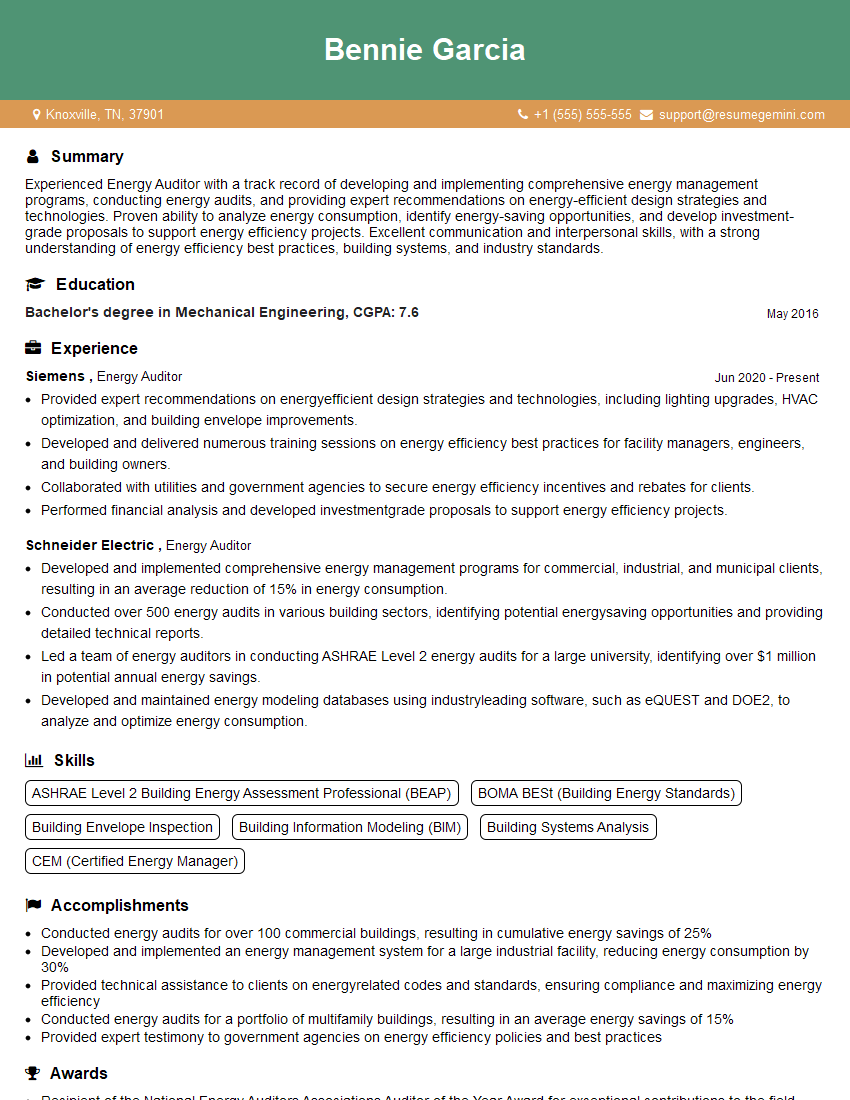
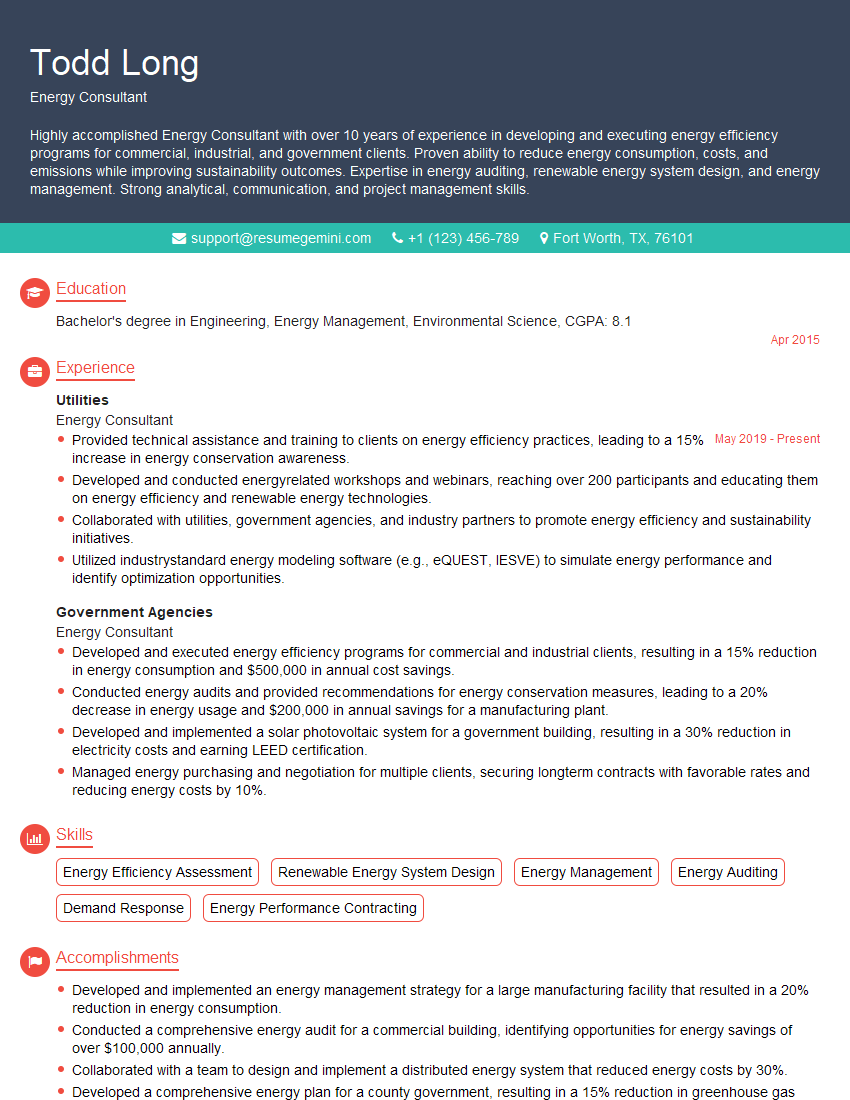
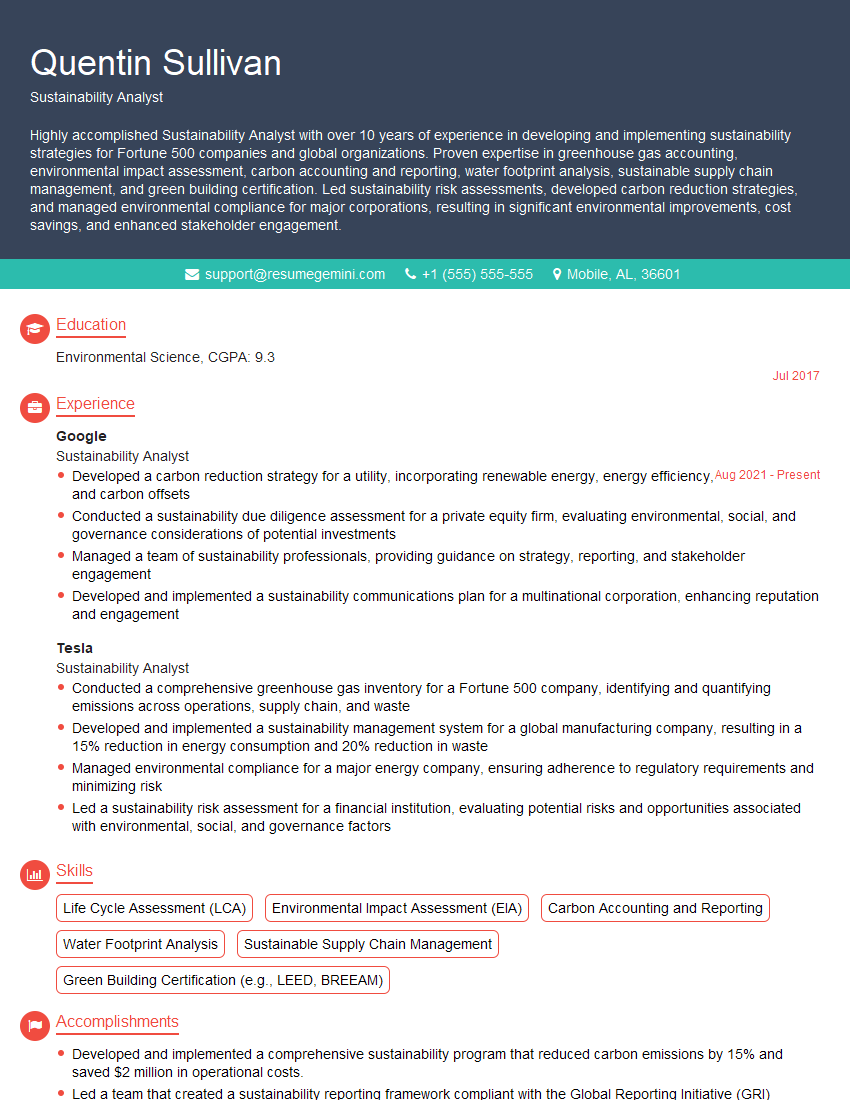
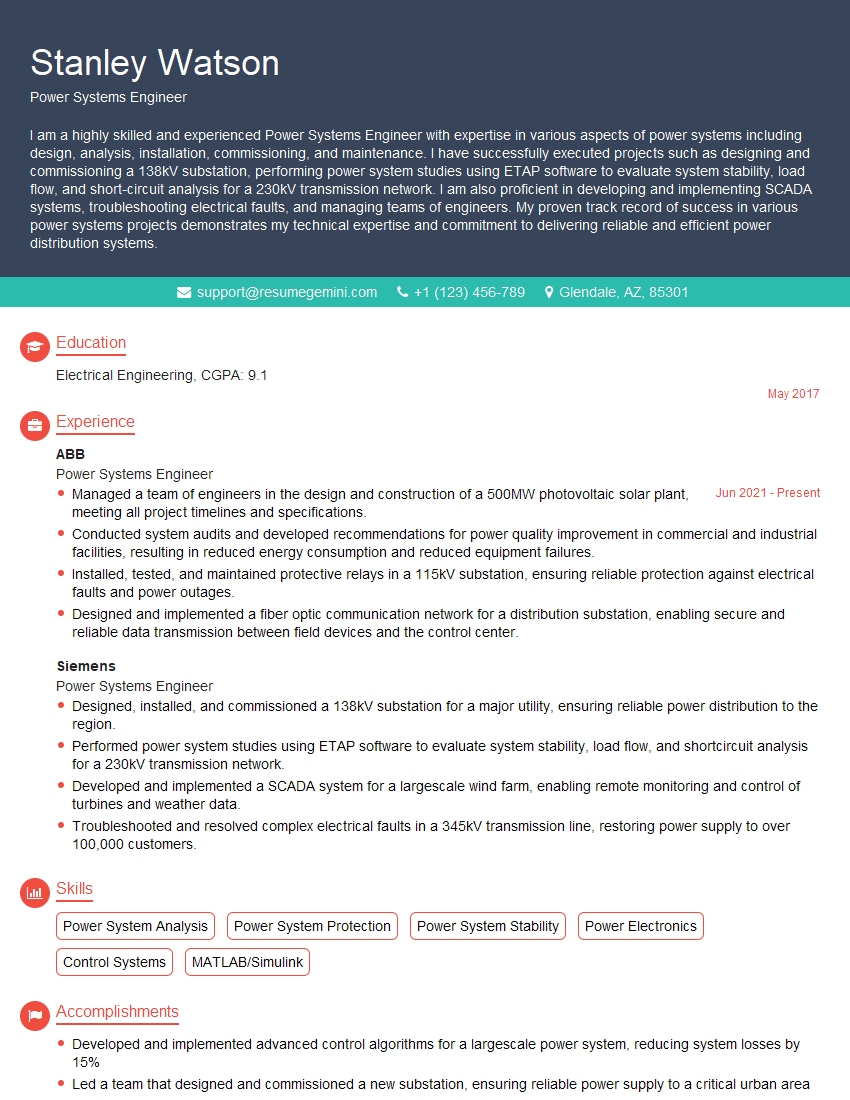
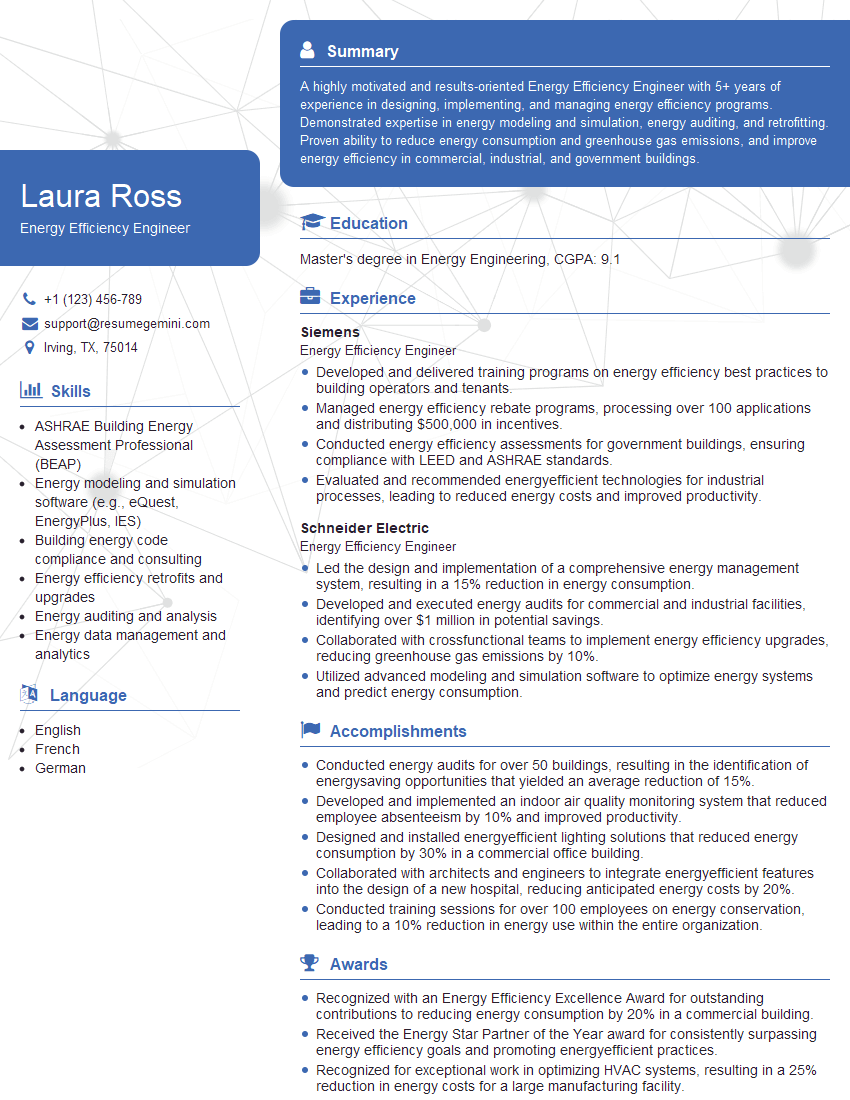
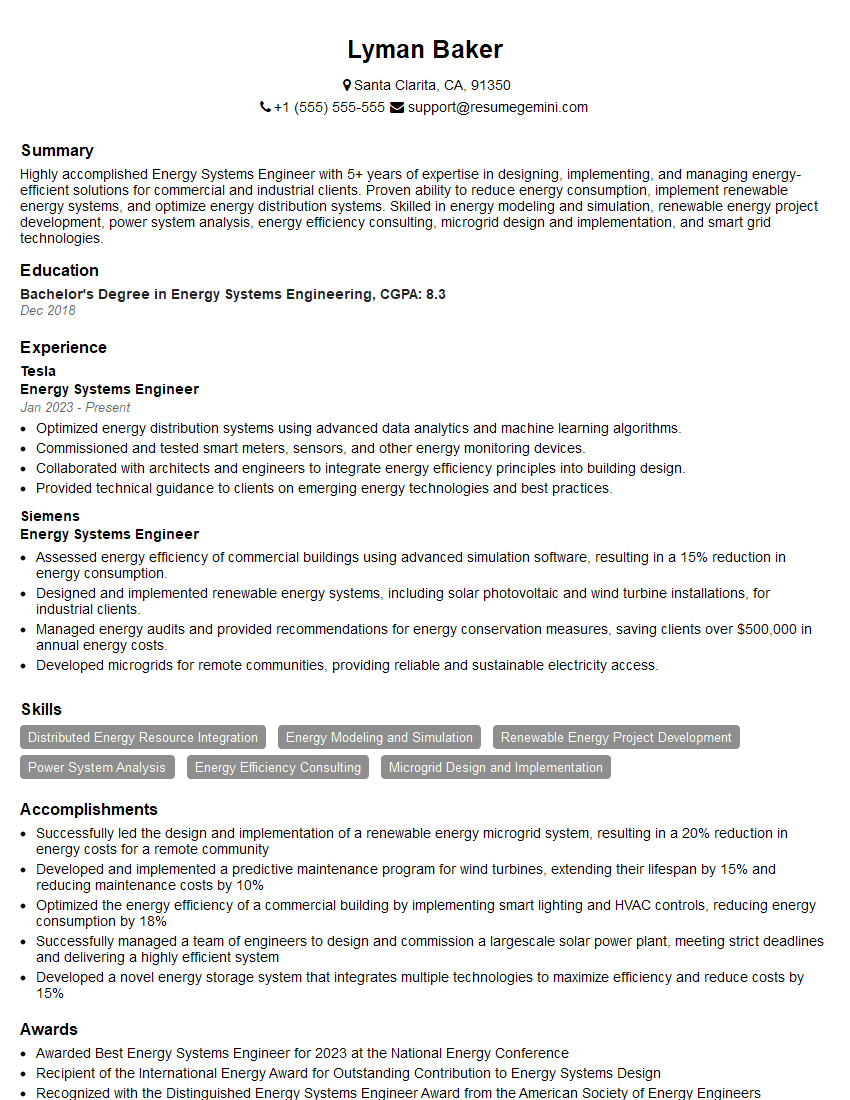
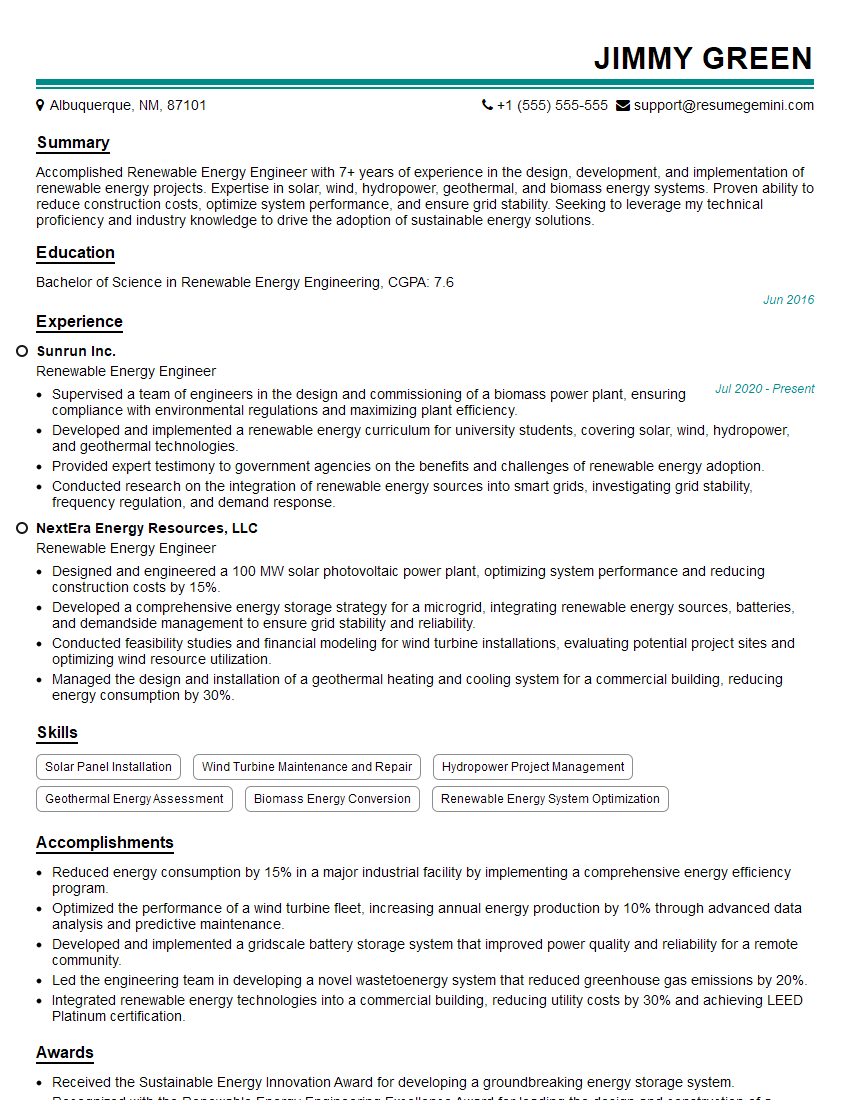
Mastering energy systems analysis is crucial for a thriving career in a rapidly evolving energy sector. Your expertise in this field opens doors to exciting opportunities in consulting, research, and industry. To significantly boost your job prospects, create a compelling and ATS-friendly resume that highlights your skills and experience effectively. ResumeGemini is a trusted resource to help you build a professional and impactful resume tailored to the energy systems analysis field. We provide examples of resumes specifically designed for this sector to guide you in crafting the perfect application.
Explore more articles
Users Rating of Our Blogs
Share Your Experience
We value your feedback! Please rate our content and share your thoughts (optional).
What Readers Say About Our Blog
Very informative content, great job.
good