Are you ready to stand out in your next interview? Understanding and preparing for Environmental Conservation Awareness interview questions is a game-changer. In this blog, we’ve compiled key questions and expert advice to help you showcase your skills with confidence and precision. Let’s get started on your journey to acing the interview.
Questions Asked in Environmental Conservation Awareness Interview
Q 1. Describe your understanding of the Kyoto Protocol.
The Kyoto Protocol is an international treaty, adopted in 1997, that commits state parties to reduce greenhouse gas emissions, based on the scientific consensus that global warming is occurring and that human-made CO2 emissions are driving it. It’s essentially a legally binding agreement aiming to combat climate change. The protocol places a heavier burden on developed nations (Annex I countries), recognizing their historical contribution to greenhouse gas emissions, requiring them to achieve emission reduction targets. Developing countries (non-Annex I countries) were not initially mandated with emission reduction targets but encouraged to participate in various projects to mitigate climate change. While the Kyoto Protocol was a significant step, its impact was limited by the fact that several major emitters, notably the United States, did not ratify it. Furthermore, the initial commitment period ended in 2012, and while the Doha Amendment extended it, the Paris Agreement has since superseded it as the primary global framework for climate action.
Think of it like a global agreement to share the responsibility of cleaning up a mess – the developed countries, having created most of the problem, are tasked with cleaning more, while developing countries play a part as well, supported by the developed nations. However, like any agreement, its success depends on the collective commitment and cooperation of all parties involved.
Q 2. Explain the concept of carbon sequestration.
Carbon sequestration is the process of capturing atmospheric carbon dioxide (CO2) and storing it in a long-term reservoir. This can occur naturally through processes like photosynthesis in plants and oceans or artificially through various technologies. Naturally, trees absorb CO2 during photosynthesis, converting it into biomass (wood, leaves, roots). Oceans also absorb significant amounts of CO2. Artificially, methods include geological storage (injecting CO2 underground), bioenergy with carbon capture and storage (BECCS – capturing CO2 emissions from biomass power plants and storing it), and enhanced weathering (accelerating the natural reaction of rocks with CO2).
Imagine the atmosphere as a room filled with smoke. Carbon sequestration is like installing a filter (plants, oceans, or technology) to remove the smoke and store it somewhere safe.
It’s crucial in mitigating climate change as it helps reduce the concentration of CO2 in the atmosphere, thus slowing down global warming. However, the long-term stability of storage and the potential scalability of many sequestration technologies remain subject to ongoing research and debate.
Q 3. What are the key principles of sustainable development?
Sustainable development is a concept that aims to meet the needs of the present without compromising the ability of future generations to meet their own needs. It encompasses three interconnected pillars:
- Environmental sustainability: Protecting and conserving natural resources and ecosystems for future use. This involves minimizing pollution, reducing resource depletion, and preventing biodiversity loss.
- Economic sustainability: Ensuring economic growth is equitable, efficient, and long-term. It involves creating jobs, promoting innovation, and reducing economic inequality.
- Social sustainability: Promoting social justice, equity, and well-being. This includes access to education, healthcare, and essential services for all members of society.
These three pillars are interconnected and mutually reinforcing. For example, environmental conservation can contribute to economic stability through ecotourism and sustainable resource management. Similarly, social equity ensures everyone benefits from economic development, increasing support for sustainability efforts.
Think of it as a three-legged stool: If one leg (environmental, economic, or social) is weak or broken, the whole system becomes unstable. Sustainable development requires a balanced approach that considers all three pillars.
Q 4. Discuss the impact of deforestation on biodiversity.
Deforestation, the clearing of forests for other land uses, has a devastating impact on biodiversity. Forests are hotspots of biodiversity, housing a vast array of plant and animal species, many of which are endemic (found nowhere else). When forests are cleared, these species lose their habitats, leading to population declines and extinctions. The loss of trees also disrupts ecological processes, affecting nutrient cycling, water regulation, and soil stability. This can create a cascade effect, impacting other species and ecosystems.
For example, the Amazon rainforest, one of the most biodiverse regions on Earth, is experiencing significant deforestation. This loss of habitat threatens countless species, many of which are still undiscovered, impacting the entire ecosystem and potentially leading to species extinction.
Moreover, deforestation reduces the planet’s capacity for carbon sequestration, exacerbating climate change, which further threatens biodiversity. The consequences are far-reaching and affect global ecological balance.
Q 5. How can renewable energy sources mitigate climate change?
Renewable energy sources, such as solar, wind, hydro, geothermal, and biomass, can significantly mitigate climate change by reducing our reliance on fossil fuels (coal, oil, and natural gas), which are major contributors to greenhouse gas emissions. By generating electricity and heat from renewable sources, we reduce the amount of CO2 and other pollutants released into the atmosphere.
For instance, solar and wind power plants generate electricity without emitting greenhouse gases during operation, unlike coal-fired power plants. Hydropower utilizes the energy of flowing water, which is a naturally replenishable resource. Geothermal energy harnesses heat from the Earth’s core, providing a stable and clean energy source. Bioenergy utilizes organic matter like wood or agricultural residues, but it’s crucial to ensure sustainability to avoid net greenhouse gas increases.
The transition to renewable energy requires significant investment in infrastructure and technological advancements. However, the long-term benefits in terms of climate change mitigation, energy security, and improved air quality significantly outweigh the costs.
Q 6. What are the different types of pollution and their environmental impacts?
Pollution comes in many forms, each with its own environmental consequences:
- Air pollution: Caused by emissions from vehicles, industries, and power plants. It leads to respiratory problems, acid rain, and smog, harming human health and ecosystems.
- Water pollution: Caused by industrial discharge, agricultural runoff, and sewage. It contaminates water sources, harming aquatic life and making water unsafe for human consumption.
- Soil pollution: Caused by industrial waste, pesticides, and improper waste disposal. It degrades soil quality, affecting plant growth and potentially entering the food chain.
- Noise pollution: Excessive noise from traffic, construction, and industrial activities. It affects wildlife behavior, human health (stress, hearing loss), and can disrupt natural processes.
- Light pollution: Excessive artificial light at night, interfering with nocturnal wildlife behavior, disrupting natural cycles, and affecting astronomical observations.
- Plastic pollution: The accumulation of plastic waste in the environment, causing harm to wildlife through ingestion and entanglement, and contributing to microplastic pollution.
The impacts of pollution are far-reaching and interconnected. For example, air pollution can contribute to acid rain, which damages forests and water bodies. Water pollution can affect aquatic ecosystems and human health. Addressing pollution requires a multi-faceted approach, including stricter regulations, technological innovations, and changes in consumer behavior.
Q 7. Explain the role of environmental impact assessments (EIAs).
Environmental Impact Assessments (EIAs) are systematic studies conducted to predict the environmental consequences of proposed projects or developments. They aim to identify potential negative impacts (e.g., habitat loss, air pollution, water contamination) and propose mitigation measures to minimize or avoid these impacts. EIAs are crucial tools for informed decision-making, ensuring that environmental considerations are integrated into planning and development processes.
A typical EIA involves several stages: screening (determining whether an EIA is needed), scoping (defining the scope and level of detail required), impact prediction (assessing potential impacts), mitigation planning (developing strategies to minimize negative impacts), and reporting (documenting the findings and recommendations).
EIAs are applied in various sectors, including infrastructure development (roads, dams, power plants), mining, industrial projects, and urban planning. By identifying potential environmental issues early in the project lifecycle, EIAs help to avoid costly environmental damages and legal disputes, contributing to more environmentally sustainable development.
Think of it as a pre-operation health check for a project. It helps identify potential problems before they escalate, saving resources and preventing negative environmental consequences.
Q 8. Describe your experience with environmental regulations (e.g., EPA guidelines).
My experience with environmental regulations, primarily EPA guidelines in the United States, spans over a decade. I’ve worked directly with the Clean Water Act, the Clean Air Act, and the Resource Conservation and Recovery Act (RCRA), focusing on compliance and permitting. For example, I assisted a manufacturing company in obtaining a National Pollutant Discharge Elimination System (NPDES) permit, ensuring their wastewater discharge met stringent EPA standards. This involved detailed analysis of their operations, development of a comprehensive monitoring plan, and regular reporting to regulatory agencies. I’m also familiar with the intricacies of environmental impact assessments (EIAs) and have participated in several projects requiring these assessments, ensuring projects are developed in compliance with all relevant laws and regulations. This involved not just understanding the legal requirements but also applying environmental science principles to accurately assess potential environmental impacts.
Furthermore, I’ve stayed abreast of evolving regulations, particularly concerning emerging contaminants and climate change adaptation. My understanding extends beyond mere compliance; I actively seek to understand the rationale behind regulations and how they aim to protect the environment, allowing me to advise clients on proactive, sustainable solutions that exceed minimum requirements.
Q 9. How would you approach educating the public about environmental conservation?
Educating the public about environmental conservation requires a multi-pronged approach tailored to different audiences. I believe in employing diverse communication channels to maximize reach and impact. This includes:
- Interactive Workshops and Events: Hands-on workshops, nature walks, and community events provide engaging learning experiences.
- Educational Campaigns: Targeted campaigns using social media, public service announcements (PSAs), and collaborations with influencers can effectively convey key messages.
- School Programs: Early education is crucial. Developing age-appropriate curricula and engaging teachers can foster environmental stewardship in future generations.
- Citizen Science Initiatives: Involving the public in data collection and monitoring projects empowers them and directly contributes to conservation efforts. For example, community members could participate in water quality monitoring programs.
- Storytelling and Media: Utilizing compelling narratives and visual media like documentaries and short films can emotionally connect people with environmental issues.
Crucially, the messaging must be clear, concise, and avoid overwhelming audiences with complex jargon. Focusing on positive actions and solutions, rather than only highlighting problems, empowers people and fosters a sense of hope and agency.
Q 10. Explain the concept of ecological footprint.
An ecological footprint measures the impact of a person or community on the environment. It quantifies the amount of biologically productive land and water area required to provide the resources a person consumes and absorb the waste they generate, using prevailing technology and resource management practices. Imagine your footprint as the total area of land and sea necessary to sustain your lifestyle.
This includes factors like:
- Carbon footprint: The amount of greenhouse gases emitted due to energy consumption and transportation.
- Food footprint: The land needed to produce the food you eat.
- Housing footprint: The resources used to build and maintain your home.
- Goods and services footprint: The resources consumed to manufacture the products and services you utilize.
A large ecological footprint indicates a high environmental impact, suggesting unsustainable consumption patterns. Tracking and reducing one’s ecological footprint is a vital step towards environmental sustainability. Tools and calculators are available online to estimate individual footprints.
Q 11. What are the challenges in implementing sustainable practices in businesses?
Implementing sustainable practices in businesses faces several hurdles:
- Upfront Costs: Investing in green technologies and sustainable materials often involves significant initial expenses.
- Lack of Awareness and Expertise: Businesses may lack understanding of sustainable practices or the expertise to implement them effectively.
- Return on Investment (ROI): Measuring the ROI of sustainability initiatives can be challenging, deterring some businesses.
- Consumer Demand: A lack of consistent consumer demand for sustainable products can make it financially risky for businesses to invest in them.
- Regulatory Hurdles: Navigating complex environmental regulations and obtaining permits can be time-consuming and costly.
- Supply Chain Challenges: Sourcing sustainable materials and ensuring ethical supply chains can be difficult.
Addressing these challenges requires a combination of government incentives, industry collaboration, and consumer education to create a more supportive environment for sustainable business practices.
Q 12. Describe your experience with GIS software in environmental applications.
I have extensive experience using GIS software (Geographic Information Systems) in environmental applications. GIS allows for the spatial analysis of environmental data, offering powerful tools for conservation and management. For instance, I’ve used ArcGIS to map deforestation patterns, identifying areas at high risk of biodiversity loss. This involved integrating satellite imagery, deforestation rate data, and species distribution maps. This allowed us to prioritize conservation efforts and develop targeted strategies.
Other applications include:
- Habitat modeling: Predicting suitable habitat for endangered species.
- Pollution monitoring: Mapping pollutant concentrations and identifying pollution sources.
- Climate change vulnerability assessments: Identifying areas most vulnerable to climate change impacts.
- Protected area management: Planning and managing protected areas, optimizing resource allocation and minimizing human-wildlife conflict.
My GIS skills extend to data analysis, map creation, and spatial modeling, making me capable of generating actionable insights for environmental conservation projects.
Q 13. How would you measure the success of an environmental conservation program?
Measuring the success of an environmental conservation program requires a multi-faceted approach that combines quantitative and qualitative data. Key indicators include:
- Biodiversity indicators: Changes in species populations, habitat area, and genetic diversity.
- Water quality indicators: Improvements in water clarity, dissolved oxygen levels, and reduction in pollutant concentrations.
- Air quality indicators: Reductions in air pollutants, improvements in air quality index.
- Resource consumption indicators: Reductions in energy and water consumption, waste generation.
- Community engagement: Levels of community participation, changes in awareness and attitudes.
- Economic benefits: Economic impact of the program (e.g., job creation, increased tourism).
A robust monitoring and evaluation plan should be in place from the outset to track these indicators and adapt the program based on results. Regular reporting and stakeholder engagement are crucial to ensure transparency and accountability.
Q 14. What are the different approaches to waste management?
Waste management approaches can be broadly categorized into:
- Reduce: Minimizing waste generation at the source through design, consumption, and reuse strategies. Examples include using reusable bags, buying in bulk to reduce packaging.
- Reuse: Extending the lifespan of products through repair, repurposing, and donation. Examples include using old jars for storage or donating clothes to charity.
- Recycle: Processing waste materials into new products. Requires a robust recycling infrastructure and public awareness.
- Recover: Extracting energy or other valuable resources from waste. Examples include anaerobic digestion to produce biogas.
- Disposal: Landfilling or incineration, often considered the least desirable options due to environmental impacts. Landfills can leach harmful substances into soil and groundwater, while incineration releases pollutants into the air.
The most effective waste management strategies employ a hierarchy, prioritizing reduction and reuse before recycling, recovery, and finally disposal. A successful approach necessitates technological advancements, policy interventions, and community involvement.
Q 15. Explain the importance of biodiversity conservation.
Biodiversity conservation is crucial for the health of our planet and the well-being of humanity. It’s about protecting the variety of life on Earth, from genes to ecosystems. Think of it like a giant, intricate web: each species plays a vital role, and the loss of one can have cascading effects throughout the entire system.
- Ecosystem Services: Biodiversity underpins essential ecosystem services like clean air and water, pollination, climate regulation, and soil fertility. A diverse ecosystem is more resilient to disturbances like droughts or pests.
- Economic Benefits: Many industries, such as agriculture, pharmaceuticals, and tourism, rely directly on biodiversity. Loss of biodiversity can severely impact these sectors.
- Human Health: Biodiversity contributes to human health through the provision of medicine, food, and clean environments. A loss of biodiversity can lead to increased disease risk.
- Ethical Considerations: Many believe we have a moral obligation to protect the planet’s biodiversity and prevent species extinction, as each species has intrinsic value.
For example, the loss of pollinators like bees can significantly impact agricultural yields, while deforestation can lead to soil erosion and flooding. Conserving biodiversity requires a multifaceted approach, including habitat protection, sustainable resource management, and combating climate change.
Career Expert Tips:
- Ace those interviews! Prepare effectively by reviewing the Top 50 Most Common Interview Questions on ResumeGemini.
- Navigate your job search with confidence! Explore a wide range of Career Tips on ResumeGemini. Learn about common challenges and recommendations to overcome them.
- Craft the perfect resume! Master the Art of Resume Writing with ResumeGemini’s guide. Showcase your unique qualifications and achievements effectively.
- Don’t miss out on holiday savings! Build your dream resume with ResumeGemini’s ATS optimized templates.
Q 16. Describe your understanding of climate change mitigation and adaptation.
Climate change mitigation and adaptation are two interconnected strategies to address the challenges posed by a changing climate. Mitigation focuses on reducing greenhouse gas emissions to slow down the rate of climate change. Think of it as preventing the problem from getting worse.
- Examples: Transitioning to renewable energy sources (solar, wind), improving energy efficiency, adopting sustainable transportation, and implementing carbon capture technologies.
Adaptation, on the other hand, involves adjusting to the effects of climate change that are already happening or are expected to occur in the future. It’s about managing the consequences of a changing climate. Think of it as dealing with the consequences that are already occurring.
- Examples: Developing drought-resistant crops, building seawalls to protect coastal communities, implementing early warning systems for extreme weather events, and managing water resources more efficiently.
Both mitigation and adaptation are crucial for building a resilient future. Mitigation efforts delay the onset of the worst impacts while adaptation measures help us cope with the changes already underway. Ideally, these two strategies work in tandem to create a comprehensive response to climate change.
Q 17. What is your experience with environmental monitoring techniques?
My experience with environmental monitoring techniques encompasses a wide range of methods, depending on the specific environmental parameter being measured. I’ve worked extensively with both traditional and cutting-edge technologies.
- Traditional Methods: These include water quality analysis (measuring pH, dissolved oxygen, nutrient levels), soil sampling and analysis (assessing soil health and contamination), and vegetation surveys (monitoring species composition and abundance). I’ve personally conducted field surveys using these techniques to assess the impact of land-use changes on local ecosystems.
- Remote Sensing: I’ve used satellite imagery and aerial photography to monitor deforestation, assess habitat fragmentation, and track changes in land cover over time. This allows for large-scale monitoring that is otherwise impossible with ground-based techniques.
- Geographic Information Systems (GIS): I’m proficient in using GIS software to analyze spatial data, create maps, and model environmental processes. This is essential for visualizing patterns and trends in environmental data, which is crucial for informing conservation decisions.
- Bioacoustic Monitoring: This technique uses sound recordings to monitor biodiversity, particularly in areas difficult to access. Analyzing recordings can reveal the presence and abundance of various species, providing valuable data for conservation efforts.
For instance, in one project, I used a combination of water quality analysis and remote sensing to assess the impact of agricultural runoff on a nearby river system. The results informed the development of sustainable agricultural practices aimed at minimizing pollution.
Q 18. How do you stay up-to-date with the latest environmental issues?
Staying abreast of the latest environmental issues is a continuous process that requires a multi-pronged approach.
- Scientific Journals and Publications: I regularly read peer-reviewed journals like Science, Nature, and specialized journals in my field to keep up-to-date on the latest research findings.
- Reputable News Sources and Online Databases: I rely on credible news organizations and databases like the IPCC reports and the UNEP website for information on current events and policy developments. It’s crucial to discern reliable sources from misinformation.
- Conferences and Workshops: Attending international and national conferences provides a valuable platform to learn about the latest advancements and network with other professionals in the field.
- Professional Organizations: Membership in professional organizations like the Society for Conservation Biology provides access to publications, webinars, and networking opportunities, allowing me to stay informed about emerging issues.
For example, I actively follow research on microplastic pollution and its impacts on marine ecosystems, a rapidly evolving field requiring constant updates to my knowledge base.
Q 19. What are the ethical considerations in environmental conservation?
Ethical considerations in environmental conservation are central to its success. They encompass a broad range of issues.
- Intergenerational Equity: We have a responsibility to ensure that future generations inherit a healthy environment. This necessitates sustainable practices that don’t compromise the resources available to our descendants.
- Environmental Justice: The impacts of environmental degradation are often disproportionately borne by marginalized communities. Ethical conservation practices must prioritize equitable solutions that address environmental injustice.
- Animal Welfare: Ethical considerations require respecting animal welfare in conservation efforts, avoiding practices that cause unnecessary suffering.
- Indigenous Rights: Many conservation efforts take place on lands traditionally occupied by Indigenous peoples. Ethical conservation must prioritize their rights, knowledge, and participation in decision-making processes.
- Transparency and Accountability: Openness and transparency are vital for ethical conservation, ensuring that decisions are made in a responsible and accountable manner.
For example, a project to establish a protected area might require careful consideration of the rights and needs of local communities who depend on the land’s resources. Ethical frameworks guide conservation efforts toward solutions that are both environmentally sound and socially just.
Q 20. How do you handle conflicting priorities in environmental projects?
Conflicting priorities are common in environmental projects. Effective management involves a structured approach.
- Stakeholder Engagement: Identifying all stakeholders (government agencies, local communities, businesses, NGOs) and their competing interests is the first step. Open communication and collaboration are crucial.
- Prioritization Framework: A clear framework to prioritize objectives is essential. This might involve using cost-benefit analysis, multi-criteria decision analysis, or other appropriate methods to weigh different priorities.
- Compromise and Negotiation: Finding common ground through negotiation and compromise is often necessary. This may involve finding creative solutions that address multiple stakeholders’ concerns.
- Adaptive Management: Recognizing that priorities may shift over time, adaptive management strategies allow for flexibility and adjustments throughout the project lifecycle.
- Transparency and Accountability: Clearly communicating decisions and the rationale behind them to all stakeholders fosters trust and builds support for the project.
For instance, a project to build a dam for hydroelectric power might clash with the need to protect a river ecosystem. A well-managed approach would involve engaging with stakeholders to evaluate the trade-offs and exploring alternative solutions, potentially leading to a smaller dam or a different energy source altogether.
Q 21. Explain the concept of circular economy.
The circular economy is a model of production and consumption that aims to minimize waste and maximize resource utilization. Unlike the traditional linear ‘take-make-dispose’ model, the circular economy focuses on keeping resources in use for as long as possible, extracting maximum value from them, and then recovering and regenerating products and materials at the end of each service life.
- Reduce, Reuse, Recycle: These three principles are fundamental to the circular economy. Emphasis is placed on reducing consumption, reusing products or materials whenever possible, and recycling or composting materials at the end of their useful life.
- Design for Durability and Recyclability: Products are designed with durability, repairability, and recyclability in mind, making them easier to reuse and recycle.
- Waste as a Resource: Waste is viewed not as something to be disposed of but as a valuable resource to be recovered and reused in new products or processes.
- Renewable Energy: Circular economy models prioritize the use of renewable energy sources to power production and consumption processes.
For example, a company might design a phone that is easily repairable, using recycled materials in its construction and offering a take-back program at the end of the phone’s life. This reduces waste, conserves resources, and minimizes environmental impact compared to the linear model where the phone would simply be discarded.
Q 22. What is your experience with environmental risk assessment?
Environmental risk assessment is a systematic process used to identify, analyze, and evaluate potential environmental hazards and their associated risks. It involves evaluating the likelihood and potential consequences of adverse environmental impacts resulting from various activities or events. This process is crucial for informed decision-making, ensuring that potential threats to human health and the environment are minimized.
My experience encompasses a wide range of assessments, from evaluating the potential impacts of industrial projects (like a new factory’s discharge into a river) to assessing the risks associated with climate change on specific ecosystems (such as coral reef bleaching). I’m proficient in utilizing various risk assessment methodologies, including qualitative and quantitative approaches, and familiar with software tools for risk modeling and analysis. I regularly incorporate stakeholder engagement into the process to ensure the assessments are comprehensive and reflect a wide range of perspectives.
Q 23. Describe a time you had to solve an environmental problem.
During a project involving a coastal wetland restoration, we discovered unexpectedly high levels of heavy metals in the sediment. This posed a significant challenge, as the initial plan assumed cleaner soil conditions. Instead of abandoning the project, we implemented a multi-phased solution. First, we conducted a more thorough site investigation to pinpoint the source and extent of the contamination. This involved detailed sediment sampling and analysis. Second, we developed a remediation strategy combining bioremediation techniques (using plants to absorb the metals) and careful soil management to minimize the risk of further spread. Finally, we adapted the wetland restoration plan to incorporate these remediation efforts. The project was successfully completed, showcasing the importance of adaptive management in environmental problem-solving.
Q 24. How do you handle data analysis in environmental projects?
Data analysis is fundamental to environmental projects. My approach involves a structured process:
- Data Collection and Cleaning: This includes verifying data accuracy, handling missing values, and ensuring data consistency across different sources. For example, I’ve used R and Python to clean and preprocess large datasets of water quality parameters.
- Exploratory Data Analysis (EDA): EDA involves visualizing data to identify patterns, outliers, and potential relationships. Tools like
ggplot2(R) andmatplotlib(Python) are invaluable here. I’ll create histograms, scatter plots, and other visualizations to understand data distributions. - Statistical Analysis: Depending on the research question, I use various statistical methods, such as regression analysis, ANOVA, or time-series analysis, to test hypotheses and draw conclusions. Software packages like SPSS or R are frequently used.
- Interpretation and Reporting: The final step involves interpreting the results in a meaningful way and communicating them effectively. This often involves creating clear and concise reports that present the findings to both technical and non-technical audiences.
I always emphasize the importance of data quality and transparency throughout this entire process.
Q 25. What are some examples of successful environmental conservation initiatives?
Several successful environmental conservation initiatives demonstrate the power of collaborative efforts.
- The Montreal Protocol: This international treaty phased out the production and consumption of ozone-depleting substances, resulting in a significant recovery of the ozone layer. This shows the effectiveness of global cooperation in addressing environmental challenges.
- Costa Rica’s reforestation efforts: Costa Rica has been a global leader in reforestation, significantly increasing its forest cover through payment for ecosystem services programs and community-based initiatives. This demonstrates how economic incentives can be used to protect natural resources.
- Community-based conservation projects: Many successful projects involve local communities in conservation efforts, creating a sense of ownership and responsibility for natural resources. This highlights the crucial role of local knowledge and participation.
These examples highlight that effective conservation often requires a combination of strong policy, technological innovation, and community engagement.
Q 26. What is your experience with environmental policy development?
My involvement in environmental policy development has included participation in stakeholder consultations, drafting policy recommendations, and conducting policy impact assessments. I have worked on policies related to air and water quality regulations, waste management, and habitat protection. Understanding the scientific basis behind environmental regulations is critical for effective policymaking. My approach prioritizes evidence-based policy, ensuring that regulations are scientifically sound, cost-effective, and achieve their intended goals. I’m also experienced in navigating the political processes involved in policy development, seeking to find solutions that balance environmental protection with socio-economic needs.
Q 27. How familiar are you with life cycle assessments (LCAs)?
Life Cycle Assessments (LCAs) are a crucial tool for evaluating the environmental impacts of products and services throughout their entire life cycle, from raw material extraction to disposal. I am highly familiar with conducting LCAs using both qualitative and quantitative methods. I understand the various stages involved, including goal and scope definition, inventory analysis (quantifying resource use and emissions), impact assessment (evaluating the environmental consequences), and interpretation. I’m proficient in using LCA software packages, such as SimaPro or Gabi, and have experience with various LCA databases for obtaining impact factors. My work has included LCAs for a range of products, from packaging materials to renewable energy technologies, enabling informed decisions on sustainable production and consumption.
Q 28. How would you communicate complex environmental data to a non-technical audience?
Communicating complex environmental data to non-technical audiences requires simplifying technical information without sacrificing accuracy. My approach emphasizes using clear and concise language, avoiding jargon, and employing visual aids.
- Analogies and metaphors: Comparing complex concepts to familiar everyday experiences makes them more relatable. For instance, I might explain carbon sequestration by comparing it to a sponge absorbing water.
- Visualizations: Charts, graphs, and infographics are effective tools to present data in a digestible format. A well-designed graph can convey more information than pages of text.
- Storytelling: Framing data within a narrative can make it more engaging and memorable. For instance, I might tell a story about a specific environmental problem and its impact on a community.
- Interactive elements: Using interactive tools or simulations can enhance understanding and engagement. For instance, a simple interactive map showing pollution levels in a region could be very effective.
The key is to tailor the communication style to the specific audience, ensuring that the information is both understandable and relevant.
Key Topics to Learn for Environmental Conservation Awareness Interview
- Sustainable Resource Management: Understanding principles of sustainable forestry, fisheries, and water management. Practical application includes analyzing resource depletion rates and proposing conservation strategies.
- Biodiversity Conservation: Knowledge of biodiversity hotspots, endangered species, and habitat restoration techniques. Practical application involves designing and evaluating conservation programs focused on species preservation.
- Climate Change Mitigation and Adaptation: Understanding the science of climate change, greenhouse gas emissions, and strategies for mitigation and adaptation. Practical application includes evaluating the environmental impact of projects and developing climate-resilient solutions.
- Pollution Control and Waste Management: Knowledge of different types of pollution (air, water, soil), their sources, and effective control methods. Practical application involves designing waste reduction and recycling programs.
- Environmental Policy and Legislation: Understanding key environmental laws and regulations at local, national, and international levels. Practical application includes analyzing the effectiveness of environmental policies and proposing improvements.
- Environmental Impact Assessment (EIA): Understanding the process of conducting EIAs and interpreting their results. Practical application includes evaluating the environmental impacts of development projects.
- Environmental Monitoring and Data Analysis: Knowledge of techniques for monitoring environmental parameters and analyzing the collected data. Practical application involves using data to inform conservation decisions.
- Communication and Advocacy: Effectively communicating complex environmental issues to diverse audiences and advocating for conservation initiatives. Practical application involves developing effective communication strategies for raising environmental awareness.
Next Steps
Mastering Environmental Conservation Awareness is crucial for a successful career in this vital field. A strong understanding of these concepts will significantly enhance your interview performance and demonstrate your commitment to protecting our planet. To maximize your job prospects, creating an ATS-friendly resume is essential. This ensures your application gets noticed by recruiters. We highly recommend using ResumeGemini to build a professional and impactful resume that highlights your skills and experience. ResumeGemini provides examples of resumes tailored to Environmental Conservation Awareness to help you craft a compelling application. Invest in your future – invest in a strong resume.
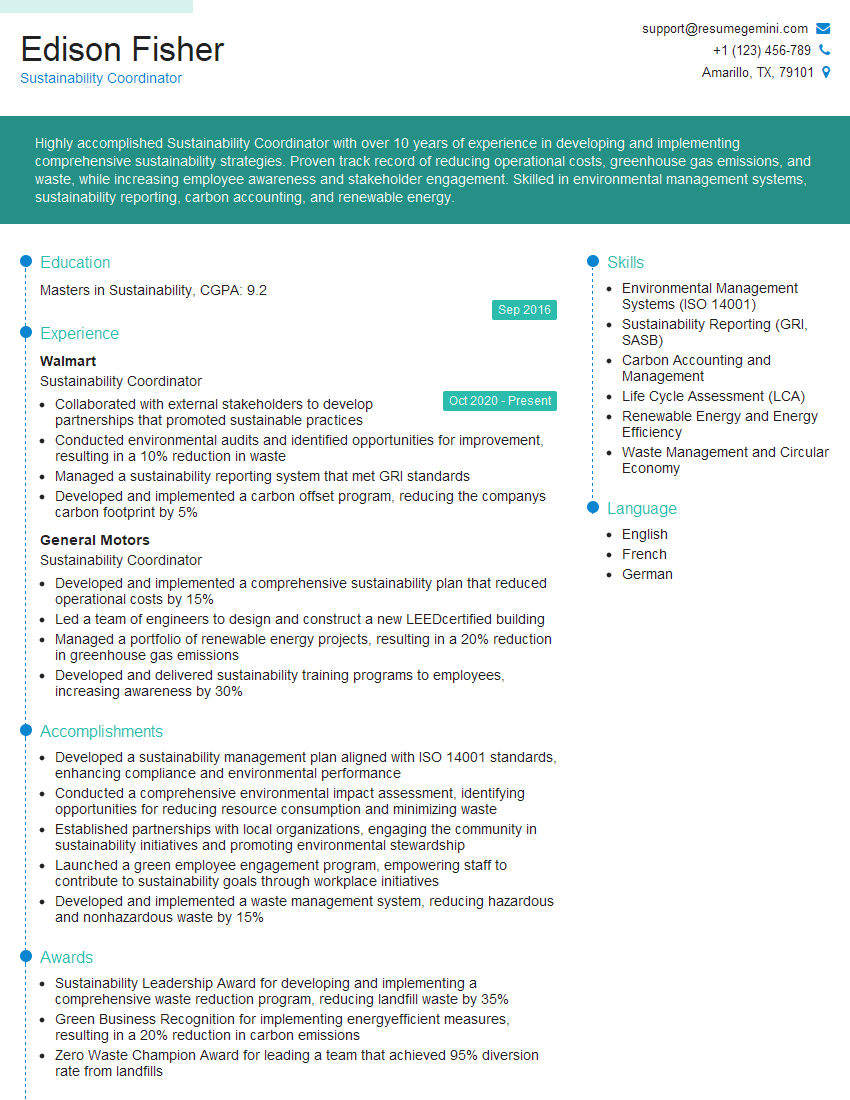
Sustainability Coordinator Resume Sample
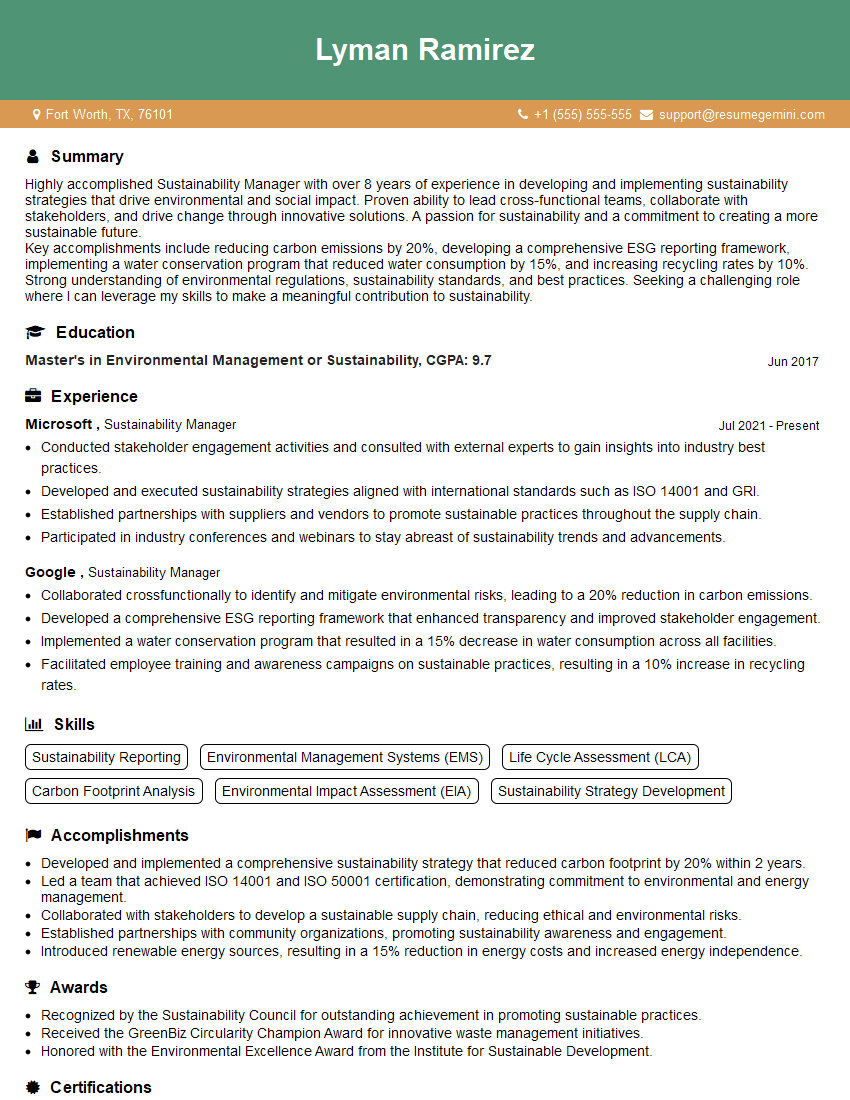
Sustainability Manager Resume Sample
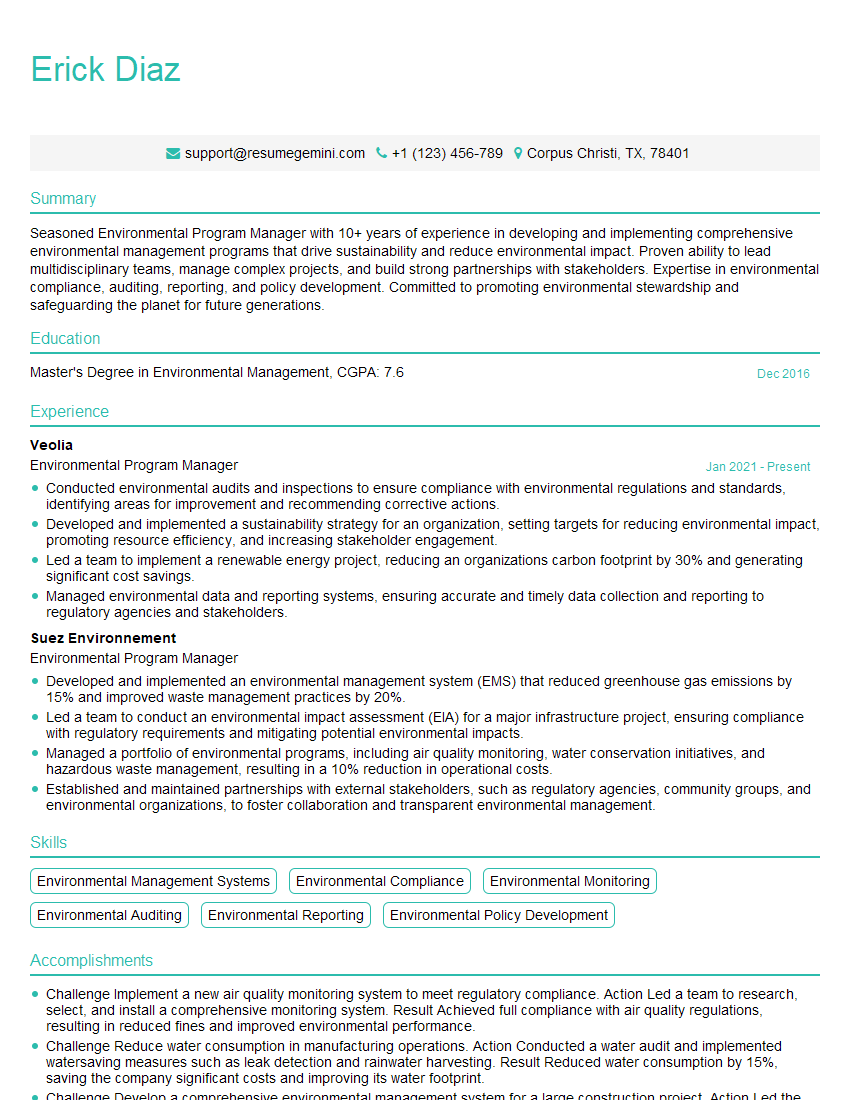
Environmental Program Manager Resume Sample
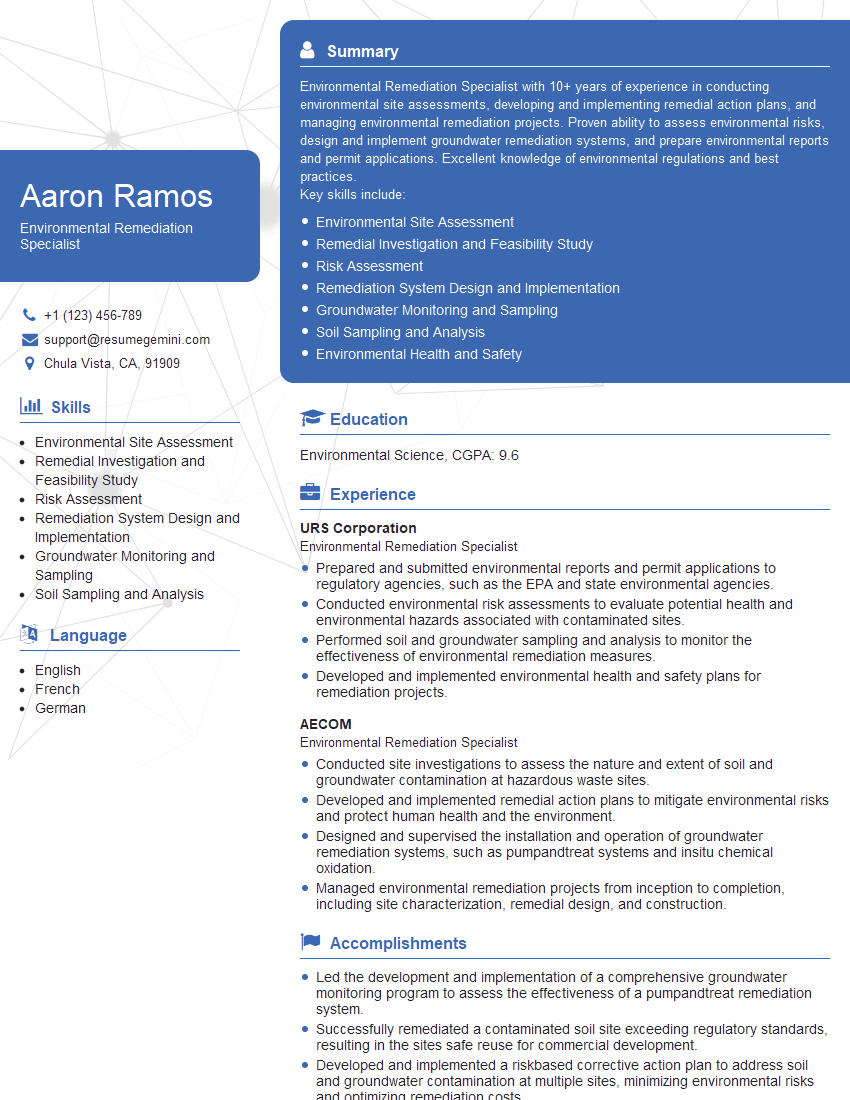
Environmental Remediation Specialist Resume Sample
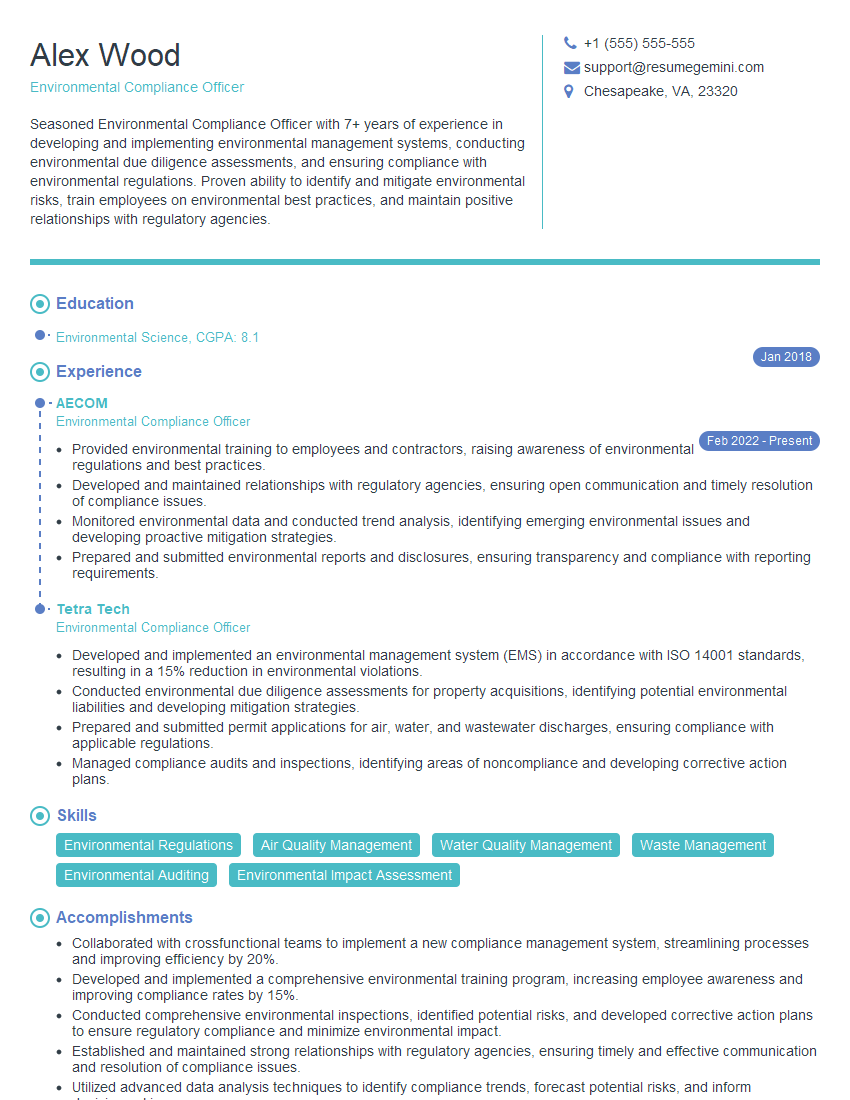
Environmental Compliance Officer Resume Sample
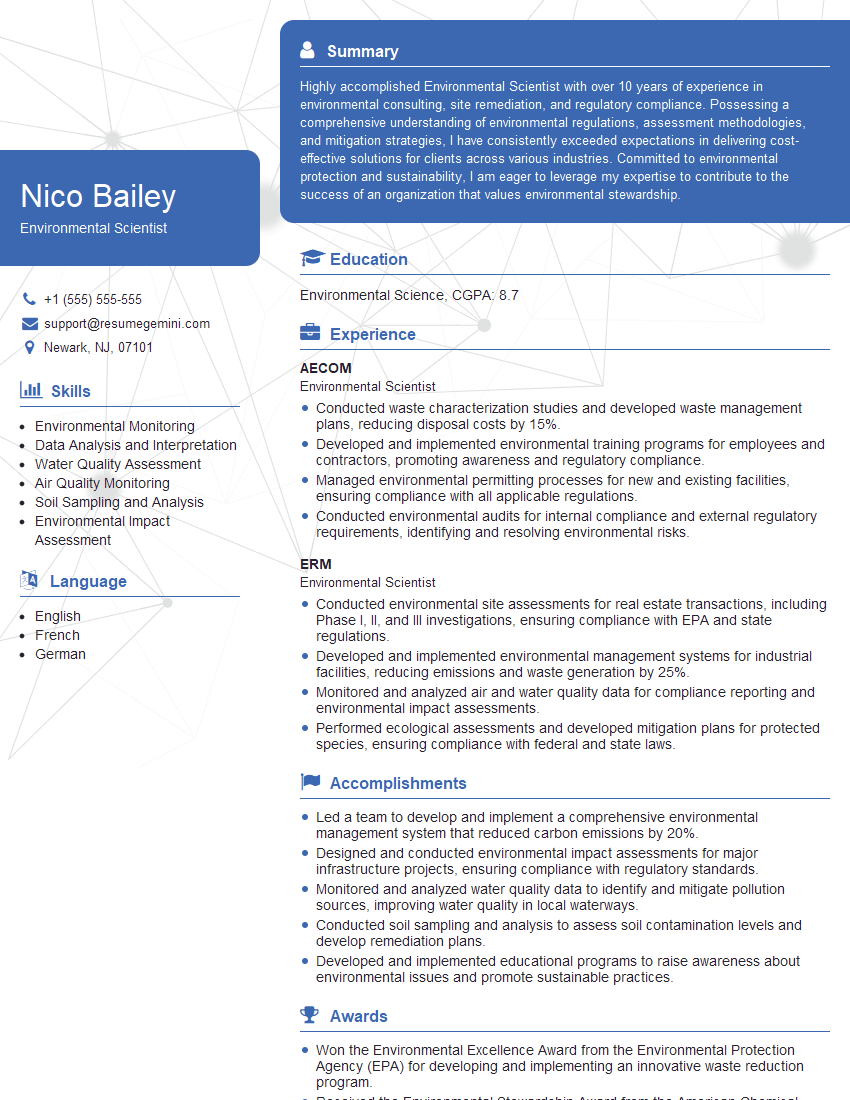
Environmental Scientist Resume Sample
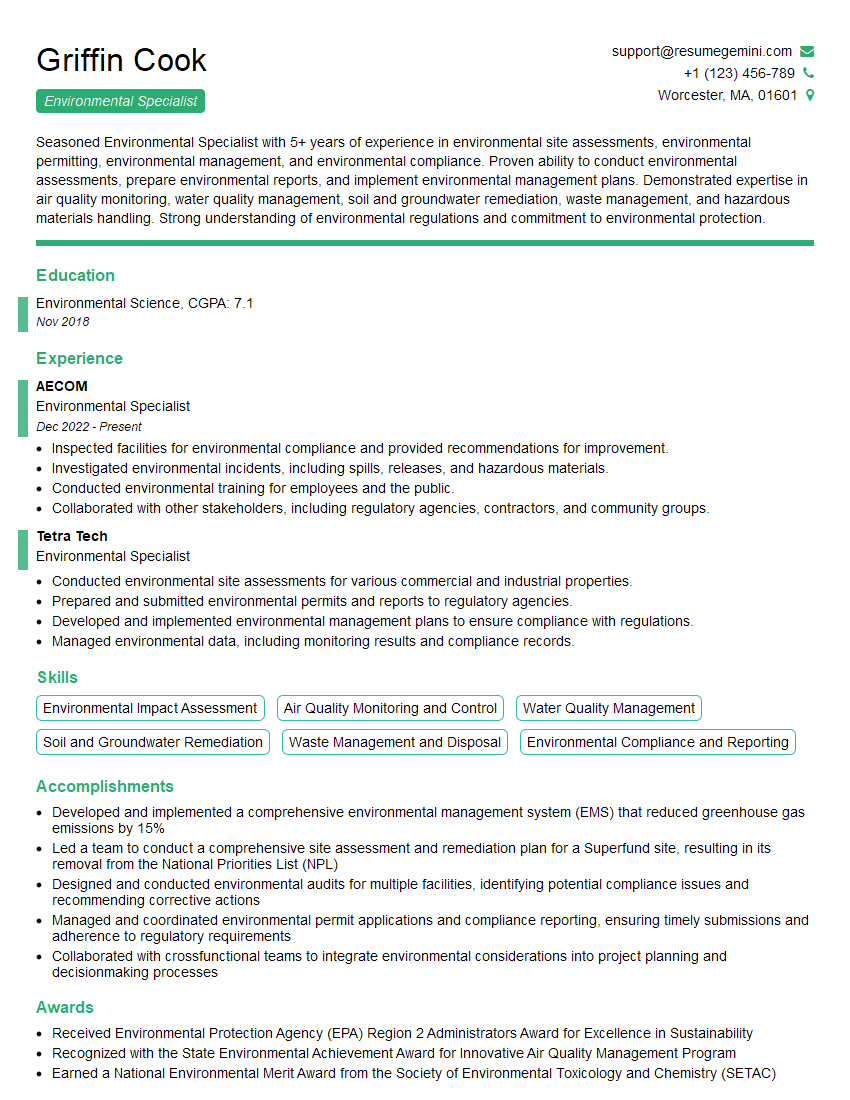
Environmental Specialist Resume Sample
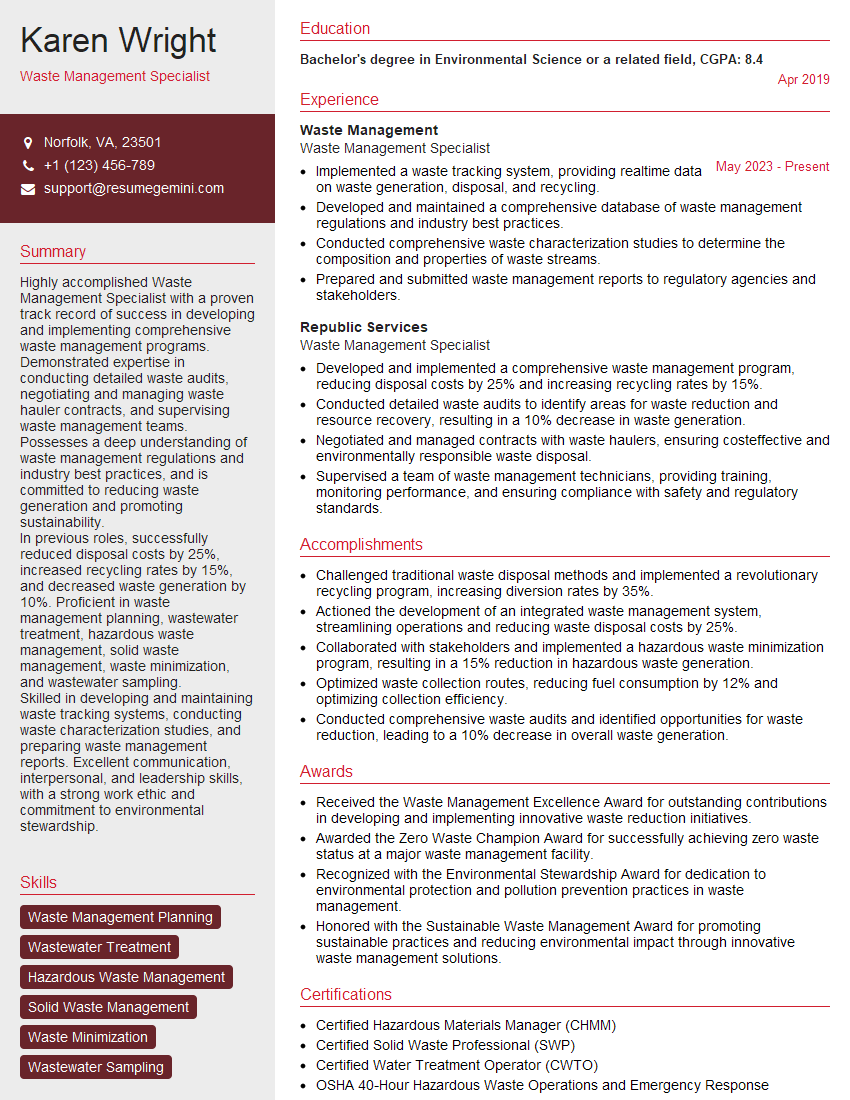
Waste Management Specialist Resume Sample
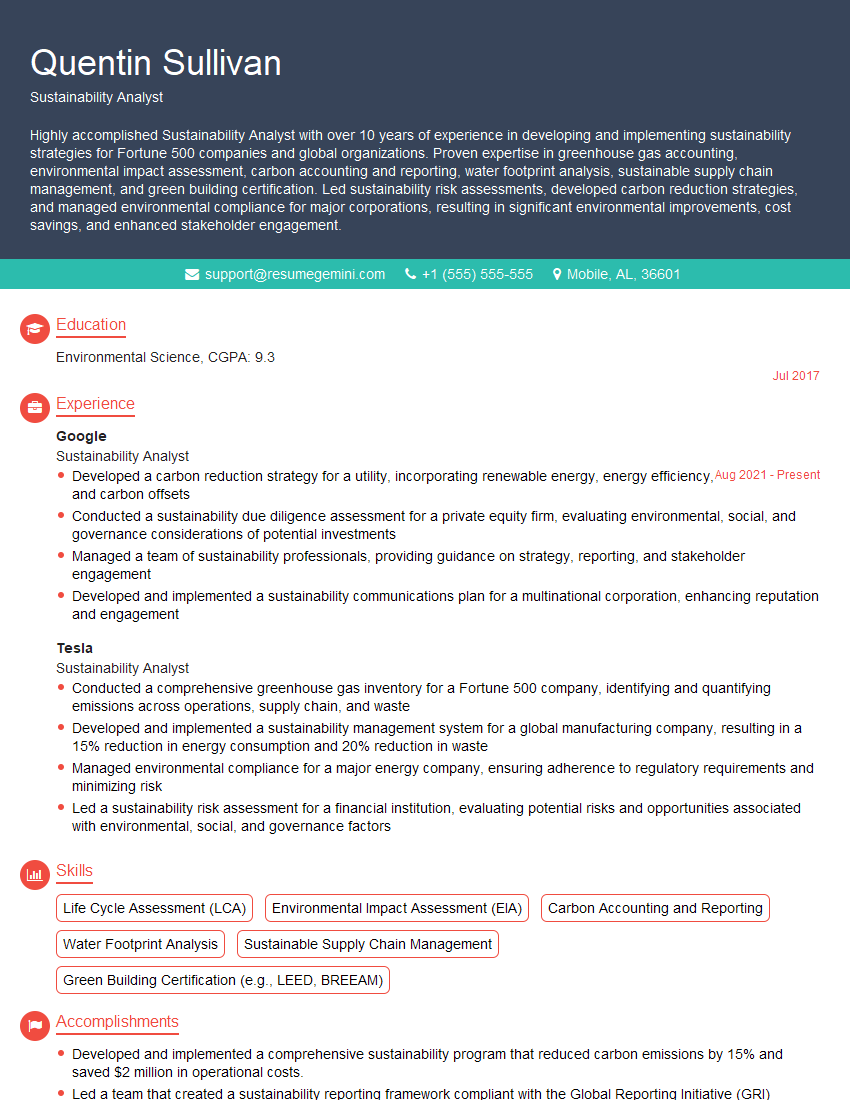
Sustainability Analyst Resume Sample
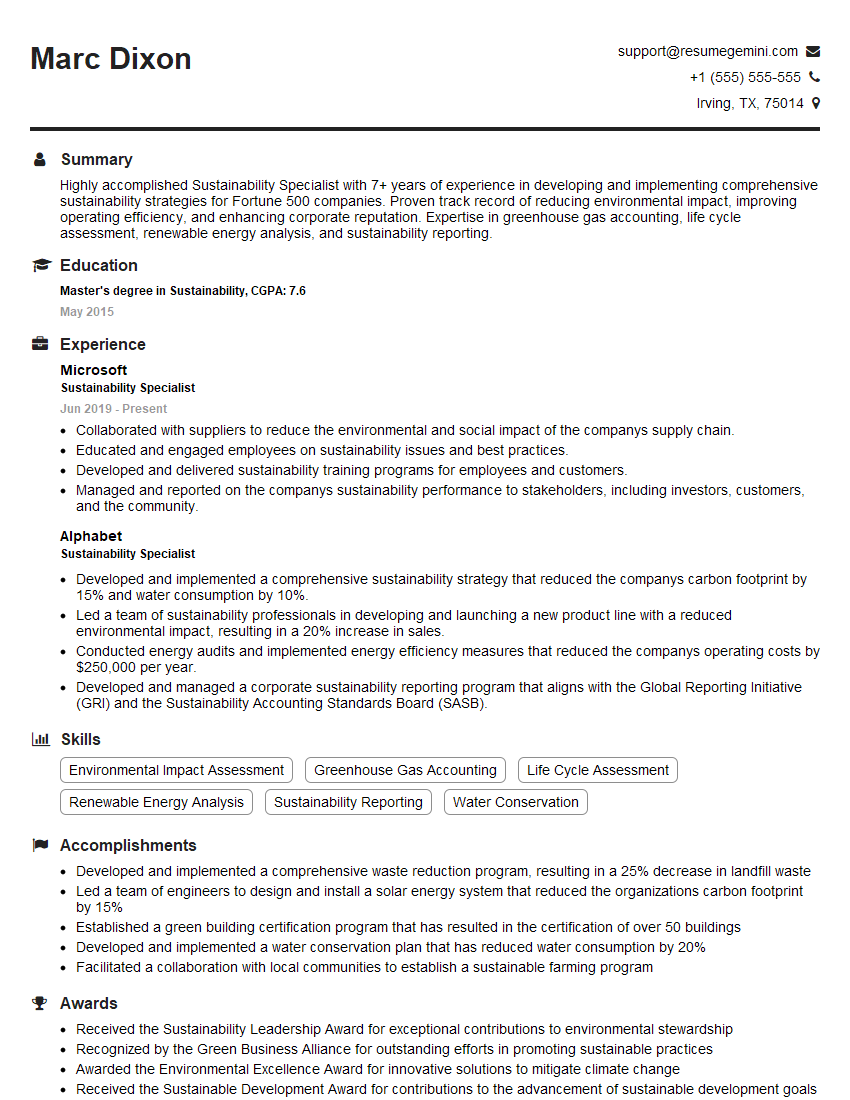
Sustainability Specialist Resume Sample
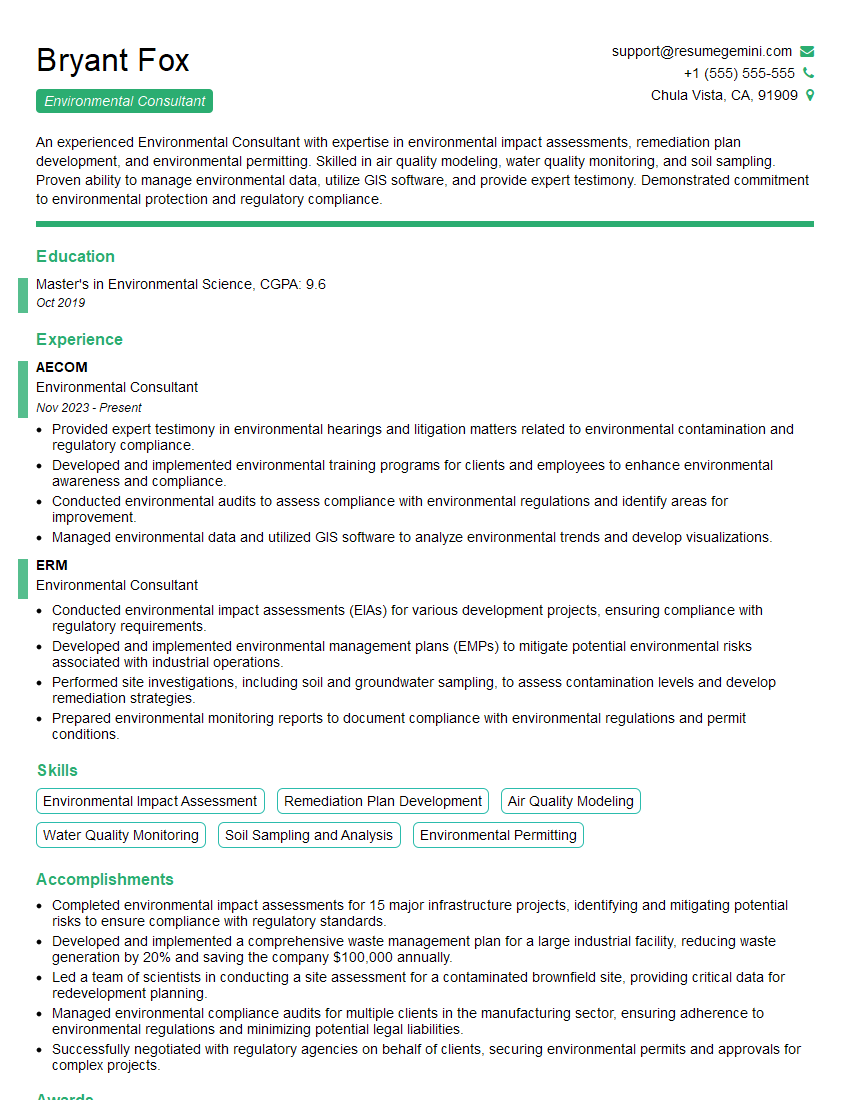
Environmental Consultant Resume Sample
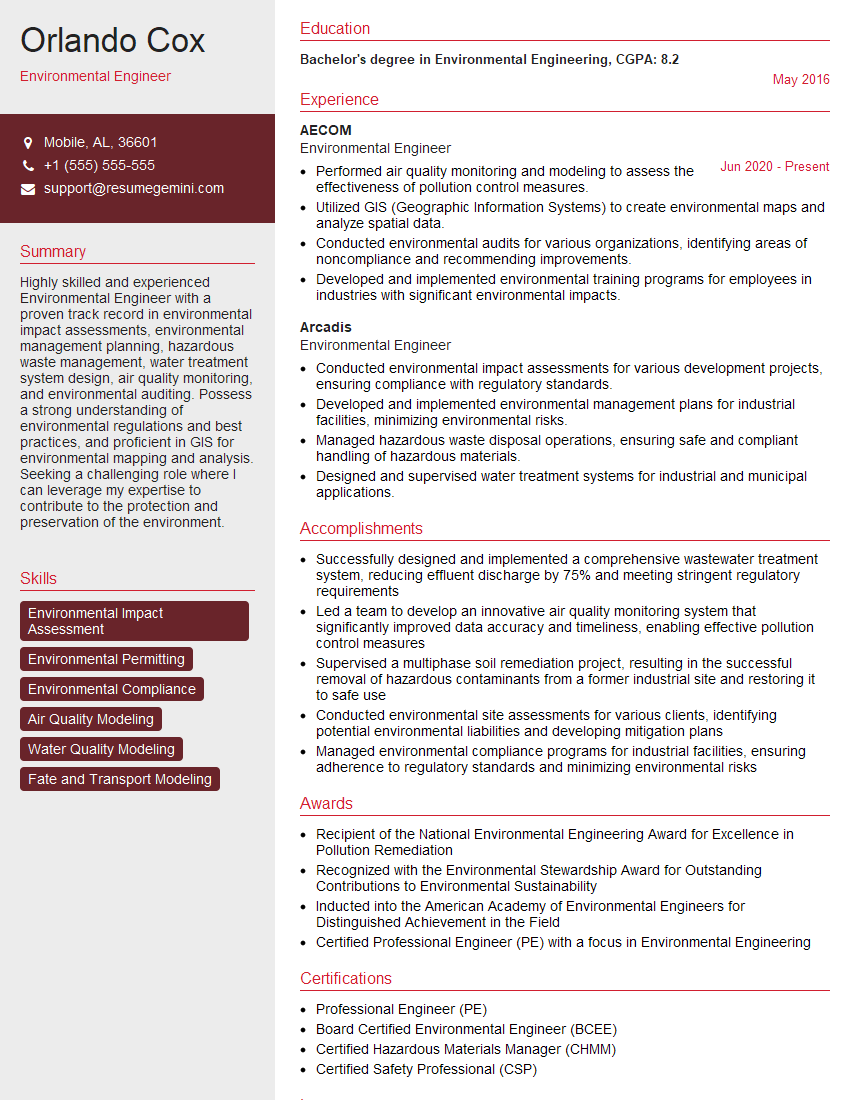
Environmental Engineer Resume Sample
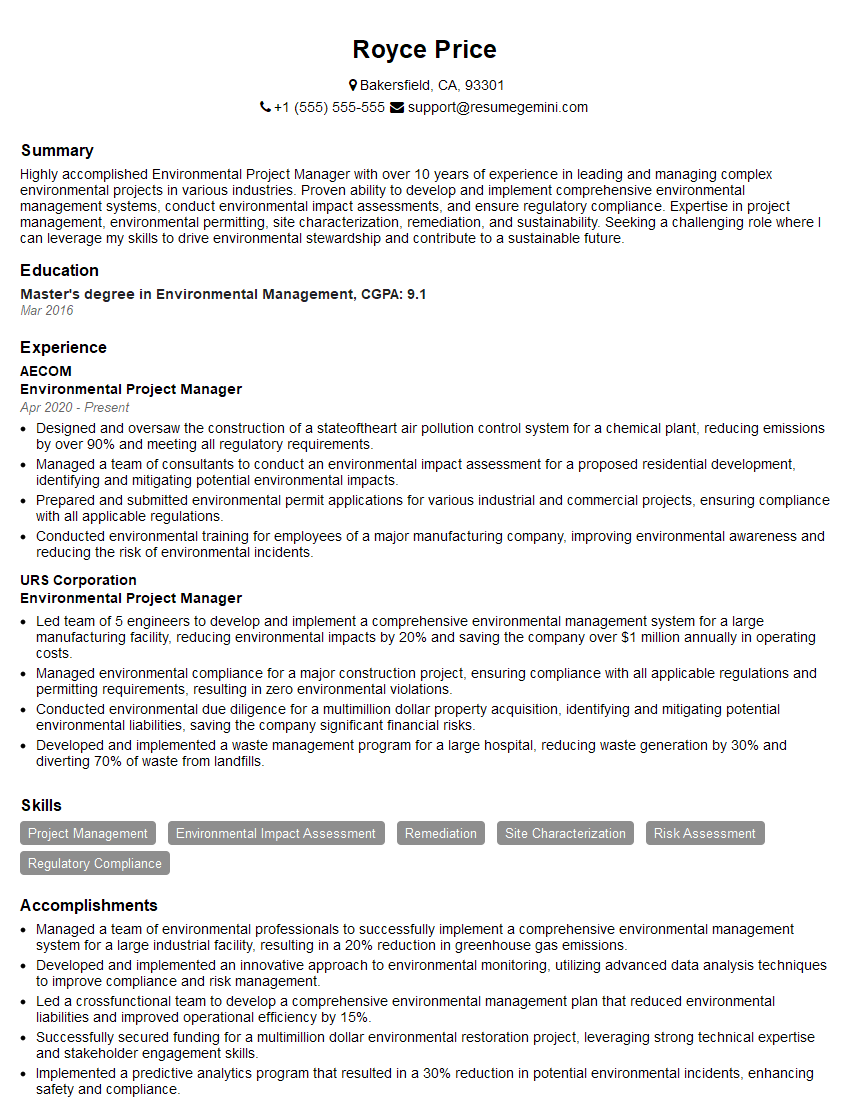
Environmental Project Manager Resume Sample

Wildlife Biologist Resume Sample
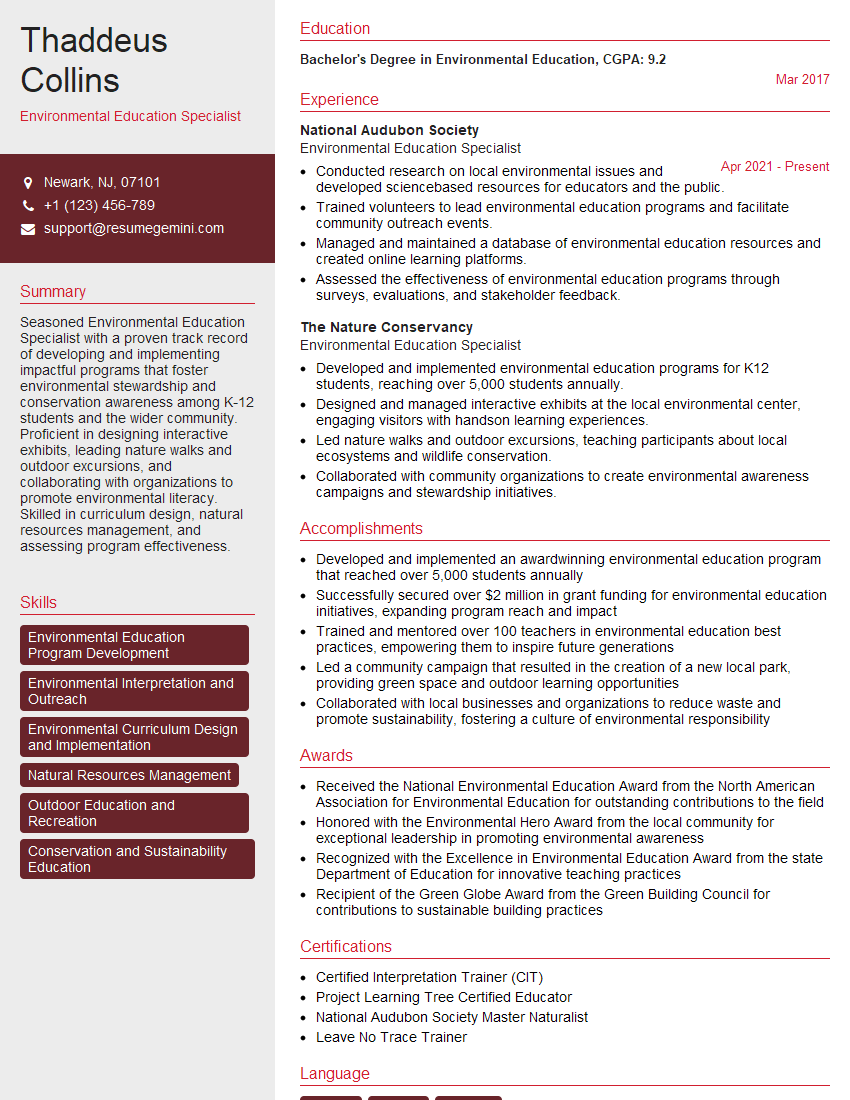
Environmental Education Specialist Resume Sample
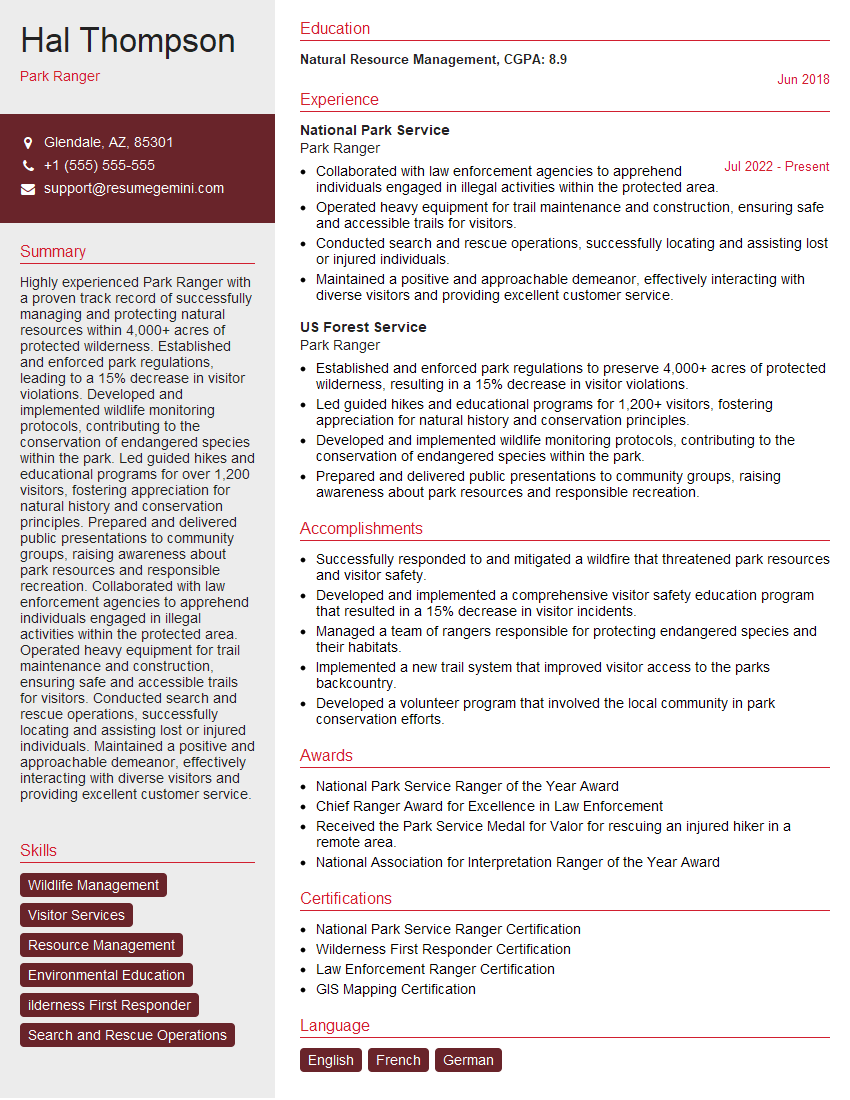
Park Ranger Resume Sample

Conservation Planner Resume Sample
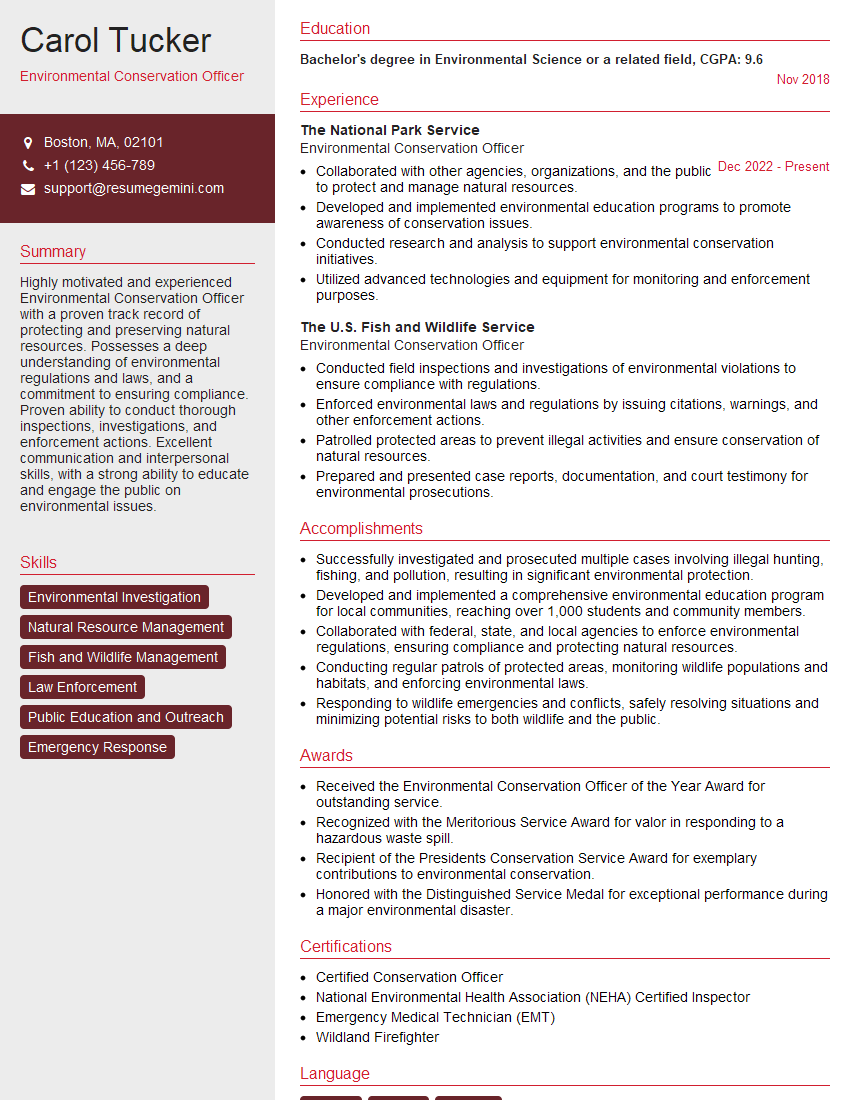
Environmental Conservation Officer Resume Sample
- Sustainability Coordinator
- Sustainability Manager
- Environmental Program Manager
- Environmental Remediation Specialist
- Environmental Compliance Officer
- Environmental Scientist
- Environmental Specialist
- Waste Management Specialist
- Sustainability Analyst
- Sustainability Specialist
- Environmental Consultant
- Environmental Engineer
- Environmental Project Manager
- Wildlife Biologist
- Environmental Education Specialist
- Park Ranger
- Conservation Planner
- Environmental Conservation Officer
Explore more articles
Users Rating of Our Blogs
Share Your Experience
We value your feedback! Please rate our content and share your thoughts (optional).
What Readers Say About Our Blog
Very informative content, great job.
good