Interviews are opportunities to demonstrate your expertise, and this guide is here to help you shine. Explore the essential Risk Management for Energy Projects interview questions that employers frequently ask, paired with strategies for crafting responses that set you apart from the competition.
Questions Asked in Risk Management for Energy Projects Interview
Q 1. Describe your experience in performing quantitative risk analysis.
Quantitative risk analysis involves using numerical data to assess the likelihood and potential impact of risks. I’ve extensively used this approach in energy projects, particularly for cost and schedule estimations. For instance, in a recent offshore wind farm project, we used Monte Carlo simulation to model the uncertainty surrounding turbine installation costs. We inputted data on potential delays due to weather, equipment failures, and labor shortages, assigning probability distributions to each variable. The simulation then ran thousands of iterations, generating a probability distribution of the total project cost, allowing us to identify the most likely cost scenario, as well as the potential for significant cost overruns.
Another example involved using decision tree analysis to evaluate the risks associated with different pipeline routing options. Each branch of the tree represented a possible route, with associated probabilities of encountering geological challenges, regulatory hurdles, and land acquisition difficulties. By assigning costs and probabilities to each branch, we could quantify the expected cost and risk of each route, ultimately informing the optimal decision.
Q 2. Explain the difference between inherent and residual risk.
Inherent risk represents the level of risk present before any risk management actions are taken. It’s the baseline risk profile. Residual risk, on the other hand, is the risk that remains after implementing risk mitigation strategies. Think of it like this: inherent risk is the size of the problem before you start fixing it, and residual risk is the size of the problem after you’ve done your best to address it.
For example, in a solar power plant project, the inherent risk might include potential delays due to permitting issues or supply chain disruptions. After implementing mitigation strategies like engaging a specialized permitting consultant and diversifying suppliers, the residual risk related to those issues would ideally be significantly lower, but not necessarily zero.
Q 3. How do you identify and assess potential risks in an energy project?
Identifying and assessing potential risks in an energy project requires a systematic approach. I typically begin with a thorough project scoping session involving key stakeholders from engineering, procurement, construction, and finance. We use a combination of techniques:
- Workshops and Brainstorming: Facilitated sessions to identify potential hazards and risks across all project phases.
- Checklists and Databases: Utilizing pre-defined risk checklists specific to the energy sector and project type to ensure comprehensive coverage.
- SWOT Analysis: Evaluating the project’s strengths, weaknesses, opportunities, and threats.
- Hazard and Operability Studies (HAZOP): A systematic review of the project’s design and operations to identify potential hazards and operational problems.
- What-if Analysis: Exploring potential scenarios and their impacts (e.g., What if the regulatory approvals are delayed? What if key equipment is damaged?).
Once risks are identified, we assess them by considering the likelihood of occurrence and potential impact using qualitative or quantitative methods. We often use a risk matrix to visually represent this, with likelihood and impact rated on scales (e.g., low, medium, high).
Q 4. What risk management methodologies are you familiar with (e.g., FMEA, Monte Carlo simulation)?
My experience encompasses a range of risk management methodologies. I’m proficient in:
- Failure Mode and Effects Analysis (FMEA): A systematic approach to identify potential failure modes, their effects, severity, and likelihood of occurrence. We use FMEA to proactively address potential equipment failures in energy projects, for instance.
- Monte Carlo Simulation: As mentioned earlier, this is invaluable for modeling uncertainty and generating probability distributions for key project variables like cost and schedule.
- Bow-tie Analysis: This visual tool helps analyze hazards, identifying potential causes (threats) and consequences (effects), and the controls to mitigate risks. It’s particularly effective for large-scale projects.
- Decision Tree Analysis: Useful for evaluating the risks associated with various project options, as demonstrated in the pipeline routing example.
Q 5. How do you prioritize risks in a project?
Risk prioritization is crucial for effective resource allocation. We typically use a risk matrix combining likelihood and impact scores to rank risks. A high likelihood and high impact risk gets top priority. For example, a risk with a high probability of causing significant cost overruns would be prioritized over a risk with a low probability of causing minor delays.
Beyond the matrix, we also consider factors like:
- Project criticality: Risks impacting key project milestones receive higher priority.
- Regulatory compliance: Non-compliance risks are always prioritized due to potential legal and financial ramifications.
- Stakeholder concerns: Significant concerns from stakeholders influence priority decisions.
This combination of quantitative and qualitative factors ensures a holistic approach to risk prioritization.
Q 6. Describe your experience with developing and implementing risk mitigation plans.
Developing and implementing risk mitigation plans requires a collaborative effort. After identifying and prioritizing risks, we brainstorm mitigation strategies for each. These strategies might involve:
- Risk avoidance: Eliminating the risk altogether (e.g., choosing a different project location to avoid geological instability).
- Risk reduction: Implementing measures to reduce the likelihood or impact of the risk (e.g., implementing robust quality control procedures to minimize equipment failures).
- Risk transfer: Shifting the risk to a third party (e.g., purchasing insurance to cover potential weather-related damages).
- Risk acceptance: Accepting the risk and setting aside contingency funds to address it (e.g., budgeting for potential delays).
The chosen strategy depends on the nature of the risk, its severity, and the project’s context. We document these plans detailing the responsible party, timelines, and resources required, and regularly review and update them as needed.
Q 7. How do you monitor and control risks throughout the project lifecycle?
Risk monitoring and control are ongoing processes throughout the project lifecycle. We use several methods:
- Regular Risk Reviews: Scheduled meetings to review the risk register, assess the effectiveness of mitigation strategies, and identify new risks.
- Progress Reporting: Tracking key performance indicators (KPIs) to identify potential deviations from the plan and trigger early warning signals.
- Variance Analysis: Comparing actual performance to the baseline plan to identify areas where risks are materializing.
- Contingency Planning: Having predefined actions to address risks if they do occur.
- Lessons Learned Sessions: Post-project reviews to capture valuable insights and improve future risk management practices.
Proactive monitoring and control are essential to anticipate and respond to emerging risks, keeping projects on track and within budget.
Q 8. What are the key regulatory and compliance considerations in energy project risk management?
Regulatory and compliance considerations are paramount in energy project risk management. These considerations vary significantly depending on the project type (e.g., renewable energy, fossil fuels), location, and the specific regulations of that jurisdiction. For example, projects involving offshore wind farms will face stringent environmental regulations and safety standards concerning marine life and potential damage to the seabed, whereas onshore solar farms may face land-use zoning regulations and grid connection requirements. Key aspects include:
- Environmental regulations: These pertain to emissions, waste disposal, habitat protection, and water usage, often dictated by agencies like the EPA (in the US) or equivalent bodies globally. Non-compliance can lead to hefty fines, project delays, or even cancellation.
- Safety regulations: Occupational safety and health standards (OSHA in the US) must be rigorously adhered to, minimizing risks to workers. This includes proper training, safety equipment, and emergency response plans. Failure to comply can result in workplace accidents and significant legal repercussions.
- Permitting and licensing: Obtaining necessary permits and licenses from various governmental agencies is crucial. Delays in obtaining these can severely impact project timelines and budgets. This process often involves extensive documentation and reviews, requiring proactive risk management from the outset.
- Security regulations: Protecting energy infrastructure from cyber threats and physical attacks is becoming increasingly critical. Regulations regarding cybersecurity and physical security measures must be incorporated into the risk management plan.
- Financial regulations: Compliance with financial regulations, such as those concerning project financing and reporting, is crucial to ensure transparency and stability.
Proactive engagement with regulatory bodies throughout the project lifecycle is vital for effective risk management. This includes early consultation, regular reporting, and prompt response to any concerns raised by regulators.
Q 9. How do you communicate risk information to stakeholders?
Communicating risk information effectively to stakeholders is crucial for successful project outcomes. The key is tailoring communication to the specific audience and their level of understanding. I utilize a multi-faceted approach:
- Regular meetings: Formal meetings, involving project teams and key stakeholders, provide a platform for open discussion on identified risks, their potential impacts, and mitigation strategies.
- Visual aids: Risk dashboards and heatmaps visually represent the probability and impact of risks, making complex data easily digestible. These are particularly useful for senior management who may not have the time for detailed reports.
- Reports: Comprehensive risk reports, tailored to different stakeholder groups, provide a detailed overview of risks, mitigation actions, and contingency plans. These reports often include quantitative data and qualitative assessments.
- Verbal communication: Direct, clear, and concise verbal communication ensures that stakeholders understand the key risks and the actions being taken to address them. This involves actively listening to stakeholders’ concerns and addressing them transparently.
- Escalation procedures: Clear escalation procedures define how significant risks should be reported and handled. This ensures timely action is taken on critical risks.
Crucially, communication must be transparent and honest. Hiding or downplaying risks can lead to disastrous consequences. Open communication builds trust and allows for collective problem-solving.
Q 10. Describe your experience with risk reporting and dashboards.
I have extensive experience developing and utilizing risk reporting and dashboards. My approach combines quantitative and qualitative data to provide a holistic view of project risk. I’ve used various tools, including project management software (like MS Project or Primavera P6) and dedicated risk management software to create dynamic dashboards that track key risk indicators (KRIs) and key risk events (KREs). These dashboards typically include:
- Risk heatmaps: Visual representation of risks based on their probability and impact. This allows for rapid identification of high-priority risks.
- Risk registers: A centralized repository for all identified risks, their associated likelihood, impact, mitigation strategies, and assigned owners. This provides a comprehensive view of the project’s risk landscape.
- Trend analysis: Tracking risk events over time, enabling identification of emerging risks or trends. This allows for proactive mitigation efforts.
- Key performance indicators (KPIs): Integrating relevant KPIs to provide context and demonstrate the effectiveness of risk mitigation strategies.
For instance, in a recent offshore wind farm project, I developed a dashboard that tracked weather-related delays, permitting issues, and equipment failures. This allowed for proactive adjustments to the project schedule and budget, mitigating potential cost overruns and delays.
Q 11. How do you handle unexpected risks or events?
Handling unexpected risks or events requires a structured and decisive approach. My process involves:
- Immediate response: Form a rapid response team to assess the situation, understand the impact, and contain the damage.
- Impact assessment: Quantify the impact of the event on project timelines, budget, and safety. This involves collecting data from various sources and evaluating potential cascading effects.
- Mitigation planning: Develop and implement mitigation strategies to address the immediate issue and prevent similar events in the future. This may involve adjustments to the project plan, resource allocation, or contingency plans.
- Communication: Keep stakeholders informed of the situation and the actions being taken. Transparency builds trust and fosters collaboration during crisis situations.
- Lessons learned: After the event, conduct a thorough review to identify the root cause of the unexpected event and implement corrective actions to prevent recurrence. This includes updating the risk register and improving risk assessment processes.
For example, during the construction of a solar farm, an unexpected flash flood damaged some equipment. The rapid response team immediately secured the site, assessed the damage, and initiated repairs while simultaneously updating stakeholders. A post-incident review led to improved drainage systems and updated contingency plans for future weather events.
Q 12. What is your experience with risk registers?
Risk registers are essential tools in project risk management. They provide a centralized repository for all identified risks, allowing for tracking, monitoring, and reporting. My experience with risk registers includes developing, maintaining, and regularly updating them throughout the project lifecycle. A well-maintained risk register includes:
- Risk identification: A detailed description of each identified risk.
- Risk probability: The likelihood of the risk occurring, often expressed as a percentage or qualitative rating (e.g., low, medium, high).
- Risk impact: The potential consequences of the risk occurring, usually expressed in terms of cost, schedule, safety, or environmental impact.
- Risk owner: The individual responsible for managing and mitigating the risk.
- Mitigation strategies: Plans to reduce the likelihood or impact of the risk.
- Contingency plans: Plans to address the risk if it occurs.
- Status: The current status of the risk (e.g., open, in progress, closed).
I utilize both manual and automated risk registers, adapting the approach based on project size and complexity. Regular reviews and updates of the risk register are crucial to ensure it remains a dynamic and relevant tool throughout the project lifecycle.
Q 13. Explain the process for conducting a risk assessment for a new energy project.
Conducting a risk assessment for a new energy project is a systematic process that typically involves these steps:
- Project definition: Clearly define the project scope, objectives, and key deliverables. This provides a solid foundation for identifying potential risks.
- Risk identification: Utilize brainstorming sessions, checklists, and historical data to identify potential risks. Involve diverse team members and external experts to broaden the perspective.
- Risk analysis: Assess the likelihood and impact of each identified risk. Quantitative methods (e.g., probability and impact matrices) and qualitative methods (e.g., expert judgment) can be used.
- Risk response planning: Develop mitigation strategies for each risk, including avoidance, reduction, transfer, and acceptance. This involves defining specific actions and assigning responsibilities.
- Risk monitoring and control: Establish a system for monitoring identified risks throughout the project lifecycle. This includes regular review of the risk register and updates as needed.
- Documentation: Maintain a comprehensive risk assessment report, including the methodologies used, findings, and mitigation strategies. This provides a valuable reference throughout the project and for future projects.
For instance, in a new wind farm project, we would identify risks related to permitting delays, equipment failures, grid connection issues, and environmental impacts. We’d then assess the likelihood and impact of each risk, developing tailored mitigation strategies to minimize their potential effects.
Q 14. How do you integrate risk management into project planning and scheduling?
Integrating risk management into project planning and scheduling is crucial for successful project delivery. Risks should be considered from the outset, not as an afterthought. My approach includes:
- Incorporating risks into the project baseline: Develop a schedule that incorporates buffer time to account for potential delays due to identified risks. This provides flexibility to handle unexpected events without significant schedule slippage.
- Allocating resources for risk mitigation: Include budget provisions for risk mitigation activities, such as contingency planning, insurance, and training.
- Developing contingency plans: Plan for alternative scenarios in case risks materialize. These plans should outline specific actions to be taken if a particular risk occurs.
- Regularly updating the schedule: Continuously monitor risks and update the schedule as needed. This allows for proactive adjustments to the project plan in response to changing risk scenarios.
- Using risk management software: Employ project management software with integrated risk management capabilities to track risks and their impact on the project schedule.
For example, in a solar power plant project, we might build contingency time into the schedule to account for potential weather delays or equipment delivery delays. This proactive approach prevents significant schedule overruns and cost escalations.
Q 15. What are some common risks associated with renewable energy projects?
Renewable energy projects, while environmentally beneficial, face unique risks. These can be broadly categorized into technological, financial, regulatory, and environmental risks.
- Technological Risks: Intermittency of renewable sources (solar and wind) is a major challenge. Predicting and managing energy output fluctuations requires sophisticated forecasting models and potentially expensive energy storage solutions. For example, a solar farm’s output drastically reduces at night, necessitating backup power sources or grid integration complexities. Another example is the risk of equipment failure in wind turbines due to extreme weather conditions.
- Financial Risks: Securing project financing can be difficult due to the long lead times and fluctuating commodity prices. Government subsidies, while helpful, can be unpredictable. For example, changes in feed-in tariffs can significantly impact project profitability. The cost of land acquisition and permitting can also be substantial and unpredictable.
- Regulatory Risks: Changes in environmental regulations, permitting processes, or grid connection standards can significantly delay projects and increase costs. For example, a sudden change in land use zoning can halt a project mid-construction.
- Environmental Risks: Impacts on wildlife, habitat disruption, and landscape changes are important considerations. Public perception and potential protests against projects can also pose significant risks. For instance, the construction of a large-scale wind farm might cause disruption to local bird migration patterns.
Career Expert Tips:
- Ace those interviews! Prepare effectively by reviewing the Top 50 Most Common Interview Questions on ResumeGemini.
- Navigate your job search with confidence! Explore a wide range of Career Tips on ResumeGemini. Learn about common challenges and recommendations to overcome them.
- Craft the perfect resume! Master the Art of Resume Writing with ResumeGemini’s guide. Showcase your unique qualifications and achievements effectively.
- Don’t miss out on holiday savings! Build your dream resume with ResumeGemini’s ATS optimized templates.
Q 16. What are some common risks associated with oil and gas projects?
Oil and gas projects carry inherent risks stemming from the hazardous nature of the materials involved, geopolitical instability, and volatile commodity prices. These risks can be categorized as geological, operational, financial, and political.
- Geological Risks: Unexpected geological formations, reservoir depletion, and wellbore instability are significant concerns. For example, encountering unexpected high-pressure zones during drilling can lead to well blowouts and significant environmental damage. The accuracy of seismic surveys plays a crucial role in minimizing such risks.
- Operational Risks: Equipment failures, safety incidents, and environmental spills pose substantial operational challenges. For instance, a pipeline rupture can cause extensive environmental damage and significant financial repercussions.
- Financial Risks: Fluctuations in oil and gas prices, escalating project costs, and delays can severely impact profitability. For example, a sudden drop in oil prices mid-project can render the project uneconomical.
- Political and Regulatory Risks: Geopolitical instability, changes in government regulations, and permit delays can create major uncertainties. For example, political unrest in a project location can disrupt operations and threaten the project’s viability.
Q 17. How do you manage the risks associated with environmental regulations?
Managing environmental regulatory risks involves proactive engagement, meticulous planning, and continuous monitoring. This requires a multi-pronged approach.
- Proactive Due Diligence: Thoroughly research and understand all applicable environmental regulations at the local, state, and national levels before project initiation. This includes identifying potential permit requirements and environmental impact assessment needs.
- Stakeholder Engagement: Engage with relevant environmental agencies and local communities early and frequently. This fosters transparency and builds trust, facilitating smoother permitting and operational processes. Open communication channels help prevent future conflicts.
- Environmental Impact Assessment (EIA): Conduct a comprehensive EIA to identify and mitigate potential environmental impacts. This detailed assessment should include measures to minimize environmental footprint and comply with relevant legislation. The EIA should also include a robust monitoring plan.
- Permitting and Compliance: Ensure all necessary permits are secured before project construction begins. Maintain meticulous records of compliance activities to demonstrate adherence to regulatory standards. Regular audits can proactively identify and correct any compliance gaps.
- Contingency Planning: Develop a contingency plan to address potential regulatory changes or non-compliance scenarios. This might involve alternative project designs or financial provisions to address potential fines or penalties.
Q 18. How do you manage the risks associated with safety and health regulations?
Safety and health risk management in energy projects necessitates a robust safety culture, stringent protocols, and continuous improvement. It’s not just about compliance; it’s about fostering a proactive safety-conscious environment.
- Hazard Identification and Risk Assessment: Conduct thorough hazard identification and risk assessments at each project phase. Identify potential hazards and develop control measures to mitigate risks. This may involve using tools like Job Safety Analysis (JSA) or HAZOP (Hazard and Operability) studies.
- Safety Training and Education: Implement comprehensive safety training programs for all personnel, including contractors. Regular refresher training and competency assessments are vital. Safety awareness should be integrated into the organizational culture.
- Emergency Response Planning: Develop and regularly test emergency response plans to handle potential incidents, such as fires, spills, or equipment failures. Emergency drills ensure personnel readiness and effectiveness of response protocols.
- Personal Protective Equipment (PPE): Ensure appropriate PPE is provided and used by all personnel. Regular inspections and maintenance of PPE are crucial for its effectiveness.
- Incident Investigation and Reporting: Establish a transparent incident reporting system. Thoroughly investigate all incidents, identifying root causes and implementing corrective actions to prevent recurrence. Learning from past mistakes is vital for continuous improvement.
Q 19. How do you utilize data analytics in risk management?
Data analytics plays a transformative role in risk management. It enables a shift from reactive to proactive risk mitigation by identifying patterns, predicting potential problems, and optimizing resource allocation.
- Predictive Modeling: Using historical data, machine learning algorithms can predict potential risks, such as equipment failures or production delays. For example, analyzing historical weather data can improve the prediction of wind turbine downtime due to extreme weather events.
- Risk Scoring and Prioritization: Data analytics can quantify and prioritize risks based on their likelihood and potential impact. This helps allocate resources effectively to address the most critical risks first.
- Real-time Monitoring and Alerting: Real-time data from sensors and equipment can trigger alerts, enabling prompt responses to potential safety or operational issues. This proactive approach minimizes the impact of incidents.
- Improved Decision-Making: Data-driven insights provide a more objective basis for decision-making, reducing reliance on intuition and improving the accuracy of risk assessments. For example, analyzing cost data over time can help to better predict and manage budget risks.
Q 20. What software tools are you proficient in for risk management?
My proficiency in risk management software includes:
- Risk Management Software: I have extensive experience using dedicated risk management platforms such as BowTieXP, RiskScape, and Allianz Risk Manager. These tools allow for sophisticated risk modelling, scenario analysis, and reporting.
- Data Analytics Tools: I am proficient in using programming languages like Python and R with libraries such as Pandas, Scikit-learn, and TensorFlow for data analysis, predictive modeling, and risk visualization.
- Spreadsheet Software: I am highly skilled in using Microsoft Excel and Google Sheets for data management, risk matrices, and sensitivity analysis. While less sophisticated than specialized risk management software, these tools are invaluable for data organization and basic risk assessment.
My expertise encompasses not only the technical aspects of these tools but also their strategic application within the framework of a robust risk management process.
Q 21. Describe your experience with budget and cost risk management.
Budget and cost risk management is a critical aspect of successful energy project delivery. My experience encompasses various approaches, including:
- Cost Estimation and Budgeting: I have extensive experience in developing accurate and comprehensive cost estimates utilizing various techniques like parametric costing, bottom-up estimating, and analogous estimating. Contingency planning is an integral part of this process to account for uncertainties.
- Cost Control and Monitoring: I use Earned Value Management (EVM) to track project progress and costs against the baseline budget. Early identification of cost overruns allows for timely corrective action.
- Risk Assessment and Mitigation: I perform detailed risk assessments to identify cost-related risks, such as material price fluctuations, regulatory changes, or unforeseen site conditions. Mitigation strategies are developed and implemented to address these risks. For example, hedging strategies could be employed to minimize exposure to price volatility.
- Change Management: I implement rigorous change management processes to track and control changes that impact the project budget. This ensures all changes are properly authorized, costed, and integrated into the overall project budget.
- Contingency Planning: I always build adequate contingencies into the budget to account for unforeseen events. This acts as a buffer to absorb unexpected costs and ensure project completion.
Q 22. Describe your experience with schedule risk management.
Schedule risk management is the process of identifying, analyzing, and responding to events that could impact a project’s timeline. It’s not just about delays; it encompasses any deviation from the planned schedule, including early completions (which can also present challenges). My approach involves a multi-faceted strategy:
- Proactive Identification: Utilizing techniques like critical path analysis (CPA) to pinpoint tasks most vulnerable to delays. I also leverage expert judgment, historical data from similar projects, and what-if scenario planning.
- Qualitative and Quantitative Analysis: I assess the likelihood and impact of potential schedule risks. This might involve using probability and impact matrices, Monte Carlo simulations (for more complex projects), or simple risk registers to track potential issues and their severity.
- Response Planning: This goes beyond simply identifying problems; it’s about developing contingency plans. For instance, if a key piece of equipment is prone to failure, we might source a backup or expedite repairs. We also identify reserve time buffers built into the schedule to accommodate unforeseen delays.
- Monitoring and Control: Regularly tracking progress against the schedule, comparing actual performance to planned performance, and making adjustments as needed. This includes timely escalation of significant schedule deviations.
For example, on a recent offshore wind farm project, we used Monte Carlo simulation to model the impact of potential delays due to weather conditions. This allowed us to identify the most probable project completion date, alongside a range of potential completion times, helping us prepare for various scenarios and confidently manage stakeholder expectations.
Q 23. How do you manage stakeholder expectations related to risk?
Managing stakeholder expectations around risk involves open, honest, and proactive communication. It’s about setting realistic expectations from the outset and building trust. My approach is based on:
- Transparency: Clearly communicating the identified risks, their potential impact, and the mitigation strategies in place. This might involve regular risk reporting, workshops, and one-on-one meetings.
- Collaboration: Involving stakeholders in the risk identification and mitigation process. Their insights are invaluable, and their buy-in is crucial for successful risk management.
- Regular Updates: Providing timely updates on the risk status, changes to mitigation plans, and any new emerging risks. This keeps stakeholders informed and fosters confidence.
- Managing Expectations: Framing the discussion around likelihood and impact. It’s about managing the perception of risk, not necessarily eliminating all risk (which is often impossible).
- Escalation Procedures: Having a clear process for escalating significant risks to senior management when necessary.
For instance, during a solar power project, we faced delays due to permitting issues. We proactively informed all stakeholders – investors, government agencies, and the local community – providing regular updates on our progress and the steps being taken to address the delays. This proactive communication prevented misunderstandings and maintained their confidence in the project.
Q 24. How do you measure the effectiveness of your risk management program?
Measuring the effectiveness of a risk management program requires a combination of quantitative and qualitative metrics. We track:
- Key Risk Indicators (KRIs): These are metrics that provide an early warning of potential problems. For example, the number of reported risks, the frequency of risk events, or the cost of risk mitigation.
- Risk Register Accuracy: Assessing the accuracy of the risk register in predicting actual events. This helps improve the identification and analysis processes.
- Project Performance: Comparing planned versus actual project outcomes. Did the risk management plan help to prevent or mitigate significant problems? Did it stay within budget and schedule?
- Stakeholder Satisfaction: Gathering feedback from stakeholders on the effectiveness of the risk management process. This includes their confidence in the project’s success and the risk management team’s responsiveness.
- Post-Project Review: A thorough post-project analysis to evaluate what worked well, what could be improved, and to capture lessons learned for future projects.
By tracking these metrics and regularly reviewing the risk management process, we can identify areas for improvement and ensure that our program remains effective and efficient.
Q 25. Describe a time you had to make a critical decision under pressure involving risk.
During the construction phase of a geothermal energy plant, a major equipment failure occurred, threatening to significantly delay the project and cause substantial cost overruns. The pressure was immense, as the project was already behind schedule and under budget constraints.
My decision-making process involved:
- Rapid Assessment: I immediately gathered the project team and experts to assess the situation, determining the extent of the damage, the likely repair time, and the potential financial and schedule impacts.
- Option Evaluation: We explored several options, including repairing the equipment on-site, sourcing a replacement part, or finding an alternative solution. Each option was evaluated based on its cost, time implications, and risk profile.
- Stakeholder Consultation: We consulted with key stakeholders, including the client, investors, and regulatory authorities, to ensure everyone was informed and aligned on the chosen course of action.
- Decision and Execution: We decided to source a replacement part from an overseas supplier, which although slightly more expensive, offered a significantly faster turnaround time than on-site repair. The entire procurement and installation process was meticulously managed to minimize further disruptions.
While the situation was stressful, the quick, decisive action, and transparent communication minimized the negative impacts of the equipment failure. The project was delayed, but not catastrophically, and remained within budget. This taught the team the importance of having robust backup plans and a well-defined escalation path.
Q 26. How do you balance risk mitigation with project timelines and budgets?
Balancing risk mitigation with project timelines and budgets requires a careful prioritization process. It’s about optimizing, not eliminating, risk. My approach involves:
- Risk Prioritization: Using techniques like probability and impact matrices to rank risks based on their likelihood and potential impact. This allows us to focus our mitigation efforts on the highest-priority risks.
- Cost-Benefit Analysis: Evaluating the cost of implementing each mitigation strategy against the potential cost of not implementing it. This ensures we are investing our resources effectively.
- Time-Phased Mitigation: Implementing mitigation strategies over time, focusing first on the most pressing risks and addressing lower-priority risks later as resources allow.
- Contingency Planning: Building time and budget buffers into the project plan to accommodate unforeseen events. This provides flexibility to respond to risks without jeopardizing the overall project timeline or budget.
- Trade-off Decisions: Sometimes, accepting a certain level of risk is the most efficient solution. This decision is made after careful consideration of the potential consequences.
For example, on a hydropower project, we identified a risk of geological instability. Implementing extensive geological surveys to completely mitigate the risk would have been extremely costly and time-consuming. Instead, we opted for a less expensive but still effective solution: employing detailed monitoring during construction and implementing contingency plans for various scenarios. This balanced risk mitigation with project timelines and budget constraints effectively.
Q 27. Explain the concept of risk appetite and its importance in project management.
Risk appetite defines the level of risk an organization is willing to accept in pursuit of its objectives. It’s essentially the organization’s tolerance for uncertainty. Understanding and defining risk appetite is critical in project management because it provides a framework for decision-making.
Importance in Project Management:
- Provides Guidance: It guides decision-making by setting clear boundaries for acceptable risk levels. This prevents projects from becoming overly cautious (missing opportunities) or recklessly aggressive (taking on excessive risk).
- Enhances Alignment: A clear risk appetite ensures alignment among project stakeholders regarding the level of risk considered acceptable. This minimizes conflicts and misunderstandings.
- Facilitates Prioritization: It assists in prioritizing risks. Risks exceeding the defined risk appetite require immediate attention and mitigation.
- Improves Resource Allocation: It enables more effective allocation of resources to risk mitigation efforts, focusing on the risks that matter most based on the established appetite.
For instance, a company with a high risk appetite might be willing to invest in more innovative, but potentially riskier, technologies, even if the chance of failure is higher, because the potential rewards justify the risk. A company with a low risk appetite might prioritize proven technologies with a lower risk of failure, even if the potential rewards are less substantial.
Q 28. How do you ensure the ongoing effectiveness of your risk management strategy?
Ensuring the ongoing effectiveness of a risk management strategy requires continuous monitoring, evaluation, and improvement. This involves:
- Regular Reviews: Conducting regular reviews of the risk register, identifying new or emerging risks, and updating the risk assessment and mitigation plans. These reviews should be integrated into regular project meetings.
- Performance Monitoring: Tracking Key Risk Indicators (KRIs) to monitor the effectiveness of mitigation strategies. This provides early warning signals of potential problems.
- Lessons Learned: Capturing lessons learned from previous projects and incorporating them into the risk management process. This helps improve future risk identification, assessment, and response.
- Continuous Improvement: Regularly evaluating the risk management process itself, looking for areas for improvement in efficiency, effectiveness, and stakeholder engagement. This might involve using feedback from stakeholders and risk audits.
- Adaptation to Change: The risk landscape is constantly evolving. The risk management strategy should adapt to changes in the project environment, technological advancements, and regulatory requirements.
Think of it like maintaining a ship at sea. Constant vigilance is crucial to identify and address emerging problems before they escalate into major issues. This approach ensures your risk management remains fit for purpose and continues to protect your projects effectively.
Key Topics to Learn for Risk Management in Energy Projects Interviews
- Risk Identification & Assessment: Understanding methodologies like HAZOP, FMEA, and quantitative risk analysis. Practical application: Analyzing potential risks in offshore wind farm development, including environmental impact and supply chain disruptions.
- Risk Response Planning & Mitigation: Developing strategies for avoiding, transferring, mitigating, and accepting risks. Practical application: Creating contingency plans for pipeline construction projects, considering factors like weather events and regulatory changes.
- Risk Monitoring & Control: Implementing key risk indicators (KRIs) and reporting mechanisms. Practical application: Tracking project progress against risk tolerances and escalating issues promptly to management.
- Regulatory Compliance & Standards: Familiarity with industry-specific regulations and best practices (e.g., ISO 31000). Practical application: Ensuring compliance with environmental regulations during the decommissioning of an oil platform.
- Stakeholder Management & Communication: Effectively communicating risk information to diverse stakeholders (e.g., investors, government agencies). Practical application: Presenting risk assessments and mitigation strategies to project sponsors and securing buy-in.
- Project Risk Management Software & Tools: Understanding and demonstrating familiarity with commonly used software for risk management in energy projects. Practical application: Proficient use of risk management software for data analysis, reporting and scenario modeling.
- Financial Risk Management: Understanding and applying concepts of cost overruns, insurance, and financial modeling within the context of energy projects. Practical application: Analyzing the financial implications of various risk mitigation strategies.
Next Steps
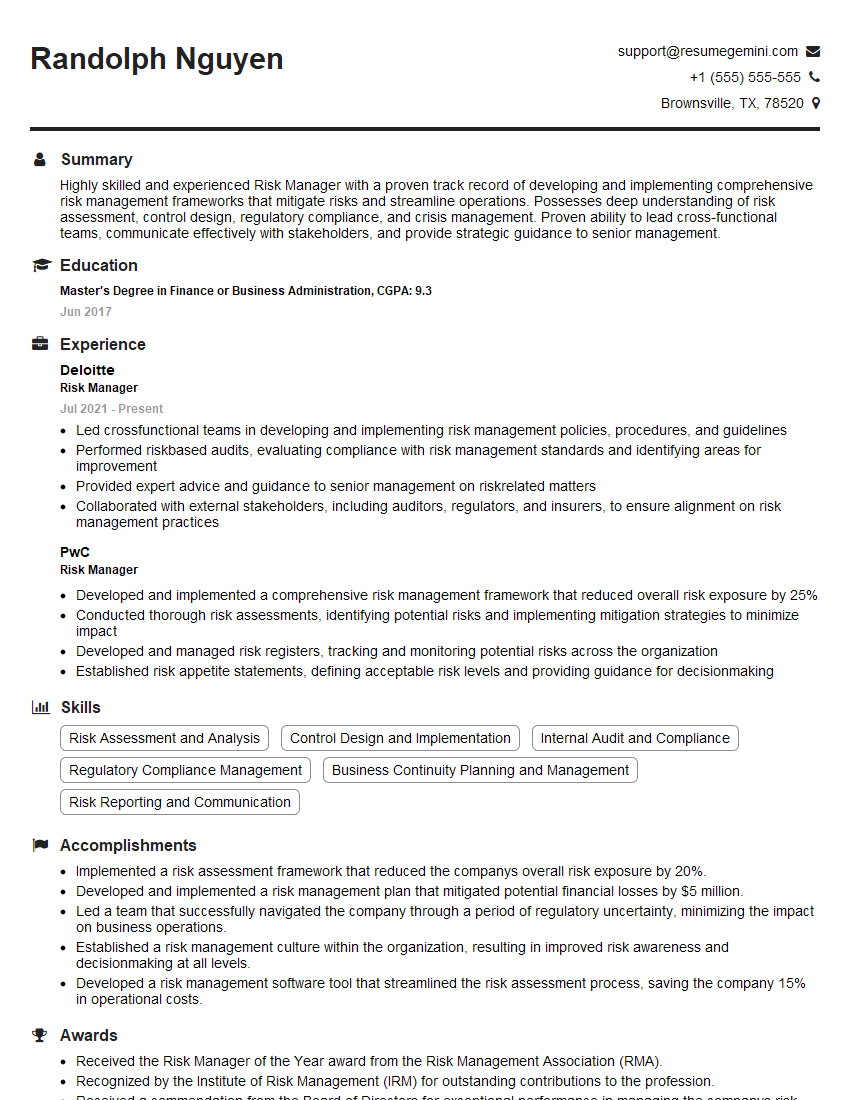
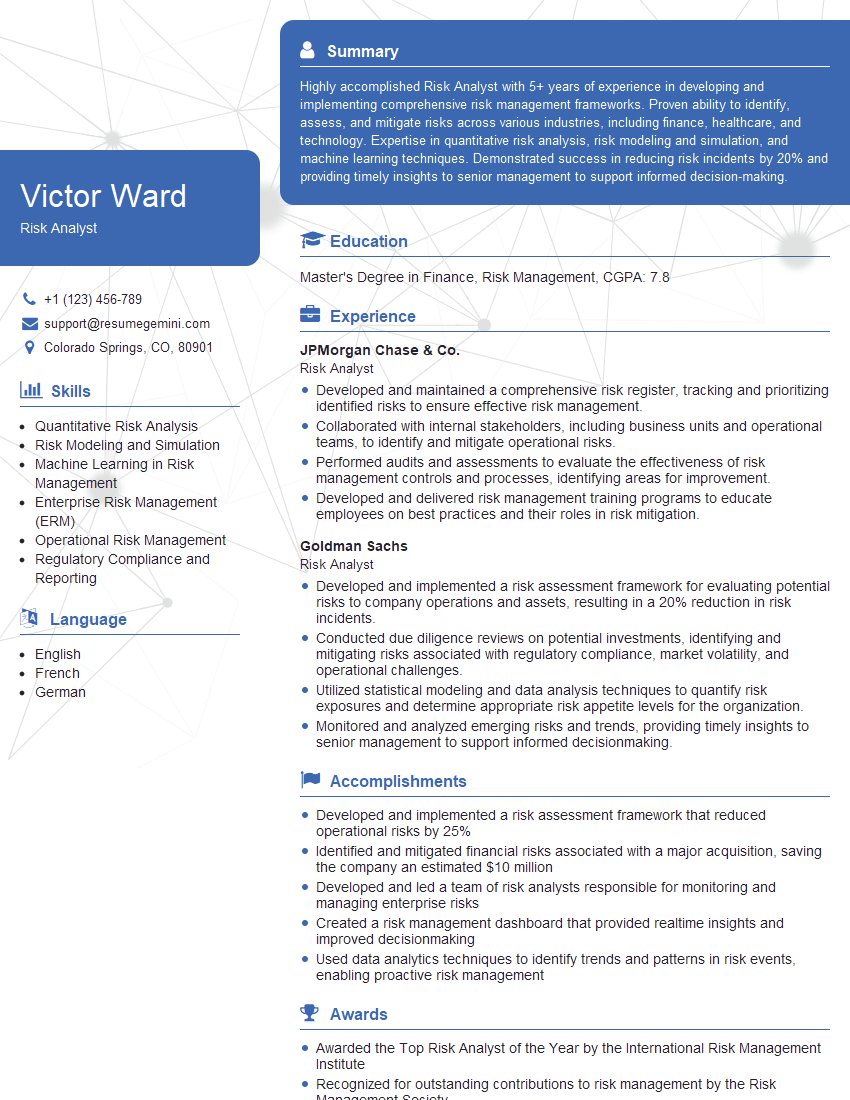
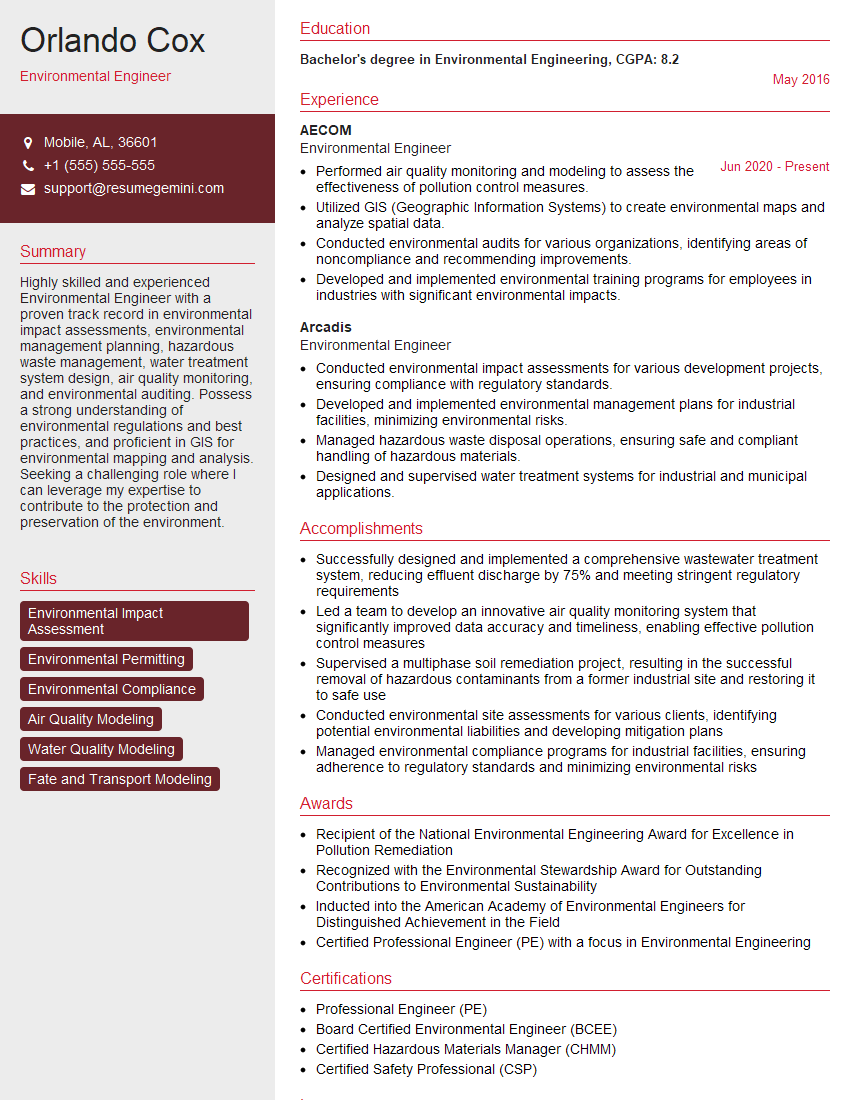
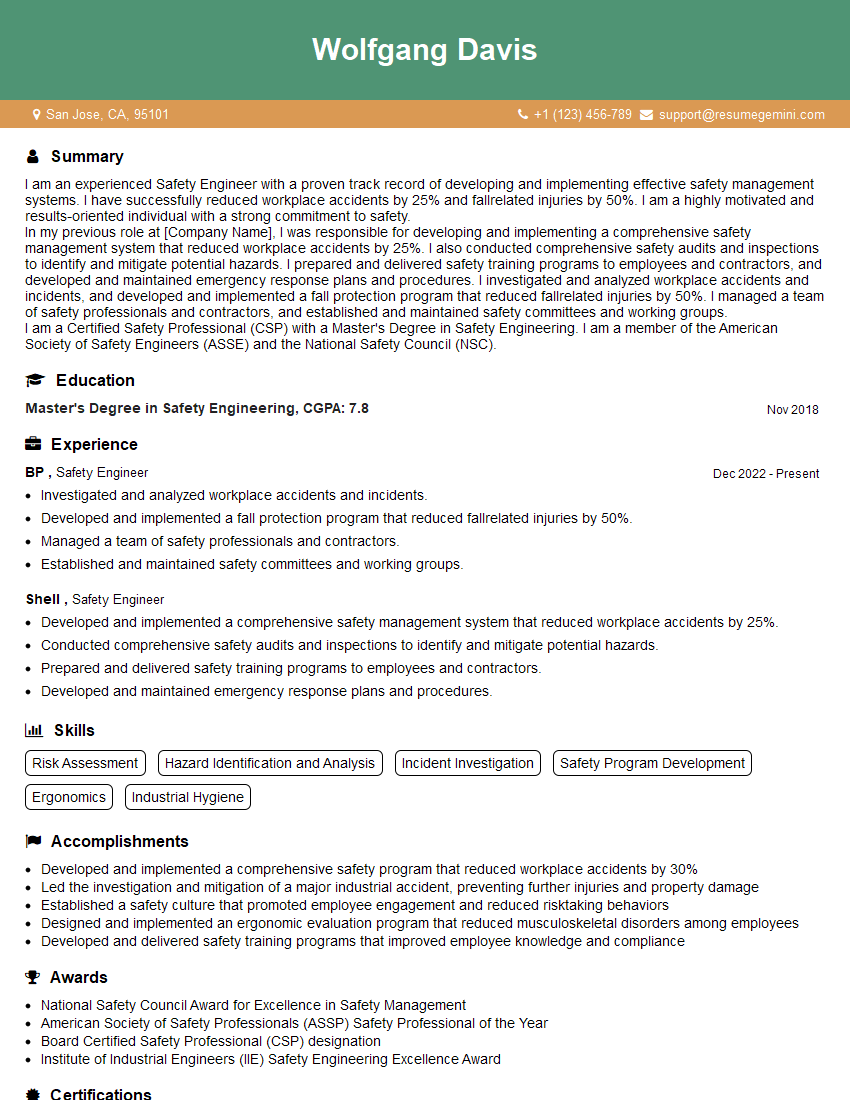
Mastering Risk Management for Energy Projects is crucial for career advancement in this dynamic and high-demand sector. A strong understanding of these principles will significantly enhance your interview performance and open doors to exciting opportunities. To maximize your job prospects, it’s essential to create a compelling and ATS-friendly resume that highlights your skills and experience. We strongly recommend leveraging ResumeGemini to build a professional and impactful resume tailored to the energy sector. ResumeGemini offers a user-friendly platform and provides examples of resumes specifically designed for Risk Management in Energy Projects to guide you. Invest time in crafting a standout resume; it’s your first impression and a critical step towards your success.

Explore more articles
Users Rating of Our Blogs
Share Your Experience
We value your feedback! Please rate our content and share your thoughts (optional).
What Readers Say About Our Blog
Very informative content, great job.
good