Unlock your full potential by mastering the most common EOD Safety interview questions. This blog offers a deep dive into the critical topics, ensuring you’re not only prepared to answer but to excel. With these insights, you’ll approach your interview with clarity and confidence.
Questions Asked in EOD Safety Interview
Q 1. Describe the different types of explosive devices you are familiar with.
Explosive devices come in a vast array of shapes, sizes, and designs, each posing unique challenges. My familiarity extends across several categories. Improvised Explosive Devices (IEDs) are a major concern; these are homemade devices, often using readily available materials, making them unpredictable. They can range from simple pipe bombs to complex, multi-stage devices. Then there are military ordnance, such as landmines, grenades, rockets, and unexploded bombs (UXOs) – these are manufactured explosives with known characteristics, but their condition and stability can vary greatly after years of exposure to the elements. Finally, we must consider commercial explosives, such as dynamite or blasting caps, which, while designed for controlled use, can be misused and become extremely dangerous. Each type requires a specific approach for identification, assessment, and disposal.
- Improvised Explosive Devices (IEDs): These are highly variable and often incorporate common household items making identification difficult.
- Military Ordnance: These are standardized but their condition after deployment is unknown.
- Commercial Explosives: These are designed for controlled use but can be misused.
Q 2. Explain the process of identifying and assessing a suspected explosive device.
Identifying and assessing a suspected explosive device is a meticulous process, prioritizing safety above all else. It begins with establishing a safe perimeter and securing the area to prevent unauthorized access. Visual inspection is the first step, noting the device’s size, shape, color, any visible markings (even seemingly insignificant ones can provide clues), and the presence of any wires, timers, or other components. We use specialized tools like mirrors and long-range cameras to examine the device from a distance, minimizing the risk. If possible, we’ll consult available intelligence or databases of known explosive devices. A critical part of the process is risk assessment: what type of device is it? What is its likely power? What are the potential consequences of detonation? This assessment determines the appropriate disposal strategy. X-ray or other imaging techniques may be used for further examination. The entire process is carefully documented and photographed for later analysis and evidence gathering.
Q 3. What are the primary safety precautions you would take when approaching an unknown explosive device?
Safety is paramount when approaching any unknown explosive device. The first and most crucial step is to establish a large, secure perimeter, evacuating everyone from the danger zone. This is followed by a thorough assessment from a safe distance. Never attempt to touch or move the device. We utilize remote observation tools, such as robots and cameras, to gather information. The use of personal protective equipment (PPE), including ballistic vests, helmets, and eye protection, is mandatory. Communication with support personnel and bomb disposal experts is essential throughout the entire process. Every action is carefully planned and executed, always erring on the side of caution. We remember that haste is the enemy, and a methodical approach is far safer.
Q 4. Detail your experience with various disposal techniques for different types of explosives.
Disposal techniques are highly dependent on the type and condition of the explosive device. For IEDs, controlled detonation is often the safest approach. This involves using specialized robots or remote-operated devices to place explosives at a safe distance, ensuring the device is completely destroyed without causing harm to the surrounding environment. Military ordnance sometimes requires specialized tools and procedures based on the specific type of ordnance. For example, a landmine may be safely rendered inert by specialist tools, while an unexploded bomb might be remotely detonated in a controlled environment. The disposal of commercial explosives usually involves careful handling and transportation to a licensed disposal facility. Each scenario demands a tailored approach based on a thorough risk assessment, always prioritizing safety and minimizing collateral damage.
Q 5. How would you handle a situation where a device is found in a crowded public area?
Finding a device in a crowded public area is a high-stakes scenario that demands immediate action. The first priority is to evacuate the area as swiftly and safely as possible. Clear and concise communication to the public is vital to ensure a smooth and orderly evacuation. Then, we establish a secure perimeter, controlling access to the area. After evacuation, a thorough assessment of the device begins, using remote observation whenever possible. The specific disposal plan depends on the device’s type and location. In many instances, a controlled detonation at a safe distance may be the only option. After disposal, the area must undergo thorough forensic examination to collect evidence and ensure the scene is safe before the public is allowed back in. Coordination with law enforcement, emergency services, and local authorities is essential.
Q 6. What are the common hazards associated with EOD work, and how do you mitigate them?
EOD work is inherently dangerous, with hazards including explosions, blast overpressure, fragmentation, and exposure to toxic chemicals. Mitigation strategies are critical. We minimize risk through careful planning and meticulous execution of every step. Our PPE is vital, protecting us from blast injuries and chemical exposure. Extensive training and experience equip us to handle various scenarios effectively. Regular physical and psychological health checks are crucial due to the inherent stress of the job. Furthermore, maintaining clear communication channels with team members and other emergency services ensures efficient coordination and minimizes risks. Technological advancements such as remotely operated robots play a key role in enhancing safety by allowing us to inspect and dispose of explosives from a safe distance.
Q 7. Describe your understanding of risk assessment in EOD operations.
Risk assessment is the cornerstone of EOD operations. It’s a continuous process that begins with identifying potential hazards, assessing their likelihood and severity, and developing mitigation strategies. We use a systematic approach, considering factors like the type of explosive device, its condition, the environment, and the presence of any potential secondary hazards. A detailed risk assessment informs every decision, from establishing the perimeter to selecting the most suitable disposal technique. It’s crucial for developing contingency plans for unforeseen circumstances. This process isn’t a one-time event; it’s constantly refined as we gather more information about the device and the situation. The goal is to minimize risk to personnel, the public, and the environment, ensuring the safe and effective completion of the operation.
Q 8. How familiar are you with different types of explosive ordnance?
My familiarity with explosive ordnance encompasses a wide range of devices, from improvised explosive devices (IEDs) to military munitions. IEDs can vary drastically in construction and triggering mechanisms, ranging from simple pipe bombs to sophisticated electronically detonated devices. Military munitions include a vast array of items, such as landmines, artillery shells, rockets, and bombs, each with unique characteristics and potential hazards. I have extensive experience identifying different types based on their physical characteristics, markings, and construction. For example, I can differentiate between various types of fuses, recognizing their function and the potential dangers they pose. Understanding the specific type of explosive is crucial for safe handling and disposal procedures.
- Improvised Explosive Devices (IEDs): These are homemade devices and can utilize various explosive materials and triggering mechanisms, making them unpredictable.
- Military Munitions: These are manufactured explosives with known characteristics, but still require careful handling due to their potential for detonation.
- Chemical Explosives: These include materials like TNT, C4, and other high explosives with varying sensitivities and detonation velocities.
Q 9. What is your experience with X-ray and other detection equipment used in EOD?
My experience with X-ray and other detection equipment is extensive. I’m proficient in using various technologies, including handheld and vehicle-mounted X-ray systems, metal detectors, ground-penetrating radar (GPR), and specialized bomb suits. X-ray machines provide a non-invasive way to examine suspicious objects, revealing internal components and helping to identify the type of explosive, the presence of initiators, and the overall construction of the device. Metal detectors are essential for locating metallic components, while GPR can help locate buried ordnance. Proper use of these tools requires understanding their limitations and interpreting the data accurately. For instance, knowing that certain materials may not show up clearly on X-ray, or that GPR readings may require further investigation, is critical for safe and efficient EOD operations. I’ve used this equipment extensively in various field operations, resulting in successful identification and neutralization of threats.
Q 10. Explain the process of rendering a device safe.
Rendering a device safe is a methodical process that prioritizes safety above all else. It involves a systematic approach, beginning with a thorough assessment of the device, followed by careful dismantling or neutralization. This process typically follows these steps:
- Assessment and Planning: This initial stage includes identifying the type of device, its potential hazards, and developing a safe approach. This often involves using X-ray and other detection technologies.
- Controlled Access and Isolation: The area surrounding the device is secured, and access is restricted to authorized personnel only. This ensures the safety of both the EOD team and the public.
- Disarmament or Neutralization: This step involves carefully disabling the device’s triggering mechanism and rendering it inert. This may involve the removal of fuses, batteries, or other critical components. Sometimes, controlled detonation in a safe location is the best option.
- Disposal: Once the device is rendered safe, it is disposed of according to established procedures, which often involve controlled detonation in a designated area.
- Post-Incident Analysis: After the incident, the entire process is reviewed to identify areas for improvement and lessons learned.
Every situation is unique, and the approach must be adapted to the specific circumstances. For example, an improvised device might require a different approach than a military-grade explosive. Safety is always the top priority, and the process is always carefully documented.
Q 11. What are the legal and regulatory requirements related to handling explosives?
Legal and regulatory requirements for handling explosives are stringent and vary by jurisdiction. They are designed to prevent unauthorized possession, use, and trafficking of explosives. These regulations cover areas such as licensing, storage, transportation, and disposal. In most jurisdictions, only properly licensed individuals or organizations can possess or handle explosives. Strict adherence to safety protocols is mandatory, with penalties for non-compliance ranging from fines to imprisonment. Specific regulations exist concerning the transportation of explosives, including packaging, labeling, and vehicle requirements. Disposal of explosives also follows strict guidelines, ensuring environmental safety and preventing accidental detonation. Failure to comply with these regulations can result in severe legal consequences and potential harm to the public.
Q 12. How would you communicate effectively within an EOD team during a critical incident?
Effective communication within an EOD team during a critical incident is paramount. We utilize clear, concise, and standardized terminology. Pre-established communication protocols are crucial, ensuring everyone understands their roles and responsibilities. This includes a designated team leader who directs operations and coordinates actions among team members. Communication methods depend on the environment and may include hand signals, verbal communication, radio systems, or a combination. For example, we use standardized hand signals for critical actions, ensuring clear and unambiguous instructions even in noisy environments. Clear and consistent updates to command and control are critical throughout the operation. Regular briefings and debriefings after the incident ensure the entire team is on the same page, facilitating continuous improvement and operational safety.
Q 13. Describe your experience with post-blast investigations.
Post-blast investigations require meticulous attention to detail. The objective is to determine the cause and circumstances of the explosion, including the type of explosive used, the method of detonation, and the extent of damage. This involves a systematic approach beginning with securing the scene and preventing further hazards. Evidence collection is paramount, meticulously documenting the location and condition of any remnants of the explosive device, along with analyzing the blast damage pattern to understand the explosion’s dynamics. Interviewing witnesses and analyzing any available video footage are crucial components. We utilize specialized equipment to detect trace explosives and reconstruct the sequence of events. For example, analyzing crater dimensions helps us to estimate the explosive charge weight. This information is critical for informing future preventative measures and enhancing public safety.
Q 14. What is your experience with unexploded ordnance (UXO)?
My experience with unexploded ordnance (UXO) encompasses identification, assessment, and safe disposal. UXO poses a significant threat, as it can remain undiscovered and dangerous for decades. Identifying UXO requires a multi-faceted approach combining historical records, ground surveys, and specialized detection equipment. Assessment focuses on determining the type of UXO, its condition, and potential hazards. This information dictates the appropriate disposal method. Disposal often involves controlled detonation in a designated area, but in some cases, UXO can be safely removed and deactivated. For instance, I’ve participated in UXO surveys on former battlefields, using metal detectors and ground-penetrating radar to locate and subsequently neutralize these hazardous materials. Safety is always the primary concern, and procedures are meticulously followed to prevent accidental detonation and ensure public safety.
Q 15. How do you maintain your proficiency in EOD techniques and procedures?
Maintaining proficiency in EOD is a continuous process, not a destination. It requires a multifaceted approach encompassing several key elements.
- Regular Training and Refresher Courses: I actively participate in advanced training courses and refresher programs, focusing on the latest techniques, technologies, and safety protocols. This keeps my skills sharp and ensures I’m aware of any evolving threats or changes in IED construction. For instance, recent training included hands-on experience with new X-ray systems and advanced counter-IED technologies.
- Practical Exercises and Simulations: Regular practical exercises, often conducted in realistic simulated environments, are crucial. These exercises help reinforce theoretical knowledge and allow me to apply learned techniques under pressure. Recently, we conducted a large-scale exercise simulating an IED threat at a major public event, focusing on coordination and response times.
- Professional Development and Networking: Staying updated on the latest research, attending conferences, and networking with other EOD professionals from around the globe are essential to learn from shared experiences and best practices. This allows me to stay ahead of emerging trends in IED technology and countermeasures.
- Self-Study and Continuous Learning: Independent study using technical manuals, publications, and online resources is an integral part of maintaining my competence. I regularly review technical documentation and case studies to analyze past incidents and identify areas for improvement.
Career Expert Tips:
- Ace those interviews! Prepare effectively by reviewing the Top 50 Most Common Interview Questions on ResumeGemini.
- Navigate your job search with confidence! Explore a wide range of Career Tips on ResumeGemini. Learn about common challenges and recommendations to overcome them.
- Craft the perfect resume! Master the Art of Resume Writing with ResumeGemini’s guide. Showcase your unique qualifications and achievements effectively.
- Don’t miss out on holiday savings! Build your dream resume with ResumeGemini’s ATS optimized templates.
Q 16. Describe your experience with different types of protective equipment used in EOD.
EOD protective equipment is critical for mitigating the risk of injury or death. My experience encompasses a wide range of protective gear, categorized for different threat levels.
- Bomb Suits: I’ve worked extensively with various bomb suits, from lightweight suits for smaller, less-powerful devices to heavier, more robust suits designed to withstand larger explosions. The level of protection is assessed based on the anticipated threat.
- Ballistic Helmets and Vests: These are standard pieces of equipment offering protection against fragmentation and shrapnel. The level of ballistic protection is matched to the situation.
- Eye and Hearing Protection: Essential for protecting against flash blindness, debris, and the intense noise of detonations. Specialized eyewear and hearing protection are crucial to ensure long-term health.
- Respiratory Protection: Depending on the materials involved, respiratory protection may be necessary to guard against toxic fumes or gases produced by detonations.
- Gloves and Footwear: Specialized gloves provide dexterity and protection from sharp objects, while reinforced footwear protects against puncture injuries.
Selecting the appropriate PPE is a critical decision before every operation, based on a thorough risk assessment.
Q 17. What is your understanding of improvised explosive devices (IEDs)?
Improvised Explosive Devices (IEDs) are homemade bombs constructed from readily available materials. They are highly unpredictable and dangerous due to their variability in design, construction, and triggering mechanisms.
- Construction: IEDs can use various explosive materials, including military-grade explosives, commercial explosives, and even homemade mixtures. The casing can range from simple household items to more sophisticated designs.
- Triggering Mechanisms: IEDs can be activated by various means, including timers, pressure plates, remote controls, or even cell phones. The complexity varies greatly.
- Targets: IEDs are used for a wide variety of purposes, ranging from targeting individuals or groups to disrupting infrastructure or causing widespread damage.
- Complexity: IEDs can range from simple, easily assembled devices to sophisticated, multi-stage devices with complex triggering mechanisms.
Understanding the ever-evolving nature of IEDs, including regional variations and adaptations, is crucial for effective countermeasures. My experience includes analyzing a wide array of IED designs from various geographical regions, enabling me to recognize patterns and adapt tactics accordingly.
Q 18. How do you handle unexpected situations or complications during an EOD operation?
Unexpected situations during an EOD operation are the norm, not the exception. My approach to handling complications is based on rigorous training, adherence to established protocols, and a strong emphasis on risk management.
- Risk Assessment and Re-evaluation: If an unexpected situation arises, the first step is to immediately reassess the risk. This may involve utilizing additional equipment, changing the approach, or even calling for backup.
- Communication and Coordination: Clear and concise communication with the team and other responding agencies is crucial. This ensures that everyone is aware of the change in circumstances and can adjust accordingly.
- Controlled Deviations from Standard Procedures: While standard operating procedures are essential, there may be times when a controlled deviation is necessary based on the specific circumstances. These deviations must be carefully considered and documented.
- Prioritization of Safety: The safety of the team and the public always comes first. If a situation becomes too hazardous, the operation may need to be halted, or a different approach adopted.
For example, during a recent operation, an unexpected secondary device was discovered. We immediately retreated, reassessed the threat, and called for a specialized robotic unit to investigate.
Q 19. Describe your experience with using specialized tools and equipment in EOD.
EOD technicians rely on a wide array of specialized tools and equipment. My experience spans a variety of equipment types.
- X-ray and other imaging systems: These allow for non-invasive inspection of suspect devices to identify components and potential hazards.
- Robotic systems: Remotely operated robots are used to investigate, disarm, or dispose of hazardous devices from a safe distance. My experience includes operating various types of robots, from smaller, more maneuverable models to larger, heavier-duty systems.
- Disruption tools: These tools provide methods for disabling or disrupting the functionality of a device. This can range from specialized cutting tools to water cannons and specialized explosive disruptors.
- Specialized hand tools: A wide variety of specialized hand tools are used for delicate manipulation and controlled disassembly of devices.
- Explosives disposal units: These units allow for controlled detonation of explosive devices in a safe manner.
Proficiency in using this equipment requires extensive training and practice. I’ve been certified on numerous pieces of specialized equipment and regularly participate in training to maintain my expertise.
Q 20. How do you ensure the safety of yourself and your team during an EOD operation?
Ensuring the safety of myself and my team is paramount in EOD. It’s a core principle that governs every action and decision.
- Risk Assessment: A detailed risk assessment is conducted before every operation, identifying potential hazards and implementing mitigation strategies.
- Standard Operating Procedures (SOPs): We strictly adhere to established SOPs, which are designed to minimize risks and ensure a standardized approach to operations.
- Teamwork and Communication: Effective teamwork and communication are critical. Clear communication channels, both verbal and non-verbal, ensure everyone is aware of the situation and their role.
- Redundancy and Backup Systems: We employ redundant systems and backup plans to account for equipment failure or unexpected events.
- Personal Protective Equipment (PPE): Appropriate PPE is used at all times, selecting the right level of protection based on the assessed risks.
- Post-Incident Debriefing: After each operation, a thorough debriefing session is conducted to identify areas for improvement and to learn from both successes and near-misses.
Safety isn’t just a checklist; it’s a mindset. It permeates every aspect of our work, from training to operational execution. We don’t just aim to survive; we aim to return home safely every single time.
Q 21. What is your understanding of the different types of detonation systems?
Detonation systems are the mechanisms that initiate the explosion of an explosive device. They vary greatly in complexity and sophistication.
- Non-electrical systems: These typically involve mechanical or chemical initiation. Examples include percussion fuses, which use impact to initiate the explosion, or friction-sensitive compounds.
- Electrical systems: These use electrical current to initiate the explosion. This can range from simple battery-powered detonators to more sophisticated systems involving multiple detonators and timing devices.
- Electronic systems: More advanced systems incorporate electronic components, such as microprocessors and timers, to provide greater control over the timing and sequence of detonations. These can include remote detonation systems.
- Chemical systems: These can involve chemical reactions to initiate an explosion. For example, certain types of explosive compounds are sensitive to chemicals or changes in pH levels.
Understanding the different types of detonation systems is crucial for disabling or safely disposing of explosive devices. Improvised explosive devices can employ any of these systems, and recognizing the type of system used is critical in determining the safest approach to neutralization.
Q 22. How would you manage the scene of an explosive incident?
Managing the scene of an explosive incident requires a systematic approach prioritizing safety and efficiency. It begins with establishing a secure perimeter, well beyond the suspected blast radius, to protect both the public and responders. This perimeter is typically divided into zones, each with specific access restrictions and safety measures.
Next, we establish communication channels. Clear communication is crucial. A command post is set up to coordinate efforts and disseminate information. We use established protocols to ensure everyone understands their roles and responsibilities.
Evidence preservation is key. Before any intervention, a thorough photographic and video record of the scene is created. We carefully document the location of every piece of evidence to ensure its integrity. Once the scene is secure, a methodical approach to the investigation begins, following established EOD procedures.
Consider this scenario: imagine discovering a suspicious package in a busy shopping mall. Immediate evacuation of the surrounding area is crucial. We establish a perimeter, cordoning off a significant area to prevent harm. Our team assesses the package remotely before deciding on the most appropriate approach for neutralization or disposal – all while maintaining constant communication with emergency responders and mall management.
Q 23. Explain your knowledge of different types of explosive materials and their properties.
Explosive materials are broadly classified based on their properties and chemical composition. We have high explosives, which detonate rapidly, and low explosives, which deflagrate (burn rapidly). High explosives, like those commonly used in military applications, are further categorized into primary, secondary, and tertiary explosives.
- Primary explosives are highly sensitive and readily detonate with minimal stimulus, like a spark. Examples include lead azide and mercury fulminate, often used as detonators in other explosives.
- Secondary explosives are less sensitive and require a significant amount of energy to initiate detonation. These include TNT (trinitrotoluene), RDX (cyclotrimethylenetrinitramine), and C4. They are powerful and frequently used in military and industrial applications.
- Tertiary explosives are even less sensitive and are generally used to boost the power of other explosives. Examples include ammonium nitrate fuel oil (ANFO) mixtures.
Low explosives, such as black powder and smokeless powder, burn rapidly and produce a significant pressure wave. They’re less powerful than high explosives but still very dangerous. Each type has unique properties regarding sensitivity, stability, and explosive power, influencing handling and disposal procedures.
Q 24. Describe your experience working under pressure and in high-stress situations.
EOD work inherently involves high-pressure, high-stress situations. I’ve worked countless times under extreme time constraints, with the safety of numerous people depending on my actions. For example, during a recent bomb threat at a major airport, we had to work quickly and precisely to ensure the safety of thousands of passengers and staff while maintaining a calm and focused demeanor. The pressure was immense, but our training kicked in, and we successfully neutralized the threat.
I manage stress through a combination of thorough preparation, meticulous planning, and effective teamwork. We conduct regular training exercises simulating various emergency scenarios. This constant practice allows us to respond effectively even under duress. Maintaining clear communication with my team, and calmly assessing the situation, helps in mitigating pressure and making sound decisions.
Q 25. How do you maintain situational awareness during an EOD operation?
Maintaining situational awareness during an EOD operation is paramount. It requires a constant, 360-degree assessment of the environment. This includes monitoring the immediate surroundings for potential hazards, observing the reactions of the team, and carefully considering the wider context of the situation.
We use a range of tools and techniques to enhance situational awareness. This might involve utilizing specialized equipment like thermal imaging cameras or robotic systems to remotely inspect suspicious devices. Regular communication with other teams, and maintaining a clear picture of the evolving situation are essential. We conduct regular briefings and debriefings to analyze the effectiveness of our response and identify areas for improvement in situational awareness.
Think of it like a chess game; you must anticipate your opponent’s (the device’s) next move and have a plan for every contingency. A momentary lapse in situational awareness could have catastrophic consequences.
Q 26. What are your strategies for dealing with difficult or unexpected circumstances?
Dealing with unexpected circumstances requires adaptability and resourcefulness. EOD work is inherently unpredictable; we constantly face situations not covered in textbooks. My strategy is based on a flexible approach and a willingness to improvise, always prioritizing safety. This includes utilizing fallback plans, and being able to re-assess and adjust our strategies as needed. A crucial aspect is robust problem-solving skills. We use a structured approach, systematically analyzing the problem, developing potential solutions, and choosing the most appropriate course of action. This involves critical thinking, evaluating risks, and making informed decisions under pressure.
For instance, during a recent operation, we encountered an unexpectedly complex device. Our initial plan had to be modified on-site, requiring creative solutions and a considerable amount of collaboration among the team. Through open communication and careful assessment, we managed to successfully deal with the unexpected challenge.
Q 27. How do you ensure the safety of bystanders and first responders at an explosive incident?
Ensuring the safety of bystanders and first responders is the top priority in any EOD operation. This begins with establishing a secure perimeter and evacuating the area within the potential blast radius. Clear communication is vital; we use loudspeakers and other methods to inform the public of the dangers and the need for evacuation. We coordinate closely with local law enforcement and emergency services to manage crowd control and ensure the safe movement of people.
First responders are provided with specialized training and protective equipment. They are kept informed of the ongoing situation and follow strict safety protocols. Regular briefings and debriefings help ensure everyone remains aware of the evolving risks and appropriate actions.
In essence, it’s about layering safety measures—from establishing the perimeter to equipping responders—all guided by rigorous risk assessment and clear communication.
Q 28. Describe your understanding of emergency response protocols related to explosive devices.
My understanding of emergency response protocols related to explosive devices is extensive. It covers all phases, from initial reporting and scene assessment to device neutralization and post-blast investigation. This includes the procedures for handling various types of devices, understanding the specific threats posed, and implementing appropriate safety measures.
These protocols are structured and hierarchical, often following a tiered response model. This begins with initial response teams, who secure the area and assess the immediate threat. Specialized EOD teams are then deployed to handle the device, following established procedures, including remote disabling techniques, controlled detonation, and safe disposal. Post-blast investigation protocols are also implemented, focusing on evidence collection, scene analysis, and determining the cause of the incident.
These protocols are constantly updated and refined based on lessons learned from past incidents and advancements in technology. Adherence to these protocols is crucial to minimizing risk and ensuring the safety of everyone involved.
Key Topics to Learn for Your EOD Safety Interview
- Hazard Identification and Risk Assessment: Understanding and applying methodologies for identifying potential hazards associated with explosive ordnance disposal, including the assessment of risks and the development of mitigation strategies.
- Safety Procedures and Protocols: Mastering established safety protocols, including pre-blast surveys, personal protective equipment (PPE) usage, communication procedures, and emergency response plans. Practical application involves understanding the rationale behind each step and its importance in preventing accidents.
- Explosive Ordnance Recognition and Identification: Developing a strong understanding of different types of explosives, their characteristics, and safe handling procedures. This includes practical application in recognizing and identifying various ordnance types in the field.
- Personal Protective Equipment (PPE) Selection and Use: Knowing the appropriate PPE for different scenarios and understanding its limitations and proper use. Consider practical applications such as selecting PPE for a specific type of ordnance or environment.
- Emergency Response and First Aid: Being prepared to respond effectively to emergencies, including administering first aid and understanding evacuation procedures. This includes the theoretical understanding of emergency response protocols and the practical ability to apply them.
- Incident Reporting and Documentation: Understanding the importance of thorough and accurate incident reporting and documentation, adhering to regulatory requirements and best practices.
- Communication and Teamwork: Effective communication and teamwork are crucial in EOD. Prepare to discuss strategies for clear communication in high-pressure situations and how teamwork enhances safety.
- Legal and Regulatory Compliance: Familiarize yourself with relevant safety regulations and legal requirements related to EOD operations.
Next Steps
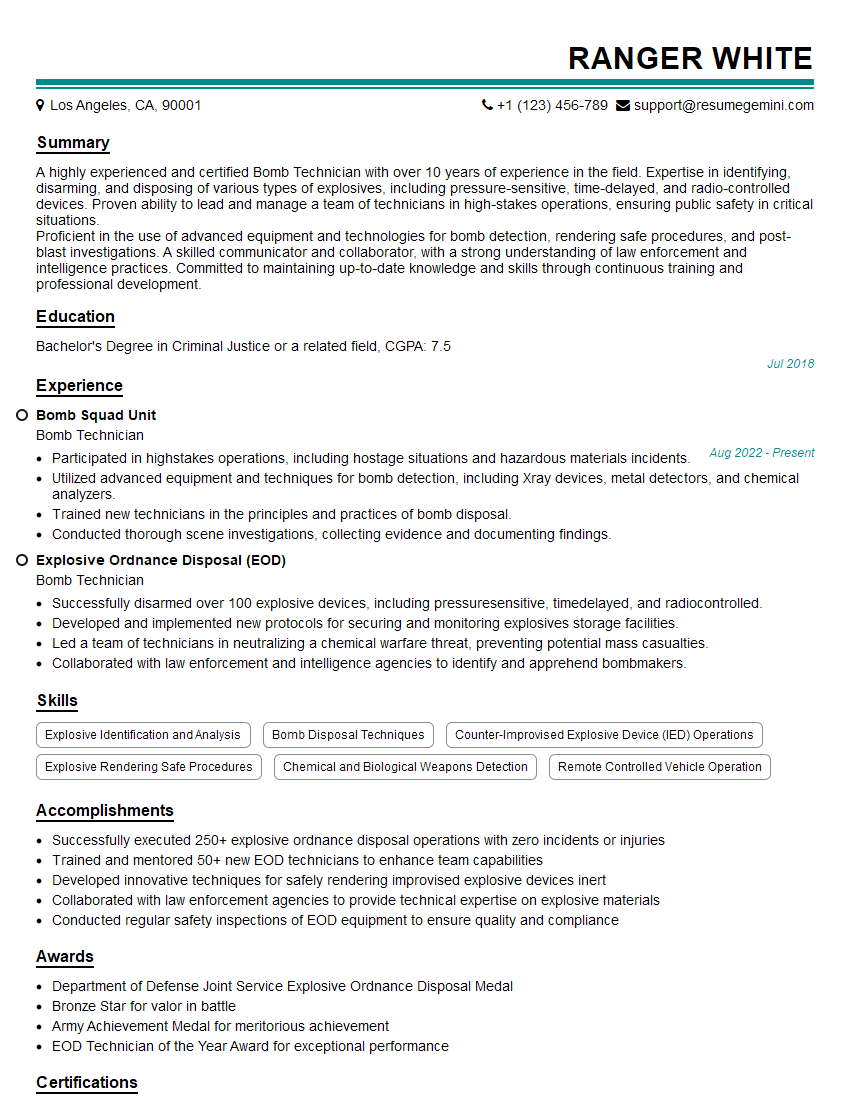
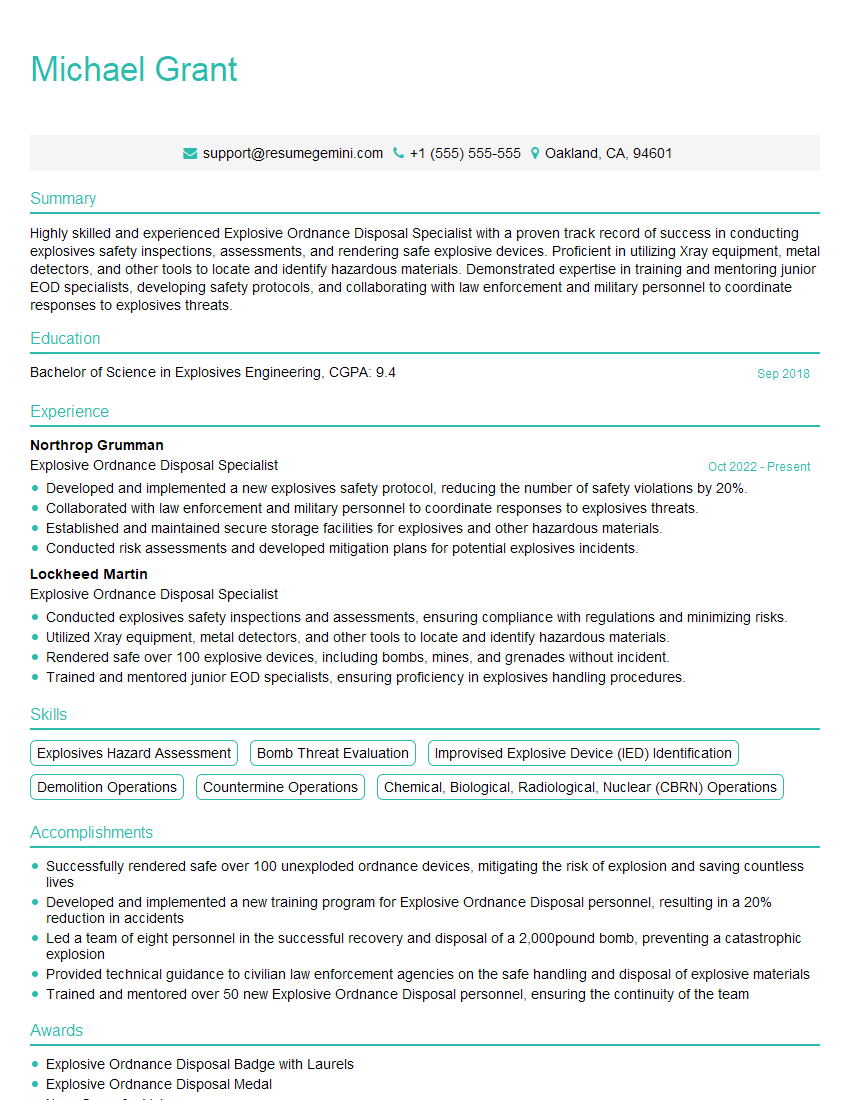
Mastering EOD Safety is paramount for a successful and fulfilling career. Demonstrating a thorough understanding of these critical safety aspects significantly enhances your job prospects and showcases your commitment to a safe working environment. To further improve your chances, focus on building an ATS-friendly resume that highlights your skills and experience effectively. ResumeGemini is a trusted resource to help you create a professional and impactful resume that grabs recruiters’ attention. Examples of resumes tailored to EOD Safety are available to guide you, ensuring your resume effectively showcases your expertise.
Explore more articles
Users Rating of Our Blogs
Share Your Experience
We value your feedback! Please rate our content and share your thoughts (optional).
What Readers Say About Our Blog
Very informative content, great job.
good