Feeling uncertain about what to expect in your upcoming interview? We’ve got you covered! This blog highlights the most important Gear and Equipment Inspection interview questions and provides actionable advice to help you stand out as the ideal candidate. Let’s pave the way for your success.
Questions Asked in Gear and Equipment Inspection Interview
Q 1. Describe your experience with different inspection methods (visual, dimensional, etc.).
Gear and equipment inspection relies on a variety of methods, each offering unique insights. Visual inspection is the cornerstone, a first-line assessment of the equipment’s overall condition. This involves a thorough examination using the naked eye, looking for obvious defects like cracks, corrosion, dents, or missing parts. Think of it like a doctor’s initial observation of a patient. Dimensional inspection is more precise, using measuring tools like calipers, micrometers, and rulers to verify that components are within their specified tolerances. For example, we might check the diameter of a shaft to ensure it’s not worn beyond acceptable limits, preventing it from fitting correctly in its housing. Other methods include functional testing (verifying the equipment operates as intended), and material testing (analyzing the material properties for degradation). Each method serves a distinct purpose, and often we use a combination to gain a comprehensive understanding of the equipment’s health.
- Visual Inspection: Checking for cracks on a weld, assessing the condition of a bearing, inspecting a belt for wear and tear.
- Dimensional Inspection: Measuring the thickness of a plate, verifying the diameter of a bolt, checking the alignment of a component.
- Functional Testing: Running a motor to verify performance, testing pressure in a hydraulic system, observing the operation of a valve.
Q 2. Explain your understanding of various inspection tools and their applications.
The tools used in gear and equipment inspection are as diverse as the equipment itself. For visual inspections, simple tools such as magnifying glasses, flashlights, and mirrors can be incredibly helpful in reaching hard-to-see areas. Dimensional inspection relies on precise measurement tools like micrometers, calipers, dial indicators, and laser measurement devices. For more advanced inspections, we may utilize borescopes (to inspect internal components), ultrasonic thickness gauges (to measure wall thickness without damaging the component), and even 3D scanners for complex geometries. The selection of tools is crucial and depends on the type of equipment, the nature of the inspection, and the level of detail required. For instance, a simple visual inspection of a hand tool might only require a flashlight, while a detailed inspection of a critical component in a power plant might require an array of specialized equipment.
- Micrometer: High precision measurement of small dimensions.
- Calipers: Measuring internal and external dimensions.
- Borescope: Visual inspection of internal components.
- Ultrasonic Thickness Gauge: Non-destructive measurement of material thickness.
Q 3. How do you identify and document equipment defects?
Identifying equipment defects requires a systematic approach. I start with a thorough visual inspection, followed by dimensional checks as needed. Any identified defects are documented meticulously, using clear and concise language, along with detailed descriptions of their location, size, and nature. I use photographs or sketches to supplement textual descriptions, ensuring clarity and avoid ambiguity. Defect documentation must also include the date, time, equipment ID, inspector’s name, and any other relevant information. This documentation is essential for tracking the defect’s progression, planning repairs, and understanding the root cause of failure. For instance, if I find a crack in a weld, I would document its length, orientation, depth, and photograph the area for future reference. This thorough record keeping is vital for safety and maintenance planning.
Example: Defect Report – Equipment ID: Pump A123, Date: 2024-10-27, Inspector: John Doe. Defect: Crack observed in weld on Pump casing. Location: South side, near flange. Length: 2 cm. Depth: 1 mm. Photograph attached (File: PumpA123_Crack.jpg)
Q 4. What are your experience with different types of non-destructive testing (NDT)?
My experience with Non-Destructive Testing (NDT) encompasses several methods, each with its strengths and applications. Visual inspection, as mentioned previously, is a form of NDT. Beyond that, I am proficient in ultrasonic testing (UT), used to detect internal flaws in materials by measuring the reflection of ultrasonic waves; magnetic particle inspection (MPI), which reveals surface and near-surface cracks in ferromagnetic materials; and liquid penetrant testing (LPT), excellent for detecting surface cracks in non-porous materials. The choice of NDT method is determined by the type of material, the expected type of defect, and the accessibility of the component. For example, UT is ideal for inspecting welds in thick pressure vessels, while LPT is suitable for checking for cracks in castings.
- Ultrasonic Testing (UT): Detecting internal flaws in welds or castings.
- Magnetic Particle Inspection (MPI): Detecting surface and near-surface cracks in ferromagnetic materials.
- Liquid Penetrant Testing (LPT): Detecting surface cracks in non-porous materials.
Q 5. How do you prioritize inspections based on equipment criticality and risk?
Prioritizing inspections involves a risk-based approach. Critical equipment that, if it fails, could cause significant safety hazards, environmental damage, or production downtime, receives more frequent and thorough inspections. A risk assessment matrix is often used to categorize equipment based on its criticality and the potential consequences of failure. This matrix considers factors like the equipment’s function, its age, its operating conditions, and the potential impact of a failure. For example, a safety-critical component in a nuclear power plant would receive much more frequent and rigorous inspection than a non-critical part in a production line. This structured approach ensures that inspection resources are allocated effectively to maximize safety and minimize risk.
Example: A critical pump in a water treatment plant would require far more frequent inspections than a hand tool used by maintenance personnel.
Q 6. Describe your process for creating and maintaining inspection reports.
Inspection reports serve as a permanent record of the equipment’s condition and any identified defects. My process involves creating standardized reports using pre-defined templates to ensure consistency and completeness. These reports include a clear header with the equipment identification, date, inspector’s details, and a section summarizing the inspection methods used. The report body meticulously details findings, including descriptions, measurements, photos, and sketches of any defects. A conclusion section summarizes the equipment’s overall condition and makes recommendations for repairs, maintenance, or further inspections. Reports are maintained digitally using a database management system, ensuring easy access and archiving, and are often integrated with a Computerized Maintenance Management System (CMMS).
Example: A standardized report template includes fields for Equipment ID, Inspection Date, Inspector Name, Inspection Method, Defect Description, Location, Dimensions, Photos, Recommendations, and a signature section.
Q 7. How do you ensure the accuracy and reliability of your inspection findings?
Ensuring the accuracy and reliability of inspection findings is paramount. This is achieved through several key strategies. Firstly, I follow strict standardized procedures during the inspection process, using calibrated tools and adhering to established industry best practices. Regular calibration of measurement tools is critical to maintaining accuracy, and all measurements are cross-checked when possible. Secondly, I undergo regular training to maintain my expertise and knowledge of the latest inspection techniques. Thirdly, a system of quality control is in place to review the reports for accuracy and completeness. Finally, periodic audits and comparisons against historical data help identify any trends or anomalies that could signal a deficiency in the inspection process itself.
Example: Calibrating a micrometer before every use is a necessary practice to ensure that the measurements are accurate and reliable.
Q 8. Explain your understanding of relevant safety regulations and standards.
Safety regulations and standards in gear and equipment inspection are paramount to preventing accidents and ensuring operational efficiency. My understanding encompasses a broad range, including OSHA (Occupational Safety and Health Administration) regulations in the US, and internationally recognized standards like ISO 45001 (Occupational health and safety management systems) and relevant industry-specific codes. These standards dictate safe operating procedures, personal protective equipment (PPE) requirements (like hard hats, safety glasses, and gloves), lockout/tagout procedures for isolating energy sources during maintenance and inspection, and detailed inspection checklists for various equipment types. For example, OSHA regulations mandate regular inspections of cranes and hoists, requiring detailed documentation of any defects found. Failure to adhere to these regulations can result in serious injuries, equipment damage, and legal repercussions.
- OSHA: Covers workplace safety, including specific regulations for machinery, electrical work, and confined spaces.
- API (American Petroleum Institute): Provides standards for the oil and gas industry, including equipment inspection and maintenance.
- ASME (American Society of Mechanical Engineers): Develops codes and standards for pressure vessels, boilers, and other mechanical equipment.
Q 9. How do you handle discrepancies or disagreements regarding inspection results?
Discrepancies or disagreements regarding inspection results are handled professionally and systematically. The first step involves a thorough review of the inspection process itself; were the correct procedures followed? Was the appropriate equipment used for the inspection? Was the inspector properly trained and certified? If discrepancies arise between multiple inspectors, a third-party review is conducted. This often involves a senior inspector or an expert in the specific equipment type. We utilize detailed photographic and video documentation to support findings. If the discrepancy persists after review, a formal meeting is held involving all parties involved to discuss the findings and reach a consensus. This process may include referencing manufacturer specifications and operational manuals. For example, in a disagreement about the wear on a gear, we’d compare the measurements to the manufacturer’s specifications for acceptable wear limits and determine the next course of action, which may include repair or replacement.
Q 10. Describe your experience with different types of equipment (e.g., mechanical, electrical, hydraulic).
My experience spans a wide variety of equipment types, including mechanical, electrical, and hydraulic systems. In the mechanical realm, I’ve inspected gears, bearings, shafts, and various rotating equipment in manufacturing plants, power generation facilities, and construction sites. Electrical equipment inspections have involved switchgear, transformers, motors, and control systems, focusing on insulation resistance, grounding, and proper functioning of safety mechanisms. Hydraulic systems inspections include testing pressure gauges, hoses, pumps, and actuators, paying close attention to leaks and signs of wear. I have a solid understanding of the unique challenges presented by each type of system and employ the appropriate inspection methods and tools for each. For instance, when inspecting a hydraulic system, I would use specialized tools like pressure gauges and leak detectors, while for electrical systems, I’d use multimeters and insulation testers.
Q 11. How familiar are you with preventative maintenance schedules and their role in inspections?
Preventative maintenance (PM) schedules are crucial for extending the lifespan of equipment and preventing unexpected failures. My understanding of PM schedules extends beyond simply following a predetermined timeline; it involves understanding the rationale behind each maintenance task. Regular inspections are integral to effective PM. Inspections identify potential problems early, before they escalate into major failures, allowing for timely repairs and minimizing downtime. The inspection data directly feeds into the refinement and optimization of the PM schedule. For example, if an inspection consistently reveals a particular component failing earlier than expected, the PM schedule can be adjusted to include more frequent inspections or earlier replacement of that component. This proactive approach can significantly reduce maintenance costs and improve operational reliability.
Q 12. How do you stay up-to-date with changes in industry standards and best practices?
Staying current with industry standards and best practices is a continuous process. I regularly attend industry conferences and workshops, participate in professional development courses, and actively engage with professional organizations like ASME and API. I also subscribe to industry-specific publications and journals to keep abreast of the latest technologies and regulations. Furthermore, I leverage online resources, including manufacturer websites and government agency updates, to access the latest information on equipment safety and maintenance. This multi-faceted approach ensures my knowledge base remains comprehensive and up-to-date, allowing me to adapt to the ever-changing landscape of equipment inspection.
Q 13. What software or systems have you used for managing inspection data?
I have extensive experience utilizing various software and systems for managing inspection data. This includes Computerized Maintenance Management Systems (CMMS) such as SAP PM and Maximo, as well as more specialized inspection software tailored to specific equipment types. These systems facilitate the creation and distribution of inspection checklists, the recording and tracking of inspection results, and the generation of reports and analytics. Data input often involves using mobile devices for on-site data collection, which streamlines the process and ensures accuracy. These systems have been crucial in ensuring that all inspections are properly documented and that any necessary maintenance actions are scheduled and tracked appropriately. For example, a CMMS might allow for the generation of automated alerts if a specific piece of equipment hasn’t been inspected within the required timeframe.
Q 14. Explain your experience with root cause analysis of equipment failures.
Root cause analysis (RCA) is critical for preventing future equipment failures. My approach to RCA often follows a structured methodology such as the ‘5 Whys’ technique, or a more formal method like Fishbone diagrams (Ishikawa diagrams). The goal is to move beyond addressing only the symptoms of a failure to identifying the underlying cause. This involves gathering data from various sources, including inspection reports, maintenance logs, and operator feedback. For instance, if a pump fails, the initial symptom might be low pressure. Using ‘5 Whys’, I might ask: Why is the pressure low? (Worn impeller). Why is the impeller worn? (Excessive vibration). Why is there excessive vibration? (Misalignment). Why is there misalignment? (Improper installation). Why was it installed improperly? (Lack of training). This helps to uncover the root cause—lack of training— which can then be addressed to prevent similar failures in the future. The findings of an RCA are typically documented in a detailed report, which is used to improve maintenance practices and prevent recurrence.
Q 15. Describe a time you identified a critical safety issue during an inspection.
During an inspection of a crane used in a construction project, I noticed significant wear and tear on the main hoisting cable. While the cable appeared to meet the minimum diameter requirements initially, closer examination revealed several broken strands clustered in one section. This wasn’t immediately apparent without careful visual inspection and a thorough check using a cable tester. This was a critical safety issue because a complete cable failure during operation could have resulted in a catastrophic accident, leading to serious injury or death. I immediately halted crane operations, reported the finding to the site supervisor, and documented everything with photographs and a detailed report. The crane was taken out of service until the cable was replaced, preventing a potentially disastrous event.
Career Expert Tips:
- Ace those interviews! Prepare effectively by reviewing the Top 50 Most Common Interview Questions on ResumeGemini.
- Navigate your job search with confidence! Explore a wide range of Career Tips on ResumeGemini. Learn about common challenges and recommendations to overcome them.
- Craft the perfect resume! Master the Art of Resume Writing with ResumeGemini’s guide. Showcase your unique qualifications and achievements effectively.
- Don’t miss out on holiday savings! Build your dream resume with ResumeGemini’s ATS optimized templates.
Q 16. How do you communicate inspection results effectively to different stakeholders?
Effective communication is crucial in inspection reporting. I tailor my approach to the audience. For technical staff, I provide detailed reports with precise measurements, defect classifications, and photographic evidence, often including specific codes and standards that were violated. For management, I focus on the executive summary, highlighting the severity of the issues and recommending corrective actions and their associated costs. For clients, I use plain language, explaining the findings in a way they can easily understand, emphasizing the implications for safety and operational efficiency. I always aim for clarity and transparency, ensuring everyone involved has the information they need to make informed decisions. For instance, if a report involves a complex mechanical issue, a simple diagram explaining the defect and its location would be greatly beneficial for all stakeholders, especially non-technical ones.
Q 17. How do you handle difficult or challenging inspections?
Difficult inspections often involve limited access, challenging weather conditions, or equipment in poor condition hindering a thorough examination. My approach is systematic: Firstly, I thoroughly plan the inspection, anticipating potential obstacles. This includes researching the equipment’s specifications, obtaining necessary permits and safety clearances, and organizing appropriate tools. Secondly, I adopt a flexible approach; if direct access is limited, I might need to employ alternative inspection techniques like using borescopes or drones. Thirdly, I maintain thorough documentation, documenting any challenges encountered and the methods employed to overcome them. For instance, during an inspection of a submerged pipeline, I coordinated with divers for underwater inspection and used specialized underwater cameras and sonar technology to overcome visibility constraints. Transparency with stakeholders about any limitations is also key.
Q 18. Describe your experience with calibration of inspection equipment.
Calibration of inspection equipment is paramount to ensure accuracy and reliability. My experience encompasses various measuring tools like calipers, micrometers, dial indicators, and pressure gauges. I’m proficient in using both traceable standards and specialized calibration equipment to perform calibrations according to established protocols and maintaining detailed calibration logs. I understand the importance of traceability to national standards and ensuring the equipment is calibrated within its specified tolerances. I’m familiar with various calibration methods, from direct comparison to using specialized calibration software. For example, when calibrating a micrometer, I’d use gauge blocks of known dimensions to verify its accuracy against established standards, documenting the results meticulously.
Q 19. What is your understanding of quality control procedures in equipment inspection?
Quality control in equipment inspection is about ensuring consistency, accuracy, and reliability in the process. This includes: (1) Equipment Calibration: Regularly calibrated equipment ensures accurate measurements. (2) Inspection Procedures: Following standardized checklists and procedures ensures consistent inspection methods. (3) Record Keeping: Detailed records of inspections, including any defects, repairs, and calibrations, are crucial for traceability and accountability. (4) Personnel Training: Properly trained inspectors understand the equipment, procedures, and safety protocols. (5) Internal Audits: Regular internal audits help identify areas for improvement in the inspection process. For example, we use a system where all inspections are double-checked by another inspector, particularly for high-risk equipment. This cross-checking helps catch errors and strengthens the quality control of our process.
Q 20. How do you manage your workload and prioritize multiple inspections?
Managing workload involves effective prioritization. I use a combination of techniques: (1) Prioritization Matrix: I categorize inspections based on urgency and risk, prioritizing critical safety inspections first. (2) Scheduling: I create a detailed schedule to allocate time efficiently for each inspection. (3) Task Delegation: Where appropriate, I delegate tasks to other qualified personnel. (4) Time Management Techniques: Using time-blocking and minimizing interruptions allows for focused work. (5) Communication: Proactive communication with stakeholders about potential delays or scheduling conflicts is crucial. For instance, I might prioritize an urgent inspection of a critical piece of machinery over a routine check on less crucial equipment, ensuring timely interventions where safety is paramount.
Q 21. What are your skills in using measurement equipment (calipers, micrometers, etc.)?
I possess extensive experience using various measurement instruments, including calipers (both vernier and digital), micrometers (both outside and inside), dial indicators, depth gauges, and laser measurement tools. I understand the principles of measurement accuracy, error analysis, and proper instrument handling. I am comfortable reading and interpreting measurements from these instruments and accurately recording data. My proficiency extends to understanding the limitations of each instrument and choosing the most appropriate tool for a specific measurement task. I am also familiar with using digital measurement devices and recording data electronically, ensuring accurate and efficient data logging.
Q 22. How do you ensure traceability and maintain chain of custody for inspected items?
Traceability and chain of custody are crucial for ensuring the integrity and reliability of inspection results. Think of it like a detective’s meticulous record-keeping – every step must be documented to prove the item’s history and prevent any disputes. We achieve this through a system of unique identification, detailed logging, and secure handling.
- Unique Identification: Each inspected item receives a unique identification number (UID) – think of it as a social security number for the equipment. This UID accompanies the item throughout the entire inspection process.
- Detailed Logging: Every action taken, from initial receipt to final disposition, is meticulously recorded in a log. This includes the date, time, inspector’s name, location, findings, and any actions taken. This log is essentially the ‘paper trail’ proving what happened and when.
- Secure Handling: Items are handled and stored securely, preventing tampering or loss. This often involves sealed containers, chain-of-custody tags, and documented transfers between personnel. If a part is temporarily removed for further testing, that too is meticulously logged. For sensitive equipment, this might even include photographic evidence of seals and markings.
- Digital Systems: Modern systems often use digital tracking, integrating barcodes, RFID tags, and dedicated software to manage and track the items efficiently, improving accuracy and reducing potential human error.
For example, consider inspecting a critical aircraft component. Each step, from its removal from the aircraft, its transit to the inspection facility, the inspection itself, and its return, is logged and documented with photographs and signatures, ensuring complete traceability.
Q 23. Describe your experience with different types of documentation for inspection findings.
My experience encompasses a wide range of inspection documentation, from simple checklists to complex, detailed reports. The choice depends on the nature and complexity of the equipment and the required level of detail. Different stakeholders also require different kinds of documentation.
- Checklists: Used for routine inspections, these provide a structured approach, ensuring all key points are covered. They are concise and easy to understand. Think of a simple form with boxes to check off and notes.
- Inspection Reports: More detailed than checklists, these capture findings, observations, recommendations, and measurements. They typically include photos and sketches. These documents are very important for legal or insurance reasons.
- Non-Conformance Reports (NCRs): These specifically address issues or defects found during the inspection, providing a detailed description of the problem, its severity, and the required corrective actions. Often includes images.
- Digital Reports: Many inspection systems now use software to generate automated reports, integrating data from sensors, cameras, and other devices, providing a comprehensive digital record.
- Technical Drawings and Schematics: These provide a blueprint for the equipment, used to cross-reference and verify components.
In a recent bridge inspection, for instance, we used a combination of checklists for routine visual checks, detailed reports for structural assessments, and NCRs to document any observed corrosion or damage requiring immediate attention. The final report integrated high resolution images, drone survey maps, and structural analysis data to form a comprehensive document.
Q 24. What are the key elements of a comprehensive equipment inspection plan?
A comprehensive equipment inspection plan is the backbone of any effective inspection program. It should be detailed, yet adaptable, and tailored to the specific equipment. It’s like having a detailed roadmap for a journey, guiding the inspectors and ensuring consistency.
- Scope and Objectives: Clearly define what equipment will be inspected and the specific goals of the inspection (e.g., safety assessment, performance verification, regulatory compliance).
- Inspection Frequency: Establish a schedule based on factors such as equipment criticality, usage, and regulatory requirements. This could be daily, weekly, monthly, or annually.
- Inspection Procedures: Detail the specific steps involved in the inspection, including visual checks, measurements, testing procedures, and the use of any specialized equipment.
- Inspection Personnel: Specify who is qualified to perform the inspections and their training requirements. This ensures that only properly trained individuals carry out the work.
- Documentation Requirements: Outline the necessary forms, reports, and records that must be completed. This includes checklists, detailed reports, and images.
- Acceptance Criteria: Define the standards and criteria that equipment must meet to be considered acceptable and safe for operation. This ensures consistency and objective assessments.
- Corrective Actions: Outline the procedures for handling issues, defects, and necessary repairs or replacements. This could include detailed steps for repair and parts replacement.
For example, a comprehensive plan for inspecting a large industrial oven would include safety protocols for working around high temperatures, specific checks for refractory damage, burner function tests, and temperature control calibration.
Q 25. Explain your understanding of different levels of equipment inspection (e.g., routine, scheduled, specialized).
Equipment inspections are categorized into different levels of complexity and frequency based on their criticality and risk. Think of it like medical checkups – routine checks are common, while specialized tests are reserved for specific concerns.
- Routine Inspections: These are performed frequently (daily or weekly) and involve basic visual checks for obvious defects or damage. They are quick and aimed at identifying immediate hazards. For example, quickly checking for leaks or obvious damage.
- Scheduled Inspections: These are more comprehensive and are performed at set intervals (monthly, quarterly, annually) based on the equipment’s operational requirements and manufacturer recommendations. These can include more extensive tests and measurements. Think of regular maintenance checkups on a car.
- Specialized Inspections: These are performed less frequently and are tailored to specific equipment types or situations, involving advanced testing procedures, non-destructive testing techniques (NDT), or expert analysis. For instance, ultrasonic inspection of welds on a pressure vessel is a specialized inspection.
For instance, a power plant might have daily routine checks on major components, monthly scheduled inspections involving detailed lubrication and pressure tests, and specialized inspections once every few years involving comprehensive NDT methods.
Q 26. How familiar are you with interpreting technical drawings and schematics?
Interpreting technical drawings and schematics is fundamental to my work. It’s like reading a map – you need to understand the symbols, dimensions, and annotations to visualize the equipment and its components. A solid understanding of these documents is crucial for accurate inspections.
I am proficient in interpreting various types of drawings, including orthographic projections, isometric views, assembly drawings, and piping and instrumentation diagrams (P&IDs). I can identify components, understand their relationships, and verify the physical equipment against the design specifications. I can also identify potential design flaws or discrepancies that could impact safety or performance. For example, I’m able to check if a certain assembly is properly aligned by comparing the actual component placement against the drawing, ensuring the system functions correctly.
Q 27. What are your skills in using Computer-Aided Design (CAD) software for inspections?
While I don’t use CAD software for creating designs, my experience includes using it to aid in inspections. It’s like using a magnifying glass to get a closer look at details. I’m familiar with using CAD software to overlay inspection findings onto existing drawings. This helps in documenting the precise location of defects, creating 3D models from scanned data to highlight the precise locations of problems, allowing for improved communication and analysis of inspection findings. This is particularly useful for complex equipment where identifying the exact location of a defect is crucial.
For example, I have utilized CAD software to annotate images of equipment to highlight specific corrosion areas observed during an inspection. This creates a clear and detailed report for better communication, making it easier to understand the extent of the damage.
Q 28. How do you handle situations where equipment is found to be beyond repair?
When equipment is beyond repair, a systematic approach is needed, balancing safety, cost-effectiveness, and operational continuity. It’s similar to deciding on a course of action for a seriously ill patient.
- Thorough Assessment: First, we conduct a thorough assessment, documenting the extent of the damage and the reasons for its failure. This includes photographs and detailed reports. This is vital for future preventative actions.
- Cost-Benefit Analysis: We then conduct a cost-benefit analysis comparing the cost of repair against the cost of replacement, considering factors such as downtime, safety risks, and the availability of replacement parts. Sometimes repair is more cost effective, other times it’s better to replace.
- Recommendation & Documentation: Based on the assessment and analysis, we provide a clear recommendation to either repair (if feasible) or replace the equipment. This recommendation is documented, including supporting evidence.
- Disposal/Replacement: If replacement is recommended, appropriate procedures for disposing of the unusable equipment are followed, complying with all relevant environmental regulations. The process of procuring and installing a replacement is then managed, ensuring minimal disruption to operations.
In one instance, we assessed a heavily corroded heat exchanger that was deemed beyond economical repair. Our report detailed the corrosion, its causes, and the associated risks. We then recommended and managed the replacement of the heat exchanger, minimizing production downtime and ensuring safety.
Key Topics to Learn for Gear and Equipment Inspection Interview
- Safety Regulations and Procedures: Understanding relevant safety standards (OSHA, etc.) and their practical application in inspection processes. This includes identifying and mitigating potential hazards.
- Types of Equipment and Their Components: Familiarize yourself with the various types of gear and equipment relevant to the specific industry (e.g., construction, manufacturing, transportation). Know their common components and how they function.
- Inspection Techniques and Methodologies: Master visual inspection, dimensional checks, functional testing, and the use of specialized tools and equipment for thorough inspections. Understand different inspection frequencies and reporting requirements.
- Data Recording and Documentation: Learn best practices for accurately recording inspection findings, including using checklists, spreadsheets, and digital reporting systems. Understand the importance of clear, concise, and detailed documentation.
- Troubleshooting and Problem-Solving: Develop your ability to identify defects, diagnose malfunctions, and propose effective solutions. Practice explaining your problem-solving approach clearly and logically.
- Preventive Maintenance and Predictive Maintenance: Understand the difference and the role of inspection in supporting both. Knowing how to identify potential issues before they escalate is crucial.
- Communication and Reporting: Practice effectively communicating inspection findings to supervisors, engineers, and other stakeholders, both verbally and in writing. This includes creating professional reports and presentations.
Next Steps
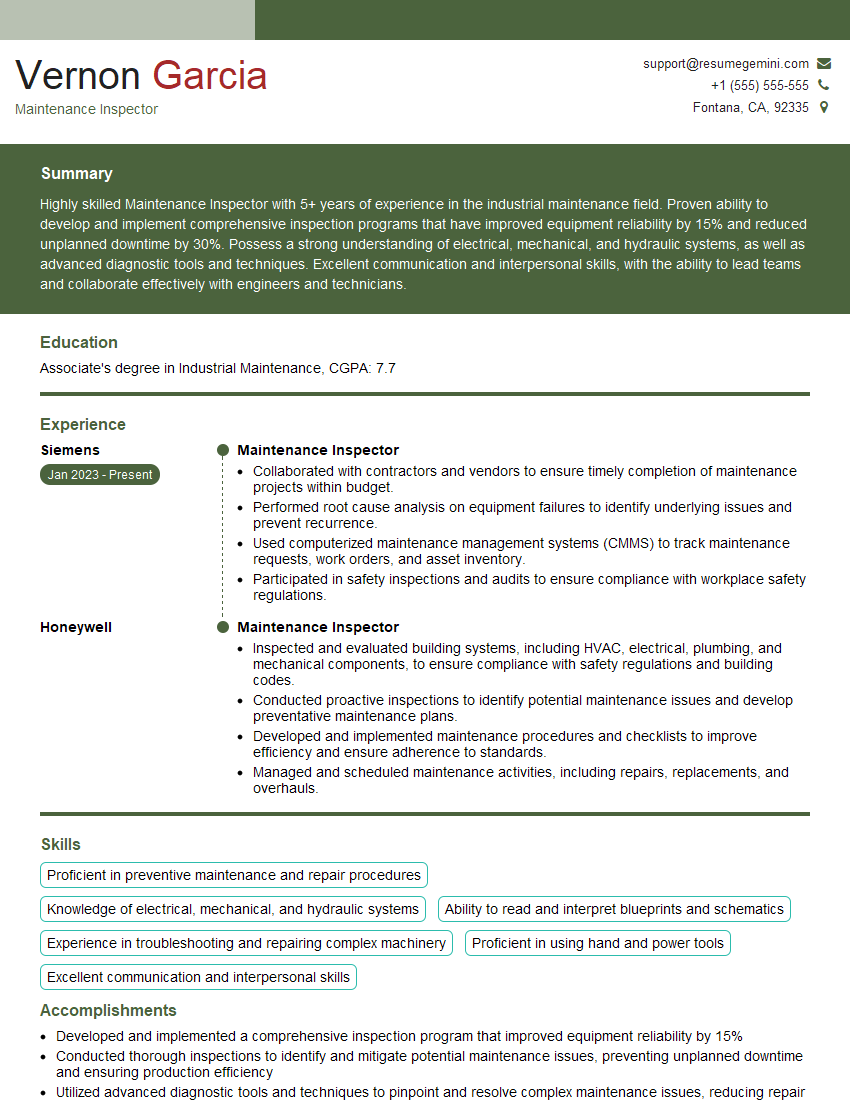
Mastering Gear and Equipment Inspection is crucial for career advancement in many high-demand industries. A strong understanding of safety, technical proficiency, and effective communication skills will open doors to exciting opportunities and higher earning potential. To maximize your job prospects, it’s essential to present your skills effectively. Crafting an ATS-friendly resume is key to getting your application noticed by recruiters and hiring managers. ResumeGemini is a trusted resource that can help you build a professional and impactful resume that highlights your expertise in Gear and Equipment Inspection. Examples of resumes tailored to this field are available to guide you.
Explore more articles
Users Rating of Our Blogs
Share Your Experience
We value your feedback! Please rate our content and share your thoughts (optional).
What Readers Say About Our Blog
Very informative content, great job.
good