Every successful interview starts with knowing what to expect. In this blog, we’ll take you through the top Pesticide Handling interview questions, breaking them down with expert tips to help you deliver impactful answers. Step into your next interview fully prepared and ready to succeed.
Questions Asked in Pesticide Handling Interview
Q 1. Describe the different types of pesticide formulations.
Pesticide formulations are the ways active ingredients are prepared for application. Think of it like baking a cake – the active ingredient is like the flour, but you need other ingredients (formulants) to make it usable. Different formulations offer different benefits, such as improved efficacy, easier application, or reduced drift.
- Emulsifiable Concentrates (EC): These are liquids that need to be mixed with water before application. They are highly concentrated and offer excellent mixing properties. Think of them as a highly potent liquid concentrate that requires dilution.
- Wettable Powders (WP): These are powders that need to be mixed with water. They contain active ingredients plus wetting agents to ensure even dispersion in water. They are like powdered versions of EC, but require more thorough mixing.
- Soluble Powders (SP): Similar to WP but dissolve completely in water, creating a clear solution. These are easily mixed and ideal for situations where even distribution is crucial.
- Suspension Concentrates (SC): These are liquids where the active ingredient is suspended in a liquid carrier. They don’t fully dissolve, so constant agitation is required during application to prevent settling. Imagine a thick shake – you need to keep stirring it.
- Granules (G): These are solid particles that can be applied directly to the soil or plant surface. Easy to handle and measure, ideal for broadcast applications.
- Dusts (D): Finely ground powders containing active ingredients. Easy to apply but have potential for drift and inhalation hazards. These were popular in the past, but are used less now due to safety concerns.
- Ultra-Low Volume (ULV): These are highly concentrated liquids applied as small droplets, typically requiring specialized equipment. Very effective but requires careful handling due to high concentrations. Think of them as tiny, highly effective bombs of pesticide.
Q 2. Explain the process of selecting the appropriate pesticide for a specific pest problem.
Selecting the right pesticide involves a multi-step process, starting with accurate identification of the pest and consideration of the environment. You wouldn’t use a hammer to screw in a screw, right? Similarly, you wouldn’t use a broad-spectrum pesticide where a more targeted approach is possible.
- Identify the pest: Accurate identification is crucial. Use resources like field guides, extension services, or entomologists to confirm the species. This determines your target.
- Determine the pest’s life cycle: Understanding the pest’s life cycle (egg, larva, adult stages) allows application at the most vulnerable stage, increasing effectiveness and reducing the amount of pesticide needed.
- Assess the environment: Consider the location (crop type, proximity to water sources), weather conditions (temperature, wind), and potential impacts on non-target organisms. This guides the selection of low-impact alternatives where possible.
- Choose the pesticide: Evaluate different pesticides based on their effectiveness against the target pest, mode of action, toxicity to humans and other organisms, and environmental persistence. Consider integrated pest management (IPM) strategies, which often prioritize non-chemical controls first.
- Check the label: Always confirm the pesticide is registered for use on the target pest and in the specific location. The label holds all regulatory information.
Q 3. What are the key components of a pesticide label, and why is it important to read them carefully?
The pesticide label is a legal document containing vital information. It’s your bible for safe and effective use. Ignoring it can lead to serious consequences, including health problems, environmental damage, and legal repercussions. A detailed understanding of the pesticide label is paramount to safe application.
- Active Ingredient(s): The chemical(s) that kill or control the pest.
- Statement of Practical Treatment: Provides application rates, timing and techniques, and any pre- or post-harvest intervals.
- Precautionary Statements: Hazards to humans, animals, and the environment; safety precautions, such as PPE requirements.
- Environmental Hazards: Potential effects on non-target organisms, like bees and fish.
- First Aid Instructions: Immediate actions to take in case of accidental exposure.
- Storage and Disposal: Safe methods for handling and disposal of the pesticide and container.
Always read the label thoroughly before each use. Don’t just skim it – understand every precaution and guideline. Remember, it’s not just a sticker; it’s the key to responsible pesticide use.
Q 4. How do you calculate the required pesticide dosage for a given area?
Calculating the required pesticide dosage involves understanding the label’s instructions and performing basic arithmetic. The label usually provides application rates in various units (e.g., ounces per gallon, pounds per acre). Accurate calculations are critical to achieving effectiveness and avoiding overuse.
Example: A label states to apply a pesticide at a rate of 2 ounces per gallon of water to treat a lawn area. You need to cover 1000 square feet with a sprayer that holds 2 gallons.
- Determine the amount of pesticide needed per gallon: The label specifies 2 ounces per gallon.
- Calculate the total amount of pesticide needed: Since your sprayer holds 2 gallons, you need 2 gallons * 2 ounces/gallon = 4 ounces of pesticide.
- Prepare the mixture: Mix 4 ounces of pesticide with 2 gallons of water in your sprayer.
Remember to always use the correct units and carefully follow the instructions provided on the pesticide label. For larger areas or more complex calculations, it may be beneficial to consult with an agricultural extension agent or a qualified pest control professional.
Q 5. What personal protective equipment (PPE) is necessary when handling pesticides?
The type of PPE needed depends on the pesticide’s toxicity and formulation. The label will specify the required PPE. This is not something to be taken lightly; it is critical for your health and safety.
- Coveralls: Protect your skin from pesticide contact.
- Gloves: Chemical-resistant gloves are essential, and the material should be compatible with the specific pesticide.
- Boots: Chemical-resistant boots protect your feet.
- Eye protection: Chemical splash goggles or face shields are necessary to prevent eye irritation or damage.
- Respiratory protection: A respirator may be required, especially for dusts or highly volatile formulations. The type of respirator depends on the pesticide.
- Hats: Protect your hair and scalp from contact.
Always check the pesticide label to determine the exact PPE needed. It’s better to be over-prepared than under-prepared when it comes to pesticide safety.
Q 6. Explain the proper procedures for mixing and loading pesticides.
Mixing and loading pesticides requires careful attention to detail and adherence to safety procedures. Improper handling can lead to contamination and exposure hazards. Always mix pesticides in a well-ventilated area, preferably outdoors.
- Prepare the area: Choose a clean, level area away from water sources and food preparation areas.
- Gather materials: Have all necessary equipment ready: measuring devices, mixing container, sprayer, PPE, and clean water.
- Measure the pesticide: Carefully measure the required amount of pesticide according to label instructions. Use accurate measuring devices.
- Add water: Add the correct amount of water to the mixing container before adding the pesticide to allow for efficient mixing.
- Mix thoroughly: Stir the mixture thoroughly to ensure even distribution of the active ingredient.
- Fill the sprayer: Carefully pour the mixture into the sprayer, avoiding spills.
- Clean up: Immediately clean up any spills or splashes using the appropriate procedures outlined on the pesticide label.
Never mix pesticides near food or water, and always follow the manufacturer’s instructions for mixing and loading.
Q 7. Describe safe application techniques for different pesticide formulations (e.g., sprays, dusts, granules).
Safe application techniques depend greatly on the pesticide formulation. Proper application ensures effectiveness and minimizes environmental impact and risk to the applicator.
- Sprays: Use appropriate spray equipment (handheld, backpack, or boom sprayers). Maintain consistent spray pressure and nozzle height. Avoid spraying in windy conditions to reduce drift. Overlapping spray swaths is crucial for even coverage. Cleaning the equipment thoroughly afterward is essential.
- Dusts: Apply dusts on calm days using a dust applicator or blower. Avoid breathing the dust and wear appropriate respiratory protection. Dusts are best applied when plants are dry.
- Granules: Granules are typically spread using a hand spreader or a granular applicator. Apply evenly to the target area, avoiding excessive application.
Always follow the label instructions for application methods. Consider weather conditions, and prioritize minimizing drift and runoff. Remember that proper calibration of your application equipment is key to effective and efficient pesticide use.
Q 8. What are the potential health risks associated with pesticide exposure, and how can they be mitigated?
Pesticide exposure can lead to a wide range of health problems, from mild irritation to severe, even fatal, illnesses. The severity depends on factors like the type of pesticide, the amount of exposure, the route of exposure (skin, inhalation, ingestion), and individual susceptibility.
- Acute effects: These appear soon after exposure and can include nausea, vomiting, dizziness, headaches, skin rashes, and eye irritation. More severe cases can involve respiratory distress, seizures, or even coma.
- Chronic effects: These develop over time with repeated exposure and can include neurological disorders, reproductive problems, developmental issues (especially in children), cancer, and immune system dysfunction.
Mitigation strategies focus on preventing exposure. This involves using appropriate personal protective equipment (PPE) like gloves, respirators, and coveralls; following label instructions meticulously; ensuring adequate ventilation when applying pesticides; washing thoroughly after handling pesticides; and choosing less toxic alternatives whenever possible. Regular health checkups and monitoring for symptoms are also crucial.
For example, a farmer consistently failing to wear a respirator while spraying pesticides might experience chronic respiratory issues. Conversely, a landscaper diligently following safety protocols and wearing appropriate PPE dramatically reduces their risk of acute and chronic health problems.
Q 9. How do you properly dispose of leftover pesticides and pesticide containers?
Proper disposal of leftover pesticides and containers is vital for protecting human health and the environment. Never pour pesticides down the drain or into the garbage.
- Pesticides: Contact your local waste management authority or a licensed pesticide disposal company. They often have designated collection programs or will provide guidance on safe disposal methods. In some cases, small quantities of certain pesticides might be neutralized following specific instructions found on the label or provided by authorities.
- Containers: Rinse empty pesticide containers thoroughly multiple times. Triple rinsing is generally recommended. Then, puncture or crush the containers to prevent reuse and dispose of them according to local regulations. This could involve placing them in designated hazardous waste bins or following specific instructions provided by your local authority. Never burn pesticide containers.
Think of it like this: Improper disposal is like leaving a loaded gun lying around – it’s a recipe for disaster. Following proper procedures safeguards the community and the environment.
Q 10. What are the environmental concerns related to pesticide use, and what steps can be taken to minimize them?
Pesticide use raises significant environmental concerns. They can contaminate soil, water, and air, harming non-target organisms like beneficial insects, birds, fish, and other wildlife. They can also affect biodiversity and disrupt ecological processes.
- Water contamination: Runoff from treated fields can carry pesticides into streams, rivers, and groundwater, impacting aquatic life and potentially drinking water sources.
- Soil degradation: Pesticides can negatively impact soil health by reducing beneficial microorganisms and altering nutrient cycles.
- Air pollution: Pesticide drift – the movement of pesticides in the air – can contaminate surrounding areas, affecting human health and the environment.
Minimizing environmental impact requires adopting Integrated Pest Management (IPM) strategies (discussed later), using less toxic pesticides, applying pesticides only when necessary and at the appropriate rates, using precise application techniques to minimize drift, and implementing buffer zones around sensitive areas. Choosing pesticides that readily break down in the environment and using resistant crop varieties are further vital steps.
Q 11. Describe the regulations and laws governing pesticide use in your region.
Pesticide use is heavily regulated. Specific regulations vary by region (country, state/province, etc.), but generally involve registration of pesticides, licensing requirements for applicators, label compliance, and restrictions on certain pesticides in certain areas or for certain uses. These laws are designed to protect human health and the environment.
For example, the Environmental Protection Agency (EPA) in the United States plays a crucial role in registering pesticides and setting tolerances for pesticide residues in food and feed. Similarly, many countries have their own regulatory bodies and agencies that oversee pesticide use and ensure compliance with regulations. Failing to comply with these regulations can result in hefty fines or legal action.
It’s crucial to understand and abide by the specific regulations applicable in your region. This usually involves understanding the labeling, acquiring necessary licenses where applicable, and adhering to application guidelines.
Q 12. What is Integrated Pest Management (IPM), and how does it differ from traditional pesticide use?
Integrated Pest Management (IPM) is a holistic approach to pest control that prioritizes preventing pest problems before they occur and employs a combination of methods to control pests, while minimizing reliance on pesticides.
Traditional pesticide use focuses heavily on using chemical pesticides as the primary, and often only, method of pest control. This approach can lead to the development of pesticide resistance in pests, environmental damage, and human health risks.
IPM, in contrast, considers cultural, biological, and mechanical controls before resorting to chemical pesticides. It involves monitoring pest populations, identifying pest thresholds (the level at which pest damage warrants intervention), and implementing control measures that are targeted, effective, and environmentally sound.
- Cultural controls: Crop rotation, proper sanitation, and resistant varieties.
- Biological controls: Introducing natural enemies (predators, parasites, pathogens) of the pest.
- Mechanical controls: Physical removal of pests (e.g., trapping, weeding).
- Chemical controls: Using pesticides as a last resort, choosing least-toxic options, and applying them precisely.
For example, an IPM approach to managing aphids on a vegetable crop might involve initially monitoring aphid populations, then introducing beneficial ladybugs to control their numbers. Only if the aphid population exceeds the threshold would a targeted pesticide application be considered.
Q 13. How do you identify and respond to a pesticide spill?
Responding to a pesticide spill requires immediate action to prevent further contamination and protect human health and the environment.
- Immediate Actions: Evacuate the area immediately. Alert emergency services and the relevant authorities (e.g., environmental agencies). Prevent further spread of the spill by containing it with absorbent materials (e.g., sand, vermiculite). Do not attempt to clean the spill yourself unless you have the appropriate training and PPE.
- Cleanup: Qualified professionals, typically trained hazmat teams, will undertake the cleanup. They will utilize specialized equipment and procedures to safely remove the spilled pesticide and decontaminate the affected area.
- Documentation: Document all aspects of the spill, including the type and quantity of pesticide, location, time, and actions taken. This information is vital for regulatory reporting and potential insurance claims.
Think of it as a fire – you wouldn’t try to put out a large fire yourself without proper equipment and training. Pesticide spills demand a similar level of caution and expertise.
Q 14. What are the signs and symptoms of pesticide poisoning?
Signs and symptoms of pesticide poisoning are diverse and depend on the specific pesticide involved and the route and level of exposure.
- Mild symptoms: These might include nausea, vomiting, diarrhea, headaches, dizziness, skin irritation, eye irritation, and respiratory irritation.
- Moderate symptoms: These can involve more severe gastrointestinal distress, neurological symptoms (e.g., tremors, seizures, confusion), difficulty breathing, and increased heart rate.
- Severe symptoms: These can be life-threatening and may include respiratory failure, cardiovascular collapse, coma, and organ damage.
If pesticide poisoning is suspected, seek immediate medical attention. Inform medical personnel about the specific pesticide involved, the route of exposure, and the duration and extent of exposure. Time is crucial in minimizing the severity of effects.
It’s also important to remember that some pesticides have delayed effects, so symptoms may not appear immediately. If you experience any unusual symptoms after handling pesticides, consult a doctor.
Q 15. What first aid measures should be taken in case of pesticide exposure?
Pesticide exposure is a serious matter requiring immediate action. First aid depends heavily on the type of pesticide and the route of exposure (inhalation, skin contact, ingestion). However, some general principles always apply.
- Remove the source of exposure: Get the person away from the pesticide immediately. This might involve removing contaminated clothing or moving them to fresh air.
- Assess the victim: Check their breathing, pulse, and level of consciousness.
- Call for emergency medical help: Contact emergency services (911 or your local equivalent) immediately. Have the pesticide label or container readily available to give them crucial information about the chemical.
- Follow specific instructions on the pesticide label: Many labels include first-aid instructions specific to that product. These should be followed carefully.
- Do NOT induce vomiting unless specifically instructed to do so by medical professionals. This can cause further harm in many cases.
For example, if someone splashes pesticide on their skin, immediate removal of contaminated clothing and rinsing the affected area with copious amounts of water for at least 15-20 minutes is crucial. For inhalation exposure, moving the person to fresh air is paramount. Always remember that timely and appropriate medical attention is the most important factor.
Career Expert Tips:
- Ace those interviews! Prepare effectively by reviewing the Top 50 Most Common Interview Questions on ResumeGemini.
- Navigate your job search with confidence! Explore a wide range of Career Tips on ResumeGemini. Learn about common challenges and recommendations to overcome them.
- Craft the perfect resume! Master the Art of Resume Writing with ResumeGemini’s guide. Showcase your unique qualifications and achievements effectively.
- Don’t miss out on holiday savings! Build your dream resume with ResumeGemini’s ATS optimized templates.
Q 16. Explain the importance of record-keeping in pesticide application.
Meticulous record-keeping in pesticide application is not just a good practice; it’s legally mandated in many jurisdictions and absolutely crucial for responsible pesticide use. These records demonstrate compliance with regulations, help track efficacy, and aid in troubleshooting problems.
- Legal Compliance: Accurate records protect applicators from potential legal ramifications should something go wrong. They provide proof of adherence to label instructions, application rates, and safety protocols.
- Efficacy Monitoring: Records of pesticide used, application date, location, weather conditions, and target pest populations allow for a comprehensive assessment of the treatment’s success. This information is invaluable for adjusting future applications and improving pest management strategies.
- Problem Solving: If a pest problem persists despite application, detailed records help pinpoint potential causes. Was the wrong pesticide used? Was the application rate insufficient? Were environmental factors hindering efficacy?
- Traceability: In case of accidental exposure or environmental contamination, detailed records facilitate rapid identification of the source and facilitate appropriate response measures.
Imagine a farmer applying a pesticide to a field. Thorough records would include the pesticide name, application date, amount applied, application method (e.g., aerial spraying, ground application), weather conditions (temperature, wind speed, rainfall), target pest, and any observations made during and after application. This provides a comprehensive history of pesticide use on that field.
Q 17. Describe your experience with calibrating application equipment.
Calibration of application equipment is essential to ensure the correct amount of pesticide is applied, preventing both under-application (ineffective pest control) and over-application (environmental contamination and potential health risks). My experience includes calibrating various types of equipment, such as boom sprayers, backpack sprayers, and granular applicators.
The process generally involves:
- Measuring the output: This usually involves collecting the spray or granular output over a set time and area, typically using a graduated container placed under the sprayer nozzle or collecting hopper output.
- Calculating the application rate: This involves using a formula that takes into account the output measured and the area covered. For example, you might measure the gallons of spray solution per acre, or the pounds of granular product per acre.
- Adjusting the equipment: If the application rate is incorrect, adjustments are made to the equipment to achieve the desired rate. This may involve adjusting nozzle pressure, spray boom height, or flow rate.
- Repeating the process: After making adjustments, the calibration process is repeated to ensure accuracy.
For instance, when calibrating a boom sprayer, we might measure the output in gallons per minute, the width of the boom, and the speed of travel in miles per hour. These values then are used to calculate the gallons of spray solution applied per acre, allowing for necessary adjustments to pressure or nozzle type to meet the label’s recommended application rate.
Q 18. How do you ensure the efficacy of pesticide applications?
Ensuring the efficacy of pesticide applications involves a multi-faceted approach that begins long before the application itself.
- Accurate Pest Identification: Knowing the specific pest and its life cycle is the first crucial step. Using the wrong pesticide or applying it at the wrong time will lead to poor results.
- Proper Pesticide Selection: Choosing a pesticide with the appropriate mode of action and efficacy against the target pest is vital. Factors such as toxicity to non-target organisms and environmental impact should also be considered.
- Thorough Calibration and Application: Accurate calibration of the application equipment ensures uniform coverage and the correct application rate, maximizing efficacy. Optimal application timing (considering weather conditions and pest life stage) is equally important.
- Post-Application Monitoring: Monitoring the treated area to assess pest control success is crucial. This might involve visual inspections, traps, or sampling to check the effectiveness of the treatment. Observations should be recorded for future reference.
- Integrated Pest Management (IPM): This holistic approach involves incorporating various pest management techniques, such as biological control, cultural practices, and monitoring, to minimize pesticide use while achieving satisfactory pest control.
For example, if aphids are attacking a crop, a visual inspection of the plants will first assess the extent of the infestation. Then, choosing a selective insecticide that targets aphids without harming beneficial insects and calibrating the sprayer to deliver a uniform application will maximize efficacy. Finally, monitoring the plant after treatment will confirm that the aphid population has been successfully controlled, helping to assess and refine the efficacy of the method for future treatments.
Q 19. What are the different methods of pesticide application (e.g., aerial, ground, broadcast)?
Pesticide application methods vary considerably, depending on factors such as the target pest, the crop or environment, and the scale of the operation. Here are some common methods:
- Aerial Application: This method employs aircraft (planes or helicopters) to apply pesticides over large areas, such as fields or forests. It’s efficient for large-scale operations but requires specialized equipment and expertise.
- Ground Application: This encompasses various techniques using ground-based equipment. Examples include:
- Boom sprayers: These are commonly used in agriculture for applying liquid pesticides to large areas.
- Backpack sprayers: These are handheld sprayers used for smaller areas or targeted applications.
- Granular applicators: These spread solid pesticide granules over the treated area.
- Broadcast Application: This method involves distributing the pesticide uniformly across the entire area. It’s less precise but suitable for situations where uniform coverage is needed.
- Band Application: This involves applying the pesticide in narrow strips, reducing the total amount of pesticide used while still providing effective pest control.
- Spot Application: This targeted method focuses pesticide application on specific areas where pests are concentrated, minimizing environmental impact.
Choosing the appropriate application method requires a thorough understanding of the pesticide, the target pest, and the environmental context. For example, aerial application is ideal for treating large fields of crops, while backpack sprayers are more suitable for treating smaller areas or applying pesticides to individual plants.
Q 20. Explain the concept of pesticide resistance and how to manage it.
Pesticide resistance occurs when a pest population evolves the ability to survive exposure to a pesticide that was previously effective. This is a major concern in pest management, leading to treatment failures and increased pesticide use.
Several factors contribute to pesticide resistance:
- Overuse of the same pesticide: Repeated application of the same pesticide selects for resistant individuals within the pest population.
- Improper pesticide application: Incorrect application rates or methods can lead to sublethal exposure, increasing the selection pressure for resistance.
- Pest life cycle: Pest life cycles can influence resistance development. A short generation time and high reproductive rates increase the probability of resistance emerging.
Managing pesticide resistance requires a proactive and integrated approach:
- Integrated Pest Management (IPM): Emphasize preventative measures and use pesticides only when necessary and as part of a broader strategy.
- Pesticide rotation: Using different classes of pesticides with different modes of action reduces the selection pressure for resistance.
- Refugia strategies: Leaving untreated areas within a field provides a haven for susceptible individuals, preventing the complete dominance of resistant pests.
- Resistance monitoring: Regular monitoring of pest populations can detect the early signs of resistance development, allowing for timely intervention.
- Use appropriate application rates and methods: This maximizes the effectiveness of the pesticide and reduces the likelihood of resistance.
For instance, if a certain insecticide becomes ineffective against a specific insect pest, rotating to another insecticide with a different mode of action can help delay or prevent the development of resistance. Using biological control methods like introducing natural predators of the pest can also lessen reliance on chemical control.
Q 21. How do you handle pesticide storage and security to prevent unauthorized access?
Safe and secure pesticide storage is paramount for protecting human health and the environment. Unauthorized access can lead to accidental poisoning, misuse, theft, and environmental contamination.
My approach to pesticide storage and security includes:
- Designated storage area: Pesticides should be stored in a locked, well-ventilated, dry area away from food, water, and animal feed. The area should be clearly marked with warning signs.
- Proper labeling: All pesticide containers must be clearly labeled with the product name, active ingredient, and any necessary safety precautions.
- Secure containers: Pesticides should be stored in their original containers in good condition to prevent leakage or spills.
- Inventory control: Maintaining an accurate inventory of pesticides helps track usage and prevent accumulation of outdated or unwanted chemicals.
- Spill containment: Having appropriate spill cleanup materials (absorbent pads, neutralizing agents) readily available in case of an accident is crucial. A spill kit should be clearly marked and easily accessible.
- Regular inspections: The storage area should be regularly inspected for any signs of damage, leaks, or unauthorized access. Damaged containers should be properly disposed of.
- Disposal of obsolete pesticides: Out-of-date or unwanted pesticides should be disposed of in accordance with local regulations, often through designated hazardous waste collection sites.
For example, in a farm setting, a locked pesticide shed with appropriate ventilation would be used. The shed’s location would be chosen carefully, considering potential risks like runoff into water sources, and any access to the shed would be strictly controlled. Regular inspections would ensure the safety of the storage area and the integrity of the pesticide containers.
Q 22. What are the best practices for preventing pesticide drift?
Preventing pesticide drift, the unwanted movement of pesticides from the application site, is crucial for protecting human health, the environment, and neighboring crops. It’s like aiming a water hose – you want the water to go where you intend, not splashing everywhere else. Several best practices help minimize drift:
Proper Nozzle Selection: Using nozzles designed for the specific application and wind conditions significantly reduces drift. Low-drift nozzles produce larger droplets that are less susceptible to wind.
Optimal Spraying Conditions: Avoid spraying when wind speeds are high (generally above 15 mph), and never spray during temperature inversions (when air near the ground is cooler than the air above, trapping drift). Think of it like trying to throw a ball in a strong wind – it’s much harder to control where it lands.
Proper Application Technique: Maintain a consistent spray height and speed, and overlap spray swaths appropriately to ensure uniform coverage. This prevents gaps and ensures efficient pesticide use.
Buffer Zones: Establishing buffer zones around sensitive areas like water bodies, residences, and non-target crops helps protect them from pesticide drift. It’s like creating a safety perimeter around a construction site.
Reduced Pesticide Concentration: If possible, use the lowest effective pesticide concentration to reduce the amount of pesticide released into the environment.
Using Drift Reduction Additives: Adjuvants specifically designed to reduce drift can be added to the spray solution. These additives modify the droplet size and reduce the pesticide’s volatility.
Q 23. Describe your understanding of the different types of pest control methods (e.g., biological, chemical, cultural).
Pest control utilizes diverse methods, each with its strengths and weaknesses. Imagine a toolbox filled with different tools – each best suited for a specific job.
Chemical Control: This involves using synthetic pesticides to kill or control pests. It’s often the quickest and most effective method, but it can harm non-target organisms and the environment. We must always follow label directions meticulously.
Biological Control: This harnesses natural enemies of pests, such as predators, parasites, or pathogens, to reduce pest populations. For example, introducing ladybugs to control aphids in a garden. This approach is environmentally friendly and sustainable, but it can be slower acting than chemical control and may not always be completely effective.
Cultural Control: These methods involve modifying the environment or crop management practices to make it less hospitable to pests. Examples include crop rotation, adjusting planting times, proper irrigation, and sanitation. Think of it as making your home less appealing to unwanted guests. It’s a preventative approach, often the most environmentally friendly, but it may not always eliminate pests completely.
Mechanical Control: This involves physically removing pests or blocking their access. Think of things like trapping rodents, hand-picking insects, or using barriers to prevent pest entry. This is a direct approach but requires labor and might be impractical for large-scale operations.
An Integrated Pest Management (IPM) strategy typically combines these approaches for a holistic and sustainable solution.
Q 24. How do you assess the effectiveness of a pest control program?
Assessing the effectiveness of a pest control program is critical to ensure its success and prevent unnecessary pesticide use or environmental damage. We do this through a multi-faceted approach.
Pre- and Post-Treatment Surveys: Conducting thorough surveys before and after treatment, counting pest numbers and assessing damage levels, provides a quantifiable measure of the program’s effectiveness. Think of it like taking before-and-after photos to show progress.
Monitoring Pest Populations: Regular monitoring, using traps or visual inspections, helps track pest population dynamics and the impact of the control measures. This early detection of pest resurgence is crucial.
Yield Assessment: In agricultural settings, comparing crop yields before and after treatment is a crucial indicator of success. This directly relates the pest control efforts to economic outcomes.
Environmental Impact Assessment: Evaluating the potential environmental impact of the program, including effects on non-target organisms, soil health, and water quality, is essential for responsible pest management.
Economic Analysis: Consider the overall costs of the pest control program versus the benefits gained (e.g., increased yield, reduced crop loss). A successful program should show a positive return on investment.
Q 25. What are the common pests found in [specific environment, e.g., agricultural fields, residential areas]?
The common pests found in an environment depend heavily on the specific location and conditions. Let’s consider agricultural fields and residential areas separately.
Agricultural Fields: Common pests vary with the crop, but examples include insects like aphids, boll weevils (cotton), corn borers, and various caterpillars. Weeds like pigweed and Johnson grass are also major concerns. Nematodes (microscopic worms) can significantly damage roots.
Residential Areas: Common pests include rodents (rats and mice), cockroaches, ants, termites, spiders, and mosquitoes. These pests can cause damage to property, transmit diseases, and create unsanitary conditions.
Understanding the specific pests in a given area is crucial for effective pest management.
Q 26. What is your experience with using specific types of pesticide application equipment (e.g., sprayers, dusters)?
My experience encompasses various pesticide application equipment, each suitable for different situations and pest types. Here’s a breakdown:
Sprayers: I’m proficient with various sprayer types, from backpack and hand-held sprayers for smaller areas to larger, tractor-mounted sprayers for extensive agricultural fields. I understand the importance of proper nozzle selection, pressure regulation, and calibration for achieving uniform and effective coverage.
Dusters: I have experience with both hand-crank and motorized dusters for applying dust formulations of pesticides. These are often used for controlling insects in stored products or for larger-scale applications in fields, especially for powdery formulations.
Granular Applicators: I have worked with spreaders for applying granular pesticides, which are often used for soil-applied insecticides or herbicides. Precision application is vital to avoid over-application and ensure effectiveness.
Safety is always paramount, and I always adhere to strict safety procedures when operating this equipment.
Q 27. Explain the importance of regular maintenance and calibration of pesticide application equipment.
Regular maintenance and calibration of pesticide application equipment are critical for ensuring accurate application, preventing equipment failure, and minimizing environmental impact. Imagine a car – you wouldn’t drive it without regular maintenance. It’s the same principle with application equipment.
Regular Cleaning: Thorough cleaning after each use prevents clogging of nozzles and ensures the equipment is ready for the next application. Residual pesticide buildup can lead to inaccurate application and equipment damage.
Calibration: Regular calibration ensures the equipment delivers the correct amount of pesticide at the intended rate. Incorrect calibration can lead to ineffective pest control or environmental contamination.
Inspection: Routine inspection for wear and tear, leaks, and damaged parts helps identify potential problems before they cause major issues. This prevents costly repairs and downtime.
Preventative Maintenance: Following the manufacturer’s recommendations for preventative maintenance helps extend the lifespan of the equipment. This involves scheduled servicing and part replacements.
Proper maintenance not only saves money in the long run but also ensures the safety and effectiveness of pesticide applications.
Q 28. Describe your experience with working with various pesticide labels and understanding their safety precautions.
Working safely with pesticides requires a thorough understanding of pesticide labels. They’re like the instruction manuals for safe pesticide use. I always treat them with respect and careful attention.
Signal Words and Statements: I always carefully review the signal words (DANGER, WARNING, CAUTION) and the precautionary statements, which provide information on potential health hazards and environmental risks. These indicate the severity of the hazard.
Personal Protective Equipment (PPE): I always ensure I have and use the appropriate PPE, as specified on the label. This may include gloves, respirators, eye protection, and protective clothing.
Application Instructions: I always follow the application instructions precisely, including the recommended application rate, method, and timing. This ensures the effective control of the target pest and prevents environmental damage.
Storage and Disposal: I’m knowledgeable about proper pesticide storage and disposal procedures, including the use of approved containers and disposal facilities. This is critical to prevent accidental exposure and environmental contamination.
Emergency Information: I’m familiar with the emergency contact information provided on the label in case of accidental exposure or spills. This is crucial for prompt and appropriate medical attention if needed.
My experience includes interpreting labels from various manufacturers and for different pesticide types. I always prioritize safety and compliance with regulations.
Key Topics to Learn for Pesticide Handling Interview
- Pesticide Classification and Types: Understand the different categories of pesticides (insecticides, herbicides, fungicides, etc.), their chemical compositions, and modes of action. Be prepared to discuss the advantages and disadvantages of various pesticide types.
- Application Methods and Equipment: Familiarize yourself with various application techniques (spraying, dusting, granular application) and the equipment used. Discuss safety procedures and calibration techniques for accurate application.
- Safety Regulations and Personal Protective Equipment (PPE): Master the relevant safety regulations and legislation concerning pesticide handling, storage, and disposal. Demonstrate a thorough understanding of the proper use and maintenance of PPE.
- Integrated Pest Management (IPM): Show your knowledge of IPM principles and how they relate to minimizing pesticide use while effectively controlling pests. Be ready to discuss environmentally friendly alternatives.
- Environmental Impact and Risk Assessment: Understand the potential environmental impact of pesticides, including effects on non-target organisms and water contamination. Be prepared to discuss risk assessment procedures and mitigation strategies.
- Pesticide Storage and Disposal: Learn the proper procedures for storing pesticides safely and disposing of them according to regulations. This includes understanding labeling, container management, and spill response.
- Emergency Response Procedures: Be prepared to discuss procedures to follow in case of accidental exposure or pesticide spills, including first aid measures and reporting protocols.
- Record Keeping and Documentation: Understand the importance of accurate record keeping related to pesticide use, including application dates, rates, and locations. This demonstrates compliance and responsible handling.
Next Steps
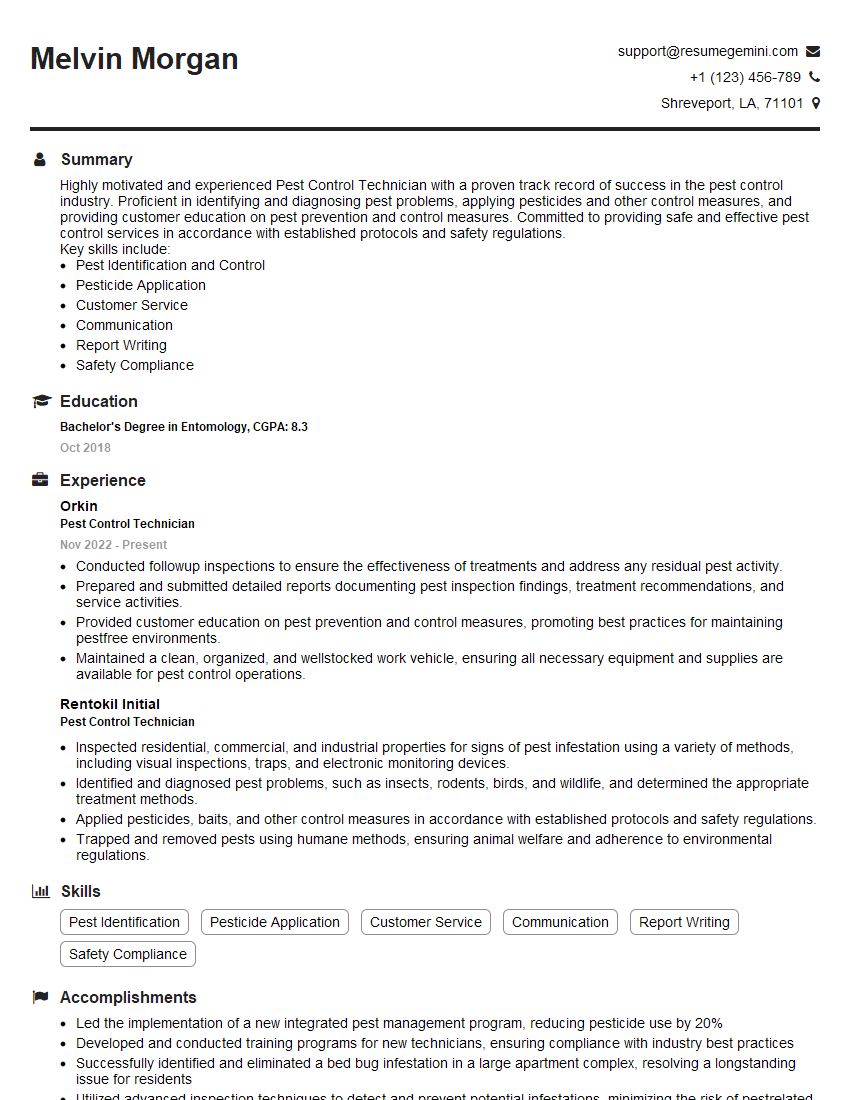
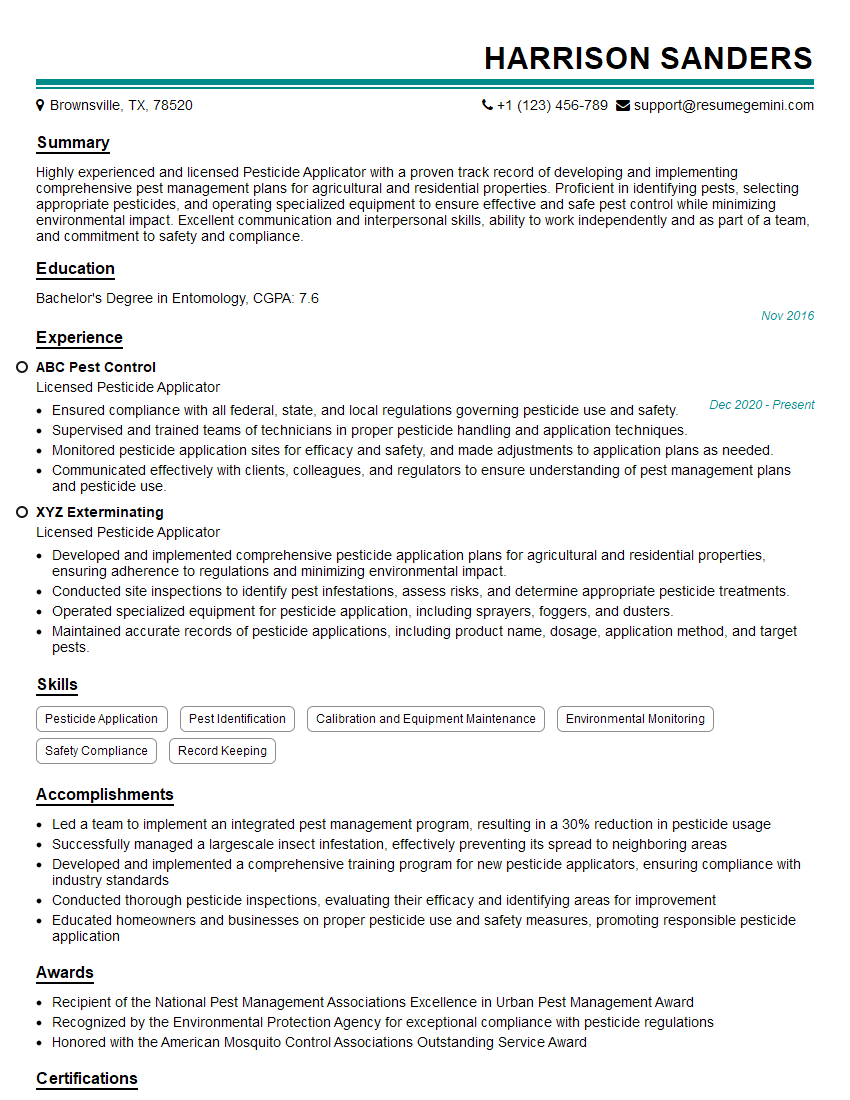
Mastering pesticide handling is crucial for a successful and rewarding career in agriculture, pest control, or related fields. It demonstrates your commitment to safety, environmental responsibility, and professional competence. To significantly enhance your job prospects, creating a strong, ATS-friendly resume is vital. ResumeGemini is a trusted resource that can help you build a professional and impactful resume tailored to your skills and experience. Examples of resumes specifically designed for pesticide handling professionals are available to guide you. Invest the time to craft a compelling resume – it’s your first impression with potential employers.
Explore more articles
Users Rating of Our Blogs
Share Your Experience
We value your feedback! Please rate our content and share your thoughts (optional).
What Readers Say About Our Blog
Very informative content, great job.
good