Preparation is the key to success in any interview. In this post, we’ll explore crucial Event Planning and Decor interview questions and equip you with strategies to craft impactful answers. Whether you’re a beginner or a pro, these tips will elevate your preparation.
Questions Asked in Event Planning and Decor Interview
Q 1. Describe your experience with event budgeting and cost management.
Event budgeting is the cornerstone of successful event planning. It’s not just about allocating funds; it’s about strategic resource allocation to maximize impact within defined constraints. My process begins with a comprehensive needs assessment, identifying all potential costs from venue rental and catering to marketing and entertainment. I then create a detailed budget spreadsheet, categorizing expenses and allocating percentages based on priorities. This spreadsheet is a living document, regularly updated as the planning progresses. For example, for a corporate conference, I might allocate 40% to the venue, 30% to catering, 15% to marketing/promotions, and the remaining 15% to speakers, AV equipment, and miscellaneous expenses. I use tools like variance analysis to track actual costs against the budget throughout the process, allowing for proactive adjustments. This proactive approach helps prevent overspending and ensures that the event stays within budget.
Cost management involves continuously monitoring expenses, negotiating favorable rates with vendors, and identifying potential savings without compromising quality. This might involve exploring alternative venues, negotiating bulk discounts on catering, or finding cost-effective marketing strategies. For instance, instead of hiring a high-priced DJ, I might explore a more budget-friendly option like a live band with a smaller ensemble or a curated playlist with professional sound equipment. Regularly reviewing and adjusting the budget keeps the project on track, demonstrating financial responsibility and resourcefulness.
Q 2. Explain your process for selecting vendors and negotiating contracts.
Vendor selection is a critical step in event planning. I begin by identifying vendors specializing in the required services—catering, photography, entertainment, etc. I then research potential vendors, checking their portfolios, testimonials, and online reviews to gauge their reliability and quality of work. I prioritize those with a proven track record and strong client references. For example, if I’m planning a wedding, I would prioritize a photographer with a portfolio showcasing similar styles and a history of satisfied clients. The next step is to create a detailed Request for Proposal (RFP) outlining the event details and requirements. Once I receive proposals, I carefully compare them based on price, quality, and the vendor’s overall reputation.
Contract negotiation is a crucial skill. I aim for transparent and mutually beneficial agreements. I review each contract carefully, negotiating pricing, deliverables, and payment terms. I always ensure the contract clearly outlines the responsibilities of both parties, including cancellation policies and dispute resolution mechanisms. For instance, I might negotiate a lower rate for bulk orders of catering or secure better payment terms to ensure a smoother cash flow. Solid contract management minimizes potential conflicts and keeps the event proceeding smoothly. I believe in building strong relationships with vendors, recognizing their value to the overall success of the event.
Q 3. How do you handle unexpected challenges or crises during an event?
Unexpected challenges are inevitable in event planning. My approach centers on proactive planning and robust contingency plans. Before the event, I identify potential problems—e.g., bad weather, equipment malfunction, speaker cancellations—and develop strategies to mitigate their impact. For instance, for an outdoor event, I would have a backup indoor venue identified and contracts in place. During the event, I maintain constant communication with the event team, addressing issues as they arise. This requires clear communication channels and a designated point person for handling each potential crisis. I emphasize problem-solving over panic, calmly assessing the situation and implementing the appropriate solution. For example, if a key speaker cancels, I’d immediately identify a suitable replacement, leveraging my network of contacts to find someone with equivalent expertise. Documentation of all decisions made during a crisis is vital for post-event analysis and improvement.
Q 4. What software or tools do you use for event planning and management?
I utilize a variety of software and tools to streamline the event planning process. My go-to tools include project management software like Asana or Trello to track tasks, deadlines, and team communication. For budgeting and financial management, I rely on spreadsheets (like Google Sheets or Excel) and dedicated budgeting software as needed. I use CRM systems to manage client relationships and vendor contacts. For event registration and ticketing, I often integrate platforms like Eventbrite or similar services. Additionally, I use design software such as Canva for creating marketing materials and visual aids, and communication platforms like Slack or Microsoft Teams for efficient team collaboration. These tools enable me to manage multiple events simultaneously, ensuring that projects remain organized and timelines are met. The selection of tools depends on the scale and specifics of each event.
Q 5. Describe your experience with event setup and teardown procedures.
Event setup and teardown procedures are crucial for a successful event. This starts with a detailed floor plan, outlining the layout of the venue, including furniture placement, stage setup, and equipment locations. I create a detailed checklist for setup and teardown, assigning specific tasks to team members, and outlining precise timelines for completion. This checklist includes everything from verifying power and audio-visual equipment to arranging furniture and decorating the space. Effective communication is key during setup, ensuring that everyone understands their role and works collaboratively. I also create a visual representation of the event layout, including the location of key elements such as the stage, tables, and restrooms. This enables the team to efficiently execute the setup, ensuring a smooth and timely execution. The same meticulous approach is applied to teardown, ensuring all equipment is properly stored or returned, and the venue is left as it was found.
Q 6. How do you ensure the safety and security of attendees at an event?
Attendee safety and security are paramount. My approach involves several key steps: First, I collaborate closely with the venue to understand their security protocols and identify any potential risks. For instance, I’d confirm the availability of security personnel, emergency exits, and first aid facilities. I develop a comprehensive safety plan that addresses potential hazards, including emergency procedures, crowd control strategies, and risk mitigation plans. For larger events, this might include hiring security personnel, establishing clear entry and exit points, and employing crowd control measures. I clearly communicate these plans to the event team, ensuring everyone is aware of their roles in managing safety concerns. Before the event, I conduct a thorough risk assessment to proactively identify and address any potential safety hazards. Providing clear signage, well-lit areas, and readily accessible first aid is also critical.
Q 7. What is your experience with different event styles (e.g., corporate, wedding, social)?
I have extensive experience across various event styles, adapting my approach to suit the specific requirements of each. Corporate events often require a focus on professionalism, efficiency, and brand consistency. I’ve successfully planned numerous conferences, product launches, and team-building events, focusing on delivering engaging and productive experiences. Weddings demand a high level of personalization and attention to detail, creating a memorable and emotional experience for the couple and their guests. My experience encompasses a wide range of wedding styles, from intimate ceremonies to grand celebrations. Social events, such as birthday parties or galas, require a focus on creating a festive and enjoyable atmosphere, aligning with the client’s vision and guest expectations. I’ve managed diverse social gatherings, understanding the unique needs of each event, such as family reunions, anniversary celebrations, and charity galas. My ability to adapt to the specific nuances of each event type ensures a successful outcome that reflects the client’s objectives and budget.
Q 8. Describe your design aesthetic and how you translate that into event decor.
My design aesthetic leans towards a modern romantic style, blending classic elegance with contemporary elements. I favor a balanced approach – incorporating luxurious textures like velvet and silk with clean lines and minimalist shapes. This creates a sophisticated atmosphere without feeling overly stuffy. Translating this into event decor involves careful selection of color palettes, often using muted jewel tones or soft pastels as a base, accented with metallics like gold or rose gold. I prioritize the use of natural elements like lush florals and greenery to add warmth and texture. For example, a wedding might feature a ceremony backdrop of flowing white fabric and greenery, contrasted by gold geometric accents on the tables and luxurious velvet seating. The overall effect aims for a timeless, refined aesthetic that complements the event and the client’s personality.
Q 9. How do you incorporate client preferences into your event design plans?
Incorporating client preferences is paramount. My process begins with a detailed consultation, where I actively listen to understand their vision, style preferences, budget constraints, and must-have elements. I ask targeted questions about their personal style, inspirations (e.g., Pinterest boards, favorite colors, past event experiences), and the overall feel they want to achieve (e.g., intimate, grand, rustic). I use mood boards and design presentations to visually translate their ideas, allowing them to see how their preferences translate into the overall event design. For example, if a client loves vintage aesthetics, I’ll source antique furniture and incorporate vintage-inspired details like lace and delicate china. Open communication throughout the design process ensures the final event reflects their vision perfectly. Any changes or adjustments are discussed and documented to avoid misunderstandings.
Q 10. What are your preferred methods for communicating with clients and vendors?
Clear and efficient communication is crucial. I primarily use email for detailed proposals, contracts, and design updates. However, I also utilize project management software like Asana for task tracking, deadlines, and efficient collaboration with vendors and the client. For quick updates or informal discussions, phone calls and video conferences are invaluable. I always aim for prompt responses and proactive communication. With vendors, detailed contracts and regular check-ins ensure everyone is on the same page and that any potential issues are identified and resolved early. This approach prevents miscommunication and delays, contributing to the overall success of the event.
Q 11. How do you manage timelines and deadlines for multiple events simultaneously?
Managing multiple events requires meticulous organization and planning. I rely heavily on project management tools to schedule tasks, set deadlines, and track progress. Each event has its own dedicated project file containing all relevant documents, timelines, and vendor contact information. I prioritize tasks based on urgency and deadlines, allocating time efficiently to avoid overlaps. A detailed master calendar helps me visualize the overall workload and identify potential scheduling conflicts. Regular check-ins with myself and my team (if applicable) ensure we stay on track. This methodical approach prevents feeling overwhelmed and ensures consistent quality across all projects.
Q 12. Explain your experience with creating event timelines and schedules.
Creating event timelines and schedules is a fundamental part of my work. I start by identifying all key tasks and milestones, from initial consultations and vendor bookings to event setup and teardown. I then allocate realistic timeframes for each task, considering potential delays. The timeline is broken down into smaller, manageable steps to facilitate tracking and ensure accountability. A detailed schedule is then created, outlining specific tasks, responsible parties, and deadlines. For example, a wedding timeline would include separate sections for ceremony preparation, reception setup, dinner service, and post-event cleanup, with specific times allotted for each activity. This detailed approach ensures seamless execution and minimizes the chances of delays or oversights.
Q 13. How do you source unique and creative decor elements?
Sourcing unique and creative decor elements is a passion of mine. I explore various avenues, including antique shops, flea markets, and online marketplaces like Etsy. I collaborate with local artisans and craft vendors for bespoke pieces that add a personalized touch. I also visit trade shows and industry events to discover innovative products and trends. For example, I might source vintage furniture for a rustic-themed event, commission custom-made artwork for a modern event, or incorporate unique floral arrangements created by a specialized florist. The key is to think outside the box and combine different elements to create a cohesive and visually stunning atmosphere.
Q 14. Describe your process for creating mood boards and design concepts.
My process for creating mood boards and design concepts begins with a thorough understanding of the client’s vision and event specifics. I use a combination of digital tools and physical materials to create visual representations of the event’s atmosphere. I gather inspiration images, fabric swatches, color palettes, and potential decor elements. The mood board helps to establish the overall theme and aesthetic, while the design concept outlines specific details like furniture layouts, lighting schemes, and floral arrangements. I typically present multiple design concepts, allowing the client to choose their preferred style. Regular feedback sessions are held to ensure the final design aligns perfectly with their vision. The process is iterative, constantly refining the concept until it’s a perfect reflection of the client’s dream event.
Q 15. How do you handle client feedback and incorporate it into the event planning process?
Client feedback is the cornerstone of successful event planning. I actively solicit feedback throughout the process, from initial consultations to post-event surveys. I believe in creating a collaborative environment where clients feel comfortable sharing their thoughts and concerns.
My approach involves:
- Regular Check-ins: Scheduled meetings and email updates provide opportunities for feedback and course correction.
- Open Communication Channels: I encourage clients to contact me at any time with questions or concerns via phone, email, or video conferencing.
- Detailed Proposals and Contracts: Crystal-clear contracts outlining deliverables and expectations minimize misunderstandings. Regular revisions ensure we’re always on the same page.
- Post-Event Surveys: Comprehensive surveys gather feedback on all aspects of the event, helping to identify areas for improvement in future projects.
For example, if a client expresses concern about the seating arrangement during a mid-planning check-in, we’ll immediately revisit the floor plan, explore alternatives, and finalize a revised version to ensure their satisfaction. This proactive approach prevents issues from escalating and ensures a positive client experience.
Career Expert Tips:
- Ace those interviews! Prepare effectively by reviewing the Top 50 Most Common Interview Questions on ResumeGemini.
- Navigate your job search with confidence! Explore a wide range of Career Tips on ResumeGemini. Learn about common challenges and recommendations to overcome them.
- Craft the perfect resume! Master the Art of Resume Writing with ResumeGemini’s guide. Showcase your unique qualifications and achievements effectively.
- Don’t miss out on holiday savings! Build your dream resume with ResumeGemini’s ATS optimized templates.
Q 16. What is your experience with different types of event venues?
My experience spans a wide range of event venues, from intimate settings to large-scale spaces. I’ve worked with:
- Hotels and Resorts: I’m adept at navigating the complexities of hotel contracts, understanding their banquet services, and leveraging their existing infrastructure for seamless event execution. I have experience with both large hotel ballrooms and smaller meeting spaces.
- Historic Venues: I appreciate the unique charm and character of historic buildings but also understand the logistical challenges they can present. I meticulously plan for potential limitations and ensure the event aligns seamlessly with the venue’s unique architecture and capabilities.
- Outdoor Venues: From parks and gardens to vineyards and beaches, I’ve coordinated events in various outdoor settings. This requires meticulous planning for weather contingencies and ensuring the comfort and safety of guests.
- Unique Venues: I am comfortable working with less conventional spaces, such as museums, art galleries, and private estates. These often require customized approaches to logistics and décor.
Understanding a venue’s strengths and limitations is crucial. For instance, when working with an outdoor venue, I always have a backup plan in case of inclement weather. This might involve securing a tented area or having an indoor alternative readily available.
Q 17. Explain your approach to managing event logistics and transportation.
Efficient logistics and transportation are critical for a smooth event. My approach is proactive and meticulous, involving detailed planning and close coordination with various service providers.
This includes:
- Vendor Management: Selecting reliable vendors for transportation (e.g., shuttle services, limousine rentals), catering, and equipment rental, ensuring their timely delivery and setup.
- Detailed Schedules: Creating and distributing detailed event schedules for all relevant parties, outlining key timings for setup, guest arrival, activities, and breakdown.
- Transportation Coordination: Planning transportation logistics for guests, speakers, and performers, which might involve arranging shuttles, coordinating parking, or providing directions.
- On-site Management: Overseeing the logistics on the day of the event, ensuring everything runs according to schedule and addressing any unforeseen issues promptly.
For a recent corporate event, I coordinated transportation for 200 attendees from three different hotels to the venue using a fleet of chartered buses. This involved scheduling bus arrivals and departures, assigning seats, and providing clear communication to the drivers and attendees to ensure a smooth transition.
Q 18. How do you ensure accessibility for all attendees at an event?
Accessibility is paramount. I ensure all events are inclusive and welcoming to individuals with disabilities. This involves a multi-faceted approach:
- Venue Selection: Choosing venues that are already accessible, or that can be adapted to meet accessibility requirements.
- ADA Compliance: Ensuring compliance with the Americans with Disabilities Act (ADA) guidelines in all aspects of the event, including seating, entrances, restrooms, and signage.
- Assistive Technologies: Providing assistive technologies as needed, such as wheelchair ramps, hearing loops, or sign language interpreters.
- Communication: Clearly communicating accessibility options to attendees in advance, allowing them to make informed decisions and inform us of their specific needs.
For example, in a recent conference, we arranged for wheelchair-accessible seating, provided audio description for visually impaired attendees, and made sure all printed materials were available in Braille. We worked closely with the venue to understand their existing accessibility features and then filled any gaps.
Q 19. Describe your experience with event marketing and promotion strategies.
Event marketing and promotion are crucial for maximizing attendance and achieving event objectives. My strategies are tailored to each event and audience, and often involve a multi-channel approach:
- Social Media Marketing: Leveraging platforms like Instagram, Facebook, and Twitter to build excitement and create a community around the event. This includes creating engaging content, running contests, and utilizing targeted advertising.
- Email Marketing: Developing targeted email campaigns to reach potential attendees and keep them informed about updates and announcements.
- Public Relations: Reaching out to relevant media outlets and influencers to generate publicity and awareness.
- Website and Landing Pages: Creating user-friendly websites and landing pages that provide event information, registration options, and interactive elements.
- Paid Advertising: Utilizing paid advertising on social media platforms and search engines to reach a wider audience.
For a recent music festival, we employed a social media campaign with influencer partnerships, email marketing for early bird discounts, and paid advertising targeted at music lovers in the region. This resulted in a significant increase in ticket sales.
Q 20. How do you measure the success of an event?
Measuring event success goes beyond simply counting attendees. I employ a multi-metric approach that aligns with the event’s objectives. Key metrics include:
- Attendance: Tracking the number of attendees and comparing it to the target number.
- Engagement: Assessing attendee participation and interaction through surveys, social media activity, and feedback forms. This also includes noting things like the quality of questions asked during a presentation.
- Net Promoter Score (NPS): Gauging attendee satisfaction and loyalty.
- Return on Investment (ROI): Evaluating the financial performance of the event, considering costs against revenue generated (e.g., through ticket sales, sponsorships).
- Achievement of Goals: Assessing whether the event successfully met its stated objectives (e.g., brand awareness, lead generation, fundraising).
For example, a successful conference might have high attendance rates, positive attendee feedback, a high NPS score, and achieve the target number of qualified leads for the sponsoring company. We use data analytics tools to analyze collected data and extract valuable insights.
Q 21. What are your strategies for managing risk and contingency planning?
Risk management is an integral part of event planning. My strategy involves proactive identification, assessment, and mitigation of potential risks. This is often done with a risk register or spreadsheet.
My approach involves:
- Risk Identification: Identifying potential risks throughout the planning process, including weather, vendor issues, security concerns, and health emergencies.
- Risk Assessment: Evaluating the likelihood and impact of each risk.
- Mitigation Strategies: Developing contingency plans for each identified risk. For example, having a backup venue in case of inclement weather or a plan to handle a medical emergency.
- Contingency Planning: Developing detailed backup plans for various scenarios. This might include having backup vendors, alternative transportation options, or communication strategies to manage unexpected events.
- Insurance: Ensuring adequate insurance coverage to protect against unforeseen circumstances.
For instance, for an outdoor concert, we would plan for bad weather, having a tent and alternate indoor location on standby. We would also have a detailed security plan to manage large crowds, ensure crowd control, and handle any emergency situations.
Q 22. Describe your experience with working with different personality types.
Throughout my career, I’ve collaborated with a wide range of personalities, from decisive CEOs to meticulous detail-oriented clients and highly creative artists. Understanding these diverse approaches is crucial for successful event planning. I adapt my communication style accordingly. For example, with decisive clients, I present concise options and timelines, while with meticulous clients, I provide comprehensive details and ample opportunity for feedback. With creative individuals, I foster a collaborative environment, encouraging brainstorming and exploring unconventional ideas. I find that active listening, clear communication, and a genuine interest in understanding each person’s perspective are essential for building strong working relationships and achieving shared goals. One memorable instance involved a client who was initially very reserved. By actively listening to their concerns and subtly incorporating their preferences into the design, we built trust and ultimately, they became a very enthusiastic partner in the process.
Q 23. How do you handle disagreements or conflicts among stakeholders?
Disagreements are inevitable in event planning, especially with multiple stakeholders. My approach centers around proactive communication and collaborative problem-solving. I begin by actively listening to each party’s concerns, identifying the root cause of the conflict. Then, I facilitate a structured discussion, focusing on finding common ground and mutually acceptable solutions. I often use visual aids like mood boards or budget breakdowns to clarify points of contention. For example, in a recent project where the client and venue manager clashed over setup times, I facilitated a meeting where we reviewed the event schedule together, identified bottlenecks, and collaboratively adjusted the timeline, satisfying both parties. If consensus can’t be reached, I propose alternative solutions or compromise options, always prioritizing the overall success of the event. Documenting all agreements is crucial for avoiding future misunderstandings.
Q 24. What is your experience with post-event reporting and analysis?
Post-event reporting and analysis are essential for continuous improvement. My process involves gathering data from various sources, including attendance figures, client feedback surveys, financial statements, and vendor performance reviews. I then analyze this data to identify areas of success and areas for improvement. For example, I might analyze attendee feedback to identify popular aspects of the event and areas needing enhancement. Financial data helps evaluate budget adherence and identify cost-saving opportunities for future events. I present my findings in clear, concise reports, including visual representations like charts and graphs, making the information easily digestible for stakeholders. This analysis informs future planning decisions, allowing us to refine our processes and deliver even better events.
Q 25. Describe your experience with sustainable event practices.
Sustainability is a core value in my event planning practice. I actively incorporate eco-friendly practices throughout the entire event lifecycle. This includes sourcing local, seasonal produce for catering, using reusable tableware and decorations, minimizing waste through careful planning and recycling programs, and choosing venues with sustainable practices. For example, I recently organized a corporate event where we partnered with a local farm to source organic food, significantly reducing our carbon footprint. We also used biodegradable decorations and implemented a comprehensive recycling program. I believe that by consciously choosing sustainable options, we can minimize the environmental impact of events while still delivering a high-quality experience.
Q 26. What are your salary expectations for this role?
My salary expectations for this role are in the range of $75,000 to $90,000 per year, depending on the specific benefits package and responsibilities. This range reflects my experience, skills, and the market value for experienced event planners with my expertise in decor.
Q 27. Why are you interested in this specific event planning opportunity?
I’m particularly interested in this event planning opportunity because of [Company Name]’s reputation for innovative and high-impact events, and its commitment to [mention company values, e.g., sustainability, community engagement]. The opportunity to work on [mention specific event or project type] aligns perfectly with my skills and experience in [mention specific skills, e.g., large-scale event management, luxury event decor]. I am excited about the prospect of contributing my expertise to your team and helping deliver exceptional events.
Q 28. What are your long-term career goals in event planning and decor?
My long-term career goals involve establishing myself as a leading expert in sustainable and innovative event planning and decor. I aspire to build my own successful event planning company that focuses on environmentally conscious and creatively impactful events. I also aim to mentor and train aspiring event professionals, sharing my knowledge and experience to help them succeed. Continuing education and staying abreast of industry trends are essential for achieving these goals. I am keen to contribute to the evolution of the event industry towards a more sustainable and responsible future.
Key Topics to Learn for Your Event Planning and Decor Interview
- Event Conceptualization & Design: Understanding client briefs, developing creative themes, and translating concepts into visually stunning events.
- Budget Management & Vendor Negotiation: Creating realistic budgets, sourcing vendors (florists, caterers, rentals), and negotiating favorable contracts.
- Logistics & Coordination: Managing timelines, creating detailed event schedules, overseeing setup and breakdown, and ensuring seamless event flow.
- Design Principles & Aesthetics: Applying color theory, spatial design, and styling techniques to create visually appealing and cohesive event spaces.
- Sustainability & Ethical Practices: Incorporating eco-friendly choices in event planning and decor, considering responsible sourcing and waste reduction.
- Risk Management & Contingency Planning: Identifying potential challenges (weather, vendor issues, etc.) and developing proactive solutions.
- Technology Integration: Utilizing event planning software, online registration tools, and other technologies to streamline processes and enhance the event experience.
- Client Communication & Relationship Management: Building rapport with clients, effectively managing expectations, and providing exceptional customer service.
- Post-Event Analysis & Evaluation: Gathering feedback, analyzing event success metrics, and identifying areas for improvement in future events.
Next Steps: Launch Your Event Planning Career!
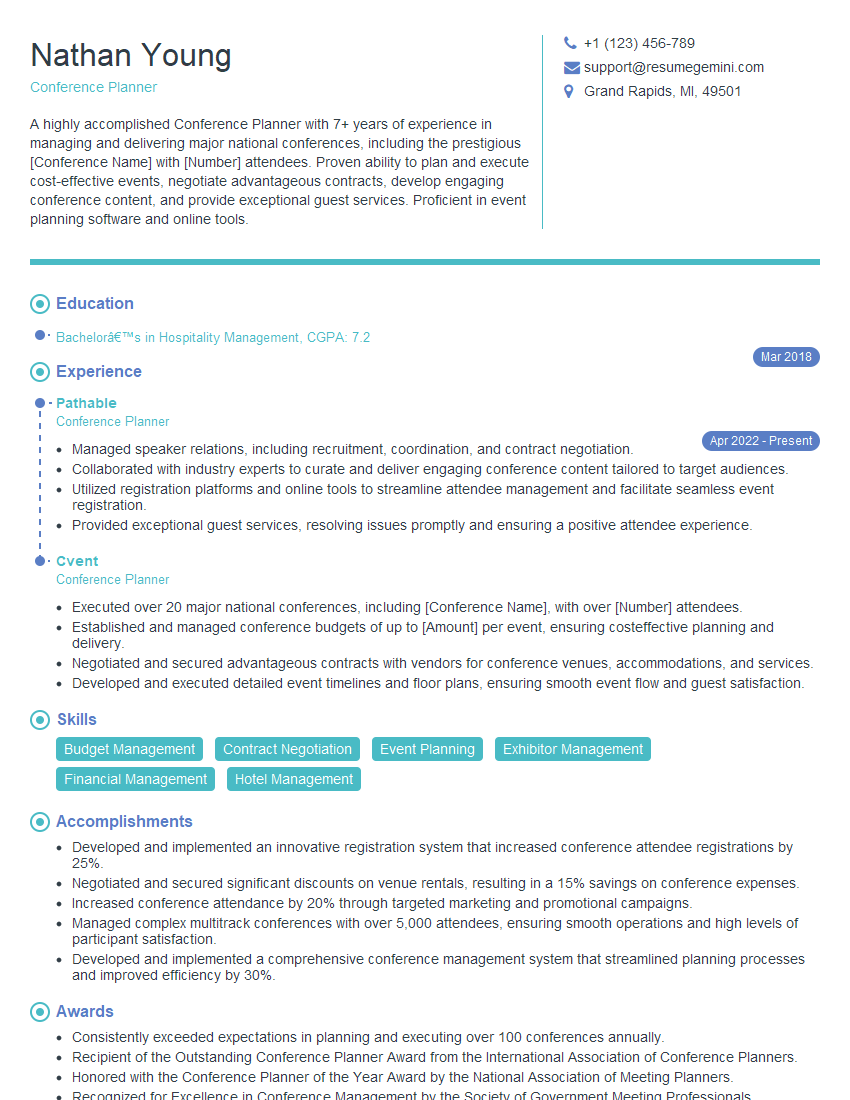
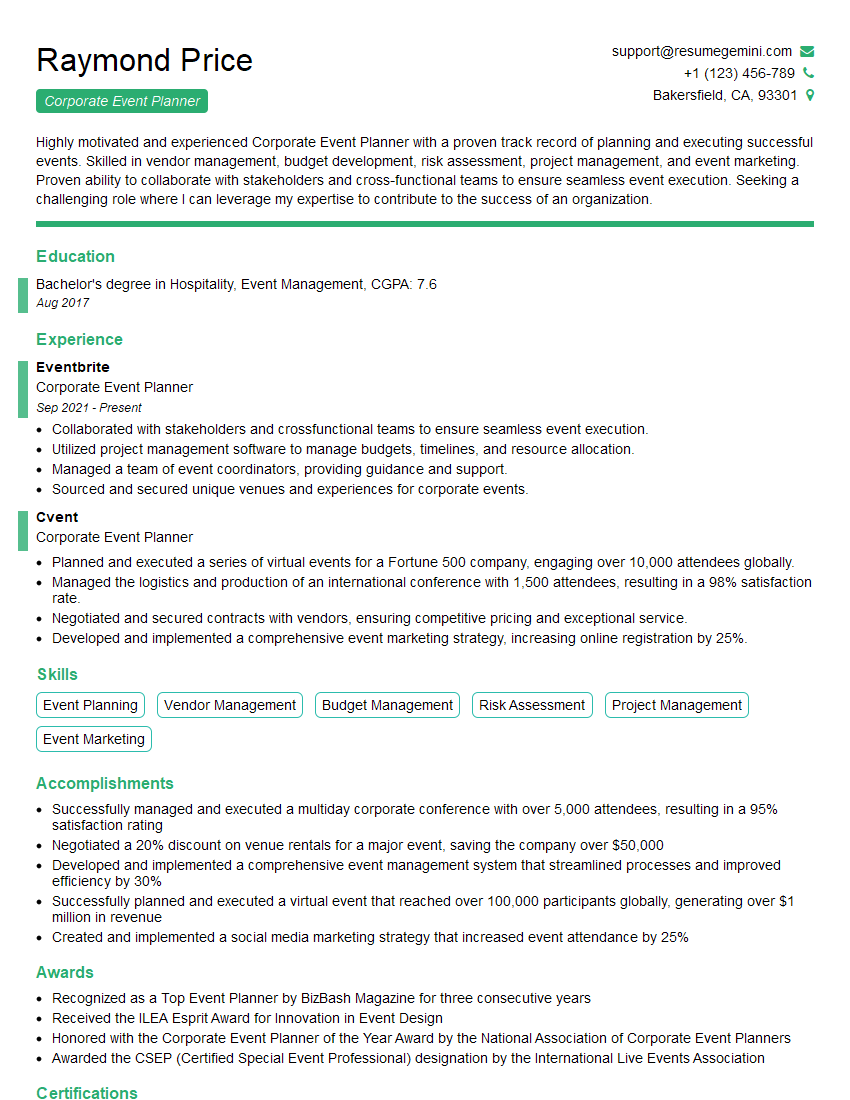
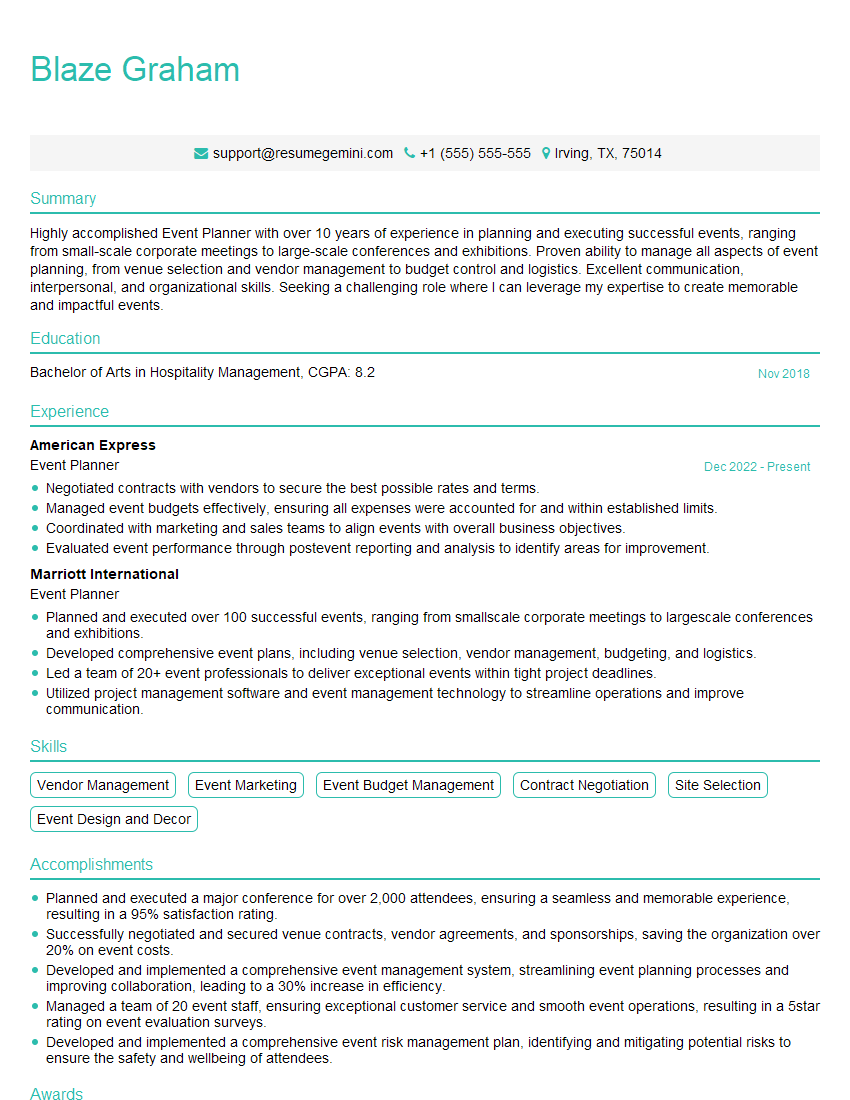
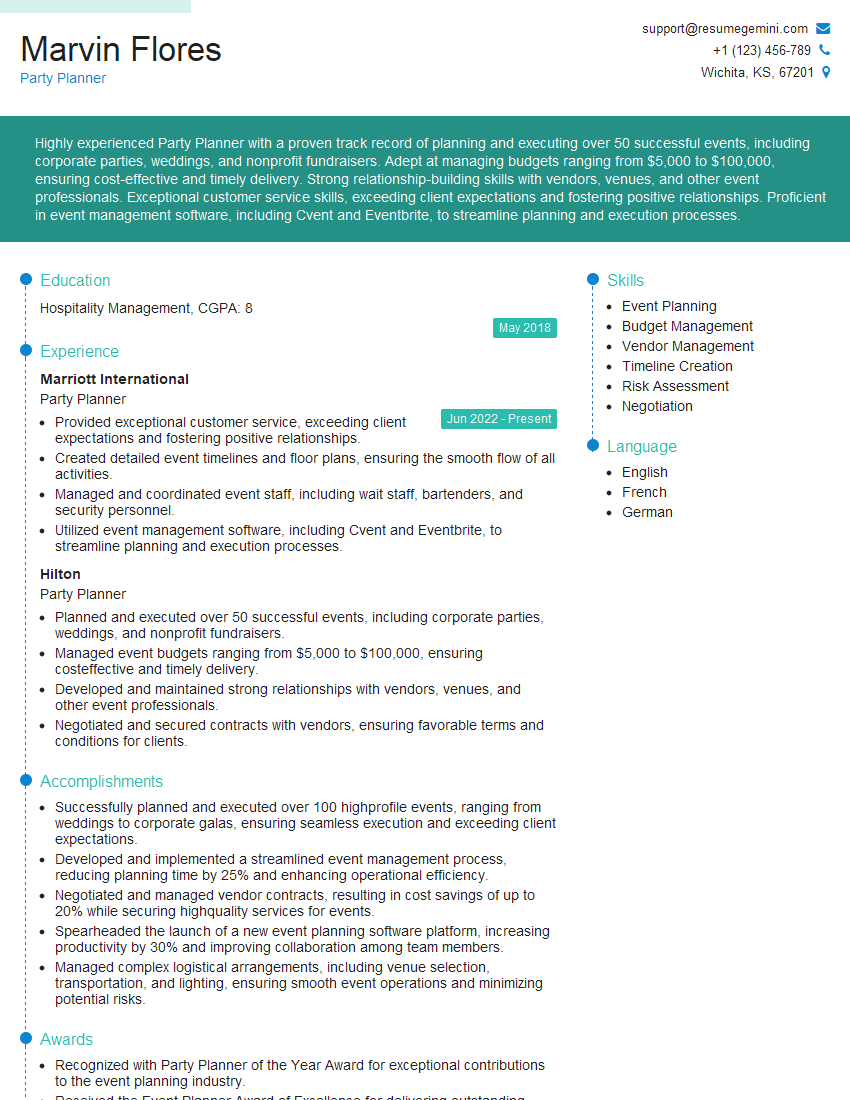
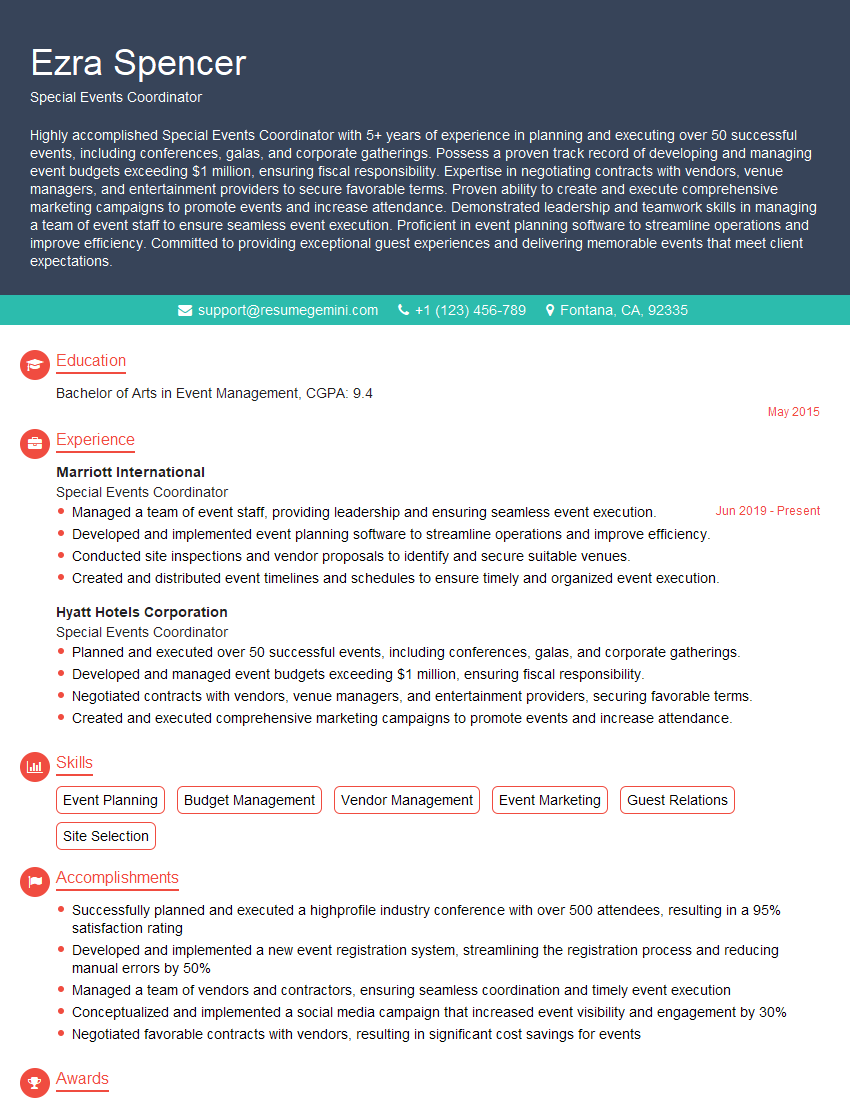
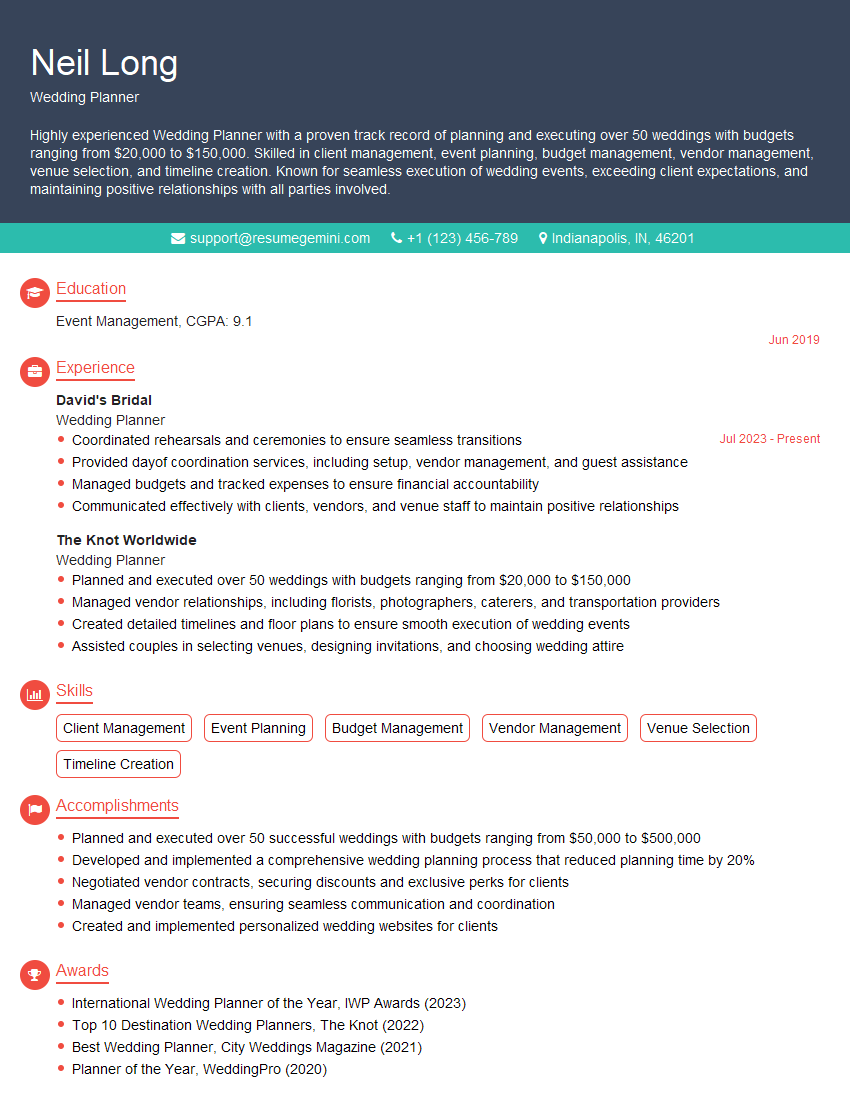
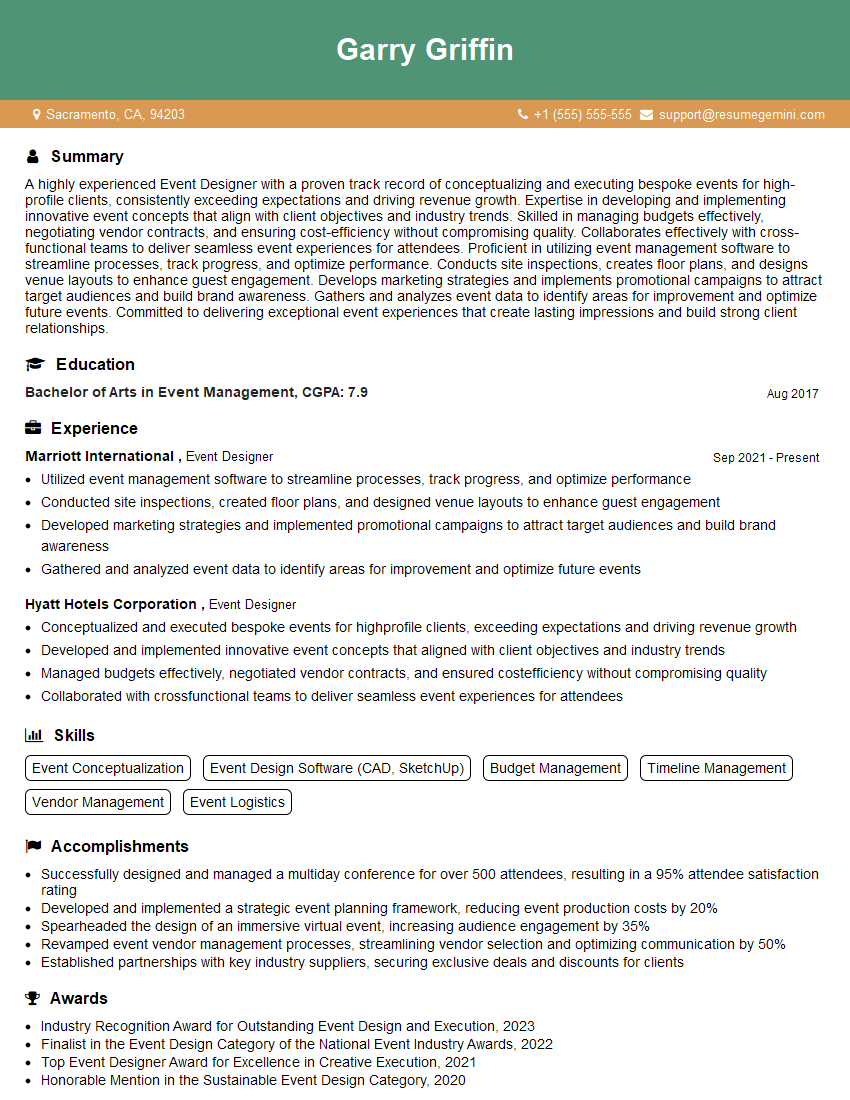
Mastering event planning and decor opens doors to a dynamic and creative career path, offering opportunities for growth and specialization. A strong resume is your key to unlocking these opportunities. Creating an ATS-friendly resume ensures your qualifications are effectively highlighted to potential employers. To build a professional resume that truly showcases your skills and experience, we encourage you to use ResumeGemini. ResumeGemini provides a user-friendly platform and examples of resumes tailored to Event Planning and Decor are available to guide you. Invest in your future—craft a compelling resume that reflects your passion and expertise.
Explore more articles
Users Rating of Our Blogs
Share Your Experience
We value your feedback! Please rate our content and share your thoughts (optional).
What Readers Say About Our Blog
Very informative content, great job.
good