Cracking a skill-specific interview, like one for Experience in a quality control environment, requires understanding the nuances of the role. In this blog, we present the questions you’re most likely to encounter, along with insights into how to answer them effectively. Let’s ensure you’re ready to make a strong impression.
Questions Asked in Experience in a quality control environment Interview
Q 1. Describe your experience with statistical process control (SPC).
Statistical Process Control (SPC) is a powerful methodology used to monitor and control processes by using statistical methods to identify and reduce variability. Think of it as a system of early warning for potential quality problems. Instead of reacting to problems after they’ve caused significant defects, SPC allows us to proactively identify deviations from the norm and take corrective action before they become major issues.
In my experience, I’ve extensively used SPC to monitor various manufacturing processes, from the assembly of complex electronic components to the packaging of pharmaceuticals. For example, in one project, we monitored the diameter of a crucial component using control charts. By tracking the mean and standard deviation of the diameter over time, we could immediately spot any shifts indicating a potential problem with the machinery or raw materials. This prevented a significant batch of defective components and saved the company considerable time and resources.
Q 2. Explain the different types of quality control charts you’ve used.
I’ve worked with several types of control charts, each designed for different types of data. The most common ones I use are:
- X-bar and R charts: These are used for continuous data (data that can take on any value within a range), such as weight, length, or temperature. The X-bar chart tracks the average (mean) of the data, while the R chart tracks the range (difference between the highest and lowest values). These charts are particularly useful for detecting shifts in the process mean or increased variability.
- X-bar and s charts: Similar to X-bar and R charts, but the ‘s’ chart tracks the standard deviation instead of the range. This is preferable when dealing with larger sample sizes.
- p-charts: These are used for attribute data that represents the proportion of non-conforming units in a sample, such as the percentage of defective parts in a batch. They are helpful in monitoring the proportion of defects.
- c-charts and u-charts: These charts are used for attribute data representing the number of defects per unit or per sample. ‘c-charts’ are used when the sample size is constant, and ‘u-charts’ are used when the sample size varies.
The choice of chart depends on the nature of the data and the specific process being monitored. Understanding these nuances is critical for effective quality control.
Q 3. How do you handle discrepancies between actual results and expected results?
Discrepancies between actual and expected results are a common occurrence in quality control. My approach is systematic and focuses on investigation and root cause analysis. The first step is to verify the accuracy of the results. Are the measurements correct? Is the testing equipment calibrated? Once that’s established, we delve into why the discrepancy exists.
For example, if a batch of product fails to meet a critical specification, I’d start by reviewing the process parameters, examining raw material certificates, and checking for any deviations from the standard operating procedure. I might use tools like Pareto charts to identify the most significant contributing factors. After identifying the root cause, I’d work with the relevant teams to implement corrective actions and prevent future occurrences. Documentation throughout the process is paramount.
Q 4. What are your methods for identifying root causes of quality issues?
Identifying root causes is crucial for effective quality control. I employ several methods, often using them in combination:
- 5 Whys: A simple yet powerful technique that involves repeatedly asking ‘why’ to drill down to the fundamental cause of a problem.
- Fishbone Diagram (Ishikawa Diagram): This visual tool helps to brainstorm potential causes grouped by categories (materials, methods, manpower, machinery, measurement, environment). This provides a structured way to explore potential issues.
- Pareto Analysis: This statistical method identifies the ‘vital few’ causes that contribute to the majority of the problems. By focusing on these key factors, we can achieve the greatest impact with our corrective actions.
- Data Analysis: Examining historical data, process capability studies, and other relevant data can reveal trends and patterns that indicate underlying issues.
It’s important to remember that root cause analysis is an iterative process. Often, uncovering the root cause requires a combination of techniques and a collaborative effort across different teams.
Q 5. Describe your experience with corrective and preventive actions (CAPA).
Corrective and Preventive Actions (CAPA) are essential for continuous improvement in quality management. My experience with CAPA involves a structured approach that ensures effective problem resolution and the prevention of recurrence. This typically includes:
- Defining the problem: Clearly documenting the issue, its impact, and the affected areas.
- Identifying the root cause: Employing the methods described earlier to determine the underlying cause of the problem.
- Developing corrective actions: Implementing immediate actions to resolve the current problem.
- Developing preventive actions: Implementing long-term solutions to prevent similar problems from occurring in the future.
- Verification and validation: Confirming that the implemented actions are effective and achieving the desired results.
- Documentation: Meticulous record-keeping throughout the entire CAPA process.
For example, if a recurring equipment malfunction led to a series of product defects, a CAPA would be initiated to investigate the root cause (perhaps a faulty component or inadequate maintenance), implement corrective actions (repair or replacement of the faulty component), and implement preventive actions (introducing a more robust maintenance schedule or improved operator training).
Q 6. How familiar are you with ISO 9001 or other quality management systems?
I am very familiar with ISO 9001:2015 and its principles. I have been involved in several projects where we implemented and maintained ISO 9001 compliant quality management systems. Understanding and adhering to the requirements of ISO 9001 is crucial for demonstrating a commitment to quality and customer satisfaction. My understanding extends beyond just the standards themselves; I’m also knowledgeable about internal audits, management reviews, and the continuous improvement cycle that is central to the standard’s philosophy.
Beyond ISO 9001, I have experience working with other quality management system standards, including GMP (Good Manufacturing Practices) in the pharmaceutical industry, tailored to meet specific industry regulations and client requirements.
Q 7. Explain your experience with audits and inspections.
Audits and inspections are critical for verifying that quality systems are functioning correctly and meeting the required standards. My experience includes both internal and external audits.
Internal audits allow for proactive identification of weaknesses and areas for improvement within our own processes. I’ve led numerous internal audits, developing audit plans, conducting on-site inspections, documenting findings, and recommending corrective actions. External audits, whether conducted by regulatory bodies or clients, provide an independent assessment of our quality systems. I have participated in several external audits and have worked closely with auditors to address their findings and ensure compliance. These experiences have honed my skills in preparing for audits, managing audit responses, and driving continuous improvement based on audit findings. Preparing for and navigating audits smoothly is essential to maintain quality standards and build confidence among stakeholders.
Q 8. Describe your experience with developing quality control procedures.
Developing robust quality control (QC) procedures involves a systematic approach ensuring products or services consistently meet predefined standards. It begins with a thorough understanding of the process, identifying potential failure points, and defining acceptable quality levels. I typically start by collaborating with cross-functional teams to define key performance indicators (KPIs) and acceptance criteria. This could involve brainstorming sessions, analyzing historical data, and referencing industry best practices. Then, I create detailed, step-by-step instructions outlining the QC checks at each stage, including the methods for inspection, testing, and documentation. For example, in a previous role involving software development, I developed a QC procedure incorporating unit testing, integration testing, system testing, and user acceptance testing (UAT), each with clearly defined acceptance criteria and reporting mechanisms. The procedures also incorporated version control and change management protocols to ensure traceability and avoid introducing errors. Finally, I ensure that the procedures are easily accessible, understandable, and regularly reviewed and updated to reflect evolving requirements and feedback.
Q 9. How do you measure the effectiveness of quality control measures?
Measuring the effectiveness of QC measures is crucial for continuous improvement. I use a multi-faceted approach. First, I track key metrics like defect rates, customer complaints, and rework percentages. A significant reduction in these metrics indicates improvement. For instance, we tracked a 20% decrease in software bugs after implementing a new automated testing suite. Secondly, I analyze the cost of quality, considering prevention costs (training, planning), appraisal costs (inspection, testing), internal failure costs (rework, scrap), and external failure costs (warranty claims, customer refunds). A decrease in total cost of quality demonstrates effective QC. Thirdly, I conduct regular audits and reviews of the QC processes themselves, looking for inefficiencies or areas needing improvement. Finally, I solicit feedback from the production team and end-users to gain valuable insights. This combined approach provides a comprehensive picture of QC effectiveness and guides continuous improvement efforts.
Q 10. How do you prioritize quality control tasks in a fast-paced environment?
Prioritizing QC tasks in a fast-paced environment requires a strategic approach. I utilize a risk-based prioritization framework, focusing on tasks that pose the highest risk of failure or have the most significant impact on product quality or customer satisfaction. This involves identifying critical control points in the process and assessing the potential consequences of defects at each stage. I often employ a risk matrix, rating each task based on probability of failure and severity of impact. Tasks with high probability and high severity are prioritized first. For instance, a critical software security vulnerability would take precedence over a minor cosmetic issue. Furthermore, I leverage lean principles to eliminate waste and streamline the QC process, focusing on the most value-added activities. This can include automating repetitive tasks and using statistical process control (SPC) charts to monitor key variables and identify potential problems early.
Q 11. Describe a time you identified a critical quality defect and the actions you took.
In a previous role, we discovered a critical defect in a batch of manufactured components—a flawed weld that could compromise product safety. My immediate actions involved: 1) Initiating a full-scale stop of the production line to prevent further defective units from being produced. 2) Forming a cross-functional team to investigate the root cause of the defect, examining materials, processes, and equipment. 3) Implementing corrective actions, which included retraining the welding technicians, recalibrating the welding equipment, and implementing a more rigorous inspection protocol. 4) Implementing a recall process for the affected components already shipped, ensuring transparent communication with customers. 5) Documenting the entire incident, including the root cause analysis, corrective actions, and preventative measures to avoid recurrence. This situation highlighted the importance of proactive QC measures and rapid response to critical issues to mitigate risks and protect brand reputation.
Q 12. What software tools do you use for quality control and data analysis?
My experience encompasses various software tools for quality control and data analysis. For statistical process control (SPC), I’m proficient in Minitab and JMP, using them for creating control charts and analyzing process capability. For data management and analysis, I frequently use Microsoft Excel and SQL, including the creation of dashboards and reports. For defect tracking and management, I’ve used Jira and Bugzilla. I’m also familiar with specialized software for specific industries; for example, in a previous role involving medical devices, we used software compliant with FDA regulations for managing quality records and traceability. The choice of software depends greatly on the specific needs of the project and company.
Q 13. How do you ensure consistent application of quality control standards across teams?
Ensuring consistent application of QC standards across teams requires a multi-pronged approach. Firstly, I develop clear, concise, and easily accessible QC standards and procedures, using standardized templates and consistent terminology. Secondly, I provide comprehensive training to all team members on these standards and procedures. Thirdly, I leverage a centralized system for documentation and communication, such as a shared document repository or project management software. This allows for easy access to the latest version of standards and permits efficient collaboration and feedback. Regular audits and internal assessments help to identify inconsistencies and highlight areas needing improvement, providing constructive feedback to respective teams. Finally, I foster a culture of quality within the organization, emphasizing the importance of QC and providing regular feedback and recognition for teams consistently demonstrating high-quality work.
Q 14. Describe your approach to managing quality control documentation.
Managing QC documentation requires a structured and organized approach. I typically employ a version control system to manage revisions, ensuring that only the most up-to-date documents are accessible. For electronic documents, I utilize cloud-based storage with appropriate access controls to enhance security and collaboration. For paper documents, a well-organized filing system with clear labeling and indexing is crucial. A detailed document management plan should be created to ensure all documents are readily retrievable and traceable. This involves defining document retention policies, specifying approval workflows, and establishing procedures for document updates and disposal. The use of a document management system (DMS) can automate several tasks, enhancing efficiency and compliance with regulatory requirements. Regular review and purging of obsolete documents are essential to maintain a manageable and effective system.
Q 15. Explain your experience with calibration and metrology.
Calibration and metrology are fundamental to ensuring accurate and reliable measurements within a quality control environment. Calibration involves comparing a measuring instrument’s readings to a known standard to verify its accuracy. Metrology is the science of measurement, encompassing all aspects of measurement traceability, uncertainty, and standards.
In my previous role at Acme Manufacturing, I was responsible for the calibration of all our precision measuring equipment, including micrometers, calipers, and optical comparators. This involved establishing a rigorous calibration schedule, using traceable standards (NIST-traceable where possible), documenting all calibration results, and managing the equipment’s lifecycle. We used a computerized maintenance management system (CMMS) to track calibrations and generate alerts before equipment was due for recalibration. For example, if a micrometer’s calibration was outside of tolerance, it was immediately taken out of service, repaired or replaced, and a thorough investigation was launched to determine the root cause of the discrepancy. This ensured that all measurements made were within acceptable tolerances, preventing the production of non-conforming parts.
My experience extends to developing and implementing calibration procedures, training personnel on proper calibration techniques, and investigating and resolving calibration discrepancies. I also have experience with various calibration methodologies, including on-site calibration and external calibration services. Understanding the uncertainty associated with each measurement was always a key focus.
Career Expert Tips:
- Ace those interviews! Prepare effectively by reviewing the Top 50 Most Common Interview Questions on ResumeGemini.
- Navigate your job search with confidence! Explore a wide range of Career Tips on ResumeGemini. Learn about common challenges and recommendations to overcome them.
- Craft the perfect resume! Master the Art of Resume Writing with ResumeGemini’s guide. Showcase your unique qualifications and achievements effectively.
- Don’t miss out on holiday savings! Build your dream resume with ResumeGemini’s ATS optimized templates.
Q 16. How do you handle conflicts or disagreements related to quality control decisions?
Disagreements regarding quality control decisions are inevitable, but effective conflict resolution is crucial. My approach involves fostering open communication, active listening, and a collaborative problem-solving mindset.
I begin by ensuring everyone involved has access to all relevant data and clearly understands the issue. I then facilitate a discussion where each party can express their perspective and supporting evidence. Instead of immediately siding with one opinion, I guide the discussion towards a shared understanding of the problem and potential solutions. We often use data-driven analysis, such as Pareto charts or control charts, to identify the root cause of any quality issues before making decisions.
For instance, in a situation where the production team disagreed with the quality control team about the acceptability of a batch of products, we analyzed the data together. We discovered a minor deviation in a specific dimension that was within the customer’s specification, but outside our internal target. This led to a discussion on adjusting internal targets to better align with customer requirements rather than discarding a perfectly acceptable batch. Documentation is vital in these situations; we maintain detailed records of all disagreements, the resolution process, and any resulting changes in procedures.
Q 17. How do you stay updated on changes in quality control standards and best practices?
Staying abreast of evolving quality control standards and best practices is a continuous process. I actively participate in professional organizations like ASQ (American Society for Quality), attending conferences and webinars, and reading industry publications and journals.
I also leverage online resources such as ISO (International Organization for Standardization) websites and relevant government regulatory agency sites to stay informed about changes in regulations and standards. Additionally, I maintain a network of contacts within the quality control community, sharing knowledge and best practices. This includes attending industry events, engaging in online forums, and connecting with colleagues through professional networking platforms. I regularly review and update our company’s quality control manuals and procedures to reflect the latest standards and best practices. It’s important to stay current to ensure compliance and continuous improvement.
Q 18. What is your experience with failure mode and effects analysis (FMEA)?
Failure Mode and Effects Analysis (FMEA) is a systematic approach to identifying potential failures in a process, evaluating their potential effects, and determining actions to mitigate or eliminate them.
I’ve extensive experience in conducting FMEAs for various processes, from product design to manufacturing operations. This includes leading FMEA sessions, facilitating teamwork, documenting potential failure modes, assessing their severity, occurrence, and detection, and determining appropriate risk reduction actions. We use a risk priority number (RPN) to prioritize these actions, focusing on high-RPN items first. For example, in an FMEA for a new product assembly process, we identified a potential failure mode of a dropped component. By analyzing the severity, likelihood, and detectability of this event, we implemented preventative measures like using anti-static mats and better component storage. The process also requires regular review and updates as processes evolve or new information becomes available.
Q 19. Explain your understanding of Six Sigma methodologies.
Six Sigma is a data-driven methodology focused on reducing variation and improving process capability. It aims to achieve near-perfection (3.4 defects per million opportunities) by systematically identifying and eliminating sources of variation.
My experience includes applying Six Sigma tools, such as DMAIC (Define, Measure, Analyze, Improve, Control), to various projects. For example, in one project, we used DMAIC to reduce the defect rate in a critical manufacturing process. We began by defining the problem, meticulously measuring the current process performance, analyzing the root causes of defects using statistical tools like control charts and process capability analysis, implementing corrective actions, and finally controlling the improved process to maintain the gains. The key to Six Sigma’s success is its structured approach, reliance on data analysis, and focus on continuous improvement. This approach leads to significant cost savings and improved customer satisfaction through reduction of defects.
Q 20. Describe your experience with risk assessment related to quality control.
Risk assessment in quality control involves identifying, analyzing, and evaluating potential hazards that could impact product quality or safety. This often includes legal and financial risks.
My experience encompasses conducting risk assessments using various methods, including Failure Mode and Effects Analysis (FMEA) as discussed earlier, Hazard and Operability Studies (HAZOP), and Fault Tree Analysis (FTA). I typically involve a cross-functional team in the risk assessment process to leverage diverse expertise and perspectives. We prioritize risks based on their likelihood and potential impact, developing mitigation strategies for high-priority risks. For example, in a risk assessment for a new chemical process, we identified the risk of a chemical spill. We implemented safety protocols, including improved containment procedures and emergency response plans. Regular reviews of risk assessments are crucial to ensure that mitigation strategies remain effective and adapt to changing conditions.
Q 21. How do you ensure traceability of materials and processes in a quality control system?
Traceability in a quality control system is essential for tracking materials and processes throughout the entire production lifecycle. This allows for effective identification and resolution of quality issues.
My experience includes implementing and managing traceability systems using various methods, including barcode scanning, RFID tagging, and serial numbers. We maintain detailed records of material sourcing, processing steps, and finished product information. This documentation aids in identifying the source of any defects, facilitating timely corrective actions and preventing recurrence. For instance, in the case of a defective batch of products, the traceability system enabled us to quickly trace the materials used, identify the specific manufacturing process where the defect occurred, and correct the issue. This also provides valuable data for continuous improvement initiatives.
Efficient traceability minimizes the impact of quality problems, ensuring quick responses to customer complaints and reducing waste and rework.
Q 22. Explain your experience with customer complaint handling regarding quality issues.
Handling customer complaints regarding quality issues is crucial for maintaining customer satisfaction and brand reputation. My approach involves a structured process focusing on empathy, efficient investigation, and effective resolution.
First, I acknowledge the customer’s concern and empathize with their frustration. Then, I gather detailed information about the issue, including specific details about the product, the defect observed, and any steps the customer has already taken. This information is documented meticulously. Next, I investigate the root cause of the problem. This might involve examining the product itself, reviewing production records, or contacting relevant teams (e.g., manufacturing, engineering). Based on the investigation, I propose a solution, which might include a repair, replacement, refund, or a combination thereof. Finally, I follow up with the customer to ensure they are satisfied with the resolution and to gather feedback for continuous improvement.
For example, in a previous role, a customer reported a malfunctioning component in a sophisticated piece of medical equipment. Through a thorough investigation involving engineering and production records, we identified a flaw in the assembly process. This led to a recall of a specific batch, improvements to the assembly process, and a full replacement of the customer’s faulty unit, along with compensation for inconvenience. Regular communication with the customer throughout the process was critical to maintaining their trust and loyalty.
Q 23. Describe your experience with designing and implementing quality control plans.
Designing and implementing quality control plans requires a deep understanding of the production process and potential failure points. My approach is systematic and proactive, leveraging statistical methods and risk assessment.
I begin by defining clear quality objectives, measurable targets, and acceptable levels of defects. Then, I identify critical control points in the production process where defects are most likely to occur. This often involves analyzing historical data, studying process flow diagrams, and consulting with production and engineering teams. Next, I develop specific quality control procedures for each critical control point. These procedures might include regular inspections, statistical process control (SPC) charts, and testing protocols. The plan also incorporates methods for corrective and preventive actions (CAPA) to address any detected defects or potential issues. I then implement the plan, monitoring its effectiveness and making adjustments as needed.
For instance, in a past project involving the manufacturing of precision components, I designed a quality control plan incorporating SPC charts to monitor critical dimensions. This allowed us to identify and address minor variations in the manufacturing process before they resulted in significant defects, significantly reducing scrap and rework.
Q 24. How familiar are you with different sampling methods in quality control?
I’m proficient in various sampling methods used in quality control, each appropriate for different situations and goals. The choice of sampling method depends on factors such as the size of the population, the desired level of precision, and the cost of sampling.
- Simple Random Sampling: Every item in the population has an equal chance of being selected. This is straightforward but may not be efficient for large populations.
- Stratified Sampling: The population is divided into subgroups (strata), and a random sample is taken from each stratum. This ensures representation from all subgroups.
- Systematic Sampling: Items are selected at regular intervals from the population. This is efficient but can be biased if there’s a pattern in the population.
- Acceptance Sampling: A sample is inspected to determine whether to accept or reject a batch of items. This is often used for incoming materials or finished goods.
Understanding the strengths and limitations of each method allows me to choose the most appropriate one for the specific task at hand. For example, in one project involving a large batch of incoming raw materials, stratified sampling ensured that we tested samples from all suppliers to ensure consistent quality across different sources.
Q 25. How do you balance quality control efforts with production efficiency?
Balancing quality control efforts with production efficiency is a constant challenge. The key is to find a balance that minimizes defects without excessively slowing down production. This involves prioritizing and focusing quality control efforts on the areas with the highest impact.
I use techniques such as risk assessment to identify critical control points that require the most rigorous quality checks. Automation where possible, such as using automated inspection systems, can increase efficiency without compromising quality. Furthermore, continuous improvement initiatives aim to streamline processes and prevent defects from occurring in the first place, thereby improving both quality and efficiency.
For instance, in a previous role, we implemented an automated visual inspection system for a high-volume production line. This significantly reduced the time required for manual inspection, increasing efficiency while maintaining high quality standards.
Q 26. Describe your experience with continuous improvement initiatives in quality control.
Continuous improvement is vital in a quality control environment. My experience includes implementing various initiatives like Lean manufacturing principles and Six Sigma methodologies to drive improvement.
Lean principles focus on eliminating waste and maximizing efficiency, while Six Sigma aims to reduce variation and defects to achieve near-perfection. I’ve used tools like DMAIC (Define, Measure, Analyze, Improve, Control) to systematically address quality issues and Kaizen events to encourage continuous small improvements in workflows. Regularly reviewing key performance indicators (KPIs), such as defect rates, cycle times, and customer satisfaction scores, is critical for tracking progress and identifying areas for improvement.
In a past role, a Kaizen event focused on optimizing a specific assembly process led to a 20% reduction in defect rates and a 15% improvement in cycle time. This demonstrates the tangible benefits of continuous improvement initiatives.
Q 27. Explain your experience with working with cross-functional teams to improve quality.
Effective quality control often requires collaboration across multiple departments. I have extensive experience working with cross-functional teams, including manufacturing, engineering, design, and sales, to address quality challenges.
My approach focuses on clear communication, active listening, and consensus building. I leverage collaborative tools and regular meetings to ensure alignment on objectives and efficient information sharing. By fostering a culture of open communication and mutual respect, I facilitate effective problem-solving and decision-making within the team.
In one project, working with engineering, we identified a design flaw contributing to a high defect rate. This collaborative effort resulted in a redesigned component that eliminated the problem and dramatically reduced rework.
Q 28. How would you handle a situation where a product fails to meet quality standards during production?
If a product fails to meet quality standards during production, immediate action is required to prevent further defects and minimize negative impact. My response involves a structured approach focusing on containment, investigation, correction, and prevention.
First, I would immediately contain the problem by stopping the production of defective units. Next, I would conduct a thorough investigation to identify the root cause of the failure, which might involve analyzing the production process, examining faulty units, and consulting with relevant teams. Based on the investigation, I would implement corrective actions to address the immediate issue. These might involve adjusting machine settings, replacing faulty components, or retraining personnel. Finally, I would implement preventive actions to prevent recurrence of the problem, such as improving the process design, updating quality control procedures, or investing in new equipment. Throughout this process, I’d maintain detailed documentation and communicate effectively with all stakeholders.
For example, in a past incident, a sudden increase in defects was traced back to a worn-out machine part. Immediate replacement of the part and a revised preventative maintenance schedule resolved the issue, and future failures were prevented through stricter maintenance protocols.
Key Topics to Learn for Experience in a Quality Control Environment Interview
- Quality Management Systems (QMS): Understanding ISO 9001, Six Sigma, or other relevant frameworks and their practical implementation in a quality control setting.
- Inspection and Testing Methods: Familiarize yourself with various inspection techniques (visual, dimensional, functional), testing methodologies, and the use of relevant equipment. Be prepared to discuss your experience with specific instruments or processes.
- Data Analysis and Reporting: Showcase your ability to collect, analyze, and interpret quality control data. Practice presenting findings clearly and concisely through reports and presentations, highlighting trends and potential improvements.
- Root Cause Analysis (RCA): Demonstrate your proficiency in identifying the root causes of defects or quality issues using techniques like the 5 Whys, fishbone diagrams, or Pareto analysis. Be ready to explain your problem-solving approach.
- Continuous Improvement Initiatives: Discuss your experience with implementing or contributing to continuous improvement projects. Highlight your ability to suggest and implement effective solutions to enhance quality control processes.
- Quality Control Documentation and Record Keeping: Understand the importance of accurate and detailed record-keeping, including inspection reports, non-conformance reports, and corrective actions. Explain how you ensure data integrity and compliance.
- Communication and Teamwork: Quality control often involves collaboration. Prepare to discuss your experience working effectively with cross-functional teams, communicating complex technical information clearly, and addressing concerns professionally.
- Regulatory Compliance: Depending on the industry, demonstrate understanding of relevant regulations and standards (e.g., FDA, GMP) and your role in ensuring compliance.
Next Steps
Mastering the concepts related to quality control is crucial for career advancement in many fields. A strong understanding of quality management systems and methodologies opens doors to leadership roles and higher earning potential. To significantly improve your job prospects, focus on creating an ATS-friendly resume that effectively highlights your skills and experience. ResumeGemini is a trusted resource to help you build a professional and impactful resume. Examples of resumes tailored to quality control experience are available to guide you. Invest the time to create a compelling resume; it’s your first impression on potential employers.
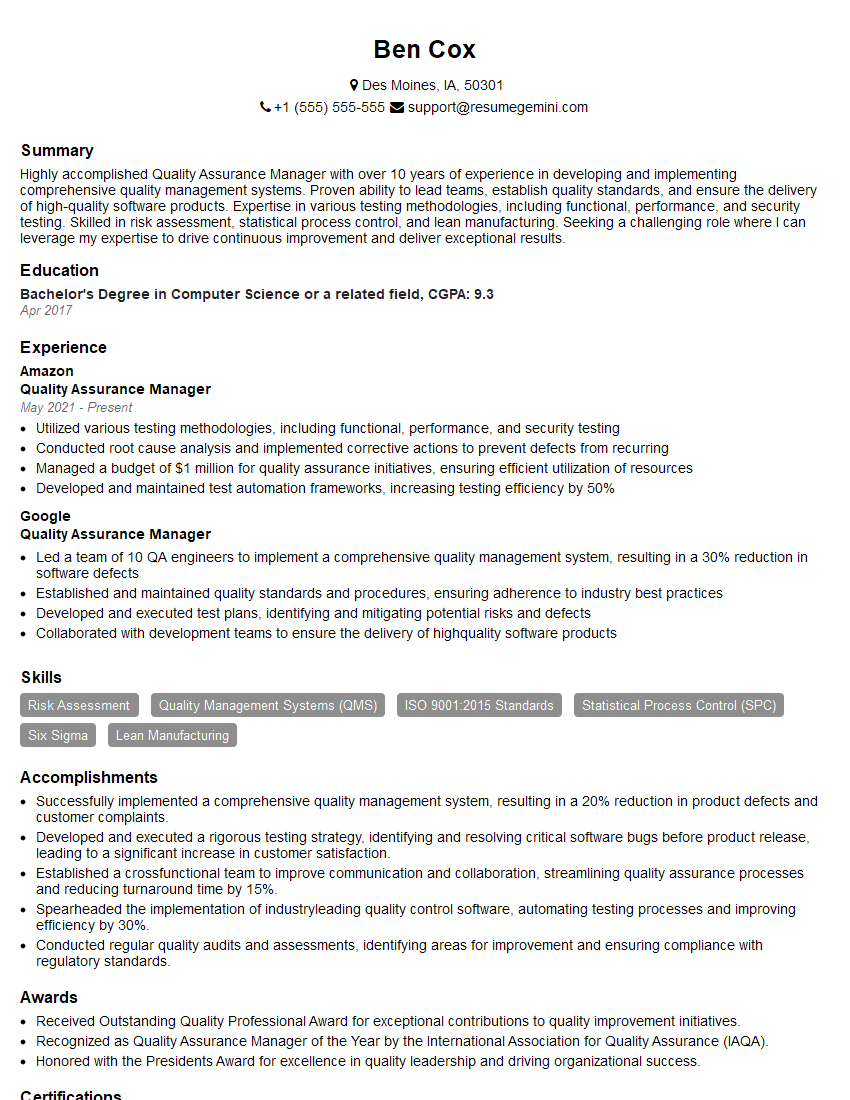
Quality Assurance Manager Resume Sample
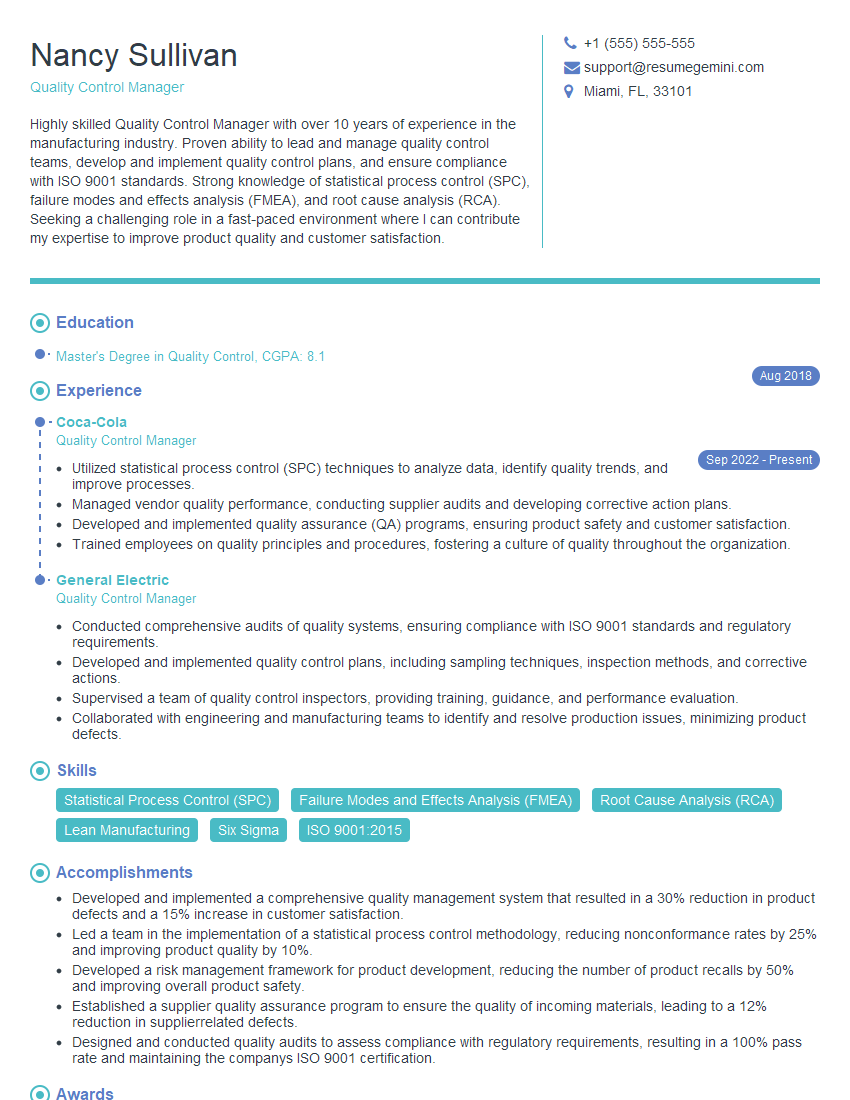
Quality Control Manager Resume Sample
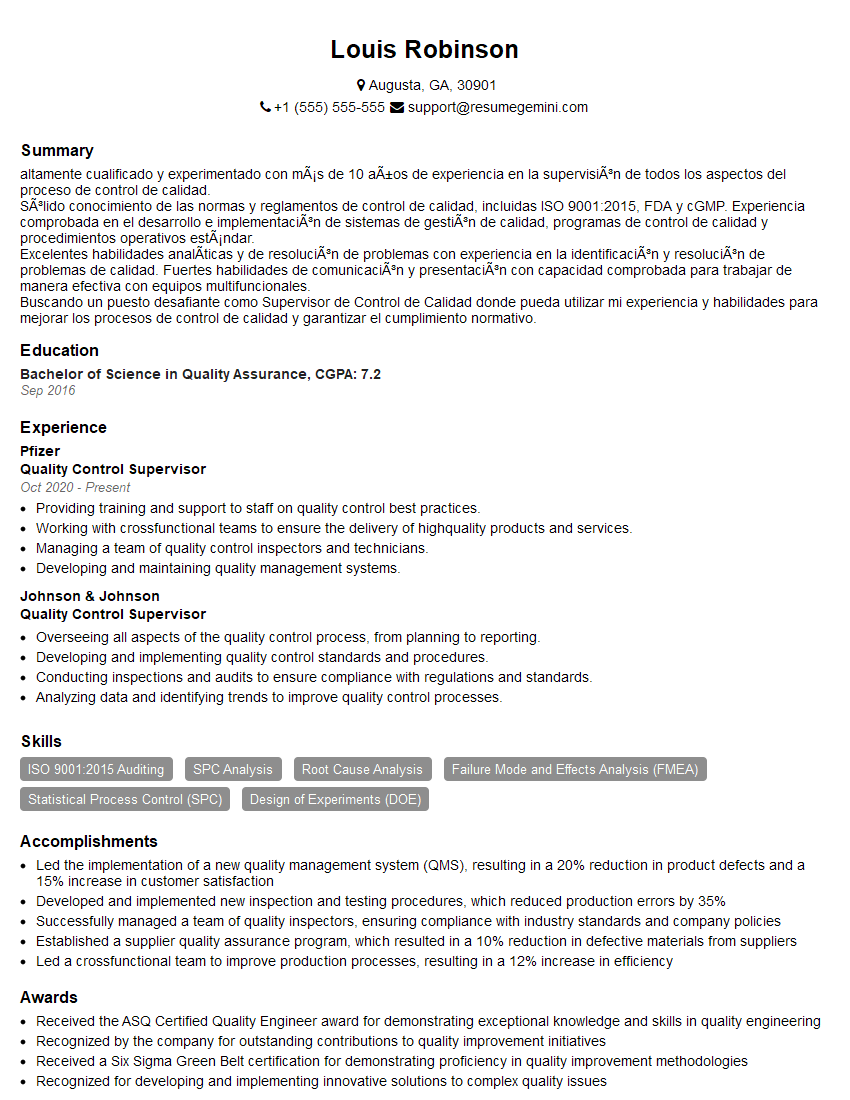
Quality Control Supervisor Resume Sample
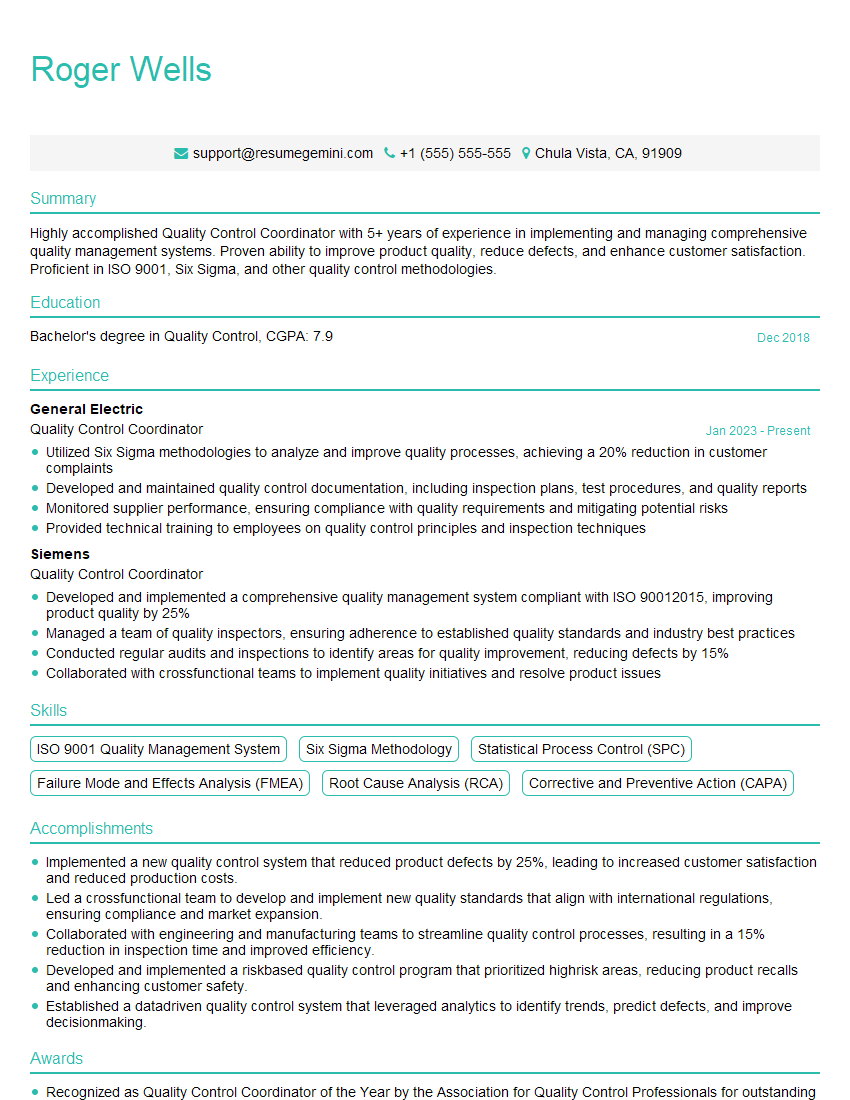
Quality Control Coordinator Resume Sample
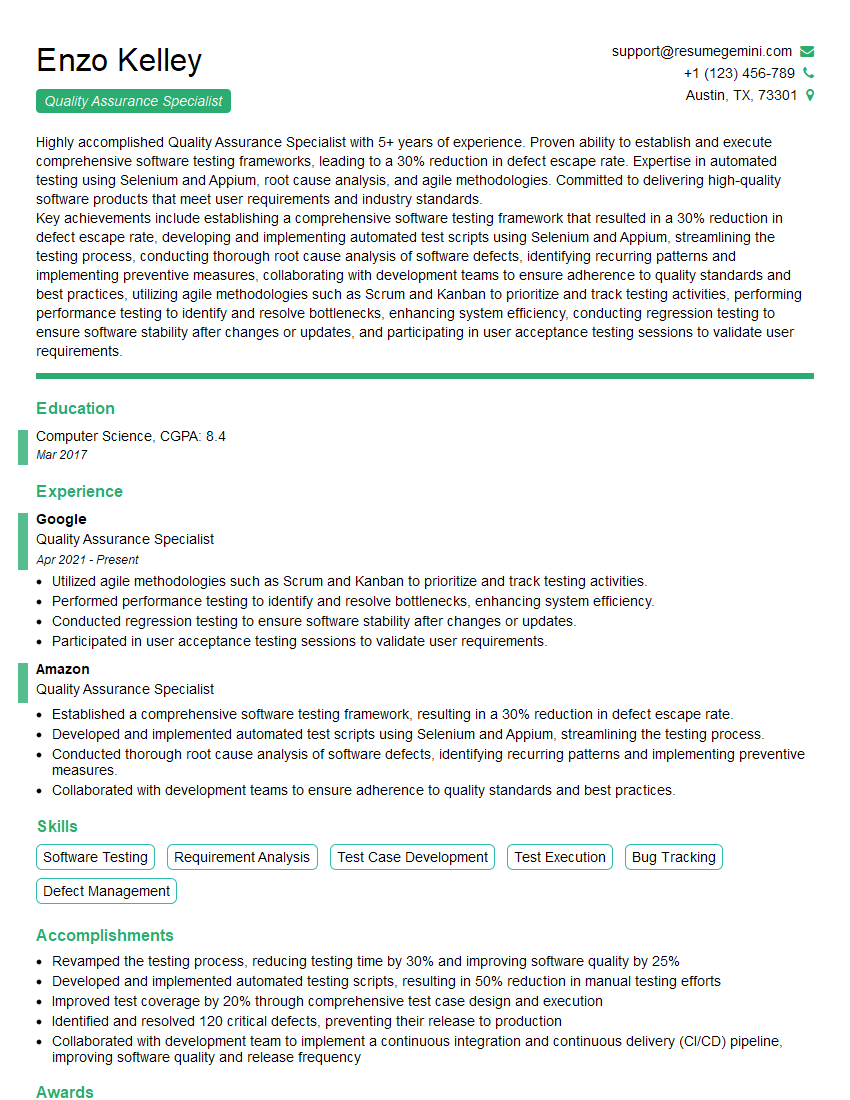
Quality Assurance Specialist Resume Sample
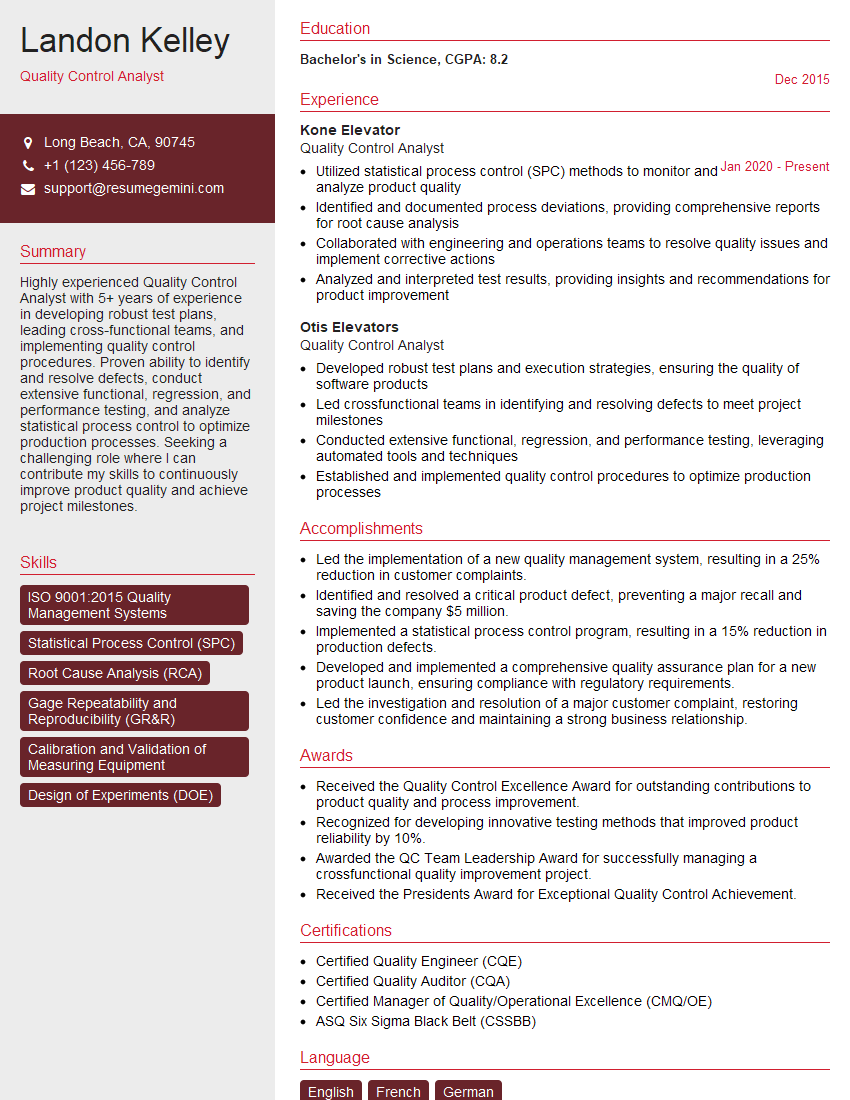
Quality Control Analyst Resume Sample
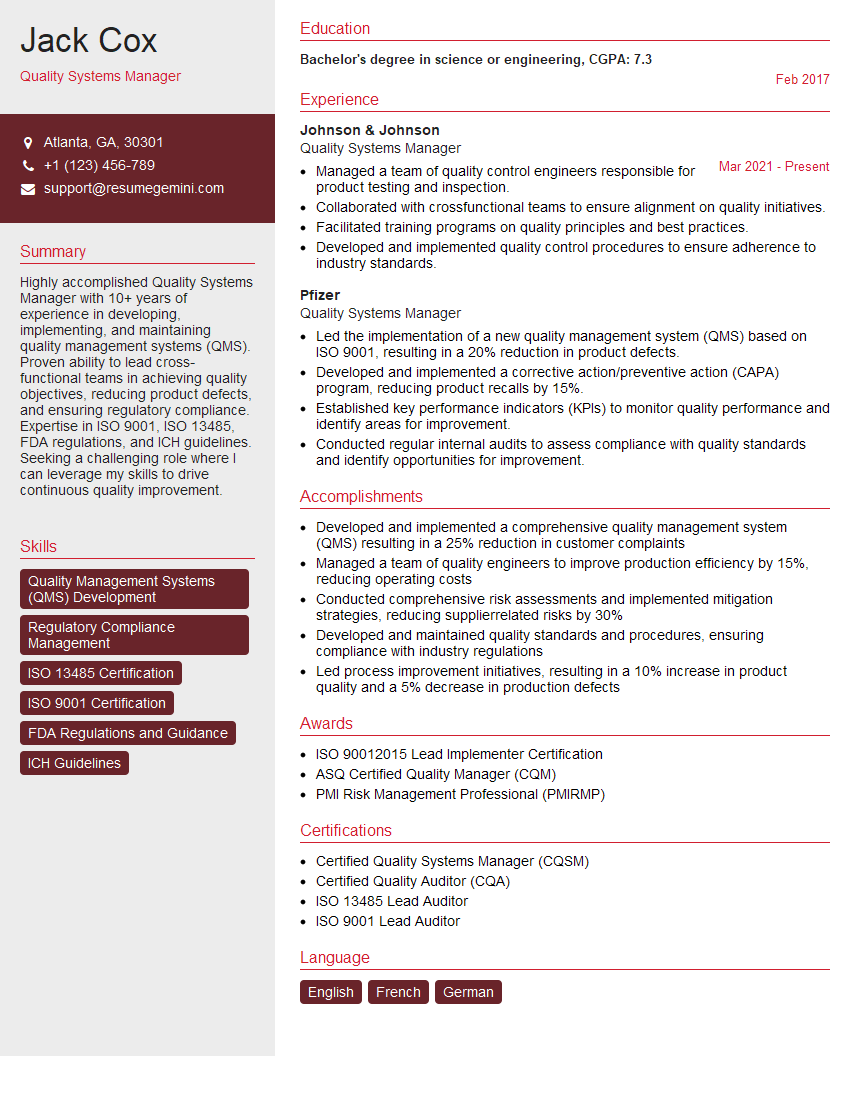
Quality Systems Manager Resume Sample
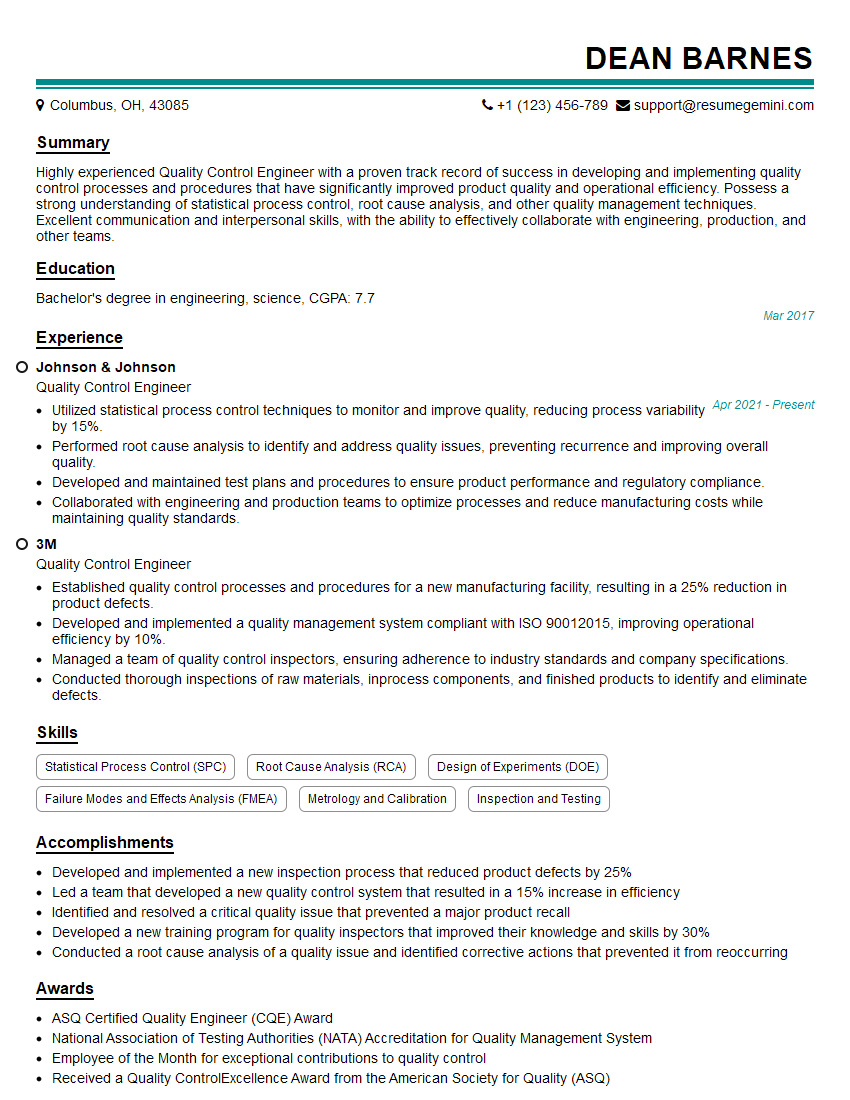
Quality Control Engineer Resume Sample
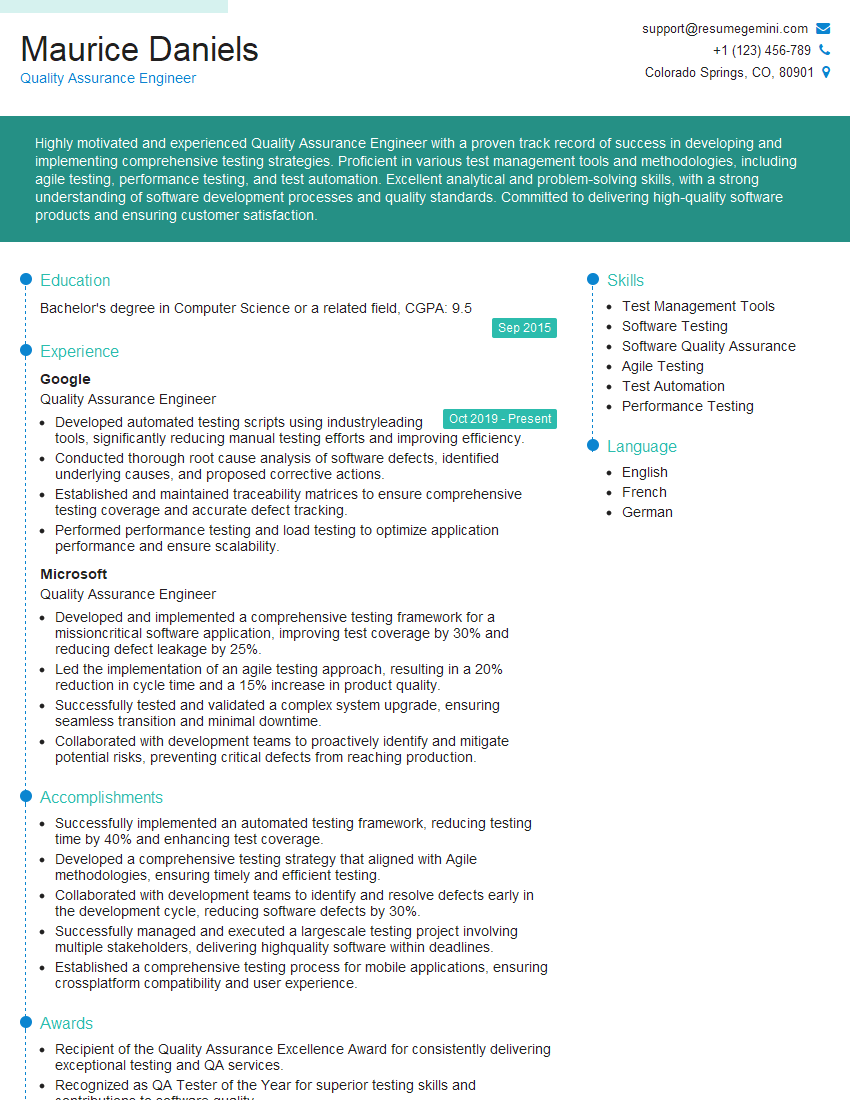
Quality Assurance Engineer Resume Sample
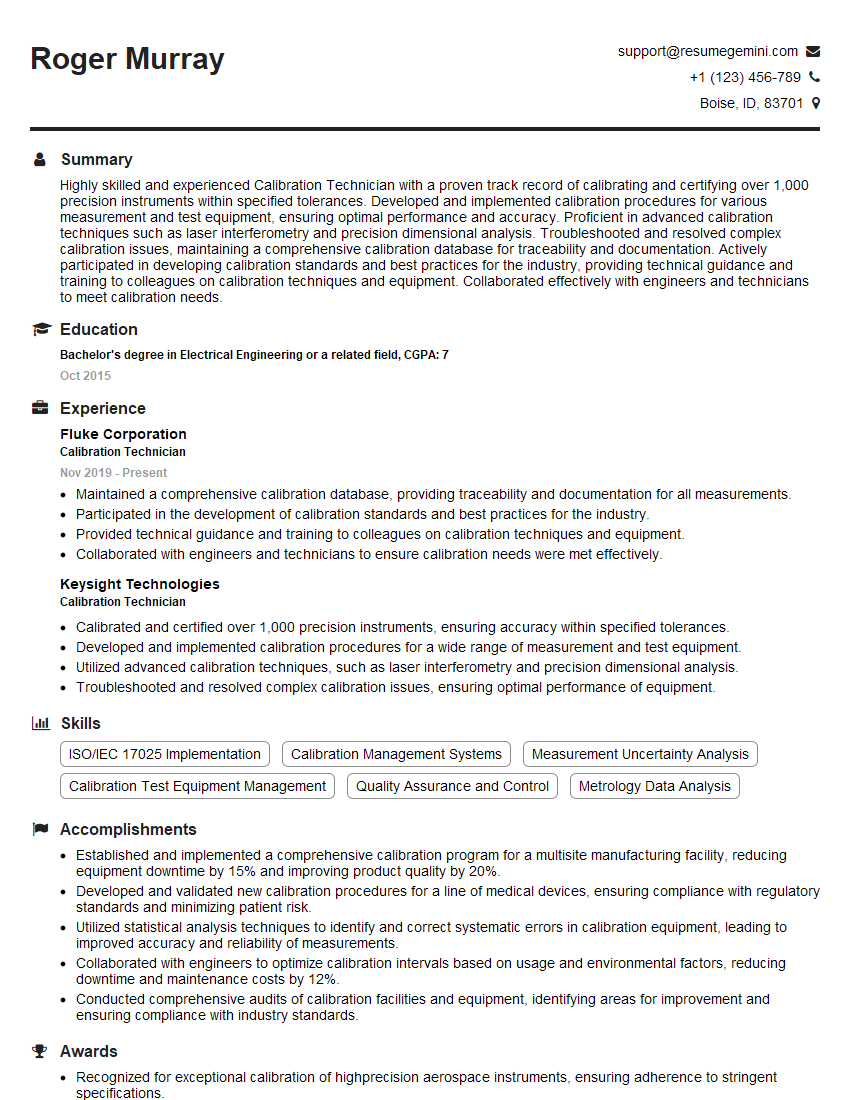
Calibration Technician Resume Sample
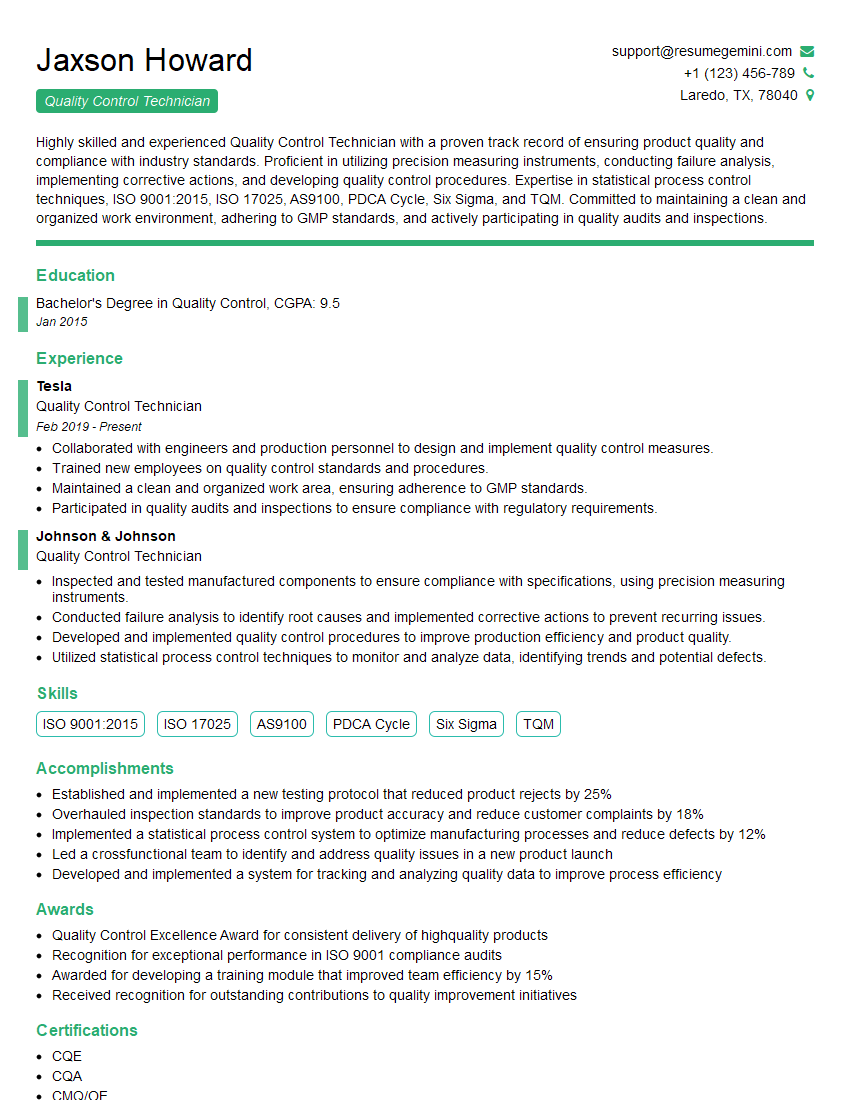
Quality Control Technician Resume Sample
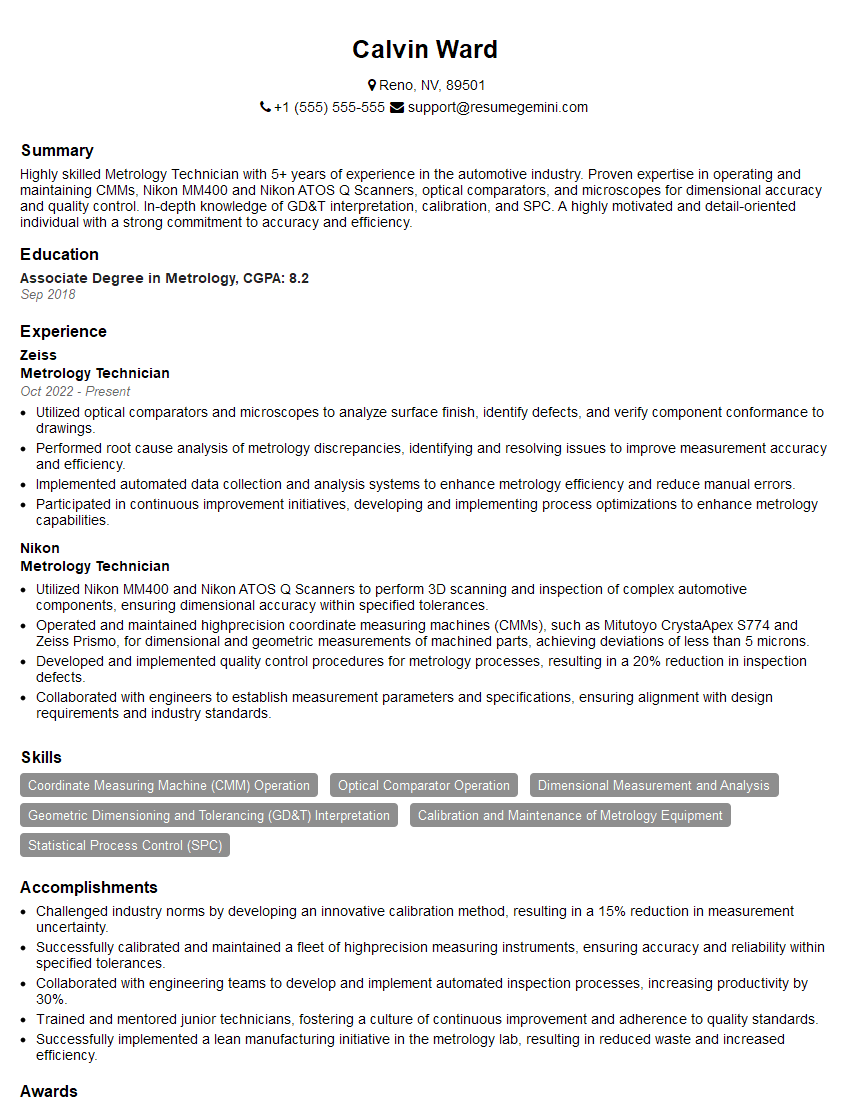
Metrology Technician Resume Sample
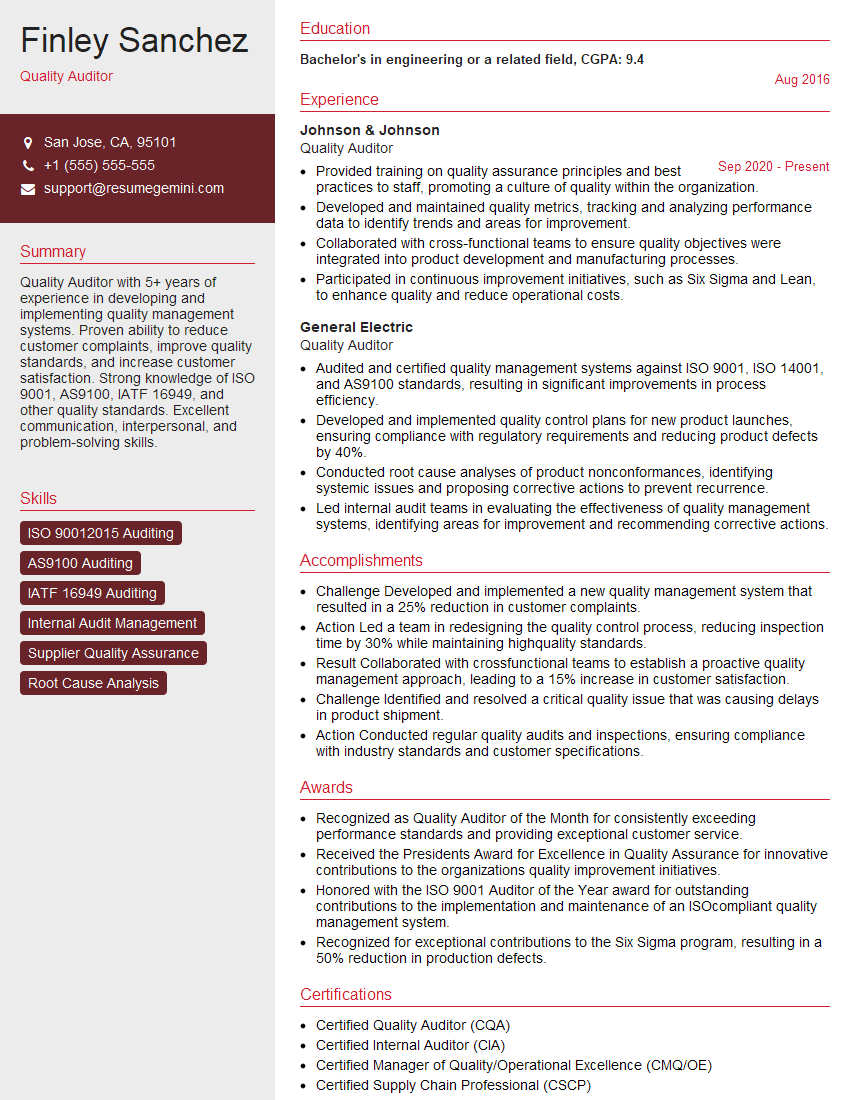
Quality Auditor Resume Sample
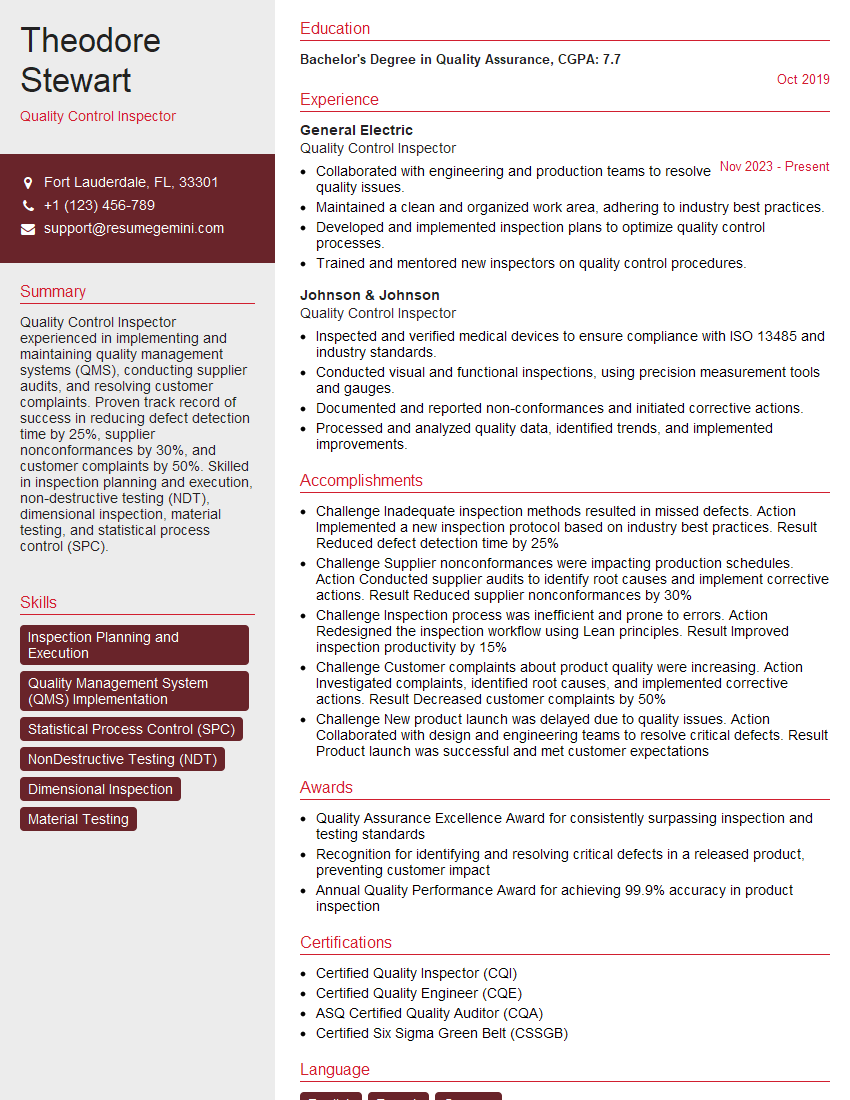
Quality Control Inspector Resume Sample
- Quality Assurance Manager
- Quality Control Manager
- Quality Control Supervisor
- Quality Control Coordinator
- Quality Assurance Specialist
- Quality Control Analyst
- Quality Systems Manager
- Quality Control Engineer
- Quality Assurance Engineer
- Calibration Technician
- Quality Control Technician
- Metrology Technician
- Quality Auditor
- Quality Control Inspector
Explore more articles
Users Rating of Our Blogs
Share Your Experience
We value your feedback! Please rate our content and share your thoughts (optional).
What Readers Say About Our Blog
Very informative content, great job.
good