Every successful interview starts with knowing what to expect. In this blog, we’ll take you through the top Experience in Aircraft Cleaning and Detailing interview questions, breaking them down with expert tips to help you deliver impactful answers. Step into your next interview fully prepared and ready to succeed.
Questions Asked in Experience in Aircraft Cleaning and Detailing Interview
Q 1. What cleaning agents are suitable for aircraft exterior surfaces?
Selecting the right cleaning agents for aircraft exteriors is crucial for both effectiveness and safety. We need to consider the material of the aircraft’s skin (typically aluminum alloys, composites, or painted surfaces) and the type of soiling (bird droppings, insect residue, fuel stains, etc.).
Generally, we use specialized aircraft cleaning solutions that are biodegradable, non-abrasive, and specifically formulated to remove contaminants without damaging the aircraft’s protective coatings. These often include:
- Dedicated Aircraft Wash Solutions: These are pH-neutral detergents designed to lift dirt and grime without causing etching or corrosion. They’re usually applied with high-pressure washers to maximize efficiency.
- De-icing/Anti-icing Fluids: Before washing, especially in cold climates, de-icing fluids are necessary to remove ice and snow before they can damage the aircraft’s surface. These are carefully selected based on environmental regulations and temperature.
- Specialized Cleaners for Specific Stains: For stubborn stains like fuel spills or bird droppings, we often use specialized cleaners that effectively break down the specific contaminant without harming the underlying material. Always refer to the manufacturer’s instructions.
For example, I once encountered a particularly challenging situation where a bird strike had left significant residue on the leading edge of a wing. We used a specialized enzymatic cleaner to break down the organic matter, followed by a thorough rinse with deionized water to avoid water spotting.
Q 2. Describe your experience with aircraft interior vacuuming and cleaning.
Aircraft interior cleaning requires meticulous attention to detail and the use of appropriate equipment and cleaning solutions. Vacuuming is a critical first step, and we use HEPA-filtered vacuums to remove loose dirt, dust, and debris from carpets, seats, and overhead bins. This is crucial for maintaining air quality and preventing allergens from circulating.
After vacuuming, we utilize specialized cleaning agents for different surfaces. For example, we might use a gentle, non-toxic cleaner for fabric upholstery, ensuring we follow the manufacturer’s instructions carefully to avoid damage or discoloration. Leather seats require different cleaning products to maintain their supple texture and prevent cracking. We use specialized tools to reach hard-to-clean areas such as seat crevices and under the seats, ensuring no debris is left behind.
For hard surfaces like tray tables and galleys, we typically use disinfecting wipes or solutions that are approved for use in aircraft cabins to eliminate germs and bacteria. This is particularly important for maintaining a hygienic environment for passengers and crew.
Q 3. How do you handle spills and stains on aircraft upholstery?
Handling spills and stains on aircraft upholstery requires immediate action and the right techniques to minimize damage and prevent permanent staining. The first step is always to blot (never rub!) the spill with a clean, absorbent cloth to remove as much of the liquid as possible.
The next step depends on the type of stain. For example:
- Water-based spills: These often require only blotting and possibly a mild cleaning solution.
- Oil-based spills: These may necessitate the use of a specialized solvent-based cleaner, but it’s crucial to test it on an inconspicuous area first to ensure it doesn’t damage the fabric.
- Blood or other biological stains: These require the use of an enzymatic cleaner designed to break down the organic matter. In such cases, following strict safety protocols and potential biohazard disposal procedures is paramount.
In many cases, a professional detailer might need to be called in for particularly stubborn stains or significant damage. My experience has taught me the importance of documenting every step, including the cleaning agents used and the results, to help with future maintenance and to ensure consistent standards across different aircraft cleanings.
Q 4. What safety procedures do you follow when cleaning aircraft?
Safety is paramount when cleaning aircraft. We always adhere to strict safety procedures, including:
- Proper Personal Protective Equipment (PPE): This includes gloves, eye protection, and respirators, especially when handling potentially hazardous cleaning chemicals.
- Following Manufacturer Guidelines: All cleaning agents and equipment must be used according to the manufacturer’s instructions, paying particular attention to safety warnings.
- Grounding Procedures: Before commencing cleaning, the aircraft must be properly grounded to prevent static electricity build-up, which could pose a fire hazard.
- Hazard Communication: Clear communication with ground crew and other personnel is essential to ensure everyone is aware of cleaning activities and potential hazards.
- Emergency Preparedness: We need to be aware of emergency exits, emergency procedures, and the location of first aid kits.
One time, while cleaning a smaller aircraft, I inadvertently dropped a tool near a sensitive electronic component. Immediately, I informed my supervisor and ensured the area was cleared until a qualified technician could assess the situation. This highlights the importance of proactive safety measures and immediate response to any potential incidents.
Q 5. Explain your experience with aircraft window cleaning.
Aircraft window cleaning requires specialized techniques and products to achieve streak-free clarity. We generally avoid harsh chemicals that could damage the aircraft’s windows or leave residue. Instead, we typically use a combination of:
- High-quality, streak-free glass cleaner: This is often applied with a microfiber cloth or specialized squeegee for optimal results.
- Deionized water: Using deionized water helps prevent water spots and ensures the windows remain crystal clear. This is especially important for cockpit windows.
- Soft, lint-free cloths: Microfiber cloths are ideal because they’re highly absorbent and don’t leave behind lint or scratches.
The process often involves multiple steps, including pre-cleaning to remove loose dirt, applying the cleaning solution, wiping, and finally, using a squeegee for a professional finish. It’s crucial to carefully clean the window frames and seals as well, ensuring complete cleanliness without damaging the seals.
I recall one instance where a particularly stubborn bird dropping had dried on a cockpit window. We had to carefully use a combination of a gentle solvent and careful scrubbing to remove it completely without scratching the window. The resulting clear view was critical for safe operation, highlighting the vital role of clear windows in aviation.
Q 6. What are the different types of aircraft cleaning equipment you are familiar with?
My experience encompasses a wide range of aircraft cleaning equipment, including:
- High-pressure washers: Essential for exterior cleaning, these are used with specialized detergents to effectively remove dirt and grime.
- HEPA-filtered vacuums: These are crucial for interior cleaning to remove dust, debris, and allergens efficiently.
- Microfiber cloths and mops: These are used for both interior and exterior cleaning, providing a gentle yet effective cleaning action.
- Specialized cleaning brushes: Various types of brushes are used for different surfaces, ensuring thorough cleaning without damaging delicate materials.
- Squeegees: These are essential for streak-free window cleaning.
- Spray bottles: Used for applying cleaning solutions evenly and efficiently.
- Steam cleaners: (In some cases) For deeper cleaning of certain surfaces, ensuring proper use and safety protocols are adhered to.
Selecting the right equipment depends on the specific task, the aircraft type, and the available resources. I’m proficient in the safe and effective operation of all these tools, ensuring they are maintained properly to guarantee optimal performance.
Q 7. How do you maintain the cleanliness of aircraft lavatories?
Maintaining the cleanliness of aircraft lavatories is critical for hygiene and passenger comfort. This involves regular cleaning and disinfection using approved, EPA-registered disinfectants. We focus on high-touch areas such as:
- Sink and faucet: Thorough cleaning and disinfection to prevent the spread of germs.
- Toilet bowl and seat: Using appropriate cleaning agents to remove waste and sanitize the surface effectively.
- Floor: Regular sweeping and mopping to maintain cleanliness and prevent slips and falls.
- Waste receptacles: Regular emptying and cleaning to prevent odors and maintain hygiene.
We also pay attention to disposing of waste properly, following airline regulations and safety protocols for handling potentially hazardous materials. Regular restocking of supplies, such as soap, paper towels, and hand sanitizer, is also critical. A clean and well-maintained lavatory contributes significantly to a positive passenger experience.
I remember one occasion where we had a particularly challenging situation with a clogged lavatory toilet. Using the appropriate tools and procedures, we were able to resolve the problem quickly and efficiently, minimizing disruption to passengers and maintaining the high standards of hygiene expected in the aircraft’s lavatories.
Q 8. Describe your experience with detail oriented cleaning and polishing.
Detail-oriented cleaning and polishing in aircraft detailing goes beyond surface-level cleaning. It involves meticulous attention to even the smallest details, ensuring a pristine and professional finish. This requires a systematic approach, utilizing specialized tools and techniques for different materials and surfaces.
- Example 1: Cleaning and polishing the aircraft lavatories requires special attention to sanitation and removing stubborn stains. I use specific cleaning agents and techniques depending on the type of stain and material.
- Example 2: Polishing the exterior of the aircraft is a multi-step process involving washing, pre-treating, polishing, and waxing to remove minor scratches and swirl marks, restoring the aircraft’s shine and protecting the paint.
- Example 3: Interior detailing includes meticulously cleaning and conditioning leather seats, polishing metal fixtures, and cleaning and disinfecting all surfaces, including overhead compartments and seat-back pockets.
My methodical approach guarantees a consistently high standard of cleanliness and a premium customer experience. I always follow a checklist to ensure no area is overlooked.
Q 9. How do you ensure the safety of passengers during the cleaning process?
Passenger safety is paramount during aircraft cleaning. We adhere to strict safety protocols to minimize risks. This includes:
- Proper Signage & Communication: Clearly marked areas indicate cleaning in progress, preventing accidental passenger entry into restricted zones.
- Scheduled Cleaning Times: Cleaning is often scheduled during periods of low passenger traffic or overnight to minimize disruption and potential hazards.
- Safety Equipment: We utilize appropriate safety gear such as gloves, masks, and eye protection when handling cleaning chemicals. Proper disposal of waste materials is strictly followed.
- Hazard Awareness: Thorough training ensures our team understands potential hazards, such as wet floors or sharp objects, and how to mitigate them.
- Emergency Procedures: We are trained in emergency procedures, including fire safety and first aid, to handle any unforeseen events.
Essentially, a proactive, safety-first approach ensures that cleaning operations proceed smoothly and without incident, protecting both passengers and our cleaning crew.
Q 10. What is your experience with handling hazardous materials in aircraft cleaning?
Handling hazardous materials is a significant aspect of aircraft cleaning. We strictly adhere to safety regulations and best practices:
- Proper Training & Certification: My team and I have undergone thorough training on the safe handling, storage, and disposal of hazardous materials, including specific chemical safety data sheets (SDS) for each product used.
- SDS Compliance: We always refer to and comply with the SDS for each chemical, ensuring proper dilution, application, and personal protective equipment (PPE) use.
- Designated Storage: Hazardous materials are stored in designated areas according to safety regulations, away from incompatible substances and out of reach of unauthorized personnel.
- Waste Disposal: Proper disposal of hazardous waste is crucial. We follow strict protocols, using designated containers and coordinating with licensed waste disposal companies for safe removal.
- Emergency Response Plan: We have an established emergency response plan in place to handle spills or accidents involving hazardous materials.
Our commitment to safety ensures both environmental protection and the well-being of the cleaning crew.
Q 11. How do you prioritize tasks during aircraft cleaning to ensure efficient turnaround?
Efficient turnaround time is critical in aircraft cleaning. Prioritization is key and involves a multi-step approach:
- Pre-flight Checklist: The cleaning crew receives a pre-flight checklist detailing the specific needs of the aircraft and any reported issues.
- Task Prioritization: Tasks are prioritized based on urgency and impact on turnaround. Lavatories and galleys often receive priority attention.
- Teamwork & Coordination: Team members work in a coordinated manner, assigning specific tasks to individuals based on their skills and expertise.
- Time Management: We carefully monitor progress against a predetermined schedule to ensure timely completion.
- Continuous Improvement: Regularly reviewing processes and identifying areas for improvement is essential in optimizing turnaround time.
By leveraging teamwork, efficient scheduling, and continuous process improvement, we consistently achieve on-time turnarounds.
Q 12. Describe your experience working in a team environment during aircraft cleaning.
Aircraft cleaning is a collaborative effort requiring effective teamwork. My experience involves working alongside multiple colleagues, fostering a spirit of cooperation and mutual support.
- Clear Communication: Effective communication is essential to ensure all team members understand their roles and responsibilities. This includes pre-shift briefings to discuss tasks and potential challenges.
- Shared Responsibility: We are a team, with each member sharing in the responsibility of completing the cleaning process efficiently and safely.
- Mutual Support: We assist each other when needed, ensuring tasks are completed on time and to the required standard.
- Conflict Resolution: In the rare event of disagreements or conflicts, we address them constructively and promptly, focusing on solutions rather than blame.
- Skill Sharing: We leverage the diverse skill sets of the team members, sharing knowledge and training each other in various cleaning techniques.
Through effective communication, mutual respect, and shared responsibility, we create a highly effective and collaborative team environment that guarantees a superior cleaning outcome.
Q 13. Explain your knowledge of aviation regulations regarding aircraft cleaning and sanitation.
Understanding aviation regulations concerning aircraft cleaning and sanitation is non-negotiable. My knowledge covers several key areas:
- International Standards: I am familiar with international standards and best practices for aircraft sanitation, ensuring we adhere to the highest standards of hygiene.
- Regulatory Compliance: I have a strong understanding of local, national, and international aviation regulations related to aircraft cleaning, waste management, and hazardous material handling.
- Health & Safety Regulations: I am well-versed in health and safety regulations, including those related to the use of cleaning agents and the prevention of cross-contamination.
- Biosecurity Measures: I understand and follow biosecurity measures to prevent the spread of infectious diseases.
- Waste Management: I am familiar with regulations related to the safe and responsible disposal of aircraft waste, including hazardous materials.
Staying updated on these regulations is crucial for ensuring the safety and hygiene of passengers and compliance with industry standards. We regularly review updates and participate in training sessions to maintain compliance.
Q 14. How do you address customer complaints regarding aircraft cleanliness?
Addressing customer complaints regarding aircraft cleanliness requires a professional and empathetic approach. My process involves several steps:
- Active Listening: I begin by actively listening to the customer’s concerns, ensuring I fully understand their complaint.
- Empathetic Response: I respond empathetically, acknowledging their dissatisfaction and validating their feelings.
- Thorough Investigation: I conduct a thorough investigation into the complaint, reviewing any relevant documentation and potentially revisiting the area in question.
- Appropriate Action: Based on the investigation, I take appropriate action, which may include re-cleaning the area, offering a compensation, or implementing process improvements to prevent similar complaints in the future.
- Follow-Up: I follow up with the customer to confirm their satisfaction and address any lingering concerns.
Turning a negative experience into a positive one is a priority, reinforcing the airline’s commitment to customer satisfaction and service excellence.
Q 15. What is your experience with using specialized cleaning solutions for different aircraft materials?
My experience with specialized cleaning solutions for aircraft materials is extensive. I understand that different aircraft components require different cleaning agents to avoid damage and maintain their integrity. For instance, the delicate composite materials used in modern aircraft require gentler, pH-neutral cleaners to prevent degradation. Conversely, more robust materials like aluminum may tolerate stronger detergents. I’m proficient in using:
- Acid-based cleaners for removing stubborn mineral deposits and hard water stains from lavatories.
- Alkaline cleaners for effective grease and oil removal from engine compartments and galley areas.
- Neutral cleaners for maintaining the finish on composite materials and preventing damage to sensitive surfaces like windows and painted areas.
- Specialty solvents for removing specific contaminants, such as adhesives, paint, or fuel stains. These require careful selection to ensure compatibility with the material.
I always consult the aircraft manufacturer’s maintenance manual to ensure I’m using the appropriate cleaning solution and following best practices for each specific material. Improper cleaning can lead to costly repairs, so careful material selection and application are paramount.
Career Expert Tips:
- Ace those interviews! Prepare effectively by reviewing the Top 50 Most Common Interview Questions on ResumeGemini.
- Navigate your job search with confidence! Explore a wide range of Career Tips on ResumeGemini. Learn about common challenges and recommendations to overcome them.
- Craft the perfect resume! Master the Art of Resume Writing with ResumeGemini’s guide. Showcase your unique qualifications and achievements effectively.
- Don’t miss out on holiday savings! Build your dream resume with ResumeGemini’s ATS optimized templates.
Q 16. How do you maintain the quality control of aircraft cleaning services?
Maintaining quality control in aircraft cleaning involves a multi-pronged approach. It starts with a well-defined standard operating procedure (SOP) that outlines every step of the cleaning process, from pre-flight checks to waste disposal. We use checklists to ensure consistency across all jobs and all team members. This includes specifying the cleaning solutions and equipment to use, application methods and inspection criteria.
Regular training and supervision are key. My team receives ongoing training on new cleaning techniques, the use of specialized equipment, and safety regulations. Spot checks and random audits are conducted by supervisors to verify adherence to procedures and ensure high standards are maintained. We also utilize visual inspection methodologies; a post-cleaning inspection includes a detailed walk-through where I personally review the aircraft for any imperfections or missed areas. Finally, we maintain detailed records of cleaning activities, including dates, aircraft details, cleaning agents used and any issues encountered. This enables continuous improvement and helps identify recurring issues quickly.
Q 17. Explain your ability to adapt to different aircraft types and cleaning requirements.
Adaptability is crucial in aircraft cleaning. I’ve worked on a wide variety of aircraft types, from small regional jets to large commercial airliners, and even helicopters. Each aircraft has unique features, access points, and specific cleaning requirements. My approach is to thoroughly review the aircraft’s maintenance manual before starting any work. This familiarizes me with the aircraft’s structure, material specifications and any specific cleaning instructions.
For example, the interior layout of a Boeing 737 differs significantly from that of an Airbus A320, and each has specific cleaning needs for their galley, lavatories, and passenger seating. I use a systematic approach, breaking down the cleaning process into manageable sections and adapting my techniques to the aircraft’s unique configuration. My experience ensures I can efficiently identify and address the unique cleaning challenges presented by different aircraft models.
Q 18. How do you troubleshoot equipment malfunctions during aircraft cleaning?
Troubleshooting equipment malfunctions is a regular part of the job. We use a variety of equipment, including high-pressure washers, vacuum cleaners, and specialized cleaning tools. When equipment malfunctions, my approach is systematic.
First, I always prioritize safety. If the malfunction poses a safety risk, I immediately shut down the equipment and report the issue to the appropriate supervisor. Next, I try to identify the problem. This often involves checking for simple issues, such as power cord connections or clogged filters. For more complex issues, I refer to the equipment’s maintenance manual or contact the equipment manufacturer’s technical support for guidance. Our team also undergoes regular training on equipment maintenance and troubleshooting. We maintain a comprehensive inventory of spare parts to minimize downtime. We document all troubleshooting steps and repairs in our maintenance logs. This preventative maintenance and proactive approach significantly minimizes operational disruptions.
Q 19. How do you ensure the proper disposal of waste materials from aircraft cleaning?
Proper disposal of waste materials from aircraft cleaning is essential for environmental protection and regulatory compliance. We strictly adhere to all relevant environmental regulations and the airline’s waste management policies. All waste materials are categorized and segregated before disposal.
For example, hazardous waste, such as solvents and cleaning chemicals, is handled separately and disposed of through licensed hazardous waste disposal facilities. Non-hazardous waste, such as paper towels and general trash, is disposed of according to standard procedures. We maintain accurate records of waste disposal, including the type and quantity of waste generated, the disposal method used, and the disposal facility’s details. This meticulous record-keeping ensures we comply with environmental regulations and demonstrate our commitment to responsible waste management. We also actively participate in training that educates our team on the environmental impact of improper waste disposal and stresses the importance of compliance.
Q 20. What is your experience with pre-flight and post-flight cleaning procedures?
Pre-flight and post-flight cleaning procedures are critical for maintaining aircraft hygiene and ensuring passenger comfort and safety. Pre-flight cleaning focuses on ensuring the aircraft’s cleanliness and readiness for passengers. This involves cleaning the cabin, lavatories, galley, and other passenger areas. We ensure that all surfaces are spotless, trash is removed, and any spills or stains are addressed. Post-flight cleaning is more thorough and involves a more detailed cleaning of all areas, including vacuuming carpets, wiping down surfaces, and disinfecting high-touch areas to remove any potential germs or bacteria left behind by passengers.
In both cases, I always prioritize efficiency and thoroughness. This minimizes turnaround time while ensuring a high standard of cleanliness is met. I also closely follow the airline’s specific requirements for pre-flight and post-flight cleaning, including the use of specified cleaning agents and equipment. This careful attention to detail minimizes the risk of delays and ensures the aircraft is prepared for its next flight. Each procedure also includes checklists to guarantee that no steps are missed.
Q 21. Describe your experience with aircraft disinfection and sterilization.
Aircraft disinfection and sterilization are crucial, especially in the current environment. We use EPA-registered disinfectants that are effective against a broad range of viruses and bacteria. High-touch areas such as armrests, seat belts, tray tables, and lavatory surfaces receive particular attention. We are trained on the correct application methods and dwell times to ensure effective disinfection. We follow specific procedures based on the type of disinfectant used and the manufacturer’s instructions. These instructions usually stipulate the appropriate contact time necessary to ensure the disinfectant effectively eliminates pathogens. We also regularly inspect our disinfection equipment, such as electrostatic sprayers, to ensure they are properly calibrated and maintained. For sterilization, involving a higher level of microbial reduction, we may employ specialized techniques or equipment, depending on the specific needs and the type of material being treated. This often requires specific training and adherence to strict safety protocols.
Q 22. How familiar are you with OSHA regulations regarding aircraft cleaning?
OSHA (Occupational Safety and Health Administration) regulations are paramount in aircraft cleaning. My familiarity extends to understanding and adhering to regulations concerning hazardous materials handling, proper use of personal protective equipment (PPE), confined space entry procedures, and the prevention of slips, trips, and falls. This includes understanding the specific requirements for cleaning agents, ensuring proper ventilation, and following lockout/tagout procedures for equipment near electrical systems. For example, I’m well-versed in the proper disposal of hazardous waste generated during cleaning, ensuring compliance with all relevant environmental regulations. I’ve personally trained others on these procedures and consistently ensure our team works within these safety parameters. Ignorance of these regulations isn’t an option; it directly impacts the safety of the team and the aircraft.
Q 23. Describe your understanding of different types of aircraft coatings and their cleaning requirements.
Aircraft coatings vary greatly depending on the aircraft type and age. Understanding these coatings is crucial for selecting the appropriate cleaning agents and techniques to prevent damage. For instance, some common types include:
- Acrylic Urethane: These are durable and commonly used. They require gentle cleaning to avoid scratching or dulling. We would use specialized aircraft cleaning solutions and soft cloths or brushes.
- Epoxy: More resistant to harsh chemicals but still requires careful cleaning. Aggressive cleaners can degrade the finish over time, requiring a thorough risk assessment before use.
- Polyurethane: Similar in durability to acrylic urethane but might react differently to certain cleaning agents. A thorough understanding of the specific coating is critical before selecting a cleaning solution.
Incorrect cleaning can lead to premature deterioration, compromising the aircraft’s structural integrity and aesthetics. Therefore, I always consult the aircraft’s maintenance manual to identify the specific type of coating before commencing any cleaning task.
Q 24. How do you identify and report potential safety hazards during aircraft cleaning?
Identifying and reporting safety hazards is a core responsibility. My approach involves proactive hazard identification during the initial assessment of the aircraft. This includes looking for spills, damaged surfaces, potential trip hazards (loose cables, debris), and any signs of faulty equipment. For instance, a crack in a window or a damaged access panel would necessitate immediate reporting, potentially halting the cleaning process until the hazard is addressed. I use a standardized reporting system, either a written log or a digital reporting app, to immediately document the hazard, its location, the potential risks involved, and the actions taken to mitigate it. A clear, concise report is crucial for ensuring the safety of others and preventing future incidents.
Q 25. What is your approach to time management during a busy aircraft cleaning shift?
Time management during busy shifts relies heavily on efficient planning and prioritization. Before starting, I review the cleaning schedule, considering the aircraft’s condition and any specific requirements. I then delegate tasks effectively among the team, optimizing workflow to avoid bottlenecks. This could involve prioritizing urgent tasks (e.g., preparing an aircraft for immediate departure) while scheduling less time-sensitive tasks for later. Regularly checking my progress against the schedule and communicating potential delays to relevant personnel keeps the process flowing smoothly. Think of it like a well-orchestrated symphony—each member playing their part in harmony to meet the deadline.
Q 26. Describe your experience with using checklists and SOPs for aircraft cleaning.
Checklists and Standard Operating Procedures (SOPs) are integral to our cleaning process. They ensure consistency, quality control, and safety. A checklist serves as a structured guide, ensuring that no steps are missed. This might include things like verifying the aircraft type, checking for pre-existing damage, preparing the cleaning solutions, and performing a final inspection. SOPs provide more detailed instructions on handling specific situations or cleaning specific components, providing the team with clear steps on how to handle each task safely and effectively. We have SOPs for handling different types of stains, cleaning delicate instruments, and even for emergency situations. Consistent adherence to these procedures is crucial in maintaining the high standards of the operation.
Q 27. How do you handle unexpected delays or changes in the cleaning schedule?
Unexpected delays or schedule changes require flexibility and effective communication. If a delay arises (e.g., a mechanical issue), I immediately assess the impact on the overall schedule and communicate this to my supervisor and other relevant parties. We may need to re-prioritize tasks, re-allocate personnel, or even request additional resources to minimize disruption. Open and honest communication is key to solving unexpected issues smoothly and quickly. For instance, if a part requires specialized cleaning that was unexpected, I would inform my supervisor, check for the availability of necessary resources and adjust the schedule accordingly.
Q 28. How do you maintain a clean and organized workspace during aircraft cleaning?
Maintaining a clean and organized workspace is vital for efficiency and safety. Before starting, we designate specific areas for equipment, cleaning supplies, and waste disposal. We utilize organized storage solutions to prevent clutter and improve access to necessary items. Throughout the cleaning process, we regularly dispose of waste materials, ensuring that the workspace remains clean and free of obstacles. A well-organized workspace reduces the risk of accidents and enhances our team’s overall efficiency. A clear and organized workspace allows us to focus on the task at hand, ensuring quality and safety while optimizing our workflow.
Key Topics to Learn for Aircraft Cleaning and Detailing Interviews
- Safety Procedures and Regulations: Understanding and adhering to all safety protocols, including handling hazardous materials and using specialized equipment.
- Cleaning Techniques and Products: Knowing the appropriate cleaning agents and methods for different aircraft surfaces (e.g., interior fabrics, exterior paint, lavatories) to ensure optimal cleanliness and prevent damage.
- Detailing Processes: Mastering techniques for polishing, waxing, and restoring aircraft exteriors to a high-gloss finish, including understanding the use of various tools and equipment.
- Aircraft Interior Detailing: Proficiency in cleaning and maintaining aircraft cabins, including carpets, seats, galleys, and lavatories to the highest standards of hygiene and appearance.
- Quality Control and Inspection: Implementing rigorous quality control measures to ensure that all cleaning and detailing tasks are completed to specification and meet airline or company standards.
- Equipment Maintenance and Troubleshooting: Understanding the proper maintenance and troubleshooting of cleaning equipment (e.g., vacuum cleaners, pressure washers, polishing machines).
- Waste Management and Disposal: Adhering to regulations for the safe disposal of hazardous waste and other materials used during the cleaning process.
- Time Management and Efficiency: Demonstrating the ability to complete tasks within allotted timeframes, especially during tight turnaround times.
- Teamwork and Communication: Highlighting experience collaborating effectively with colleagues and communicating clearly with supervisors and clients.
- Problem-Solving and Adaptability: Showcasing the ability to identify and resolve cleaning challenges effectively and adapt to changing circumstances or unexpected issues.
Next Steps
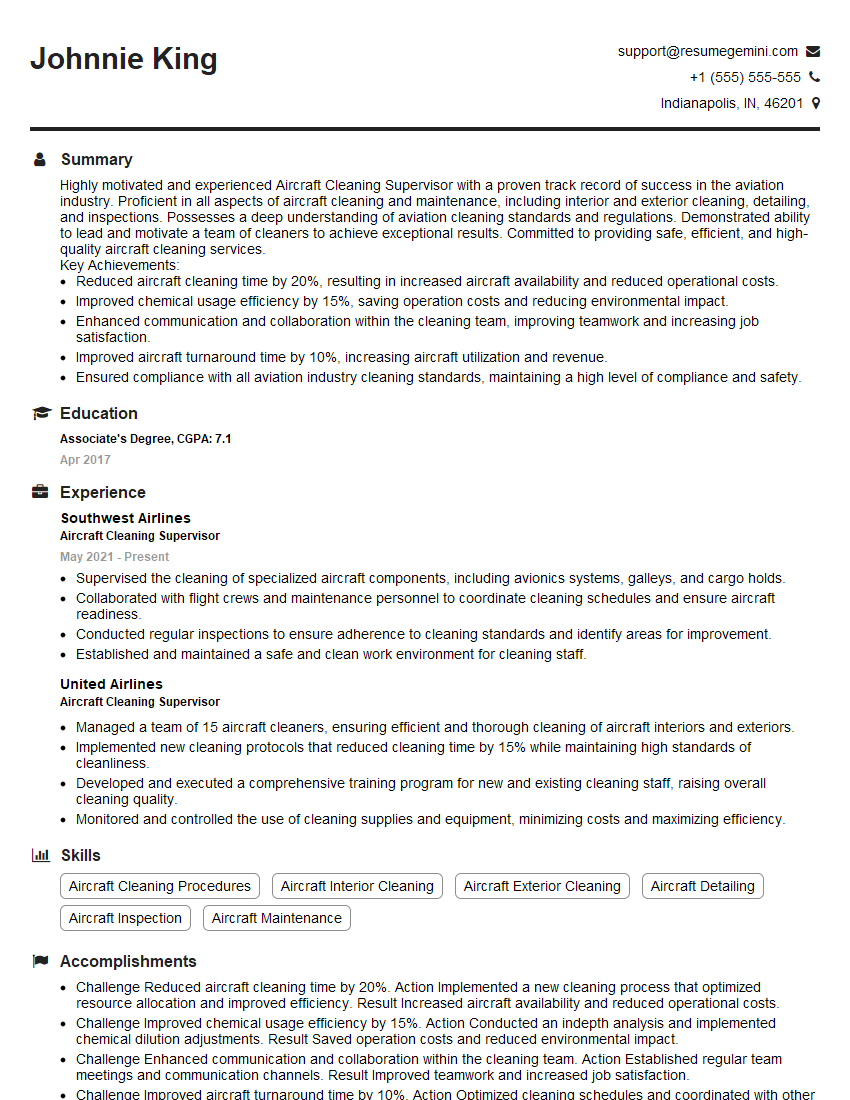
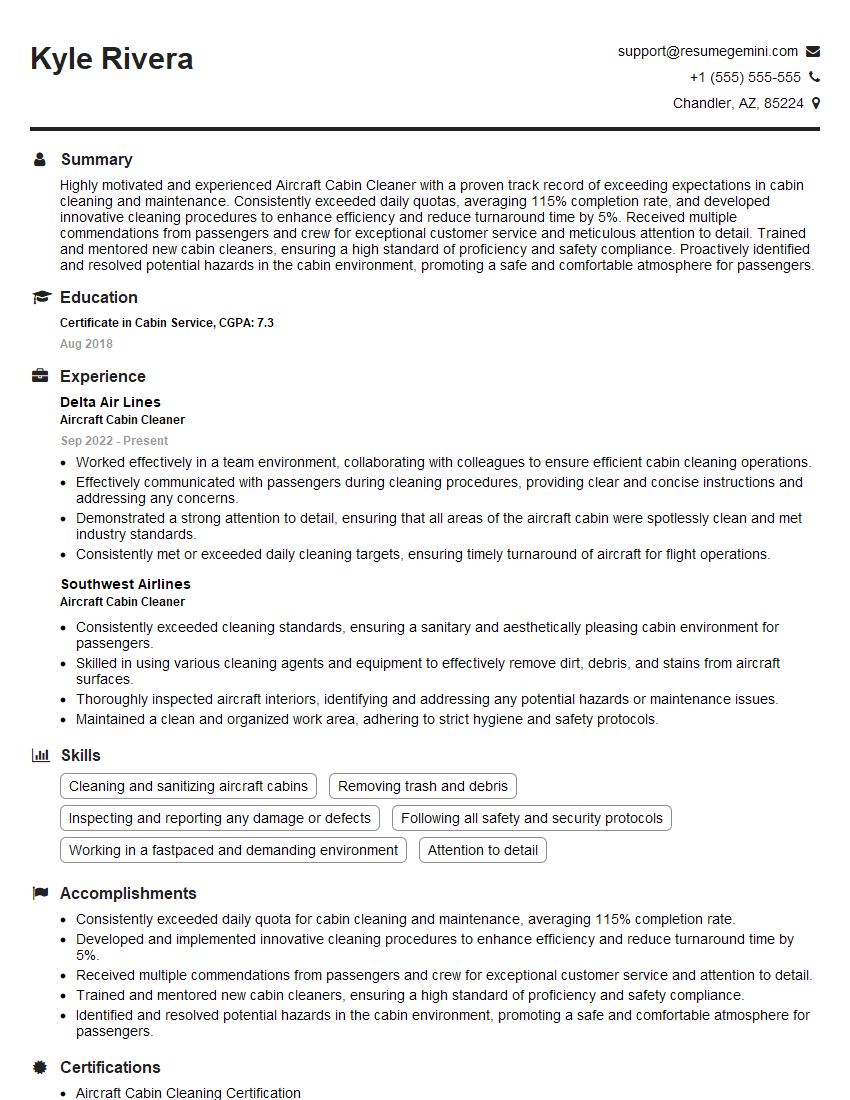
Mastering aircraft cleaning and detailing skills opens doors to exciting career opportunities within the aviation industry, offering excellent potential for growth and specialization. To maximize your job prospects, it’s crucial to present your qualifications effectively. Creating an ATS-friendly resume is key to getting your application noticed by recruiters. ResumeGemini is a trusted resource to help you build a professional and impactful resume that highlights your skills and experience. Examples of resumes tailored to aircraft cleaning and detailing experience are available, providing you with valuable templates to guide your own resume creation.
Explore more articles
Users Rating of Our Blogs
Share Your Experience
We value your feedback! Please rate our content and share your thoughts (optional).
What Readers Say About Our Blog
Very informative content, great job.
good