The thought of an interview can be nerve-wracking, but the right preparation can make all the difference. Explore this comprehensive guide to Experience in Climate Change Resilience Planning interview questions and gain the confidence you need to showcase your abilities and secure the role.
Questions Asked in Experience in Climate Change Resilience Planning Interview
Q 1. Explain the difference between climate change mitigation and adaptation.
Climate change mitigation and adaptation are two distinct but complementary approaches to addressing climate change. Mitigation focuses on reducing greenhouse gas emissions to slow down the rate of climate change. Think of it as preventing the problem. This involves transitioning to renewable energy sources, improving energy efficiency, and implementing sustainable land-use practices. Adaptation, on the other hand, focuses on adjusting to the current and future effects of climate change. It’s about managing the consequences of the problem we already face. This includes building seawalls to protect against rising sea levels, developing drought-resistant crops, and improving early warning systems for extreme weather events.
For example, switching to electric vehicles is mitigation (reducing emissions), while building elevated homes in flood-prone areas is adaptation (adjusting to the impacts).
Q 2. Describe the key elements of a comprehensive climate resilience plan.
A comprehensive climate resilience plan needs several key elements to be effective. First, it requires a thorough hazard assessment, identifying the specific climate-related risks facing the community or region (e.g., floods, heatwaves, droughts). Next, a vulnerability assessment is crucial, pinpointing the most susceptible populations and infrastructure. Then, a robust risk assessment combines hazard and vulnerability information to prioritize risks. The plan must outline specific adaptation measures, including both structural (e.g., seawalls) and non-structural (e.g., early warning systems) strategies. Effective monitoring and evaluation mechanisms are essential for tracking progress and making adjustments. Finally, strong governance and stakeholder engagement are key, ensuring the plan is implemented effectively and enjoys community support.
Q 3. How do you assess climate-related risks to infrastructure?
Assessing climate-related risks to infrastructure involves a multi-step process. It begins with identifying the specific infrastructure assets at risk (e.g., bridges, power grids, transportation networks). Next, we need to understand the potential climate hazards that could affect these assets (e.g., sea-level rise, extreme precipitation, intense heat). This often involves using climate projections and models to predict future hazard intensities and frequencies. Then, we assess the vulnerability of each asset to these hazards. This considers factors like the asset’s age, design, and maintenance history. Finally, we integrate hazard and vulnerability information to estimate the potential damage or disruption each asset could face under different climate scenarios. This might involve using quantitative methods, such as risk matrices or cost-benefit analyses, to prioritize mitigation and adaptation efforts.
For example, analyzing the vulnerability of a coastal highway to sea-level rise involves considering the elevation of the road, the rate of future sea-level rise in that region, and the potential for increased storm surge.
Q 4. What are the common vulnerability indicators used in climate resilience assessments?
Common vulnerability indicators in climate resilience assessments span various sectors and populations. Examples include:
- Socioeconomic indicators: Poverty levels, income inequality, access to healthcare and education, and population density.
- Demographic indicators: Age structure, gender distribution, and the presence of vulnerable populations (e.g., elderly, disabled).
- Environmental indicators: Water availability, land degradation, deforestation, and biodiversity loss.
- Infrastructure indicators: Condition of buildings, transportation networks, and utility systems. Quality of housing, access to clean water and sanitation.
- Governance indicators: Institutional capacity, access to information and participation, and the effectiveness of disaster management systems.
These indicators help pinpoint areas and communities most vulnerable to climate change impacts, enabling targeted interventions.
Q 5. What are some examples of nature-based solutions for climate resilience?
Nature-based solutions (NbS) harness the power of nature to enhance climate resilience. Examples include:
- Mangrove restoration: Mangroves act as natural barriers against storm surges and coastal erosion, protecting coastal communities.
- Urban greening: Planting trees and creating green spaces in cities helps reduce the urban heat island effect and improve air quality.
- Reforestation and afforestation: Planting trees increases carbon sequestration, reducing greenhouse gas concentrations and improving water infiltration.
- Wetland restoration: Wetlands act as natural sponges, absorbing excess rainfall and reducing flood risk.
- Sustainable agriculture practices: Techniques like agroforestry and crop diversification enhance soil health, improve water retention, and increase climate resilience of farming systems.
NbS provide cost-effective and environmentally friendly solutions, often offering multiple co-benefits beyond climate adaptation.
Q 6. How do you incorporate community engagement into climate resilience planning?
Community engagement is vital for successful climate resilience planning. It ensures the plan addresses local needs and priorities, fostering ownership and increasing the likelihood of implementation. Key strategies include:
- Participatory workshops and focus groups: Engaging residents in discussions to understand their concerns and perspectives.
- Public forums and town hall meetings: Providing opportunities for broader community input.
- Surveys and online consultations: Gathering feedback from a wide range of stakeholders.
- Co-creation of adaptation strategies: Working with communities to develop locally appropriate solutions.
- Capacity building and training: Empowering community members to participate in the planning and implementation processes.
Ignoring community voices often leads to poorly designed and ineffective plans. Inclusive participation builds trust and strengthens the social fabric, crucial for coping with climate change impacts.
Q 7. Explain the role of scenario planning in climate resilience.
Scenario planning is a crucial tool for climate resilience. It involves exploring a range of possible future climate conditions and their potential impacts. This helps decision-makers anticipate diverse challenges and develop flexible strategies that can adapt to different outcomes. Instead of relying on a single prediction, scenario planning explores multiple pathways, considering uncertainties and potential surprises. For example, one scenario might assume a high rate of sea-level rise, while another might focus on more frequent and intense heatwaves. Developing strategies resilient to a range of possibilities makes plans more robust and less vulnerable to unexpected events.
Scenario planning enhances the robustness of climate resilience strategies by explicitly acknowledging the inherent uncertainties associated with future climate conditions.
Q 8. What are some key performance indicators (KPIs) for measuring climate resilience?
Key Performance Indicators (KPIs) for measuring climate resilience are crucial for tracking progress and demonstrating the effectiveness of adaptation strategies. They need to be specific, measurable, achievable, relevant, and time-bound (SMART). Instead of focusing solely on impacts, we should also measure the preparedness and capacity of a community or system to cope.
- Reduced vulnerability: This could be measured by a decrease in the number of people affected by extreme weather events or a reduction in economic losses from climate-related disasters. For example, a decrease in the number of homes flooded after a hurricane.
- Increased adaptive capacity: This can be measured by the adoption rate of climate-resilient technologies or practices, improved early warning systems, increased community participation in preparedness activities, or improved access to insurance.
- Improved infrastructure resilience: This could involve assessing the resilience of critical infrastructure (e.g., power grids, transportation networks) to climate impacts. For instance, measuring the percentage of critical infrastructure that can withstand specific intensity wind speeds.
- Enhanced ecosystem services: This could involve monitoring indicators such as carbon sequestration, water quality, or biodiversity in restored ecosystems. For example, tracking the increase in forested area or the improvement in water quality in a restored watershed.
- Economic resilience: Measuring indicators like reduced losses in agricultural productivity or diversification of economic activities to reduce reliance on climate-sensitive sectors. This might involve monitoring crop yields under different climate scenarios.
The choice of KPIs will depend on the specific context, the vulnerability profile of the community or system, and the goals of the resilience plan. It’s essential to use a mix of quantitative and qualitative indicators to get a comprehensive picture.
Q 9. Describe your experience with climate risk modeling and analysis.
My experience in climate risk modeling and analysis encompasses a wide range of techniques and tools. I’ve extensively used Geographic Information Systems (GIS) to integrate climate projections with socio-economic data, vulnerability assessments, and infrastructure maps to identify areas at high risk of climate-related hazards. This involves creating hazard maps, vulnerability maps, and risk maps to visualize the spatial distribution of risk.
I’m proficient in using various climate models, including downscaled Global Climate Models (GCMs) and regional climate models (RCMs), to project future climate conditions at a local level. I understand the limitations of these models and incorporate uncertainty analyses into my assessments. For example, I’ve used ensemble forecasting techniques to account for model discrepancies and produce more robust projections.
Furthermore, I’ve conducted vulnerability assessments using various participatory methods, engaging communities and stakeholders to identify their specific risks and priorities. This collaborative approach ensures that the resulting risk models are relevant and actionable. I’ve used vulnerability indices to quantify and rank the vulnerability of different communities or sectors.
Finally, I’ve utilized risk management frameworks, such as the ISO 31000 standard, to systematically assess, treat, monitor, and communicate climate risks. This includes cost-benefit analysis of different adaptation options to inform decision-making. For instance, in a recent project, we compared the cost of building seawalls versus relocating a vulnerable community.
Q 10. How do you prioritize climate adaptation projects based on limited resources?
Prioritizing climate adaptation projects with limited resources requires a strategic and data-driven approach. Imagine you’re allocating funds for fixing a leaky roof versus replacing the entire house; clearly, some measures are more impactful and efficient.
I typically utilize a multi-criteria decision analysis (MCDA) framework. This involves identifying potential projects, defining evaluation criteria (e.g., cost-effectiveness, risk reduction, social benefits, co-benefits), assigning weights to the criteria based on their importance, and scoring each project based on these criteria. This allows for a transparent and objective prioritization.
Some key criteria I use include:
- Cost-effectiveness: Evaluating the cost per unit of risk reduction.
- Risk reduction potential: Estimating the reduction in expected losses from climate hazards.
- Social equity: Ensuring that projects benefit vulnerable populations.
- Feasibility: Considering technical, social, and political feasibility.
- Co-benefits: Identifying potential benefits beyond climate change mitigation and adaptation (e.g., improved public health, economic development).
Finally, I engage stakeholders in the prioritization process to ensure that the chosen projects align with community needs and priorities. This ensures buy-in and increases the likelihood of successful implementation.
Q 11. Explain the concept of climate resilience and its importance in urban planning.
Climate resilience refers to the ability of a system—be it a community, ecosystem, or infrastructure—to withstand, adapt to, and recover from the impacts of climate change. Think of it like building a house that can withstand a hurricane. A resilient house won’t just survive the storm but will be able to function effectively afterward.
In urban planning, climate resilience is paramount. Urban areas are particularly vulnerable to climate change impacts, including sea-level rise, extreme heat, flooding, and drought. Without incorporating climate resilience, cities face significant risks to their infrastructure, economy, and public health. A resilient city can continue functioning even under stressful conditions.
Integrating climate resilience into urban planning involves considering:
- Hazard identification and risk assessment: Identifying potential climate hazards and assessing their potential impacts on the city.
- Infrastructure design and upgrades: Designing infrastructure to withstand climate impacts (e.g., seawalls, flood-resistant buildings).
- Ecosystem-based adaptation: Utilizing natural systems to reduce climate risks (e.g., green infrastructure, urban forests).
- Community engagement and education: Engaging community members in the planning process and educating them about climate risks and adaptation strategies.
- Policy and governance: Developing policies and regulations that promote climate resilience.
Examples include using permeable pavements to reduce urban flooding or implementing early warning systems for heat waves.
Q 12. What are the ethical considerations in climate resilience planning?
Ethical considerations in climate resilience planning are crucial to ensure that adaptation measures are fair, just, and equitable. Ignoring ethical dimensions can lead to maladaptation—solutions that create more problems than they solve.
Key ethical considerations include:
- Distributive justice: Ensuring that the benefits and burdens of climate resilience measures are distributed fairly among different groups. This means considering the disproportionate impacts of climate change on vulnerable communities and avoiding measures that exacerbate existing inequalities.
- Procedural justice: Ensuring that all stakeholders have a voice in the planning and implementation processes. This requires transparent, participatory decision-making, including meaningful engagement with marginalized communities.
- Intergenerational equity: Recognizing the rights of future generations to a safe and healthy environment. This implies considering the long-term implications of adaptation measures and avoiding actions that compromise the ability of future generations to adapt to climate change.
- Respect for human rights: Ensuring that adaptation measures do not violate human rights, such as the right to housing, food, water, and health. Relocation projects, for example, must be done with respect for people’s rights and choices.
- Transparency and accountability: Maintaining transparency in the decision-making process and ensuring accountability for the outcomes of adaptation measures.
For instance, prioritizing the protection of wealthy neighborhoods over vulnerable communities during a flood event would be ethically questionable. Ethical considerations require careful thought and stakeholder engagement throughout the planning process.
Q 13. How do you integrate climate change considerations into infrastructure design?
Integrating climate change considerations into infrastructure design requires a shift from traditional approaches that focus solely on current conditions to a more forward-looking approach that considers future climate scenarios.
This involves:
- Designing for projected climate conditions: Using climate projections to design infrastructure that can withstand projected changes in temperature, precipitation, sea level, and extreme weather events. For example, designing bridges to withstand stronger winds or increased rainfall intensities.
- Incorporating climate-resilient materials and technologies: Utilizing materials and technologies that are more durable, adaptable, and less susceptible to climate impacts. This could include using drought-resistant plants for landscaping or employing flood-resistant construction techniques.
- Designing for flexibility and adaptability: Designing infrastructure that can be easily adapted or upgraded to respond to changing climate conditions. For instance, modular building designs allow for easier expansion or retrofitting.
- Considering cascading effects: Recognizing that climate change can cause cascading effects across different infrastructure systems. For example, a heat wave can overload the electricity grid and impact water supply systems. This requires a holistic approach to infrastructure design.
- Using nature-based solutions: Integrating natural systems into infrastructure design to enhance resilience. Examples include using green roofs to manage stormwater, or creating urban wetlands to reduce flood risk.
For example, in coastal areas, infrastructure should be elevated to account for sea-level rise, and storm drains should be designed to handle increased rainfall volumes. It is vital to consider life-cycle assessments of materials and long-term maintenance plans.
Q 14. What are some common barriers to implementing climate resilience plans?
Implementing climate resilience plans often faces numerous barriers, many stemming from a lack of awareness, resources, or political will. These barriers can be broadly categorized into:
- Financial constraints: Climate resilience measures often require significant upfront investments. Securing funding can be challenging, particularly in developing countries or regions with limited resources.
- Lack of political will and leadership: Strong political commitment is crucial for effective implementation. A lack of political will or short-term political cycles can hamper the development and implementation of long-term resilience strategies.
- Institutional barriers: Fragmented governance structures, lack of coordination among different agencies, and inadequate institutional capacity can hinder effective implementation.
- Lack of technical expertise and capacity: Implementing climate resilience measures requires specialized knowledge and skills. A shortage of qualified professionals can hinder progress.
- Community engagement challenges: Securing community buy-in and participation can be challenging, particularly in communities that are skeptical or distrustful of government initiatives.
- Data gaps and uncertainties: The lack of reliable climate data and uncertainties in future projections can make it difficult to plan and prioritize adaptation measures.
- Misunderstanding of risk and benefits: Stakeholders may underestimate the risks of climate change or fail to fully appreciate the benefits of resilience measures.
Overcoming these barriers requires a multi-faceted approach, including strengthening institutional capacity, improving data availability, increasing public awareness, building community partnerships, and securing adequate financing. Effective communication and collaboration are also essential for building consensus and support.
Q 15. Describe your experience with stakeholder engagement in climate resilience projects.
Stakeholder engagement is crucial for successful climate resilience planning. It ensures buy-in, incorporates diverse perspectives, and leads to more effective and equitable solutions. My approach involves a multi-stage process. First, I identify key stakeholders – this includes government agencies, local communities, businesses, NGOs, and scientific experts. Next, I tailor communication strategies to each group, using accessible language and relevant examples. For example, when working with farmers, I emphasize the impact of changing rainfall patterns on crop yields. With businesses, I highlight the economic benefits of investing in climate-resilient infrastructure. I facilitate workshops and participatory mapping exercises to gather input and build consensus. Finally, I establish clear communication channels for ongoing feedback and collaboration throughout the project lifecycle. One project involved working with a coastal community in the face of sea-level rise; through participatory mapping, we identified vulnerable areas and collaboratively designed relocation strategies that respected local customs and preferences.
Career Expert Tips:
- Ace those interviews! Prepare effectively by reviewing the Top 50 Most Common Interview Questions on ResumeGemini.
- Navigate your job search with confidence! Explore a wide range of Career Tips on ResumeGemini. Learn about common challenges and recommendations to overcome them.
- Craft the perfect resume! Master the Art of Resume Writing with ResumeGemini’s guide. Showcase your unique qualifications and achievements effectively.
- Don’t miss out on holiday savings! Build your dream resume with ResumeGemini’s ATS optimized templates.
Q 16. How do you evaluate the effectiveness of climate resilience initiatives?
Evaluating the effectiveness of climate resilience initiatives requires a multifaceted approach. We use a combination of quantitative and qualitative methods. Quantitative indicators might include reduced flood damage, improved water security, or increased resilience of infrastructure. Qualitative assessments involve surveys, interviews, and focus groups to gauge community perceptions of resilience and satisfaction with implemented measures. For instance, we might track the number of homes protected from flooding after a new seawall is constructed (quantitative) and conduct interviews to assess the community’s overall sense of security (qualitative). A critical aspect is also monitoring long-term outcomes and adapting the initiatives based on learning and feedback, recognizing that climate impacts are dynamic and require ongoing adjustments.
Q 17. What are the limitations of current climate models in predicting future impacts?
Current climate models, while increasingly sophisticated, have limitations. One major constraint is the complexity of Earth’s climate system. Models simplify processes, inevitably leading to uncertainties in predicting regional climate impacts. For example, accurately projecting changes in precipitation patterns remains a challenge. Another limitation is the difficulty in incorporating feedback loops, such as the interaction between ice melt and ocean currents, which can significantly influence climate change projections. Finally, there’s uncertainty about future greenhouse gas emissions, which directly impact the severity of climate change. We address these limitations by using a range of models and scenarios to understand the uncertainty in projections and by emphasizing robust planning approaches that can adapt to a spectrum of potential outcomes.
Q 18. Explain the importance of considering climate change in economic development planning.
Integrating climate change considerations into economic development planning is vital for sustainable and resilient growth. Failing to do so risks locking in investments that become vulnerable to climate impacts, leading to economic losses and social disruption. For instance, constructing infrastructure in flood-prone areas without incorporating climate projections is a recipe for disaster. Incorporating climate change involves assessing climate risks to various economic sectors (agriculture, tourism, infrastructure), projecting future climate impacts on these sectors, and developing adaptation strategies to minimize negative consequences. This might include diversifying economic activities, investing in climate-resilient infrastructure, and developing early warning systems. A sound approach incorporates climate risk assessments into cost-benefit analyses of development projects to ensure long-term economic viability.
Q 19. How do you manage uncertainty in climate projections when developing resilience plans?
Managing uncertainty in climate projections requires a robust approach based on scenario planning and adaptive management. Instead of relying on single projections, we develop resilience plans that consider a range of plausible climate futures. This involves using multiple climate models and emission scenarios to capture the spectrum of possible outcomes. The plans should be flexible and adaptable, allowing for adjustments as new information becomes available and climate impacts unfold. We also employ robust design principles for infrastructure and community programs, making them resilient to a range of potential stresses. Regular monitoring and evaluation are crucial to track the effectiveness of implemented strategies and to trigger adaptive adjustments.
Q 20. What are some best practices for communicating climate risk to diverse audiences?
Communicating climate risk effectively requires tailoring the message to the audience. For example, when communicating with policymakers, I focus on economic costs and policy implications. For the public, I use clear and concise language, relatable examples, and visuals. For farmers, I highlight the direct impacts on crops and livestock. Storytelling, using personal accounts and case studies, is highly effective in making the information relatable. Using visual aids, such as maps and graphs, can also improve comprehension. It is important to build trust and credibility through transparency and acknowledging uncertainties. I avoid using technical jargon and focus on emphasizing the potential benefits of adaptation and mitigation measures.
Q 21. How do you incorporate climate change projections into long-term planning?
Incorporating climate projections into long-term planning involves a multi-step process. First, we identify the key climate risks relevant to the planning horizon. This might involve using climate model outputs to estimate changes in temperature, rainfall, sea level, or extreme weather events. Second, we assess the vulnerability of existing infrastructure and communities to these climate risks. Third, we develop a range of adaptation strategies, considering different climate scenarios and uncertainties. These strategies might include relocating infrastructure, improving water management systems, developing early warning systems, or investing in climate-resilient crops. Finally, we integrate these adaptation strategies into long-term planning documents, incorporating them into land use plans, infrastructure development projects, and economic development strategies. The plans should be regularly reviewed and updated as new climate information becomes available and the impacts of climate change unfold.
Q 22. Describe your experience with using GIS for climate resilience mapping.
Geographic Information Systems (GIS) are indispensable tools for climate resilience mapping. I’ve extensively used GIS software like ArcGIS and QGIS to visualize and analyze climate-related data, creating maps that illustrate vulnerability to various hazards like flooding, heatwaves, and sea-level rise. This involves integrating diverse datasets, including elevation models, historical weather data, population density, infrastructure location, and projected climate change scenarios.
For instance, in a recent project assessing flood risk in a coastal community, I used GIS to overlay projected sea-level rise data with existing land use and elevation data. This allowed us to identify areas most vulnerable to flooding and inform the development of evacuation plans and infrastructure upgrades. Another example involves using spatial analysis tools within GIS to model the spread of wildfires based on predicted temperature and wind patterns, helping to prioritize areas for preventative measures.
My experience also includes using GIS for community engagement, creating interactive maps that allow residents to visualize the impacts of climate change in their neighborhoods and participate in the development of resilience strategies. This participatory approach ensures that local knowledge and priorities are incorporated into the planning process.
Q 23. How do you ensure climate resilience plans are aligned with broader sustainability goals?
Climate resilience planning must be intrinsically linked to broader sustainability goals. They are not mutually exclusive but rather interwoven elements of a holistic approach. A successful climate resilience plan contributes to several Sustainable Development Goals (SDGs), particularly SDG 13 (Climate Action), SDG 11 (Sustainable Cities and Communities), and SDG 9 (Industry, Innovation, and Infrastructure).
For example, investing in renewable energy sources as part of a climate resilience strategy not only reduces greenhouse gas emissions (SDG 13) but also enhances energy security and creates economic opportunities (SDG 9). Similarly, developing resilient infrastructure, such as flood defenses or drought-resistant crops, contributes to sustainable urban development (SDG 11) while also increasing community resilience to climate change impacts.
I ensure alignment by using frameworks like the SDGs as a guiding principle during the planning process. This involves conducting a thorough assessment of existing sustainability initiatives and incorporating them into the resilience plan. Stakeholder engagement is crucial, bringing together representatives from various sectors and communities to foster collaboration and shared understanding.
Q 24. What is the role of climate resilience in disaster risk reduction?
Climate resilience is fundamental to disaster risk reduction (DRR). DRR focuses on minimizing the impacts of hazards, while climate resilience aims to enhance a system’s capacity to adapt to and recover from climate change impacts, which often exacerbate existing risks. Climate resilience, therefore, becomes a proactive approach to DRR, anticipating and mitigating future risks stemming from climate change.
For instance, while DRR strategies might focus on immediate responses to a hurricane, climate resilience would focus on long-term actions such as improving coastal defenses, developing early warning systems, and enhancing community preparedness. This includes investing in infrastructure that can withstand extreme weather events and diversifying livelihoods to reduce vulnerability.
The integration of climate resilience into DRR requires a shift from reactive to proactive measures. It involves incorporating climate projections into hazard assessments, strengthening early warning systems, and developing more robust and adaptable infrastructure and community-based disaster preparedness programs.
Q 25. How can you build climate resilience into supply chains?
Building climate resilience into supply chains requires a holistic approach that considers the entire chain’s vulnerability to climate-related disruptions. This involves identifying potential risks, such as extreme weather events, resource scarcity, and supply chain disruptions, and implementing measures to mitigate these risks.
Strategies include diversifying sourcing to reduce reliance on single suppliers or regions vulnerable to specific hazards; investing in robust infrastructure and transportation systems; developing early warning systems to detect potential disruptions; and implementing risk-sharing mechanisms with suppliers and customers. Sustainable procurement practices, focusing on suppliers with robust environmental and social standards, are also essential.
For example, a company reliant on agricultural products might diversify its sourcing across different geographical areas to reduce the risk of crop failures due to drought or extreme temperatures. Another approach involves investing in climate-smart agriculture practices with its suppliers to enhance resilience at the source. Ultimately, building resilient supply chains is a collaborative effort across the entire value chain, demanding transparency and shared responsibility.
Q 26. Explain your understanding of the concept of climate justice.
Climate justice recognizes that the impacts of climate change are not evenly distributed. Vulnerable communities, often those who have contributed least to the problem, disproportionately bear the brunt of climate change effects. It addresses the ethical and moral dimensions of climate change, highlighting the inequitable distribution of both responsibility and vulnerability.
Climate justice necessitates a focus on equity and fairness in addressing climate change. This means ensuring that policies and actions consider the needs and rights of vulnerable populations, promoting their participation in decision-making processes, and providing them with the resources and support they need to adapt to climate change impacts. This includes addressing historical injustices and systemic inequalities that have exacerbated climate vulnerability.
For example, a climate justice approach to sea-level rise would prioritize protecting vulnerable coastal communities through relocation assistance, infrastructure development, and access to resources, while also addressing the underlying issues of poverty and inequality that make these communities more susceptible to the impacts of climate change.
Q 27. How do you evaluate the financial implications of climate change impacts?
Evaluating the financial implications of climate change impacts requires a multifaceted approach. It involves quantifying both the costs of inaction and the benefits of investing in climate resilience measures. This often utilizes cost-benefit analysis, scenario planning, and economic modeling.
The costs of inaction can be substantial, encompassing damages from extreme weather events, infrastructure failures, disruptions to economic activity, and public health crises. These costs are often difficult to predict precisely but can be estimated using various methodologies, such as damage function curves or agent-based models. Economic modeling helps in forecasting future costs under different climate scenarios.
Conversely, investing in climate resilience measures, such as improved infrastructure, early warning systems, and disaster preparedness programs, can generate significant economic benefits by reducing future losses and enhancing productivity. Cost-benefit analyses help compare the costs of such investments with the potential savings they offer.
For instance, investing in flood defenses might seem expensive upfront, but the economic benefits of avoiding future flood damage will likely outweigh the initial investment in the long run. Similarly, investments in drought-resistant crops can mitigate agricultural losses and ensure food security.
Q 28. How do you adapt climate resilience planning to different geographical contexts?
Adapting climate resilience planning to different geographical contexts is crucial for effective implementation. Climate change impacts vary significantly depending on factors like geography, climate, socio-economic conditions, and existing infrastructure. A ‘one-size-fits-all’ approach is ineffective.
The process involves conducting thorough context-specific assessments to understand the unique vulnerabilities and capacities of each area. This includes analyzing local climate data, identifying key hazards, assessing the vulnerability of communities and infrastructure, and considering existing resources and institutional capacity.
For example, a climate resilience plan for a coastal city would prioritize measures such as seawalls and early warning systems for storm surges, whereas a plan for an arid region might focus on water conservation and drought-resistant agriculture. Similarly, the social and economic context must inform the planning, ensuring that solutions are tailored to the specific needs and capabilities of the community. This requires participatory approaches, involving local communities in the planning process to incorporate their knowledge and priorities.
Key Topics to Learn for Experience in Climate Change Resilience Planning Interview
- Risk Assessment & Vulnerability Analysis: Understanding methodologies for identifying climate-related hazards and community vulnerabilities. Practical application: Analyzing historical weather data and socioeconomic factors to predict future impacts.
- Adaptation Strategies & Planning: Developing and implementing strategies to reduce climate change impacts. Practical application: Designing nature-based solutions (e.g., coastal wetlands restoration) or infrastructure improvements (e.g., flood defenses).
- Climate Modeling & Scenario Planning: Utilizing climate models and projections to inform planning decisions. Practical application: Evaluating the effectiveness of different adaptation options under various climate scenarios.
- Stakeholder Engagement & Collaboration: Working effectively with diverse stakeholders (government, community, private sector) to build consensus and implement resilience plans. Practical application: Facilitating workshops and community consultations to incorporate local knowledge and priorities.
- Policy & Governance Frameworks: Understanding national and international policies and regulations related to climate change adaptation and resilience. Practical application: Analyzing the strengths and weaknesses of existing policies and advocating for improvements.
- Monitoring & Evaluation: Tracking the effectiveness of resilience measures and adapting plans based on results. Practical application: Developing indicators and metrics to assess progress towards resilience goals.
- Financial Mechanisms & Resource Mobilization: Securing funding and resources for resilience projects. Practical application: Developing project proposals and budgets, exploring diverse funding streams (grants, loans, insurance).
Next Steps
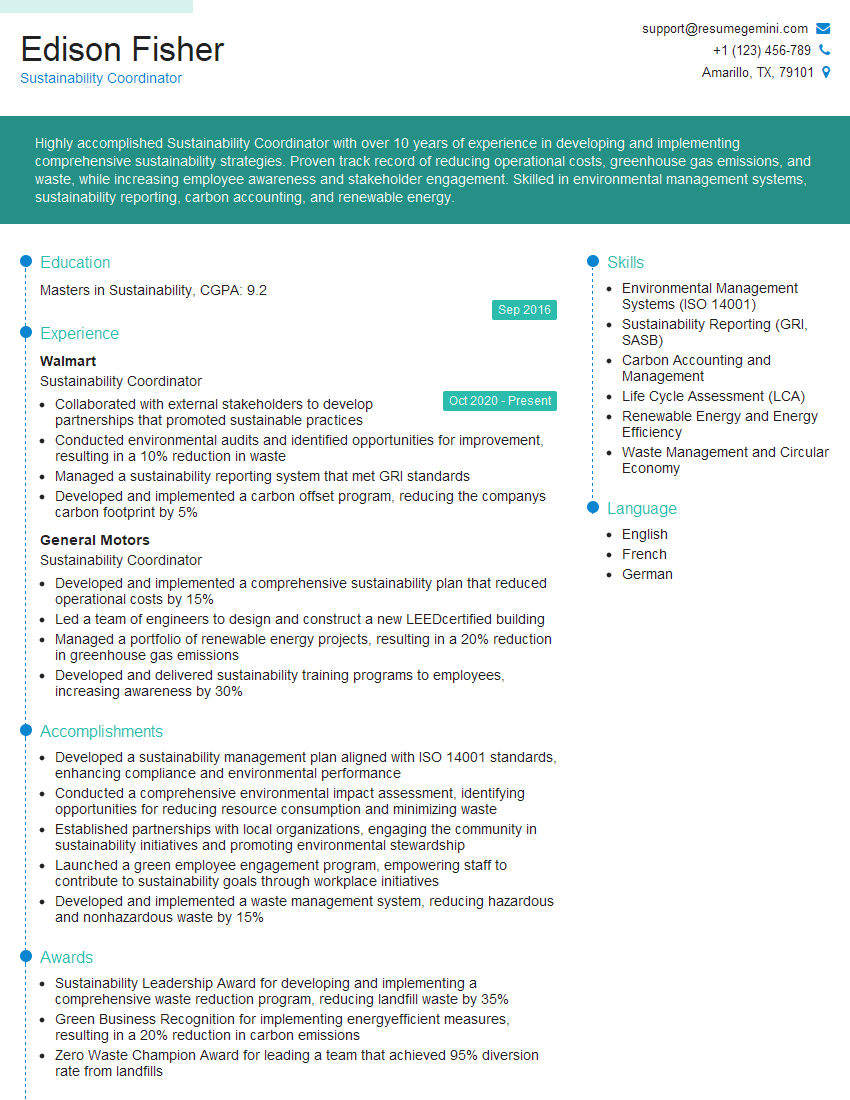
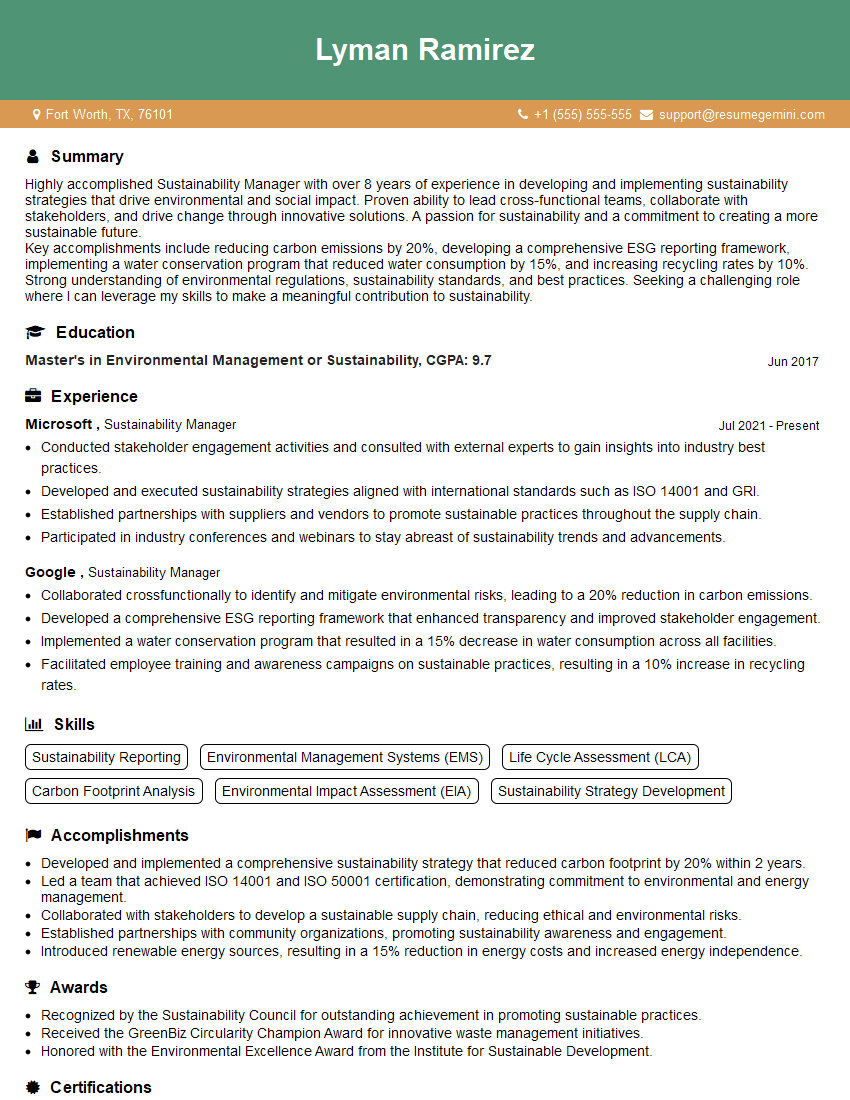
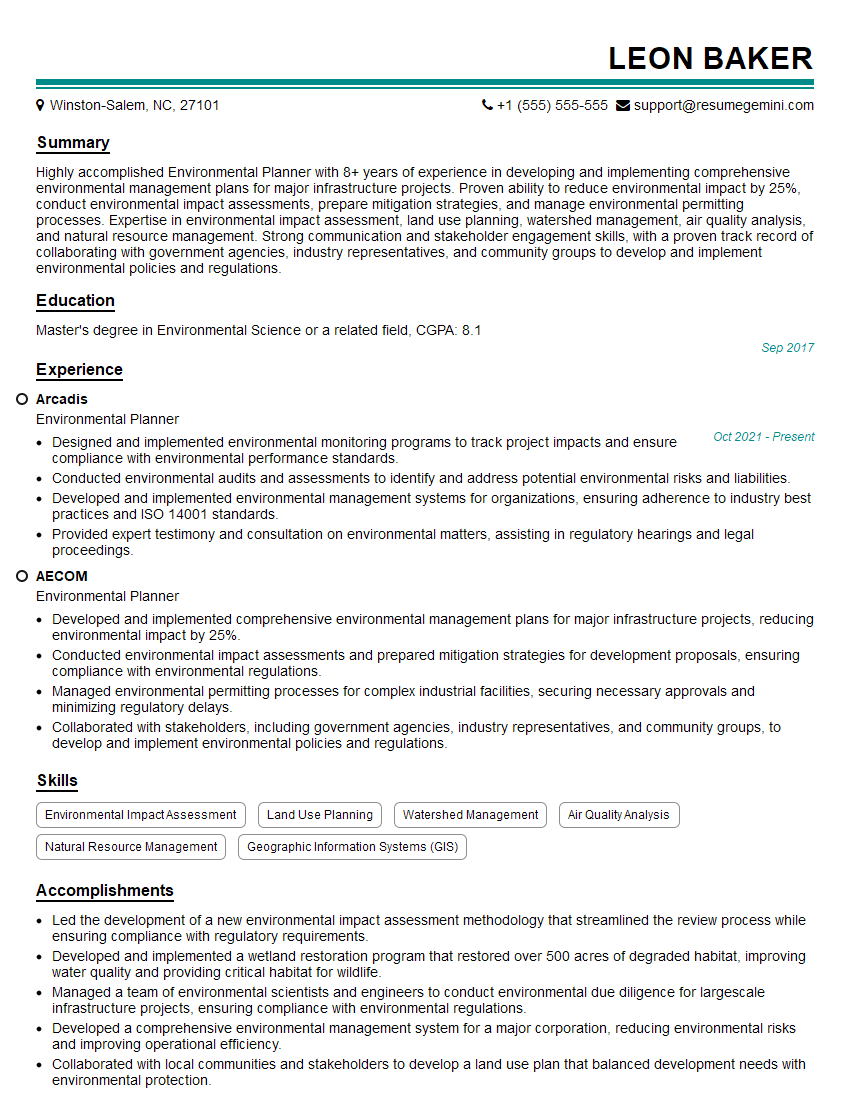
Mastering Experience in Climate Change Resilience Planning is crucial for career advancement in a rapidly evolving field. The demand for skilled professionals is high, opening doors to impactful and rewarding roles. To significantly boost your job prospects, create an ATS-friendly resume that effectively showcases your skills and experience. We highly recommend using ResumeGemini to craft a professional and compelling resume. ResumeGemini provides a user-friendly platform and offers examples of resumes tailored to Experience in Climate Change Resilience Planning to help you build a winning application. Take the next step towards your dream career today!

Explore more articles
Users Rating of Our Blogs
Share Your Experience
We value your feedback! Please rate our content and share your thoughts (optional).
What Readers Say About Our Blog
Very informative content, great job.
good