Interviews are more than just a Q&A session—they’re a chance to prove your worth. This blog dives into essential Experience in writing songs in different genres, including pop, rock, country, and folk interview questions and expert tips to help you align your answers with what hiring managers are looking for. Start preparing to shine!
Questions Asked in Experience in writing songs in different genres, including pop, rock, country, and folk Interview
Q 1. Describe your songwriting process across different genres (pop, rock, country, folk).
My songwriting process, while adaptable across genres, follows a core structure. It usually begins with an idea – a melody fragment, a lyrical phrase, or even a single chord progression. I then let that seed grow, experimenting with different approaches depending on the intended genre. For pop, I often start with a catchy hook and build the song around it. With rock, I might begin with a powerful riff and develop the lyrics and melody to complement its energy. Country often inspires me through storytelling, starting with a narrative and finding the musical elements that fit. Finally, folk frequently stems from simple acoustic instrumentation, building the melody and lyrics organically around the feel of the instrument.
For example, a recent pop song started with a simple, repetitive synth line, while a country song began with a vivid image of a dusty road and a heartbroken lover. Each genre guides the initial inspiration and the direction the song takes.
Q 2. How do you adapt your songwriting style to suit specific genres?
Adapting my songwriting to specific genres involves a conscious choice of elements like melody, harmony, rhythm, instrumentation, and lyrical content. In pop, I aim for concise, catchy melodies with relatable themes. Rock demands more complex structures, powerful riffs, and often rebellious or anthemic lyrics. Country typically uses storytelling with simple, often repetitive melodic lines, often emphasizing themes of love, loss, or rural life. Folk leans towards intimate narratives, simpler chord progressions, and acoustic instrumentation, with a focus on authenticity and emotion.
For instance, a major seventh chord might be commonplace in pop but feel out of place in a traditional folk song. Similarly, a complex verse-chorus structure that works well in rock might feel too formulaic in a folk song. This adaptation is crucial to ensure the song resonates authentically within its chosen genre.
Q 3. Explain your approach to melody and harmony writing in each genre.
Melody and harmony are intrinsically linked to the genre. In pop, melodies tend to be memorable and easy to sing along to, often employing major keys and simple intervals. Harmonies are frequently consonant and support the main melody. Rock uses more complex melodies and harmonies, potentially including dissonances to create a sense of tension and release. Country favors simple, often pentatonic melodies with harmonies that provide a sense of comforting familiarity. Folk melodies can vary but often feel natural and unforced, sometimes using modal scales, with harmonies that tend to be spare and uncluttered, reflecting the simplicity of the instrumentation.
Consider the difference between a simple I-IV-V-I progression (common in country) versus a more complex progression involving seventh chords and chromatic movement (common in rock). This directly impacts the emotional texture and perceived character of the music.
Q 4. How do you develop lyrical themes and storytelling in various genres?
Lyrical themes and storytelling depend heavily on genre. Pop often focuses on universal themes of love, heartbreak, and personal experiences, aiming for relatability. Rock songs might explore rebellion, social issues, or personal struggles with more intensity. Country thrives on storytelling, often using narratives about rural life, relationships, and personal struggles within that context. Folk is often introspective, focusing on personal observations, reflections on nature, or social commentary, relying on imagery and metaphor to convey meaning.
For example, a pop song might focus on a fleeting romance, while a country song might detail the breakdown of a long-term relationship against the backdrop of a small town. The same event could be portrayed very differently depending on the chosen genre.
Q 5. Discuss your experience with different songwriting techniques (e.g., rhyming schemes, chord progressions).
I utilize various songwriting techniques depending on the genre and the specific song. Rhyming schemes can range from simple AABB rhymes in pop to more complex schemes in other genres. I experiment with different chord progressions to create specific moods and feelings. In country, I frequently use I-IV-V-I or similar simple progressions. Rock might involve more complex chord changes and modulations. I also utilize techniques like internal rhyme, alliteration, and assonance to create musicality and emphasis within the lyrics.
For example, understanding the difference between using a perfect cadence (V-I) for a sense of resolution and a deceptive cadence (V-vi) to create suspense is crucial for creating dynamic musical narratives.
Q 6. Describe your understanding of the unique structural elements of pop, rock, country, and folk songs.
Each genre has its own structural conventions. Pop songs often follow a verse-chorus structure, sometimes with a bridge and outro. Rock songs can employ similar structures but may incorporate more complex sections, instrumental solos, and dynamic shifts. Country songs often feature a verse-chorus structure, but storytelling is paramount, and the structure might be more flexible to accommodate the narrative. Folk songs are often less structured, with verse-chorus patterns being common but less rigid, sometimes employing call-and-response or other improvisational elements.
The flexibility within each genre allows for innovation; however, understanding the typical structures of each allows for creating songs that are both original and accessible to the intended audience.
Q 7. How do you incorporate instrumentation to reflect the characteristics of each genre?
Instrumentation is a powerful tool for genre definition. Pop frequently utilizes synthesizers, drum machines, and polished production techniques. Rock often features electric guitars, bass guitars, drums, and vocals, often with a heavier, distorted sound. Country commonly uses acoustic guitars, banjos, fiddles, steel guitars, and vocals, creating a more organic and often melancholic sound. Folk often relies on acoustic instruments such as guitars, banjos, mandolins, and vocals, emphasizing a raw and unadorned quality. The choice of instrumentation is instrumental – pun intended – in conveying the mood and feel of each genre.
For instance, using a banjo in a rock song could be a deliberate stylistic choice, but it would not typically be the primary instrument. Conversely, a distorted electric guitar would feel out of place in most folk songs.
Q 8. What software or tools do you utilize for songwriting and music production?
My songwriting and music production workflow relies on a suite of tools, each tailored to a specific stage. For initial songwriting, I primarily use a simple digital audio workstation (DAW) like GarageBand or Logic Pro X. These allow me to quickly record melodies and lyrics using a microphone and interface. For more advanced production, I’ll transition to Logic Pro X, utilizing its extensive virtual instruments, effects plugins, and MIDI capabilities. I often sketch out ideas on a piano or guitar before transferring them to the DAW. Specific plugins I frequently use include Ozone for mastering, FabFilter Pro-Q for EQ, and Waves plugins for compression and reverb. The choice of tools depends largely on the genre; for example, a simpler setup might suffice for a folk song, whereas a rock track would necessitate more intricate mixing and mastering.
Beyond the DAW, I rely heavily on a good quality microphone, headphones for critical listening, and a MIDI keyboard controller for composing and editing melodies and chords. I also find mind mapping software helpful for brainstorming song concepts and structuring lyrics.
Q 9. Describe your experience collaborating with other musicians.
Collaboration is fundamental to my creative process. I’ve worked with musicians across various genres, and each experience has enriched my songwriting. One memorable collaboration involved a country singer-songwriter. He brought his lyrical prowess and storytelling ability, while I contributed to the arrangement and production. We bounced ideas off each other, refining the melody and lyrics until we achieved something truly special. The key to successful collaboration is clear communication, mutual respect, and a willingness to compromise. I always make sure everyone’s ideas are valued, and we work together to find common ground. This often involves active listening and constructive feedback. For example, if a collaborator suggests a change to the melody, I’ll consider the suggestion carefully, and maybe even experiment with different variations before making a decision.
In other projects, I’ve collaborated remotely with musicians using online platforms for file sharing and real-time collaboration. This requires efficient communication and well-defined roles to ensure a smooth workflow.
Q 10. How do you overcome creative blocks in songwriting?
Creative blocks are a common challenge for songwriters. My strategy involves a multi-pronged approach. First, I step away from the project entirely. A walk in nature, a change of scenery, or simply engaging in a different activity can often clear my head and spark new ideas. Second, I actively seek inspiration. This might involve listening to different genres of music, reading poetry, or watching a movie. I also keep a notebook handy to jot down any ideas that pop up, no matter how seemingly insignificant. Third, I experiment with different approaches to songwriting. If I’m struggling with lyrics, I’ll focus on the melody; if I’m stuck on the melody, I’ll experiment with different chord progressions. Sometimes, just starting with a simple riff or a single line of lyrics can break through the block. Finally, I don’t hesitate to collaborate with other musicians. A fresh perspective can often provide the spark I need.
Q 11. How do you ensure copyright protection for your songs?
Copyright protection is crucial for songwriters. The most effective method is registering my songs with a copyright office, such as the U.S. Copyright Office or a comparable organization in other countries. This provides legal proof of ownership and establishes a date of creation. Beyond formal registration, I maintain detailed records of my songwriting process, including dates, versions, and collaborators. I also make sure to clearly mark my work as copyrighted, for example, with a © symbol followed by the year and my name. This isn’t a substitute for official registration but adds another layer of protection. It’s also important to understand the nuances of copyright law, including fair use and other exceptions, to avoid potential infringement.
Q 12. How do you handle feedback and critique on your songwriting?
Feedback is essential for growth. I actively seek constructive criticism from trusted sources, including fellow musicians, producers, and even friends or family who are willing to offer honest opinions. I approach feedback with an open mind, listening carefully and trying to understand the perspective offered. Not all feedback will be relevant or helpful, and I’ve learned to discern between valid critiques and subjective preferences. For example, if someone says the bridge feels disjointed, I’ll examine the structure and flow of the song and see if adjustments are needed. Conversely, if someone dislikes a specific lyric based on personal preference, I’ll consider it, but I’m not obligated to change it. Ultimately, the goal is to refine the song while maintaining my artistic vision.
Q 13. How familiar are you with music theory?
I have a solid understanding of music theory. While I don’t rely solely on academic rules, my knowledge of harmony, rhythm, and melody significantly enhances my songwriting. I understand chord progressions, scales, and key signatures and how they contribute to the overall mood and feel of a song. My understanding of music theory allows me to create more sophisticated and interesting musical structures. For instance, I might use a secondary dominant chord to add tension and release in a pop song or a modal interchange to create a unique harmonic color in a folk song. This knowledge allows me to experiment with different sounds and textures without getting lost in the technicalities. It’s a tool that informs my creative process, not a constraint.
Q 14. How do you evaluate the commercial potential of a song?
Evaluating the commercial potential of a song involves considering several factors. Firstly, I assess the song’s originality and memorability—does it offer something fresh while still being catchy and relatable? Secondly, I consider its genre and target audience. A song’s potential is greatly influenced by current trends and market demands within its genre. Thirdly, the production quality matters—a well-produced song is more likely to attract listeners and airplay. Finally, I evaluate the song’s lyrical content—is it relevant, emotive, and relatable to a wide audience? I might also look at similar successful songs within the same genre to identify common elements, but I strive not to replicate; rather, to learn from their strengths.
Ultimately, assessing commercial potential is an art as much as a science, and it involves a degree of intuition and understanding of the music industry. I consider aspects like potential radio play, streaming numbers, and its suitability for various platforms. It’s important to balance commercial considerations with artistic integrity.
Q 15. Explain your experience with different recording techniques.
My experience with recording techniques spans across various methods, from analog to digital. Early on, I worked extensively with analog tape, appreciating its warmth and unique sonic character. This involved understanding concepts like tape saturation and equalization in the mixing process, requiring a more intuitive and hands-on approach. I’ve seen firsthand how subtle changes in microphone placement, preamp settings, and compression can drastically alter the final product.
With the rise of digital recording, I’ve embraced DAWs (Digital Audio Workstations) like Pro Tools and Logic Pro X. These platforms offer incredible flexibility and control, enabling precise editing, mixing, and mastering. I’m proficient in using plugins to simulate vintage gear, add effects, and achieve specific soundscapes, from the crisp clarity of a pop track to the raw energy of a rock anthem. For example, I’ve utilized plugins like Waves plugins to emulate classic compressors or reverbs for a specific vintage sound. I also understand the importance of high-resolution audio for mastering and achieving the best possible sound quality for different mediums like streaming and vinyl. Ultimately, I believe the best technique depends on the song itself and the desired aesthetic; it’s about finding the right tools to serve the music.
Career Expert Tips:
- Ace those interviews! Prepare effectively by reviewing the Top 50 Most Common Interview Questions on ResumeGemini.
- Navigate your job search with confidence! Explore a wide range of Career Tips on ResumeGemini. Learn about common challenges and recommendations to overcome them.
- Craft the perfect resume! Master the Art of Resume Writing with ResumeGemini’s guide. Showcase your unique qualifications and achievements effectively.
- Don’t miss out on holiday savings! Build your dream resume with ResumeGemini’s ATS optimized templates.
Q 16. How do you approach songwriting for different target audiences?
Approaching songwriting for different target audiences involves understanding their musical tastes, cultural backgrounds, and emotional sensitivities. For instance, a pop song for teenagers will prioritize catchy melodies, relatable lyrics about everyday life, and upbeat tempos, potentially incorporating current trends. I’ve found success writing for this demographic by collaborating with young artists and immersing myself in the current music scene.
Conversely, a country song for a mature audience might focus on storytelling, using more complex lyrical structures and instrumentation, perhaps centering on themes of love, loss, or rural life. Here, I might incorporate elements of traditional country music but update them with a modern sensibility. For a folk audience, authenticity and emotional rawness are key, using simple arrangements and honest lyrics to connect with listeners on a deeply personal level. It’s less about following trends and more about crafting songs that resonate through honesty. The process is a constant learning curve. Understanding demographics is just the starting point; paying attention to audience feedback after release is crucial in improving your future songwriting.
Q 17. Discuss your knowledge of music history and influences across various genres.
My knowledge of music history is fundamental to my songwriting process. I’ve studied the evolution of various genres, tracing their roots and influences. This understanding allows me to blend old and new styles creatively, adding depth and richness to my music. For example, while writing a contemporary pop song, I might incorporate elements of 60s girl-group harmonies, or while composing a country song, I’ll draw on influences from classic country artists while making it relevant to a modern listener.
My influences are diverse. I’m deeply influenced by the songwriting prowess of artists like Carole King, Bob Dylan, and Joni Mitchell (folk); the rhythmic innovation of artists like The Beatles and Queen (rock); and the melodic sensibilities of pop icons like Stevie Wonder and Michael Jackson. These influences shape my approach to melody, harmony, rhythm, and lyricism, informing how I approach songwriting in different genres, often unknowingly blending multiple influences into a single piece.
Q 18. How do you manage your time effectively during the songwriting process?
Effective time management during songwriting is crucial. I typically start with a dedicated writing session, free from distractions. This involves setting aside a specific block of time each day, even if it’s only an hour, to focus solely on writing. I find that breaking down the process into smaller tasks helps. This means focusing on one aspect of a song, such as melody, lyrics, or chords, before moving to the next.
I use various tools to stay organized. I keep detailed notes, often digitally, to track ideas and lyrical fragments. I also leverage collaboration tools to share ideas with co-writers and producers, making the creative process more streamlined and efficient. It’s about building a routine and sticking to it, accepting that some days are more productive than others, and not getting discouraged by periods of creative blocks.
Q 19. Describe your understanding of the music industry landscape.
The music industry is a constantly evolving landscape, shaped by technological advancements, streaming platforms, and changing consumer behavior. The rise of digital distribution has democratized music creation and distribution, opening doors for independent artists, but it’s also led to increased competition. Understanding the intricacies of streaming royalties and digital marketing is essential for success. It’s a business built on relationships as much as talent.
The role of publishers and record labels has also changed. While they still play a vital part in artist development and distribution, independent artists are increasingly bypassing traditional routes, leveraging social media and other platforms for direct fan engagement. This means navigating the complexities of licensing, publishing deals, and artist contracts requires knowledge and often requires legal advice. I stay abreast of industry trends by reading publications, attending conferences, and networking with other professionals in the field.
Q 20. Explain your experience pitching songs to publishers or record labels.
Pitching songs to publishers or record labels requires a strategic approach. I start by researching potential partners whose style aligns with my music. This involves studying their artist roster and understanding their preferences. A well-crafted pitch package is critical. It typically includes a compelling artist bio, high-quality audio recordings, and a clear explanation of the song’s concept and target audience. I focus on showcasing the unique qualities of the song, highlighting what sets it apart from other submissions.
Building relationships with A&R representatives (artists and repertoire) is essential. Networking through industry events and online platforms can help build connections. Persistence is key; don’t be discouraged by rejections. Each pitch is a learning experience, helping me refine my approach and strengthen my overall pitch. Remember, you are selling not just a song, but also a vision.
Q 21. How do you adapt your songwriting style based on client requests?
Adapting my songwriting style based on client requests requires careful consideration. I always prioritize maintaining artistic integrity while meeting the client’s needs. This involves active listening and open communication. I discuss their vision, understanding their preferred genre, target audience, and specific requirements for the song. I ask clarifying questions to ensure a shared understanding before beginning the writing process.
For example, if a client needs a dance-pop song with a specific lyrical theme, I’ll research current dance-pop trends and incorporate elements that resonate with the target audience. I’ll ensure the song’s structure, tempo, and instrumentation align with the genre’s conventions. If they request a more introspective acoustic ballad, I adjust my approach, prioritizing storytelling and emotional depth over high-energy elements. The most important element is collaboration, creating a song that satisfies both the client’s request and my artistic sensibilities.
Q 22. How do you handle deadlines and project management in songwriting?
Deadlines are the lifeblood of the music industry, and I approach them with a structured, project-management-like mindset. I begin by breaking down large songwriting projects into smaller, manageable tasks. For example, if I’m working on an album, I’ll set individual deadlines for each song, including milestones like lyric writing, melody creation, arrangement, and recording. I use digital tools like task management apps and calendars to keep track of these deadlines and to ensure that I stay on schedule. I also prioritize tasks based on their urgency and importance, focusing on the most critical elements first. This allows me to manage my time efficiently and avoid feeling overwhelmed. For instance, if a specific lyric is giving me trouble, I might dedicate a focused block of time to it before moving onto the music. Regular check-ins with myself (and my collaborators, if any) are key to identify and address potential delays early on.
Q 23. What is your experience with different lyrical styles (e.g., narrative, metaphorical)?
My lyrical style is quite versatile, drawing from various approaches depending on the song’s narrative and intended emotion. I frequently utilize narrative lyrics, telling a story, similar to a short film set to music. Think of the classic country storytelling tradition, where a song details a love story gone wrong or a life lived on the road. In contrast, metaphorical lyrics allow for richer expression and ambiguity. A metaphor might compare love to a stormy sea, or grief to a barren winter landscape, adding layers of meaning and poetic depth. For example, in a pop song, I might use a metaphor to convey a feeling of being trapped in a relationship. Then there’s the more direct, straightforward style which works great for some pop anthems. I also experiment with free verse, stream-of-consciousness writing, and even incorporating poetic forms to achieve different effects. The choice ultimately depends on the genre and the overall message of the song.
Q 24. How do you balance artistic expression with commercial viability in your songwriting?
Balancing artistic integrity with commercial viability is a constant tightrope walk for any songwriter. I believe the key is not to compromise the artistic vision completely, but to find ways to make it more accessible. For example, I might experiment with a hook that’s catchy but doesn’t feel too formulaic. I might also explore diverse instrumentation to appeal to a wider audience. However, I will always start with a song that is authentic to my artistic voice and my own passions. Often, genuine artistry resonates naturally with listeners – even if it ventures a bit outside the conventional structure. I’ve found that a strong song, regardless of genre, will cut through commercial noise if it speaks truthfully. It’s about finding that sweet spot – a song that is both artistically satisfying and commercially viable.
Q 25. Describe your experience using different rhythmic structures in songwriting.
Rhythm is the backbone of a song, and my experience spans a wide range of rhythmic structures. From the driving, four-on-the-floor beats of pop and rock to the syncopated rhythms of folk and country, I’ve explored it all. For instance, I’ve worked with complex polyrhythms in some of my folk songs, layering different rhythmic patterns to create a textured and interesting listening experience. Conversely, in pop, simpler, more repetitive rhythms can be incredibly effective in creating catchy, memorable hooks. Understanding time signatures – 4/4, 3/4, 6/8 – and how to manipulate them is crucial. I might experiment with shifting time signatures within a song to add dynamism and surprise, but ensure this change serves the overall narrative and emotional journey of the piece. The use of syncopation, rests, and rhythmic variations is also paramount in creating compelling musical structures.
Q 26. How do you integrate traditional instrumentation into modern genres?
Integrating traditional instrumentation into modern genres is a thrilling creative challenge. I love to blend the sounds of acoustic instruments like the banjo, mandolin, or fiddle with electronic sounds, synthesizers, or drum machines. For example, I’ve successfully combined the twang of a banjo with a driving electronic beat in a pop-country fusion song. The key is to understand the sonic characteristics of both traditional and modern instruments and to find ways to make them complement each other. It’s often about finding the right balance and avoiding sonic clashes. Careful layering, arrangement, and sound design are crucial to ensure a cohesive and interesting sound. Sometimes, a simple acoustic element can add depth and texture to a highly synthesized soundscape, while other times it can be the driving force of the whole song.
Q 27. How familiar are you with the process of publishing and licensing your music?
I’m very familiar with the music publishing and licensing process. I understand the importance of copyright protection, securing performance rights organizations (PROs) like ASCAP or BMI, and negotiating publishing and licensing deals. I know how to work with music publishers, understand mechanical licenses, and sync licenses, and how to navigate the complexities of royalty payments. I’ve been involved in negotiating deals for my own songs, and I understand the legal and financial aspects of the process. I’m also comfortable using online tools and platforms that facilitate the management and distribution of music rights. The world of music rights and licensing can be complex, so having a good understanding of the procedures is essential for any songwriter.
Q 28. How do you ensure the overall coherence and flow of your song across different sections?
Ensuring a song’s coherence and flow across its different sections (verse, chorus, bridge, etc.) is crucial for impact. The key lies in creating a clear narrative arc and emotional journey. I often start by outlining the story or emotion I want to convey and structuring my song around this. The chorus should be the most memorable and impactful section, emphasizing the main theme, and usually it contains the song’s hook. The verses should provide details and develop the story or emotion. The bridge acts as a point of contrast or a turning point, often adding a layer of complexity or surprise. Transitions between sections are equally important. I utilize techniques such as chord progressions, rhythmic patterns, and melodic motifs to create smooth, natural transitions. I also pay close attention to dynamics, using contrasts between loud and soft sections to add interest and guide the listener’s emotional response. Ultimately, the goal is to craft a cohesive musical experience that feels both satisfying and deeply moving.
Key Topics to Learn for Songwriting Across Genres (Pop, Rock, Country, Folk) Interview
- Genre-Specific Song Structures: Understand the typical structures (verse-chorus, etc.) and variations within pop, rock, country, and folk music. Be prepared to discuss how these structures impact songwriting choices.
- Lyrical Craft & Storytelling: Discuss your approach to crafting lyrics that resonate with each genre’s emotional landscape. How do you tell a story effectively within the constraints of a song’s structure for different genres?
- Melody & Harmony: Explain your understanding of melodic phrasing and harmonic progressions in relation to each genre. Provide examples of how you’ve used these elements to create a specific mood or feeling.
- Instrumentation & Arrangement: Discuss your experience with choosing instrumentation to complement your songwriting in different genres. How do you think about arrangement choices to achieve the desired sonic palette?
- Musical Influences & Inspiration: Be ready to articulate your influences within each genre and explain how they inform your songwriting process. Demonstrate a deep understanding of the genre’s history and evolution.
- Collaboration & Creative Process: Describe your collaborative experiences (if any), highlighting your role in the songwriting process and how you navigate creative differences.
- Problem-Solving in Songwriting: Share examples of times you overcame creative blocks or challenges in your songwriting, demonstrating your resilience and resourcefulness.
- Adaptability and Genre Blending: Discuss your ability to adapt your songwriting style to meet the needs of different projects and potentially blend genres creatively.
Next Steps
Mastering songwriting across diverse genres significantly enhances your marketability and opens doors to a wider range of opportunities within the music industry. An ATS-friendly resume is crucial for getting your application noticed. ResumeGemini is a trusted resource that can help you craft a professional and impactful resume that highlights your unique skills and experience. Examples of resumes tailored to showcasing diverse songwriting experience are available to guide you.
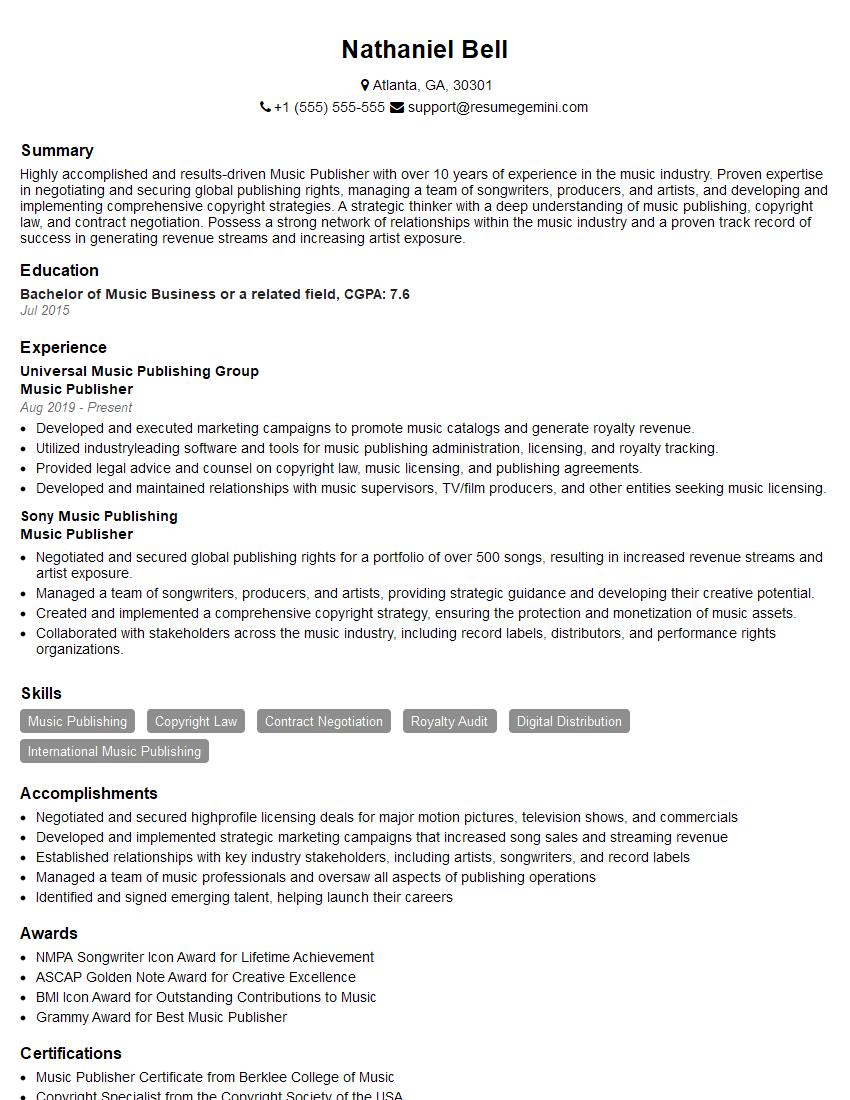
Music Publisher Resume Sample
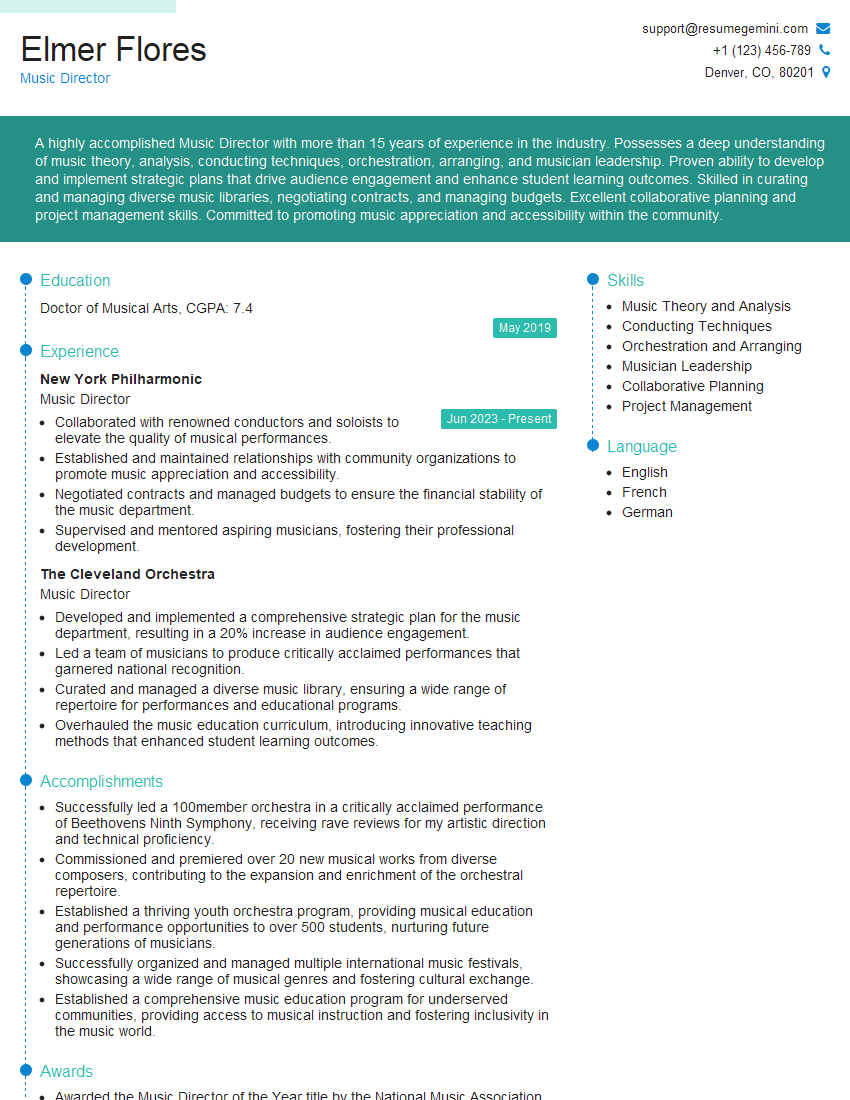
Music Director Resume Sample
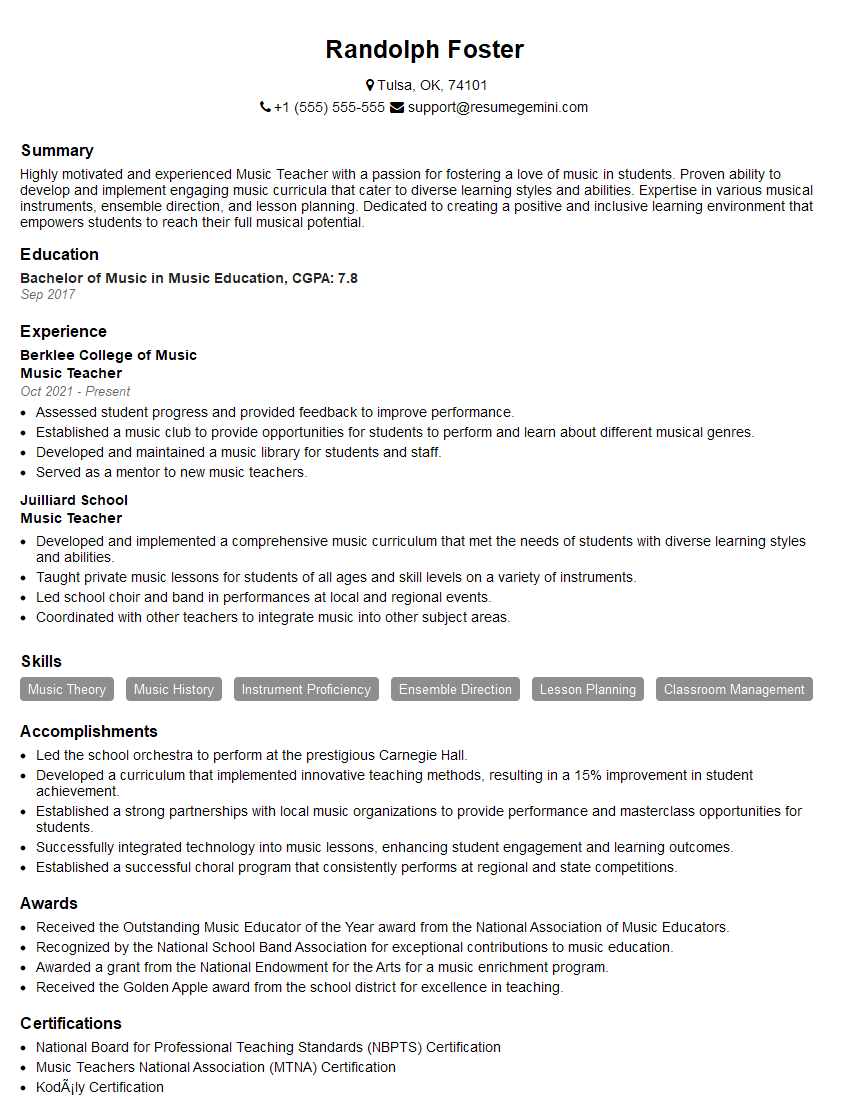
Music Teacher Resume Sample
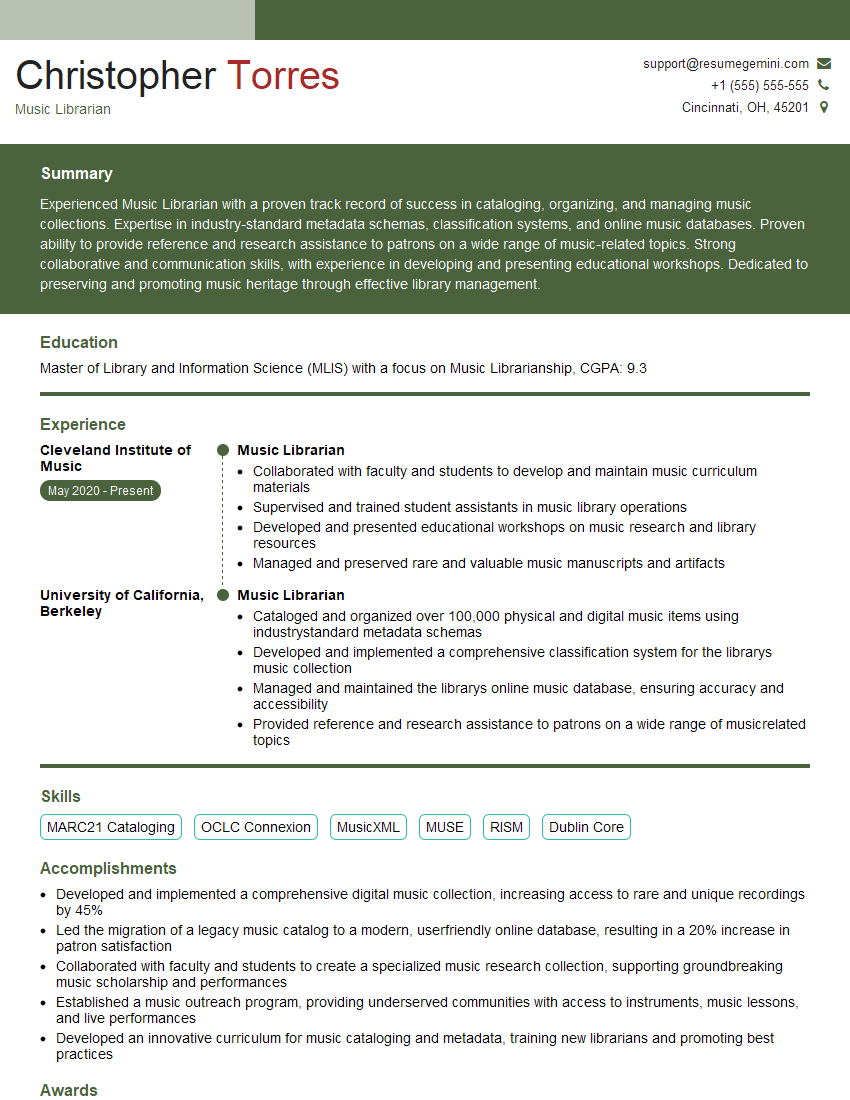
Music Librarian Resume Sample
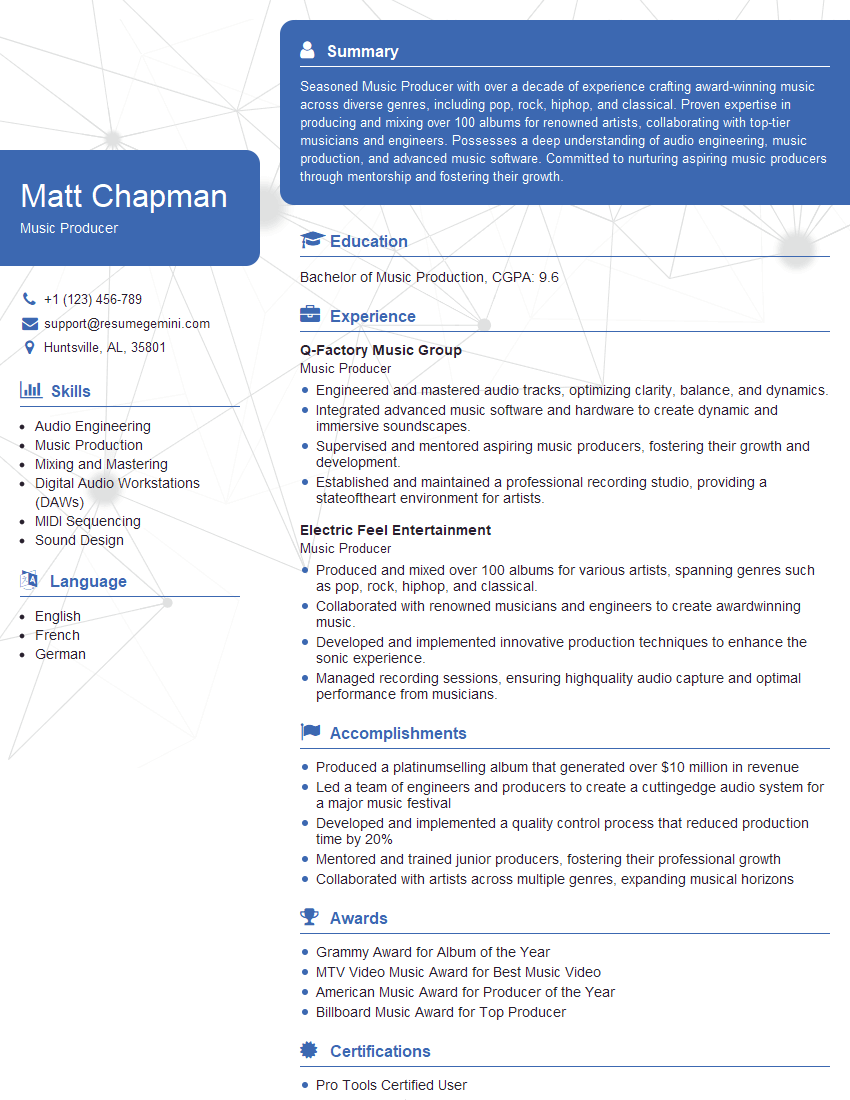
Music Producer Resume Sample
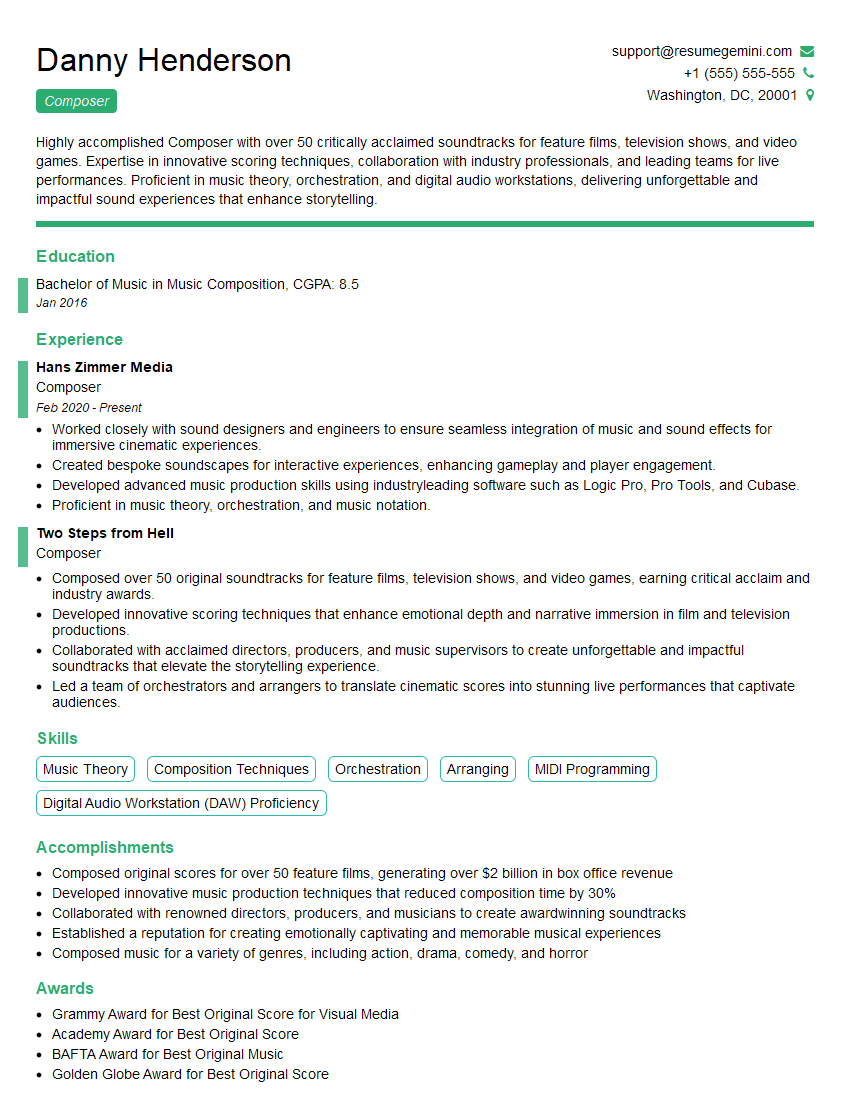
Composer Resume Sample
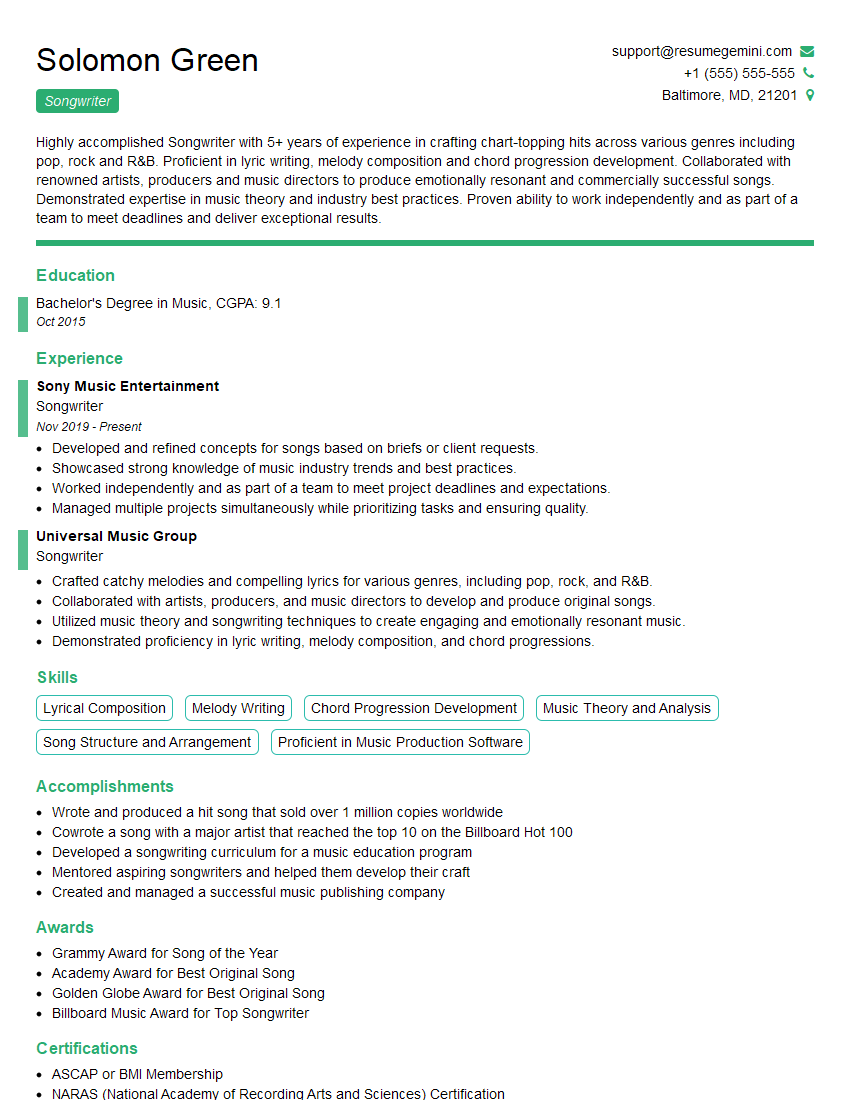
Songwriter Resume Sample
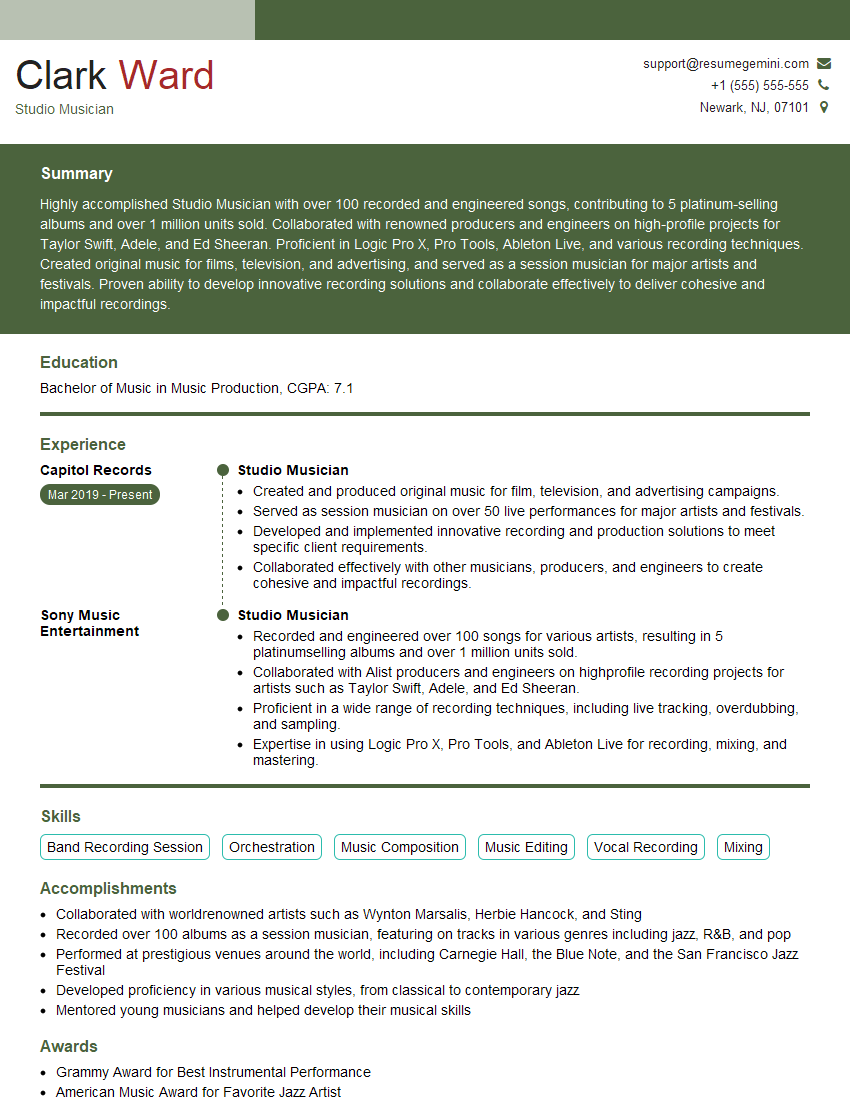
Studio Musician Resume Sample
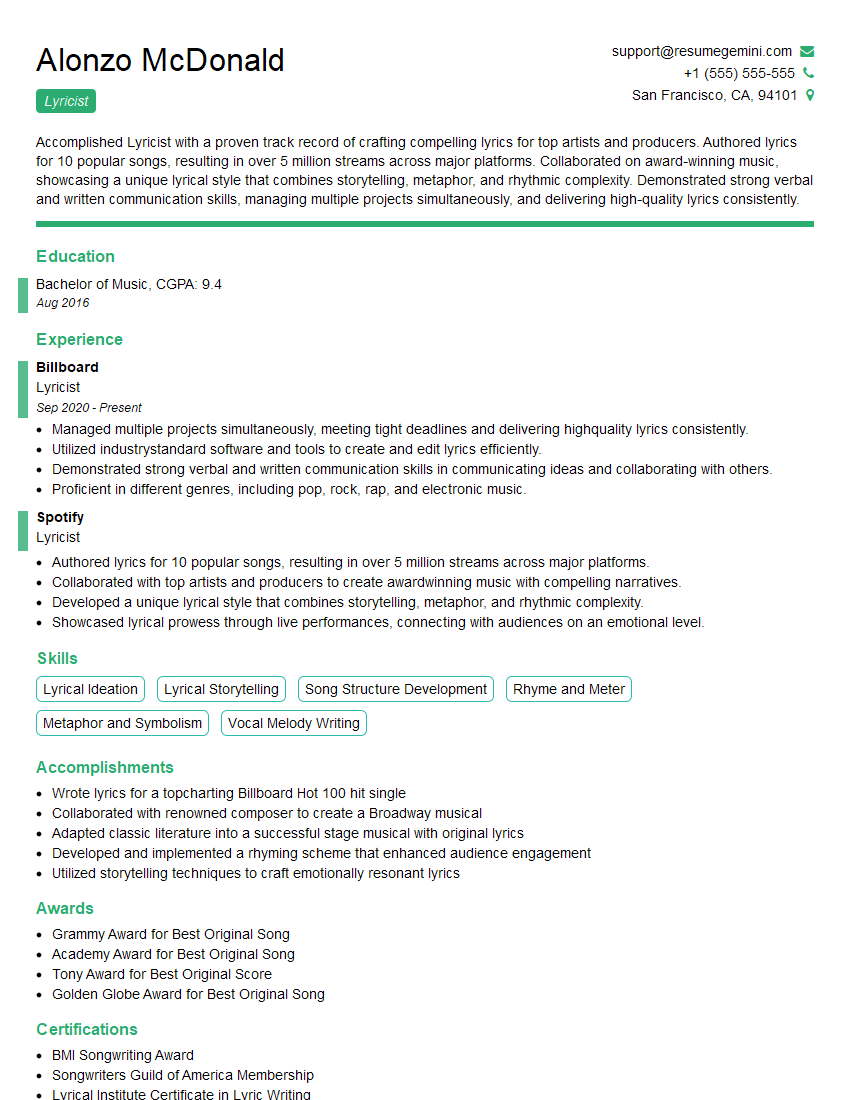
Lyricist Resume Sample
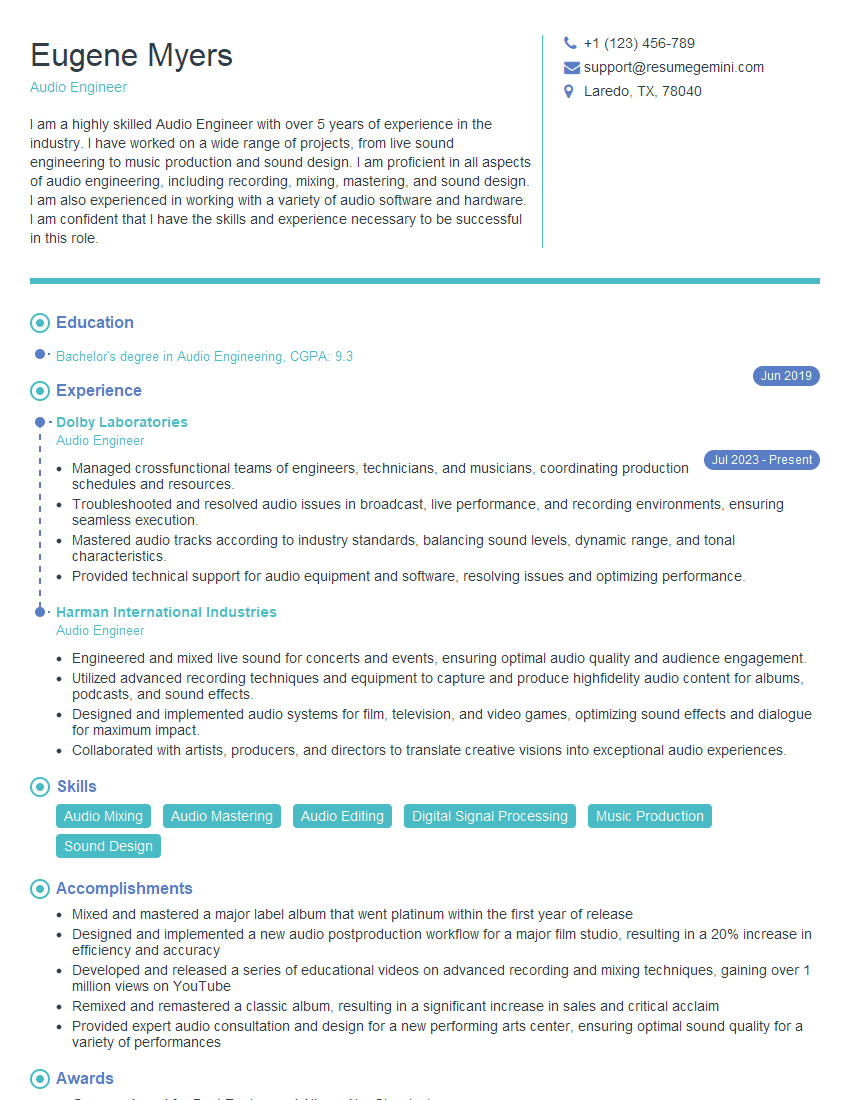
Audio Engineer Resume Sample
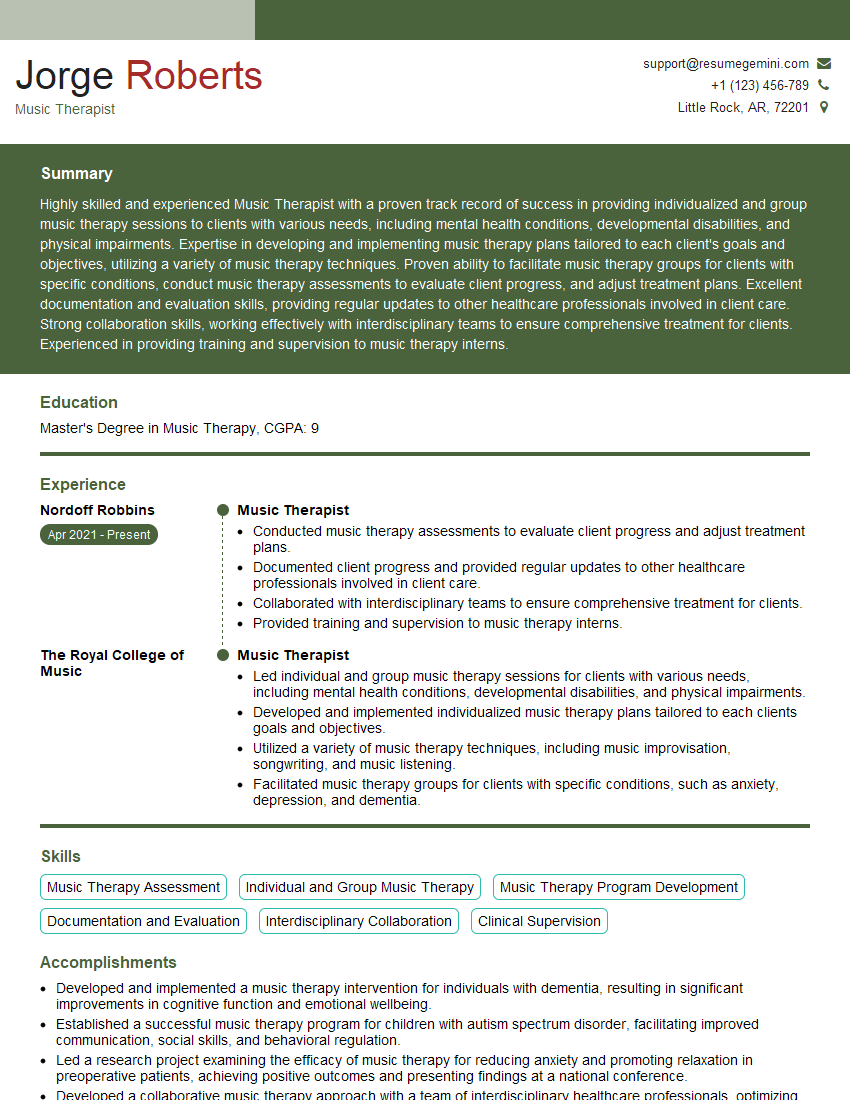
Music Therapist Resume Sample
Explore more articles
Users Rating of Our Blogs
Share Your Experience
We value your feedback! Please rate our content and share your thoughts (optional).
What Readers Say About Our Blog
Very informative content, great job.
good