Feeling uncertain about what to expect in your upcoming interview? We’ve got you covered! This blog highlights the most important Experience using tree planting and maintenance techniques interview questions and provides actionable advice to help you stand out as the ideal candidate. Let’s pave the way for your success.
Questions Asked in Experience using tree planting and maintenance techniques Interview
Q 1. Describe your experience in planting different tree species.
My experience spans a wide range of tree species, from common deciduous trees like oaks, maples, and elms to evergreens such as pines, spruces, and firs. I’ve also worked extensively with fruit trees like apples, pears, and cherries, and ornamental trees like Japanese maples and flowering dogwoods. Each species has unique planting requirements, and my approach is always tailored to the specific needs of the tree. For example, oaks prefer well-drained soil and ample sunlight, while maples tolerate a wider range of conditions but can be sensitive to soil compaction. Fruit trees require careful consideration of pollination and sunlight exposure for optimal fruit production. I always start by researching the specific species to ensure its success.
I’ve planted thousands of trees over my career, both in large-scale projects like reforestation efforts and in smaller, residential settings. This diverse experience has given me a deep understanding of the best practices for various situations, from preparing the planting site to ongoing care and maintenance.
Q 2. What are the critical factors to consider when selecting a tree planting site?
Site selection is paramount for successful tree planting. Several critical factors must be considered:
- Soil type and drainage: Well-drained soil is essential to prevent root rot. Clay soils, for example, require amendment to improve drainage. Sandy soils, on the other hand, can be prone to drying out and may need more frequent watering.
- Sunlight exposure: Most trees need adequate sunlight, but some species tolerate shade better than others. Knowing the species’ sun requirements is crucial.
- Proximity to utilities: It’s essential to avoid planting trees too close to power lines, underground pipes, or buildings, as their roots can damage these structures.
- Mature size: You must consider the tree’s ultimate size at maturity. Planting a large tree in a small space will create problems down the line.
- Microclimate: Factors such as wind exposure, frost pockets, and air pollution can significantly impact a tree’s survival. A sheltered location is preferable.
I always perform a thorough site assessment before planting, taking into account all of these factors. Using site maps and soil testing can greatly enhance the success rate.
Q 3. Explain the proper techniques for digging a planting hole.
Digging the right planting hole is crucial. It shouldn’t just be a hole; it needs to be a root welcoming space.
- Size: The hole should be at least twice as wide as the root ball and just as deep. This encourages root spread.
- Shape: A slightly wider bottom is ideal as it encourages downward root growth.
- Avoid compaction: The soil at the bottom of the hole should be loose and free of compaction to allow for easy root penetration.
- Backfill: Use the excavated soil (or a mixture of soil and compost for improved soil structure) to backfill the hole, ensuring no air pockets remain. Gently firm the soil around the root ball.
I often use a shovel and root rake to carefully loosen the soil and remove any rocks or debris that could impede root growth. For larger trees, a backhoe might be necessary, but careful handling is always paramount to avoid root damage.
Q 4. How do you ensure proper tree support after planting?
Proper tree support is critical, especially for newly planted trees, to prevent them from swaying in the wind and becoming unstable. Several methods exist:
- Staking: Three stakes placed equidistantly around the tree, secured with tree ties (avoid wire, which can cut into the bark). The ties should be loose enough to allow for trunk movement.
- Guying: For larger trees, heavy-gauge wire secured to sturdy anchors is used. This method requires more skill and planning.
- Tree guards: These protect the young tree from animals, lawnmowers, and other physical damage.
The support system should be removed after one to two growing seasons once the tree has established a strong root system and is stable enough to withstand wind. Improper staking can actually hinder the development of the tree’s root system, so it’s crucial to do it correctly.
Q 5. What are the common tree diseases and pests in your region?
Common tree diseases and pests in my region vary depending on the specific species. For example:
- Dutch elm disease: A fungal disease affecting elm trees, often spread by elm bark beetles.
- Oak wilt: Another fungal disease affecting oak trees.
- Emerald ash borer: An invasive beetle that kills ash trees.
- Aphids: Common sap-sucking insects that can cause leaf curling and distortion.
- Scale insects: Small insects that cover branches, sucking sap and weakening trees.
Regular monitoring for signs of disease or pest infestations is critical. Early detection and appropriate treatment measures are key to minimizing damage. This may involve pruning infected branches, applying insecticides, or fungicides, or even tree removal in severe cases.
Q 6. Describe your experience with tree pruning techniques.
Pruning is an essential part of tree maintenance. It improves tree structure, health, and aesthetic appeal. Different techniques exist, depending on the goal:
- Formative pruning: Establishing the desired shape and structure of the tree, typically done when it is young.
- Maintenance pruning: Removing dead, damaged, or diseased branches, and thinning out the crown to improve air circulation and sunlight penetration.
- Restoration pruning: Correcting structural defects or damage from storms or other events.
I always use sharp, clean pruning tools to minimize damage to the tree. The three-cut method is used to prevent bark tearing. Pruning cuts should be made just outside the branch collar, which is the swollen area at the base of the branch.
Q 7. What safety precautions do you take when working with chainsaws and other power tools?
Safety is my top priority when working with chainsaws and other power tools. I always adhere to these precautions:
- Personal protective equipment (PPE): I wear safety glasses, hearing protection, chainsaw chaps (protective leg wear), gloves, and steel-toed boots.
- Proper machine maintenance: Chainsaws must be properly maintained and sharpened to ensure they operate efficiently and safely.
- Clear work area: I always clear the area around me of any obstructions, ensuring there is enough space to work safely and avoiding potential hazards.
- Awareness of surroundings: I am always aware of my surroundings and the location of others. I never operate a chainsaw near power lines.
- Follow manufacturer’s instructions: I carefully read and follow the manufacturer’s instructions for all equipment used.
I never rush and always take my time to ensure the job is done correctly and safely. I regularly undergo safety training to stay up-to-date on best practices.
Q 8. How do you identify and address tree root issues?
Identifying and addressing tree root issues requires a keen eye and understanding of tree biology. Root problems often manifest as surface symptoms, such as wilting, leaning, or changes in leaf color. However, a thorough assessment is needed to determine the underlying cause.
Visual Inspection: I begin by carefully examining the above-ground portion of the tree, looking for signs of stress. Then, I’ll assess the surrounding soil, checking for compaction, signs of girdling roots (roots circling the trunk), or evidence of root damage from construction or other activities.
Soil Analysis: Sometimes, a visual inspection isn’t enough. Soil testing can reveal compaction, poor drainage, or nutrient deficiencies that affect root health. This may involve collecting soil samples at various depths around the tree.
Root Excavation (if necessary): In cases requiring a more in-depth evaluation, a small section of soil around the tree’s root system may need careful excavation. This allows for a direct assessment of root health, identification of diseases or pests, and determination of the extent of damage. This is done minimally and with great care to avoid further injury.
Addressing the Issues: Solutions depend on the specific problem. Compaction may require aeration. Girdling roots might necessitate careful pruning by a qualified arborist. Nutrient deficiencies are corrected through fertilization (discussed in the next answer). Severely damaged roots unfortunately might require extensive care or even indicate the need for tree removal.
Example: I once worked on a large oak whose branches were showing significant dieback. Initial investigation revealed compacted soil near the trunk. After aerating the soil and incorporating organic matter, the tree showed a marked improvement within a year.
Q 9. Explain your experience with tree fertilization and soil amendment.
Tree fertilization and soil amendment are crucial for maintaining healthy trees. The approach depends heavily on the species, age, soil type, and overall health of the tree. A soil test is essential before any fertilization to ascertain the existing nutrient levels.
Soil Testing: This test identifies deficiencies in essential nutrients like nitrogen (N), phosphorus (P), and potassium (K), as well as pH levels. This guides the choice of fertilizer and amendment.
Fertilizer Selection: Based on the soil test results, I select a slow-release fertilizer appropriate for the tree species. This prevents nutrient burn and provides a sustained release of nutrients over several months.
Application Methods: There are several ways to apply fertilizer: granular application around the tree’s drip line (the area under the branches), liquid feeding through the soil, or even injection directly into the tree’s trunk (though this method requires specific expertise). Granular application is commonly used for established trees.
Soil Amendment: Often, the soil itself needs improvement. Amendments such as compost or aged manure can improve soil structure, drainage, and aeration, promoting healthy root growth. For example, sandy soils often benefit from the addition of organic matter to increase water retention.
Example: I used a slow-release, balanced fertilizer on a group of young maples experiencing chlorosis (yellowing leaves). Following soil testing, I discovered a nitrogen deficiency, correcting it greatly improved their leaf color and vigor within a growing season.
Q 10. How do you diagnose and treat common tree diseases?
Diagnosing and treating tree diseases requires careful observation and identification. This often involves analyzing symptoms, such as leaf spots, cankers, wilting, or dieback. Accurate identification is crucial for effective treatment.
Visual Inspection: A thorough examination of the tree, its leaves, branches, and trunk, is the first step. Note the location and extent of the damage, any fruiting bodies (fungal structures), or unusual growths.
Sample Collection: Sometimes, a sample of affected leaves, branches, or even soil may need to be collected and sent to a diagnostic laboratory for confirmation. This provides a more definitive diagnosis.
Treatment Strategies: Treatment options vary widely depending on the disease. Some involve pruning infected branches, applying fungicides or insecticides, or implementing cultural practices to improve tree vigor and resistance.
Prevention: Preventing diseases is often more effective than treating them. This can involve selecting disease-resistant tree species, ensuring proper spacing for good air circulation, and avoiding excessive watering or fertilization.
Example: I treated several ash trees exhibiting signs of Emerald Ash Borer infestation. This involved using insecticide injections to control the larval stage of the pest. This helped protect the trees, though complete eradication is challenging.
Q 11. Describe your experience with tree cabling and bracing.
Tree cabling and bracing are structural support techniques used to strengthen weakened branches or limbs, often preventing breakage during storms or high winds. This is especially important for large, mature trees with significant weight or those with structural defects.
Assessment: A thorough evaluation of the tree’s structure is necessary to identify areas requiring support. This involves checking for weak crotches (the angle where branches join the trunk), decay, or other structural issues.
Cabling: Steel cables are strategically installed to bind weaker branches together, distributing stress more evenly across the branch structure. This is done using specialized equipment and techniques to minimize damage to the tree.
Bracing: Bracing involves installing rigid supports, often made of steel rods or bolts, to reinforce weak crotches or other vulnerable parts of the tree. The supports are anchored securely into the tree and ground.
Material Selection: Materials used for cabling and bracing must be strong, durable, and compatible with the tree to avoid further damage. Galvanized steel is a commonly used material.
Example: I recently braced a large oak with a severely weakened crotch using galvanized steel rods. The bracing prevented potential branch failure and increased the tree’s overall stability, enhancing its longevity.
Q 12. What are the different methods for removing trees safely?
Safe tree removal is a complex procedure requiring specialized equipment, training, and careful planning. Several methods exist depending on the size, location, and condition of the tree.
Climbing and Pruning: For smaller trees, a qualified arborist might use climbing equipment to access and prune the tree section by section before removal. This method offers more control and precision.
Crane Removal: Larger trees often require a crane for safe removal. The tree is carefully sectioned using chainsaws and lowered to the ground using the crane, minimizing risk to surrounding property.
Directional Felling: This technique involves carefully cutting the tree in a specific direction to control its fall. The direction is chosen to avoid damage to property or other trees. This is extremely important and often requires a qualified arborist.
Stump Grinding: Once the tree is felled, the stump is often removed using a stump grinder, which grinds it down below the soil surface.
Safety Precautions: Regardless of the method, safety is paramount. This includes proper personal protective equipment (PPE) for arborists, securing the work area, and planning a safe felling path.
Example: I supervised the crane removal of a large sycamore that was near power lines and buildings. The careful planning and execution prevented any damage during the process.
Q 13. What are the legal considerations for tree removal and planting?
Legal considerations surrounding tree removal and planting vary by location and jurisdiction. Always check local ordinances and regulations before undertaking any work.
Permits: Many areas require permits for removing trees larger than a certain size or in protected areas. This process often includes submitting plans, getting approvals, and potentially paying fees.
Protected Trees: Some trees, due to their size, species, or location, may be protected by law. Removing such trees without proper authorization can result in significant fines or penalties.
Liability: Property owners are generally liable for damage caused by their trees. Proper maintenance and responsible tree removal practices minimize liability risks.
Neighboring Property: Tree roots and branches can extend onto neighboring properties. Addressing disputes with neighbors regarding tree issues requires communication and potentially legal counsel. Professional arborists can often provide expert testimony.
Example: In one project, we needed to secure permits before removing several large oaks on a construction site that were identified as protected heritage trees. The process involved careful documentation, obtaining necessary approvals, and adhering to strict guidelines.
Q 14. How do you manage invasive plant species in a tree planting area?
Managing invasive plant species in a tree planting area is crucial to ensure the success of the planting effort and protect the native ecosystem.
Identification: Accurate identification of invasive species is essential. This often involves consulting field guides, online resources, or contacting local experts for confirmation.
Manual Removal: For smaller infestations, manual removal is effective, involving carefully digging out or pulling up invasive plants. This needs to be thorough, removing all roots and rhizomes to prevent regrowth.
Herbicide Application: For larger infestations, targeted herbicide applications can be used to control or eradicate invasive species. This must be done carefully, considering non-target effects on native vegetation.
Integrated Pest Management (IPM): An IPM approach considers all aspects of invasive species management, balancing various methods to achieve long-term control without harming the environment or the planted trees.
Prevention: Preventing the introduction of invasive species is the most effective strategy. This can involve careful cleaning of equipment, purchasing plants from reputable sources, and educating community members about invasive species identification and control.
Example: In a recent tree planting project, we utilized a combination of manual removal and herbicide application to eliminate a substantial infestation of Japanese knotweed. Careful monitoring of the site post treatment has ensured the plant’s continued suppression.
Q 15. Explain your experience with irrigation systems for trees.
My experience with tree irrigation spans various system types, from simple drip irrigation to more complex, automated systems. Understanding the specific needs of different tree species is crucial. For instance, newly planted trees require more frequent and shallower watering to encourage root establishment, while mature trees benefit from deep, infrequent watering to promote deep root growth. I’ve worked with both gravity-fed systems, which are simple and cost-effective, and pressurized systems, which offer greater control and efficiency, especially in larger areas. Choosing the right system depends on factors like budget, water availability, tree density, and soil type. For example, in a clay soil, a drip system might be preferable to avoid surface runoff. In sandy soil, a more frequent watering schedule might be necessary. I also consider soil moisture sensors to optimize water usage and prevent overwatering, a common cause of root rot. Regular system maintenance, including cleaning emitters and checking for leaks, is critical to ensure optimal performance and prevent water waste.
Career Expert Tips:
- Ace those interviews! Prepare effectively by reviewing the Top 50 Most Common Interview Questions on ResumeGemini.
- Navigate your job search with confidence! Explore a wide range of Career Tips on ResumeGemini. Learn about common challenges and recommendations to overcome them.
- Craft the perfect resume! Master the Art of Resume Writing with ResumeGemini’s guide. Showcase your unique qualifications and achievements effectively.
- Don’t miss out on holiday savings! Build your dream resume with ResumeGemini’s ATS optimized templates.
Q 16. What is your experience with tree inventory and assessment?
Tree inventory and assessment involves a systematic approach to identify, document, and evaluate the condition of trees. This typically includes a visual inspection of each tree to assess its health, noting any signs of disease, pest infestation, damage, or structural defects. I use specialized tools to measure tree dimensions (diameter at breast height (DBH), height, crown spread) and assess their overall health. These measurements are critical for determining the tree’s age, potential for growth, and any risks it may pose. I also use specialized software for creating and managing detailed tree inventories, allowing me to track tree health over time and make informed management decisions. For example, I’ve used such software to track the progress of a reforestation project, identifying which trees required additional care due to slow growth or pest infestations. The assessment helps prioritize maintenance tasks and identify trees that may require removal for safety reasons. I’ve even incorporated drone technology for large-scale inventories, providing a more efficient and detailed analysis than traditional methods.
Q 17. How do you prioritize tree maintenance tasks?
Prioritizing tree maintenance tasks involves a risk-based approach. I prioritize tasks based on urgency and impact. Tasks that pose immediate safety risks, such as branches overhanging structures or roads, are always prioritized. Trees exhibiting signs of serious disease or pest infestations also receive immediate attention to prevent further damage and spread. Following these urgent tasks, I prioritize routine maintenance activities like pruning, fertilization, and watering based on the tree’s species, age, health, and location. For instance, I might prioritize pruning a large oak tree near a school over routine fertilization of a healthy maple tree in a park. This risk-based approach ensures that resources are allocated effectively to address the most critical needs first. I often use a spreadsheet or database to track maintenance tasks, their priority levels, and scheduled completion dates, helping me stay organized and ensure all tasks are addressed in a timely manner.
Q 18. Describe your experience with using different tree care equipment.
My experience with tree care equipment is extensive. I’m proficient in using various tools, from hand tools like pruning shears, loppers, and saws to more specialized equipment, including chainsaws, chippers, aerial lifts, and stump grinders. Safety is paramount, so I always ensure proper training and adhere to all safety regulations when using any equipment. For example, I meticulously inspect chainsaws before each use, ensuring they are sharp and properly lubricated. I also employ appropriate personal protective equipment (PPE), including safety glasses, gloves, hearing protection, and chainsaw chaps. Beyond the power tools, I’m skilled in the use of diagnostic tools for assessing tree health, including soil probes to measure moisture levels, and instruments to assess tree vigor and nutrient deficiencies. Knowing when and how to use each tool effectively is critical for efficient and safe tree care operations.
Q 19. How do you handle emergency tree situations (e.g., storm damage)?
Handling emergency tree situations, like storm damage, requires a swift and methodical response. The first step is always safety. I assess the situation to ensure the area is secure, addressing any immediate hazards, such as downed power lines or unstable trees. Then, I carefully evaluate the damaged trees, determining which require immediate removal, stabilization, or pruning. Sometimes this involves using specialized equipment like cranes and rigging gear for safe removal of large, unstable branches or entire trees. I’ve managed situations where quick action was critical to prevent further damage or injury. For example, during a severe ice storm, I prioritized removing branches posing imminent threats to houses and roads. Documentation is crucial following any emergency, detailing the damages, actions taken, and any recommendations for future preventative measures. This record is crucial for insurance claims and future planning.
Q 20. What are your strategies for preventing tree-related hazards?
Preventing tree-related hazards is a proactive approach. Regular inspections are vital for identifying potential problems before they become serious. This includes checking for dead or decaying branches, signs of disease or pests, structural weaknesses, and root issues. Proper pruning techniques are essential to maintain tree health and reduce the risk of branch failure. This involves removing dead, diseased, or crossing branches, and shaping the tree to improve its structure and strength. Strategic planting is also critical; selecting appropriate tree species for the site’s conditions and avoiding planting too close to structures or power lines minimizes potential hazards. Regular fertilization and watering schedules maintain tree vigor and resistance to disease and pests, reducing the likelihood of problems developing. For instance, I’ve advised clients on the proper spacing for trees near their houses, preventing root damage to foundations and ensuring that the tree’s eventual size won’t create a problem in the future.
Q 21. Explain your knowledge of tree growth patterns and lifecycle.
Understanding tree growth patterns and lifecycles is fundamental to effective tree care. Trees have distinct growth phases, from seedling to maturity, each with unique needs. Different species have varying growth rates, lifespans, and sensitivities to environmental factors. For example, some trees exhibit rapid early growth, while others have a slower, more consistent growth pattern throughout their lives. I consider the tree’s species, site conditions, and past growth patterns when making management decisions. This knowledge informs decisions on pruning, fertilization, and watering. Understanding the lifecycle helps in predicting potential problems and developing preventive strategies. For instance, knowing that a specific tree species is susceptible to a particular disease at a certain age allows me to proactively implement measures to mitigate the risk. This includes regular monitoring for signs of disease and appropriate treatment plans.
Q 22. Describe your experience with soil testing and analysis for tree health.
Soil testing is fundamental to ensuring tree health. It allows us to understand the soil’s composition, pH levels, nutrient content, and potential contaminants. This information is crucial for selecting the right tree species and developing a tailored fertilization plan.
My process typically involves collecting soil samples from various depths across the planting area. These samples are then sent to a certified lab for analysis. The results provide detailed information about the soil’s physical and chemical properties, including:
- pH: Indicates soil acidity or alkalinity, influencing nutrient availability.
- Nutrient levels: Shows the concentrations of essential nutrients like nitrogen (N), phosphorus (P), and potassium (K), as well as micronutrients. Deficiencies can lead to stunted growth and disease susceptibility.
- Texture: Reveals the proportion of sand, silt, and clay, affecting drainage and aeration.
- Organic matter content: Indicates the amount of decomposing plant material, influencing soil structure and nutrient retention.
For example, I once worked on a project where soil testing revealed extremely high alkalinity. This information guided us to select tree species tolerant of high pH and to amend the soil with organic matter to improve its structure and nutrient-holding capacity. We also implemented a fertilization plan to address micronutrient deficiencies.
Q 23. How do you determine the appropriate pruning cuts for different tree species?
Pruning is an art and a science. Different tree species have unique growth patterns and pruning requirements. Incorrect pruning can lead to structural weakness, disease susceptibility, and even tree death.
My approach begins with understanding the tree’s species, its age, its overall health, and the reason for pruning. I utilize different pruning cuts depending on the situation:
- Thinning cuts: Remove entire branches back to a lateral branch or the trunk, improving light penetration and air circulation.
- Heading cuts: Remove only a portion of a branch, generally to reduce size or redirect growth. These should be avoided on most species, as they can lead to weak growth and dieback.
- Raising the crown: Removing lower branches to increase clearance under the canopy.
- Reducing the crown: Shortening branches to reduce overall size, usually for clearance purposes.
For example, when pruning a mature oak, I would favor thinning cuts to maintain its natural structure, minimizing heading cuts to avoid the formation of weak branch stubs. Conversely, a young maple might benefit from more selective pruning to shape its crown and encourage strong branching angles.
Q 24. What is your understanding of tree health diagnostics?
Tree health diagnostics involves a systematic process of identifying and assessing factors affecting a tree’s well-being. It’s more than just a visual inspection; it’s a comprehensive investigation that can involve various techniques.
The process typically begins with a thorough visual inspection of the tree’s crown, trunk, and roots, looking for signs of disease, pest infestation, mechanical damage, or environmental stress. Further diagnostic tools may include:
- Soil testing: As discussed earlier, to assess nutrient levels and soil conditions.
- Sampling for pathogens and pests: Identifying the presence and type of disease or insect infestation.
- Growth measurements: Assessing growth rate and identifying abnormalities.
- Root examination: Checking for root damage, girdling, or compacted soil.
- Instrumentation: Utilizing tools like resistance drills to assess the health of the wood.
Accurate diagnosis allows for targeted treatment and helps prevent further damage. For instance, a tree exhibiting leaf chlorosis might indicate a nutrient deficiency, easily addressed with a tailored fertilization plan. Conversely, signs of canker could point to a fungal infection, requiring different intervention strategies.
Q 25. What are some common mistakes to avoid when planting trees?
Planting trees seems straightforward, but several common mistakes can significantly impact their survival and long-term health.
- Planting too deep: The root flare (where the trunk widens at the base) should be visible above the soil line. Burying it too deep can suffocate the roots.
- Improper soil preparation: Failing to amend compacted or poorly drained soil can limit root growth. Breaking up hardpan is crucial.
- Inadequate watering: Newly planted trees require consistent watering, especially during the first year, to establish a strong root system.
- Using the wrong tree for the location: Selecting a tree that’s unsuitable for the site’s soil type, climate, or space constraints will lead to failure.
- Ignoring staking: Although staking can sometimes be necessary for wind protection, over-staking can actually hinder root development. Staking should be temporary and provide just enough support.
A relatable analogy is like planting a seedling. If you plant it too deep, it won’t be able to breathe; if you don’t water it consistently, it will dry out and die; and if you don’t choose a suitable location, it won’t thrive.
Q 26. How do you manage a team during a large tree planting project?
Managing a large tree planting project requires careful planning, clear communication, and strong leadership. My approach focuses on several key aspects:
- Clear roles and responsibilities: Each team member understands their tasks and reporting structure.
- Effective communication: Regular team meetings, updates, and a clear communication channel are essential to maintain efficiency and address issues promptly.
- Training and skill development: Ensuring everyone is adequately trained in safe planting techniques and understands quality standards.
- Monitoring progress and quality control: Regular site visits and quality checks to ensure adherence to planting specifications.
- Motivation and teamwork: Creating a positive and supportive work environment that fosters teamwork and morale.
For a large-scale project, I’d use a project management approach, breaking down the tasks into manageable sub-projects with assigned teams and deadlines. Regular progress meetings would track our goals and address any unexpected challenges.
Q 27. Describe a time you had to overcome a significant challenge related to tree care.
During a large-scale reforestation project, we encountered an unexpected infestation of root weevils. These insects were devastating young saplings, threatening the success of the entire project.
The challenge wasn’t just the infestation itself, but also the limited time frame and budgetary constraints. We couldn’t afford to lose the newly planted trees. Our team first focused on identifying the extent of the infestation and understanding the weevil’s lifecycle.
We implemented a multi-pronged approach: a targeted treatment program using biological control agents (introducing beneficial nematodes), combined with careful monitoring and removal of severely infected plants. We also adjusted our planting strategy, opting for more resistant tree species in subsequent plantings. We carefully documented our process and adapted our approach based on what we learned during the project. The project was successful, with most of the saplings surviving, demonstrating the power of integrated pest management and adapting to unexpected challenges.
Q 28. How do you stay current with best practices in arboriculture?
Staying current in arboriculture requires continuous learning and professional development. I engage in several strategies to maintain my expertise:
- Professional memberships: I am an active member of professional organizations like the International Society of Arboriculture (ISA), accessing their publications, attending conferences, and participating in workshops.
- Continuing education courses: Regularly completing certified courses to stay updated on the latest research, techniques, and technologies in arboriculture.
- Industry publications and journals: Staying informed by reading industry-specific journals and publications.
- Networking and collaboration: Engaging with other arborists through conferences, workshops, and online forums to learn from their experiences and share knowledge.
- On-the-job learning and mentorship: Continuously seeking opportunities to learn from more experienced colleagues and mentoring junior arborists.
The field of arboriculture is constantly evolving, with new pests, diseases, and technologies emerging. Continuous learning isn’t just beneficial; it’s essential for providing the best possible care for trees.
Key Topics to Learn for Experience using tree planting and maintenance techniques Interview
- Tree Selection and Site Assessment: Understanding appropriate tree species for various soil types, climates, and site conditions. Practical application: Describing your experience evaluating a planting site and justifying your species choice.
- Planting Techniques: Proper planting procedures, including digging techniques, root ball handling, staking, and watering. Practical application: Detailing your experience planting trees of varying sizes and explaining how you ensured their survival.
- Tree Maintenance Practices: Pruning techniques (including reasons and methods), fertilization strategies, pest and disease identification and management, and mulching. Practical application: Explaining your approach to pruning a specific tree species, or detailing how you handled a pest infestation.
- Equipment and Tool Usage: Safe and efficient operation of tools and machinery used in tree planting and maintenance (e.g., shovels, augers, chainsaws, pruning shears). Practical application: Describing your experience with different equipment and highlighting any safety measures you implemented.
- Safety Procedures: Adherence to safety regulations and best practices related to working at heights, operating machinery, and handling hazardous materials. Practical application: Detailing your experience implementing safety protocols on a job site and preventing accidents.
- Growth Monitoring and Evaluation: Techniques for assessing tree health, growth rate, and overall success of planting and maintenance efforts. Practical application: Describing how you tracked the progress of planted trees and made adjustments to care as needed.
Next Steps
Mastering tree planting and maintenance techniques is crucial for career advancement in arboriculture, landscaping, and related fields. A strong understanding of these practices demonstrates your commitment to environmental stewardship and your ability to contribute effectively to a team. To maximize your job prospects, focus on creating an ATS-friendly resume that highlights your skills and experience. ResumeGemini is a trusted resource to help you build a professional resume that stands out. Examples of resumes tailored to experience in tree planting and maintenance techniques are available to help guide you.

Nursery Manager Resume Sample

Arborist Resume Sample

Forestry Technician Resume Sample
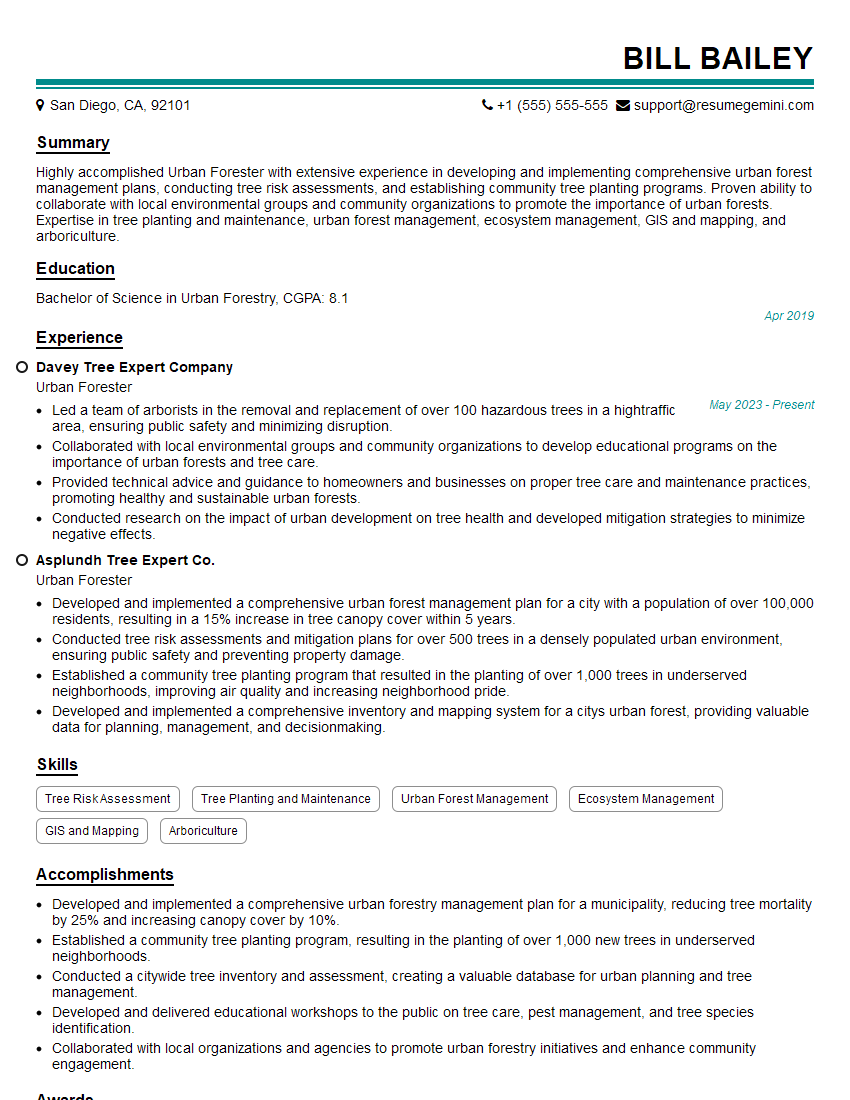
Urban Forester Resume Sample
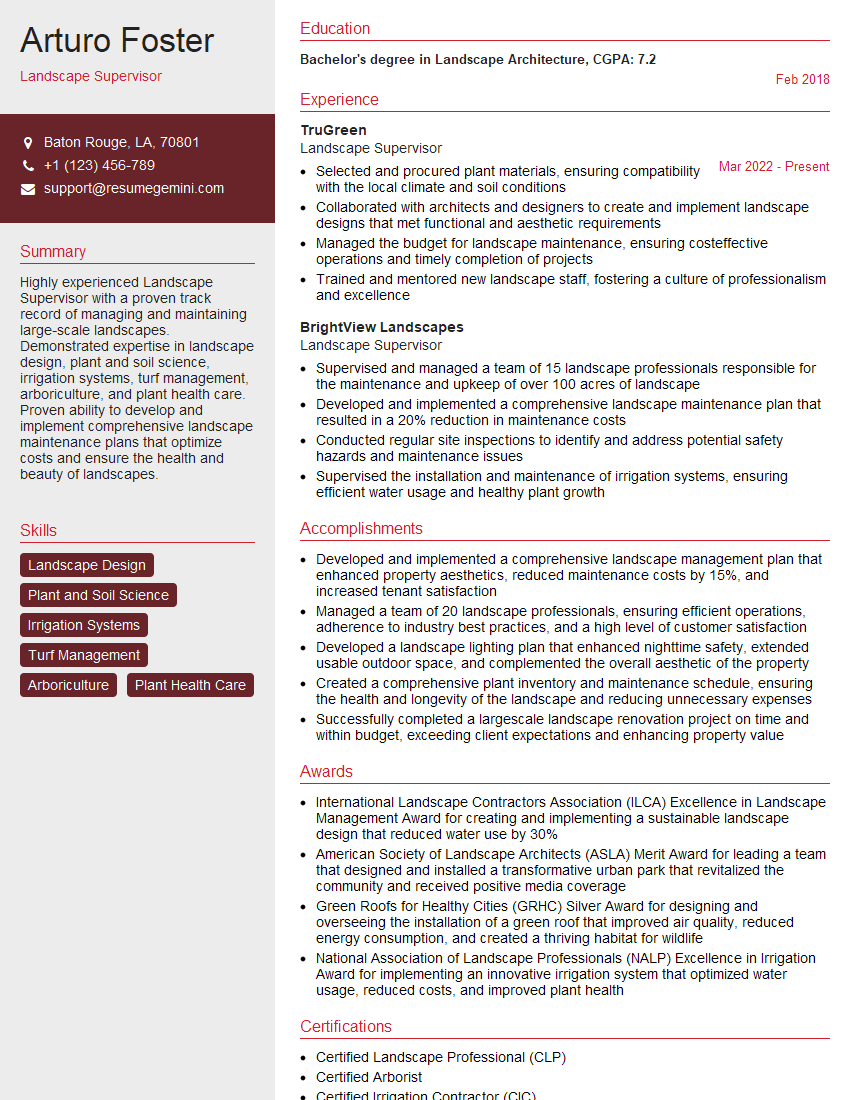
Landscape Supervisor Resume Sample

Groundskeeper Resume Sample

Landscape Technician Resume Sample
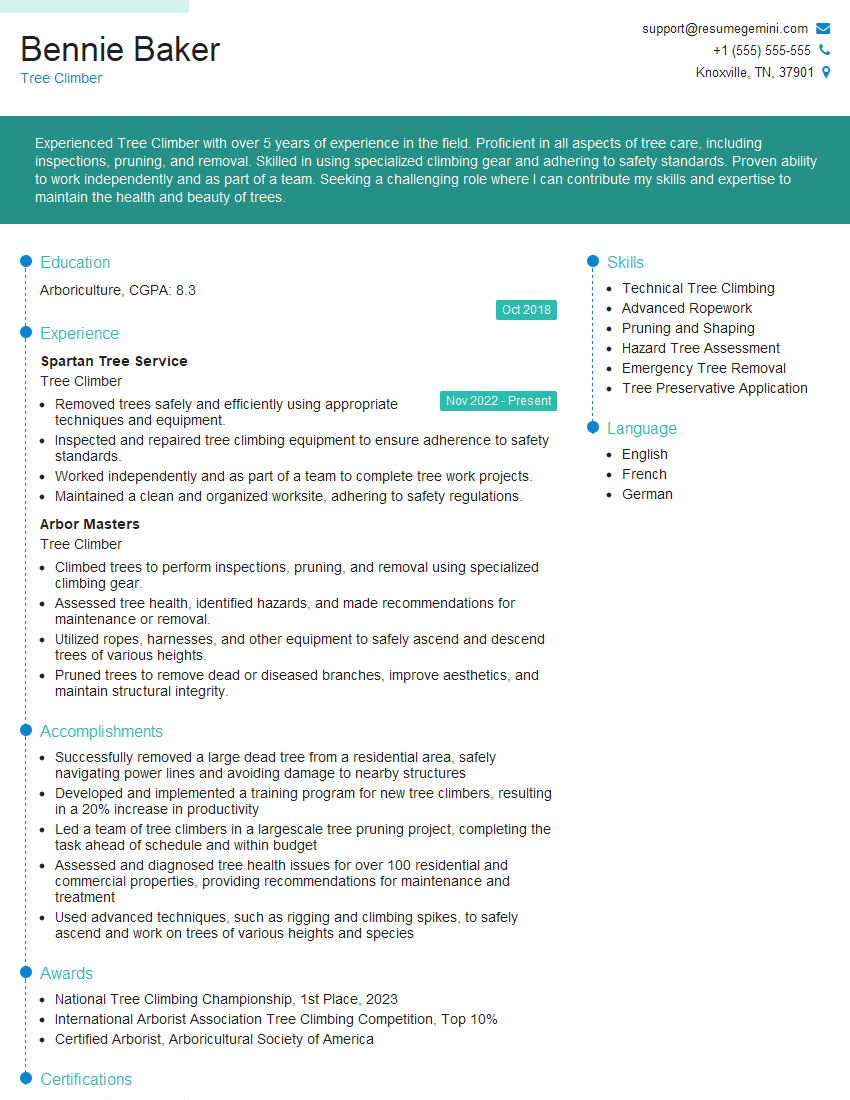
Tree Climber Resume Sample

Tree Surgeon Resume Sample

Tree Planter Resume Sample
Explore more articles
Users Rating of Our Blogs
Share Your Experience
We value your feedback! Please rate our content and share your thoughts (optional).
What Readers Say About Our Blog
Very informative content, great job.
good