Interviews are opportunities to demonstrate your expertise, and this guide is here to help you shine. Explore the essential Radio Communication and Networking interview questions that employers frequently ask, paired with strategies for crafting responses that set you apart from the competition.
Questions Asked in Radio Communication and Networking Interview
Q 1. Explain the difference between Frequency Modulation (FM) and Amplitude Modulation (AM).
Both Amplitude Modulation (AM) and Frequency Modulation (FM) are techniques for transmitting information, like audio, over a radio wave. The key difference lies in what aspect of the carrier wave is modified to represent the information.
In AM, the amplitude (height) of the carrier wave is varied to match the signal’s amplitude. Think of it like a speaker cone – the louder the sound, the further it moves, increasing the amplitude. A simple AM signal might look like a wave whose height changes up and down. AM is susceptible to noise and interference because noise affects the amplitude of the signal.
FM, on the other hand, modifies the frequency (number of cycles per second) of the carrier wave. Imagine a spinning record – a higher pitch means it spins faster, thus higher frequency. Changes in the input signal’s amplitude will alter the frequency of the carrier wave. FM is less susceptible to noise, since noise generally doesn’t alter frequency as significantly as amplitude.
In short: AM varies the height of the wave, while FM varies its speed.
Example: AM radio is more prone to static (noise), while FM radio generally offers clearer reception. This is a direct consequence of their different modulation techniques.
Q 2. Describe the concept of signal propagation and its challenges.
Signal propagation refers to how radio waves travel from a transmitter to a receiver. This journey isn’t always straightforward! Many factors influence the signal’s strength and quality.
- Free Space Propagation: In an ideal scenario, with no obstacles, the signal weakens with the square of the distance. This is known as the inverse square law. Think of a lightbulb; the further you are, the dimmer it appears.
- Reflection: Signals bounce off surfaces like buildings, mountains, and even the ionosphere. This can cause multipath propagation, where the receiver picks up multiple copies of the same signal arriving at different times, leading to interference (fading).
- Diffraction: Signals bend around obstacles. This allows signals to reach areas that are not directly in line-of-sight with the transmitter. Think about how you can still hear a radio station even if a hill is between you and the tower.
- Scattering: Signals get scattered by small objects, such as rain, snow, or foliage. This can lead to a decrease in signal strength.
- Absorption: Some materials, like water or certain building materials, absorb radio waves, reducing their strength.
Challenges: These factors create various challenges, including fading (signal strength fluctuations), multipath interference (signal distortion due to multiple signal paths), shadowing (signal blockage by obstacles), and interference (signals from other sources). Overcoming these challenges often involves techniques like antenna diversity, error correction codes, and adaptive modulation.
Q 3. What are the different types of antennas and their applications?
Antennas are essential components in radio communication, responsible for efficiently converting electrical signals into radio waves (transmission) and vice versa (reception).
- Dipole Antenna: A simple, common antenna consisting of two conductive elements of equal length. Relatively easy to build and used in many applications, including television and radio broadcasting.
- Yagi-Uda Antenna: A highly directional antenna used for receiving signals from a specific direction, often used in TV reception and amateur radio.
- Patch Antenna: A flat, printed circuit board antenna, often used in mobile devices and wireless systems because of their compact size and ease of integration.
- Horn Antenna: Used for higher frequencies (microwaves) and provides highly directional transmission and reception. Commonly found in satellite communication and radar systems.
- Parabolic Antenna/Dish Antenna: A highly directional antenna used for focusing radio waves into a narrow beam. Frequently used in satellite TV, radio astronomy, and microwave point-to-point links.
The choice of antenna depends on factors like frequency, required range, and directivity. For instance, a high-gain directional antenna is perfect for long-range communication, whereas an omnidirectional antenna is preferred for covering a wide area.
Q 4. Explain the concept of multiplexing and its various techniques.
Multiplexing is a technique that allows multiple signals to be transmitted simultaneously over a single communication channel. It’s like having multiple lanes on a highway, all carrying traffic (data) at the same time.
- Frequency-Division Multiplexing (FDM): Different signals are transmitted using different frequency bands. Think of radio stations each broadcasting on a different frequency; you can tune your radio to select one.
- Time-Division Multiplexing (TDM): Different signals are transmitted in different time slots. Imagine several people taking turns talking on a single phone line – each person gets their allocated time.
- Code-Division Multiplexing (CDM): Different signals use different codes to distinguish them. Each signal is spread across the entire frequency spectrum, but each user has a unique code to separate their signal from others. This is widely used in cellular systems like CDMA.
- Wavelength-Division Multiplexing (WDM): Used in fiber optic communication, different signals are transmitted over different wavelengths of light.
Multiplexing is crucial for efficient use of bandwidth and spectrum resources in radio communication and networking.
Q 5. What are the key performance indicators (KPIs) for a wireless network?
Key Performance Indicators (KPIs) for a wireless network provide a measure of its effectiveness and efficiency. These KPIs help network administrators identify areas for improvement and ensure optimal performance.
- Throughput: The amount of data transmitted successfully per unit of time (e.g., Mbps).
- Latency: The delay experienced between sending and receiving data (e.g., milliseconds). Low latency is crucial for real-time applications.
- Signal Strength: The power level of the received signal. A strong signal is less prone to errors.
- Signal-to-Noise Ratio (SNR): The ratio of the signal power to the noise power. A higher SNR indicates better signal quality.
- Packet Loss Rate: The percentage of data packets that are lost during transmission. High packet loss indicates problems with the network.
- Error Rate: The rate of data transmission errors.
- Availability: The percentage of time the network is operational.
- Coverage Area: The geographical area where the network provides acceptable signal strength.
Monitoring these KPIs is essential for maintaining a high-performing and reliable wireless network.
Q 6. Describe the OSI model and its relevance to wireless communication.
The Open Systems Interconnection (OSI) model is a conceptual framework that standardizes the functions of a communication system into seven layers.
- Layer 1 (Physical): Deals with the physical transmission of data (cables, radio waves).
- Layer 2 (Data Link): Handles error detection and correction, and framing of data.
- Layer 3 (Network): Handles routing of data packets between networks.
- Layer 4 (Transport): Provides reliable data transfer between applications (TCP/UDP).
- Layer 5 (Session): Manages connections between applications.
- Layer 6 (Presentation): Handles data formatting and encryption.
- Layer 7 (Application): Provides interfaces for applications to access network services (HTTP, FTP).
Relevance to Wireless Communication: The OSI model provides a structured way to understand and troubleshoot issues in wireless networks. Each layer plays a critical role in ensuring reliable data transmission over a wireless medium. For example, the physical layer deals with antenna characteristics and radio wave propagation, while the data link layer handles the challenges of wireless signal impairments.
Q 7. What are the advantages and disadvantages of different wireless technologies (e.g., Wi-Fi, Bluetooth, cellular)?
Different wireless technologies offer varying advantages and disadvantages, making them suitable for different applications.
- Wi-Fi (IEEE 802.11):
- Advantages: High data rates, relatively inexpensive, widely available.
- Disadvantages: Limited range, susceptible to interference, security concerns.
- Bluetooth:
- Advantages: Low power consumption, short range, easy setup, suitable for personal area networks.
- Disadvantages: Low data rates compared to Wi-Fi, limited range.
- Cellular (e.g., 4G LTE, 5G):
- Advantages: Wide coverage, high data rates (especially 5G), mobility.
- Disadvantages: High cost, requires cellular infrastructure, data usage may be subject to charges.
For example, Wi-Fi is ideal for home networking and office environments where high data rates are needed within a limited area. Bluetooth is well-suited for connecting peripherals like headphones or keyboards, while cellular technology provides broad coverage and high data rates for mobile devices.
Q 8. Explain the concept of channel capacity and its limitations.
Channel capacity, in the context of radio communication, refers to the maximum rate at which data can be reliably transmitted over a communication channel. Think of it like a water pipe: the diameter of the pipe determines how much water (data) can flow through it per unit of time. This capacity is fundamentally limited by several factors.
- Bandwidth: The range of frequencies available for transmission. A wider bandwidth allows for higher data rates, just like a wider pipe allows for more water flow.
- Signal-to-Noise Ratio (SNR): The ratio of the signal power to the noise power. A higher SNR means the signal is clearer, enabling more reliable data transmission. Noise is like sediment in the water pipe, hindering the flow.
- Interference: Signals from other sources can interfere with the desired signal, reducing the effective channel capacity. This is like someone adding more water to the pipe from a different source, causing overflow and disruption.
- Multipath Fading: In wireless communication, signals can take multiple paths to reach the receiver, causing constructive and destructive interference. Imagine the water pipe having many twists and turns, affecting the flow unpredictably.
For instance, a cellular network operating in a crowded urban environment will have lower channel capacity due to high interference and multipath fading compared to a network in a rural area with less interference. Shannon’s theorem provides a mathematical framework for calculating the theoretical channel capacity, but achieving this theoretical limit in practice is always challenging due to the limitations mentioned above.
Q 9. How does error correction work in wireless communication?
Error correction in wireless communication involves techniques to detect and correct errors introduced during transmission. These errors can be caused by noise, interference, or fading. Think of it like sending a message via a postal service where some words might be illegible. Error correction methods ensure the receiver gets the original message.
Common methods include:
- Forward Error Correction (FEC): This involves adding redundant information to the transmitted data. The receiver uses this redundancy to detect and correct errors without requesting retransmission. It’s like sending multiple copies of the message through different postal routes. Common FEC codes include Reed-Solomon and Turbo codes.
- Automatic Repeat Request (ARQ): This method involves the receiver detecting errors and requesting retransmission of the erroneous data packets. It’s similar to asking the postal service for a clearer copy of the damaged message. Different ARQ protocols (e.g., Stop-and-Wait, Go-Back-N, Selective Repeat) exist, each offering different trade-offs between efficiency and reliability.
The choice of error correction technique depends on factors like the channel quality, the desired level of reliability, and the acceptable latency. In high-latency applications like satellite communication, FEC is often preferred to reduce the number of retransmissions. For low-latency applications, ARQ might be more suitable, even if it implies more retransmissions.
Q 10. What are the security considerations for wireless networks?
Wireless networks are inherently vulnerable to security breaches due to the broadcast nature of the medium. Anyone within range of the access point can potentially intercept data, leading to confidentiality, integrity, and availability concerns.
- Eavesdropping: Unauthorized access to transmitted data, compromising confidentiality.
- Data Modification: Malicious alteration of data in transit, compromising integrity.
- Denial of Service (DoS): Attacks that prevent legitimate users from accessing the network, compromising availability.
- Man-in-the-Middle (MITM) Attacks: Interception and manipulation of communication between two parties.
Security considerations include:
- Strong Encryption: Using robust encryption protocols like WPA3 to protect data confidentiality and integrity.
- Access Control: Restricting access to the network based on user authentication and authorization.
- Firewall Protection: Using firewalls to prevent unauthorized access to the network.
- Regular Software Updates: Keeping the network equipment updated with the latest security patches to mitigate known vulnerabilities.
- Physical Security: Protecting the access points from physical tampering or unauthorized access.
For example, a business using a wireless network for sensitive data transmission needs to implement strong encryption, access controls, and regular security audits to safeguard the confidentiality and integrity of the information.
Q 11. Explain the concept of network topology and its impact on performance.
Network topology describes the physical or logical layout of nodes (devices) and connections in a network. This significantly impacts performance. Imagine it like the road system of a city: a well-planned road system makes traffic flow smoothly, while a poorly planned one causes congestion.
- Bus Topology: All nodes are connected to a single cable (the bus). Simple but vulnerable to single points of failure.
- Star Topology: All nodes connect to a central hub or switch. Common in wireless LANs, offering better fault tolerance and scalability.
- Ring Topology: Nodes are connected in a closed loop. Data flows in one direction. Less common now but used in some specialized applications.
- Mesh Topology: Nodes connect to multiple other nodes, offering high redundancy and resilience. Common in wireless sensor networks.
- Tree Topology: A hierarchical structure, often used in larger networks.
The impact on performance relates to:
- Throughput: The amount of data that can be transmitted in a given time. Star and mesh topologies generally offer higher throughput due to reduced collisions and better resource utilization.
- Latency: The time delay in transmitting data. Bus topology can have high latency due to potential collisions.
- Reliability: The robustness of the network against failures. Mesh and star topologies are more reliable than bus topology.
- Scalability: The ability to expand the network. Star topology is generally easier to scale.
Choosing the appropriate topology is crucial for optimizing network performance based on the specific needs and constraints of the application.
Q 12. What are the various types of wireless network security protocols?
Several wireless network security protocols are used to protect wireless networks. These protocols primarily focus on authentication and encryption.
- Wired Equivalent Privacy (WEP): An outdated and insecure protocol with significant vulnerabilities. Should never be used.
- Wi-Fi Protected Access (WPA): An improvement over WEP, using Temporal Key Integrity Protocol (TKIP) for encryption. Also vulnerable and superseded by WPA2.
- Wi-Fi Protected Access II (WPA2): Employs the Advanced Encryption Standard (AES) providing strong encryption. Still widely used but vulnerable to certain attacks.
- Wi-Fi Protected Access III (WPA3): The latest standard, offering enhanced security features including Simultaneous Authentication of Equals (SAE) for stronger password-based authentication and improved protection against attacks.
- Extensible Authentication Protocol (EAP): A framework for authentication that supports various authentication methods, including TLS, PEAP, and TTLS. Often used in enterprise networks for more robust security.
The choice of protocol depends on the security requirements and the capabilities of the network devices. WPA3 is the recommended standard for new installations, offering the best security protection. However, WPA2 remains widely deployed in existing networks.
Q 13. Describe the differences between Time Division Multiple Access (TDMA) and Frequency Division Multiple Access (FDMA).
Both TDMA and FDMA are multiple access techniques used to allow multiple users to share a single radio channel. Imagine it like sharing a road: TDMA is like assigning time slots for each car, while FDMA is like assigning different lanes for each car.
- Time Division Multiple Access (TDMA): Divides the time into slots, assigning each user a specific time slot for transmission. Only one user transmits at a time. Think of it like a round-robin scheduling. Example: GSM cellular networks.
- Frequency Division Multiple Access (FDMA): Divides the available bandwidth into separate frequency channels, assigning each user a dedicated channel. Users can transmit simultaneously without interfering with each other. Think of it like assigning different radio frequencies to different users. Example: older analog cellular networks.
Key differences:
- Resource Allocation: TDMA allocates time slots, while FDMA allocates frequency bands.
- Simultaneous Transmission: FDMA allows simultaneous transmission, while TDMA only allows one user to transmit at a time within a given time slot.
- Spectral Efficiency: FDMA can be less spectrally efficient than TDMA, especially with unused frequency bands. TDMA can be more efficient if time slots are fully utilized.
- Implementation Complexity: TDMA implementation can be more complex due to the need for precise time synchronization.
The choice between TDMA and FDMA depends on factors like bandwidth availability, required data rate, and the number of users.
Q 14. How does Code Division Multiple Access (CDMA) work?
Code Division Multiple Access (CDMA) is a spread-spectrum technique that allows multiple users to share the same frequency band simultaneously without interference. Unlike TDMA and FDMA, it doesn’t divide the frequency or time. Instead, it assigns each user a unique code. Imagine it like assigning each person a unique ‘secret language’ to communicate amidst a crowd; only the intended recipient can understand the message.
Here’s how it works:
- Spread Spectrum: Each user’s data is spread across a wider bandwidth using a unique code sequence (pseudo-noise or PN code).
- Code Orthogonality: The codes are designed to be orthogonal, meaning they don’t interfere with each other when combined. This allows simultaneous transmission by different users on the same frequency.
- Despreading: The receiver uses the same unique code to despread the signal, effectively filtering out the signals from other users.
Example: CDMA was used in older 3G cellular networks and some satellite communication systems. CDMA provides good resistance to interference and multipath fading, making it suitable for challenging wireless environments.
While CDMA offers good interference resistance, it’s less spectrally efficient compared to other multiple access techniques, meaning it requires a wider bandwidth to support the same number of users. This can be a significant factor in frequency-constrained environments.
Q 15. What is the significance of the Shannon-Hartley theorem?
The Shannon-Hartley theorem is fundamental in radio communication because it defines the theoretical upper limit on the rate at which information can be reliably transmitted over a communication channel of a specified bandwidth in the presence of noise. Think of it as the ultimate speed limit for your wireless connection. It states that the channel capacity (C), measured in bits per second, is directly proportional to the bandwidth (B) and the signal-to-noise ratio (SNR).
The formula is: C = B * log₂(1 + SNR)
Where:
Cis the channel capacityBis the bandwidth of the channelSNRis the signal-to-noise ratio, a measure of how strong your signal is compared to the background noise.
The significance lies in understanding the trade-offs between bandwidth, signal power, and noise. For instance, increasing the bandwidth allows for higher data rates, but only up to a point. Similarly, improving the SNR (e.g., by using stronger transmitters or reducing noise) also boosts capacity. Engineers use this theorem to design systems that operate close to this theoretical limit, optimizing resource allocation and maximizing data throughput.
Career Expert Tips:
- Ace those interviews! Prepare effectively by reviewing the Top 50 Most Common Interview Questions on ResumeGemini.
- Navigate your job search with confidence! Explore a wide range of Career Tips on ResumeGemini. Learn about common challenges and recommendations to overcome them.
- Craft the perfect resume! Master the Art of Resume Writing with ResumeGemini’s guide. Showcase your unique qualifications and achievements effectively.
- Don’t miss out on holiday savings! Build your dream resume with ResumeGemini’s ATS optimized templates.
Q 16. Explain the concept of path loss and its effect on signal strength.
Path loss refers to the reduction in signal strength as a radio wave travels from the transmitter to the receiver. Imagine throwing a ball – the further it goes, the weaker the force with which it arrives. Similarly, radio waves lose energy as they propagate through the air (or other media), due to factors like absorption, scattering, and diffraction.
This attenuation significantly impacts signal strength. The signal might become too weak to be reliably detected or decoded, leading to dropped calls, slow data speeds, or communication failures. The amount of path loss depends on several factors, including:
- Distance: The further the signal travels, the greater the path loss.
- Frequency: Higher frequencies experience greater path loss.
- Environment: Obstacles like buildings, trees, and hills can cause significant signal blockage and scattering.
Understanding path loss is crucial for designing efficient wireless systems. Engineers use propagation models to estimate path loss and ensure sufficient signal strength at the receiver. This might involve choosing appropriate transmission power, antenna design, or employing repeaters to compensate for the loss.
Q 17. How does beamforming improve wireless communication performance?
Beamforming is a signal processing technique that focuses the transmitted energy in a specific direction, creating a concentrated beam of radio waves. Instead of radiating energy in all directions (like an omnidirectional antenna), beamforming directs the power towards the intended receiver. Think of it as using a spotlight instead of a floodlight.
This dramatically improves wireless performance by:
- Increasing range: The concentrated energy travels further before significant attenuation.
- Improving signal-to-noise ratio: Less power is wasted on unwanted directions, leading to a stronger signal relative to background noise.
- Reducing interference: The focused beam minimizes interference with other wireless systems.
- Enhancing data rates: The improved SNR enables higher data transmission speeds.
Beamforming is widely used in modern wireless technologies, such as 5G cellular networks and Wi-Fi 6, enabling higher capacity and efficiency. It’s particularly beneficial in densely populated areas where interference is a major concern.
Q 18. What are the challenges associated with implementing a wireless sensor network?
Implementing a Wireless Sensor Network (WSN) presents several unique challenges:
- Limited power: Sensor nodes often rely on batteries with limited lifespan, requiring energy-efficient designs and protocols.
- Scalability: Managing large numbers of nodes and their data transmission can become complex and computationally intensive.
- Security: Wireless communication is vulnerable to eavesdropping and attacks, requiring robust security mechanisms.
- Reliability: Sensor nodes can fail or experience intermittent connectivity, impacting data integrity and network performance. Robust error correction and redundancy are crucial.
- Data aggregation and routing: Efficiently collecting and routing data from numerous nodes across potentially unreliable links requires sophisticated algorithms.
- Deployment and maintenance: Deploying and maintaining sensors in often harsh or inaccessible environments can be costly and challenging.
Addressing these challenges involves careful consideration of hardware design, communication protocols, data processing techniques, and network management strategies. The goal is to create a robust, energy-efficient, secure, and scalable WSN that reliably delivers valuable data.
Q 19. Explain the role of a repeater in extending the range of a wireless network.
A repeater extends the range of a wireless network by receiving a weak signal, amplifying it, and retransmitting it at a higher power. Imagine a relay race: the repeater is like a runner who receives the baton (signal), gives it a boost, and then passes it on to the next runner.
This is particularly useful in areas where the direct signal between the transmitter and receiver is too weak due to distance, obstacles, or path loss. Repeaters effectively create multiple “hops” to bridge the gap, allowing communication over larger distances. However, it’s important to note that each hop introduces additional latency (delay) and potential for signal degradation.
Repeaters are commonly used in various wireless systems, including Wi-Fi networks, cellular networks, and satellite communication systems. Careful placement of repeaters is crucial to optimize network coverage and minimize signal interference.
Q 20. Describe the concept of interference and its mitigation techniques.
Interference in wireless communication occurs when unwanted signals overlap with the desired signal, corrupting the data or preventing successful communication. Imagine trying to hear a conversation in a noisy room – the noise interferes with your ability to understand the speaker.
Several sources can cause interference, including:
- Other wireless devices: Overlapping frequencies from Wi-Fi routers, Bluetooth devices, microwaves, and other radio emitters can cause interference.
- Atmospheric conditions: Rain, snow, and atmospheric noise can attenuate and distort signals.
- Multipath propagation: Signals reflecting off multiple surfaces can arrive at the receiver at slightly different times, creating constructive and destructive interference.
Mitigation techniques include:
- Frequency planning: Careful selection of frequencies to minimize overlap with other devices.
- Antenna design and placement: Using directional antennas and strategically positioning them to reduce interference.
- Spread spectrum techniques: Spreading the signal across a wider frequency band to make it more resilient to narrowband interference.
- Error correction codes: Adding redundancy to the data to allow the receiver to correct errors caused by interference.
- Adaptive modulation and coding: Adjusting the modulation and coding scheme based on the channel conditions to maximize data throughput while mitigating interference.
Q 21. How does MIMO (Multiple-Input and Multiple-Output) technology enhance wireless performance?
MIMO (Multiple-Input and Multiple-Output) technology uses multiple antennas at both the transmitter and receiver to enhance wireless performance. Instead of a single antenna transmitting and receiving, MIMO employs multiple antennas working in parallel. This allows for multiple independent data streams to be transmitted simultaneously.
The benefits of MIMO include:
- Increased data rates: Multiple data streams can significantly increase the overall data throughput.
- Improved reliability: Multiple antennas provide spatial diversity, making the system more resistant to fading and interference.
- Extended range: Spatial diversity can improve signal reception in challenging environments.
- Enhanced spectral efficiency: MIMO allows for more efficient use of the available frequency spectrum.
MIMO is a cornerstone technology in modern wireless systems, including Wi-Fi, 4G LTE, and 5G. Its implementation requires sophisticated signal processing techniques to manage the multiple antennas and data streams effectively. The number of antennas used determines the complexity and performance gains achievable with MIMO.
Q 22. Explain the different layers of the TCP/IP model relevant to wireless networking.
The TCP/IP model, while not directly tied to wireless, is fundamental to its operation. For wireless networking, we primarily focus on the lower layers that handle the physical transmission of data. Let’s break down the relevant layers:
- Physical Layer: This layer deals with the actual transmission of bits over the physical medium. In wireless, this involves radio waves, antennas, modulation techniques (like OFDM), and signal strength. Think of it as the actual ‘airwaves’ carrying your data.
- Data Link Layer: This layer handles error detection and correction, framing of data packets, and media access control (MAC). For wireless, the IEEE 802.11 standard (Wi-Fi) operates at this layer. It defines how devices share the wireless medium, avoiding collisions and ensuring reliable communication. Examples include protocols like CSMA/CA (Carrier Sense Multiple Access with Collision Avoidance).
- Network Layer: This is where IP addressing (IPv4 or IPv6) comes into play, routing data packets across networks, and handling logical addressing. Think of it as the ‘postal service’ delivering your data packets to the correct destination.
- Transport Layer: This layer provides reliable data transfer using protocols like TCP (Transmission Control Protocol) or UDP (User Datagram Protocol). TCP offers reliable, ordered delivery with error checking, while UDP prioritizes speed over reliability. This is where applications choose how to handle data integrity.
In wireless networking, the key focus is on the physical and data link layers, where the unique challenges of wireless transmission (signal interference, fading, mobility) are addressed. The higher layers, network and transport, largely remain unchanged from wired networking.
Q 23. Describe your experience with troubleshooting wireless network issues.
Troubleshooting wireless network issues requires a systematic approach. My experience involves a blend of theoretical knowledge and practical hands-on skills. I start by gathering information: what’s the issue (slow speeds, dropped connections, no connectivity), what devices are affected, and what has changed recently. Then I follow these steps:
- Signal Strength and Interference: I’d use tools like a Wi-Fi analyzer to assess signal strength, identify potential interference sources (microwaves, cordless phones), and check channel utilization. Optimizing channel selection is crucial.
- Hardware Diagnostics: This includes checking cables, verifying correct antenna placement, and testing the functionality of access points and client devices. A faulty wireless card can cause numerous problems.
- Network Configuration: I’d examine the network settings of access points and clients: SSID, security settings (WPA2/3), IP addressing (DHCP or static), and firewall rules. Misconfigurations are frequent culprits.
- Driver and Firmware Updates: Outdated drivers or firmware can lead to compatibility issues and performance problems. Updating these is often a simple but effective solution.
- Network Monitoring Tools: Using tools like Wireshark for packet capture analysis helps pinpoint the exact location of the problem, whether it’s a network configuration issue, hardware malfunction, or driver problem.
For example, I once resolved a slow network issue in a large office by identifying a faulty access point causing congestion on a specific channel. By replacing the faulty device and optimizing channel allocation, I restored network performance to acceptable levels.
Q 24. What are your experiences with different wireless protocols such as 802.11a/b/g/n/ac/ax?
I have extensive experience with various 802.11 standards, understanding their strengths and weaknesses in different contexts. Here’s a comparison:
- 802.11a: Operates in the 5 GHz band, offering higher speeds than b/g but with limited range due to higher frequency.
- 802.11b: Operates in the 2.4 GHz band, offering lower speeds but better range than 802.11a. It’s largely obsolete now.
- 802.11g: Operates in the 2.4 GHz band, providing speeds comparable to 802.11a but with better range than 802.11a. It offered a good balance of speed and range.
- 802.11n: Introduced MIMO (Multiple-Input and Multiple-Output) technology, significantly improving speeds and range through spatial multiplexing. It operates in both 2.4GHz and 5GHz.
- 802.11ac: Operates primarily in the 5 GHz band, offering much faster speeds than 802.11n thanks to wider channels and advanced modulation techniques.
- 802.11ax (Wi-Fi 6): The latest standard, offering even faster speeds, improved efficiency, and better performance in dense environments through features like OFDMA (Orthogonal Frequency-Division Multiple Access).
Choosing the right standard depends on the application’s requirements for speed, range, and the availability of the 5 GHz band. For example, a high-density office environment would benefit from 802.11ax for its efficiency in handling many devices, whereas a remote monitoring system might prioritize 802.11n for its range.
Q 25. Explain your understanding of different modulation schemes used in wireless communication.
Modulation schemes are crucial for converting digital data into radio signals for wireless transmission. They determine how efficiently data is encoded onto the carrier wave, influencing speed, range, and reliability. Common modulation schemes in wireless communication include:
- Amplitude Shift Keying (ASK): Information is encoded by varying the amplitude of the carrier wave. Simple but susceptible to noise.
- Frequency Shift Keying (FSK): Information is encoded by varying the frequency of the carrier wave. More robust to noise than ASK.
- Phase Shift Keying (PSK): Information is encoded by varying the phase of the carrier wave. Higher spectral efficiency than ASK or FSK. Variants like QPSK (Quadrature PSK) and higher-order PSK schemes exist.
- Quadrature Amplitude Modulation (QAM): Combines amplitude and phase modulation, offering high spectral efficiency but more sensitive to noise. Higher-order QAM (e.g., 64-QAM, 256-QAM) is used for faster data rates.
- Orthogonal Frequency-Division Multiplexing (OFDM): A multicarrier modulation technique that divides the available bandwidth into many orthogonal subcarriers, improving robustness to multipath fading (signal reflections).
OFDM is widely used in modern wireless standards like 802.11a/g/n/ac/ax due to its robustness and efficiency. The choice of modulation scheme involves a trade-off between data rate, spectral efficiency, and robustness to noise and fading. For instance, higher-order modulation schemes offer higher data rates but are more susceptible to noise.
Q 26. How would you design a wireless network for a specific application (e.g., a large office building, a remote monitoring system)?
Designing a wireless network requires careful consideration of several factors. Let’s consider two examples:
- Large Office Building: For a large office, a robust and scalable solution is needed. I would employ a multi-AP (access point) architecture using 802.11ax access points strategically placed to ensure good coverage throughout the building. Careful channel planning is crucial to minimize interference between APs. A centralized management system is needed to monitor and manage the network efficiently. Security considerations are paramount, using strong WPA3 encryption. A wired backbone connecting the APs is highly recommended for reliability and speed.
- Remote Monitoring System: This requires a focus on range and reliability. The choice of frequency band (2.4 GHz for better range or 5 GHz for better speed, if the environment allows) would depend on the distance to the monitored site. Long-range wireless technologies like LoRaWAN or cellular networks might be more suitable than Wi-Fi for very distant monitoring. Signal quality and redundancy are crucial for reliable operation. Power consumption needs to be low to extend the battery life of the monitoring devices.
In both cases, thorough site surveys are essential to assess the environment and determine the best AP placement and channel assignment. Careful consideration of security and regulatory compliance is always a top priority. Detailed documentation for future maintenance and troubleshooting is also important.
Q 27. What experience do you have with network monitoring and management tools?
I have experience with various network monitoring and management tools, both commercial and open-source. My experience includes:
- SolarWinds Network Performance Monitor (NPM): Provides comprehensive monitoring of network devices, including wireless access points. It offers performance metrics, alerts, and reporting features, allowing for proactive identification of issues.
- PRTG Network Monitor: A versatile tool that provides monitoring capabilities across various network technologies, including wireless. It offers customization and various alert systems for timely issue resolution.
- Wireshark: A powerful packet analyzer for in-depth analysis of network traffic. Useful for investigating connectivity problems, identifying interference, and troubleshooting security-related incidents.
- AirMagnet WiFi Analyzer: A dedicated wireless network analysis tool used for site surveys, troubleshooting interference, and optimizing channel selection. It allows for detailed analysis of wireless signals, client device information, and channel utilization.
The choice of tool depends on the specific requirements and complexity of the network. For smaller networks, simpler tools might suffice, while larger, more complex networks benefit from the advanced features of comprehensive network monitoring systems. Regular monitoring is essential for proactive maintenance and preventing potential network disruptions.
Q 28. Discuss your knowledge of various wireless spectrum regulations and licensing.
Wireless spectrum regulations and licensing vary significantly across different countries and regions. Understanding these regulations is crucial for deploying legal and compliant wireless networks. Key aspects include:
- Frequency Allocation: Different frequency bands are allocated for various purposes (e.g., Wi-Fi, cellular, Bluetooth). Using frequencies outside the allocated bands is illegal.
- Power Limits: Transmit power is regulated to prevent interference and ensure public safety. Exceeding power limits can result in hefty fines.
- Licensing Requirements: Some frequency bands require licenses, particularly for higher power transmissions or specific applications. These licenses may involve fees and specific operating conditions.
- Interference Mitigation: Regulations often address interference mitigation strategies to ensure efficient spectrum usage and prevent harmful interference with other services. This involves choosing appropriate channels and power levels.
For example, the FCC (Federal Communications Commission) in the US and Ofcom in the UK are responsible for regulating wireless communication in their respective regions. Before deploying a wireless network, it’s imperative to thoroughly research the applicable regulations and obtain necessary licenses if required. Failure to comply can lead to significant legal consequences.
Key Topics to Learn for Radio Communication and Networking Interview
- Fundamentals of Radio Wave Propagation: Understanding concepts like line-of-sight, diffraction, refraction, and multipath propagation is crucial for designing effective communication systems.
- Antenna Theory and Design: Learn about different antenna types (e.g., dipole, patch, yagi), their radiation patterns, gain, and impedance matching. Practical application includes selecting the right antenna for a specific environment and application.
- Modulation and Demodulation Techniques: Mastering various modulation schemes (AM, FM, digital modulation techniques like QAM, OFDM) and their applications in different radio systems is essential.
- Radio Frequency (RF) Circuits and Systems: Gain a solid understanding of RF amplifiers, mixers, filters, and oscillators, and how they contribute to the overall system performance.
- Network Protocols and Standards: Familiarize yourself with relevant communication protocols (e.g., TCP/IP, UDP) and standards (e.g., IEEE 802.11, Bluetooth, Zigbee) used in wireless networks.
- Wireless Network Security: Explore security protocols and best practices for securing wireless communication systems against various threats.
- Troubleshooting and Problem-Solving: Develop your ability to diagnose and resolve issues in radio communication and networking systems. This includes understanding signal strength, interference, and network performance metrics.
- Software Defined Radio (SDR): Explore the principles and applications of SDR technology, which offers flexibility and adaptability in modern communication systems.
Next Steps
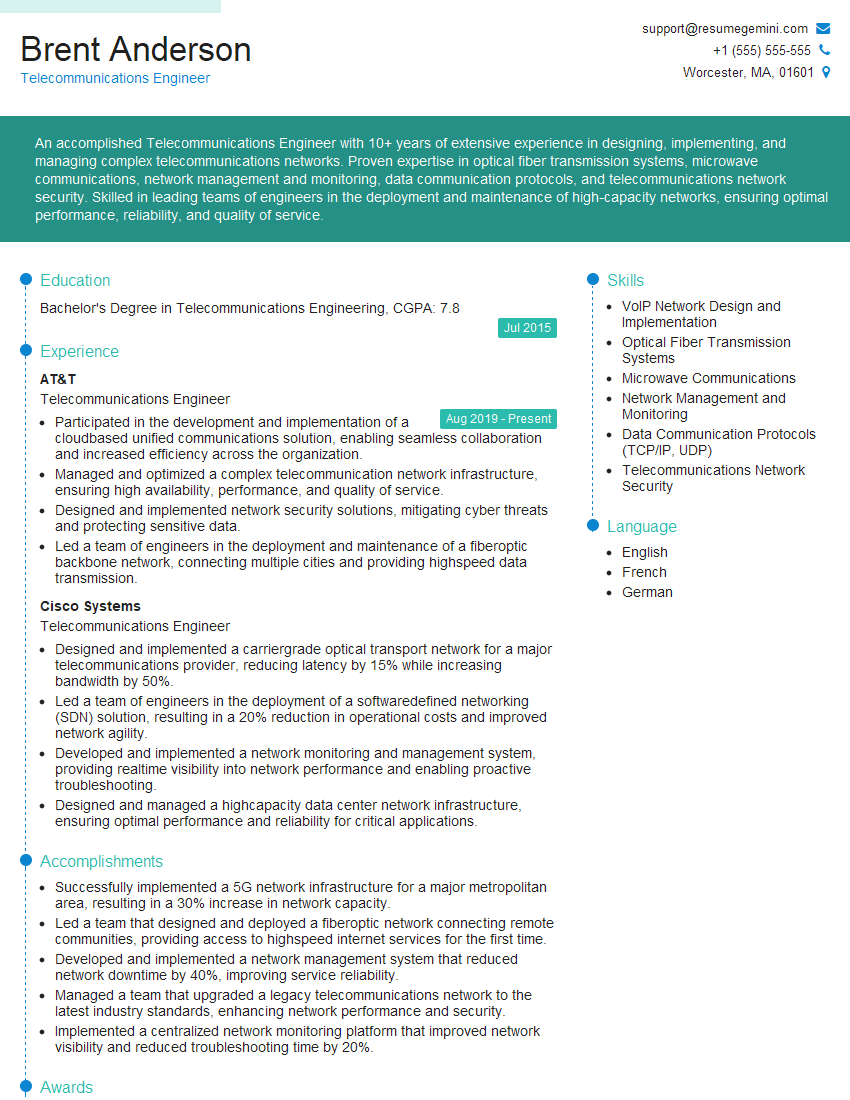
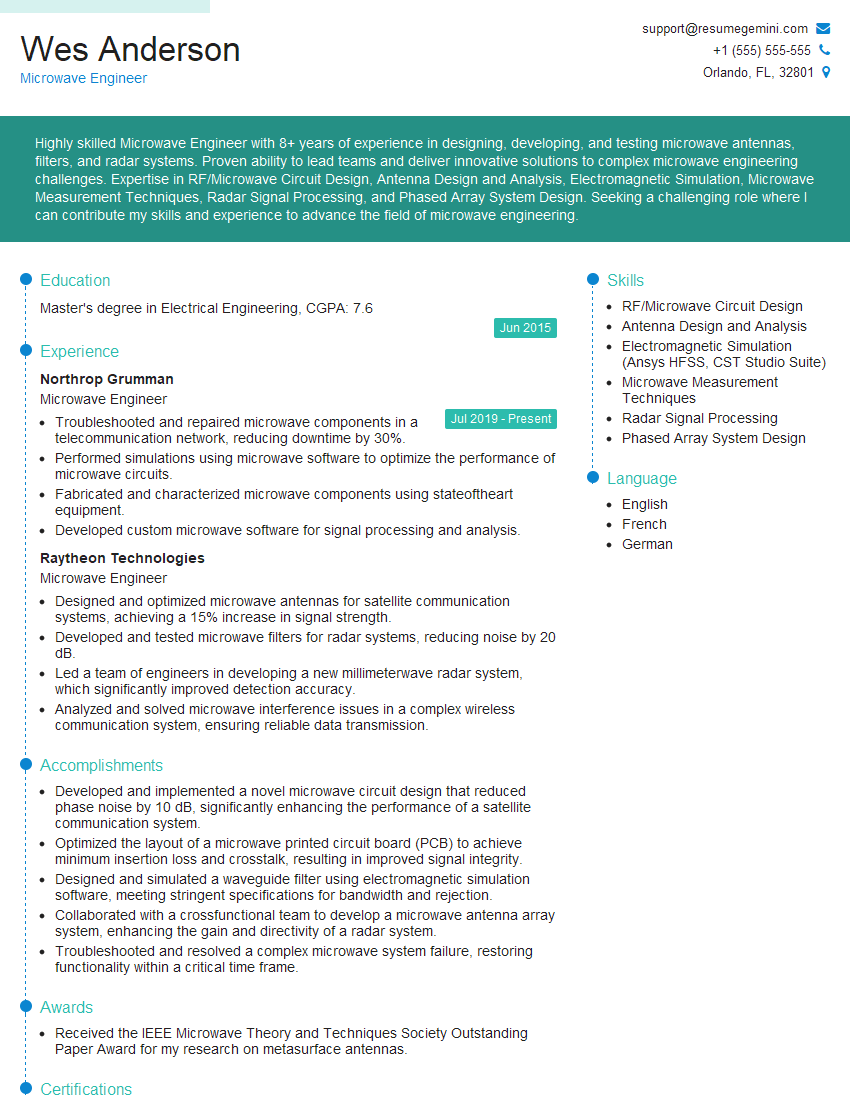
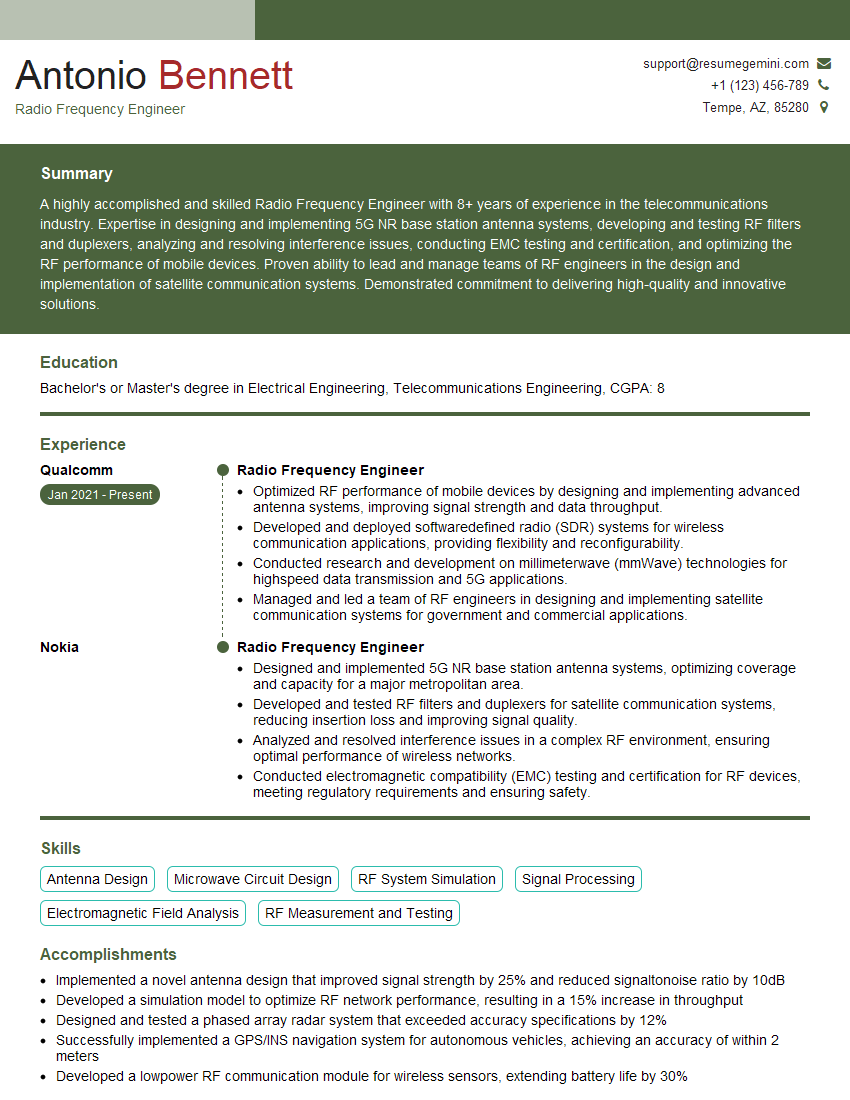
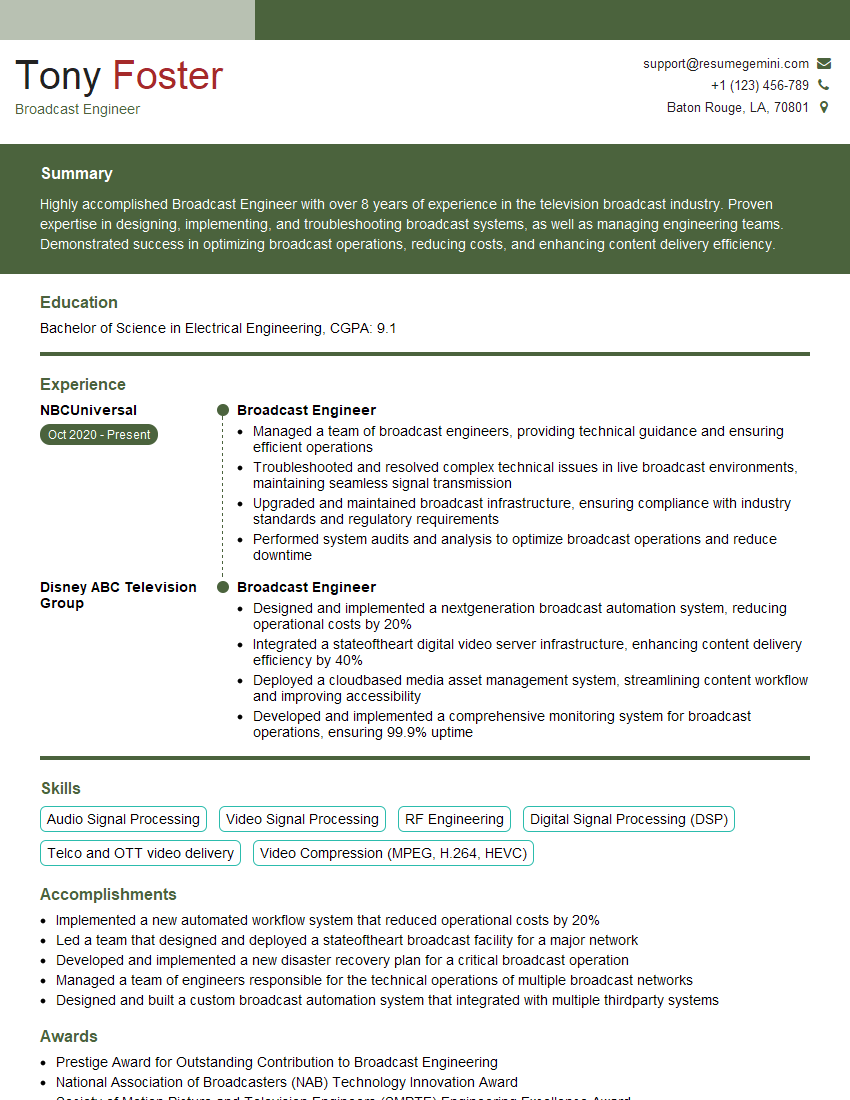
Mastering Radio Communication and Networking opens doors to exciting and rewarding careers in diverse fields, from telecommunications and aerospace to IoT and emergency services. To maximize your job prospects, it’s essential to present your skills and experience effectively. Creating an ATS-friendly resume is crucial for getting your application noticed by recruiters. We highly recommend using ResumeGemini, a trusted resource, to build a professional and impactful resume that highlights your unique qualifications. ResumeGemini provides examples of resumes tailored to Radio Communication and Networking to help you create a winning application.
Explore more articles
Users Rating of Our Blogs
Share Your Experience
We value your feedback! Please rate our content and share your thoughts (optional).
What Readers Say About Our Blog
Very informative content, great job.
good