Interviews are more than just a Q&A session—they’re a chance to prove your worth. This blog dives into essential Faux Wood Blind Installation interview questions and expert tips to help you align your answers with what hiring managers are looking for. Start preparing to shine!
Questions Asked in Faux Wood Blind Installation Interview
Q 1. What are the different types of faux wood blinds available?
Faux wood blinds offer a variety of styles to suit different tastes and needs. The primary variations lie in:
- Slat Size: Common sizes range from 2-inch to 3.5-inch slats. Wider slats create a more modern look, while narrower slats offer greater light control. Think of it like choosing between a wide-angle lens (wider slats) and a telephoto lens (narrower slats) for your window view.
- Color and Finish: The color palette is vast, ranging from classic whites and beiges to rich browns and even vibrant colors. Finishes can vary from matte to glossy, impacting the overall look and reflectivity of the blinds.
- Operating System: You can choose between cordless, corded (standard or continuous loop), or motorized options. Cordless is excellent for child safety, while motorized offers ultimate convenience, especially for hard-to-reach windows. It’s like choosing between a manual car, an automatic, and a self-driving car!
- Headrail Material: The headrail (the top bar) is usually made of PVC or aluminum, and the color typically matches or complements the slats. This is a less noticeable difference, but can still impact the overall aesthetic.
Choosing the right type depends entirely on individual preferences, budget, and the specific window’s characteristics. Consider the room’s style, amount of sunlight, and ease of operation when making your selection.
Q 2. Describe the process of measuring for faux wood blinds.
Accurate measurements are crucial for a perfect fit. It’s best to measure multiple times, and write it down!
Here’s a detailed process:
- Determine the Mounting Method: Decide if you’ll mount the blinds inside the window frame (inside mount) or outside the window frame (outside mount). Inside mount allows for a cleaner, more integrated look, but requires precise measurements. Outside mount gives flexibility but can obscure part of the window.
- Measure the Window Width: Measure the width at three points: top, middle, and bottom. Use the narrowest measurement for your order. Subtract ⅛ inch for inside mount and 1/2 inch for outside mount to ensure a proper fit.
- Measure the Window Height: Measure the height at three points: left, center, and right. Use the longest measurement for your order. Subtract ⅛ inch for inside mount and ½ inch for outside mount (or more as needed). For outside mount, factor in the desired distance of the bottom rail from the window sill.
- Note Headrail and Sill Depth: If doing inside mount, accurately measure the depth of both the window headrail and sill. This ensures the blinds will fit within the frame without obstruction.
- Record Measurements: Write down all measurements clearly, noting the mounting method and any special window characteristics.
Always double-check your measurements to avoid costly mistakes. If unsure, consulting a professional is always recommended.
Q 3. How do you handle difficult window shapes or sizes during installation?
Difficult window shapes and sizes require extra care and sometimes custom solutions.
- Arched Windows: You’ll likely need custom-made blinds or a combination of blinds to fit the arched section. For the straight portion, standard blinds can work, but for the arch, a flexible alternative such as cellular shades or Roman shades might be preferable.
- Angled Windows: Accurate measurements are paramount; the angle needs to be factored into both width and height calculations. Consider using a measuring device that accounts for angles. Custom-made blinds are often necessary.
- Unusual Dimensions: Extremely large or small windows might necessitate custom-made blinds. In this situation, work closely with a blind supplier, providing precise measurements and a detailed sketch of the window.
- Multiple Windows: If installing blinds on multiple windows of varying sizes, use consistency in measurements and mounting to maintain a uniform look across all windows.
Always discuss these complexities with your supplier before ordering. They can often guide you towards the best solutions or provide custom options.
Q 4. Explain the steps involved in installing faux wood blinds.
Installing faux wood blinds typically follows these steps:
- Prepare the Window: Clean the window frame thoroughly to ensure a secure and clean installation. Remove any obstructions.
- Mount the Brackets: Using the provided brackets and screws, securely attach the brackets to the window frame according to the manufacturer’s instructions (inside mount or outside mount). Leveling is crucial.
- Install the Headrail: Carefully slide the headrail onto the mounted brackets, ensuring it’s level and securely fitted. The headrail should rest snugly but not be forced.
- Attach the Valance (Optional): If a valance is included, attach it to the headrail, following the manufacturer’s instructions.
- Operate the Blinds: Test the lift and tilt mechanisms to ensure smooth operation. Adjust the tilt mechanism to control the amount of light entering the room.
Always refer to the manufacturer’s specific instructions as variations exist between brands and models. Taking your time and focusing on precision ensures a clean, professional result.
Q 5. What tools and materials are essential for faux wood blind installation?
Essential tools and materials for faux wood blind installation include:
- Measuring Tape: A reliable tape measure is the foundation of any successful installation.
- Level: Ensuring the brackets and headrail are level prevents the blinds from looking uneven.
- Drill (with appropriate bits): Necessary for securely attaching brackets to the window frame (if inside mount).
- Screwdriver (or drill with appropriate bit): For mounting the brackets.
- Pencil: For marking bracket locations.
- Safety Glasses: Always protect your eyes when drilling.
- Screws (provided with the blinds): Use the screws provided by the manufacturer.
- Optional: Stud finder (for inside mount, to secure into studs for added strength).
Having the right tools not only speeds up the process but also ensures a much neater and more secure installation.
Q 6. How do you ensure proper alignment and tension during installation?
Proper alignment and tension are key for a functional and aesthetically pleasing installation.
- Leveling: Use a level to ensure that both the brackets and headrail are perfectly horizontal. This step is crucial to prevent uneven gaps or tilting of the blinds.
- Bracket Placement: Follow the manufacturer’s guidelines for bracket spacing and placement. Incorrect spacing can result in uneven tension and bowing of the slats.
- Headrail Fit: Make sure the headrail slides smoothly and sits securely in the brackets. Any looseness will compromise the alignment.
- Tension Adjustment (if applicable): Some blinds allow for tension adjustment. If available, adjust according to the instructions to eliminate any sagging or unevenness in the slats.
Remember, even small inconsistencies in alignment can be very noticeable, so precision is paramount. If you have concerns, it’s always best to consult the manufacturer’s documentation or seek professional help.
Q 7. What are common problems encountered during faux wood blind installation?
Common problems during faux wood blind installation include:
- Incorrect Measurements: This leads to blinds that don’t fit properly. Always double-check your measurements before ordering.
- Uneven Bracket Placement: This results in tilted blinds. A level is essential for accurate placement.
- Difficulty Operating the Blinds: This can be caused by incorrect installation or mechanical issues with the blinds themselves. Check the manufacturer’s instructions carefully.
- Slats Sticking or Binding: This often arises from dust or debris or simply the slats not being fully seated. Careful cleaning and inspection can often remedy this.
- Damage to the Blinds or Window Frame: Always exercise caution and use appropriate tools to prevent damage during installation.
Prevention is key. Careful planning, precise measurements, and following the manufacturer’s instructions can minimize these issues. If problems persist, consult a professional.
Q 8. How do you troubleshoot issues such as tilting or lifting problems?
Tilting and lifting problems with faux wood blinds usually stem from issues with the cord mechanism, the headrail, or the slats themselves. Troubleshooting begins with a visual inspection.
- Check the cords: Are they tangled, frayed, or broken? A simple untangling might solve the problem. If a cord is broken, replacement is usually necessary. This often involves carefully removing the bottom rail and replacing the affected cord, feeding it through the slats and mechanism.
- Examine the headrail: Is the tilt mechanism jammed or loose? Sometimes a gentle tap or adjustment can free it. If the headrail itself is damaged, replacement might be needed.
- Inspect the slats: Are any slats warped or broken, causing binding? Individual slats can sometimes be replaced, but it requires careful measurement and matching of the blind’s style. In severely damaged cases, a full replacement might be more cost-effective.
- Lubrication: Applying a small amount of silicone-based lubricant to the moving parts, such as the tilt mechanism and the cord guides, can resolve minor sticking or sluggish movement.
Remember to always disconnect the blinds from the wall before attempting any repairs to prevent accidental damage or injury.
Q 9. What safety precautions should be taken during installation?
Safety is paramount during faux wood blind installation. I always prioritize these precautions:
- Proper tools: Using the correct tools (level, drill with the appropriate bits, measuring tape, etc.) minimizes the risk of accidents.
- Protective gear: Safety glasses protect my eyes from debris. Gloves protect my hands from splinters or rough surfaces.
- Ladder safety: If using a ladder, ensure it’s stable and on a level surface. Never overreach. A helper is always appreciated for added safety.
- Electrical safety: Always turn off power to nearby outlets before drilling into the wall or installing brackets near electrical wiring. If unsure, I consult with a qualified electrician.
- Careful handling: Faux wood blinds can be surprisingly heavy. I always handle them gently to avoid dropping them or damaging the slats.
- Working space: I always clear the working area to prevent tripping hazards or unintended damage to furniture or other items.
By carefully considering these safety measures, I can ensure a safe and efficient installation.
Q 10. Describe your experience with different mounting methods (inside vs. outside mount).
I’m experienced with both inside and outside mount installations. The choice depends on the customer’s preference and the window’s characteristics.
- Inside Mount: The blinds are mounted inside the window frame. This provides a clean, integrated look, but it requires precise measurements to ensure a proper fit. It also reduces the amount of light blockage. I’ve installed these countless times in various window types, always carefully measuring to ensure no gaps for light leakage.
- Outside Mount: The blinds are mounted outside the window frame, often on the wall or casing. This offers more flexibility in sizing, allowing for wider coverage, and can be used for windows that are difficult to install blinds within the frame. However, it can result in more light blockage and potentially a less visually appealing installation unless carefully planned and executed.
For example, I recently installed inside mount blinds in a home with many large windows, maximizing natural light. In another project, outside mounting was necessary because of oddly sized windows with trim that hindered inside mounting. The key is flexibility and selecting the method that best suits the specific situation.
Q 11. How do you handle customer concerns or complaints about the installation?
Addressing customer concerns is crucial. My approach involves:
- Active listening: I carefully listen to the customer’s concerns without interruption, ensuring they feel heard and understood.
- Empathetic response: I acknowledge their feelings and validate their concerns. Sometimes, simply acknowledging their frustration can defuse the situation.
- Problem identification: I work with the customer to identify the root cause of their concern, whether it’s a faulty installation, a malfunctioning component, or a misunderstanding.
- Solution-oriented approach: I offer practical solutions, prioritizing quick and effective resolutions. This might involve a repair, replacement, or a follow-up visit to address the issue completely.
- Professionalism: I maintain a calm and professional demeanor, even in stressful situations.
I once had a customer complain about a slight gap at the side of their blinds after installation. Careful re-examination revealed a slight imperfection in the window frame that I hadn’t noticed initially. By explaining the situation and offering a minor adjustment to the bracket, I successfully resolved the issue to the customer’s satisfaction. Good communication and a commitment to resolving the issue are crucial.
Q 12. What is your experience with various types of window frames (wood, vinyl, metal)?
My experience encompasses various window frames. Each type presents unique challenges:
- Wood frames: These are usually straightforward; however, the type of wood and its age influence how securely the brackets fasten. Pre-drilling pilot holes can be extremely beneficial to prevent splitting.
- Vinyl frames: These require careful drilling to prevent cracking or splitting. Using specialized drill bits for vinyl is essential. I always test in an inconspicuous area first.
- Metal frames: These can be more challenging as they require specific screws and drills to avoid stripping the threads. I use appropriate metal screws to provide the necessary support.
Adaptability is key. I’ve learned to adjust my techniques based on the material, ensuring secure and damage-free installation regardless of the window frame type. For example, I might use longer screws for metal frames to ensure a solid hold than for a wood or vinyl frame, or utilize a masonry bit if necessary. Prior research into the frame composition is crucial for a successful and lasting installation.
Q 13. How do you determine the correct length and width of blinds for a given window?
Accurately determining blind dimensions is critical. I always measure twice, measure thrice, and then measure once more!
- Width measurement: I measure the width of the window at three points—the top, middle, and bottom—and select the smallest measurement. This accounts for any slight variations in the frame.
- Length measurement: For inside mount, I measure the window’s height from the top of the frame to the window sill. For outside mount, I measure the desired length from the mounting point to the sill or preferred stopping point.
- Deductions: For inside mount, I deduct a small amount (typically 1/4 inch to 1/2 inch) from both the width and height measurements to allow for a snug fit within the window frame.
- Confirmation: I always confirm the measurements with the customer before ordering the blinds, and I keep the written measurements handy throughout the installation to avoid any confusion.
I’ve learned that rushing this process only results in re-work! Careful measurement is essential for a perfect fit. The last thing I want is to end up needing to return for a re-measure and installation.
Q 14. What are the best practices for cleaning and maintaining faux wood blinds?
Cleaning and maintaining faux wood blinds prolongs their lifespan and keeps them looking their best.
- Regular dusting: I recommend weekly dusting with a feather duster or microfiber cloth to remove dust and debris. This prevents the accumulation of grime that is more difficult to clean later.
- Periodic cleaning: For deeper cleaning, I recommend using a slightly damp (not soaking wet) cloth or sponge, and a gentle, non-abrasive cleaner. Never use harsh chemicals or abrasive cleaners, as they can damage the finish.
- Slats cleaning: To effectively clean the slats, I work methodically from top to bottom. For more stubborn grime, I use a soft bristle brush to loosen before wiping.
- Drying: After cleaning, I gently wipe the slats with a dry cloth or allow them to air dry to prevent water damage or streaking.
- Cord cleaning: The cords can be cleaned gently using a damp cloth, especially if there is dust buildup from running along the slats. Avoid excessive wetness.
I always advise customers to avoid using harsh cleaning agents that could damage the blinds’ surface. Using simple, gentle methods will keep them looking pristine for a very long time.
Q 15. How do you manage your time and prioritize tasks effectively during installations?
Effective time management during installations is crucial for meeting deadlines and maintaining client satisfaction. My approach involves a three-step process: planning, execution, and review. Before starting any installation, I meticulously review the measurements, the type of blinds, and the specific installation requirements. This allows me to create a detailed timeline and prioritize tasks based on complexity and dependencies. For example, if I’m installing blinds in multiple rooms, I’ll prioritize rooms with the most complex window configurations first. During execution, I maintain a focused workflow, using checklists to track progress and ensure no steps are missed. After each installation, I take a few minutes to review the job, noting what went well and what could be improved for future installations. This continuous improvement cycle ensures efficiency and reduces potential errors.
Career Expert Tips:
- Ace those interviews! Prepare effectively by reviewing the Top 50 Most Common Interview Questions on ResumeGemini.
- Navigate your job search with confidence! Explore a wide range of Career Tips on ResumeGemini. Learn about common challenges and recommendations to overcome them.
- Craft the perfect resume! Master the Art of Resume Writing with ResumeGemini’s guide. Showcase your unique qualifications and achievements effectively.
- Don’t miss out on holiday savings! Build your dream resume with ResumeGemini’s ATS optimized templates.
Q 16. Describe your experience with working from ladders or lifts.
Safety is paramount when working at heights. I’ve extensive experience using both ladders and lifts, always prioritizing safety measures. Before any work begins, I thoroughly inspect the equipment to ensure it’s in perfect condition, making sure everything is properly secured and stable. I always use appropriate safety harnesses and follow all manufacturer instructions, especially when working with lifts. For instance, I never exceed the weight capacity and always have a spotter when working from a ladder, particularly if the job requires reaching awkward angles or handling large, heavy blinds. I am certified in safe ladder and lift operation, and my safety record is impeccable.
Q 17. How do you handle unexpected challenges or complications during an installation?
Unexpected challenges are part of the job. My approach is to remain calm, assess the situation methodically, and find creative solutions. For instance, I once encountered an unexpected discrepancy between the initial measurements and the actual window dimensions. Instead of panicking, I carefully measured again and then contacted the client to discuss options. We decided to adjust the blinds slightly and I successfully completed the installation while maintaining quality. My experience enables me to anticipate potential problems—such as faulty hardware or difficult-to-reach windows—and develop contingency plans beforehand. Communication with the client is also key in such situations; I always keep them informed of any delays or adjustments.
Q 18. What is your understanding of building codes and regulations related to window treatments?
Understanding building codes is critical for legal and safe installations. I’m familiar with relevant codes pertaining to window treatments, including those related to fire safety, child safety (cord management), and energy efficiency. I ensure that all installations comply with local regulations, which might vary by region. For example, some areas mandate specific cord-management techniques to prevent strangulation hazards, while others have regulations on the type of materials that can be used near heat sources. I stay updated on these regulations through professional development courses and by consulting relevant code books and resources before every project. This ensures compliance and prevents potential safety issues.
Q 19. What is your experience with motorized or automated faux wood blinds?
I have significant experience installing motorized and automated faux wood blinds. These systems add convenience and sophistication but require specialized knowledge. My expertise covers various automation technologies, including battery-powered systems, hardwired systems, and smart home integration options. I’m proficient in troubleshooting common issues, such as connectivity problems or motor malfunctions. For example, I’ve successfully diagnosed and repaired issues with a malfunctioning remote control by carefully examining the wiring and the motor’s power supply. I understand the importance of proper programming and integration with smart home systems like Alexa or Google Home, ensuring seamless operation for the client.
Q 20. How do you ensure a professional and clean installation site?
Maintaining a clean and professional installation site is essential for both client satisfaction and my own reputation. Before starting any work, I cover the floor and furniture with protective materials. I meticulously clean up any dust or debris generated during the installation process and dispose of waste properly. After installation, I perform a thorough final clean, ensuring that the area is left exactly as I found it. I treat every client’s home with the utmost respect, taking care not to damage walls or furnishings. This careful approach has always resulted in positive client feedback and referrals.
Q 21. Describe your experience with different types of hardware used in blind installations.
My experience encompasses a wide range of hardware used in blind installations. I’m familiar with various mounting brackets, screws, and other fasteners, selecting the appropriate hardware based on the type of window and the weight of the blinds. I’m proficient in using different types of child safety devices, ensuring compliance with all relevant regulations. I’m also experienced with specialized hardware for motorized blinds, including power supplies, wiring connectors, and control systems. I can quickly identify and resolve issues with faulty hardware, often having spare parts on hand to address minor problems immediately. Understanding the nuances of different hardware is key to a smooth and successful installation.
Q 22. How do you calculate material costs for a faux wood blind installation project?
Calculating material costs for faux wood blind installation involves several key steps. First, you need precise measurements of each window. This ensures you buy the correct amount of blinds, avoiding costly waste or shortages. Next, you need to identify the specific type of faux wood blind the client has chosen; different manufacturers and styles have varying prices.
For example, a client might choose 2” slats versus 2 1/2” slats, which impacts price per square foot. You’ll also need to factor in the cost of mounting hardware (brackets, screws, etc.), which varies depending on the window type and installation method. Add in any additional components like valances or decorative tapes. Finally, factor in sales tax and any potential shipping fees. I always create a detailed breakdown for clients, showing each individual cost item, to ensure transparency.
A simple formula to consider might be: Total Cost = (Window Area * Price per sq ft of Blinds) + (Hardware Cost) + (Additional Component Costs) + (Tax) + (Shipping). This is a simplified example, but it highlights the essential elements. The more detailed the initial measurement and selection process, the more accurate this final calculation will be.
Q 23. What is your process for inspecting the installed blinds for quality?
My quality inspection process is meticulous and thorough. It begins even before installation, with a careful check of the blinds for any manufacturing defects – damage to slats, inconsistencies in color, or operational issues. Once installed, I meticulously check for proper alignment of the slats, smooth operation of the lift cord and tilt mechanism, and correct fitting of brackets and mounting hardware. I also assess the overall appearance, ensuring a neat and professional finish. I look for gaps between the blinds and the window frame, checking for proper sealing to prevent light leaks or drafts.
I also evaluate the functionality by opening and closing the blinds multiple times, noting how smoothly they operate. If the client is present, I encourage them to participate in this final quality check, addressing any concerns they may have immediately. I take detailed photos of the completed installation as a record of the quality and for any future reference. If any issues are detected during inspection, they are immediately addressed before considering the installation complete. Think of it like a final walkthrough for a construction project – every detail matters for client satisfaction.
Q 24. How do you communicate effectively with clients and other contractors?
Effective communication is paramount in my work. With clients, I prioritize clear, concise explanations about the installation process, material options, and potential costs. I use visual aids like brochures or even show samples of different blind materials to aid understanding. I also encourage open dialogue, answering all questions thoroughly and patiently, and making sure they are fully informed throughout the project.
When working with other contractors, I ensure timely and accurate information exchange. If delays or changes arise, I promptly notify the relevant parties. I maintain clear, professional communication via email or phone, using detailed schedules and progress reports to keep projects on track. It’s all about building mutual trust and ensuring everyone is on the same page, preventing confusion and ensuring a seamless project flow. I consider excellent communication a cornerstone of professional success.
Q 25. Explain your experience working independently and as part of a team.
I possess extensive experience working both independently and as part of a team. As an independent contractor, I am responsible for managing my own schedule, sourcing materials, and interacting directly with clients. This has honed my organizational and time-management skills, as well as my ability to handle client relations effectively. A recent solo project involved installing custom faux wood blinds in a large Victorian home – a project demanding precision and independent problem-solving.
In team settings, I’ve learned the value of collaboration and clear communication. I thrive in environments where my skills and experience complement those of my colleagues. For instance, I was part of a team that installed blinds in a large office complex. The coordination of materials, scheduling of installers, and ensuring every installation met the high standards of the client was a successful collaborative effort. I excel in both environments and am a valuable asset whether working alone or contributing to a team.
Q 26. Describe your experience with warranty claims and repair procedures.
My experience with warranty claims and repair procedures involves prompt and professional handling of any issues. I always thoroughly document the installation process, including photos, to facilitate any future claims. When a warranty claim arises, I promptly investigate the problem, determining whether the issue is covered under the manufacturer’s warranty or if it’s due to factors beyond the scope of the warranty (e.g., client misuse). I then work with the manufacturer and the client to resolve the issue quickly and efficiently, arranging for repairs or replacements as necessary.
For example, I once had to address a claim concerning a malfunctioning lift cord. After verifying the issue was a manufacturing defect, I worked with the manufacturer to obtain a replacement cord and efficiently repaired the blinds, ensuring minimal disruption to the client. Open communication and a commitment to client satisfaction are key to resolving warranty claims fairly and professionally. My goal is always to maintain a positive relationship with both the client and the manufacturer.
Q 27. How do you stay updated with the latest techniques and trends in blind installation?
Staying current in the blind installation field is crucial. I achieve this through several methods. I regularly attend industry trade shows and workshops, networking with other professionals and learning about the latest products and installation techniques. I also subscribe to industry publications and online forums, keeping abreast of new trends and technological advancements. This includes understanding new automation systems for blinds and advancements in materials, such as improved durability and eco-friendly options.
I also actively seek out continuing education opportunities, participating in online courses and manufacturer training programs to refine my skills and knowledge. Staying updated not only enhances my professional capabilities but also demonstrates a commitment to delivering high-quality workmanship and superior customer service. The industry is always evolving, and I am dedicated to maintaining my position at the forefront of these advancements.
Q 28. What are your salary expectations for this position?
My salary expectations are commensurate with my experience and expertise in the field of faux wood blind installation. Considering my extensive experience, proven track record of successful installations, and commitment to delivering high-quality workmanship, I am seeking a competitive salary reflecting my value to the organization. I am open to discussing specific salary figures based on the details of the position and benefits package offered. I am confident that my skills and contributions will be a significant asset to your company.
Key Topics to Learn for Faux Wood Blind Installation Interview
- Measuring and Ordering: Accurately measuring window dimensions for correct blind sizing and understanding different ordering specifications (inside mount vs. outside mount, etc.).
- Installation Techniques: Mastering various installation methods for different window types (casements, sliders, double-hung), including the use of appropriate tools and hardware.
- Troubleshooting Common Issues: Identifying and resolving problems such as uneven blinds, tilting mechanisms malfunctions, and cord adjustments. This includes understanding the different types of mechanisms and their functionalities.
- Safety Procedures: Adhering to safety regulations and best practices during installation to prevent injury and property damage. Knowing how to use safety equipment appropriately.
- Material Knowledge: Understanding the properties of faux wood blinds, including their durability, maintenance, and cleaning requirements. Differentiating between different grades or types of faux wood.
- Customer Interaction: Understanding how to effectively communicate with clients, address concerns, and provide excellent customer service throughout the installation process.
- Tools and Equipment: Familiarity with the necessary tools and equipment for efficient and precise blind installation, and their proper usage and maintenance.
- Warranty and Maintenance: Understanding warranty procedures and how to address client inquiries regarding maintenance and potential repairs.
Next Steps
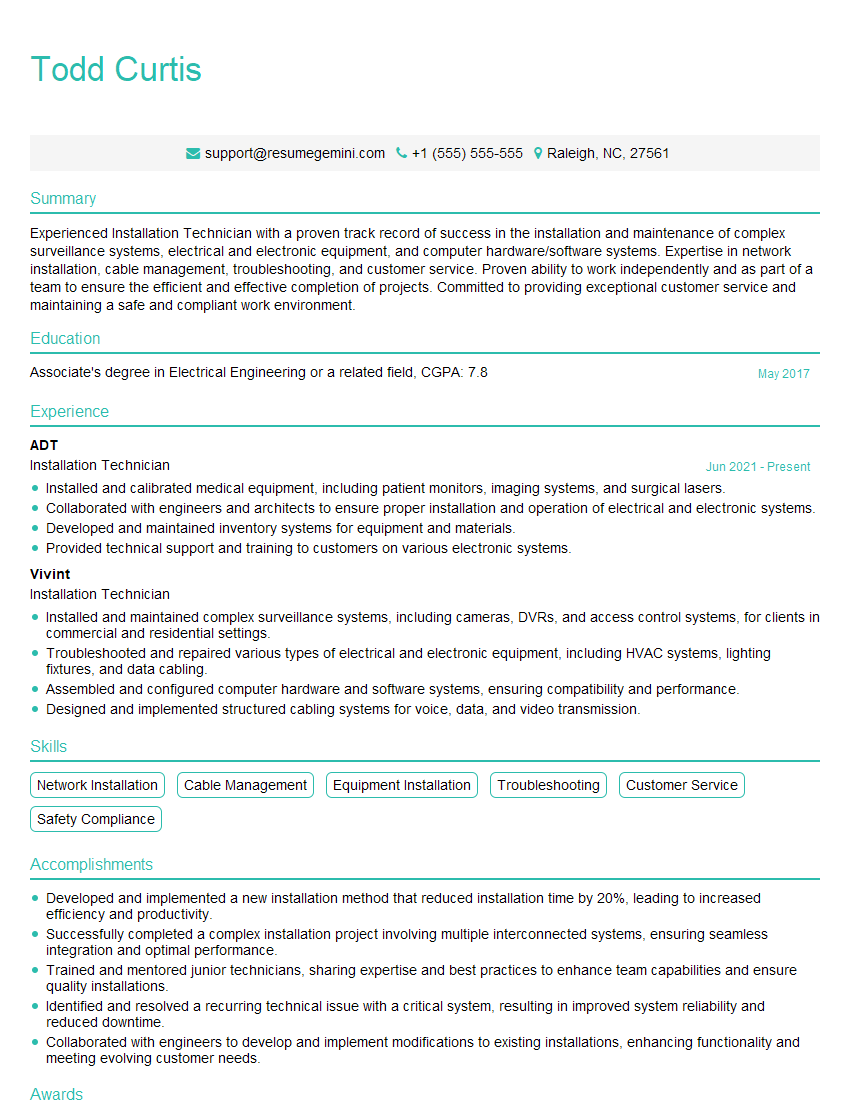
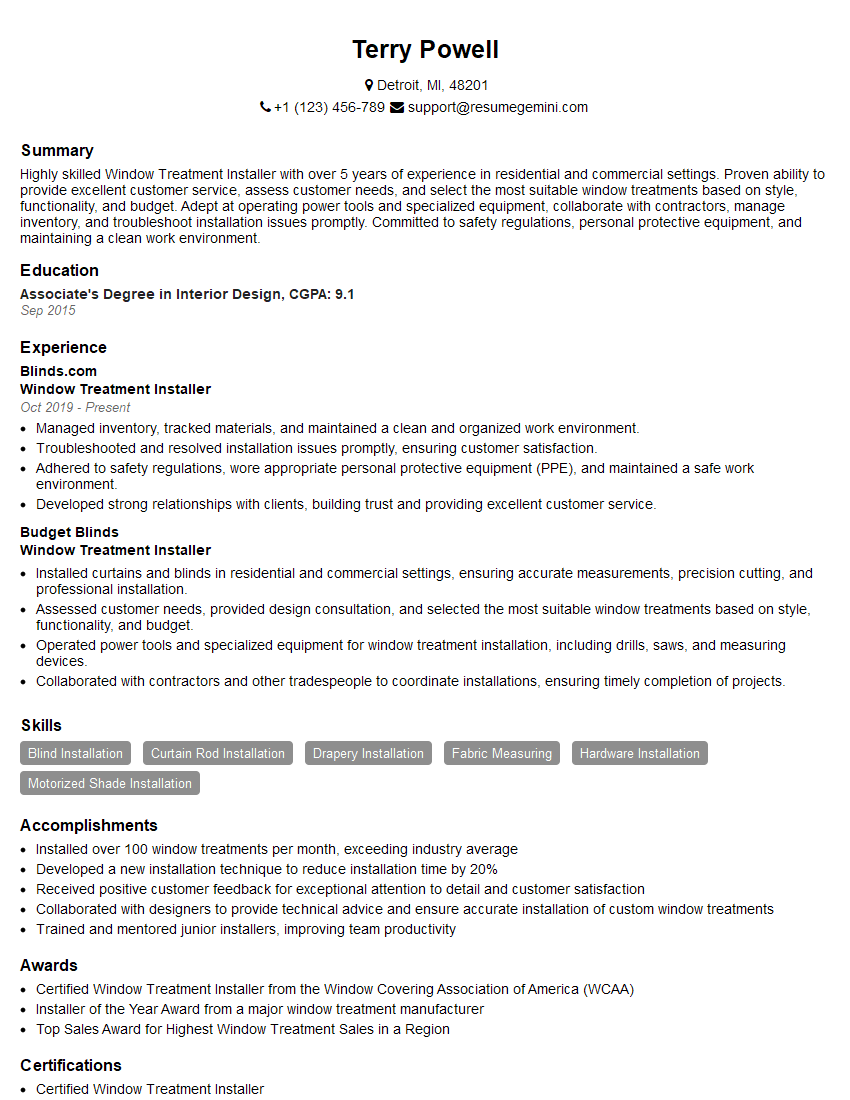
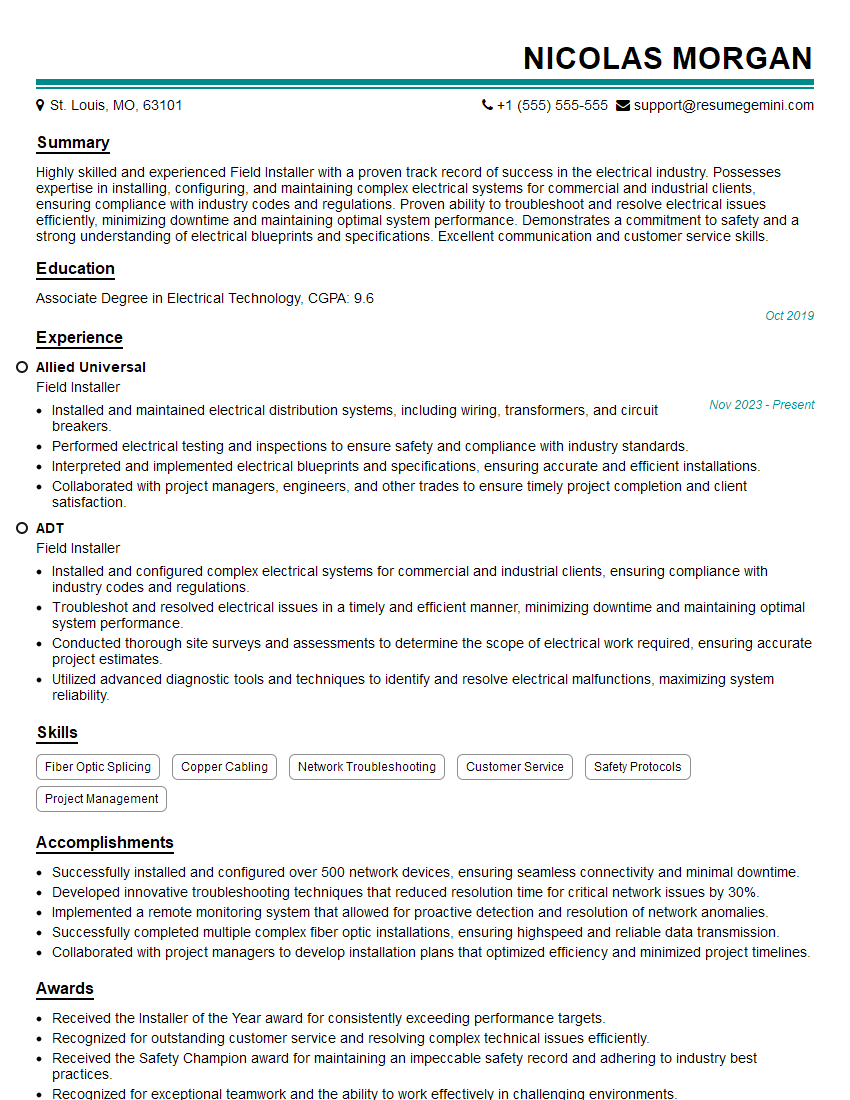
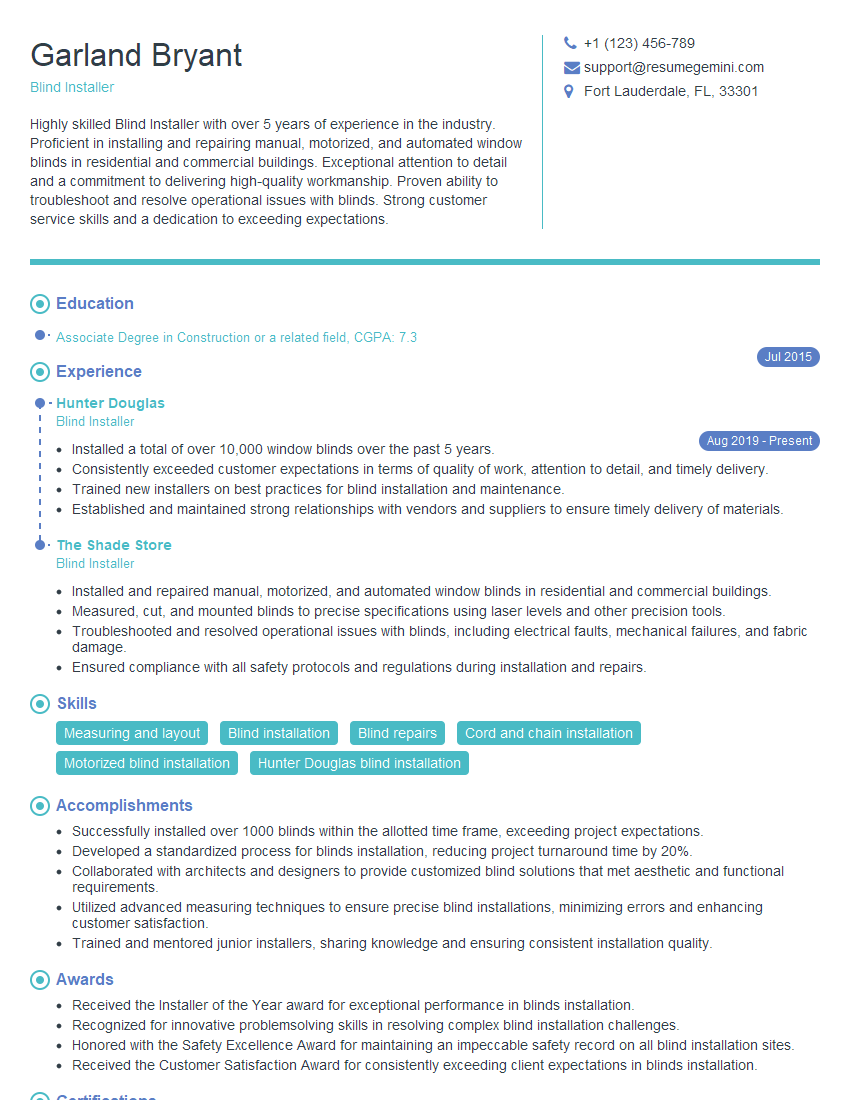
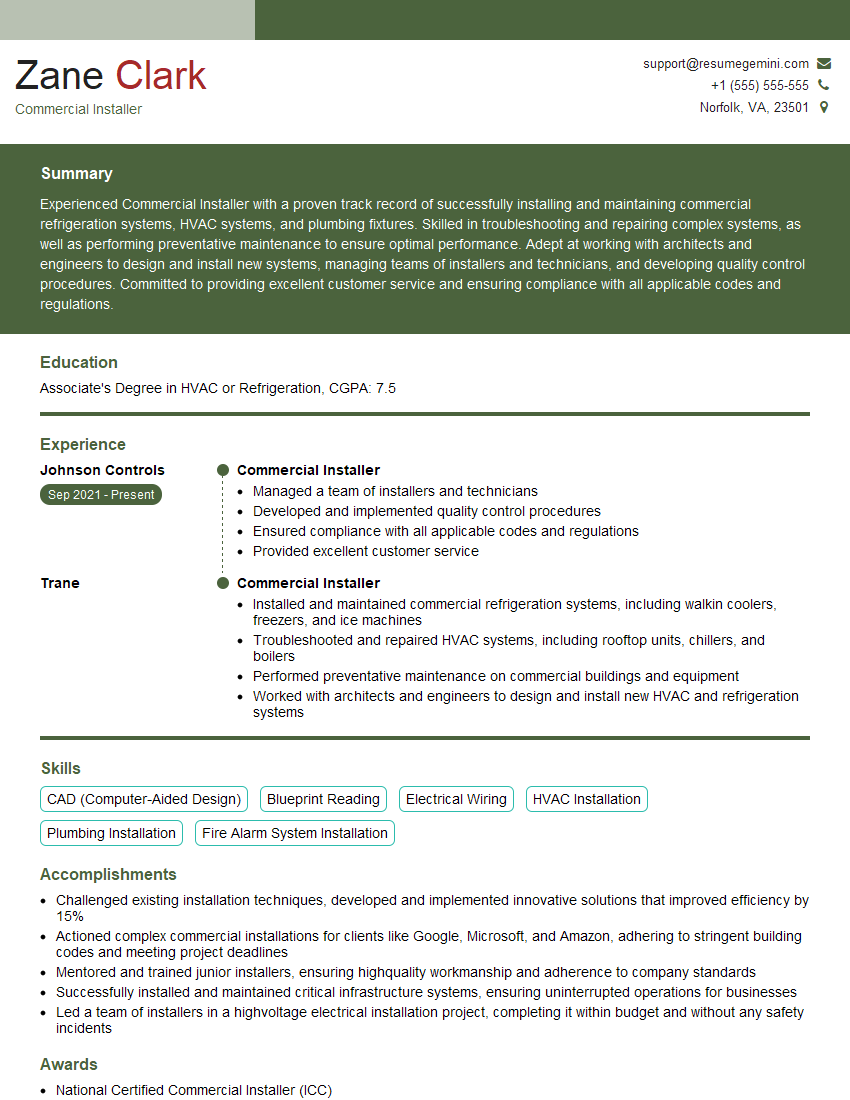
Mastering Faux Wood Blind Installation opens doors to a rewarding career with opportunities for growth and specialization. A strong resume is crucial for showcasing your skills and experience to potential employers. Creating an ATS-friendly resume ensures your application gets noticed by hiring managers. ResumeGemini is a trusted resource that can help you build a professional and impactful resume, significantly increasing your chances of landing your dream job. Examples of resumes tailored to Faux Wood Blind Installation are available to further assist you in this process.
Explore more articles
Users Rating of Our Blogs
Share Your Experience
We value your feedback! Please rate our content and share your thoughts (optional).
What Readers Say About Our Blog
Very informative content, great job.
good