Interviews are opportunities to demonstrate your expertise, and this guide is here to help you shine. Explore the essential Field Observation and Documentation interview questions that employers frequently ask, paired with strategies for crafting responses that set you apart from the competition.
Questions Asked in Field Observation and Documentation Interview
Q 1. Describe your experience with various field observation methods.
My experience with field observation methods is extensive and spans various disciplines, including ecological monitoring, archaeological surveys, and geological investigations. I’m proficient in both direct observation techniques – such as participant observation (where I actively engage with the observed subject, noting behavioral patterns, for instance, observing animal interactions in a natural habitat) and non-participant observation (where I remain a passive observer, meticulously documenting events, like observing bird migration patterns from a distance) – and indirect methods like using camera traps for wildlife monitoring or analyzing satellite imagery for land use changes.
For example, in an ecological study, I’ve employed transect sampling to assess vegetation cover, systematically walking along predetermined lines to record species and abundance. In an archaeological context, I’ve utilized systematic surface survey, meticulously scanning areas to identify artifacts and features. My approach always tailors the chosen method to the research question and the specific environmental context.
- Transect Sampling: A linear method used to assess species distribution and abundance.
- Quadrat Sampling: A method that uses standardized square plots to measure the abundance and distribution of organisms.
- Remote Sensing: Utilizes satellite or aerial imagery to observe phenomena over large areas.
Q 2. How do you ensure the accuracy and reliability of your field observations?
Accuracy and reliability in field observations are paramount. I achieve this through a multi-pronged approach. Firstly, I meticulously plan my observations, defining clear objectives, selecting appropriate methods, and pre-testing my data collection instruments. Calibration of equipment, for instance, ensuring that my GPS unit is accurate, is crucial. Secondly, I employ rigorous data recording techniques, using standardized protocols, employing multiple observers whenever possible to cross-check data, and maintaining detailed field notes. Finally, I carefully analyze the data, identifying and addressing potential biases or errors. For example, if I’m assessing tree density, I might use several different methods like transect sampling, quadrat sampling, and point-centered quarter sampling to get a more comprehensive and reliable result.
Think of it like baking a cake – a precise recipe (methodology), high-quality ingredients (reliable equipment), and careful execution (data collection) are all vital to achieve a perfect result (accurate data).
Q 3. What techniques do you use to record detailed and objective field observations?
Detailed and objective field observations demand careful planning and execution. My process involves using standardized forms and recording tools. I favor a combination of digital and handwritten notes. Digital tools allow for easy data management and analysis, while handwritten notes allow for quick sketches and capturing of nuanced observations that might be missed on a digital device. I use structured data sheets to ensure consistency and avoid subjectivity, coding observations using pre-defined categories. For qualitative data, I use detailed descriptions, avoiding interpretations, and focusing on factual accounts. For example, instead of writing ‘many birds,’ I’d write ‘observed approximately 50 birds of species X.’ This level of detail increases the accuracy and replicability of my observations.
I also incorporate photographic and video documentation whenever feasible. Photographs provide visual context, while videos capture dynamic processes that can’t be effectively documented through text.
Q 4. Explain your process for organizing and managing field data.
Organizing and managing field data is crucial for efficient analysis and interpretation. I utilize a hierarchical system for organizing files, using folders to separate projects, locations, dates, and observation types. This system allows for easy retrieval and manipulation of the data. I employ a cloud-based storage system to ensure data security and backup. All files are clearly labeled with metadata including the date, time, location, observer, and observation method. For numerical data, I utilize spreadsheets (like Excel or Google Sheets) which allow for easy calculations and statistical analysis. Qualitative data is often organized using thematic analysis and coded using qualitative data analysis software. Using a consistent system across all projects significantly streamlines my workflow.
Q 5. How do you handle unexpected events or challenges during field observations?
Unexpected events are inevitable in field work. My approach focuses on preparedness and adaptability. I always have contingency plans for potential problems, including backup equipment, alternative data collection methods, and emergency contact information. For example, if a piece of equipment malfunctions in the field, I have a backup ready. If weather conditions worsen, I have an alternative plan. Documenting these challenges is also important, as they can provide valuable insight into the limitations of the study or even highlight unexpected findings. I document all deviations from the plan, explaining the reason for any changes or adaptations made in the field.
Maintaining flexibility and resourcefulness is key. Adapting to changing circumstances without compromising data quality is a core skill in field observation.
Q 6. What software or tools are you proficient in for documenting field data?
I’m proficient in several software packages for documenting field data. For geographic information systems (GIS) data, I utilize ArcGIS and QGIS. These tools are critical for mapping spatial data and analyzing geographic patterns. For data analysis, I employ statistical software packages like R and SPSS. Spreadsheets (Excel and Google Sheets) are indispensable for data entry and basic analysis. For qualitative data management and analysis, I use NVivo or Atlas.ti. Finally, I regularly employ cloud-based storage solutions like Google Drive or Dropbox for data backup and sharing.
Q 7. Describe your experience with different data recording methods (e.g., digital, handwritten).
My experience with data recording methods is broad, incorporating both digital and handwritten techniques. Handwritten notes are valuable for immediate recording of observations, especially in locations with limited connectivity. They allow for sketching diagrams and adding contextual information. However, handwritten notes require careful transcription and can be difficult to share and analyze. Digital methods using tablets or smartphones offer immediate data entry, enhanced organization, and streamlined analysis. I often use a combination of both methods. Handwritten notes capture initial observations, while these are later transcribed and augmented with digital photographs and additional data.
The choice between digital and handwritten methods depends on the specific context, technological constraints, and the nature of the data. For example, if I am in a remote location with limited connectivity, handwritten notes are more practical. However, in a setting with reliable internet access, digital methods are often preferred for ease of data sharing and analysis.
Q 8. How do you maintain the chain of custody for collected samples or data?
Maintaining chain of custody for samples or data is paramount for ensuring the integrity and admissibility of evidence. It’s like a meticulous game of tag, where you track the sample’s every move. This involves a documented, unbroken trail of possession and handling, from collection to analysis and storage.
- Unique Identification: Each sample receives a unique identifier (e.g., a barcode or sequential number) immediately upon collection. This ID is then recorded on all associated documentation.
- Detailed Log: A comprehensive log meticulously records who collected the sample, the date and time, the location, the method of collection, and any observations. Subsequent transfers are likewise documented, including date, time, recipient, and reason for transfer.
- Secure Storage: Samples are kept in secure, environmentally controlled conditions to prevent degradation or contamination. Access to storage areas is restricted, and only authorized personnel can handle samples.
- Chain of Custody Form: A formal chain of custody form accompanies the sample at each stage, documenting each transfer. Signatures are obtained from each individual who takes possession of the sample.
- Sealed Evidence Bags: Samples are often placed in tamper-evident sealed bags or containers. Any breach of seal is immediately noted and documented.
For example, in a soil contamination study, a detailed chain of custody is essential to ensuring that the results are legally defensible. Any break in the chain could compromise the integrity of the findings and impact legal actions.
Q 9. How do you ensure the confidentiality and security of sensitive field data?
Confidentiality and security of sensitive field data are paramount, particularly when dealing with personally identifiable information (PII) or sensitive environmental data. Think of it as protecting a valuable treasure.
- Data Encryption: All sensitive data, both during field collection (e.g., on handheld devices) and during storage (e.g., on servers and databases), should be encrypted using robust encryption algorithms.
- Access Control: Access to data should be strictly controlled and limited to authorized personnel only, using appropriate access credentials and permission systems.
- Secure Data Storage: Data should be stored in secure locations, preferably on servers with appropriate firewalls and intrusion detection systems. Regular backups should be made to a separate, secure location.
- Anonymization/De-identification: Where possible, sensitive data should be anonymized or de-identified to remove or replace any personally identifiable information. This protects individuals’ privacy while allowing data analysis.
- Data Governance Policy: A comprehensive data governance policy should be established and followed, outlining data security procedures, access controls, and data retention policies.
For instance, in a wildlife observation study, protecting the locations of nesting sites or individual animal identification data is crucial to prevent disturbance or poaching. Secure data handling protocols are essential to uphold ethical and legal obligations.
Q 10. Explain your understanding of ethical considerations in field observation.
Ethical considerations in field observation are the bedrock of responsible scientific practice. They’re about respect, integrity, and minimizing potential harm.
- Informed Consent: When studying human populations or interacting with individuals in the field, informed consent is crucial. This ensures participants understand the research purpose, procedures, and potential risks, and give their voluntary agreement.
- Minimizing Disturbance: Researchers should strive to minimize their impact on the environment and the subjects of their observation. This might involve avoiding sensitive areas, using non-invasive observation techniques, and following regulations about wildlife interaction.
- Data Integrity and Honesty: Observations should be accurately recorded and reported without bias or manipulation. The results must be presented transparently, including any limitations or uncertainties.
- Respect for Cultural Norms: When working in different cultural contexts, researchers must respect local customs, traditions, and beliefs. Collaboration with local communities can enhance research and foster mutual understanding.
- Data Privacy: Protecting the confidentiality of any personal information collected is critical. Data should be anonymized whenever possible and managed according to appropriate ethical guidelines and regulations.
Imagine studying a rare bird species. Ethical considerations dictate minimizing disturbance to the birds’ habitat and not disclosing information that could lead to poaching or habitat destruction.
Q 11. How do you prioritize observations when faced with multiple events or phenomena?
Prioritizing observations when faced with multiple events or phenomena requires a structured approach. It’s like being a triage nurse in a busy emergency room—you must quickly assess and prioritize.
- Pre-defined Objectives: Clearly defined research objectives help guide prioritization. Prioritize events or phenomena most directly relevant to your research goals.
- Urgency and Immediacy: Events with high urgency or those that are ephemeral (short-lived) should take precedence. For instance, a sudden landslide would be prioritized over a long-term erosion process.
- Scientific Significance: Prioritize events or phenomena with high scientific significance or those that are rare or unexpected. Unusual observations are valuable and worthy of immediate attention.
- Feasibility and Resources: Consider the feasibility of observing and documenting each event. Prioritize events that are accessible, given your available time, resources, and expertise.
- Data Completeness: Ensure that your prioritization doesn’t sacrifice the completeness of data on other important aspects of the study. Perhaps a quick note can be made on lesser events to be revisited later.
In a geological survey, for instance, the sudden appearance of a new fissure would take precedence over the collection of routine soil samples.
Q 12. How do you determine the appropriate level of detail for your field documentation?
Determining the appropriate level of detail for field documentation depends on the research objectives and the nature of the observations. It’s about finding the sweet spot between completeness and efficiency.
- Research Questions: The level of detail should directly reflect the research questions. More detailed observations are needed when investigating specific hypotheses.
- Data Type: The type of data being collected influences the level of detail. Quantitative data (e.g., measurements) may require precise recordings, while qualitative data (e.g., descriptions) may require more narrative detail.
- Scale of Observation: The spatial and temporal scales of observation impact the level of detail. Fine-scale observations require more detailed recording than large-scale observations.
- Data Analysis Methods: The chosen data analysis methods also inform the appropriate level of detail. More detailed data might be required for sophisticated statistical analyses.
- Resource Constraints: Practical constraints, such as time and resources, should also influence the level of detail. It’s essential to be realistic and avoid unnecessary detail that could compromise overall efficiency.
For example, when monitoring a bird population, detailed counts and observations of bird behavior would be needed if focusing on breeding success, but less detail might suffice if tracking overall population density.
Q 13. How do you synthesize field observations into meaningful insights or reports?
Synthesizing field observations into meaningful insights or reports involves a structured process of organization, analysis, and interpretation. Think of it like assembling a puzzle: you gather individual pieces and then assemble them to create a meaningful picture.
- Data Organization: Organize the raw data collected from field observations in a structured manner. This could involve using spreadsheets, databases, or specialized software for data management.
- Data Analysis: Analyze the data using appropriate techniques. This might involve statistical analysis, mapping, or qualitative coding to identify patterns, trends, and relationships.
- Interpretation: Interpret the results of the data analysis in the context of the research objectives and existing knowledge. This involves drawing conclusions and making inferences based on the evidence.
- Report Writing: Prepare a concise and well-structured report that communicates the key findings, interpretations, and implications of the field observations. Use clear language and visuals to effectively convey the information.
- Peer Review: Ideally, the report should undergo peer review to ensure the quality, validity, and objectivity of the findings before publication or dissemination.
For instance, after conducting extensive field surveys on a river’s water quality, the data might be analyzed to identify pollution sources, which would then form the basis of a report for stakeholders and policymakers.
Q 14. Describe a time when your field observations led to a significant discovery or conclusion.
During a study of coastal erosion, I observed an unusual pattern of sediment deposition near a specific outflow pipe. Initially, it seemed like a minor anomaly. However, upon closer examination and analysis of water flow data, it became clear that the outflow pipe was inadvertently depositing fine sediments that were inhibiting natural shoreline processes. This led to a significant discovery: the pipe’s design needed modification to prevent this unintended consequence and to support coastal resilience. The initial observation, which might have been dismissed as insignificant, highlighted a critical design flaw and contributed to a more effective management strategy for coastal erosion in the area.
Q 15. How do you adapt your observation methods to different environmental conditions?
Adapting observation methods to diverse environmental conditions is crucial for accurate and reliable data collection. It’s not a one-size-fits-all approach; the environment dictates the tools and techniques. For instance, in bright sunlight, I’d utilize shaded areas or employ specialized filters for my camera equipment to avoid overexposure and ensure image clarity. Conversely, in low-light conditions, I might use night vision equipment or increase exposure time, accepting the potential for some image blur. Extreme weather, like heavy rain or strong winds, necessitates the use of waterproof gear and potentially postponing observations until conditions improve to ensure both data and equipment safety. I might also adjust my sampling strategy; for example, I wouldn’t try to meticulously sample insects during a strong windstorm. Careful planning and flexibility are key. I always consider safety first, and prioritize the integrity of the data while adapting my approach to environmental limitations.
For example, during a bird survey in a dense forest, I’d rely more on sound recordings and indirect signs like tracks or droppings, supplementing visual observation when possible, as visibility might be limited. But in a wide-open grassland, direct visual observation would be the primary method, with binoculars and possibly a spotting scope.
Career Expert Tips:
- Ace those interviews! Prepare effectively by reviewing the Top 50 Most Common Interview Questions on ResumeGemini.
- Navigate your job search with confidence! Explore a wide range of Career Tips on ResumeGemini. Learn about common challenges and recommendations to overcome them.
- Craft the perfect resume! Master the Art of Resume Writing with ResumeGemini’s guide. Showcase your unique qualifications and achievements effectively.
- Don’t miss out on holiday savings! Build your dream resume with ResumeGemini’s ATS optimized templates.
Q 16. How do you collaborate with other team members during field observations?
Collaboration is fundamental to effective field observation. Before fieldwork, our team establishes clear roles and responsibilities, ensuring everyone understands the objectives and methodologies. We utilize shared data collection platforms and communication tools to ensure real-time coordination. During observations, we often employ a buddy system, particularly in challenging or remote areas, ensuring safety and mutual support. We openly discuss observations, compare notes, and discuss potential interpretations on site. This collaborative approach minimizes individual biases and ensures comprehensive data coverage. Regular team meetings, both before and after fieldwork, are vital for feedback, data sharing, and troubleshooting.
For example, in a biodiversity survey, one team member might focus on flora while another focuses on fauna. We might use a shared spreadsheet or a cloud-based database to collect and organize our findings. At the end of the day, we’d compare observations, checking for discrepancies and filling gaps in our data.
Q 17. How do you handle disagreements or conflicting observations?
Disagreements and conflicting observations are inevitable in field research. Our team addresses them through open and respectful communication. First, we meticulously re-examine the data, checking our methodologies, and ensuring all data points are correctly documented and labelled, including date, time, location, and specific conditions. We thoroughly review the observations, discussing any possible discrepancies or biases. If the conflict persists, we employ further investigation, possibly returning to the site for further observation or gathering additional data. We might involve experts in the relevant area if necessary. The aim isn’t to declare a ‘winner’, but to find a scientifically sound resolution through collective analysis and critical thinking. Ultimately, transparent documentation of the disagreement and the resolution process is vital.
For example, if one member observes a particular bird species, while another doesn’t, we’d look at photographs, audio recordings, and environmental factors to determine the validity of each observation, considering factors such as misidentification or unique behaviours.
Q 18. Describe your experience with using GPS or other location-based technologies in the field.
I have extensive experience using GPS technology, including handheld GPS units and GPS-enabled data loggers, in conjunction with GIS software. These technologies are invaluable for precise location tracking, especially in large or complex study areas. Accurate georeferencing of observations is crucial for spatial analysis and interpretation. We record GPS coordinates for each observation, noting any potential errors or limitations, such as signal loss in dense forest cover. In addition to GPS, I’ve utilized other location-based technologies like drone imagery for aerial perspective in larger study areas, and even smartphone apps with integrated GPS for quick data logging in the field. Data is typically downloaded and processed with GIS software to create maps and conduct spatial analysis.
For instance, during a vegetation survey, we’d record GPS coordinates for each sampling point to create a map demonstrating the spatial distribution of different plant species. This allows for the comparison of vegetation patterns across different locations within the study area.
Q 19. How do you ensure the completeness and consistency of your field documentation?
Ensuring complete and consistent field documentation is paramount for data quality and reproducibility. We use standardized data sheets and digital databases, with predefined fields and data entry protocols to ensure consistency. Data entry is ideally done in real-time or as soon as possible after observation to minimize errors. All data sheets and digital records include metadata, such as date, time, location, weather conditions, and observer’s name. Detailed descriptions of observations are coupled with supporting evidence like photographs, audio recordings or video clips. Regular quality control checks, both during and after fieldwork, ensure data accuracy and completeness. All information is backed up regularly. This systematic approach reduces the risk of missing data or introducing inconsistencies.
For example, we might use a structured form to record observations of bird nests, including species, location, nest height, materials used, and number of eggs. Every entry is carefully checked to ensure consistency and accuracy.
Q 20. How do you manage large volumes of field data effectively?
Managing large volumes of field data effectively requires a structured approach. We employ digital databases and data management software to organize and store data efficiently. This ensures easy access and retrieval. Data is regularly backed up to prevent loss. We use coding and scripting (e.g., Python, R) to automate data processing, cleaning, and analysis tasks. Data visualization techniques, using software such as R or specialized GIS software, are essential for identifying patterns and relationships in the data. Employing cloud-based storage solutions allows for easy collaboration and data sharing among team members.
For example, we might use R to process large datasets of vegetation cover data, cleaning the data, conducting statistical analyses, and creating informative visualizations.
Q 21. Explain your experience with data analysis techniques relevant to field observations.
My experience with data analysis techniques encompasses a range of statistical and spatial analysis methods. For descriptive statistics, I frequently use software such as R or SPSS to calculate means, standard deviations, and other summary statistics to describe observed patterns in the data. For inferential statistics, techniques like t-tests, ANOVA, and regression analysis are used to test hypotheses and identify relationships between variables. Spatial analysis techniques, using GIS software, are crucial for examining the spatial distribution of observations, identifying patterns, and creating maps. I often use geostatistical methods to interpolate data and model spatial variability. These methods help transform raw field observations into meaningful insights. The specific technique used depends on the research question and the nature of the data.
For example, in a study of insect distribution, I might use spatial autocorrelation analysis to determine whether the distribution of a particular insect species is clustered, dispersed, or random. Regression analysis could reveal which environmental variables are most strongly associated with the species’ distribution.
Q 22. How do you identify and mitigate potential biases in your field observations?
Identifying and mitigating bias in field observations is crucial for maintaining research integrity. Bias, in this context, refers to systematic errors in observation stemming from the observer’s preconceived notions, expectations, or personal experiences. Think of it like wearing tinted glasses – you only see the world through that specific tint.
Self-Awareness: The first step is recognizing my own potential biases. For example, if I’m studying the effectiveness of a new teaching method, my prior beliefs about effective pedagogy might unconsciously influence how I interpret student behavior. Regular reflection on my assumptions and potential biases is key.
Structured Observation Protocols: Developing a detailed observation protocol with pre-defined categories and coding schemes minimizes subjective interpretation. This helps me move away from qualitative impressions to quantifiable data points. For instance, instead of noting ‘the student was engaged,’ I might note ‘student maintained eye contact for 80% of the lesson and actively participated in 3 out of 4 discussions.’
Multiple Observers: Employing multiple observers and comparing our observations can help identify inconsistencies and reveal areas where bias might have crept in. This triangulation of data provides a more reliable picture than relying on a single perspective. We then discuss any discrepancies, explaining our differing interpretations and reaching a consensus.
Inter-rater Reliability: We use statistical measures like Cohen’s Kappa to quantify the level of agreement between observers, indicating the consistency and reliability of our observations.
Blind Observations: When possible, conducting observations without knowledge of the specific hypotheses or treatment conditions being tested can reduce expectation bias. For example, if evaluating two different product designs, I wouldn’t be told which is the ‘experimental’ product until after observations are complete.
Q 23. What are the key differences between qualitative and quantitative field observations?
Qualitative and quantitative field observations differ fundamentally in their approach and the type of data they generate. Qualitative observations focus on descriptive, in-depth understanding of a phenomenon, while quantitative observations emphasize numerical data and statistical analysis.
Qualitative: This involves detailed descriptions of behaviors, events, or settings. For example, in studying a bird’s mating ritual, I might describe the courtship dance, the sounds emitted, and the physical interactions. Data is often gathered through field notes, audio recordings, or photographs.
Quantitative: This involves counting, measuring, or quantifying aspects of the observed phenomena. Returning to the bird example, I might count the number of mating displays performed within a specific timeframe or measure the duration of each display. This data is often summarized using statistical methods.
The choice between qualitative and quantitative approaches depends on the research questions. Qualitative observations provide rich contextual information, useful for generating hypotheses or exploring complex social interactions. Quantitative observations offer the power of statistical analysis, allowing for generalizations and testing of specific hypotheses.
Q 24. How do you ensure your field observations are relevant to the research objectives?
Ensuring relevance to research objectives requires careful planning and execution. Before entering the field, the research questions and hypotheses must be clearly defined. The observation protocol should then be explicitly designed to gather data directly relevant to those objectives.
Operational Definitions: Key concepts must be clearly defined so that observations can be consistently coded and analyzed. For example, if studying ‘aggressive behavior’ in primates, I need a precise definition that includes observable actions (e.g., biting, chasing, threatening postures).
Sampling Strategy: A systematic approach to data collection is essential. Random sampling or stratified sampling techniques ensure that observations represent the population of interest. For instance, if studying customer behavior in a supermarket, I need a sampling strategy that accounts for different times of day and days of the week to avoid bias.
Pilot Studies: Conducting a pilot study before the main fieldwork is extremely valuable. This allows for testing the observation protocol and making necessary adjustments before significant resources are committed. It helps in refining the methodology and ensuring data relevance.
Throughout the fieldwork, I regularly review my observations to check if they are addressing the research objectives. Any deviations or areas requiring further investigation are noted and addressed accordingly.
Q 25. Describe your experience with using photography or videography to supplement field observations.
Photography and videography are powerful tools for supplementing field observations, providing a rich visual record of events and behaviors that can be revisited and analyzed later. They offer a level of detail and objectivity that written notes alone cannot capture.
Photography: Still images are excellent for documenting specific behaviors, environmental conditions, or spatial arrangements. For instance, in ecological research, I might use photographs to document the vegetation cover in different habitats. Careful labeling and metadata tagging are essential for organization and analysis.
Videography: Video recordings allow for the capture of dynamic events and behaviors in their entirety. This is particularly useful when studying sequential actions or subtle interactions that might be missed during live observation. For example, observing animal interactions, like a wolf pack hunting, would benefit greatly from video recording. The recordings allow for detailed later analysis of specific behaviors.
Ethical considerations are paramount when using photography and videography, particularly when studying human subjects. Informed consent should always be obtained where appropriate. Images and videos must be stored securely and used responsibly.
Q 26. How do you validate the accuracy of your field observations?
Validating the accuracy of field observations is a critical step in ensuring the reliability of the research findings. Several methods can be used:
Triangulation: Using multiple methods of data collection (e.g., combining observations with interviews, questionnaires, or existing data) helps to corroborate findings and increase confidence in the accuracy of observations. This approach provides a comprehensive view.
Inter-rater Reliability: As mentioned earlier, having multiple observers independently record data and then comparing their observations, helps identify any discrepancies or biases. Statistical measures can quantify the level of agreement.
Member Checking: In studies involving human subjects, it’s crucial to share observations and interpretations with the participants themselves. This allows them to confirm the accuracy of the observations and add their own perspectives, enriching the understanding and validating the observations.
Audit Trail: Maintaining a detailed record of the observation process, including the methods used, the data collected, and any decisions made, enhances transparency and helps in evaluating the accuracy and validity of the observations.
These validation techniques minimize errors and build confidence in the reliability and accuracy of the observed data.
Q 27. How do you communicate your field observations effectively to others (oral/written)?
Effective communication of field observations is essential for disseminating research findings and influencing decision-making. Clarity, conciseness, and visual aids are key to successful communication.
Oral Communication: When presenting findings orally (e.g., at conferences or meetings), I utilize clear and concise language, avoiding jargon unless defining it beforehand. Visual aids, such as charts, graphs, and images, are effective in conveying complex data. Storytelling techniques can make the findings more engaging and memorable.
Written Communication: Written reports should follow a structured format, clearly presenting the research objectives, methodology, findings, and conclusions. Tables and figures effectively present the data. Accuracy and precision are paramount, and the writing should be accessible to the intended audience.
Regardless of the communication mode, I always strive to answer the ‘so what?’ question – explaining the significance of the findings and their implications for practice or policy.
Q 28. Describe your experience with different types of field observation equipment.
My experience encompasses a range of field observation equipment, tailored to the specific research needs. The choice of equipment depends on the subject of study, the environment, and the type of data being collected.
Basic Equipment: Field notebooks, pens, measuring tapes, stopwatches, and GPS devices are essential for many field studies. These tools are reliable and straightforward to use for a variety of observations.
Advanced Equipment: For more specialized studies, I’ve used equipment like digital cameras, video cameras, audio recorders, and specialized software for data logging and analysis. For instance, in studying animal behavior, I’ve used motion-activated cameras to capture data without directly interacting with the animals, minimizing disturbance. In ecological studies, I’ve employed drones equipped with high-resolution cameras for aerial surveys of vegetation cover.
Specialized Equipment: Depending on the research, specialized tools like weather stations, water quality meters, or even thermal imaging cameras are sometimes needed. The selection always depends on the research question and the type of data required. Thorough knowledge of the equipment is essential for efficient and accurate data collection.
Regardless of the equipment used, proper calibration and maintenance are essential to ensure the accuracy and reliability of the data. Regular maintenance and training on the use of specialized equipment are crucial.
Key Topics to Learn for Field Observation and Documentation Interview
- Systematic Observation Techniques: Understanding different observation methods (e.g., participant observation, non-participant observation), developing structured observation protocols, and ensuring objectivity in recording data.
- Data Recording and Note-Taking: Mastering effective note-taking strategies in the field, including using shorthand, timestamps, and clear descriptions. Understanding the ethical considerations related to data privacy and confidentiality.
- Qualitative Data Analysis: Familiarizing yourself with methods for analyzing qualitative data gathered through field observation, such as thematic analysis, coding, and memoing. This includes understanding the importance of iterative analysis and reflexivity.
- Technology in Field Observation: Exploring the use of audio and video recording, digital note-taking apps, and other technologies to enhance data collection and organization. Understanding the limitations and ethical implications of each technology.
- Documentation Standards and Reporting: Mastering different styles of documentation, adhering to professional standards in formatting and structure, and creating clear, concise, and comprehensive reports based on field observations.
- Problem-Solving and Critical Thinking: Developing skills in identifying biases in observation, dealing with unexpected events in the field, and critically analyzing collected data to draw meaningful conclusions and recommendations.
- Ethical Considerations in Field Research: Understanding the importance of informed consent, maintaining participant anonymity, and addressing potential ethical dilemmas that may arise during fieldwork.
Next Steps
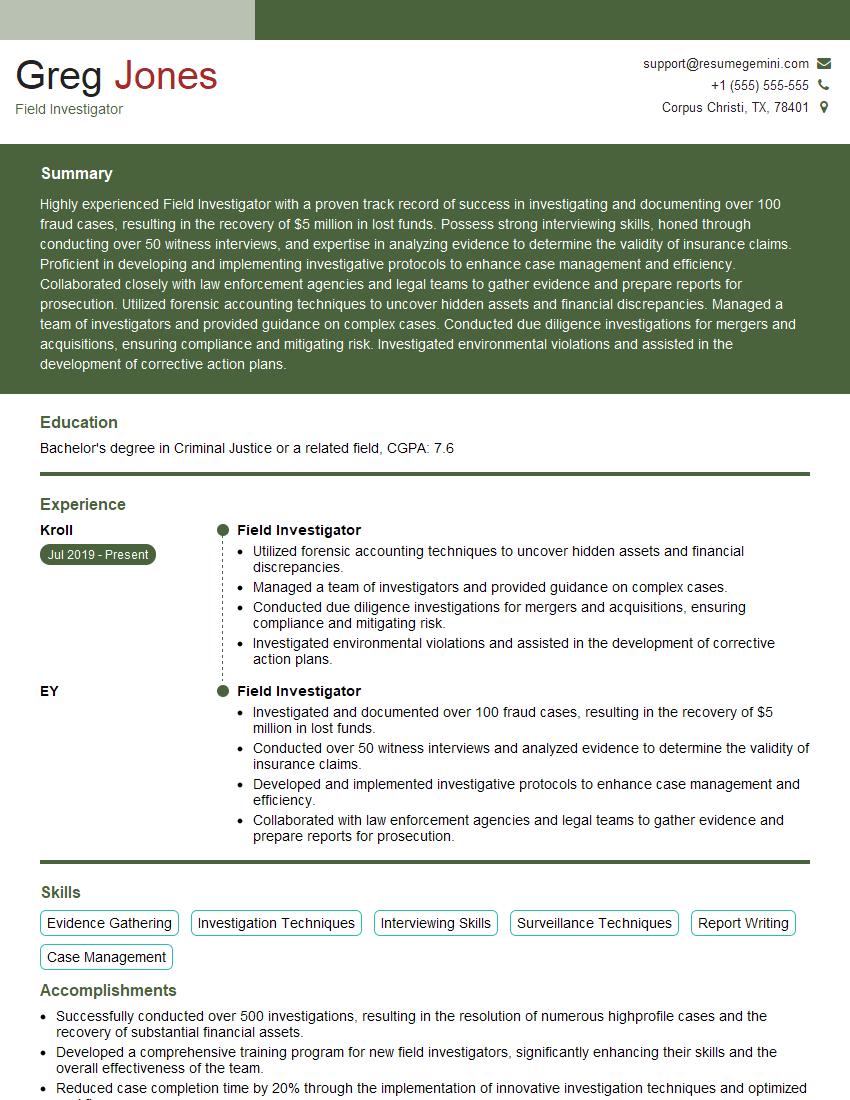
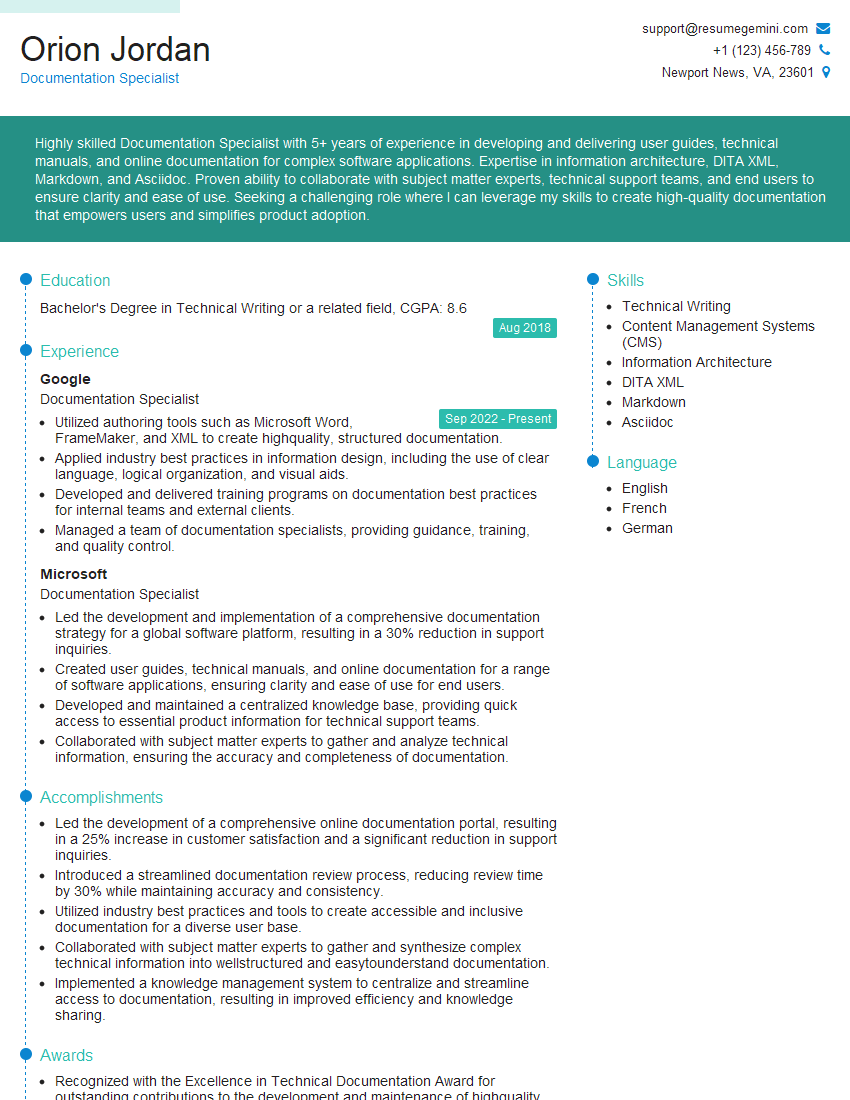
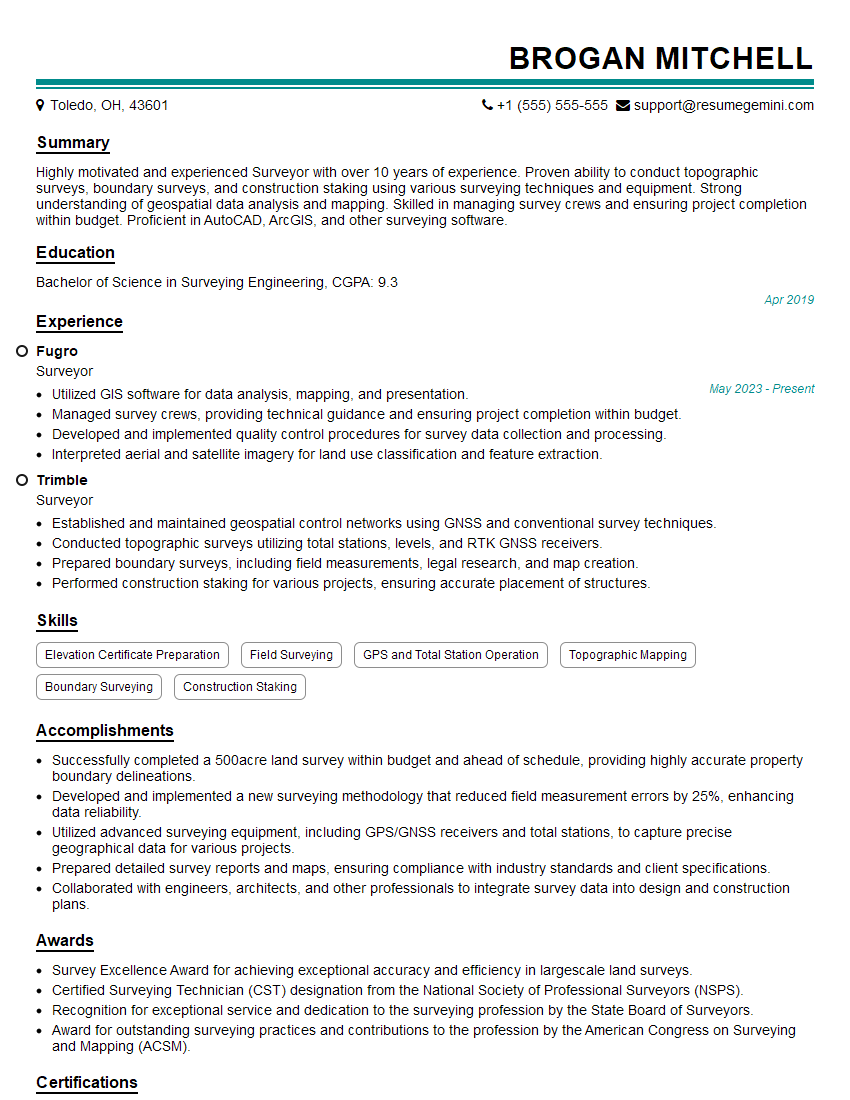
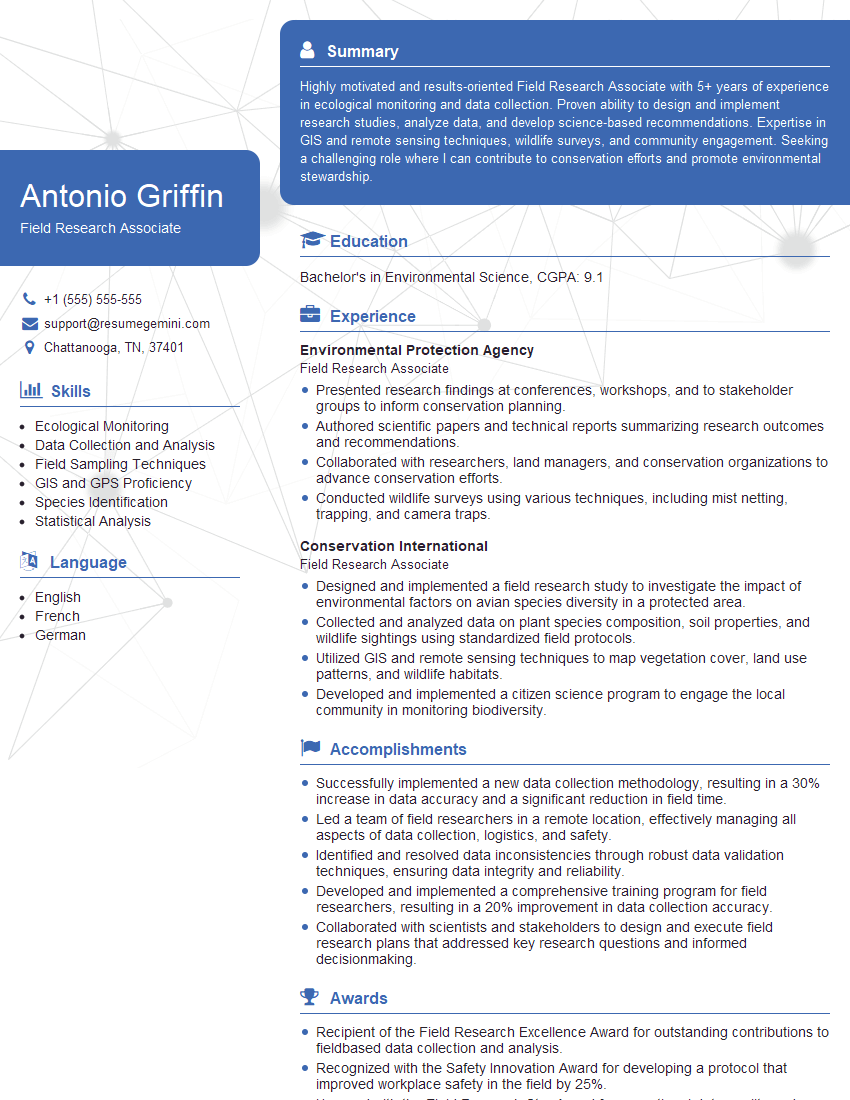
Mastering field observation and documentation is crucial for career advancement in many fields, opening doors to exciting opportunities and showcasing your meticulous attention to detail and analytical skills. To significantly boost your job prospects, creating a strong, ATS-friendly resume is essential. ResumeGemini is a trusted resource that can help you build a professional and impactful resume tailored to highlight your skills in field observation and documentation. Examples of resumes specifically designed for this field are available to help you craft a compelling application. Investing time in building a strong resume is an investment in your future career success.

Explore more articles
Users Rating of Our Blogs
Share Your Experience
We value your feedback! Please rate our content and share your thoughts (optional).
What Readers Say About Our Blog
Very informative content, great job.
good