The right preparation can turn an interview into an opportunity to showcase your expertise. This guide to Section Cutting interview questions is your ultimate resource, providing key insights and tips to help you ace your responses and stand out as a top candidate.
Questions Asked in Section Cutting Interview
Q 1. What are the different types of microtomes used in section cutting?
Microtomes are precision instruments used to create thin sections of embedded tissue for microscopic examination. Several types exist, each with its own advantages and disadvantages. The most common types include:
- Rotary Microtomes: These are the workhorses of histology labs, known for their precision and ability to cut very thin sections (1-10µm). They utilize a rotating wheel to advance the block of tissue towards the knife.
- Sliding Microtomes: In these microtomes, the knife remains stationary while the tissue block moves across it. They are particularly useful for cutting larger specimens or those that are very hard.
- Freezing Microtomes: These are used for cutting sections of fresh, unfixed tissue that has been rapidly frozen. This method allows for faster processing, particularly useful in surgical pathology where rapid diagnosis is required. The tissue is frozen on a chuck, and a cryostat (a refrigerated microtome cabinet) maintains the low temperature.
- Ultramicrotomes: These are specialized instruments used for cutting extremely thin sections (less than 1µm), typically for electron microscopy. They offer exceptional precision and are capable of producing sections thin enough to allow electron beams to pass through.
- Vibratomes (or vibrating microtomes): These use a vibrating blade to cut sections of unfixed or lightly fixed tissue, preserving tissue structure and antigenicity, making them ideal for immunohistochemistry and other techniques requiring the preservation of delicate tissue structures.
The choice of microtome depends on the specific application and the nature of the tissue being sectioned.
Q 2. Explain the process of paraffin embedding.
Paraffin embedding is a crucial step in tissue processing that prepares the tissue for sectioning. It involves infiltrating the tissue with molten paraffin wax, which provides support and allows for the cutting of very thin, uniform sections. Here’s the process:
- Tissue Fixation: The tissue is first fixed using a fixative (e.g., formalin) to preserve its structure and prevent degradation.
- Dehydration: The fixed tissue is then dehydrated using a series of graded alcohols (e.g., 70%, 95%, 100%) to remove water.
- Clearing: A clearing agent (e.g., xylene) is used to replace the alcohol, making the tissue miscible with paraffin wax.
- Infiltration: The tissue is then infiltrated with molten paraffin wax in an oven at approximately 60°C. This process replaces the clearing agent with paraffin wax, ensuring the tissue is completely saturated.
- Embedding: Finally, the paraffin-infiltrated tissue is placed in a mold containing fresh molten paraffin wax, and it’s oriented appropriately. Once cooled and solidified, the tissue is ready for sectioning.
Imagine it like making a candle: the tissue is the wick, the paraffin is the wax, providing a firm structure to support the delicate wick so it can be easily sliced.
Q 3. Describe the steps involved in preparing a tissue sample for section cutting.
Preparing a tissue sample for section cutting is a multi-step process requiring meticulous attention to detail. The steps generally include:
- Tissue Acquisition and Handling: Appropriate tissue collection, fixation, and preservation methods are critical to maintaining tissue integrity.
- Fixation: Fixation stabilizes the tissue structure and prevents autolysis and putrefaction. Formalin is a commonly used fixative.
- Processing: This involves dehydration (removing water), clearing (replacing alcohol with a solvent miscible with paraffin), and infiltration (embedding the tissue in paraffin wax).
- Embedding: The processed tissue is embedded in paraffin wax within a cassette to create a firm block suitable for sectioning. Orientation is key at this stage.
- Sectioning: The embedded tissue block is sectioned using a microtome, producing thin ribbons of tissue for mounting on slides.
- Mounting and Staining: Sections are mounted onto glass slides, deparaffinized, and stained to highlight specific cellular components or structures. This allows visualization under a microscope.
Each step is critical. For instance, improper fixation can lead to artifacts that distort the tissue’s appearance, hindering accurate diagnosis or research findings.
Q 4. What are the ideal thickness ranges for different types of tissue sections?
The ideal thickness for tissue sections depends on the type of tissue and the intended application. The goal is to achieve a balance between sufficient detail and ease of handling. Here are some typical ranges:
- Routine Histology (e.g., Hematoxylin and Eosin staining): 3-5 µm. This thickness allows for good visualization of cellular details across various tissues.
- Immunohistochemistry (IHC): 4-6 µm. Thicker sections might be necessary for optimal antigen retrieval and antibody penetration.
- Electron Microscopy: < 1 µm (often 50-100 nm). This extreme thinness is crucial for electron beam penetration and high-resolution imaging.
- Bone: Thicker sections (5-10 µm or more) may be necessary to visualize the entire bone structure.
Thinner sections provide better resolution but may be more fragile. Conversely, thicker sections might obscure cellular details. The choice of section thickness is a critical consideration in achieving optimal microscopic examination.
Q 5. How do you troubleshoot common problems encountered during section cutting, such as ribboning issues?
Troubleshooting section cutting problems is a common part of the histotechnologist’s job. Ribboning issues, where sections don’t form a continuous ribbon, are frequently encountered. Here’s a troubleshooting approach:
- Check the knife angle and sharpness: A dull or incorrectly angled knife is a common cause. Honing and stropping the knife is essential. Consider using a new blade if necessary.
- Examine the block face: Ensure the block face is smooth and even. Uneven surfaces can lead to inconsistent sectioning. Trim the block face if needed.
- Adjust the microtome settings: The section thickness, feed rate, and clearance angle should be optimized. Experiment with small adjustments until good ribboning is achieved.
- Check the embedding quality: Poorly embedded tissue can cause sectioning problems. Ensure the tissue is fully infiltrated with paraffin and properly oriented in the block.
- Check the temperature: The paraffin block should be at the right temperature to ensure that it’s firm enough to cut, but not so hard that it shatters.
- Inspect the tissue itself: Some tissues are naturally difficult to section, requiring adjustments in technique and microtome settings.
Systematic troubleshooting involves checking the basics first (knife, block face, settings), then moving to more complex factors (embedding, tissue quality). Keeping a detailed log of settings and troubleshooting steps can be very helpful.
Q 6. What are the safety precautions associated with microtome operation?
Microtome operation requires strict adherence to safety procedures to prevent injury. Key precautions include:
- Always use appropriate personal protective equipment (PPE): This includes gloves, eye protection, and a lab coat to protect against cuts, splashes, and other hazards.
- Never leave the microtome unattended during operation: The risk of injury from the sharp blade is significant.
- Proper training and instruction: Operators should be properly trained before operating the microtome. It’s essential to understand the microtome’s functions and potential hazards.
- Handle the knife with extreme care: Use appropriate tools for handling and changing the knife to avoid cuts. Remember, a sharp knife is a safe knife when used appropriately.
- Be aware of moving parts: Keep hands and other body parts away from moving parts of the microtome. Know the emergency stop mechanism.
- Proper disposal of waste: Dispose of paraffin waste and used blades in appropriate containers.
Regular maintenance and inspections of the microtome are crucial to preventing malfunctions that could lead to accidents.
Q 7. Explain the importance of proper orientation during tissue embedding.
Proper orientation during tissue embedding is critical to ensure that the sections are cut in the desired plane and that crucial anatomical features are preserved for accurate diagnosis or research. Incorrect orientation can lead to misinterpretation of the tissue’s structure.
For example, consider a biopsy from a muscle. If the embedding is not done with the muscle fibers aligned parallel to the cutting plane, the sections may show cut ends instead of the longitudinal orientation, which is essential for assessing muscle fiber types and architecture. Similarly, embedding a piece of intestine should ensure the longitudinal axis is parallel to the blade to view villi and crypts clearly.
Careful planning of orientation is essential and usually based on the specific diagnostic or research question. Using markers and proper embedding techniques, including using embedding molds and cassettes, helps to control the orientation and reduce errors.
Q 8. How do you identify and address artifacts in tissue sections?
Artifacts in tissue sections are any unwanted structures or features that appear in the prepared slide and aren’t representative of the actual tissue. These can significantly hinder accurate diagnosis and interpretation. Identifying and addressing them is crucial for high-quality histology.
Common artifacts include: folding (creases in the section), compression (tissue flattened or distorted), tears, chatter (vibrations causing a saw-tooth pattern), and staining artifacts (uneven or incorrect staining).
Addressing artifacts requires a multi-step approach. Firstly, careful tissue processing is essential – proper fixation, embedding, and sectioning techniques minimize many artifacts. Secondly, during sectioning, adjusting the microtome settings (e.g., knife angle, feed rate) is crucial. For example, chatter can often be resolved by slightly changing the knife angle or reducing the feed rate. Thirdly, recognizing the type of artifact is key. A fold can sometimes be carefully removed with forceps under a dissecting microscope. Finally, attention to proper staining procedures ensures consistent and accurate visualization of tissue components.
Q 9. What are the different types of stains used in histology, and what are their applications?
Histology utilizes a vast array of stains, each designed to highlight specific cellular components. These can be broadly classified into:
- Hematoxylin and Eosin (H&E): The workhorse stain. Hematoxylin stains nuclei blue/purple, and eosin stains cytoplasm pink/red. Used for general tissue morphology and diagnosis.
- Periodic Acid-Schiff (PAS): Stains carbohydrates and glycoproteins magenta. Helpful in identifying fungi, glycogen, and basement membranes. For example, PAS is commonly used to diagnose glycogen storage diseases.
- Trichrome stains (e.g., Masson’s trichrome): Differentiate collagen from other tissue components. Useful in identifying fibrosis and evaluating the composition of connective tissue.
- Silver stains: Used to visualize nerve fibers, reticulin fibers, and microorganisms (e.g., Pneumocystis jirovecii).
- Immunohistochemistry (IHC): Employs antibodies to detect specific antigens in tissues. Offers high specificity and is vital for diagnosing many cancers and other conditions. For example, IHC for ER/PR receptors is crucial in breast cancer diagnosis.
The choice of stain depends entirely on the specific diagnostic question being addressed. A pathologist will select the appropriate stain(s) based on their clinical suspicion and the histological features observed in the H&E-stained sections.
Q 10. How do you maintain and clean a microtome?
Maintaining and cleaning a microtome is essential for ensuring consistent section quality and instrument longevity. Regular cleaning prevents the accumulation of paraffin wax, tissue debris, and other contaminants that can affect the precision of sectioning. It also minimizes the risk of cross-contamination between samples.
The cleaning process typically involves:
- Daily cleaning: Removing excess paraffin wax with a soft brush or cloth after each use. Cleaning the knife holder and chuck with a suitable solvent (e.g., xylene).
- Weekly cleaning: More thorough cleaning, potentially disassembling certain parts for deeper cleaning. Lubricating moving parts as needed according to the manufacturer’s instructions.
- Periodic maintenance: This includes checking the alignment of the knife, adjusting the feed mechanism, and ensuring the instrument is correctly leveled. Professional servicing by a qualified technician may be required periodically.
Improper maintenance can lead to inaccurate sectioning, damage to the microtome, and even injury to the user. Following the manufacturer’s instructions meticulously is paramount.
Q 11. Describe the process of cryosectioning.
Cryosectioning is a technique used to prepare thin sections of frozen tissue. This method is advantageous when rapid processing is needed, for example, in intraoperative consultations or immunofluorescence studies. Unlike paraffin embedding, cryosectioning avoids the use of heat and chemical solvents, which can damage some tissue components.
The process involves:
- Tissue freezing: The tissue sample is rapidly frozen using liquid nitrogen or isopentane cooled by liquid nitrogen. This creates a solid block suitable for sectioning.
- Mounting: The frozen tissue is mounted onto a cryostat chuck using optimal cutting temperature (OCT) compound, ensuring it adheres securely.
- Sectioning: A cryostat microtome, specifically designed for frozen tissues, is used to cut thin sections. These sections are typically much thicker than those made with paraffin sections (around 5-20µm vs 3-5µm).
- Section collection: Sections are collected on pre-cooled glass slides. A gentle warming technique might be necessary to improve adhesion.
- Staining: The sections can then be stained using appropriate techniques.
Careful attention to temperature control is crucial throughout the process to prevent ice crystal formation, which could cause artifacts.
Q 12. What are the advantages and disadvantages of cryosectioning compared to paraffin sectioning?
Cryosectioning and paraffin sectioning each have distinct advantages and disadvantages:
Cryosectioning:
- Advantages: Rapid processing, preservation of some antigens (useful for immunofluorescence), ideal for delicate tissues, minimizes the use of chemicals.
- Disadvantages: Lower resolution compared to paraffin sections, potential for ice crystal artifacts, sections can be less uniform in thickness, and limited shelf life.
Paraffin sectioning:
- Advantages: Excellent morphology and higher resolution, sections are more uniform, longer shelf life of prepared slides, allows for a variety of staining techniques.
- Disadvantages: Longer processing time, use of potentially harmful chemicals, heat can damage some tissue antigens.
The choice between these methods depends entirely on the specific application and the type of analysis required. For example, if speed is critical, cryosectioning is preferable; if high-resolution morphology is needed, paraffin sectioning is the better choice.
Q 13. How do you handle delicate or friable tissues during section cutting?
Handling delicate or friable tissues during section cutting requires extra care and specific techniques. These tissues, such as brain or liver, are prone to tearing and fragmentation during sectioning.
Strategies to mitigate this include:
- Proper fixation: Using an appropriate fixative and fixation time is crucial to maintain tissue integrity. Under-fixation can lead to tissue fragility, while over-fixation can make it too hard to section.
- Embedding modifications: For extremely delicate tissues, adjusting the embedding medium or using specialized embedding techniques can help enhance support during sectioning. A higher concentration of OCT compound for cryosectioning or specific paraffin embedding techniques might be necessary.
- Microtome adjustments: Reducing the section thickness and adjusting the knife angle can minimize the stress on the tissue. Using a sharper knife helps reduce tear formation. A lower feed rate may also be beneficial.
- Support during sectioning: Using a brush or forceps carefully to support the tissue during sectioning can help prevent tearing and damage.
- Using a flotation bath: The use of a warm water bath to flatten the section can reduce the forces applied to the tissue.
Experience and careful manipulation are key to successfully sectioning delicate tissues. It’s often a delicate balance of adjusting technique based on the tissue’s properties.
Q 14. Explain the importance of quality control in section cutting.
Quality control in section cutting is paramount for producing reliable and accurate histological results. It ensures the integrity of the data and aids in accurate diagnosis. Effective quality control involves several key aspects:
- Regular maintenance of the microtome: This ensures the instrument functions optimally and produces high-quality sections.
- Proper tissue processing and embedding: Consistent and effective processing techniques are essential to prevent artifacts and maintain tissue integrity.
- Careful sectioning techniques: Attention to detail during sectioning, including proper knife angle, feed rate, and handling, helps to produce high-quality sections.
- Regular quality checks: Regular examination of sections under a microscope helps to identify and address any artifacts or inconsistencies.
- Use of control samples: Including control samples during staining ensures that the staining procedure is working correctly.
- Documentation: Maintaining detailed records of processing and sectioning parameters allows for traceability and identification of any potential issues.
By implementing a robust quality control program, laboratories can ensure that the results obtained are reliable and trustworthy, leading to more accurate diagnoses and better patient care. Ignoring quality control can lead to misdiagnosis and other serious consequences.
Q 15. How do you ensure the accuracy and precision of section thickness?
Ensuring accurate and precise section thickness is crucial for successful microscopy and analysis. It’s like baking a cake – if your layers aren’t the right thickness, the final product won’t be right. We achieve this through a combination of factors:
- Microtome Adjustment: The microtome’s settings (e.g., section thickness dial) must be precisely calibrated and regularly checked. A slight miscalibration can lead to significant variations in section thickness across a sample.
- Specimen Preparation: Proper embedding of the tissue in paraffin or resin is essential for consistent sectioning. Poorly embedded tissue is prone to tearing or uneven cutting, affecting the accuracy of the section thickness.
- Knife/Blade Sharpness: A dull blade will compress and tear the tissue, resulting in uneven and inaccurate section thickness. A sharp blade produces clean, consistent cuts.
- Technique: The speed and pressure applied during sectioning also affect thickness. Too much pressure can compress the section, leading to inaccuracies. Practice and experience are key to developing a consistent cutting technique.
- Verification: Regularly checking the thickness of sections using a micrometer or calibrated eyepiece is vital. This allows for immediate adjustments to the microtome settings if necessary.
For instance, if we’re preparing sections for immunohistochemistry, consistent section thickness is critical for accurate antibody penetration and staining. Inconsistent thickness could lead to false-negative or false-positive results.
Career Expert Tips:
- Ace those interviews! Prepare effectively by reviewing the Top 50 Most Common Interview Questions on ResumeGemini.
- Navigate your job search with confidence! Explore a wide range of Career Tips on ResumeGemini. Learn about common challenges and recommendations to overcome them.
- Craft the perfect resume! Master the Art of Resume Writing with ResumeGemini’s guide. Showcase your unique qualifications and achievements effectively.
- Don’t miss out on holiday savings! Build your dream resume with ResumeGemini’s ATS optimized templates.
Q 16. What is the role of the microtome knife/blade in section cutting?
The microtome knife/blade is the heart of the sectioning process. Think of it as the surgeon’s scalpel – its sharpness and angle directly influence the quality of the section. Its role is to precisely slice through the embedded tissue block, generating thin, even sections for observation under the microscope.
- Sharpness: A sharp blade produces clean cuts without tearing or compression, which leads to high-quality sections.
- Angle: The angle at which the blade contacts the tissue influences the smoothness and thickness of the section.
- Surface: The blade’s surface must be smooth and free from imperfections to avoid damaging the sections.
A dull blade creates ragged edges and compressed sections, hindering accurate microscopic analysis. In electron microscopy, for example, a sharp blade is even more critical as incredibly thin sections are needed to allow electron penetration.
Q 17. How do you sharpen and maintain a microtome knife/blade?
Sharpening and maintaining a microtome knife/blade is a skilled procedure requiring precision and care. It’s like honing a chef’s knife – regular maintenance ensures optimal performance. The method depends on the type of blade (glass, steel, diamond).
- Honing: This process uses a honing device to realign the blade’s edge, improving sharpness. It’s a regular maintenance step to keep the blade in good condition.
- Sharpening: This is a more intensive process, typically involving a sharpening stone or wheel, used when the blade is significantly dull. It reshapes the blade’s edge.
- Cleaning: After each use, the blade must be thoroughly cleaned with appropriate solvents to remove any residual tissue or embedding material. This prevents corrosion and contamination.
- Storage: Proper storage in a protective case or sheath minimizes damage and corrosion.
Imagine trying to cut a very thin slice of bread with a dull knife; it would crumble and tear. Similarly, a dull microtome blade produces poor-quality sections.
Q 18. Describe the different types of knife angles used in section cutting.
Knife angles, or the angle of the cutting edge to the block face, significantly affect the quality and thickness of the section. Different angles are used depending on the type of microtome and tissue being sectioned. Think of this like adjusting the angle of a saw blade; a different angle is needed to cut through different materials efficiently.
- Low Angle: Typically used for softer tissues, resulting in thicker sections. This angle minimizes the risk of compression.
- Medium Angle: A common angle that balances section thickness and quality.
- High Angle: Used for harder tissues or when thinner sections are required. Requires a sharper blade and may increase the risk of chatter.
For instance, when sectioning bone, a higher angle might be preferred for efficient cutting, while a lower angle could be more suitable for delicate brain tissue to avoid damaging the structures.
Q 19. What are the common causes of section compression?
Section compression occurs when the tissue is squeezed or flattened during the cutting process, resulting in distorted sections. It’s like flattening a piece of playdough while trying to examine its texture. This is undesirable because it distorts the tissue’s true structure.
- Dull Blade: A dull blade can’t cleanly slice through the tissue, leading to compression and tearing.
- Excessive Pressure: Applying too much force on the microtome handle can compress the section.
- High Knife Angle: A high angle increases the force exerted on the tissue during cutting, leading to compression.
- Hard Tissue: Cutting very hard tissues, without proper preparation or a suitable blade, can result in compression.
- Incorrect Embedding: Poorly embedded tissue can be more prone to compression.
In situations where detailed cellular morphology is crucial, like in pathology, compression renders the sections useless.
Q 20. How do you prevent section compression?
Preventing section compression is crucial for accurate microscopic analysis. This requires careful attention to several factors.
- Use a Sharp Blade: A sharp blade cleanly cuts the tissue, minimizing compression and tearing.
- Appropriate Pressure: Apply only the necessary pressure to advance the tissue block; excessive force contributes to compression.
- Optimal Knife Angle: Select the appropriate knife angle for the tissue type. Low angles generally minimize compression.
- Proper Tissue Handling: Careful handling throughout processing minimizes tissue distortion.
- Appropriate Embedding: Ensure the tissue is properly embedded to maintain its structural integrity.
- Use of a boat or a temperature-controlled flotation bath: The temperature of the water prevents the sections from sticking to each other.
Think of it like sculpting with clay – using the right tools and techniques ensures a clean, accurate final product. Similarly, using a sharp blade, proper pressure and angle produce crisp, uncompressed sections.
Q 21. What is the role of a flotation bath in sectioning?
The flotation bath plays a vital role in sectioning by providing a warm, aqueous environment where sections can flatten and relax after being cut. Imagine a warm bath allowing your muscles to relax – the flotation bath has a similar effect on the sections. The bath is typically filled with distilled water heated to a temperature slightly below the melting point of the embedding medium (e.g., paraffin).
- Flattening: The warm water helps the sections to flatten out, reducing wrinkles and creases caused by the cutting process.
- Collection: Sections float on the water’s surface, making them easier to collect onto slides.
- Relaxation: The warm water allows the sections to relax, minimizing compression artifacts.
Without a flotation bath, sections might remain crumpled or wrinkled, hindering accurate microscopic analysis. It is especially important for paraffin sections which are relatively thick and need to be flattened.
Q 22. How do you mount sections onto slides?
Mounting sections onto slides is a crucial step in histology, ensuring the tissue sample is securely attached for further analysis. This process typically involves using a mounting medium, such as a synthetic resin or an aqueous-based mounting medium, to adhere the section to the slide.
The process generally involves these steps: First, the section, after being carefully floated on a water bath to flatten it and remove wrinkles, is carefully picked up using a clean slide. Excess water is gently drained off, and the slide is placed on a slide warmer at approximately 40°C for several minutes to facilitate adherence. The mounting medium is then applied to the section, covering it completely, a coverslip is carefully lowered onto the section using a mounting needle or forceps, ensuring the avoidance of air bubbles. Finally, the slide is left to dry completely, ideally overnight or according to the mounting medium’s instructions.
The choice of mounting medium depends on the staining procedure used and the long-term storage requirements. For example, some mounting media are designed for fluorescence microscopy, while others are more suitable for archiving slides for decades.
Q 23. Describe the process of deparaffinization.
Deparaffinization is the process of removing paraffin wax from tissue sections, a necessary step before most staining procedures can be performed. Paraffin wax, used to embed tissues during processing, is hydrophobic (water-repelling), and most staining solutions are aqueous (water-based). Therefore, the wax must be removed to allow the stains to effectively penetrate the tissue.
The most common method involves using xylene, a clearing agent, to dissolve the paraffin. The tissue sections are immersed in multiple changes of xylene to ensure complete removal of the wax. Then, a series of graded alcohols (e.g., 100%, 95%, 70%, and finally water) is used to remove the xylene, preparing the tissue for staining. The use of xylene poses some safety concerns due to its toxicity and flammability, leading to the exploration of alternative, less hazardous clearing agents like limonene or xylene substitutes.
Incomplete deparaffinization can lead to poor staining quality, obscuring microscopic features and compromising the accuracy of the results. So, careful attention to this step is crucial to obtaining high-quality histological slides.
Q 24. What are the different types of tissue processing techniques?
Tissue processing techniques are crucial for preparing tissues for microscopic examination. They aim to preserve tissue morphology and antigenicity (for immunohistochemistry) while simultaneously making the tissue easier to section. Various techniques exist, each with its advantages and disadvantages:
- Routine Tissue Processing: This is the most common method and involves fixation, dehydration, clearing, and paraffin embedding. It’s suitable for many applications but may not be ideal for all tissue types or antigens.
- Frozen Sectioning: This rapid method freezes the tissue, allowing for immediate sectioning without the need for chemical processing. It’s ideal for rapid diagnosis (e.g., intraoperative consultations) but may lead to some ice crystal artifacts.
- Microwave Processing: Microwaves accelerate tissue processing, reducing processing times considerably. It is however important to carefully control the temperature to prevent tissue damage.
- Automated Tissue Processors: These machines automate the entire tissue processing workflow, improving consistency and efficiency.
The choice of technique often depends on the type of tissue, the desired staining method, and the urgency of the diagnosis. For instance, rapid processing is essential for frozen sections for immediate diagnosis.
Q 25. Explain the principle of immunohistochemistry.
Immunohistochemistry (IHC) is a powerful technique used to visualize specific proteins or antigens within tissue sections. It leverages the specificity of antibody-antigen binding to label and identify target molecules.
The principle is straightforward: A primary antibody, specifically designed to bind to the target protein, is applied to the tissue section. After washing away unbound antibody, a secondary antibody, conjugated to an enzyme (e.g., horseradish peroxidase) or a fluorescent label, is added. This secondary antibody binds to the primary antibody, providing signal amplification. Finally, a substrate is added, which reacts with the enzyme, producing a colored precipitate (in the case of enzyme-labeled antibodies) or fluorescence (in fluorescence IHC), allowing visualization of the target protein under a microscope. This allows pathologists to identify specific cells and tissue components based on the expression of particular proteins, crucial in cancer diagnosis and research.
Q 26. Describe your experience with different types of tissue (e.g., bone, muscle, brain).
My experience encompasses a wide range of tissue types, including bone, muscle, and brain tissues. Each presents unique challenges in sectioning. Bone, for example, requires careful decalcification to remove calcium salts before sectioning to prevent damage to the microtome blade. Decalcification should be optimized to avoid tissue damage.
Muscle tissue can be challenging due to its fibrous nature. Special sectioning techniques may be employed to obtain high-quality sections without tearing. Optimal fixation is critical to maintain muscle fiber integrity. Brain tissue, with its delicate structure, requires special handling and embedding techniques to preserve its intricate architecture and avoid artifacts during sectioning. Cryoprotectant agents are often utilized to minimize ice crystal formation during freezing.
I have developed proficiency in adapting sectioning parameters, including microtome blade angles and feed rates, to accommodate the unique characteristics of each tissue type, ensuring optimal results and minimal artifacts.
Q 27. What software or systems are you familiar with for managing histology data?
I am proficient in using several software systems for managing histology data, including Laboratory Information Systems (LIS) for tracking samples and results and digital pathology systems for managing and analyzing scanned slides. My experience also includes the use of image analysis software to quantify staining intensity or measure structures within the tissue sections. This includes software packages for image acquisition, processing, and analysis, allowing for quantitative and qualitative assessments of histological data. Specific examples include Aperio ImageScope, Leica Aperio software, and various image analysis plugins for programs like ImageJ.
Q 28. Describe a time you had to troubleshoot a complex sectioning problem.
One time, I encountered a persistent problem with ribbon formation during sectioning of a particularly hard, formalin-fixed tissue block. The sections were continuously tearing, resulting in unusable slides. Initially, I suspected the microtome blade was dull, so I replaced it. However, the problem persisted. I systematically investigated other potential causes, including:
- Block orientation: I re-oriented the block on the microtome chuck to ensure optimal sectioning planes.
- Microtome settings: I meticulously adjusted the trimming, feed rate, and clearance angle settings.
- Tissue processing: I reviewed the processing protocol to rule out any issues causing increased hardness or brittleness.
After careful examination, I discovered the issue was caused by uneven embedding of the tissue within the paraffin block. This caused stress points during sectioning, leading to tearing. By modifying the embedding technique to ensure more uniform tissue infiltration, I was able to successfully generate continuous, high-quality ribbons. This experience highlighted the importance of considering the entire histological workflow, from tissue processing to sectioning, when troubleshooting complex problems.
Key Topics to Learn for Section Cutting Interview
- Fundamentals of Section Cutting: Understanding the principles behind various sectioning techniques (e.g., cross-sections, longitudinal sections, oblique sections) and their applications.
- Material Properties and their Influence: Analyzing how material properties (hardness, ductility, etc.) affect the sectioning process and the resulting quality of the cut.
- Equipment and Tool Selection: Knowing the different types of equipment used in section cutting (e.g., saws, abrasive cutters, lasers) and selecting the appropriate tools for specific materials and applications.
- Sample Preparation Techniques: Mastering the crucial steps involved in preparing samples for sectioning, including mounting, grinding, and polishing to ensure accurate analysis.
- Microscopy and Imaging: Understanding how sectioned samples are analyzed using various microscopy techniques (optical, electron) and interpreting the resulting images.
- Quality Control and Troubleshooting: Identifying potential problems during the sectioning process (e.g., chatter, cracking) and implementing corrective measures to maintain high-quality results.
- Safety Procedures and Regulations: Adhering to safety protocols and regulations related to handling tools, materials, and hazardous substances during section cutting.
- Advanced Sectioning Techniques: Exploring specialized sectioning methods for specific materials or applications (e.g., ultramicrotomy, ion beam milling).
Next Steps
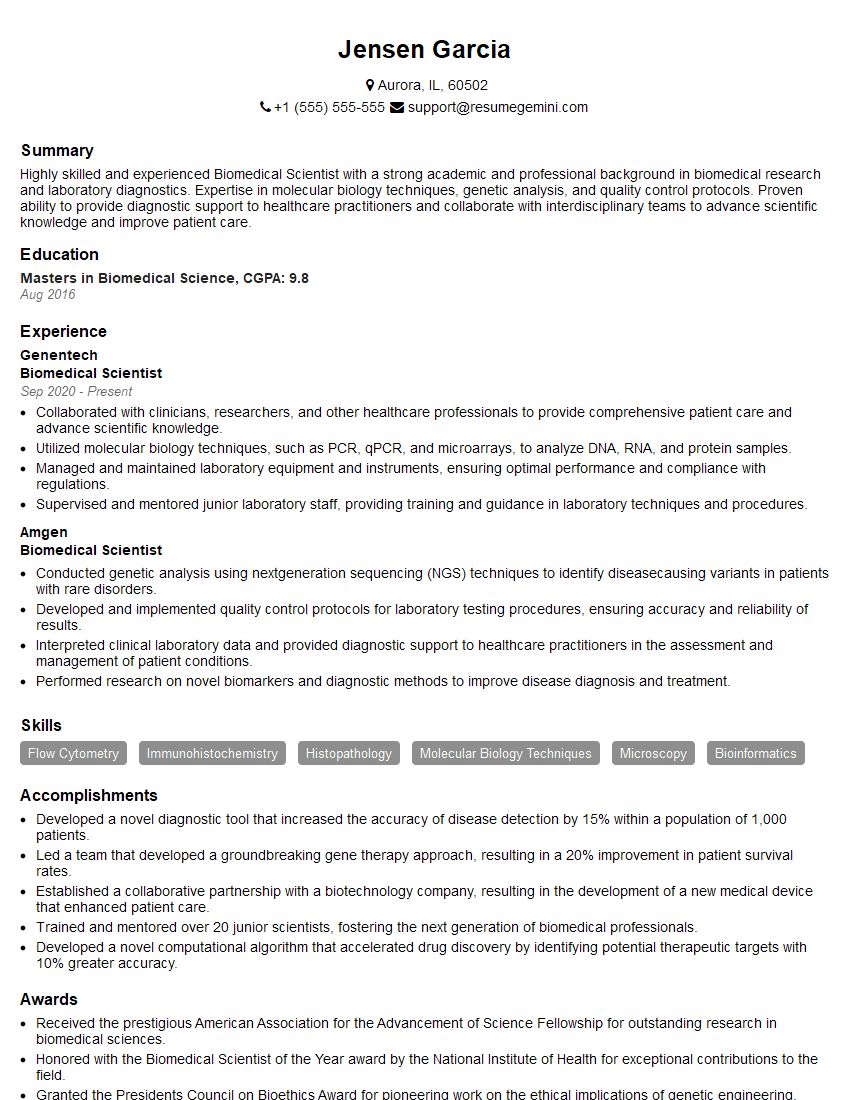
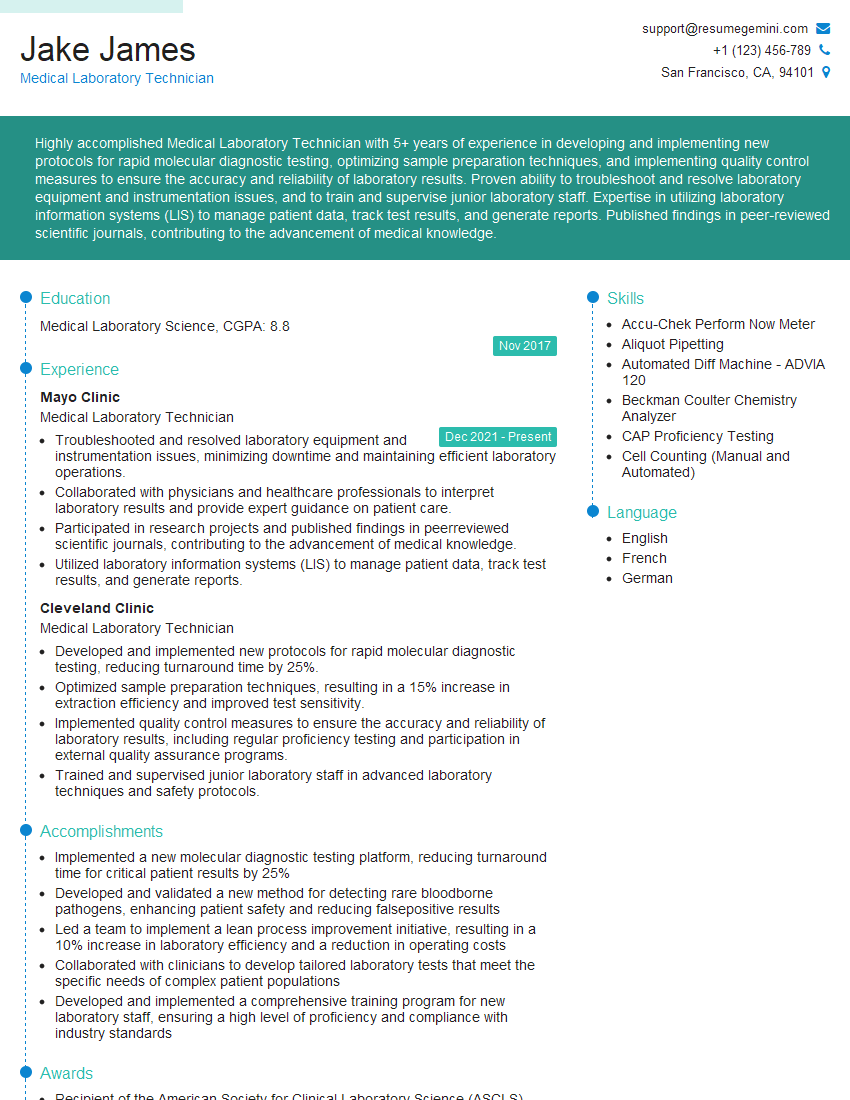
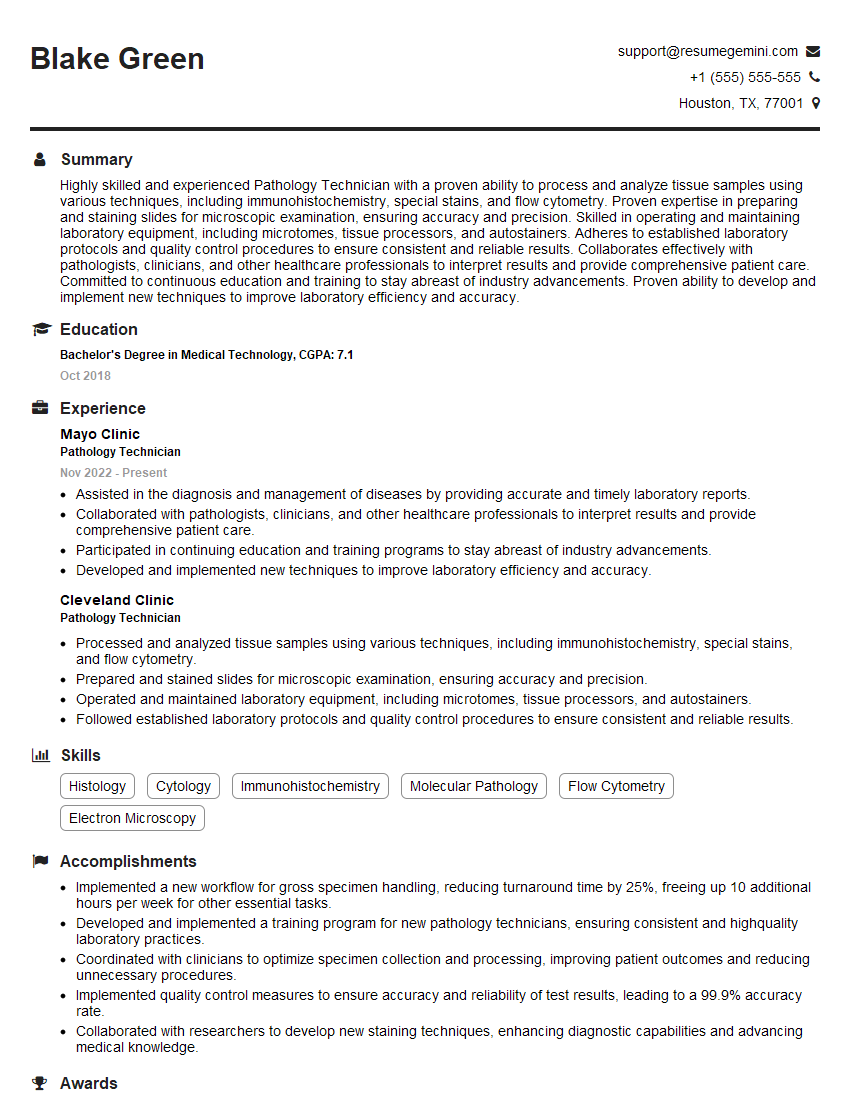
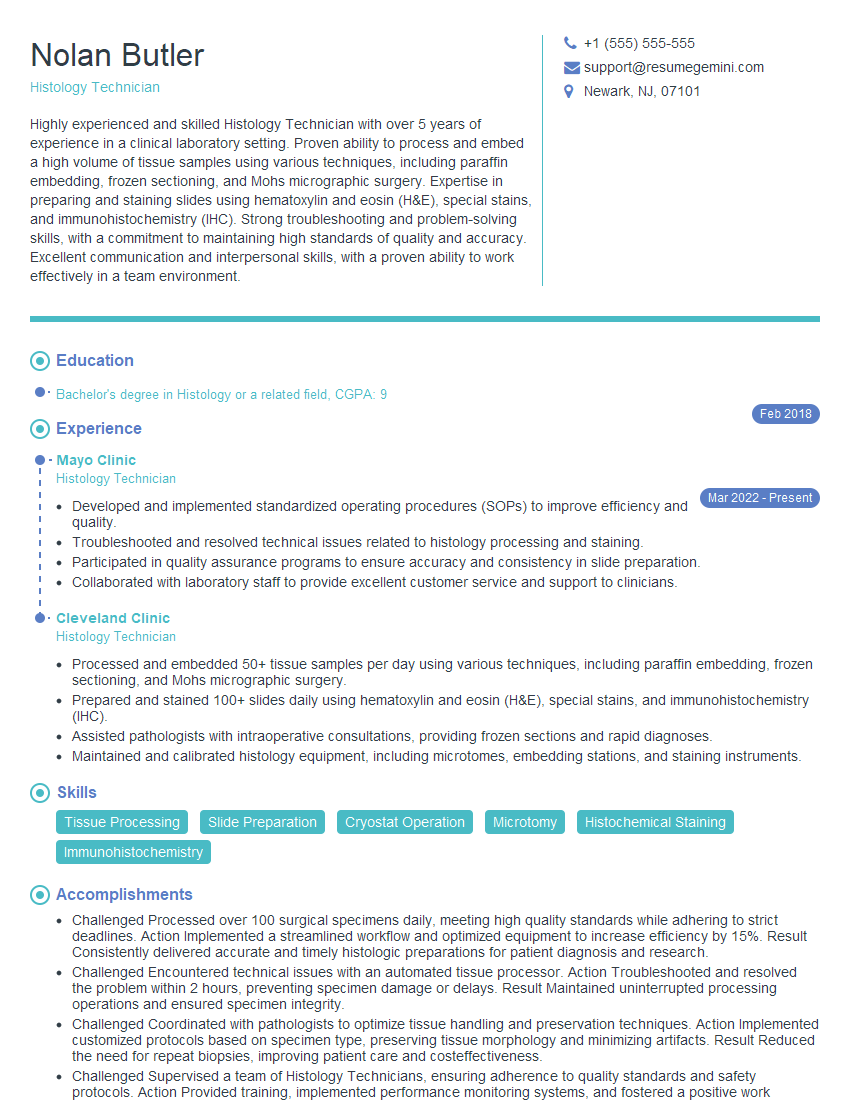
Mastering section cutting opens doors to exciting career opportunities in materials science, engineering, and research. A strong understanding of these techniques is highly valued by employers. To maximize your job prospects, creating a compelling and ATS-friendly resume is crucial. ResumeGemini is a trusted resource that can help you build a professional resume that highlights your skills and experience effectively. Examples of resumes tailored to Section Cutting are available to guide you. Take the next step in your career journey – build a standout resume with ResumeGemini today!


Explore more articles
Users Rating of Our Blogs
Share Your Experience
We value your feedback! Please rate our content and share your thoughts (optional).
What Readers Say About Our Blog
Very informative content, great job.
good