Feeling uncertain about what to expect in your upcoming interview? We’ve got you covered! This blog highlights the most important Flat Lock Machine Operation interview questions and provides actionable advice to help you stand out as the ideal candidate. Let’s pave the way for your success.
Questions Asked in Flat Lock Machine Operation Interview
Q 1. What are the different types of flat lock stitches and their applications?
Flat lock stitches, also known as coverstitches, are created by interlooping two or more threads to form a flat, durable seam. The type of stitch depends on the machine’s configuration and the desired aesthetic. There are several variations, each with specific applications:
- Standard Flat Lock: This is the most common type, creating a clean, finished edge. It’s ideal for sportswear, swimwear, and activewear where strength and flexibility are crucial.
- Flat Lock with a Chain Stitch Element: This adds a decorative chain stitch to the main flat lock seam, adding visual interest while maintaining strength. It’s popular in fashion garments where aesthetics matter.
- Three-Thread Flat Lock: Using three threads creates a thicker, more robust seam suitable for heavier fabrics or applications requiring increased durability. Think sturdy outerwear or durable workwear.
- Narrow Flat Lock: Produces a smaller, less bulky seam perfect for delicate fabrics or where a slim profile is required, like lingerie or fine knitwear.
- Wide Flat Lock: A broader stitch ideal for fabrics needing extra strength and coverage, like heavier canvas or sailcloth.
The choice of stitch type depends on the fabric weight, intended use of the garment, and the desired aesthetic. For example, a delicate lingerie would use a narrow flat lock, while a rugged pair of hiking pants would require a three-thread flat lock.
Q 2. Explain the process of threading a flat lock sewing machine.
Threading a flat lock machine can seem complex, but it’s a systematic process. It’s essential to consult your machine’s manual for specific instructions as models vary. However, the general steps are similar:
- Prepare the thread: Ensure your thread cones are properly wound and free of knots or damage. The quality of your thread directly impacts stitch quality.
- Insert the needles: Carefully insert the needles into the needle bars, following the machine’s instructions. Pay close attention to the correct needle orientation.
- Thread the looper(s): This is often the trickiest part. Each looper requires its own threading path, typically involving guides and tension discs. Following the machine’s diagram is crucial here. Incorrect threading will cause skipped stitches or poor seam quality.
- Thread the needle(s): Thread the main needle(s) using the provided guides. Again, reference the manual.
- Engage the tension: Check the tension settings on each needle and looper. This is critical for balanced stitching. Adjust tension as needed. Too much tension can break threads, while too little can result in loose stitches.
- Test the stitching: Always sew a test seam on a scrap piece of fabric to check for proper stitch formation and thread tension before working on your main project.
Remember to always treat your machine with care, avoiding sudden movements or harsh force when threading. A systematic and careful approach is key.
Q 3. How do you troubleshoot common flat lock machine malfunctions?
Troubleshooting a flat lock machine often involves a systematic approach. Here are some common problems and solutions:
- Skipped Stitches: Check the thread tension, needle condition, and looper threading. A bent or dull needle is a frequent culprit.
- Broken Threads: Examine thread quality, tension settings, and the condition of the needles and loopers. Make sure the threads are correctly guided through the machine and there are no knots.
- Uneven Stitch Length/Width: Adjust the stitch length and width controls on your machine. Ensure the machine is properly lubricated.
- Thread Jams: Inspect all threading paths for obstructions. Carefully clean any lint or debris from the machine’s internal components.
- Machine Noise or Vibration: Check for loose parts or components. Ensure that the machine is properly secured to a stable surface.
If you are unable to identify the problem, consult your machine’s manual or contact a qualified technician. Always remember to unplug the machine before attempting any repair or maintenance.
Q 4. Describe your experience with different types of flat lock machine needles.
Flat lock machines typically use specialized needles designed for interlocking threads. The needle type depends on the fabric and stitch type. My experience includes working with several needle types:
- System Needles: These are the standard needles for most flat lock machines. They are highly versatile and suited for a wide range of fabrics.
- Stretch Needles: These needles have a ball point tip designed for delicate stretch fabrics, minimizing skipped stitches and fabric damage. I’ve found them indispensable for knit fabrics.
- Heavy-Duty Needles: Used for thicker, heavier fabrics like canvas or denim, these needles are more robust and resistant to bending or breaking.
Selecting the correct needle is crucial for preventing damage to the fabric and the machine. I always cross-reference the needle type with the fabric type and stitch requirements before starting a job. A misplaced needle can significantly impact the quality of your work.
Q 5. How do you maintain and clean a flat lock sewing machine?
Maintaining a flat lock machine ensures its longevity and consistent performance. Regular cleaning and lubrication are vital:
- Regular Cleaning: Use a soft brush or compressed air to remove lint, dust, and thread debris from the machine’s internal components. Remove any fabric scraps that may have accumulated.
- Lubrication: Apply high-quality sewing machine oil to the moving parts as recommended by the manufacturer. This prevents friction and wear.
- Needle and Looper Check: Regularly inspect and replace needles and loopers as needed. Dull or damaged needles will negatively impact the stitch quality.
- Tension Adjustment: Periodically check and adjust the thread tension settings to ensure consistent and balanced stitching.
Consistent maintenance minimizes downtime and helps to prevent costly repairs. Think of it as regular preventative car maintenance – it’s far cheaper and more efficient than fixing major issues later.
Q 6. What safety precautions do you follow when operating a flat lock machine?
Safety is paramount when operating any sewing machine. For flat lock machines, I always adhere to these precautions:
- Proper Training: I always ensure I have been properly trained on the specific machine model I am using.
- Machine Inspection: Before each use, I inspect the machine for any loose parts, damage, or frayed threads.
- Proper Posture: Maintain good posture while sewing to avoid strain and fatigue.
- Keep Hands Clear: Keep my hands and fingers away from the moving parts while the machine is running.
- Unplug Before Cleaning: Always unplug the machine before cleaning or performing any maintenance.
- Appropriate Clothing: Avoid loose clothing or jewelry that could get caught in the moving parts.
Following these safety measures protects both myself and the machine, ensuring a safe and efficient workflow.
Q 7. How do you adjust the stitch length and width on a flat lock machine?
Adjusting stitch length and width is crucial for achieving the desired seam appearance and strength. The specific controls will vary based on your machine model, but the general principles are consistent:
Stitch Length: This affects the spacing between each stitch. A shorter stitch length creates a more dense, durable seam, suitable for heavier fabrics or areas requiring extra strength. A longer stitch length results in a looser, more flexible seam, appropriate for lighter fabrics.
Stitch Width: This determines the width of the flat lock stitch itself. A wider stitch covers more fabric, offering better stability and preventing unraveling. A narrower stitch is less bulky and more suited for delicate fabrics or areas where a less prominent seam is desired.
Most flat lock machines have dedicated dials or digital displays for adjusting stitch length and width. Always refer to your machine’s manual for precise instructions. Experimenting with different settings on scrap fabric before starting your project allows you to find the optimal balance for your specific fabric and desired aesthetic.
Q 8. What is the proper way to handle fabric on a flat lock machine?
Proper fabric handling on a flatlock machine is crucial for consistent stitch quality and preventing damage to the machine or fabric. Think of it like conducting an orchestra – each piece of fabric needs to be fed smoothly and evenly.
- Even Feeding: Maintain a consistent speed and pressure as you feed the fabric through the machine. Avoid jerking or pulling the fabric, which can cause uneven stitches or skipped stitches.
- Layering: Ensure the fabric layers are aligned correctly and smoothly overlapped. Any wrinkles or bunching will lead to inconsistent stitching. Imagine trying to sew two wrinkled sheets together – the result is far from neat!
- Guiding the Fabric: Use your fingers to gently guide the fabric along the feed dogs, ensuring both fabric layers move smoothly and evenly. Think of your fingers as helping the fabric to ‘dance’ along the machine’s path.
- Edge Control: Pay close attention to the edges of the fabric to prevent them from being caught or pulled into the machine’s workings. This might be especially crucial for fabrics prone to fraying or with irregular edges.
Q 9. How do you identify and correct stitch inconsistencies?
Stitch inconsistencies, like skipped stitches, loose stitches, or uneven stitch length, can stem from various issues. Troubleshooting involves a systematic approach, similar to a detective solving a case.
- Needle Condition: Inspect the needle for bending, dullness, or damage. A blunt needle will cause skipped stitches and fabric damage. Replace a damaged needle immediately.
- Tension: Incorrect tension can lead to loose or tight stitches. Adjust the upper and lower tension dials gradually, testing the stitch quality after each adjustment. Think of it as finding the ‘sweet spot’ for the fabric’s weight and type.
- Thread Quality: Use the correct type and quality of thread for the fabric. Using the wrong thread can result in breakage, causing skipped stitches. Different threads work like different ingredients in a recipe – use the right ones for the best results.
- Feed Dog Setting: Improper feed dog adjustment can contribute to inconsistent stitch length and puckering. Ensure they are properly aligned and moving smoothly. The feed dogs are like the machine’s feet, so they need to walk steadily.
- Stitch Length: Adjust the stitch length according to the fabric and desired look. Too long or short will create problems.
Correcting involves addressing these problems one at a time. Always start with the simplest fixes (like replacing the needle) and work your way up to more complex adjustments (like recalibrating the feed dogs). Detailed notes about the settings for each fabric will improve workflow in the long run.
Q 10. Explain your experience with different fabrics and their suitability for flat lock stitching.
My experience spans a wide variety of fabrics, each with its own unique sewing challenges. Knowing the properties of each fabric is crucial to achieve optimal results, like knowing the ingredients to make a successful dish.
- Knits: Stretchy fabrics like jersey and rib knit require a more flexible stitch and moderate tension to avoid puckering or distortion. Low-tension settings prevent puckering, while careful feed rate ensures stitches are even.
- Wovens: Stable fabrics like cotton, linen, and canvas are generally easier to sew but still require careful tension adjustments to avoid creating holes in thin materials or puckering in thicker ones.
- Synthetics: Nylon, polyester, and other synthetic materials can be slick and require appropriate needle and thread selection for reliable stitching. Consider specialized needles for synthetic fibers to avoid skipped stitches.
- Specialty Fabrics: Leather, suede, and other heavier materials necessitate specialized needles and potentially different feed dog adjustments. They demand a steadier hand and slower machine speed.
Understanding a fabric’s weight, drape, and elasticity helps in selecting appropriate stitch settings and avoiding issues. For example, delicate silk needs a very fine needle and low tension, while heavy denim requires a heavier needle and higher tension.
Q 11. How do you determine the appropriate tension for different fabrics?
Determining the appropriate tension is a crucial step in flatlock stitching. It’s like finding the perfect balance in a seesaw – too much weight on one side causes an imbalance.
The process involves a combination of experience and experimentation. I typically start with the machine’s default tension settings as a baseline and adjust from there, testing on a scrap piece of the fabric first.
- Fabric Weight: Heavier fabrics typically require higher tension, while lighter fabrics require lower tension. Imagine sewing a thick coat versus a thin t-shirt; higher tension is needed for the former.
- Fabric Type: Different fabrics have different properties. Knits might need less tension than wovens to avoid distortion.
- Thread Type: The thread’s weight and type can also influence the required tension. A thicker thread might need more tension to maintain a consistent stitch.
- Trial and Error: Making test stitches is crucial. Once you make adjustments, always test them on a scrap fabric. You can then visually evaluate the stitch quality, observing for things like loose or tight stitches, skipped stitches, and fabric puckering.
Accurate tension settings lead to even, consistent stitching that is strong and durable. The best way to master this is to practice consistently and record observations for various fabrics and threads.
Q 12. Describe your experience with different types of flatlock machine feeds.
My experience includes various flatlock machine feed systems, each with its own strengths and weaknesses. Understanding these differences is key to optimizing sewing efficiency and stitch quality. Different feed systems are like different car engines – each has its own unique characteristics.
- Differential Feed: This system allows for independent control of the feed rate for each layer of fabric, proving very useful when sewing fabrics of different weights or textures or when working with fabrics prone to stretching or puckering. It provides greater control for accurate stitching.
- Standard Feed: This is the most basic feed system, where both fabric layers are fed at the same rate. It is simple to operate and sufficient for many fabrics, especially those of uniform weight and texture.
- Walking Foot: This system uses a set of feed dogs on both the top and bottom to ensure even feeding. This is particularly advantageous when stitching thick, heavy fabrics or layers that are prone to shifting.
Choosing the right feed system depends on the specific needs of the project and the types of fabric involved. My experience enables me to select and effectively operate each system to achieve the desired outcome.
Q 13. How do you handle fabric seams that are difficult to sew with a flat lock machine?
Dealing with difficult seams requires a strategic approach. It is like solving a puzzle—you need to carefully consider the elements at play and find the best method to achieve the desired outcome.
- Pre-Treatment: For fabrics prone to fraying, pre-treating the edges with a serger or pinking shears will minimize fraying, which can interfere with flatlock stitching.
- Seam Allowance: Adjusting the seam allowance might be necessary. A larger seam allowance can provide more stability when working with challenging fabrics. Similarly, a smaller seam allowance might help to avoid bulk in delicate fabrics.
- Multiple Passes: In some cases, it might be necessary to make multiple passes with the machine, adjusting the fabric’s position between passes to ensure that the stitches are evenly distributed.
- Stabilizing Techniques: Using a stabilizer underneath or on top of the fabric can provide added support and prevent shifting or puckering. For tricky fabrics, this acts like a support structure for a building under construction.
- Needle and Thread Selection: Changing the needle and thread can make all the difference. A heavier needle might be more suitable for thick fabrics, and a finer needle is appropriate for delicate materials.
The key is to carefully analyze the source of the difficulty and take the appropriate measures to address it. Careful observation and adjustment are crucial. Often, using multiple techniques simultaneously can lead to success.
Q 14. How do you measure and cut fabric to ensure accurate flat lock stitching?
Accurate fabric measurement and cutting are crucial for successful flat lock stitching. Precision is essential for a professional finish. Think of it like building a house—you need accurate measurements to ensure everything fits correctly.
- Precise Measurement: Use a ruler or measuring tape to carefully measure the fabric. Accuracy is critical for consistent stitch placement. This involves double-checking measurements to avoid errors.
- Marking: Once measured, mark the fabric with chalk, tailor’s pins, or another suitable method to guide cutting, helping to ensure alignment and preventing wasted fabric.
- Sharp Scissors or Rotary Cutter: Utilize sharp scissors or a rotary cutter to ensure clean, precise cuts. A dull blade will fray fabric edges, making it challenging to sew and potentially leading to uneven stitching.
- Fabric Alignment: Pay close attention to the alignment of fabric pieces, particularly when joining multiple pieces. Precise alignment is key to clean, smooth seams.
- Test Cuts: Before cutting final pieces, always do a test cut on scrap fabric. This will help identify potential issues and ensures that the cutting tools are sharp and working accurately.
Careful measurement and cutting are fundamental aspects of the process, minimizing errors and ensuring professional results. By adhering to these steps, you reduce the likelihood of needing significant adjustments during the sewing process.
Q 15. Describe your experience with troubleshooting a jammed flat lock machine.
Troubleshooting a jammed flat lock machine requires a systematic approach. My first step is always safety – ensuring the machine is turned off and unplugged before any intervention. Then, I visually inspect the machine for any obvious obstructions, such as thread tangles or fabric buildup around the needles, looper, or feed dogs. A common jam occurs when the fabric is too thick or is being fed unevenly. I’d check the tension settings and the feed dog adjustment to ensure they are appropriate for the fabric type. If the jam persists, I’d carefully examine the looper mechanism for any broken parts or misalignment. I use a small brush and compressed air to remove lint and debris. Occasionally, a very stubborn jam might require disassembling a part of the machine, following the manufacturer’s instructions carefully. I always document my troubleshooting steps, noting the cause of the jam and the solution implemented, which helps prevent similar issues in the future. For example, I once encountered a serious jam caused by a small piece of metal lodged near the needle. Careful removal of this debris, followed by cleaning and lubrication, resolved the problem. Thorough cleaning of the machine is crucial to prevent future jams.
Career Expert Tips:
- Ace those interviews! Prepare effectively by reviewing the Top 50 Most Common Interview Questions on ResumeGemini.
- Navigate your job search with confidence! Explore a wide range of Career Tips on ResumeGemini. Learn about common challenges and recommendations to overcome them.
- Craft the perfect resume! Master the Art of Resume Writing with ResumeGemini’s guide. Showcase your unique qualifications and achievements effectively.
- Don’t miss out on holiday savings! Build your dream resume with ResumeGemini’s ATS optimized templates.
Q 16. How do you address broken needles or other machine malfunctions?
Broken needles are a frequent occurrence. Replacing a needle is a relatively straightforward process; I always ensure the machine is switched off and unplugged. I use needle-nose pliers to carefully remove the broken needle, making sure not to damage the needle plate. It’s important to use the correct needle size and type recommended for the fabric and thread being used. Using an incorrect needle can lead to skipped stitches, broken needles, or even damage to the machine. Other malfunctions, such as inconsistent stitch length or tension issues, often require more in-depth troubleshooting. I might check the timing of the machine, the tension settings of both the needle and looper threads, or even the condition of the hook. A visual inspection helps pinpoint the source of the problem. If I’m unable to identify and resolve the malfunction, I’d consult the machine’s manual or contact a qualified technician. For example, during a production run, I once encountered a problem with the looper mechanism. After carefully checking the manual and inspecting the parts, I realized a small screw was loose, causing a misalignment. Tightening the screw resolved the issue.
Q 17. What are the common causes of skipped stitches on a flat lock machine?
Skipped stitches on a flat lock machine can stem from several common causes. Improper thread tension is a major culprit; too tight or too loose tension on either the needle or looper thread can lead to skipped stitches. Another frequent cause is a dull or bent needle, which can’t properly penetrate the fabric. Incorrect needle type for the fabric is also significant; the needle must match the fabric weight. A poorly threaded machine, with loose or tangled threads, will also cause problems. Sometimes, the machine’s feed dogs aren’t feeding the fabric evenly, creating inconsistent stitch lengths or skipped stitches. Finally, worn or damaged machine parts such as the looper or hook can also lead to stitch issues. To resolve this, I’d systematically check each of these components. I might adjust the tension, replace the needle, rethread the machine meticulously, clean and oil the machine, and finally check the feed dogs for proper functioning.
Q 18. How do you ensure consistent stitch quality throughout a production run?
Maintaining consistent stitch quality throughout a production run involves several crucial steps. First, I ensure the machine is properly set up and calibrated according to the manufacturer’s specifications. I always use high-quality thread that’s consistent in its properties and is suited for the fabric type and machine speed. The stitch length and tension are vital and should be checked and adjusted regularly throughout the run. I’ll monitor the machine for any signs of wear or tear, and address minor issues immediately to prevent them from escalating. Regular lubrication and cleaning are essential to maintain the smooth operation of the machine and prevent the buildup of lint and debris. Using a consistent feeding technique helps prevent bunching or uneven fabric movement, leading to uniform stitches. I regularly check my work for any variations in stitch quality to quickly identify and correct any potential problems. If the problem persists despite these actions, recalibration or a more in-depth check of machine components might be necessary.
Q 19. Describe your experience with using different types of flat lock machine presser feet.
My experience with different types of flat lock machine presser feet includes various designs tailored to specific fabric types and stitch applications. For instance, I use narrow presser feet for delicate fabrics to avoid damaging them and wider feet for thicker materials to ensure even fabric feed. Some presser feet have differential feed mechanisms, which allow for more precise control of fabric feed when working with stretchy or uneven fabrics. I’ve used presser feet with guides to ensure precise seam placement, especially in applications requiring straight seams. I am familiar with the different attachment methods, understanding the importance of securely attaching the presser foot to avoid malfunctions. Choosing the right presser foot is crucial for achieving the desired stitch quality and consistency.
Q 20. How do you maintain the proper lubrication of your flat lock machine?
Proper lubrication is paramount for the longevity and smooth operation of a flat lock machine. I use a high-quality sewing machine oil, specifically designed for industrial sewing machines. I regularly apply a small amount of oil to the designated lubrication points, as indicated in the machine’s manual, following the manufacturer’s recommendations. It’s important not to over-lubricate, as excess oil can attract dust and lint, leading to build-up and potentially causing further problems. The frequency of lubrication depends on the machine’s use; higher-volume production necessitates more frequent lubrication. In my experience, regular maintenance, which includes proper lubrication, greatly reduces the frequency of repairs and improves the overall efficiency and lifespan of the machine.
Q 21. What is your experience with flat lock machine speed adjustments?
Flat lock machine speed adjustments are critical for achieving the desired stitch quality and productivity. Generally, I adjust the speed using a control dial or lever located on the machine. Slower speeds are often necessary for delicate fabrics or complex designs to ensure precise stitch formation and avoid damaging the fabric. Higher speeds are suitable for simple projects or mass production where efficiency is a priority. I carefully select the appropriate speed based on the fabric type, stitch complexity, and overall project requirements. The ideal speed is one that maintains stitch quality while maintaining a productive workflow. For example, when sewing lightweight fabrics, I’d use a slower speed, while for durable fabrics or bulk production, I’d appropriately adjust the speed to increase efficiency without compromising the stitch quality.
Q 22. Describe your experience working with various fabrics such as knits and wovens.
My experience spans a wide range of fabrics, from delicate knits to robust wovens. Understanding the unique characteristics of each fabric type is crucial for achieving optimal flatlock seam quality. Knits, with their inherent stretch and potential for distortion, require careful adjustment of stitch length and tension to prevent puckering or seam breakage. For example, working with a lightweight single jersey knit necessitates a shorter stitch length and reduced tension compared to a heavier weight double knit. Wovens, on the other hand, often require a more robust stitch and higher tension to ensure a strong, durable seam. I’ve worked with everything from fine cotton poplin to heavy-duty canvas, adjusting machine settings accordingly to achieve the best results in each instance. The key is to understand the fabric’s drape, weight, and elasticity to select the optimal settings.
Q 23. How do you ensure the quality of the flatlock seam meets the industry standards?
Ensuring flatlock seam quality aligns with industry standards involves a multi-faceted approach. It begins with meticulous machine setup, including proper tension adjustment, stitch length selection, and differential feed calibration. This is crucial as incorrect settings can lead to issues like uneven seams, skipped stitches, or seam breakage. Regular quality checks throughout the production process are essential. I visually inspect each seam for consistency, paying close attention to stitch formation, seam width, and overall appearance. Additionally, I perform strength tests by pulling on the seam to ensure it can withstand expected stress. Regular maintenance of the machine itself is also vital to consistent output. Proper lubrication and timely replacement of worn parts prevent malfunction and ensure the machine produces high-quality seams consistently. Documenting all settings and adjustments further allows for traceability and aids in troubleshooting issues.
Q 24. Explain your knowledge of different flat lock machine brands and models.
My experience includes working with various flatlock machine brands and models, including Juki, Brother, and PFAFF. Each brand has its own unique features and nuances, and I’ve learned to adapt my techniques to each. For example, Juki machines are known for their reliability and precision, making them well-suited for high-volume production. Brother machines often offer a broader range of stitch options, while PFAFF is renowned for its user-friendly interface and advanced features. Beyond the brand, specific models within each line also present variations in capabilities and functionalities. For instance, some models offer advanced features like automatic thread trimming or integrated cutting mechanisms, impacting speed and efficiency. My expertise extends to understanding these differences and selecting the appropriate machine for the specific fabric and garment type.
Q 25. How do you identify and solve problems related to differential feed on the flatlock machine?
Differential feed is critical for achieving even seams, especially with fabrics that have varying elasticity. Problems with differential feed often manifest as puckering, uneven stitch spacing, or fabric slippage. Troubleshooting starts with careful observation of the seam itself. Is the puckering consistent, or localized? Does the fabric appear to be feeding unevenly on one side? I then check the differential feed setting on the machine, making sure it’s appropriately calibrated for the fabric type. Common causes include incorrect differential feed adjustment, improper tension, or even a problem with the feed dogs themselves. I’ll methodically check each component, starting with the simplest adjustments before moving to more complex mechanical checks. For instance, if the feed dogs are dirty or worn, they might need cleaning or replacement. A step-by-step diagnostic approach, combined with my knowledge of the machine’s mechanics, allows me to pinpoint and resolve the issue effectively.
Q 26. What are your experiences with different flatlock machine maintenance procedures?
Regular maintenance is critical for maximizing machine lifespan and ensuring high-quality seams. My maintenance procedures include daily cleaning of the machine, removing lint and thread build-up. This prevents clogging and ensures smooth operation. I regularly lubricate moving parts according to the manufacturer’s recommendations, using appropriate lubricants to prevent wear and tear. I also inspect needles and change them at the first sign of wear or damage, as a bent needle can cause skipped stitches or seam damage. Preventive maintenance is crucial, so I often perform tasks like checking the tension mechanism, examining the feed dogs for alignment, and ensuring proper timing. A thorough cleaning and inspection process, performed at set intervals, contributes to machine longevity and minimal downtime.
Q 27. What are the safety standards you adhere to while working with flatlock machines?
Safety is paramount. Before operating a flatlock machine, I always ensure the machine is properly grounded and that all safety guards are in place. I never operate the machine with loose clothing or jewelry that could get caught in moving parts. I always keep my hands clear of moving parts, particularly the needle and feed dogs, and maintain a clear workspace, free of obstructions. Proper machine maintenance reduces the risk of malfunctions, and I always follow the manufacturer’s safety guidelines. In addition, I understand the importance of reporting any safety concerns promptly to my supervisor to prevent accidents.
Q 28. How do you contribute to a team environment when using a flatlock machine in a production line?
In a team environment, communication and cooperation are essential. I maintain open communication with my colleagues, reporting any machine issues promptly and assisting others as needed. I actively participate in team discussions regarding production goals and strategies, offering solutions and suggestions based on my expertise. By maintaining a consistent workflow and adhering to the established production schedule, I contribute to the team’s overall efficiency. I am also proactive in sharing knowledge and best practices with my team members, thereby fostering a collaborative and productive work environment. This includes training new team members on the safe and efficient operation of the flatlock machines.
Key Topics to Learn for Flat Lock Machine Operation Interview
- Machine Setup and Maintenance: Understanding the different components of the flat lock machine, proper setup procedures, preventative maintenance checks, and troubleshooting common mechanical issues.
- Stitch Types and Adjustments: Familiarity with various flat lock stitch types, their applications (e.g., sportswear, swimwear), and how to adjust machine settings (stitch length, tension, etc.) to achieve desired results.
- Fabric Handling and Feeding: Mastering techniques for efficient fabric feeding and handling to minimize fabric puckering, breakage, and ensure consistent stitch quality. Understanding different fabric types and their impact on machine operation.
- Troubleshooting and Problem Solving: Developing the ability to identify and resolve common operational problems, such as thread breakage, skipped stitches, needle jams, and timing issues. Understanding diagnostic procedures and preventative measures.
- Safety Procedures and Regulations: Knowledge of all relevant safety procedures for operating the flat lock machine, including proper machine guarding, personal protective equipment (PPE) usage, and emergency protocols.
- Production Efficiency and Quality Control: Understanding techniques for optimizing production speed without compromising stitch quality. Implementing quality control checks throughout the process to ensure consistent standards.
- Understanding of Different Flat Lock Machine Models: Exposure to various brands and models of flat lock machines and their unique features and operational differences. This demonstrates adaptability and willingness to learn.
Next Steps
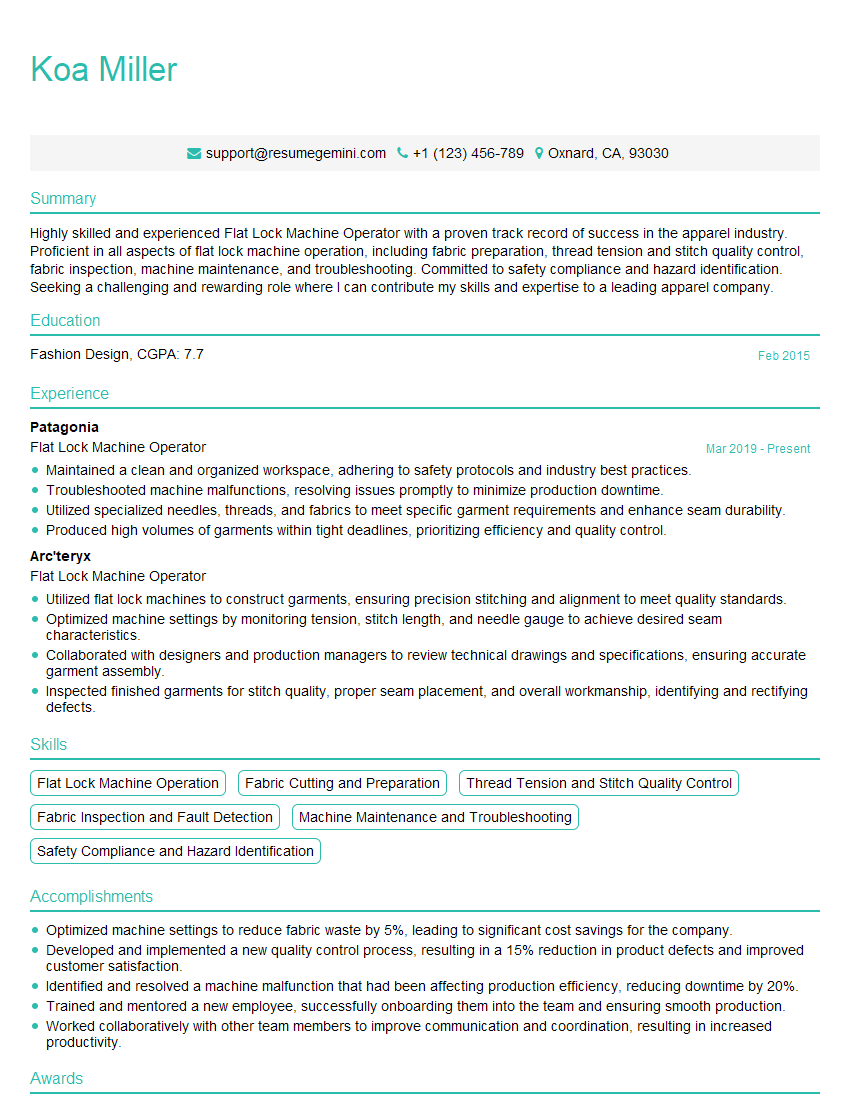
Mastering Flat Lock Machine Operation opens doors to exciting career opportunities in the apparel and textile industries, offering potential for growth and specialization. A strong resume is crucial for showcasing your skills and experience to potential employers. To maximize your job prospects, create an ATS-friendly resume that highlights your key competencies and achievements. ResumeGemini is a trusted resource that can help you build a professional and impactful resume, tailored to the specific requirements of Flat Lock Machine Operator positions. Examples of resumes tailored to this field are available to help you get started.

Explore more articles
Users Rating of Our Blogs
Share Your Experience
We value your feedback! Please rate our content and share your thoughts (optional).
What Readers Say About Our Blog
Very informative content, great job.
good