Are you ready to stand out in your next interview? Understanding and preparing for Fur Entrepreneurship interview questions is a game-changer. In this blog, we’ve compiled key questions and expert advice to help you showcase your skills with confidence and precision. Let’s get started on your journey to acing the interview.
Questions Asked in Fur Entrepreneurship Interview
Q 1. Describe your experience in sourcing ethically produced furs.
Ethically sourced fur is paramount to my business. It’s not just a trend; it’s a commitment. My sourcing focuses on farms adhering to strict animal welfare standards, prioritizing humane treatment and sustainable practices. I work directly with ranches that prioritize the health and well-being of their animals, ensuring they have access to adequate food, water, and space. I meticulously verify their certifications and conduct regular on-site audits to confirm compliance. This involves inspecting living conditions, reviewing breeding practices, and assessing the overall ethical management of the animals throughout their life cycle. For example, I collaborate with a ranch in Finland that holds a prestigious ‘Five-Star Ethical Fur Farming’ certification, guaranteeing high animal welfare standards and environmental responsibility. This transparency ensures that the fur I use is genuinely ethically produced and traceable throughout the supply chain.
Q 2. Explain your knowledge of different fur types and their properties.
My expertise spans a wide range of fur types, each with unique properties. Consider mink: known for its luxurious sheen and durability, it’s ideal for coats and jackets. Fox fur, with its vibrant colors and longer guard hairs, offers a different aesthetic, often used for trims or statement pieces. Sable is prized for its incredibly dense and lustrous underfur, creating a uniquely warm and rich texture. Then there’s lynx, with its distinctive pattern and slightly coarser texture, adding a bold, rustic feel to garments. Understanding these differences – in terms of texture, warmth, durability, and the overall look – allows me to select the perfect fur for each design and meet diverse customer preferences. For instance, if a client wants a lightweight yet warm scarf, I might suggest fox, while a winter coat might require the robustness of mink.
Q 3. How do you ensure the quality and durability of fur products?
Quality and durability are ensured through meticulous attention to detail at every stage, from sourcing to final production. I rigorously inspect each pelt for imperfections and select only the highest-quality furs. Proper curing and dressing processes are crucial; these techniques ensure the fur retains its natural beauty, softness, and resilience. Skilled artisans are vital; their expertise in garment construction translates directly into the longevity of the product. I utilize premium-grade stitching, reinforcing stress points to maximize durability. Regular quality control checks are conducted throughout the production process, identifying and addressing any potential issues early on. This layered approach – from meticulous sourcing to expert craftsmanship – guarantees the lasting quality and resilience of my fur products. For instance, I might double-stitch seams on a particularly high-demand coat design to ensure its longevity.
Q 4. What are your strategies for marketing and selling fur products?
My marketing strategy focuses on showcasing the ethical sourcing and superior quality of my products. I emphasize sustainability and responsible practices in my communications, attracting environmentally conscious consumers. High-quality photography and videography are crucial, highlighting the beauty and craftsmanship of each piece. I utilize both online and offline channels, including a well-designed website, social media engagement, collaborations with fashion influencers, and participation in exclusive industry events. Building relationships with stylists and fashion editors generates valuable media coverage and brand awareness. Furthermore, I offer personalized consultations, ensuring clients receive expert advice and find the perfect fur garment to meet their individual needs and style preferences. This multi-faceted approach allows me to reach a broad target audience and build lasting brand loyalty.
Q 5. Describe your experience with fur garment construction techniques.
My experience encompasses a wide range of fur garment construction techniques. I’m proficient in traditional methods, including the precise cutting and stitching required for intricate patterns. I’m adept at various fur-handling techniques, such as letting-out, which allows for precise shaping and fitting. Modern techniques, like the use of advanced sewing machines designed specifically for fur, are also integrated into my processes to ensure efficiency and precision. Understanding fur’s unique properties – its flexibility, direction of hair, and susceptibility to stretching – is fundamental. This allows for seamless integration of different furs, accurate pattern drafting, and the creation of sophisticated garments. For example, I’m skilled in creating tailored designs incorporating intricate detailing, such as fur inlays or unique stitching patterns, adding a unique and luxurious touch to each garment.
Q 6. What are the current trends in the fur industry?
Current trends in the fur industry are heavily influenced by sustainability and ethical sourcing. Consumers are increasingly demanding transparency and traceability, pushing for brands that prioritize animal welfare and environmental responsibility. There’s a growing demand for innovative and unique designs, pushing the boundaries of traditional styles. Sustainability-focused approaches to fur production, such as utilizing reclaimed and recycled furs, are gaining significant traction. Additionally, the incorporation of fur into contemporary designs, blending it with other fabrics and textures to create versatile pieces, is a prominent trend. Finally, the resurgence of classic styles with a modern twist is quite prevalent, showcasing both timeless elegance and current fashion sensibilities. For instance, I’ve seen a notable rise in the demand for sustainable fur trims on classic leather jackets.
Q 7. How do you manage inventory and supply chain for fur products?
Inventory and supply chain management in the fur industry requires meticulous planning and forecasting. I utilize sophisticated inventory management systems to track stock levels, monitor demand, and predict future needs. Building strong relationships with ethical fur farms ensures a consistent supply of high-quality materials. Collaborating with skilled artisans and employing effective production scheduling optimizes manufacturing processes. Logistics are carefully managed, utilizing secure and climate-controlled storage facilities to protect the integrity of the fur. I maintain close communication throughout the supply chain to ensure timely delivery and avoid disruptions. This includes working closely with suppliers, transportation companies, and custom brokers to streamline the entire process. Data-driven decision-making, based on sales trends and market analysis, guides my inventory strategy, ensuring optimal stock levels and minimizing waste.
Q 8. Explain your understanding of fur industry regulations and ethical considerations.
Fur industry regulations and ethical considerations are complex and vary significantly by country. Generally, regulations focus on animal welfare during trapping and farming, the labeling and traceability of fur products, and sometimes even the types of fur that can be legally traded. Ethical considerations, on the other hand, encompass a broader range of issues, including the humane treatment of animals, sustainability of harvesting practices, and the environmental impact of fur production.
- Animal Welfare: Many countries have strict regulations concerning the methods used to trap or farm animals for fur. These regulations often dictate the type of traps allowed, the conditions animals are kept in (if farmed), and the methods used to euthanize them. Failure to comply can result in significant fines and legal repercussions.
- Labeling and Traceability: Regulations frequently require fur products to be accurately labeled, indicating the animal species, the origin of the fur, and sometimes even the farming or trapping methods used. This transparency aims to prevent mislabeling and deceptive practices.
- Sustainability: Growing concerns about the environmental impact of fur farming have led some regions to implement stricter regulations on waste disposal and resource consumption in fur production facilities. Sustainable practices, such as responsible land management and water usage, are becoming increasingly important.
- Ethical Concerns beyond Regulations: Beyond legal compliance, ethical considerations extend to discussions around the inherent right of animals to live free from human exploitation, the potential for cruelty during trapping, and the overall sustainability of the industry given the environmental footprint of fur production. These are complex issues that often spark public debate and influence consumer choices.
For example, in some European countries, the use of certain types of traps is banned due to their potential to cause unnecessary suffering to animals. Similarly, many brands are now actively seeking fur sourced from farms that adhere to strict animal welfare standards and sustainable practices, showcasing their commitment to ethical sourcing.
Q 9. How do you handle customer complaints related to fur products?
Handling customer complaints regarding fur products requires a professional and empathetic approach, focusing on understanding the issue and finding a mutually agreeable solution. My process generally involves the following steps:
- Active Listening: I begin by carefully listening to the customer’s complaint, ensuring I fully understand their concerns. This often involves asking clarifying questions to gain a complete picture of the situation.
- Investigation: Depending on the nature of the complaint (e.g., damage, defects, misrepresentation), I’ll investigate the issue, possibly involving inspections of the product or reviewing sales records.
- Offering Solutions: Based on the investigation, I’ll offer a solution that addresses the customer’s concerns. This could involve repair, replacement, a refund, or a combination of these options. The goal is always to find a fair and reasonable resolution.
- Follow-up: After implementing the solution, I follow up with the customer to ensure they are satisfied and to address any remaining concerns. This demonstrates our commitment to customer service and helps build trust.
For example, if a customer complains about a damaged fur collar, I would first examine the collar to assess the extent of the damage. If it’s repairable, I would arrange for a qualified furrier to repair it. If irreparable, I would offer a replacement or a refund depending on the customer’s preference and the specific circumstances.
Q 10. Describe your experience with pricing strategies for fur products.
Pricing strategies for fur products are multifaceted and depend on several factors, including the type of fur, the quality of the fur, the craftsmanship involved, the brand reputation, and market demand. I typically employ a cost-plus pricing model, carefully analyzing the costs associated with each product before adding a markup to determine the selling price. However, I also consider market competition and adjust prices accordingly to remain competitive.
- Cost Analysis: This involves meticulously tracking all costs – raw materials (fur pelts), labor, manufacturing, transportation, marketing, and overhead – to ensure accurate pricing.
- Market Research: I regularly monitor prices from competitors, observing trends and analyzing the pricing of comparable products to ensure our prices remain competitive and reflect market value.
- Value-Based Pricing: For high-end, unique, or exceptionally well-crafted pieces, a value-based pricing strategy may be more suitable. This focuses on the perceived value of the product to the consumer, taking into account factors like brand prestige, craftsmanship, and exclusivity.
- Promotional Pricing: Strategic discounts and promotional offers are sometimes employed to boost sales during off-peak seasons or to clear out inventory.
For instance, a mink coat from a reputable brand with superior craftsmanship will command a significantly higher price than a comparable coat made from a less expensive fur or with less meticulous construction. Understanding the various factors that contribute to a product’s value enables us to price it strategically for maximum profitability while ensuring a fair price for the customer.
Q 11. What is your understanding of sustainable practices in the fur industry?
Sustainable practices in the fur industry are crucial for its long-term viability and ethical integrity. This involves minimizing the environmental impact of fur production, ensuring animal welfare, and promoting responsible resource management. Key aspects include:
- Responsible Farming Practices: This involves employing humane farming methods, minimizing waste, and optimizing resource usage (water, feed, energy). Certifications like those offered by certain animal welfare organizations can provide assurance of responsible farming practices.
- Traceability and Transparency: Knowing the origin of the fur and the conditions under which it was produced is vital for ensuring ethical and sustainable sourcing. This includes maintaining detailed records throughout the supply chain.
- Waste Reduction and Recycling: Minimizing waste during the manufacturing process, properly disposing of by-products, and exploring opportunities for recycling fur scraps are key to environmental responsibility.
- Sustainable Fur Pelting and Tanning: Using environmentally friendly tanning methods and reducing the use of harmful chemicals significantly minimizes the industry’s impact on the environment.
For example, a sustainable fur farm might implement closed-loop systems for water management, recycling waste water and minimizing water consumption. They might also focus on using renewable energy sources to power their facilities.
Q 12. How do you stay updated on the latest innovations in fur technology?
Staying updated on the latest innovations in fur technology is vital for remaining competitive and producing high-quality, sustainable products. I achieve this through a multi-pronged approach:
- Industry Publications and Trade Shows: I regularly read industry publications and attend trade shows (both domestically and internationally) to learn about new technologies, materials, and production methods.
- Networking with Experts: Connecting with other furriers, designers, and researchers provides valuable insights and allows for the exchange of best practices.
- Online Research: I actively search online for information on new technologies, exploring websites, scientific publications, and industry blogs to find cutting-edge advancements.
- Collaboration and Partnerships: Working with technology providers and research institutions facilitates access to the latest innovations and allows for collaboration on new product development.
For example, I might attend the yearly Fur Rendezvous trade show to see the newest advancements in fur processing or explore online resources to research innovative tanning techniques that reduce environmental impact.
Q 13. Describe your experience with designing fur garments.
Designing fur garments requires a blend of artistic vision, technical expertise, and a deep understanding of fur’s properties. My design process usually involves the following steps:
- Concept Development: This stage involves brainstorming ideas, sketching initial designs, and researching current trends to create innovative and stylish fur garments.
- Material Selection: Choosing the right type of fur is crucial. This involves considering factors such as the fur’s texture, color, durability, and suitability for the intended design.
- Pattern Making: Creating precise patterns is essential for ensuring a well-fitting and aesthetically pleasing garment. This may involve using computer-aided design (CAD) software for efficient pattern creation.
- Construction: This is where the design comes to life. Experienced furriers are crucial for this stage, as working with fur requires specialized techniques and skills.
- Quality Control: Thorough quality checks throughout the process are essential to ensure the final product meets the highest standards of quality and craftsmanship.
For example, designing a luxurious mink coat involves careful consideration of the mink’s pelt size, color variation, and the desired silhouette. The pattern must be carefully drafted to accommodate the natural drape and flow of the fur. The construction would require expertise in fur sewing techniques to create a seamless, high-quality garment.
Q 14. How do you manage a team in a fur production environment?
Managing a team in a fur production environment requires strong leadership, effective communication, and a deep understanding of the skills and expertise required for each role. My approach involves:
- Clear Communication: Maintaining open and clear communication with team members is crucial, ensuring everyone understands their roles, responsibilities, and expectations.
- Delegation and Empowerment: I delegate tasks effectively, empowering team members to take ownership of their work and contribute to the overall success of the project.
- Training and Development: Providing ongoing training and development opportunities helps to improve team members’ skills and keeps them up-to-date with the latest industry advancements.
- Motivation and Recognition: Creating a positive and supportive work environment, recognizing individual achievements, and providing opportunities for career advancement helps to keep the team motivated and engaged.
- Conflict Resolution: Addressing conflicts promptly and fairly is essential for maintaining a harmonious work environment.
For example, I might implement a system for regular feedback sessions with team members, allowing them to voice concerns and suggestions. Recognizing a skilled furrier’s expertise by allowing them to mentor junior team members also helps both the individual and the team as a whole.
Q 15. Explain your experience with different fur tanning methods.
My experience encompasses a wide range of fur tanning methods, from traditional techniques passed down through generations to modern, environmentally conscious approaches. Traditional methods often involve the use of natural tannins derived from tree bark or other plant materials, a process that’s time-consuming but produces a uniquely soft and durable finish. I’ve worked extensively with chrome tanning, a faster and more consistent method using chromium salts, although it’s crucial to adhere strictly to safety protocols and environmental regulations with this process. More recently, I’ve explored alternative, eco-friendly tanning techniques using vegetable tannins and other sustainable alternatives, minimizing the environmental impact while preserving the quality of the fur.
For instance, I’ve successfully implemented a new vegetable tanning process for mink pelts, reducing our reliance on chromium by 30% and significantly improving the overall sustainability of our operations. The key is understanding the specific properties of each fur type and selecting the tanning method that best preserves its natural beauty and longevity. I regularly assess new techniques and adapt our methods to reflect the latest advancements in the field and the evolving needs of both the market and the environment.
Career Expert Tips:
- Ace those interviews! Prepare effectively by reviewing the Top 50 Most Common Interview Questions on ResumeGemini.
- Navigate your job search with confidence! Explore a wide range of Career Tips on ResumeGemini. Learn about common challenges and recommendations to overcome them.
- Craft the perfect resume! Master the Art of Resume Writing with ResumeGemini’s guide. Showcase your unique qualifications and achievements effectively.
- Don’t miss out on holiday savings! Build your dream resume with ResumeGemini’s ATS optimized templates.
Q 16. What are your strategies for reducing waste in fur production?
Reducing waste is paramount in responsible fur production. My strategies focus on maximizing the utilization of every part of the animal. This includes using the smaller pieces of fur for trimming and making smaller items like keychains, rather than discarding them. We meticulously plan our cutting patterns to minimize waste during the garment creation process. Furthermore, we’ve partnered with local artisans who utilize our scraps for crafting unique accessories and other products. This not only reduces our environmental footprint but also supports local communities and adds a unique dimension to our business.
We also actively invest in state-of-the-art equipment that optimizes cutting precision and reduces material waste during the manufacturing process. Implementing a comprehensive inventory management system allows us to accurately predict demand and minimize overproduction. The key here is a holistic approach involving careful planning, strategic partnerships, and technological advancements.
Q 17. How do you ensure the safety of workers handling fur materials?
Worker safety is my top priority. All our employees receive comprehensive training on safe handling procedures for fur materials. This includes instruction on the proper use of personal protective equipment (PPE), such as gloves, masks, and eye protection, to prevent exposure to potential allergens or irritants. We maintain a clean and well-ventilated workspace to minimize exposure to dust and chemicals. Regular safety audits are conducted to identify and address potential hazards promptly.
Furthermore, we provide ongoing safety training to ensure that our employees are aware of the latest safety guidelines and best practices. We’ve created a detailed safety manual readily accessible to all staff and incorporate regular safety awareness campaigns into our company culture. This proactive approach ensures that every worker is equipped with the knowledge and resources to maintain a safe and healthy working environment.
Q 18. Describe your experience with e-commerce platforms for selling fur products.
My experience with e-commerce platforms for selling fur products has been transformative. We’ve successfully leveraged platforms such as Etsy and Shopify to reach a global audience. High-quality product photography is critical, showcasing the texture and craftsmanship of each piece. Detailed product descriptions, including information on the type of fur, origin, and care instructions, build trust and transparency with our customers. We’ve also discovered the importance of SEO optimization to increase online visibility.
Effective customer service is key; responding promptly to inquiries and addressing concerns builds customer loyalty. We’ve invested in secure payment gateways and reliable shipping options to ensure a seamless and trustworthy online shopping experience. Tracking customer analytics allows us to understand buying patterns and adapt our strategies to increase sales and customer satisfaction. The key to success online is a combination of professional presentation, efficient logistics, and proactive customer engagement.
Q 19. Explain your understanding of international trade regulations regarding fur.
Understanding international trade regulations concerning fur is crucial. These regulations vary significantly between countries and often involve CITES (Convention on International Trade in Endangered Species) compliance, which regulates the trade of endangered and threatened species. Knowing the specific requirements for importing and exporting fur products, including documentation and permits, is essential for legal and ethical trade. This requires staying abreast of updates and changes to these regulations. I also prioritize sourcing furs from suppliers who adhere to strict ethical and sustainable practices, ensuring compliance with local and international laws related to animal welfare.
For example, we’ve implemented a robust traceability system, documenting the origin and handling of each pelt throughout the entire supply chain. This allows us to easily comply with traceability requirements from various importing countries and assures customers of our commitment to ethical sourcing. Compliance is not just a legal requirement; it’s a core value that ensures the sustainability and integrity of the business.
Q 20. How do you differentiate your fur products from competitors?
Differentiating our fur products from competitors involves focusing on several key aspects. Firstly, we emphasize the superior quality of our furs, using only the finest pelts sourced from reputable and ethical suppliers. Secondly, we invest in exceptional craftsmanship, creating garments that are both beautiful and durable. Our design philosophy blends traditional techniques with modern aesthetics, resulting in unique and stylish pieces.
We also build strong relationships with our customers, providing personalized service and a commitment to sustainability. By highlighting the story behind each product, emphasizing its origin and the skilled artisans involved in its creation, we add a unique emotional value that sets us apart. We’ve also successfully carved a niche by specializing in a particular fur type or by focusing on a specific style niche, attracting a loyal clientele with a shared appreciation for quality and unique design.
Q 21. What is your experience with creating a business plan for a fur-related enterprise?
Creating a comprehensive business plan for a fur-related enterprise requires careful consideration of various factors. It should begin with a detailed market analysis, identifying the target audience, competition, and market trends. A thorough financial projection is crucial, estimating startup costs, operating expenses, revenue streams, and profitability. The plan should outline the sourcing strategy, production processes, marketing and sales plan, and management team.
My experience has shown that a well-structured business plan is vital for securing funding, attracting investors, and guiding the business’s growth. It needs to demonstrate a clear understanding of the industry, a realistic assessment of risks and opportunities, and a strategic roadmap for success. For example, in my business plan, I included detailed projections for different sales channels – online and brick-and-mortar – along with contingency plans for addressing potential economic downturns or changes in consumer demand. A robust business plan is the cornerstone of a successful and sustainable fur-related enterprise.
Q 22. How do you analyze market trends to inform your fur business decisions?
Analyzing market trends in the fur industry requires a multifaceted approach. It’s not just about looking at raw fur prices; we need to understand the broader fashion landscape, consumer preferences, and economic conditions. My process involves several key steps:
- Trend Forecasting: I closely monitor fashion shows, trade publications like Fur & Fashion, and social media to identify emerging trends in colors, styles, and fur types. For example, a surge in popularity of sustainable practices might lead me to focus on ethically sourced furs.
- Competitive Analysis: I analyze my competitors’ offerings, pricing strategies, and marketing campaigns to understand their strengths and weaknesses and identify potential niches. This helps in developing a unique selling proposition.
- Economic Indicators: I monitor economic indicators like disposable income and consumer confidence to gauge the overall health of the luxury goods market, as fur is often considered a luxury item. A recession, for example, might necessitate adjustments to pricing and marketing strategies.
- Supply and Demand Analysis: I track fur prices from various suppliers to predict potential price fluctuations and ensure a stable supply chain. This is crucial for accurate cost projections and informed purchasing decisions.
By combining these data points, I create a comprehensive market analysis that informs key decisions, from sourcing and production to pricing and marketing. It’s an iterative process requiring constant vigilance and adaptation.
Q 23. What are your strategies for managing the financial aspects of a fur business?
Managing the financial aspects of a fur business requires meticulous planning and robust financial controls. This involves:
- Detailed Budgeting: Creating a comprehensive budget that accounts for all expenses—from raw materials and labor to marketing and overhead—is crucial. I use specialized software to track income and expenses accurately.
- Inventory Management: Proper inventory management is vital to prevent stockouts or overstocking, both of which can impact profitability. I utilize inventory tracking systems to monitor stock levels and anticipate demand.
- Pricing Strategies: Pricing fur products involves considering factors like cost of goods, desired profit margin, and competitive pricing. I typically conduct thorough cost analyses to ensure profitability while remaining competitive.
- Cash Flow Management: Maintaining positive cash flow is crucial, particularly during seasonal fluctuations. This requires diligent monitoring of expenses, timely invoicing, and secure financing options.
- Financial Forecasting: Developing realistic financial forecasts helps in making informed decisions about investments, expansions, and potential risks. I regularly review and update my forecasts based on current market trends.
Regular financial reporting and analysis allows for prompt identification of problems and effective adjustment of strategies. For instance, if sales are lagging, I might reassess my marketing efforts or offer discounts.
Q 24. How do you handle seasonal fluctuations in demand for fur products?
Seasonal fluctuations in demand for fur products are a significant challenge. To mitigate this, I employ several strategies:
- Strategic Inventory Management: I carefully plan inventory levels, ensuring sufficient stock during peak seasons while minimizing excess inventory during slower periods. This involves accurate demand forecasting and potentially utilizing storage facilities during the off-season.
- Diversification of Product Lines: Offering a diverse range of products, including items made from different fur types or incorporating non-fur elements, helps to spread risk and even out demand throughout the year. For instance, I might offer leather or wool accessories alongside fur items.
- Targeted Marketing Campaigns: I tailor marketing campaigns to different seasons, highlighting appropriate products and emphasizing their unique qualities. For example, in winter, I’ll focus on warm coats, while in spring, I might highlight lighter accessories like scarves.
- Promotional Offers: Employing strategic promotions and discounts during slower periods helps stimulate demand and attract customers. This could include early bird discounts or seasonal sales.
- Pre-orders and Custom Orders: Encourage pre-orders or custom orders for specific pieces to better match supply to anticipated demand.
The key is to anticipate demand shifts and adapt your operations accordingly, creating a buffer to counter the inherent seasonality of the fur market.
Q 25. Describe your experience with negotiating contracts with fur suppliers.
Negotiating contracts with fur suppliers requires a thorough understanding of the market, strong communication skills, and a fair approach. My experience involves:
- Market Research: Before entering into negotiations, I thoroughly research market prices for the specific fur types I require, considering factors such as quality, origin, and quantity. This provides a strong foundation for fair negotiations.
- Relationship Building: I prioritize building strong relationships with trusted suppliers. This often leads to more favorable terms and consistent quality.
- Clear Contract Terms: I ensure that contracts are clearly written, specifying all aspects of the agreement, including quantities, quality standards, delivery schedules, and payment terms. Ambiguity can lead to disputes later on.
- Fair Pricing: I strive for fair pricing that benefits both parties. I understand that suppliers need to make a profit, but I also need to maintain my own profitability.
- Dispute Resolution: Having a clear process for addressing potential disputes is crucial. My contracts typically include clauses outlining how disagreements will be handled.
A successful negotiation is a win-win situation. It’s not about squeezing the supplier; it’s about building a long-term, mutually beneficial partnership.
Q 26. How do you maintain positive relationships with clients and suppliers?
Maintaining positive relationships with clients and suppliers is paramount to long-term success. My approach involves:
- Excellent Customer Service: Providing exceptional customer service, including prompt communication, personalized attention, and addressing concerns effectively, fosters loyalty and positive word-of-mouth marketing.
- Open Communication: Maintaining open and honest communication with both clients and suppliers is essential for building trust and understanding. I proactively communicate any potential issues or delays.
- Fair and Ethical Practices: Conducting business ethically and fairly builds trust and respect. This includes transparency in pricing and sourcing, and upholding contracts diligently.
- Loyalty Programs: Implementing loyalty programs to reward repeat customers can strengthen relationships and incentivize repeat business.
- Regular Feedback: Actively seeking feedback from both clients and suppliers allows for continuous improvement and adaptation.
Strong relationships create a more stable and sustainable business, reducing risks and fostering growth. It’s about building a network of mutual trust and respect.
Q 27. Explain your experience with different fur processing techniques.
My experience encompasses various fur processing techniques, each affecting the final product’s texture, appearance, and durability. These include:
- Skinning and Fleshing: This initial stage involves carefully removing the skin from the animal and removing excess fat and tissue to prevent decomposition and preserve the pelt’s quality. Proper techniques ensure the skin remains intact.
- Tanning: This crucial process transforms the raw hide into leather, making it resistant to decay and more pliable. Various methods exist, including chrome tanning and vegetable tanning, each imparting different properties to the fur.
- Dressing and Finishing: This involves further softening and finishing the leather to achieve the desired texture and suppleness. This might include processes like glazing or buffing.
- Shearing and Plucking: Depending on the desired effect, the fur can be sheared to create a shorter, more uniform pile or plucked to achieve a more natural look. These steps significantly impact the final texture and appearance.
I select the appropriate techniques based on the type of fur, the desired final product, and the customer’s preferences. The choice of technique directly impacts the quality and longevity of the finished garment.
Q 28. Describe your knowledge of different fur dyeing methods.
Fur dyeing techniques are crucial for achieving specific colors and enhancing the visual appeal of the fur. My knowledge includes:
- Dye Selection: The choice of dye depends on the fur type and desired color. Different dyes offer varying degrees of colorfastness and brightness. Natural dyes are increasingly popular for their eco-friendliness, but synthetic dyes often offer greater color range and vibrancy.
- Dyeing Methods: Various methods exist, including immersion dyeing, padding dyeing, and spray dyeing, each producing different color effects and penetration depths. Immersion dyeing is common for achieving even color distribution.
- Mordanting: Mordants are often used to improve dye uptake and colorfastness. They help to bind the dye to the fibers, leading to a more durable and vibrant result.
- Color Matching: Achieving precise color matching requires meticulous attention to detail and precise measurements. I use color standards and spectrophotometers to ensure accuracy and consistency.
Dyeing is a complex process that requires expertise and precision. It can significantly impact the value and marketability of the final product. Using outdated or inappropriate techniques can ruin an expensive fur.
Key Topics to Learn for Fur Entrepreneurship Interview
- Market Analysis & Trends: Understanding current market demands, identifying niche opportunities within the fur industry, and analyzing competitor strategies.
- Sourcing & Procurement: Ethical sourcing practices, supplier relationships, quality control, and cost-effective procurement strategies for raw materials.
- Production & Manufacturing: Understanding different fur processing techniques, managing production workflows, ensuring quality and consistency, and optimizing production costs.
- Design & Innovation: Staying current with fashion trends, incorporating innovative design elements into fur products, and understanding customer preferences.
- Marketing & Sales: Developing effective marketing strategies for fur products, understanding target audiences, utilizing online and offline sales channels, and building a strong brand identity.
- Legal & Ethical Considerations: Navigating regulations related to fur trade, animal welfare standards, and ethical sourcing certifications.
- Financial Management: Budgeting, forecasting, pricing strategies, inventory management, and understanding key financial metrics within the fur industry.
- Sustainability & Environmental Impact: Exploring sustainable practices within the fur industry, minimizing environmental footprint, and communicating sustainability initiatives to customers.
- Risk Management & Crisis Communication: Identifying potential risks and challenges within the fur industry, developing contingency plans, and effectively managing negative publicity or crises.
Next Steps
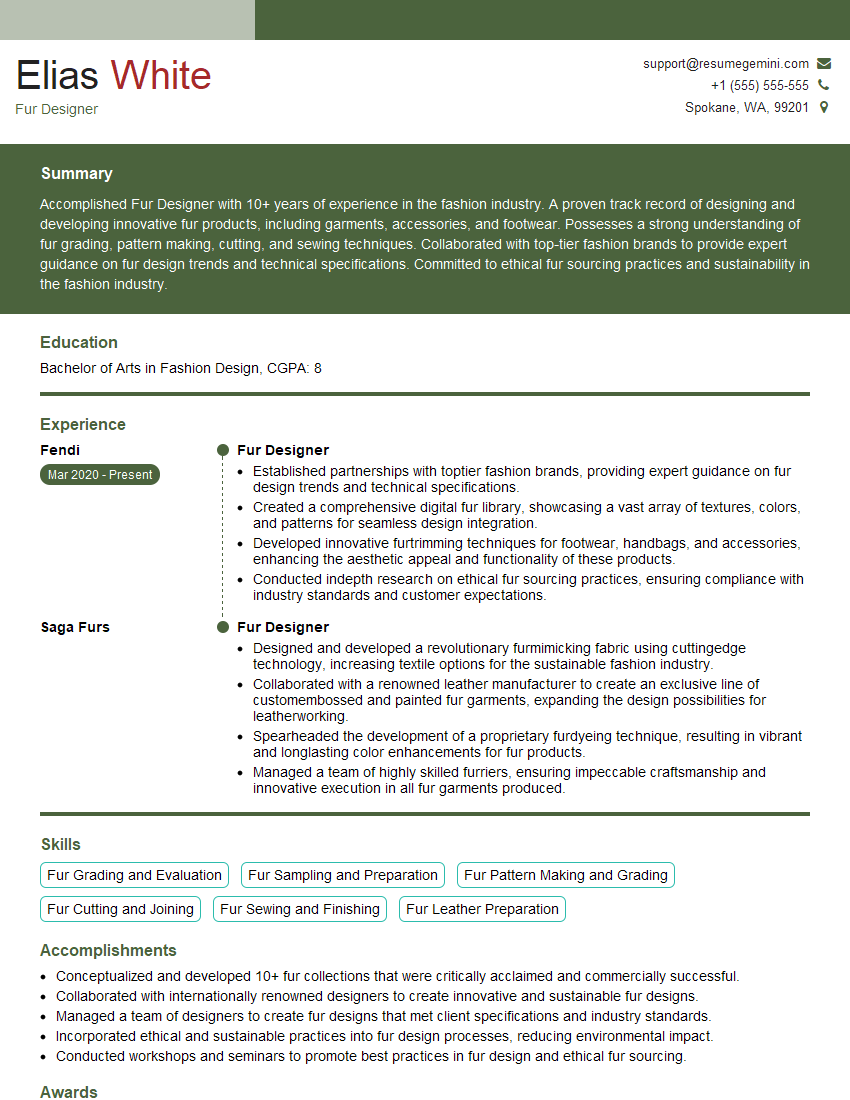
Mastering Fur Entrepreneurship opens doors to exciting and rewarding career opportunities, offering the chance to contribute to a dynamic industry while developing valuable business acumen. To significantly enhance your job prospects, creating an ATS-friendly resume is crucial. ResumeGemini is a trusted resource to help you build a professional and impactful resume that showcases your skills and experience effectively. We offer examples of resumes tailored specifically to the Fur Entrepreneurship field to guide you. Invest in crafting a strong resume – it’s your first impression and a key step towards landing your dream job.

Explore more articles
Users Rating of Our Blogs
Share Your Experience
We value your feedback! Please rate our content and share your thoughts (optional).
What Readers Say About Our Blog
Very informative content, great job.
good